
No room at Makuya court – South Africa

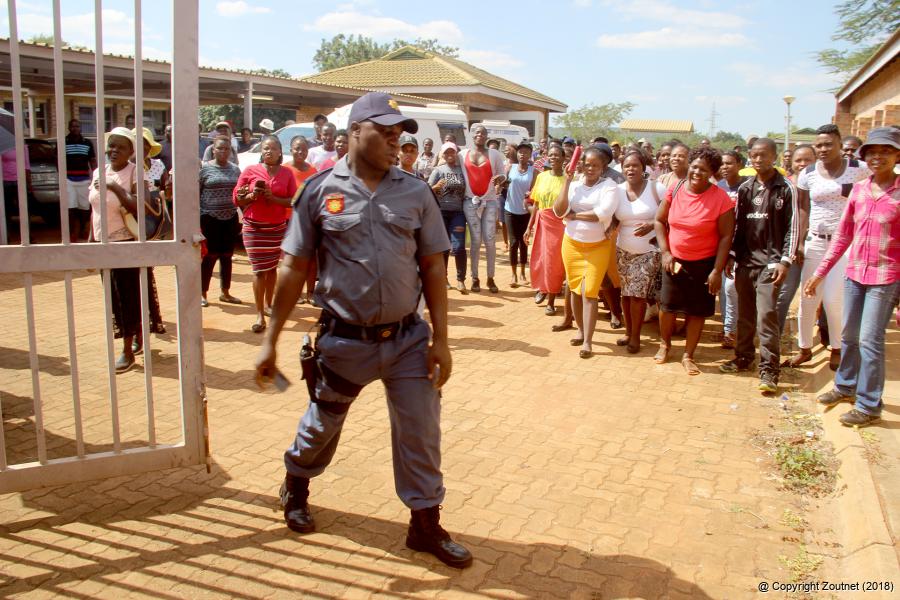
Part of the huge crowd that had gathered at the court premises, waiting for an opportunity to see the accused.

News – Date: 03 May 2018
Written by: Elmon Tshikhudo

Hundreds of angry residents from Tshitavha and surrounding villages who had come to attend a ritual murder case were left disappointed as they could not be accommodated in the small court room.

This was during the appearance of the six accused in the ritual murder case of Ms Mercy Ndou. Ndou was ruthlessly murdered in 2014 and her body parts were harvested.

The Makuya Periodical Court can only accommodate about 30 people and court officials struggled to control the huge crowds that wanted to be allowed into the court. This led to a late start of the court proceedings. Only close family members were allowed to attend.

The accused, who were under heavy police guard, finally appeared in court. In a short sitting, the State indicated that it was not ready to proceed with the formal bail application as it still sought certain evidence in connection with the case and one remaining suspect still had to be arrested.

The defence argued that the State had advanced the same reasons when seeking a postponement last week. After some deliberations, the court ruled in favour of the State, saying it had advanced valid reasons for more time. The date of  9 May 2018 was given as a final postponement on which the formal bail application should be heard.

The six accused are Gerson Mathoho (52), Eric Khobo (30), Rhulani Shirindi (43), Shonisani Muruge (53), Khuthadzo Tshidino (28) and Azwinndini Ndou (42). They are charged with the ritual murder of Mercy Ndou, who was 33 years at the time of her death.

Some of the accused entering the Makuya Periodical Court on Wednesday.

Ndou, originally from Shayandima, disappeared in 2014 after telling her family she was visiting friends and that she would come back later to assist them in moving goods as they were moving to a new house at another location. That was the last time she was seen alive. Her body, with parts missing, was found in the bushes at Tshitavha.

A traditional healer, Vusiwana Baloyi, was arrested and later sentenced to life imprisonment for the crime. During his trial in 2016, Baloyi mentioned the names of the people who had participated in the killing. The police took almost two years to act on the information, and only three weeks ago they made a major breakthrough and arrested the six.

The six, two females and four males, made their first appearance in the Thohoyandou Magistrate’s Court a fortnight ago and their case was initially postponed to last Wednesday for the bail applications.

On Wednesday, hundreds of angry community members gathered at the court premises, hoping to gain entry to the court to get a glimpse of the accused. As they could not all be allowed in court, they peeped through windows, some even insulting the suspects, telling them they would not be released and that they would rot in jail. Some were urging the police to release them, so that they could be dealt with by the mob.

“We are tired of ritual murders in this area, and we know that there are still others roaming the streets. We are just happy that even those who were being protected are now behind bars and our prayer is that they be punished for their heinous crimes. They should be locked in jail forever,” said a resident who did not want to be identified.

The Reverend Jabulane Monegi, the Ndou family’s spokesperson, said the postponement suited them well. “We have faith in the justice system, and the fact that they are in custody gives us hope that the wheels of justice will move at their own speed and justice will be served at the end of the day,” he said.

Source: Zoutnet – News with an independent soul

https://www.zoutnet.co.za/articles/news/47037/2018-05-03/no-room-at-makuya-court

Tshitavha is located in Limpopo Province:
https://geographic.org/geographic_names/name.php?uni=-1873630&fid=5702&c=south_africa
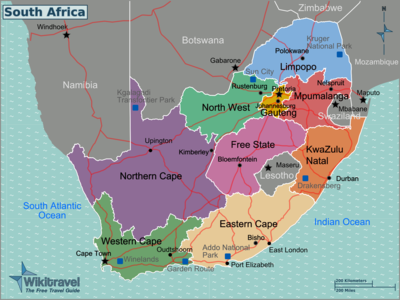
South Africa – Provinces
Catholic priest among 11 charged for killing man with albinism in Malawi

web_photo_priest_02052018

Published: May 4, 2018
By: BRINKWIRE

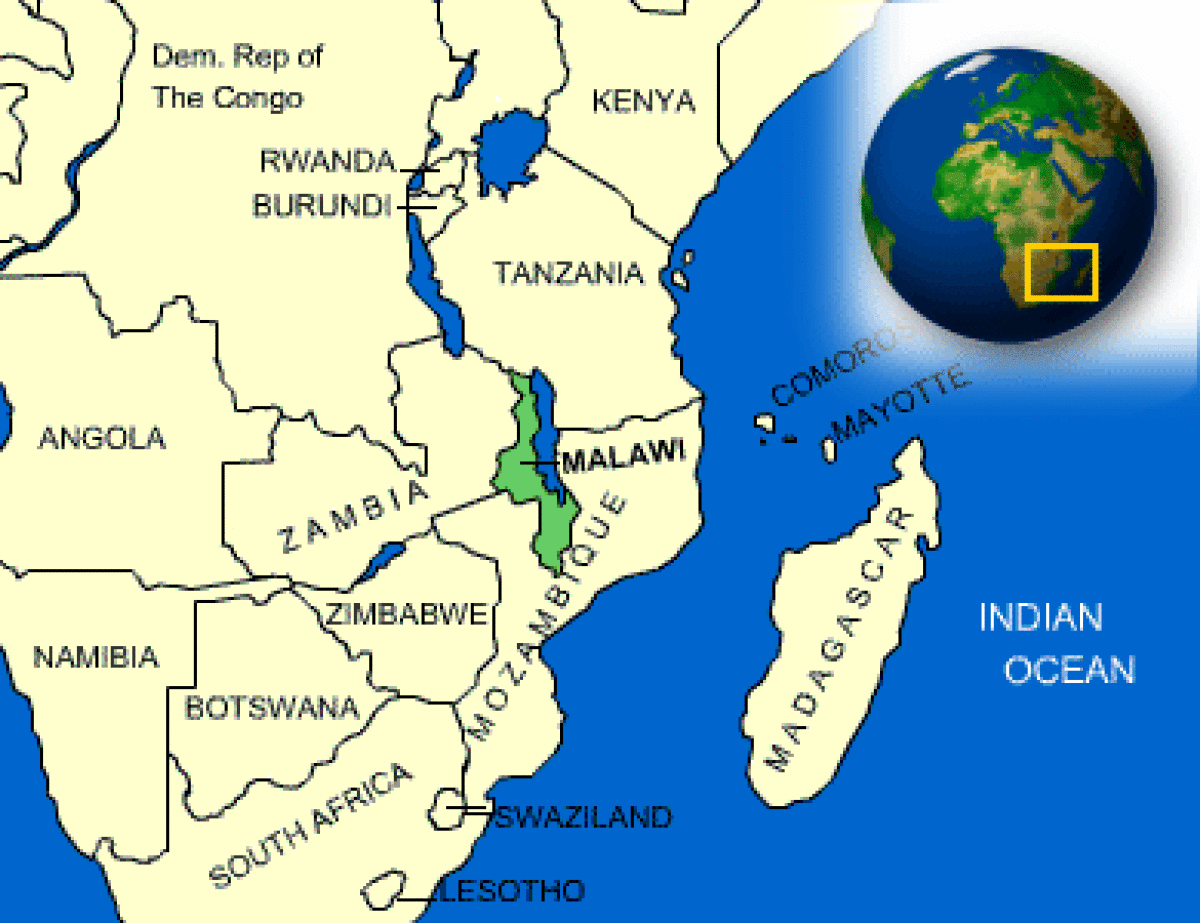
BLANTYRE, Malawi – A Catholic priest, police officer, and a medical officer are among 11 people facing charges for the murder of a man living with albinism in Malawi, police spokesman James Kadadzera said.

The latest murder of a man with albinism in Malawi – the 22nd in four years – has sparked calls for their killers to be executed to deter a wave of attacks in the poor southern African nation.

Police said the dismembered corpse of 22-year-old McDonald Masambuka was found buried in southern Malawi several weeks after he went missing in March.
Information minister Nicholas Dausi said international rights groups and donors were preventing the government from using the death penalty to deter such crimes in Malawi, where people with albinism are hunted down for their body parts.

“They are stopping us from enforcing capital punishment,” Dausi was quoted by local media as saying at Masambuka’s funeral last month. “Yet in their countries they execute murderers. Is this fair?”

Malawi is one of the most dangerous countries in the world for people with albinism – a lack of pigmentation in the skin, hair and eyes – who are targeted so that their body parts can be used in magical potions and other ritual practices.
The United Nations’ top expert on albinism has said people with the condition risk “extinction” in Malawi due to relentless attacks fuelled by superstitions.

President Peter Mutharika has since said Malawi should have an “honest debate” about whether to apply the death sentence to those found guilty of murdering people with albinism.

Malawi suspended capital punishment more than 20 years ago as it embraced democratic reforms. Although the death penalty still exists in law, it has been declared unconstitutional.

Murders

But rights groups said the focus on the death penalty was misplaced and the government should step up its efforts to investigate unsolved murders and protect people with albinism.

“We never have any experience where the death penalty has been successful as a deterrent,” said Overstone Kondowe, head of the Association of People with Albinism in Malawi (APAM), which helps about 3,400 people with the condition.

It has recorded 146 attacks in Malawi since 2014. About one in 20,000 people worldwide have the congenital disorder, with higher rates in sub-Saharan Africa.

Only five of 22 murders reported since 2014 are in court, said Kondowe, with 17 unsolved. (italics by the webmaster FVDK)“We don’t have even have a suspect and nobody has been prosecuted,” he said of the 17 cases, adding that the police should reopen them now that they have better equipment.

“We didn’t have facilities of DNA testing to help with the investigation, so we’re seeking that because the current capacity can help to shed light on who was responsible.”

Rights groups called on the government to establish a commission of inquiry to find out who is behind the attacks, amid claims that they are organised by criminal gangs.

“There is a green light with the recent case where we have seen high profile people involved,” said Timothy Mtambo, who heads the Centre for Human Rights and Rehabilitation, a charity.“We believe a good investigation can open up our windows as to who is behind the trade … We would be able to say we have unveiled the market and done (away) with the roots.”

Mtambo also echoed a UN’s call on the government to implement its own plan to strengthen protection measures, including buying sturdy locks for poor families at risk of attack, and for public education to eradicate superstitions.

“It should invest in preventative measures, not ‘curing’ the problem,” he said. “It needs to understand where we have people with albinism, which can help in drawing security plans. Currently, there is no proper programme.”

Source: Catholic priest among 11 charged for killing man with albinism in Malawi

mi-area