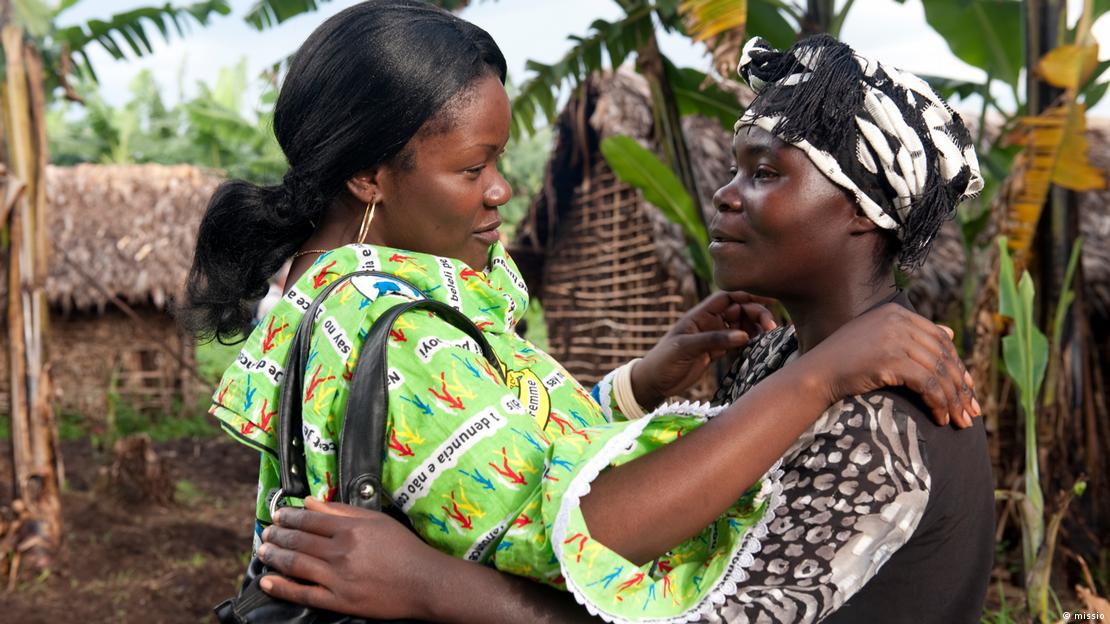
The women banished as witches in West Africa – with focus on the Gambaga ‘witch camp’ in Ghana’s North East Region

Superstition is the common denominator of both ritual murder and belief in witchcraft. Both phenomena are likely to occur in all countries in Sub-Saharan Africa. 

In the past, I have extensively discussed (accusations of) witchcraft here, citing cases in a large number of SSA countries: Angola, DRC, Ghana, Ivory Coast, Kenya, Liberia, Nigeria, Tanzania, South Africa, Zambia and Zimbabwe. The fact that not all SSA countries are mentioned on this site is more a result of underreporting than of the phenomenon not occurring in the SSA countries not mentioned.  

The article below is a worthwhile report on the causes and consequences of accusations of witchcraft in Ghana: worth reading but painful to read about what people can do to each other. The most vulnerable in society are often the victims: vulnerable, elderly women and young children. I am reminded of the sad case of the 90-year-old woman who was lynched in Ghana in 2000, accused of witchcraft (also mentioned by the author in the article below). Unfortunately, there are many more cases, some of which, as mentioned, are reported on this site. Terrible. 

The author of the article below, Claire Thomas, an award-winning Welsh photojournalist and fine-art photographer, is to be commended for her thorough research into witchcraft in Ghana and the resulting reporting. Yesterday, I highlighted Leo Igwe’s excellent work in this area. These abuses (read: crimes) can never be given enough attention, and never enough action to eradicate them forever.
(webmaster FVDK)

The women banished as witches in West Africa

Claire Thomas reports on the women banished from their communities after being accused of being witches

Published: February 13, 2026
By: Claire Thomas – Geographical, U.K.

In a remote part of West Africa, centuries-old superstitions continue to condemn women accused of witchcraft to exile. A landmark bill offers hope — but can justice overcome belief?

Report and photographs by Claire Thomas

From ghouls and goblins to fairies and ogres, mythical creatures have long stirred the imaginations of children. Tales of wizards and witches – one often symbolising wisdom and power, the other evil and danger – remain especially enduring, kept alive through books, films and folklore. But in northern Ghana, witches aren’t confined to fairy tales. Belief in witchcraft remains widespread and deeply entrenched there, with devastating consequences, particularly for women.

This belief can be deadly. In July 2020, 90-year-old Akua Denteh was brutally lynched in a public market after being accused of witchcraft. Her killing, filmed and widely circulated, shocked the nation and galvanised calls for legal reform. Her death became a symbol of the deadly intersection of superstition and gender-based violence.

To be accused of witchcraft in Ghana is to face exile, persecution and even death. These accusations – often directed at older, vulnerable women – can be triggered by personal misfortunes: the death of a relative, failed crops, illness or jealousy over a woman’s independence. Even a child’s success at school can spark suspicions of a mother’s spell. For those deemed guilty, banishment to one of northern Ghana’s six so-called ‘witch camps’ is often the only means of survival.

I first visited the Gambaga ‘witch camp’, located in Ghana’s North East Region, in 2008, and returned in 2012. There, I witnessed first-hand the stark realities the women endure. While interviewing one elderly woman, I asked if she believed she was a witch. Before she could respond, my translator, who was related to the local chief, interjected: ‘Of course she’s a witch. Why else would she be here?’ The question was never translated. Her answer was lost – her voice dismissed before it could even be heard.

The settlement – a cluster of round mud huts with thatched roofs in Ghana’s semi-arid savannah – offers fragile protection: safety from attack, but no escape from the stigma of being branded a witch.

Matis Awola, a widow in her late 50s, sits outside her hut in Gambaga to which she was banished after a man claimed to have seen her in a dream

Accusations often lead to a traditional ‘trial’ – a ritual involving the slaughter of a chicken or guinea fowl, with the manner of its death interpreted as spiritual evidence. But in many cases, the accusation alone is enough to seal a woman’s fate. Regardless of the ritual’s outcome, she may be cast out by her community, her judgment delivered not by spirits, but by neighbours.

When I returned to northern Ghana in May 2025, I met Matis Awola, a widow who had been banished from her home just a month earlier. For her, a man’s dream became a living nightmare.

‘A man saw me in a dream and the next day I was accused of being a witch,’ she tells me. ‘I went to the bush and wanted to kill myself.’

In April 2025, her son brought her to Gambaga, where she now lives in a tiny, windowless hut among about 80 other accused women. She survives by working on a local farm in exchange for food, clinging to the hope that she might one day return to her family.

Life in the camps is marked by relentless hardship. The women live in poverty and bear the burden of societal rejection, often ostracised even by their own families. They sleep on dirt floors in makeshift huts, relying on sparse donations from NGOs, churches or well-wishers. Access to clean water, healthcare and food is unreliable. Children who accompany their mothers or grandmothers are often bullied in school or pulled into street work, stigmatised as ‘witches’ children’.

Bachalbanueya has spent more than 40 years in exile. Now in her 80s, she sits quietly outside her crumbling mud-brick hut. She was banished after her husband’s co-wife accused her of witchcraft following his death – grief weaponised into a lifetime of isolation.

‘She had no children of her own,’ explains Reverend Gladys Lariba Mahama, a Presbyterian minister who has supported the women of Gambaga camp since 1997. ‘Whenever a child of the co-wife fell sick, they [the family] attributed it to her. Later, she was accused of causing the death of one of them, and she was brought to Gambaga.’

Stories like hers are tragically common. ‘It is violence against women – a demonisation of women,’ says Professor John Azumah, executive director of the Sanneh Institute in Accra, which has long supported survivors and is part of a coalition pushing for legal reform.

Even in Western usage, the term ‘witch hunt’ reflects long-standing cultural beliefs that associate witches with evil, and overwhelmingly with women. While men can also be accused, accusations most often target women. Witchcraft itself isn’t always seen as evil, Azumah explains, but when it’s believed to reside in a woman, it becomes feared and condemned. Male witches, by contrast, are often thought to use their powers for good.

Most of the women banished to camps are among society’s most vulnerable. ‘These women are the poorest of the poor,’ says Azumah. ‘They have no child or relatives well-off enough to speak for them – that’s why they’re languishing there. Women with educated children – those children get their mothers out. But these women have no-one. They are truly the voiceless.’

The women gather at the Community Centre in Gambaga

Lamnatu Adam, executive director of Songtaba, a women’s rights organisation in northern Ghana, echoes this view. ‘When men are spiritually strong, it’s said they use their power to protect the community and family,’ she says. ‘But when women are thought to be spiritually strong, it’s said they use it to cause harm, illness and disaster.’

As a result, women – particularly older women – disproportionately bear the burden of accusation and exile. ‘About 90 per cent of the women who are accused are over 60 years old and without education,’ says Adam. ‘They are very poor. Most don’t have children, and about 80 per cent are widows.’

Azumah traces the pattern of accusations to a blend of spiritual belief and calculated social exclusion. ‘It’s the oldest conspiracy theory of humankind,’ he says. ‘And it is a form of misogyny.’ Even a woman’s success, such as a bountiful harvest, can provoke jealousy. ‘They accuse her just to get her out of the community, then they take over her land.’

Sometimes, the danger comes from within the family. ‘Young men may genuinely believe their mothers are sabotaging their lives,’ he adds. ‘They truly believe it.’ In the end, he says, it’s scapegoating, ‘a conspiracy theory that has been used – and still is’.

Refuge or prison?

There are now around six unofficial ‘witch camps’ remaining in northern Ghana, situated near remote villages such as Gambaga, Kpatinga, Gnani and Kukuo. While these settlements may offer refuge from immediate danger, they also stand as stark reminders of social exclusion and the unresolved injustice the women continue to face.

As Professor Azumah puts it: ‘The camps are neither a refuge nor a prison, they are something in between.’

There are no fences or gates, yet most women don’t feel free to leave. Many believe that returning home would bring illness, misfortune or even death. Some were violently attacked before fleeing; others were quietly cast out by relatives seeking to rid the family of perceived spiritual danger.

‘There are no physical barriers keeping the women inside,’ says Professor Azumah. ‘But cultural and psychological ones are deeply entrenched. The women are made to believe that if they leave the camp, the spirits will kill them.’

Fusheina, a widow and mother of five, has lived in the Gnani camp in Ghana’s Northern Region for the past six years. She was accused of witchcraft by the chief of her village after the sudden death of her nephew. Expelled immediately, she now lives alone. ‘I’m not happy because my children are not with me,’ she says sorrowfully. ‘I just want to go home.’ But returning is not an option – she fears the villagers would harm her.

Life in the camp is extremely difficult, Fusheina adds. ‘There is no work. We don’t have a farm here, so we have no way of earning money.’ She hasn’t seen her children in more than two years.

While witchcraft accusations are common across Ghana, and many other countries, the practice of banishing women to isolated camps is less prevalent. ‘[Belief in] witchcraft is not just a Ghanaian thing,’ explains Professor Azumah. ‘It’s very strong in Nigeria, in East Africa, Tanzania, South Africa. What is unique about Ghana is the camps in the north.’

Despite being established to provide a place of refuge for vulnerable women, there are reports of exploitation and abuse within the camps. ‘I don’t call it a refuge,’ stresses Professor Azumah. ‘These are places of exploitation – the women there are exploited. Some of them are sexually abused, physically molested.’

Some women are forced to work without pay, fetching water or farming for community leaders and priests. There are credible reports of sexual abuse, and in at least one documented case, a priest fathered children with multiple women in a camp, according to Professor Azumah.

‘People are making money out of it,’ he adds. ‘It has become an industry – it is a huge business for people there. The women are used for free labour by the community leaders in the rainy season – they make them go and cultivate their farms. They do all the work manually and all they get is whatever food they can give them there to eat that day to do the work, that’s all. They are not paid anything.’

Even humanitarian aid doesn’t always reach its intended recipients. Community leaders – who often control the camps – have been accused of diverting food and money for personal use.

Chief of Gnani village, Mohammed Abdulai, in talks with Lamnatu Adam, of Songtaba, a women’s rights advocacy group

‘These are not safe havens,’ says Azumah. ‘They are places where society has abandoned its most vulnerable.’

In Gambaga, the Presbyterian Church has worked for decades to help restore dignity and agency, says Reverend Gladys Lariba Mahama. ‘In the past, when women were banished, no-one asked about them,’ she says. ‘But because of the church’s intervention, people now know them, and the whole world knows their story.’

‘This place [Gambaga camp] was established out of love and sympathy,’ she continues. Referring to the camp as a ‘home’, Reverend Gladys explains that it was founded decades ago when a local religious leader intervened to protect women accused of witchcraft. ‘Whenever they were accused, they would send them to the execution field to kill them. So this man – he was the imam of Gambaga – pleaded that they come here instead.’

Since the early 1960s, the Presbyterian Church of Ghana has supported the women by providing food, second-hand clothing and helping to repair their modest homes. ‘Around 1994, the church saw that they could do more,’ explains Reverend Gladys. ‘So they came up with a proposal – the main purpose was to reintegrate the women into their original communities, ensure their health needs are met, send their children to school and make life more comfortable for them here.’

The women of Gambaga camp clearly trust Reverend Gladys. As she moves through the settlement she greets the women by name, exchanging warm smiles and translating their stories with care.

‘We are here every morning,’ she tells me as an elderly woman approaches her with a gentle smile and a handshake. ‘We’re working hard now on the reintegration programme. Many women travel home to visit and return. Some of their family members even come here to see them.’

Still, stigma remains. For most of the women, their families refuse to visit.

Gambaga’s central location – at the heart of the village rather than tucked away – offers a greater degree of community integration. ‘They’re well integrated into Gambaga and the surrounding communities,’ says Reverend Gladys. ‘Sometimes, because of the humiliation and trauma they’ve endured, when you ask the women if they want to go home, some will say no.’

The cost of going home

Reintegration comes at a cost – both symbolic and financial. For the few women who eventually return, sometimes years or even decades after being accused, the process depends on a traditional ‘cleansing’ ritual intended to absolve them of alleged witchcraft. Performed by spiritual leaders, it typically involves the slaughter of a ram and a chicken, and can cost more than 1,000 Ghanaian cedis (around US$100).

But even with support, reintegration is far from straightforward. In many cases, no amount of spiritual absolution or mediation is enough to convince families or communities to accept a woman back. ‘Most of the communities say even the exorcism – we don’t believe in it, because once a witch, forever a witch,’ says Professor Azumah. ‘They [the communities] believe in the diagnosis, but not the cure. When the same priest declares a woman a witch, they believe him. But when he says, “I can perform a ritual to free her of the spirit,” they don’t believe that part.’

In Gambaga, the church often steps in. ‘When a woman wants to try to return home, we work on it,’ says Reverend Gladys. ‘But first she has to go through purification.’

For Ama Somani, a mother of eight, the church’s support changed everything. ‘I wanted death because it was too painful,’ she says, recalling her exile. She had been accused by her niece, who blamed her for a mysterious illness. A traditional ritual involving the slaughter of a guinea fowl found her guilty. With no one to defend her – her husband, a landlord in their community, remained absent – Ama spent four years in Gambaga, isolated and uncertain.

In April 2025, with help from the Presbyterian Church, she was finally reintegrated into her extended family in a nearby village. The church provided food rations and negotiated her return. Life remains difficult, she says, but she is overjoyed to be reunited with her children and loved ones.

Alongside the church, Professor Azumah and the Sanneh Institute, together with NGOs and human rights advocates, have worked tirelessly to reintegrate accused women across northern Ghana.

‘Sometimes the accuser has died, or the situation in the village has changed, and the woman can safely return,’ explains Azumah. ‘Sometimes the community or family regrets the accusation. They admit it came from jealousy or envy. They want the woman to come back. But first, she has to pay what I call the “discharge fee” – the cost of rituals to release her.’

These rituals, he adds, are what keep many women trapped. ‘Most can’t afford them. So even when they could return safely, they’re stuck because they can’t pay for the ceremony that would set them free.’ In some cases, as NGOs have stepped in to help, community leaders have raised prices, hoping donors will cover the costs. ‘They’ve inflated the fees astronomically,’ says Azumah. ‘And so, the cycle continues.’

Calling on Ghana’s president to sign the Anti-Witchcraft Bill during a Mother’s Day event at the Gnani camp

Despite these obstacles, organisations such as ActionAid Ghana and Songtaba have helped reintegrate hundreds of women. ‘Overall, we’ve reintegrated not less than 600 people into their communities over the past 15 years,’ says Esther Boateng, ActionAid Ghana’s regional manager for the Northern, Northeast and Savannah regions. ‘We identify their home communities, engage families and involve the entire community – the same community that accused them.’

In 2014, ActionAid worked with the Ministry of Gender to shut down the Bonyasi camp in the Central Gonja District after successfully reintegrating all of its residents. ‘We had to ensure their safety, so we combined community sensitisation, radio education and events like Mother’s Day celebrations to build acceptance,’ says Boateng. ‘We even built houses for some women returning home. It was a fully integrated programme, and today, Bonyasi camp no longer exists.’

Spirits, sickness and superstition

The persistence of witchcraft accusations in Ghana can’t be understood without acknowledging the deep-rooted belief in spirits, possession and supernatural causality – beliefs that shape how many Ghanaians interpret illness, misfortune and conflict.

During a visit to the stilt village of Nzulezu in Ghana’s Western Region in 2012, I witnessed just how deeply these convictions are held. One night, the wooden platform beneath me shuddered, waking me from sleep. Under a moonlit sky, I stepped outside the homestay hut and onto the creaking boardwalk. Across the water, silhouetted figures had gathered. Women wailed and chanted, a plume of smoke rising among them. A small child, wrapped in a blanket, was being passed gently from one person to another.

Curious and concerned, I asked what was happening. I was told the child had been possessed by an evil spirit.

Later, a man approached and asked if I could help. Unsure what to say, I suggested we take the child to the hospital to be tested for malaria. ‘No, no,’ he replied, shaking his head. ‘We need to take out the evil spirit.’ The ritual continued through the night.

Wuriche Bajimoin prepares dawadawa, a traditional West African seasoning made from locust bean seeds, in Gambaga camp

The next morning, I saw a relative of the boy and asked how he was doing. With a broad smile of relief, the man said, ‘He’s much better.’ I asked what had been wrong with him. ‘Malaria!’ he answered.

This brief encounter has stayed with me for years. It revealed how central spiritual explanations are to daily life, and how illness and affliction are often viewed through a supernatural lens. In that context, it becomes easier to understand how, in moments of unexplained tragedy or fear, suspicion turns towards someone believed to possess malevolent power. Often, that someone is an older woman without protection.

Belief in witchcraft is very strong, Professor Azumah tells me. ‘Medical doctors believe it; police officers believe it. Even judges believe it.’

Hope, and a way forward

What has struck me most on each visit to the camps of northern Ghana is the remarkable resilience of the women who live there. Despite the extreme hardship and the isolation of exile – not just from society, but often from their own families – the women maintain a quiet strength. Even in the face of rejection and poverty, the joyful spirit so beautifully woven into Ghanaian culture endures. ‘Happiness is free,’ one woman told me with a smile.

Now, for the first time in years, there is a glimmer of hope. In March 2025, Ghana’s parliament reintroduced a landmark piece of legislation: the Anti-Witchcraft Bill. If passed, it would outlaw the naming or accusing of someone as a witch, criminalise the spiritual consultations that often lead to accusations, hold ritual practitioners legally accountable and empower police and social workers to intervene. Crucially, it also lays the groundwork for reintegration programmes to support survivors returning to society.

The bill had previously passed parliament in July 2023 as an amendment to the Criminal Offences Act, 1960, but Ghana’s former president refused to sign it into law. Reintroduced under a new administration, the bill is now scheduled for debate – what campaigners describe as a final, pivotal opportunity for change.

According to the bill, its primary objective is ‘to address the unfortunate beliefs and thinking in some communities that make Madam Akua Denteh’s case possible’. Her brutal murder in 2020 sparked national outrage and galvanised public support for reform.

The bill acknowledges that belief in witchcraft is not unique to Ghana. It cites England’s 1735 Witchcraft Act, which criminalised accusing someone of magical powers, and underscores the importance of public education and cultural transformation. ‘Now witchcraft isn’t illegal in the UK, but the level of enlightenment is such that witchcraft is generally viewed with amusement, if not ridicule.’
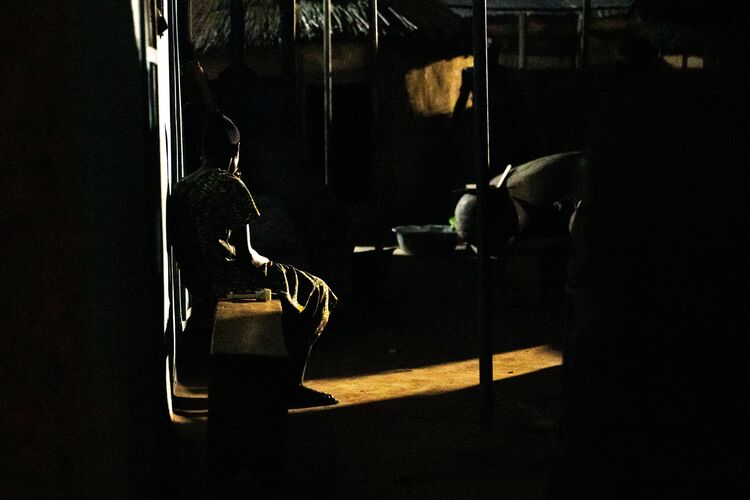
An exiled young woman in Gambaga camp

Civil society organisations, including ActionAid Ghana, Songtaba and the Sanneh Institute, have long advocated for these reforms, leading public awareness campaigns and pushing for legal protection of accused women. Amnesty International has also urged parliament to pass the bill without delay, warning that continued inaction leaves hundreds of women at risk of violence and abuse.

While many are hopeful that the current president will sign the bill if passed again, doubts persist. ‘It’s not a vote winner,’ says Professor Azumah.

Even after the widespread condemnation that followed Akua Denteh’s murder, resistance to reform remains entrenched. ‘We have our own conspiracy theories,’ Azumah says in response to the previous president’s refusal to sign the bill. ‘We believe there are powerful religious figures and some chiefs working behind the scenes to block it.’

Those fears haven’t disappeared. ‘That’s our concern with the current president, too,’ he continues. ‘If the bill is passed again and those chiefs and religious leaders start to pressure him behind closed doors, we might never even know. Politicians want votes. And they fear that pushing this through could hurt them in the next election.’

Among advocates, there is cautious optimism. Passing the bill is only the beginning. Real change will require coordinated implementation, sustained funding and a long-term commitment from both the government and civil society.

A child at the Gambaga camp. Children often accompany their mother or grandmothers into exile and are vulnerable to exploitation, with some reports of sexual abuse. They also face stigma and bullying at school, leading many to drop out

Even the bill itself acknowledges these challenges: ‘Legislation on such a subject may not immediately eliminate the problem, but it provides an awareness and a deterrent, which, if handled with the requisite public education and sensitisation, can eradicate the practice.’

‘I think the passage of the legislation will significantly reduce the accusations,’ says Professor Azumah. ‘And over time, it will die out.’

‘The accusation is the beginning of everything,’ he adds. ‘If we stop it at the source, we can begin to address the issue. We’re not going to relent. We will keep pushing until this bill becomes law.’

A nation at a crossroads

Ghana now stands at a crossroads. The debate over the Anti-Witchcraft Bill is not only about superstition, but also about women’s rights, state responsibility and the power of law to reshape cultural norms.

For survivors like Bachalbanueya, the bill may come too late to restore what was lost. But whether Ghana chooses to act now, or allows fear and silence to prevail, will determine not only the fate of women like her, but the moral direction of the nation itself.

Source: The women banished as witches in West Africa

Kenya: The ‘torch ritual’: House Speaker Wetang’ula ‘haunted’ as DCI probes Jirongo death mystery

Kenya is not often in the news when it comes to witchcraft and superstition, but this does not mean that these phenomena are unknown there. The following report bears witness to this.
(webmaster FVDK)

The Torch Ritual: Wetang’ula “Haunted” as DCI Probes Jirongo Death Mystery

Speaker Moses Wetang’ula records a statement with the DCI regarding the death of Cyrus Jirongo, as rumors of a traditional “torch ritual” to expose his killers grip Western Kenya.

Published: January 21, 2026
By: Stamline – Kenya

National Assembly Speaker Moses Wetang’ula has found himself at the center of a macabre political storm, recording a statement with the DCI as rumors of a traditional “torch ritual” swirl around the sudden death of veteran politician Cyrus Jirongo.

Jirongo, a former cabinet minister and one-time kingmaker, died in a grisly road accident on the Nairobi-Nakuru highway in December 2025. While police maintain it was a tragic crash, whispers of assassination have refused to die, fueled by leaders from the Western region who are demanding answers.

The “Lit Torch” Ultimatum

The saga took a supernatural turn when elders from Jirongo’s Tiriki community threatened to bury him with a “lit torch”—a traditional curse believed to hunt down killers. “If the torch goes out, the killer dies,” warned Saboti MP Caleb Amisi. Now, social media is abuzz with claims that the “torch is working,” casting a shadow over the Speaker.

  • The Last Meeting: Wetang’ula revealed he was one of the last people to see Jirongo alive. They met for an hour on Jamhuri Day evening, a meeting the Speaker described as “ordinary” but which detectives are now scrutinizing for clues.
  • The Probe: Wetang’ula is among 28 individuals questioned by the DCI. Detectives are reconstructing Jirongo’s final 24 hours to rule out foul play.
  • The Politicization: The Speaker has warned against politicizing the death, pleading with leaders to respect the family. “I don’t want to be cheered or jeered. This death touches me personally,” he told mourners.

A Region on Edge

The death has reopened old wounds in Western Kenya politics, with factions trading accusations. The DCI’s investigation is now a race against time to provide a scientific explanation before the narrative of “witchcraft and assassination” takes permanent root.

For Wetang’ula, the third most powerful man in the country, the ghost of his longtime friend—and the glowing embers of the Tiriki torch—pose a unique and unsettling challenge.

Source: The Torch Ritual: Wetang’ula “Haunted” as DCI Probes Jirongo Death Mystery

Important study explores ritual murders of children in Ghana and Kenya, identifies perpetrators and their motivation

There are not many in-depth studies of the phenomenon of ritual murders and even less of the killing of children for ritualistic purposes. The article below discusses the ritual murder of children in Ghana and Kenya, examines who the perpetrators are and why they came to their crime.

The study by Emmanuel Sarpong Owusu is a must read. The author is to be commended for a serious and interesting study.

Interestingly, a number of the author’s findings and conclusions – based on online news reports in eight media outlets in Ghana and Kenya and on interviews with 28 experts – are consistent with my experiences after years of studying ritual killings in Sub-Saharan Africa. In particular I wish to mention here the main factors driving the motivation of the majority of the ritual murderers: superstition, greed and illiteracy, whereas the for various reasons failing reaction of authorities and the resulting lack of rule of law facilitate the impunity and the continuity of the cruel and outdated phenomenon.

According to the study, in Ghana, the media reported at least 160 ritual murders between 2012 and 2021. Of this number, 94 (about 58.8%) were children. Of the 102 ritual murders in Kenya in the study period (2012-2021), 66 (64.7%) were children.

I refer to the study below for more details. Please note that, unfortunately, three links in the original article seem to be incorrect: (i) ‘juju in Ghana’ leads to general information on juju (link should be placed under ‘juju’); (ii) ‘juju in Kenya’ leads to nowhere; (iii) reference to members of occult sects leads to ‘juju in Kenya’.
(webmaster FVDK).

Ritual murder of children: study in Ghana and Kenya explores who’s doing it and why

Published: April 15, 2025
By: Emmanuel Sarpong Owusu – The Conversation, UK

Superstition, an irrational belief in paranormal influences or a false attribution of events, is an age-old phenomenon found in probably all human societies or cultures. It encompasses a wide range of beliefs, practices and behaviours. Some of these have harmful or even deadly consequences.

In many African communities, there are widespread beliefs relating to the use of human body parts for traditional healing rituals. Human body parts and blood are said to enhance the potency of traditional medicines and rituals that supposedly guarantee wealth, business success, fertility, protection and longevity, among others. 

Ritual killings, including those of children, are reported regularly around Africa. A case in point is the targeting of children with albinism for ritual purposes in Tanzania. One research report says one in five people in Mozambique and one in four people in South Africa believe that rituals and traditional medicines made with human body parts are more potent and effective than those using nonhuman objects. 

Children are particularly targeted for killing because they can’t repel attacks, and because of beliefs about the potency of their body parts. The victims in more than half of all the ritual murders reported in Ghana and Kenya in 2022 were children.

I am a legal scholar with years of research on superstition-driven crimes against vulnerable groups in African settings and the criminal justice response to such crimes. In a recent study I explored the magnitude, characteristics and motivations, as well as the socio-cultural and economic contexts, of ritual child murder in Ghana and Kenya. My study was carried out through in-depth analysis of news reports of ritual murders for a period of 10 years, coupled with semi-structured interviews with academics and other experts.

I found that the major factors contributing to the persistence of ritual child murders were superstition, economic hardship, illiteracy and inefficient criminal justice systems. A new consumerist ethos also plays a role: wanting a life of luxury and the admiration that comes with it.

The study seeks to enhance awareness of the ritual child murder phenomenon and encourage support for the enforcement of child rights protection laws. When policymakers know more about the scale and circumstances of ritual child murders, they are better equipped to act on it.

Ritual murders in Ghana and Kenya

Belief in juju is widespread in Ghana and Kenya. This is the belief that people can mystically control events by using incantations (“magic words”) and, sometimes, objects. 

My study analysed data drawn from online news reports in eight media outlets in Ghana and Kenya. I used media content because the countries don’t have national data sets on ritual homicide, and empirical research is limited. Secondly, I interviewed 28 experts in criminology and criminal justice, sociology, African religions, and child and family welfare and social protection. These participants were selected using the purposeful sampling technique.

In Ghana, the media reported at least 160 ritual murders between 2012 and 2021. Of this number, 94 (about 58.8%) were children. This suggests that an average of 9.4 children fall victim to ritual murder each year in the country. Of the 102 ritual murders in Kenya in the study period, 66 (64.7%) were children. This represents an annual average of 6.6 in the country. 

In both countries, most victims (over 80%) tend to be drawn from families of low socio-economic backgrounds in rural and semi-rural communities. In Kenya, children with albinism are also targeted

The overwhelming majority of offenders are males. There are three main categories of perpetrators of ritual child murders: 

  • the juju practitioner or traditional healer who usually prescribes the required body parts and effects the medicine or ritual 
  • the client who consults traditional healers and stands to benefit directly from the ritual or medicine 
  • the (hired) ritual murderer, who abducts the victim and extracts the required body parts.

Data from media reports show that most of the perpetrators apprehended are those directly involved in the killing. They are usually aged between 20 and 39 years and of low socio-economic status in rural communities. However, some interviewees insisted that some rich and prominent persons are also involved.

In Ghana, uncles, fathers and stepfathers were the dominant perpetrators in cases where victims and perpetrators were known to be related. Unlike other types of homicide, ritual child murder generally involves strangers nearly as often as it involves family members and acquaintances.

Motivations and responses

The dominant motivation for ritual murder is financial gain. This conclusion is drawn from the media accounts and the interviews. Perpetrators are promised money in exchange for specific human body parts. Others kill to use the body parts for rituals that are supposed to ensure a long life, fertility, business growth, or protection against evil. In Kenya, some perpetrators kill in fulfillment of their obligations as members of occult sects

Other factors that sustain the practice – based on media reports and interviews – are superstition, unemployment and economic hardship. Adding to these are illiteracy, which fosters unfounded beliefs, and an inefficient criminal justice system, which enables these crimes to thrive.

Poor parental supervision is an important risk factor for ritual child murder. In both countries, over 70% of the ritual murder victims were under 10 years old. They were abducted or murdered while going to or returning home from school. Others were abducted while running errands such as fetching water from a stream unaccompanied. Some may have been playing outside their homes unsupervised, or running errands by themselves for relatives. 

In both countries, the criminal justice system’s response is evidently ineffective. In Kenya, over 90% of perpetrators are not apprehended. Of 68 suspects arrested in Ghana, only four convictions were reported. Crime scenes are poorly managed and preserved by police officers and detectives in both countries. 

Crime scene videos show the victims’ remains being removed by authorities and conveyed to the morgue without diligent forensic examination of the body and the crime scene for evidence.

What governments can do

The belief in the power of juju and associated rituals and medicines cannot be wished away. It can only be combated in various ways:

  • bringing the activities of traditional healers and occult-related sects under closer scrutiny
  • promoting education and awareness, emphasising the need for supervision of children
  • stronger criminal justice systems.

Source: Ritual murder of children: study in Ghana and Kenya explores who’s doing it and why

More on the same study:

Why child sacrifice in Kenya and Ghana is happening

Published: April 17, 2025
By: The Daily Nation, Kenya

Source: Why child sacrifice in Kenya and Ghana is happening

And:

Ritual murder of children: Study in Ghana and Kenya explores who’s doing it and why

Volunteers assist forensic experts and homicide detectives from the Directorate of Criminal Investigations (DCI), to exhume bodies of suspected followers of a Christian cult named as Good News International Church, whose members believed they would go to heaven if they starved themselves to death, in Shakahola forest of Kilifi county, Kenya April 25, 2023. (PHOTO/ REUTERS)

Published: April 18, 2025
By: The Eastleigh Voice, Kenya

Source: Ritual murder of children: Study in Ghana and Kenya explores who’s doing it and why

More:

Ritual murder of children: study in Ghana and Kenya explores who’s doing it and why

Published: April 19, 2025
By: Swisher Post, South Africa

Source: Ritual murder of children: study in Ghana and Kenya explores who’s doing it and why

And:

The dark side of superstition and the reality of ritual child murder

Published: around April 20, 2025
By: IOL, Sunday Tribune – South Africa

EMMANUEL SARPONG OWUSU, A DOCTORAL RESEARCHER AND LECTURER AT ABERYSTWYTH UNIVERSITY IN WALES, WRITES ABOUT SUPERSTITION-DRIVEN CRIMES AGAINST VULNERABLE GROUPS IN AFRICAN SETTINGS.

Source: The dark side of superstition and the reality of ritual child murder

Kenya: ‘Cleansing’ ceremony to save a ‘bewitched’ woman’s life in Kilifi turns tragic

The following series of articles I found both interesting and relevant to include here despite their gruesome contents. Introduction under construction (webmaster FVDK)

Please note: Unfortunately, references to links to related articles in the copied article(s) below don/t work. Interested readers are recommended to use the original text, if available.

‘Cleansing’ ceremony to save a ‘bewitched’ woman’s life in Kilifi turns tragic

Published: December 1, 2024
By: Brian Ocharo – Nation, Kenya

Source: ‘Cleansing’ ceremony to save a ‘bewitched’ woman’s life in Kilifi turns tragic

Also read:

The Aged, On Edge – Witchcraft and Abuse of the Elderly in Kilifi and Kwame County (Kenya)

By Fr Gabriel Dolan, ED Haki Yetu, July 2023.

“Haki Yetu which means “Our Rights” in Swahili was created to combat oppression, injustice and promote human rights as a principle for social justice in our communities of interest.” (Source: Haki Yetu, Inc.)

For the readers’ convenience follows the Table of Contents. Interested readers are advised to use the link below to gain access to the document.

Table of Contents
Acknowledgement i
Abbreviations iii
Foreword iv
CHAPTER ONE: INTRODUCTION 1
1.1 Introduction 1
1.2 The concept of witchcraft at the Coast 4
1.2.1 The potency of accusations 6
1.2.2 Oath taking and cleansing rituals 7

CHAPTER TWO: WITCHCRAFT RELATED RIGHTS VIOLATIONS 10
2.1 Introduction 10
2.2 Witchcraft related Homicide 11
2.2.1 Murder trends in Kilifi 13
2.2.2 Murder trends in Kwale 14
2.3 Emerging Trends 16
2.3.1 ‘Bebabeba’ and Rise of the killings 16
2.3.2 ‘Waombezi’ – the prophets of doom 16
2.3.3 Access to Justice for Victims and Survivors 18

CHAPTER THREE: CONTRIBUTORY FACTORS 20
3.1 Land Ownership Disputes 20
3.2 Administrative Inaction and Corruption 23
3.3 Weak Legislations and Enforcement Pathways 25
3.4 Ignorance/Misinformation/Lack of Awareness 28

CHAPTER FOUR: LEGISLATIVE FRAMEWORK 31
4.1 The Constitution of Kenya, 2010 32
4.2 The Witchcraft Act, CAP 67 Laws of Kenya 33
4.3 Witness Protection Act, CAP 79 36
4.4 The AU Protocol to the ACHPR on the Rights of Older Persons in Africa 37

CHAPTER FIVE: MVI SI UCHAWI CAMPAIGN 40
5.1 Haki Yetu’s interventions 40
5.2 Impact of Haki Yetu’s Interventions 45
5.3 Lessons learned challenges and good practices 46

CHAPTER SIX: CONCLUSION AND RECOMMENDATIONS 47
6.1 Recommendations 47
6.2 Conclusion 52

Source: The aged, on edge – witchcraft and abuse of the elderly in Kilifi and Kwale County

Also recommended :

Return of Kilifi witch killings worries authorities

Published: April 12, 2022
By: Maureen Ongala – Nation Media Group, Kenya

Source: Return of Kilifi witch killings worries authorities

Related articles:

Cries for justice for elderly women lynched on witchcraft claims

Published: January 13, 2022
By: Kamau Maichuhie – Nation Media Group

Source: Cries for justice for elderly women lynched on witchcraft claims

And:

Rabai MP faults police for rise in elderly killings

Published: October 29, 2021
By: Maureen Ongala – Nation Media Group, Kenya

Source: Rabai MP faults police for rise in elderly killings

And:

Kisii Governor Ongwae sets up witchcraft taskforce

Published: October 26, 2021
By: Ruth Mbula – Nation Media Group, Kenya

Source: Kisii Governor Ongwae sets up witchcraft taskforce

And also:

Witchcraft murders: Uhuru urged to look into plight of elderly in Kisii

Published: October 21, 2021
By: Ruth Mbula – Nation Media Group, Kenya

Source: Witchcraft murders: Uhuru urged to look into plight of elderly in Kisii

More:

‘She tried to bargain for her life’: Woman recounts granny’s plea to killer mob

Published: October 21, 2021
By: Ruth Mbula – Nation Media Group, Kenya

Relatives at the home of Sindega Maya, 83, in Marina on Monday. Maya was among four women lynched after they were accused of engaging inn witchcraft. (Ondari Omega / National Media Group).

Source: ‘She tried to bargain for her life’: Woman recounts granny’s plea to killer mob

And:

What Kenyan law says about witchcraft

Published: October 19, 2021
By: Stella Cherono – Nation Media group, Kenya

Screenshot – see the original article for details

Source: What Kenyan law says about witchcraft

And, finally, to illustrate that the problems of superstition, the belief in witchcraft and witches and of mob justice has a long history in Kenya:

Two women lynched and houses set on fire in witchcraft claims

Published: January 15, 2017 — updated on June 29, 2020
By: By HENRY NYARORA & JOSHUA ARAKA – Nation Media Group

Source: Two women lynched and houses set on fire in witchcraft claims

Killing children for rituals is rife in Ghana and Kenya, research shows

Warning: The following post contains graphic contents which may upset readers

The main findings and conclusions of the research are summarized below. It is important to note that the research focused on identified or reported ritual killing cases. It is very likely that the actual number of murders for ritualistic purposes is significantly higher.

  • In Ghana, 160 ritual killings were identified between 2012 and 2021, including 94 children (58.8%). This represents a yearly average of at least 9 victims.
  • In Kenya, 102 ritual killings were reported in the 2012 – 2021 period which figure includes 66 children (64.7%) or a yearly average of 6-7 victims.
  • The arrest rates were extremely low in both countries.
  • Greed, money, was the main motivation of ritual killers in combination with superstition, notably in Ghana. In Kenya, many perpetrators caught murdered in fulfillment of their membership of devil worship or occult sects.
  • Besides the belief in juju, also illiteracy, poverty and a failing justice system were important factors explaining the murdering of children for ritualistic purposes.
  • The authors of the study present some recommendations to fight ritualistic killings.

    To download the study (38 pp.) please click here.
    (webmaster FVDK)

    Killing children for rituals is rife in Ghana and Kenya, research shows
File Photo: Getty Images (screenshot)

Published: September 23, 2024
By: Emmanuel Sarpong Owusu – Modern Ghana

This important study, titled “Ritual Child Homicides in Ghana and Kenya: A Criminological Analysis”, is published in Dignity: A Journal of Analysis of Exploitation and Violence at:
https://doi.org/10.23860/dignity.2024.09.02.04.

Source: Killing Children for Rituals is Rife in Ghana and Kenya, Research Shows

Kenya: dismembered body of missing woman found in a Meru Hill

Warning:
the following article contains graphic details which may upset some readers.

An unexplained murder in Meru County, Kenya. Police said the motive of the murder is yet to be known. The investigators suspect a ritual in the murder.

The decomposed body of a woman was found on top of Maundu Hills. The victim was Lorna Kinya, 20-years old, who had gone missing since March 8. She was found with dismembered body parts. Her right breast and her eyes were missing. There were indications that she might have been strangulated. For ritual purposes? No one knows. The investigators suspect a ritual in the murder but at the time of publication of the reported crime no arrest had been made.

“Meru is one of the 47 counties of Kenya, (….) The main feature of the county is a famous mountain, Kenya—Batian (5,199 m / 17,057 ft)—the highest and the most prominent point of the Kenya volcano, which is the second-highest mountain in Africa after Kilimanjaro. (…) In total there are 152 named mountains in Meru.” Source: Meru

Lorna Kinya isn’t the first murder victim in the region. Police are investigating eight murder incidents in the Mutuati area alone. Reportedly, the increase in violent crimes including murder is linked to vigilantes which are operating in the area and are being sponsored by some local politicians and businessmen. 
(FVDK)

Dismembered body of missing woman found in a Meru Hill

Published: March 13, 2024
By: Kahawatungu, Kenya

Detectives are investigating a bizarre murder incident in a village in Meru County after a body of a missing woman was found with dismembered body parts.

Police said the incident was reported in Tigania West’s Amwari area where a decomposed body of a woman was found on top of Maundu Hills.

Herders told police they found the body at the scene on Tuesday before a team visited there.

It was later established that the body was one Lorna Kinya, 20 who had gone missing since March 8 and was lying there.

The police said the woman’s right breast was missing.

Her tongue was also protruding which was a sign of strangulation and the eyes were missing.

Police said the face had injuries at the time the body was discovered.

The body also had pieces of ropes with knots while a pair of blue sandals, a panga stained with blood, a blue jeans and brown jacket were lying at the scene.

The body was moved to the mortuary pending autopsy and probe.

Police said no arrest has been made and the motive of the murder is yet to be known.

The investigators suspect a ritual in the murder.

Police say they have noticed increased killings in the region and which are linked to vigilantes operating there.

The groups are being sponsored by some local politicians and businessmen and have been linked to a number of murder incidents.

For instance, police are investigating eight murder incidents in Mutuati area alone.

The incidents have been linked to the gangs operating in the area with the blessings of some politicians.

Source: Dismembered Body of Missing Woman Found in a Meru Hill

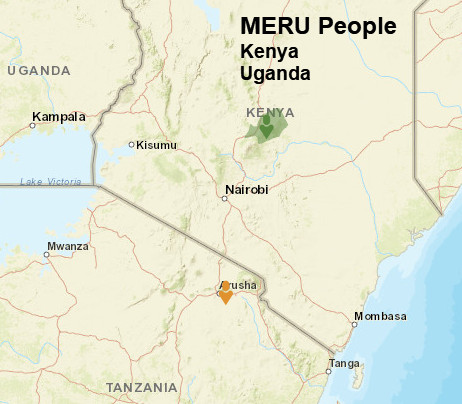
The Meru or Amîîrú (including the Ngaa) are a Bantu ethnic group  that inhabit
the Meru region of Kenya. More…. click here

A manifesto for a skeptical Africa

The article presented below, written by the famous Nigerian human rights activist and humanist Dr. Leo Igwe, is a must-read. His manifesto is highly recommended to all readers. It is more than a reflection, it is more than a plea, it is more than a cry – for change or for understanding. As Dr. Igwe writes: “Africans must begin to think freely in order to ‘emancipate themselves from mental slavery’ and generate ideas that can ignite the flame of an African enlightenment.” And Dr. Igwe is not alone, he is not the only one who firmly believes this approach is the only way for Africa and Africans to move forward – as can be concluded from the list of African endorsers and other endorsers from around the world, presented at the end of his article.

Enough words written to recommend a piece that you shouldn’t miss! Enjoy the reading, and … spread the word!

PS Unfortunately, a few links in the original article are broken and/or not working properly (webmaster FVDK).

A Manifesto for a Skeptical Africa

What are the prospects for a more secular Africa, more skeptical Africa, more scientific Africa, i.e., a more humanistic Africa?

Published: December 2, 2023
Written By: Dr. Leo Igwe – Publshed By: Scott Douglas Jacobsen

For too long, African societies have been identified as superstitious, consisting of people who cannot question, reason or think critically. Dogma and blind faith in superstition, divinity and tradition are said to be the mainstay of popular thought and culture. African science is often equated with witchcraft and the occult; African philosophy with magical thinking, myth-making and mysticism, African religion with stone-age spiritual abracadabra, African medicine with folk therapies often involving pseudoscientific concoctions inspired by magical thinking. Science, critical thinking and technological intelligence are portrayed as Western — as opposed to universal — values, and as alien to Africa and to the African mindset. An African who thinks critically or seeks evidence and demands proofs for extraordinary claims is accused of taking a “white” or Western approach. An African questioning local superstitions and traditions is portrayed as having abandoned or betrayed the essence of African identity. Skepticism and rationalism are regarded as Western, un-African, philosophies. Although there is a risk of overgeneralizing, there are clear indicators that the continent is still socially, politically and culturally trapped by undue credulity.

Many irrational beliefs exist and hold sway across the region. These are beliefs informed by fear and ignorance, misrepresentations of nature and how nature works. These misconceptions are often instrumental in causing many absurd incidents, harmful traditional practices and atrocious acts. For instance, not too long ago, the police in Nigeria arrested a ‘robber’ goat which they said was a thief who suddenly turned to a goat. A Nigerian woman was reported to have given birth to a horse. In Zambia, a local school closed temporarily due to fears of witchcraft. In Uganda, there are claims of demonic attacks in schools across the country. Persecution and murder of alleged witches continue in many parts of the continent. Many Africans still believe that their suffering and misfortune are caused by witchcraft and magic. In Malawi, belief in witchcraft is widespreadRitual killing and sacrifice of albinos and other persons with disabilities take place in many communities, and are motivated by paranormal belief. Across Africa people still believe in the potency and efficacy of juju and magic charms. Faith-based abuses are perpetrated with impunity. Jihadists, witch-hunters and other militants are killing, maiming and destroying lives and property. Other-worldly visions and dogmatic attitudes about the supernatural continue to corrupt and hamper attempts by Africans to improve their lives. Even with the continent’s ubiquitous religiosity, many African states are to be found at the bottom of the Human Development Index and on the top of the poverty, mortality and morbidity indices.

Recently Africa was polled as the most devout region in the world, and this includes deep devotion to the continent’s various harmful superstitions. Devoutness and underdevelopment, poverty, misery and superstition co-exist and co-relate. It should be said that the dominant religious faiths in the region are faiths alien to the continent. That means African Christians are more devout than Europeans whose missionaries brought Christianity to Africa. African Muslims are more devout than Muslims in the Middle East, whose jihadists and clerics introduced Islam to the region.

Meanwhile, whatever good these foreign belief systems may have brought to or done in Africa can only be unfavorably compared to the damage and darkness they have caused and are still causing in the region. Some paranormal or supernatural claims of the two main religions of Christianity and Islam are part of the factors holding Africans hostage. Most Africans cannot think freely or express their doubts openly because these religions have placed a huge price on freethinking and critical inquiry. Because these belief systems rely on paranormal claims themselves, Africans feel they cannot speak out against superstition as a whole, or they will be ostracized or even killed by religious zealots. Belief in demonic possession, faith healing, and the “restorative” power of holy water can have deadly consequences for believers and whole communities. Africans must reject superstitious indoctrination and dogmatization in public institutions. Africans need to adopt this cultural motto: Dare to think. Dare to doubt. Dare to question everything in spite of what the superstitious around you teach and preach.

Africans must begin to think freely in order to ‘emancipate themselves from mental slavery’ and generate ideas that can ignite the flame of an African enlightenment.

The two dominant religions have fantastic rewards for those who cannot think, the intellectually conforming, unquestioning and obedient, even those who kill or are killed furthering their dogmas. They need to be told that the skeptical goods — the liberating promises of skeptical rationality — are by far more befitting and more beneficent to Africans than imaginary rewards either in the here and now or in the hereafter.  Today the African continent has become the new battleground for the forces of a dark age. And we have to dislodge and defeat these forces if Africa is to emerge, grow, develop and flourish. To some people, the African predicament appears hopeless. The continent seems to be condemned, doomed and damned. Africa appears to be in a fix, showing no signs of change, transformation and progress. An African enlightenment sounds like a pipe dream.

But I do not think this is the case — an African Age of Reason can be on the horizon! The fact is that there are many Africans who reason well and think critically. There are Africans who are skeptics and rationalists1. But active African skeptics are too few and far apart to form the critical mass the continent needs to experience a Skeptical Spring. Nonetheless, the momentum is building slowly and steadily. And one can say that an African skeptical awakening is in sight. As it is said: the darkest part of the night precedes the dawn. So there is no need to despair for humanity in Africa. There is every reason to be optimistic and hopeful. After all, Europe went through a very dark period in its history, in fact, a darker and more horrible phase than that which Africa is currently undergoing. Still the European continent survived to experience Enlightenment and modern civilization. Who ever thought that the Arab Spring would happen in our lifetime? So, African enlightenment can happen sooner than we expected. But it will not happen as a miracle. African enlightenment will not fall like manna from heaven. It requires — and will continue to require — hard work, efforts, sacrifice, courage and struggle by Africans and other friends who are committed to the values of enlightenment. In Europe, skeptics spoke out against harmful superstition, and unfounded dogma and caused the dawn of a new awakening. African skeptics need to speak out against the forces of dogma, irrationalism and superstition ravaging the continent. Skeptics need to organize and mobilize — online and offline — to further the cause of reason, science and critical thinking. They need to speak out in the media and to politicians about the harm resulting from undue credulity and  challenge and confront the charlatans directly to put up or shut up. Skeptics can no longer afford to keep quiet or remain indifferent in the face of a looming dark age.  They need to campaign for a reform of the educational system and encourage the teaching of critical thinking in schools.

Many charlatans operate out there in their communities. They ‘mine’ popular fears and anxietiesexploiting desperate, misinformed folks. We need to expose them and free our people from their bondage. African skeptics cannot remain passive and inactive and expect skeptical rationality to thrive and flourish or expect the forces of dogma and superstition to simply disappear. The situation requires active engagement by committed skeptics. That was how the much-talked-about skeptical tradition in the Western world was established and is sustained. 

That is how we are going to build and leave a skeptical legacy for Africa. 

This is a call to duty to all African skeptics in Africa and in the diaspora. History has thrust on us this critical responsibility which we must fulfill. Let us therefore marshal our will to doubt, to advance skepticism in the interest of Africa. Let us marshall other intellectual resources and cause this new dawn — this skeptical awakening to happen early in this 21st century. 

African skeptics arise.

1  Skeptical and rationalist groups are gaining ground in Africa. Here are a few worth supporting: 


African Endorsers

George Thindwa, Executive Director, Association for Secular Humanism, Malawi
Mandla Ntshakala, Activist, Swaziland
Jacques Rousseau, Lecturer, University of Cape Town, South Africa
Ebou Sohna, Gambia Secular Assembly, Gambia
Graham Knight, Humanist Association of Ghana, Accra Ghana
Olajide Akeredolu MD, Lagos, Nigeria
Jes Petersen, Director, Springboard Humanism, Botswana
Wilfred Makayi, Humanist Activist, Zambia
James Ibor, Attorney, Basic Rights Counsel, Calabar, Nigeria
Robert Bwambale, Founder & Executive Director, Kasese United Humanist Association, 
Uganda
Kato Mukasa, HALEA, Kampala, Uganda

Other Endorsers from Around The World

James Randi, Founder, James Randi Educational Foundation, USA
Michael Shermer, Executive Director, Skeptics Society, USA
Steven Pinker, Professor of Psychology, Harvard University, USA
D.J. Grothe, President, James Randi Educational Foundation, USA
Paul Kurtz, Founder, Institute for Science and Human Values, USA
Toni Van Pelt, Policy Director, Institute for Science and Human Values
Hemant Mehta, Blogger, Friendly Atheist
Susan Sackett, Writer and Vice President of the International Humanist and Ethical Union, USA
Sonja Eggerickx President, International Humanist and Ethical Union (IHEU), Belgium 
Josh Kutchinsky, founder and co-moderator Hummay, International Humanists 
Support egroup
Ophelia Benson, Author and Blogger, USA
Guy P. Harrison, Writer, USA
Ike Francis, Human Rights Activist, USA
Lorann Sims-Nsimba, Africa Awake Freethought Alliance, USA
Matt Cherry, International Representative, International Humanist and Ethical Union (IHEU)
Bob Churchill – International Humanist and Ethical Union (IHEU), UK
Norm Allen, International Outreach Director, Institute for Science and Human Values, USA
Dr Bill Cooke, Director of International Programs for the Center for Inquiry, USA 
Canberra Skeptics Inc, Australia 
Australian Skeptics (Victorian Branch)
John Perkins, The Secular Party of Australia

More signatories to be added in the future.

Source: A Manifesto for a Skeptical Africa

World Day Against Witch Hunts

August 10 is World day against witch hunts.

During the past five years I have frequently posted on this sad topic. See e.g. the following posts: Witchcraft Persecution and Advocacy without Borders in Africa, earlier this year, as well as the following country-specific postings: DRC, Ivory Coast, Ghana, Kenya, Liberia, Nigeria, Tanzania, Uganda, South Africa, Zimbabwe.

Although not the main focus of this website I find it useful and necessary to draw attention to this phenomenon which is based on superstition, violates human rights and creates many innocent victims – not only elderly women and men but also children, just like ritual murders.

I wish to commend Charlotte Müller and Sertan Sanderson of DW (Deutsche Welle) – see below – for an excellent article on this topic. It’s an impressive account of what happens to people accused of witchcraft and victims sof superstition.
(FVDK)

World Day Against Witch Hunts: People With Dementia Are Not Witches

Witch camps in Ghana

Published: August 4, 2023
By: The Ghana Report

August 10 has been designated World Day against Witch Hunts. The Advocacy for Alleged Witches welcomes this development and urges countries to mark this important day, and try to highlight past and contemporary sufferings and abuses of alleged witches in different parts of the globe.

Witchcraft belief is a silent killer of persons. Witchcraft accusation is a form of death sentence in many places. People suspected of witchcraft, especially women and children, are banished, persecuted, and murdered in over 40 countries across the globe. Unfortunately, this tragic incident has not been given the attention it deserves.

Considered a thing of the past in Western countries, this vicious phenomenon has been minimized. Witch persecution is not treated with urgency. It is not considered a global priority. Meanwhile, witch hunting rages across Africa, Asia, and Oceania.

The misconceptions that characterized witch hunting in early modern Europe have not disappeared. Witchcraft imaginaries and other superstitions still grip the minds of people with force and ferocity. Reinforced by traditional, Christian, Islamic, and Hindu religious dogmas, occult fears and anxieties are widespread.

Many people make sense of death, illness, and other misfortunes using the narratives of witchcraft and malevolent magic. Witch hunters operate with impunity in many countries, including nations with criminal provisions against witchcraft accusations and jungle justice.

Some of the people who are often accused and targeted as witches are elderly persons, especially those with dementia.

To help draw attention to this problem, the Advocacy for Alleged Witches has chosen to focus on dementia for this year’s World Day against Witch Hunts. People with dementia experience memory loss, poor judgment, and confusion.

Their thinking and problem-solving abilities are impaired. Unfortunately, these health issues are misunderstood and misinterpreted. Hence, some people treat those with dementia with fear, not respect. They spiritualize these health conditions, and associate them with witchcraft and demons.

There have been instances where people with dementia left their homes or care centers, and were unable to return or recall their home addresses. People claimed that they were returning from witchcraft meetings; that they crash landed on their way to their occult gatherings while flying over churches or electric poles.

Imagine that! People forge absurd and incomprehensible narratives to justify the abuse of people with dementia. Sometimes, people claim that those suffering dementia turn into cats, birds, or dogs. As a result of these misconceptions, people maltreat persons with dementia without mercy; they attack, beat, and lynch them. Family members abandon them and make them suffer painful and miserable deaths. AfAW urges the public to stop these abuses, and treat people with dementia with care and compassion.

Source: World Day Against Witch Hunts: People With Dementia Are Not Witches

And:

Witch hunts: A global problem in the 21st century

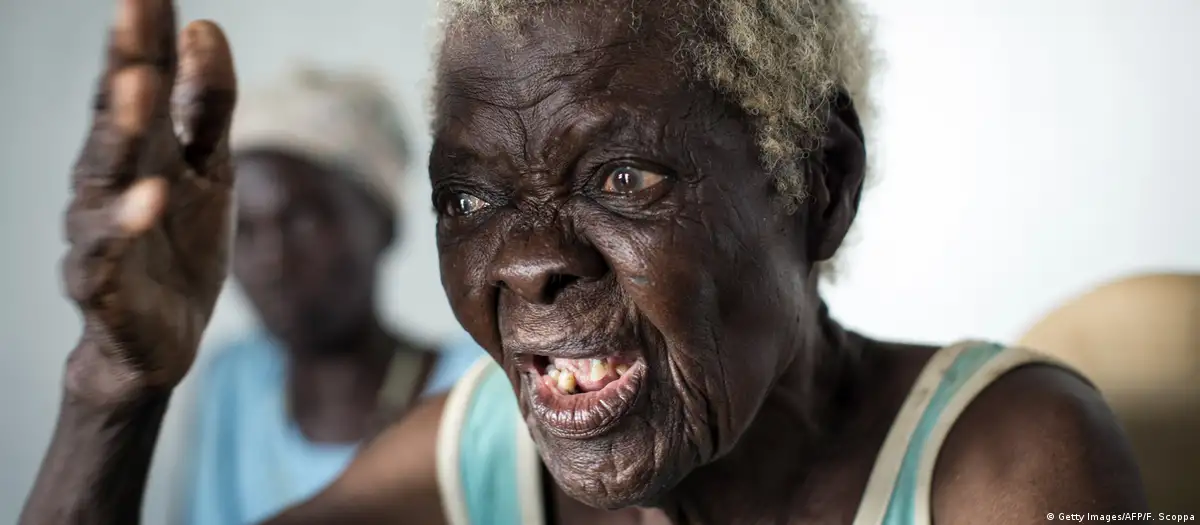
Accusations of witchcraft typically affect the most vulnerable — such as this refugee living in the DRC
Image: Getty Images/AFP/F. Scoppa

Published: August 10, 2023
By: Charlotte Müller | Sertan Sanderson – DW

Witch hunts are far from being a thing of the past — even in the 21st century. In many countries, this is still a sad reality for many women today. That is why August 10 has been declared a World Day against Witch Hunts.

Akua Denteh was beaten to death in Ghana’s East Gonja District last month — after being accused of being a witch. The murder of the 90-year-old has once more highlighted the deep-seated prejudices against women accused of practicing witchcraft in Ghana, many of whom are elderly.

An arrest was made in early August, but the issue continues to draw attention after authorities were accused of dragging their heels in the case. Human rights and gender activists now demand to see change in culture in a country where supernatural beliefs play a big role.

But the case of Akua Denteh is far from an isolated instance in Ghana, or indeed the world at large. In many countries of the world, women are still accused of practicing witchcraft each year. They are persecuted and even killed in organized witch hunts — especially in Africa but also in Southeast Asia and Latin America.

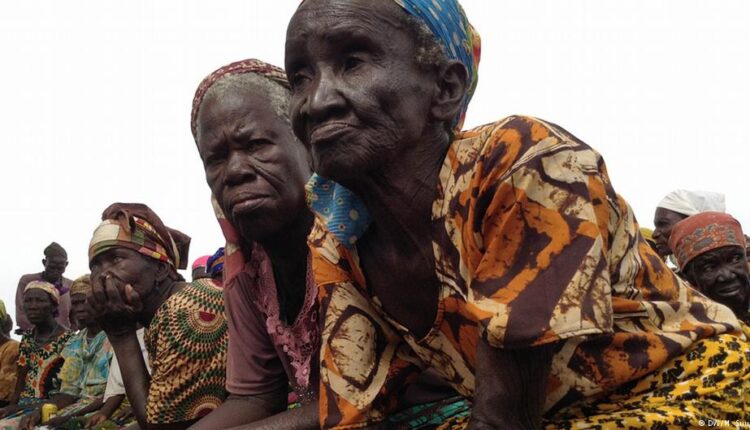
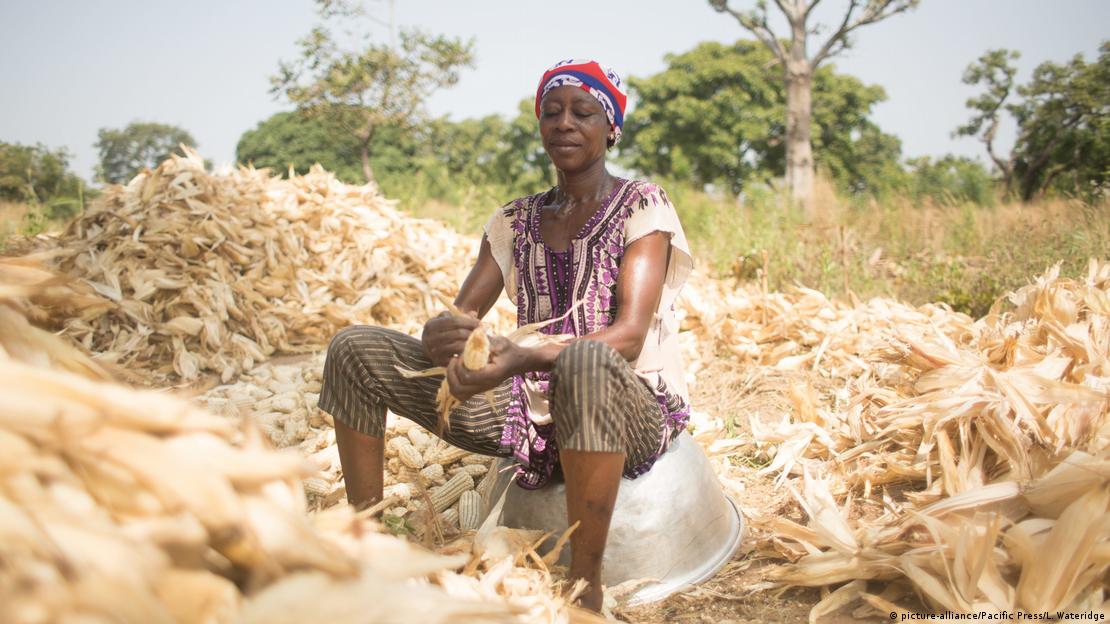
Many women in Ghana are pushed to live in so-called witch camps because they are rejected by society Image: picture-alliance/Pacific Press/L. Wateridge

Witch hunts: a contemporary issue

Those accused of witchcraft have now found a perhaps unlikely charity ally in their fight for justice: the Catholic missionary society missio, which is part of the global Pontifical Mission Societies under the jurisdiction of the Pope, has declared August 10 as World Day against Witch Hunts, saying that in at least 36 nations around the world, people continue to be persecuted as witches.

While the Catholic Church encouraged witch hunts in Europe from the 15th to the 18th century, it is now trying to shed light into this dark practice. Part of this might be a sense of historical obligation — but the real driving force is the number of victims that witch hunts still cost today. 

Historian Wolfgang Behringer, who works as a professor specializing in the early modern age at Saarland University, firmly believes in putting the numbers in perspective. He told DW that during these three centuries, between 50,000 and 60,000 people are assumed to have been killed for so-called crimes of witchcraft — a tally that is close to being twice the population of some major German cities at the time.

But he says that in the 20th century alone, more people accused of witchcraft were brutally murdered than during the three centuries when witch hunts were practiced in Europe: “Between 1960 and 2000, about 40,000 people alleged of practicing witchcraft were murdered in Tanzania alone. While there are no laws against witchcraft as such in Tanzanian law, village tribunals often decide that certain individuals should be killed,” Behringer told DW.

The historian insists that due to the collective decision-making behind these tribunals, such murders are far from being arbitrary and isolated cases: “I’ve therefore concluded that witch hunts are not a historic problem but a burning issue that still exists in the present.”

A picture of so-called witch doctors in Sierra Leone taken roughly around the year 1900 Image:
Getty Images/Hulton Archive

A pan-African problem?

In Tanzania, the victims of these witch hunts are often people with albinism; some people believe that the body parts of these individuals can be used to extract potions against all sorts of ailments. Similar practices are known to take place in Zambia and elsewhere on the continent.

Meanwhile in Ghana, where nonagenarian Akua Denteh was bludgeoned to death last month, certain communities blamed the birth of children with disabilities on practices of witchcraft.

Screenshot – to watch the video please consult the source

In the Democratic Republic of the Congo, it is usually the younger generations who are associated witchcraft. So-called “children of witchcraft” are usually rejected by their families and left to fend for themselves. However, their so-called crimes often have little to do with sorcery at all:

“We have learned of numerous cases of children suffering rape and then no longer being accepted by their families. Or they are born as illegitimate children out of wedlock, and are forced to live with a parent who no longer accepts them,” says Thérèse Mema Mapenzi, who works as a mission project partner in the eastern DRC city of Bukayu.

‘Children of witchcraft’ in the DRC

Mapenzi’s facility was initially intended to be a women’s shelter to harbor women who suffered rape at the hands of the militia in the eastern parts of the country, where rape is used as a weapon of war as part of the civil conflict there. But over the years, more and more children started seeking her help after they were rejected as “children of witchcraft.”

With assistance from the Catholic missionary society missio, Mapenzi is now also supporting these underage individuals in coping with their many traumas while trying to find orphanages and schools for them.

“When these children come here, they have often been beaten to a pulp, have been branded as witches or have suffered other injuries. It is painful to just even look at them. We are always shocked to see these children devoid of any protection. How can this be?” Mapenzi wonders.

Thérèse Mema Mapenzi is trying to help women and girls accused of being “children of witchcraft”
Image: missio

Seeking dialogue to end witch hunts

But there is a whole social infrastructure fueling this hatred against these young people in the DRC: Many charismatic churches blame diseases such as HIV/AIDS or female infertility on witchcraft, with illegitimate children serving as scapegoats for problems that cannot be easily solved in one of the poorest countries on earth. Other reasons cited include sudden deaths, crop failures, greed, jealousy and more.

Thérèse Mema Mapenzi says that trying to help those on the receiving end of this ire is a difficult task, especially in the absence of legal protection: “In Congolese law, witchcraft is not recognized as a violation of the law because there is no evidence you can produce. Unfortunately, the people have therefore developed their own legal practices to seek retribution and punish those whom call them witches.”

In addition to helping those escaping persecution, Mapenzi also seeks dialogue with communities to stop prejudice against those accused of witchcraft and sorcery. She wants to bring estranged families torn apart by witch hunts back together. Acting as a mediator, she talks to people, and from time to time succeeds in reuniting relatives with women and children who had been ostracized and shamed. Mapenzi says that such efforts — when they succeed — take an average of two to three years from beginning to finish.

But even with a residual risk of the victims being suspected of witchcraft again, she says her endeavors are worth the risk. She says that the fact that August 10 has been recognized as the World Day against Witch Hunts sends a signal that her work is important — and needed.

Hunting the hunters  a dangerous undertaking

For Thérèse Mema Mapenzi, the World Day against Witch Hunts marks another milestone in her uphill battle in the DRC. Jörg Nowak, spokesman for missio, agrees and hopes that there will now be growing awareness about this issue around the globe.

As part of his work, Nowak has visited several missio project partners fighting to help bring an end to witch hunts in recent years. But he wasn’t aware about the magnitude of the problem himself until 2017.

The first case he dealt with was the killing of women accused of being witches in Papua New Guinea in the 2010s — which eventually resulted in his publishing a paper on the crisis situation in the country and becoming missio’s dedicated expert on witch hunts.

But much of Nowak’s extensive research in Papua New Guinea remains largely under wraps for the time being, at least in the country itself: the evidence he accrued against some of the perpetrators there could risk the lives of missio partners working for him.

Not much has changed for centuries, apart from the localities involved when it comes to the occult belief in witchcraft, says Nowak while stressing: “There is no such thing as witchcraft. But there are accusations and stigmatization designed to demonize people; indeed designed to discredit them in order for others to gain selfish advantages.”

Maxwell Suuk and Isaac Kaledzi contributed to this article.

Screenshot – to watch the seven images please consult the source

Source: Witch hunts: A global problem in the 21st century

Witchcraft Persecution and Advocacy without Borders in Africa

Leo Igwe does not need any introduction. Multiple times I have posted articles on this indefatigable human rights champion. See e.g. my October 25, 2021 posting.

The belief in witchcraft and the weak rule of law in many African countries contribute to mob justice (or ‘jungle justice’ as this popular act is also called) and lynchings of perceived witches. In Kenya e.g., as in many other African countries, mob justice is criminal. Nevertheless, up to five incidents are reported (!) weekly in this East African country. The reader may guess what happens in other African countries… (FVDK).

Witchcraft Persecution and Advocacy without Borders in Africa

Published: March 3, 2023
By: This Day – Nigeria

The Advocacy for Alleged Witches urges Africans to campaign against abuses linked to witchcraft beliefs everywhere. This call follows the rescue of Nigerian nationals, who were accused of witchcraft in Kenya. As reported, the police rescued these Nigerians in Thika Town in Kiambu County. It was stated that an angry mob beat and almost lynched them while they were performing some rituals. These Nigerians claimed that they were conducting some prayers. It was not stated the kind of prayers that they were conducting. The police intervened, resisted the mob, and took these nationals, who sustained some injuries, to a nearby hospital.

The Advocacy for Alleged Witches commends the Kenya police for intervening and rescuing these foreign nationals. As in many parts of Africa, witchcraft accusation is a killer phenomenon, and a death sentence. These foreign nationals were fortunate. Police rescued them. In many instances, the police arrive late, after the damage has been done.

Recently, Kenya recorded incidents of witch persecution and killing. Last week, two elderly women, accused of witchcraft, were lynched in Murang’a County. There is still no information regarding the arrest and prosecution of suspected perpetrators of this heinous crime. In other African countries, such as Ghana, Malawi, Zambia, and Zimbabwe, accusations of witchcraft and witch persecution take place. Alleged witches have been attacked, killed, or banished. However, in most cases, locals are the target. 

People often accuse members of their neighbors, members of their family or community. This incident draws attention to the fact that foreigners are also at risk of being accused. Africans should look beyond their borders in advocating against witchcraft-linked violations. People often demonize strange and unfamiliar prayer and ritual forms. They regard them as evil, as invocations of occult harm. African Christians and Muslims have been indoctrinated to demonize, occultize and witchcraftize religious others, especially traditional religions or any ritual forms that deviate from religion, as they know it.

As this incident has illustrated, those who conduct prayers and rituals that depart from local norms are at risk of being accused of witchcraft and evil magic. Witchcraft accusation is a threat to the lives of Africans everywhere. Africans should not look the other way as alleged witches are attacked and killed in other countries. They should know that everyone is at risk of being accused or killed for witchcraft, whether you are a local or a foreigner. Africans should strive to advocate against witchcraft accusations and witch persecution without borders.


Leo Igwe directs the Advocacy for Alleged Witches

Source: Witchcraft Persecution and Advocacy without Borders in Africa

Related: 9 foreigners escape death in Thika after prayers mistaken for witchcraft
Published: February 28, 2023
By: Nation – Kenya

Baby’s eyes gouged out for rituals – two persons arrested in Kenya 

Warning: The following articles’ graphic contents may upset readers

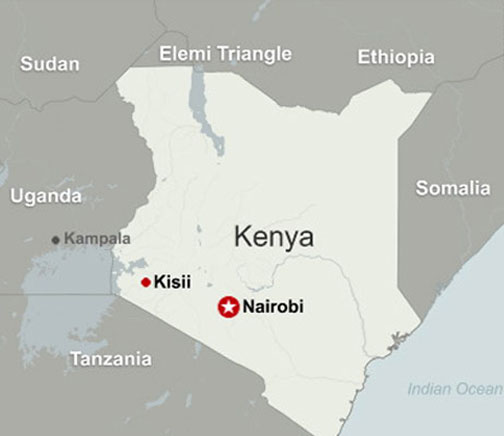
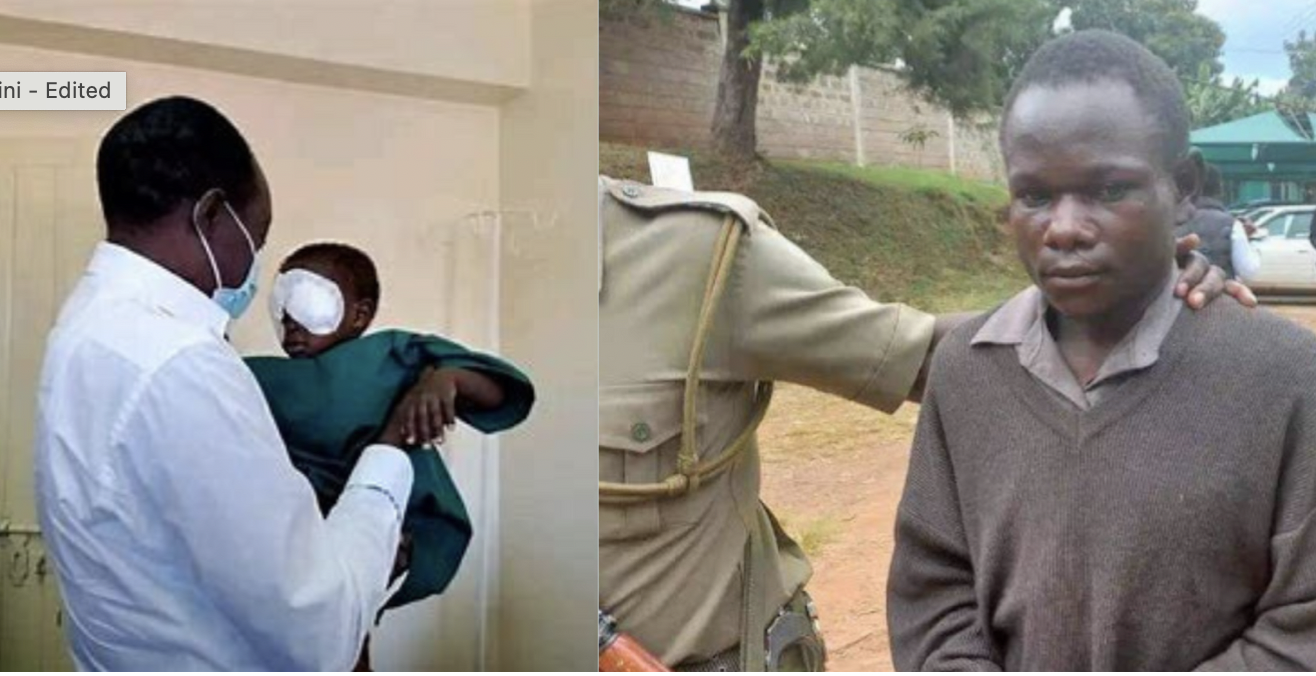
Nothing less than a horror story. In Kisii, in south-western Kenya a three-year old baby was attacked, his eyes gouged out allegedly for ritualistic reasons. The baby was saved and at present is in a stable condition but unfortunately the small boy will never regain his eyesight.

The police has arrested a suspect. Also the baby’s mother has been arrested. They are suspected to have gouged out baby Sangini’s eyes for ritualistic purposes.

The gory attack has caused many reactions, people are angry and saddened that an innocent child was attacked and that he will be blind for the rest of his life.

The story is almost too horrific to believe and the reader is warned that the following articles on baby Sangini contain graphic details including a photo of the young victim.

It is mainly because a similar attack took place on the other side of the African continent that I decided to draw attention to the mutilation of the Kenyan baby Sangini. Earlier this year, in June, police in Bauchi State, Nigeria, arrested three individuals for allegedly gouging out the eyes of a boy, also for rituals. Tomorrow I will post more details about the latter case. (webmaster FVDK).

Man suspected to have gouged out Baby Sagini’s eyes arrested
The eyes were gouged out to be used as rituals

In Summary: 

  • The suspect was Monday expected in court as investigators go on with their work. More suspects are being sought, police said Monday December 19.
  • Maina Ochoki (Baby Junior Sagini’s Cousin) is believed to be main the suspect in the case of Baby Sagini.
Maina Ochoki first suspect in the Marani case arrested,set to appear in court

Published: December 19, 2022
By: Cyrus Ombati, The Star – Kenya

Police on Sunday arrested the main suspect in a case where a three-year-old boy had his eyes gouged out in Kisii.

Maina Ochoki, baby Junior Sagini’s cousin, is believed to be the main suspect in the case of Baby Sagini.

Police investigators say Maina and his mother Pacifica gouged out Baby Sagini’s eyes to be used as a ritual.

The suspect was Monday expected in court as investigators go on with their work.

More suspects are being sought, police said on Monday, December 19.

By Sunday, Sagini was due for discharge following the doctor’s advice.

Kisii Eye Hospital director Dan Kiage said the boy was responding well to treatment and ready for discharge.

“It is unfortunate he will not see,” he said.

Sagini had been in the company of other children when he broke away, only to be found with his eyes gouged out and writhing in pain.

Source: Man suspected to have gouged out Baby Sagini’s eyes arrested

Also:

Attempted murder – Suspect in baby Sagini’s case detained for five days
The three-year-oild had his eyes gouged out for a suspected ritual

In Summary:

* Police successfully sought to have Ochogo detained for five days over investigations into the gouging out of baby Junior Sagini’s eyes.
* Prosecutor Hilary Kaino made the miscellaneous application to enable them arrest more suspects including Ochogo’s mother who is the main suspect.

ATTEMPTED MURDER: Alex Ochogo arrested for allegedly gouging the eyes of the three-year-old boy at Ikuruma village in Marani subcounty, Kisii on Monday, December 19. 
Image: CYRUS OMBATI

Published: December 19, 2022
By: Magati Obebo, The Star – Kenya

A man arrested for allegedly gouging out the eyes of a three-year-old boy in Kisii will be detained for five days pending investigations.

Alex Ochogo, 26, appeared before senior resident magistrate Christine Ogweno at Kisii law court on Monday.

Police successfully sought to have him detained for five days over investigations into the gouging out of baby Junior Sagini’s eyes at Ikuruma village in Marani subcounty, Kisii.

Prosecutor Hilary Kaino made the miscellaneous application to enable them arrest more suspects including Ochogo’s mother who is the main suspect.

Kaino told the court that Ochogo was seen escorting his mother to a bus station, who then fled to Nairobi on the day baby Sagini was found in a maize plantation.

Police are investigating a case of attempted murder.

“The main suspect was the last person seen with this child in the evening, hours before he disappeared. The following morning this suspect left to Nairobi,” Kaino told the court.

The prosecutor told the court that holding the suspect in custody will guarantee his safety against harm by members of the public.

Advocates Daphine Biyaki and Nduhukire Anita who were watching the brief for baby Sagini, agreed with the prosecutor’s application to detain the suspect for five days.

Ogweno ruled that the suspect will be detained at Rioma police station for five days as the police conclude investigations.

“The suspect will be arraigned in the same court on December 23 to know his fate as the court gives directions,” the magistrate said.

Baby Sagini’s mother was also arrested on Sunday and booked at Nyanchwa police station under OB NO 13/18/12/2022.

She was locked at the court’s police cells and later driven away by DCI officers the moment Ochogo appeared in court.

Baby Sagini who is admitted at Kisii Eye hospital in an early interview said a man with a rope and a torch took him from their home compound where he was playing with other kids.

Sagini’s eye specialist Dr Dan Kiage said the boy is in a stable condition however, there is no way he will regain his eyesight.

Police said Ochogo and his mother Pacifica are suspected to have gouged out Sagini’s eyes to be used as ritual for Ochogo’s father.

It is alleged that the two conspired in December 2021 and killed Ochogo’s father.

Source: Suspect in baby Sagini’s case detained for five days

Also see:

Manhunt – Sonko issues Sh200,000 reward for suspects in Sagini case
Baby Sagini, 3, had his eyes gouged out during an attack by unknown thugs in Kisii

In Summary: 

  • He offered a Sh400,000 reward to any officer who will fish out the suspect.
  • The former governor further promised an additional Sh200,000 for any person who volunteers information that may lead to arrest of the key suspects
CASH REWARD: Former Nairobi governor Mike Mbuvi Sonko. 

Published: December 18, 2022
By: Magati Obebo, The Star – Kenya

Former Nairobi governor Mike Sonko has joined other leaders to condemn the assault on Junior Sagini from Ikuruma, Marani in Kisii.

Sagini, 3, had his eyes gouged out during a gory attack by unknown thugs on Thursday night.

Sonko described the incident as saddening.

He offered a Sh400,000 reward to any officer who will fish out the suspect.

The former governor further promised an additional Sh200,000 for any person who volunteers information that may lead to arrest of the key suspects.

The incident has evoked a string of reactions across the political divide.

Nominated Senator Essy Okenyuri visited Sagini at Kisii Eye Hospital on Saturday where he is receiving treatment.

She asked security agencies investigating the case to leave no stone unturned.

Okenyuri said no child deserves to go through torture, the kind Sagini suffered in the hands of his tormentors.

“Every child deserves to be treated with dignity notwithstanding the circumstances they are brought up. I am hoping nothing will stand in the way as justice is sought for him,” she said.

Political activist Steven Nyarangi said the incident was heart wrenching.

By Saturday evening, detectives in Kisii said they were quizzing the father-Thomas Ongaga- over the incident.

He had been living with the child after separating with the wife.

Police, however, said he was not in their custody yet as a suspect adding that they sought him for information as part of preliminary investigations.

Already Vigilance House has dispatched an additional team of detectives to help unravel the motive behind the bizarre attack.

In Kisii, friends have begun donating money for Sagini’s medical bill.

The hospital bills has shot to Sh100,000 with family members requesting help. 

At the hospital, Sagini innocently played in his bed with bandages wrapped on the empty sockets oblivious that the verdict on his ability to see again had been decided by a tormentor.

He asked doctors when he is going to see.

Villagers and relatives at Ikuruma found him covered in blood and crying in pain after a night out in the cold.

The minor is said to had broken off from the other team of children sent out Wednesday to fetch water only to be discovered with eyes gouged out.

The attack on the boy horrified Kenyans, leading to a growing outcry and outrage over violence against children in the country. 

Source: Sonko issues Sh200,000 reward for suspects in Sagini case

Also see:

Discharged – Kisii Governor Arati offsets baby Sagini’s hospital bill, condemns attack
The three-year old baby had his eyes gouged out during an attack by unknown thugs

In Summary: 

  • Arati visited the baby at Kisii Eye Specialist Hospital on Sunday morning where he volunteered to offset the Sh100,000 medical bill.
  • Kisii Eye Hospital director Dan Kiage said the boy was responding well to treatment and ready for discharge.
MEDICAL BILL: Kisii Governor Simba Arati with Kisii Eye Hospital boss Dan Kiage after he visited baby Sagini whose eyes were gouged out by an attacker on Thursday night. 
Image: MAGATI OBEBO

Published: December 18, 2022
By: Magati Obebo, The Star – Kenya

Kisii Governor Simba Arati has termed baby Junior Sagini’s attack as appalling and despicable.

The three-year-old had his eyes gouged out by unknown thugs in Ikuruma, Marani on Thursday night.

Arati visited the baby at Kisii Eye Specialist Hospital on Sunday morning where he volunteered to offset the Sh100,000 medical bill.

Sagini was due for discharge following the doctor’s advice.

Kisii Eye Hospital director Dan Kiage said the boy was responding well to treatment and ready for discharge.

“It is unfortunate he will not see,” he said.

Sagini had been in the company of other children when he broke away, only to be be found with his eyes gouged out and writhing in pain.

Arati said plans are afoot to have Sagini and his sister relocated to a safe house. 

“It is unfortunate that such a small boy could be brutalised like this. It points to the growing mental problems society is grappling with, which should form part of the wider investigations,” Arati said.

During the visit, Arati asked security agencies and government administrators in the villages to monitor families that go through marital challenges and refer them for counseling, to avert such disasters.

He offered to set up a rehabilitation centre, to take care of such cases.

“We will do a supplementary budget to ensure this is realised,” the governor said.

Also see:

In Kisii – Detectives probe father of boy whose eyes were gouged out
Cops say they have not arrested him but are only questioning him

In Summary: 

• County police boss Mutungi Musyoki, however, said they are only questioning the father as part of the preliminary investigations.

• He is currently recovering at Kisii Eye Hospital, where doctors said he will never see again following the attack.

Published: December 17, 2022
By: Magati Obebo, The Star – Kenya

Detectives in Kisii on Saturday opened a probe into the bizarre incident  where a minor’s eyes were gouged out in a Thursday night attack in Marani.

They have questioned the father of the boy, Thomas Ongaga- who lives with the children alone after separating from their mother.

Police said they are piecing every detail together as they search for clues that may lead to the arrests of key suspects in the macabre attack on the three-year-old.

County police boss Mutungi Musyoki, however, said they are only questioning the father as part of the preliminary investigations.

“We are only questioning him, he has not been arrested,” Musyoki told journalists.

The motive of the beastly act remained unknown as a manhunt for the suspects continues.

The minor, Junior Sagini, was reported missing after visiting the maize farm with her seven-year-old sister.

There were other conflicting reports that they were in the company of other children and that they had been sent to fetch water when he broke away from the team only to be found later, soaked in blood with eyes gouged out.

He is currently recovering at Kisii Eye Hospital, where doctors said he will never see again following the attack.

Police said they are not leaving anything to chance as the manhunt is still on.

“We want to know what happened in between the visit to the farm, at what point did the two siblings separate, who kidnapped him and committed the heinous act on him,” Musyoki said.

Kisii Eye Hospital director Dan Kiage said that the boy was in bad shape when he was brought in.

“It appears the attacker used a sharp object like a knife to injure the eyelids. The problem is that he won’t see again,” he said. 

Source: Detectives probe father of boy whose eyes were gouged out

See also:

Horror as boy, 3, kidnapped and eyes gouged out in Kisii
Minor was rushed to hospital after he was found with his case covered with blood

In Summary: 

  • The minor was rushed to the Kisii Eye Hospital after he was found with his face covered with blood.
  • When the other children got home with their jerrycans full of water, they informed his grandmother what had happened.

Published: December 17, 2022
By: Cyrus Ombati, The Star – Kenya

A special police squad has been sent to a village in Kisii to investigate a bizarre incident where suspected thugs kidnapped a three-year-old baby and gouged out his eyes before dumping him at the family’s banana plantation.

The gang is said to have taken away the child from his family home in Marani on Wednesday, December 14 evening and held him for more than six hours, sending the family into panic as they searched for the minor’s whereabouts in vain.

The minor was rushed to the Kisii Eye Hospital after he was found with his face covered with blood.

Doctors have said he will remain blind for now and he is recuperating in the general ward after a surgical procedure.

“Both his eyes had been removed completely and there are some injuries in the lids…so it looks like there was a sharp instrument like a knife that was used,” Dr Daniel Kiage at the facility said.

Residents of Ikuruma village in Marani, Kisii county, are yet to tell the motive of the incident.

Police had initially arrested one of the boy’s relatives as a suspect in the investigations but later released him for lack of evidence connecting him to the crime.

A team of detectives has since been sent from Nairobi to boost local ones in the probe.

Director of Criminal Investigations Mohamed Amin said they want to know the motive and those behind the bizarre incident.

Swathes of bandages are covering the emptiness where his eyes once were.

His family is calling on the police to speed up investigations and bring to the perpetrators to book.

Doctors said the boy is scheduled for a second operation as soon as he is stable enough.

The boy’s grandmother Rael Mayieka told police it all started when her grandson, went to fetch water from a nearby spring.

He was in the company of other children but it is said that he threw his jerrycan into a nearby thicket and started running away.

When the other children got home with their jerrycans full of water, they informed his grandmother what had happened.

The granny went to the spring searching for her grandson, but he was nowhere to be seen.

It was until the following day that his elder brother who had gone to cut grass for the cows pounced on him in a maize plantation and alerted them.

Source: Horror as boy, 3, kidnapped and eyes gouged out in Kisii

And another report:

Cousin: This is why we gouged out 3-year-old baby Sangini’s eyes

Kisii (also known as Getembe or Bosongo) is located in south-western Kenya, near lake Victoria