Twenty-five years after Aidan Minter made his shocking discovery, the case has been revisited in a new documentary, The Body in the River, which aired on Channel 5 (article included below).
The murder mystery was never solved. The boy’s identity remains unknown, the perpetrator(s) got away with their heinous crime.
I present the following article published by MyLondon.new for reasons of completeness though it contains little additional news compared to my previous posts.
It is followed by a Daily Mail article on the recently released documentary ‘Boy in the Thames Case’, available on Channel 5.
However, this also contains few new facts. Hence, the mystery remains. (webmaster FVD)
‘I saw a decapitated boy dumped in River Thames – one thing left me in utter disbelief’
Published: March 13, 2026 By: Daniel Windham – MyLondon
Aidan Minter
Aidan Minter says he will never forget the day he saw a headless boy’s body floating in the River Thames, a horrific discovery that has remained unsolved for more than two decades.
A man who discovered the mutilated body of a young boy in the River Thames has described the moment he realised what he was looking at as one of the most horrifying experiences of his life.
More than two decades after the shocking discovery, the case has been revisited in a new documentary, The Body in the River, which aired on Channel 5. Despite years of investigation, the child’s killer has never been brought to justice.
The victim — later named “Adam” by police — is believed to have been between four and seven years old and originally from Africa. Investigators concluded he had been trafficked into the UK before being brutally murdered in what experts believe was a ritual killing.
The grim discovery was made on September 21, 2001, when IT consultant Aidan Minter was crossing Tower Bridge and noticed something unusual drifting through the water below.
At first, he thought the object might be a shop mannequin with a piece of red cloth attached. But as it passed beneath the bridge, the horrifying truth became clear — it was the torso of a child.
Handout photo issued by ITV London Tonight of a child, named Adam by police(Image: PA)
Recalling the moment years later, Minter said the injuries immediately shocked him.
He told the programme: “So when I saw the the body as it floated under, I remember thinking that the amount of damage that have been done to it was just incredible. I was just in utter disbelief.
“It’s quite alarming when you see it up close because I was only about 30 ft away from me at the time. And the incoming tide was quite fast but it was long enough to see all of that detail.
“All of the injuries that had been inflicted on that. I’ve never seen anything like that before. And. I’ll never forget it. But it is probably one of the most horrific things I’ve ever seen in my life.”
Police recovered the body further upstream near Shakespeare’s Globe Theatre later that day.
Forensic analysis revealed the boy had died after his throat was cut. His arms, legs and head had all been deliberately removed, and those body parts have never been found.
Investigators also discovered he had been fed a strange mixture shortly before his death. Tests showed it contained African river clay, ground bone, vegetation and traces of gold and quartz. He had also been given small amounts of Calabar bean — a toxic plant known as the “doomsday bean” — which can cause paralysis while leaving a victim conscious.
Houses of Parliament, Thames River and Westminster Bridge in London(Image: Getty Images)
Experts concluded the killing was likely ritualistic, possibly linked to a distorted form of spiritual practices sometimes associated with “muti” killings or certain West African belief systems.
The case sparked international attention, prompting an appeal from former South African president Nelson Mandela.
He said: “The boy comes from somewhere in Africa, so if anywhere, even in the remotest village of our continent, there is a family missing a son of that age who might have disappeared around that time please contact the police.”
Despite a number of arrests over the years, no one has ever been charged with Adam’s murder.
Former Metropolitan Police commander Andy Baker, who worked on the investigation, believes crucial evidence still exists somewhere in London.
He said: “When you think what that child went through, someone out there knows what happened. Whether that’s the murderer himself or those involved in the murder. There must be a crime scene somewhere. And it’s in London.
“There must be a place where Adam was laid upside down, tilted, head down, and then brutally dismembered and had his throat cut in such a violent way.
Andy Baker of Metropolitan Police(Image: Channel 5)
“There will still be traces of blood at that premises, so even now I’d appeal to anyone who knows anything. If they know where it is, we can go and get that forensic evidence. And then it starts again.”
Over the years, detectives uncovered evidence linking the boy to Nigeria. Pollen samples and scientific analysis suggested he had lived near Benin City before being brought to Europe.
A woman named Joyce Osagiede later admitted she had cared for the boy in Hamburg, Germany, where she purchased the distinctive orange shorts he was wearing when his body was found. However, investigators were unable to gather enough evidence to charge her or anyone else.
Multiple theories emerged, including the possibility that the child — whose real name may have been Ikpomwosa or Patrick Erhabor — had been trafficked before his death.
In 2006, Adam was buried in an unmarked grave in London.
Today, the case remains one of the most disturbing unsolved murders in British criminal history. For those who worked on it — and for the man who first spotted the body — the lack of answers still weighs heavily.
Detective Nick Chalmers, who was part of the investigation, said: “This was an innocent young child. There are people responsible for his death who haven’t been brought to justice. Twenty years on, I wish we knew the identity of Adam – and his parents. In reality, he is a missing child from a family, who probably don’t know he’s buried here in London.”
‘The Body In The Thames’ is available to watch and stream on Channel 5
The longest unsolved child murder case in modern UK history could still be answered because ‘someone out there knows what happened’, a retired detective has said.
‘Adam’ was a name given by Scotland Yard to a young boy whose dismembered body was discovered floating in the River Thames in London on September 21, 2001.
The child’s identity remains unknown 25 years later with no one ever charged despite an investigation that took police to South Africa, Holland, Germany and Nigeria.
Adam, who is thought to have been a Nigerian boy aged five or six, is believed to have been trafficked to the UK via Germany then murdered in a ritualistic killing.
His body, which had the head and limbs severed, was discovered near the Globe Theatre and numerous high-profile appeals followed, including by then President of South Africa Nelson Mandela.
Now, a new Channel 5 documentary called ‘The Body in The River’ which aired last night has re-examined the heartbreaking and disturbing story of Adam.
Despite a series of people being arrested, there has never been a charge over his murder – but police still believe the evidence they need is somewhere in London.
Andy Baker, a former Metropolitan Police commander who worked on the investigation, has told the programme that the case could still be solved.
The spot near the Globe Theatre where the boy’s torso was found in the River Thames in 2001A photo was released in 2011 claiming to be Adam – but this claim was withdrawn a year laterA police officer shows a pair of shorts found on Adam when his torso was discovered in 2001
He said: ‘When you think what that child went through, someone out there knows what happened. Whether that’s the murderer himself or those involved in the murder. There must be a crime scene somewhere. And it’s in London.
‘There must be a place where Adam was laid upside down, tilted, head down, and then brutally dismembered and had his throat cut in such a violent way.
‘There will still be traces of blood at that premises, so even now I’d appeal to anyone who knows anything. If they know where it is, we can go and get that forensic evidence. And then it starts again.’
The boy’s body was discovered by a passing businessman called Aidan Minter who spotted it while walking across Tower Bridge just ten days after the 9/11 attacks.
He initially thought it was a tailor’s mannequin, but realised it was a child’s dismembered and decapitated torso – and police pulled this from the water.
Investigations found the black boy could have been in the water for up to ten days after having his throat slit. His arms, legs and head were all amputated.
Police had few clues on his identity, other than a pair of orange shorts he was wearing – but appealed to the public for help, including on Crimewatch.
Some 60 people called the BBC show in an attempt to help and detectives offered a reward of £50,000 for information that led to a murder conviction.
Police also took specialist pathologist advice from as far afield as Africa and carried out groundbreaking work on DNA and pollen samples inside the body.
Officers established that the boy had been drugged with a ‘black magic’ potion and sacrificed in a voodoo-style ritual killing before being thrown into the Thames.
They used pioneering techniques to trace radioactive isotopes in his bones to his native Nigeria – and even asked Mandela to appeal for information, which he did.
But they always struggled to identify the boy, despite travelling to Nigeria to try to trace his family. Detailed analysis of a substance in the boy’s stomach was identified as a potion which included tiny clay pellets containing small particles of pure gold.
Andy Baker, a former Metropolitan Police commander who worked on the Adam investigation, has told a new Channel 5 documentary that the case could still be solved 25 years laterA graphic prepared by Scotland Yard detectives investigating the murder of Adam in 2001ITV News tracked down Joyce Osagiede in Nigeria in 2011, and she said Adam was the boy in the photo – and his real name was Ikpomwosa, although withdrew this claim one year later
This indicated that Adam had suffered a Muti ritual killing, when a victim’s body parts are removed and used by witchdoctors as ‘medicine’ based on a belief that the body parts of children are sacred. The bodies are then often disposed of in flowing water.
Another theory was he was a human sacrifice linked to Yoruban beliefs in Nigeria, in an offering to the goddess Oshun – typically associated with water and fertility.
Police had a breakthrough in July 2002 when social workers in Glasgow were alerted to the safety of two girls living with their African mother Joyce Osagiede.
She had ritualistic objects in her home and spoke about cults, killings and of sacrifices during a family court hearing – which led to police searching her property.
Detectives found clothes with the ‘Kids & Company’ label – the same one as on Adam’s shorts – and in the same sizes as his clothing. Osagiede was then arrested.
Officers never charged her, but by December that year police had determined his birthplace to a strip of land around Benin City in Nigeria – Osagiede’s home city.
German police discovered she had lived in Hamburg until late 2001 – the city where the orange shorts found on Adam’s body were believed to have been purchased.
Osagiede was eventually deported after the Home Office rejected her asylum application but disappeared after arriving in Lagos on a chartered private jet.
Officers found she had a contact in her phone for a man called Mousa Kamara, and discovered evidence of Nigerian rituals known as Juju at his London home.
Kamara, whose real name turned out to be Kingsley Ojo, was arrested but released on bail because there was no evidence directly linking him to Adam’s murder.
Police did however charge Ojo with people smuggling and using fake documents to obtain a passport and driving licence. He pleaded guilty and was jailed for four years.
Kingsley Ojo was arrested but released on bail because there was no evidence directly linking him to Adam’s murder. Police did however charge Ojo with other offences and he was jailedDetective Inspector Will O’Reilly and John Azah lay a wreath on the Thames for Adam in 2002
While in prison, Ojo contacted police and said he wanted to help track down the killer, feeding them information for two years following his release. But officers eventually determined they could not rely on him, and he was deported back to Nigeria in 2008.
By 2011, another lead came when police searched through Osagiede’s belongings left with a friend in Germany and found a photo of a boy aged about five taken in 2001.
ITV News tracked down Osagiede in Nigeria, and she claimed Adam was the boy in the photo – and his real name was Ikpomwosa. She said she looked after him then gave him to a man called Bawa. But detectives could not positively identify the boy.
One year later, Osagiede’s brother Victor contacted BBC News and said the boy in the photo was in fact not Adam or ‘Ikpomwosa’. A reporter travelled to Benin City and found Osagiede, but she appeared confused and gave two other names for Adam.
Osagiede also identified someone in photo as ‘Bawa’ – which was actually a picture of Ojo. The BBC then tracked down Ojo in Nigeria but he continued to deny involvement in Adam’s murder and no evidence has ever linked him to the crime.
Since 2013 the investigation has become a ‘cold case’ with no significant new lines of enquiry – and Victor confirmed in 2020 that Osagiede had died in Nigeria.
Police launched an appeal on the 20th anniversary, with Detective Chief Inspector Kate Kieran saying the case remaining unsolved was ‘incredibly sad and frustrating’.
Speaking in 2021, she added: ‘We recognise people may not have wanted to speak up at the time and may have felt loyal to the person or people involved in this.
‘However, over the past 20 years, allegiances and relationships may have changed and some people may now feel more comfortable talking to us.’
The case has remained unsolved since then, but Scotland Yard will be hoping that the documentary could change this. The Daily Mail has contacted the force for comment.
‘The Body In The Thames’ is available to watch and stream on Channel 5
Warning: the article presented below contains graphic details of torture and murder that some readers may find distressing.
The main thrust of the article presented below was already the focus of an 2014 article which I posted in 2019, Children accused of witchcraft: abuse cases on the rise in UK. More than ten year after the publication of the first-mentioned article there is reason to again draw attention to this terrifying phenomenon. It is difficult to imagine that in our immediate environment children are abused, tortured, and sometimes killed because of the belief in witchcraft of the adult perpetrators, sometimes close relatives.
It all began with the discovery of the mutilated torso of a young boy floating in the river Thames, in 2001. The police gave him the name ‘Adam’ and under this name the poor victim became known worldwide. I have covered in much detail the horrific and sickening discovery and the harrowing story behind it. See my posts entitled The unsolved case of the torso in the Thames, Part I (dated March 25, 2019), Part II (March 27, 2019) and Part III (March 28, 2019).
Unfortunately, the case of ‘Adam’ does not stand alone as the article below amply demonstrates.
We must all be vigilant in identifying signs of child abuse and other crimes promptly and bringing them to the immediate attention of the authorities and relevant agencies. Vulnerable individuals in our society, such as young children, deserve a normal, loving life, free from threats and pain. (webmaster FVDK)
The disturbing evidence that witchcraft is spreading across Britain unchecked… 30 years after discovery of horrific voodoo-style murder should have ended it for good
Published: February 26, 2026 By: Aidan Radnedge and Nick Pyke, The Daily Mail
A quarter of a century has passed since the death of eight-year-old Victoria Climbie and the shocking realisation that voodoo-style murder and abuse were taking hold in the capital of a modern, affluent democracy.
Victoria met a horrific end. Tortured, beaten with implements including coat hangers and a bike chain, deliberately scalded and forced to sleep in a bin liner in a freezing bathroom, she finally died of multiple organ failure at the age of eight. Her tiny body, weighing just 3st 10lb, was marked by 128 separate injuries.
Her ‘crime’? The girl was said by relatives to have been possessed by ‘kindoki’, or evil spirits, requiring exorcism by a pastor and justifying a campaign of sadistic violence.
The killing in 2000 and the public enquiry that followed should have been seismic: a warning to the public and politicians that, however improbable, belief in witchcraft was emerging as a fact of life in Britain.
Yet today, despite the horror of Victoria’s death and subsequent cases, there is disturbing evidence that ritual violence – involving beliefs and practices overwhelmingly imported from abroad – is continuing to spread unchecked.
The latest official figures show a huge increase in the number of children identified as potential victims of abuse ‘linked to faith or belief’, a category including claims of witchcraft and spirit possession.
Analysis released late last year by the Local Government Association, representing councils and their social services departments in England, found there had been 2,180 cases of possible faith-linked abuse in 2024, a disturbing 49 per cent increase in the seven years since 2017.
Moreover, the true scale of the problem could be significantly worse amid fears that ritual abuse is routinely under-reported because social workers and others wish to avoid being labelled racist.
Among the most notorious cases was eight-year-old Victoria Climbié, tortured to death in 2000 by relatives who believed she was possessed
With motives ranging from ignorance and fear to the demented belief that human sacrifice confers supernatural protection, and even wealth, the cases that do reach the public eye are harrowing, the majority with links to sub-Saharan Africa.
A recent documentary film, Kindoki Witch Boy, tells the story of Mardoche Yembi, who had been sent from the Democratic Republic of Congo to live with his aunt and uncle in North London.
At the age of 12, Mardoche was branded a witch by relatives, accused of bringing bad luck and subjected to two months of traumatic exorcisms. The film is now available on YouTube.
An even more disturbing case took place on Christmas Day in 2010, when 15-year-old Kristy Bamu was beaten and drowned by his sister and her boyfriend in the London borough of Newham after being accused of ‘kindoki’, like Victoria Climbie.
Kristy endured four days of torture with knives, sticks, metal bars, a hammer and pliers. He drowned after being forced into a bath for ritual cleansing. Kristy’s siblings were also beaten but survived because they ‘confessed’ to being witches.
Magalie Bamu, then 29, and her partner Eric Bikubi, 28 – both Congolese – were jailed for life in 2012.
In sentencing them, the judge said: ‘The belief in witchcraft, however genuine, cannot excuse an assault to another person, let alone the killing of another human being.’
There are accusations of ‘possession’ in other cultures, too, with cases of abuse reported in Christian, Hindu and Muslim families, where some still believe in the idea of evil spirits known as ‘djinns’.
Just days before Kristy’s Bamu’s murder, Shayma Ali strangled then disembowelled her four-year-old daughter with a kitchen knife during a frenzied attempt to exorcise the girl.
Ali, who had gouged out the eyes of her daughter’s dolls to prevent them ‘seeing evil’, was sent to a mental hospital.
In 2005, two women were jailed at the Old Bailey after being convicted of child cruelty for torturing and threatening to kill an orphaned child refugee from Angola whom they claimed was a witch.
The Old Bailey was told that the girl, known only as Child B, was starved, cut with a knife, beaten with a belt and a shoe and had chilli peppers rubbed in her eyes to drive ‘the devil out of her’.
At one point, the eight-year-old was bundled into a zip-up laundry bag and told she would be ‘thrown away’ into a river. She was rescued after being found in her bare feet, shivering, outside a council house in Hackney.
His head, arms and legs had been removed in what detectives believe was a ritual killing, potentially as a sacrifice or in a ‘muti’ ceremony, in which body parts are taken in the belief they produce potent magical remedies.
The boy, aged between four and seven and found wearing only a pair of orange shorts, had recently arrived from Nigeria.
Britain’s leading rituals expert, Dr Richard Hoskins, brought into advise on the case, concluded that Adam was a victim of human sacrifice.
Victoria Climbié had been sent to England by her parents who hoped she would gain a better education than in her native Ivory CoastVictoria’s parents set up the Victoria Climbié Foundation following her death, campaigning for improvements to child protection in the UK
His 2012 book on the subject, The Boy in the River was serialised in The Mail on Sunday and is now scheduled to be dramatised as a feature film.
Dr Hoskins concluded that the boy had been trafficked to London, speculating that he was butchered while drugged but conscious by a ‘babalawo’ witchdoctor using rituals from the Yoruba people Osagiede of south-west Nigeria.
In Yoruban religion, wrote Dr Hoskins, ‘deities forming a bridge between this world and higher realms require sacrifice.
‘Not necessarily human sacrifice, of course, and especially not nowadays, but the practice persists in some deviant offshoots.’
In 2002, a Nigerian woman called Joyce Osagiede told Glasgow social workers that she had married a member of a cult called The Black Coat Eyes Of The Devil Guru Maharaj.
When later interviewed by British police in Lagos, she said she had been a cult organiser and had bought a pair of orange-red shorts similar to those found on Adam. She added: ‘I know he was killed in Lewisham.’
Osagiede later claimed to an ITV journalist that she had brought Adam to London and that his real name was Ikpomwosa. No one has ever been charged with his murder.
Yet it is the fate of Victoria Climbié that today remains the most notorious case of witchcraft abuse and killing in this country.
Victoria had been sent to England by her parents to gain a better education than in her native Ivory Coast but found only misery and death.
Victoria Climbié was starved, tortured, beaten with bike chains and kept prisoner in a freezing bathroom by her great-aunt Marie Therese Kouao and her partner Carl Manning (pictured)Marie-Therese Kouao (left), Victoria Climbié’s great-aunt, was complicit in her murder
Her great-aunt Marie Therese Kouao and her partner Carl Manning were jailed for life in 2001, convicted of murder and child cruelty.
The case was followed by a major public enquiry under Lord Laming which, in turn led to an overhaul of child protection measures in the UK, including the landmark 2004 Children Act.
Even now, ritual violence receives all-too-little attention, says Lancaster University’s Professor Charlotte Baker, who is co-director of the International Network Against Accusations of Witchcraft and Ritual Attacks.
‘If you spoke to many people about this issue, they’d think it was something from about 1,400 years ago,’ she told The Daily Mail last week.
‘Many schoolteachers might feel they shouldn’t ‘go there’, if they suspect something is taking place because they’re not comfortable handling such issues.
‘This needs to be treated seriously, disclosures need to be treated seriously – and the right questions need to be asked.
‘The UK must improve and make sure that anyone who does speak up to make disclosures about this abuse being carried out are taken seriously and responded to professionally.’
Former Conservative MP Tim Loughton, children’s minister in David Cameron’s coalition government and later chairman of the Home Affairs Select Committee, had his own experience of trying to combat ritual abuse.
Victoria’s parents Berthe and Francis are pictured at her grave in Kensal Rise Crematorium in London, along with daughter Joelle, in 2003 on the third anniversary of Victoria’s deathA boy named Adam’s head, arms and legs were removed in what detectives believe was a ritual ‘muti’ killing – his torso was discovered in the River Thames near Tower Bridge in 2001
‘The particular problem [at the time] was among communities of migrants from places such as the Congo, which were very closed communities, mostly but not exclusively in London, with very evangelical Christian church settings,’ he recalls.
‘There were very strange practices, all connected with voodoo – abusing children in attempts to drive the devil out of them and all this sort of nonsense.’
During his time in office, he launched a task force on faith-based child abuse, but he fears that official attention has now slipped.
Rohma Ullah, director of the National FGM (Female Genital Mutilation) Centre – which also tackles what it refers to as witchcraft and spirit possession abuse – is among those who believe frontline staff are wary of raising the alarm.
‘Witchcraft and spirit possession are among the most poorly understood areas in child protection,’ she says. ‘That’s really concerning and alarming. We know the data is not good enough and that professionals don’t know how to act. They don’t know what to do.
‘Professionals are anxious about discussing someone’s faith or beliefs because it’s very personal.
‘They fear being accused of being racist, for example – and so questions don’t get asked and opportunities get missed.’
She says that teachers as well as social workers should be alert to signs of abuse – such as, for example, a child appearing tired through having to pray all night to be rid of a devil inside them, or losing weight because food is being withheld at home.
15-year-old Kristy Bamu was beaten and drowned on Christmas Day 2010 by his sister and her boyfriend in east London after being accused of being a witchFollowing the murder, Magalie Bamu (left) and Eric Bikubi (right) were jailed for life
‘I would say the situation is fragmented,’ she continues. ‘Social workers are skilled in safeguarding, teachers are skilled in educating, police officers are skilling in preventing and addressing crime – but they also need to be equipped with specialist knowledge on this particular issue.’
Ms Ullah suggests the current figures, disturbing as they are, ‘probably don’t reflect the true prevalence of something that’s very hidden.’
She believes allegations of witchcraft and spirit possession receive too little attention when abusers to court and suggests they should be flagged as aggravating features when the perpetrators are sentenced.
And witchcraft has now been included for the first time in new toughened-up Crown Prosecution Guidance, published today in a bid to tackle ‘honour’-based abuse, forced marriage and other abuses.
Newly included in guidance for prosecutors are practices such as dowry abuse, immigration-related exploitation, transnational marriage abandonment and spiritual or ritualistic abuse linked to beliefs in witchcraft, spirit possession or demonic influence.
While there is no standalone withcraft-related offence, the Home Office said: ‘Prosecutors must treat these cases as serious criminality within the wider context of harmful practices and “honour”-based abuse, assessing which offences may apply on a case-by-case basis.’
Baljit Ubhey, CPS director of policy, said: ‘Our updated guidance equips prosecutors to identify emerging patterns of abuse, understand the wider context in which it occurs, and take swift, effective action to safeguard victims and bring perpetrators to justice.’
It is not as if we haven’t been warned. It is more than a decade since the United Nations reported: ‘Hundreds of children have been abducted from their families in Africa and trafficked to the UK, especially London. Many are raped and sexually abused.’
Commenting in The Mail on Sunday at the time, Dr Hoskins went further, arguing that ‘London has become the hub, the epicentre for a global trafficking enterprise involving thousands of children for exploitation, sexual abuse and even, in some unspeakable cases, ritual voodoo killing…’
‘There is a vast reservoir of lost children gathering in our own capital anonymously shuffled from flat to shabby flat – a dark pool feeding child exploitation and misery across the planet.’
Today’s evidence suggests that, chillingly, this terrible picture might now be darker still.
It’s impressive how the police uncovered everything, but it never led to a rial. The perpetrators went unpunished. A painful thought. (webmaster FVDK)
The photo Joyce Osagiede claimed to be Adam (Image: PA)
Mystery of boy’s torso found in Thames after ‘voodoo ritual’ remains decades later
Published: September 7, 2025 By: Saskia Rowlands – The Mirror, UK
More than two decades since little Adam’s torso was discovered in the river Thames, police are no closer to finding the boy’s killer after he was slaughtered in a horrific “voodoo ritual”
The child’s torso was dressed in orange shorts (Image: PA)
The torso of a little boy from Africa was found in London’s river Thames over two decades ago – but his killer is still on the loose.
An investigation found the youngster, aged between four and seven, was smuggled into Britain and slaughtered as part of a horrific voodoo ritual. Tests proved he had been plied with a powerful potion of gold dust and quartz, drugged into paralysis with a type of African bean and had his throat slit.
But despite several arrests and forensic breakthroughs over the years, nobody has been brought to justice for the horrific crime. As the 24th anniversary of the horror approaches, we take a fresh look at the evidence and how the story unfolded.
Officers recovered the body upstream (Image: SWNS)
The discovery
On September 21 2001, IT consultant Aidan Minter was walking across London’s Tower Bridge when he caught sight of something floating in the water. It was just 10 days after the 9/11 attacks in the US and the city was still strangely quiet.
At first, Aidan thought it was a shop mannequin with a red cloth attached to it. But as the object passed under the bridge and out the other side, he realised he was in fact staring at a headless child.
It’s a memory Aidan lives with to this day. He said during an interview in 2020: “I do think about him – I’ll never forget it for as long as I live.” Police pulled the body from the water upstream, close to the Globe Theatre, later that day. They named him Adam.
Aidan Minter spotted the torso in the river (Image: BBC NEWS)
The first week
Early investigations suggested Adam’s body may have been in the water for as long as 10 days. Police conclude he died from having his throat slit. His arms, legs and head had all been expertly amputated. The body parts have never been found.
There were no signs of physical or sexual abuse, and he had been well fed. He was wearing nothing but a pair of orange shorts – something which later gave officers their first breakthrough. The label indicated they were made by firm Kids & Company and the size and colour could only be found in a small number of shops in Germany.
Detective sergeant Nick Chalmers was one of the police officers assigned to the case and says it was the strangest and most complex of his career. He added: “You definitely have a tie to a case, and there’s this drive to find answers. The one thing that has lingered is the frustration that we didn’t find all the answers.”
Retired detective Nick Chalmers worked on the investigation (Image: BBC NEWS)
African connection
Tests showed Adam had lived in Africa until shortly before his death. Because his body had been precisely butchered, experts decided it had been a ritualistic murder.
Some thought it was a rare so-called “muti” killing found in southern Africa – when a victim’s body parts are removed and used by witchdoctors. Others said it was more likely a human sacrifice linked to a twisted version of Yoruban belief systems from Nigeria.
Nelson Mandela later made an impassioned plea to the African public for help, saying: “The boy comes from somewhere in Africa, so if anywhere, even in the remotest village of our continent, there is a family missing a son of that age who might have disappeared around that time please contact the police.”
Nelson Mandela made an impassioned plea (Image: Mirrorpix)
Breakthrough
In July 2002, social workers in Glasgow became concerned for the safety of two girls living with their mum, an African woman named Joyce Osagiede. Council workers found bizarre, ritualistic objects in her home. And at a court hearing to take the children into care, Joyce told an alarming story of cults, killings and sacrifices.
Joyce Osagiede was considered a key witness (Image: BBC NEWS)
DS Nick Chalmers searched her home and found clothes with the same Kids & Company label and in the same sizes as Adam’s orange shorts. Joyce is arrested.
Officers were convinced Joyce was an important part of the story, but she was confused and kept changing her account. She denied knowing Adam, but was unable to explain the extraordinary coincidence about the shorts. Officers lacked enough evidence to charge Joyce. She remained in Glasgow awaiting an asylum decision.
The shorts were from a brand called Kids and Company (Image: SWNS)
September – November 2002
Forensic work narrowed down Adam’s birthplace to land near Benin City in Nigeria, which is Joyce’s home city. Pollen samples in his gut showed he had been living in the south-east of England for a few days or weeks before his death. Also in his stomach was an unusual substance made of African river clay – including vegetation, ground bone and traces of gold and quartz. The presence of ash showed the mixture had been burned before Adam ate it.
In November, Joyce was deported after the Home Office rejected her asylum application. She vanishes after landing in Lagos. Afterwards, German police say she lived in Hamburg until late 2001, which is the city where Adam’s shorts were purchased.
July – October 2003
A man named Kingsley Ojo is arrested as part of several human trafficking raids in London. Police discovered he was one of two contacts on Joyce’s phone. And during a search of his house, officers find an animal skull pierced with a nail, liquid potions, packets of sand and a videotape labelled ‘rituals’ which showed an adult being beheaded.
Kingsley Ojo was jailed with four charges of people smuggling and using fake documents (Image: PA)
Meanwhile, botanists at London’s Kew Gardens analysed samples of a plant found in Adam’s gut and discovered he was fed small amounts of Calabar bean, sometimes known as the Doomsday, and used in witchcraft ceremonies in West Africa. The dosage found would have paralysed Adam but not prevented any pain. Ground up seeds from the Datura plant, which acts as a sedative and causes hallucinations, were also found.
Traces of so-called Doomesday seeds were found in Adam’s stomach (Image: Universal Images Group via Getty Images)
July – December 2004
Kingsley Ojo was jailed with four charges of people smuggling and using fake documents to obtain a passport and driving licence. He was said to have performed ‘juju’ ceremonies for other inmates behind bars.
An inquest into Adam’s death recorded a verdict of unlawful killing, hearing that he died from neck wounds suffered while he was still alive.
Adam was laid to rest in an unmarked grave( Image: BBC NEWS)
2005 – 2008
Kingsley Ojo offered to help the team investigating Adam’s death and claims he has secret recordings of Joyce. While awaiting deportation, he convinced officers he could help and spent two years feeding them information.
In December 2006, Adam’s body was laid to rest in an unmarked grave in a London cemetery. And two years later, Ojo is deported back to Nigeria after detectives decide they can’t rely on him.
In Nigeria, Joyce Osagiede finally admits she looked after Adam when she had lived in Hamburg in northern Germany and bought the orange shorts found on his body. A social worker assessing benefit claims later says she met Joyce on several occasions when she was in Hamburg and remembers seeing her with a small boy who she believes was Adam.
March 2011 – 2012
Joyce Osagiede claimed a photo found among her belongings in Germany was of Adam. She said his real name was Ikpomwosa and that she had looked after the boy, but gave him to a man called Bawa.
The following year, Joyce’s brother Victor said the boy in the photo was not Adam, claiming it was a misunderstanding. The BBC later met with Victor and Joyce who said the boy in the image was actually called Danny – who was later tracked down in Hamburg.
Joyce then suggests Adam was called Patrick Erhabor. She later identifies the man Bawa as trafficker Kingsley Ojo. Ojo continues to deny links to Adam’s killing and no evidence of his involvement is found.
The photo Joyce claimed to be Adam(Image: PA)
September 2021 – present
The Met Police launch a fresh appeal to find Adam’s killer to mark the 20 year anniversary of his body being found. The previous year, Joyce’s brother Victor revealed Joyce had died.
Aidan Minter, who spotted the body in the river, was diagnosed with acute post-traumatic stress disorder. He says he felt utterly helpless, knowing his discovery was somebody’s son.
For retired detective Nick Chalmers, the lack of answers is deeply frustrating. He said: “This was an innocent young child. There are people responsible for his death who haven’t been brought to justice. Twenty years on, I wish we knew the identity of Adam – and his parents. In reality, he is a missing child from a family, who probably don’t know he’s buried here in London.”
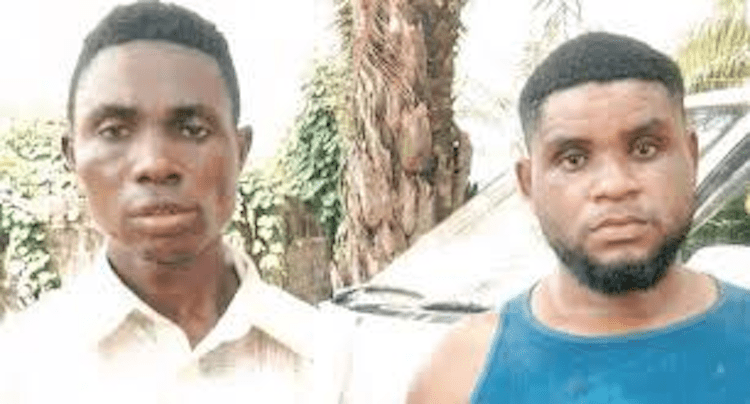
Screenshot from ICIR Nigeria website showing suspects Uche, Onoriode, Desmond and Obajero.
The International Center for Investigative Reporting, ICIR, is an independent, nonprofit news agency that seeks to promote transparency and accountability through robust and objective investigative reporting. The ICIR’s mission is to promote good governance and entrench democratic values by reporting, exposing, and combating corruption.
Comment webmaster FVDK under construction. Check Elozino Delta State University in earlier posts (webmaster FVDK)
Confession of Yahoo Plus Boys: “Ritual does not give us money”
Published: November 8, 2019 By: Ejiro Umukoro
IN their desperation to join the ranks of their compatriots who have been making millions of dollars out of online-scams, young Nigeria- based wannabe scammers known as ‘yahoo boys’ are resorting to the use of traditional charms and mystical powers to charm potential victims.
Yahoo Boys are young men —usually aged between 22-29 years—who specialize in various types of cybercrime. Many of them may be undergraduates or college dropouts whose distinct lifestyles of fast cars, wealth and ostentation is the envy of many of their age-mates. The Yahoo Boys are not limited by geography— the internet is their home— and their victims are as diverse as there are naive and people ready to fall for get-rich-quick scams.
There are numerous websites dedicated to providing tips for those interested in joining the growing ranks of Yahoo Boys. According to a research report, Understanding Cybercrime Perpetrators and the Strategies They Employ in Nigeria, the use of voodoo and charms for spiritual protection and to charm potential victims is very common among Yahoo Boys in Nigeria. The practice is referred to as “Yahoo Plus. According to the report, another level in the use of charms is known as Yahoo Plus Plus, which “involves the use of human parts and may need kidnapping other human beings for rituals, which is not necessary in ‘‘Yahoo Plus.’’ In Yahoo Plus Plus, the use of things such as victims finger nails, rings, carrying of corpses, making incision on their body, sleeping in the cemetery, citing of incantation, using of their fingers for rituals, and having sex with ghosts are common.”
Two suspects: Emudiaga and Desmond
Getting a Victim – The Kidnapping
The car drives by in a lazy fashion. Its three passengers, all male: Macaulay Desmond Oghenemaro, Emese Emudiaga Kelvin and Onoriode Enaike are good spotters. They know a victim when they see one. The signs are usually obvious: a response to a cat-call, eye contact, a smile, a wave of the hand, a thumbs up or just the mere sight of their expensive car is enough to pull a vulnerable, or even, willing participant. This is their fourth recon for their next task. The last three girls they got had been easy catch, their names unremembered, their bodies long decomposed; each one, a girl on the lookout for quick money, free food, or free drinks in return for a one night, short term, or simply a girl keen on dating only men who drive cars.
The three of them sight a potential victim. She flags them down and gets in. She looks about twenty-years-old. She’s not a student; a fashion designer she tells them. They drive to the hottest spot in town for drinks, skewered meat and food. They continue to pour alcohol into her glass, ordering more bottles of beer. She guzzles down the beer as she feasts on the meat and other goodies that they push before her.
The night was about to be ushered in. Their day job as ‘Yahoo boys’(online fraudsters) has taken a new twist. They are now Yahoo Plus Plus, a code name for ‘ritualists’ – or those who are in the business of getting human body parts for use in rituals and occult practices which are supposed to guarantee success of their internet scams. They signaled each other: it was time to take her out. They get her into the car in a drunken stupor then drive several kilometres to the outskirts of Oghara into a bush where they first plucked out one of her eyes while she was still alive. The young lady was crying, begging them to forgive her and let her go, but they went ahead and pluck the other eye, remove her breasts and heart before she died.
Three hours later they are done with her. They abandon her body out in the open, her hands and feet bound with marine ropes. Within three hours they cut off her organs: breasts, heart and eyes. Once they were done, they head for their next stop at the ‘Jazz Man’s’ shrine in Alegbo, Warri.
His name is Ojokojo Robinson Obajero, a 63-years-old man, who though an expert in herbal medicines, mixes his craft with occult practices. They call him the ‘Jazz Man’ in pidgin patois. When the three men meet him and presented the human organs, Obajero tells them when to return. They leave. Four days later, Obajero summons the three men and hands over the burnt ashes of the deceased’s body parts he claims he used in preparing a “money ritual concoction”, which he tells them will guarantee that their online victims fall prey for their tricks to obtain money through fraud.
Several weeks later they returned to Obajero, disappointed and angry. Their business of internet fraud has not been booming as they expected. Instead, it seems that the online victims they have been targeting have become smarter and are no longer falling for their scams. It’s also been several months since they made any money from female victims looking for love on the internet.
They demand to know from Obajero why his ritual did not work. He tells them that he has been testing them – the first three victims whose body parts they brought to him for conjuring was a test to confirm they would not divulge his identity as the person making the charms. He tells them he is confident they will keep their mouths shut and demands that they must get a fifth victim whose body parts he will use to make a new charm.
The three scammers are not happy with this new request. Desmond tells Obajero that they had put in a lot of effort to get the body parts from their four previous victims, and yet they had not got any results. Desmond is angry that even though they had invoked the occult, they were not as successful in luring victims as they had been before they started engaging with Obajero. But this time, Obajero makes a firm promise: “This time you will make money through the death of the girl and the ritual I will do for you.”
The three men left wondering where to get their next victim. Less than 24 hours later, Onoriode calls Desmond and Emese. He tells them there is a possible victim — a student in Abraka University where he works as a security guard. The girl, Elozino Ogege is a 300 level Mass Communication student of the Delta State University who had a few days earlier, asked him if he could help her with information regarding available rooms for rent within the school’s staff quarters, and he had now has asked the girl to return the next day. He told his two accomplices this would be an opportunity for them to kidnap her and take her out of the school premises with the help of the head of security, Nwosisi Benedict Uche, who will be paid N30,000 for allowing them to pass through the gate without the boot of the car being subjected to a search.
One of the victims: Elozino
Inside the Lecturers Staff Quarters, the three of them waylay Elozino, incapacitate her with a toxic fume, and dump her in the boot of the jeep they brought. While Onoriode waited behind at his guard post, the other two drove to Emese’s house in Umeghe and waited for Onoriode to join them after work hours. Once Onoriode arrived, they drive towards Abraka just before Obiaruku by the right when coming from Warri axis into a large expansive land thick with vegetation. They drive through the bush track of lined palm trees. The bush track leads to Ugunu Community but they do not drive inwards, parking the Corolla car a few metres from the expressway. It was already dark. They get their tools and torchlight.
Desmond had drank half a bottle of strong expensive alcohol but his two friends had no need to dull their senses before they mutilated the girl they had successfully kidnapped. Elozino was crying, begging them to let her go but they ignored her pleas while they plucked her eyes out, removed her heart and cut off her nipples. Two and a half hours later, they are done with the deed. They drive off and deliver the dismembered parts to the occultist who once again instructs them to return after two days when he would have completed preparing the charms.
This was their 5thvictim. In their desperation to make money through ritual killings and sacrifices, they covered an estimated distance of at least 78KM, a journey of about 1hour 27mins between Abraka to Otefe, Oghara in at least 10 instances (780KM) (870 minutes); including traveling back and forth from Abraka to Warri on at least 10 occasions to meet with the occultist who prepared charms, estimated distance of 490KM both ways, a total of 660 minutes; in addition to navigating their way from their home base in Abraka to Delta State University, DELSU, towards the expressway some distance from Obiaruka where they committed their last crime, a journey of at least 41KMboth ways and roughly 50mins at the least. On average, it took them about 3 hours on each victim to extract the organs, an average total of 15 hours spent.
While they were at home awaiting the call from the jazz man, in less than 48 hours later, in the early hours of Saturday 10thNovember 2018, all three men including the occultist were rounded up by the police. A tipoff from the victim’s family led to an investigation that helped the police trace the girl’s cell phone, a Tecno K7 Mobile, to the murderers. Elozino Ogege was their fifth victim.
Four suspects: Uche, Onoriode, Desmond and Obajero
ON MISSING GIRLS
A follow-up investigation into the other 4 missing girls was made. Reports from Police Missing Person data does not have any record of reported missing girls during this period when the acts were carried out. According to the Police IPO in charge of Elozino’s case, who followed up on the perpetrators confession, no bodies of the missing girls were found when they went to inspect the areas where their bodies were dumped in the bushes in Oghara.
The late Elozino-Ogege
When the police was asked why there was no missing persons’ report, one theory postulated was that since the bodies of the girls according the yahoo boys were left abandoned in the open, decomposition was fast and the decayed bodies and bones likely eaten up by animals.
The other reason he explained was that, as a rule, because police don’t trust anyone, many people prefer not to report such cases of dead or mutilated bodies found so they are not mistaken or held for being responsible for such deaths or incidences. To remedy this, he suggests that citizens in general can report such cases to NGOs whose focus covers such issues who will then bring the case to the police. That way, the person who made the report is at first protected until investigations into the matter are completed.
But most importantly, citizens should begin to take it upon themselves to report suspicious activities and suspicious persons to the police early on as a preemptive call-to-action. Neighbourhood Watch is a must in combating crimes, illicit and illegal activities in all communities, especially more so in the ‘ember’ months ahead, where end of year activities are highest.
Efforts were also made to reach the EFCC (Economic and Financial Crimes Commission) to give us data on activities surrounding violent killings of females within the context of Yahoo Plus Plus using the FOI Request but no response, over two months before this report was filed, was gotten from EFCC regarding this. Violence of any kind against women: yahoo plus plus, other occult related killings, rape, assault, etc., are human rights abuses that must not be condoned by society. Cases must be reported and speedy justice administered to stop the scourge and prevent future incidents.
More needs to be done to collect data on missing women in Nigeria, to better understand the scope of the problem and work towards making university campuses a safe space for female students.
THE SCAM
As foreign law enforcement crackdown on online scams in a bid to protect their citizens from online fraud, it will become harder and harder for the Yahoo Boys to keep operating as they have in the past. Ritual killings and the belief that their victims’ body parts will create charms that will enable them to earn a living from scams are just one of the results from a population of young people who are turning to crime to make a living.
Nigeria’s youth unemployment rate averaged 36.5% iin the third quarter of 2018, while the national average rose to 23.1%. With graduates entering the workplace in greater numbers, there needs to be a concerted effort by national and state governments to provide an environment that will enable job creation to give young people better choices.
Yahoo Boys as also adept at cyber-enabled financial fraud. A six month operation wire wire conducted by the U.S. Department of Justice, U.S. Department of Homeland Security, U.S. Department of the Treasury and the U.S. Postal Inspection Service resulted in 74 arrests in the United States and overseas, including 29 in Nigeria, and three in Canada, Mauritius and Poland. The operation also resulted in the seizure of nearly $2.4 million, and the disruption and recovery of approximately $14 million in fraudulent wire transfers. Many of these scammers who were in Nigeria have since fled to other countries eg Ghana, Dubai ,South Africa, Gambia as the Nigerian Economic and Financial Crimes commission closed in on them.
I set out to interview Desmond and Onoriode who admitted to practicing Yahoo Plus Plus rituals. Together as a gang they spent an estimated 1,311KM, equaling a total of 1,580 minutes on the prowl looking for vulnerable women they can lure. Their lead-man, Emese, was alleged to have slumped and died when the police were close to catching him. Desmond and Onoriode were both in police custody while awaiting trial when this interview was conducted. During the interview, they were unemotional as they narrated how they kidnapped their victims and mutilated their bodies.
Sitting down on a short bench close to a hedge of plants, the sun shining overhead with a white plastic table separating us, this is an excerpt from the interview I conducted in the presence of the police:
Yahoo Plus Boys Onoriode and Desmond
Q: What’s your name and how old are you?
Macaulay Desmond. I’m 32 years. I Finished secondary school in 2008 (Urhuoka Secondary School, Abraka) but I was born in Lagos. I did my primary school in Benin and secondary school in Abraka.
Q: Were you in business before?
Desmond: I was into photography work and sand dredging from high sea. My job was to pile it up. I dredged in Bayelsa and with Delta Glass for two years and six months. Photography was from 2006 to 2013. I was learning photography as an apprentice at the same time I was schooling in secondary school. After school I go to do my apprenticeship. I was good with snapping photos, creating handbills, all types of photo enlargements, making complimentary cards, CD plate transfers and so on. But after I finished secondary school I stop my apprenticeship and left the job. Because I didn’t have the money to open my own shop I decided to work for my boss. After a while I left the job because it wasn’t paying that well. So I went to Lagos to work for another construction company. But that too wasn’t paying me well.
So I approach my Uncle to help me with money to further my studies. So my Uncle put me in the line of dredging sand from 2013 up till 2016 when I now leave for Ghana. I left because the dredging contractors who supplied the sands to Beta Glass was not paying, they owed us for long periods. Life was difficult. When I complain to my uncle he no show concern; im own be say e don put you for line. His own is to build the barge, rent it out or sell it out. The weather in the place too was a problem especially when I was hungry. So I got fed up.
Q: Why didn’t you learn how to make barges yourself from your Uncle? Or you didn’t want to learn how to make barges?
That’s not what I discussed with him actually. I told him I have finished my photography work and I just need money to finish my studies. My Uncle told me he does not have that kind of money. But the best he can do for me is put me in the line of working in the barge.
Q: So how did you get into this other line of business?
When things got rough with the dredging business, I called my friend and told him things are rough with me here (Nigeria) that’s when my friend now ask me to come in 2016.
Q: So what happened in Ghana? What were you now doing in Ghana?
We are doing the yahoo yahoo.
Q: Where exactly in Ghana?
Kasoa.
Q: How long were you there for?
I was there like 8 months.
Q: So you were living with your friend there? How were you paying or compensating him for living in his house?
There was no compensation because he’s my childhood friend. We went to the same secondary school. The agreement we have is that if I collect money, then the percentage we’ll share it. If I collect N300,000 we can share it 40/60 because he’s the one providing for the network and feeding. That’s how they do it everywhere. Everybody that travels to Ghana that’s how they do it. It’s 40/60. Or some chairman the one that’s not greedy 50/50.
Q: Describe this your yahoo business for me.
Yahoo is kind of internet relationship. When you meet a woman.
Q: So you target women?
Yea its women. Some people do male one or female, depends on the one you want. You tell the woman that you love her and you want her to be your wife for the starting when you propose to her if she agree. For the first week you push love to her then may be for the second week you still push love to her. From there she will give you her number so you can be communicating with her so both of you can be talking. Then may be she can tell you that you cannot be talking on phone-phone that she want you to come over. That’s when she’s in love. She’ll tell you to come over. Because them they believe in love. Once they tell you that they’re in love they’re really in love.
Q: Which kind of women are you targeting? African women or …?
Any woman. Let me say in Africa, only South African women because it is the currency we’re looking at. We target women in Germany, U.S, Italy, London,
Q: So do you target this women? You look at their profile or you randomly choose anyone you want?
We bond them through Facebook. Facebook show your location, your name. So you can use your name and put your phone number and everything about you will show. And if you like to accept you accept, and if you don’t like to accept…
Q: So once I accept your friendship, the next thing you’ll be sending me messages?
We’ll be chatting.
Q: How long does it take before a woman gives in?
It depends on how long it takes for the woman to fall in love. In the past it used to take two weeks for her to ‘fall in love’. But these days it can take up to three years because many are now aware that there are scammers. So most of them are very careful. So if you tell her you love her, she will say no, because most of them have been played before. Those ones that have been played before will tell us so and so person did this to me. Those types of women, we leave them. No need wasting time with them. Once they tell you they’ve been played before its best to leave them because nothing you’ll tell that person will change them. You dump her and look for another one. Those who have money will give you.
Q: What language do you speak to these women?
For English women, you speak English. For Spanish women, you download an App to translate English to Spanish or English to German or English to Portuguese.
Q: When did you start Yahoo business?
January 2016. But my friend has been in it since 2013.
Q: How much do you make on a weekly or monthly basis?
Money doesn’t come in like that. But within a month, if you meet a woman who fall for you, you can get as much as $3,000 – $4,000. Once she pays you that money, you leave her for some time so you can build trust. Else if you demand too quick after the first one, she will not believe you.
Q: What do you tell her that moves her to give you such money?
The type of work I’m doing is what I used to get her. I tell her I’m an engineer. I pose as an engineer working at sea into rig drilling. That’s the only way to get a vacation from my boss. Then I’ll tell her to write to him because he’s the only one who can grant me my vacation since I’m not due for leave yet. And the only way to get out of the sea is through a helipad. If she can pay for that, plus other expenses like ground transportation, accommodation and feeding, then I can be with her fast fast. So the cost will be like $3,000 to hire the helipad plus another $1,000.
Q: But how does she know which company you work for?
I design a website that looks exactly like a popular offshore drilling website company but my pictures will not be on it because once she sees who I really am, she won’t fall for it. So I will send the company email to her which I have already created. She now writes to by ‘boss’ using that email. But the email is coming back to me. I will now reply to the email as the ‘boss’ telling her that “the message she sent has been received. And will get back to her in a few days.” After she has received this first email she’ll now copy it and send it to me to say this was the response she got from my boss.
Two days later, the ‘boss’ will now write back to me saying: “We have granted the vacation. Since this is not his normal vacation time, it will require a helipad to take him out from the sea.”
She will now copy this and send to me. That is when I will now tell her it would cost $3,000-$4,000 to pay for the helipad that will take him out of the sea to land including expenses for hotel, feeding and accommodation.
Q: How does she send the money to you?
We keep a collection of women on the internet for different reasons. Some we propose marriage to and keep promising them that to keep the relationship going but tell them we’re struggling in Nigeria with a business we want to grow so that when need for her arises like in transferring money from one European country to another, she provides the bank account needed for the transaction. By this time I would have told her I only trust her and I have a big contract in Nigeria worth $300,000 that is going to run for a year and six months (or whatever time I like to give her), but because I don’t have all the money yet to execute it, I will tell her I’m asking money from friends and families within and outside Nigeria to help me with some money so I can succeed in the business. Then the monies would be sent to her account and after the contract is done, the entire money will be paid into her account then we can be together. I will now ask her to assist too since the other monies will be dropping into her account. Because the woman sees herself as wife to be married to me, her future husband she believes me. So when I get a new client ready to pay money, I will reach out to my ‘wife’ who now provides me with the bank account and the money is wired in it. Already I’m posing as a non-Nigerian. And although I am in Nigeria, I’m working as a contractor but don’t have an account yet. I will now tell her to send the money to my supervisor who is a black man. Then I will provide her with my own account details. Or any other account needed for the purpose.
Q: Is the pickup woman part of the yahoo team?
No she’s not. She’s just like the other women looking for love too who I have already proposed to.
Q: Why send the money through her? Are you not worried she will keep it for herself?
There’s a lot of problems that will come up if I give her my account. Money transfer from inter country takes 6-7 days. And if you use your own account, your face as a black man will show and that will terminate the transactions.
Q: At what point does the woman know that she’s been deceived?
She cannot know. She does not know. The only time she begins to think so is when her daughter, friends or even husband tells her that the person she’s dealing with is scamming her.
Q: From the point she sends in the first money, how long does it take from that time for her to know she’s been scammed?
It takes a while. Even after the first payment, some of them will send more money again as long as she doesn’t realise. But once she realises, she would stop. In the past it used to take four years of continuously sending money before she realises she’s being scammed. But these days it may not take up to two years.
Q: How many women have you gotten money from like this?
Since 2016 till December 2018 I only succeeded in getting two women to give me money. But I have spoken to many women who think I’m in love with them. Many of them are genuinely in love but don’t have money. The reason being that once you mention money even after you have proposed to them and keep promising love, some will tell you they don’t have or will just stop talking to you.
Q: How much have you made since 2016-2018?
We split the money into 60/40. So the money that has come to me is up to N3.5 million naira.
Q: What do you do with this money?
I use it for myself and give my sisters too. I also have cousins I share it with.
Q: Do they know that this is how you got the money between 2016 and 2018? They didn’t ask you?
I told them I was travelling. And even after I came back to Nigeria and continued, they don’t know what I do. I don’t stay with them. I stay with my friend and we live very far from them even though we’re all in Abraka. They call me whenever they need money and I send it to them.
Q: Why did you leave Ghana?
My friend asked us to come back to Nigeria with the promise that we will return to Ghana. But to my surprise, he said we were no longer going back. He deceived me. I was very angry at him because his attitude towards me changed. It wasn’t about money. I quarreled with him. Another friend of his, a guy in the same line of business came between us. I was very angry with my friend so I left him. Later he came to beg me and I went back to stay with him.
Q: Why didn’t you just go back to Ghana on your own?
There was no money.
Q: At what point did you now add ‘ritual killings’ to your business?
It was after we got to Nigeria when the money was no longer coming in again like before. That was one of the reasons I quarreled with my friend. Nigeria wasn’t favourable. I even went back to loading tipper and dredging sand to see if I can raise money but I wasn’t even making enough money to save so that we can use it to go back to Ghana.
Q: So who introduced you to ‘ritual killings’?
My friend, Emese, who was here with us in the prison. But he’s dead now.
Q: Are you convinced ‘ritual’ gave you the money?
To me what I see there is that it’s just being manipulator. Let me say so. Or is just when things will just happen. Now I don’t believe that anybody on earth, nobody can tell me this kind of thing.
Q: Desmond you took the lives of 5 girls. Elozino was not drunk, nor drugged but awake while you guys cut her up … How did you feel when you were doing that? How were you able to do that Desmond?
It was not easy to do. But that was why I drink.
Q: But that was not your first time, Desmond. You did it 5 times. Each of the times you did it to the girls, they begged you to stop? Were they not crying?
YES.
Q: So when you saw the tears and heard their begging, how come that didn’t move you to stop? Why didn’t you feel sorry enough to let them go, to free the girls?
It’s because of what the herbalist told us. That was why we were afraid. He said we would go mad or die.
Since Desmond made his confession, he is still very much alive in 2019, several months since he committed the act in 2018.
ONORIODE’S CONFESSION:
Q: How Old are you?
23 years
Q: How long have you been a security man in Abraka?
6 months. Sometime in May. Before June.
Q: Before this time, what were you doing?
I was studying nursing at a private hospital in Eku. Life Care Hospital.
Q: What kind of nurse were you? Auxiliary or Regular?
Auxiliary
Q: What was your job in the hospital?
I learn how to stitch people. I can stitch. After that, we learn pharmacy, to know more about drugs. I go chemist go learn drugs. You can discuss with the person to do apprentice for 6 months or 1 year.
Q: Why did you want to learn about drugs?
Because nurses just treat and do stitches and put drugs into drips using injection but don’t know drugs. That’s all they know. But when you go into pharmacy, you know more drugs. That is the reason why I go to pharmacy, to know more drugs.
Q: How long did you practice as an auxiliary nurse?
2 years.
Q: How many hospitals did you go to learn this auxiliary nursing?
Nursing was in Eku, Life Care Hospital. I Learn how to treat, how to pass drip. But I do pharmacy in Obiarukwu.
Q: What year did you learn all these?
2015 to 2018.
Q: So before 2015 what were you doing?
I wasn’t doing anything then. I finished my secondary school in 2007.
Q: So between 2007 and 2013, what were you doing these 6 years?
I was farming in Abraka.
Q: What kind of farming were you into?
Cassava farming.
Q: Was it your land or you rented it?
Family land
Q: How was the business back then?
It was okay.
Q: So why did you leave it to enter nursing?
I cannot just rely on farming every time. I must look for something to do.
Q: Was the farming not a good business? If it was paying, why leave it?
I always love nursing. That’s why I go for the nursing.
Q: Why didn’t you study for JAMB (Joint Admissions and Matriculation Board conducted exam for every student seeking entrance to university), pass your exams and go to university to learn it instead?
I no get helper.
Q: Are you the first child? How many are you?
My father has three wives. Out of the three wives children, I am the last. My mother has 5 children and my stepmother has 6 children. And the third wife has 2. But my father is late. He died in 1995.
Q: But you do everyday business? And you make some money too?
Yes.
Q: So why didn’t you use the funds to help you further your education if you made money from farming?
What I plan before as I finish the nursing, na to open chemist so better income will help me further my education.
Q: So what now happened that you didn’t open the chemist or go to school, but instead became a security man? What happened between this time?
I go to the chemist union. Dem tell me that before I fit open a chemist shop, I must be a union member as they cannot allow me run chemist shop without joining association first. That was when they tell me I have to register with N300,000, plus I will buy drinks and kill goat as part of the registration process before they will allow me stock my store with medicines, apart from the money to rent the store, employ a store keeper, and so on, so I gave up and tell myself to focus on other things or business until I can meet up with the requirements.
Q: So how did you get into this business of using human parts?
It was Desmond’s friend who introduced me to it. We all live in the same community in Abraka.
Q: What is the friend’s name?
Emudiaga Emese. He is from Umeghe. I am from Ovuso/Abraka. Mudiagha who is boss to Desmond came to meet one day like that asking if I remember him. I said yes. That was when he told he will teach me about his business so I can join him. He asked me if I didn’t admire him for how he has money? I said yes, I’ll like to. He now said he will put me in line so I can learn how to make money like him.
Q: Police record shows that before you got your job as a security guard in Abraka University you were put in jail. How did you get to be in prison?
I was arrested sometime in January/February of 2014 and released in December 2015. What happened was that there was a party in my compound. Someone brought a car into the compound with another person but by morning that person died. So what happened was that police raid the area and pack all of us into cell. They charged us to court then sent to prison. This happened when courts go on strike. So when I was supposed to get bail, court did not sit. So that was how I was kept in jail for one year. The court was waiting for DPP advice, so they kept me there in jail in Sapele Prison.
Q: Are you a cult member?
No.
Q: Who bailed you out from prison?
My mother and older brothers get lawyer for me. I am the youngest of my mother’s children.
Q: When you came out of prison, what happened before you became security guard in Delta State University (DELSU)?
It was after I came out of prison I went to learn nursing work.
Q: So when exactly did they recruit you?
But they only approach me to join them for ritual killings after I started work as a security guard in DELSU.
Q: During this time you were ‘moving about’ with them, what were you guys doing?
Because Mudiagha had money, he will come to and take us in his car and then we all stroll together.
Q: What do you mean by stroll together?
We go to beer parlours to drink, carry girls, tour the town then go back home.
Q; When you carry girls. What do you do to them?
If it is a girl Mudiagha wanted to use, we carry the girl, get her drunk, take her to the bush and thereafter take the parts we want.
Q: Do you drug the drinks the girls take?
No we don’t drug their drinks. Is just a simple thing we do. We get in the car, girls see us in this beautiful car and they agree to join us then we go to a beer parlour and just get her drunk.
Q: Which kinds of girls do you target? How you know if you speak to a particular girl she will do your bidding?
We don’t target the girls! Girls dem too like cars! They like to flex, have fun, party. So when they see a young boy with a car they like to hang out with you. We don’t even spin them before they just jump into the car because they assume that before you can own a car, it means you’re loaded. You have money. So they just follow you.
Q: So how many girls have you gone and targeted like that with Desmond and Mudiagha that you were a part of?
5.
Q: How much have you made from this online money since you started 2 years ago?
Sometimes I get N50,000 or N100,000
The next question is directed to Desmond
Q: Is that how much you give him, Desmond?
DESMOND: It depends on how the money comes. Sometimes Onos gets N200,000.
ONORIODE: You have never given me up to N200,000 at once.
DESMOND: Yes we have. 200,000 up to N300,000 sef. Will I lie against you (he turns to look at Onoriode).
ONORIODE: But I don’t have a say on how they share the money. They are the bosses that does the sharing. So whatever they give me as my share I simply take it.
Q: So how many times did you collect N50,000 and N100,000 separately?
ONORIODE: I was given money 5 times. I collected N100,000 on three different occasions. Then N50,000 on 3 different occasions too.
Q: So between 2016-2018 you made at least N550,000?
Yes.
Q: What did you do with the money?
I used it to buy shoes and clothes.
Q: Did you give any of the money out as gifts to anyone? Family? Friends?
I flex with the money: beer parlours, nights in hotels, buy suya, spend money on restaurant food, and so on.
Q: Out of the N550,000 you made, who did you share part of the money with?
Nobody.
Q: Not even your mother?
NO.
Q: Why didn’t you give anybody out of the money?
You know, when money is in your hands, all you think of is have your bath, think of the next place to go and spend money and just flex around. You hear there’s a birthday party, and other such things and you’re there. Just like that that’s how I spent the money.
Q: So this period you didn’t extend any money gift to your mother or sister like a way of showing care or supporting them?
NO.
Q: So why did you take the security work in Abraka since you’re already making money through this?
I use it to patch up.
Q: Who recommended you to the management of Abraka to hire you?
Abraka na my area. I know it well and I am part of the community so they know me. I already know the man in charge of security too. So I approached him for the job and got it.
Q: What other reason did you have for applying for this security job?
To gather myself up to raise enough to start my chemist shop.
Q: Why did you go after Elozino, the last girl?
It was just a coincidence. We already get a plan to get a girl for the next ritual as the jazz man tell us to do. So our mind is set to look out for a girl that will provide the parts for us. So when the opportunity just show the day after we had discuss, and this girl approached me two days before na then I make up my mind that she go be the one. So I tell my guys. So when she show up the next day we kidnap her.
Q: In what condition were you guys when you carry out this act? Do you take any drink?
DESMOND: Yes. I take a lot of alcohol and spirits before we go out to do it. I take up to half bottle.
ONORIODE: Me I no dey take anything. No drink. No drugs. No smoking of any kind.
Q: So you do it with clear eyes, Onos?
Nods his head in the affirmative.
Q: Why do you take drink before you start, Desmond?
I take it so that when I feel the pain, because na human being like me too, na that alcohol go give strong mind to finish the work.
Q: So Onos, you said you do it with your eyes wide open, no weed, no alcohol or drugs to douse your senses. And you have done it 5 times like that?
Wetin we just talk be say e tell me say if we do this one finish before, we go get money. So na the stuff, money wey be say I no get naim make me fit do am.
Q: So you don’t feel sorry for the girls you’re doing this to as long as it’s money you’re after?
It’s not as if I don’t feel sorry for them. I feel sorry. But based on the fact that I have struggled to get money and haven’t succeeded, I just focus on the work so I can get the money.
Q: But you already have a job as a security guard. Why did you have to take this girl’s life?
ONORIODE: Wetin be N20,000? That one na money?
Q: Onos, since you started this ritual business, have you made money?
ONORIODE: No. no. no. I have not made money.
Q: So if after all this time, you didn’t make money, why did you continue?
ONORIODE: It is because the Baba, the Jazz Man, promise that this last one will bring us money. He said we will go mad or die if we talk.
Q: But the man promised you this, 1sttime, 2nd, 3rd, and 4thtime, yet did not fulfil this promise and the money you’re looking for you didn’t get it, why go for the 5thone?
ONOS: The Baba promise that this 5thone is what will give us the money.
Q: So why didn’t the others give you money?
ONORIODE: The Baba said he was testing us to see whether we will reveal the secret and now that he’s sure we will not do so, he then promise us that this 5thone will bring us the money. He said if we follow through on this one we will get money from it.
Q: The baba who is promising you all these riches, how rich is he?
ONOS: No he’s not as rich.
Q: Where does the herbalist live?
ONOS: In Warri. Alegbo Axis. He lives in the last street before Alegbo Primary School.
Q: Do people in the area know him for his ritual activity?
DESMOND: No. I’m not sure. But we hear people address him Doctor. They call the Baba Doctor. The man na herbalist.
Q: What is the role of your fellow security man who is in custody? Many feel you just named him to rope in.
ONORIODE: See the matter. He did not join us in any ritual cutting. But the thing is that anybody who drives into the school with a car must have the car searched and because he is head of security at the post he has veto power to search and approve any car passing at the main gate. So there was no way my guys can leave the school without being searched after we have capture the girl in the car. So I tell him about the deal and told him one of my big bros is a Ghana Burger and he has money. I discuss this with him two days before we get the girl.
Q: So you told this senior security man that this your boss is a Ghana Burger and he has money?
Yes. So I told him we cannot do this without his permission, and he’ll get his cut after we succeed. He asked me what I mean. So I explain to him that the person we wanted to carry is within the school premises and since he’s the one always at the gate, we need his help as the supervisor to allow our vehicle pass out of the gate without check. That we need him to pass the order so that the junior security men at the post will allow the car pass through without being held up. Once he give the order to raise the bar at the gate, nobody will challenge it because he’s the supervisor. Any order he gives they must obey him. After I explain all this to him he accept the offer and promise to do his part. The other part of the arrangement was for him to post me on my next shift to the lecturer’s lodge area the next day since I had already made arrangement with my guys to call the girl to meet me where she met me the day before. If I no reach arrangement with him, he will post me elsewhere. Because the lecturers lodge is very far we can carry our plan and nobody will see us. Any other security post by the roundabout or near the school gates is not a good hiding place. So the supervisor agree.
Q: How much did you promise to give the supervisor, the head of security?
ONORIODE: I did not mention bulk amount to him. But I told him he will get some huge cash. I tell am say better money go enter eim hand. And I know too that once we made the money the supervisor could get up to N30,000 to N40,000.
Q: What’s the supervisor’s name?
ONORIODE: Supervisor’s name is Uche Benedict Nwosisi
Q: From your experience now, does ritual killing actually bring in money?
DESMOND: NO. Na circumstances they make everything correct, just rhyme. Let me say, is just being manipulator or is just the way things will just happen.
ONORIODE: I be follow follow first. I never sabi.
DESMOND: Onos know everything already. Na the yahoo dey give us money.
Q: But since you do the ritual e bring money for you?
ONOS: e no bring money for me.
Q: So, if e no bring money for you why you kon dey do am dey go till you kill 5 girls? Sense dey the thing?
ONOS: No sense
Q: So why did you continue doing it when you realised there was no sense in continuing killing more girls?
AWKWARD SILENCE
Q: So what will happen to you now? Do you know what will happen to you going forward?
DESMOND and ONORIODE: I don’t know.
Q: What do you think you deserve to be done to you for what you both did to those 5 girls?
DESMOND: Imprisonment.
Q: Is that the only thing you deserve?
SILENCE
Q: what about you Onos? What do you deserve for all the atrocities you committed?
LIFE imprisonment
Q: So if you’re to give advice to people who think ritual brings money, what would you say to them?
DESMOND: That it is not how to make money. You make money with your hands, and make money from the right source, not quick money. If you have opportunity fine. But if you don’t have, you wait until God blesses you.
Q: What if you get hungry, is it enough to do this kain thing?
DESMOND: If you’re get hungry then you die. But I know that hunger does not kill somebody.
ONORIODE: it is better to build with your hand than to do this.
Q: how many were you in this yahoo ring in Ghana?
Me, my friend and two other guys from Nigeria.
Q: Where in Ghana were you living?
Kasoa. Many Nigerians are into yahoo in Ghana. We are many. They are still there. We all stayed in a popular estate, Obo(lu) Estate in Kasoa. Kasoa is big. Take a bike and tell them you want to get to Obolu estate. They’ll take you there. They will ask which of the estate. So you tell them but I can’t remember the exact name of ours. But when you say Obolu estate, they will take you there. The man Obolu has many estate. So you’ll have to tell them the specific estate because the Obolu estate is very big and there are different estates there too.
Q: The police thinks ritual killings with yahoo boys started from Ghana. Except you don’t know it?
DESMOND: People do it here in Nigeria before them go Ghana. They are the ones who introduced it in Ghana. A week, two weeks they have made money then they now come back to Nigeria. But when I was there in Ghana for eight months (2016-2017), there was nothing like ritual killing.
Desmond and Onoriode are currently under trial in Delta State, and the status of their conviction is yet to be determined.
This story is supported by WanaData a project of Code For Africa