King Mswati III (born in 1968, crowned king in 1986) is Africa’s last absolute monarch. He rules with his mother, Queen Nfombi. King Mswati III renamed his country then called Swaziland to Eswatini in 2018.
King Mswati III introduced a number of measures and changes which brought some relief to the country that had been ruled by his father, King Sobhuza II, with an iron fist since independence from the British in 1968. Officially, Sobhuza II was King of Swaziland for 82 years and 254 days, the longest verifiable reign of any monarch in recorded history.
King Mwsati’s s rule is not undisputed. In fact, his lifestyle and human rights violations have been criticized at several occasions. However, as the story below tells, he showed positive leadership – ‘leadership by example’ – in advocating the rights of people with albinism.
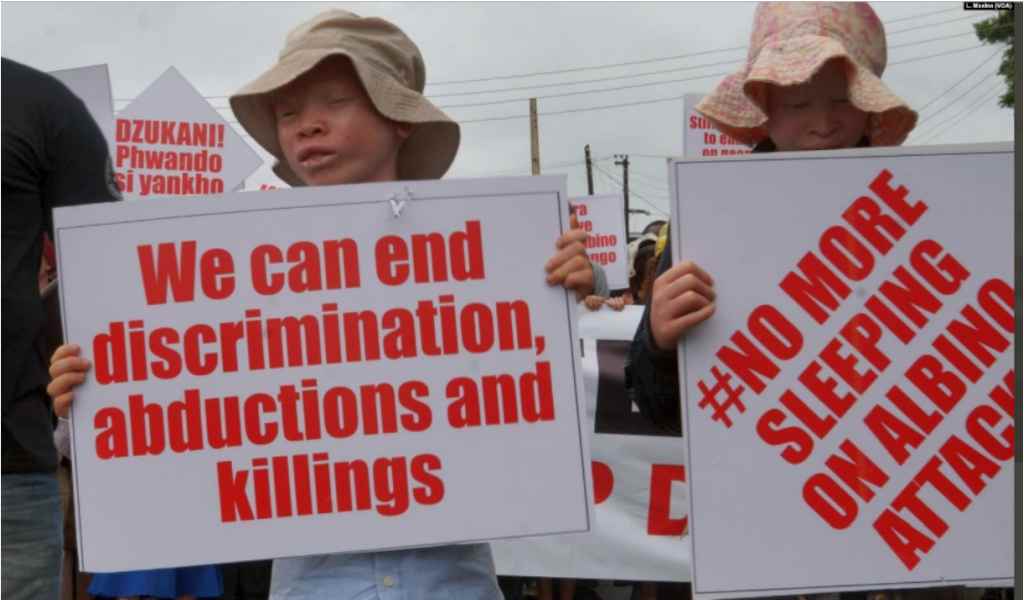
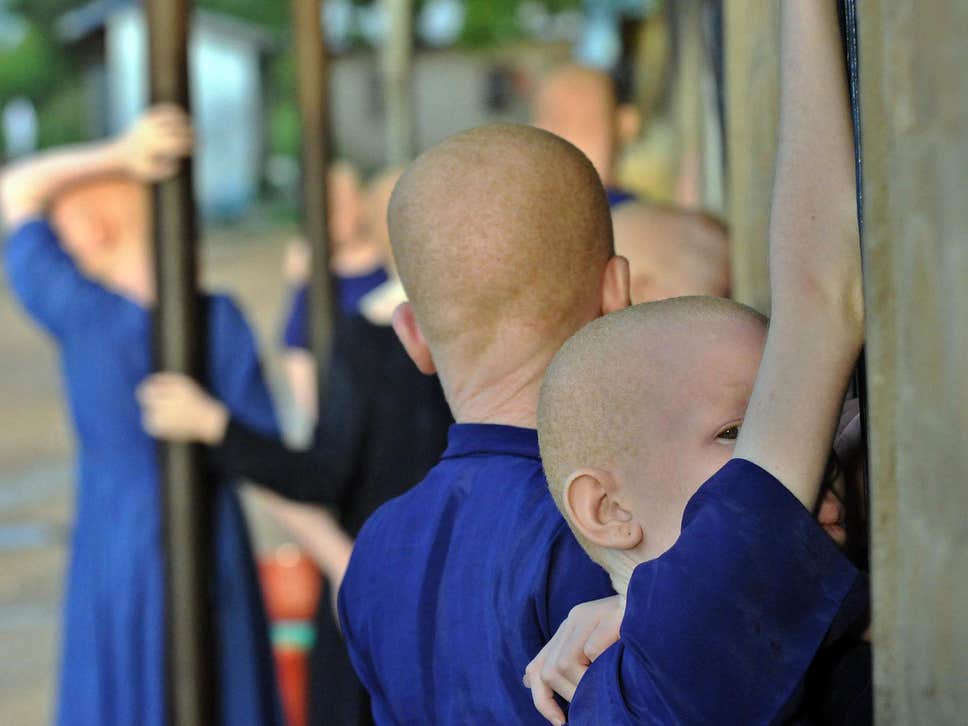
At various occasions I have drawn attention to the precarious position of people living with albinism in Africa. They are discriminated, bullied, attacked, and sometimes killed – murdered, as some people believe that their body parts can bring luck, wealth, prestige or power.
For this reason I wish to commend King Mswati III and the Queen mother for their precious example and I hope that the example given by Their Majesties will not only be followed by the people of Eswatini but also in neighboring g countries where the position of people with albinism is also threatened by prejudice an superstition. (webmaster FVDK)
King Mswati III
Cultural leadership confronts albinism discrimination head-on
People living with albinism together with those living with disabilities at the recently ended Incwala Ceremony. Eswatini customs and culture prohibited such communities of people from getting closer or inside royal residences. His Majesty King Mswati III has since changed this long-held custom to accommodate people living with albinism and disabilities (Pic: Sibusiso Shange)
Published: February 18, 2026 By: Khaya Simelane – Times of Eswatini
MBABANE – In Eswatini cultural visibility is becoming protection for people with albinism and a tool to dismantle stigmatisation.
A new breath of fresh air is changing and shaping the narrative around a community long confined to the periphery and deep fear.
For decades, thousands of Africans born with albinism have mastered the art of invisibility. Whether at communities, schools, sports and everywhere, they have, out of their will, been forced to remain invisible, even if against their will.
From a young age, they have been made to feel different. With many labels around them prevalent across African communities, none has driven them to remain invisible than the one recently introduced in which they are labelled ‘ma-Millions’.
This labelling, though sometimes uttered jokingly, relates to the widespread belief that the body parts of people living with albinism are ‘powerful’ to make one a millionaire.
According to Menzi Sukati, founder of the Albinism Society of Eswatini (ASESWA), the prevalent belief that people with their condition are sources of wealth is exactly what perpetuates their killing.
As a result, he said from a tender age, most commonly in the rural villages and crowded locations, they have grown up calculating risks before stepping outside, either to play or hang out with their peers.
Night travelling is strictly discouraged while during elections, many of them keep a low profile, he added.
This stems from an entrenched myth across the continent that has portrayed people with albinism as mystical beings whose body parts can generate wealth, political power or supernatural protection.
Those myths have fuelled ritual attacks, mutilations and killings that have left families traumatised and communities fractured.
King’s counter-image efforts
At last year’s Umhlanga Ceremony and again during the recently concluded Incwala, the country’s most sacred cultural ceremony, people living with albinism were visibly invited and welcomed.
According to Senior Archivist and Cultural Anthropologist Lethumusa Simelane, King Mswati III has once again stood in the moment of time and embodied inclusivity and Ubuntu.
Simelane stated that what the Monarch has done can not only be limited to only fighting stigmatisation against people with albinism.
Instead, the King has moved beyond the acceptable norm to harmoniously review and relax some of the country’s cultural traditional practices governing ceremonies and royal residences (tigodlo).
“When talking about what the King has done, we must never forget that growing up, we knew that certain people were not allowed closer or inside royal residences,” said the anthropologist.
He explained that culturally, such beliefs had nothing to do with the person’s natural being, however more with the foundational systems governing African monarchies.
“Therefore, the King, cognisant of the changing times reached the a difficult decision by appealing to the custodians of our culture and sought their permission to relax some of these practices. The King realised that he cannot be a King to some, while others are pushed away from him,” said Simelane.
The renowned Eswatini historian likened the King to the Biblical Christ, who, despite Jewish law and beliefs decided to defy and dine with people with leprosy.
The historian underscored that when respected leaders, like the King publicly contradict myths; they shift social norms more effectively than legislation alone.
In his remarks, he confidently stressed that the King had once again become the symbol of Ubuntu and a true father, sending a strong message that there was no place for uncultured beliefs in the kingdom.
Transformative
Simelane added that in a region where visibility can invite danger, the sight of them standing confidently at the centre of national tradition carried unusual weight.
He said for a community accustomed to the margins, standing at the heart of culture can be transformative. Against this continental backdrop, he said the kingdom’s recent cultural inclusion offers a sharply contrasting image.
Incwala is not just a festival in the casual sense. It is a deeply spiritual ceremony (prayer) centred on kingship, renewal and national unity.
Participation, therefore, signals belonging to the moral and cultural fabric of the nation.
In many African societies, stigma is often justified in the language of tradition. When harmful myths are rooted in culture, dismantling them requires trusted cultural authority.
In Eswatini, the monarchy remains one of the most influential institutions across rural chiefdoms and community structures.
The images of people with albinism participating in the recently ended Incwala Ceremony deserved to be applauded, and for the King to be formally appreciated, according to Simelane.
In a continent where some children with albinism have been relocated to boarding schools for protection, being publicly welcomed into a royal ceremony reframes belonging.
Myth
Albinism is a rare, genetically inherited condition characterised by little or no production of melanin in the skin, hair and eyes. It is non-contagious.
In sub-Saharan Africa, an estimated one in 4 000 people are born with the condition, although prevalence varies by country.
The condition brings medical vulnerability, particularly to skin cancer and visual impairment in equatorial climates.
To every observer, the King has outdone the Tanzanian Government and instead of the courts he used culture to dismantle stereotypes around albinism.
According to an article by researcher Charlotte Baker published in The Conversation, human rights violations against people with albinism in Tanzania have included discrimination, verbal abuse, exclusion from education and health services, as well as killings, abductions, mutilations and even grave exhumations to obtain body parts for sale.
The violence has prompted Tanzanian and international civil rights groups to file a case before the African Court on Human and Peoples’ Rights against the Government of Tanzania, arguing that it had failed to protect this minority.
The court found that, although some steps had been taken, the state violated the right to life by failing to protect them as required under Article 4 of the African Charter.
It also ruled that Tanzania breached the right to non-discrimination by not doing enough to combat myths and stereotypes.
The ruling ordered nationwide awareness campaigns for at least two years, amendments to the 1928 Witchcraft Act to criminalise attacks, implementation of a national action plan, improved access to health services including sunscreen and eye care, educational support, and the establishment of a compensation fund for victims.
Baker notes that since 2007 more than 700 attacks and killings across 28 countries have been reported to the Canadian organisation Under the Same Sun, although many cases go unrecorded.
In Tanzania alone, there have been 209 reported attacks since 2007.These numbers tell a story of fear that extends far beyond one country.
Government driving advocacy
Meanwhile, the Eswatini Government has intensified its efforts towards promoting the rights, welfare and inclusion of people with albinism.
On February 13, 2026, the Deputy Prime Minister (DPM) Senator Thuli Dladla received a donation of sunscreen lotions and protective lip balms donated by the kingdom’s TV station to people with albinism.
The DPM, when accepting the donations extended her appreciation to the Monarch for leading the way, noting that it was pleasing to see organisations and entities across the country take leaf and follow in the footsteps of the King and Queen Mother.
“The gesture by Their Majesties has affirmed to all and sundry that people with albinism are human too. Even the doubting Thomas’s that were pushing them away from Their Majesties and the country’s cultural practices have been silenced,” said the DPM.
Dladla mentioned that by extending the cultural space to people with albinism, the Monarch did more than host guests. It publicly affirmed that they are part of the kingdom’s identity.
According to Dladla, Simelane and Sukati, the King has done more than spearhead a law meant to protect, promotes and embrace people with albinism, as well as their rights.
Advocacy efforts have included sunscreen donations and awareness campaigns, recognising that ultraviolet exposure poses a serious health risk.
Without melanin, skin is highly susceptible to damage and untreated skin cancer can drastically reduce life expectancy.
The DPM further stressed that indeed inclusion of people with albinism at high-profile events must translate into action and policy.
A senior traditionalist when contacted stated that when the highest traditional authority in a country affirms the dignity of people with albinism, it sends a message to rural homesteads and urban neighbourhoods alike.
Commenting anonymously as no formal appreciation has been extended to Their Majesties as per culture; the traditionalist joyfully appreciated the inclusion of the albinism community in cultural activities in order to fight the stigma around them.
The well-known traditionalist mentioned that for a child born with albinism in the country today, the image of participation in Incwala or Umhlanga offered a counter-narrative to fear.
“Instead of being told to hide, that child can see proof of belonging,” he said.
Legal obligation
According to the Office of the United Nations High Commissioner for Human Rights (OHCHR), the United Nations (UN) body mandated to promote and protect human rights globally, people with albinism continue to face widespread discrimination rooted in ignorance, superstition and harmful myths.
The OHCHR states that persons with albinism are often denied equal access to healthcare, education and legal protection. In some regions, they are reportedly subjected to extreme violence fuelled by false beliefs about their condition.
It emphasises that governments have a legal obligation to protect them, prosecute perpetrators of attacks and implement comprehensive strategies to eliminate stigma and discrimination.
In recognition of these challenges, the UN General Assembly proclaimed June 13, as International Albinism Awareness Day in 2014, observed annually since 2015.
The day seeks to raise global awareness about albinism, combat myths and misconceptions while further promoting the rights, dignity and inclusion of persons with the condition.
Through this international observance, the UN calls on states and communities to shift from silence and superstition to protection, awareness and meaningful inclusion reinforcing the principle that people with albinism are human beings entitled to life, equality and full participation in society.
Meanwhile, the African Union (AU) has adopted a strong human-rights-based approach to combat discrimination and violence against persons with albinism across the continent.
Through its Regional Action Plan on Albinism in Africa (2021–2031), formally adopted by the AU Executive Council in 2019, the continental body seeks to end attacks and other human rights violations targeting persons with albinism.
The framework focuses on four key pillars, namely; preventing attacks, protecting victims, ensuring accountability for perpetrators and promoting equality and non-discrimination.
The AU recognises albinism as a disability and situates protection measures within its broader disability rights framework, including the Protocol to the African Charter on Human and Peoples’ Rights on the Rights of Persons with Disabilities in Africa.
It also highlights the heightened vulnerability of women and children, calling on member states to implement specific protective measures.
In coordination with the United Nations and civil society organisations, the AU urges African governments to adopt national action plans, strengthen legal systems and intensify public awareness campaigns, particularly around International Albinism Awareness Day on June 13, to confront the root causes of stigma and violence.
Together, these continental and global efforts underscore a growing commitment to replace myth and marginalisation with protection, dignity and full inclusion.
Complacency
Still, some scholars across the continent have warned against romanticising the moment. Across Africa, attacks have sometimes declined only to resurface during periods of economic hardship or political contestation.
Election cycles in certain countries have historically coincided with spikes in ritual violence fuelled by rumours that charms made from body parts can secure victory. (Italics and bold letter-type added by the webmaster FVDK).
Structural inequality, unemployment and desperation create fertile ground for exploitative myths.
“The real test is whether people with albinism feel secure in remote communities, whether police respond swiftly to threats and whether courts prosecute offenders consistently,” noted one scholar.
The African Court’s ruling against Tanzania has set a legal precedent across the continent, signalling that states have enforceable obligations to protect persons with albinism. It reinforces that attacks rooted in superstition are not cultural nuances but human rights violations.
At the same time, Eswatini’s cultural inclusion demonstrates that tradition can be mobilised in defence of dignity.
Warning: links in this post may lead to articles containing graphic details which may upset readers.
At first sight one may wonder why I include the following news article(s), ‘No record of ritual killings in Benue State’ according to police sources. ‘Good news’, one would say.
However, I remember several posts on this site reporting and commenting on killings for ritualistic motives in Benue State. Besides, I far from pretend to have covered all discovered ritual murder cases in Benue State in the past few years.
To be more precise, I point to the following posts (while reminding the reader that I only started this website in 2018):
What do you mean, ‘No record of ritual killings in Benue State’?
Below I’ve included five Nigerian newspaper articles with virtually the same text and bringing the same message – the same wrong message.
The conclusion is evident: One must always be careful to accept without question that what is written is true. (webmaster FVDK)
Background information:
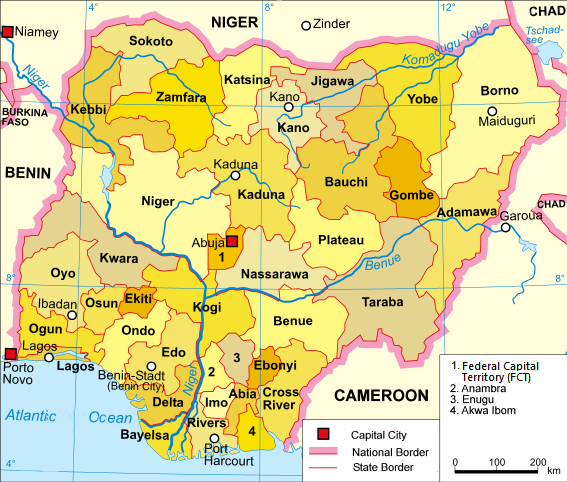
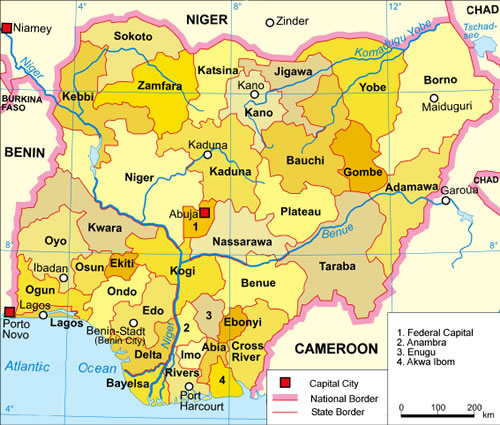
Benue State is located in the North Central geopolitical zone of the Federal Republic of Nigeria (Nigeria is divided into six geopolitical zones commonly called zones). With a surface area of 34,059 km2 Benue State ranks 11th (out of 36 states) and with a population of about 7 million people in 2024 it also occupies the 11th position. The capital of Benue State is Makurdi.
No record of ritual killings in Benue – Police
Published: March 3, 2025 By: Ejembi Ogwuche – Daily Post, Nigeria
The Benue State Police Command has said there is no record of ritual killings in the state.
This spokesperson of the command, CSP Catherine Anene made the assertion in Makurdi on Sunday.
She noted that although there are other crimes, there is no reported case of ritual killing in the state.
Anene also stressed that there is information or evidence about the existence of cannibals or human parts markets in the state.
“We don’t have intelligence reports of any human parts market in Benue.
“So we have not recorded any ritual killing; there are other crimes, but not this particular one.
Contrary to the news reports making rounds, the Benue State Police Command has said there is no record of ritual killings in the state.
debunking the purported report, the State Command Spokesperson, CSP Catherine Anene who spoke in Makurdi, noted that although there are other crimes, there is no reported case of ritual killing in the state.
Anene also stressed that there is information or evidence about the existence of cannibals or human parts markets in the state.
“We don’t have intelligence reports of any human parts market in Benue.
“So we have not recorded any ritual killing; there are other crimes, but not this particular one.
Contrary to the news reports making rounds, the Benue State Police Command has said there is no record of ritual killings in the state.
Debunking the purported report, the State Command Spokesperson, CSP Catherine Anene who spoke in Makurdi, noted that although there are other crimes, there is no reported case of ritual killing in the state.
Anene also stressed that there is information or evidence about the existence of cannibals or human parts markets in the state.
“We don’t have intelligence reports of any human parts market in Benue.
“So we have not recorded any ritual killing; there are other crimes, but not this particular one.
Published: March 3, 2025 By: EDIRI OYIBO – The News Guru, Nigeria
There has not been any record of ritual killing in Benue, the Police Command in the state has said.
The command’s Police Public Relations Officer (PPRO), SP Sewuese Anene, told NAN on Sunday in Makurdi that there was no intelligence report to that effect.
Anene, however, admitted that though other crimes to some extent still persisted in the state, there were no reported cases of ritual killings.
She also stressed that there was also no information or evidence about the existence of cannibals or human parts market in the state.
“We don’t have intelligence reports of the existence of any human parts market in Benue.
“So we have not really recorded any ritual killing, there are other crimes, but not this particular one. We are always on red alert,” she said.
According to Mr Terwase Shagbaor, Founder, Benue Patriotic Youths Movement, the people only hear and read about ritual killings in the media.
Shagbaor said the state was yet to record such heinous crimes.
He, therefore, encouraged Benue people, especially the youths, to steer clear of crime.
Also a motorcyclist, Agada Ogli, said that though his job entailed riding on the road day and night, he was yet to come across any suspected case of ritual killing in Benue.
Ogli, who also said motorcyclists often come across all kinds of crimes in the line of their duty, ritual killing was not one of them.
Published: March , 2025 By: dolotop– National Accord, Nigeria
There has not been any record of ritual killing in Benue, the Police Command in the state has said.
The command’s Police Public Relations Officer (PPRO), SP Sewuese Anene, told the News Agency of Nigeria (NAN) , on Sunday in Makurdi that there was no intelligence report to that effect.
Anene, however, admitted that though other crimes to some extent still persisted in the state, there were no reported cases of ritual killings.
She also stressed that there was also no information or evidence about the existence of cannibals or human parts market in the state.
“We don’t have intelligence reports of the existence of any human parts market in Benue.
“So we have not really recorded any ritual killing, there are other crimes, but not this particular one. We are always on red alert,” she said.
According to Mr Terwase Shagbaor, Founder, Benue Patriotic Youths Movement, the people only hear and read about ritual killings in the media.
Shagbaor said the state was yet to record such heinous crimes.
He, therefore, encouraged Benue people, especially the youths, to steer clear of crime.
Also a motorcyclist, Agada Ogli, said that though his job entailed riding on the road day and night, he was yet to come across any suspected case of ritual killing in Benue.
Ogli, who also said motorcyclists often come across all kinds of crimes in the line of their duty, ritual killing was not one of them. (NAN)
In a recently released document of the African Child Policy Forum (ACPF), Revealing Our Hidden Shame – Addressing Charges of Witchcraft and Ritual Attacks, it is being reported that “hundreds of thousands of children in Africa are believed to be accused every year of what is widely regarded across Africa as a particularly heinous crime: witchcraft”.
In the document, 19 Sub-Sahara African countries are mentioned as the scene of cases of the commission of rural infanticide crimes, attacks against children with disabilities, ritual attacks against children with albinism and cases of violence against children accused of witchcraft.
The 19 SSA countries are scattered across the continent and it is believed – in view of the scarcity of data – that the cases which have come to light only constitute the tip of the iceberg.
It goes without saying that there is no place in the 21st century for these practices and crimes.
Warning: Some readers may find the following story disturbing (webmaster FVDK).
Cult-related attacks against children still occur in at least 19 SSA countries
Published: June 2, 2022 By: LUSA – Macau Business dot com
Angola is the only Portuguese-speaking African country mentioned in a report released on Wednesday by the African Child Policy Forum (ACPF) on the practice of ritual attacks against children.
In the document, “Revealing Our Hidden Shame – Addressing Charges of Witchcraft and Ritual Attacks”, presented Tuesday in a video conference from Addis Ababa, “hundreds of thousands of children in Africa are believed to be accused every year of what is widely regarded across Africa as a particularly heinous crime: witchcraft”.
ACPF executive director Joan Nyanyuki argues in the introduction that “across the African continent, much has been done to improve laws and policies aimed at ending violence against children.”
“Some progress has been made in establishing the systems and structures needed to implement and enforce these policies and laws. These efforts, however, have not sufficiently addressed an important dimension of violence against children: accusations of witchcraft and ritual attacks,” it adds.
In the document, 19 countries are referenced as the scene of cases of the commission of rural infanticide crimes, attacks against children with disabilities, attacks against children with albinism and cases of violence against children accused of witchcraft.
“The report documents, to the extent possible in light of the scarcity of data, how widespread accusations of witchcraft are across the continent (although they vary in extent over time and from place to place). Best estimates suggest that hundreds of thousands of children face accusations every year in Africa and subsequently suffer serious violations.”
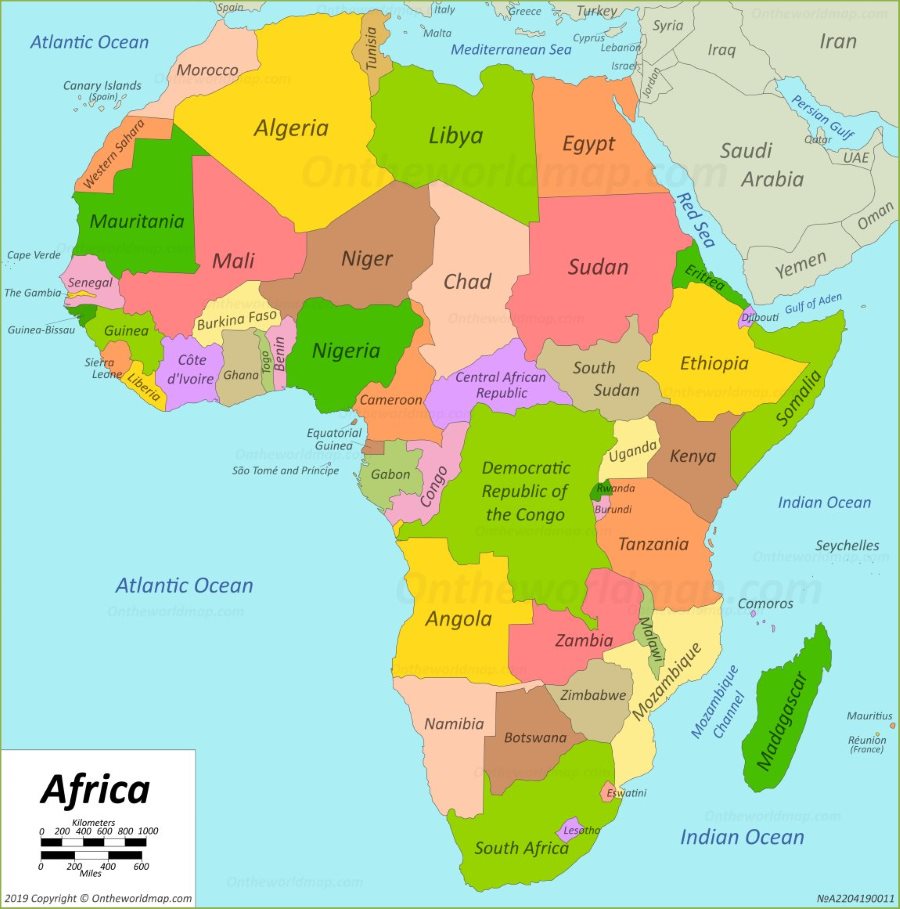
Examples given by the document point to reported cases of ritual infanticide in Benin, Burkina Faso, Ethiopia, Ghana, Madagascar and Niger, while Angola, Benin, Burkina Faso, Essuatini, Ethiopia, Ghana, Liberia, Madagascar, Rwanda and Zimbabwe have reported ritual attacks on children with disabilities.
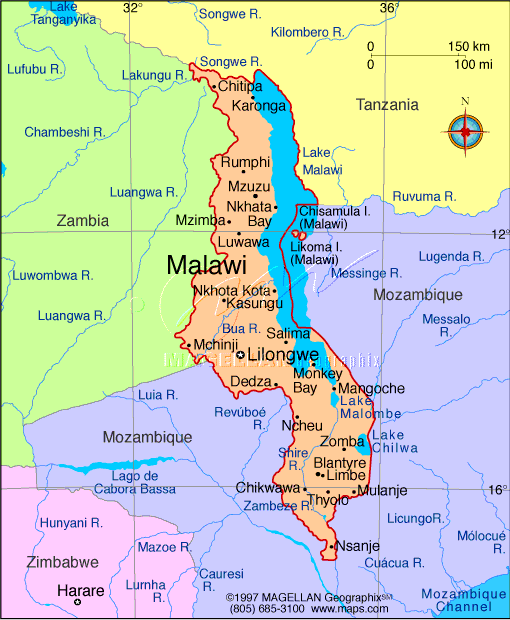
Burundi, Democratic Republic of Congo, Madagascar, Malawi, Mali and Tanzania have reported attacks on children with albinism and in South Africa, Central African Republic, Democratic Republic of Congo, Ethiopia, Liberia, Nigeria and Tanzania cases of violence against children accused of being witches are reported.
“To protect children from the harm of witchcraft accusations, it is not necessary to deny that ‘witchcraft’ exists. Instead, it is important to prioritise child protection while preventing child abuse by addressing the belief that such abuse can somehow protect communities from perceived danger,” the document argues.
The research that resulted in the report found that with the exception of work done by some non-governmental organisations, “few organisations and states in Africa make systematic efforts to prevent such abuse”.
“Few prohibit accusations. Services for children who have suffered harm and violence related to accusations are few and far between. This area needs urgent attention,” argues the report.
Joan Nyanyuki argues “a comprehensive and coordinated effort by state and non-state actors is needed to uncover the nature, magnitude and impact of violence related to accusations of witchcraft and ritual attacks. This approach will ensure that child protection systems, laws and policies are enhanced to adequately address these forms of violence against children.”
Saving Africa’s Witch Children (dated June 22, 2009) reporting on how thousands of small children in Nigeria are branded witches. The web page also contains a large number of news reports and articles (2005-2009) including websites of organizations fighting against these cruel and illegal practices.
The following article sounds unreal. Reading it, one wonders if this can be true. Is it gossip, rumor, fantasy, or indeed the reality? The article dates from July 2014 whereas many ritualistic acts described date from much further back, even 2007.
I will return to this page and add more shortly.
Warning: some images and description of ritualistic acts may be shocking (webmaster FVDK).
Horror: ritual killings everywhere in spite of civilization
Published: July 12, 2014 By: Vanguard, Nigeria – Evelyn Usman and Ebun Sessou
Looking curiously as this reporter approached her make-shift restaurant around J4 , Aketegbo community in Seme Badagry area of Lagos two weeks ago, mama Rilwan as she is popularly called, stood up from her seat, apparently thinking the stranger had come to patronize her.’ ki lefe ra? (what do you want to buy ?) she asked.
But when this writer disclosed her mission, the seeming expectation on her face dropped, giving way to a sad expression of a memory she never wishes to recall. She immediately beckoned on two teenagers later discovered to be her children to take over the stand while she went inside the shop, with this reporter following with caution.
After a long silence accompanied with a long stare at this reporter, she said: “ I recognize you now. You were here in 2007 when the incident that threw my entire life upside down occurred. My son, Rilwan would have been 20 years this month (June), had he not been sent to an early grave by my neighbor. He was my first child and also my back bone”.
Tried as she could to control her emotion as she spoke, her strength failed her. Tears trickled down her cheeks.
All was going on well for the food vendor until September 1, 2007, when her son , Rilwan, was reported missing. Three days later, his remains were found with the throat slashed, signifying that he could have been a victim of ritual killing which was said to be common in the area.
Accusing finger was pointed at one Muyideen Salam whose shop was close to the deceased’s mother’s place. He was said to have been seen with the deceased before his disappearance. After much persuasion which took a brutal dimension, Muyideen confirmed everyone’s fears, by confessing that he killed Rilwan and used his blood for money ritual.
In an interview with Sunday Vanguard at the State Criminal Investigation Department, Yaba , seven years ago (published October 7, 2007) the then 35 year-old Muyideen gave a chilling account of how he gruesomely murdered the teenager and drained his blood, with the help of his friend, one Nuru.
Strange as this sounded, Muyideen disclosed that he was sent to get the blood of a virgin by a herbalist with which to prepare the concoction he would use to bath for nine days, after which he would become rich.
But he never lived to see his devilish wish come true ,even though he succeeded in killing the teenager. This was as a result of his arrest by policemen at Seme division. He was convicted for murder.
Muyideen’s startling confession was, no doubt, a reflection of a society that is fast becoming bestial. Killing of human beings for rituals or whatever reason, dates back to the ancient times when people used to appease the gods of the land with human blood and for the purpose of winning wars. Twins, who were considered an abomination, were killed until its abolition through Mary Slessor’s missionary works.
One would have expected that such pseudoscience should rather be imagined than witnessed in Nigeria in this 21st century, when other countries of the world are experimenting and advancing in technology. More baffling is the fact that some Nigerians still indulge in such superstitious process of ritual killings in spite of the escalation of religious groups across the country as well as the exposure of majority of the populace to education and Western culture.
Sadly, even some acclaimed high and mighty indulge in ritual killings. Some politicians and government officials have been accused by arrested suspects (and herbalists), alleging that they use human beings for rituals in order to sustain their affluence as well as to remain in power. Records also show that cases of ritual killings and subsequent disappearance of persons are usually on the increase whenever elections are around the corner.
In Lagos state for instance, about fifteen cases of kidnap attempts have reportedly been recorded in the last four months. One of the foiled attempts was at Ori-oke, in Ejigbo local council development area, two months ago, where a woman who kidnapped two primary school pupils was heard describing them as goods to an unknown person on the phone.
The saddest part of this evil act is that hundreds of victims of ritual murders only get mentioned as missing persons. While some manage, by sheer stroke of providence to escape the slaughters’ slab, others never live to share their ordeal with any person.
Investigation by Saturday Vanguard revealed that agents of these vampires who hide in forests and other unknown places are spread across the country, lying in wait like a hungry lion for their preys. Majority of their victims are innocent school children, poor street hawkers, commercial sex workers, stranded visitors and unsuspecting commuters.
Watch out for these black spots
Investigation carried out by Saturday Vanguard showed that black spots where these agents prowl include areas like Otta, Ibafo and Mowe , all in Ogun state, Epe, Ikorodu, Shagamu Road Isheri/Olowo Ira,Cele Express along Oshodi/Apapa Expressway, Badagry axis, Ikeja, Toyota Bus-stop, Mile Two, Ajah,all in Lagos State; Lagos / Ibadan Express Road; Lagos/Benin by-pass in Edo State; Igwurita ,Rumuokoro in Port Harcourt, Rivers state; Ilorin/Oro Road in Kwara state; Lokoja, Abuja Highway in Kogi State and River Kaduna. Other areas are bush paths, markets, lonely environments, hotels and brothels, popular bus stopovers or terminals, and other hot spots across the country.
Modus Operandi
Some of these agents, most times disguise as lunatics. A typical case in mind was that Clifford Orji who was arrested under the bridge at Toyota Bus-stop along Oshodi-Apapa Expressway, Lagos with human parts in 2001. He confessed to be selling human parts to prominent Nigerians who undoubtedly used them for ritual purposes. The amazing thing about this peculiar case was the fact that Orji who later died while in Prison custody, was presumed a lunatic. Unknown to passers-by, he only masqueraded as a mad man in order to achieve his sinister motives.
Investigations further revealed that one of their ways is to attack job seekers. They print fliers for recruitment. Some even go the extra mile to advertise for vacancies in national dailies. They then send text messages or email to applicants, informing that they have been listed for the job and will be invited for interviews. In many cases, hotels turn out to be the venues for the interviews. At this point, if the prospective applicant gets to the designated hotel, he/she will reportedly be hypnotized and thereafter taken to the slaughter’s slab which is usually in the bush or some remote places. At other times, an applicant will be informed that the venue for interview has changed on reaching the hotel, from where they will provide a vehicle, which unknown to the applicants, have been sprayed with substance that automatically puts them to sleep.
Barely four months ago, Nigerians received with shock, news of a den in Soka village, Oluyole Local Government area of Oyo state, where about 20 corpses, majority of which were declared missing by their relatives were found and 18 victims were rescued. From all indications, it was obvious that the den has been existing for long before it was uncovered, following a heap of victims’ clothes. One of the rescued victims was reported to have said he was kidnapped in Ogun while attending an interview.
The most celebrated ritual killing in the recent past was the notorious Otokoto saga in Owerri, Imo State where a businessman belonging to a cult was alleged to have used his apprentice for ritual. The boy’s corpse was later exhumed at the premises of Otokoto Hotel. It exposed many other bizarre acts in hotels.
Female parts
Investigation shows that female parts are more in demand than their male counterparts. This is because of what was described as the potency of some parts like the breasts and lower private parts in money rituals and other purposes by herbalists and occult groups.
Virgins and babies on the other hand are also reportedly used by some politicians and government officials for ritual purposes as their blood is said to be used to elongate the user’s life span as well as fortify them against spiritual attacks.
Security hints at Saturday’s Vanguard’s disposal reveal that sometimes, these ‘celebrities’ employ the services of some restaurant owners, hotel operators and their trusted domestic workers to get them virgins who are subsequently murdered for ritual purposes. Majority of girls who have fallen prey to these death traps were discovered to be secondary school students as well as those in tertiary institutions as they were at the initial stage carried away by money and expensive gifts from their assailants.
A particular case in mind was that of a South-West politician alleged to have been caught by his driver with a dissected day-old baby whose blood he was drinking. The incident as reported two years ago, occurred inside a bush, while the driver was taking his boss (names withheld) to a purported function. Half way into the journey, the politician was said to have ordered his driver to pull over.
*Joshua caught with some human skeletons
He thereafter, alighted and headed for a bush with a promise to be back. Having waited without any sight of his boss, the ignorant and curious driver reportedly went in search for him,only to meet him stark naked and pouring the blood of a dissected baby into his mouth. Barely two weeks later, the driver reportedly died under mysterious circumstance. The event that occurred before his death was related by a Pastor friend whom the deceased confided in before his demise.
The lust for money and power drives these people into ritual killings.
While some kill to achieve this unfathomable dream, others resort to digging graves and removing needed human parts for ritual purpose. Saturday Vanguard scooped that most guards at cemeteries connive with agents to sell human parts.
It was learnt that if a fresh human head is needed, an agent will contact some cemetery workers ahead. In this case, the cemetery official will be on the look out for fresh dead bodies, preferably those of Muslims who are usually buried within 24 hours after death. Immediately the body is interred, cemetery worker will exhume the body at night, cut off the needed parts and place the body back in the grave.
Human parts for sale
Those who patronize cemetery officials are usually herbalists, herbal traders and even prominent Nigerians who usually use middle men. Surprisingly, human parts are sold in some markets in Nigeria. We gathered that a fresh human head could go for N60,000 and above, while a skull is sold for N20,000. Fresh legs are sold for N30,000 each while a decomposed leg is sold for N20,000. A fresh finger is sold for N5,000 each while the decomposed is sold for 3,000. Fresh intestines are sold for N20,000 while dry ones are sold for N5000. Pieces of fresh bones are sold for N2,000 and above.
Arrests made
Five months ago, the Oyo State Police Command, arrested a Muslim cleric, one Alfa Gbolagade Dauda Ileanwo, in Agbaje area of Ibadan with three human skulls and charms. The suspect, according to the command, confessed that he had been in the trade for ten years. Though he claimed to be using the human parts for concoctions to assist sterile women, his accomplice, Saheed Azeez, countered the claim, stating rather that his boss was into money making rituals.
The command also arrested two other suspected ritual killers,Musa Dauda and Sango Olojo-Onile with a human head and two heel bones. During interrogation, Dauda revealed that the human parts were removed from a grave at Ojetete village, Kisi, for money ritual.
Olojo-Onile according to the command was arrested in April with a fresh head of a woman which still had cotton wool stuck inside the ears.
Also in Epe, the lifeless body of a 68-year-old man,Ade Lekuti, earlier declared missing was discovered at Owode, near Ogombo in Eti-Osa Local Government Area of Lagos State, with the head, hands and private organs cut off.
Surprisingly, the alleged killer was discovered to be his in-law, one Teju Rajimu. The suspect according to the deceased’s family, confessed to have given the missing parts to a herbalist who prepared concoction with them for him. The missing parts were reportedly pounded into powdery form and mixed with a greasy substance which was discovered in the suspect’s apartment.
Similarly, in Ilorin, the Kwara state capital, a three-man gang led by one Kamaru Yusuf allegedly beheaded one Omobola Moses at Ira, a village in Oyun Local Government Area. The deceased who was a niece to one of the suspects, was reportedly lured from her parents’ abode into a bush where her head was severed. The suspects, according to report, confessed that they took the head to a 52-year-old herbalist whose name they gave as Saliu Oyewole, for money ritual.
From the West to the East and North to the South , the story is same.
In Enugu state for instance, an evil forest suspected to be a den for killers was discovered in Igbo Eze North local government area with fresh and decomposing human parts littered all over,with vital parts of some bodies missing.
Report said the victims were taken to the forest and butchered by killers who then removed the vital parts needed for money-making rituals. Some prominent citizens of the state and environs were alleged to be patrons of herbalists and native doctors who perform rituals in the forest.
One of the mind bugling incidents was the discovery of another horror sight at the Okija shrine in Anambra state. The shrine achieved notoriety in 2004 when it was raided by the Anambra State Police Command ,where 50 decomposing or shrunken bodies and 20 human skulls were found. The shrine was also reportedly patronised by politicians. Till date, politicians still visit Okija shrine.
It is tragic enough that some Nigerians still believe in gaining power and making money through this practice. But more worrisome and astonishing is the use of loved ones, such as one’s parents, siblings and wives for this devilish purpose. One of such horrifying incidents occurred in Abia state, when a 26 year-old boy allegedly killed his mother for ritual. The suspect,Ebi Onu, who hailed from Igbere, Bende council area of the state, reportedly went to Nguzu Edda in Ebonyi State where he consulted a herbalist to make charms that would make him become rich. The herbalist was said to have asked Ebi to kill his mother and bring her private part which he said would be used to prepare concoction for him. He allegedly connived with three of his friends to lay ambush for his mother along a bush path and lured his mother into taking a walk with him along that route. On sighting them, his killer friends reportedly sprang out from their hiding and hacked Ebi’s mother to death after which they cut off her private part .
Worried by her disappearance, a search party with Ebi reportedly combed the vicinity for her without luck. Report said some of the residents said they saw the missing woman with her son and consequently Ebi was subjected to questioning and tortured by some youths until he allegedly owned up and took the youths to where he buried his mother at the bank of a river . The angry youths were said to have beaten him to death , thereby depriving him of living to see his inordinate ambition of becoming rich through ritual means.
In the same vein, residents of Bale Ilado village in Morogbo area of Lagos State were thrown into panic recently after a member of the community identified as Segun Adisa allegedly beheaded his own father for money ritual .
However, in his confessional statement to the Police, the suspect claimed that he had to strike first to prevent his father whom he claimed earlier took him to a shrine where he claimed there was an attempt to kill him for money ritual.
Again in Aba, a landlord was alleged to have killed his two children for ritual purpose. The landlord (names withheld) as gathered, dashed out of his three-storey building on Omenazu road in Aba, on sighting some policemen approaching. Policemen from the Abia state command who acted on tip off, were said to have swooped on the building and according to residents of the area , two unconscious children identified as his children were found inside one of the rooms transfixed.
Not too long ago in Abuja, the Federal Capital Territory , the body of a lady was found in the boot of a Honda car with plate number AG 847 SUL belonging to an Abuja based businessman whose identity was given as Abdullai Ibrahim. The suspect was said to have been arrested by policemen on patrol while he was cleaning the blood stain on the back seat of the car. Preliminary investigation, according to police sources, revealed that the suspect slit the deceased’s throat with a knife for alleged ritual purpose.
In Kaduna state, three youths were reported in 2007 to have lured a 17 year-old sugarcane hawker, Ibrahim Shehu, to the outskirts of a village and strangled him. They were said to have been at the verge of removing his eyes when policemen that were alerted by a farmer swooped on them. The suspects, according to the Kaduna State Police Command, confessed to have wanted to pluck out the eyes for money ritual.
Same year in Ibafo area of Ogun state, a woman who managed to escape from a kidnappers den alerted policemen led by one Charles Ogenegbe, a Deputy Superintendent of Police, who stormed the hideout , where a shrine used as slaughter for human beings was discovered.
Also same year in Benue, a 77 year-old woman identified as Adiya Omachi was murdered in her farmland at Odaleko, along Ikachi Adum road. Not done , her assailants reportedly slashed her private parts, signifying they could be ritualists.
In Niger state, three persons were arrested by the police for allegedly beheading a 10-year-old boy in Amale Village, Kaffi-koro District, Paiko local government area of the state for ritual.
The deceased as gathered, was lured by one Salleh Ibrahim who took him on his motorcycle from Amale village to meet two of his other accomplices: Usman Sarki and Dantala Doma. During interrogation, Sarki told policemen that he was contracted by one Gajere to bring the boy’s head for money ritual. The lad’s headless body was reportedly found in Salleh’s residence while the head was found buried in a shallow grave near Erena in Shiroro local government, pending when they would take it to the herbalist.
If the startling confession of 20 year-old Agu Nwanu, who disclosed that he had so far killed twenty children for money rituals, all in his bid to ensure he does not end up like his poor father must be taken seriously, then all hands must be on deck to address this rising incident of ritual killings. Security operatives appear to be doing their best to curb these evil and very primitive rituals. But their best appears not to be enough as the menace is on the increase going by daily reports of these killings.
Police react
When the Lagos State Police Public Relations Officer, Ngozi Braide was contacted on the spate of ritual killings, she said about Lagos.
“I will disagree with you on the issue of ritual killing being on the increase in Lagos state. There has not been any of such since my assumption. Sometime last year and about two months ago ,we paraded some suspects for being in possession of human parts. The arrests were effected by men of the Special Anti Robbery Squad and the suspects were arrested from other states.
“During interrogation, we discovered they had same modus operandi. They always go to the grave yard to exhume corpses. It’s something they commit in connivance with the security men at the cemetery. And the buyers, comprising the native doctors and other persons will be there.
“Let me state here that the Police as security agents do not believe in mystics. We work with facts and physical evidence. So, when you say people indulge in rituals, we do not understand that language.
What we have also recorded are cases of persons suspected to be kidnappers who were attacked by the mob. It happened at Apapa, Iyana-Ipaja , Shahsha areas . In Shahsha, a man was sighted with a little child in his car and they accused him of wanting to use the child for money ritual and a mob attacked him, without giving him room to explain himself. But for the quick intervention of the traditional ruler of the area who contacted policemen, the man would have been lynched.
“On interrogation, it was discovered that parents of the child begged him to help drop the child in school and on the way, he started crying. We invited the parents who collaborated the claim. If they had killed him, the news would have been all over the place that a ritualist was mobbed.
“Another case was of an elderly woman at Ajegunle who was seen with a day old baby. Before you knew it, people rounded her up and started beating her, claiming she wanted to use the baby for ritual. The local government chairman contacted the police who rescued the woman who said she was the grandmother of the baby and that her daughter just gave birth but was in an unstable condition in the hospital. What we did was to invite the doctor of the hospital who collaborated her claim . The doctor said he advised the woman to take the baby home while they tried to stabilise the mother. I want to use this medium to advise Lagosians not to engage in mob actions.
“On our part, we have a lot of overt and covert policemen in strategic places in the state, considering the nature of security in the country right now. We have tried to cover up sensitive places like churches, schools, motor parks among other places and we have enough security men.”
Lack of education and superstition go hand in hand. Compliments for the LNP and the Gender Ministry for this timely action! In 2007 President Ellen Johnson Sirleaf made primary school education compulsory and free (by the way, not for the first time in Liberia’s history…), what happened to the law? (webmaster FVDK)
Rescued children
Published: January 17, 2020 By: The Bush Chicken, Sualeh Ziamo
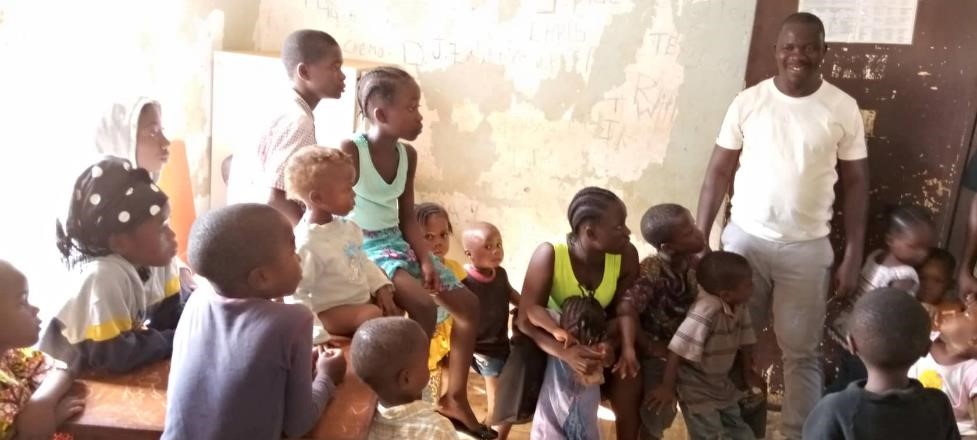
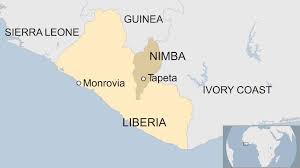
GANTA, Nimba – The Liberia National Police and authorities of the Ministry of Gender, Children, and Social Protection have rescued 29 children who were taken to a church for deliverance after being accused of practicing witchcraft.
The Gender Ministry’s supervisor assigned in Nimba, Victor Zeegban, told The Bush Chicken that the children were taken to the Fire for Fire Deliverance Church in Ganta for spiritual cleansing, on suspicion that they were involved in witchcraft activities.
Zeegban said his office had received a tip from community dwellers about the kids being mistreated at the center and abandoned by relatives who took them there.
“After receiving the tipoff, we dispatched our social workers to the church to see for themselves and they came back and reported to us that the kids were actually abandoned by their parents and guardians,” he said.
“Through our fact-finding visits, we even got to know that some of the kids were taken there at the age of one and have spent over three years in the church’s yard.”
He also confirmed that the children were being mistreated and found in appalling conditions, with no access to medication when they fell sick. According to him, one of the children died in May last year.
“I saw with my own eyes one of the children’s hands [being] tied with [a] rope on grounds that he was possessed [by] a strong spirit from the dark world,” Zeegban explained.
He also disclosed that the Gender Ministry was relocating the children to a safe home in Sanniquellie, where they will remain until they are possibly reunited with their families. Zeegban assured that the children would be supported by partners of the ministry.
Meanwhile, the commander of the police’s Women and Children Protection Section in Ganta, Jenkins Mangou, has praised members of the community for the important role they played in the children’s rescue.
Screenshot from ICIR Nigeria website showing suspects Uche, Onoriode, Desmond and Obajero.
The International Center for Investigative Reporting, ICIR, is an independent, nonprofit news agency that seeks to promote transparency and accountability through robust and objective investigative reporting. The ICIR’s mission is to promote good governance and entrench democratic values by reporting, exposing, and combating corruption.
Comment webmaster FVDK under construction. Check Elozino Delta State University in earlier posts (webmaster FVDK)
Confession of Yahoo Plus Boys: “Ritual does not give us money”
Published: November 8, 2019 By: Ejiro Umukoro
IN their desperation to join the ranks of their compatriots who have been making millions of dollars out of online-scams, young Nigeria- based wannabe scammers known as ‘yahoo boys’ are resorting to the use of traditional charms and mystical powers to charm potential victims.
Yahoo Boys are young men —usually aged between 22-29 years—who specialize in various types of cybercrime. Many of them may be undergraduates or college dropouts whose distinct lifestyles of fast cars, wealth and ostentation is the envy of many of their age-mates. The Yahoo Boys are not limited by geography— the internet is their home— and their victims are as diverse as there are naive and people ready to fall for get-rich-quick scams.
There are numerous websites dedicated to providing tips for those interested in joining the growing ranks of Yahoo Boys. According to a research report, Understanding Cybercrime Perpetrators and the Strategies They Employ in Nigeria, the use of voodoo and charms for spiritual protection and to charm potential victims is very common among Yahoo Boys in Nigeria. The practice is referred to as “Yahoo Plus. According to the report, another level in the use of charms is known as Yahoo Plus Plus, which “involves the use of human parts and may need kidnapping other human beings for rituals, which is not necessary in ‘‘Yahoo Plus.’’ In Yahoo Plus Plus, the use of things such as victims finger nails, rings, carrying of corpses, making incision on their body, sleeping in the cemetery, citing of incantation, using of their fingers for rituals, and having sex with ghosts are common.”
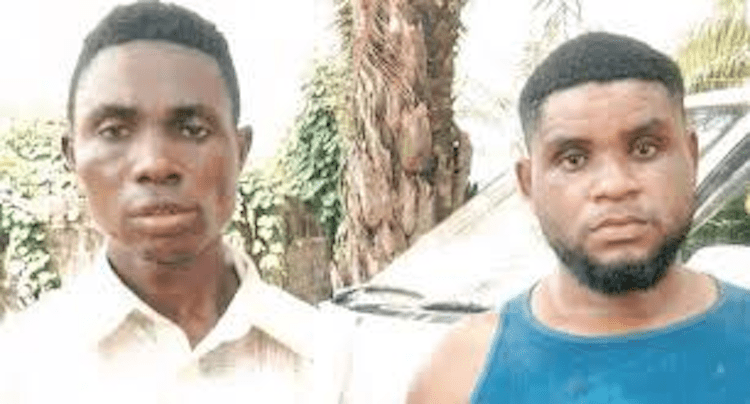
Two suspects: Emudiaga and Desmond
Getting a Victim – The Kidnapping
The car drives by in a lazy fashion. Its three passengers, all male: Macaulay Desmond Oghenemaro, Emese Emudiaga Kelvin and Onoriode Enaike are good spotters. They know a victim when they see one. The signs are usually obvious: a response to a cat-call, eye contact, a smile, a wave of the hand, a thumbs up or just the mere sight of their expensive car is enough to pull a vulnerable, or even, willing participant. This is their fourth recon for their next task. The last three girls they got had been easy catch, their names unremembered, their bodies long decomposed; each one, a girl on the lookout for quick money, free food, or free drinks in return for a one night, short term, or simply a girl keen on dating only men who drive cars.
The three of them sight a potential victim. She flags them down and gets in. She looks about twenty-years-old. She’s not a student; a fashion designer she tells them. They drive to the hottest spot in town for drinks, skewered meat and food. They continue to pour alcohol into her glass, ordering more bottles of beer. She guzzles down the beer as she feasts on the meat and other goodies that they push before her.
The night was about to be ushered in. Their day job as ‘Yahoo boys’(online fraudsters) has taken a new twist. They are now Yahoo Plus Plus, a code name for ‘ritualists’ – or those who are in the business of getting human body parts for use in rituals and occult practices which are supposed to guarantee success of their internet scams. They signaled each other: it was time to take her out. They get her into the car in a drunken stupor then drive several kilometres to the outskirts of Oghara into a bush where they first plucked out one of her eyes while she was still alive. The young lady was crying, begging them to forgive her and let her go, but they went ahead and pluck the other eye, remove her breasts and heart before she died.
Three hours later they are done with her. They abandon her body out in the open, her hands and feet bound with marine ropes. Within three hours they cut off her organs: breasts, heart and eyes. Once they were done, they head for their next stop at the ‘Jazz Man’s’ shrine in Alegbo, Warri.
His name is Ojokojo Robinson Obajero, a 63-years-old man, who though an expert in herbal medicines, mixes his craft with occult practices. They call him the ‘Jazz Man’ in pidgin patois. When the three men meet him and presented the human organs, Obajero tells them when to return. They leave. Four days later, Obajero summons the three men and hands over the burnt ashes of the deceased’s body parts he claims he used in preparing a “money ritual concoction”, which he tells them will guarantee that their online victims fall prey for their tricks to obtain money through fraud.
Several weeks later they returned to Obajero, disappointed and angry. Their business of internet fraud has not been booming as they expected. Instead, it seems that the online victims they have been targeting have become smarter and are no longer falling for their scams. It’s also been several months since they made any money from female victims looking for love on the internet.
They demand to know from Obajero why his ritual did not work. He tells them that he has been testing them – the first three victims whose body parts they brought to him for conjuring was a test to confirm they would not divulge his identity as the person making the charms. He tells them he is confident they will keep their mouths shut and demands that they must get a fifth victim whose body parts he will use to make a new charm.
The three scammers are not happy with this new request. Desmond tells Obajero that they had put in a lot of effort to get the body parts from their four previous victims, and yet they had not got any results. Desmond is angry that even though they had invoked the occult, they were not as successful in luring victims as they had been before they started engaging with Obajero. But this time, Obajero makes a firm promise: “This time you will make money through the death of the girl and the ritual I will do for you.”
The three men left wondering where to get their next victim. Less than 24 hours later, Onoriode calls Desmond and Emese. He tells them there is a possible victim — a student in Abraka University where he works as a security guard. The girl, Elozino Ogege is a 300 level Mass Communication student of the Delta State University who had a few days earlier, asked him if he could help her with information regarding available rooms for rent within the school’s staff quarters, and he had now has asked the girl to return the next day. He told his two accomplices this would be an opportunity for them to kidnap her and take her out of the school premises with the help of the head of security, Nwosisi Benedict Uche, who will be paid N30,000 for allowing them to pass through the gate without the boot of the car being subjected to a search.
One of the victims: Elozino
Inside the Lecturers Staff Quarters, the three of them waylay Elozino, incapacitate her with a toxic fume, and dump her in the boot of the jeep they brought. While Onoriode waited behind at his guard post, the other two drove to Emese’s house in Umeghe and waited for Onoriode to join them after work hours. Once Onoriode arrived, they drive towards Abraka just before Obiaruku by the right when coming from Warri axis into a large expansive land thick with vegetation. They drive through the bush track of lined palm trees. The bush track leads to Ugunu Community but they do not drive inwards, parking the Corolla car a few metres from the expressway. It was already dark. They get their tools and torchlight.
Desmond had drank half a bottle of strong expensive alcohol but his two friends had no need to dull their senses before they mutilated the girl they had successfully kidnapped. Elozino was crying, begging them to let her go but they ignored her pleas while they plucked her eyes out, removed her heart and cut off her nipples. Two and a half hours later, they are done with the deed. They drive off and deliver the dismembered parts to the occultist who once again instructs them to return after two days when he would have completed preparing the charms.
This was their 5thvictim. In their desperation to make money through ritual killings and sacrifices, they covered an estimated distance of at least 78KM, a journey of about 1hour 27mins between Abraka to Otefe, Oghara in at least 10 instances (780KM) (870 minutes); including traveling back and forth from Abraka to Warri on at least 10 occasions to meet with the occultist who prepared charms, estimated distance of 490KM both ways, a total of 660 minutes; in addition to navigating their way from their home base in Abraka to Delta State University, DELSU, towards the expressway some distance from Obiaruka where they committed their last crime, a journey of at least 41KMboth ways and roughly 50mins at the least. On average, it took them about 3 hours on each victim to extract the organs, an average total of 15 hours spent.
While they were at home awaiting the call from the jazz man, in less than 48 hours later, in the early hours of Saturday 10thNovember 2018, all three men including the occultist were rounded up by the police. A tipoff from the victim’s family led to an investigation that helped the police trace the girl’s cell phone, a Tecno K7 Mobile, to the murderers. Elozino Ogege was their fifth victim.
Four suspects: Uche, Onoriode, Desmond and Obajero
ON MISSING GIRLS
A follow-up investigation into the other 4 missing girls was made. Reports from Police Missing Person data does not have any record of reported missing girls during this period when the acts were carried out. According to the Police IPO in charge of Elozino’s case, who followed up on the perpetrators confession, no bodies of the missing girls were found when they went to inspect the areas where their bodies were dumped in the bushes in Oghara.
The late Elozino-Ogege
When the police was asked why there was no missing persons’ report, one theory postulated was that since the bodies of the girls according the yahoo boys were left abandoned in the open, decomposition was fast and the decayed bodies and bones likely eaten up by animals.
The other reason he explained was that, as a rule, because police don’t trust anyone, many people prefer not to report such cases of dead or mutilated bodies found so they are not mistaken or held for being responsible for such deaths or incidences. To remedy this, he suggests that citizens in general can report such cases to NGOs whose focus covers such issues who will then bring the case to the police. That way, the person who made the report is at first protected until investigations into the matter are completed.
But most importantly, citizens should begin to take it upon themselves to report suspicious activities and suspicious persons to the police early on as a preemptive call-to-action. Neighbourhood Watch is a must in combating crimes, illicit and illegal activities in all communities, especially more so in the ‘ember’ months ahead, where end of year activities are highest.
Efforts were also made to reach the EFCC (Economic and Financial Crimes Commission) to give us data on activities surrounding violent killings of females within the context of Yahoo Plus Plus using the FOI Request but no response, over two months before this report was filed, was gotten from EFCC regarding this. Violence of any kind against women: yahoo plus plus, other occult related killings, rape, assault, etc., are human rights abuses that must not be condoned by society. Cases must be reported and speedy justice administered to stop the scourge and prevent future incidents.
More needs to be done to collect data on missing women in Nigeria, to better understand the scope of the problem and work towards making university campuses a safe space for female students.
THE SCAM
As foreign law enforcement crackdown on online scams in a bid to protect their citizens from online fraud, it will become harder and harder for the Yahoo Boys to keep operating as they have in the past. Ritual killings and the belief that their victims’ body parts will create charms that will enable them to earn a living from scams are just one of the results from a population of young people who are turning to crime to make a living.
Nigeria’s youth unemployment rate averaged 36.5% iin the third quarter of 2018, while the national average rose to 23.1%. With graduates entering the workplace in greater numbers, there needs to be a concerted effort by national and state governments to provide an environment that will enable job creation to give young people better choices.
Yahoo Boys as also adept at cyber-enabled financial fraud. A six month operation wire wire conducted by the U.S. Department of Justice, U.S. Department of Homeland Security, U.S. Department of the Treasury and the U.S. Postal Inspection Service resulted in 74 arrests in the United States and overseas, including 29 in Nigeria, and three in Canada, Mauritius and Poland. The operation also resulted in the seizure of nearly $2.4 million, and the disruption and recovery of approximately $14 million in fraudulent wire transfers. Many of these scammers who were in Nigeria have since fled to other countries eg Ghana, Dubai ,South Africa, Gambia as the Nigerian Economic and Financial Crimes commission closed in on them.
I set out to interview Desmond and Onoriode who admitted to practicing Yahoo Plus Plus rituals. Together as a gang they spent an estimated 1,311KM, equaling a total of 1,580 minutes on the prowl looking for vulnerable women they can lure. Their lead-man, Emese, was alleged to have slumped and died when the police were close to catching him. Desmond and Onoriode were both in police custody while awaiting trial when this interview was conducted. During the interview, they were unemotional as they narrated how they kidnapped their victims and mutilated their bodies.
Sitting down on a short bench close to a hedge of plants, the sun shining overhead with a white plastic table separating us, this is an excerpt from the interview I conducted in the presence of the police:
Yahoo Plus Boys Onoriode and Desmond
Q: What’s your name and how old are you?
Macaulay Desmond. I’m 32 years. I Finished secondary school in 2008 (Urhuoka Secondary School, Abraka) but I was born in Lagos. I did my primary school in Benin and secondary school in Abraka.
Q: Were you in business before?
Desmond: I was into photography work and sand dredging from high sea. My job was to pile it up. I dredged in Bayelsa and with Delta Glass for two years and six months. Photography was from 2006 to 2013. I was learning photography as an apprentice at the same time I was schooling in secondary school. After school I go to do my apprenticeship. I was good with snapping photos, creating handbills, all types of photo enlargements, making complimentary cards, CD plate transfers and so on. But after I finished secondary school I stop my apprenticeship and left the job. Because I didn’t have the money to open my own shop I decided to work for my boss. After a while I left the job because it wasn’t paying that well. So I went to Lagos to work for another construction company. But that too wasn’t paying me well.
So I approach my Uncle to help me with money to further my studies. So my Uncle put me in the line of dredging sand from 2013 up till 2016 when I now leave for Ghana. I left because the dredging contractors who supplied the sands to Beta Glass was not paying, they owed us for long periods. Life was difficult. When I complain to my uncle he no show concern; im own be say e don put you for line. His own is to build the barge, rent it out or sell it out. The weather in the place too was a problem especially when I was hungry. So I got fed up.
Q: Why didn’t you learn how to make barges yourself from your Uncle? Or you didn’t want to learn how to make barges?
That’s not what I discussed with him actually. I told him I have finished my photography work and I just need money to finish my studies. My Uncle told me he does not have that kind of money. But the best he can do for me is put me in the line of working in the barge.
Q: So how did you get into this other line of business?
When things got rough with the dredging business, I called my friend and told him things are rough with me here (Nigeria) that’s when my friend now ask me to come in 2016.
Q: So what happened in Ghana? What were you now doing in Ghana?
We are doing the yahoo yahoo.
Q: Where exactly in Ghana?
Kasoa.
Q: How long were you there for?
I was there like 8 months.
Q: So you were living with your friend there? How were you paying or compensating him for living in his house?
There was no compensation because he’s my childhood friend. We went to the same secondary school. The agreement we have is that if I collect money, then the percentage we’ll share it. If I collect N300,000 we can share it 40/60 because he’s the one providing for the network and feeding. That’s how they do it everywhere. Everybody that travels to Ghana that’s how they do it. It’s 40/60. Or some chairman the one that’s not greedy 50/50.
Q: Describe this your yahoo business for me.
Yahoo is kind of internet relationship. When you meet a woman.
Q: So you target women?
Yea its women. Some people do male one or female, depends on the one you want. You tell the woman that you love her and you want her to be your wife for the starting when you propose to her if she agree. For the first week you push love to her then may be for the second week you still push love to her. From there she will give you her number so you can be communicating with her so both of you can be talking. Then may be she can tell you that you cannot be talking on phone-phone that she want you to come over. That’s when she’s in love. She’ll tell you to come over. Because them they believe in love. Once they tell you that they’re in love they’re really in love.
Q: Which kind of women are you targeting? African women or …?
Any woman. Let me say in Africa, only South African women because it is the currency we’re looking at. We target women in Germany, U.S, Italy, London,
Q: So do you target this women? You look at their profile or you randomly choose anyone you want?
We bond them through Facebook. Facebook show your location, your name. So you can use your name and put your phone number and everything about you will show. And if you like to accept you accept, and if you don’t like to accept…
Q: So once I accept your friendship, the next thing you’ll be sending me messages?
We’ll be chatting.
Q: How long does it take before a woman gives in?
It depends on how long it takes for the woman to fall in love. In the past it used to take two weeks for her to ‘fall in love’. But these days it can take up to three years because many are now aware that there are scammers. So most of them are very careful. So if you tell her you love her, she will say no, because most of them have been played before. Those ones that have been played before will tell us so and so person did this to me. Those types of women, we leave them. No need wasting time with them. Once they tell you they’ve been played before its best to leave them because nothing you’ll tell that person will change them. You dump her and look for another one. Those who have money will give you.
Q: What language do you speak to these women?
For English women, you speak English. For Spanish women, you download an App to translate English to Spanish or English to German or English to Portuguese.
Q: When did you start Yahoo business?
January 2016. But my friend has been in it since 2013.
Q: How much do you make on a weekly or monthly basis?
Money doesn’t come in like that. But within a month, if you meet a woman who fall for you, you can get as much as $3,000 – $4,000. Once she pays you that money, you leave her for some time so you can build trust. Else if you demand too quick after the first one, she will not believe you.
Q: What do you tell her that moves her to give you such money?
The type of work I’m doing is what I used to get her. I tell her I’m an engineer. I pose as an engineer working at sea into rig drilling. That’s the only way to get a vacation from my boss. Then I’ll tell her to write to him because he’s the only one who can grant me my vacation since I’m not due for leave yet. And the only way to get out of the sea is through a helipad. If she can pay for that, plus other expenses like ground transportation, accommodation and feeding, then I can be with her fast fast. So the cost will be like $3,000 to hire the helipad plus another $1,000.
Q: But how does she know which company you work for?
I design a website that looks exactly like a popular offshore drilling website company but my pictures will not be on it because once she sees who I really am, she won’t fall for it. So I will send the company email to her which I have already created. She now writes to by ‘boss’ using that email. But the email is coming back to me. I will now reply to the email as the ‘boss’ telling her that “the message she sent has been received. And will get back to her in a few days.” After she has received this first email she’ll now copy it and send it to me to say this was the response she got from my boss.
Two days later, the ‘boss’ will now write back to me saying: “We have granted the vacation. Since this is not his normal vacation time, it will require a helipad to take him out from the sea.”
She will now copy this and send to me. That is when I will now tell her it would cost $3,000-$4,000 to pay for the helipad that will take him out of the sea to land including expenses for hotel, feeding and accommodation.
Q: How does she send the money to you?
We keep a collection of women on the internet for different reasons. Some we propose marriage to and keep promising them that to keep the relationship going but tell them we’re struggling in Nigeria with a business we want to grow so that when need for her arises like in transferring money from one European country to another, she provides the bank account needed for the transaction. By this time I would have told her I only trust her and I have a big contract in Nigeria worth $300,000 that is going to run for a year and six months (or whatever time I like to give her), but because I don’t have all the money yet to execute it, I will tell her I’m asking money from friends and families within and outside Nigeria to help me with some money so I can succeed in the business. Then the monies would be sent to her account and after the contract is done, the entire money will be paid into her account then we can be together. I will now ask her to assist too since the other monies will be dropping into her account. Because the woman sees herself as wife to be married to me, her future husband she believes me. So when I get a new client ready to pay money, I will reach out to my ‘wife’ who now provides me with the bank account and the money is wired in it. Already I’m posing as a non-Nigerian. And although I am in Nigeria, I’m working as a contractor but don’t have an account yet. I will now tell her to send the money to my supervisor who is a black man. Then I will provide her with my own account details. Or any other account needed for the purpose.
Q: Is the pickup woman part of the yahoo team?
No she’s not. She’s just like the other women looking for love too who I have already proposed to.
Q: Why send the money through her? Are you not worried she will keep it for herself?
There’s a lot of problems that will come up if I give her my account. Money transfer from inter country takes 6-7 days. And if you use your own account, your face as a black man will show and that will terminate the transactions.
Q: At what point does the woman know that she’s been deceived?
She cannot know. She does not know. The only time she begins to think so is when her daughter, friends or even husband tells her that the person she’s dealing with is scamming her.
Q: From the point she sends in the first money, how long does it take from that time for her to know she’s been scammed?
It takes a while. Even after the first payment, some of them will send more money again as long as she doesn’t realise. But once she realises, she would stop. In the past it used to take four years of continuously sending money before she realises she’s being scammed. But these days it may not take up to two years.
Q: How many women have you gotten money from like this?
Since 2016 till December 2018 I only succeeded in getting two women to give me money. But I have spoken to many women who think I’m in love with them. Many of them are genuinely in love but don’t have money. The reason being that once you mention money even after you have proposed to them and keep promising love, some will tell you they don’t have or will just stop talking to you.
Q: How much have you made since 2016-2018?
We split the money into 60/40. So the money that has come to me is up to N3.5 million naira.
Q: What do you do with this money?
I use it for myself and give my sisters too. I also have cousins I share it with.
Q: Do they know that this is how you got the money between 2016 and 2018? They didn’t ask you?
I told them I was travelling. And even after I came back to Nigeria and continued, they don’t know what I do. I don’t stay with them. I stay with my friend and we live very far from them even though we’re all in Abraka. They call me whenever they need money and I send it to them.
Q: Why did you leave Ghana?
My friend asked us to come back to Nigeria with the promise that we will return to Ghana. But to my surprise, he said we were no longer going back. He deceived me. I was very angry at him because his attitude towards me changed. It wasn’t about money. I quarreled with him. Another friend of his, a guy in the same line of business came between us. I was very angry with my friend so I left him. Later he came to beg me and I went back to stay with him.
Q: Why didn’t you just go back to Ghana on your own?
There was no money.
Q: At what point did you now add ‘ritual killings’ to your business?
It was after we got to Nigeria when the money was no longer coming in again like before. That was one of the reasons I quarreled with my friend. Nigeria wasn’t favourable. I even went back to loading tipper and dredging sand to see if I can raise money but I wasn’t even making enough money to save so that we can use it to go back to Ghana.
Q: So who introduced you to ‘ritual killings’?
My friend, Emese, who was here with us in the prison. But he’s dead now.
Q: Are you convinced ‘ritual’ gave you the money?
To me what I see there is that it’s just being manipulator. Let me say so. Or is just when things will just happen. Now I don’t believe that anybody on earth, nobody can tell me this kind of thing.
Q: Desmond you took the lives of 5 girls. Elozino was not drunk, nor drugged but awake while you guys cut her up … How did you feel when you were doing that? How were you able to do that Desmond?
It was not easy to do. But that was why I drink.
Q: But that was not your first time, Desmond. You did it 5 times. Each of the times you did it to the girls, they begged you to stop? Were they not crying?
YES.
Q: So when you saw the tears and heard their begging, how come that didn’t move you to stop? Why didn’t you feel sorry enough to let them go, to free the girls?
It’s because of what the herbalist told us. That was why we were afraid. He said we would go mad or die.
Since Desmond made his confession, he is still very much alive in 2019, several months since he committed the act in 2018.
ONORIODE’S CONFESSION:
Q: How Old are you?
23 years
Q: How long have you been a security man in Abraka?
6 months. Sometime in May. Before June.
Q: Before this time, what were you doing?
I was studying nursing at a private hospital in Eku. Life Care Hospital.
Q: What kind of nurse were you? Auxiliary or Regular?
Auxiliary
Q: What was your job in the hospital?
I learn how to stitch people. I can stitch. After that, we learn pharmacy, to know more about drugs. I go chemist go learn drugs. You can discuss with the person to do apprentice for 6 months or 1 year.
Q: Why did you want to learn about drugs?
Because nurses just treat and do stitches and put drugs into drips using injection but don’t know drugs. That’s all they know. But when you go into pharmacy, you know more drugs. That is the reason why I go to pharmacy, to know more drugs.
Q: How long did you practice as an auxiliary nurse?
2 years.
Q: How many hospitals did you go to learn this auxiliary nursing?
Nursing was in Eku, Life Care Hospital. I Learn how to treat, how to pass drip. But I do pharmacy in Obiarukwu.
Q: What year did you learn all these?
2015 to 2018.
Q: So before 2015 what were you doing?
I wasn’t doing anything then. I finished my secondary school in 2007.
Q: So between 2007 and 2013, what were you doing these 6 years?
I was farming in Abraka.
Q: What kind of farming were you into?
Cassava farming.
Q: Was it your land or you rented it?
Family land
Q: How was the business back then?
It was okay.
Q: So why did you leave it to enter nursing?
I cannot just rely on farming every time. I must look for something to do.
Q: Was the farming not a good business? If it was paying, why leave it?
I always love nursing. That’s why I go for the nursing.
Q: Why didn’t you study for JAMB (Joint Admissions and Matriculation Board conducted exam for every student seeking entrance to university), pass your exams and go to university to learn it instead?
I no get helper.
Q: Are you the first child? How many are you?
My father has three wives. Out of the three wives children, I am the last. My mother has 5 children and my stepmother has 6 children. And the third wife has 2. But my father is late. He died in 1995.
Q: But you do everyday business? And you make some money too?
Yes.
Q: So why didn’t you use the funds to help you further your education if you made money from farming?
What I plan before as I finish the nursing, na to open chemist so better income will help me further my education.
Q: So what now happened that you didn’t open the chemist or go to school, but instead became a security man? What happened between this time?
I go to the chemist union. Dem tell me that before I fit open a chemist shop, I must be a union member as they cannot allow me run chemist shop without joining association first. That was when they tell me I have to register with N300,000, plus I will buy drinks and kill goat as part of the registration process before they will allow me stock my store with medicines, apart from the money to rent the store, employ a store keeper, and so on, so I gave up and tell myself to focus on other things or business until I can meet up with the requirements.
Q: So how did you get into this business of using human parts?
It was Desmond’s friend who introduced me to it. We all live in the same community in Abraka.
Q: What is the friend’s name?
Emudiaga Emese. He is from Umeghe. I am from Ovuso/Abraka. Mudiagha who is boss to Desmond came to meet one day like that asking if I remember him. I said yes. That was when he told he will teach me about his business so I can join him. He asked me if I didn’t admire him for how he has money? I said yes, I’ll like to. He now said he will put me in line so I can learn how to make money like him.
Q: Police record shows that before you got your job as a security guard in Abraka University you were put in jail. How did you get to be in prison?
I was arrested sometime in January/February of 2014 and released in December 2015. What happened was that there was a party in my compound. Someone brought a car into the compound with another person but by morning that person died. So what happened was that police raid the area and pack all of us into cell. They charged us to court then sent to prison. This happened when courts go on strike. So when I was supposed to get bail, court did not sit. So that was how I was kept in jail for one year. The court was waiting for DPP advice, so they kept me there in jail in Sapele Prison.
Q: Are you a cult member?
No.
Q: Who bailed you out from prison?
My mother and older brothers get lawyer for me. I am the youngest of my mother’s children.
Q: When you came out of prison, what happened before you became security guard in Delta State University (DELSU)?
It was after I came out of prison I went to learn nursing work.
Q: So when exactly did they recruit you?
But they only approach me to join them for ritual killings after I started work as a security guard in DELSU.
Q: During this time you were ‘moving about’ with them, what were you guys doing?
Because Mudiagha had money, he will come to and take us in his car and then we all stroll together.
Q: What do you mean by stroll together?
We go to beer parlours to drink, carry girls, tour the town then go back home.
Q; When you carry girls. What do you do to them?
If it is a girl Mudiagha wanted to use, we carry the girl, get her drunk, take her to the bush and thereafter take the parts we want.
Q: Do you drug the drinks the girls take?
No we don’t drug their drinks. Is just a simple thing we do. We get in the car, girls see us in this beautiful car and they agree to join us then we go to a beer parlour and just get her drunk.
Q: Which kinds of girls do you target? How you know if you speak to a particular girl she will do your bidding?
We don’t target the girls! Girls dem too like cars! They like to flex, have fun, party. So when they see a young boy with a car they like to hang out with you. We don’t even spin them before they just jump into the car because they assume that before you can own a car, it means you’re loaded. You have money. So they just follow you.
Q: So how many girls have you gone and targeted like that with Desmond and Mudiagha that you were a part of?
5.
Q: How much have you made from this online money since you started 2 years ago?
Sometimes I get N50,000 or N100,000
The next question is directed to Desmond
Q: Is that how much you give him, Desmond?
DESMOND: It depends on how the money comes. Sometimes Onos gets N200,000.
ONORIODE: You have never given me up to N200,000 at once.
DESMOND: Yes we have. 200,000 up to N300,000 sef. Will I lie against you (he turns to look at Onoriode).
ONORIODE: But I don’t have a say on how they share the money. They are the bosses that does the sharing. So whatever they give me as my share I simply take it.
Q: So how many times did you collect N50,000 and N100,000 separately?
ONORIODE: I was given money 5 times. I collected N100,000 on three different occasions. Then N50,000 on 3 different occasions too.
Q: So between 2016-2018 you made at least N550,000?
Yes.
Q: What did you do with the money?
I used it to buy shoes and clothes.
Q: Did you give any of the money out as gifts to anyone? Family? Friends?
I flex with the money: beer parlours, nights in hotels, buy suya, spend money on restaurant food, and so on.
Q: Out of the N550,000 you made, who did you share part of the money with?
Nobody.
Q: Not even your mother?
NO.
Q: Why didn’t you give anybody out of the money?
You know, when money is in your hands, all you think of is have your bath, think of the next place to go and spend money and just flex around. You hear there’s a birthday party, and other such things and you’re there. Just like that that’s how I spent the money.
Q: So this period you didn’t extend any money gift to your mother or sister like a way of showing care or supporting them?
NO.
Q: So why did you take the security work in Abraka since you’re already making money through this?
I use it to patch up.
Q: Who recommended you to the management of Abraka to hire you?
Abraka na my area. I know it well and I am part of the community so they know me. I already know the man in charge of security too. So I approached him for the job and got it.
Q: What other reason did you have for applying for this security job?
To gather myself up to raise enough to start my chemist shop.
Q: Why did you go after Elozino, the last girl?
It was just a coincidence. We already get a plan to get a girl for the next ritual as the jazz man tell us to do. So our mind is set to look out for a girl that will provide the parts for us. So when the opportunity just show the day after we had discuss, and this girl approached me two days before na then I make up my mind that she go be the one. So I tell my guys. So when she show up the next day we kidnap her.
Q: In what condition were you guys when you carry out this act? Do you take any drink?
DESMOND: Yes. I take a lot of alcohol and spirits before we go out to do it. I take up to half bottle.
ONORIODE: Me I no dey take anything. No drink. No drugs. No smoking of any kind.
Q: So you do it with clear eyes, Onos?
Nods his head in the affirmative.
Q: Why do you take drink before you start, Desmond?
I take it so that when I feel the pain, because na human being like me too, na that alcohol go give strong mind to finish the work.
Q: So Onos, you said you do it with your eyes wide open, no weed, no alcohol or drugs to douse your senses. And you have done it 5 times like that?
Wetin we just talk be say e tell me say if we do this one finish before, we go get money. So na the stuff, money wey be say I no get naim make me fit do am.
Q: So you don’t feel sorry for the girls you’re doing this to as long as it’s money you’re after?
It’s not as if I don’t feel sorry for them. I feel sorry. But based on the fact that I have struggled to get money and haven’t succeeded, I just focus on the work so I can get the money.
Q: But you already have a job as a security guard. Why did you have to take this girl’s life?
ONORIODE: Wetin be N20,000? That one na money?
Q: Onos, since you started this ritual business, have you made money?
ONORIODE: No. no. no. I have not made money.
Q: So if after all this time, you didn’t make money, why did you continue?
ONORIODE: It is because the Baba, the Jazz Man, promise that this last one will bring us money. He said we will go mad or die if we talk.
Q: But the man promised you this, 1sttime, 2nd, 3rd, and 4thtime, yet did not fulfil this promise and the money you’re looking for you didn’t get it, why go for the 5thone?
ONOS: The Baba promise that this 5thone is what will give us the money.
Q: So why didn’t the others give you money?
ONORIODE: The Baba said he was testing us to see whether we will reveal the secret and now that he’s sure we will not do so, he then promise us that this 5thone will bring us the money. He said if we follow through on this one we will get money from it.
Q: The baba who is promising you all these riches, how rich is he?
ONOS: No he’s not as rich.
Q: Where does the herbalist live?
ONOS: In Warri. Alegbo Axis. He lives in the last street before Alegbo Primary School.
Q: Do people in the area know him for his ritual activity?
DESMOND: No. I’m not sure. But we hear people address him Doctor. They call the Baba Doctor. The man na herbalist.
Q: What is the role of your fellow security man who is in custody? Many feel you just named him to rope in.
ONORIODE: See the matter. He did not join us in any ritual cutting. But the thing is that anybody who drives into the school with a car must have the car searched and because he is head of security at the post he has veto power to search and approve any car passing at the main gate. So there was no way my guys can leave the school without being searched after we have capture the girl in the car. So I tell him about the deal and told him one of my big bros is a Ghana Burger and he has money. I discuss this with him two days before we get the girl.
Q: So you told this senior security man that this your boss is a Ghana Burger and he has money?
Yes. So I told him we cannot do this without his permission, and he’ll get his cut after we succeed. He asked me what I mean. So I explain to him that the person we wanted to carry is within the school premises and since he’s the one always at the gate, we need his help as the supervisor to allow our vehicle pass out of the gate without check. That we need him to pass the order so that the junior security men at the post will allow the car pass through without being held up. Once he give the order to raise the bar at the gate, nobody will challenge it because he’s the supervisor. Any order he gives they must obey him. After I explain all this to him he accept the offer and promise to do his part. The other part of the arrangement was for him to post me on my next shift to the lecturer’s lodge area the next day since I had already made arrangement with my guys to call the girl to meet me where she met me the day before. If I no reach arrangement with him, he will post me elsewhere. Because the lecturers lodge is very far we can carry our plan and nobody will see us. Any other security post by the roundabout or near the school gates is not a good hiding place. So the supervisor agree.
Q: How much did you promise to give the supervisor, the head of security?
ONORIODE: I did not mention bulk amount to him. But I told him he will get some huge cash. I tell am say better money go enter eim hand. And I know too that once we made the money the supervisor could get up to N30,000 to N40,000.
Q: What’s the supervisor’s name?
ONORIODE: Supervisor’s name is Uche Benedict Nwosisi
Q: From your experience now, does ritual killing actually bring in money?
DESMOND: NO. Na circumstances they make everything correct, just rhyme. Let me say, is just being manipulator or is just the way things will just happen.
ONORIODE: I be follow follow first. I never sabi.
DESMOND: Onos know everything already. Na the yahoo dey give us money.
Q: But since you do the ritual e bring money for you?
ONOS: e no bring money for me.
Q: So, if e no bring money for you why you kon dey do am dey go till you kill 5 girls? Sense dey the thing?
ONOS: No sense
Q: So why did you continue doing it when you realised there was no sense in continuing killing more girls?
AWKWARD SILENCE
Q: So what will happen to you now? Do you know what will happen to you going forward?
DESMOND and ONORIODE: I don’t know.
Q: What do you think you deserve to be done to you for what you both did to those 5 girls?
DESMOND: Imprisonment.
Q: Is that the only thing you deserve?
SILENCE
Q: what about you Onos? What do you deserve for all the atrocities you committed?
LIFE imprisonment
Q: So if you’re to give advice to people who think ritual brings money, what would you say to them?
DESMOND: That it is not how to make money. You make money with your hands, and make money from the right source, not quick money. If you have opportunity fine. But if you don’t have, you wait until God blesses you.
Q: What if you get hungry, is it enough to do this kain thing?
DESMOND: If you’re get hungry then you die. But I know that hunger does not kill somebody.
ONORIODE: it is better to build with your hand than to do this.
Q: how many were you in this yahoo ring in Ghana?
Me, my friend and two other guys from Nigeria.
Q: Where in Ghana were you living?
Kasoa. Many Nigerians are into yahoo in Ghana. We are many. They are still there. We all stayed in a popular estate, Obo(lu) Estate in Kasoa. Kasoa is big. Take a bike and tell them you want to get to Obolu estate. They’ll take you there. They will ask which of the estate. So you tell them but I can’t remember the exact name of ours. But when you say Obolu estate, they will take you there. The man Obolu has many estate. So you’ll have to tell them the specific estate because the Obolu estate is very big and there are different estates there too.
Q: The police thinks ritual killings with yahoo boys started from Ghana. Except you don’t know it?
DESMOND: People do it here in Nigeria before them go Ghana. They are the ones who introduced it in Ghana. A week, two weeks they have made money then they now come back to Nigeria. But when I was there in Ghana for eight months (2016-2017), there was nothing like ritual killing.
Desmond and Onoriode are currently under trial in Delta State, and the status of their conviction is yet to be determined.
This story is supported by WanaData a project of Code For Africa
Reference is made to a recent court decision to sentence three individuals to death for killing and dismembering a person with albinism in August 2015. See my August 20, 2019 posting for more details (‘Malawi judge sentences three to death for albinism murder.‘) According to research carried out by the Cornell Law School, Malawi operates a moratorium on the death penalty and last carried out an execution in 1992 (webmaster FVDK).
A man was sentenced to death in Malawi for killing an albino teenager
Published: August 23, 2019 By: Our reporter (The Maravi Post)
The International Bar Association’s Human Rights Institute (IBAHRI) is deeply concerned about the recent decision in Malawi to sentence three individuals to death for killing and dismembering a person with albinism in August 2015. The IBAHRI fully supports the enjoyment of all rights by persons with albinism and recognises the challenges Malawi is facing in curbing the heinous attacks against persons with albinism. Despite this, the IBAHRI maintains that the death penalty is not the solution to preventing such odious crimes and goes against the international trend towards its abolition.
IBAHRI Co-Chair, the Hon Michael Kirby AC CMG, commented: ‘To stop the commission of crimes against human rights, penalties that violate the same fundamental rights cannot be imposed. Attacks against persons with albinism must end, but the punishment that the perpetrators should face must respect international human rights law. We exhort the Malawi government to revise this judgement.’
On Tuesday 14 August 2019, at the High Court in the Mchinji district, Central Malawi, Judge Esmey Chombo passed death sentences on three individuals: Douglas Mwale, Sophie Jere and Fontino Folosani – who were found guilty of murdering and mutilating Priscott Pepuzani, who had albinism, in August 2015. In her ruling, Judge Chombo said the death sentences would send a strong message to other would-be offenders and put an end to such malpractices.
Since 1992, Malawi has had a moratorium on the death penalty, and the mandatory death penalty for murder was eliminated in 2007. African regional standards established by the African Commission on Human and Peoples’ Rights, including General Comment No.3 on the right to life, Resolutions 42 and 136, as well as the Cotonou Declaration on the Abolition of the Death Penalty in Africa , call on State Parties to move towards the abolition of the death penalty. Nevertheless, this is not the first time in recent years that the death penalty has been imposed for this kind of crime. In May 2019, Willard Mikaele was sentenced to death for the murder of Mphatso Pensulo, another person with albinism.
In the denunciation of this recent judgement, the IBAHRI reiterates its recognition of the difficult situation for people with albinism, which is particularly worrying in Malawi and other countries of the region due to frequent ritual killings and trading of body parts. In its 2018 report ‘Waiting to disappear’ International and Regional Standards for the Protection of the Human Rights of Persons with Albinism , the IBAHRI suggests that the legal protection of the rights of persons with albinism needs to be dramatically improved.
The IBAHRI condemns all attacks against persons with albinism and the violation of their rights, but believes that the imposition of the death penalty infringes the universally guaranteed right to life and amounts to cruel, inhuman or degrading treatment or punishment, contrary to both the International Covenant on Civil and Political Rights and the Convention against Torture and Other Cruel, Inhuman or Degrading Treatment or Punishment.
IBAHRI Co-Chair, Anne Ramberg Dr jur hc, stated: ‘The death penalty is amongst the worst of human rights violations, where the right to life and the right not to be subjected to cruel, inhuman or degrading punishment are completely ignored. The decision to resort to the death penalty is incompatible with a country that supports the rule of law and good governance.’
In 2008, the IBAHRI Council passed a resolution stating: ‘the Human Rights Institute shall in the future actively promote the abolition of the death penalty’.
A teenage albino boy has reportedly been killed and dismembered in Burundi. An albino rights group said the 15-year-old’s body was found late on Saturday, according to the AFP news agency. “The young albino was killed atrociously … his murderers cut his right leg off at the knee, his right arm and his tongue,” said Kassim Kazungu, the head of Albinos Without Borders.
Previous albino killings in the African country have been linked to people practising witchcraft. More than 20 albino people have been killed in Burundi since 2008. (iitalics added by the webmaster FVDK)
In 2016 a five-year-old albino girl was kidnapped from her home by gunmen. The child’s dismembered body was discovered shortly afterwards. (Also see my October 4, 2018 posting).
Burundi’s government has banned witch doctors who claim to perform spells and charms using albino body parts to bring good luck and wealth. But in some areas a complete albino skeleton is worth as much as $75,000 (£62,000), according to the Red Cross.
Around 500 albino people live in Burundi.
Officials believe killings are carried out by local residents who work with witch doctors in neighbouring Tanzania, where 53 albino people have been killed since 2007 for their body parts. (italics added by the webmaster FVDK).
There are around 170,000 albino people living in Tanzania.
Related article: Albino teen found dismembered in Burundi
Published: August 19, 2019 By: Agence France-Presse
NAIROBI, Kenya – A 15-year-old albino boy has been found dismembered in Burundi a week after going missing, the first such killing in the country in three years, a local albino group said Sunday.
Albinos, who have white skin and yellow hair as a result of a genetic disorder that causes the absence of pigmentation, are killed regularly in some African countries for their body parts, which are used in witchcraft rituals.
The teenager was found dead late Saturday in the northwest of the country along the Rusizi river separating Burundi from the DR Congo, not far from his home village.
“The young albino was killed atrociously… His murderers cut his right leg off at the knee, his right arm and his tongue,” said Kassim Kazungu, the head of the local association Albinos Without Borders.
More than 20 albinos have been killed in Burundi since 2008, with the last case in 2016 when a five-year-old girl was found dismembered after being taken from her home.
Kazungu said a four-year-old albino boy had been missing since October 2018 from the village of Cendajuri near the Tanzanian border, but that he had “no hope” of finding him alive.
Some experts believe the demand for albino body parts in Tanzania — where such attacks are the most prevalent — has fueled such killings in border areas.
Published: September 21, 2007 By: John Zodzi – Reuters
LOME (Reuters) – Six grisly murders in Togo in which the victims were decapitated and drained of their blood have raised fears of a resurgence of ritual killings ahead of parliamentary elections in the West African state next month.
The serial killings occurred last weekend in the southern Vo and Lacs prefectures, east of the capital Lome. The victims included a 12-year-old boy and a 63-year-old woman and their severed heads were carried off by the killers.
The discovery of the headless corpses has shocked Togolese and triggered a wave of speculation that the killings were ritual murders. This is a practice still found in parts of Africa in which people kill to obtain body parts and blood in the belief they will bring social success and political power.
Police announced the arrest of four suspects, including one from neighboring Benin, the West African home of the ancient Voodoo religion, who confessed to killing the 12-year-old boy.
Togo holds legislative elections on October 14, and international observers hope they will strengthen the weak grip of democracy in the small former French colony, which like Benin is wedged between Nigeria and Ghana on the Gulf of Guinea.
In a society where traditional beliefs still have influence, some Togolese saw a link between the killings and the ambitions of aspiring candidates for next month’s polls.
“Some of these deputies are ready to do anything to keep their seats and you hear that they’re carrying out sacrifices,” said Joel Attigan, a geography student.
Others saw the murders as linked to a desire for social advancement.
“There are too many young rich people in Togo these days. These crimes are linked to these kind of people, who sometimes use human sacrifices to obtain their goals,” said Da Mensa, the manager of a bar and restaurant in Lome.
Togo’s media have joined the feverish debate, blaming shadowy religious sects in Togo and Benin.
“We are in Africa, and spilled human blood can reveal many things,” the newspaper Le Magnan Libere said, referring to the witchcraft practice of using blood or body parts for divining or influencing the future.
The police have been cautious about confirming the ritual killing hypothesis.
But they said the arrested Benin citizen, Roger Kodjo Hounguiya, had confessed that he was working for a fellow countryman, Jean Goudjo, wanted in Benin for grisly murders involving mutilation.
The European Union, which froze most of its aid to Togo in 1993 citing the poor democratic record of then President Gnassingbe Eyadema, is sending electoral observers to the polls next month. Eyadema died in 2005 and his son is now president.
Published: September 28, 2007, 10:34 GMT 11:34 UK By: BBC
Togolese police say they are probing what could be a cross-border network of killers after six beheadings in Togo and one in Benin earlier this month.
One of four suspects has admitted he belongs to a gang wanted in Benin for similar crimes, Togolese police say.
The victims were all attacked over a two-day period and their decapitated bodies were drained of blood.
A BBC correspondent says there are fears these are ritual murders for witchcraft purposes ahead of Christmas.
In some traditional practices, human body parts are used in the belief that they make charms more powerful.
According to Togo’s police chief Col Damehane Yark, one of the four suspects in custody has also admitted to killing the youngest victim, a 12-year-old schoolgirl.
The BBC’s Edow Godwin in the Togolese capital, Lome, says the killers struck in the southern districts of Vo and Lac, in Maritime province that borders Benin.
At the same time a teenage girl was beheaded in Benin, 65km from the city of Cotonou in similar circumstances.
The case reproduced below refers to the trial of Sepeni Popo who in 2006 was found guilty of killing a Molepolole woman, Binki Balotlegi, in what was believed to be a ritual murder. Sepeni Popo was sentenced to death.
I first reported this case – many, many years ago – on my website ‘Liberia: Past & Present of Africa’s oldest Republic‘, notably on the page ‘Ritual killings in other Sub-Saharan countries: Lesotho‘. The case of Sepeni Popo is one of the rare cases still available online. Unfortunately, most links referring to cases of ritual murders reported on these country pages have gone missing over the years, reason why I decided to adopt another approach on the present web site: reproducing literally the articles concerned, but with extensive reference to its origin, giving the original author and publishing house or web site all credits they are entitled to. (Webmaster FVDK).
Published: July 26, 2007 By: Lekopanye Mooketsi
Death row inmate fails to get Court of Appeal reprieve
The fate of death row inmate, Sepeni Popo lies with President Festus Mogae, after he failed to get a reprieve at the Court of Appeal this week. The condemned prisoner can only escape the hangman’s noose if the President exercises his prerogative of mercy to save him. But Mogae, a confessed retributionist, has never pardoned a death row convict.
Popo was sentenced to death last year, by the Lobatse High Court for killing a Molepolole woman, Binki Balotlegi in what was believed to be a ritual murder. He confessed that he was promised P1,000 for the murder. Three other men who were charged with him were later acquitted and discharged of murder.
In his appeal, Popo’s lawyer, Themba Joina argued that the trial judge, Ian Kirby was wrong in failing to recuse himself and that the confession statement by his client was wrongly admitted in court.
He submitted that the judge should have found extenuating circumstances and refrained from passing a death sentence. The defence wanted Kirby to recuse himself from the case because at the time it was registered, he was the Attorney General and as result he might have been an interested party. However, the Court of Appeal ruled that there was no need for Kirby to recuse himself since he did not directly deal with the case when he was Attorney General.
Joina argued that there was no evidence that Popo had been advised of his right to legal representation before the confession statement was taken. He added that the court erred in not ordering a trial within a trial before admitting the confession statement.
Joina submitted that the hand written statement was not produced in court and there was no evidence as to what happened to it. He said the original statement was the only document which could prove to the court what actually transpired when the confession was made.
The Court of Appeal ruled that that it was clear from the evidence that Popo freely and voluntarily made the statement to a judicial officer. The court was of the view that this was a particularly brutal murder and the injuries were horrible.
The court ruled that the murder was deliberately planned for a reward. In dismissing the appeal, the judges said there was no evidence to diminish Popo’s moral culpability.
In his confession statement, Popo said a man asked him and his colleagues to get a baboon without fur. He said when they asked him what he meant, the man said he wanted them to find a woman’s private parts for him. Popo said each of them was promised P1,000 after delivering the goods. He said he later arranged with his accomplices to find out what the man was looking for. He went into detail about how they found their prey.
After a drinking session, they later led a woman to an isolated spot where they brutally attacked her. Popo said after they killed the woman, one of his partners cut off a piece of her private parts.
He said they parted after the job was finished and he went to sleep. Panic struck him the following morning when he realised that his cap was missing. “When I recalled carefully I came to the conclusion that it was left at the crime scene,” he said.
The confession statement narrates what Popo did up to the time when police spoke to him, including washing his clothes to remove blood stains. He told the judicial officer about his unsuccessful attempts to get the promised payment after the mission was accomplished.