Eswatini: cultural leadership confronts albinism discrimination head-on – the precious example of King Mswati III

King Mswati III (born in 1968, crowned king in 1986) is Africa’s last absolute monarch. He rules with his mother, Queen Nfombi. King Mswati III renamed his country then called Swaziland to Eswatini in 2018.

King Mswati III introduced a number of measures and changes which brought some relief to the country that had been ruled by his father, King Sobhuza II, with an iron fist since independence from the British in 1968. Officially, Sobhuza II was King of Swaziland for 82 years and 254 days, the longest verifiable reign of any monarch in recorded history.

King Mwsati’s s rule is not undisputed. In fact, his lifestyle and human rights violations have been criticized at several occasions. However, as the story below tells, he showed positive leadership – ‘leadership by example’ – in advocating the rights of people with albinism.

At various occasions I have drawn attention to the precarious position of people living with albinism in Africa. They are discriminated, bullied, attacked, and sometimes killed – murdered, as some people believe that their body parts can bring luck, wealth, prestige or power.

For this reason I wish to commend King Mswati III and the Queen mother for their precious example and I hope that the example given by Their Majesties will not only be followed by the people of Eswatini but also in neighboring g countries where the position of people with albinism is also threatened by prejudice an superstition.
(webmaster FVDK)

King Mswati III

Cultural leadership confronts albinism discrimination head-on

People living with albinism together with those living with disabilities at the recently ended Incwala Ceremony. Eswatini customs and culture prohibited such communities of people from getting closer or inside royal residences. His Majesty King Mswati III has since changed this long-held custom to accommodate people living with albinism and disabilities (Pic: Sibusiso Shange)

Published: February 18, 2026
By: Khaya Simelane – Times of Eswatini

MBABANE – In Eswatini cultural visibility is becoming protection for people with albinism and a tool to dismantle stigmatisation.

A new breath of fresh air is changing and shaping the narrative around a community long confined to the periphery and deep fear.

For decades, thousands of Africans born with albinism have mastered the art of invisibility. Whether at communities, schools, sports and everywhere, they have, out of their will, been forced to remain invisible, even if against their will.

From a young age, they have been made to feel different. With many labels around them prevalent across African communities, none has driven them to remain invisible than the one recently introduced in which they are labelled ‘ma-Millions’.

This labelling, though sometimes uttered jokingly, relates to the widespread belief that the body parts of people living with albinism are ‘powerful’ to make one a millionaire.

According to Menzi Sukati, founder of the Albinism Society of Eswatini (ASESWA), the prevalent belief that people with their condition are sources of wealth is exactly what perpetuates their killing.

As a result, he said from a tender age, most commonly in the rural villages and crowded locations, they have grown up calculating risks before stepping outside, either to play or hang out with their peers.

Night travelling is strictly discouraged while during elections, many of them keep a low profile, he added.

This stems from an entrenched myth across the continent that has portrayed people with albinism as mystical beings whose body parts can generate wealth, political power or supernatural protection.

Those myths have fuelled ritual attacks, mutilations and killings that have left families traumatised and communities fractured.

King’s counter-image efforts

At last year’s Umhlanga Ceremony and again during the recently concluded Incwala, the country’s most sacred cultural ceremony, people living with albinism were visibly invited and welcomed.

According to Senior Archivist and Cultural Anthropologist Lethumusa Simelane, King Mswati III has once again stood in the moment of time and embodied inclusivity and Ubuntu.

Simelane stated that what the Monarch has done can not only be limited to only fighting stigmatisation against people with albinism.

Instead, the King has moved beyond the acceptable norm to harmoniously review and relax some of the country’s cultural traditional practices governing ceremonies and royal residences (tigodlo).

“When talking about what the King has done, we must never forget that growing up, we knew that certain people were not allowed closer or inside royal residences,” said the anthropologist.

He explained that culturally, such beliefs had nothing to do with the person’s natural being, however more with the foundational systems governing African monarchies.

“Therefore, the King, cognisant of the changing times reached the a difficult decision by appealing to the custodians of our culture and sought their permission to relax some of these practices. The King realised that he cannot be a King to some, while others are pushed away from him,” said Simelane.

The renowned Eswatini historian likened the King to the Biblical Christ, who, despite Jewish law and beliefs decided to defy and dine with people with leprosy.

The historian underscored that when respected leaders, like the King publicly contradict myths; they shift social norms more effectively than legislation alone.

In his remarks, he confidently stressed that the King had once again become the symbol of Ubuntu and a true father, sending a strong message that there was no place for uncultured beliefs in the kingdom.

Transformative

Simelane added that in a region where visibility can invite danger, the sight of them standing confidently at the centre of national tradition carried unusual weight.

He said for a community accustomed to the margins, standing at the heart of culture can be transformative. Against this continental backdrop, he said the kingdom’s recent cultural inclusion offers a sharply contrasting image.

Incwala is not just a festival in the casual sense. It is a deeply spiritual ceremony (prayer) centred on kingship, renewal and national unity.

Participation, therefore, signals belonging to the moral and cultural fabric of the nation.

In many African societies, stigma is often justified in the language of tradition. When harmful myths are rooted in culture, dismantling them requires trusted cultural authority.

In Eswatini, the monarchy remains one of the most influential institutions across rural chiefdoms and community structures.

The images of people with albinism participating in the recently ended Incwala Ceremony deserved to be applauded, and for the King to be formally appreciated, according to Simelane.

In a continent where some children with albinism have been relocated to boarding schools for protection, being publicly welcomed into a royal ceremony reframes belonging.

Myth

Albinism is a rare, genetically inherited condition characterised by little or no production of melanin in the skin, hair and eyes. It is non-contagious.

In sub-Saharan Africa, an estimated one in 4 000 people are born with the condition, although prevalence varies by country.

The condition brings medical vulnerability, particularly to skin cancer and visual impairment in equatorial climates.

To every observer, the King has outdone the Tanzanian Government and instead of the courts he used culture to dismantle stereotypes around albinism.

According to an article by researcher Charlotte Baker published in The Conversation, human rights violations against people with albinism in Tanzania have included discrimination, verbal abuse, exclusion from education and health services, as well as killings, abductions, mutilations and even grave exhumations to obtain body parts for sale.

The violence has prompted Tanzanian and international civil rights groups to file a case before the African Court on Human and Peoples’ Rights against the Government of Tanzania, arguing that it had failed to protect this minority.

The court found that, although some steps had been taken, the state violated the right to life by failing to protect them as required under Article 4 of the African Charter.

It also ruled that Tanzania breached the right to non-discrimination by not doing enough to combat myths and stereotypes.

The ruling ordered nationwide awareness campaigns for at least two years, amendments to the 1928 Witchcraft Act to criminalise attacks, implementation of a national action plan, improved access to health services including sunscreen and eye care, educational support, and the establishment of a compensation fund for victims.

Baker notes that since 2007 more than 700 attacks and killings across 28 countries have been reported to the Canadian organisation Under the Same Sun, although many cases go unrecorded.

In Tanzania alone, there have been 209 reported attacks since 2007.These numbers tell a story of fear that extends far beyond one country.

Government driving advocacy

Meanwhile, the Eswatini Government has intensified its efforts towards promoting the rights, welfare and inclusion of people with albinism.

On February 13, 2026, the Deputy Prime Minister (DPM) Senator Thuli Dladla received a donation of sunscreen lotions and protective lip balms donated by the kingdom’s TV station to people with albinism.

The DPM, when accepting the donations extended her appreciation to the Monarch for leading the way, noting that it was pleasing to see organisations and entities across the country take leaf and follow in the footsteps of the King and Queen Mother.

“The gesture by Their Majesties has affirmed to all and sundry that people with albinism are human too. Even the doubting Thomas’s that were pushing them away from Their Majesties and the country’s cultural practices have been silenced,” said the DPM.

Dladla mentioned that by extending the cultural space to people with albinism, the Monarch did more than host guests. It publicly affirmed that they are part of the kingdom’s identity.

According to Dladla, Simelane and Sukati, the King has done more than spearhead a law meant to protect, promotes and embrace people with albinism, as well as their rights.

Advocacy efforts have included sunscreen donations and awareness campaigns, recognising that ultraviolet exposure poses a serious health risk.

Without melanin, skin is highly susceptible to damage and untreated skin cancer can drastically reduce life expectancy.

The DPM further stressed that indeed inclusion of people with albinism at high-profile events must translate into action and policy.

A senior traditionalist when contacted stated that when the highest traditional authority in a country affirms the dignity of people with albinism, it sends a message to rural homesteads and urban neighbourhoods alike.

Commenting anonymously as no formal appreciation has been extended to Their Majesties as per culture; the traditionalist joyfully appreciated the inclusion of the albinism community in cultural activities in order to fight the stigma around them.

The well-known traditionalist mentioned that for a child born with albinism in the country today, the image of participation in Incwala or Umhlanga offered a counter-narrative to fear.

“Instead of being told to hide, that child can see proof of belonging,” he said.

Legal obligation

According to the Office of the United Nations High Commissioner for Human Rights (OHCHR), the United Nations (UN) body mandated to promote and protect human rights globally, people with albinism continue to face widespread discrimination rooted in ignorance, superstition and harmful myths.

The OHCHR states that persons with albinism are often denied equal access to healthcare, education and legal protection. In some regions, they are reportedly subjected to extreme violence fuelled by false beliefs about their condition.

It emphasises that governments have a legal obligation to protect them, prosecute perpetrators of attacks and implement comprehensive strategies to eliminate stigma and discrimination.

In recognition of these challenges, the UN General Assembly proclaimed June 13, as International Albinism Awareness Day in 2014, observed annually since 2015.

The day seeks to raise global awareness about albinism, combat myths and misconceptions while further promoting the rights, dignity and inclusion of persons with the condition.

Through this international observance, the UN calls on states and communities to shift from silence and superstition to protection, awareness and meaningful inclusion reinforcing the principle that people with albinism are human beings entitled to life, equality and full participation in society.

Meanwhile, the African Union (AU) has adopted a strong human-rights-based approach to combat discrimination and violence against persons with albinism across the continent.

Through its Regional Action Plan on Albinism in Africa (2021–2031), formally adopted by the AU Executive Council in 2019, the continental body seeks to end attacks and other human rights violations targeting persons with albinism.

The framework focuses on four key pillars, namely; preventing attacks, protecting victims, ensuring accountability for perpetrators and promoting equality and non-discrimination.

The AU recognises albinism as a disability and situates protection measures within its broader disability rights framework, including the Protocol to the African Charter on Human and Peoples’ Rights on the Rights of Persons with Disabilities in Africa.

It also highlights the heightened vulnerability of women and children, calling on member states to implement specific protective measures.

In coordination with the United Nations and civil society organisations, the AU urges African governments to adopt national action plans, strengthen legal systems and intensify public awareness campaigns, particularly around International Albinism Awareness Day on June 13, to confront the root causes of stigma and violence.

Together, these continental and global efforts underscore a growing commitment to replace myth and marginalisation with protection, dignity and full inclusion.

Complacency

Still, some scholars across the continent have warned against romanticising the moment. Across Africa, attacks have sometimes declined only to resurface during periods of economic hardship or political contestation.

Election cycles in certain countries have historically coincided with spikes in ritual violence fuelled by rumours that charms made from body parts can secure victory. (Italics and bold letter-type added by the webmaster FVDK).

Structural inequality, unemployment and desperation create fertile ground for exploitative myths.

 “The real test is whether people with albinism feel secure in remote communities, whether police respond swiftly to threats and whether courts prosecute offenders consistently,” noted one scholar.

The African Court’s ruling against Tanzania has set a legal precedent across the continent, signalling that states have enforceable obligations to protect persons with albinism. It reinforces that attacks rooted in superstition are not cultural nuances but human rights violations.

At the same time, Eswatini’s cultural inclusion demonstrates that tradition can be mobilised in defence of dignity.

Source: Cultural leadership confronts albinism discrimination head-on

Eswatini, formerly known as Swaziland

Liberia, Two Op-Eds: ‘Enough is enough – too many murders going with impunity’ and ‘Silence is not an option, Mr. President!’

Yesterday’s post included an article published in one of Liberia’s main newspapers, the Daily Observer, on the current wave of killings and disappearances in Liberia and the urgent need for the police te act. Today, I wish to draw your attention to an editorial in another, equally important newspaper, Front Page Africa, founded, owned and edited by the famous Rodney Sieh.

The title of the Op-Ed speaks for itself, ‘Enough enough’. The editorial starts with an impressive list of nearly 20 victims: murdered, disappeared, mutilated, the victims have in common a cruel and premature end of their life. The author, Milton Nathaniel Barnes, criticizes the inaction of the government, the absence of the rule of law, and the persistence of impunity. 

Mr.Barnes’ cry is echoed by an article in the Daily Observer of today, November10: ‘Silence Is Not An Option, Mr. President!’

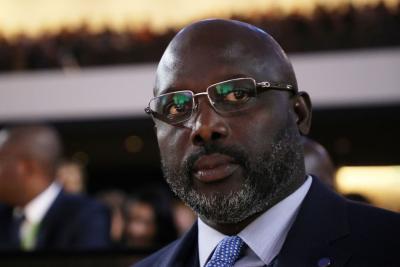
Already in mid-September, the Daily Observer had published an editorial entitled “The People of Liberia Are Under Siege – Break That Siege Now”, pointing out that rising insecurity had become an issue affecting all Liberians. The newspaper editor criticizes President George Weah and concludes with a pertinent statement: ‘(….) President Weah must break his silence, speak to the Liberian people and reassure them. For, anything short of this would suggest complicity. Silence is not an option Mr. President!‘ 

Will President Weah understand the message and act accordingly?
We’ll see the coming days.
I will report on subsequent developments (webmaster FVDK).

Liberia: Enough Is Enough – Too Many Murders Going With Impunity

Published: November 8, 2021
By: Milton Nathaniel Barnes – Front Page Africa, Liberia

Follows a list of recent victims: 

Rev. Dr. William R. Tolbert III (November 1, 2021)

Maude Elliot (October 31, 2021)

John H. Tubman (September 22, 2021)

Unidentified Woman on 17th Street Beach (September 14, 2021)

Matthew J. Innis (August 2019)

Mordecai Nyemah (May 2021)

Melvin Earley (February 19, 2021)

Florence Massaquoi (February 2021)

Robert M. Blamo, Jr. (2021)

Bobby S. Gbeanquoi (2021)

Siafa G. Boimah (2021)

Albert Peters (October 2020)

Gifty Lama (October 2020)

Elijah Polumah (2020)

Abraham Tumay (2020)

George B. Fanbutu (2020)

Possibly, others unknown 

WHAT’S GOING ON, MY PEOPLE? In every instance above, innocent lives have been taken; and, we are not sure what is being done about it.  Liberians are dying mysteriously or being brutally murdered.  Murderers are getting away with impunity.  The usual lip service is paid; the family greaves; and, we carry on our lives disillusioned and frightened.

WHAT IS EXASPERATING about this is that Liberians are fearing for their lives in the midst of dire poverty and economic straits.  They barely eke out a living encountering the huge cost of feeding themselves, educating their children, paying their rent, transporting themselves, only to be faced with the threat of someone murdering them in cold blood.

WHY ARE LIBERIANS continuing to face these nearly insurmountable challenges? Simply stated, this is due to the absence of Law and Order, which should, at the very least, investigate and inform the public so as to reassure them that authorities are responding with urgency.  In this particular environment, when criminals believe that they can get away with heinous acts including brutal murders, they take that as a “license to kill” in view of the fact that there appear to be no consequences.

IN MY OPINION, this comes down to the matter of leadership.  For quite a while now, Liberia has been led by politicians as opposed to authentic leaders.  Basically, what I’m saying is that there is a distinct difference between a leader and a politician.  An authentic and effective leader will address numerous challenges, be they economic (fiscal-monetary management, unemployment, etc.) or social (justice, education, healthcare etc.), using a wide array of tools.  A leader knows how to corral the appropriate experts who can provide effective solutions to whatever challenges may arise within his or her sphere of influence. 

A POLITICIAN, on the other hand, possesses a singular tool that is used to address any and every issue: politics.  From the politician’s perspective, every problem, regardless of its nature, requires the solution of political rhetoric.  The politician says whatever he or she believes will assuage the people.  The goal is to persuade the people that things will be fine. Saying so, as we all know, does not make things so. Yet, the only tool of the politician is politics (i.e. the power of persuasion).

IN THE FACE OF MURDERS with impunity, leaders, at all levels of society, cannot afford to sit aside with indifference.  We must stand up against these outrageous acts.  We know that God is the ultimate judge; yet, every true religion teaches us that there are laws by which we must govern ourselves.  In Liberia, our entire social fabric is at risk of disintegrating.  No society, without a modicum of justice in the face of serious crime, can continue to function.  It will inevitably tumble into utter chaos. 

IN VIEW OF WHAT IS UNFOLDING, I am poised to ask the following questions:

Can we, as a country and people, take decisive steps to address these concerns?

Can we source international support to investigate these deaths many of which seem mysterious; if, and only if, we lack the resources and technical ability to do so?

Can the public be kept abreast as to the progress Government is making in investigating these deaths?

CAN WE ALSO ENDEAVOR to investigate the drivers of these mysterious killings?

Lest we forget, regardless of the circumstances of these deaths, whether politically motivated and or based on hatred, they do have ripple effects that transcend the actual victims. We may have to deal with how family members are affected and what interpretation others connected to the victims may conceive.

REMEMBER, the fruit of peace and freedom is priceless; and living in the spirit of fear breeds distress.

THIS IS A CLARION call to all people of Liberia to stand up and put an end to brutal murders and other serious crimes.  Our first step is to unilaterally and publicly condemn these atrocious acts; and, then, demand that our justice system fully and completely investigates each unexplained death. Culprits must be prosecuted and punished to the full extent of the law.

IN TIMES OF TROUBLE, when good people sit aside supinely and do nothing, they are no better than the perpetrators of evil; for there is an adage that says, “we give acquiescence by our silence.”

Source: Liberia: Enough Is Enough – Too Many Murders Going With Impunity

Silence Is Not An Option, Mr. President!

Published: November 10, 2021
By: Editorial Board – Daily Observer, Liberia

Barely two months ago in its September 16, 2021 editorial headlined – “The People of Liberia Are Under Siege – Break That Siege Now”,  the Daily Observer pointed out that rising insecurity had become an issue of grave concern to Liberians across the board.
Note of the webmaster: This article by the Daily Observer’s Editorial Board has been included below – italics are mine, FVDK).

There have been persistent media reports of unexplained disappearances as in the case of the Blamo brothers who were reportedly hired by the proprietor of the St. Moses Funeral Parlors and extrajudicial killings including ritualistic killings carried out by individuals with alleged links to this government.

We recall the deaths last year of the Liberia Revenue Authority (LRA) government auditors under mysterious circumstances. President Weah’s comments, suggesting that Gifty Lama and her colleague who were found dead in a vehicle on Broad Street were both lovers making out in their car, sent a wave of shock through the public.

Another LRA official, while driving along the SKD Boulevard, was attacked by machete wielding motorcyclists, causing him to run off the road and crash into a nearby house.

In yet another instance, the head of the Internal Audit Agency was killed after allegedly falling from the balcony of his house on SKD Boulevard. 

President Weah’s response to that development was to urge citizens to install close-circuit television (CCTV) cameras around their homes. That was well before the spike in reports of ritualistic killings around the country, which has served to create a climate of fear and uncertainty amongst the citizenry.

It is safe to say that Police response to such reports of extrajudicial killings have been at best ineffectual. Police Inspector-General Patrick Sudue, responding to expressed public concerns about the rise in ritualistic killings, dismissed such reports, adding that Liberians are freely disposing of their dead in the streets because of their inability to give their relatives a decent burial.

He further declared that it was against such a backdrop that reports of bodies being discovered with parts missing were all fake news, intended to discredit the Weah administration.

But as events have shown, the fears of the people appear justified, given the spate of recent brutal murders of John Hilary Tubman, son of the late President William V.S. Tubman; William Richard Tolbert III, son of the late President William Richard Tolbert, Jr; and former immigration officer, Maude Elliot, in their respective homes.

Those tragic events, all unfolding within a very short period, have again raised public concerns about what they see as no end to the growing wave of insecurity under this government. 

Not a single perpetrator has been apprehended in all of the cases cited earlier. This is giving rise to a heightened sense of insecurity. After dark, the streets of Monrovia become virtually deserted. 

By 10pm latest, all stores, shops and supermarkets are shut and business comes to a grinding halt, except for a few night clubs which remain open until midnight.   

Only recently, in broad daylight, a group of armed thugs invaded a restaurant and bar located on 19th Street near the beach, shaking down bartenders and customers alike, taking away their valuables and money.

To the best of public knowledge, no suspects have, as yet, been apprehended by the Police. The Police, as is well known, is hamstrung in the effective discharge of its duties and responsibilities by the critical lack of logistics including communications.

However, concerns about corruption remain an abiding concern. Salaries are low, discipline poor, and effective leadership is lacking. Under the leadership of current Police Inspector-General Patrick Sudue, public confidence in the Police has waned significantly to the point where the Police is now being seen as partisan.

This negative public impression of the Police persists despite pronouncements by a local civil society group, National Youth Movement for Transparent Elections (NAYMOTE) declaring that public confidence in the Police is increasing.

Given the current outlook, it appears that the restoration of public confidence in the Police is still a long way off. The disconnect between the Police and the public appears to be widening instead.  

Official government support to the Police rather than being directed at countering public dissent and clamping down on freedom of speech and assembly should instead be increased to aid its effectiveness and ability to provide protection to the people of Liberia.

This newspaper once again reminds President Weah that there is a climate of fear being created by such gruesome and mysterious killings as well as unexplained disappearances. The Daily Observer has consistently reminded this government that the creation of a climate of fear is in no one’s interest. 

This is because of the recognized fact that a climate of fear also induces feelings of hate and ill-will towards the government. Such feelings can be suppressed but only for a time. They simmer and without warning can explode like a volcano with dastardly implications for social cohesion, national stability and security.

Accordingly, it behooves all — the public and government alike — to work in tandem to curb the rise in violent crime and politically motivated murders such as ritualistic killings.

Above all, it bespeaks the urgent need to end the culture of impunity. And lest we forget, the TRC report provides a proper starting point — that is implementation of its recommendations, especially those recommendations on criminal accountability.

Quite clearly, the rule of law can never thrive in a situation where mass murders and war criminals parade the corridors of power lording over the victims of their crimes. 

Equally so, can it be said that unscrupulous individuals, driven by greed and feeling emboldened by the fact that warlords have since enjoyed impunity, could also attempt to follow their example.

As leader, President Weah should ensure that matters concerning the safety, security and wellbeing of the Liberian people be treated with foremost and not benign concern. 

This means President Weah must break his silence, speak to the Liberian people and reassure them. For, anything short of this would suggest complicity. Silence is not an option Mr. President!

Source: Silence Is Not An Option, Mr. President!

The People of Liberia Are Under Siege! Break That Siege Now, Mr. President!

Published: September 16, 2021
By: Editorial Board – Daily Observer, Liberia

Rising insecurity is/has become an issue of grave concern to Liberians across the board. Report of a rise in ritual killings, unexplained disappearances, extrajudicial killings carried out by individuals with alleged links to this government have all been major topics of concern on virtually all local radio talk-shows recently.

Barely a week ago, a driver of the National Transit Authority (NTA) assigned to ferry to and from the Roberts International Airport (RIA) supporters of the Coalition for Democratic Change (CDC) who turned out to welcome returning CDC chairman Mulbah Morlu was seriously wounded under unexplained circumstances.

The incident, according to eyewitness accounts, occurred in the environs of the CDC Congo Town headquarters. According to a family spokesman, they believe their relative was shot and seriously wounded. Further, according to the spokesman, they have appealed to authorities of the MTA to fly their relative out of the country for advanced treatment in view of his critical condition resulting from the alleged shooting by an unidentified individual.

But the Police see things differently. According to Police spokesperson Moses Carter, the NTA driver’s injury was caused by a stone thrown by an unidentified individual. Some eyewitness accounts, however, say the driver was shot. As to whether it was an accidental discharge or not remains unclear. But family members maintain that a stone would not cause extreme injury to their relative that would place his life in such grave danger.

Just who is telling the truth remains unclear in the absence of a medical report stating the kind of injury sustained and its causal agent.  The Police are urged to go further in the provision of adequate and accurate information to the public.

Another recent development is the unexplained killing of a female whose lifeless body was discovered on 17 Street near the beach. According to the Police, she was sexually assaulted. Further, the Police maintain that she was mentally challenged and was reported to have often left home for unknown destinations.

But according to eyewitness accounts, the crime scene appeared as though there had been a tussle between the lady and her assailants. Further, according to them, her head appeared to have been bashed by a blunt object, and that parts of her body were extracted. However, these accounts have not been confirmed by the Police. It would however do the Police well to conduct an autopsy and make public the findings.  

This is necessary because of the general negative public perception of the Liberia National Police (LNP). Several unexplained deaths/killings have occurred recently that have left the public with rising feelings of insecurity and a growing lack of trust in the ability of this government to protect them.

Recalling from history, rising insecurity and general perceptions of government’s inability to protect the people always serve to undermine the legitimacy of that government. Such was the case with the Doe administration, in which the abuse of human rights was commonplace. Eventually, it led to violent resistance that took away his life.

Similarly placed was the government of President Charles Taylor, who came to power on the heels of a prolonged civil war. At a sovereign national conference convened during his administration, the greatest and unanimous concern of delegates at that conference was insecurity.

But President Charles Taylor, it appeared, remained impervious to those expressed concerns as he did virtually nothing to curtail the excesses of his security forces. The rest is history. According to a retired diplomat, Liberians have had enough, more than their fair share of disruptions to their lives caused by the insane greed of their leaders. Some according to him were known to have indulged in ritual murder and practices.

A former National Patriotic Front (NPFL) rebel, Joseph Zigzag Marzah testified before the Sierra Leone Special Court sitting in The Hague that he and others, along with former Liberian President Charles Taylor, partook in ritual feasts that involved human body parts.   Ritualistic killing has been practiced in Liberia for a long time. Those who indulge in it believe that drinking human blood and consuming potions containing human body parts impart them with magical prowess to overcome their enemies politically or otherwise.

In 1977, during the reign of President Tolbert, several prominent individuals and commoners were tried in Maryland County on charges of ritual murder. They were found guilty and sentenced to death and were publicly hanged.  For a prolonged period thereafter, ritualistic killing subsided. It has since however reared its head. During the Doe and Taylor administrations, ritualistic killing was a known fact. Cannibalism, especially the eating of human hearts, was practiced by all the warring factions during the civil war

But of late, ritualistic killing and extrajudicial killings have become matters of rising public concern. Indications so far suggest that this government is doing virtually little or nothing to stop it.  Additionally, crime, especially violent crime is on the increase. Abductions, handbag and phone snatching by individuals mounted on motorcycles have also increased. Although the public is raising concern, the LNP response appears ineffectual.

This may more likely than not lead to situations where people generally begin to take matters into their hands. Such would not augur well for general public safety, security, and national stability.  This is why the public expects that President Weah should become seized of the matter and do something concrete to address concerns about the alleged involvement of his officials in a ritualistic murder.

He is currently on a mission to Accra, Ghana, intended to resolve the situation in neighboring Guinea arising from the overthrow of President Alpha Conde. ECOWAS and the AU have since imposed sanctions. As a leader, President Weah should remember that cardinal among his duties is the duty to defend the people against threats to their safety and security and ensure the protection of their rights.  For your information, the people of Liberia are under siege Mr. President. You have to break that siege now!

Source: The People of Liberia Are Under Siege! Break That Siege Now, Mr. President!

Kenya: a voice for PWDs: what has been achieved so far

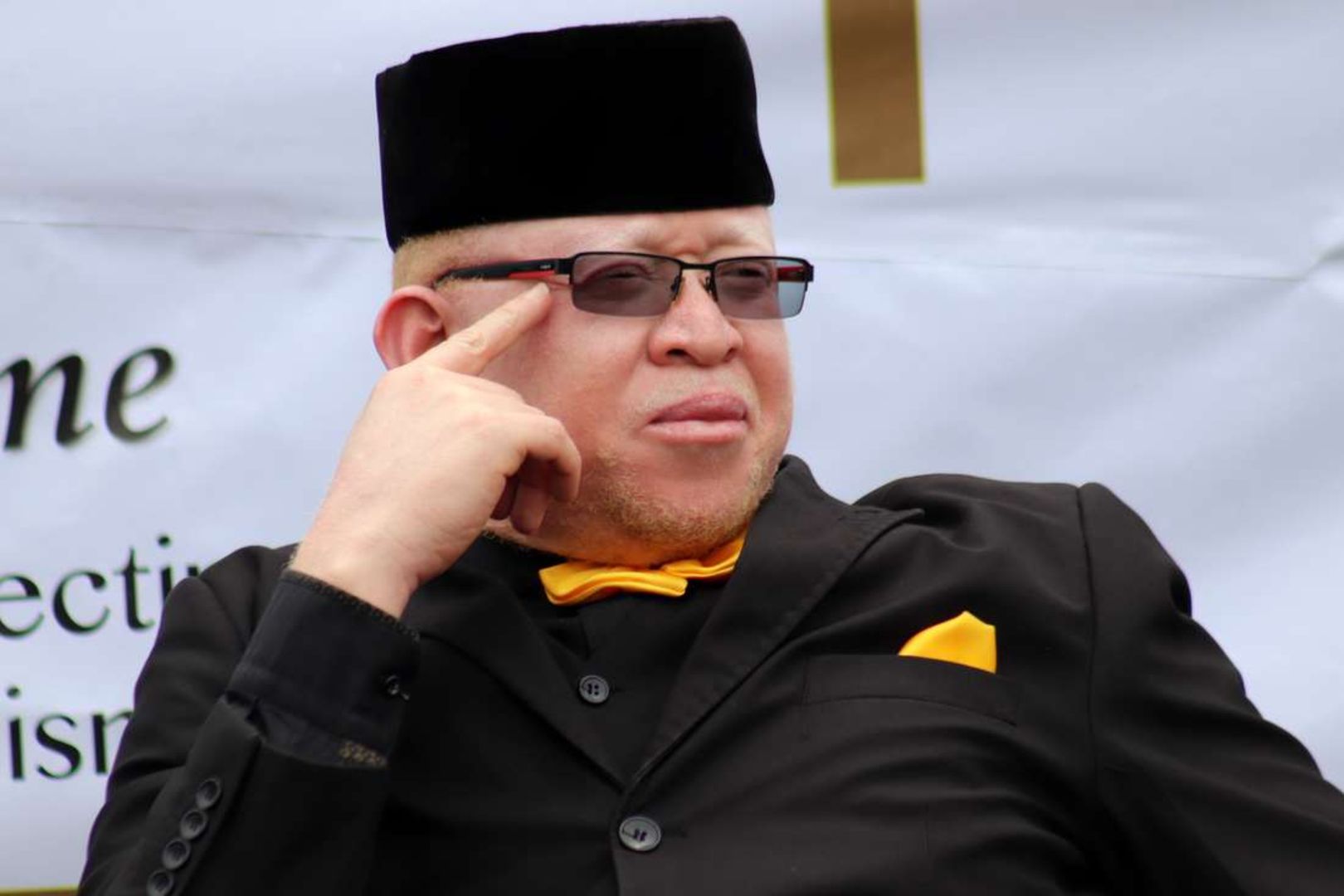
Today, a voice from Kenya: the voice of Isaac Mwaura, senator for persons living with disabilities (PWDs). He is the first Member of Parliament (MP) in Kenya with albinism. It is important to emphasize the fact that Isaac Mwaura himself is a person living with albinism, so he knows what he’s talking about. He knows the constraints which people living with disabilities have to face in society, he knows what discrimination means in practice, he knows the dangers which notably people living with albinism have to confront.

You’ll find his impressive Wikipedia page here. Isaac Mwaura can be followed on Twitter where he tweets as @MwauraIsaac1

In the message reproduced below senator Isaac Mwaura sumps up what he has been able to achieve since he was elected in parliament. It is an impressive list, though far from complete. Still much has to be done to protect the interests of people living with albinism which forms a broad and varied group. It is significant that – inter alinea – he mentions that he has been able to rescue Kenyans with albinism, including children, from ritual killing. 

In several countries in Sub-Saharan Africa people with albinism are being hunted, kidnapped, mutilated and killed for obscure reasons based on superstition. The example of Isaac Mwaura merits to be duplicated in other SSA countries. Let his voice be heard!
(webmaster FVDK).

A voice for PWDs: What we achieved so far

Isaac Mwaura speaking at the Albinism Society of Kenya during the 5th celebration of the International Albinism Awareness day on Saturday, June 13, 2020 in Nairobi.
PHOTO DENNIS ONSONGO

Published: February 26, 2021
By: Star, Kenya – Isaac Mwaura

Dear reader,

People have been asking me what has been achieved so far in representing people living with disability in Parliament and politics in general.

My answer is simple: A lot has really been achieved, against all odds.

It’s important to note the marginalisation, stigma and discrimination against  persons with disabilities has been going on for thousands of years. This is largely because of the way many societies perceive the functional, and indeed, utilitarian aspects of a human being, especially a child who is born differently.

Disability in many societies has been seen as a taboo, a bad omen or even a disease. Therefore, very few people are socialised to embrace it. This means a lot of the work we do is to ‘deconstruct’ these notions on one hand, and also to increase equal opportunities  for PWD.

In my journey for eight years since the constitutionally recognised representation of PWDs, the first thing I did upon assumption of office was to form an association of all MPs with disabilities.

I formed the Kenya Disability Parliamentary Association (Kedipa) with 13 members, five of whom were nominated to represent persons with disabilities, six directly elected by the people in single member constituencies, and one being a parent.

Kedipa became the first caucus of its kind in the history of Parliament. The aim was to create synergy amongst MPs for the disability agenda to be promoted in Parliament. 

For example, Parliament wasn’t as accessible to wheelchair users and people with other mobility difficulties. In this regard, we pushed for the modification of the chamber and provided an extra aide to assist those with mobility difficulties.

Through legislative proposals, I have been able to to increase the retirement age of PWDs from 60 to 65 years to compensate for years lost due to lack of employment.

I have also been able to help hundreds of PWDs secure jobs in the public and private sectors. I have also ensured several of them were appointed to  constitutional offices such as constitutional commissions.

A very interesting innovation is the enrollment of youth with disabilities into the National Youth Service. This paramilitary training was perceived as not attainable by PWDs, yet hundreds have since graduated with useful skills for the nation. This is the world’s first programme of its kind.

In terms of education, I have successfully pushed to increase funding to special schools, helped create a full directorate of special needs education from a division at the Ministry of Education.

I pushed to create a special allocation of funds to education assessment resources centres and ensured all boards of management in all public schools include a representative of PWDs.

For the first time in the history of Parliament, special schools learners have visited the House to follow live proceedings, and I have enabled some of them to get school buses.

I have also visited special schools across many counties in far-off places such as as Lisa Hola School for the Deaf in Tana River.

PWDs are now represented in the NGCDF from the constituency level to the national board. They are also represented in all the Uwezo Fund committees.

Kenya Sign Language has now been elevated to  to English and Kiswahili to ensure the deaf have an equal chance, over and above ensuring TV stations provide this critical service.

In government budgeting, I pushed to increase the funds allocated to the NCPWD from Sh700 million to Sh1.8 billion to cater for amongst others,  cash transfer for Kenyans with severe disabilities.

Further, persons with albinism receive free sunscreen lotion, protective gear and skin cancer treatment from the government, thanks to my work.

I also started the Mr & Miss Albinism beauty pageantry to create awareness. Then other African countries have adopted this.

I have also lobbied for the creation of the position of the Africa Union Special Envoy on the rights of persons with albinism. I have also lobbied the EU Parliament to adopt fair treatment of albinism as a human rights issue.

Additionally, I have also rescued Kenyans with albinism, including children, from ritual killing. In 2019, I helped PWAs to be counted for the first time, including the intersex persons who heretofore hadn’t been recognised in Kenya.

Through the AT2030 project, I have pushed for the production of a local electric wheelchair that is affordable and durable in our terrain.

I have sponsored the highest number of bills in the Senate.

A lot remains to be done but we have progress to build upon for a better tomorrow for all of us. As someone said, disability is a club, anybody can be a member.

Source: A voice for PWDs: What we achieved so far