‘The children are not safe here’: the Nigerian couple fighting infanticide

When I first read the article presented below and published by the Guardian, entitled ‘The children are not safe here’, about a Nigerian couple – Olusola and Chinwe Stevens – fighting infanticide in their own home country, I remembered an earlier article describing this courageous couple and their admirable work. In 2018, to be precise on May 9, 2018, I published a post entitled ‘Nigerian couple working to eliminate infanticide in Nigeria‘, on two Christian missionaries, Steven Olusola Ajayi and his wife Chinwe who in 2004 had opened a shelter for so-called ‘evil children’, the Vine Heritage Home.

Without any doubt, this is the same couple and the same home presented in the 2026 Guardian article below. The 2018 article on the missionary couple was originally published on a website called ‘This Is Africa’. It was an opinion-article. Unfortunately, the exact title is missing. lIn 2018 I had juist started the present site on ritual killings, superstition, witchcraft, infanticide and human rights, and – with hindsight – at that time there was still lack of a systematic presentation.

Unfortunately, the original 2018 article no longer exists on he internet. This is precisely the reason why I have opted for the actual approach to copy-paste articles selected for my postings (together with my comments), as I had this experience before. See the section Why publish this site?

Infanticide is a crime, caused by ignorance and superstition. Nigeria is certainly not the only African country where systematic infanticide exists, i.e. the systematic killing of small children, babies. I regularly read about infanticide in other countries where sometimes desperate mothers kill their newborns. But the shelter created by Olusola and Chinwe Stevens, VIne Heritage, is for other babies whose life is threatened: new born babies who are considered ‘evil’ children, who are believed to be bad omens. Babies with disabilities, albino babies, twins, are suspected to bring curses and bad luck. Hence… they are killed, buried alive, or ‘simply’ disappear.

I express my deep respect to the Stevens couple and am convinced that their work is not in vain and that it will ultimately contribute to the eradication of a terrible crime that has existed for too long.
(webmaster FVDK).

If you would like to support The Guardian financially, please click here.

‘The children are not safe here’: the Nigerian couple fighting infanticide

Triplets Paul, Pauline and Paulina at the Vine Heritage Home Foundation, Gwagwalada, aged six months in July 2025. Photograph: Adesegun Adeokun/The Guardian

Published: February 5, 2026
By: Adaobi Tricia Nwaubani – The Guardian

In a few isolated communities in central Nigeria, some babies are believed to be bad omens. Olusola and Chinwe Stevens run a thriving home for babies at risk. But what happens when the families want them back?

Esther Stevens’ life nearly ended as soon as it began. She was born in 2007, in a village on the outskirts of Abuja, Nigeria’s capital city. Her mother died giving birth to her, and in the eyes of some villagers, that meant the baby was cursed. According to tradition, there was only one way to deal with such a child. The villagers tied the newborn to her mother’s lifeless body and prepared to bury them together.

When word reached a Nigerian missionary living in the community, she rushed to the burial site and pleaded for the baby’s life. After the villagers and relatives refused, she appealed to the traditional priest who had been called on to perform the rite. “Finally, the priest agreed and said, let them give her the evil child and see what the child will become,” Esther said. “The child, that’s me.”

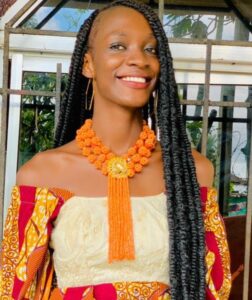
The missionary took Esther to a children’s home in Abuja run by a Christian couple, Olusola and Chinwe Stevens, who brought her up as their own. Today, Esther is 18, tall, with a broad smile. She laughs easily and has a quick sense of humour.

In Nigeria, children are widely regarded as gifts from God or the spirit world, but according to some traditional belief systems, certain children were once thought to bring misfortune. Children born with albinism, visible deformities or disabilities were said to bring curses, or to be omens sent from ancestors or deities. In parts of southern Nigeria, particularly among the Igbo, twins and triplets were feared. Although these beliefs have largely faded, in isolated pockets of the country, they persist. In some of these communities, says the human rights activist Leo Igwe, the death of the mother in childbirth is believed to be the fault of the child.

The couple who run the children’s home where Esther grew up have been confronting these practices since 1996. Sent by the Christian Missionary Foundation to Abuja, the Stevenses discovered that some children were still being killed: poisoned, abandoned to starve or buried alive. In 2004, they created the Vine Heritage Home Foundation, a refuge for vulnerable children. Twenty years later, they provide a home for more than 200 children.

When Nigeria moved its capital from Lagos to Abuja in 1976, the new site was presented by the government as a neutral location, symbolically distant from centres of ethnic and regional tensions. But less than 40 miles away from this gleaming modern capital, with its wide boulevards and high-rise buildings, are communities that become nearly impassable in the rainy season. Many of these communities depend largely on subsistence farming, and the few healthcare facilities are poorly equipped and understaffed. According to Olusola, 75% of the children living in Vine Heritage are there because their mothers died in childbirth. (Nigeria is “the most dangerous country in the world to give birth”, according to UN data from 2023, which shows that one in every 100 women dies during childbirth or shortly after, many from postpartum haemorrhage.)

After their shocking discovery, the Stevenses began going around the communities, begging the families to hand over to them any of the “cursed” children rather than kill them. Then they began to speak with other local missionaries, asking them to spread the word that they were willing to take in any child deemed evil.

One of their contacts, missionary Andrew Tonak, told me that Chinwe is one of the most open-hearted people he has met, a mother and leader whose counsel, generosity and instinct to give have touched countless lives. Tonak is 61, and has lived in Kaida village, about 40 miles west of Abuja, since 2000. He recalled visiting women who had just given birth to twins. On his next visit, he would often be told, “The children are no more. They died.” Over the years, he says he has rescued 20 children from the village and neighbouring communities.

By the time some of the children now at Vine Heritage were rescued, they were already weakened by poisoning or severe malnutrition. Most required urgent medical attention. But increasingly, communities are becoming aware of the Stevenses’ work and now bring newborns to them directly, before harm can come to them.

Olusola said: “On their own, they come asking, ‘Please, where is that house where they keep the children?’ And then they bring them.”


Today, Vine Heritage is home to more than 200 children, from newborn to young adults. The oldest, Godiya, is 21 and has been at Vine Heritage since she was a baby. The newest arrival before my visit, a baby born on 27 May 2025, has been fighting for her life in a hospital crib since the day she was brought to the home.

About four years ago, Vine Heritage moved from a cramped facility that was originally designed to accommodate 55 children, to a much larger compound in Gwagwalada, built with funding from the EU in partnership with global charity ActionAid. The home has 18 dedicated staff working in shifts to provide round-the-clock care for the babies and toddlers. In a spacious hall, everyone gathers for morning prayers, group meetings and TV time. (Like any home full of children, there’s a constant battle for control of the remote.)

As I followed Olusola on a tour of the neatly laid-out grounds, he moved in a sprightly fashion, his greying beard framing a warm smile. At the youngest children’s dormitory, a chorus rang out: “Daddy! Daddy! Daddy!” They are not allowed out unaccompanied, and their small faces were pressed against the windows.

Esther Stevens, 18, who has been living at the home since birth. Photograph: Adesegun Adeokun/The Guardian

The multiple-birth siblings all have names that sound alike: Victor and Victoria, Mabel and Bethel, Zion and Zipporah. Among the youngest residents are triplets named Paul, Pauline and Paulina. Their parents arrived at the home one morning about six months ago, cradling the newborns in their arms. “I asked, ‘Why did you bring them?’ They said, ‘We don’t want them to die,’” Olusola recalled. The parents have visited once since then. They love their children, but fear that if the babies remained in their village, they would be killed.

Esther is clearly a favourite among the younger children. They love to follow her around and clamber on to her back, and as she and I chatted, they hovered close by. Esther knew nothing of her true origins or how she had come to live in the house until she was 14. She had been among the first children to arrive, joining the household in 2007 when there were only nine or 10 others. Olusola and Chinwe have one biological child, Praise, now 24 and studying at university. In those early years, Esther assumed she was also their biological daughter. As more children joined over time, she believed she was simply growing up in an orphanage run by her own parents. All the children bear the surname Stevens. “I knew it was an orphanage home, but I thought I was their real child. I look like mummy,” she said, and she does share some resemblance to Chinwe, with the same complexion.

Esther’s illusion was shattered when members of her biological family unexpectedly arrived at the home. At the time, the missionary who had rescued her as a newborn was preparing to leave the community. Before departing, she contacted Esther’s biological family to ask if they wanted to see where she had taken their child, knowing that once she left, they might never have the chance. “My grandmother came from the village and said she wanted to see me,” Esther recalled. “She wanted to see if I was still alive. When she told my father I was alive, he came to see with his own eyes.”

To prepare her for the meeting, Olusola sat her down and told her the truth about her past. “I was more than shocked,” she said quietly. “I felt sad. I felt bad.” Wanting to know more, Esther asked for her file. She read it cover to cover. What hurt most was discovering that her family had never come for her in all the 14 years she had been there. “Finding out about my parents’ true identity … It was just … I shed tears because they didn’t even care.”


Kaida, a village in Gwagwalada, is the closest community to Abuja’s city centre where there is evidence that infanticide may still sometimes take place. There are no tarred roads to the village, and the route is rough and bumpy, but it is better connected than most. There is a patchy phone signal here.

In Kaida, I met Abubakar Auta, a father of 13 and a husband to two wives. His twins Eric and Erica were sent to Vine Heritage about seven years ago. Like almost every adult in Kaida, Abubakar and his wife, Amina, farm for a living. To supplement their income, Amina digs sand from the river to sell to builders. She arrived to meet me straight from her work, dripping wet, sand clinging to her bare feet. Of her husband’s 13 children, seven are hers. Abubakar said he sent the twins away to “save their mother from suffering”. He believed they would not be safe in Kaida. Speaking to me in Hausa through a interpreter, he explained, “If I had left my children here, people would keep their eyes on them, and that would make them a target.” (Eric later died at the children’s home after falling ill.)

Kaida village has solar power, which provides a few hours of electricity each day for its two clinics: one government-run, the other operated by missionaries trained in community health. The government facility stands silent and empty. Locals say its staff are rarely present. The missionary clinic, by contrast, is alive with activity.

While I was there, a community health worker tended to a woman whose young grandson had a toe injury, the wound still raw and red. The woman had told me earlier on, in her home, that she had previously given birth to three sets of twins. All of them died within months. “They just fell sick,” she said. “In a short time, they were dead.”

Olusola Stevens with some of the children at Vine Heritage Home in Gwagwalada, July 2025.Photograph: Adesegun Adeokun/The Guardian

Her eldest child in his early 20s, sitting nearby, looked up and interrupted. “It was an evil hand that killed them,” he said, his tone defiant. At his words, his mother fell silent and turned her face aside, making it clear she wanted no part in that line of conversation.

The village head described the killing of children as belonging to “a time when people did not know these children were human beings”. He repeatedly used the phrase “in those days” to explain that their “eyes are now open” and such killings no longer happen. (He confirmed that the practice continued until at least a little more than 10 years ago, and that his “those days” referred to the years before then. Lakai has served as village head for the past 26 years.)

Community members are reluctant to speak openly, whether out of fear of stigma, distrust of outsiders, or the sensitivity of exposing cultural taboos. What I was able to piece together from these guarded, euphemistic conversations suggests that decisions involved a mix of family elders and traditional religious leaders. Leo Igwe, the human rights activist, acknowledged the role of patriarchy in situations where women surrender their babies to die. In 2019, ActionAid ran a survey in 57 villages around Abuja in which 16% of male respondents openly expressed support for the practice.


The shroud of secrecy has made it hard to tackle these beliefs. When I contacted various government officials, each one said they had never heard of such practices. Infanticide is against the law, but enforcement is hampered by secrecy and denial. Arinze Orakwue worked for nearly 20 years for the state body responsible for rescuing vulnerable children. From the early 2000s, he visited many communities where infanticide is practised, meeting with traditional chiefs and local leaders in an effort to change entrenched beliefs. “Many of them are living in denial. They tell you that it used to happen in their community a long time ago but it doesn’t happen any more.”

As more children were brought to their home, the Stevenses realised the scale of the problem. In 2013, when they decided to speak publicly about infanticide, the Federal Capital Territory government summoned them, accusing them of spreading falsehoods and damaging Nigeria’s image, just to attract attention and donations. Yet this scepticism faded after officials were shown clear evidence. The government eventually commissioned the couple to run awareness campaigns in the affected communities. They have built new partnerships, most notably with ActionAid. “The greatest problem is denial,” said Andrew Mamedu, ActionAid’s Nigeria head. “The community will insist, ‘Oh, there’s nothing like that.’ But when you go there, you see the evidence. You see the altars to the dead twins. Sometimes, the parents can’t account for their children. They are pregnant and before you know it, they’ve given birth and the baby is gone.”

ActionAid’s approach to the problem was patient, practical and deliberately indirect. Staff set up committees in each community – made up of men and women, young people, traditional rulers and religious leaders – and framed their aim as community development. “We don’t start with infanticide because they would just drive us away,” Mamedu said. The teams began by focusing on livelihoods, education, hygiene and access to healthcare, and only then moved on to tackling infanticide, under the broader banner of maternal and child health. Committee members acted as local advocates. One of their most effective tools was radio, still the most widespread and trusted source of news in northern Nigeria.

Chinwe Stevens at home.Photograph: Adesegun Adeokun/The Guardian

The strategy produced some measurable gains. In two communities ActionAid’s advocacy helped secure government investment in health centres. In four communities, the killings gradually stopped. Parents who had handed over children returned to the home to ask for them back. New local “champions” began to emerge, ordinary people willing to speak up. Still, the effort had its limits. Resistance from influential elders persisted, and when funds ran short in 2022, much of the work was left unfinished.

The Stevenses continue to work closely with missionaries stationed across the area. But not all rescues come through Christian networks. In Godiya’s case, it was a Muslim cleric who stepped in. “The Islamic preacher went to the community to preach and make converts, just like I do,” Olusola recalled. “He saw a child strapped to the dead body of her mother. They were preparing the grave. He asked, ‘Please, this child, what happened?’ They told him she was an evil child, and that their culture was to bury such children with their mothers. He said, ‘Can you permit me? Let me call my pastor friend so he can come and pick up the child.’ So he called me, and we went to the community and took her.”

When the Stevenses first established the Vine Heritage Home, their vision was simple: to raise the rescued children as their own and, once they were older, return them to their communities so they could become agents of change in the very places that had once rejected them. In recent years, 36 children have been returned to their families. In each case, the families themselves came asking for the children. But reintegration is rarely smooth. For one thing, many of these rural communities speak local languages understood by few outsiders.

When Esther visited her family in Dako village for the first time in December 2021, she met her siblings: two older brothers, two older sisters, and a younger sister. She was the only child from her mother, who had been the last of her father’s three wives. Two of her siblings were already married with children. They were glad to see her, but communication was difficult. “I couldn’t talk with them because they speak Basa,” she said. Only her elder brother could speak English, because he was in school.

The contrast in education was stark. When Esther told them she was in her third year of junior secondary school, they thought she was lying; most of the people her age in the village were still in primary school.

At Vine Heritage, every child goes to school. Of the current residents, 182 are enrolled, from primary and secondary pupils to university students like Godiya, who is studying sociology at Nasarawa State University, just across the border from Abuja. Godiya dreams of a career that comes with a uniform – any one will do. Esther has just finished secondary school and hopes to begin university later this year to study law. For many like her, returning to their villages would probably end those dreams.

Sometimes, a compromise is possible. Fifteen-year-old Mabel and Bethel spend their school holidays in Kaida village with their family, then come back to the home once classes resume. Their family first came to reclaim them when they were 10 years old. “I was happy, but I was not happy,” Bethel said. “I was happy that I had seen the place where they gave birth to me, but I was not happy to leave here,” she added. “Whenever I go there, nobody disturbs me, but I always want to come back.”

Beyond communication difficulties, the adjustment to rural life can be harsh. Children accustomed to running water, electricity and regular meals must fetch water from streams, adapt to harder living conditions, and endure the curiosity or suspicion of villagers.

The Stevenses usually wait until they consider the children old enough to understand before telling them how they came to the home. When Godiya turned 17, in 2021, her people came looking for her. “At first I said I was not going to see them because for how many years they did not come,” she recalled.

Gloria, 11, playing with other children at Vine Heritage Home.Photograph: Adesegun Adeokun/The Guardian

“It took us two hours to convince her,” Olusola said. “I pleaded with her, telling her that their coming was a sign of progress.”

Since then, Godiya has stayed in touch with her family, but she only made her first trip back in January 2025. Without proper roads, the only way to reach Bari village was by motorbike. Hours after leaving Gwagwalada, she finally arrived exhausted, and the entire village gathered to stare. “Everybody was just looking at me,” she said. “I didn’t understand the language and the journey was stressful. They were speaking, but I didn’t understand them.”

The youngest of nine children, Godiya was welcomed with joy by her older sisters, who embraced her through tears. They urged her to come back for Christmas, but she was dismayed by the lack of electricity or phone network, and currently has no plans to return.

Esther’s experience in Dako was similar. “When I went to the village, everybody came to see me,” she said. Some of the stares unsettled her. “The community was scary. The way some villagers look at you, as if there’s some evil thought in their mind. I was so scared because I didn’t want anything to happen to me.”

Sometimes, the danger is real. Four years ago, eight-year-old Monday was sent back to his village at his grandfather’s request. Monday’s mother had died giving birth to him. The family had recently converted to Christianity, and after Monday’s father remarried, the grandfather felt it was the right time to bring home the boy once deemed “evil”. But just two weeks later, Monday was returned to Vine Heritage. The elders in the village had been resentful, asking the grandfather how they should feel when others had killed their own children but he had brought his back alive. Fearing for the boy’s safety, the grandfather decided it was better for him to leave. “He called me and said, ‘I am returning your child to you,’” Olusola said.

When a family asks for their child back, the Stevenses try to find out if it is safe for them to return. But they cannot prevent every tragedy. About eight years ago, the Stevenses visited a mother who had recently given birth to an albino girl. She assured them that attitudes towards albinos in her community had changed in recent years, so they did not insist on bringing the new baby to the home. “I was asking questions: has anybody threatened you or the child? She said no,” Olusola recalled. Shortly afterwards, word reached him that the baby had died without explanation. He has never been able to discover what happened.


The years have taken their toll on Chinwe and Olusola. About two years ago, Chinwe’s health began to deteriorate, and Olusola urged her to move into a small flat nearby so she could focus on recovery. During school holidays, two of the oldest children, including Godiya, take turns staying with her, helping with everyday needs, while the others visit in small groups from time to time.

Chinwe has had a stroke, developed high blood pressure and undergoes regular dialysis. I visited her in the modest flat where she lives alone, after spending her entire married life surrounded by dozens of children. She spoke candidly about how she poured herself into caring for others while neglecting her own health. Apart from the small income the Stevens received as missionaries, they earned nothing, relying entirely on donations to care for the children. Now, Chinwe herself depends on donations to cover her medical expenses.

On the walls hang photographs of her in a graduation gown, taken when she earned her doctorate in agriculture from the prestigious University of Nigeria, Nsukka. Another, from two years ago on her 59th birthday, shows her nearly three times her current, frail size. Pointing to one, she said softly, “Look at me then, and look at me now.” She managed a wry laugh.

Olusola said the home had its future leaders among the older children, those willing to step up and already involved in administration and management. Some, he explained, had made it clear that even after graduating from university, they intended to remain committed to running the home. Whenever he was away for meetings, they kept things running. Unless visitors specifically asked to see him, the children received guests, handled day-to-day operations, managed money and accounts, and reported back to him. “The only thing they can’t do is sign cheques,” he said. “I have already told them that in the next 10 years, I will sit back and the home will be in their hands.”

Most donations to Vine Heritage come from individuals. On the day I visited, a donated cow stood in the compound. But with Nigeria’s soaring inflation, now at its highest in nearly three decades, many longtime supporters have cut back or stopped entirely. “Sometimes, when you phone people to remind them of their promise to pay school fees, they get irritated,” Olusola said. “Because of Nigeria’s economy, some of the people that used to support the home before are now finding it difficult.”

Mamedu, at ActionAid, believes the issue is more complex. The challenge, he says, lies in how the home is run. It is neither a formal organisation nor a business. There is no business plan, governance structure, or consistent paperwork like a typical NGO or charity would have. It is registered as a foster home. There are no clear systems for tracking how funds are spent or how accounts are managed.

“We supported the home to try to institutionalise the process,” Mamedu said. “We trained the staff on hygiene, childcare, some record keeping, even partner management. From the start, we told Olusola, let’s have a central way to account for every fund that comes in, so that when we say we don’t have money, it’s backed by proper records. But he tells us that this is not an orphanage; it’s a home.”

ActionAid still supports the home, providing monthly funds for food and covering urgent medical bills for the children. But the future is uncertain. The Stevens’ family-first approach has undoubtedly saved lives and nurtured emotional bonds among the children, Mamedu believes. But the original vision of reintegrating children into their communities appears to have faltered, which means the home keeps growing. Olusola admits that he once believed those communities would be more developed by the time the children grew up. He had expected more progress.

I asked Olusola if he would have done things differently. “When God asks you to do something you only obey,” he said. “It never occurred to me that we would ever have more than 20 children. After saving seven children, we had a pause of about one-and-a-half years, and we thought that would be all. We made our decision that whatever we gave to our biological child, we would give the rest.” But after the seven-year hiatus, Olusola recalled, “the floodgates opened, and more children started coming”.

Source: ‘The children are not safe here’: the Nigerian couple fighting infanticide

Ritual murders and mysterious deaths in Liberia – cont’d

Yesterday’s post on the alleged recent surge in ritual murders in Liberia and the spike in mysterious deaths is continued today with a cry from a Liberian journalist and pro-child advocate, Fahnie S. Kollie. The author cries for an intervention, be it from local, Liberian authorities, or the international community, to stop the seemingly endless killing of innocent civilians, men, women, children, for ritualistic purposes.  

Read her story and plea for help. And – to use Fahnie Kollie’s words:  Let’s act together. Either now or never!

Another Liberian who has raised his voice against the silence of President Weah over the wave of ritualistic killings across Monrovia and other parts of the country is Dr. Daniel Cassell. 

Dr. Daniel Cassell is the Vision Bearer of the newly certificated People’s Liberation Party (PLP), and also the Chief Executive Officer (CEO)/President of the Dr. Cassell’s Humanitarian Foundation, and Kwenyan Security Firm, operating in Liberia.

I wish to congratulate Fahnie Kollie and Daniel Cassell here for their statements and public intervention. Whereas I commend them, notably for their plea for respect of human rights and their cry for an end to these senseless murders, it is nonetheless important to note that some allegations of ritualistic activities have not been proven even though – it cannot be said enough – every ritualistic murder is one too much.
Liberia, unfortunately, has a long history and notorious record when it comes to ritual killings, mysterious deaths, witchcraft and superstition. Previous posts bear ample testimony to this observation.

Warning: some readers may find the graphic details of the description cited disturbing (webmaster FVDK).

Liberia: A Horror Movie – How Did We Get Here?

Fahnie S. Kollie, Liberian journalist and pro-life advocate

Published: September 29, 2021
By: Fahnie S. Kollie – The Perspective, Atlanta/Georgia 

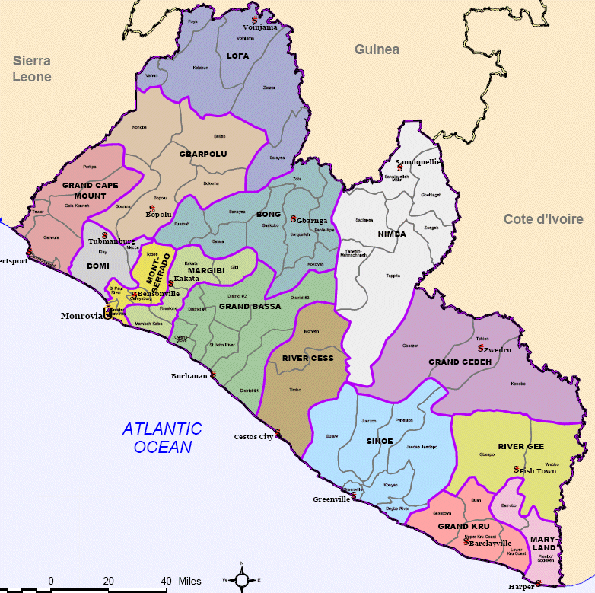
Liberia has been known to be a peaceful and calm country since the end of the civil war in August 2003. In fact, it is often referred to as a Sweet Land of Liberty. But is this maxim or aphorism still true today? 

Mysterious deaths and ritualistic killings were visible during President Ellen Johnson-Sirleaf’s administration. But why has it drastically increased during this administration? Why now and what’s going on? After the ascendency of ex-Soccer Legend George M. Weah in 2018, Liberians were promised and reassured of a better and safer Liberia; A Liberia where women and children would feel protected and secured; One where the press would be free and citizens would not be haunted because of their individual stance on issues or political affiliation.

A Liberia where the rule of law would be respected and justice would be equally discharged/dispensed to all regardless of status, religion, ethnicity, and background. One that puts the security, safety, and wellbeing of the citizens above all other national priorities. 

We weren’t promised a Liberia of terror, horror, and fear as it is being seen today. President Weah’s inaugural speech 4 years ago gave many Liberians renewed hope and assurance of a new Liberia, but are we experiencing that new Liberia? Just few months into Mr. Weah’s Presidency, things began to go the opposite. A big corruption scandal broke out; the infamous alleged missing 16 billion LRD. 

After the release of a damning report surrounding this saga which established that over 2 billion LRD was unaccounted for, two Liberian professionals who were declared persons of interest in the investigation mysteriously died. Mr. Matthew J. Innis who was the Deputy Director for Micro-Finance in the Regulation and Supervision Department at the Central Bank of Liberia (CBL) died in an alleged hit-and-run in March 2019. 

According to FrontPage Africa, another employee identified as Mr. Kollie Ballah, a general support staff at the CBL, who was believed to be the one that drove one of the trucks with the LD 16 billion from the Freeport, also died in an accident. What seemed like a week’s thing would soon turn into a never ending nightmare for Liberians. 

This was the start of another terrifying episode of mysterious deaths, continued disappearances, and ritualistic killings under the leadership of the newly-elected President, George M. Weah. A year later on October 2, 2020, Mrs. Gifty Lama, Acting Manager of Tax Services at the LRA and Mr. Albert Peters, Assistant Commissioner for Internal Audit at LRA were found dead in a vehicle on Broad Street in Monrovia. Two days later, another auditor of the LRA, Mr. George Fahnboto reportedly died in a vehicle accident along the 72nd Boulevard according to FPA. Still dealing with the mysterious deaths of these three auditors, on October 10, the Head of the Internal Audit Agency (IAA), Emmanuel Barten Nyeswa, was also found dead in his compound along the 72nd boulevard. 

The death of the four (4) auditors with in a period of two weeks sparked huge fear among Liberians who found themselves in the auditing field and every other sector. People could no longer feel safe to be in the streets at night. An autopsy was conducted and the results were released in November. This created mixed reaction among Liberians including family members of the deceased. At first, the mysterious deaths were just circulating among Liberian professionals especially those in government, but soon, this fearful tragedy extended to every Liberian in the country. A wave of mysterious disappearances and ritualistic killings took center stage in the country. 

Shockingly, three boys who were hired by the Proprietor of the St. Moses Funeral Parlor went missing on October 17. Robert M. Blamo, Jr., Bobby S. Gbeanquoi, and Siafa G. Boimah reportedly drowned in a river in Bong County while returning home in canoe which allegedly capsized. Mr. Moses Ahossoushe was accused by some family members of the missing boys of being involved in ritualistic killings but he denied the claim. This incident led to series of protests organized by family members and other concerned Liberians. Up till now, this matter has not been fully resolved. 

After a devastating 2020, Liberians expected a boost of security in 2021 to ensure that these mysterious incidences are minimized. Unfortunately, the situation got worse. On March 2, 2021, FPA reported that the body of a woman who was gruesomely murdered was discovered in the 72nd community in Paynesville. According to the police spokesman, Moses Carter, the police was investigating the mysterious death of a 46-year-old woman identified as Florence Massaquoi. Prior to this, the lifeless body of a man believed to be in his 30s was also discovered in the Outland community near the Benson hospital.

Investigation into these cases were still ongoing when another case involving a 22-year-old boy identified as Mordecial Nyemah was reported. He was found in a rubber bush in Plebo Sodoken District with body parts extracted. These numerous cases of mysterious killings have rapidly increased over the past few months and it is alarming.

Just this month of September 2021, there have been several cases of kidnapping and killing of women and men with parts extracted from their bodies. An employee of the LRA reportedly went missing and is yet to be found. On Tuesday, September 14, 2021, the lifeless body of a woman was discovered on a beach on 17th street, Sinkor. The latest incident to occur was involving a woman believed to be in her early 40s. She was discovered dead and half-naked with bruises all over her body in Caldwell on Monday, September 27, 2021. All of these mysterious happenings coupled with the testimonies from some women, who were survivors of kidnapping/abduction for ritual purposes and the startling revelation made by former manager of the Liberia Airport Authority (LAA), have instilled fear in every citizen especially women. Madam Ellen Corkrum accused the Solicitor General of Liberia, Syrenius Cephus and others of being involved in the killing of young virgins for ritualistic purposes, but he denied the allegation.

With everything that is going on which I consider a “Horror Movie”, the fundamental question is “how did we get here”? How did Liberia get to this point? Liberians are no longer safe in their own country. Women and girls can no longer walk around freely without worrying about someone putting a white handkerchief to their nose or drugging their drink. We no longer feel safe riding a vehicle, a motorcycle, or a tricycle. 

Borrowing the lyrics from the famous “Liar man” song sang by President Weah, “why are we being tracked down in our own country?” what did Liberians do to deserve this kind of terror and harassment? As though the massive corruption, bad economy, poor educational and healthcare system, appalling living conditions of the people, and the high level of sexual and gender-based violence perpetrated against women are not enough, Liberians are made to suffer painful and gruesome killings due to heartlessness and greed by evil people, some of whom have been entrusted with state power. 

Instead of providing security for the people as duty-bearers, they are using the very power to kill people and go with impunity. The situation confronting Liberians is more like the common saying “adding insult to injury or ma die, pa crazy”. It can be recalled that Pres. Weah, speaking during the signing of the book of condolence for the former IAA boss informed Liberians to be their own security thus urging government officials and ordinary citizens to buy and install CCTV camera in their various homes for security protection. 

But my question to the president is, did IAA boss not have CCTV camera at his house? He did but did it provide him security protection? No, it didn’t. Did Pres. Weah do a background check before making such statement? I don’t think so. How many Liberians can afford to install CCTV camera in their homes and even if some can afford, does Liberia have stable and accessible electricity to run the CCTV cameras? No. 

Didn’t the president consider residents of Brewerville, Bensonville, Fendall, Careyburg, Johnsonville and Liberians in rural areas who don’t have electricity at all? I don’t think he did. How do you expect an old lady or an oldman in Butuo, Salayea, Belle Yala, Pleebo and other villages to operate CCTV cameras? 

The situation in the country is horrible and unacceptable. Liberians don’t deserve this kind of terror and wickedness. In the 21 century, when other third world countries are keen on improving their country, coming up with new ideas and inventions, our country is still dealing with the issue of ritualistic killing. Are we serious? This madness must stop. President Weah and the entire joint security force need to take siege of this matter and put it under control once and for all. 

Mr. President, you promised to uphold and defend the Constitution of this Republic and that Constitution guarantees every Liberian the right to life and security; therefore, you must ensure that you uphold and defend those rights. I don’t think this is the kind of Liberia you want. If that’s the case, than you must act now against ritualistic killing. The disappearances and killings must stop. Everyone has the right to Life, Liberty and Security of Person. The universal declaration of human rights guarantees that. So, no one has the right to deprive others of living. Mr. President, Mr. Speaker. Mr. Chief Justice, Hon. Daniel Ziakan, Hon. Prince C. Johnson, Col. Patrick Sudue, Cllr. Musa Dean and every other person in the government, we are calling on you to act now and ensure our sisters, mothers, brothers, fathers, and children are protected. 

To our partners, the US Embassy, EU, ECOWAS, OAU, Civil society Organizations, and others, we are also calling on you to intervene in this matter. We must go beyond issuing statements and press releases. Let’s act together. Either now or never!

About The Author: Fahnie S. Kollie is a pro-child and pro-girl advocate. She is a senior student at the University of Liberia studying mass communication and an Honor Scholar of Lux-In-Tenebris Scholars Program. Fahnie is also a graduating senior of the Peter Quaqua School Of Journalism and a practicing journalist.  Fahnie can be reached via: fskthescholar@gmail.com or 0775069741/0555589644

Source: Liberia: A Horror Movie – How Did We Get Here?

More on the recent surge in ritualistic killings and the inaction of government:

Dr. Cassell frowns at Weah’s silence on ritualistic killings

Dr. Daniel E. Cassell is the Vision Bearer of the People’s Liberation Party (PLP).
He is also the President of the Dr. Cassell’s Humanitarian Foundation and CEO of the Kwenyan Security Firm, operating in Liberia.

Published: September 30, 2021
By: Staff Editor – Daily Observer, Liberia 

The Vision Bearer of the newly certificated People’s Liberation Party (PLP), Dr. Daniel E. Cassell, has expressed disappointment over the conspicuous silence of President George Manneh Weah over the growing wave of ritualistic killings across Monrovia and other parts of the country.

Liberians and other foreign residents in the country continue to wake up to news of the gruesome murder of citizens, especially women, in a communities around Montserrado County.

Parts are extracted from the remains of the victims by the unknown perpetrators, allegedly for ritualistic purposes. The body of a woman, only identified as Oretha, was discovered covered with banana leaves on a dusty road in Caldwell early this week. A day later, another corpse was found in a bush in the Soul Clinic community. Last week, the body of Mr. John Hilary Tubman, son of the late President William V.S. Tubman, was found in a pool of blood, badly beaten to death in his bedroom at his home in Fiamah, a suburb of Monrovia.

The current situation has instilled fear in Liberians and foreign residents, compelling them to return home from their various working and selling places earlier than before.  Citizens are now observing a self-imposed curfew in the country to avoid encountering predators.

In a press statement issued in Monrovia on Wednesday, September 29, Dr. Cassell condemned the callous wave of ritualistic killings across the country by those he called “evil-minded individuals.”

He emphasized that besides the escalating media reports on the shameless murdering of fellow citizens for ritualistic purposes, he has also witnessed videos of individuals recounting horrifying stories of how they narrowly escaped death at the hands of these “predatory, ritualistic carnivores.”

“I have also heard a lady identified as Ellen Cockrum made striking revelations of ritualistic killings on various radio stations — linking top brass of the George Weah administration to ritualistic practices,” Dr. Cassell said.

Dr. Cassell maintained that despite the current situation in the country, nothing significant has been heard from the Liberian Chief Executive and other government officials to allay the fears that have gripped citizens and others.

“In the face of these impending tragic developments, I have not heard President Weah or his government officials say or do anything significant about this wave of carnage, to curb the crippling fear being instilled in the public.”

“It is disgusting and disgraceful that a government would stumble on its constitutional obligation to protect its citizens and supinely watch evil-minded men slaughter them in cold blood,” Dr. Cassell added.

Dr. Cassell further called on the government to take the appropriate steps in arresting the situation.

He said state security forces should “Aggressively hunt down these barbaric killers and bring them to justice.”

“I extend condolences to the bereaved families of all who have been murdered by these carnivores. If this scene of horror hasn’t claimed the attention of President George Weah and his government, I hope this statement draws their attention and causes them to expeditiously end the slaughtering of our people for ritualistic purposes”.

Meanwhile, Dr. Cassell has cautioned Liberians to be mindful while in the streets and commuting across Monrovia and other parts of the country. He, however, prayed for God’s grace and protection upon Liberia and its citizens in the wake of numerous challenges and the growing wave of secret and ritualistic killings that have engulfed the post-conflict nation in recent times.

Source: Dr. Cassell Frowns at Weah’s Silence On Ritualistic Killings

Kenya: a voice for PWDs: what has been achieved so far

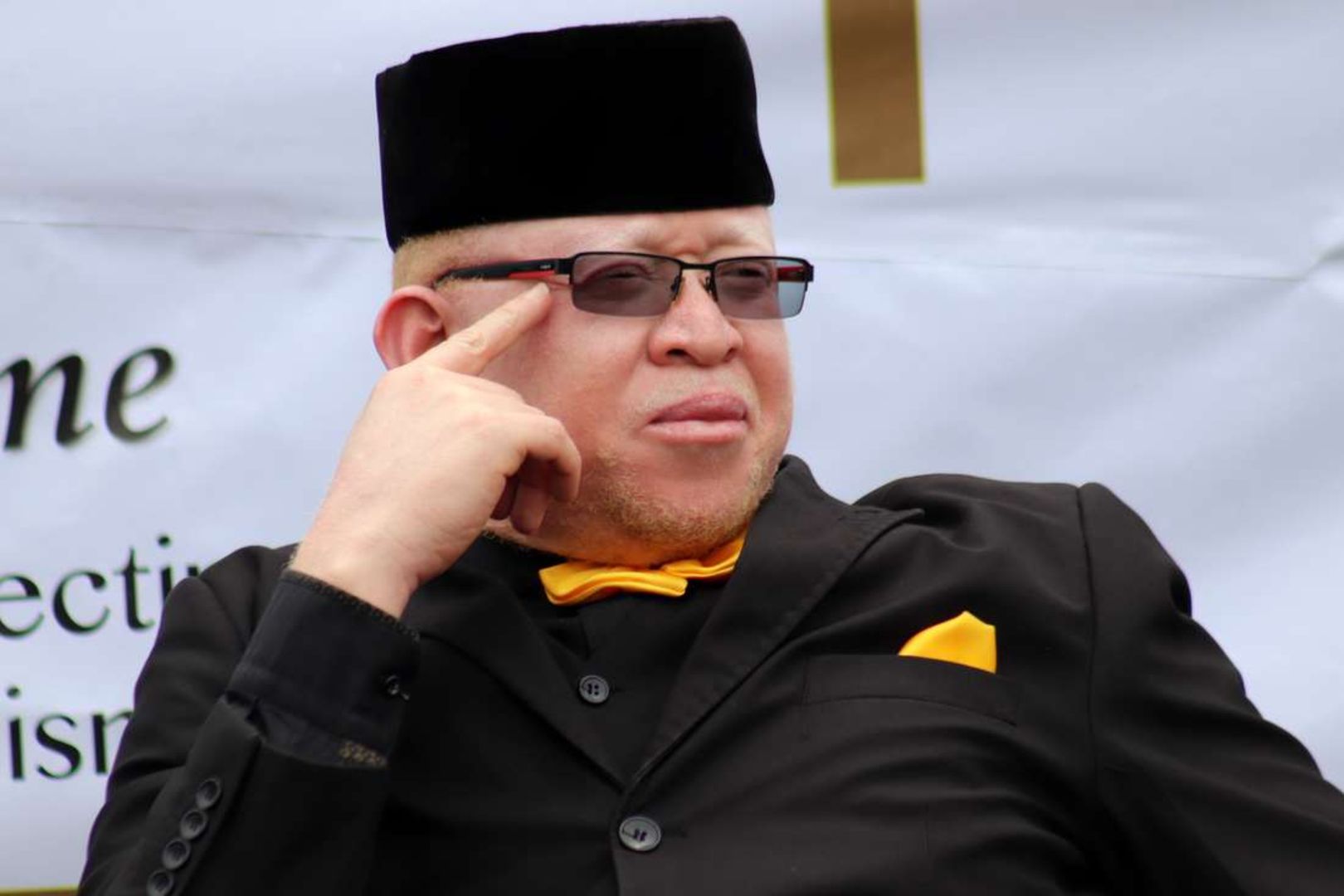
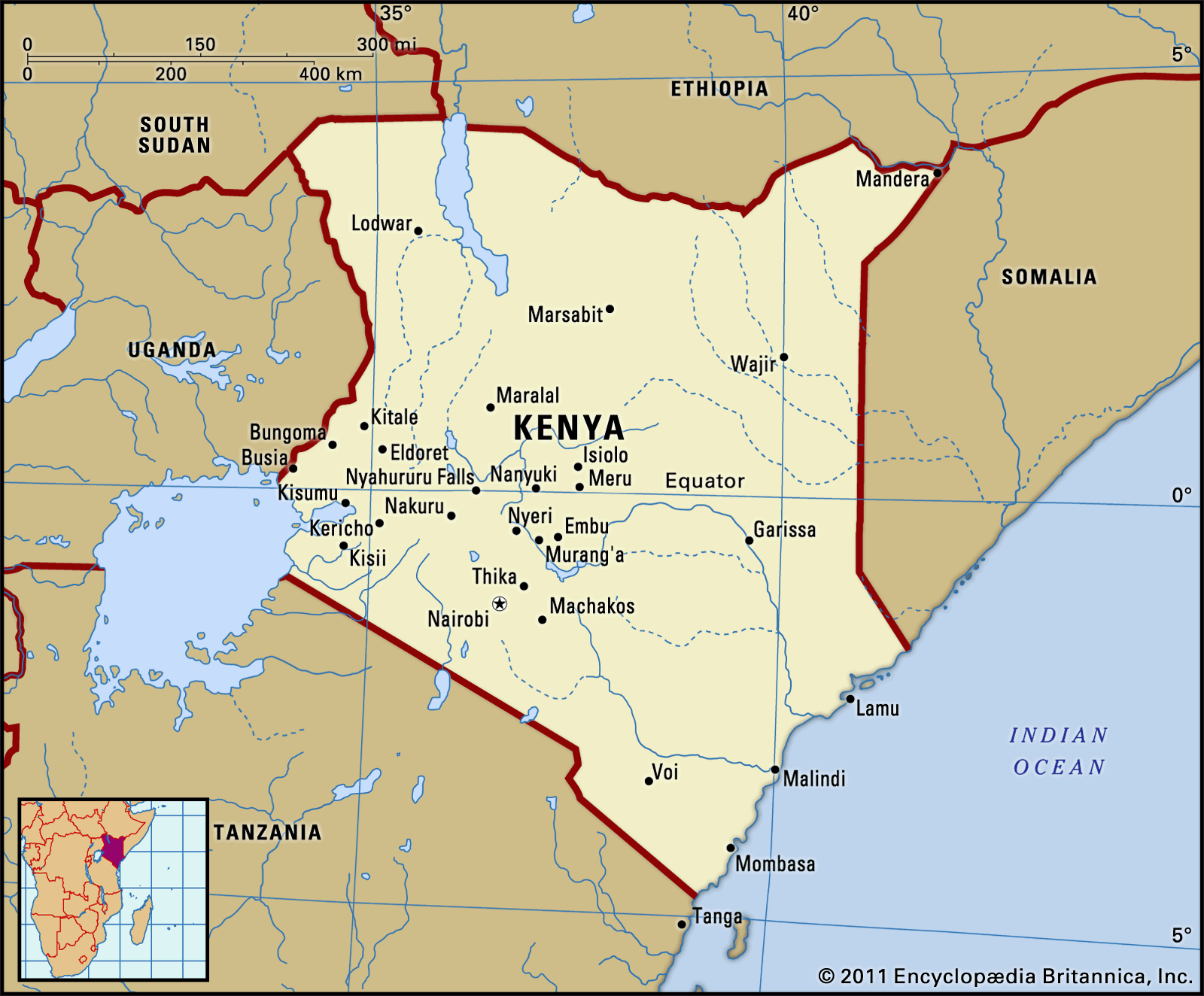
Today, a voice from Kenya: the voice of Isaac Mwaura, senator for persons living with disabilities (PWDs). He is the first Member of Parliament (MP) in Kenya with albinism. It is important to emphasize the fact that Isaac Mwaura himself is a person living with albinism, so he knows what he’s talking about. He knows the constraints which people living with disabilities have to face in society, he knows what discrimination means in practice, he knows the dangers which notably people living with albinism have to confront.

You’ll find his impressive Wikipedia page here. Isaac Mwaura can be followed on Twitter where he tweets as @MwauraIsaac1

In the message reproduced below senator Isaac Mwaura sumps up what he has been able to achieve since he was elected in parliament. It is an impressive list, though far from complete. Still much has to be done to protect the interests of people living with albinism which forms a broad and varied group. It is significant that – inter alinea – he mentions that he has been able to rescue Kenyans with albinism, including children, from ritual killing. 

In several countries in Sub-Saharan Africa people with albinism are being hunted, kidnapped, mutilated and killed for obscure reasons based on superstition. The example of Isaac Mwaura merits to be duplicated in other SSA countries. Let his voice be heard!
(webmaster FVDK).

A voice for PWDs: What we achieved so far

Isaac Mwaura speaking at the Albinism Society of Kenya during the 5th celebration of the International Albinism Awareness day on Saturday, June 13, 2020 in Nairobi.
PHOTO DENNIS ONSONGO

Published: February 26, 2021
By: Star, Kenya – Isaac Mwaura

Dear reader,

People have been asking me what has been achieved so far in representing people living with disability in Parliament and politics in general.

My answer is simple: A lot has really been achieved, against all odds.

It’s important to note the marginalisation, stigma and discrimination against  persons with disabilities has been going on for thousands of years. This is largely because of the way many societies perceive the functional, and indeed, utilitarian aspects of a human being, especially a child who is born differently.

Disability in many societies has been seen as a taboo, a bad omen or even a disease. Therefore, very few people are socialised to embrace it. This means a lot of the work we do is to ‘deconstruct’ these notions on one hand, and also to increase equal opportunities  for PWD.

In my journey for eight years since the constitutionally recognised representation of PWDs, the first thing I did upon assumption of office was to form an association of all MPs with disabilities.

I formed the Kenya Disability Parliamentary Association (Kedipa) with 13 members, five of whom were nominated to represent persons with disabilities, six directly elected by the people in single member constituencies, and one being a parent.

Kedipa became the first caucus of its kind in the history of Parliament. The aim was to create synergy amongst MPs for the disability agenda to be promoted in Parliament. 

For example, Parliament wasn’t as accessible to wheelchair users and people with other mobility difficulties. In this regard, we pushed for the modification of the chamber and provided an extra aide to assist those with mobility difficulties.

Through legislative proposals, I have been able to to increase the retirement age of PWDs from 60 to 65 years to compensate for years lost due to lack of employment.

I have also been able to help hundreds of PWDs secure jobs in the public and private sectors. I have also ensured several of them were appointed to  constitutional offices such as constitutional commissions.

A very interesting innovation is the enrollment of youth with disabilities into the National Youth Service. This paramilitary training was perceived as not attainable by PWDs, yet hundreds have since graduated with useful skills for the nation. This is the world’s first programme of its kind.

In terms of education, I have successfully pushed to increase funding to special schools, helped create a full directorate of special needs education from a division at the Ministry of Education.

I pushed to create a special allocation of funds to education assessment resources centres and ensured all boards of management in all public schools include a representative of PWDs.

For the first time in the history of Parliament, special schools learners have visited the House to follow live proceedings, and I have enabled some of them to get school buses.

I have also visited special schools across many counties in far-off places such as as Lisa Hola School for the Deaf in Tana River.

PWDs are now represented in the NGCDF from the constituency level to the national board. They are also represented in all the Uwezo Fund committees.

Kenya Sign Language has now been elevated to  to English and Kiswahili to ensure the deaf have an equal chance, over and above ensuring TV stations provide this critical service.

In government budgeting, I pushed to increase the funds allocated to the NCPWD from Sh700 million to Sh1.8 billion to cater for amongst others,  cash transfer for Kenyans with severe disabilities.

Further, persons with albinism receive free sunscreen lotion, protective gear and skin cancer treatment from the government, thanks to my work.

I also started the Mr & Miss Albinism beauty pageantry to create awareness. Then other African countries have adopted this.

I have also lobbied for the creation of the position of the Africa Union Special Envoy on the rights of persons with albinism. I have also lobbied the EU Parliament to adopt fair treatment of albinism as a human rights issue.

Additionally, I have also rescued Kenyans with albinism, including children, from ritual killing. In 2019, I helped PWAs to be counted for the first time, including the intersex persons who heretofore hadn’t been recognised in Kenya.

Through the AT2030 project, I have pushed for the production of a local electric wheelchair that is affordable and durable in our terrain.

I have sponsored the highest number of bills in the Senate.

A lot remains to be done but we have progress to build upon for a better tomorrow for all of us. As someone said, disability is a club, anybody can be a member.

Source: A voice for PWDs: What we achieved so far

Uganda’s fight against the evil ‘medicine men’ who remove children’s limbs and organs for human sacrifice

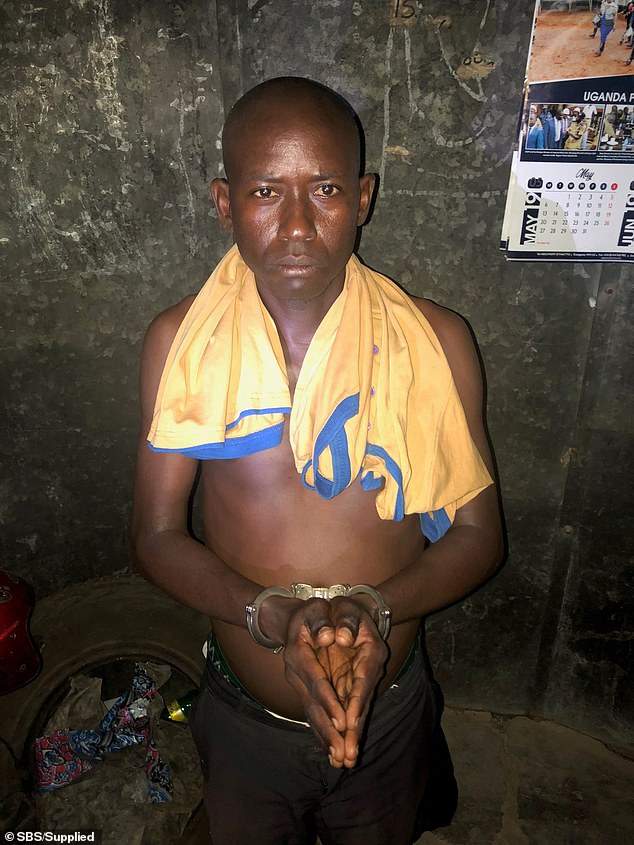
In the villages of Uganda a new breed of witch doctors is hunting and kidnapping children to cut off their ears, noses and genitals. Often the witch doctors decapitate the boys or remove whole arms and legs of victims. Witch doctor Kivumbi Awali is pictured after his arrest

Published: June 24, 2019 
By: Stephen Gibbs – for Daily Mail Australia

  • Ritual killing of children by witch doctors takes place in Uganda, in East Africa
  • Body parts, blood or tissue are removed from boys and girls while they are alive
  • Pastor Peter Sewakiryanga saves mutilated victims and hunts the witch doctors
  • His work is partly funded by generous donations from a small Australian charity  

In the villages of Uganda a new breed of witch doctor is hunting and kidnapping children to cut off their ears, noses and genitals. 

Sometimes the medicine men remove whole arms and legs or drain blood from a boy or girl’s body while the victim is still alive. 

Sometimes the victim’s parents help decapitate their child.

Human sacrifice is not some ancient cultural ritual practised in this east African country, rather it is a barbaric modern way for cruel charlatans to make money.

Children in rural Uganda are kidnapped by witch doctors who torture and often murder them as part of a supposed spiritual sacrifice. 

The witch doctors mutilate the children and use their blood, tissue or organs in rituals they promise can bring clients protection, prosperity and good health. 

Child sacrifice survivor Allan Ssembatya was set upon in a Ugandan village called Busolo in 2009. ‘My son was coming home from school,’ his father says.  ‘They took him to the bush. They cut him. This cut on his head, this cut on his neck, damage to his private parts…’

In one of the most macabre practices to have developed, children are decapitated and their heads buried in new building foundations to bring success to businesses.

Fighting this terrible trade is pastor Peter Sewakiryanga who saves children scarred by ritual mutilation, and helping him is a small group of Australians.

Pastor Peter, a former accountant, started campaigning against child sacrifice about a decade ago and runs charity Kyampisi Childcare Ministries.

He helps rehabilitate survivors and raise awareness of the practice, working with politicians, police, prosecutors and judges to bring offenders to justice. 

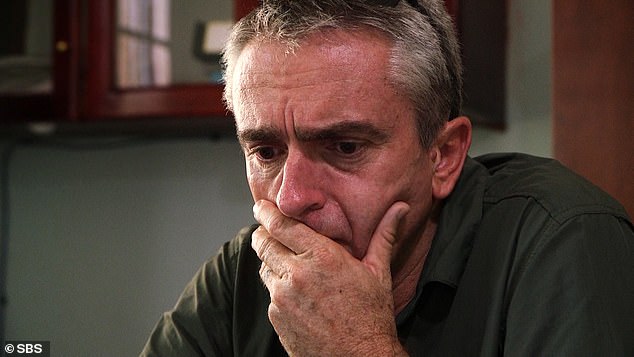
Pastor Peter’s work features in an episode of the SBS program Dateline called How to Catch a Witch Doctor to air on Tuesday night. 

The program follows Pastor Peter and Brisbane civil engineer Rodney Callanan as they hunt for a witch doctor who allegedly almost killed six-year-old Allan Ssembatya ten years ago. 

Reporter Amos Roberts speaks to Allan’s father Hudson Semwanga about what happened to his boy in a village called Busolo in the district of Kayunga on October 21, 2009.

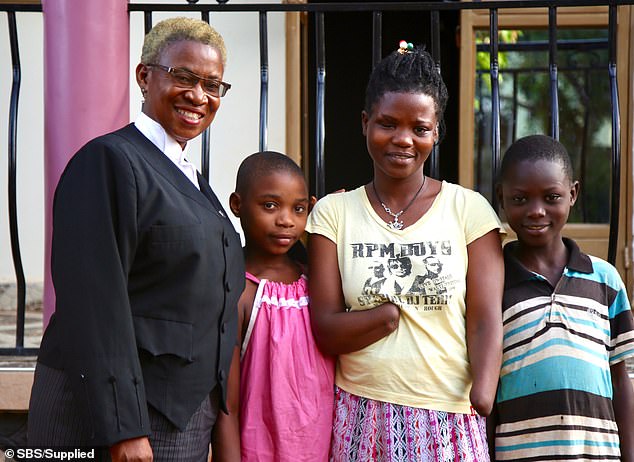
Justice Margaret Mutonyi is pictured with a girl whose hands have been cut off. ‘We have a society that believes in witchcraft,’ she tells the SBS program Dateline. ‘The majority of the population including Christians who go to church, they consult these witch doctors’
Robert Mukwaya suffered spinal injuries so serious it was thought he would never walk again. He had been snoozing in his grandmother’s kitchen in a village near Lake Victoria when a man dragged him out of the room and stabbed him in the neck. He underwent surgery in Australia

‘My son was coming home from school,’ Mr Semwanga says. ‘They took him to the bush. They cut him.

‘This cut on his head, this cut on his neck, damage to his private parts, in my view it’s very surprising that Allan is alive. 

‘What hurts me the most is that they were people that knew me really well, I grew up with them, I went to school with them. We used to treat each other as family.’ 

One of the two men accused of kidnapping and cutting up Allan is witch doctor Kivumbi Awali, who was secretly filmed by a BBC crew in 2011.

The crew posed as members of a construction company looking for a witch doctor who could bring their business prosperity. 

They were introduced to Awali, who killed a goat for good luck at their first meeting, then a few days later explained what he said was his most powerful spell: human sacrifice. 

Pastor Peter Sewakiryanga holding Hope, a young victim of child sacrifice. ‘They prey on the desperation of the people who are sick and are poor,’ Pastor Peter told Daily Mail Australia. ‘Even the elite who live in the city and are rich are now engaged’
Rodney Callanan, from the Brisbane charity Droplets In A Stream, helps fund the pursuit of Ugandan witch doctors who have not been brought to justice. ‘Unfortunately, the police, the courts in Uganda are grossly underfunded,’ Mr Callanan tells Dateline 

‘There are two ways of doing this,’ Awali was recorded telling the bogus businessmen. ‘We can bury the child alive on your construction site.’

‘Or we cut the child, and put their blood in a bottle of spiritual medicine. If it’s a male, the whole head is cut off, and his genitals.’

When Awali was finally arrested by police in the company of Pastor Peter and Mr Callanan he had a machete in his custody. As he was led away he complained his handcuffs were too tight.

Awali was charged with attempted murder and aggravated trafficking. 

His case is still before the courts and if convicted he could face a death sentence or life in jail. 

Allan is one of five child victims of human sacrifice Pastor Peter has helped bring to Australia for life-changing surgery. 

‘Sometimes it’s difficult to talk about what happened to me,’ the now 16-year-old tells Dateline. ‘And sometimes when I talk about it I start crying.

‘I remember the injuries I got, I remember when I was taken, I tried to struggle to run, they hit me up and they did whatever they wanted. So when I think about it I cry.’ 

Pastor Peter is supported by a Brisbane-based charity called Droplets In A Stream which provides education and health care opportunities to victims of child sacrifice who survive.

A witch doctor advertises his work outside his house in Kampala, the Ugandan capital. ‘A traditional healer with powers over spirits solves all cases, demons, thieves, tooth decay, madness, fevers, appelipse, genital affairs’. 

Doctors at Newcastle’s John Hunter Hospital and Brisbane’s Mater Children’s Private Hospital have operated on rescued children free of charge. 

‘Australia has been so kind,’ Pastor Peter said. ‘These children would otherwise be dead.’

Witch doctors practising child sacrifice are motivated solely by money but pretend to be adhering to cultural beliefs to justify their crimes.

‘They prey on the desperation of the people who are sick and are poor,’ Pastor Peter told Daily Mail Australia. ‘Even the elite who live in the city and are rich are now engaged.

‘The problem is a national issue. It started in poor pockets of the community. Now it’s widespread. 

‘It has crossed boundaries into families killing their own children.’ 

The extent of this trade is hard to judge but Pastor Peter says he works with between 20 and 25 cases each year.

‘The issue is done under such secrecy it’s hard to estimate numbers. I can trace it to ten to 15 years ago.’ 

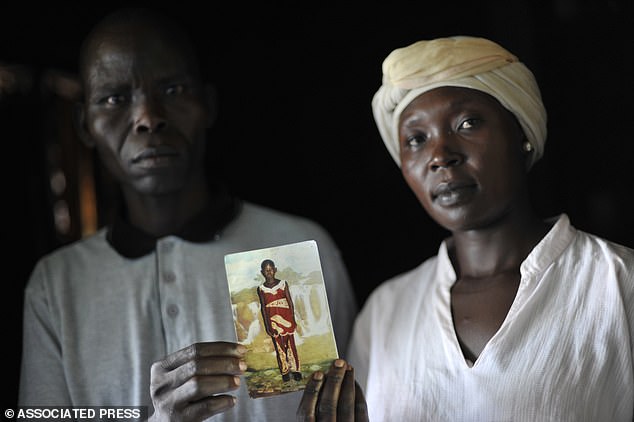
Balluonzima Christ (left) and Rose Ajiba (right) hold a photograph of their daughter Caroline Aya, who was allegedly killed in a sacrificial ceremony in the town of Jinja in southern Uganda 

‘It’s not part of our culture. It hides in our culture. It must be condemned.’

Droplets In A Stream, which Mr Callanan co-founded, also helps fund the pursuit of witch doctors who have not been brought to justice.  

‘Unfortunately, the police, the courts in Uganda are grossly underfunded,’ Mr Callanan tells Dateline.

‘Many cases actually don’t go to court or to trial because of lack of funding. And that’s one of our biggest roles in this area and that’s financial support.’

Judge Margaret Mutonyi tells the program: ‘We have a society that believes in witchcraft.’

‘The majority of the population including Christians who go to church, they consult these witch doctors.’

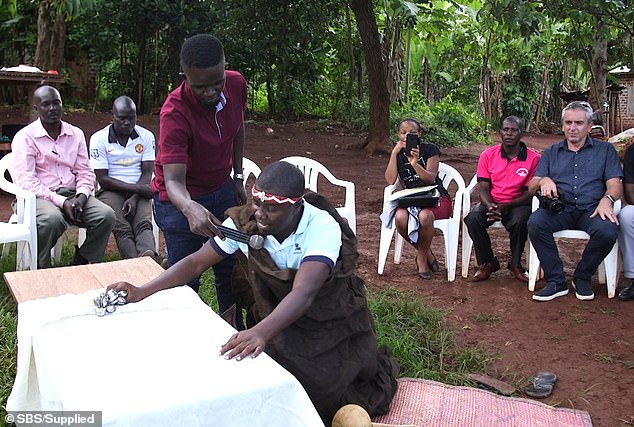
Paul Odida, a repentant witch doctor, now helps Pastor Paul raise awareness of the issue of human sacrifice. He visits villages to explain how the witch doctors instill fear in communities

In one scene Pastor Peter examines photographs of a boy approximately ten years old whose body was found dumped in the bush. 

‘So they cut off the ears, they cut through the neck and cut out the throat and cut off the limbs,’ he says. ‘Body parts were missing. The tongue, the legs, the genitals.’ 

The program also features Robert Mukwaya who in 2014 suffered spinal injuries so serious it was thought he would never walk again. 

Robert had been snoozing in his grandmother’s kitchen in a village near Lake Victoria when a man dragged him out of the room and stabbed him in the neck. 

He was left paralysed but surgery at Newcastle’s John Hunter Hospital two years ago has allowed him to regain the use of his legs.  

In another scene Pastor Peter and Mr Callanan visit a village to warn about the practice of child sacrifice.  

‘Why we are here is we heard of a story of a child who was sacrificed here and unfortunately the people that kill these children are among us,’ Pastor Peter says.

‘Please, if you know who killed our child, just come and tell us, call the number, we will even put a reward. Please don’t fear. If you fear, next time it will be your child.’

How To Catch A Witch Doctor airs on Dateline on Tuesday, June 25 at 9.30pm on SBS. It can be watched later on SBS On Demand.

Allan Ssembatya (left) with father Hudson and Pastor Peter (right) after learning of one of his alleged attackers, Kivumbi Awali, has been arrested

Source: How to catch a witch doctor: Uganda’s fight against the evil ‘medicine men’ who remove children’s limbs and organs for human sacrifice – and the Australian charity helping bring them to justice

Related article: Pastor receives funding boost for iconic rehab centre for child sacrifice survivors
Published: June 24, 2019
By: Aaron Sseruyigo   

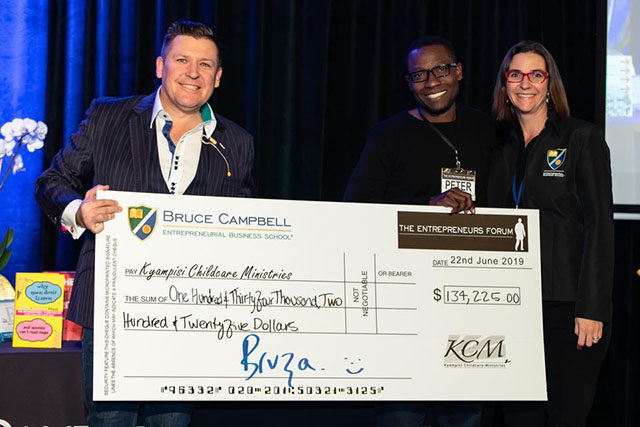
Executive director of Kyampisi Childcare Ministries in Mukono, Pastor Peter Sewakiryanga (M) receives a financial boost for his efforts to end Child sacrifice in Uganda during The Entrepreneurial Business School (EBS) Gala Charity Awards Dinner in Australia (Courtesy Photo)

Pastor receives funding boost for iconic rehab centre for child sacrifice survivors

Together, we will end child sacrifice, Pastor Peter Sewakiryanga says.

Pastor Peter Sewakiryanga who runs Kyampisi Childcare Ministries, a Christian charity seeking to stamp out child sacrifice in Uganda, has received a cash donation of $134,225 (approximately Ush491 million) for a rehabilitation centre expected to be a safe place for children who have been victims of child sacrifice and trafficking.

Pastor Peter received the funds from the Bruce Campbell Entrepreneurial Business School whose founder and Principal Business Coach, Mr Bruce Campbell, has been extensively awarded for his work through various international bodies.  

This happened in Australia over the weekend.

“We are humbled by the incredible continuous support of the Bruce Campbell Entrepreneurial Business School,” Kyampisi Childcare Ministries said in an update on Sunday.

“Thank you for this generosity, partnering with us in our efforts to build a new Trauma Rehabilitation Centre for kids abused through Child sacrifice and trafficking. What a community full of love and compassion. Together we will End Child Sacrifice,” they added.

Pastor Peter takes care of several child survivors of trafficking and human sacrifice and has built an extensive network linking communities and security to track suspected cases. 

In his remarks earlier in March, Mr Bruce Campbell said, “This will be the largest rehab centre of its kind in Uganda (& maybe Africa). So honored to be a board member and help guiding this life changing organisation.”

The organisation, Kyampisi Childcare Ministries (KCM) condemns witch doctors’ brutal ritual of child sacrifice, and has brought to books several culprits this year in the capital of Kampala alone.

In his recent interview with local media, Pastor Peter explained that victims of child sacrifice in Uganda carry with them serious and disturbing life scars and injuries which include complete genital mutilations, castration, deep stab wounds, missing tongues, ears, as well as emotional and psychological scars that need life time healing.

Pastor Peter Sewakiryanga (Courtesy Photo)

Working each day to bring Christ’s hope and healing to these children, Sewakiryanga’s devotion to the cause in 2017 attracted The Christian Broadcasting Network (CBN) who during an interview with the preacher, joined undercover detectives and armed police in a hunt for witch doctors accused of kidnapping and killing children.

“When they get the child, most times they cut the neck, they take the blood out, they take the tissue, they cut the genitals or any other body organs that they wish that the spirits want.” Pr Sewakiryanga said.

Child body parts are especially prized in rituals because people believe mixing their blood with herbs makes a strong concoction that can cure diseases and appease local spirits. Genitalia are especially prized.

“The problem is increasing and many children are killed, and there are very few actually that survive, most of them die.” Pr Sewakiryanga added.

According to CBN News, Kyampisi Childcare Ministries is the only organization in the country providing long-term financial and medical care to survivors of child sacrifice.

“We want to see that the life of a child who has survived is supported, that they are socially able to stand and heal from the injuries, and that they can have a life after that,” said Pastor Sewakiryanga.

He also works with Ugandan lawmakers to help draft specific laws targeting perpetrators of child sacrifice.

In 2018, Pastor Peter was one of two Ugandan activists recognised by The European Union (EU) for their tireless campaign to stop child trafficking.

He was credited for championing research and spearheading an awareness campaign in communities to stop the crime.