The following article, below, resonates deeply with me. In recent years, I have written so often about ritual murders in Nigeria (‘money business’) that it will surprise no one what moved the writer of this article. In Africa’s most populous country, ritual murders are committed perhaps daily: murders with ritual motives, superstition, belief in the power of ‘juju’, with the aim of enriching oneself, acquiring a better political or social position, or other selfish purposes.
Why is it so difficult to put an end to these vile, outdated and criminal acts? (FVDK)
The scourge of ritual killings
Published: June 3, 2026 By: This Day, Editorial, Nigeria
The criminals should be served full weight of the law
Increasingly, many Nigerians are now living in fear over growing cases of ritual killings. Last week, security operatives arrested a suspected serial killer who reportedly confessed to murdering dozens of people in the Odukpani Local Government Area of Cross River State. The suspect claimed he was assisted by a woman who usually lured unsuspecting victims to isolated locations where they were murdered, obviously for ritual purposes. But the Odukpani killings are not isolated incidents. While there may be no reliable statistics, the menace of missing persons and ritual killings across the country has become pronounced. Indeed, it has become so obvious that a civil society organisation, ‘Enough is Enough’, has since opened a website to document the trend.
From Lagos to Port Harcourt, Enugu and other cities across the country, hardly a week passes without tales of some people killed for what are attributed to ritual purposes. Last November, a Federal Road Safety Corps (FRSC) officer and her 12-year-old daughter, were gruesomely murdered in Osun State by a family friend who lured them to the shrine of a herbalist where they were slaughtered and dismembered, with their vital organs removed. And in April this year, the Kwara State Police Command apprehended a man with the skull of a deceased family member whose remains he had exhumed.
Ritual killing is not a new criminal challenge. In March 2014, the nation was thrown into confusion when a kidnappers’ den was discovered in Soka community, Ibadan, Oyo State. After the den was raided by some commercial motorcyclists who were searching for two of their missing colleagues, human skulls, dried human parts alongside malnourished victims reportedly reserved for ritual purposes, were discovered. In August 2018, the Lagos police arrested one Taiwo Akinola, a suspected cult member, for allegedly attempting to kill his mother for money rituals.
But perhaps one of the most celebrated cases was that of the Port Harcourt serial killer, Gracious David-West who reportedly lured seven young ladies with high-risk lifestyle across Lagos, Imo and Rivers State to hotels and murdered them for rituals. Similarly, a young graduate who was raped and murdered while searching for a job in Uyo environs, Akwa Ibom State, few years ago, was reportedly used for ritual purposes. There was also the horrifying murder of a 300-Level undergraduate of Delta State University, Abraka, by a gang of four yahoo boys. One of the criminals told the police that they took the young lady to a bush where they plucked out her eyes, removed her breast and heart.
But the questions inevitably arise: What are the motives? What could be the cause of these grim acts of violence against fellow human beings, and indeed, the society? What could account for these barbaric acts of violence even among the supposedly educated citizens? Many attribute the menace to the growing sense of desperation to acquire wealth, without work. Amid the prevailing poverty and joblessness in the land, many have resorted to doing anything, no matter how weird, for wealth. Yet, there is no proven link between the costly rituals and the instant wealth promised through magical potions by herbalists and voodoo practitioners even when our society is now ravaged by it.
Today, many of our university campuses have become breeding grounds for Yahoo boys and girls who are looking for instant wealth. Sadly, the education they received does not rid them of the superstition that wealth comes from productive enterprises and not from human body. And with that, many innocent citizens are becoming victims to barbaric killings.
Warning: This post contains graphic views and contents which may upset readers and viewers.
By chance, I recently stumbled upon the impressive BBC film about money rituals in Africa, which was published late last year. The film is bewildering, terrifying and at the same time admirable. Based on an undercover operation in Sierra Leone, investigative journalist Tyson Conteh explains in the 50-minute film how a ‘money ritual’ works.
The film addresses all facets of murder for ritual purposes: naturally, first and foremost, the superstition regarding the supernatural powers derived from ‘juju’ obtained from human organs, body parts, or whatever else. Furthermore, the unscrupulous, criminal nature of the mastermind, the intermediary, the actual murderer, and the role of the witch doctor or traditional healer is clearly revealed. They are willing to sacrifice the life of an innocent victim for their own ambition or greed.
Tyson Conteh also addresses the impunity with which those responsible for these crimes unfortunately often get away, partly explained by the active involvement in some cases of politicians, traditional authorities, and/or other public figures. A complicating factor is that some well-intentioned African law enforcement officers—policemen—also believe in the power of the ‘juju’ that surrounds these crimes and are cautious or even reluctant in investigating and combating these gruesome acts. The practice of ritual killings hits very close to home for Tyson Conteh, who, along with his team, deserves nothing but praise for this insightful film, when he learns that a close family member has fallen victim to ritual killing. The pain and grief of the victim’s parents and other relatives are deeply relatable and moving.
Finally, it is important to mention that the intermediaries and witch doctors filmed by the investigation team were possibly fraudsters who verbally declared themselves willing to carry out a ritual murder on demand for a substantial sum, with the aim of swindling the client out of their money. Needless to say, the undercover journalist did not let it get that far.
I highly recommend viewing this film. To access the film, please click here (webmaster FVDK)
I have no doubt that Nigerian human rights activist Leo Igwe is among the top five fighters against superstition, witchcraft, ritual killings, and impunity on the African continent, and he is most likely the most active and best known.
Dr. Leo Igwe is active in numerous human rights groups, among others he directs the organization ‘Advocacy for Alleged Witches‘ (AfAW), an advocacy group defending the rights and dignity of people who have been accused of witchcraft, and working and campaigning to end all forms of human rights abuses linked to witchcraft allegations in African countries.
I have mentioned and quoted Dr. Igwe numerous times on this site, for which I owe him a great debt of gratitude.
The article below focuses on a recent case in Rivers state, Nigeria. In February, a man, accused of witchcraft, was killed. AfAW is concerned for his relatives and calls on the authorities to bring the perpetrator to justice. Between the lines, it can be read that the organization—learned from past experiences—has little faith in the Nigerian rule of law.
Dr. Leo Igwe, thanks again for this timely intervention! (webmaster FVDK).
Witchcraft and Killing in Rivers State: Nobody Can Hamper the Progress of Others Through Magical Means
Local sources informed AfAW that Isaiah had a wife and four children. His first child just finished secondary school. AfAW plans to visit the community and meet with family and community members to understand what happened and explore ways of supporting the family of the deceased during these difficult moments. Advocates will continue to pressure the police to bring the suspect to justice. Witchcraft accusations and jungle justice are against the law. The inability of the police to enforce the law drives these abuses.
Leo Igwe directs the Advocacy for Alleged Witches
The Advocacy for Alleged Witches is saddened by the brutal murder of Chidiebere Isaiah by a relative, Nwalozie Chiwendu, following an accusation of witchcraft in Ofeh, Rivers State, in Southern Nigeria. The tragic news reached AfAW on February 15, 2026. AfAW contacted The Punch and Vanguard correspondents in Port Harcourt for the phone number of the youth president of the Ofeh community in Omuma Local Government Area. Through an advocate in the state, AfAW contacted a legal counsel from the community who confirmed the incident and has volunteered to facilitate any intervention. This legal counsel said he knew the victim and the suspected murderer very well. As reported, Chiwendu accused and murdered Isaiah for being responsible for his lack of progress. The legal counsel stated that Chiwendu dropped out of primary school. He never went to secondary school. “How did he expect to make significant progress and become rich if he was not educated?” He queried.
Chiwendu reportedly fled after the incident. The local police claimed that he was at large. As in previous cases in Rivers state, this matter will fizzle out after a while. The police stated that the investigation was ongoing, but that was all that would be heard about the case. There are no indications that the police are taking the case seriously, that they are tracking the suspect, or that they will bring him to justice soon. Witch persecution persists in the region due to impunity and lack of accountability, due to a failure of the police and the justice system. Last year, the police in Rivers state refused to prosecute pastors arrested for abusing children during exorcism and ritual cleansing in the state. All efforts and pressures on police authorities to bring these violators to justice came to nothing.
Meanwhile, advocates have been reacting and expressing their outrage following the horrific murder of Isaiah. One advocate stated, “See what ignorance has done: a tragedy for that community and the family. One brother is dead, and another brother is certainly going to be hanged for murder. Terrible!. Meanwhile, the pastors who preached this rubbish mentality into his ignorant head are walking about free, indoctrinating other ignorant people”. Another noted: “This is evil. So you claim to do something good by killing your brother because he is a witch, and you are running? You are not supposed to run away; rather, you should stay so we can tell you what a hero you are. Witchcraft does not exist. Say no to witch-hunts”. Furthermore, one advocate described the incident as: ” Absolutely tragic. No one should ever be killed over superstition or accusations of witchcraft. Education, awareness, and justice are the only answers. End the witch hunts now”.
Local sources informed AfAW that Isaiah had a wife and four children. His first child just finished secondary school. AfAW plans to visit the community and meet with family and community members to understand what happened and explore ways of supporting the family of the deceased during these difficult moments. Advocates will continue to pressure the police to bring the suspect to justice. Witchcraft accusations and jungle justice are against the law. The inability of the police to enforce the law drives these abuses.
In addition, AfAW will organize public awareness programs to reorient the minds of people in Rivers State. AfAW will educate the public to understand that nobody can harm, frustrate, or undermine the progress of others through magical or occult means.
That such a belief is superstitious and based on fear and ignorance!
Opinion Nigeria is a practical online community where both local and international authors through their opinion pieces, address today’s topical issues. In Opinion Nigeria, we believe in the right to freedom of opinion and expression. We believe that people should be free to express their opinion without interference from anyone especially the government.
Give to Gain: Justice for Women Accused of Witchcraft in Africa
On March 6, 2026, the online Ghanaian newspaper ‘Modern Africa’ published an article written by Leo Igwe, ‘Give to Gain: Justice for Women Accused of Witchcraft in Africa’ presenting three cases of women who were victims of witch hunts in Nigeria: (1) 49-year-old Obiageri Ottih from Imo state, (2) 86-year-old Arit Inyang from Akamkpa, in Cross River state, and (3) Adijat Pereira from Lagos, Lagos state, Nigeria.
The three women were accused of witchcraft, but the police failed to intervene or to seriously investigate the matter. It is feared that Arit Inyang has been murdered. Advocacy for Alleged Witches is following the cases.
Cameroon isn’t often in the news with respect to ritualistic killings. As a mainly Francophone country, it escapes my daily search for Internet news about ritual killings in Sub-Saharan Africa (SSA). However, this does not mean that the country is an exception in SSA.
Almost by accident I stumbled upon a suspected case of ritual murder and another case of a child beaten to death after being accused of witchcraft. Horrible cases, senseless killings.
Both incidents happened in 2023 as the following report shows.
The article ends with a cry for justice, condemning the present situation of silence becoming the norm in this Central African country. (webmaster FVDK)
A nation in mourning – innocent lives lost to senseless violence
Published: May 14, 2025 By: Cameroon Concord
(…)
From urban centres like Douala and Yaoundé to towns like Sangmélima and Bamenda, child killings have become a recurring and underreported national crisis.
Chronology of Recent Child Murders in Cameroon (2022–2025)
Date
Name / Age
Location
Summary
Nov 2022
Baby Bisong, 4 mo.
Buea
Killed by a stray bullet during military patrol in Molyko.
Jan 2023
Ariane, 6
Yaoundé
Allegedly beaten to death by her aunt, accused of witchcraft.
Mar 2023
Baby Divine, 7 mo.
Bamenda
Shot during military raid. Claimed to be collateral.
Aug 2023
Unnamed, 8
Kribi
Found mutilated on the beach. Suspected ritual murder.
Oct 2023
Baby Chantal, 2
Douala
Murdered by domestic worker. Arrest made.
May 2025
Mathis, 6
Yaoundé
Stabbed by neighbour in revenge killing.
May 2025
Unnamed, 2
Sangmélima
Found dead in water. Authorities refused to open an investigation.
Each case bears a similar theme: impunity, silence, and failing institutions. Whether by bullet, blade, or beatings, children are paying the ultimate price in a country where violence festers unchecked.
(…)
Cameroonians are asking hard questions:
Why are more disputes ending in bloodshed?
Why does poverty, anger, and hopelessness often turn inward — toward the most vulnerable?
Why do authorities fail to act, even when evidence and outcry are overwhelming?
From ritual killings, domestic abuse, military violence, to mob justice, a terrifying normalization of brutality is taking hold.
“Le crime devient une norme silencieuse. La peur habite les esprits. L’indifférence gagne les cœurs.”
Translation:
“Crime becomes a silent norm. Fear inhabits our minds. Indifference wins our hearts.”
There are not many in-depth studies of the phenomenon of ritual murders and even less of the killing of children for ritualistic purposes. The article below discusses the ritual murder of children in Ghana and Kenya, examines who the perpetrators are and why they came to their crime.
The study by Emmanuel Sarpong Owusu is a must read. The author is to be commended for a serious and interesting study.
Interestingly, a number of the author’s findings and conclusions – based on online news reports in eight media outlets in Ghana and Kenya and on interviews with 28 experts – are consistent with my experiences after years of studying ritual killings in Sub-Saharan Africa. In particular I wish to mention here the main factors driving the motivation of the majority of the ritual murderers: superstition, greed and illiteracy, whereas the for various reasons failing reaction of authorities and the resulting lack of rule of law facilitate the impunity and the continuity of the cruel and outdated phenomenon.
According to the study, in Ghana, the media reported at least 160 ritual murders between 2012 and 2021. Of this number, 94 (about 58.8%) were children. Of the 102 ritual murders in Kenya in the study period (2012-2021), 66 (64.7%) were children.
I refer to the study below for more details. Please note that, unfortunately, three links in the original article seem to be incorrect: (i) ‘juju in Ghana’ leads to general information on juju (link should be placed under ‘juju’); (ii) ‘juju in Kenya’ leads to nowhere; (iii) reference to members of occult sects leads to ‘juju in Kenya’. (webmaster FVDK).
Ritual murder of children: study in Ghana and Kenya explores who’s doing it and why
Published: April 15, 2025 By: Emmanuel Sarpong Owusu – The Conversation, UK
Superstition, an irrational belief in paranormal influences or a false attribution of events, is an age-old phenomenon found in probably all human societies or cultures. It encompasses a wide range of beliefs, practices and behaviours. Some of these have harmful or even deadly consequences.
In many African communities, there are widespread beliefs relating to the use of human body parts for traditional healing rituals. Human body parts and blood are said to enhance the potency of traditional medicines and rituals that supposedly guarantee wealth, business success, fertility, protection and longevity, among others.
Ritual killings, including those of children, are reported regularly around Africa. A case in point is the targeting of children with albinism for ritual purposes in Tanzania. One research report says one in five people in Mozambique and one in four people in South Africa believe that rituals and traditional medicines made with human body parts are more potent and effective than those using nonhuman objects.
Children are particularly targeted for killing because they can’t repel attacks, and because of beliefs about the potency of their body parts. The victims in more than half of all the ritual murders reported in Ghana and Kenya in 2022 were children.
I am a legal scholar with years of research on superstition-driven crimes against vulnerable groups in African settings and the criminal justice response to such crimes. In a recent study I explored the magnitude, characteristics and motivations, as well as the socio-cultural and economic contexts, of ritual child murder in Ghana and Kenya. My study was carried out through in-depth analysis of news reports of ritual murders for a period of 10 years, coupled with semi-structured interviews with academics and other experts.
I found that the major factors contributing to the persistence of ritual child murders were superstition, economic hardship, illiteracy and inefficient criminal justice systems. A new consumerist ethos also plays a role: wanting a life of luxury and the admiration that comes with it.
The study seeks to enhance awareness of the ritual child murder phenomenon and encourage support for the enforcement of child rights protection laws. When policymakers know more about the scale and circumstances of ritual child murders, they are better equipped to act on it.
Ritual murders in Ghana and Kenya
Belief in juju is widespread in Ghana and Kenya. This is the belief that people can mystically control events by using incantations (“magic words”) and, sometimes, objects.
My study analysed data drawn from online news reports in eight media outlets in Ghana and Kenya. I used media content because the countries don’t have national data sets on ritual homicide, and empirical research is limited. Secondly, I interviewed 28 experts in criminology and criminal justice, sociology, African religions, and child and family welfare and social protection. These participants were selected using the purposeful sampling technique.
In Ghana, the media reported at least 160 ritual murders between 2012 and 2021. Of this number, 94 (about 58.8%) were children. This suggests that an average of 9.4 children fall victim to ritual murder each year in the country. Of the 102 ritual murders in Kenya in the study period, 66 (64.7%) were children. This represents an annual average of 6.6 in the country.
In both countries, most victims (over 80%) tend to be drawn from families of low socio-economic backgrounds in rural and semi-rural communities. In Kenya, children with albinism are also targeted.
The overwhelming majority of offenders are males. There are three main categories of perpetrators of ritual child murders:
the juju practitioner or traditional healer who usually prescribes the required body parts and effects the medicine or ritual
the client who consults traditional healers and stands to benefit directly from the ritual or medicine
the (hired) ritual murderer, who abducts the victim and extracts the required body parts.
Data from media reports show that most of the perpetrators apprehended are those directly involved in the killing. They are usually aged between 20 and 39 years and of low socio-economic status in rural communities. However, some interviewees insisted that some rich and prominent persons are also involved.
In Ghana, uncles, fathers and stepfathers were the dominant perpetrators in cases where victims and perpetrators were known to be related. Unlike other types of homicide, ritual child murder generally involves strangers nearly as often as it involves family members and acquaintances.
Motivations and responses
The dominant motivation for ritual murder is financial gain. This conclusion is drawn from the media accounts and the interviews. Perpetrators are promised money in exchange for specific human body parts. Others kill to use the body parts for rituals that are supposed to ensure a long life, fertility, business growth, or protection against evil. In Kenya, some perpetrators kill in fulfillment of their obligations as members of occult sects.
Other factors that sustain the practice – based on media reports and interviews – are superstition, unemployment and economic hardship. Adding to these are illiteracy, which fosters unfounded beliefs, and an inefficient criminal justice system, which enables these crimes to thrive.
Poor parental supervision is an important risk factor for ritual child murder. In both countries, over 70% of the ritual murder victims were under 10 years old. They were abducted or murdered while going to or returning home from school. Others were abducted while running errands such as fetching water from a stream unaccompanied. Some may have been playing outside their homes unsupervised, or running errands by themselves for relatives.
In both countries, the criminal justice system’s response is evidently ineffective. In Kenya, over 90% of perpetrators are not apprehended. Of 68 suspects arrested in Ghana, only four convictions were reported. Crime scenes are poorly managed and preserved by police officers and detectives in both countries.
Crime scene videos show the victims’ remains being removed by authorities and conveyed to the morgue without diligent forensic examination of the body and the crime scene for evidence.
What governments can do
The belief in the power of juju and associated rituals and medicines cannot be wished away. It can only be combated in various ways:
bringing the activities of traditional healers and occult-related sects under closer scrutiny
promoting education and awareness, emphasising the need for supervision of children
Ritual murder of children: Study in Ghana and Kenya explores who’s doing it and why
Volunteers assist forensic experts and homicide detectives from the Directorate of Criminal Investigations (DCI), to exhume bodies of suspected followers of a Christian cult named as Good News International Church, whose members believed they would go to heaven if they starved themselves to death, in Shakahola forest of Kilifi county, Kenya April 25, 2023. (PHOTO/ REUTERS)
Published: April 18, 2025 By: The Eastleigh Voice, Kenya
The dark side of superstition and the reality of ritual child murder
Published: around April 20, 2025 By: IOL, Sunday Tribune – South Africa
EMMANUEL SARPONG OWUSU, A DOCTORAL RESEARCHER AND LECTURER AT ABERYSTWYTH UNIVERSITY IN WALES, WRITES ABOUT SUPERSTITION-DRIVEN CRIMES AGAINST VULNERABLE GROUPS IN AFRICAN SETTINGS.
Warning: the following post and related articles contain graphic details which may upset readers.
On previous occasions I have stated here that the numbers of abductions and murders for ritual motives are running sky-high in Nigeria, not to speak of missing persons leaving no trace. Having a brief look at the contents of this site since I started it in 2018, one is tempted to say that this West African country is well covered but by far I do not report all recorded cases of ritualistic murders in Africa’s most populated country (over 225 million inhabitants in 2024).
The list is too long to continue. Each day new ritual killing cases are unearthed, sometimes literally.
Given this background, the article below is not surprising and the reader will not be surprised that I fully support the author’s view: that greed is a basic ingredient and motive for ritualistic violence.
However, after having read the article I remain with two – related – unanswered questions.
Why is it that superstition is so widespread in Nigeria? Ritual murders and the harvesting of organs, other body parts, in short, ‘money rituals’, are carried out – by ‘ordinary criminals’ as well as by ‘ordinary citizens’ – because it is believed that ritual murders can make people rich or famous. Why is it that the belief in ‘juju’, the power of the supernatural, is so persistent? (webmaster FVDK)
it is believed that ritual killings can make people rich
When wealth demands blood: The horror of ritual killings in Nigeria
Published: March 13, 2025 By: Kelly Odaro – The Nigerian Observer
Amidst Nigeria’s economic quagmire, a more sinister affliction festers — ritual killings. This grotesque practice, once whispered in hushed tones and relegated to the annals of folklore, has metamorphosed into an alarming commonplace reality.
The nation wakes up to a grim litany of media headlines detailing the heinous acts of individuals who, in their insatiable pursuit of material prosperity, desecrate human life with blood ritual. The moral fabric of our society is unravelling at an alarming pace, frayed by an unsettling obsession with overnight wealth.
The recent gruesome murder in the Evbuotubu community of Benin City, where a young man’s head was severed, has once again spotlighted the disturbing prevalence of ritual killings in the region. This heinous act is not an isolated incident but part of a growing pattern of bloodshed fuelled by a dangerous obsession with instant wealth and power.
Ritual killings, often driven by superstitious beliefs and occult practices, have persisted in many parts of Nigeria despite modernisation and law enforcement efforts. In Benin City, several cases have been reported over the years, each more chilling than the last. Many of the unsuspecting victims are young men and women, often lured, kidnapped, and gruesomely murdered in rituals meant to bring fortune to perpetrators.
In past years, there have been numerous reports of mutilated bodies discovered in forests, abandoned buildings, or shallow graves, their organs harvested for money-making rituals. In
2020, a similar case rocked the Otuo community in Owan East Local Government Area of Edo State where three young men and a woman were set ablaze by a mob for allegedly beheading a secondary school student in a suspected ritual killing (Punch, 25 February, 2020). In 2018, four brothers allegedly unalived their grandmother for money rituals in Ohovbe quarters, Ikpoba Hill in Benin City, according to Vanguard News (January 9, 2018).
Likewise, in 2019, police uncovered a shrine where human skulls and body parts were found, indicating that ritual killings were being carried out on a large scale. More so, over twenty mummified bodies were discovered in a building in Benin City (The Guardian, August 8, 2022), and a myriad of similar incidents occurred across Nigeria.
Despite widespread condemnation, these horrific acts continue, largely because of deep-rooted societal attitudes that glorify sudden wealth without questioning its source. Many individuals with dubious riches are still celebrated, given chieftaincy titles, and honoured in religious circles simply because of their financial influence. This cultural acceptance creates an environment where desperate individuals, especially young men, resort to extreme measures to attain wealth and social status.
Addressing this crisis requires more than just police crackdowns. There must be a fundamental shift in societal values —one that prioritises ethical wealth over ill-gotten riches. Religious institutions, traditional rulers, and community leaders must take a firm stand against the glorification of questionable affluence.
The Evbuotubu incident is a grim reminder that Nigeria is still battling the scourge of ritual killings. Until society collectively condemns and rejects wealth acquired through bloodshed, such horrors will persist, leaving a trail of innocent victims in their wake.
Once upon a time, wealth in Nigerian society was synonymous with industry, resilience, and ingenuity. The elders of old (traders, craftsmen, farmers, and entrepreneurs) prided themselves on the sweat of their brows. A man’s affluence was a direct reflection of his diligence and years of toil.
Today, however, a corrosive paradigm has taken root, one that glorifies instant affluence, irrespective of the means through which it is obtained. The insidious doctrine of “making it by any means necessary” has replaced the time-honoured principle of hard work.
This paradigm shift is not accidental. It is the consequence of a deeply flawed value system where wealth, no matter how dubiously acquired, commands reverence. The very individuals who should be ostracised for their morally reprehensible conduct are, instead, venerated. This toxic culture emboldens desperate youth to explore even the most abhorrent means to attain affluence.
The most disheartening aspect of this trend is the complicity (both tacit and overt) of society’s supposed moral gatekeepers. Religious leaders, who should be the custodians of righteousness, have too often become enablers of corruption. In the grandiose edifices of faith, where the gospel of prosperity is preached with fervour, those with questionable sources of wealth are celebrated.
They are given front-row seats, called upon for prayers, and sometimes elevated to positions of religious leadership, all because their ill-gotten wealth fuels the construction of mega worship centres.
Traditional rulers, the custodians of Nigeria’s cultural ethos, are equally culpable. The hallowed institution of chieftaincy, once reserved for men of impeccable character, has been commercialised. Titles that once symbolised honour are now available to the highest bidder. The affluent, irrespective of their moral standing, are conferred with chieftaincy titles in elaborate ceremonies attended by society’s crème de la crème.
In many instances, these so-called ‘chiefs’ are known for their nefarious dealings, yet they are paraded as paragons of success.
The elite, politicians, and corporate magnates are not innocent either. Many continue to patronise, endorse, and associate with individuals whose wealth bears the stench of blood money. By doing so, they lend credibility to criminality and normalise the abnormal. When men who are rumoured to have amassed their fortunes through dark means are invited to state functions, given government contracts, or honoured in grand events, the message to the struggling youth is clear — wealth, regardless of its origin, is the ultimate measure of success.
The media, which should serve as society’s watchdog, is often a double-edged sword. While some journalists and media houses expose the nefarious activities of ritual killers, others glorify the very individuals whose sources of wealth are dubious. The extravagant lifestyles of these questionable figures are routinely splashed across the pages of newspapers, magazines, television, and online platforms, painting them as role models rather than cautionary tales.
Reality television, social media influencers, and music videos further exacerbate the problem by promoting a culture of ostentation. Young people, bombarded with images of expensive cars, lavish mansions, and extravagant vacations, begin to equate self-worth with material possessions. Those who lack the patience for legitimate wealth creation resort to criminality, with some taking the ultimate plunge into the dark world of ritual killings.
At the core of ritual killings is the utter dehumanization of victims. The perpetrators, in their frenzied pursuit of wealth, strip their victims of all humanity, reducing them to mere commodities for sacrifice. The gruesome nature of these killings — dismembered bodies, missing vital organs, and ritualistic symbols points to an eerie level of barbarism that should have no place in civilised society.
Many victims are unsuspecting individuals. Children are lured with sweets or money, young women deceived by fake lovers, and travellers waylaid by ritual syndicates. The lack of stringent security measures, poor law enforcement, and a failing judicial system embolden these criminals, who often evade justice or buy their way out of prosecution.
One of the greatest tragedies of Nigeria’s legal system is its failure to serve as a deterrent to ritual killers. Reports of arrests are frequent, but convictions are rare. The wheels of justice turn at a sluggish pace, and in many cases, perpetrators with financial clout secure their freedom.
Corruption within the police force further compounds the problem. Cases of ritual killings are sometimes swept under the carpet in exchange for bribes, leaving families of victims without closure. Even when cases proceed to court, the judiciary’s lethargy allows them to drag on indefinitely, creating a loophole for criminals to manoeuvre their way back into society.
If Nigeria is to rid itself of the scourge of ritual killings, a fundamental societal reorientation is imperative. The following measures must be taken:
Schools must incorporate value-based education that emphasises the dignity of labour and the dangers of illicit wealth.
The youth must be taught that wealth, when pursued through righteous means, is more fulfilling and sustainable; religious leaders must take an uncompromising stance against those who amass wealth through dubious means. Places of worship should cease to be sanctuaries for financial criminals.
Besides, traditional rulers should uphold the sanctity of their institutions by ensuring that only men and women of impeccable character are honoured – chieftaincy titles must not be ‘commoditised.’
More so, the media as watchdog of the society must prioritise investigative journalism that exposes ritual killers rather than glorify ostentatious lifestyles. Content creators should promote positive role models rather than individuals with questionable affluence.
Again, the police and judiciary must be restructured to ensure that ritual killers are swiftly apprehended, tried, and convicted.
There must be no sacred cows; the law must take its course without favouritism.
Moreover, citizens must become more vigilant and report suspicious activities. Neighbourhood watch groups should be empowered to work with security agencies in identifying and apprehending suspected ritualists.
Ritual killings in Nigeria are symptomatic of a deeper societal malaise — a value system that places wealth above humanity. The tragedy is not merely in the blood spilt but in the indifference with which society treats this growing menace. If the nation does not recalibrate its moral compass, the ritualistic shedding of human blood will continue unchecked, and our collective humanity will be the ultimate casualty.
Ritual killers are on the prowl, preying on unsuspecting victims across the country. These criminals lurk in both rural and urban areas, taking advantage of isolated locations, late hours, and unsuspecting individuals.
Parents and guardians must take proactive measures to safeguard their children and wards from falling victim to these nefarious acts. Educating young people about the dangers of accepting rides from strangers, wandering off alone, or engaging with unknown individuals is crucial. Additionally, people must exercise caution in their daily movements, ensuring they avoid desolate areas, especially at night.
Men and women alike must remain vigilant and prioritise personal safety. Walking alone on lonely paths or deserted streets, particularly in poorly lit areas, increases the risk of being targeted. Instead, people should move in groups whenever possible and be mindful of their surroundings. Until then, everyone must stay alert because in a society where ritual killers operate with impunity, personal vigilance is the first line of defence.
Let those who have ears listen and let those in positions of influence act. Posterity will not forgive a society that sacrifices its own on the altar of unbridled greed.
Odaro, a columnist, lectures in the Department of Mass Communication, Auchi Polytechnic, Auchi.
Warning: The following post contains graphic contents which may upset readers
The main findings and conclusions of the research are summarized below. It is important to note that the research focused on identified or reported ritual killing cases. It is very likely that the actual number of murders for ritualistic purposes is significantly higher.
In Ghana, 160 ritual killings were identified between 2012 and 2021, including 94 children (58.8%). This represents a yearly average of at least 9 victims.
In Kenya, 102 ritual killings were reported in the 2012 – 2021 period which figure includes 66 children (64.7%) or a yearly average of 6-7 victims.
The arrest rates were extremely low in both countries.
Greed, money, was the main motivation of ritual killers in combination with superstition, notably in Ghana. In Kenya, many perpetrators caught murdered in fulfillment of their membership of devil worship or occult sects.
Besides the belief in juju, also illiteracy, poverty and a failing justice system were important factors explaining the murdering of children for ritualistic purposes.
The authors of the study present some recommendations to fight ritualistic killings.
To download the study (38 pp.) please click here. (webmaster FVDK)
Killing children for rituals is rife in Ghana and Kenya, research shows
This important study, titled “Ritual Child Homicides in Ghana and Kenya: A Criminological Analysis”, is published in Dignity: A Journal of Analysis of Exploitation and Violence at: https://doi.org/10.23860/dignity.2024.09.02.04.
Yesterday’s post included an article published in one of Liberia’s main newspapers, the Daily Observer, on the current wave of killings and disappearances in Liberia and the urgent need for the police te act. Today, I wish to draw your attention to an editorial in another, equally important newspaper, Front Page Africa, founded, owned and edited by the famous Rodney Sieh.
The title of the Op-Ed speaks for itself, ‘Enough enough’. The editorial starts with an impressive list of nearly 20 victims: murdered, disappeared, mutilated, the victims have in common a cruel and premature end of their life. The author, Milton Nathaniel Barnes, criticizes the inaction of the government, the absence of the rule of law, and the persistence of impunity.
Mr.Barnes’ cry is echoed by an article in the Daily Observer of today, November10: ‘Silence Is Not An Option, Mr. President!’
Already in mid-September, the Daily Observer had published an editorial entitled “The People of Liberia Are Under Siege – Break That Siege Now”, pointing out that rising insecurity had become an issue affecting all Liberians. The newspaper editor criticizes President George Weah and concludes with a pertinent statement: ‘(….) President Weah must break his silence, speak to the Liberian people and reassure them. For, anything short of this would suggest complicity. Silence is not an option Mr. President!‘
Will President Weah understand the message and act accordingly? We’ll see the coming days. I will report on subsequent developments (webmaster FVDK).
Liberia: Enough Is Enough – Too Many Murders Going With Impunity
Published: November 8, 2021 By: Milton Nathaniel Barnes – Front Page Africa, Liberia
Follows a list of recent victims:
Rev. Dr. William R. Tolbert III (November 1, 2021)
Maude Elliot (October 31, 2021)
John H. Tubman (September 22, 2021)
Unidentified Woman on 17th Street Beach (September 14, 2021)
Matthew J. Innis (August 2019)
Mordecai Nyemah (May 2021)
Melvin Earley (February 19, 2021)
Florence Massaquoi (February 2021)
Robert M. Blamo, Jr. (2021)
Bobby S. Gbeanquoi (2021)
Siafa G. Boimah (2021)
Albert Peters (October 2020)
Gifty Lama (October 2020)
Elijah Polumah (2020)
Abraham Tumay (2020)
George B. Fanbutu (2020)
Possibly, others unknown
WHAT’S GOING ON, MY PEOPLE? In every instance above, innocent lives have been taken; and, we are not sure what is being done about it. Liberians are dying mysteriously or being brutally murdered. Murderers are getting away with impunity. The usual lip service is paid; the family greaves; and, we carry on our lives disillusioned and frightened.
WHAT IS EXASPERATING about this is that Liberians are fearing for their lives in the midst of dire poverty and economic straits. They barely eke out a living encountering the huge cost of feeding themselves, educating their children, paying their rent, transporting themselves, only to be faced with the threat of someone murdering them in cold blood.
WHY ARE LIBERIANS continuing to face these nearly insurmountable challenges? Simply stated, this is due to the absence of Law and Order, which should, at the very least, investigate and inform the public so as to reassure them that authorities are responding with urgency. In this particular environment, when criminals believe that they can get away with heinous acts including brutal murders, they take that as a “license to kill” in view of the fact that there appear to be no consequences.
IN MY OPINION, this comes down to the matter of leadership. For quite a while now, Liberia has been led by politicians as opposed to authentic leaders. Basically, what I’m saying is that there is a distinct difference between a leader and a politician. An authentic and effective leader will address numerous challenges, be they economic (fiscal-monetary management, unemployment, etc.) or social (justice, education, healthcare etc.), using a wide array of tools. A leader knows how to corral the appropriate experts who can provide effective solutions to whatever challenges may arise within his or her sphere of influence.
A POLITICIAN, on the other hand, possesses a singular tool that is used to address any and every issue: politics. From the politician’s perspective, every problem, regardless of its nature, requires the solution of political rhetoric. The politician says whatever he or she believes will assuage the people. The goal is to persuade the people that things will be fine. Saying so, as we all know, does not make things so. Yet, the only tool of the politician is politics (i.e. the power of persuasion).
IN THE FACE OF MURDERS with impunity, leaders, at all levels of society, cannot afford to sit aside with indifference. We must stand up against these outrageous acts. We know that God is the ultimate judge; yet, every true religion teaches us that there are laws by which we must govern ourselves. In Liberia, our entire social fabric is at risk of disintegrating. No society, without a modicum of justice in the face of serious crime, can continue to function. It will inevitably tumble into utter chaos.
IN VIEW OF WHAT IS UNFOLDING, I am poised to ask the following questions:
Can we, as a country and people, take decisive steps to address these concerns?
Can we source international support to investigate these deaths many of which seem mysterious; if, and only if, we lack the resources and technical ability to do so?
Can the public be kept abreast as to the progress Government is making in investigating these deaths?
CAN WE ALSO ENDEAVOR to investigate the drivers of these mysterious killings?
Lest we forget, regardless of the circumstances of these deaths, whether politically motivated and or based on hatred, they do have ripple effects that transcend the actual victims. We may have to deal with how family members are affected and what interpretation others connected to the victims may conceive.
REMEMBER, the fruit of peace and freedom is priceless; and living in the spirit of fear breeds distress.
THIS IS A CLARION call to all people of Liberia to stand up and put an end to brutal murders and other serious crimes. Our first step is to unilaterally and publicly condemn these atrocious acts; and, then, demand that our justice system fully and completely investigates each unexplained death. Culprits must be prosecuted and punished to the full extent of the law.
IN TIMES OF TROUBLE, when good people sit aside supinely and do nothing, they are no better than the perpetrators of evil; for there is an adage that says, “we give acquiescence by our silence.”
Barely two months ago in its September 16, 2021 editorial headlined – “The People of Liberia Are Under Siege – Break That Siege Now”, the Daily Observer pointed out that rising insecurity had become an issue of grave concern to Liberians across the board. Note of the webmaster: This article by the Daily Observer’s Editorial Board has been included below – italics are mine, FVDK).
There have been persistent media reports of unexplained disappearances as in the case of the Blamo brothers who were reportedly hired by the proprietor of the St. Moses Funeral Parlors and extrajudicial killings including ritualistic killings carried out by individuals with alleged links to this government.
We recall the deaths last year of the Liberia Revenue Authority (LRA) government auditors under mysterious circumstances. President Weah’s comments, suggesting that Gifty Lama and her colleague who were found dead in a vehicle on Broad Street were both lovers making out in their car, sent a wave of shock through the public.
Another LRA official, while driving along the SKD Boulevard, was attacked by machete wielding motorcyclists, causing him to run off the road and crash into a nearby house.
In yet another instance, the head of the Internal Audit Agency was killed after allegedly falling from the balcony of his house on SKD Boulevard.
President Weah’s response to that development was to urge citizens to install close-circuit television (CCTV) cameras around their homes. That was well before the spike in reports of ritualistic killings around the country, which has served to create a climate of fear and uncertainty amongst the citizenry.
It is safe to say that Police response to such reports of extrajudicial killings have been at best ineffectual. Police Inspector-General Patrick Sudue, responding to expressed public concerns about the rise in ritualistic killings, dismissed such reports, adding that Liberians are freely disposing of their dead in the streets because of their inability to give their relatives a decent burial.
He further declared that it was against such a backdrop that reports of bodies being discovered with parts missing were all fake news, intended to discredit the Weah administration.
But as events have shown, the fears of the people appear justified, given the spate of recent brutal murders of John Hilary Tubman, son of the late President William V.S. Tubman; William Richard Tolbert III, son of the late President William Richard Tolbert, Jr; and former immigration officer, Maude Elliot, in their respective homes.
Those tragic events, all unfolding within a very short period, have again raised public concerns about what they see as no end to the growing wave of insecurity under this government.
Not a single perpetrator has been apprehended in all of the cases cited earlier. This is giving rise to a heightened sense of insecurity. After dark, the streets of Monrovia become virtually deserted.
By 10pm latest, all stores, shops and supermarkets are shut and business comes to a grinding halt, except for a few night clubs which remain open until midnight.
Only recently, in broad daylight, a group of armed thugs invaded a restaurant and bar located on 19th Street near the beach, shaking down bartenders and customers alike, taking away their valuables and money.
To the best of public knowledge, no suspects have, as yet, been apprehended by the Police. The Police, as is well known, is hamstrung in the effective discharge of its duties and responsibilities by the critical lack of logistics including communications.
However, concerns about corruption remain an abiding concern. Salaries are low, discipline poor, and effective leadership is lacking. Under the leadership of current Police Inspector-General Patrick Sudue, public confidence in the Police has waned significantly to the point where the Police is now being seen as partisan.
This negative public impression of the Police persists despite pronouncements by a local civil society group, National Youth Movement for Transparent Elections (NAYMOTE) declaring that public confidence in the Police is increasing.
Given the current outlook, it appears that the restoration of public confidence in the Police is still a long way off. The disconnect between the Police and the public appears to be widening instead.
Official government support to the Police rather than being directed at countering public dissent and clamping down on freedom of speech and assembly should instead be increased to aid its effectiveness and ability to provide protection to the people of Liberia.
This newspaper once again reminds President Weah that there is a climate of fear being created by such gruesome and mysterious killings as well as unexplained disappearances. The Daily Observer has consistently reminded this government that the creation of a climate of fear is in no one’s interest.
This is because of the recognized fact that a climate of fear also induces feelings of hate and ill-will towards the government. Such feelings can be suppressed but only for a time. They simmer and without warning can explode like a volcano with dastardly implications for social cohesion, national stability and security.
Accordingly, it behooves all — the public and government alike — to work in tandem to curb the rise in violent crime and politically motivated murders such as ritualistic killings.
Above all, it bespeaks the urgent need to end the culture of impunity. And lest we forget, the TRC report provides a proper starting point — that is implementation of its recommendations, especially those recommendations on criminal accountability.
Quite clearly, the rule of law can never thrive in a situation where mass murders and war criminals parade the corridors of power lording over the victims of their crimes.
Equally so, can it be said that unscrupulous individuals, driven by greed and feeling emboldened by the fact that warlords have since enjoyed impunity, could also attempt to follow their example.
As leader, President Weah should ensure that matters concerning the safety, security and wellbeing of the Liberian people be treated with foremost and not benign concern.
This means President Weah must break his silence, speak to the Liberian people and reassure them. For, anything short of this would suggest complicity. Silence is not an option Mr. President!
Rising insecurity is/has become an issue of grave concern to Liberians across the board. Report of a rise in ritual killings, unexplained disappearances, extrajudicial killings carried out by individuals with alleged links to this government have all been major topics of concern on virtually all local radio talk-shows recently.
Barely a week ago, a driver of the National Transit Authority (NTA) assigned to ferry to and from the Roberts International Airport (RIA) supporters of the Coalition for Democratic Change (CDC) who turned out to welcome returning CDC chairman Mulbah Morlu was seriously wounded under unexplained circumstances.
The incident, according to eyewitness accounts, occurred in the environs of the CDC Congo Town headquarters. According to a family spokesman, they believe their relative was shot and seriously wounded. Further, according to the spokesman, they have appealed to authorities of the MTA to fly their relative out of the country for advanced treatment in view of his critical condition resulting from the alleged shooting by an unidentified individual.
But the Police see things differently. According to Police spokesperson Moses Carter, the NTA driver’s injury was caused by a stone thrown by an unidentified individual. Some eyewitness accounts, however, say the driver was shot. As to whether it was an accidental discharge or not remains unclear. But family members maintain that a stone would not cause extreme injury to their relative that would place his life in such grave danger.
Just who is telling the truth remains unclear in the absence of a medical report stating the kind of injury sustained and its causal agent. The Police are urged to go further in the provision of adequate and accurate information to the public.
Another recent development is the unexplained killing of a female whose lifeless body was discovered on 17 Street near the beach. According to the Police, she was sexually assaulted. Further, the Police maintain that she was mentally challenged and was reported to have often left home for unknown destinations.
But according to eyewitness accounts, the crime scene appeared as though there had been a tussle between the lady and her assailants. Further, according to them, her head appeared to have been bashed by a blunt object, and that parts of her body were extracted. However, these accounts have not been confirmed by the Police. It would however do the Police well to conduct an autopsy and make public the findings.
This is necessary because of the general negative public perception of the Liberia National Police (LNP). Several unexplained deaths/killings have occurred recently that have left the public with rising feelings of insecurity and a growing lack of trust in the ability of this government to protect them.
Recalling from history, rising insecurity and general perceptions of government’s inability to protect the people always serve to undermine the legitimacy of that government. Such was the case with the Doe administration, in which the abuse of human rights was commonplace. Eventually, it led to violent resistance that took away his life.
Similarly placed was the government of President Charles Taylor, who came to power on the heels of a prolonged civil war. At a sovereign national conference convened during his administration, the greatest and unanimous concern of delegates at that conference was insecurity.
But President Charles Taylor, it appeared, remained impervious to those expressed concerns as he did virtually nothing to curtail the excesses of his security forces. The rest is history. According to a retired diplomat, Liberians have had enough, more than their fair share of disruptions to their lives caused by the insane greed of their leaders. Some according to him were known to have indulged in ritual murder and practices.
A former National Patriotic Front (NPFL) rebel, Joseph Zigzag Marzah testified before the Sierra Leone Special Court sitting in The Hague that he and others, along with former Liberian President Charles Taylor, partook in ritual feasts that involved human body parts. Ritualistic killing has been practiced in Liberia for a long time. Those who indulge in it believe that drinking human blood and consuming potions containing human body parts impart them with magical prowess to overcome their enemies politically or otherwise.
In 1977, during the reign of President Tolbert, several prominent individuals and commoners were tried in Maryland County on charges of ritual murder. They were found guilty and sentenced to death and were publicly hanged. For a prolonged period thereafter, ritualistic killing subsided. It has since however reared its head. During the Doe and Taylor administrations, ritualistic killing was a known fact. Cannibalism, especially the eating of human hearts, was practiced by all the warring factions during the civil war
But of late, ritualistic killing and extrajudicial killings have become matters of rising public concern. Indications so far suggest that this government is doing virtually little or nothing to stop it. Additionally, crime, especially violent crime is on the increase. Abductions, handbag and phone snatching by individuals mounted on motorcycles have also increased. Although the public is raising concern, the LNP response appears ineffectual.
This may more likely than not lead to situations where people generally begin to take matters into their hands. Such would not augur well for general public safety, security, and national stability. This is why the public expects that President Weah should become seized of the matter and do something concrete to address concerns about the alleged involvement of his officials in a ritualistic murder.
He is currently on a mission to Accra, Ghana, intended to resolve the situation in neighboring Guinea arising from the overthrow of President Alpha Conde. ECOWAS and the AU have since imposed sanctions. As a leader, President Weah should remember that cardinal among his duties is the duty to defend the people against threats to their safety and security and ensure the protection of their rights. For your information, the people of Liberia are under siege Mr. President. You have to break that siege now!
Warning: the following contains graphic details of a ritualistic murder including a photo of the victim (webmaster FVDK).
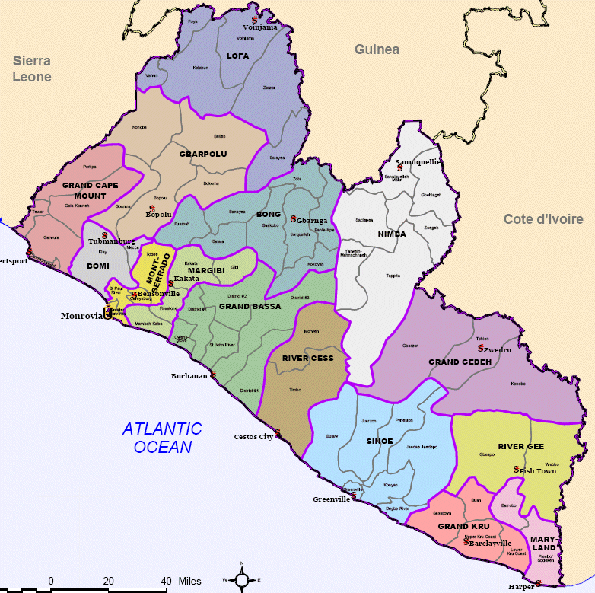
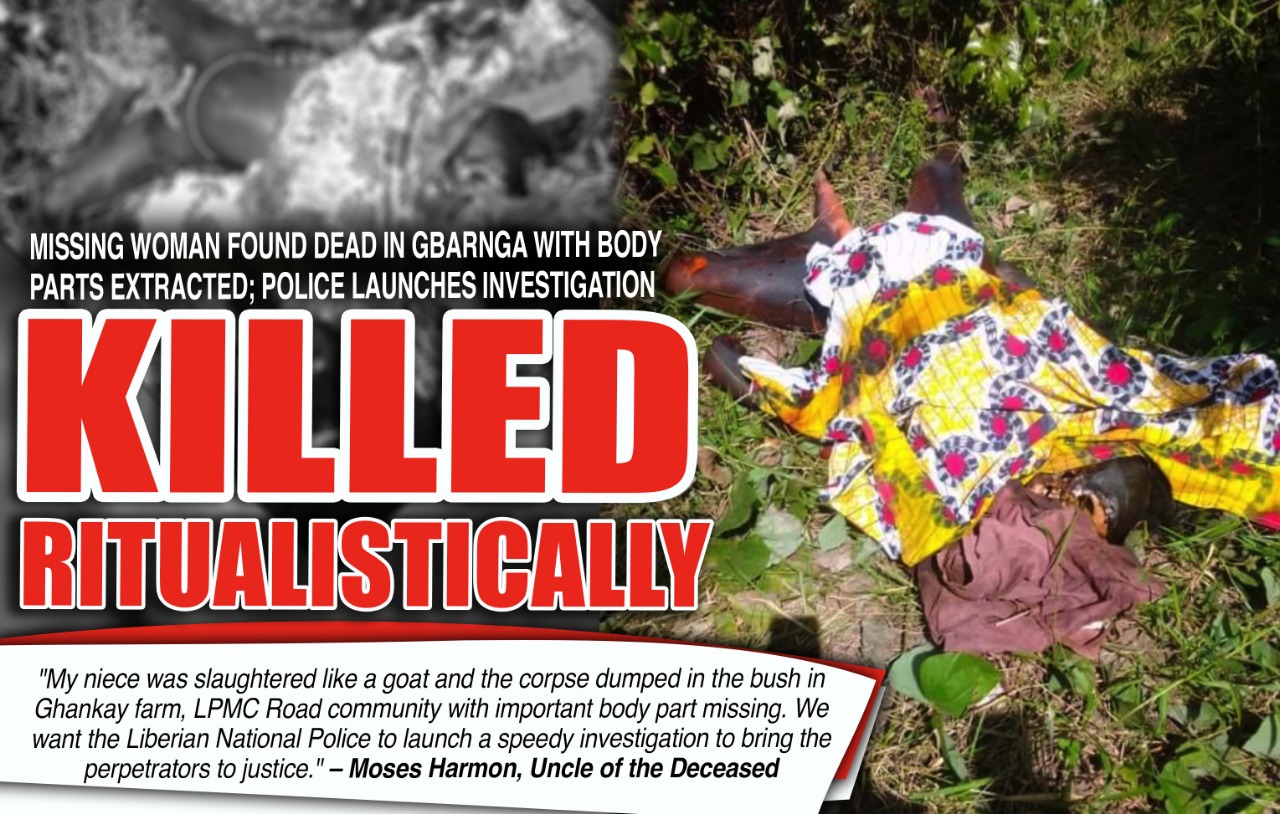
Last week, the mutilated body of a young woman was discovered in central Liberia. The gruesome discovery took place in Gbarnga, capital of Bong County. The victim, 21-year old Annie Wamah, had been beheaded, vital body parts had been removed by presumably ritualistic murderers.
Liberia has been in the grip of a series of mysterious deaths, rituals murders and rumors alleging a wave of ritualistic killings in the country. As indicated in the article below, in recent months, reported cases of ritual killings have surged in the country. A rising number of mutilated bodies on the streets in the capital Monrovia and other parts of the country this year has sown fear all over the country.
I have reported more than once on this situation, still recently, see my postings earlier this month: on October 9, October 7, October 5, October 4, October 1, and September 30. The Liberian police has denied that ritualistic murders are being committed in this West African country which is notorious for its ritual killings, notably in connection with elections and other major political developments. However, the police confirmed one ritual murder which had taken place in Maryland County, in the southeastern part of the country. But reports of more ritual killings are persistent and several high placed people have condemned these criminal acts which have no place in a modern society.
The inevitable question arises: who is behind the apparent current wave of ritualistic murders? Who is responsible for the ritual killing of Annie Wamah whose dead body was found in Ghankay Farm (a common name in the area and presumably referring to Charles ‘Ghankay’ Taylor’s farm belonging to the warlord-turned-president who’s presently serving a 50-year sentence in a high security prison in the UK). The victim’s throat was slit and her tongue, lips and genitals had been removed, presumably for ‘juju’ purposes. Are ambitious politicians behind the crime or unscrupulous businessmen or -women, or other people who believe that this superstitious act works out positively for them?
Not only do we want to know the truth, the culprits must also be arrested, tried, in a fair trial, and – when found guilty – given the sentence which they deserve. Too many ritualistic murderers in Liberia go unpunished. Impunity is a bitter reality in Liberia. Unfortunately, only too many Liberians can confirm its existence in Africa’s oldest republic (webmaster FVDK).
Liberia: Missing Woman, 21, Found Dead, Body Parts Extracted in Gbarnga
GBARNGA, Bong County – Police in Gbarnga on Thursday confirmed the gruesome killing of a 21-year-old girl by persons suspected to be ritualists in the central city of Gbarnga, Bong County.
The police described the incident as “unfortunate and mysterious”. The police said investigation had begun into the case and that the Crimes Services Division (CID) had been directed to take over the case.
Concerned residents had earlier told FrontPageAfrica that the victim, Annie Wamah, was not only killed, she was beheaded and vital organs were removed by suspected rituals.
Also confirming the reports, the deceased’s uncle, Moses Harmon, said his neice, a resident of Buteh Sue community in Gbarnga, electoral District Three, had earlier gone missing on Monday, October 11 around 10:00 am when she arrived in Gbarnga from her parents’ farm in Wainsue Town.
Harmon said he first raised the alarm and organised a search party, but efforts to find her proved abortive until 8:00 p.m. when her corpse was found in Ghankay Farm with her throat slit and other vital organs removed.
“On that fateful day I got a call that my niece was missing and I raised the alarm and asked community members to help the family search for her,” he said.
“The matter was immediately reported at the Police station, but it was not long that information came that her body had been located at Ghankay Farm.
“She was slaughtered like a goat and the corpse dumped in bush,’’ he said. “When the police came and saw the body, they saw that the tongue, the lips, and the genitals were cut off,” Harmon said. “The family filed a complaint but I know it will go nowhere.”
Harmon appealed to police to unravel the sudden death of his neice.
In recent months, reported cases of ritual killings have surged in Liberia. A rising number of mutilated bodies on streets in Monrovia and other parts of the country this year has sown fear in Liberians.
Recently, the lifeless body of a girl believed to be in her 30s was discovered in Caldwell with body parts extracted.Till date perpetrators of the dastardly act are yet to be found.
A day earlier, another lifeless body of a man believed to be in his 40s was found in the Soul Clinic community. As at the time his body was recovered, some parts had been removed. They included his penis, eyes and tongue. Still, perpetrators have not been arrested.
Liberians have taken to social media to raise alarm about the rise in ritual activities, urging commuters to always write down the identification markings of public conveyance vehicles as they enter and make phone calls to loved ones to pass on the information.
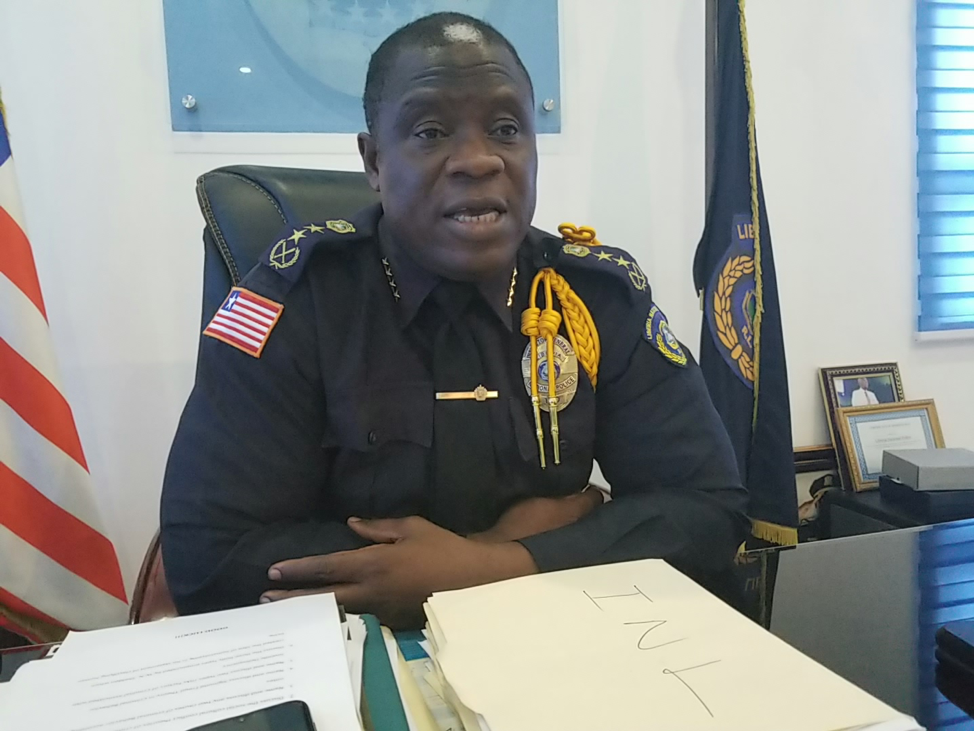
Amid the scourge in suspected ritualistic activities in the country, Police Inspector General, Patrick Sudue and his deputy Prince Mulbah, say such reports are untrue and being fueled by opposition politicians to tarnish the image of the government.
Sudue and Mulbah, appearing on the national radio few weeks ago, disclosed that the police are only aware of a single ritualistic incident, which occurred in MaryLand County, adding the perpetrators are facing justice.
“People are being paid to tarnish the image of the country and to raise false national security alert. There are inconsistencies in their statements,” Sudue says.
Meanwhile, Mulbah, Deputy Police Inspector General for Administration, described information about ritualistic killings in the country as a ploy designed by the opposition to create fear for diaspora Liberians who want to return home.
“As far our investigations are concerned, we haven’t established anything called ritualistic killing apart from what happened in Maryland County,” Mulbah says.
“We have heard a lot of people talking on social media of people being kidnapped and taken away, these are paid agents.”
Sudue said most of these social media pictorials and videos about ritualistic incidents are not a representation of what is unfolding in the country.
He warned those involved in orchestrating a negative image about the country to desist, or face the full weight of the law.
However, the country’s Vice President, Jewel Howard-Taylor called on those in authority of the security to take actions that would end the many mysterious deaths that are linked to ritualistic killings.
The vice president said Liberians are feeling more insecure than ever due to the rise in suspected ritualistic activities in the country.
“I’d like to call upon our security sector to please put in place a regime that will enable our people to remain safe. The situation involves instances where women’s private parts are being cut off, stories of young people being taken in specific location where others allegedly were being used for ritualistic purposes are very alarming,” Howard-Taylor said.
In Liberia, not only impunity reigns – allowing ritual murderers as well as war criminals to walk free. These days also confusion reigns. What is true of the allegations that there’s a surge in ritual murders? Or is it a conspiracy of political opponents who want to discredit the Weah Administration, already heavily criticized for failing to deliver after the election promises which made tens of thousands of young Liberians to vote for the soccer legend?
Whereas the police downplays the present panic which make Liberians staying home after sunset, it also informed the public that a man was arrested with human parts in his possession, apparently for sale. There is only one explanation for this gruesome discovery: there is a market for human parts in Liberia where some people consider human organs and other human parts essential ingredients of ‘juju’. Every Liberian, Sierra Leonean, Gambian, Ghanian, Nigerian knows what ‘juju’ means.
‘Juju’ is being used either to protect, enrich or empower a person, or to put a magic spell on a known or unknown adversary. Belief in it is widespread in West Africa where ignorance and lack of education are the prime causes of the belief in superstition, facilitated by a weak rule of law and impunity resulting from protection by high-placed people. See also my October 1 post (webmaster FVDK).
Alleged Ritualistic Killings in Liberia: False Alarms Or Poor Investigative Skills?
Published: October 4, 2021 By: Obediah Johnson – Front Page Africa, Liberia
MONROVIA — It appears that the combat against alleged acts of ritualistic killings and kidnapping which have widely been widely reported in Monrovia and other parts adjacent in recent times are far from being thoroughly investigated, culprits arrested and prosecuted, as evidenced by the Minister of Justice Counselor Frank Musa Dean accusing those raising alarms of reportedly failing to aid investigations.
Liberians and other foreign residents in the country continue to wake up to news of kidnapping and the gruesome murders of citizens, especially females in few communities in Montserrado County on a regular basis.
Parts are extracted from the remains of the victims by the unknown perpetrators for ritualistic purposes.
The current situation has instilled fears in Liberians and foreign residents, compelling them to return from their various working and selling places earlier than before.
It has also raised questions and doubts over the ability of state security actions to provide security to Liberians and other foreign residents.
Not showing up
But responding to an inquiry from FrontPage Africa over the week end, Cllr. Dean pointed out that most of those claiming to have been kidnapped have not been coming forth to help the police with investigations.
He made specific reference to one Solomon, who claimed to have been allegedly kidnapped from Caldwell and taken to Gbartala, Bong County.
Police Inspector General Patrick Sudue recently informed the public that the information provided to the police by Solomon was false and misleading.
Phone records which were subpoenaed by the police show that the alleged victim never left Montserrado County all during his alleged kidnapping tale.
According to the records quoted by the IG, Solomon was in Clara Town, Vai Town, New Kru Town, among other places, throughout during his alleged ordeal.
Opposing Pastor’s request
Cllr. Dean pointed out that since raising the false alarm, Solomon has not shown up despite efforts applied by state investigators to request his Pastor, who was not named, to convince him to do so.
“This guy has refused to come forward to aid the police investigation. We summoned his call log. On the day he should have been in the custody of kidnappers in Gbatala, the call log placed him in Dixville and New Kru Town. We contacted his Pastor to bring him in. He is not cooperating with his Pastor”.
Last week, the Liberia National Police arrested a stalwart of the Alternative National Congress (ANC), Jethro Saylah Kangar Harris, for allegedly spreading misinformation of ritualistic killing on Facebook.
FrontPageAfrica gathered that Kangar had reportedly posted a picture of a young girl alongside a picture of an open corpse on an autopsy table.
“I’m in tears tonight. It’s so painful how the young people of Liberia are dying mysteriously. This is the late Rolisa N. Gbeintor, alumnae of the Lenn Millar High School. She was murdered and parts of her body were extracted. She had dreams; she had a great future ahead of her but there she lies dead without understanding how”, Harris posted.
Karnga was arrested in Ganta, Nimba County while on a tour with the ANC’s standard bearer, Alexander B. Cummings. He has spent days behind bars.
Family not identified
But Cllr. Dean latest response to the reported death of Rolisa appears like no formal complaint has been made by the family to the LNP.
“We are searching for the parents and family members of Rolisa Gbeintor, who was supposed to have been gruesomely killed”, Cllr. Dean stated.
Another kidnapping story
In another video that went viral on the social media last week, a young lady claimed that she was allegedly kidnapped by a bike rider and another passenger while on her way Red Light to buy her goods.
According to the unidentified lady, a white handkerchief was used by the passenger who sat at her back and she was taken around the Coca Cola Factory Community in Paynesville, outside Monrovia.
She claimed that while her face was tied with a black cloth, she was placed in a black jeep and taken to an unknown destination.
“I saw myself in an unfinished building when they took the cloth from my face and I saw five other women that they kidnapped too. They started to carry them one, one in the slaughter room. I could only hear ‘my people your come, God come for me…they are talking this other parts from on me oh. I was the fifth person and when they carried me in the room, I saw the other table and they had different, different instruments for human parts. They put me on the big table and tore my blouse on me, took off the trouble but my woman sickness (menstruation) was on me”.
“They said but how your bought this chicken here; your know the chicken looking like this and we can’t use it for sacrifice so your put the chicken back outside. That’s how they took me down from the table and carry me back in the room. The other woman too had the same woman sickness on her. So, they said they can’t make sacrifice with us so, let just keep them here and in the night we can go dump them by the wayside. They tied our faces from four in the evening Tuesday with the same black cloth and drove us on the road back in the night. We only saw ourselves in front Coca Cola factory”, the unidentified lady stated.
The lady added that she later decided to take the complaint to Zone 5 in the same area, but since then, she has not been called for further questioning.
Lady escaping?
But according to Cllr. Dean, the lady in question has not shown up for further investigations since she provided her initial statement at the headquarters of the Liberia National Police (LNP) on the Capitol Bye-Pass in Monrovia.
He further doubted the possibility of a slaughterhouse being in the densely populated suburb of Paynesville, outside Monrovia.
“From the day this girl came to the Police Headquarters and provided her initial Statement and said she was going to the doctor to return, she has gone underground. Even her family cannot locate her. Where are the families of the slaughtered people? A human slaughter house in Paynesville, such a populated area?”
Will prosecute PLP suspended SG
Meanwhile, Cllr. Dean has pointed out that the Government of Liberia, through the Ministry of Justice will formally charge and prosecute the suspended acting Secretary General of the People’s Liberation Party (PLP) for illegally possessing and discharging firearm.
Executive members of the Organizing Committee of the PLP suspended the acting Secretary General of the party, Mr. David Woods Beyan, for lying that he was shot by unknown armed robbers, after the police preliminary investigation proved otherwise.
It can be recalled that Mr. Beyan, who is also a founding member of the PLP, claimed that around 3AM on Friday, September 24, 2021, he was shot by unknown armed men for unspecified reasons while on his way home from Kakata, Margibi County where he had reportedly gone on a party function and to attend a family meeting
He told FrontPage Africa via telephone that he noticed two motorbikes carrying four persons tailing him from Mount Barclay and while In the middle of the Parker Paint road, one of the riders reportedly crossed in front his vehicle with speed.
Mr. Beyan claimed that he later got down from his vehicle, in an attempt to compel the bike rider to remove his bike. He was later overpowered by the men and shot on his left thigh.
“They had mask on their faces and I couldn’t recognize any of them. After one of them shot me, they got on the motorbikes and escaped. Right now, I am still feeling pain in my thigh” he told FrontPage Africa via telephone from his hospital bed.
But Cllr. Dean pointed out that the victim shot himself.
His clarification corroborates with information provided by IG Sudue when he appeared on State radio on Wednesday, September 29, 2021.
Police Inspector General Patrick Sudue disclosed that Mr. Beyan told nurses assigned at the John F. Kennedy Medical Center where he had gone for treatment that he mistakenly shot himself in the leg, and the firearm used has been retrieved.
“This guy shot himself. He carried a weapon he did not know how to operate. We will prosecute him for illegal possession and discharge of firearm” Cllr. Dean stated.
Ghost town
The growing wave of reported kidnapping and ritualistic killings across Monrovia and other parts of the country continue to instill fears in citizens and foreign residents
In Monrovia and other parts adjacent, the streets appear like a “ghost town” and are partially empty as a result of the situation.
Marketers, workers and others are often seen in a hurry during the early evening hours, abroading commercial or private vehicles, tricycles and motorbikes to reach to their respective homes or destinations in a timely manner.
Owners of various businesses, including shops, stores, and supermarkets are constrained to shutdown far sooner than their usual closing times due to the growing wave of insecurity in the post-conflict nation.
It remains unclear whether or not fears of the growing wave of insecurity in Liberia will continue to grapple economic activities or the free movement of citizens and others as state security actors continues to allow those raising alarms to cajole them by giving or falsifying stories that would allow them to escape from investigations.
State actors’ failure
The failure of state security actors, particularly investigators of the Liberia National Police (LNP) to implore additional skills to unearth the truth behind some of these reported kidnapping and ritualistic killings or intensify efforts to hunt and bring forth for investigations those involved or accused remain a major problem confronting the security sector.
On the other hand, the Government of Liberia (GOL), through the Ministries of Justice and Information, Cultural Affairs and Tourism has not been able to swiftly and adequately respond to videos or photos on kidnapping and ritualistic killings before it goes viral on the social media by critics of the regime, who normally share those videos or photos to satisfy their political or ulterior motives.
This continues to hamper and paint the image, particularly the security condition of Liberia bad to the outside world, especially foreign investors contemplating on coming into the country to do businesses.
Police probe man who confessed to ritualistic activities
Published: October 4, 2021 By: Lincoln G. Peters – The New Dawn, Edited by Winston W. Parley
The Liberia National Police (LNP) says it has arrested and is investigating a 22 – year -old man for his alleged confession of being involved in the kidnapping and selling of human parts across the country.
Suspect Gbala Samula was arrested Saturday, 2 October 2021 in VOA Community, Brewerville, Montserrado County, by the Zone 6 police detachment for allegedly confessing that he has negotiated to sell human parts to a funeral home based in the VOA Community around the beachside.
The accused was not arrested with human parts, but trading in human parts could be considered ritualistic activity.
Confirming the arrest and investigation of suspect Samula, Police Spokesman Moses Carter told our reporter in a telephone conversation Sunday, 3 October that police are having the suspect in their custody for investigation over his alleged role in the kidnap and selling of human parts.
According to Carter, the suspect allegedly told the police that he was convinced by his friend to join him in the kidnapping of human beings and selling of human parts across the country, on grounds that it has money. Carter said the suspect did not name the friend, neither did he state where the friend was residing.
The police spokesman explained further that the funeral home that the suspect, Samula referenced has denied his allegations, saying it is in no business of buying human parts.
Carter refused to disclose the name of the funeral home but pointed out that police are investigating the suspect and if he fails to provide his colleagues and other information, he will be jailed for spreading falsehood and causing panic in the country.
But speaking in a live interview with local broadcaster Voice of Liberia (VOL) Saturday, 2 October 2021 at the Zone 6 police detachment in Brewerville, suspect Samula said he came from Sawelor Town in Grand Cape Mouth County and to live with his big brother in Brewerville, VOA Community.
Suspect Samula narrated that he was engaged by a guy who had proposed that they should sell human beings to get money.
As Police Vows To Arrest Alarming Posters On Social Media, Man Arrested For Alleged Ritualistic Activities
Published: October 4, 2021 By: Cholo Brooks – GNN, Liberia
Barely a week now since the leadership of the Liberia National Police (LNP) vowed to bring to book of those who post on social media of mysterious killings and disappearances, latest report being highlighted in the media over the weekend has indicated that the police has arrested and is investigating a 22 – year -old man for his alleged confession of being involved in the kidnapping and selling of human parts across the country.
Suspect Gbala Samula was arrested Saturday, 2 October 2021 in VOA Community, Brewerville, Montserrado County, by the Zone 6 police detachment for allegedly confessing that he has negotiated to sell human parts to a funeral home based in the VOA Community around the beachside.
The accused was not arrested with human parts, but trading in human parts could be considered ritualistic activity.
Confirming the arrest and investigation of suspect Samula, Police Spokesman Moses Carter told our reporter in a telephone conversation Sunday, 3 October that police are having the suspect in their custody for investigation over his alleged role in the kidnap and selling of human parts.
According to Carter, the suspect allegedly told the police that he was convinced by his friend to join him in the kidnapping of human beings and selling of human parts across the country, on grounds that it has money. Carter said the suspect did not name the friend, neither did he state where the friend was residing.
The police spokesman explained further that the funeral home that the suspect, Samula referenced has denied his allegations, saying it is in no business of buying human parts.
Carter refused to disclose the name of the funeral home but pointed out that police are investigating the suspect and if he fails to provide his colleagues and other information, he will be jailed for spreading falsehood and causing panic in the country.
But speaking in a live interview with local broadcaster Voice of Liberia (VOL) Saturday, 2 October 2021 at the Zone 6 police detachment in Brewerville, suspect Samula said he came from Sawelor Town in Grand Cape Mouth County and to live with his big brother in Brewerville, VOA Community.
Suspect Samula narrated that he was engaged by a guy who had proposed that they should sell human beings to get money.
In a related development, the Liberia National Police says it has begun investigating social media false alarm posters, noting that it has been drawn to the constant habit of some unscrupulous citizens who are bent on posting false alarm information intended to instill fear in citizens and residents of the country.
These false alarm posters are posting horrible photos and videos of fake incidents which are solely intended to portray the country as unsafe and instill fear in the citizenry of the country.
Hence, LNP investigators with immediate effect have been mandated by the Inspector General of Police, Hon. Patrick Sudue to ensure that the social media is monitored regularly and that those who post information aimed at creating fear must be invited for questioning and subsequent prosecution if probable cause is established.
The LNP admonishes administrators of various social media chatrooms to scrutinize information that is placed in their various chatrooms and report those who are in the constant habit of posting said information.
The LNP will not hesitate to ensure that administrators of chatrooms who do not exercise due diligence in the contents that are posted on their various platforms are invited for questioning.
To this end, the LNP envisages that a proper scrutiny of various information placed in chatrooms by administrators will curtail the barrage of inciteful and fearful photos and videos that are circulating on social media.
Together, we can help to make Liberia a better and peaceful nation for all. It press release issued by H. Moses Carter, Sr., Head Press and Public Affairs Liberia National Police (U-122) Tel: 0770800122, noted