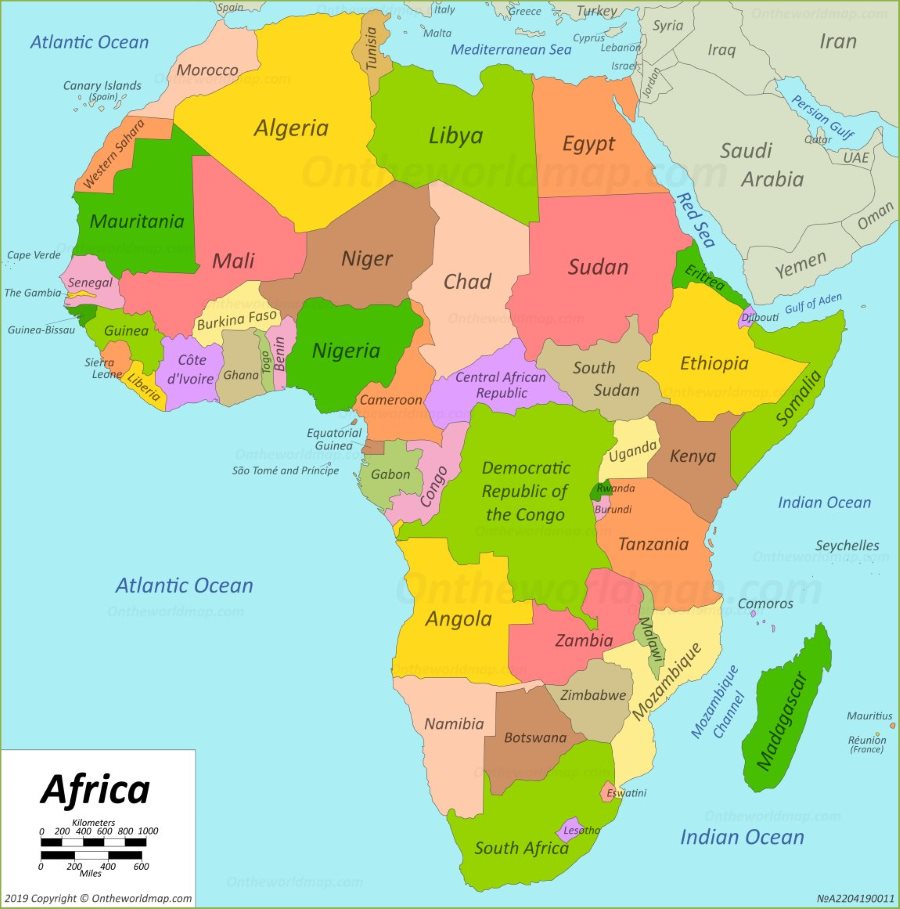
There are not many in-depth studies of the phenomenon of ritual murders and even less of the killing of children for ritualistic purposes. The article below discusses the ritual murder of children in Ghana and Kenya, examines who the perpetrators are and why they came to their crime.
The study by Emmanuel Sarpong Owusu is a must read. The author is to be commended for a serious and interesting study.
Interestingly, a number of the author’s findings and conclusions – based on online news reports in eight media outlets in Ghana and Kenya and on interviews with 28 experts – are consistent with my experiences after years of studying ritual killings in Sub-Saharan Africa. In particular I wish to mention here the main factors driving the motivation of the majority of the ritual murderers: superstition, greed and illiteracy, whereas the for various reasons failing reaction of authorities and the resulting lack of rule of law facilitate the impunity and the continuity of the cruel and outdated phenomenon.
According to the study, in Ghana, the media reported at least 160 ritual murders between 2012 and 2021. Of this number, 94 (about 58.8%) were children. Of the 102 ritual murders in Kenya in the study period (2012-2021), 66 (64.7%) were children.
I refer to the study below for more details. Please note that, unfortunately, three links in the original article seem to be incorrect: (i) ‘juju in Ghana’ leads to general information on juju (link should be placed under ‘juju’); (ii) ‘juju in Kenya’ leads to nowhere; (iii) reference to members of occult sects leads to ‘juju in Kenya’.
(webmaster FVDK).
Ritual murder of children: study in Ghana and Kenya explores who’s doing it and why

Published: April 15, 2025
By: Emmanuel Sarpong Owusu – The Conversation, UK
Superstition, an irrational belief in paranormal influences or a false attribution of events, is an age-old phenomenon found in probably all human societies or cultures. It encompasses a wide range of beliefs, practices and behaviours. Some of these have harmful or even deadly consequences.
In many African communities, there are widespread beliefs relating to the use of human body parts for traditional healing rituals. Human body parts and blood are said to enhance the potency of traditional medicines and rituals that supposedly guarantee wealth, business success, fertility, protection and longevity, among others.
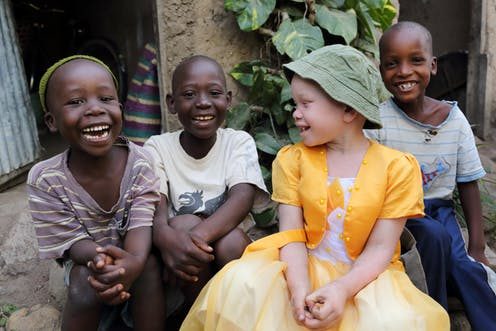
Ritual killings, including those of children, are reported regularly around Africa. A case in point is the targeting of children with albinism for ritual purposes in Tanzania. One research report says one in five people in Mozambique and one in four people in South Africa believe that rituals and traditional medicines made with human body parts are more potent and effective than those using nonhuman objects.
Children are particularly targeted for killing because they can’t repel attacks, and because of beliefs about the potency of their body parts. The victims in more than half of all the ritual murders reported in Ghana and Kenya in 2022 were children.
I am a legal scholar with years of research on superstition-driven crimes against vulnerable groups in African settings and the criminal justice response to such crimes. In a recent study I explored the magnitude, characteristics and motivations, as well as the socio-cultural and economic contexts, of ritual child murder in Ghana and Kenya. My study was carried out through in-depth analysis of news reports of ritual murders for a period of 10 years, coupled with semi-structured interviews with academics and other experts.
I found that the major factors contributing to the persistence of ritual child murders were superstition, economic hardship, illiteracy and inefficient criminal justice systems. A new consumerist ethos also plays a role: wanting a life of luxury and the admiration that comes with it.
The study seeks to enhance awareness of the ritual child murder phenomenon and encourage support for the enforcement of child rights protection laws. When policymakers know more about the scale and circumstances of ritual child murders, they are better equipped to act on it.
Ritual murders in Ghana and Kenya
Belief in juju is widespread in Ghana and Kenya. This is the belief that people can mystically control events by using incantations (“magic words”) and, sometimes, objects.
My study analysed data drawn from online news reports in eight media outlets in Ghana and Kenya. I used media content because the countries don’t have national data sets on ritual homicide, and empirical research is limited. Secondly, I interviewed 28 experts in criminology and criminal justice, sociology, African religions, and child and family welfare and social protection. These participants were selected using the purposeful sampling technique.
In Ghana, the media reported at least 160 ritual murders between 2012 and 2021. Of this number, 94 (about 58.8%) were children. This suggests that an average of 9.4 children fall victim to ritual murder each year in the country. Of the 102 ritual murders in Kenya in the study period, 66 (64.7%) were children. This represents an annual average of 6.6 in the country.
In both countries, most victims (over 80%) tend to be drawn from families of low socio-economic backgrounds in rural and semi-rural communities. In Kenya, children with albinism are also targeted.
The overwhelming majority of offenders are males. There are three main categories of perpetrators of ritual child murders:
- the juju practitioner or traditional healer who usually prescribes the required body parts and effects the medicine or ritual
- the client who consults traditional healers and stands to benefit directly from the ritual or medicine
- the (hired) ritual murderer, who abducts the victim and extracts the required body parts.
Data from media reports show that most of the perpetrators apprehended are those directly involved in the killing. They are usually aged between 20 and 39 years and of low socio-economic status in rural communities. However, some interviewees insisted that some rich and prominent persons are also involved.
In Ghana, uncles, fathers and stepfathers were the dominant perpetrators in cases where victims and perpetrators were known to be related. Unlike other types of homicide, ritual child murder generally involves strangers nearly as often as it involves family members and acquaintances.
Motivations and responses
The dominant motivation for ritual murder is financial gain. This conclusion is drawn from the media accounts and the interviews. Perpetrators are promised money in exchange for specific human body parts. Others kill to use the body parts for rituals that are supposed to ensure a long life, fertility, business growth, or protection against evil. In Kenya, some perpetrators kill in fulfillment of their obligations as members of occult sects.
Other factors that sustain the practice – based on media reports and interviews – are superstition, unemployment and economic hardship. Adding to these are illiteracy, which fosters unfounded beliefs, and an inefficient criminal justice system, which enables these crimes to thrive.
Poor parental supervision is an important risk factor for ritual child murder. In both countries, over 70% of the ritual murder victims were under 10 years old. They were abducted or murdered while going to or returning home from school. Others were abducted while running errands such as fetching water from a stream unaccompanied. Some may have been playing outside their homes unsupervised, or running errands by themselves for relatives.
In both countries, the criminal justice system’s response is evidently ineffective. In Kenya, over 90% of perpetrators are not apprehended. Of 68 suspects arrested in Ghana, only four convictions were reported. Crime scenes are poorly managed and preserved by police officers and detectives in both countries.
Crime scene videos show the victims’ remains being removed by authorities and conveyed to the morgue without diligent forensic examination of the body and the crime scene for evidence.
What governments can do
The belief in the power of juju and associated rituals and medicines cannot be wished away. It can only be combated in various ways:
- bringing the activities of traditional healers and occult-related sects under closer scrutiny
- promoting education and awareness, emphasising the need for supervision of children
- stronger criminal justice systems.
Source: Ritual murder of children: study in Ghana and Kenya explores who’s doing it and why
More on the same study:
Why child sacrifice in Kenya and Ghana is happening

Published: April 17, 2025
By: The Daily Nation, Kenya
Source: Why child sacrifice in Kenya and Ghana is happening
And:
Ritual murder of children: Study in Ghana and Kenya explores who’s doing it and why

Published: April 18, 2025
By: The Eastleigh Voice, Kenya
Source: Ritual murder of children: Study in Ghana and Kenya explores who’s doing it and why
More:
Ritual murder of children: study in Ghana and Kenya explores who’s doing it and why

Published: April 19, 2025
By: Swisher Post, South Africa
Source: Ritual murder of children: study in Ghana and Kenya explores who’s doing it and why
And:
The dark side of superstition and the reality of ritual child murder

Published: around April 20, 2025
By: IOL, Sunday Tribune – South Africa
EMMANUEL SARPONG OWUSU, A DOCTORAL RESEARCHER AND LECTURER AT ABERYSTWYTH UNIVERSITY IN WALES, WRITES ABOUT SUPERSTITION-DRIVEN CRIMES AGAINST VULNERABLE GROUPS IN AFRICAN SETTINGS.
Source: The dark side of superstition and the reality of ritual child murder