Warning: the following post contains graphic details of abductions, mutilations and other criminal acts including murder which may upset readers.
Unfortunately, the abduction, mutilation and killing of persons with albinism for ritualistic purposes have never disappeared in the Southern African country of Malawi. I have devoted considerable attention to this in the past.
Without pretending to be exhaustive I refer to the following posts: 2015, 2016, 2018, 2019, 2020, 2021, 2022, 2024. Interested readers may use the dropdown menu (under ‘African countries’) for all posts on Malawi. For last year, 2025, I may refer to an article published by The Guardian, A friend killed, and inquiries shelved: life fighting the stigma of albinism in Malawi (not covered on the present ste). It draws attention to the increasing fear among people with albinism in light of the scheduled elections.
As has been reported before, there exists a link between an increase of reported ritualistic killings and elections (see my March 18 post) – and Malawi does not seem to be an exception – whereas the Association of Persons with Albinism in Malawi (APAM) has drawn attention to the connivance of certain politicians who obstruct fair investigations into reported attacks on people with albinism and ritual murder cases or sweep them under the rug, see my 2021 post on the subject.
The Malawi-based journalist and media professional Benson Kunchezera has a strong focus on development reporting, particularly in areas such as agriculture, digital innovation, public health, and environmental sustainability. Besides the just mentioned areas of interest and competence he is also interested in human rights issues in particular the position of persons with albinism and their plight in some countries notably Malawi. I commend him for drawing international attention to the precarious position of people with albinism in Malawi and highly recommended reading his recently published article on this topic.
Malawi’s renewed attacks on persons with albinism raise alarm
Attacks, abductions, and grave tampering targeting persons with albinism have resurfaced across Malawi in 2026, reigniting fears that the country’s progress on protecting this vulnerable community is unravelling. Civil society is fighting back — but without a renewed national action plan, advocates warn the worst may be yet to come.
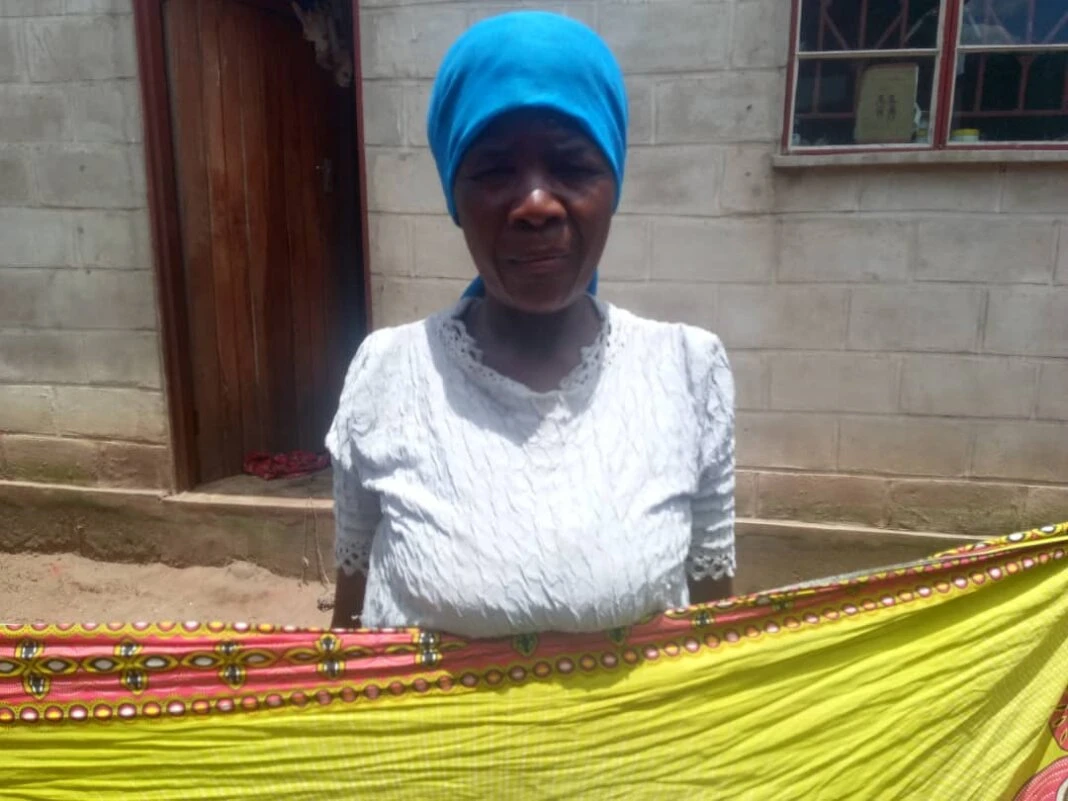
The story of Flora Saidi remains one of the most painful reminders of the violence faced by people with albinism in Malawi. According to accounts documented by advocacy organisations supporting persons with albinism in the country.
Flora Saidi
It was a Monday morning in 2003 when Flora Saidi left her home in Kadewere village under Traditional Authority Chowe in Mangochi, hoping to find piecework to feed her family. She left behind her 19-year-old son, Saidi Daitoni, a young man with albinism.
When she returned home empty-handed later that afternoon, her son had managed to earn a small amount of money. They agreed to share it with his girlfriend, who was visiting. Saidi left with her to look for change so they could divide the money properly. He never returned.
The following morning, Flora began searching for him. By then, he had disappeared. Police were informed, and after a search, his body was discovered near a residence he had visited the previous evening. Some of his body parts had been removed. The perpetrator was later sentenced to 155 years in prison with hard labour.
PERSISTENT THREATS IN RURAL MALAWI
Malawi has 134,636 persons with albinism, with over 117,000 living in rural areas. It is in these rural communities where poverty, limited law-enforcement presence, and entrenched myths combine to create dangerous conditions.
Persons with Albinism, especially in the southern African regions face persecutions, because their body parts are believed to bring lack of wealth after being mixed with some concoctions by a witch doctor.
Others believe that when they have unprotected sexual intercourse with a person with albinism they can get cured of HIV/ AIDS.
The Association of Persons with Albinism in Malawi (APAM) has documented fresh cases in districts including Mulanje, Kasungu, and Dowa. Grave tampering and disappearances have reignited fear among families who had begun to feel cautiously safe.
In February 2018, Amnesty International published a joint report by the Ministry of Justice and Constitutional Affairs and the Malawi Police Force with 148 cases reported in Malawi’s four districts.
Recently, in 2026, more than 4 cases of persons with Albinism have been recorded by the Malawi Police Service ranging from attacks, abductions and tampering of graves in some parts of the country.
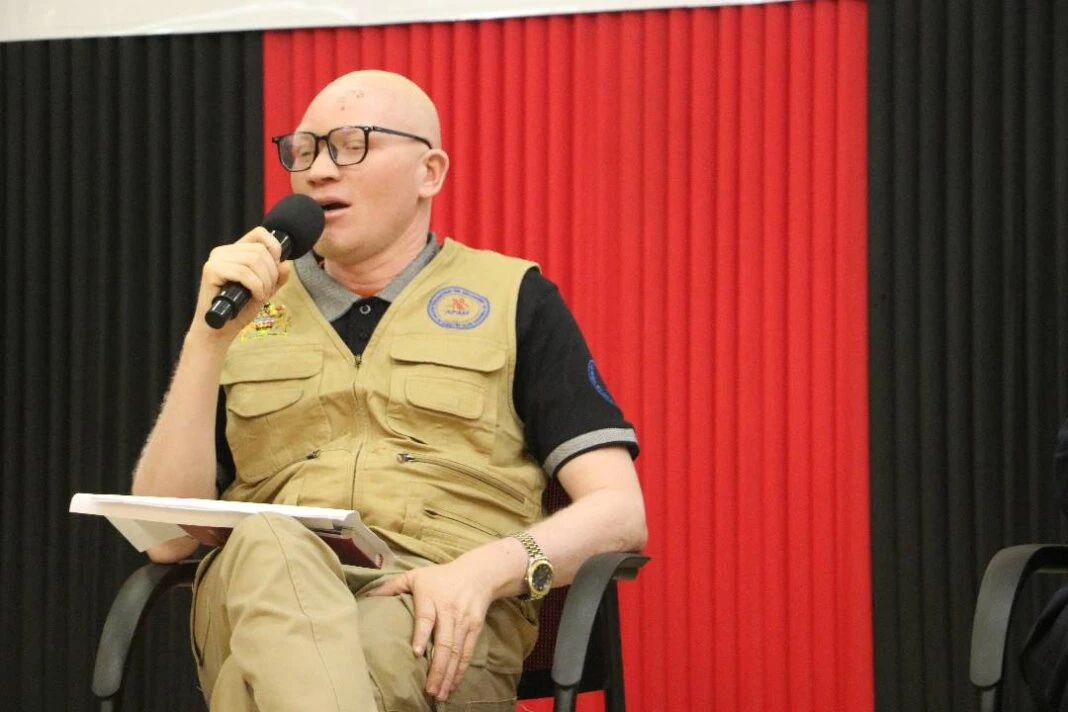
“We thought we were coming to an end of these attacks,” Maynard Zacharia, APAM’s National Coordinator, told FairPlanet. “Now we are seeing signs that the underlying issues were never fully resolved.”
Maynard Zacharia
COMMUNITY PROTECTION IN ACTION
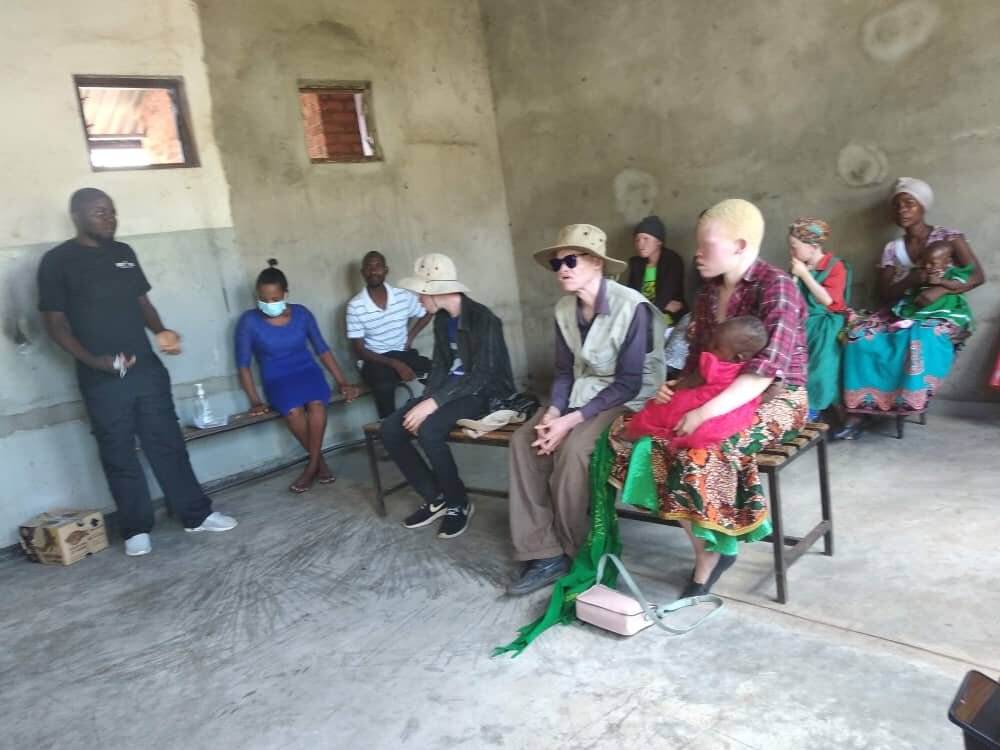
In response, APAM has intensified its on-the-ground efforts. The organisation is not only condemning attacks publicly but also mobilising communities in hotspot districts such as Machinga.
One strategy involves relocating children with albinism from high-risk areas to safer homes. In some cases, this means placing them in boarding facilities or with vetted guardians where security is stronger. At the same time, APAM is lobbying authorities and partners to invest in secure-housing projects with reinforced doors, burglar bars, and community-based surveillance systems.
Beyond physical protection, APAM is conducting awareness campaigns aimed at dismantling the myths that drive violence. Working with chiefs, faith leaders, and local youth groups, activists hold community dialogues that confront harmful beliefs directly. In village meetings, survivors and families share testimonies, reframing albinism as a genetic condition rather than a mystical anomaly.
“These conversations are not easy,” Zacharia told FairPlanet. “But we have seen that when traditional leaders publicly reject the myths, attitudes begin to shift.”
The organisation is also pressing for the conclusion of more than 28 long-pending court cases involving murder and abduction. By monitoring proceedings and engaging legal-aid partners, APAM hopes to prevent cases from stalling indefinitely — a pattern that erodes public trust.
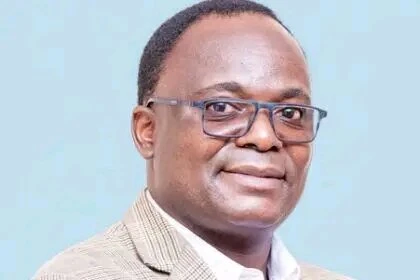
Kaiyatsa told FairPlanet that fear remains a major barrier to reporting threats. In rural areas, families often hesitate to approach police due to mistrust in the justice system and fear of retaliation.
According to him, the situation was further complicated by the controversial pardon of police officers previously convicted in connection with an albinism-related killing. For rights groups, the decision sent a damaging signal.
“To victims’ families, it suggested that justice can be undone,” Kaiyatsa told FairPlanet. “To would-be offenders, it reinforced the perception that accountability is not guaranteed.”
Michael Kaiyatsa
In response, CHRR and other organisations have stepped up advocacy for witness-protection mechanisms and independent monitoring of investigations. They are pushing Parliament and relevant ministries to allocate dedicated funding for protection programmes and to ensure that cases are prioritised within the judiciary.
REVIVING NATIONAL COMMITMENTS
Malawi once drew international praise for adopting a National Action Plan on the Protection of Persons with Albinism. However, the plan expired in 2022 and has yet to be renewed, leaving what activists describe as a dangerous coordination gap.
“Commitments on paper are not enough,” Zacharia says. “We need implementation that reaches the village level.”
REBUILDING TRUST FROM THE GROUND UP
On the ground, solutions are increasingly community-driven. In some districts, local committees made up of chiefs, police representatives, teachers, and activists meet regularly to assess risks and share information. Informal early-warning systems — such as community WhatsApp groups with coordinated night patrols-have been introduced in certain high-risk areas.
Civil society organisations are advocating for long-term assistance for affected families, including counselling, educational support for orphaned children, and income-generating projects for households that have lost breadwinners.
These initiatives aim not only to respond to attacks but to address their ripple-effects — school dropouts, psychological trauma, and deepening poverty.
A FRAGILE BUT DETERMINED PROGRESS
Organisations such as the Scotland Malawi Partnership insist that regression is not inevitable. They point to the increasing visibility of persons with albinism in advocacy spaces, media platforms, and leadership roles.
Flora Saidi, though still grieving, has participated in community meetings where she shares her story. Her testimony serves both as a warning and a call to action.
For Malawi, the struggle to protect persons with albinism is about more than ending ritual killings. It is about strengthening rural policing, restoring faith in the justice system, and dismantling centuries-old myths.
For people like Flora Saidi, safety is still uncertain, but hope lies in the quiet work happening in villages and communities across Malawi.
Their efforts may not end the attacks overnight. But for families living in fear, each community meeting, each court case and each safe home built is a step toward something simple with the chance to live an ordinary life without fear.
Unfortunately, Nigeria is not the only African country where persistent rumours and even hard evidence point to ambitious politicians who have resorted to ritual practices, including ritual murder, in order to achieve their goal of being elected. I have highlighted this on this site on several occasions referring to countries in West, Central and Southern Africa. See e.g. the following posts with respect to Eswatini (ex-Swaziland), Gabon, Liberia, Sierra Leone, Zambia.
In this light the warning of te President of the Pentecostal Fellowship of Nigeria, Bischop Wale One, must be understood. I wish to underline that his warning is not to be misunderstood: not every politician, elected or not yet elected, ambitious or not, in Nigeria or another African country believes in supernatural powers. Certainly, the majority doesn’t. But we also have to face a grim realty and that is the importance of bishop Oke’s statement. We cannot bury our heads in the sand regarding what is actually happening. It is precisely the involvement of certain politicians that stands in the way of a robust and effective crackdown on the phenomenon of ritual killings in a number of African countries. (webmaster FVDK)
2027: PFN President Bishop Wale Oke warns politicians against ritual killings
The President of the Pentecostal Fellowship of Nigeria, Bishop Wale Oke
Published: March 18, 2026 By: Wale Akinselure – Punch, Nigeria
The President of the Pentecostal Fellowship of Nigeria, Bishop Wale Oke, has warned that God’s judgment awaits politicians who resort to ritual killings and other violent means to gain power ahead of the 2027 general elections.
Oke, who is also the Prelate of the Calvary Grace International College of Bishops, spoke on Tuesday in Lagos while delivering a state-of-the-nation address to herald a special ministers’ empowerment conference organised by the college.
The cleric condemned what he described as “blood politics,” cautioning politicians against violence, killings, and fetish practices in their quest for power.
He said, “There is no position that you’re going for that is worthy of the blood of any Nigerian.
“There should be no politics of murder and killing. Present your case to the Nigerian populace, argue your case, promise whatever you want to promise, but don’t promise lies.”
He warned that any politician engaging in ritual practices or killings to win elections would face divine consequences.
“The age of going for fetish rituals is gone. We are praying for Nigeria that God will judge any politician that will resort to fetish things, ritual killings and murder to come to power,” Oke said.
Addressing voters, the cleric urged Nigerians, particularly youths, not to sell their votes during elections.
“Don’t sell your vote; your vote represents your political power and your future security. If you sell your vote, you are selling your future,” he said, adding that vote-buying would end if voters refused to participate in it.
Oke also called on the Independent National Electoral Commission to conduct free and fair elections without interference.
“Let INEC do its job as provided in the constitution. Let all parties go to the polls to test their popularity, and whoever emerges should be accepted,” he said.
The cleric further advocated a review of Nigeria’s constitution, describing it as flawed and not reflective of the country’s diversity.
“The Constitution was imposed on us and is unfair. It does not represent all Nigerians. If religion must be included, then all religions should be represented equally. Otherwise, let religion be a private matter,” he said.
Oke also alleged that killings in parts of the country had religious undertones and called for urgent action to address insecurity.
“If there is no Christian genocide, what is happening in Benue, Taraba, Borno and Plateau states?” he queried.
He urged Christians to actively participate in politics rather than remain on the sidelines.
“If we keep saying politics is dirty and refuse to get involved, then we are allowing it to remain dirty. Let us get involved from the grassroots and change the narrative,” he said.
He urged the Federal Government to cooperate with the United States to decisively deal with terrorists.
Recognising poverty as a problem, Oke urged the federal and state governments to heavily invest in education and the creation of jobs for the huge population of youths.
Rather than doling out bags of rice as empowerment, Oke urged the Federal Government to create jobs through the establishment of cottage industries in each of the 774 local government areas and the engagement of 1,000 people each.
He also called for support for youth entrepreneurs and farmers, while calling for massive investment in agriculture to ensure food security.
“We should no longer import a lot of things; we should be producing what we need. The economy should drive innovation as the distribution of rice is not a permanent solution to poverty,” Oke said.
King Mswati III (born in 1968, crowned king in 1986) is Africa’s last absolute monarch. He rules with his mother, Queen Nfombi. King Mswati III renamed his country then called Swaziland to Eswatini in 2018.
King Mswati III introduced a number of measures and changes which brought some relief to the country that had been ruled by his father, King Sobhuza II, with an iron fist since independence from the British in 1968. Officially, Sobhuza II was King of Swaziland for 82 years and 254 days, the longest verifiable reign of any monarch in recorded history.
King Mwsati’s s rule is not undisputed. In fact, his lifestyle and human rights violations have been criticized at several occasions. However, as the story below tells, he showed positive leadership – ‘leadership by example’ – in advocating the rights of people with albinism.
At various occasions I have drawn attention to the precarious position of people living with albinism in Africa. They are discriminated, bullied, attacked, and sometimes killed – murdered, as some people believe that their body parts can bring luck, wealth, prestige or power.
For this reason I wish to commend King Mswati III and the Queen mother for their precious example and I hope that the example given by Their Majesties will not only be followed by the people of Eswatini but also in neighboring g countries where the position of people with albinism is also threatened by prejudice an superstition. (webmaster FVDK)
King Mswati III
Cultural leadership confronts albinism discrimination head-on
People living with albinism together with those living with disabilities at the recently ended Incwala Ceremony. Eswatini customs and culture prohibited such communities of people from getting closer or inside royal residences. His Majesty King Mswati III has since changed this long-held custom to accommodate people living with albinism and disabilities (Pic: Sibusiso Shange)
Published: February 18, 2026 By: Khaya Simelane – Times of Eswatini
MBABANE – In Eswatini cultural visibility is becoming protection for people with albinism and a tool to dismantle stigmatisation.
A new breath of fresh air is changing and shaping the narrative around a community long confined to the periphery and deep fear.
For decades, thousands of Africans born with albinism have mastered the art of invisibility. Whether at communities, schools, sports and everywhere, they have, out of their will, been forced to remain invisible, even if against their will.
From a young age, they have been made to feel different. With many labels around them prevalent across African communities, none has driven them to remain invisible than the one recently introduced in which they are labelled ‘ma-Millions’.
This labelling, though sometimes uttered jokingly, relates to the widespread belief that the body parts of people living with albinism are ‘powerful’ to make one a millionaire.
According to Menzi Sukati, founder of the Albinism Society of Eswatini (ASESWA), the prevalent belief that people with their condition are sources of wealth is exactly what perpetuates their killing.
As a result, he said from a tender age, most commonly in the rural villages and crowded locations, they have grown up calculating risks before stepping outside, either to play or hang out with their peers.
Night travelling is strictly discouraged while during elections, many of them keep a low profile, he added.
This stems from an entrenched myth across the continent that has portrayed people with albinism as mystical beings whose body parts can generate wealth, political power or supernatural protection.
Those myths have fuelled ritual attacks, mutilations and killings that have left families traumatised and communities fractured.
King’s counter-image efforts
At last year’s Umhlanga Ceremony and again during the recently concluded Incwala, the country’s most sacred cultural ceremony, people living with albinism were visibly invited and welcomed.
According to Senior Archivist and Cultural Anthropologist Lethumusa Simelane, King Mswati III has once again stood in the moment of time and embodied inclusivity and Ubuntu.
Simelane stated that what the Monarch has done can not only be limited to only fighting stigmatisation against people with albinism.
Instead, the King has moved beyond the acceptable norm to harmoniously review and relax some of the country’s cultural traditional practices governing ceremonies and royal residences (tigodlo).
“When talking about what the King has done, we must never forget that growing up, we knew that certain people were not allowed closer or inside royal residences,” said the anthropologist.
He explained that culturally, such beliefs had nothing to do with the person’s natural being, however more with the foundational systems governing African monarchies.
“Therefore, the King, cognisant of the changing times reached the a difficult decision by appealing to the custodians of our culture and sought their permission to relax some of these practices. The King realised that he cannot be a King to some, while others are pushed away from him,” said Simelane.
The renowned Eswatini historian likened the King to the Biblical Christ, who, despite Jewish law and beliefs decided to defy and dine with people with leprosy.
The historian underscored that when respected leaders, like the King publicly contradict myths; they shift social norms more effectively than legislation alone.
In his remarks, he confidently stressed that the King had once again become the symbol of Ubuntu and a true father, sending a strong message that there was no place for uncultured beliefs in the kingdom.
Transformative
Simelane added that in a region where visibility can invite danger, the sight of them standing confidently at the centre of national tradition carried unusual weight.
He said for a community accustomed to the margins, standing at the heart of culture can be transformative. Against this continental backdrop, he said the kingdom’s recent cultural inclusion offers a sharply contrasting image.
Incwala is not just a festival in the casual sense. It is a deeply spiritual ceremony (prayer) centred on kingship, renewal and national unity.
Participation, therefore, signals belonging to the moral and cultural fabric of the nation.
In many African societies, stigma is often justified in the language of tradition. When harmful myths are rooted in culture, dismantling them requires trusted cultural authority.
In Eswatini, the monarchy remains one of the most influential institutions across rural chiefdoms and community structures.
The images of people with albinism participating in the recently ended Incwala Ceremony deserved to be applauded, and for the King to be formally appreciated, according to Simelane.
In a continent where some children with albinism have been relocated to boarding schools for protection, being publicly welcomed into a royal ceremony reframes belonging.
Myth
Albinism is a rare, genetically inherited condition characterised by little or no production of melanin in the skin, hair and eyes. It is non-contagious.
In sub-Saharan Africa, an estimated one in 4 000 people are born with the condition, although prevalence varies by country.
The condition brings medical vulnerability, particularly to skin cancer and visual impairment in equatorial climates.
To every observer, the King has outdone the Tanzanian Government and instead of the courts he used culture to dismantle stereotypes around albinism.
According to an article by researcher Charlotte Baker published in The Conversation, human rights violations against people with albinism in Tanzania have included discrimination, verbal abuse, exclusion from education and health services, as well as killings, abductions, mutilations and even grave exhumations to obtain body parts for sale.
The violence has prompted Tanzanian and international civil rights groups to file a case before the African Court on Human and Peoples’ Rights against the Government of Tanzania, arguing that it had failed to protect this minority.
The court found that, although some steps had been taken, the state violated the right to life by failing to protect them as required under Article 4 of the African Charter.
It also ruled that Tanzania breached the right to non-discrimination by not doing enough to combat myths and stereotypes.
The ruling ordered nationwide awareness campaigns for at least two years, amendments to the 1928 Witchcraft Act to criminalise attacks, implementation of a national action plan, improved access to health services including sunscreen and eye care, educational support, and the establishment of a compensation fund for victims.
Baker notes that since 2007 more than 700 attacks and killings across 28 countries have been reported to the Canadian organisation Under the Same Sun, although many cases go unrecorded.
In Tanzania alone, there have been 209 reported attacks since 2007.These numbers tell a story of fear that extends far beyond one country.
Government driving advocacy
Meanwhile, the Eswatini Government has intensified its efforts towards promoting the rights, welfare and inclusion of people with albinism.
On February 13, 2026, the Deputy Prime Minister (DPM) Senator Thuli Dladla received a donation of sunscreen lotions and protective lip balms donated by the kingdom’s TV station to people with albinism.
The DPM, when accepting the donations extended her appreciation to the Monarch for leading the way, noting that it was pleasing to see organisations and entities across the country take leaf and follow in the footsteps of the King and Queen Mother.
“The gesture by Their Majesties has affirmed to all and sundry that people with albinism are human too. Even the doubting Thomas’s that were pushing them away from Their Majesties and the country’s cultural practices have been silenced,” said the DPM.
Dladla mentioned that by extending the cultural space to people with albinism, the Monarch did more than host guests. It publicly affirmed that they are part of the kingdom’s identity.
According to Dladla, Simelane and Sukati, the King has done more than spearhead a law meant to protect, promotes and embrace people with albinism, as well as their rights.
Advocacy efforts have included sunscreen donations and awareness campaigns, recognising that ultraviolet exposure poses a serious health risk.
Without melanin, skin is highly susceptible to damage and untreated skin cancer can drastically reduce life expectancy.
The DPM further stressed that indeed inclusion of people with albinism at high-profile events must translate into action and policy.
A senior traditionalist when contacted stated that when the highest traditional authority in a country affirms the dignity of people with albinism, it sends a message to rural homesteads and urban neighbourhoods alike.
Commenting anonymously as no formal appreciation has been extended to Their Majesties as per culture; the traditionalist joyfully appreciated the inclusion of the albinism community in cultural activities in order to fight the stigma around them.
The well-known traditionalist mentioned that for a child born with albinism in the country today, the image of participation in Incwala or Umhlanga offered a counter-narrative to fear.
“Instead of being told to hide, that child can see proof of belonging,” he said.
Legal obligation
According to the Office of the United Nations High Commissioner for Human Rights (OHCHR), the United Nations (UN) body mandated to promote and protect human rights globally, people with albinism continue to face widespread discrimination rooted in ignorance, superstition and harmful myths.
The OHCHR states that persons with albinism are often denied equal access to healthcare, education and legal protection. In some regions, they are reportedly subjected to extreme violence fuelled by false beliefs about their condition.
It emphasises that governments have a legal obligation to protect them, prosecute perpetrators of attacks and implement comprehensive strategies to eliminate stigma and discrimination.
In recognition of these challenges, the UN General Assembly proclaimed June 13, as International Albinism Awareness Day in 2014, observed annually since 2015.
The day seeks to raise global awareness about albinism, combat myths and misconceptions while further promoting the rights, dignity and inclusion of persons with the condition.
Through this international observance, the UN calls on states and communities to shift from silence and superstition to protection, awareness and meaningful inclusion reinforcing the principle that people with albinism are human beings entitled to life, equality and full participation in society.
Meanwhile, the African Union (AU) has adopted a strong human-rights-based approach to combat discrimination and violence against persons with albinism across the continent.
Through its Regional Action Plan on Albinism in Africa (2021–2031), formally adopted by the AU Executive Council in 2019, the continental body seeks to end attacks and other human rights violations targeting persons with albinism.
The framework focuses on four key pillars, namely; preventing attacks, protecting victims, ensuring accountability for perpetrators and promoting equality and non-discrimination.
The AU recognises albinism as a disability and situates protection measures within its broader disability rights framework, including the Protocol to the African Charter on Human and Peoples’ Rights on the Rights of Persons with Disabilities in Africa.
It also highlights the heightened vulnerability of women and children, calling on member states to implement specific protective measures.
In coordination with the United Nations and civil society organisations, the AU urges African governments to adopt national action plans, strengthen legal systems and intensify public awareness campaigns, particularly around International Albinism Awareness Day on June 13, to confront the root causes of stigma and violence.
Together, these continental and global efforts underscore a growing commitment to replace myth and marginalisation with protection, dignity and full inclusion.
Complacency
Still, some scholars across the continent have warned against romanticising the moment. Across Africa, attacks have sometimes declined only to resurface during periods of economic hardship or political contestation.
Election cycles in certain countries have historically coincided with spikes in ritual violence fuelled by rumours that charms made from body parts can secure victory. (Italics and bold letter-type added by the webmaster FVDK).
Structural inequality, unemployment and desperation create fertile ground for exploitative myths.
“The real test is whether people with albinism feel secure in remote communities, whether police respond swiftly to threats and whether courts prosecute offenders consistently,” noted one scholar.
The African Court’s ruling against Tanzania has set a legal precedent across the continent, signalling that states have enforceable obligations to protect persons with albinism. It reinforces that attacks rooted in superstition are not cultural nuances but human rights violations.
At the same time, Eswatini’s cultural inclusion demonstrates that tradition can be mobilised in defence of dignity.
The controversial South African politician Julius Malema is the founder and leader of the Economic Freedom Fighters (EFF), a black nationalist political party that adheres to communist principles and goals. The EFF is the fourth-largest party in the National Assembly. Julius Malema hails from Limpopo Province, where he was born in 1981. After the passing of his mother, a single parent, he was raised by his grandmother.
On Tuesday, February 24, during a joint session of the National Assembly and the National Council of Provinces, he made a number of attention-grabbing statements which can’t surprise since coming from the mouth of an – orally gifted – opposition politician. While Malema didn’t spend many words on ‘muti murders’, he was clear in his condemnation of them. The connection he made with local government elections is no coincidence, even though we must realize that he was primarily speaking as an opposition politician. South Africa isn’t the first or only SSA country where political elections are accompanied by an increase in ritual killings. Sadly, the existence of a link between politics and ritual murder is a reality in a number of African countries.
For the sake of clarity, I want to emphasize here that this last comment should not be interpreted as an accusation against all politicians and political candidates. I’ve said before on this site that we must be careful not to generalize.
But we cannot deny reality either. (webmaster FVDK)
South Africa: opposition politician and EFF leader Julius Malema condemns ritual killings ahead of local government elections
EFF leader Julius Malema warned President Cyril Ramaphosa, condemning ritual killings (image: EFF)
Published: around February 24, 2026 By: Simon Majadibodu – The Mercury, South Africa
Economic Freedom Fighters (EFF) leader Julius Malema has sent a stern warning to President Cyril Ramaphosa, saying that as long as the red berets remain in Parliament, the Phala Phala scandal “will never die.”
Malema made the remarks during a joint sitting of the National Assembly and the National Council of Provinces on Tuesday afternoon, as MPs debated Ramaphosa’s recent State of the Nation Address (SONA).
The debate will continue on Wednesday at 2pm, with the president expected to reply on Thursday at 2pm.
“Mr President, we warned you eight years ago that the Oppenheimers and the Rupperts would neutralise you, and your legacy would be that you auctioned our country and its strategic assets to the highest bidder. You did not heed our warning,” Malema said.
“You have auctioned our sovereignty to asset management companies such as BlackRock, which is why you have praised the growth of the Johannesburg Stock Exchange (JSE).”
Malema accused Ramaphosa of selling state infrastructure, including ports, railways, and energy generation capacity, to the private sector, and warned that water could be next.
He said the president had failed to take responsibility for creating jobs.
“You do not take responsibility for fighting crime. You do not take responsibility for infrastructure development, and you do not take responsibility for growing our economy,” he said.
“There is no sign of any infrastructure for a bullet train, no design plans for a smart city, and not even a curriculum for the institution of higher learning in Ekurhuleni, as you promised.”
Malema said, “You asked us to send you Thumamina, and we made a mistake. And as your term of office comes to an end, you have nothing to show for it.”
He criticised Ramaphosa’s handling of crime, saying that deployment of the South African National Defence Force (SANDF) to Gauteng and the Western Cape is a last resort.
“You are admitting that you have failed to fight crime. The people of Gauteng have been terrorised for too long by the so-called Zama-Zamas, and on the deployment of the army, we have no choice but to support you, because you have destroyed law enforcement capacity.”
Malema questioned whether the military, weakened by austerity measures and humiliated abroad, could tackle crime domestically.
“Our concern is, how do you deploy a military which has been crippled by austerity measures to fight crime? Because we know that our military is under-strained and under-resourced, and has been humiliated in war zones abroad. How do you intend to ensure they can fight crime domestically?”
He noted that the army is trained for combat, not civilian law enforcement.
“The scale of crime in our country cannot be dealt with by the army alone, because crime is a national crisis and a social crisis. If we do not resolve the challenges of unemployment, alcohol and substance abuse, and the high drop-out rates of youth from schools, then crime will be a permanent feature in our society.”
“Crime in South Africa is organised through drug syndicates, protection fee rings, sex trafficking rings, and gangs. It has infiltrated all forms of government, and putting guns in the streets alone will not resolve this crisis,” Malema said.
He added that the root of the problem in the criminal justice system begins with Ramaphosa’s own political party.
“The biggest syndicate is the political party you are leading, Mr President… Mr President, subjectively, this government has done nothing to grow this economy or to strengthen our courage.”
Malema said it was important to remind Ramaphosa of his own commitments.
“Last year, on this same platform, you committed to grow the economy by 3% through infrastructure investment, structural reforms, and inclusive growth and employment.”
“You no longer speak of this figure, and the National Treasury itself predicts economic growth at 1.5%, and will most likely revise this projection downward as the year progresses, because that is their tradition.”
He said Ramaphosa presents a budget surplus as a positive economic indicator, but this reflects austerity rather than progress.
“Why would you be proud of a budget surplus in a country with massive unemployment, collapsing municipal infrastructure, and poverty which is leading to the death of children in the Eastern Cape?
”Your pride when it comes to EPWP jobs is something you should be ashamed of and not mention at this level of governance. Those are temporary jobs which are used to secure income for volunteers of your political party.”
Malema criticised the insecurity of Expanded Public Works Programme (EPWP) jobs.
“It enslaves jobs with no security because it cannot secure a car or a home with an EPWP job.”
He said the electricity crisis in South Africa is far from over.
“The mistake you are making in declaring an end to the electricity crisis is the same mistake you have made with the water crisis for decades in this country.”
“Now that the people of Sandhurst no longer experience an electricity outage, you no longer view it as a crisis, forgetting the people of Soweto, Mdantsane, Seychelles, and Ditsobotla.”
He claimed Ramaphosa had given load shedding a new name: “load reduction.”
“On top of that, you have lost control of the pricing regime of electricity, and Nersa is announcing an increase in the cost of electricity every few months.
“Your municipalities do not have an idea of the infrastructure they are seized with governing. It does not matter how many billions of rands you give them to revive water infrastructure.”
Malema said ministers and mayors lacked knowledge of town planning and water infrastructure.
“The fact of the matter is your minister and your mayors do not know the town planning of where water infrastructure begins and where it ends. This is why they respond to burst pipes and leakages as they happen and run after one pipe to the other.”
He praised EFF MMC for water in Ekurhuleni, Thembi Msane, who has been declared a “water champion.”
“When your minister (Pemmy Majodina) was running around complaining about water, our MMC of water in Ekurhuleni was given an award the same week and declared a water champion.”
“Instead of benchmarking from the DA, which struggles to provide clean water to people in the city, go and benchmark from the EFF department in Ekurhuleni on how to fix the water crisis.”
Malema said municipalities will not be fixed unless the equitable share model is revised.
“The idea that all municipalities can be self-reliant on revenue generation when you preside over a country that is massively de-industrialising and suffering massive unemployment is misguided.”
He called for stronger municipal capacity and recovery of revenue from major industries, offering incentives to industries for investing in municipal infrastructure.
Malema said the EFF supports Ramaphosa’s posture on international relations, including support for Palestine, Western Sahara, South Sudan, and Cuba.
“We agree with you that Africa must begin to negotiate its trade relations as a bloc and with unity, and that no nation must ever think it has the right to bully us and impose on us who our friends must be and who our enemies must be.”
He condemned xenophobic violence and ritual killings ahead of local government elections. (italics and bold letter-type added by the webmaster FVDK).
“They must ask their friends who came here with the name of killing foreigners. They did not win elections. Xenophobia will never win elections, and some of them are found in your cabinet.”
Malema urged Ramaphosa to take concrete action against Israel.
“You must exhibit your courage by closing the Israeli embassy, which is a resolution of this nationalism. You have declared their representative persona non grata, and the skies did not fall. Close their embassy and cut relations with this genocidal nation.”
He criticised the US diplomat, calling the appointment “rampant racism” and asserting the country has the right to refuse cooperation.
Malema said the Phalaphala scandal had rendered Ramaphosa ineffective in dealing with corruption and incompetence.
“When Dr Zweli Mkhize was found to be involved in a digital pipe scandal, you did not have the courage to remove him. He resigned. Today, Zweli Mkhize is chairperson of the Portfolio Committee on Cooperative Governance and Traditional Affairs.
“While David Masondo was identified as being a key part of corruption in the State Security Agency by the Zondo Commission, you did not remove him. Today he is Deputy Minister of Water and Sanitation.”
He also criticised the handling of suspended Police Minister Senzo Mchunu and minister of Water and Sanitation Pemmy Majodina, accusing Ramaphosa of creating task teams instead of exercising consequence management.
“If you have the courage to remove her, remove her now so that you demonstrate that you’ve got the courage.”
Malema slammed Gauteng Premier Panyaza Lesufi for suggesting citizens shower at hotels during water outages.
However, Lesufi later apologised.
“When you assumed office, you claimed it would be a transparent presidency, then proceeded to sell CR17 documents of your campaign and block investigations on Phalaphala. Where’s the transparency?”
“Let me reassure you, Mr President: as long as the EFF is alive and in Parliament, Phalaphala will never die.”
The EFF has long called for the Constitutional Court to release its delayed judgment on the Phalaphala matter, accusing the judiciary of undermining constitutional supremacy.
The party centres on the 2020 theft of an estimated R10 million from Ramaphosa’s farm and the alleged unlawful cover-up, arguing that delays in the impeachment-related case heard in November 2024 have eroded public confidence in the judiciary.
Since starting this website on ritual murders in Africa I have published more than one post on ritual crimes in Gabon, a small country situated on the Atlantic Coast, though not much is known about the frequency of murders for ritualistic purposes in this Central African country with an estimated population of less than 3 million people.
The oldest case of murder for ritualistic purposes mentioned on this site dates from 2005, and may have been linked to elections in the country. See my August 17, 2018 post, Gabon election raises fears of ritual killings. Unfortunately, Gabon thus lists among a large group of African countries where elections are accompanied by a surge in ritualistic murders. My August 16, 2018 post entitled Gabon senator arrested in ritual killing case, referring to a 2013 ritual murder case, also draws attention to the criminal practices of ambitious politicians, eager to obtain or maintain wealthy and prestigious positions. The year 2013 was a notorious year for ritualistic murders in Gabon, see my November 23, 2023 post, Anger rises in Gabon after rash of ritual killings.
Hence the reported wave of ritual murders which incites the government of President Oligui to consider reinstating the death penalty for ritual crimes is not a new phenomenon in the country. Then why now this cry for the reinstatement of the capital punishment?
Faced with alarm over ritual murders, Gabon’s President Brice Oligui Nguemaasks the population whether they want the death penalty reintroduced
Published: January 9, 2026 By: Agenzia Fides – Gabon
Libreville (Agenzia Fides) –Citizens will decide whether the death penalty will be imposed for so-called “ritual murders.” This was announced by the President of Gabon, Brice Clotaire Oligui Nguema, in his New Year’s address on January 2. The death penalty was abolished in Gabon in 2010, but in light of the social unrest triggered by the increase in so-called “ritual murders,” President Nguema stated that he wants to consult the population on whether to reintroduce the death penalty to punish those who commit such acts. “This decision must be made by the people who elected me,” he declared.
The Gabonese population was shocked by the case of Pascal Cameron Ngueba Loko, a 13-year-old boy who disappeared on December 17 and whose body was found on December 22 in a septic tank near his home. One of the four suspects arrested by police confessed to killing the boy for fetishistic purposes on the orders of an as-yet-unknown instigator.
Remarkably, according to the coroner, the boy’s body showed no signs of organ removal.
Ritual killings have a long history in Gabon, so much so that there is even an association dedicated to combating ritual crimes, which organized a protest march in 2013.
Those who commission these brutal acts seek to gain material advantages through “magical” practices involving the mutilation of young victims’ bodies.
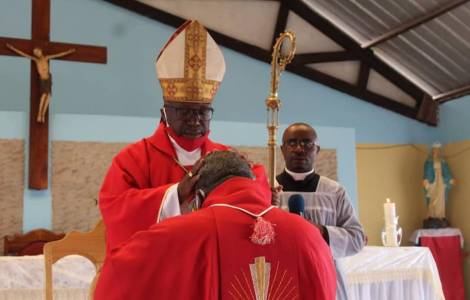
The Catholic bishops have intervened on several occasions to counteract these practices. On December 28, 2025, the Gabonese Bishops’ Conference celebrated the conclusion of its Jubilee and the National Day for Combating All Forms of Violence and Attacks on Life in Oyem. In his homily, the President of the Bishops’ Conference and Bishop of Oyem, Jean Vincent Ondo Éyéne, condemned these “barbaric” acts and called on the security forces to fully embrace their responsibility in order to restore the public’s trust.
“My heart is filled with sorrow for the ritual murders that are staining our beloved country with blood,” said the Bishop of Oyem. “I think of those who have been taken from life, whose bodies have been desecrated, and whose innocence has been broken,” he continued, referring in particular to the murder of Pascal Cameron Loko and to numerous other victims whose crimes go unpunished.
The President of the Gabonese Bishops’ Conference entrusted the souls of the innocent victims to God and prayed for eternal rest for them and comfort for their families. He also remembered the survivors, who are forever scarred by this violence, and prayed for their physical and spiritual healing. (L.M.) (Agenzia Fides, 9/1/2025)
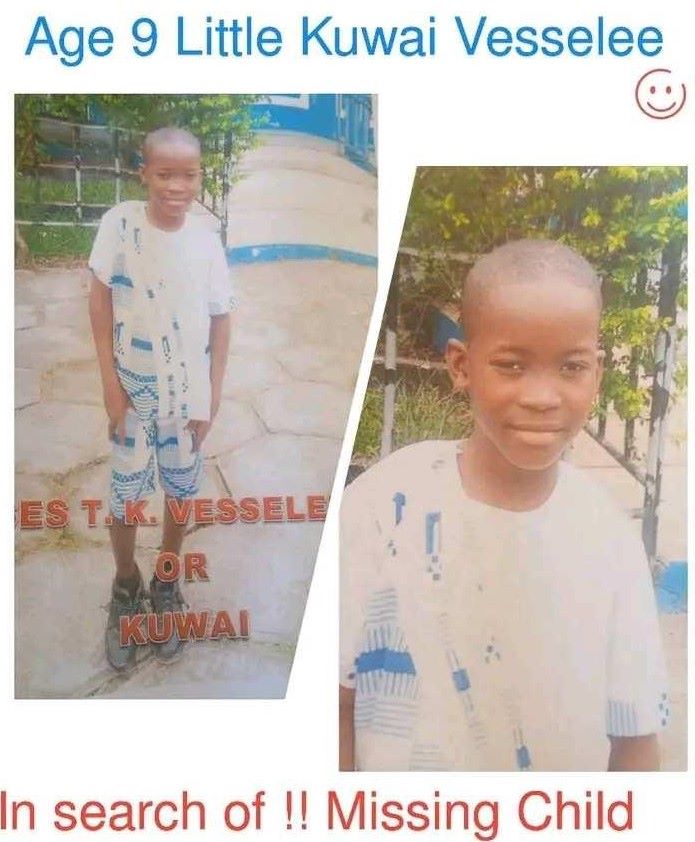
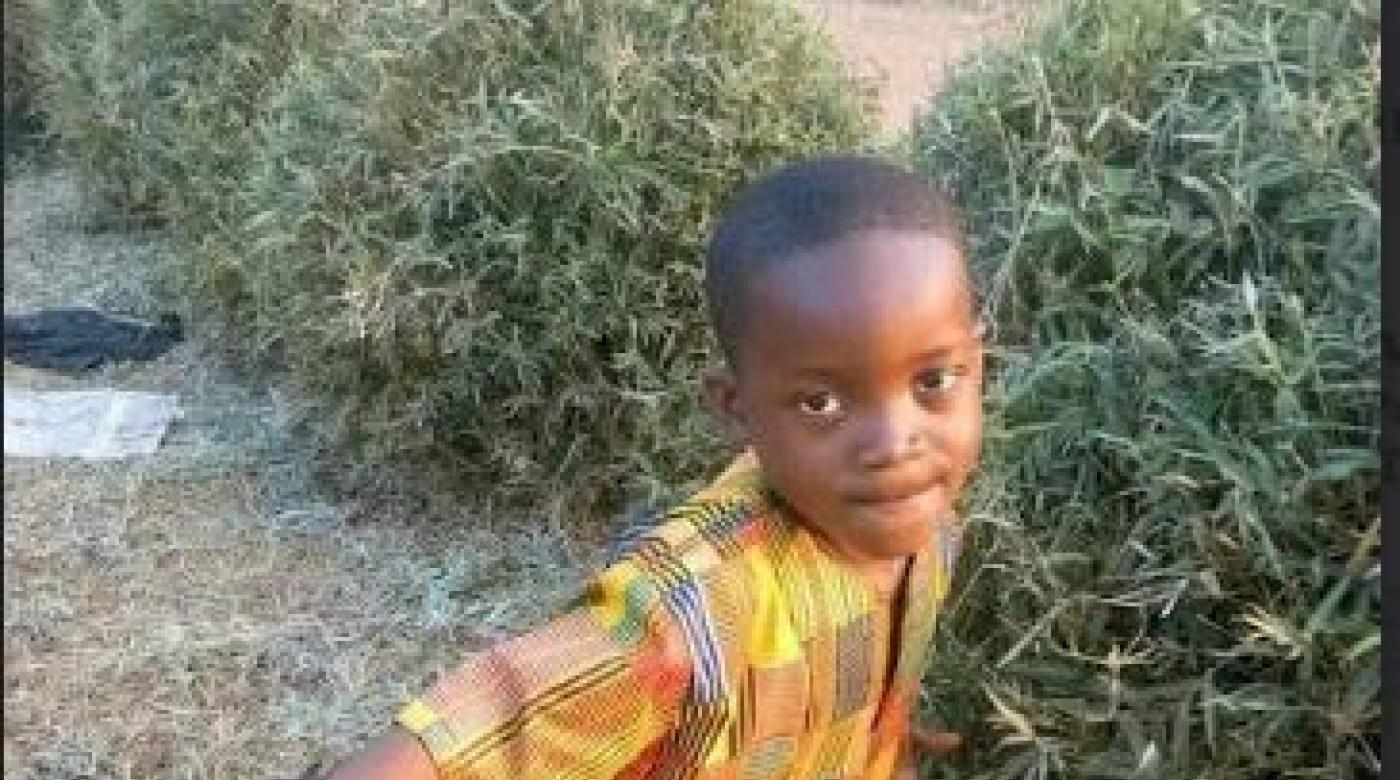
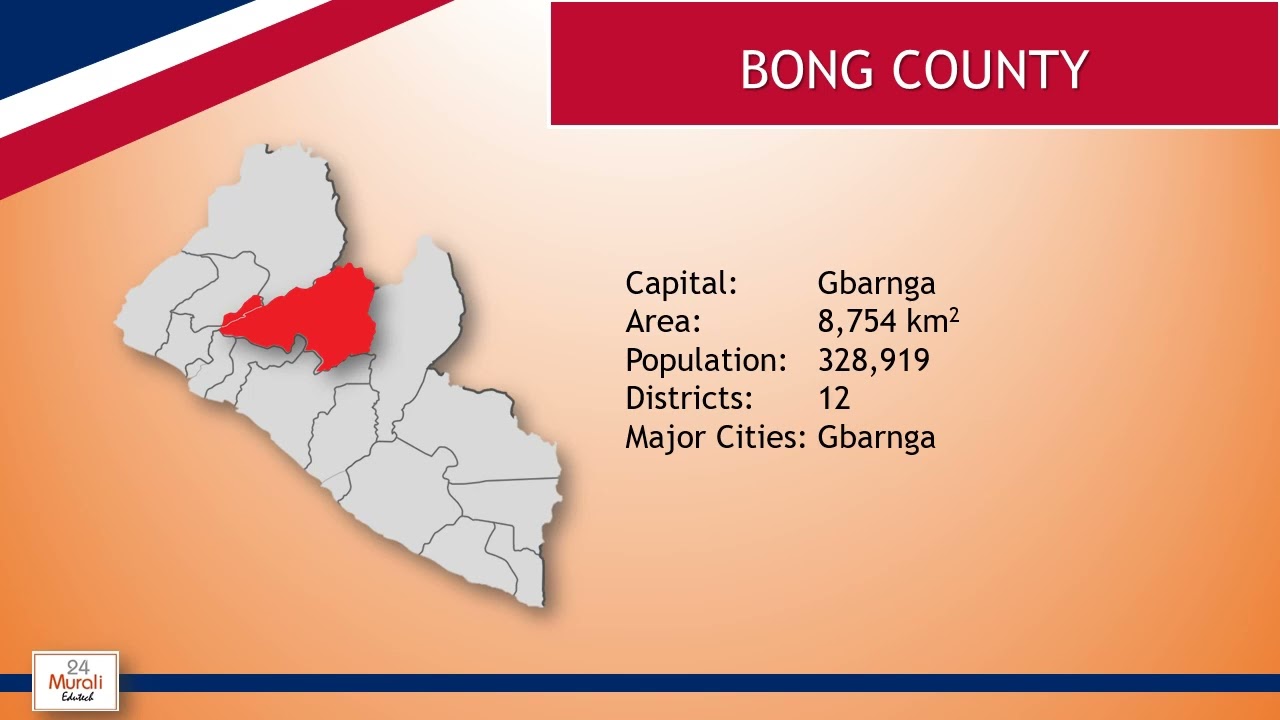
It may be qualified as normal that parents are worried when one of their childen is missing and it’s also quite normal when neighbors and relatives share in these emotions and help in searching for the missing child. In Bong County, residents took to the streets and even stormed the police headquarters on February 5 after a 9-year old boy, little Moses Vesselee, was reported missing the previous day.
A community leader expressed the generally felt fear that the situation might be caused by a ritualistic killing. After all, in Bong County ritualistic killings are no exception.
In recent years several murders for ostensibly ritual purposes have been reported, mutilated bodies of victims (often young children) have been found. In 2017, a year when presidential and general elections were held, there were demonstrations in this vote-rich county against the reported surge in ritualistic killings.
On February 8, the body of little Moses Vesselee, commonly known Kuwai, was found in an open pit. The coroner concluded that the little boy had died from drowning, hence no ‘foul play’.
Be that as it may – and let’s hope the coroner’s conclusions are warranted and there was indeed no foul play – the incident shows once more the persistent problem of ritualistic killing in this West African country. The reader is reminded of Dr. Alan White’s testimony before the US Congress, in 2023. In his testimony, Dr. White, the former Chief Investigator of the Special Court for Sierra Leone, elaborated on the phenomenon of ritualistic murders in Liberia, and he linked the Weah Administration – replaced in January 2024 – to extrajudicial, ritualistic killings (see below for details).
Concluding, the anger and frustration of the Bong County residents who stormed the police headquarters may thus have become clear. Let’s hope that there is never again reason to reproach the police a slow response or lack of action, and let’s hope that no more ritualistic murders will take place.
Only the future will tell if this hope is justified.
Warning: the articles presented below contain graphic contents and pictures which may upset readers (FVDK).
Bong County: 9-year-old boy goes missing – residents storm Police’s HQs for speedy investigation
Published: February 8, 2024 By: J. Peter S. Dennis – News Public Trust, Liberia
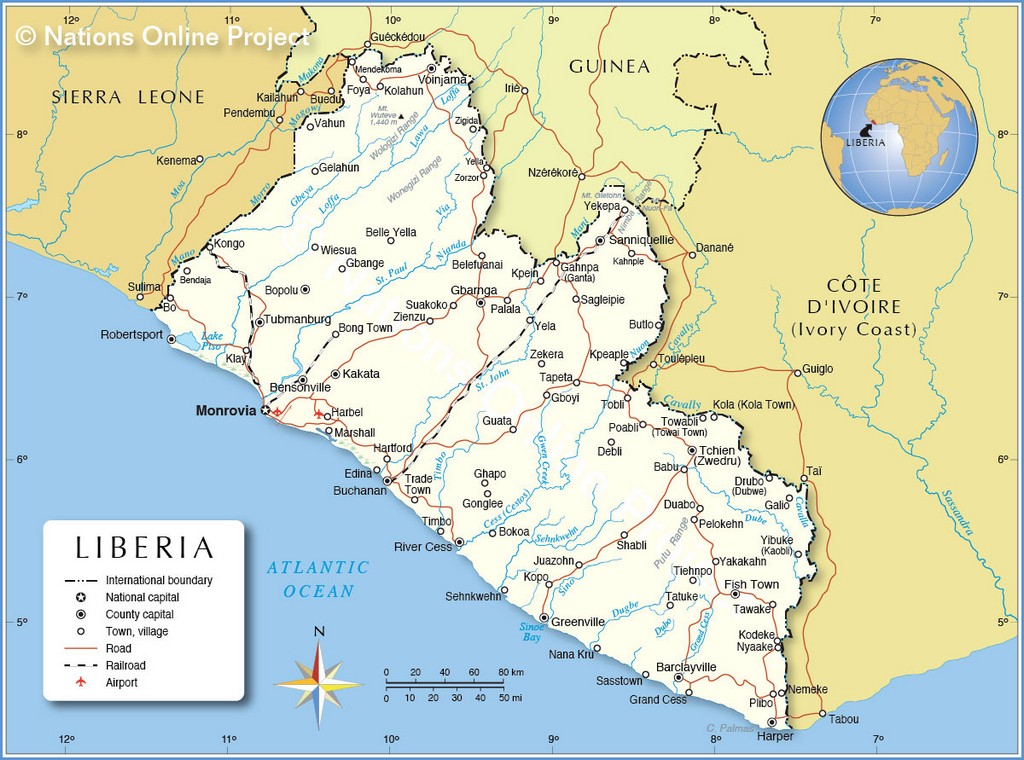
GBARNGA, Liberia- Angry residents of Rubber Factory Community on have stormed the Headquarters of the Liberia National Police Bong County Detachment to intervene in the search of a missing nine-year-old child some 198 kilometers from Monrovia.
According to the furious citizens in this central city, Little Moses Vesselee commonly known as Kuwai, went missing during the afternoon hours of Sunday, February 4, 2024.
He and his parents including Church members had gone to dig sand at the bank of Jor River in Gbarnga. The Jor River is noted for its illegal and unregulated sand mining activities in Bong County.
Speaking on behalf of the angry citizens, Mr. Adolphus Kpana, the community leader and a resident, Clarence Sally, expressed fear that any delay in the search of Little Kuwai Vesselee might lead to an undesirable situation while reflecting on several reported ritualistic killings of minors in Bong County (italics and bold letter type added by the webmaster FVDK).
“We want you join us to look for the child. We’re against this act. We want our son,” they said.
“Any action of us not finding our son, the citizens will inspect every car leading to and fro Monrovia. We will not take this likely” they warned.
The Rubber Factory Community residents openly petitioned the Liberia National Police Bong County Detachment through its Assistant Commissioner of Police, Fasu V. Sherriff to investigate and intervene towards the search of the mysterious disappearance of the 9-yr-old boy.
The concerned citizens were seen with placards saying: “Please stop the ritualistic killing in Bong; We want our son to be freed; the killing must stop, release our son.” (italics and bold letter type added by the webmaster FVDK).
In remarks, Sherriff said he and his men have instituted all security measures since they obtained information regarding the disappearance of little Moses Vesselee and expressed hope of finding the child alive.
He however, called on residents of Rubber Factory community to assist the police with vital information in the discharge of their investigation.
“We started since this morning looking for the boy as soon as we got the tipoff. We are sharing the information with our colleagues to find the boy alive. We want you to provide additional information to do our work. We need your cooperation,” Sheriff said.
Investigation into circumstances surrounding the child’s mysterious disappearance continues.
After four days the missing 9-year old boy was found dead:
Liberia: Missing Child, Moses, Found Dead in Sand Mining Deposit in Gbarnga As Police in Gbarnga say, an investigation is continuing into the mysterious death of the little child
The late Moses T.K. Vesselee, age 9, was found dead in a sand mining deposit, 5ft 10 inches deep, with bruises on his head and his skin peeling.
Published: February 8, 2024 By: Patrick S. Tokpah – Daily Observer, Liberia
After being missing for four days, 9-year-old Moses T.K. Vesselee was discovered dead in Rubber Factory Community in Gbarnga, Bong County.
Popularly known in the community as Kuwai, Little Moses’ corpse was discovered on February 7, 2024, near the Jor River in the Rubber Factory Community, Gbarnga City. The 9-year-old boy’s remains were discovered in a sand mining deposit, about 5ft 10 inches deep, with bruises on his head while the outer layer of his skin was peeled or removed.
The deceased went missing on Sunday, February 4, 2024, at about 3:00 pm when he and his parents, along with other church members, had all gone to mine sand along the Jor River in the community.
Residents of the community in Gbarnga, Bong County, on February 5, 2024, stormed the headquarters of the Liberia National Police Bong County Detachment to intervene in the search for a missing nine-year-old child.
They expressed fear that delays in the search of the boy might lead to an undesirable situation reflective of circumstances involving the killings of other children in the county without the alleged perpetrators being brought to book.
Meanwhile, upon the discovery of Kuwai’s body on Wednesday, a 15-man jury constituted by the LNP Bong County CSD Department examined the body and reported “no foul” played, thereby instructing family members of the victim to immediately interrogate his remains. The coroner jury report further revealed that Little Vesselee died from drowning.
Furthermore, family members of the late Moses T.K. Vesselee, in a remorseful mood, concurred with the jury’s report but scapegoated police officers in the county over their delay in investigating the whereabouts of their 9-year-old son.
Moreover, Police in Gbarnga say an investigation is continuing into the mysterious death of the little child
Prior to his death, Moses was a 5th-grade student at Community House Elementary and Junior High School, located in the Rubber Factory community of Gbarnga.
Some of the recent ritual murder cases in Bong County:
2015:
Girl, 11 found dead with missing body parts Date: January 22, 2015 Published by: The New Dawn, Liberia
The decomposed body of an 11-year-old girl, who went missing in the Frank Joe Community in Gbarnga, Bong County has been found with several body parts allegedly extracted.
Sunday afternoon, 18 January, 2015 was a scene of grief and consternation in Gbarnga as the minor’s corpse was discovered along the bank of the Jor River in the central Liberia provincial capital.
Little Dailey Gbapue’s body parts, including vagina, ears, and nose were all reported missing when the body was discovered.
A relative of the deceased, Salome Gbapue, narrated that the little girl was sent by a neighbor of the community last week Wednesday afternoon, 14 January to go and buy something, but never return only to discover her dead body four days later with body parts reportedly missing.
She continued that they had to bury the little girl by the river bank because the body was almost decayed.
Miss Gbapue said a man only identified as Oldman had informed her that he knew the whereabouts of little Dailey Gbapue and she asked him to led her to the location, which he failed to do.
She said police have since arrested and detained Oldman and the female community resident, who sent the deceased on the errand.
Police in Bong County have confirmed the arrest and launched an intensive investigation into the incident.
Many residents are linking the death of little Dailey Gbapue to ‘heart man’ or ritualistic activities. Though dead bodies had been discovered in Gbarnga, especially in the Jor River in recent years, were no reports of body parts missing.
Bong County residents have called on police in the county to launch thorough investigation into the matter and bring the perpetrator to justice.
The death of little Dailey Gbapue has created fear in several quarters in the county with some expressing that this might be a return of ritualistic killings for power.
3-yr-old missing child found dead with several body parts missing Published: February 23, 2016 By: Ramsey N. Singbeh, Jr. in Margibi-Edited by Jonathan Browne – The New Dawn, Liberia
Mr. Jackson father of missing boy, A three-year-old boy has been mysteriously found dead in Kpatolee Clan, Salala District, lower Bong County.
The late Jacob Jackson was found dead on Thursday, February 18, 2016 with several parts extracted from his body after he had gone missing on 11 February in his parents’ garden. His lifeless body was discovered in a little water called Nanei about five minutes’ walk from his parents’ garden in a swamp.
Among parts that were missing from the lad’s body include eyes, nose, tongue and esophagus as well as his penis. Speaking to reporters on Saturday, February 20, the secretary of a 15-member jury only identified as Morris, explained the body was found lying on its back, completely naked with skin on forehead removed.
Morris also narrated they saw the area where the body was forcibly pushed and dragged into the water, but said no one has been linked to the gruesome death of little Jacob Jackson. He accused authorities of Kpatolee Clan of denying family of the deceased and community residents the opportunity to search houses in the area because news had earlier come that the boy was still alive in one of the houses in the community.
He said authorities of the clan prevented youth, including himself from erecting road block to draw the attention of central government. Morris recalled that on 14 February two strange guys were arrested with some drugs and turned over to the local authorities, but the suspects claimed they were in search of a local herb called country spot.
He said the guys were arrested with blade, toothbrush and flashlight in the same surrounding where the late Jacob went missing. “Of the two men, one claimed to have come from Kakata while the other said he came from Salala.”
He said they were immediately arrested and turned over to the police in Salala and subsequently sent to jail, but wants the suspects brought to justice. One resident of Salala who spoke on anonymity, said the child went missing in an area where his father was present and working the very day, but was reluctant to carry out a search despite pressure from his wife.
However, the boy’s mother continuously cried on him to help her find the child, and without getting his cooperation, reported the matter to residents of the town who compared him to stop work and join his wife to look for their son.
Mr. Jackson refused to speak to the press on the mysterious death of his son.
2017 was an election year. In Liberia an election year often means an increase in ritualistic killings.
In August 2017, Bong County citizens took to the streets to protest against the reported surge in ritualistic murders. A leading Liberian newspaper, FrontPage Africa, published an alarming article on this citizens’ protest, Vote-Rich Liberian County Protests Election Year Ritualistic Killings’ which I posted.
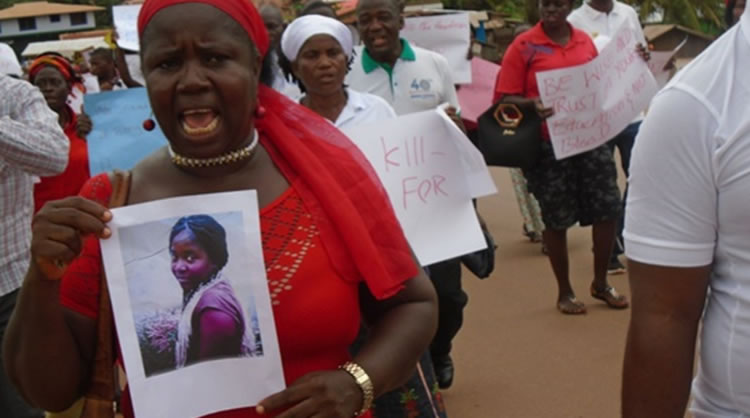
Bong County citizens protest against ritualistic killings.
On October 15, 2021 the Liberia National Police gave a press briefing on the ritualistic killing in Bong County (and other national issues) which can be downloaded on YouTube, see below.
Screenshot. To watch the Liberia National Police Press Briefing on the Ritualist act in Bong County and other National Issues, please click here
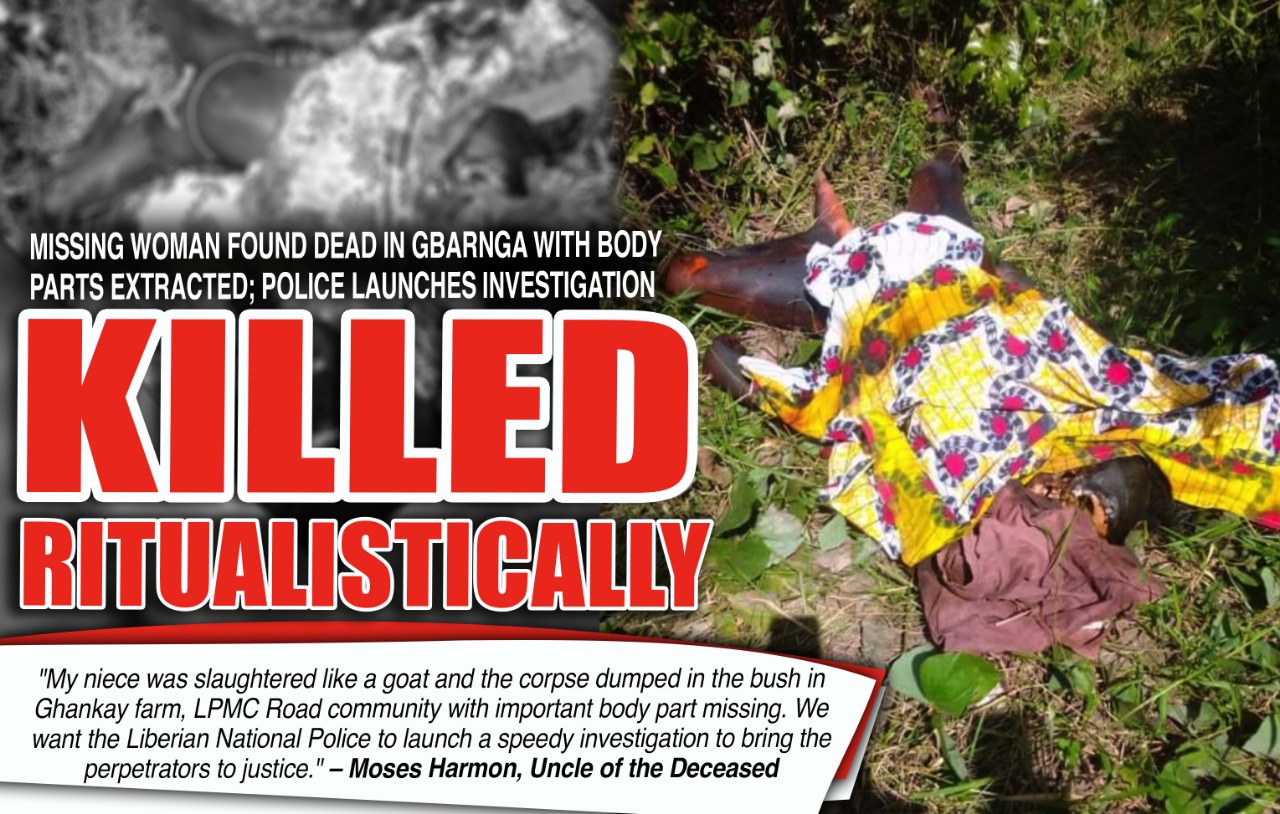
Front Page Africa, October 15, 2021 reporting on the murder of a 21-year woman for ritualistic purposes.
The preceding overview does not pretend to be complete. Its main purpose is to demonstrate that the anger and fear of the residents of Bong County after 9-year old Kuwai Vesselee got missing was warranted.
Warning: the following story’s graphic content and photo may upset the reader.
One of Liberia’s best and most reliable newspapers, FrontPageAfrica, yesterday published a harrowing and scaring report on an attempted kidnapping, presumably for ritualistic purposes. It all happened in Paynesville, Greater Monrovia, Montserrado County, around 3:00 a.m. last Thursday, September 21.
When hearing or reading about alleged or attempted ritualistic murders I am always wary of the danger of jumping too soon to conclusions. But certain details of the story which the aimed victim Sherman Cooper tells us are very realistic: the black, unmarked car, a Nissan Pathfinder, the way he managed to escape from his agressors, as observed by an eyewitness, and above all his wounds, the cutting marks around his neck and another on his genitals. Moreover, and the author of the article, Lennart Dodoo, also mentions this explicitly, it is election time in Liberia: ‘Ritualistic killings during elections are not a new phenomenon in Liberia.’
It sounds unreal, in the 21st century, but we cannot close our eyes for the at times brutal reality. Investigations into real or alleged ritual killings very often fizzle out in Liberia, reportedly because of the alleged, suspected or real involvement of ‘big shots’ (politicians, high-ranking government officials or other highly-placed Liberians) – similar to investigations into alleged or real corruption.
We’ll see whether we ever hear more about this case… (webmaster FVDK)
Liberia: Man Narrowly Escapes Attempted Ritualistic Murder; Brother Abducted by Kidnappers, Still Missing
Published: September 27, 2023 By: Lennart Dodoo – FrontPageAfrica, Liberia
MONROVIA – Saved by an act of bravery but severely wounded, Sherman Cooper, a victim of an alleged kidnapping and attempted ritualistic killing, now wonders about the whereabouts of his brother, Michael, whom the alleged kidnappers escaped with.
Sherman jumped out of the black, unmarked speeding Nissan Pathfinder, which had given him and his brother a lift from Paynesville, near the Fabulous opposite Bethesda.
FrontPageAfrica has confirmed that Sherman is currently receiving medical attention at the John F. Kennedy Memorial Medical Center’s trauma unit.
Some residents of the area and eyewitnesses say the unmarked black Nissan Pathfinder is often seen patrolling the VOA area in Paynesville.
An eyewitness who was driving behind the speeding SUV said he saw Sherman jump out of the moving vehicle. He said the kidnappers looked foreign and suspected them of being Burkinabe.
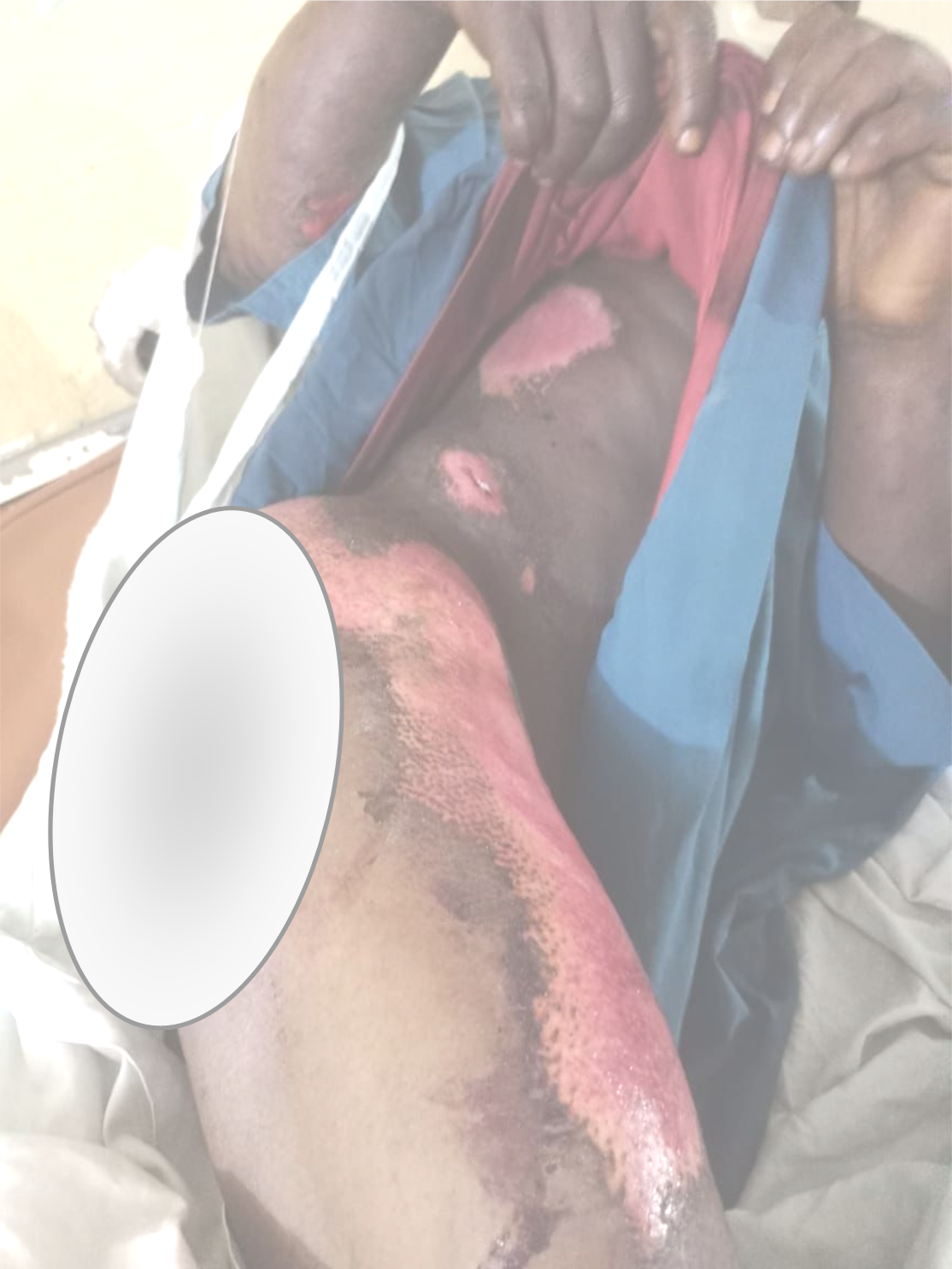
In a video seen by FrontPageAfrica, Sherman, who was stark naked and bloody, is seen with cutting marks around his neck and another on his genitals. He also sustained severe injuries on his knee, head, forehead, back, buttock, and thigh.
He is heard wailing, “I’m in pain, oh, I’m in pain, oh. Y’all help me. They carried my brother. They’re going to kill my brother. Y’all, please carry me to the hospital.”
He added, “The people put the windshield [glass] up, I fought. The passenger seat behind [extra cabin seat in the trunk] and two people were sitting behind we didn’t know. When we sat, that’s when they… I said ooh they want to kill us.”
FrontPageAfrica learned that the police and security authorities have been interrogating Sherman as the whereabouts of Michael remain unknown.
According to the eyewitness who saw Sherman jumping down from the car, he stopped his car and observed when he saw Sherman jump from the car. “He started crawling towards me, crying ‘Please help me, please help me,’” he explained.
This happened around Rehab.
According to the eyewitness, the incident occurred at about 3:30 a.m. last Thursday. In his narrative, he said Sherman and his brother were supposed to alight at Rehab, but as the vehicle approached Rehab, it increased its speed, and that’s when Sherman and his brother started fighting.
“The guys put a rope around their necks. They had two guys in the back seat, so they put a rope around their necks, and they started fighting. But he was fighting for his life, so he managed to hold on to the glass, and they tried to put the glass up, but his hands were already between the glass, so he managed to pull the glass down with strength while they were concentrating on taking off his private part, and he managed to jump through the window while they were at the junction,” the eyewitness explained.
Ritualistic killings during elections are not a new phenomenon in Liberia. In 2021, a UN human rights expert called on the government to investigate a series of killings that have occurred this year, some of which have reportedly been linked to ritualistic practices.
At least 10 people were killed in unclear circumstances in December 2021, including five in September, reportedly with suspected links to ritualistic practices or political motivations.
Last week, Dr. Alan W. White, Co-Executive Director of the Advocacy Foundation for Human Rights, delivered a compelling testimony before the Committee on Foreign Affairs, Subcommittee on Global Health, Global Human Rights, and International Organizations, addressing the pressing issue of ritualistic killings in Africa, with a particular focus on Liberia. Dr. White shed light on the Foundation’s mission to combat human rights violations, including ritualistic killings and the alarming allegations linking these acts to high-ranking government officials, including the Executive Mansion.
In his testimony, Dr. White detailed the challenges faced in gathering information and conducting investigations into ritualistic killings, emphasizing the danger faced by sources who dare to speak out against these crimes.
Dr. White’s testimony also touched upon recent cases of ritualistic killings in Liberia, such as the mysterious disappearance of three young men hired for a task in Bong County in October 2020 by the St. Moses Funeral Home. The bodies of these young men were never returned to their families, and investigations into their deaths remain unresolved, raising suspicions of involvement by influential individuals with close government ties.
“The Foundation has received disturbing information about the frequency of such killings and the allegations linking it to the Executive Mansion (The Office of the President) and other high-ranking government officials. Details of these atrocities are difficult to obtain,” he said.
He also linked the past regime to acts of ritualistic killings, saying, “The Ellen Johnson Sirleaf administration during her 12 years (2006-2018) in office was plagued with ritual killings, and despite vows to bring them to an end, they continued. The same problems continue under the Weah administration, and unlike Sirleaf, there were no insiders reporting her direct involvement with the ritual killings.”
A graphic picture showing the injuries Sherman Cooper sustained. He’s currently receiving medical attention in the trauma unit of the John F. Kennedy Memorial Medical Center
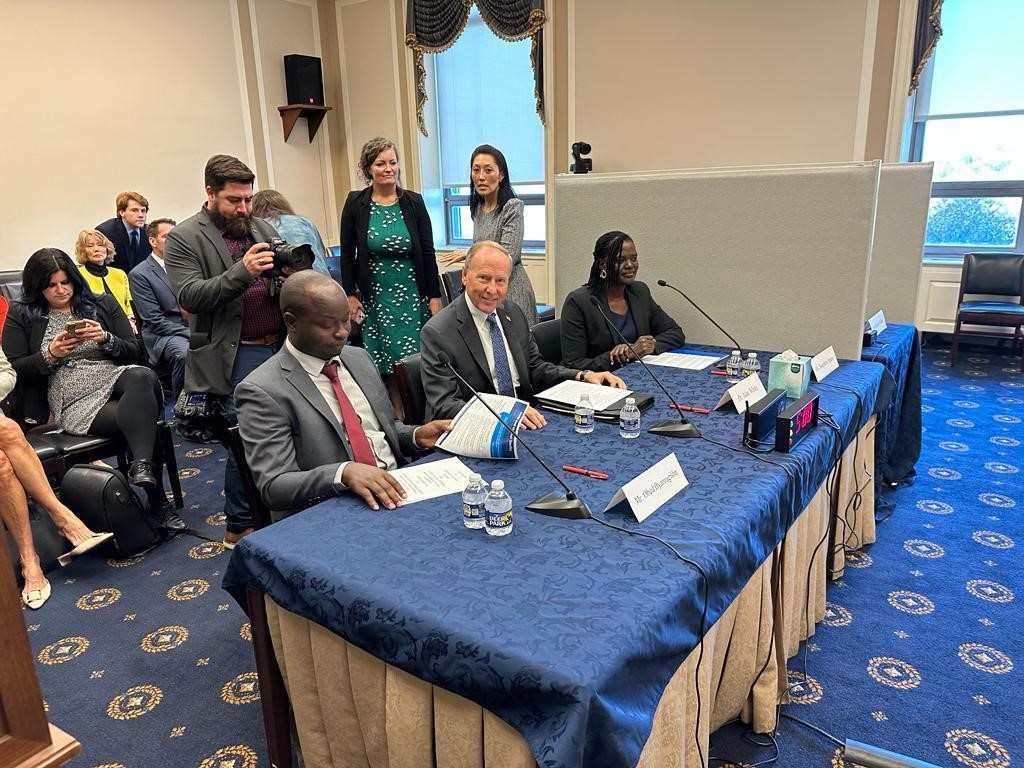
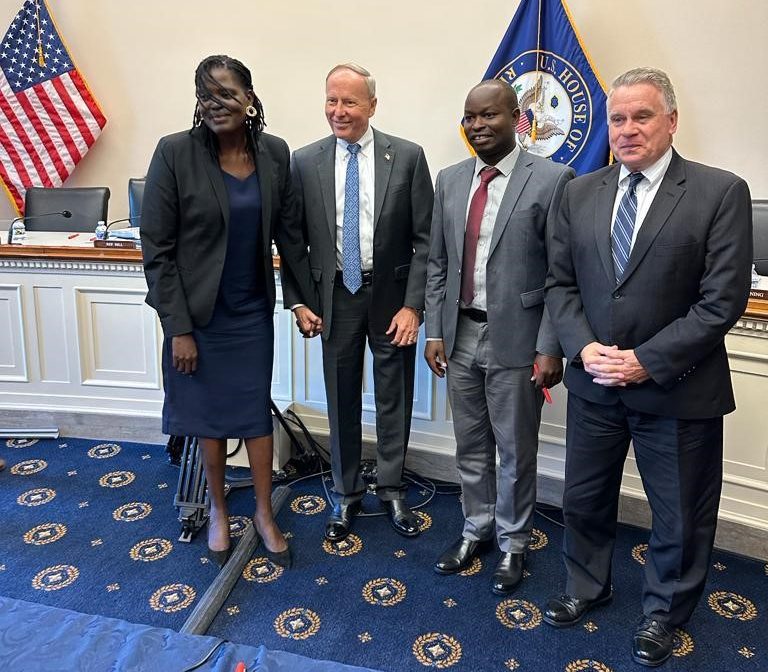
A few days ago, on September 19, an important meeting took place in the United States, in the House of Representatives to be precise. A subcommittee on global human rights, of the Commission of Foreign Affairs, held a hearing on ‘Efforts to Address Ritual Abuse and Sacrifice in Africa’.
Witnesses invited to speak were Obed Byamugisha, Program Advisor, Kyampisi Childcare Ministries, Miriam Fullah, Trafficking in Persons Protection Manager, World Hope International, Dr. Alan White, Co-Executive Director, Advocacy Foundation for Human Rights and former Chief of Investigations of the Special Court for Sierra Leone (SCSL, which sentenced former Liberian warlord and president Charles Taylor to 50 years in prison), and Josephine Aparo, Founding Member, Global Survivor Network and International Justice Mission.
At least three leading Liberian newspapers published articles on the hearing, revelations and accusations notably of Dr. Alan White, who linked immediate past and present Liberian governments to ritualistic killings. The three articles – in the Daily Observer, Front Page Africa, and The New Dawn – are reproduced below. In a separate posting I will pay attention to the testimonies of the other witnesses.
The responsibility for the reporting on Dr. Alan White’s testimony in the three Liberian newspapers rests entirely with the publishers of said newspapers. White’s testimony addresses the roles of former president Sirleaf (2006 – 2018) and president Weah (2018 – present) and he formulates his observations and conclusions carefully. The newspapers’ headings are meant to attract the attention of the readers (buyers), without nuance. Therefore and to avoid any misunderstanding about White’s statements I’ve also included the full text of his important testimony (below).
Dr. White, who – as Chief Investigator of the SCSL – has extensive knowledge of ritualistic practices and abuses which occurred in Sierra Leone during this country’s civil war (1991-2002), also referred to these atrocities in his testimony. Moreover, he said, “This practice continues today in Sierra Leone and surges during election periods where people running for office believe that sacrificing a person, mostly younger boys and girls because it is believed the younger they are, the more power they get.”
With respect to Liberia he provides more than one example of ritualistic abuse and murder. His most serious accusation addresses the previous Administration of President Sirleaf and the present Weah Administration: “The Ellen Johnson Sirleaf administration during her 12 years (2006-2018) in office was plagued with ritual killings and despite vows to bring them to an end they continued. The same problems continue under the Weah administration and unlike Sirleaf there were no insiders reporting her direct involvement with the ritual killings. However, we have received information that current administration has been linked to ritualistic killings of children. Sources advise the police are not allowed to investigate these matters or if they do, it is done superficially as to not get to close to those involved. Also, because of the high-level links to the government it is taboo to say anything about it or otherwise you could be the next victim.”
White could hardly be more specific when stating: “The Foundation has received disturbing information about the frequency of such killings and the allegations linking it to the Executive Mansion (The Office of the President) and other high-ranking government officials. Details of these atrocities are difficult to obtain.”
On October 10, presidential and legislative elections will be held in Liberia. Should I add more? (webmaster FVDK).
Liberia: Alan White Accuses Weah’s Gov’t of Extrajudicial, Ritualistic Killings
…. Calls for justice for murdered auditors, three missing boys resound at U.S. Congressional hearings
Piublished: September 20, 2023 By: William Q. Harmon – Daily Observer, Liberia
Renowned human rights activist and Co-Executive Director for the Advocacy Foundation for Human Rights (AFHR), Dr. Alan White has told the United States House Subcommittee on Foreign Affairs that President George Weah and his Congress for Democratic Change (CDC) are involved in acts of extrajudicial and ritualistic killing.
Addressing the subcommittee on Global Health, Global Human Rights, and International Organizations, under the House Foreign Affairs Committee, Dr. White said that at least 10 people were killed in unclear circumstances in 2021, including five in September of that year reportedly with suspected links to ritualistic practices or political motivations.
The killings referenced by Dr. White, all of which occurred during the Weah administration, were never solved and remain fresh on the minds of Liberians as the country goes to the polls on October 10 this year, to elect a president, vice president and 88 legislators.
On December 10, 2021, the United Nations issued a public statement –“A UN human rights expert today called on the Liberian Government to promptly investigate a series of killings that have occurred this year, some of which have reportedly been linked to ritualistic practices.”
White told the subcommittee that his organization has received disturbing information about the frequency of such killings and the allegations linking it to the Executive Mansion (The Office of the President) and other high ranking government officials. Details of these atrocities, he said, are difficult to obtain.
“Sources advise the police are not allowed to investigate these matters or if they do, it is done superficially as to not get too close to those involved,” White told the Subcommittee on Global Health, Global Human Rights, and International Organizations at a hearing on Tuesday, 19 September. “Also, because of the high-level links to the government it is taboo to say anything about it or otherwise you could be the next victim.”
White called on the U.S. government and global partners for the prosecution for these heinous crimes. “The killing must stop and hope your legislation can effect change and stop this madness once and for all,” he told the subcommittee.
White’s AFHR, a nonprofit organization, located in Washington, DC, USA, targets human rights violators, that engage in public corruption and seek justice and accountability for the victims of such atrocities. The group is also actively engaged in conducting investigations and compiling information about those individuals who are committing ritualistic killings, especially in Liberia.
In his testimony, White made specific references to the mysterious disappearance of three young men who were hired by Moses Ahossouhe, owner of the St. Moses Funeral Parlor in Monrovia, to undertake a task in Bong County; the high profile death of four auditors; as well as other mysterious deaths that took place in the country under the Weah administration.
On October 17, 2020, Robert M. Blamo, Jr, 29, Siafa Gbana Boimah, 34, and Bobby S. Gbeanquoi, 32, were reported drowned in a river in Fuamah District, lower Bong County, when a canoe they were allegedly riding capsized.
“The bodies of the three young men were retrieved by Ahoussouhe and never returned to the parents. He has close ties to the President and the government,” White told the committee. “And the Ministry of Justice has failed to provide an update or release the outcome of an investigative report on circumstances that led to the conclusion they drowned. Why didn’t they release the bodies to the family?”
The aggrieved families believed that their children are being kept in a sacred place to be used for alleged ‘ritualistic purposes’. The family members sought the assistance of the international community, including the US Embassy and the United Nations.”
Three of the most recent victims were either former officials or had links to high profile former politicians, he said. “Even a recent death of some young girls involved in political campaign event held by the CDC sparked outrage by the citizens and allegations their deaths were done for ritualistic reasons,” he said while referencing the headline of a local newspaper which said: Citizens to President Weah: ‘No ritual can help you from leaving office after the elections.’
White noted that the Ellen Johnson Sirleaf administration during her 12 years (2006-2018) in office was plagued with ritual killings and despite vows to bring them to an end they continued. “The same problems continue under the Weah administration and, unlike Sirleaf, there were no insiders reporting her direct involvement with the ritual killings,” he said.
Over the past 20 years White has been actively engaged in seeking justice and accountability for victims of human rights violations and conducting criminal investigations of war crimes and crimes against humanity in Africa, most specifically West Africa. From July 2002-July 2005, he was detailed to the United Nations backed Special Court for Sierra Leone located in Freetown, Sierra Leone West Africa where he served as the Chief of Investigations.
“As Chief of Investigations of the Special Court for Sierra Leone, I directed all criminal investigations which led to numerous indictments and convictions, most notably was former Liberian President Charles Taylor who was the first sitting Head of State to be indicted and convicted for war crimes and continues to serve his 50 year prison sentence.”
White was one of four witnesses who testified during the hearing on the theme: “Efforts to Address Ritual Abuse and Sacrifice in Africa” on Tuesday, September 19, 2023. The others were Obed Byamugisha, Program Advisor, Kyampisi Childcare Ministries; Miriam Fullah, Trafficking in Persons Protection Manager, World Hope International; and Josephine Aparo, Founding Member, Global Survivor Network and International Justice Mission.
He applauded the work of the Subcommittee and its members, noting that his organization will continue to work on the issues. “We hope that this Hearing will shed a very bright light on a very dark issue plaguing many African countries and especially Liberia, who experienced this despicable crime against humanity during war and peace, yet it doesn’t stop,” he said.
His testimony to the U.S. House Subcommittee is the latest deposit in a trove of numerous reports with claims of crime and corruption on the part of the Weah administration. So far, some of these claims have resulted in sanctions against three of Weah’s top lieutenants — former Minister of State for Presidential Affairs, Nathaniel McGill; former Solicitor General, Cllr. Saymah Syrenius Cephus; and former Managing Director of the National Port Authority, Bill Twehway.
Yet, amid the U.S. sanctions, the three individuals continue to wield influence across the country — especially during the current election period, as Both McGill and Twehway are splurging cash to gain favor with voters in order to be elected to legislative office come October 10.
Dr. White’s hope that the U.S. Congress’ “… legislation can effect change and stop this madness once and for all,” might resonate with many Liberians at home and abroad, but the October 10 elections will be the litmus test of whether the critical mass of Liberians at home feel the same way about the state of affairs in their country.
Liberia: Dr. Alan White Highlights Ritualistic Killings in Liberia before U.S. House Foreign Affairs Subcommittee; Links Immediate Past and Current Government
Published: September 20, 2023 By: Lennart Dodoo – Front Page Africa, Liberia
Washington, D.C. – Dr. Alan W. White, Co-Executive Director of the Advocacy Foundation for Human Rights, delivered a compelling testimony before the Committee on Foreign Affairs, Subcommittee on Global Health, Global Human Rights, and International Organizations, addressing the pressing issue of ritualistic killings in Africa, with a particular focus on Liberia. Dr. White shed light on the Foundation’s mission to combat human rights violations, including ritualistic killings and the alarming allegations linking these acts to high-ranking government officials, including the Executive Mansion.
The Advocacy Foundation for Human Rights, a non-profit organization based in Washington, D.C., has been dedicated to targeting human rights violators, exposing public corruption, and advocating for justice and accountability for the victims of such atrocities.
Others who testified before the Committee headed by Congressman Chris Smith Obed Byamugisha, Program Advisor, Kyampisi Childcare Ministries; Miriam Fullah, Trafficking in Persons Protection Manager, World Hope International; Josephine Aparo Founding Member, Global Survivor Network and International Justice Mission.
In his testimony, Dr. White detailed the challenges faced in gathering information and conducting investigations into ritualistic killings, emphasizing the danger faced by sources who dare to speak out against these crimes.
Dr. White’s credentials as Chief of Investigations for the Special Court for Sierra Leone, where he directed criminal investigations leading to numerous indictments and convictions, lent significant weight to his testimony. He notably highlighted the conviction of former Liberian President Charles Taylor, the first sitting Head of State to be indicted and convicted for war crimes, serving a 50-year prison sentence.
The Special Court for Sierra Leone was established to investigate and prosecute those responsible for the devastating civil war in Sierra Leone, spanning from 1991 to 2002, which resulted in the deaths of over 70,000 people. Dr. White’s investigations led him to neighboring Liberia, which also experienced two brutal civil wars, resulting in the deaths of over 250,000 Liberians.
During his tenure as Chief of Investigations, Dr. White bore witness to unspeakable human rights violations perpetrated through ritualistic activities, a phenomenon he had not encountered before. He recounted a chilling story from 2002, where a 70-year-old man seeking a political position in a local Village, believed in black magic and sacrificed a 9-year-old boy to gain power. This horrifying act shed light on the prevalence of ritualistic killings in West Africa, where individuals commission murders to obtain body parts for magic spells and gain political power.
The Foundation has received disturbing information about the frequency of such killings and the allegations linking it to the Executive Mansion (The Office of the President) and other high-ranking government officials. Details of these atrocities are difficult to obtain.
Dr. Alan W. White, Co-Executive Director of the Advocacy Foundation for Human Rights
Dr. White’s testimony revealed the widespread practice of ritualistic killings during Sierra Leone’s civil war, with various rebel groups and warring factions, such as the Revolutionary United Front (RUF), the Armed Forces Revolutionary Council (AFRC), and the Civil Defense Force (CDF), routinely engaging in such acts. He described how rebels would boast about consuming the organs of their victims, believing it granted them supernatural power.
Importantly, Dr. White highlighted that ritual killings persist in Sierra Leone today, often escalating during election periods when some politicians believe they can gain power through human sacrifices. These alarming practices have also been reported in Liberia, where ritualistic killings are a combination of traditional beliefs and the criminal behavior of unscrupulous politicians.
Liberia has a history of ritualistic killings during its civil wars, with figures like Milton Blahyi, also known as ‘General Butt Naked’, publicly admitting to eating children’s hearts and taking part in human sacrifices to ensure victory in battle.
Dr. White’s testimony also touched upon recent cases of ritualistic killings in Liberia, such as the mysterious disappearance of three young men hired for a task in Bong County in October 2020 by the St. Moses Funeral Home. The bodies of these young men were never returned to their families, and investigations into their deaths remain unresolved, raising suspicions of involvement by influential individuals with close government ties.
“The Foundation has received disturbing information about the frequency of such killings and the allegations linking it to the Executive Mansion (The Office of the President) and other high-ranking government officials. Details of these atrocities are difficult to obtain,” he said.
He also linked the past regime to acts of ritualistic killings, saying “The Ellen Johnson Sirleaf administration during her 12 years (2006-2018) in office was plagued with ritual killings and despite vows to bring them to an end they continued. The same problems continue under the Weah administration and unlike Sirleaf there were no insiders reporting her direct involvement with the ritual killings.”
Dr. White commended the Subcommittee for its work and called for a thorough examination of the issue of ritualistic killings in Africa, especially in Liberia. He urged legislation that could bring an end to these heinous crimes, emphasizing the importance of exposing those involved and prosecuting them for their actions. The Advocacy Foundation for Human Rights remains committed to addressing this dark issue plaguing many African countries and hopes that the Subcommittee’s efforts will help put an end to these atrocities once and for all.
— Dr. Alan White asks U.S. for prosecution of those in ritualistic killings in Liberia
Published: September 20, 2023 By: New Dawn, Liberia
The U.N. former chief investigator for the special court of Sierra Leone, Dr. Alan White is requesting prosecution for ritualistic killings and despicable crimes against humanity in Liberia during war and in peace, saying “the killings must stop.”
Dr. Alan briefed U.S. lawmakers in Washington Tuesday, 19 September 2023, giving historical accounts of recent killings and those carried out during Liberia’s civil war for ritualistic purposes.
“Those involved need to be exposed and prosecuted for these heinous crimes. The killings must stop, and we hope that through legislature can effect change and stop this madness once and for all,” said Dr. White.
Dr. White indicated that former President Ellen Johnson-Sirleaf’s administration was plagued with ritualistic killings, and the same problem continues under incumbent President George Manneh Weah’s administration.
Unlike Sirleaf’s administration, Dr. White said, there was no insider reporting on her direct involvement on ritualistic killings.
However, he said he has received information that President Weah’s administration is being linked to the ritualistic killings of children.
He said sources have revealed that the police are only allowed to investigate these matters in a conspicuous but very superficial manner.
Dr. White explained that notable of these cases is the incident involving victims Robert Blamo, Jr., 29, Siafa Boimah, 33 and Blama, who went missing after being hired by St. Moses Funeral Parlor proprietor Mr. Moses Ahoussouhe to undertake a contract in Bong Mines.
Mr. Ahoussouhe was accused of hiring the three men on Saturday, 15 October 2020 to travel to Bong Mines to do technical work for him at his diamond creek when all three of them went missing. They were alleged to have drowned when a canoe they were riding in had capsized.
Dr. White said Ahoussouhe (St. Moses) retrieved the bodies of the three young men but they were never returned to their parents.
“He has close ties with the president and the Government of Liberia, and through the Ministry of Justice, he has contact as well. They failed to provide update or release the outcome of the investigation or report on the circumstances that led to the conclusion [that] they drowned,” said Dr. White.
Dr. White indicated that the aggrieved families believe that their children are being kept in a secret place to be used for ritualistic purposes.
He said the family members sought the assistance of the international community including the U.S. Embassy and the United Nations, leading the UN to call on the Liberian government to investigate killings which had been reported to link to ritual practice.
In 2021 alone, Dr. White said at least ten people were killed, reportedly linked to ritualistic killing or political motivation.
He added that they were either former officials or had links to former politicians. White noted that recent deaths involving some girls during President George Manneh Weah’s 2023 political campaign outraged the citizens.
He said the allegation is that the killings were done for ritualistic reasons. He also referenced citizens’ message to President Weah which was carried in the NewDawn newspaper’s headline that no amount of money or rituals can help President Weah and his Coalition for Democratic Change from leaving office after the 10 October 2023 elections.
Dr. White said his organization will continue to work on these issues in African countries, especially Liberia which experiences despicable crimes against humanity during war and in peace.
He recalled that during the 14 years civil war in Liberia, there were so many cases where gunmen, some of them child soldiers, ate victims’ body parts.
He stated that it was well documented that during Liberia’s civil war, ritualistic killing was a common place, naming Gen. Butt Naked, now Evangelist Milton Blayee as of the notorious culprits.
According to Dr. White, Mr. Blayee testified before Liberia’s Truth and Reconciliation Commission (TRC) that he ate children’s hearts.
He said Blayee indicated that human sacrifices were intended to ensure victories in battles.
Full text of the Testimony Submitted to The Committee on Foreign Affairs, Subcommittee on Global Health, Global Human Rights, and International Organizations – “Efforts to Address Ritual Abuse and Sacrifice in Africa” – September 19, 2023 – 10:00 a.m. Statement of Dr. Alan W. White, Co-Executive Director – Advocacy Foundation for Human Rights – Washington, D.C. and Founding Chief of Investigations of the United Nations backed Special Court for Sierra Leone.
First of all I would like to the thank Chairman Congressman Chris Smith and Ranking Member Congresswoman Susan Wild, of the U.S. House of Representatives Global Health, Global Human Rights, International Organizations and other members of this Subcommittee for holding this very important hearing. I also want to publicly commend Congressman Smith for his tireless and unwavering efforts in seeking justice and accountability for countless victims of human rights violations from around the Globe. You provide a voice that otherwise would go unheard and a platform to those victims, who have suffered and continue to suffer with no one to turn to. Your steadfast support is globally recognized and very much needed in these troubled times we live in, and where so many atrocities are being committed around the world.
I am the Co-Executive Director for the Advocacy Foundation for Human Rights, a non- profit organization, located in Washington, DC. The Advocacy Foundation for Human Rights targets human rights violators, that engaged in public corruption and justice and accountability for the victims of such atrocities. We are actively engaged in conducting investigations and compiling information about those individuals who are committing ritualistic killings, especially in Liberia. The Foundation has received disturbing information about the frequency of such killings and the allegations linking it to the Executive Mansion (The Office of the President) and other high-ranking government officials. Details of these atrocities are difficult to obtain.
Sources to the Foundation are endangered just by speaking out – and I will discuss this later in my testimony.
Over the past 20 years I have been actively engaged in seeking justice and accountability for victims of human rights violations and conducting criminal investigations of war crimes and crimes against humanity on the continent of Africa, most specifically West Africa. During my last 3 years of Federal Law Enforcement service from July 2002-July 2005, I was detailed to the United Nations backed Special Court for Sierra Leone located in Freetown, Sierra Leone West Africa where I served as the Chief of Investigations. As Chief of Investigations of the Special Court for Sierra Leone I directed all criminal investigations which led to numerous indictments and convictions, most notably was former Liberian President Charles Taylor who was the first sitting Head of State to be indicted and convicted for war crimes and continues to serve his 50 year prison sentence.
The Special Court for Sierra Leone was established to investigate and prosecute those who bear the greatest responsibilty for the civil war in Sierra Leone, which lasted from March 1991 to January 2002 and resulted in the deaths of over 70,000 people. Our investigations led us to neighboring Liberia which had suffered two civil wars, the first from December 1989 to August 1997 and then again in 1999 to 2003 where over 250,000 Liberians were killed.
While serving as the Chief of Investigations I witnessed and investigated some of the most horrific and unspeakable human rights violations no one could ever imagine that someone could inflict on another human being. The horrors of civil war are always tragic, however, to see those involved in the commission of killing and torturing another human being by engaging in ritualistic activities was something I had not seen before and quite frankly prepared to deal with. Yet shortly after I arrived in Freetown, Sierra Leone I recall in August 2002 a news story where a 70-year-old man seeking to become a Paramount Chief of a local Village, a political position in traditional system of local government and an integral element of governance, was convicted of a ritualistic killing. I learned quickly that ritualistic killings were common place, particularly in West Africa. This story reported the man seeking to become a Paramount Chief believed in black magic and in order to get elected he needed to sacrifice a young child and in this case he bought a 9-year old boy for 800,000 leones ($160) from a family desperate for money.
Reportedly he gruesomely killed the 9-year-old boy by slitting his throat and removing his liver and taking some blood to local witch doctors in the neighboring country of Guinea where they would use in making a liquid concoction he could drink and give him what is known as “Juju”. This was a term I learned later meant power and used in ritualistic killings by rebels fighting in the civil wars, both in Sierra Leone and Liberia. Suprisingly, I learned that ritual killings or human sacrifices to local deities were customary in parts of West Africa, where some people commission killings to obtain body parts for magic spells to gain political power and influence.
Early on during my criminal investigations of war crimes and crimes against in Sierra Leone I heard routinely about ritualistic killings involving the various rebel group and warring factions in Sierra Leone, which included the Revolutionary United Front (RUF), the Armed Forces Revolutionary Council (AFRC) and the Civil Defense Force (CDF).
The war started in Kailahun, so we started our investigations in that part of the country where we uncovered numerous mass graves and in most cases the victims were civilians, including children. Their identities were mostly unknown, although some names were given. However, our witness interviews revealed that the RUF or RUF/AFRC were identified as the alleged perpetrator.
There were several causes of death of the victims reported including they were locked in houses and burnt, “ritual human sacrifice for protection” and gunshot and knife wounds. One of the witnesses interviews I recall involved a female RUF ex-child combatant, who advised that ritual killings were routinely practiced on enemy fighters or on civilians, including children. Sadly, the rebels from the various warring factions would boast about killing their enemy, many of which were young child soldiers, and eating their heart, drinking their blood, or eating other body parts claiming they received extra power from doing so.
This practice continues today in Sierra Leone and surges during election periods where people running for office believe that sacrificing a person, mostly younger boys and girls because it is believed the younger they are, the more power they get. The Voice of America (VOA) in Freetown in 2012 reported on the so-called ritual murders during election time and have been a part of African society for centuries. “In Sierra Leone, some believe ritual murders increase during election time because some politicians think they will gain political power from another human’s body parts.”
Chief Minister, NaCSA Boss Indicted in Attempted Ritual Murder of Virgins Girls in Freetown (sierraloaded.sl)
In October 2021 a senior government official, who reported to the President of Sierra Leone was indicted for an attempted ritual murder of six “Virgin Girls” in Freetown. The Chief Minister in Sierra Leone has been accused of forcing a primary school teacher to kidnap six virgin schoolgirls for ritualistic purposes. Fortunately, the plot was foiled when one of the whistleblowers came forward and reported it to the police which led to the Chief Minister’s arrest and indictment. However, reportedly he was released from custody while the investigation continued and to date no prosecution has occurred.
Dr Fred P.M. VAN DER KRAAIJ, author of a blog known as liberiapastandpresent.org, who lived and worked in Liberia as an Economist has chronicled a number of the ritualistic killings and other significant events in Liberia. In one of his blogs, he writes — “Today’s practice of ritual killings in Liberia – because it still exists! – mainly is a combination of traditional beliefs which inspire men-eating and modern-day criminal behavior of unscrupulous politicians who consider their ambitions worth more than the life of their victims. During the 14-year civil war (1989-2003) there were so many cases of gunmen – some of them child soldiers – eating their victim’s hearts and other body parts that the Catholic Church issued a formal denunciation of these practices (Stephen Ellis, The Mask of Anarchy, 1999: dust jacket). Liberia.”
It is well documented that during the civil wars in Liberia that ritual killings were commonplace and one of the most notorious rebels engaged in such horrific acts, is Milton Blahyi aka General Butt Naked, a feared former Rebel Commander who fought in the Liberian civil war. He testified before the Liberian Truth and Reconciliation Commission (TRC) where he publicly stated “I ate children’s hearts,” and admitted to taking part in human sacrifices as part of traditional ceremonies intended to ensure victory in battle. He also told BBC that his forces his forces had killed over 20,000 people.
During the first civil war (1989-1996) there were also other reports about Charles Taylor and his rebels accounts reportedly the formation of a group of cannibals called Top 20 of which he was a member. Reportedly the group, comprised of Taylor and 16 rebels of his own army known as the National Patriotic Front for Liberia (NPFL) engaged in human sacrifices at Taylor’s house.
On December 10, 2004, BBC publicly reported Hundreds of Liberian women had taken to the streets of the capital, Monrovia, protested against a recent wave of ritual killings. Bodies of children had been found with some of their organs missing, taken for what are viewed as magical properties. These killings were reportedly linked to politicians and the wealthy, who many believe to pay for the murders to increase their chances of good fortune.
There were other media reports documenting, including the Analyst, the discovery of the bodies of two unidentified children around the Du River area. One of the victims was a girl believed to be 12 years old. The media reports quoted eyewitnesses as saying that the body was discovered with “fresh blood coming from its mouth and nose.”
The Ellen Johnson Sirleaf administration during her 12 years (2006-2018) in office was plagued with ritual killings and despite vows to bring them to an end they continued. The same problems continue under the Weah administration and unlike Sirleaf there were no insiders reporting her direct involvement with the ritual killings. However, we have received information that current administration has been linked to ritualistic killings of children. Sources advise the police are not allowed to investigate these matters or if they do, it is done superficially as to not get to close to those involved. Also, because of the high-level links to the government it is taboo to say anything about it or otherwise you could be the next victim.
One of the most notable allegations of ritualistic killings involve the mysterious disappearance of three young men who were hired by the Proprietor of the St. Moses Funeral Parlor to undertake a task in Bong County. On October 17, 2020, Robert M. Blamo, Jr, 29, Siafa Gbana Boimah, 34, and Bobby S. Gbeanquoi, 32, were reported drowned in a river in Fuama district, lower Bong County when a canoe they were allegedly riding capsized while returning to their respective homes. They were reportedly contracted to do a, “piece of job” at the Oriental mining company owned and operated by Mr. Moses H. Ahossouhe (Proprietor of St. Moses Funeral Parlour), and one Mr. Abraham S. Samuels. It was reported by Mr. Ahoussouhe that the three young men drowned. The bodies were retrieved by Mr. Ahoussouhe and never returned to the parents. He has close ties to the President and the Government of Liberia (GOL), through the Ministry of Justice has failed to provide an update or release the outcome of an investigative report on circumstances that led to the conclusion they drowned. Why didn’t they release the bodies to the family?
The aggrieved families believed that their children are being kept in a sacred place to be used for alleged “ritualistic purposes.” The family members sought the assistance of the international community, including the US Embassy and the United Nations.
On December 10, 2021, the United Nations issued a public statement –“ A UN human rights expert today called on the Liberian Government to promptly investigate a series of killings that have occurred this year, some of which have reportedly been linked to ritualistic practices.”
At least 10 people have been killed in unclear circumstances in 2021, including five in September reportedly with suspected links to ritualistic practices or political motivations. According to information received by the Special Rapporteur on extrajudicial, summary, or arbitrary executions, Morris Tidball-Binz, three of the most recent victims were either former officials or had links to high profile former politicians.
Even a recent death of some young girls involved in political campaign event held by the CDC sparked outrage by the citizens and allegations their deaths were done for ritualistic reasons. The local headlines read – Liberia – Citizens to President Weah: ‘No ritual can help you from leaving office after the elections.’
On August 24, 2023, the New Dawn News reported Several residents of Montserrado County have told incumbent President George Manneh Weah that no amount of alleged human sacrifice, ritual, and money can prevent him and the Coalition for Democratic Change (CDC) from leaving office.
“We want to tell President Weah that no amount of human sacrifice, ritual, and money can help in this election,” potential voters said in Montserrado County.”
The foundation will continue to work on this issue and applauds the work of this Subcommittee and its members. We hope that this Hearing will shed a very bright light on a very dark issue plaguing many African countries and especially Liberia who experienced this despicable crime against humanity during war and peace, yet it doesn’t stop. Those involved need to be exposed and prosecuted for these heinous crimes. The killing must stop and hope your legislation can effect change and stop this madness once and for all.
There’s not much to add without risking repeating myself. Let me just briefly mention what I consider the triple motive of the perpetrator(s): first, to intimidate the bystander, the perceived enemy; secondly, to make clear that he, the actor, is the strongest, the conquerer, and thirdly, without doubt, there is a religious or superstitious drive, a belief in the supernatural powers of eating the heart of the enemy. Notably the latter motive makes it a ritualistic act, and murder, a despicable crime.
The 2009 report of Liberia’s Truth and Reconciliation Commission (TRC) includes many examples of ritualistic acts committed during the back-to-back civil wars (1989-2003). For reasons only known to herself, President Sirleaf (2006-2018) never implemented the TRC recommendations including the prosecution of the rebel leaders responsible for war crimes and human rights violations, possibly because she was also recommended for a sanction because of her (admitted) support of the NPLF, the rebel organization which started the civil war in 1989. Also President Weah (2018 – present) decided not to start procedures establishing a war crimes court, backtracking on previous statements when still in opposition.
The result is impunity for the perpetrators. Injustice. An insult to the survivors and victims.
Liberians will go to the polls on October 10 to elect a president, vice president and 88 lawmakers. The incumbent president, George Weah, has shown his position when it comes to justice for the victims and survivors. His main challengers are a former Vice President under President Sirleaf, Joseph Boakai, from Lofa County, whose running mate is a political protégé of warlord-turned-senator Prince Johnson – yes, the rebel commander who in 1990 gave his men orders to torture and kill then President Samuel Doe – and Alexander Cummings, who has promised to establish a war crimes tribunal when elected into the highest office.
We’ll closely watch events in Liberia during the coming month(s). (FVDK)
Chopped up with an axe and a heart eaten out: some crimes never die
Published: September 13, 2023 By: Alain Werner – Civitas Maxima
Exactly 30 years ago, in the summer of 1993, a group of rebel soldiers sowed unheard-of terror in the town of Foya, in the small West African country of Liberia, then ravaged by civil war.
Here, 450 kilometers north of the capital Monrovia, a pious man respected by his community had the courage to denounce the rebel group that occupied the premises, ULIMO (United Liberation Movement of Democracy for Liberia). He did so to a humanitarian group, and told them that ULIMO was responsible for the looting of a hospital financed by humanitarian aid.
Once the foreigners had left, the pious man was taken to what was then used as an airstrip and his thorax was cut out by the rebels, his heart extracted and eaten in front of the population. “Try ULIMO, your heart” – which could be translated as “Defy ULIMO, we’ll take your heart” – was one of the slogans used to terrorize the population, a slogan that some civilians who survived that inferno still remember.
The most bloodthirsty of the ULIMO commanders, who opened the pious man’s chest with an axe and spread his killing spree to Foya, was known by the war nickname of “Ugly Boy”, despite his handsome features. The local population, who spoke a different dialect than the ULIMO soldiers, had nicknamed this commander differently among themselves, so as to be able to alert each other to his arrival without being understood by the rebels. They called him “Saah Chuey”, or “the man with the axe” in the Kissi language, as this commander was famous for chopping up civilians with his axe.
“Ugly Boy” was never tried for his ignominious deeds. Indeed, legend has it that he died by popular vindication, having been recognized in Guinea by refugees who had fled Liberia. However, if he were still alive today, “Ugly Boy” would still not have been tried in Liberia.
Indeed, in August we will be celebrating 20 years since the end of the wars in this country, and yet no one has been tried by a court in the country; the government and the United Nations having done nothing for the forgotten victims of Liberia. Despite the fact that a national Truth and Reconciliation Commission recommended in 2009 that the main players in the war should be brought to justice, and that at least 250,000 people lost their lives during these bloody conflicts between 1989 and 2003.
However, on Thursday June 1, 2023, the Federal Criminal Court of Appeal in Switzerland convicted a man, Alieu Kosiah, of participating in the axe murder of the Pious Man. Jurisdiction was given in our country because Mr. Kosiah had been resident in Lausanne since the late 1990s. The conviction came exactly 30 years after the events, and was handed down in Bellinzona, seat of the Federal Criminal Court, some 7,000 kilometers from the scene of the crimes, Foya.
Alieu Kosiah had already been convicted in June 2021 by the Criminal Court for multiple acts of war crimes, including having eaten a piece of the pious man’s heart in the company of “Ugly Boy”. At the time, however, he was found not guilty of the axe-murder, the first judges considering that he had not played an active role in this crime.
The appeal judges decided otherwise and sentenced Alieu Kosiah for complicity in the murder of the pious man, an act qualified as a war crime and a crime against humanity. During the reading of the verdict, the President of the Court, Olivier Thormann, explained that, according to the Court, Alieu Kosiah had handed the pious man over to “Ugly Boy” to be taken to the Foya airstrip, knowing full well what would happen next.
This appeal judgment marks Swiss legal history, as it is the very first conviction in our country for crimes against humanity. It now opens the way for prosecutions in Switzerland for such crimes, even if committed before 2011 and the entry into force of the new provisions of the penal code.
As a lawyer and Director of Civitas Maxima, since 2014 I have represented several Liberian victims in this case alongside Me Romain Wavre, including a friend of the pious man who was present at the scene and witnessed his ordeal, having himself been a victim of ULIMO crimes.
Our clients and other victims have shown exceptional resilience, dignity and courage. Most of them came to Switzerland three times to testify throughout the proceedings, and overcame the obstacles posed by the Ebola epidemic in 2014-2015 and the Covid-19 pandemic in 2020-2021 to finally obtain justice.
War crimes and crimes against humanity are unique in that they “never die”. Indeed, because they concern the international community as a whole, these offences are not extinguished by a statute of limitations after a certain number of years, as is the case for most ordinary crimes. Prosecutions for war crimes and crimes against humanity are thus theoretically possible as long as the person accused of committing them is alive and evidence exists, theoretically even if the victims are all dead. Just as the forgotten victims of Liberia obtained justice in Switzerland in 2023 for crimes committed so far away in 1993, victims of international crimes committed during current or recent armed conflicts must never lose hope. Even if we must do everything to ensure that they obtain justice before 2053 for the crimes they have suffered.
The article first appeared in French on Heidi News on the 16th of July, 2023.
On October 10 general and presidential elections will be held in Liberia. At least 20 candidates are vying for the presidency. The opposition is determined to make incumbent president George Weah, a famous soccer star turned politician, a one-term-president. The ruling CDC wants to stay in power. After all, elections in Liberia – and elsewhere on the African continent – is all about access to resources, ideologies and political vision hardly play any role.
Elections and ritualistic murders often go hand in hand in Liberia (also elsewhere on the continent). Reportedly there was a surge in ritual killings in this West African country in recent years. Recently, people in Montserrado County, the seat of the government and the country’s capital Monrovia, told President Weah that no ritual, human sacrifice or money can prevent his loss and that of the ruling CDC in the ensuing elections.
Of course, such a public outcry is no proof or indication of any real or suspected involvement of an ambitious politician, named or unnamed, or of the ruling coalition or the fragmented opposition in criminal acts such as ritual murders. However, the hidden message is noteworthy.
That’s why I consider it worthwhile to include it here. (webmaster FVDK)
No ritual & money can help CDC
Voters in queue – Liberia, elections
Published: August 26, 2023 By: Lincoln G. Peters – The New Dawn, Liberia
Several residents of Montserrado County have told incumbent President George Manneh Weah that no amount of alleged human sacrifice, ritual, and money can prevent him and the Coalition for Democratic Change (CDC) from leaving office.
“We want to tell President Weah that no amount of human sacrifice, ritual, and money can help in this election,” potential voters said in Montsrrado County.
They were responding to President Weah’s urge for his supporters to consider the tragic motor accident that killed some of his supporters last week and then give him a resounding one-round victory this October.
But some Liberians in Montserrado have criticized Mr. Weah’s statement, describing it as completely heartless and worthless.
” We listen to the President telling his supporters to not allow the death of the Daughters of Weah to go in vain. President Weah urged them to use the death for a resounding one-round victory for him and CDC,” the citizens said.
“We are aware that he used the death of those people to remain in power. But let them be informed that it will not work because God is not sleeping,” they noted.
On Wednesday, 23 August 2023, President Weah and his party held a program to mourn the death of some members of the Daughters of Weah who were involved in an accident while en route to Gbarnga, Bong County for a political campaign.
During the mourning, President Weah urged supporters of the CDC not to allow the death of their partisans to go in vain.
Mr. Weah urged CDCians to ensure that the deaths of the Daughters of Weah be repaid with a resounding one-round victory.
“I want to urge every one of you here today, don’t allow the blood and death of those that died in the accident go in vain,” said Mr. Weah.
“We [want] you to ensure that this be repaid with a resounding one-round victory. We have to make sure that we pay for the death of those that died by giving me, CDC one-round victory, ” President Weah stated.
In response Thursday, 24 August 2023, one of those interviewed, Mr. Jeremiah Doe, a resident of Logan Town Community, said President Weah is daydreaming.
Mr. Doe said Liberians have resolved to democratically remove President Weah, claiming that no amount of human sacrifice, rituals, and money spent by President Weah and the entire CDC can help them to remain in power.
” We are aware that President Weah and the CDC sacrificed those girls. But what I want to say is that President Weah is daydreaming because he can never be elected again,” Mr. Doe alleged.
“This President has failed us and the only way to prevent this is to stop him from being re-elected,” he noted.