The life of Nelisiwe Shiba, a woman born with albinism, was never the same after dodging the night she was meant to ‘disappear’ for good, as per the age-old legend that people like her do not die — they simply vanish.
They can even leave the house in the middle of the night without informing anyone, as the legend goes, and take on a mysterious journey to a forest or mountain – never to be traced again.
However, just hours before the evening when such was scheduled to happen to Shiba (35), she was given a timely tip-off by a community resident supposedly sent by a member of the very group that had plotted to make her vanish forever. The member seemingly had a change of heart.
This took place in one of the small rural communities of Northern Hhohho, whose name she preferred not to disclose. She was 25 at the time and had a small child.
Since then, Shiba has been living with the kind of fear that grips people with albinism nowadays — that when the sun sets, they could fall victim to ritual killing disguised as mysterious disappearances. Albinism is a genetic condition in which a person is born with little or no melanin pigment, resulting in lighter skin, hair, and eyes and often causing vision problems.
Harmful myths falsely claim that people with albinism possess magical powers or bring wealth, a misconception that has contributed to discrimination, attacks, and ritual killings.
Elaborating on her account in the wake of International Albinism Awareness Day, commemorated on June 13 to promote the rights, dignity and inclusion of persons with albinism worldwide, Shiba mentioned that she had previously been oblivious to grave dangers faced by people like her.
“After I graduated from Limkokwing University, I relocated to Northern Hhohho because I got a piece-job as a shopkeeper in a grocery shop owned by a relative. The community there was very welcoming and I never felt unsafe, even at night,” she said.
The only challenge she knew and had experienced as a person with albinism was discrimination. Being vulnerable to murder for ritual purposes was a myth to her until the day she got a grave warning that saved her life.
Recounting the events of that day, she stated:
“The community member came to the shop where I worked.
He said he wanted my father’s contact number. I was sceptical about giving it to him, but he insisted with some urgency.”
She yielded after the man bluntly told her that she was not safe and must ensure she did not close the shop late that day.
“He called my father and I overheard the conversation. He informed him about a plot to take my life and that it was a done deal. I had been sold, that night would be the one I disappeared,” she stated.
Shiba also overheard that a certain witchdoctor or sorcerer was part of the group and had approved her as a suitable target. He would be there to oversee the ritual process of the killing. The fact that she had a small child, though without albinism, was viewed as a bonus. Shiba was going to ‘disappear’ with her child.
“When he finished the phone conversation, before departing, he gave me another stern warning not to tell anyone what I had heard.
Shortly afterwards, I received a call from my father, who told me to pack up and find someone to carry on with the shop the following day because he would be fetching me before evening,” she explained.
Shiba remembers being emotionally traumatised by the visit and feeling weak at the knees with fear due to sudden realisation she was never completely safe due to her albinism.
Early that evening, her parents arrived in a car and took her and her child away without giving any hint that it was, in fact, a desperate escape.
She recalled that the community member who warned her father hinted during the phone call that the homestead involved in the deadly plot was nearby.
These were people she interacted with almost daily and would never have suspected to harbour such intentions. Looking back, she says the incident became a turning point that fuelled her distrust of people — something that persists to this day. It takes time for her to let down her guard.
“I don’t hitchhike or accept lifts unless it is from someone very close and trusted. I rely on public transport and would rather go back home than accept a lift from strangers,” she added.
Since that day, she has also become sensitive to noises at night. The slightest sound in or outside the house wakes her up, and she listens carefully to determine its nature.
Over the years, Shiba channelled that fear into advocacy by joining the Swaziland Association of Persons with Albinism (SAPA), where she has since risen to the position of president.
“I’ve also become a motivator for persons with albinism and try to fight for our rights. Apart from threats to our lives, we suffer social discrimination a lot, as many people have wrong information about albinism,” she said.
“There’s still a long way to go in educating the nation and debunking all the myths.”
The Swaziland Association of Persons with Albinism (SAPA) has raised alarm over persistent discrimination, dangerous superstitions and violence against people with albinism.
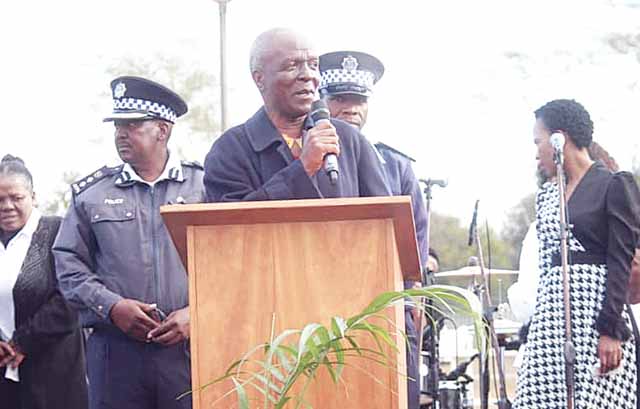
The association warned that the situation amounts to an ‘undercover genocide’, not just in the kingdom, but the wider Southern African Development Community (SADC) region. The concern was expressed by SAPA Executive Director Philemon Gama during the commemoration of International Albinism Awareness Day held at the Deputy prime minister’s office on Friday.
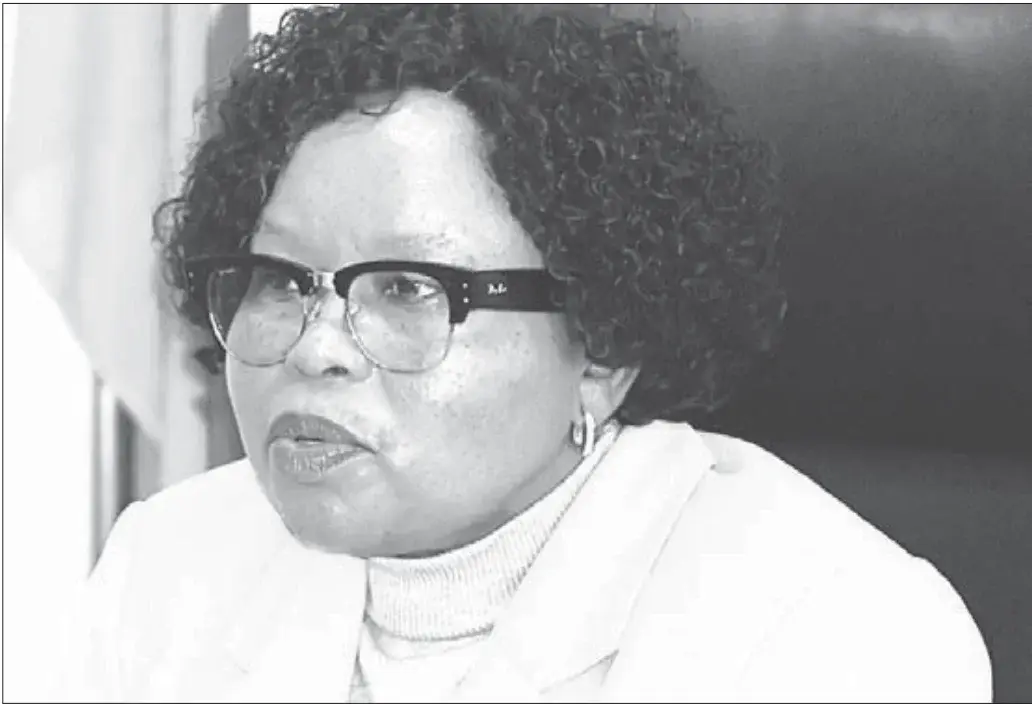
The event was attended by Minister of Tourism and Environmental Affairs Jane Mkhonta-Simelane, who represented Deputy Prime Minister Thulisile Dladla. Representatives from disability organisations and SAPA members were also in attendence.
Gama said misinformation about albinism remains widespread, contributing to stigma, exclusion and in some cases, violent attacks. He noted that harmful beliefs—such as the idea that people with albinism do not die but disappear, or that their body parts bring luck—continue to place them at risk of ritual killings.
He cited recent incidents in the Southern African Development Community (SADC) region, including the killing of children with albinism in Madagascar and another case in Malawi involving a relative. He cited cases in the country, recalling the 2010 murders of two children in the Shiselweni region and a another in the Hhohho region in 2016, which he said demonstrate that the threat is not theoretical but real.
“These are not was olated incidents. They reflect a deeper problem driven by superstition and silence. In many cases, disappearances are not properly reported due to cultural misconceptions,” Gama said.
Beyond safety concerns, he highlighted systemic discrimination affecting access to opportunities, including financial assistance. He said persons with albinism were often met with skepticism when seeking support, limiting their ability to improve their livelihoods.
Gama welcomed government efforts to improve living conditions for persons with albinism, including a housing initiative announced by the deputy prime minister’s office. Under the programme, five houses were allocated, with two already completed and handed over at Mhlangatane and Mayiwane, while three remain under construction.
He further called for SPF 50+ sunscreen to be included on the national essential medicines list, arguing that it should be provided free due to the health risks associated with prolonged sun exposure.
SAPA also urged stronger regional and continental legal protections, calling on governments and the African Union to intensify efforts to prevent ritual killings and discrimination. Gama appealed to communities, traditional leaders and the media to actively challenge harmful beliefs and ensure responsible reporting.
He stressed that awareness must extend beyond annual commemorations.
“This issue requires consistent attention, education and action throughout the year if we are to achieve meaningful change,” he said. Gama concluded by calling for sustained advocacy and stronger institutional support to ensure the safety, dignity and full inclusion of persons with albinism in society.
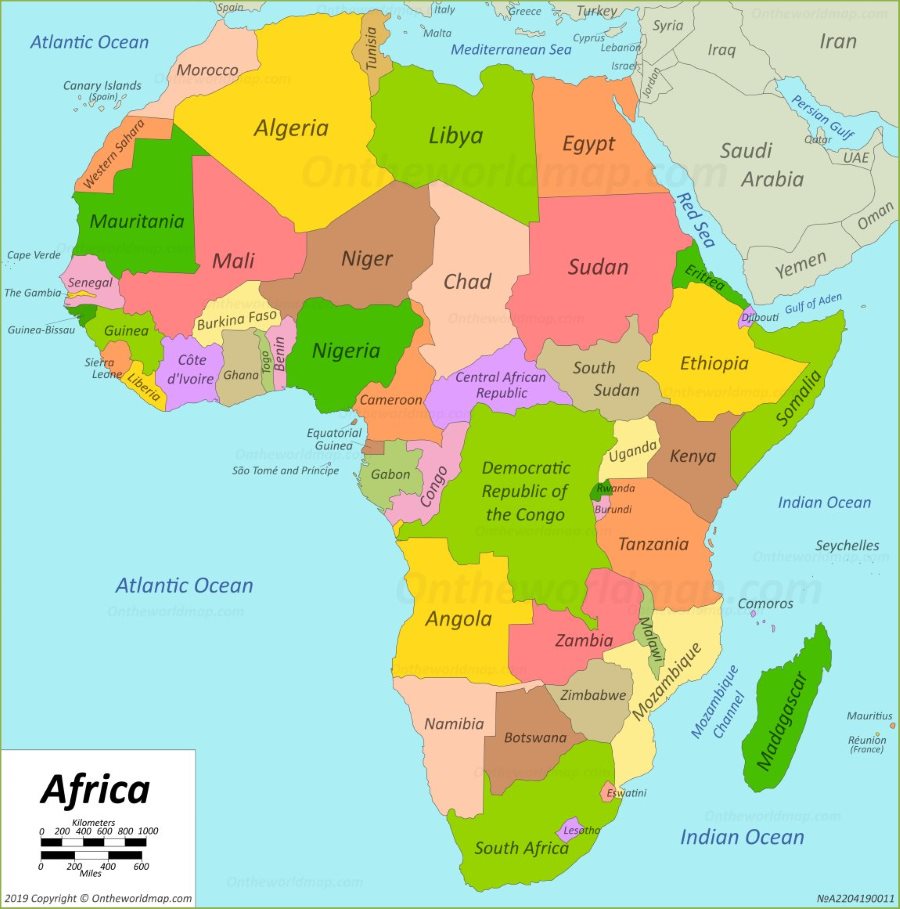
Unfortunately, Nigeria is not the only African country where persistent rumours and even hard evidence point to ambitious politicians who have resorted to ritual practices, including ritual murder, in order to achieve their goal of being elected. I have highlighted this on this site on several occasions referring to countries in West, Central and Southern Africa. See e.g. the following posts with respect to Eswatini (ex-Swaziland), Gabon, Liberia, Sierra Leone, Zambia.
In this light the warning of te President of the Pentecostal Fellowship of Nigeria, Bischop Wale One, must be understood. I wish to underline that his warning is not to be misunderstood: not every politician, elected or not yet elected, ambitious or not, in Nigeria or another African country believes in supernatural powers. Certainly, the majority doesn’t. But we also have to face a grim realty and that is the importance of bishop Oke’s statement. We cannot bury our heads in the sand regarding what is actually happening. It is precisely the involvement of certain politicians that stands in the way of a robust and effective crackdown on the phenomenon of ritual killings in a number of African countries. (webmaster FVDK)
2027: PFN President Bishop Wale Oke warns politicians against ritual killings
The President of the Pentecostal Fellowship of Nigeria, Bishop Wale Oke
Published: March 18, 2026 By: Wale Akinselure – Punch, Nigeria
The President of the Pentecostal Fellowship of Nigeria, Bishop Wale Oke, has warned that God’s judgment awaits politicians who resort to ritual killings and other violent means to gain power ahead of the 2027 general elections.
Oke, who is also the Prelate of the Calvary Grace International College of Bishops, spoke on Tuesday in Lagos while delivering a state-of-the-nation address to herald a special ministers’ empowerment conference organised by the college.
The cleric condemned what he described as “blood politics,” cautioning politicians against violence, killings, and fetish practices in their quest for power.
He said, “There is no position that you’re going for that is worthy of the blood of any Nigerian.
“There should be no politics of murder and killing. Present your case to the Nigerian populace, argue your case, promise whatever you want to promise, but don’t promise lies.”
He warned that any politician engaging in ritual practices or killings to win elections would face divine consequences.
“The age of going for fetish rituals is gone. We are praying for Nigeria that God will judge any politician that will resort to fetish things, ritual killings and murder to come to power,” Oke said.
Addressing voters, the cleric urged Nigerians, particularly youths, not to sell their votes during elections.
“Don’t sell your vote; your vote represents your political power and your future security. If you sell your vote, you are selling your future,” he said, adding that vote-buying would end if voters refused to participate in it.
Oke also called on the Independent National Electoral Commission to conduct free and fair elections without interference.
“Let INEC do its job as provided in the constitution. Let all parties go to the polls to test their popularity, and whoever emerges should be accepted,” he said.
The cleric further advocated a review of Nigeria’s constitution, describing it as flawed and not reflective of the country’s diversity.
“The Constitution was imposed on us and is unfair. It does not represent all Nigerians. If religion must be included, then all religions should be represented equally. Otherwise, let religion be a private matter,” he said.
Oke also alleged that killings in parts of the country had religious undertones and called for urgent action to address insecurity.
“If there is no Christian genocide, what is happening in Benue, Taraba, Borno and Plateau states?” he queried.
He urged Christians to actively participate in politics rather than remain on the sidelines.
“If we keep saying politics is dirty and refuse to get involved, then we are allowing it to remain dirty. Let us get involved from the grassroots and change the narrative,” he said.
He urged the Federal Government to cooperate with the United States to decisively deal with terrorists.
Recognising poverty as a problem, Oke urged the federal and state governments to heavily invest in education and the creation of jobs for the huge population of youths.
Rather than doling out bags of rice as empowerment, Oke urged the Federal Government to create jobs through the establishment of cottage industries in each of the 774 local government areas and the engagement of 1,000 people each.
He also called for support for youth entrepreneurs and farmers, while calling for massive investment in agriculture to ensure food security.
“We should no longer import a lot of things; we should be producing what we need. The economy should drive innovation as the distribution of rice is not a permanent solution to poverty,” Oke said.
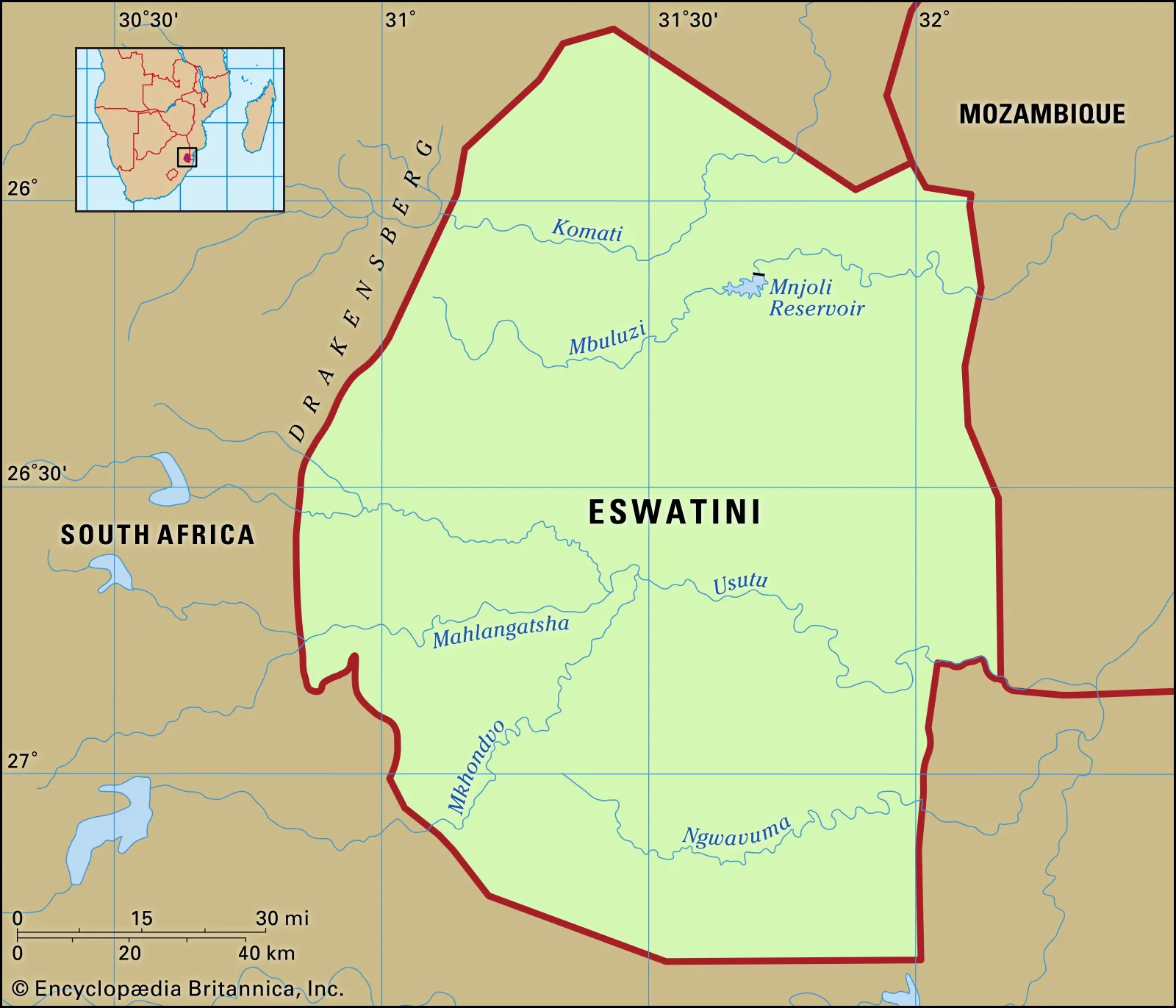
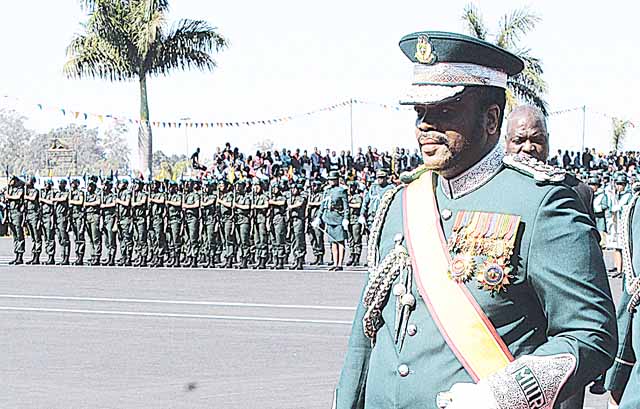
King Mswati III (born in 1968, crowned king in 1986) is Africa’s last absolute monarch. He rules with his mother, Queen Nfombi. King Mswati III renamed his country then called Swaziland to Eswatini in 2018.
King Mswati III introduced a number of measures and changes which brought some relief to the country that had been ruled by his father, King Sobhuza II, with an iron fist since independence from the British in 1968. Officially, Sobhuza II was King of Swaziland for 82 years and 254 days, the longest verifiable reign of any monarch in recorded history.
King Mwsati’s s rule is not undisputed. In fact, his lifestyle and human rights violations have been criticized at several occasions. However, as the story below tells, he showed positive leadership – ‘leadership by example’ – in advocating the rights of people with albinism.
At various occasions I have drawn attention to the precarious position of people living with albinism in Africa. They are discriminated, bullied, attacked, and sometimes killed – murdered, as some people believe that their body parts can bring luck, wealth, prestige or power.
For this reason I wish to commend King Mswati III and the Queen mother for their precious example and I hope that the example given by Their Majesties will not only be followed by the people of Eswatini but also in neighboring g countries where the position of people with albinism is also threatened by prejudice an superstition. (webmaster FVDK)
King Mswati III
Cultural leadership confronts albinism discrimination head-on
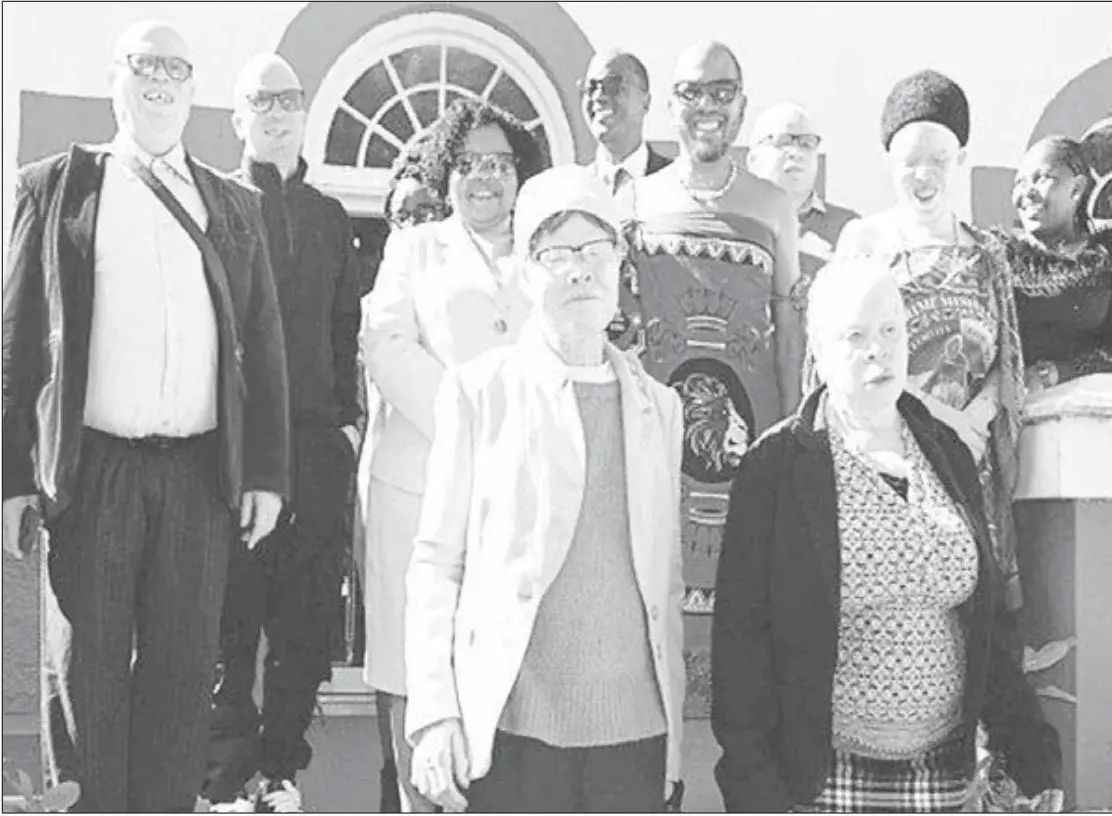
People living with albinism together with those living with disabilities at the recently ended Incwala Ceremony. Eswatini customs and culture prohibited such communities of people from getting closer or inside royal residences. His Majesty King Mswati III has since changed this long-held custom to accommodate people living with albinism and disabilities (Pic: Sibusiso Shange)
Published: February 18, 2026 By: Khaya Simelane – Times of Eswatini
MBABANE – In Eswatini cultural visibility is becoming protection for people with albinism and a tool to dismantle stigmatisation.
A new breath of fresh air is changing and shaping the narrative around a community long confined to the periphery and deep fear.
For decades, thousands of Africans born with albinism have mastered the art of invisibility. Whether at communities, schools, sports and everywhere, they have, out of their will, been forced to remain invisible, even if against their will.
From a young age, they have been made to feel different. With many labels around them prevalent across African communities, none has driven them to remain invisible than the one recently introduced in which they are labelled ‘ma-Millions’.
This labelling, though sometimes uttered jokingly, relates to the widespread belief that the body parts of people living with albinism are ‘powerful’ to make one a millionaire.
According to Menzi Sukati, founder of the Albinism Society of Eswatini (ASESWA), the prevalent belief that people with their condition are sources of wealth is exactly what perpetuates their killing.
As a result, he said from a tender age, most commonly in the rural villages and crowded locations, they have grown up calculating risks before stepping outside, either to play or hang out with their peers.
Night travelling is strictly discouraged while during elections, many of them keep a low profile, he added.
This stems from an entrenched myth across the continent that has portrayed people with albinism as mystical beings whose body parts can generate wealth, political power or supernatural protection.
Those myths have fuelled ritual attacks, mutilations and killings that have left families traumatised and communities fractured.
King’s counter-image efforts
At last year’s Umhlanga Ceremony and again during the recently concluded Incwala, the country’s most sacred cultural ceremony, people living with albinism were visibly invited and welcomed.
According to Senior Archivist and Cultural Anthropologist Lethumusa Simelane, King Mswati III has once again stood in the moment of time and embodied inclusivity and Ubuntu.
Simelane stated that what the Monarch has done can not only be limited to only fighting stigmatisation against people with albinism.
Instead, the King has moved beyond the acceptable norm to harmoniously review and relax some of the country’s cultural traditional practices governing ceremonies and royal residences (tigodlo).
“When talking about what the King has done, we must never forget that growing up, we knew that certain people were not allowed closer or inside royal residences,” said the anthropologist.
He explained that culturally, such beliefs had nothing to do with the person’s natural being, however more with the foundational systems governing African monarchies.
“Therefore, the King, cognisant of the changing times reached the a difficult decision by appealing to the custodians of our culture and sought their permission to relax some of these practices. The King realised that he cannot be a King to some, while others are pushed away from him,” said Simelane.
The renowned Eswatini historian likened the King to the Biblical Christ, who, despite Jewish law and beliefs decided to defy and dine with people with leprosy.
The historian underscored that when respected leaders, like the King publicly contradict myths; they shift social norms more effectively than legislation alone.
In his remarks, he confidently stressed that the King had once again become the symbol of Ubuntu and a true father, sending a strong message that there was no place for uncultured beliefs in the kingdom.
Transformative
Simelane added that in a region where visibility can invite danger, the sight of them standing confidently at the centre of national tradition carried unusual weight.
He said for a community accustomed to the margins, standing at the heart of culture can be transformative. Against this continental backdrop, he said the kingdom’s recent cultural inclusion offers a sharply contrasting image.
Incwala is not just a festival in the casual sense. It is a deeply spiritual ceremony (prayer) centred on kingship, renewal and national unity.
Participation, therefore, signals belonging to the moral and cultural fabric of the nation.
In many African societies, stigma is often justified in the language of tradition. When harmful myths are rooted in culture, dismantling them requires trusted cultural authority.
In Eswatini, the monarchy remains one of the most influential institutions across rural chiefdoms and community structures.
The images of people with albinism participating in the recently ended Incwala Ceremony deserved to be applauded, and for the King to be formally appreciated, according to Simelane.
In a continent where some children with albinism have been relocated to boarding schools for protection, being publicly welcomed into a royal ceremony reframes belonging.
Myth
Albinism is a rare, genetically inherited condition characterised by little or no production of melanin in the skin, hair and eyes. It is non-contagious.
In sub-Saharan Africa, an estimated one in 4 000 people are born with the condition, although prevalence varies by country.
The condition brings medical vulnerability, particularly to skin cancer and visual impairment in equatorial climates.
To every observer, the King has outdone the Tanzanian Government and instead of the courts he used culture to dismantle stereotypes around albinism.
According to an article by researcher Charlotte Baker published in The Conversation, human rights violations against people with albinism in Tanzania have included discrimination, verbal abuse, exclusion from education and health services, as well as killings, abductions, mutilations and even grave exhumations to obtain body parts for sale.
The violence has prompted Tanzanian and international civil rights groups to file a case before the African Court on Human and Peoples’ Rights against the Government of Tanzania, arguing that it had failed to protect this minority.
The court found that, although some steps had been taken, the state violated the right to life by failing to protect them as required under Article 4 of the African Charter.
It also ruled that Tanzania breached the right to non-discrimination by not doing enough to combat myths and stereotypes.
The ruling ordered nationwide awareness campaigns for at least two years, amendments to the 1928 Witchcraft Act to criminalise attacks, implementation of a national action plan, improved access to health services including sunscreen and eye care, educational support, and the establishment of a compensation fund for victims.
Baker notes that since 2007 more than 700 attacks and killings across 28 countries have been reported to the Canadian organisation Under the Same Sun, although many cases go unrecorded.
In Tanzania alone, there have been 209 reported attacks since 2007.These numbers tell a story of fear that extends far beyond one country.
Government driving advocacy
Meanwhile, the Eswatini Government has intensified its efforts towards promoting the rights, welfare and inclusion of people with albinism.
On February 13, 2026, the Deputy Prime Minister (DPM) Senator Thuli Dladla received a donation of sunscreen lotions and protective lip balms donated by the kingdom’s TV station to people with albinism.
The DPM, when accepting the donations extended her appreciation to the Monarch for leading the way, noting that it was pleasing to see organisations and entities across the country take leaf and follow in the footsteps of the King and Queen Mother.
“The gesture by Their Majesties has affirmed to all and sundry that people with albinism are human too. Even the doubting Thomas’s that were pushing them away from Their Majesties and the country’s cultural practices have been silenced,” said the DPM.
Dladla mentioned that by extending the cultural space to people with albinism, the Monarch did more than host guests. It publicly affirmed that they are part of the kingdom’s identity.
According to Dladla, Simelane and Sukati, the King has done more than spearhead a law meant to protect, promotes and embrace people with albinism, as well as their rights.
Advocacy efforts have included sunscreen donations and awareness campaigns, recognising that ultraviolet exposure poses a serious health risk.
Without melanin, skin is highly susceptible to damage and untreated skin cancer can drastically reduce life expectancy.
The DPM further stressed that indeed inclusion of people with albinism at high-profile events must translate into action and policy.
A senior traditionalist when contacted stated that when the highest traditional authority in a country affirms the dignity of people with albinism, it sends a message to rural homesteads and urban neighbourhoods alike.
Commenting anonymously as no formal appreciation has been extended to Their Majesties as per culture; the traditionalist joyfully appreciated the inclusion of the albinism community in cultural activities in order to fight the stigma around them.
The well-known traditionalist mentioned that for a child born with albinism in the country today, the image of participation in Incwala or Umhlanga offered a counter-narrative to fear.
“Instead of being told to hide, that child can see proof of belonging,” he said.
Legal obligation
According to the Office of the United Nations High Commissioner for Human Rights (OHCHR), the United Nations (UN) body mandated to promote and protect human rights globally, people with albinism continue to face widespread discrimination rooted in ignorance, superstition and harmful myths.
The OHCHR states that persons with albinism are often denied equal access to healthcare, education and legal protection. In some regions, they are reportedly subjected to extreme violence fuelled by false beliefs about their condition.
It emphasises that governments have a legal obligation to protect them, prosecute perpetrators of attacks and implement comprehensive strategies to eliminate stigma and discrimination.
In recognition of these challenges, the UN General Assembly proclaimed June 13, as International Albinism Awareness Day in 2014, observed annually since 2015.
The day seeks to raise global awareness about albinism, combat myths and misconceptions while further promoting the rights, dignity and inclusion of persons with the condition.
Through this international observance, the UN calls on states and communities to shift from silence and superstition to protection, awareness and meaningful inclusion reinforcing the principle that people with albinism are human beings entitled to life, equality and full participation in society.
Meanwhile, the African Union (AU) has adopted a strong human-rights-based approach to combat discrimination and violence against persons with albinism across the continent.
Through its Regional Action Plan on Albinism in Africa (2021–2031), formally adopted by the AU Executive Council in 2019, the continental body seeks to end attacks and other human rights violations targeting persons with albinism.
The framework focuses on four key pillars, namely; preventing attacks, protecting victims, ensuring accountability for perpetrators and promoting equality and non-discrimination.
The AU recognises albinism as a disability and situates protection measures within its broader disability rights framework, including the Protocol to the African Charter on Human and Peoples’ Rights on the Rights of Persons with Disabilities in Africa.
It also highlights the heightened vulnerability of women and children, calling on member states to implement specific protective measures.
In coordination with the United Nations and civil society organisations, the AU urges African governments to adopt national action plans, strengthen legal systems and intensify public awareness campaigns, particularly around International Albinism Awareness Day on June 13, to confront the root causes of stigma and violence.
Together, these continental and global efforts underscore a growing commitment to replace myth and marginalisation with protection, dignity and full inclusion.
Complacency
Still, some scholars across the continent have warned against romanticising the moment. Across Africa, attacks have sometimes declined only to resurface during periods of economic hardship or political contestation.
Election cycles in certain countries have historically coincided with spikes in ritual violence fuelled by rumours that charms made from body parts can secure victory. (Italics and bold letter-type added by the webmaster FVDK).
Structural inequality, unemployment and desperation create fertile ground for exploitative myths.
“The real test is whether people with albinism feel secure in remote communities, whether police respond swiftly to threats and whether courts prosecute offenders consistently,” noted one scholar.
The African Court’s ruling against Tanzania has set a legal precedent across the continent, signalling that states have enforceable obligations to protect persons with albinism. It reinforces that attacks rooted in superstition are not cultural nuances but human rights violations.
At the same time, Eswatini’s cultural inclusion demonstrates that tradition can be mobilised in defence of dignity.
Warning: the following post contains graphic details which may upset readers.
Unbelievable. It is incredible. Within a week I receive reports of ritual killings in Eswatini, Nigeria (Enugu and Kwara states), South Africa, Uganda and Zimbabwe. I fear the reported cases are only the tip of the iceberg as many ritual murders – called muthi murders in Southern Africa, and money rituals in Nigeria and Ghana – go unnoticed. People simply disappear in many African states and they are never heard from again. ‘Dissolved in thin air.’
In Zimbabwe, a baby boy was found dead, murdered. The body of the eight weeks old victim was found with parts missing: his nose and right cheek were ripped off. Police are investigating the murder as a suspected ritual killing.
Msombuluko Mantimakhulu and two teenagers who are allegedly his cousins were arrested by police and soldiers and accused of involvement in the disappearance of Mantimakhulu’s sster-in-law. Relatives accused Mantimakhulu of ritually murdering his sister-in-law, using her body parts for ‘muti’ purposes. It’s election time in Swaziland, hence people fear ‘muti murders’ by ambitious politicians who sometimes hire other people to do the dirty work.
After all, recently, “(…) his Majesty the King (…)warned against ritual killings. He said now that it was elections time, there were people who believed that if they used human body parts, they would be successful. The King warned that such should stop and gave an example that it appeared the people who performed rituals sometimes targeted people with albinism people. He said the ritual killers believed that a person who had albinism would bring luck. His Majesty then said this was not true and that such should not be practiced.”
Msombuluko Mantimakhulu and the two teenagers were heavily beaten and tortured. The soldiers tried to extract a confession. It all happened last month. It’s a frightening story about the abuse of power by law enforcement officiers. It turned out later, that Mantimakhulu’s sister-in-law was alive and had gone to stay with her relatives.
It is not known what happened to those who were responsible for torturing Msombuluko Mantimakhulu and the two teenagers. The rule of law in the kingdom of King Mswati III leaves a lot to be desired…. (FVDK)
Swaziland / Eswatini: Soldiers torture man accused of ritual murder
Published: August 5, 2023 By: Joseph Zulu – Times of Swaziland
MAFUCULA – When his sister-in-law vanished, Msombuluko Mantimakhulu had no idea that her disappearance would leave him with injuries all over his body.
Mantimakhulu, who works in South Africa (SA), had returned to his home area around Mafucula, but it is alleged that his sister-in-law then disappeared. It was gathered that her in-laws did not know where she had gone, but feared that she had been murdered. He said some of the relatives were of the view that because it was general elections time, maybe she had been kidnapped and then killed for ritual purposes. They allegedly accused him of killing his sister-in-law for body parts. Mantimakhulu said some of the family members were of the view that he was involved in her disappearance. He said he did not have a reason to kill his sister-in-law, because they were close and that he sometimes even gave her some money.
Trouble
According to Mantimakhulu, trouble started when the matter was first reported to the local community police that a woman was missing. He said when the community police were called, they picked up two teenagers who are said to be Mantimakhulu’s cousins. Mantimakhulu alleged the community police members assaulted the two teenagers, so as to force a confession from them. He alleged they beat the children then also handcuffed them to keep them from running away. “It is not right to handcuff children,” he said. The children are alleged to have been tortured for over an hour, demanding that they reveal who killed the woman.
When Mantimakhulu was asked why the teenagers were accused of killing the woman, he said he did not understand why but that he was the target. He said they wanted to force the children to confess that he was the one who had killed his sister-in-law. He said as if the assault was not enough, the men allegedly took the children to a nearby pond where they were assaulted. Mantimakhulu said the community police members then allegedly dipped the children’s into the pond and threatened that they would drown them.
Threatened
Mantimakhulu alleged that the children’s heads were held under the water and threatened that they would be drowned if they did not reveal who killed the woman who was missing. He purported that after realising that they were not getting any answers from the children being assaulted, the police from Tshaneni Police Post were called in. He said police officers also arrived to investigate the disappearance of his sister-in-law, whom at the time, it was alleged she had been murdered.
He alleged that after he was suspected of having killed his sister- in-law, the matter was then reported to the police. Mantimakhulu said police officers from Tshaneni were called, and that they went to interview him over the allegedly missing woman. However, unlike the community police members, the Royal Eswatini Police Service (REPS) officers are said to have refused to arrest Mantimakhulu and then left, leaving him at the homestead in Mafucula, around a place known as Duma.
Arresting
Mantimakhulu then said after some of the family members noticed that the police officers had left without arresting him, they then decided to call some soldiers who are said to be based around Maphiveni near Simunye. It is alleged that about four soldiers then pounced on Mantimakhulu on July 27, 2023, at around noon. Mantimakhulu said when the soldiers arrived, he told them that the police officers had already spoken to him and that they left him behind because they did not believe that he had murdered his sister-in-law.
However, the soldiers are said to have responded that they were not like police officers. He said the soldiers told him that police officers do not want to work. Mantimakhulu said before they began assaulting him, they told him that by the time they left, they would make sure that he revealed how he allegedly killed his sister-in-law. “I told them I am not a killer, but they did not want to hear my side of the story,” said Mantimakhulu. Mantimakhulu said the soldiers then began to assault him and that they hit him all over his body. He alleged that he was kicked, and then forced to confess that he had killed his sister-in-law. “I refused to agree to something I did not do,” he said. He mentioned that he was punched, kicked with boots and blunt objects, but he could not tell what they were using to assault him.
He said he was then taken to a nearby lake, where he was allegedly submerged into the water so that he did not come up, out of the water. “I felt like I was drowning,” he said. He said one soldier who pressed against his body with foot while another would press against his head while being held under the water. Mantimakhulu said the soldiers continued assaulting him for several hours. He said no matter how many times he cried for them to stop, they continued assaulting him until they stopped when they realised that he had not killed anyone.
Assault
He also revealed that before they began to assault him, they warned some of the nearby residents against taking videos of the alleged assault. antimakhulu said they used vulgar language, as they assaulted him, demanding that he should reveal what he did to his sister-in-law. It turned out later, that the woman was alive and had gone to stay with her relatives. Mantimakhulu said his sister-in-law had left without telling anyone because there were some disputes at their home. He was also asked why some of the family members suspected that he had killed her. He said he did not know the reason but that it could be that they found some fencing material belonging to her in his house. He said maybe with this information, they could have concluded that he had killed her and taken some of her fencing material.
“I have no reason to kill the woman,” he said. Sipho Mngomezulu, an uncle to Mantimakhulu said he was shocked at the manner in which his nephew was treated. He alleged the soldiers beat him as if they were killing him. Mngomezulu also alleged that the matter was reported to the police but that they had not taken any action to arrest the soldiers. Meanwhile, Chief Police Information and Communications Officer Superintendent Phindile Vilakati, speaking through Inspector Mazwi Ndzimandze said the assault had not been reported to the police at Tshaneni. Also, Ndzimandze said there was also no case of a woman reported to have gone missing, but was later found alive.
Mantimakhulu, when told that the police said they were not aware of his assault, said this was not true. He said instead they allegedly told him they would not be able to arrest the soldiers. Mantimakhulu said the police told him that soldiers always protected each other and they would not handover their colleagues to be arrested by the police. Lieutenant Tengetile Khumalo, the Public Relations Officer for the Umbutfo Eswatini Defence Force (UEDF) was called regarding the alleged assault by the soldiers who are based at the Maphiveni unction, leading to Tshanenini, Simunye or Lomahahsa. She had not responded to the questions sent to her at the time of compiling the report.
Khumalo was also asked if there was any means members of the public in such circumstances could report if they were not treated fairly. Noteworthy, Mantimakhulu insisted that both matters had been reported to the police and that officers from Tshaneni Police Station even interviewed him about his sister-in-law when it had been alleged that she was nowhere to be found, that she may have been killed.
Meanwhile, his Majesty the King, in his speech during the Correctional Day and Pass-out Parade warned against ritual killings. He said now that it was elections time, there were people who believed that if they used human body parts, they would be successful. The King warned that such should stop and gave an example that it appeared the people who performed rituals sometimes targeted people with albinism people. He said the ritual killers believed that a person who had albinism would bring luck. His Majesty then said this was not true and that such should not be practiced.
King Mswati III has warned the nation against ritual murders committed by those who hope to be elected into parliament. He added that the disappearance of the elderly, children and people with albinism must stop. King Mswati III said this during the 15th Correctional Services Day.
Swaziland / eSwatini: King Mswati III warns against ritual murders
Published: August 6, 2023 By: Sifiso Nhlabatsi – Eswatini Observer
His Majesty King Mswati III has warned the nation against ritual murders committed by those who hope to be elected into parliament.
He said now that elections were underway, the disappearance of the elderly children and people with albinism must stop, as there were people who kill others with the hope that they would have luck in winning political positions.
His Majesty said this during the 15th Correctional Services Day, which also marked the passing-out parade of 372 trainees.
He warned that those committing such atrocities would face the full wrath of the law and end up being guests of the correctional services.
“People cannot get into parliament by killing others,” His Majesty stated. He urged the public to make sure that they work with law enforcement agencies to curb this practice. He added that there was a need to address this cancer because it affected the core fabric of society. “We must live in harmony with each other.
“The violence against women and children is a cause for concern. We implore the correctional services to fully rehabilitate such offenders to reduce the chances of them relapsing into the same behaviour of crime and this goes well with today’s theme,” His Majesty stated.
When addressing the issue of inmates and elections, His Majesty said given that offenders were an integral part of society, they will return to their respective communities after completing their sentences.
He said it was in this vein that offenders were also allowed to register for the national elections, so that they can exercise their democratic right to vote for their preferred candidates to represent them in parliament.
The King said rehabilitation of offenders was a societal responsibility where the nation and the Correctional Services were expected to work hand in hand with society in ensuring that recidivism was eradicated completely.
“This process will ensure the safety of the public from criminal elements and also give an opportunity to offenders to build their characters and correct their criminal behaviour to regain the trust of their communities,” the King stated.
Stay true to oath, do not be misled – King orders
The new recruits who passed-out yesterday have been strongly warned by His Majesty King Mswati III to maintain integrity and core values as they go about their duties and refrain from behaviour that will put the Correctional services badge into disrepute.
His Majesty said the theme for the day was ‘ensuring a corrections dispensation responsive to inherent emerging socio-security challenges’.
He said to live up to this theme, it was important that the Correctional Services personnel were well equipped to respond to the day-to-day challenges.
“There is more that you must learn from officers on the ground and ahead of you, who have acquired experience over the years,” His Majesty stated.
He said the nation noted and commended these officers for their selfless contribution and patriotic service whenever they were called upon to provide services as part of the security cluster in the country. He said government was also impressed with the commitment and dedication they always displayed when assigned to national duties.
“Correctional officers, your contribution in maintaining peace and stability in the country is appreciated,” he said.
He said the oath of service, discipline and loyalty should be the officers’ driving force. He said they needed to make good choices about life and avoid any misleading voices full of deceit. The officers were warned that they should be guided by the oath of service throughout their career, whether on-duty or them 24/7.
He said professionalism and integrity were the virtues of a good officer, which must be maintained at all times to improve the image of the department and the public perception about the officers’ work. “I commend the Correctional Services for extending various services and support to the nation.
We have heard that Emaswati are receiving professional health services from your health facilities,” His Majesty stated. He said this gesture was highly appreciated because it was in line with the United Nations Sustainable Development Goals, which called for healthcare services to be in close proximity to the people.
He said such help was essential because a healthy nation is highly productive. “Furthermore, many Emaswati have benefited immensely from the various trades that you offer to the members of the public,” he said.
Referring to my posting yesterday, focusing on King Mswati’s (prudent) condemnation of the increase in ritualistic murders in his kingdom where elections will be held later this year, I am now adding similar remarks made by Deputy National Commissioner of Police, Shadrack Simelane, during a Crime Prevention campaign held in Hlatikulu town last Wednesday.
It is interesting to note that the Deputy National Commissioner condemned the ritual murders usually associated with the elections due to ill-conceived beliefs and practices (among other issues). (FVDK).
Swaziland/ eSwatini – King Mswat III
Nation urged te respect human life – Deputy National Commissioner of Police Shadrack Simelane
Published: August 6, 2023 By: Swaziland Observer
Emaswati seem to have lost the sanctity and respect of human life as more lives continue to be lost through acts of violence.
These were sentiments of Deputy National Commissioner – Shadrack Simelane, during a Crime Prevention campaign held in Hlatikulu town last Wednesday. Simelane who was representing the national commissioner of police, said crimes like murder were on the rise and it is a cause for concern.
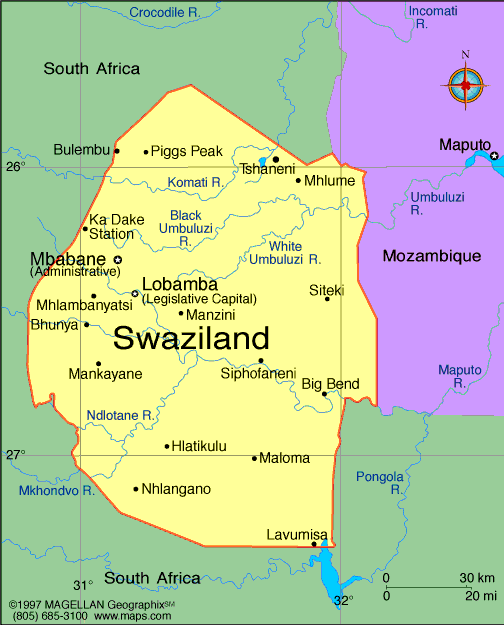
The town off Hlatikulu is located in the south of Swaziland – eSwatini
He noted that Hlatikulu was a small area and statistics of violent crimes such as murder were alarming. Statistics indicate that between January 2022 and June 2023 at least 17 cases of murder have been recorded while 18 attempted murder incidents were investigated.
Simelane said, “It should be our collective resolve to strive for tolerance and confidence in the power of dialogue whenever a dispute arises.” He cautioned against the tendency of taking the law into one’s hands as it was not a solution but, only served as a path towards self-destruction and irreparable harm. He condemned the issue of ritual murders usually associated with the elections due to ill-conceived beliefs and practices.
Disorder The deputy national commissioner stated that crime, road carnage and social disorder problems are a threat in the country as they continue causing fear in the community. It does not only affect the quality of life among the nation, but also threatens the success and sustainability of socio-economic environment in the country.
He further stated that the police service has noted with concern an upward trend in certain crimes around Hlatikulu and surrounding areas which are posing a challenge and causing sleepless nights to the organisation.
Simelane noted that gender-based violence crimes continue to be a thorny issue as it reported with high frequency, both in urban and rural communities. He urged members of cthe public to report such criminal activity as it has severe implications on the survivors.
Between January last year and June 2023, in Hlatikulu and surrounding areas at least 82 rape cases were reported to the police. He said in such cases community and family participation is critical as the police cannot make headway without their support. He discouraged the notion of ‘tibi tendlu’ as this was a breeding ground for GBV cases.
The deputy national commissioner also expressed concern on the number of accidents that have occurred along the Yithi Abantu Highway. He stated that the number of lives lost in road accidents was worrying.
Road safety stakeholders were encouraged to join hands in finding ways that will help in the reduction and elimination of these accidents. Statistics indicate that from January 2022 to June 2023, 15 fatalities have occurred along the kaMdabula and Mehlwabovu stretch, while there were 30 serious accidents reported within the same period.
Statistics indicate that a high number of victims in these accidents are pedestrians. He said it was important that all road users be extra cautions along the problematic areas of this road. He urged all road users to show respect to one another and give each other equal opportunities on the road to avoid accidents.
“Road users are reminded to always respect rules of the road and they need to apply safety measures all times to avoid being victims of accidents” said Simelane.
The deputy national commissioner further encouraged community members to establish neighbourhood watch schemes to bring crime under control within the community. He advised all residents to practices honest-citizen habits, which involve desisting from buying/dealing in stolen property but, rather report those selling items suspected to be stolen. He said the police service continued to introduce strategies and interventions that would contribute towards the elimination of crime in the country.
“As the police service we continue to strengthen our mechanisms in a bid to clamp down on crime. This is done through, among other, interventions intensive public sensitisation through our community safety officers, who do public capacitation in communities, schools, faith-based forums including establishing and training community police.”
Simelane commended traditional leaders for the important role that they play in the fight against crime, stating that the police service was always appreciative of the relationship it has with the community. He also expressed the organization’s appreciation to all stakeholders and sponsors who supported the Hlatikulu Crime Prevention event.
It is not the first time that election campaigns are accompanied by a rising number of ritual murders – or ‘muti murders’, as they are called in Southern Africa. Already in a previous posting, on June 19, 2018 I drew attention to the link between elections and ritual killings in this country.
Swaziland (eSwatini) has a long history of ritual murders. In the recent past, in 2003, King Mswati III urged Swaziland’s politicians not to engage in ritual killings to boost their chances in the general elections later that year. Five years later then Prime Minister Absalom Themba Dlamini warned aspiring members of parliament against committing ritual murders to win the vote. In my 2018 posting I revealed that nothing had changed for the better. For briefness sake I further refer to my 2018 posting.
When will it end? What’s the use of repeated warnings? Isn’t it a crazy situation, we’re in the third millennium, and superstition is still rife in a country where democratic elections are being organized.
However, the democratic nature of elections in eSwatini / Swaziland is not what one would expect. Past elections in the kingdom where king Mswati III rules as an absolute monarch, have been characterized by a lack of transparency whereas according to Wikipedia the full results of both the 2018 and 2013 elections have never been published. (FVDK)
Swaziland: King Mswati III frowns at rising number of ritual murders
Published: July 16, 2023 By: NKOSINGIPHILE MYENI , Swaziland Observer
His Majesty King Mswati III is disheartened by the rising number of cruel deaths occurring around the country.
Most of the deaths were those that seemed to be ritually associated as were described as the worst kind of evil.
This was shared yesterday through the King’s representative, Minister of Housing and Urban Development Prince Simelane, in one of the biggest prayer services in the country.
The national prayer for the national elections brought together church leaders from the three church mother bodies, being the Council of Swaziland Churches, Conference of Churches and the League of Churches.
There were also other Cabinet ministers, church members of different denominations as well as members of the public.
Rendering his speech, the prince shared a story in the Bible in Genesis 6 verse 6 whereby God showed His regret by creating a person and further said that He was grieving in his heart by the evil that people do.
The King said in just a short space of time spine-chilling deaths have been reported whereby he further depicted the cruelty with which the victims died.
He first referred to an incident which occurred early in the month at Nkoneni in the Shiselweni region whereby the body of a 26-year-old woman was found with multiple stab wounds, her eyes gouged out and her throat slit.
“Let me just point out to two or three of these in the country. Such cruelty Maswati! If you wonder why God is regretful about a person, again just recently, a boy went out from his home to buy goats but he was stabbed and killed.
“His throat was cut while he was alive and could feel it. They placed a tyre on him, doused him with petrol and set him alight,” he said while narrating that it was not only the events that were seen on television that showed cruelty.
He added, “The God of love saw the evil in people on earth. He saw that their hearts and thoughts were evil and regretted why he created them.
Tense This may seem like a past tense but God forever regrets why he created a person, why? because of their sins.”
The King went further and referred to another incident. He said in Malkerns just this week, another man was found dead with stab wounds as well as a slit throat.
He did not spare femicide whereby he said such cases were widely reported in the media. According to the United Nations (UN) Women, femicide is a hate crime which is broadly defined as the intentional killing of women or girls because they are female.
“In our nation we read in the newspapers that men kill women with cruelty. They kill their wives, girlfriends and have also started killing their own children. “Therefore, we are here to pray for elections so that they go smoothly,” he said.
Referring to other countries during elections, the King said violence was also rife whereby he said it was common to hear that political parties fight one another to the extent that people are shot and assassinated while others have their houses burnt.
In a recently released document of the African Child Policy Forum (ACPF), Revealing Our Hidden Shame – Addressing Charges of Witchcraft and Ritual Attacks, it is being reported that “hundreds of thousands of children in Africa are believed to be accused every year of what is widely regarded across Africa as a particularly heinous crime: witchcraft”.
In the document, 19 Sub-Sahara African countries are mentioned as the scene of cases of the commission of rural infanticide crimes, attacks against children with disabilities, ritual attacks against children with albinism and cases of violence against children accused of witchcraft.
The 19 SSA countries are scattered across the continent and it is believed – in view of the scarcity of data – that the cases which have come to light only constitute the tip of the iceberg.
It goes without saying that there is no place in the 21st century for these practices and crimes.
Warning: Some readers may find the following story disturbing (webmaster FVDK).
Cult-related attacks against children still occur in at least 19 SSA countries
Published: June 2, 2022 By: LUSA – Macau Business dot com
Angola is the only Portuguese-speaking African country mentioned in a report released on Wednesday by the African Child Policy Forum (ACPF) on the practice of ritual attacks against children.
In the document, “Revealing Our Hidden Shame – Addressing Charges of Witchcraft and Ritual Attacks”, presented Tuesday in a video conference from Addis Ababa, “hundreds of thousands of children in Africa are believed to be accused every year of what is widely regarded across Africa as a particularly heinous crime: witchcraft”.
ACPF executive director Joan Nyanyuki argues in the introduction that “across the African continent, much has been done to improve laws and policies aimed at ending violence against children.”
“Some progress has been made in establishing the systems and structures needed to implement and enforce these policies and laws. These efforts, however, have not sufficiently addressed an important dimension of violence against children: accusations of witchcraft and ritual attacks,” it adds.
In the document, 19 countries are referenced as the scene of cases of the commission of rural infanticide crimes, attacks against children with disabilities, attacks against children with albinism and cases of violence against children accused of witchcraft.
“The report documents, to the extent possible in light of the scarcity of data, how widespread accusations of witchcraft are across the continent (although they vary in extent over time and from place to place). Best estimates suggest that hundreds of thousands of children face accusations every year in Africa and subsequently suffer serious violations.”
Examples given by the document point to reported cases of ritual infanticide in Benin, Burkina Faso, Ethiopia, Ghana, Madagascar and Niger, while Angola, Benin, Burkina Faso, Essuatini, Ethiopia, Ghana, Liberia, Madagascar, Rwanda and Zimbabwe have reported ritual attacks on children with disabilities.
Burundi, Democratic Republic of Congo, Madagascar, Malawi, Mali and Tanzania have reported attacks on children with albinism and in South Africa, Central African Republic, Democratic Republic of Congo, Ethiopia, Liberia, Nigeria and Tanzania cases of violence against children accused of being witches are reported.
“To protect children from the harm of witchcraft accusations, it is not necessary to deny that ‘witchcraft’ exists. Instead, it is important to prioritise child protection while preventing child abuse by addressing the belief that such abuse can somehow protect communities from perceived danger,” the document argues.
The research that resulted in the report found that with the exception of work done by some non-governmental organisations, “few organisations and states in Africa make systematic efforts to prevent such abuse”.
“Few prohibit accusations. Services for children who have suffered harm and violence related to accusations are few and far between. This area needs urgent attention,” argues the report.
Joan Nyanyuki argues “a comprehensive and coordinated effort by state and non-state actors is needed to uncover the nature, magnitude and impact of violence related to accusations of witchcraft and ritual attacks. This approach will ensure that child protection systems, laws and policies are enhanced to adequately address these forms of violence against children.”
Saving Africa’s Witch Children (dated June 22, 2009) reporting on how thousands of small children in Nigeria are branded witches. The web page also contains a large number of news reports and articles (2005-2009) including websites of organizations fighting against these cruel and illegal practices.