Warning: the following article contains graphic details which may upset some readers.
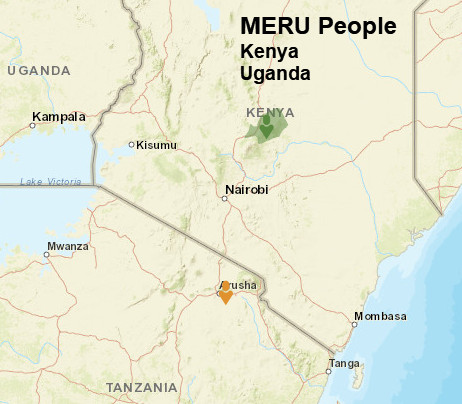
An unexplained murder in Meru County, Kenya. Police said the motive of the murder is yet to be known. The investigators suspect a ritual in the murder.
The decomposed body of a woman was found on top of Maundu Hills. The victim was Lorna Kinya, 20-years old, who had gone missing since March 8. She was found with dismembered body parts. Her right breast and her eyes were missing. There were indications that she might have been strangulated. For ritual purposes? No one knows. The investigators suspect a ritual in the murder but at the time of publication of the reported crime no arrest had been made.
“Meru is one of the 47 counties of Kenya, (….) The main feature of the county is a famous mountain, Kenya—Batian (5,199 m / 17,057 ft)—the highest and the most prominent point of the Kenya volcano, which is the second-highest mountain in Africa after Kilimanjaro. (…) In total there are 152 named mountains in Meru.” Source: Meru
Lorna Kinya isn’t the first murder victim in the region. Police are investigating eight murder incidents in the Mutuati area alone. Reportedly, the increase in violent crimes including murder is linked to vigilantes which are operating in the area and are being sponsored by some local politicians and businessmen. (FVDK)
Dismembered body of missing woman found in a Meru Hill
Published: March 13, 2024 By: Kahawatungu, Kenya
Detectives are investigating a bizarre murder incident in a village in Meru County after a body of a missing woman was found with dismembered body parts.
Police said the incident was reported in Tigania West’s Amwari area where a decomposed body of a woman was found on top of Maundu Hills.
Herders told police they found the body at the scene on Tuesday before a team visited there.
It was later established that the body was one Lorna Kinya, 20 who had gone missing since March 8 and was lying there.
The police said the woman’s right breast was missing.
Her tongue was also protruding which was a sign of strangulation and the eyes were missing.
Police said the face had injuries at the time the body was discovered.
The body also had pieces of ropes with knots while a pair of blue sandals, a panga stained with blood, a blue jeans and brown jacket were lying at the scene.
The body was moved to the mortuary pending autopsy and probe.
Police said no arrest has been made and the motive of the murder is yet to be known.
The investigators suspect a ritual in the murder.
Police say they have noticed increased killings in the region and which are linked to vigilantes operating there.
The groups are being sponsored by some local politicians and businessmen and have been linked to a number of murder incidents.
For instance, police are investigating eight murder incidents in Mutuati area alone.
The incidents have been linked to the gangs operating in the area with the blessings of some politicians.
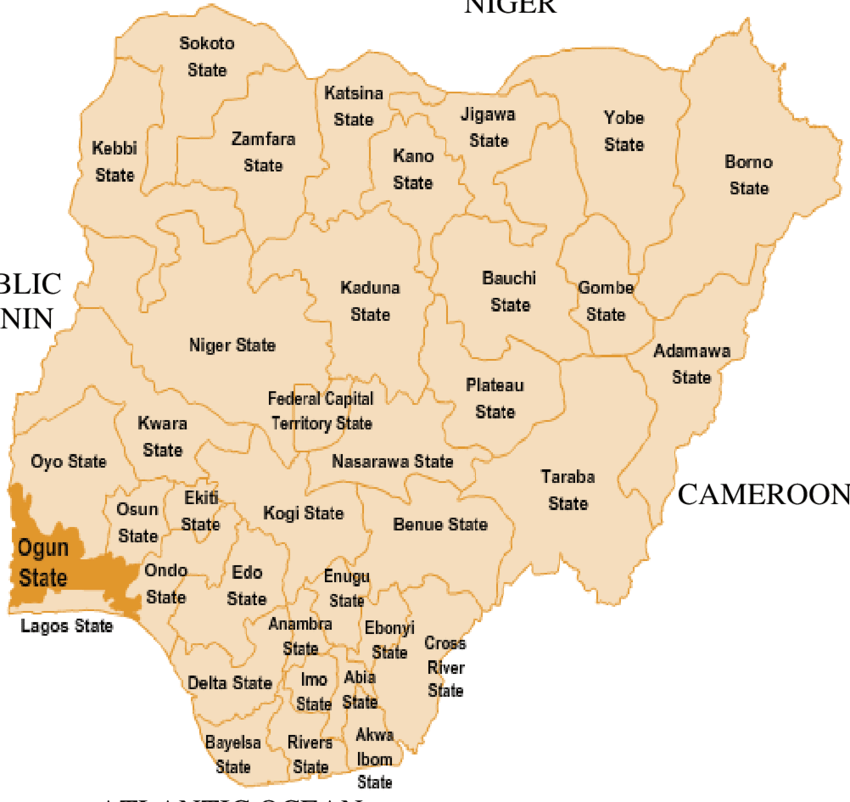
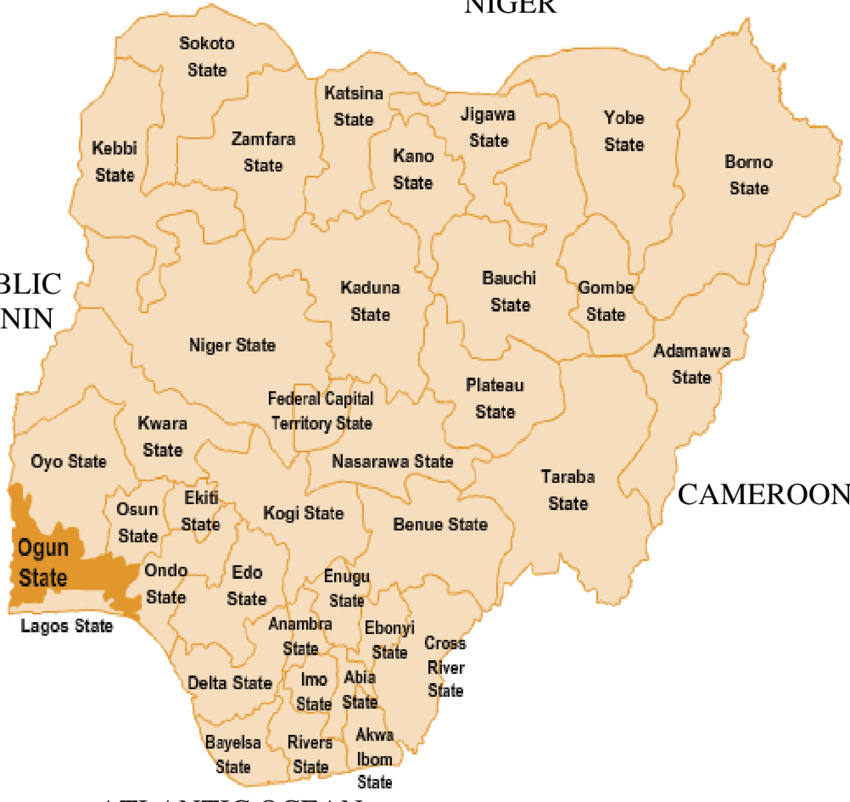
Referring to yesterday’s post (‘Nigeria, Ogun State: a hotbed of ritual crimes‘), the following ritual murder case needs no comments. The victim, Quadri Salami, was murdered for a money ritual in November or December last year. His violent death only confirms the main thrust of yesterday’s post.
Please also note in the second article the confession of the arrested duo that they had used four other human heads for ritual purposes.
Indeed, Ogun State is a hotbed of criminal ritualistic activities.
Warning: the following article contains graphic details which may upset readers (FVDK).
Ogun: Ritualists kill OOU student, sell head, wrists for N100,000
The operatives of the Ogun State police command, have arrested two suspected ritualists, Akeem Usman and Ifadowo Niyi for allegedly killing a 100-level student of the Olabisi Onabanjo University (OOU), Quadri Salami for a money ritual.
The duo of Akeem and Ifadowo slaughtered 18-year-old Salami and dismembered his body part.
The Police Public Relations Officer (PPRO) of the command, Omolala Odutola confirmed the arrest of the suspects to journalists in Abeokuta on Wednesday.
According to Odutola, the deceased’s father had reported the sudden disappearance of his son to the police at Kemta police station on November 14.
The deceased’s father told the police that his son had gone missing on November 8, and all efforts to locate him proved abortive.
The PPRO said the police investigation led to the arrest of one of the suspects, Akeem Usman who was arrested in possession of the deceased’s phone.
The police spokesperson said, that the Commissioner of Police, Abiodun Alamutu on Wednesday, led a team of the tactical squad to Mile 6 in the Ajebo area of Abeokuta where the deceased was buried in a shallow grave.
“He (Akeem Usman) implicated one Ifadowo Niyi that both of them committed the heinous crime by slaughtering the victim one Quadri and dismembering his vital parts for ritual purposes.
“Ifadowo went away with Quadri’s head, and his two wrists, and paid the sum of N100,00 into Akeem Usman’s account as proceeds from the sale of the human body parts.
“The suspects thereafter continued to sell the victim’s other body parts on demand to Internet fraudsters and buried the heart, two legs, and flesh inside a plastic rubber for rituals and used the remaining parts for ‘Awure’ (money ritual).
“Among their confessional statement, the duo admitted that they have used four other human heads for money rituals known as ‘Osole’.
“The suspects are now in Eleweran at SCID for the continuation of discreet investigations and will definitely be prosecuted”, Odutola said.
Ogun police arrest two over killing of OAU student for ritual
Published: December 6, 2023 By: Mayor – Chronicle, Nigeria
The police command in Ogun says it has arrested two persons, Akeem Usman and Niyi Ifadowo, for allegedly killing 18-year-old 100-level Obafemi Awolowo University (OAU) student Quadri Salami for rituals.
SP Omolola Odutola, the state Police Public Relations Officer (PPRO), disclosed this in a statement issued in Abeokuta on Wednesday.
Ms Odutola stated that Mr Salami’s father, on November 14, reported at Kemta Police station, Abeokuta, that his son had been missing since November 8.
She quoted the father as saying he had not set his eyes on his son and all efforts to locate him proved abortive.
The PPRO said that the Commissioner of Police in Ogun, Abiodun Alamutu, on Wednesday, personally led a team of Tactical Squad to Mile 6 in the Ajebo area of Abeokuta.
“The commissioner went with the team to a shallow grave to exhume the decomposing body parts of the deceased after a tracking clue beamed at Usman, who was arrested in possession of the victim’s phone.
“He implicated Ifadowo that both of them committed the heinous crime by slaughtering the victim and dismembering his vital parts for ritual purposes.
“Ifadowo went away with the deceased head and his two wrists and paid the sum of N100,000 into Usman’s account as proceeds from the sale of Salami’s other body parts.
“The suspects thereafter continued to sell the victim’s other body parts on demand to Internet fraudsters.
“They buried the heart, two legs, and flesh inside a plastic rubber for rituals and used the remaining parts for a crime against humanity,” the PPRO said.
Ms Odutola explained that in their confessional statement, the duo admitted that they had used four other human heads for money rituals.
She added that the suspects were now in Eleweran at the State Criminal Investigation Department (SCID) for the continuation of discreet investigation, saying that they would be prosecuted.
The police spokesperson said that the CP remained committed to ensuring that justice was served and would continue to investigate further to bring all perpetrators to face the full extent of the law.
She said that such criminal involvement endangered innocent lives, urging parents to collectively work together with the police by volunteering information to eradicate such nefarious practices.
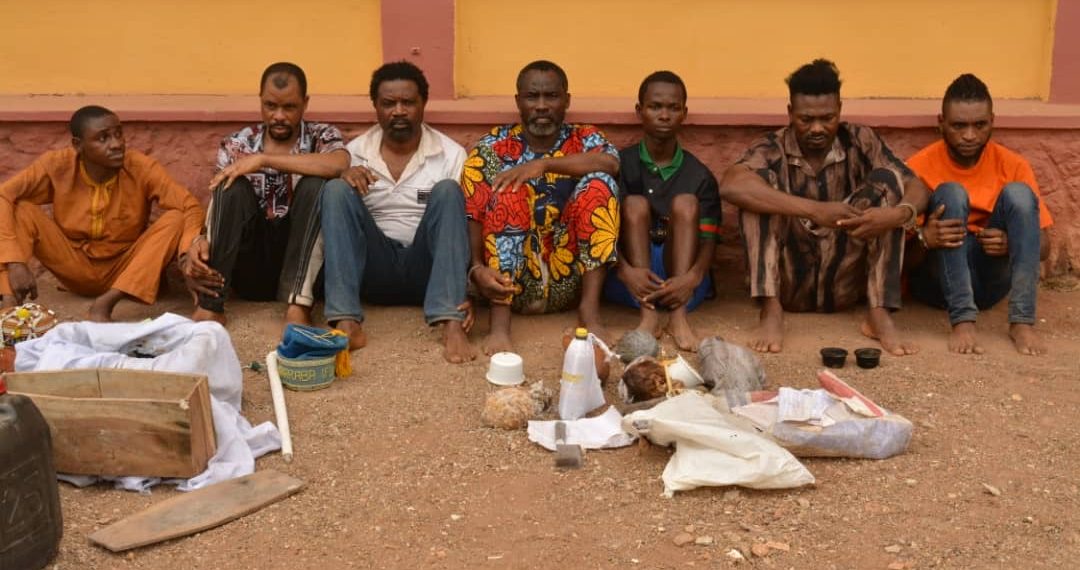
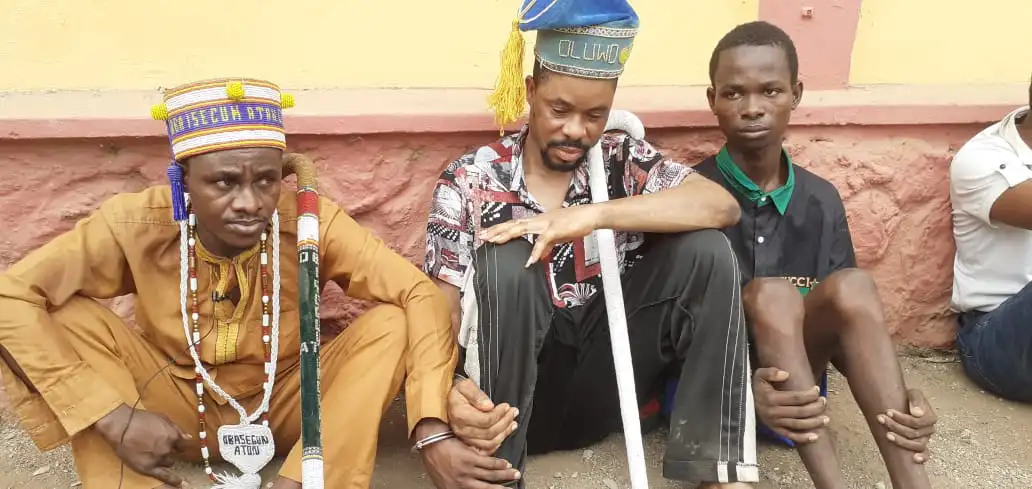
A recent ritual murder case, implicating a gang of seven men including two priests of a white garment church and two herbalist, originating from four different southern states (Ogun, Oyo, Lagos and Edo), was widely covered in the national media (and also abroad). In all, this post covers nearly twenty articles.
The victim was a 35-year old woman, Sulaimon Adijat. She was brutally murdered for ritual purposes, her body heavily mutilated, on or about January 9. Allegedly, the suspects were not only into ritual murders but also dealt in human parts trading on a large scale. Read the details below. It is a chilling account of heinous crimes committed by greedy and unscrupulous men.
Warning: The following articles contain graphic details which may upset readers (FVDK)
Seven Arrested for Gruesome Murder and Trade of Human Body Parts in Ogun State
Seven Arrested for Gruesome Murder and Trade of Human Body Parts in Ogun State
Seven individuals, including two herbalists and two alleged priests, have been arrested in Ogun State for the murder of Sulaimon Adijat and trading her body parts for a ritual called ‘Oshole’. The police are investigating a larger network involved in these heinous activities, shedding light on the moral decay in society.
In the quiet shadows of Ogun State, a chilling tale of greed and betrayal unfolds, as seven individuals, including two herbalists, two alleged priests of the Cherubim and Seraphim Church, and three others, were apprehended for their involvement in a nefarious plot that culminated in the murder of 35-year-old Sulaimon Adijat.
The suspects, ensnared by the allure of wealth, confessed to the brutal killing, aiming to trade human life for financial gain through a ritual known as ‘Oshole’. The Ogun State Police Command, following a report of the missing woman, embarked on an investigation that led to the grim discovery and subsequent arrest of the gang, unveiling a larger network engaged in the trade of human body parts for monetary rituals, seeking to conjure N200 million within a mere seven days.
A Gruesome Discovery
The investigation into Sulaimon Adijat’s disappearance revealed a horrific scene. Various human body parts, intended for use in the ‘Oshole’ ritual, were recovered from the suspects, painting a gruesome picture of the lengths to which some would go for wealth.
The suspects, now under investigation, confessed to their roles in the crime, exposing the dark underbelly of a society where human life is traded for monetary gain. The Ogun Police Command’s swift action has brought to light the existence of a larger network, prompting an extensive search for other individuals involved in these illicit activities.
The revelation of such a heinous crime has sent shockwaves through the community, raising questions about the moral fabric of those who seek prosperity at the cost of human life.
The brutal killing of Sulaimon Adijat for money rituals not only highlights the desperate measures some are willing to take but also the pervasive belief in the power of such rituals to alter one’s financial destiny. The incident has ignited a broader conversation on the societal values and the urgent need for a moral reawakening.
Two Nigerian herbalists named Moses Abidemi and Oluwo Samuel Monday as well as two prophets of Cherubim and Seraphim Church, Prophet Peter Oluwalolese and Prophet Jamiu Yusufhave all been arrested for the killing of one Sulaimon Adijat, aged 35, for money ritual purposes.
Three other suspects, Akinwunmi Ifatosin, Sherifff Agbai and Osojieahen Alioneitouria, who are both from Uromi in Esan West Local Government Area of Edo State, were also arrested for the murder.
According to the reports, the aforementioned people are a gang of hardened criminals who are not only involved in ritual killings but also deal in large sales of human parts.
Apparently, the deceased was reported missing in January not knowing that she had been murdered and used for money rituals.
Adijat was said to have been invited out on a date by one Adebayo Olawale Azeez of Ajegunle road, Atan Ota, where she was later kidnapped and murdered.
Police arrest prophet, 6 other ritualists for killing lady to make N200m in 7 days
Published: February 16, 2024 By: Afolabi – Within Nigeria
Olamutu stated that the report of a missing lady, Ms Sulaiimon Adijat, led to the arrest of the culprits
In Ogun State, a seven-man gang that deals in decapitating humans and selling their parts for rituals has been bursted, the police in the south west state have disclosed. The State Police Commissioner, Abiodun Olamutu, made the disclosure in a statement on Thursday.
According to Olamutu, a human heart and two kegs filled with human bodies were recovered from the suspects. He gave the name of the suspects as Moses Abidemi, Oluwo Monday, Prophet Peter Akiwunmi Ifatosin, Jamiu Yusuf, Sheriff Agbai and Osojieahen Alioneitoura.
Olamutu stated that the report of a missing lady, Ms Sulaiimon Adijat, led to the arrest of the culprits.
Olamutu said the Divisional Police Office, Onipanu, received a report that Adijat was missing on January 9 after she waa invited out on a date by one Adebayo Azeez.
“Despite frantic efforts to locate her whereabouts, her mobile phone has been switched off since the day she was reported missing.
“Consequently, the Anti-Kidnapping Unit of the command was drafted to unravel the mystery behind her disappearance and a technical-based investigation was embarked on,” the CP said.
The police boss said investigation revealed that the suspects were involved in a money ritual known as ‘Oshole’ to produce N200m within seven days.
“Oluwo Monday charged the duo of Agbai and Alioneitouria N800,000 to prepare the materials for the ritual.
“Oluwo Monday, in furtherance of his criminal intention, later contacted one Peter, who was not new in the trade of human parts, to source for a lady between the age of 18 and 20 years,” he added.
According to him, Peter was to deliver the lady’s mutilated body parts, specifically the head, two breasts, vagina and two wrists that would be used for the ritual.
“However, on January 10, Sheriff and Osojieahen collected the ritual money from Oluwo and travelled back to their location in Edo State.
“Trouble started when Osojieahen used the ritual element as directed by Oluwo, and complained bitterly that it failed to yield the expected sum of 200 million in seven days.
“A search was conducted in the shrine of Moses on Feb. 3 and 10, where female handbags, two cement sacks containing human bones were recovered,” he said.
Herbalists, Prophets Paraded By Police For Killing 35Yr Old Woman For Money Rituals In Ogun
Published: February 16, 2024 By: Onuigbo Felicia– Gistmania, Nigeria
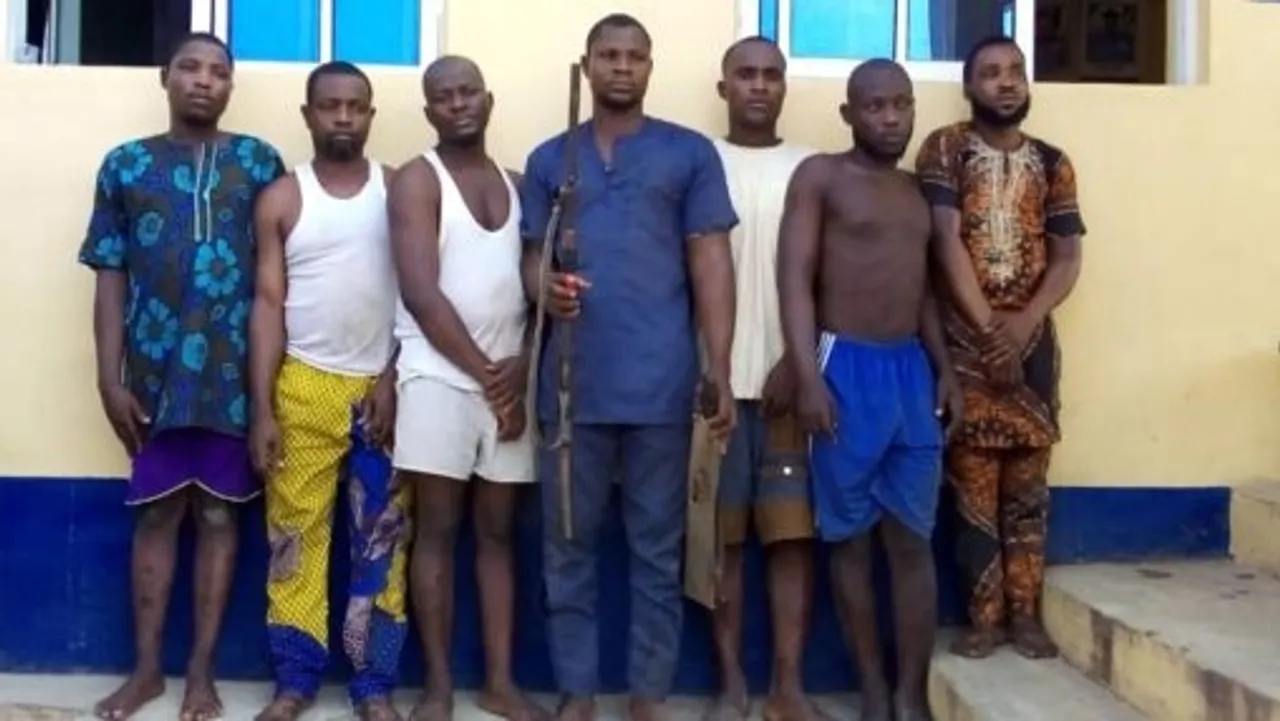
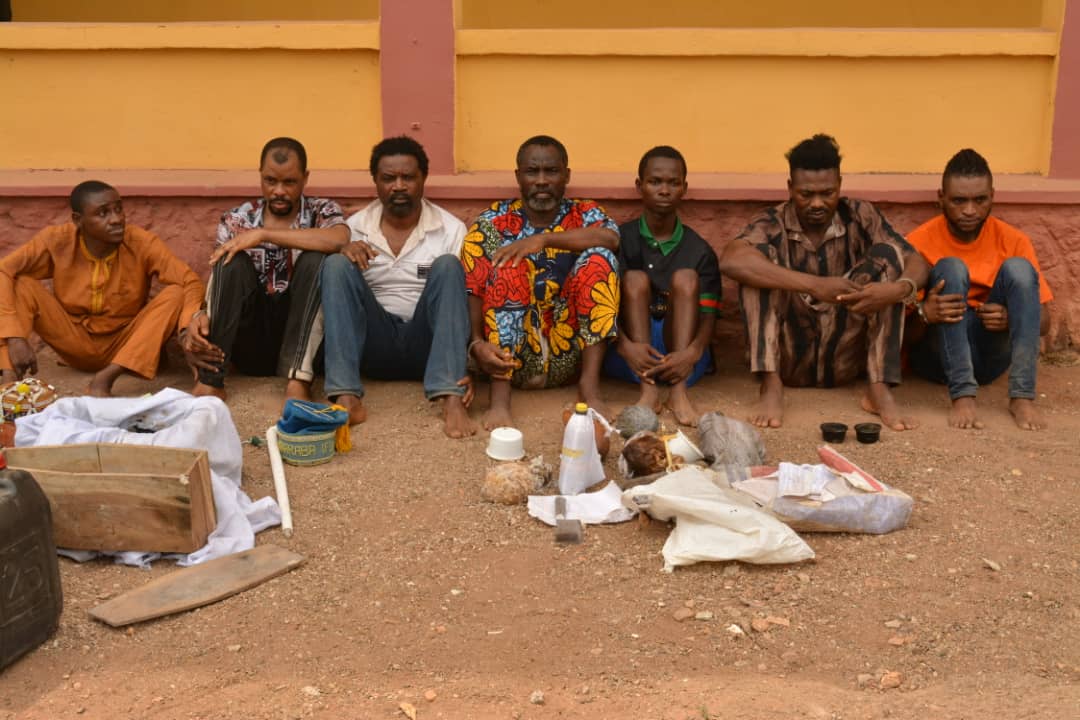
Two herbalists, Moses Abidemi and Oluwo Samuel Monday, and two prophets of Cherubim and Seraphim Church, Prophet Peter Oluwalolese and Prophet Jamiu Yusuf, were on Thursday paraded by the police in Ogun State for killing a 35-year-old woman, Sulaimon Adijat, for money rituals.
Paraded alongside the priests were Akinwunmi Ifatosin, Sherifff Agbai and Osojieahen Alioneitouria.
Parading the suspects at the command headquarters in Eleweran, Abeokuta, the Ogun State Commissioner of Police, Abiodun Alamutu, said the suspects were not only into ritual killings but also dealt in human parts trading on a large scale.
He said the operation that led to the arrest of the suspects started on January 9 when a report was lodged at the Onipanu divisional headquarters in Atan-Ota about the missing Adijat.
Adijat allegedly went missing after going for a date with one Adebayo Olawale Azeez of Ajegunle road, Atan Ota.
The commissioner said the victim’s family made frantic efforts to locate her whereabouts which all proved abortive while her mobile phone was also switched off.
Alamutu said that the command deployed its Anti Kidnapping Unit to unravel the mystery behind Adijat’s disappearance.
He added that a technical-based investigation embarked upon by the unit pointed towards the seven suspects.
Alamutu said:
Quote “The investigation revealed that on 19th November, 2023, one Sherifff Agbai ‘m’, and Osojieahen Alioneitouria ‘m’ contacted Oluwo Samuel Monday ‘m’ a.k.a Oluwo Mandela to perform money ritual known as ‘Oshole’ that can produce Two Hundred Million naira within seven days.
“Oluwo Samuel Monday charged the duo of Sherifff Agbai ‘m’, and Osojieahen Alioneitouria ‘m’ the sum of Eight Hundred thousand naira (#800,000) and agreed to prepare the materials for the money ritual.
“Oluwo Samuel Monday ‘m’ in furtherance of his criminal intention later contacted one Peter Oluwalolese ‘m’ who was not new in the trade of human parts, to source for a lady between the age of 18yrs to 20yrs in order to deliver her mutilated body parts, specifically the head, two Bosom, virginal and her two wrists that will be used for money ritual.
“Peter Oluwalolese ‘m’ who is an acclaimed Prophet of a white garment church located in Ibadan, Oyo state, contacted another colleague of his, one Prophet Jamiu Yusuf ‘m’ a,k.a Eri Mose in Lagos state, who is notorious in the supply of human parts for ritual purpose.
“Prophet Jamiu Yusuf further contacted one Abidemi Moses ‘m’ a.k.a. Asela, who is a herbalist at Atan Ota, Ogun State. Abidemi Moses ‘m’ requested for the sum of Six Hundred thousand naira to get a lady that can be used for the money ritual.
“Oluwo Samuel Monday ‘m’ negotiated for the sum of three hundred thousand naira for the human body parts. Abidemi Moses ‘m’ is a herbalist and he serves as an apprentice to one Adebayo Olawale Azeez ‘m’, now at large, to harvest human parts for sale, a business he has enjoyed the proceeds for the past three years.
“Hence, on 9th January, 2024, Adebayo Olawale Azeez ‘m’ invited one Sulaiman Adijat ‘f’ on a date to Sunshine hotel, Atan Ota, and she was later taken to Abidemi Moses shrine at Igbo Olomi area of Atan Ota, Ogun State.
“She was killed by Abidemi Moses ‘m’ and others now at large, and her dismembered body parts were taken to Abidemi Moses’s house at Atan Ota to meet Oluwo Samuel Monday ‘m’ and Prophet Peter Oluwalolese ‘m’ who were waiting for the arrival of the body parts.
“Oluwo Samuel Monday ‘m’ collected the head, two Bosoms, virginal, and two wrists and other body parts of the deceased. Oluwo Samuel Monday prepared the body parts in a local pot, and lighted firewood to burn it in Abidemi Moses’s house till the next day.
“Prophet Peter Oluwalolese ‘m’ joined Oluwo Samuel Monday ‘m’ to kill the ram that was used to appease the spirit of the deceased during the process of performing money ritual. Prophet Peter Oluwalolese and Prophet Jamiu Yusuf were also given some body parts of the deceased.
“On 10th January, 2024, Sheriff Agbai and Osojieahen Alioneitouria ‘m’ collected the money ritual from Oluwo Monday Samuel and travelled back to their location in Edo State.
“Trouble started when Osojieahen Alioneitouria ‘m’ used the money ritual element as directed by Oluwo Monday Samuel, and they both complained bitterly that the money ritual failed to yield the expected sum of Two hundred million (#200,000,000) in seven days despite having used if for three weeks.
“A search was conducted in the shrine of Abidemi Moses on the 3rd February, 2024, and ten female handbags, two 25 litres gallons containing human parts, one axe, and two cement sacks containing human bones were recovered from his shrine at Igbo Olomi, Atan Ota.
“The relative of the deceased later came to the police station and identified one of the ten bags that were recovered as the hand bag of their daughter Sulaimon Adijat.” Unquote
The commissioner disclosed that efforts were on to apprehend the fleeing suspects. He noted that the matter would be charged to court upon conclusion of investigations.
Prophet, six others arrested for ritual killing in Ogun
Published: February 17, 2024 By: Punch, Nigeria
The Ogun Police Command has arrested a seven-man gang suspected to be specialised in trading human parts and for money rituals.
The Commissioner of Police, Abiodun Alamutu, disclosed that a human heart and two kegs filled with human body parts were parts of exhibits recovered from the suspects.
The men arrested on Thursday were identified by the police as Moses Abidemi, Oluwo Monday, Prophet Peter Akiwunmi Ifatosin, Jamiu Yusuf, Sheriff Agbai, and Osojieahen Alioneitoura.
Alamutu explained that the Divisional Police Office in Onipanu, received a report of a missing lady, Ms Sulaiimon Adijat, on January 9 who was invited out on a date by one Adebayo Azeez.
“Despite frantic efforts to locate her whereabouts, the mobile phone has been switched off since the day she was reported missing. Consequently, the anti-kidnapping unit of the command was drafted to unravel the mystery behind her disappearance, and a technical-based investigation was embarked on,” the CP said.
According to him, the investigation revealed that the suspects were involved in a money ritual known as ‘Oshole’ to produce N200m within seven days.
“Oluwo Monday charged the duo of Agbai and Alioneitouria N800,000 to prepare the materials for the ritual money. Oluwo Monday, in furtherance of his criminal intention, later contacted one Peter, who was not new in the trade of human parts, to source for a lady between the ages of 18 and 20 years.”
The CP said Peter was to deliver the lady’s mutilated body parts, specifically the head, two breasts, vagina, and two wrists that would be used for the alleged ritual.
“However, on January 10, Sheriff and Osojieahen collected the ritual money from Oluwo and travelled back to their location in Edo State. Trouble started when Osojieahen used the ritual element as directed by Oluwo, and complained bitterly that it failed to yield the expected sum of N200m in seven days.
“A search was conducted in the shrine of Moses on February 3 and 10, where female handbags and two cement sacks containing human bones were recovered,” Alamutu added.
The CP noted that all the suspects confessed to the alleged crime and their roles, adding that an investigation was ongoing to arrest other fleeing suspects.
Pictures: Prophets, Herbalists, Others Arrested For Killing 35-year-old Lady For Money Rituals
The victim, 35-year old Sulaimon Adijat
Published: February 16, 2024 By: Justina Otto – NaijaNews, Nigeria
The Ogun State Police Command has apprehended some suspects in connection to the murder of one Sulaimon Adijat for ritual purposes.
Those arrested include two herbalists, Moses Abidemi and Oluwo Samuel Monday as well as two alleged priests of Cherubim and Seraphim Church, Prophet Peter Oluwalolese and Prophet Jamiu Yusuf.
Three other suspects, Akinwunmi Ifatosin, Sherifff Agbai and Osojieahen Alioneitouria, who are both from Uromi in Esan West Local Government Area of Edo State, were also arrested for the murder.
Parading the suspects at the Command Headquarters, Eleweran, Abeokuta on Wednesday, February 14, 2024, the State Commissioner of Police, Abiodun Alamutu, described them as gang of hardened criminals who are not only involved in ritual killings but also deal in large sale of human parts.
According to Alamutu, on January 9, 2024, DPO of Onipanu Divisional headquarters of the Nigeria Police in Atan-Ota received the report of a missing 35-years-old Sulaimon Adijat.
The deceased was said to be invited on a date by one Adebayo Olawale Azeez of Ajegunle road, Atan Ota, (now at large).
It was gathered that Adijat, who worked as a security guard at Canaan Land, Sango Ota, received a call after she got back from work.
She said: “I ‘m coming” to the caller and then told her sister that she was going to Atan in Ota.
The CP revealed that consequently, a tactical team of the police, specifically the Anti Kidnapping Unit of the Command was drafted to unravel the mystery behind her disappearance.
According to the Commissioner, “The investigation revealed that on 19th November, 2023, one Sherifff Agbai ‘m’, and Osojieahen Alioneitouria ‘m’ contacted Oluwo Samuel Monday ‘m’ a.k.a Oluwo Mandela to perform money ritual known as ‘Oshole’ that can produce Two Hundred Million naira within seven days,”
“Oluwo Samuel Monday charged the duo of Sherifff Agbai ‘m’, and Osojieahen Alioneitouria ‘m’ the sum of Eight Hundred thousand naira (#800,000) and agreed to prepare the materials for the money ritual.
“Oluwo Samuel Monday ‘m’ in furtherance of his criminal intention later contacted one Peter Oluwalolese ‘m’ who was not new in the trade of human parts, to source for a lady between the age of 18yrs to 20yrs in order to deliver her mutilated body parts, specifically the head, two breast, virginal and her two wrists that will be used for money ritual.
“Peter Oluwalolese ‘m’ who is an acclaimed Prophet of a white garment church located in Ibadan, Oyo state, contacted another colleague of his, one Prophet Jamiu Yusuf ‘m’ a,k.a Eri Mose in Lagos state, who is notorious in the supply of human parts for ritual purpose.
“Prophet Jamiu Yusuf further contacted one Abidemi Moses ‘m’ a.k.a. Asela, who is a herbalist at Atan Ota, Ogun State. Abidemi Moses ‘m’ requested for the sum of Six Hundred thousand naira to get a lady that can be used for the money ritual
“Oluwo Samuel Monday ‘m’ negotiated for the sum of three hundred thousand naira for the human body parts. Abidemi Moses ‘m’ is a herbalist and he serves as an apprentice to one Adebayo Olawale Azeez ‘m’, now at large, to harvest human parts for sale, a business he has enjoyed the proceeds for the past three years.
“Hence, on 9th January, 2024, Adebayo Olawale Azeez ‘m’ invited one Sulaiman Adijat ‘f’ on a date to Sunshine hotel, Atan Ota, and she was later taken to Abidemi Moses shrine at Igbo Olomi area of Atan Ota, Ogun State
“She was killed by Abidemi Moses ‘m’ and others now at large, and her dismembered body parts were taken to Abidemi Moses’ house at Atan Ota to meet Oluwo Samuel Monday ‘m’ and Prophet Peter Oluwalolese ‘m’ who were waiting for the arrival of the body parts
The CP also disclosed that all the arrested suspects confessed to the alleged crime and their individual roles.
According to him, investigation is ongoing to arrest other fleeing suspects and the case will be charged to court as soon as investigation is completed.
Commissioner of Police in Ogun State, Abiodun Alamutu, paraded four suspects, including two herbalists and two prophets, accused of the brutal killing of a 35-year-old woman, Sulaimon Adijat, for money ritual purposes.
The suspects identified as Moses Abidemi, Oluwo Samuel Monday, Prophet Peter Oluwalolese, and Prophet Jamiu Yusuf were presented before newsmen at the Ogun State Police Command’s headquarters in Eleweran, Abeokuta.
Commissioner Alamutu disclosed that the arrest followed the report of Sulaimon Adijat’s disappearance on January 9, after allegedly receiving a call from a friend, Adebayo Azeez, who invited her on a date. Despite efforts by her family to locate her, her phone was switched off, prompting the police’s anti-kidnapping team to intervene.
Investigations revealed a grim plot orchestrated by the duo of Sherifff Agbai and Osojieahen Alioneitouria, who contracted herbalist Oluwo Samuel Monday to perform a money ritual known as ‘Oshole’ promising a return of N200 million within seven days. The herbalist, in turn, enlisted the help of Prophet Peter Oluwalolese and Prophet Jamiu Yusuf to source a lady between 18 and 20 years for the ritual.
Adebayo Azeez, tasked with providing human parts for the syndicate, invited Adijat on a date to a hotel in the Atan area, where she was allegedly killed and her body dismembered in a shrine by Moses Abidemi. The herbalist later burned the body parts in a local pot, subsequently killing a ram to appease Adijat’s soul.
However, complications arose among the syndicate members when the anticipated N200 million from the ritual did not materialize, leading to complaints from Agbai and Alioneitouria.
The police, conducting a search at Abidemi Moses’ shrine, recovered incriminating evidence, including female handbags, gallons containing human parts, an axe, and bags filled with human bones.
Commissioner Alamutu assured the public of continuous updates as the investigation progresses, highlighting the recovered exhibits, including criminal charms, as crucial evidence. The suspects, having confessed to their roles in the crime, will face charges in court upon the completion of the investigation.
Police parade herbalists, prophets for killing 35-year-old woman for money rituals in Ogun
Published: February 16, 2024 By: John Ogunsemore – The Herald, Nigeria
Two herbalists, Moses Abidemi and Oluwo Samuel Monday, and two prophets of Cherubim and Seraphim Church, Prophet Peter Oluwalolese and Prophet Jamiu Yusuf, were on Thursday paraded by the police in Ogun State for killing a 35-year-old woman, Sulaimon Adijat, for money rituals.
Paraded alongside the priests were Akinwunmi Ifatosin, Sherifff Agbai and Osojieahen Alioneitouria.
Parading the suspects at the command headquarters in Eleweran, Abeokuta, the Ogun State Commissioner of Police, Abiodun Alamutu, said the suspects were not only into ritual killings but also dealt in human parts trading on a large scale.
He said the operation that led to the arrest of the suspects started on January 9 when a report was lodged at the Onipanu divisional headquarters in Atan-Ota about the missing Adijat.
Adijat allegedly went missing after going for a date with one Adebayo Olawale Azeez of Ajegunle road, Atan Ota.
The commissioner said the victim’s family made frantic efforts to locate her whereabouts which all proved abortive while her mobile phone was also switched off.
Alamutu said that the command deployed its Anti Kidnapping Unit to unravel the mystery behind Adijat’s disappearance.
He added that a technical-based investigation embarked upon by the unit pointed towards the seven suspects.
Alamutu said, “The investigation revealed that on 19th November, 2023, one Sherifff Agbai ‘m’, and Osojieahen Alioneitouria ‘m’ contacted Oluwo Samuel Monday ‘m’ a.k.a Oluwo Mandela to perform money ritual known as ‘Oshole’ that can produce Two Hundred Million naira within seven days.
“Oluwo Samuel Monday charged the duo of Sherifff Agbai ‘m’, and Osojieahen Alioneitouria ‘m’ the sum of Eight Hundred thousand naira (#800,000) and agreed to prepare the materials for the money ritual.
“Oluwo Samuel Monday ‘m’ in furtherance of his criminal intention later contacted one Peter Oluwalolese ‘m’ who was not new in the trade of human parts, to source for a lady between the age of 18yrs to 20yrs in order to deliver her mutilated body parts, specifically the head, two breast, virginal and her two wrists that will be used for money ritual.
“Peter Oluwalolese ‘m’ who is an acclaimed Prophet of a white garment church located in Ibadan, Oyo state, contacted another colleague of his, one Prophet Jamiu Yusuf ‘m’ a,k.a Eri Mose in Lagos state, who is notorious in the supply of human parts for ritual purpose.
“Prophet Jamiu Yusuf further contacted one Abidemi Moses ‘m’ a.k.a. Asela, who is a herbalist at Atan Ota, Ogun State. Abidemi Moses ‘m’ requested for the sum of Six Hundred thousand naira to get a lady that can be used for the money ritual.
“Oluwo Samuel Monday ‘m’ negotiated for the sum of three hundred thousand naira for the human body parts. Abidemi Moses ‘m’ is a herbalist and he serves as an apprentice to one Adebayo Olawale Azeez ‘m’, now at large, to harvest human parts for sale, a business he has enjoyed the proceeds for the past three years.
“Hence, on 9th January, 2024, Adebayo Olawale Azeez ‘m’ invited one Sulaiman Adijat ‘f’ on a date to Sunshine hotel, Atan Ota, and she was later taken to Abidemi Moses shrine at Igbo Olomi area of Atan Ota, Ogun State.
“She was killed by Abidemi Moses ‘m’ and others now at large, and her dismembered body parts were taken to Abidemi Moses’s house at Atan Ota to meet Oluwo Samuel Monday ‘m’ and Prophet Peter Oluwalolese ‘m’ who were waiting for the arrival of the body parts.
“Oluwo Samuel Monday ‘m’ collected the head, two breasts, virginal, and two wrists and other body parts of the deceased. Oluwo Samuel Monday prepared the body parts in a local pot, and lighted firewood to burn it in Abidemi Moses’s house till the next day.
“Prophet Peter Oluwalolese ‘m’ joined Oluwo Samuel Monday ‘m’ to kill the ram that was used to appease the spirit of the deceased during the process of performing money ritual. Prophet Peter Oluwalolese and Prophet Jamiu Yusuf were also given some body parts of the deceased.
“On 10th January, 2024, Sheriff Agbai and Osojieahen Alioneitouria ‘m’ collected the money ritual from Oluwo Monday Samuel and travelled back to their location in Edo State.
“Trouble started when Osojieahen Alioneitouria ‘m’ used the money ritual element as directed by Oluwo Monday Samuel, and they both complained bitterly that the money ritual failed to yield the expected sum of Two hundred million (#200,000,000) in seven days despite having used if for three weeks.
“A search was conducted in the shrine of Abidemi Moses on the 3rd February, 2024, and ten female handbags, two 25 litres gallons containing human parts, one axe, and two cement sacks containing human bones were recovered from his shrine at Igbo Olomi, Atan Ota.
“The relative of the deceased later came to the police station and identified one of the ten bags that were recovered as the hand bag of their daughter Sulaimon Adijat.”
The commissioner disclosed that efforts were on to apprehend the fleeing suspects.
He noted that the matter would be charged to court upon conclusion of investigations.
Police Arrest Prophet, Other Suspects Over Ritual Killing In Ogun While narrating how they were arrested, the command said it followed the “sudden disappearance” of the deceased which was reported to the DPO of Onipanu on the 9th of January, 2024.
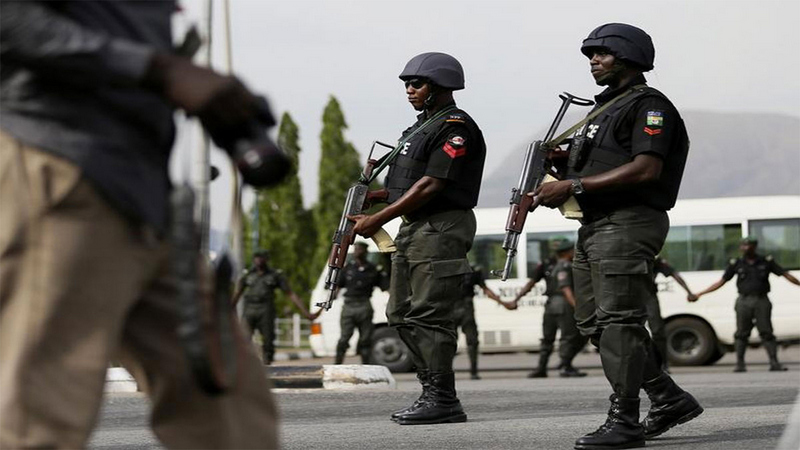
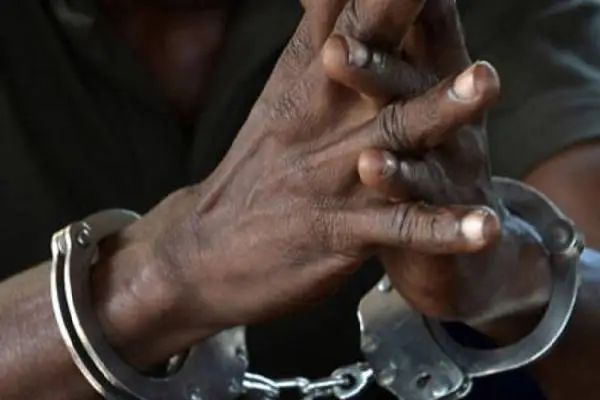
In this file photo, a police officer hold bunch of handcuffs at SARS headqurters in Abuja on October 3rd, 2020 PHOTO: Sodiq Adelakun/Channels TV
Police authorities in Ogun State have arrested seven suspects including a prophet and herbalist over the killing of a lady for ritual purposes.
The Ogun Police Command said this in a late Thursday statement.
“The Commissioner of Police Ogun State Police Command, CP Abiodun Mustapha ALAMUTU today being 15th of February 2024, at the Headquarters in Eleweran Abeokuta paraded seven daredevil persons who were directly involved in the killing of one Sulaimon Aishat ‘f’ 35yrs for ritual purpose,” the statement read.
While narrating how they were arrested, the command said it followed the “sudden disappearance” of the deceased which was reported to the DPO of Onipanu on the 9th of January, 2024.
“Consequently upon the report, the CP gave a matching order to the officer in charge of Anti kidnapping Unit, to unravel the mystery behind her disappearance,” the police said.
“The efforts of the crack detectives from anti-kidnapping paid off as seven suspects who were directly involved in the killing of Sulaimon Adijat were arrested after a technical-based investigation.
“They are:- 1. Moses Abidemi ‘m’ 2. Oluwo Samuel ‘m’ 3. Prophet Peter Oluwalolese ‘m’ 4. Akinwunmi Ifatosin ‘m’ 5. Prophet Jamiu Yusuf’s ‘m’ 6. Sherif Agbai ‘m’ 7. Osojieahen Alioneiouria ‘m’. The investigation further revealed that on the 19th of November 2023, Sherif Agbai and Osojeiahen Alioneouria ‘m’ contact Oluwo Samuel Moday to perform a money ritual known as ‘Oshole’ that can produce Two hundred million naira (#200,000,000) within 7 days, and Oluwo Samuel Moday charged them for the sum of Eight hundred thousand (#800,000) and agreed to prepare the materials for ritual.
“Oluwo Samuel Monday in furtherance of his criminal intention later contacted one Peter Oluwalolese who was not new in the trade of human parts, to source for a lady between the ages of 18yrs to 20yrs in order to deliver her mutilated body parts, specifically the head, two breast, private part and her two wrists that will be used for money ritual.
“Peter Oluwalolese who is acclaimed pastor of a white garment church located in Ibadan, Oyo State, also contacted another colleague of his, one Prophet Jamiu Yusuf ‘m’ a.k.a Eri Mose in Lagos State, who is notorious for the supply of human parts for ritual purposes. Prophet Jamiu Yusuf further contacted one Abidemi Moses ‘m’ a.k.a Asela, who is an herbalist at Ata Ota, Ogun State.
“Abidemi Moses requested the sum of six hundred thousand naira to get a lady that can be used for the money ritual. Oluwo Samuel Monday negotiated for the sum of three hundred thousand naira for the human body parts.
“Abidemi Moses is a herbalist and he serves as an apprentice to one Adebayo Olawale Azeez now at large, to harvest human parts for sale, a business he has enjoyed the proceeds for three years. Hence Adebayo Olawale Azeez surreptitiously invited Sulaimon Adijat to Sunshine Hotel, Atan Ota, and she was later taken to Abidemi Moses shrine at Igbi Olomi area of Atan Ota, Ogun State.
“She was killed by Abidemi Moses and others now at large, and her dismembered body parts were taken to Abidemi Moses house at Atan Ota to meet Oluwo Sameul Moday and Prophet Peter Oluwalolese who were waiting for the arrival of the body parts.
“A search was conducted in the shrine of Abidemi Moses on the 3rd of February, 2024, and ten female handbags, two 25 liters gallons containing human parts, one axe, and two cement sacks containing human bones were recovered from his shrine at Igbo Olomi, Atan Ota.
“Meanwhile, all the arrested suspects confessed to the alleged crime and their individual roles, investigation is ongoing to arrest other fleeing suspects and the case will be charged to court as soon as the investigation is completed. Members of the public will be duly updated.”
Ogun police arrest prophets, herbalists over 35-years-old woman’s death
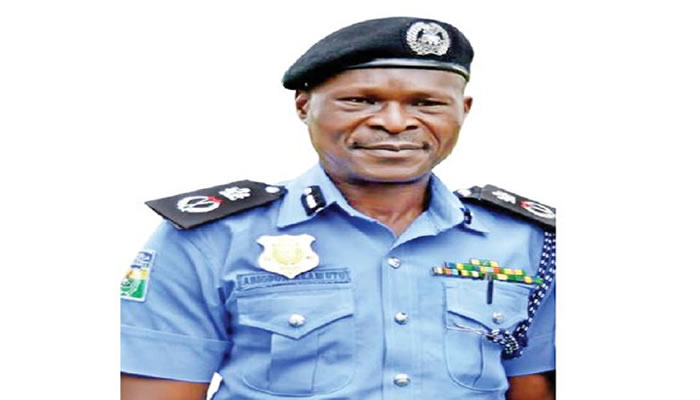
Ogun State Commissioner of Police, Abiodun Alamutu
Published: February 15, 2024 By: Taiwo Bankole – Punch. Nigeria
The Ogun State Commissioner of Police, Abiodun Alamutu, on Thursday, paraded two herbalists, Moses Abidemi and Oluwo Samuel Monday as well as two alleged priests of Cherubim and Seraph Church, Prophet Peter Oluwalolese and Prophet Jamiu Yusuf, over the killing of one Sulaimon Adijat, aged 35, for money ritual purposes.
Also arrested and paraded for the act were Akinwunmi Ifatosin, Sherifff Agbai and Osojieahen Alioneitouria, who are both from Uromi in Esan West Local Government Area of Edo State.
Parading the suspects at the Command Headquarters, Eleweran, Abeokuta on Wednesday, the police boss described them as gang of hardened criminals who are not only involved in ritual killings but also deal in large sale of human parts.
Alamutu disclosed that their date with the long hand of the law started on January 9, 2024, when the DPO of Onipanu Divisional headquarters of the Nigeria Police in Atan-Ota received the report of a missing 35-years-old Sulaimon Adijat.
Adijat was said to have been invited out on a date by one Adebayo Olawale Azeez of Ajegunle road, Atan Ota, and since then Adijat has not been seen, despite frantic efforts to locate her whereabout while her mobile phone had been switched off.
The CP revealed that consequently, a tactical team of the police, specifically the Anti Kidnapping Unit of the Command was drafted to unravel the mystery behind her disappearance.
The team was said to have embarked on a technical based investigation, which led to the arrest of the seven suspects, who participated actively in the abduction and eventual murder of the missing Sulaimon Adijat.
Alamutu explained further that “the investigation revealed that on 19th November, 2023, one Sherifff Agbai ‘m’, and Osojieahen Alioneitouria ‘m’ contacted Oluwo Samuel Monday ‘m’ a.k.a Oluwo Mandela to perform money ritual known as ‘Oshole’ that can produce Two Hundred Million naira within seven days.
“Oluwo Samuel Monday charged the duo of Sherifff Agbai ‘m’, and Osojieahen Alioneitouria ‘m’ the sum of Eight Hundred thousand naira (#800,000) and agreed to prepare the materials for the money ritual.
“Oluwo Samuel Monday ‘m’ in furtherance of his criminal intention later contacted one Peter Oluwalolese ‘m’ who was not new in the trade of human parts, to source for a lady between the age of 18yrs to 20yrs in order to deliver her mutilated body parts, specifically the head, two breast, virginal and her two wrists that will be used for money ritual.
“Peter Oluwalolese ‘m’ who is an acclaimed Prophet of a white garment church located in Ibadan, Oyo state, contacted another colleague of his, one Prophet Jamiu Yusuf ‘m’ a,k.a Eri Mose in Lagos state, who is notorious in the supply of human parts for ritual purpose.
“Prophet Jamiu Yusuf further contacted one Abidemi Moses ‘m’ a.k.a. Asela, who is a herbalist at Atan Ota, Ogun State. Abidemi Moses ‘m’ requested for the sum of Six Hundred thousand naira to get a lady that can be used for the money ritual.
“Oluwo Samuel Monday ‘m’ negotiated for the sum of three hundred thousand naira for the human body parts. Abidemi Moses ‘m’ is a herbalist and he serves as an apprentice to one Adebayo Olawale Azeez ‘m’, now at large, to harvest human parts for sale, a business he has enjoyed the proceeds for the past three years.
“Hence, on 9th January, 2024, Adebayo Olawale Azeez ‘m’ invited one Sulaiman Adijat ‘f’ on a date to Sunshine hotel, Atan Ota, and she was later taken to Abidemi Moses shrine at Igbo Olomi area of Atan Ota, Ogun State.
“She was killed by Abidemi Moses ‘m’ and others now at large, and her dismembered body parts were taken to Abidemi Moses’s house at Atan Ota to meet Oluwo Samuel Monday ‘m’ and Prophet Peter Oluwalolese ‘m’ who were waiting for the arrival of the body parts.
“Oluwo Samuel Monday ‘m’ collected the head, two breasts, virginal, and two wrists and other body parts of the deceased. Oluwo Samuel Monday prepared the body parts in a local pot, and lighted firewood to burn it in Abidemi Moses’s house till the next day.
“Prophet Peter Oluwalolese ‘m’ joined Oluwo Samuel Monday ‘m’ to kill the ram that was used to appease the spirit of the deceased during the process of performing money ritual. Prophet Peter Oluwalolese and Prophet Jamiu Yusuf were also given some body parts of the deceased.
“On 10th January, 2024, Sheriff Agbai and Osojieahen Alioneitouria ‘m’ collected the money ritual from Oluwo Monday Samuel and travelled back to their location in Edo State.
“Trouble started when Osojieahen Alioneitouria ‘m’ used the money ritual element as directed by Oluwo Monday Samuel, and they both complained bitterly that the money ritual failed to yield the expected sum of Two hundred million (#200,000,000) in seven days despite having used if for three weeks.
“A search was conducted in the shrine of Abidemi Moses on the 3rd February, 2024, and ten female handbags, two 25 litres gallons containing human parts, one axe, and two cement sacks containing human bones were recovered from his shrine at Igbo Olomi, Atan Ota.
“The relative of the deceased later came to the police station and identified one of the ten bags that were recovered as the hand bag of their daughter Sulaimon Adijat.”
Meanwhile, the CP has said that all the arrested suspects confessed to the alleged crime and their individual roles.
According to him, investigation is ongoing to arrest other fleeing suspects and the case will be charged to court as soon as investigation is completed.
Police arrest two ‘prophets’, others for killing woman for money ritual in Ogun
Published: February 16, 2014 By: TG News, Nigeria
Police in Ogun State have arrested two self-acclaimed prophets of white garment churches and five other persons for allegedly killing and dismembering the body of a 35-year-old woman, Adijat Sulaimon, for money ritual in Atan-Ota.
The suspects who are: Moses Abidemi; Oluwo Samuel Monday; Prophet Peter Oluwalese; Akinwunmi Ifatosin; Prophet Jamiu Yusuf; Sheriff Agbai and Osojieahen Alionetouria, were all paraded at the Police Headquarters, Eleweran, Abeokuta.
They were arrested following a report of a missing person on January 9, 2024 by the DPO of Onipanu Divisional Headquarters that one Adebayo Olawale Azeez invited the victim out on a date and since then she had yet to return as her mobile phone was switched off and her whereabouts remain unknown.
On receiving the information, a tactical team of the Anti Kidnapping Unit of the Command were sent out on a technical based investigation to unravel the mystery behind the cause of disappearance which led to the arrest of the seven (7) suspects that participated actively in the abduction and murder of the deceased.
Commissioner of Police, CP Abiodun Alamutu, while parading the suspects at the Police Headquarters, Eleweran, Abeokuta, said that the suspects killed and dismembered the body of the victim for ‘Oshole’ money ritual that can produce N200,000, 000 within a week.
Alamutu explained that the duo of Agabai and Alioneitouria contacted Oluwo to perform money ritual for them that could produce N200M within seven days and Oluwo charged both of the N800,000 for the ritual work and promise them he would also provide materials for the work.
He explained further that Oluwo later contacted Oluwalolese, to get him a woman between the age of 18 to 20 whose party of the body including the head, two breast, virginal and her two wrists which will be used for money ritual.
The CP went on that Oluwalolose from a white garment church in Ibadan, Oyo State, who later contacted Yusuf another white garment prophet from Lagos State popularly known as Eri Mose, asking him if he could help to get a woman whose party of her body would be use for the money ritual.
He said Yusuf contacted Abidemi, an herbalist from Atan-Ota, Ogun State, who demanded N600,000 before he could deliver a woman for the mutilated body parts and Yusuf negotiated the body materials to N300,000 which Abidemi agreed and called his apprentice Azeez to harvest human parts for him.
Alamutu said that Azeez, now at large, went ahead to do the harvest human parts which he uses as livelihood for the past three years and lured the victim out of her house on January 9 to an hotel at Atan-Ota, from where they headed to Abidemi shrine in Olomi area where she was killed by Abidemi and others now on the run and her dismembered body were taken to Oluwo.
He said “Oluwo Samuel Monday ‘m’ collected the head, two breasts, virginal, and two wrists and other body parts of the deceased. Oluwo Samuel Monday prepared the body parts in a local pot, and lighted firewood to burn it in Abidemi Moses’s house till the next day. Prophet Peter Oluwalolese ‘m’ joined Oluwo Samuel Monday ‘m’ to kill the ram that was used to appease the spirit of the deceased during the process of performing money ritual. Prophet Peter Oluwalolese and Prophet Jamiu Yusuf were also given some body parts of the deceased. On 10th January, 2024, Sheriff Agbai and Osojieahen Alioneitouria ‘m’ collected the money ritual from Oluwo Monday Samuel and travelled back to their location in Edo State.
“Trouble started when Osojieahen Alioneitouria ‘m’ used the money ritual element as directed by Oluwo Monday Samuel, and they both complained bitterly that the money ritual failed to yield the expected sum of Two hundred million (#200,000,000) in seven days despite having used it for three weeks. A search was conducted in the shrine of Abidemi Moses on the 3rd February, 2024, and ten female handbags, two 25 litres gallons containing human parts, one axe, and two cement sacks containing human bones were recovered from his shrine at Igbo Olomi, Atan Ota.
“The relative of the deceased later came to the police station and identified one of the ten bags that were recovered as the hand bag of their daughter Sulaimon Adijat.” he added
Meanwhile, all the arrested suspects confessed to the alleged crime and their individual roles. Investigation is ongoing to arrest other fleeing suspects and the case will be charged to court as soon as investigation is completed.”
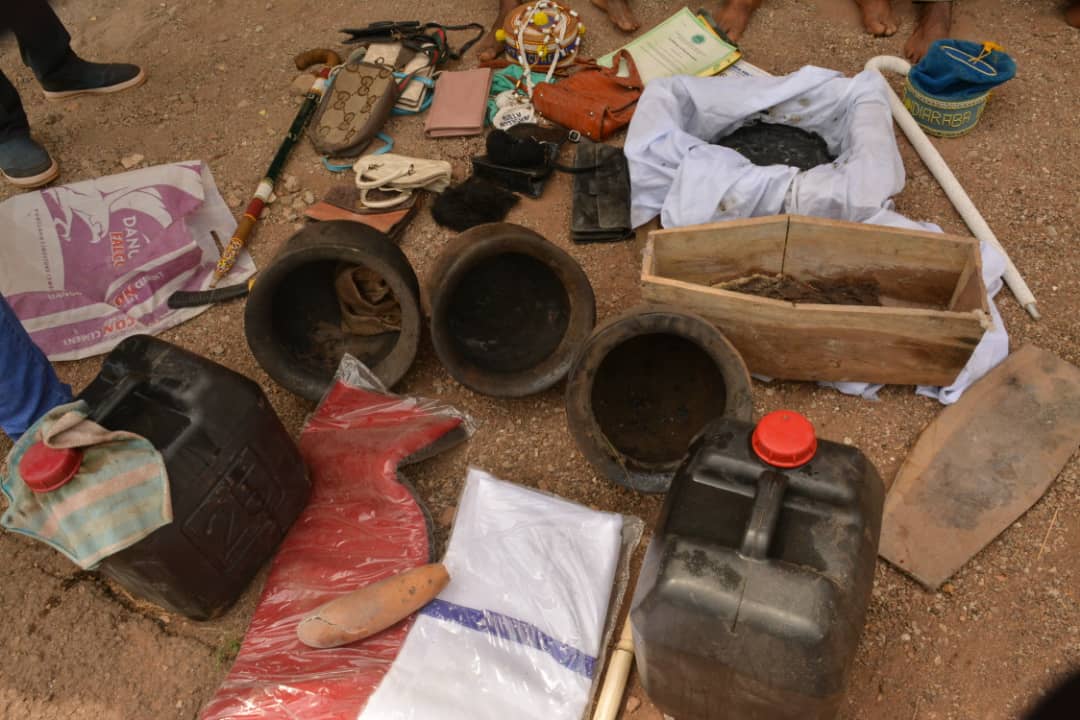
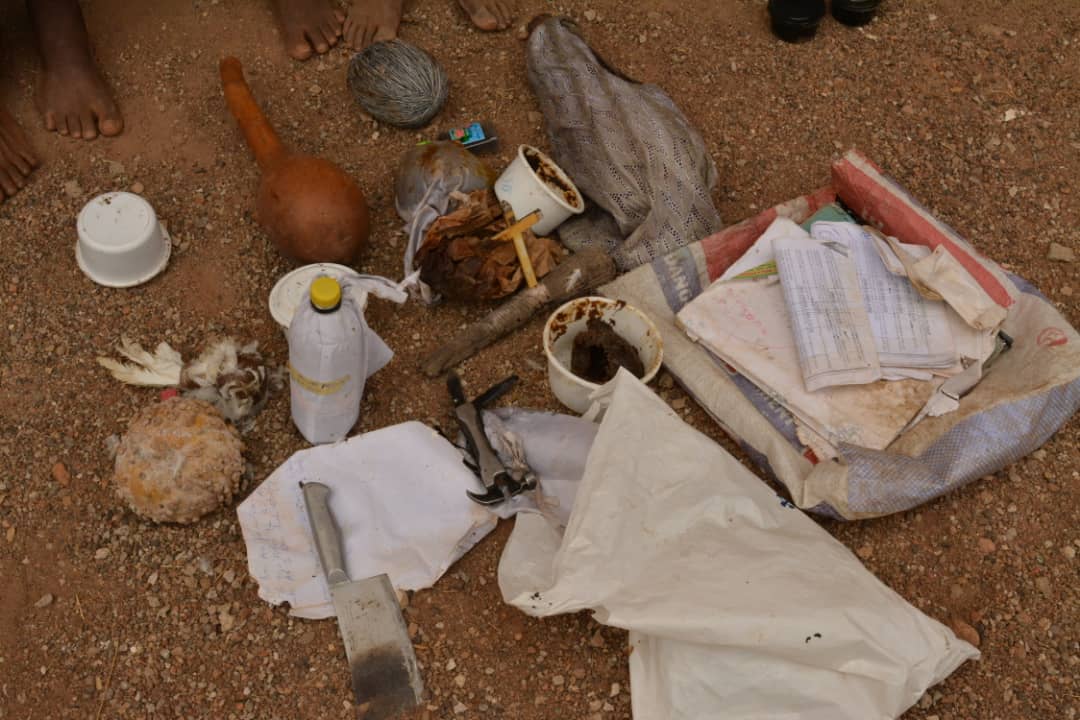
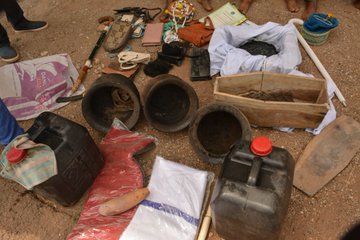
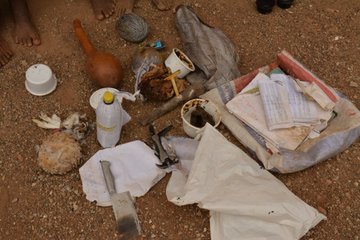
Exhibits recovered from them includes : One axe, ten female hand bags, local pots, one wooden box containing money ritual, two bags containing human bones and parts, two gallons containing human parts, and charms
Police nab ritualists for murdering lady to make N200m in 7 days in Ogun
Published: February 16, 2024 By: Kehinde Okeowo – The Niche, Nigeria
Police said the suspects were caught with a human heart and two kegs filled with human bodies.
ByKehindeOkeowo
A seven-man gang that specializes in killing and selling human parts for rituals have been arrested by the Ogun State Police Command.
This was revealed on Thursday by the State Police Commissioner, Abiodun Olamutu, who claimed the suspects were caught with a human heart and two kegs filled with human bodies.
The men in police custody include Moses Abidemi, Oluwo Monday, Prophet Peter Akiwunmi Ifatosin, Jamiu Yusuf, Sheriff Agbai and Osojieahen Alioneitoura.
According to the CP, it all started when the Divisional Police Office, Onipanu, received a report on January 9, that a lady identified as Ms Sulaiimon Adijat who was invited out on a date by one Adebayo Azeez was missing.
Olamutu added: “Despite frantic efforts to locate her whereabouts, her mobile phone has been switched off since the day she was reported missing.
“Consequently, the Anti-Kidnapping Unit of the command was drafted to unravel the mystery behind her disappearance and a technical-based investigation was embarked on.”
He went on to say investigation revealed that the suspects were involved in a money ritual known as ‘Oshole’ to produce N200m within seven days.
“Oluwo Monday charged the duo of Agbai and Alioneitouria N800,000 to prepare the materials for the ritual.
“Oluwo Monday, in furtherance of his criminal intention, later contacted one Peter, who was not new in the trade of human parts, to source for a lady between the age of 18 and 20 years,” he added.
The Police boss further claimed that Peter was to deliver the lady’s mutilated body parts, specifically the head, two breasts, vagina and two wrists that would be used for the ritual.
“However, on January 10, Sheriff and Osojieahen collected the ritual money from Oluwo and travelled back to their location in Edo State.
“Trouble started when Osojieahen used the ritual element as directed by Oluwo, and complained bitterly that it failed to yield the expected sum of 200 million in seven days.
“A search was conducted in the shrine of Moses on Feb. 3 and 10, where female handbags, two cement sacks containing human bones were recovered,” he said.
Ogun: 2 Herbalists, Others Arrested For Killing 35-Year-Old Woman for Money Ritual
Published: February 16, 2024 By: New Telegraph, Nigeria
Operatives of the Ogun State Police Command have arrested two herbalists and two self- acclaimed priests of the Cherubim and Seraphim Church for allegedly killing a 35-year-old woman, Sulaimon Adijat for money ritual purposes. The suspects: Moses Abidemi, Oluwo Samuel Mon- day, Peter Oluwalolese and Jamiu Yusuf allegedly killed Adijat and dismembered her body.
The suspects were paraded before journalists by the Ogun State Commissioner of Police, Abiodun Alamutu, at the command’s headquarters in Eleweran, Abeokuta on Wednesday. Also arrested and paraded for crime were: Akinwunmi Ifatosin, Sheriff Agbai and Osojieahen Alioneitouria who are both from Uromi in Esan West Local Government Area of Edo State.
Parading the suspects, Alamutu described them as gang of hardened criminals who are not only involved in ritual killings, but also deal in large sale of human parts. Alamutu disclosed that the suspects were arrested following a missing person report of the victim lodged at Onipanu Divisional headquarters of the Nigeria Police in Atan-Ota on January 9.
The deceased was said to have been invited out on a date by one of them and since then Adijat has not been seen, despite frantic efforts to locate her whereabouts, while her mobile phone had been switched off. The police boss revealed that consequently, a tactical team of the police, specifically the Anti-Kidnapping Unit of the Command was drafted to unravel the mystery behind her disappearance.
The team was said to have embarked on a technical based investigation, which led to the arrest of the seven suspects who participated actively in the abduction and eventual murder of the missing Sulaimon Adijat. Alamutu explained further that: “The investigation revealed that on 19th November, 2023, one Sherifff Agbai, and Osojieahen Alionei- touria contacted Oluwo Samuel Monday a.k.a Oluwo Mandela to perform money ritual known as ‘Oshole’ that can produce Two Hundred Million naira within seven days.”
Ogun: Two Herbalists, Others Arrested For Killing 35-Year-Old Woman For Money Ritual
Suspects
Published: February 15, 2024 By: Olufemi Adediran – New Telegraph, Nigeria
The operatives of the Ogun State Police Command have arrested two herbalists and two self-acclaimed priests of Cherubim and Seraph Church for allegedly killing a 35-year-old woman, Sulaimon Adijat for a money ritual.
The suspects: Moses Abidemi, Oluwo Samuel Monday, Peter Oluwalolese and Jamiu Yusuf allegedly killed Adijat and dismembered her body parts.
The suspects were paraded before journalists by the Ogun State Commissioner of Police, Abiodun Alamutu at the command’s headquarters in Eleweran, Abeokuta on Wednesday.
Also arrested and paraded for crime were: Akinwunmi Ifatosin, Sherifff Agbai and Osojieahen Alioneitouria who are both from Uromi in Esan West Local Government Area of Edo State.
Parading the suspects, Alamutu described them as a gang of hardened criminals who are not only involved in ritual killings but also deal in large sales of human parts.
Alamutu disclosed that the suspects were arrested following a missing person report of the victim lodged at Onipanu Divisional headquarters of the Nigeria Police in Atan-Ota on January 9.
The deceased was said to have been invited out on a date by one and since then Adijat has not been seen, despite frantic efforts to locate her whereabouts while her mobile phone had been switched off.
The police boss revealed that consequently, a tactical team of the police, specifically the Anti Kidnapping Unit of the Command was drafted to unravel the mystery behind her disappearance.
The team was said to have embarked on a technical-based investigation, which led to the arrest of the seven suspects who participated actively in the abduction and eventual murder of the missing Sulaimon Adijat.
Alamutu explained further that “the investigation revealed that on 19th November 2023, one Sheriff Agbai, and Osojieahen Alioneitouria contacted Oluwo Samuel Monday a.k.a Oluwo Mandela to perform money ritual known as ‘Oshole’ that can produce Two Hundred Million naira within seven days.
“Oluwo Samuel Monday charged the duo of Sherifff Agbai ‘m’, and Osojieahen Alioneitouria ‘m’ the sum of Eight Hundred thousand naira (N800,000) and agreed to prepare the materials for the money ritual.
“Oluwo Samuel Monday in furtherance of his criminal intention later contacted one Peter Oluwalolese who was not new in the trade of human parts, to source for a lady between the age of 18yrs to 20 years in order to deliver her mutilated body parts, specifically the head, two breast, virginal and her two wrists that will be used for money ritual.
“Peter Oluwalolese who is an acclaimed Prophet of a white garment church located in Ibadan, Oyo state, contacted another colleague of his, one Prophet Jamiu Yusuf a.k.a Eri Mose in Lagos state, who is notorious in the supply of human parts for ritual purpose.
“Prophet Jamiu Yusuf further contacted one Abidemi Moses a.k.a. Asela, who is a herbalist at Atan Ota, Ogun State. Abidemi Moses requested for the sum of Six Hundred thousand naira to get a lady that can be used for the money ritual.
“Oluwo Samuel Monday negotiated for the sum of three hundred thousand naira for the human body parts. Abidemi Moses ‘m’ is a herbalist and he serves as an apprentice to one Adebayo Olawale Azeez, now at large, to harvest human parts for sale, a business he has enjoyed the proceeds for the past three years.
“Hence, on 9th January 2024, Adebayo Olawale Azeez invited one Sulaiman Adijat on a date to Sunshine Hotel, Atan Ota, and she was later taken to Abidemi Moses shrine at Igbo Olomi area of Atan Ota, Ogun State.
“She was killed by Abidemi Moses and others now at large, and her dismembered body parts were taken to Abidemi Moses’s house at Atan Ota to meet Oluwo Samuel Monday ‘m’ and Prophet Peter Oluwalolese ‘m’ who were waiting for the arrival of the body parts.
“Oluwo Samuel Monday collected the head, two breasts, virginal, and two wrists and other body parts of the deceased. Oluwo Samuel Monday prepared the body parts in a local pot, and lighted firewood to burn it in Abidemi Moses’s house till the next day.
“Prophet Peter Oluwalolese joined Oluwo Samuel Monday ‘m’ to kill the ram that was used to appease the spirit of the deceased during the process of performing money ritual. Prophet Peter Oluwalolese and Prophet Jamiu Yusuf were also given some body parts of the deceased.
“On 10th January, 2024, Sheriff Agbai and Osojieahen Alioneitouria ‘m’ collected the money ritual from Oluwo Monday Samuel and travelled back to their location in Edo State.
“Trouble started when Osojieahen Alioneitouri used the money ritual element as directed by Oluwo Monday Samuel, and they both complained bitterly that the money ritual failed to yield the expected sum of Two hundred million (N200,000,000) in seven days despite having used if for three weeks.
“A search was conducted in the shrine of Abidemi Moses on the 3rd February 2024, and ten female handbags, two 25 litres gallons containing human parts, one axe, and two cement sacks containing human bones were recovered from his shrine at Igbo Olomi, Atan Ota.
“The relative of the deceased later came to the police station and identified one of the ten bags that were recovered as the handbag of their daughter Sulaimon Adijat”
Meanwhile, Alamutu has said that all the arrested suspects confessed to the alleged crime and their roles. The investigation is ongoing to arrest other fleeing suspects and the case will be charged to court as soon as the investigation is completed.
Ritualists Nabbed For Allegedly Killing Lady To Make N200m
Published: February 16, 2024 By: Peace Oladapo – New Telegraph, Nigeria
The Ogun State Police Command on Friday said its operatives have busted a seven-man gang that sells human parts for rituals in the state.
Abiodun Olamutu, the State Police Commissioner who confirmed the development claimed that evidence retrieved from the suspects included a human heart and two kegs filled with human parts.
The suspects arrested in connection to the unfortunate incident include Mooses Abidemi, Oluwo Monday, Prophet Peter Akiwunmi Ifatosin, Jamiu Yusuf, Sheriff Agbai, and Osojieahen Alioneitoura.
The police image maker added that on January 9, the Divisional Police Office in Onipanu got a report of a missing lady, Ms Sulaiimon Adijat, who was asked out on a date by one Adebayo Azeez.
He said, “Despite frantic efforts to locate her whereabouts, her mobile phone has been switched off since the day she was reported missing.
“Consequently, the Anti-Kidnapping Unit of the command was drafted to unravel the mystery behind her disappearance and a technical-based investigation was embarked on,” the CP said.
The police chief stated that an investigation found that the suspects were engaging in a money ritual known as ‘Oshole’ in order to generate N200 million within seven days.
“Oluwo Monday charged the duo of Agbai and Alioneitouria N800,000 to prepare the materials for the ritual.
“Oluwo Monday, in furtherance of his criminal intention, later contacted one Peter, who was not new in the trade of human parts, to source for a lady between the age of 18 and 20 years,” he added.
According to him, Peter was to send the lady’s mutilated body parts, namely the head, two breasts, vagina, and two wrists, for use in the ceremony
“However, on January 10, Sheriff and Osojieahen collected the ritual money from Oluwo and travelled back to their location in Edo State.
“Trouble started when Osojieahen used the ritual element as directed by Oluwo, and complained bitterly that it failed to yield the expected sum of 200 million in seven days.
“A search was conducted in the shrine of Moses on Feb. 3 and 10, where female handbags, and two cement sacks containing human bones were recovered,” he said.
Police arrest prophets, herbalists over abduction, killing
Published: February 16, 2024 By: Vincent Osuwo – Chronicle, Nigeria
Two herbalists, Moses Abidemi and Oluwo Samuel Monday, as well as two alleged prophets of Cherubim and Seraph Church, Prophet Peter Oluwalolese and Prophet Jamiu Yusuf, have been paraded by the police over the brutal killing of one Sulaimon Adijat, aged 35, for money ritual purposes.
The Ogun State Commissioner of Police, Abiodun Alamutu, disclosed this while parading the suspects before newsmen at the command’s headquarters in Eleweran, Abeokuta, the state’s capital, on Thursday.
The police chief stated that the arrest of the suspects came after a lady, Sulaiman Adijat, was reported missing to the Onipanu Division of the police on January 9 after she allegedly received a call from a friend, Adebayo Azeez, who invited her on a date.
The police chief revealed that her family’s desperate efforts to trace her whereabouts have failed since her phone was turned off. When the police received the information, they dispatched an anti-kidnapping unit to investigate Adijat’s disappearance.
He stated that after a probe into the incident, the police learned that she was reportedly killed by a ritual syndicate hired by Sheriff Agbai and Osojieahen Alioneitouria to execute a money ritual for N200 million.
Alamutu said, “Investigation revealed that on November 19, 2023, one Sherifff Agbai,’m’, and Osojieahen Alioneitouria,’m’, contacted Oluwo Samuel Monday,’m’, a.k.a. Oluwo Mandela, to perform a money ritual known as ‘Oshole’ that can produce N200m within seven days, and Oluwo Samuel Monday charged the duo of Sherifff Agbai,’m’, and Osojieahen Alioneitouria,’m’, the sum of N800,000 and agreed to prepare the materials for the money ritual.
“Oluwo Samuel Monday,’m’, in furtherance of his criminal intention, later contacted one Peter Oluwalolese,’m’, who was not new in the trade of human parts, to source for a lady between the ages of 18 and 20 years to deliver her mutilated body parts, specifically the head, two breasts, virginal, and her two wrists that will be used for money ritual.
“Peter Oluwalolese’m’, who is an acclaimed prophet of a white garment church located in Ibadan, Oyo State, contacted another colleague of his, one Prophet Jamiu Yusuf’m’, a.k.a. Eri Moses, in Lagos State, who is notorious for the supply of human parts for ritual purposes. Prophet Jamiu Yusuf further contacted one Abidemi Moses’m’ a.k.a. Asela, an herbalist at Atan Ota, Ogun State.”
Azeez was claimed to have invited Adijat on a date to a hotel in the Atan area after negotiating a payment of N300,000 to provide human parts for the syndicate. However, he was supposed to have taken Adijat to Moses’ shrine, where she was allegedly killed and her body dismembered, before moving to Moses’ residence, where the severed parts were purportedly waiting to be collected.
According to Alamutu, Oluwo took Adihjat’s bodily parts and burned them in a local pot before killing a ram to placate his soul.
However, conflict was said to have broken out among the syndicates when Agbai and Alioneitouria began grumbling that the ritual did not produce the desired results after they had completed the herbalists’ prescribed sacrifices. They were alleged to have regretted that the N200 million they intended to get from the ritual did not materialise.
The CP added, “A search was conducted in the shrine of Abidemi Moses on February 3, 2024, and ten female handbags, two 25-litre gallons containing human parts, one axe, and two cement sacks containing human bones were recovered from his shrine at Igbo Olomi, Atan Ota. The relative of the deceased later came to the police station and identified one of the 10 bags that were recovered as the handbag of their daughter, Sulaimon Adijat.”
The police commissioner stated that the apprehended suspects, Moses Abidemi, Oluwo Samuel Monday, Peter Oluwalolese, Akinwunmi Ifatosin, Prophet Jamiu Yusuf, Sheriff Agbai, and Osojieahen Alioneitouria, admitted to their roles in the crime.
“Meanwhile, all the arrested suspects confessed to the alleged crime and their roles. The investigation is ongoing to arrest other fleeing suspects, and the case will be charged to court as soon as the investigation is completed. Members of the public will be duly updated.
The exhibits recovered from the suspects are one axe, ten female handbags, three local pots, one wooden box containing money rituals, two Bagco bags containing human bones and human parts, two gallons containing human parts, criminal charms, the crown and staff of Oba Isegun Zone 1, Atan Ota, Ogun State, and the crown and staff of Oluwo Masote of Ifo Zone, Ogun State,” Alamutu said.
Police authorities in Ogun State on Thursday, arrested a seven-man gang that allegedly specialised in trading inhuman parts for rituals.
Mr Abiodun Olamutu, the commissioner of police said that a human heart and two kegs filled with human bodies were parts of exhibits recovered from the suspects.
The suspects include Moses Abidemi, Oluwo Monday, Prophet Peter Akiwunmi Ifatosin, Jamiu Yusuf, Sheriff Agbai and Osojieahen Alioneitoura, Alamutu said.
Alamutu said the Divisional Police Office, Onipanu, received a report of a missing lady, Ms Sulaiimon Adijat on Jan. 9 who was invited out on a date by one Adebayo Azeez.
“Despite frantic efforts to locate her whereabouts, the mobile phone has been switched off since the day she was reported missing.
“Consequently, the Anti Kidnapping Unit of the command was drafted to unravel the mystery behind her disappearance and a technical based investigation was embarked on,” the CP said.
According to him, the investigation revealed that the suspects were involved in money ritual known as ‘Oshole’ to produce N200m within seven days.
“Oluwo Monday charged the duo of Agbai and Alioneitouria N800,000 to prepare the materials for the ritual money.
“Oluwo Monday, in furtherance of his criminal intention, later contacted one Peter, who was not new in the trade of human parts, to source for a lady between the age of 18 and 20 years.
The CP said Peter was to deliver the lady’s mutilated body parts, specifically the head, two breasts, virginal and two wrists that would be used for the ritual.
“However, on Jan. 10, Sheriff and Osojieahen collected the ritual money from Oluwo and travelled back to their location in Edo State.
“Trouble started when Osojieahen used the ritual element as directed by Oluwo, and complained bitterly that it failed to yield the expected sum of 200 million in seven days.
”A search was conducted in the shrine of Moses on Feb. 3 and 10, where female handbags, two cement sacks containing human bones were recovered.”
The CP said that all the suspects confessed to the alleged crime and their individual roles.
He said that investigation was ongoing to arrest other fleeing suspects.
Police arrest 2 pastors, 5 others with human parts in Ogun
Published: February 16, 2024 By: Según Ojo – The Star, Nigeria
The operatives of the Ogun State Police Command have arrested two pastors and five other suspects who specialised in trading human parts for rituals in the state.
The Ogun State Commissioner of Police, Abiodun Alamutu, on Thursday, February 15, 2024, disclosed that a human heart and two kegs filled with human bodies were parts of exhibits recovered from the suspects.
The suspects arrested were Moses Abidemi, Oluwo Samuel, Prophet Peter Oluwalolese, Akinwunmi Ifatosin, Prophet Jamiu Yusuf, Sherif Agbai, and Osojieahen Alioneiouria.
Parading the arrested suspects at the police headquarters in Abeokuta, the Ogun State capital, Alamutu said they were involved in the killing of a 35-year-old woman, Sulaimon Adijat, for a ritual purpose.
He said the Divisional Police Officer (DPO) of Onipanu, on January 9, received a report about the sudden disappearance of Adijat who was invited out on a date by one Adebayo Azeez in the Atan Ota area of Ogun State.
The police commissioner stated that since then Adijat had not been seen despite frantic efforts to locate her whereabouts, adding that her mobile phone had been switched off since the day she was reported missing.
Alamutu said upon the report, he gave a matching order to the officer in charge of the Anti-Kidnapping Unit to unravel the mystery behind the woman’s disappearance.
He added: “The efforts of the crack detectives from Anti-Kidnapping paid off as seven suspects who were directly involved in the killing of Sulaimon Adijat were arrested after a technical-based investigation.
“Investigation further revealed that on the 19th November 2023, Sherif Agbai and Osojeiahen Alioneouria ‘m’ contacted Oluwo Samuel Monday to perform a money ritual known as ‘Oshole’ that can produce N2 million within seven days, and Oluwo Samuel Monday charged them for the sum of N800,000 and agreed to prepare the materials for ritual.
“Oluwo Samuel Monday in furtherance of his criminal intention later contacted one Peter Oluwalolese who was not new in the trade of human parts, to source for a lady between the age of 18 years to 20 years in order to deliver her mutilated body parts, specifically the head, two breast, private part and her two wrists that will be used for money ritual.
“Peter Oluwalolese who is acclaimed pastor of a white garment church located in Ibadan, Oyo State, also contacted another colleague of his, one Prophet Jamiu Yusuf a.k.a Eri Mose in Lagos State, who is notorious for the supply of human parts for ritual purpose.
“Prophet Jamiu Yusuf further contacted one Abidemi Moses a.k.a Asela, who is an herbalist at Ata Ota, Ogun State.
“Abidemi Moses requested the sum of N600,000 to get a lady that can be used for the money ritual. Oluwo Samuel Monday negotiated for the sum of N300,000 for the human body parts. Abidemi Moses is a herbalist and he serves as an apprentice to one Adebayo Olawale Azeez now at large, to harvest human parts for sale, a business he has enjoyed the proceeds for three years.
“Hence Adebayo Olawale Azeez surreptitiously invited Sulaimon Adijat to Sunshine Hotel, Atan Ota, and she was later taken to Abidemi Moses shrine at Igbi Olomi area of Atan Ota, Ogun State. She was killed by Abidemi Moses and others now at large, and her dismembered body parts were taken to Abidemi Moses’ house at Atan Ota to meet Oluwo Sameul Moday and Prophet Peter Oluwalolese who were waiting for the arrival of the body parts.
“A search was conducted in the shrine of Abidemi Moses on the 3rd of February, 2024, and ten female handbags, two 25 litres gallons containing human parts, one axe, and two cement sacks containing human bones were recovered from his shrine at Igbo Olomi, Atan Ota.”
The police commissioner disclosed that all the arrested suspects confessed to the alleged crime and their individual roles, noting that an investigation was ongoing to arrest other fleeing suspects.
Alamutu said the case will be charged to court upon the conclusion of the investigation.
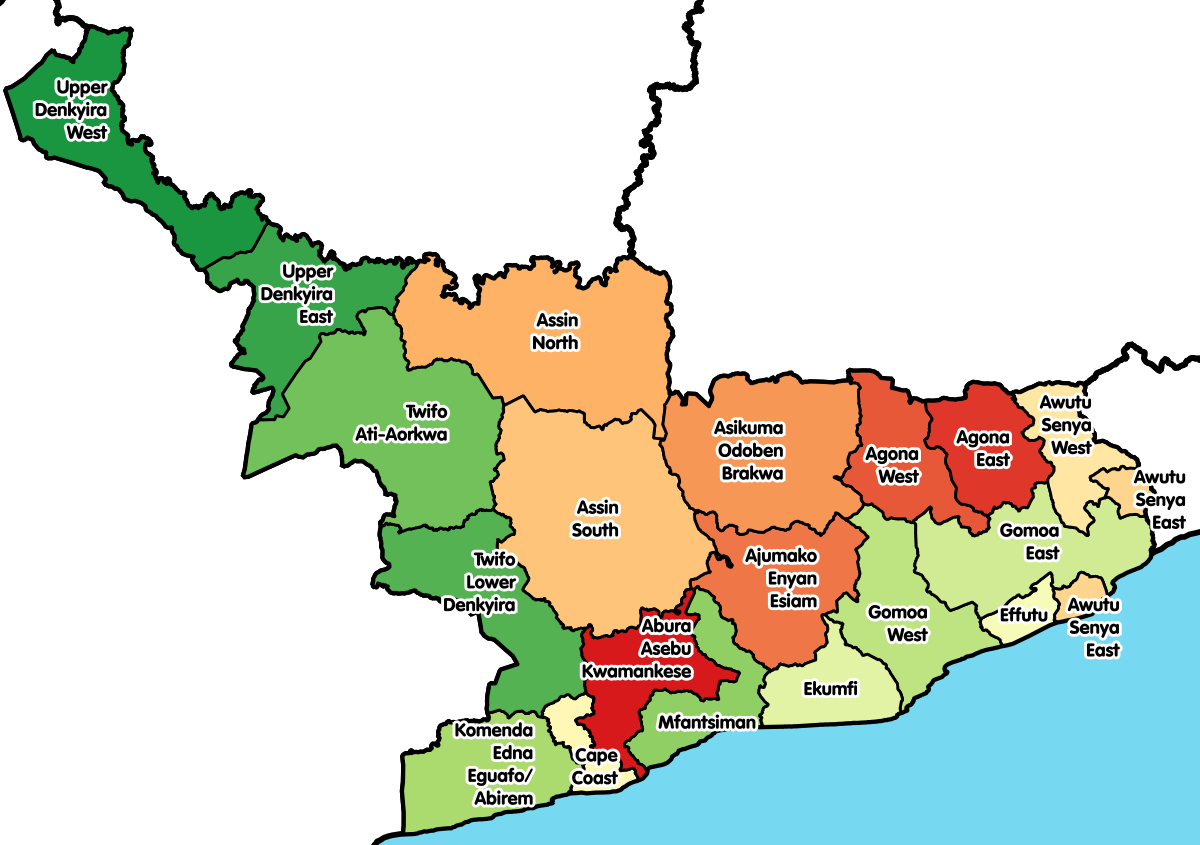
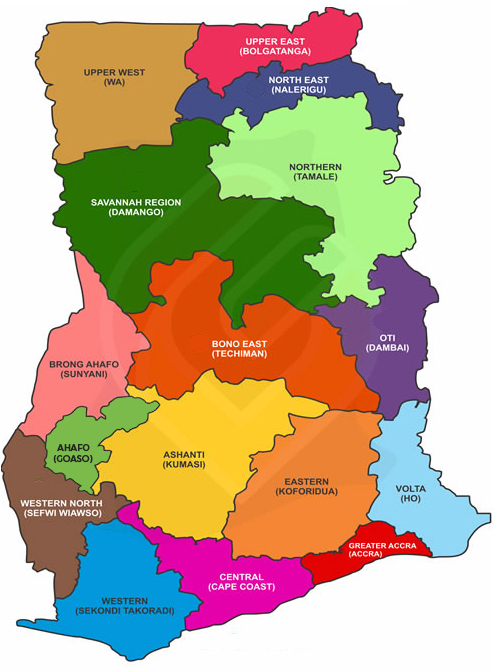
A gruesome murder for ritualistic purposes took place in Ghana’s Central Region on January 22.
A 3-week-old baby was the innocent victim of superstition, greed and a criminal mind. The baby’s father and two accomplices have been arrested in connection with the alleged ritual murder case, a swift action for which the Ghanaian police is to be commended.
One of the three accused persons is the 21-year-old father of the baby victim. How on earth is it possible that the belief in witchcraft or the power which ritualistic murder is supposed to create can make a person the murderer of his or her own child? How can you believe that sacrificing a newborn baby for ‘money ritual’ can create ‘juju’ ultimately resulting in (more) wealth, power or another desired goal for the perpetrator(s)?
More research is needed to reveal the reasons behind ritualistic murders and related criminal acts. The belief in the power of ritualistic murders is widespread in Ghana, but not exclusively in this West African country, as the evidence presented on this site clearly demonstrates.
Warning: one or more of the following articles contain(s) graphic details which may upset readers. (webmaster FVDK)
A man has been arrested for the murder of a three-week-old baby at Fetteh Kakraba in the Gomoa East District
The suspect is the baby’s father, who is believed to have killed his son for rituals on January 22
The suspect’s friend was apprehended, and he revealed the role he had played in the baby’s disappearance.
The Awutu Bereku District Police Command has arrested a 21-year-old father over the murder of his three-week-old baby.
The suspect, identified only as Bright, is believed to have killed his son for rituals on January 22.
The killing took place at Fetteh Kakraba in the Gomoa East District of the Central Region.
Bright’s friend told Adom news that the child’s mother left the baby to run an errand.
Bright then asked his friend to go and bring the baby from the room without revealing his alleged motives.
The community was alerted, and a search party tried to find the missing baby.
Bright’s friend was apprehended, and he revealed the role he had played in the baby’s disappearance.
By the time they had found Bright, he had allegedly already killed the baby. Bright and his friend have been arrested and are assisting with investigations.
A father who allegedly murdered his 3-months-old baby, his lover and a 17-year-old friend have been remanded by the Awutu Bereku District Court in the Central region.
The suspect, Bright Larvie, was arrested for allegedly beheading his own child for money rituals.
Investigations led to the arrest of his lover, Linda Asare and their 17-year-old acquaintance, Kingsley Yeboah.
The Awutu Bereku District Police Command arranged the suspects before court presided over by Justice Naomi Kuntor.
The court, considering the gravity of the charges and the ongoing investigation, decided to remand the suspects into police custody.
The 17-year-old was sent to a special facility due to his age.
They are set to reappear before the court on February 5, 2024.
Residents in Fetteh Kakraba are still grappling with the shock and horror of such a tragic event.
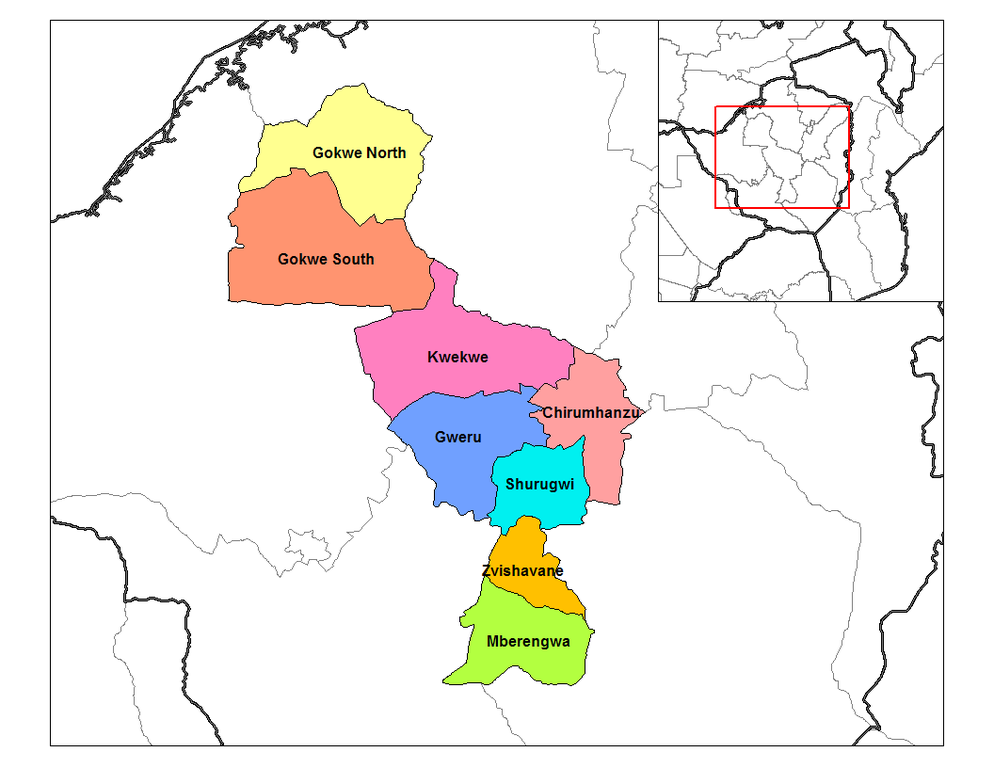
The Zhombe community in Kwekwe district, in Midlands province, is in shock. The lifeless and mutilated body of a popular teacher was found, with signs indicating a ritual murder. His violent death reminded the community of the reality of ritualistic murders, a feared reality which has never disappeared from the area.
Warning: the articles’ graphic details may upset readers. (webmaster FVDK).
Midlands province – Gruesome ritual murder of a teacher
Midlands province, Zimbabwe
Published: January 24, 2024 By: ZimEye, Zimbabwe
In a shocking turn of events, the tight-knit Zhombe community in Kwekwe district, Midlands province, is grappling with fear and horror following the brutal murder of Fanuel Mwale (57), a dedicated teacher at Rio Tinto High School.
Mwale’s lifeless body, discovered at the Joel Business Centre, bore signs of a gruesome ritual killing, marking an unprecedented and heinous act in Zhombe’s history. His defaced and naked form, with a face skinned and eyes and ears removed, has sent shockwaves throughout the community, prompting a desperate cry for justice.
Local authorities have launched a manhunt for the suspected killers, urging the public to come forward with any information that may lead to their arrest. The family, breaking their silence, revealed that Mwale would be laid to rest on Friday after a postmortem in Bulawayo.
“We are not doing any rituals; we are burying our dear brother, and all we wish for is our loved one to rest in peace. Everything else, we leave in God’s hands,” stated Mr. Shayne Shoko, the family spokesperson.
The ghastly details of the murder have not only instilled fear but have also forced the community to confront the grim reality of ritualistic killings. Zhombe Residents Association, led by Mr. Becare Ndebele, expressed the shock of witnessing such a callous murder, emphasizing the unprecedented magnitude of barbarism.
The community is rallying together, contributing funds to support Mwale’s burial and organizing a peaceful anti-crime march from Joel Business Centre to Zhombe Mission, where Mwale will be laid to rest. Mr. Ndebele affirmed, “As a community, we are contributing funds towards his burial as a way of showing solidarity with the loved ones.”
Chief Gwesela is contemplating a cleansing ceremony, bringing together churches and traditionalists to pray for the area and purify it from such malevolent acts. The late Mwale, a beloved teacher who played a vital role in imparting knowledge to the community, taught History and English at Rujeko Somalala High School before transferring to Rio Tinto High School. The hope now is for justice to prevail, bringing the perpetrators to book and restoring a sense of security to the shaken Zhombe community.
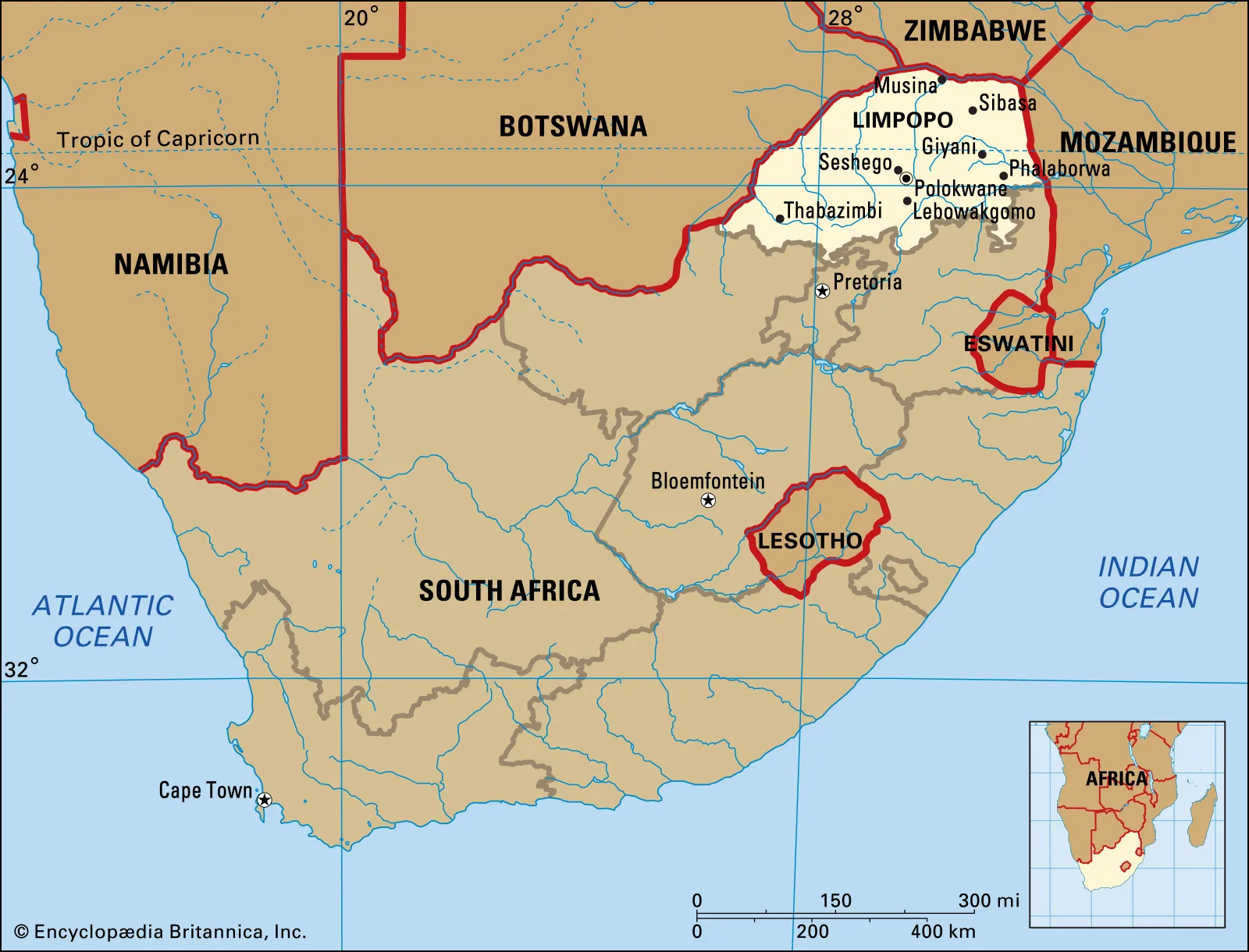
Limpopo province is notorious for its ritualistic murders and feared disappearances. It is South Africa’s northernmost province and named after the Limpopo River.
The province’s main ethnic groups are the Pedi, the Tsonga and the Venda. Traditional leaders still hold an important position in society. The total population of about 5.5 million people is made up of a large black majority (96.5%) and small minorities of whites (2.5%), Indian or Asia (0.5%) and colored people (0.3%). (Source: Wikipedia.)
An unknown number of sangomas are involved in criminal ritualistic activities and acts, notably ritual murder. Reportedly, this is the case with the sangoma arrested in Mokomene village in Botlokwa, Limpopo province, earlier this week. Read the gruesome story below. The authorities are to be commended for their swift action. It is not excluded that more arrests will follow.
Warning: The articles’ graphic details may upset readers (FVDK)
Teen’s body parts missing, sangoma bust!
A sangoma has been arrested for the brutal murder of Modjadji Thoka, who was found mutilated.
Published: January 18, 2024 By: Daily Sun – South Africa
LIMPOPO police arrested a sangoma in connection with the brutal murder of Modjadji Thoka (18).
The sangoma (30) was arrested in the early hours of Wednesday morning, 17 January at Mokomene Village in Botlokwa, Limpopo.
Modjadji went missing on Friday, 5 January, and her mutilated body was found on Monday, 8 January, at an advanced stage of decomposition with her body parts removed.
She was found with her head, legs, hands, private parts and breasts missing.
This left villagers in shock and fuming as they wanted to know who committed the gruesome act.
Limpopo police spokesman Colonel Malesela Ledwaba said cops in Botlokwa made a breakthrough following the arrest of a 30-year-old man who is linked to the murder of Modjadji, whose body was found in the Botlokwa policing area.
“Through an intensive investigation, the suspect allegedly took the team to the place where he buried the head of Modjadji and was immediately arrested for murder,” he said.
Ledwaba said the arrest comes after police were notified about the discovery of the body of a woman at an abandoned house, and upon arrival at the scene, they found the body of the woman in an advanced state of decomposition.
“Further investigations revealed that the body was dismembered,” he said.
The suspect will appear before the Morebeng Magistrates Court soon while police investigations continue.
Acting provincial police commissioner Major-General Jan Scheepers praised the team for ensuring that the ruthless criminal is put behind bars.
“I also commend the community for providing crucial information. We are relieved that the suspect is arrested and expect more arrests,” said Scheepers.
Traditional healer leads police to where he buried the head of 18-year-old girl after butchering her
The victim, 18-year-old Modjadji Niccol Thoka
Published: January 18, 2024 By: Linda Ikeji’s Blog
The police in South Africa have made a major breakthrough following the arrest of a 30-year-old Sangoma (traditional healer) who is linked to murder of an 18-year-old girl, Modjadji Niccol Thoka.
Thoka’s lifeless body was found on the 8 January 2024, at Mokomene, Ga-Thoka village in Botlokwa policing area, Limpopo a few days after she went missing.
She was found with several body parts missing, including her head, breasts, both hands and legs missing. Only her torso was discovered on the scene. The incomplete body was only recognised by a family member after residents alerted them.
According to police spokesperson, Colonel Malesela Ledwaba, members of Provincial detectives and Botlokwa detectives activated an operation to trace and arrest the suspect.
“In the early hours of Wednesday, 17 January 2024, the suspect was arrested at Mokomene village,” he said.
“Through the intensive investigation the suspect allegedly took the team to the place where he buried the head of the deceased. “He was immediately arrested for murder.
His arrest comes after Police were notified about the discovery of the lifeless body of a woman at an abandoned house.
“Upon arrival at the scene, they found a body of the woman in an advanced state of decomposition. Further investigations, revealed that the body was dismembered,” Colonel Ledwaba added.
The Acting Provincial Commissioner of the South African Police Service in Limpopo, Major General Jan Scheepers has praised the Police team that ensured that this ruthless criminal is put behind bars.
He further commended the community and Police collaboration that resulted in the providing of crucial information. “We are now relieved that the suspect is arrested and expect more arrests,” concluded Major General Scheepers.
The suspect will appear before Morebeng magistrate’s court soon. The police investigations are still ongoing.
Published: January 11, 2024 By: Daily Sun – South Africa
THE Thoka family from the small community of Mokomene in Botlokwa, Limpopo, could not have foreseen such a terrible start to the year 2024.
Five days into the new year, Modjadji Thoka (18) went missing on Friday, 5 January.
Panicking, the family set off in search of the teenager.
It didn’t take long for the family to find their loved one, but it wasn’t a pretty find. On Monday, 8 January, Modjadji’s body was found mutilated and dumped in the bushes.
All that was left of her body was her skull. Her breasts, two legs, both hands and genitals had been cut out.
The teenager’s body was discovered by local residents who alerted the police and the family of the deceased.
This horrific discovery, believed to be the first of its kind in the area, has sent shockwaves through the community.
Limpopo police commissioner Lieutenant-General Thembi Hadebe has appealed to the public to provide information that could assist the cops in their investigations after the body of a woman was discovered at Mokomene in Ga-Thoka Village at about 9am on Monday, 8 January.
Hadebe told Daily Sun that the police responded to a report of a woman’s body abandoned in the bushes.
“When they arrived, they realised that the woman’s body was in an advanced stage of decomposition. The identity of the deceased could not be determined as the investigation is still at an early stage,” she said.
Hadebe said the motive for the gruesome crime was yet to be established.
“Anyone with information that can assist in the investigation is asked to contact the investigating officer, Captain Ngwetsana, on 082 718 9781 or the emergency number 08600 10111, the nearest police station or the MySAPS app,” Hadebe said.
Suspect linked to murder of an 18-year-old woman in Botlokwa, nabbed following intensive investigation
Published: January 17, 2024 By: Media Statement, South African Police Service, Office of the Provincial Commissioner Limpopo
POLOKWANE – The Police in Botlokwa have made a major breakthrough today following the arrest of a 30-year-old man, also a Traditional Healer, who is linked to murder of an 18-year-old Modjadji Niccol Thoka, whose lifeless body was found on 08 January 2024 , at Mokomene, Ga-Thoka village in Botlokwa policing area.
Members of Provincial Detectives and Botlokwa Detectives activated an operation to trace and arrest the suspect. In the early hours of Wednesday, 17 January 2024, the suspect was arrested at Mokomene village. Through the intensive investigation the suspect allegedly took the team to the place where he buried the head of the deceased. He was immediately arrested for murder.
His arrest comes after Police were notified about the discovery of the lifeless body of a woman at an abandoned house. Upon arrival at the scene, they found a body of the woman in an advanced state of decomposition.
Further investigations, revealed that the body was dismembered.
The Acting Provincial Commissioner of the South African Police Service in Limpopo, Major General Jan Scheepers, has praised the Police team that ensured that this ruthless criminal is put behind bars. He further commended the community and Police collaboration that resulted in the providing of crucial information. “We are now relieved that the suspect is arrested and expect more arrests,” concluded Major General Scheepers.
The suspect will appear before Morebeng Magistrate’s Court soon.
Botlokwa police investigate the gruesome discovery of the body of an 18-year-old woman
Published: January 10, 2024 By: Anita Nkonki – IOL, South Africa
The Provincial Commissioner of Limpopo Lieutenant General Thembi Hadebe has urged community members to provide valuable information that can assist the police in the investigation following the gruesome discovery of the body of a young woman.
A female was found dead at Mokomene, Ga-Thoka Village under Botlokwa policing precinct, North West, on Monday at about 9 am.
Police received a complaint about the body of a woman at an abandoned house and rushed to the scene.
Upon arrival, they found the body of the woman in an advanced state of decomposition.
“The deceased’s identity will be released in due course as the investigation is still in its preliminary stages. The motive behind this gruesome act is not yet established.”
GRAPHIC CONTENT: Teenager’s murder shocks Limpopo community
Published: January 12, 2024 By: YouTube
Please note, that the following report contains graphic content which may upset some viewers. Some residents at Mokomene village at Botlokwa in Limpopo say they feel unsafe after the discovery of the mutilated body of an 18-year-old girl. Modjadji Thoka’s decomposed remains were found in an abandoned house. Her family reported her missing last week. Angry community members have called on the police to intensify their investigation.
Screenshot. To watch the video click here. Warning: GRAPHIC CONTENT: Teenager’s murder shocks Limpopo community
An allegedly gruesome ritual murder was committed in Ondo State last month, in December 2023. The victim was a day-old baby.
The authorities arrested the 66-year old grandmother of the innocent child together with a native doctor, the two had connived to murder the baby for ritual purposes.
Warning: the following articles contains graphic details which may upset readers.
Ondo State, nicknamed ‘the Sunshine State’, is located in the South West geopolitical zone of the Federal Republic of Nigeria. The Federal Republic of Nigeria is divided into six geopolitical zones commonly called zones.
Nigeria’s six geopolitical zones
Ondo State is Nigeria’s 19th most populated state with an estimated population of 5.1 million people in 2022. It’s one of Nigeria’s smaller states: it’s the country’s 25th largest state with a land area of about 14,606 km² (5,639 square miles).
Ondo State is a ‘Yoruba State’: the state’s ethnic population consist mainly of Yoruba and Yoruba subgroups. The vast majority of the population practices a Christian religion, minorities are muslim or consist of traditional animist worshippers. Source: Wikipedia.
For the official website of the Ondo State government: click here
Ondo: native doctor, grandmother arrested for allegedly killing a day-old baby for ritual purposes
Published: December 15, 2023 By: Kazeem Badmus – OsunDefender, Nigeria
A self confessed prophet, Akinjise Ifeoluwa and a 66-year-old grandmother, Oyewole Margaret, have been arrested by the Ondo Police detectives for the alleged murder of a day-old baby in lsua, Akoko South East council area of Ondo state.
Osun Defender gathered that Margaret is the grandmother of the day-old baby, that was murdered after birth.
The medium learnt that the grandmother and the prophet were accused by the mother of the day-old baby, Oyewole Oluwaseun.
The mother said the duo murdered her baby for alleged ritual purposes.
The prophet and the grandmother were arrested following a complaint lodged at the lsua police division that Oluwaseun who just gave birth to a baby couldn’t give a satisfactory account of her baby’s whereabouts.
Police image maker, Funmi Odunlami, while parading the two suspects, in Akure, said that “the complainant said that his sister has been pregnant for 9 months and observed that she had delivered and when asked about the baby, she claimed the baby had died and has been buried with the aid of their mother without informing any family member.
Odunlami added that “The Police later arrested one Akinjise Ifeoluwa ‘m’ aged 40 years and Oyewole Margaret ‘f’ aged 66 years in connection with the case.
“In the course of investigation, it was discovered that her mother, Oyewole Margaret entrusted her care to a native doctor named Akinjise Ifeoluwa who also claimed to be a prophet.
“The mother of the baby stated that she got pregnant for Akinjise and that on the day of delivery, her mother and Akinjise were constantly communicating through phone and that the Prophet ordered her mother to block the child’s nostrils to enable the baby to die.
“The prophet said it is an abomination for the baby to be alive because it will lead to the death of the lady as the Prophet claimed she had slept with another man while pregnant for him except her mother wants to lose her after fourteen (14) days.
“After she regained her strength, her mother informed her that the baby had died and the baby and the placenta had been buried.
“However, when the purported place of burial was visited, neither the baby nor the placenta was found.”
In an interview, the mother of the day-old baby, Oluwaseun, said her mother, Margaret, conspired with the prophet to kill her baby for rituals.
Oluwaseun told newsmen that her mother forcefully took her away from her former husband after bearing two children for him under the pretext that he wasn’t taking care of her.
She said that the prophet and her mother should explain the whereabouts of her baby.
Ondo: Police arrest grandmother, prophet for allegedly killing day-old baby
Published: December 15, 2023 By: Hakeem Gbadamosi – Nigerian Online
Men of the Ondo State Police Command have arrested a 66-year-old grandmother, Oyewole Margaret, and a self-proclaimed prophet, Ifeoluwa Akinjise, over the killing of a day-old baby in Isua Akoko, in the Akoko South-East council area of Ondo State.
The duo is alleged to have conspired to kill the day-old baby immediately after delivery by his mother, Oluwaseun Oyewole, and then hurriedly buried the remains.
A relative of the mother reported the incident to the police after discovering that the sister, who had just given birth, was without the baby. It was later revealed that the grandmother and the prophet had collaborated to kill the baby for alleged ritual purposes.
The prophet and the grandmother were subsequently arrested following a complaint lodged at the Isua police division.
The State Police spokesperson, Funmi Odunlami, confirmed the arrest, stating that the baby’s mother’s brother lodged the complaint.
Odunlami said, “The complainant said that his sister had been pregnant for 9 months and observed that she had delivered. When asked about the baby, she claimed the baby had died and had been buried with the aid of their mother without informing any family member.
“The Police later arrested one Akinjise Ifeoluwa, aged 40, and Oyewole Margaret, aged 66, in connection with the case. In the course of investigation, it was discovered that her mother, Oyewole Margaret, entrusted her care to a native doctor named Akinjise Ifeoluwa, who also claimed to be a prophet.
“The mother of the baby stated that she got pregnant for Akinjise, and on the day of delivery, her mother and Akinjise were constantly communicating through the phone. The Prophet ordered her mother to block the child’s nostrils to enable the baby to die.
“The prophet said it is an abomination for the baby to be alive because it will lead to the death of the lady. The Prophet claimed she had slept with another man while pregnant for him unless her mother want to lose her after fourteen (14) days.
“After she regained her strength, her mother informed her that the baby had died, and the baby and the placenta had been buried. However, when the purported place of burial was visited, neither the baby nor the placenta was found.”
The mother of the day-old baby, Oluwaseun, claimed that her mother and the prophet conspired to kill her baby for rituals. She accused her mother of forcefully taking her away from her former husband after bearing two children for him, under the pretext that he wasn’t taking care of her.
She mentioned that the prophet and her mother constantly communicated on the phone and conspired to kill the baby, with the prophet instructing her mother to suffocate the baby by blocking the nose. She urged the police to question her mother and the prophet to explain the whereabouts of her baby.
Reportedly – see the article presented below – the two accused men committed a gruesome ritualistic murder. Hence it is not clear why the state prosecutor only accused them of criminal conspiracy, causing grievous hurt and attempting to commit culpable homicide. Be it as it may, the reported ritualistic act is repulsive and shows once more that superstition, ritualistic acts and criminal behavior also exist in Bauchi State, located in the North-East geopolitical zone of Nigeria. The Federal Republic of Nigeria is divided into six geopolitical zones commonly called zones.
Nigeria’s six geopolitical zones
Of Nigeria’s 36 states, Bauchi State is the fifth largest in area with a total land area of 49,119 km2 (18,965 sq mi) representing slightly more than 5% of Nigeria’s total land mass. Bauchi is Nigeria’s seventh most populous state with an estimated population of between 7 and 8 million in 2023 composed of not less than 55 tribal groups which include Fulani, Gerawa, Sayawa, Jarawa, Kirfawa, Turawa, Bolewa, Karekare, Kanuri, Fa’awa, Butawa, Warjawa, Zulawa, Boyawa, MBadawa. The Fulani (Peiulh in French) are the main ethnic group.
The vast majority of the population, some 85%, are Muslim with smaller Christian (6%) and traditionalist minorities 9%). However, like in a number of other SSA countries remnants of traditional beliefs (and superstition) linger in the religious – muslim and christian – population.
Official website of Bauchi State Government: click here
Notable people from Bauchi State include Sir Abubakar Tafawa Balewa (1912 – 15 January 1966), who was Nigeria’s first and only prime minister upon independence in 1960. He was murdered in a military coup in January 1966 under circumstances which have never been become clear. His body was dumped at a roadside near Lagos. He was buried in Bauchi.
Warning: The following articles contain graphic details which may upset readers (webmaster FVDK).
2 men bag 35 years imprisonment for attempted ritual use of 6-year-old girl’s private parts
2 men bag 35 years imprisonment for attempted ritual use of 6 year old girl’s private parts
The defendants were arraigned on a three-count charge of criminal conspiracy, causing grievous hurt and attempting to commit culpable homicide.
Published: December 12, 2023 By: News Agency of Nigeria – Pulse, Nigeria
Bauchi State High Court 1 has sentenced two persons, Adamu Abdulra’uf and Abdulkadir Wada to 35 years’ imprisonment each for causing grievous hurt and attempting to commit culpable homicide on a six-year-old girl.
Justice Rabi Umar convicted and sentenced Abdulra’uf, 20 years old, and Wada, 21 years old, after they pleaded guilty to the crime. Earlier, the Prosecution Counsel, Sabiu Gumba, told the court that the two defendants Abdulrauf and Wada were arraigned on August 17, 2021 on a three-count charge of criminal conspiracy, causing grievous hurt and attempting to commit culpable homicide.
The prosecution counsel called four witnesses including the father of the victim, while the defendants testified for themselves but didn’t call additional witnesses. Gumba tendered the two knives used in committing the crime, a bottle containing the private part of the girl and a powder.
The News Agency Nigeria (NAN) reports that the defendants were alleged to have on December 30, 2020, at Jama’are Local Government Area of the state, strangled one Hauwa’u Ya’u. Ya’u, who was six years old at the time, fainted before they used knives to cut off her private part for ritual purposes.
Court Sentences Two Men to 70 Years For Removing 6-year-old Girl’s Genitals For Money Ritual in Bauchi (Photo)
Young ritualists
Published: December 12, 2023 By: Thandiubani – Tori, Nigeria
Justice Rabi Umar convicted and sentenced Abdulra’uf, 20, and Wada, 21, to 35 years each after they pleaded guilty to the crime.
Two young teenagers have been sentenced to 70 years in prison for removing a 6-year-old girl’s genitals for money ritual. They were sentenced by a Bauchi State High Court 1.
The ritualists have been identified as Adamu Abdulra’uf and Abdulkadir Wada. They were sentence to 35 years each.
The court had earlier heard how the defendants, on December 30, 2020, at Jama’are Local Government Area of the state, strangled one Hauwa’u Ya’u. Ya’u, who was six years old at the time, fainted before they used knives to cut off her private part for ritual purposes.
Justice Rabi Umar convicted and sentenced Abdulra’uf, 20, and Wada, 21, to 35 years each after they pleaded guilty to the crime. Earlier, the Prosecution Counsel, Mr Sabiu Gumba, told the court that the two defendants, Abdulrauf and Wada, were arraigned on August 17, 2021 on a three-count of criminal conspiracy, causing grievous hurt and attempting to commit culpable homicide.
The prosecution counsel called four witnesses including the father of the victim, while the defendants testified for themselves but didn’t call additional witnesses.
Gumba tendered the two knives used in committing the crime, a bottle containing the private part of the girl and a powder.
Law enforcement officers as well as the High Court Judge are to be commended for the bringing to justice of a father who brutally killed his own son believing that would bring him wealth. Greed and superstition were the ingredients for a repulsive act. Hopefully the 52-year prison sentence for the convicted murderer will act as a deterrent for others who might be tempted to engage in this practice of child sacrifice for personal gains.
Warning: the following article contains graphic details of a cruel crime which may upset some readers (webmaster FVDK).
Father jailed 52 years for son’s ritual sacrifice, witch doctor set free
The accused persons arrive at court. COURTESY PHOTO/URN
Published: November 1, 2023 By: Michael Wandati – DISPATCH, Uganda’s News Monthly
Iganga, Uganda | In a significant legal ruling, High Court Judge, Justice David Batema, has handed down a verdict resulting in a 52-year prison sentence for Hassan Kafudde, a father convicted of the murder of his son in a ritual sacrifice. The case also involved lengthy sentences for one accomplice, while the witch doctor implicated in the case, who had spent six years in remand, was released.
The proceedings unfolded within the High Court of Uganda Circuit located in Iganga. The prosecution’s case contended that Kafudde sacrificed his son in a ritual murder with the belief that it would bring him wealth.
According to the prosecution’s account, on the 6th of June 2017, the convicted individuals, situated in Musita village within the Mayuge District, gruesomely beheaded and mutilated a child known as MJ in a ritualistic act.
Earlier in the legal proceedings, one of the accused, Issa Muyita, entered a guilty plea, reached a plea bargain agreement, and offered to testify as a prosecution witness. Consequently, he received a 25-year prison sentence. The trial continued against Kafudde and Kabaale Mubaraka, both of whom pleaded not guilty.
During the trial, Muyita confessed that he had accompanied Kafudde from Musita trading center to a sugarcane plantation, where Kafudde presented his son MJ. The child was tragically murdered in the sugarcane plantation near a stream. Kafudde collected the child’s blood in a polythene bag and transported the severed body parts in a bag. Additionally, he dug a shallow grave to bury the decapitated remains of the sacrificed child.
As a result, Kafudde was found guilty of the ritual murder of the child MJ and convicted as charged. It was subsequently established in court that Mubaraka did not actively participate in the commission of the offense.
However, the court determined that Mubaraka, identified as a witch doctor with shrines in Musita village, had been informed of the criminal act by Hassan Kafudde. Mubaraka subsequently went into hiding after the incident and was subsequently found guilty of being an accessory to the murder, as per section 394 of the Penal Code Act.
At the conclusion of the trial, Justice Batema, presiding over the High Court of Uganda Circuit in Iganga, convicted and sentenced the accomplices, Muyita, Kafudde, and Mubaraka, on the charge of trafficking in persons, in violation of section 4(a) and 5(c) of the Prevention of Trafficking in Persons Act. Hassan Kafudde was sentenced to 52 years in prison, while Mubaraka received a 3-year prison term.
In his judgment, Justice Batema strongly denounced the heinous practice of ritual child sacrifice, the dismemberment of children, and the illegal trade in body parts, emphasizing the gravity of such offenses.
Justice Batema justified the lengthy custodial sentence for Kafudde by pointing to his lack of remorse throughout the court proceedings and his failure to demonstrate regret for the crime. Accordingly, Kafudde was sentenced to spend 52 years in Kirinya prisons, which includes the six years spent in pretrial detention.
The judge found Kabaale Mubaraka guilty of being an accessory to the crime but observed hesitancy on his part to report the incident to the police. Consequently, Mubaraka was sentenced to three years in prison, but given his prior six-year remand period, he was ordered to be immediately released.
Jacqueline Okui, the spokesperson for the Directorate of Public Prosecutions (DPP), commended the court for its landmark judgment, asserting that it will serve as a deterrent to individuals involved in such criminal acts.
Okui further challenged parents to take a proactive role in safeguarding their children’s well-being, emphasizing that engaging in child rights abuses such as ritual murders, whether directly or indirectly, would result in significant custodial sentences.
The investigation of this case was led by Aliwali Kizito, Chief State Attorney, with the prosecution being conducted by Racheal Bikhole, Assistant Director of Public Prosecutions and Head of the Prevention of Trafficking in Persons Division, along with Nyanzi Gladys, Assistant Director of Public Prosecutions, Biira Peace, Chief State Attorney, and Arap Malinga, a Senior State Attorney within the Office of the Director of Public Prosecutions.
It is one of Zimbabwe’s most notorious ritual murder cases. The violent death of 7-year old Tapiwa Makore upset the Zimbabwean nation since it occurred in 2020.
Tapiwa Makore was a 7-year-old boy from Makore Village under Chief Mangwende in Murewa District, Mashonaland East Province who was brutally murdered for ritualistic purposes on 17 September 2020.
Much has been said and published about this ritual murder case, also on this site. I will not repeat the background. Interested readers can find all information by using the dropdown menu of the present site, chose the country ‘Zimbabwe’ and search for ‘Tapiwa Makore’. (FVDK).
Warning: the graphic contents of some articles may upset readers (webmaster FVDK).