The women banished as witches in West Africa – with focus on the Gambaga ‘witch camp’ in Ghana’s North East Region

Superstition is the common denominator of both ritual murder and belief in witchcraft. Both phenomena are likely to occur in all countries in Sub-Saharan Africa. 

In the past, I have extensively discussed (accusations of) witchcraft here, citing cases in a large number of SSA countries: Angola, DRC, Ghana, Ivory Coast, Kenya, Liberia, Nigeria, Tanzania, South Africa, Zambia and Zimbabwe. The fact that not all SSA countries are mentioned on this site is more a result of underreporting than of the phenomenon not occurring in the SSA countries not mentioned.  

The article below is a worthwhile report on the causes and consequences of accusations of witchcraft in Ghana: worth reading but painful to read about what people can do to each other. The most vulnerable in society are often the victims: vulnerable, elderly women and young children. I am reminded of the sad case of the 90-year-old woman who was lynched in Ghana in 2000, accused of witchcraft (also mentioned by the author in the article below). Unfortunately, there are many more cases, some of which, as mentioned, are reported on this site. Terrible. 

The author of the article below, Claire Thomas, an award-winning Welsh photojournalist and fine-art photographer, is to be commended for her thorough research into witchcraft in Ghana and the resulting reporting. Yesterday, I highlighted Leo Igwe’s excellent work in this area. These abuses (read: crimes) can never be given enough attention, and never enough action to eradicate them forever.
(webmaster FVDK)

The women banished as witches in West Africa

Claire Thomas reports on the women banished from their communities after being accused of being witches

Published: February 13, 2026
By: Claire Thomas – Geographical, U.K.

In a remote part of West Africa, centuries-old superstitions continue to condemn women accused of witchcraft to exile. A landmark bill offers hope — but can justice overcome belief?

Report and photographs by Claire Thomas

From ghouls and goblins to fairies and ogres, mythical creatures have long stirred the imaginations of children. Tales of wizards and witches – one often symbolising wisdom and power, the other evil and danger – remain especially enduring, kept alive through books, films and folklore. But in northern Ghana, witches aren’t confined to fairy tales. Belief in witchcraft remains widespread and deeply entrenched there, with devastating consequences, particularly for women.

This belief can be deadly. In July 2020, 90-year-old Akua Denteh was brutally lynched in a public market after being accused of witchcraft. Her killing, filmed and widely circulated, shocked the nation and galvanised calls for legal reform. Her death became a symbol of the deadly intersection of superstition and gender-based violence.

To be accused of witchcraft in Ghana is to face exile, persecution and even death. These accusations – often directed at older, vulnerable women – can be triggered by personal misfortunes: the death of a relative, failed crops, illness or jealousy over a woman’s independence. Even a child’s success at school can spark suspicions of a mother’s spell. For those deemed guilty, banishment to one of northern Ghana’s six so-called ‘witch camps’ is often the only means of survival.

I first visited the Gambaga ‘witch camp’, located in Ghana’s North East Region, in 2008, and returned in 2012. There, I witnessed first-hand the stark realities the women endure. While interviewing one elderly woman, I asked if she believed she was a witch. Before she could respond, my translator, who was related to the local chief, interjected: ‘Of course she’s a witch. Why else would she be here?’ The question was never translated. Her answer was lost – her voice dismissed before it could even be heard.

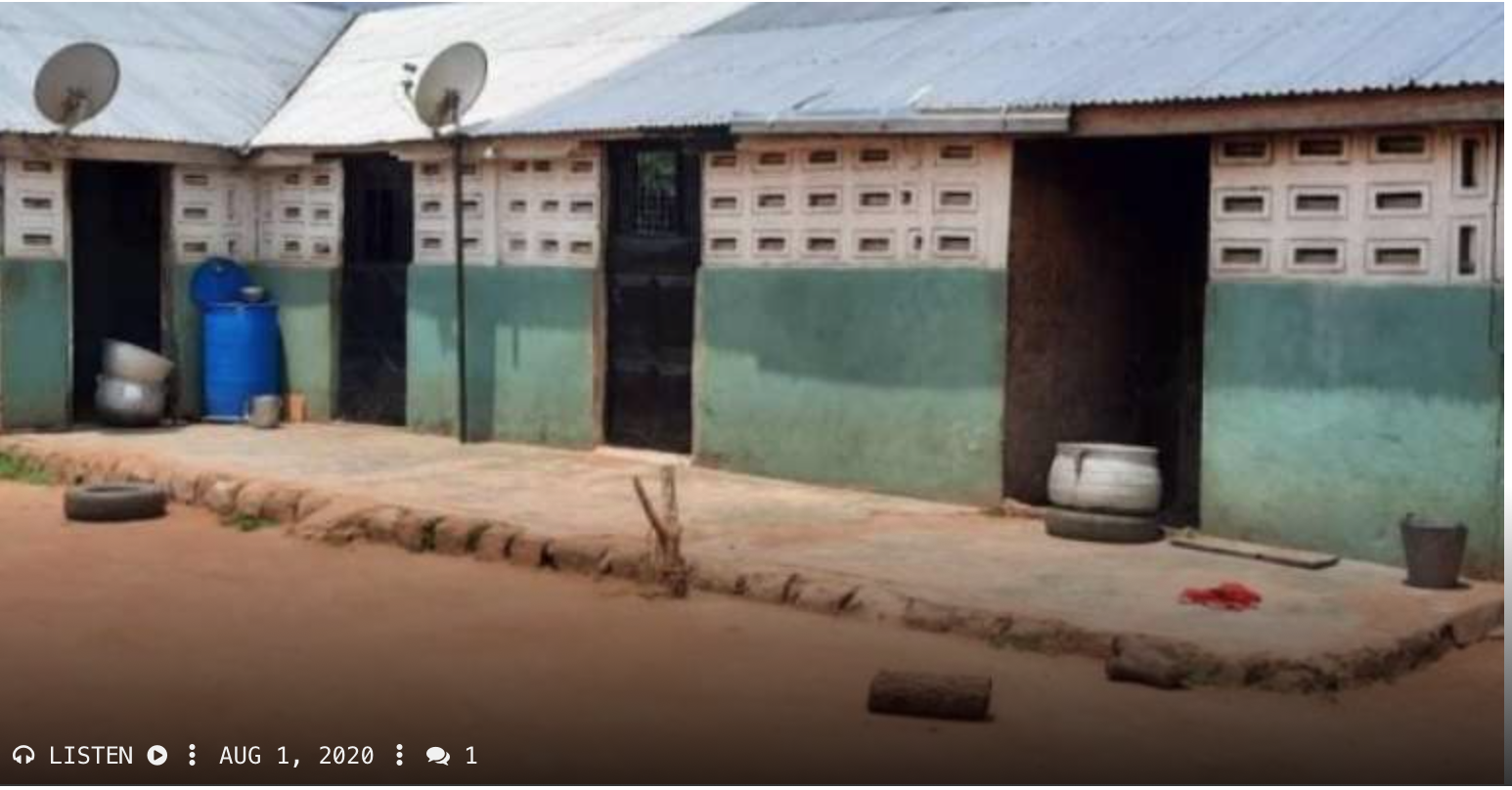
The settlement – a cluster of round mud huts with thatched roofs in Ghana’s semi-arid savannah – offers fragile protection: safety from attack, but no escape from the stigma of being branded a witch.

Matis Awola, a widow in her late 50s, sits outside her hut in Gambaga to which she was banished after a man claimed to have seen her in a dream

Accusations often lead to a traditional ‘trial’ – a ritual involving the slaughter of a chicken or guinea fowl, with the manner of its death interpreted as spiritual evidence. But in many cases, the accusation alone is enough to seal a woman’s fate. Regardless of the ritual’s outcome, she may be cast out by her community, her judgment delivered not by spirits, but by neighbours.

When I returned to northern Ghana in May 2025, I met Matis Awola, a widow who had been banished from her home just a month earlier. For her, a man’s dream became a living nightmare.

‘A man saw me in a dream and the next day I was accused of being a witch,’ she tells me. ‘I went to the bush and wanted to kill myself.’

In April 2025, her son brought her to Gambaga, where she now lives in a tiny, windowless hut among about 80 other accused women. She survives by working on a local farm in exchange for food, clinging to the hope that she might one day return to her family.

Life in the camps is marked by relentless hardship. The women live in poverty and bear the burden of societal rejection, often ostracised even by their own families. They sleep on dirt floors in makeshift huts, relying on sparse donations from NGOs, churches or well-wishers. Access to clean water, healthcare and food is unreliable. Children who accompany their mothers or grandmothers are often bullied in school or pulled into street work, stigmatised as ‘witches’ children’.

Bachalbanueya has spent more than 40 years in exile. Now in her 80s, she sits quietly outside her crumbling mud-brick hut. She was banished after her husband’s co-wife accused her of witchcraft following his death – grief weaponised into a lifetime of isolation.

‘She had no children of her own,’ explains Reverend Gladys Lariba Mahama, a Presbyterian minister who has supported the women of Gambaga camp since 1997. ‘Whenever a child of the co-wife fell sick, they [the family] attributed it to her. Later, she was accused of causing the death of one of them, and she was brought to Gambaga.’

Stories like hers are tragically common. ‘It is violence against women – a demonisation of women,’ says Professor John Azumah, executive director of the Sanneh Institute in Accra, which has long supported survivors and is part of a coalition pushing for legal reform.

Even in Western usage, the term ‘witch hunt’ reflects long-standing cultural beliefs that associate witches with evil, and overwhelmingly with women. While men can also be accused, accusations most often target women. Witchcraft itself isn’t always seen as evil, Azumah explains, but when it’s believed to reside in a woman, it becomes feared and condemned. Male witches, by contrast, are often thought to use their powers for good.

Most of the women banished to camps are among society’s most vulnerable. ‘These women are the poorest of the poor,’ says Azumah. ‘They have no child or relatives well-off enough to speak for them – that’s why they’re languishing there. Women with educated children – those children get their mothers out. But these women have no-one. They are truly the voiceless.’

The women gather at the Community Centre in Gambaga

Lamnatu Adam, executive director of Songtaba, a women’s rights organisation in northern Ghana, echoes this view. ‘When men are spiritually strong, it’s said they use their power to protect the community and family,’ she says. ‘But when women are thought to be spiritually strong, it’s said they use it to cause harm, illness and disaster.’

As a result, women – particularly older women – disproportionately bear the burden of accusation and exile. ‘About 90 per cent of the women who are accused are over 60 years old and without education,’ says Adam. ‘They are very poor. Most don’t have children, and about 80 per cent are widows.’

Azumah traces the pattern of accusations to a blend of spiritual belief and calculated social exclusion. ‘It’s the oldest conspiracy theory of humankind,’ he says. ‘And it is a form of misogyny.’ Even a woman’s success, such as a bountiful harvest, can provoke jealousy. ‘They accuse her just to get her out of the community, then they take over her land.’

Sometimes, the danger comes from within the family. ‘Young men may genuinely believe their mothers are sabotaging their lives,’ he adds. ‘They truly believe it.’ In the end, he says, it’s scapegoating, ‘a conspiracy theory that has been used – and still is’.

Refuge or prison?

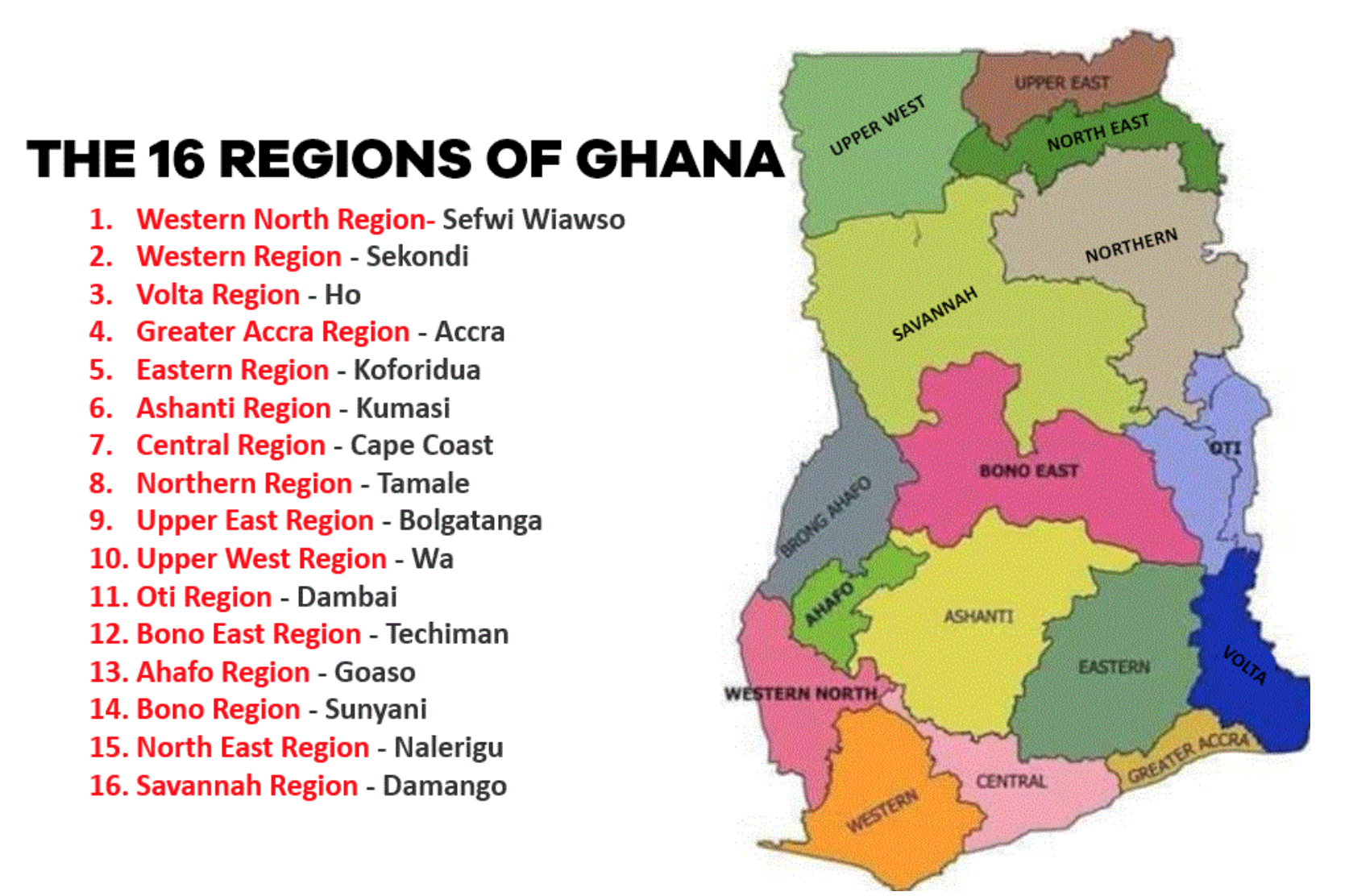
There are now around six unofficial ‘witch camps’ remaining in northern Ghana, situated near remote villages such as Gambaga, Kpatinga, Gnani and Kukuo. While these settlements may offer refuge from immediate danger, they also stand as stark reminders of social exclusion and the unresolved injustice the women continue to face.

As Professor Azumah puts it: ‘The camps are neither a refuge nor a prison, they are something in between.’

There are no fences or gates, yet most women don’t feel free to leave. Many believe that returning home would bring illness, misfortune or even death. Some were violently attacked before fleeing; others were quietly cast out by relatives seeking to rid the family of perceived spiritual danger.

‘There are no physical barriers keeping the women inside,’ says Professor Azumah. ‘But cultural and psychological ones are deeply entrenched. The women are made to believe that if they leave the camp, the spirits will kill them.’

Fusheina, a widow and mother of five, has lived in the Gnani camp in Ghana’s Northern Region for the past six years. She was accused of witchcraft by the chief of her village after the sudden death of her nephew. Expelled immediately, she now lives alone. ‘I’m not happy because my children are not with me,’ she says sorrowfully. ‘I just want to go home.’ But returning is not an option – she fears the villagers would harm her.

Life in the camp is extremely difficult, Fusheina adds. ‘There is no work. We don’t have a farm here, so we have no way of earning money.’ She hasn’t seen her children in more than two years.

While witchcraft accusations are common across Ghana, and many other countries, the practice of banishing women to isolated camps is less prevalent. ‘[Belief in] witchcraft is not just a Ghanaian thing,’ explains Professor Azumah. ‘It’s very strong in Nigeria, in East Africa, Tanzania, South Africa. What is unique about Ghana is the camps in the north.’

Despite being established to provide a place of refuge for vulnerable women, there are reports of exploitation and abuse within the camps. ‘I don’t call it a refuge,’ stresses Professor Azumah. ‘These are places of exploitation – the women there are exploited. Some of them are sexually abused, physically molested.’

Some women are forced to work without pay, fetching water or farming for community leaders and priests. There are credible reports of sexual abuse, and in at least one documented case, a priest fathered children with multiple women in a camp, according to Professor Azumah.

‘People are making money out of it,’ he adds. ‘It has become an industry – it is a huge business for people there. The women are used for free labour by the community leaders in the rainy season – they make them go and cultivate their farms. They do all the work manually and all they get is whatever food they can give them there to eat that day to do the work, that’s all. They are not paid anything.’

Even humanitarian aid doesn’t always reach its intended recipients. Community leaders – who often control the camps – have been accused of diverting food and money for personal use.

Chief of Gnani village, Mohammed Abdulai, in talks with Lamnatu Adam, of Songtaba, a women’s rights advocacy group

‘These are not safe havens,’ says Azumah. ‘They are places where society has abandoned its most vulnerable.’

In Gambaga, the Presbyterian Church has worked for decades to help restore dignity and agency, says Reverend Gladys Lariba Mahama. ‘In the past, when women were banished, no-one asked about them,’ she says. ‘But because of the church’s intervention, people now know them, and the whole world knows their story.’

‘This place [Gambaga camp] was established out of love and sympathy,’ she continues. Referring to the camp as a ‘home’, Reverend Gladys explains that it was founded decades ago when a local religious leader intervened to protect women accused of witchcraft. ‘Whenever they were accused, they would send them to the execution field to kill them. So this man – he was the imam of Gambaga – pleaded that they come here instead.’

Since the early 1960s, the Presbyterian Church of Ghana has supported the women by providing food, second-hand clothing and helping to repair their modest homes. ‘Around 1994, the church saw that they could do more,’ explains Reverend Gladys. ‘So they came up with a proposal – the main purpose was to reintegrate the women into their original communities, ensure their health needs are met, send their children to school and make life more comfortable for them here.’

The women of Gambaga camp clearly trust Reverend Gladys. As she moves through the settlement she greets the women by name, exchanging warm smiles and translating their stories with care.

‘We are here every morning,’ she tells me as an elderly woman approaches her with a gentle smile and a handshake. ‘We’re working hard now on the reintegration programme. Many women travel home to visit and return. Some of their family members even come here to see them.’

Still, stigma remains. For most of the women, their families refuse to visit.

Gambaga’s central location – at the heart of the village rather than tucked away – offers a greater degree of community integration. ‘They’re well integrated into Gambaga and the surrounding communities,’ says Reverend Gladys. ‘Sometimes, because of the humiliation and trauma they’ve endured, when you ask the women if they want to go home, some will say no.’

The cost of going home

Reintegration comes at a cost – both symbolic and financial. For the few women who eventually return, sometimes years or even decades after being accused, the process depends on a traditional ‘cleansing’ ritual intended to absolve them of alleged witchcraft. Performed by spiritual leaders, it typically involves the slaughter of a ram and a chicken, and can cost more than 1,000 Ghanaian cedis (around US$100).

But even with support, reintegration is far from straightforward. In many cases, no amount of spiritual absolution or mediation is enough to convince families or communities to accept a woman back. ‘Most of the communities say even the exorcism – we don’t believe in it, because once a witch, forever a witch,’ says Professor Azumah. ‘They [the communities] believe in the diagnosis, but not the cure. When the same priest declares a woman a witch, they believe him. But when he says, “I can perform a ritual to free her of the spirit,” they don’t believe that part.’

In Gambaga, the church often steps in. ‘When a woman wants to try to return home, we work on it,’ says Reverend Gladys. ‘But first she has to go through purification.’

For Ama Somani, a mother of eight, the church’s support changed everything. ‘I wanted death because it was too painful,’ she says, recalling her exile. She had been accused by her niece, who blamed her for a mysterious illness. A traditional ritual involving the slaughter of a guinea fowl found her guilty. With no one to defend her – her husband, a landlord in their community, remained absent – Ama spent four years in Gambaga, isolated and uncertain.

In April 2025, with help from the Presbyterian Church, she was finally reintegrated into her extended family in a nearby village. The church provided food rations and negotiated her return. Life remains difficult, she says, but she is overjoyed to be reunited with her children and loved ones.

Alongside the church, Professor Azumah and the Sanneh Institute, together with NGOs and human rights advocates, have worked tirelessly to reintegrate accused women across northern Ghana.

‘Sometimes the accuser has died, or the situation in the village has changed, and the woman can safely return,’ explains Azumah. ‘Sometimes the community or family regrets the accusation. They admit it came from jealousy or envy. They want the woman to come back. But first, she has to pay what I call the “discharge fee” – the cost of rituals to release her.’

These rituals, he adds, are what keep many women trapped. ‘Most can’t afford them. So even when they could return safely, they’re stuck because they can’t pay for the ceremony that would set them free.’ In some cases, as NGOs have stepped in to help, community leaders have raised prices, hoping donors will cover the costs. ‘They’ve inflated the fees astronomically,’ says Azumah. ‘And so, the cycle continues.’

Calling on Ghana’s president to sign the Anti-Witchcraft Bill during a Mother’s Day event at the Gnani camp

Despite these obstacles, organisations such as ActionAid Ghana and Songtaba have helped reintegrate hundreds of women. ‘Overall, we’ve reintegrated not less than 600 people into their communities over the past 15 years,’ says Esther Boateng, ActionAid Ghana’s regional manager for the Northern, Northeast and Savannah regions. ‘We identify their home communities, engage families and involve the entire community – the same community that accused them.’

In 2014, ActionAid worked with the Ministry of Gender to shut down the Bonyasi camp in the Central Gonja District after successfully reintegrating all of its residents. ‘We had to ensure their safety, so we combined community sensitisation, radio education and events like Mother’s Day celebrations to build acceptance,’ says Boateng. ‘We even built houses for some women returning home. It was a fully integrated programme, and today, Bonyasi camp no longer exists.’

Spirits, sickness and superstition

The persistence of witchcraft accusations in Ghana can’t be understood without acknowledging the deep-rooted belief in spirits, possession and supernatural causality – beliefs that shape how many Ghanaians interpret illness, misfortune and conflict.

During a visit to the stilt village of Nzulezu in Ghana’s Western Region in 2012, I witnessed just how deeply these convictions are held. One night, the wooden platform beneath me shuddered, waking me from sleep. Under a moonlit sky, I stepped outside the homestay hut and onto the creaking boardwalk. Across the water, silhouetted figures had gathered. Women wailed and chanted, a plume of smoke rising among them. A small child, wrapped in a blanket, was being passed gently from one person to another.

Curious and concerned, I asked what was happening. I was told the child had been possessed by an evil spirit.

Later, a man approached and asked if I could help. Unsure what to say, I suggested we take the child to the hospital to be tested for malaria. ‘No, no,’ he replied, shaking his head. ‘We need to take out the evil spirit.’ The ritual continued through the night.

Wuriche Bajimoin prepares dawadawa, a traditional West African seasoning made from locust bean seeds, in Gambaga camp

The next morning, I saw a relative of the boy and asked how he was doing. With a broad smile of relief, the man said, ‘He’s much better.’ I asked what had been wrong with him. ‘Malaria!’ he answered.

This brief encounter has stayed with me for years. It revealed how central spiritual explanations are to daily life, and how illness and affliction are often viewed through a supernatural lens. In that context, it becomes easier to understand how, in moments of unexplained tragedy or fear, suspicion turns towards someone believed to possess malevolent power. Often, that someone is an older woman without protection.

Belief in witchcraft is very strong, Professor Azumah tells me. ‘Medical doctors believe it; police officers believe it. Even judges believe it.’

Hope, and a way forward

What has struck me most on each visit to the camps of northern Ghana is the remarkable resilience of the women who live there. Despite the extreme hardship and the isolation of exile – not just from society, but often from their own families – the women maintain a quiet strength. Even in the face of rejection and poverty, the joyful spirit so beautifully woven into Ghanaian culture endures. ‘Happiness is free,’ one woman told me with a smile.

Now, for the first time in years, there is a glimmer of hope. In March 2025, Ghana’s parliament reintroduced a landmark piece of legislation: the Anti-Witchcraft Bill. If passed, it would outlaw the naming or accusing of someone as a witch, criminalise the spiritual consultations that often lead to accusations, hold ritual practitioners legally accountable and empower police and social workers to intervene. Crucially, it also lays the groundwork for reintegration programmes to support survivors returning to society.

The bill had previously passed parliament in July 2023 as an amendment to the Criminal Offences Act, 1960, but Ghana’s former president refused to sign it into law. Reintroduced under a new administration, the bill is now scheduled for debate – what campaigners describe as a final, pivotal opportunity for change.

According to the bill, its primary objective is ‘to address the unfortunate beliefs and thinking in some communities that make Madam Akua Denteh’s case possible’. Her brutal murder in 2020 sparked national outrage and galvanised public support for reform.

The bill acknowledges that belief in witchcraft is not unique to Ghana. It cites England’s 1735 Witchcraft Act, which criminalised accusing someone of magical powers, and underscores the importance of public education and cultural transformation. ‘Now witchcraft isn’t illegal in the UK, but the level of enlightenment is such that witchcraft is generally viewed with amusement, if not ridicule.’
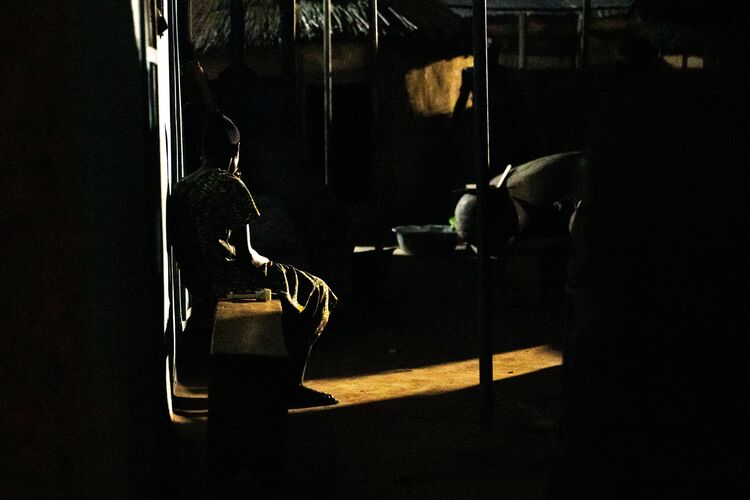
An exiled young woman in Gambaga camp

Civil society organisations, including ActionAid Ghana, Songtaba and the Sanneh Institute, have long advocated for these reforms, leading public awareness campaigns and pushing for legal protection of accused women. Amnesty International has also urged parliament to pass the bill without delay, warning that continued inaction leaves hundreds of women at risk of violence and abuse.

While many are hopeful that the current president will sign the bill if passed again, doubts persist. ‘It’s not a vote winner,’ says Professor Azumah.

Even after the widespread condemnation that followed Akua Denteh’s murder, resistance to reform remains entrenched. ‘We have our own conspiracy theories,’ Azumah says in response to the previous president’s refusal to sign the bill. ‘We believe there are powerful religious figures and some chiefs working behind the scenes to block it.’

Those fears haven’t disappeared. ‘That’s our concern with the current president, too,’ he continues. ‘If the bill is passed again and those chiefs and religious leaders start to pressure him behind closed doors, we might never even know. Politicians want votes. And they fear that pushing this through could hurt them in the next election.’

Among advocates, there is cautious optimism. Passing the bill is only the beginning. Real change will require coordinated implementation, sustained funding and a long-term commitment from both the government and civil society.

A child at the Gambaga camp. Children often accompany their mother or grandmothers into exile and are vulnerable to exploitation, with some reports of sexual abuse. They also face stigma and bullying at school, leading many to drop out

Even the bill itself acknowledges these challenges: ‘Legislation on such a subject may not immediately eliminate the problem, but it provides an awareness and a deterrent, which, if handled with the requisite public education and sensitisation, can eradicate the practice.’

‘I think the passage of the legislation will significantly reduce the accusations,’ says Professor Azumah. ‘And over time, it will die out.’

‘The accusation is the beginning of everything,’ he adds. ‘If we stop it at the source, we can begin to address the issue. We’re not going to relent. We will keep pushing until this bill becomes law.’

A nation at a crossroads

Ghana now stands at a crossroads. The debate over the Anti-Witchcraft Bill is not only about superstition, but also about women’s rights, state responsibility and the power of law to reshape cultural norms.

For survivors like Bachalbanueya, the bill may come too late to restore what was lost. But whether Ghana chooses to act now, or allows fear and silence to prevail, will determine not only the fate of women like her, but the moral direction of the nation itself.

Source: The women banished as witches in West Africa

Uganda: Police arrest mother, neighbor over suspected ritual killing of 14-year-old in Luwero

Warning: the following article contains graphic details which may upset readers

Another case of suspected ritual killing in Uganda, not the first one reported here, to put it mildly. And yet again parents seem to have been involved though we have to be careful with our judgments. No one is guilty unless found guilty by an independent court in a public, fair, and transparent trial.

That being said I’m afraid that it won’t be the last time I a report here a case of suspected or proven ritualistic killing: murder for ritualistic purposes, believing in the supernatural powers of magic or witchcraft, and with the intention to became rich or richer, famous or more famous. The right to live – of the innocent victim – is being sacrificed for the wellbeing of the perpetrator or the person who order the killing.

Let justice be done!
(webmaster FVDK)

Police Arrest Mother, Neighbor Over Suspected Ritual Killing of 14-Year-Old in Luwero

Sam Twiineamazima, the Savannah Regional Police Spokesperson, explained that on the day of the incident, Lule led the boy to a hilltop in the village known for spiritual rituals, allegedly on instructions from Muntu’s father, identified only as Kalyango Konooweka.

You need to Log in and be a client to read this story in full and get access to audio and images.

Published: March 3, 2026
By: Brian Luwaga, Bureau Chief – Uganda Radio Network

Source: Police Arrest Mother, Neighbor Over Suspected Ritual Killing of 14-Year-Old in Luwero

More:

Police probe suspected ritual killing of 14-year-old boy in Luweero

Published: March 3, 2026
By: Conslata Taaka – Nile Post

Police in Luweero District are investigating the suspected ritual killing of a 14-year-old boy in Bugabo Village, Mabuye Parish, Kamira Sub-county.

According to Savannah Regional Police spokesperson ASP Sam Twiineamazima, the victim, a pupil at Domasco Primary School, was allegedly taken to a hilltop shrine by a man identified as Godfrey Lule, also known as Kutesa, reportedly on the instructions of the boy’s father, Kalyango, also known as Konoweka.

“It is alleged that the suspect took the victim to a hill where spiritual rituals are reportedly conducted. They shared a meal and later slept at the altar,” Twiineamazima said.

Police reports indicate that at around 6am, the suspect allegedly attacked the minor with a panga, inflicting a fatal cut to the left side of his neck.

“The suspect attempted to flee after committing the offence but was arrested following an alarm raised by the mother of the deceased,” Twiineamazima added.

The victim’s mother, Christine Nabuuma, also known as Mumbejja, has also been arrested to assist with ongoing investigations.

Police said officers responded to the scene, secured and documented it, and recovered several exhibits believed to be relevant to the case. The body was conveyed to Luweero Hospital mortuary for a postmortem examination.

“We recovered key exhibits including the suspected murder weapon, blood samples and clothing believed to have been stained with blood. Investigations are ongoing to establish the exact motive and whether there was any ritual involvement,” Twiineamazima stated.

Authorities say detectives are continuing with inquiries to piece together the circumstances surrounding the incident. The suspects remain in custody as investigations proceed.

Source: Police Probe Suspected Ritual Killing of 14-Year-Old Boy in Luweero

More:

14-year-old boy killed in suspected ritual sacrifice in Luwero

Sam Twiineamazima, spokesperson for the Savannah Region Police. 

Published: March 3, 2026
By: Herbert Kamoga, Reported, NTV Uganda

Investigators say the teenager had been facing repeated torture at home, including frequent beatings, allegedly by his father.

Source: 14-year-old boy killed in suspected ritual sacrifice in Luwero

Large detailed administrative map of Uganda with cities, roads and airports – for a large version, click here

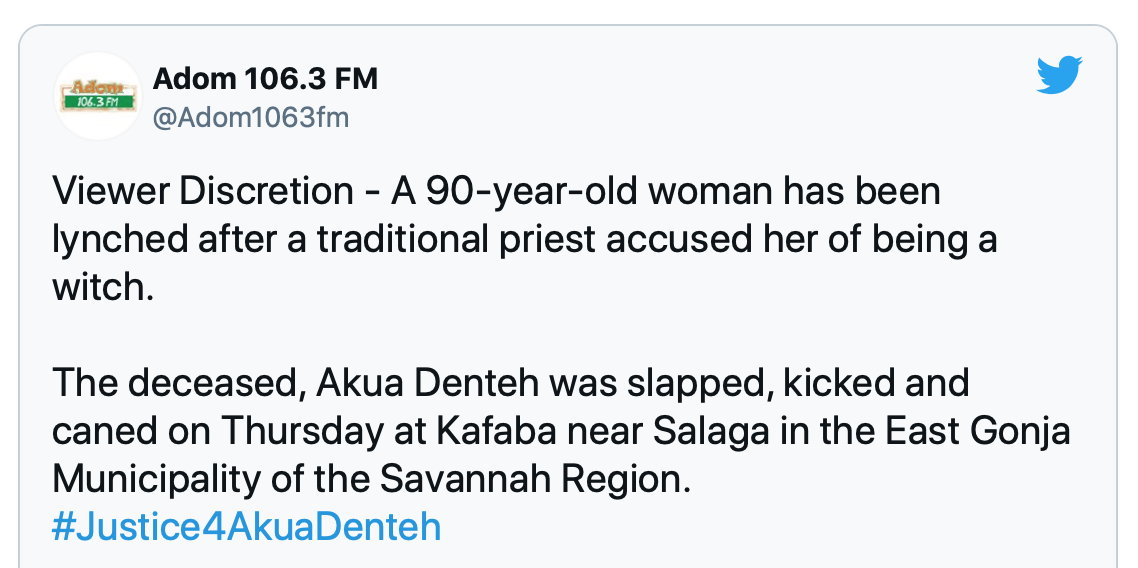
Ghana: lynching of 90-year-old woman suspected of witchcraft (2020 article)

Recently, Ghana was shocked by the Kasoa ritual murder case. It’s not common knowledge that ritual murders are no exception in Ghanaian society. Also belief in witchcraft is widespread in this West African country which nevertheless has a very positive reputation as one of Africa’s most advanced countries, rapidly developing.

Yesterday I posted a general article on sorcery and the belief in witchcraft and I announced a heartbreaking, breathtaking incident which occurred in Ghana last year. 

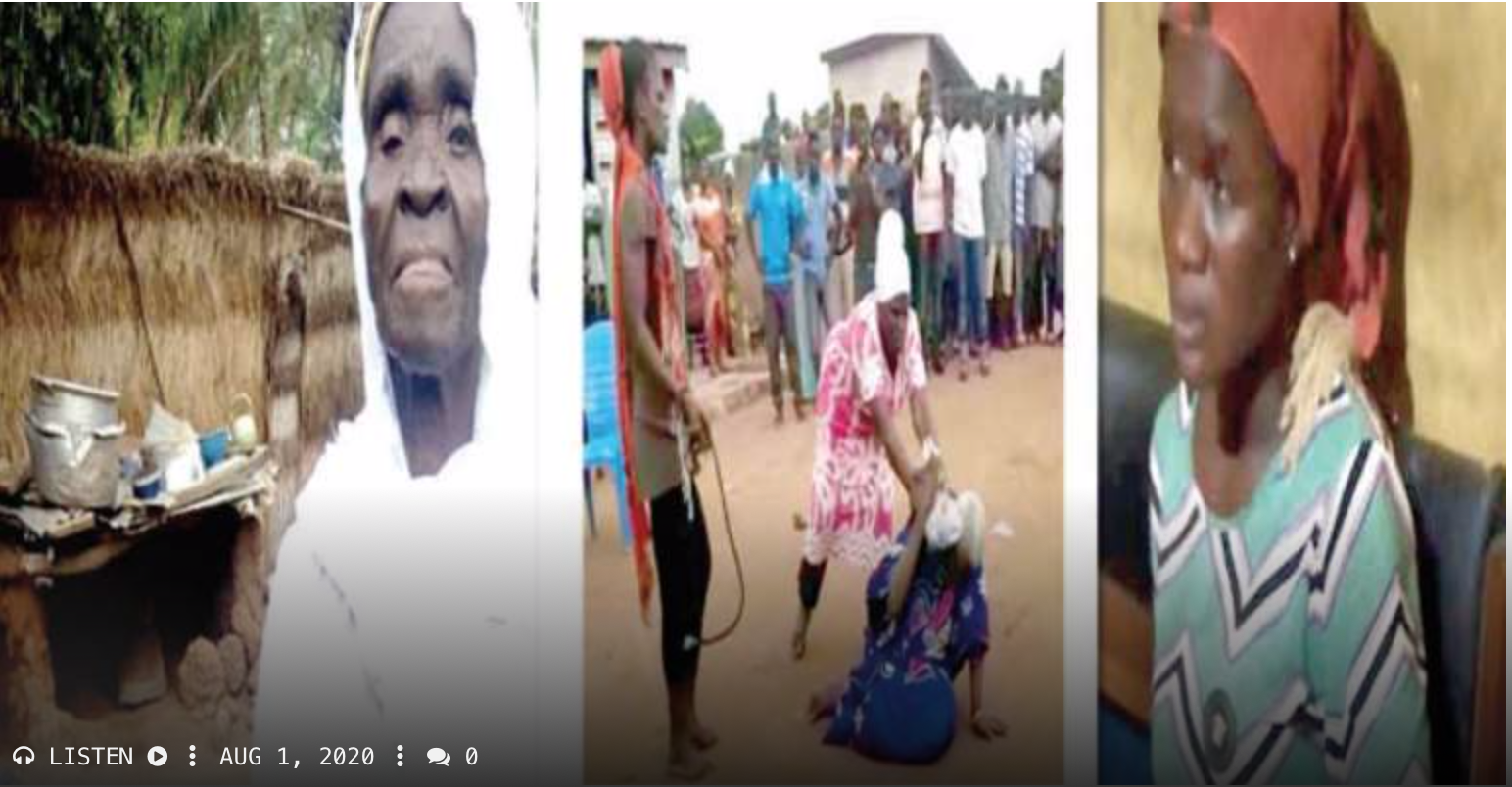
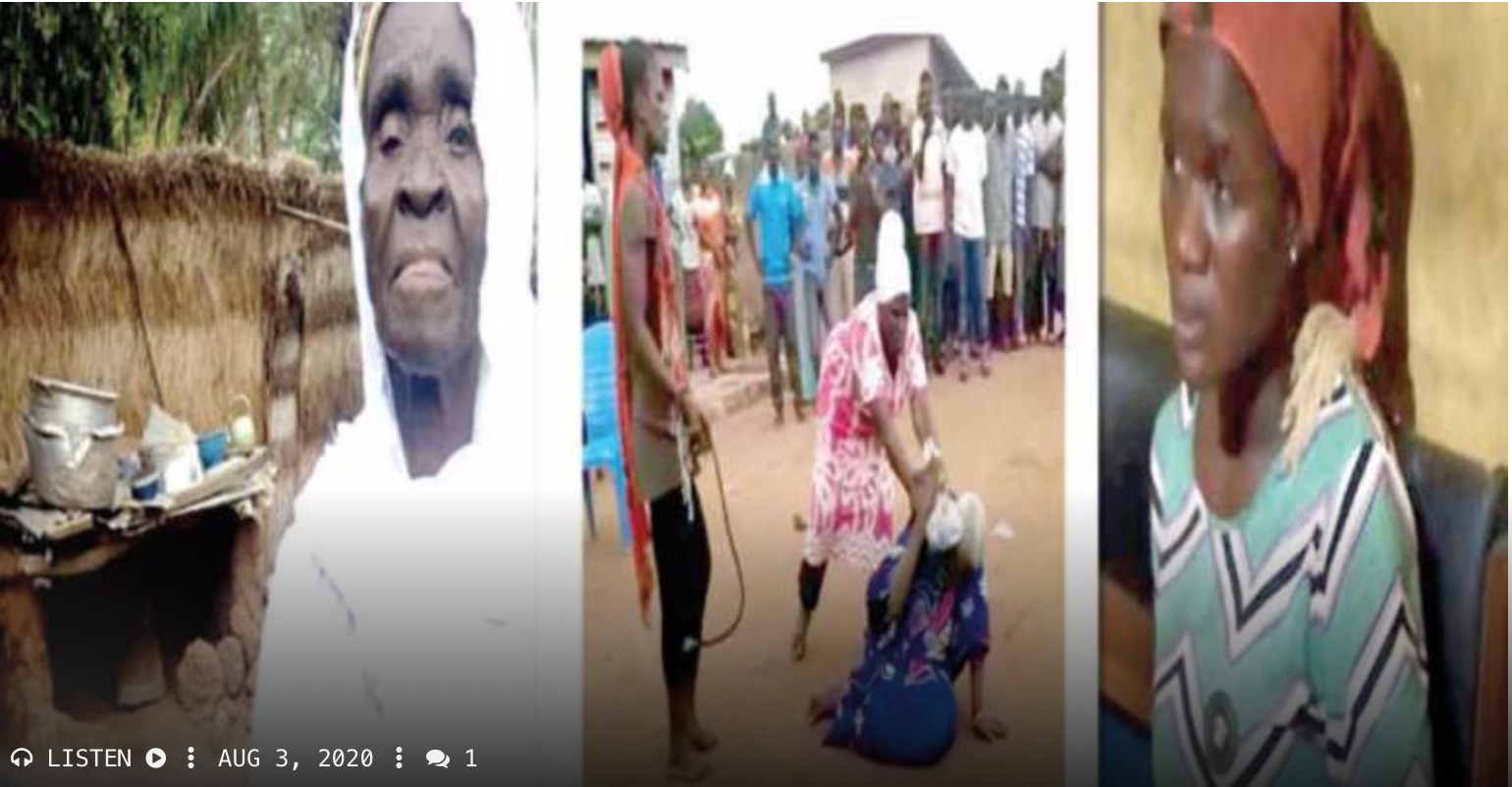
The lynching of Akua Denteh, a 90-year old woman in the Savannah region, in central Ghana, who was accused of being a witch caused national-wide outrage. It happened at Kafaba near Salaga in the East Gonja Municipality of the Savannah region, on July 23, 2020. After a local priestess, Sherina Mohammed alias Alhajia Filina (40), had accused the nonagenarian of witchcraft, a mob attacked the old, frail woman. Two women slapped, kicked and caned her with a whip, the horror was filmed by by-standers who did not intervene to stop the insane and atrocious cruelty which led to the death of this mother of nine children. The horror-movie was widespread on social media, but I find the video too gruesome and repulsive to show here.  

The lynching of Madam Akua Denteh was not a unique incident, however. On more occasions I have reported on the cruel treatment of children and adult people who are being accused of witchcraft. See my postings dated April 14, 2020, Ghana: women accused of witchcraft find refuge in outpost run by sisters, and November 30 of the same year, Ghana Pentecostals come to the defense of accused witches as well as ‘AfriKids: Ghana’s haven for ‘spirit’ children marked for murder‘ (June 23, 2018).  

In 2018, an investigation by the famous journalist and film maker Anas Aremeyaw Anas resulted in worldwide attention for the plight of so-called ‘spirit children’. Anas investigated the murder of Ghanaian children who were accused to be possessed by evil spirits. See my June 4, 2018 posting Spirit Child: Ritual Killings in Ghana. It feels wry knowing that reportedly already in 2013 Ghanaians put a ban on the killing of ‘spirit children‘.

And now, in 2020, the cruel and inhumane treatment of people – mostly women and children but also men are occasionally targeted – accused of witchcraft has resulted in yet another innocent victim of superstition. Will it end here? 

The police acted swiftly and apprehended the priestess as well as the culprits who tortured and murdered Akua Denteh. However, the recent Kasoa murder case shows that superstition has far from vanished from Ghanaian society. The war against superstition, belief in witchcraft and ritualistic killings is far from over.
(webmaster FVDK)

Lynching of 90-year-old Ghanaian woman suspected of witchcraft scars national conscience

Published: July 28, 2020
By: Face2Face – Nii Ntreh | Associate Editor

A 90-year-old Ghanaian woman in the north of the country was lynched to death last week by a mob who had been convinced that frail and diminutive Akua Denteh was a witch.

According to local sources, Denteh was accused by a popular traditional priestess in the Savannah region of the country, who traced the misery and misfortune of a few people as well as the community to the nonagenarian. This followed a long-held suspicion by some youth in the community.

The ensuing mob justice after the priestess’ confirmation was as swift as it was merciless.

A viral video of the lynching shows a small crowd that had circled the helpless old woman as she sat in the dirt. In the middle of the circle, those who were perhaps more incensed with Denteh’s alleged witchery – two visibly irate women in particular – beat her up, one of them, with a whip.

The video is only forty-five seconds long and does not include footage of what has been reported as the commitment of more people to beat Denteh up. But since the video came to light and drew the response of the police, many of the onlookers as well as those seen assaulting the old woman, have reportedly fled into hiding.

Ghana‘s president, Nana Akufo-Addo, has called the incident a “tragic act” that has “disfigured” the country’s image. A former head of state Jerry Rawlings has also called for a quick resolution to a “cruel and barbaric lynching”.

Social media platforms too, Facebook and Twitter specifically, have been awash with statements from individuals and organizations condemning Denteh’s murder. But perhaps, the sentiments of civil society, however well-intentioned, are at best, anodynic and polite.

2015 Global Attitudes Survey by the Pew Research Center found that about 90% of Ghanaians described themselves as religious, belonging to the Christianity, Islam, variants of the Eastern religions or traditional African faiths. But the belief in witchcraft, not argued by the Pew survey, is very rife regardless of one’s faith.

The pervasiveness of belief in witchcraft in Ghana can be seen through the popularity of the biggest movies produced by the country’s hugely-successful Kumawood (Kumasi Hollywood) industry. Since the 1980s too, Ghana has witnessed the astronomic proliferation of evangelical churches that market themselves as “solution centers” to spiritual problems.

Some of these churches are referred to as prayer camps where people are supposed to be delivered of demonic possessions. Apart from churches, some animistic believers in northern Ghana, not far from where Denteh was murdered, have witch camps, where older women are held on accusations of witchcraft, sometimes until their death.

The most famous of these camps, the Gambaga witch camp, has been studied by social scientists across the world.

However, much in the fashion of the Comtean sociological perspective, many educated Ghanaians seem to think that belief in witchcraft and hardcore spirituality is in the nature of the uneducated poor.

With what is already known about Ghanaian society, the lynching of Denteh seems like the ugly manifestation of serious neglected underlying tensions.

Source: Lynching of 90-year-old Ghanaian woman suspected of witchcraft scars national conscience

Related article:

90-year-old woman accused of witchcraft lynched at Kafaba near Salaga
    

The police have mounted a search for one Tanko and his accomplices who allegedly masterminded the lynching of a 90-year-old woman at Kafaba near Salaga in the Savannah Region on the accusation that she was a witch.

The incident happened on Thursday, July 23, 2020 in the East Gonja Municipality.

The old woman whose body has since been deposited at the Tamale Teaching Hospital (TTH) mortuary has been identified as Akua Denteh.

The Savannah Regional Police Commander, Deputy Commissioner of Police (DCOP), Mr Enoch Adutwum Bediako told Graphic Online that some more police officers have been detailed to the area to effect the arrest of the suspects who subjected the victim to severe beatings which led to her death.

What happened?

DCOP Bediako told Graphic Online that at about 4pm on Thursday, July 23, 2020, Mahama Salami aged 60 years of Mempeasem, a suburb of Salaga reported to the police that he had received information at 11 am from his sister, Mahama Memuna that his mother, Akua Denteh aged 90 had been accused of being a witch.

This was because a certain fetish priest in the area had said so.

DCOP Bediako said based on that the old woman was subjected to severe beatings by Tanko and his accomplices until she became unconscious and died.

He said when the matter was reported to the Salaga Police they proceeded to the scene at Kafaba, which is about 21 kilometres from Salaga and saw the lifeless body of the victim.

He said an inspection conducted on the body of the victim revealed a cut on the forehead and bruises on the right arm.

After processing the scene as part of investigations, the body was sent to the TTH mortuary for preservation.

DCOP Bediako said the police are on the heels of those who perpetrated the act for the law to deal with them.

The issue of witchcraft allegations, especially against old women are widespread in the northern part of Ghana.

Source: 90-year-old woman accused of witchcraft lynched at Kafaba near Salaga

Related article: suspects grabbed

Kafaba ‘Witch’ Killer Grabbed After Trying To Escape To Yeji

KILLED! Akua Denteh, The 90-year-old woman being assaulted by the suspects, GRABBED! Latifah Bumaye

Published: August 1, 2020
By: Modern Ghana – 

A key suspect in the lynching of Akua Denteh, a 90-year-old woman, over allegation of witchcraft at Kafaba in the Gonja East Municipality of the Savannah Region, has been grabbed by the police after she tried to escape from the area.

Latifah Bumaye, believed to be an associate of the ringleader, Hajia Filipina, was picked up at Kejewu Bator, a fishing community under the Abrumase Police within the Salaga Division at East Gonja, while going to Yeji. 

According to police sources, they heard about the hideout of the suspect and dispatched detectives to Kejewu Bator where she was picked up and escorted back to the Salaga Divisional Command. 

DAILY GUIDE understands that she is being processed to be sent to the Regional Police Command in Damongo for further action. 

The suspect is believed to be one of the two ladies seen in the viral video lynching the 90-year-old woman because they claimed she was a witch. 

She is believed to be the woman in the video menacingly whipping the old lady with a long whip which she brandished. Meanwhile, the chief suspect, Filipina, is yet to be apprehended. 

More Suspects

Five people, who are believed to have participated in the lynching which has since sparked national outrage, have been remanded in police custody by a district court at Bole. 

They pleaded not guilty and the court, presided over by Andrew Prince Cudjoe, remanded them until August 20. 

The suspects – Haruna Aness, 34; Issaka Tanko, 35; Shaibu Murtala, 29; Sulemana Ali, 35; and Issaka Sachebu, 32, have been charged with conspiracy and murder. 

The Chief of Kafaba, Seidu Yahaya, under whose jurisdiction the incident occurred, has also been granted police inquiry bail. 

The police placed a GH¢2,000 reward for anybody that would help in the arrest of the suspects; and yesterday, a benevolent individual placed a GH¢5,000 reward for anybody who could assist the police to arrest Filipina.

Source: Kafaba ‘Witch’ Killer Grabbed After Trying To Escape To Yeji

Another article:

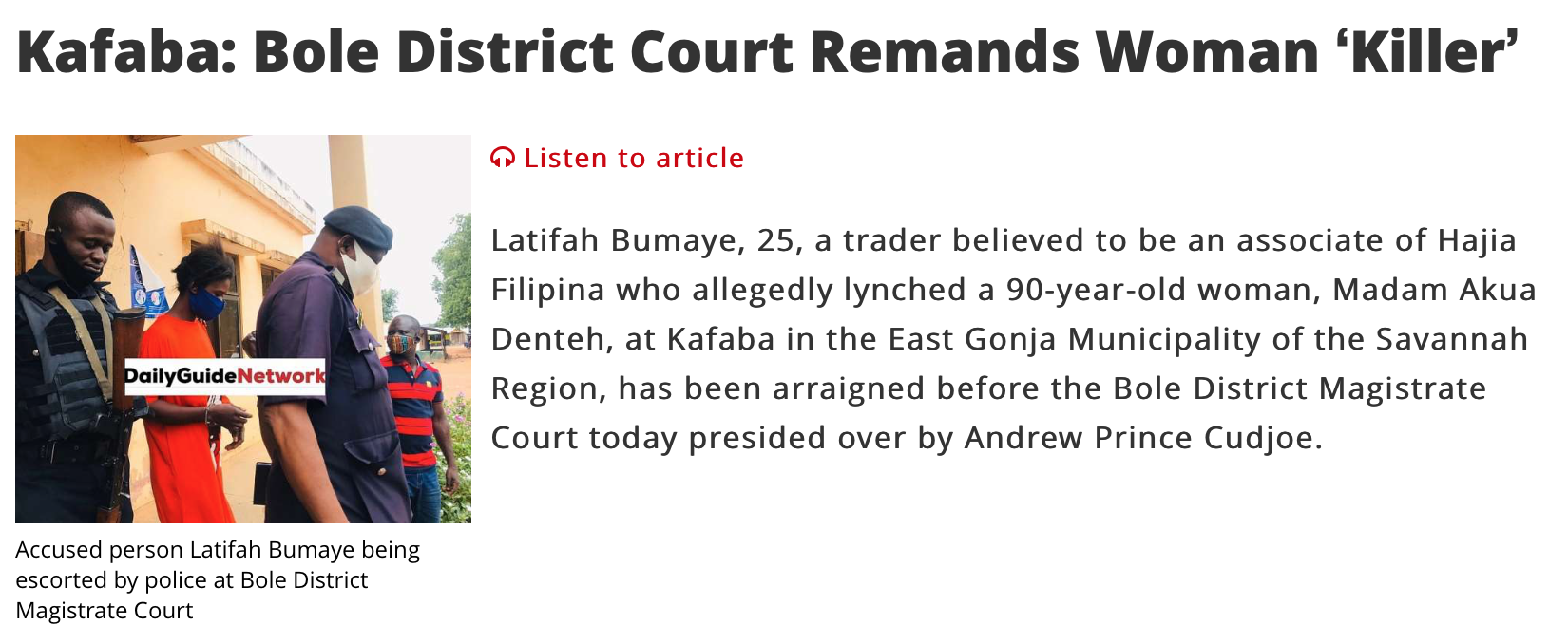
Kafaba: Bole District Court Remands Woman ‘Killer’

Published: August 3, 2020
By: Modern Ghana

The accused person was provisionally charged with murder. 

The case prosecutor, chief inspector Abdulai B. Awuni, pleaded with the court to remand the accused person for further investigation. 

The judge granted the request of the police prosecutor and demanded the accused be remanded into police custody to reappear in court on August 20, 2020. 

The charge was read and explained to the accused person but her plea was not taken. 

More Suspects

Five people, who are believed to have participated in the lynching which has since sparked national outrage, have been remanded in police custody by a district court at Bole. 

They pleaded not guilty and the court, presided over by Andrew Prince Cudjoe, remanded them until August 20. 

The suspects – Haruna Aness, 34; Issaka Tanko, 35; Shaibu Murtala, 29; Sulemana Ali, 35; and Issaka Sachebu, 32, have been charged with conspiracy and murder. 

The Chief of Kafaba, Seidu Yahaya, under whose jurisdiction the incident occurred, has also been granted police inquiry bail. 

The police placed a GH¢2,000 reward for anybody that would help in the arrest of the suspects; and yesterday, a benevolent individual placed a GH¢5,000 reward for anybody who could assist the police to arrest Filipina. 

Madam Akua Denteh was lynched at Kafaba in the East Gonja Municipality in the Savannah Region. 

The woman was openly beaten to death by Hajia Filipina,the soothsayer with support from a mob in the community. 

The main suspect, Hajia Filipina, as at the time of filing this report was still on the run.

Source: Kafaba: Bole District Court Remands Woman ‘Killer’

More articles:

Kafaba Killing: Woman ‘Killer’ To Face Court Today

Published: August 3, 2020
By: Modern Ghana

One of the key suspects in the lynching of 90-year-old Akua Denteh at Kafaba will be arraigned today, August 3.

Latifah Bumaye was arrested last week at Kejewu Bator, a fishing community along the Volta lake. 

She was seen in a viral video continuously hitting the deceased with an object. 

The deceased, Akua Denteh a fortnight ago was tortured after she was accused of being a witch. 

The Savannah Regional Police earlier arrested five persons who are also linked to the incident. 

They have been charged with conspiracy to commit murder and have been remanded in police custody to reappear before the court on August 20. 

Speaking to Citi News, Savannah Regional Police Commander, DCOP Enoch Adutwum Bediako said investigations are still ongoing. 

“She was arrested on Monday at Kejewu, a small community along the Volta lake. All she keeps saying is that she doesn’t know what was happening to her. Our investigations are still ongoing but we will put her before court today to seek remand as investigations continue. She has not been able to tell us where the priestess (another suspect) is.” 

Five suspects charged with conspiracy to commit murder

Earlier, five suspects arrested by the Police in connection with the lynching of Akua Denteh have been formally charged with conspiracy to commit murder. 

They are however currently on remand in police custody after making their first appearance in court on Thursday, July 30. 

Kafaba chief granted bail

Meanwhile, the Kafaba chief, Zackaria Yahaya who was earlier arrested has been granted bail. 

According to the police, the five other suspects in their statements indicated that the chief did not play any role in the development as he even asked them to send the priestess away when they went to introduce her to him before the lynching incident. 

“The youth did not agree with the chief and went on to do what they did and this unfortunate thing happened… All the five said the chief didn’t agree with what they were doing and therefore he was not part of what they were doing. Based on that, we have to grant the chief bail pending further investigations…He spent the night there because we got the suspects the following day,” DCOP Bediako said.

Source: Kafaba Killing: Woman ‘Killer’ To Face Court Today

Another:

Kafaba Lynching: I Was Possessed – Woman ‘Killer’ Reveals In Court

Published: August 3, 2020
By: Modern Ghana

A key suspect in the lynching of Akua Denteh, a 90-year-old woman at Kafaba in the East Gonja Municipality of the Savannah Region, over allegation of witchcraft, has spoken for the first time since her arrest last Friday.

Latifa Bumaye, 33, claimed she was ‘possessed’ and did not realize she was participating in the lynching of Akua Denteh. 

She claimed she went to wash her clothes at the river bank with her sister when the spirit entered her, adding “I saw the incident on television and I wondered if I was really the one who tortured her like that.” 

Besides, she claimed that the woman who had passed on is her grandmother, a position rejected by the family of Akua Denteh. 

Latifah believed to be an associate of the ringleader, Hajia Filipina, was picked up at Kejewu Bator, a fishing community under Abrumase Police Station within the Salaga Division in the East Gonja, whilst going to Yeji on Friday. 

She is believed to be the woman in the video menacingly whipping the old lady with a long whip. Meanwhile, the chief suspect, Hajia Filipina, is yet to be apprehended. 

According to sources, Latifa is expected to be sent to the Regional Police Command in Damongo to be processed for court on Monday. 

More Suspects

Five people, who are believed to have participated in the lynching which has since sparked national outrage, have been remanded in police custody by a district court at Bole. 

They pleaded not guilty and the court, presided over by Andrew Prince Cudjoe, remanded them until August 20. 

The suspects – Haruna Aness, 34; Issaka Tanko, 35; Shaibu Murtala, 29; Sulemana Ali, 35; and Issaka Sachebu, 32, – have been charged with conspiracy and murder. 

The Chief of Kafaba, Seidu Yahaya, under whose jurisdiction the incident occurred, had also been granted police inquiry bail. 

The police placed a GH¢2,000 reward for anybody that would help in the arrest of the suspects and also a benevolent individual placed a GH¢5,000 reward for anybody who could assist the police to arrest Filipina. 

According to police sources, they heard about the hideout of the suspect and dispatched detectives to Kejewu Bator where she was picked up and escorted back to the Salaga Divisional Command. 

DAILY GUIDE understands that she is being processed to be sent to the Regional Police Command in Damongo for further action.

Source: Kafaba Lynching: I Was Possessed – Woman ‘Killer’ Reveals In Court

To conclude:

Police arrest priestess in Kafaba lynching of 90-year-old

Published: August 4, 2020
By: Ghana News Agency (GNA)

Accra, Aug. 4, GNA – The Ghana Police Tuesday said they have arrested the fetish priestess who allegedly accused Madam Akua Denteh of Kafaba, in the Savannah Region, of witchcraft, resulting in the lynching of the 90-year-old.

Superintendent Sheilla Kessie Abayie-Buckman, Director, Police Public Affairs Directorate, said Sherina Mohammed alias Alhajia Filina, 40, was arrested on Monday, August 3, 2020, at her hide-out at Yeji.

Superintendent Abayie-Buckman on the Ghana Police Facebook platform said, the suspect was, consequently, in Police custody assisting with investigations.

Hajia Filina is said to be among some other persons identified as Sanjo, Teacher Aliu, Bumaye, Ashley and Manafo, who allegedly beat the nonagenarian on Thursday, July 23, resulting in her unconsciousness and death later.

They have already arrested five more persons who allegedly admitted to having invited the priestess to Kafaba where the incident occurred.

They are Haruna Aness – 34, Issifa Tanko- 35, Shaibu Muntala – 29, Sulemana Ali -35 and Issifa Zakyibo -32.

Their action has attracted nationwide condemnation and calls for swift justice and punishment of the perpetrators.

The police in the Savannah Region initially arrested the chief of Kafaba, Zackaria Yahaya, for his alleged role in the incident.

They have been arrested to face prosecution.

President Nana Addo Dankwa Akufo-Addo, who described the action as “barbaric” also called for action and justice to be served.

A few days after the incident, the Inspector General of Police (IGP), Mr James Oppong-Boanuh, dispatched homicide experts to the Savannah Region to hunt for the murderers.

The IGP also placed a GH¢ 2,000.00 bounty on their heads, adding that any person with credible information should either contact the Savannah Police or call 0275000156.

Sanjo was said to have hosted Hajia Filina, the priestess who declared the victim, a witch.

Source: Police arrest priestess in Kafaba lynching of 90-year-old

And:

High priestess involved in murder of 90-year-old woman to appear in court on August 5

The priestess (soothsayer), Sherina Mohammed alias Alhajia, aged 40, was arrested at her hideout at Yeji in the Bono East region by police in Salaga.

Published: August 5, 2020 (Last Updated on August 9, 2020)
By: MyGH.Online

The Savannah Regional police command says the Priestess (Soothsayer), in the Kafaba murder case, will appear in court on Wednesday, August 5, 2020.

This was after Sherina Mohammed alias Alhajia, aged 40, was arrested at her hideout at Yeji in the Bono East region by police in Salaga.

Her arrest brings the number of suspects in police custody to seven with the exception of the Kafaba chief, Zackaria Yahaya who is currently on bail.

JoyNews’ Isaac Nonya who has been following the incident reports that the police had earlier sent the suspect to Salaga to be interrogated before being brought to Damongo.

According to sources, the alleged priestess had also admitted being the one in the video which went viral.

On July 23, 90-year-old, Akua Denteh was seen being slapped, kicked and caned after the traditional priestess accused her of being a witch.

The severe beating the woman was subjected to by her accuser and two other women resulted in her death.

After the video went viral, there was massive outrage with many demanding the immediate arrest and prosecution of all the perpetrators.

From the President, Nana Akufo-Addo, to various civil society groups, the security services have been urged to fish out the culprits who went into hiding after the act.

On Monday, the first key suspect in the lynching was arrested and remanded by the Bole Magistrate Court. 

Latifa Bumaye, 25, was smoked out of her hideout at Kejewu Botor a suburb of the East Gonja Municipality, following continuous surveillance by the Homicide Unit of the Ghana Police Service.

Source: High priestess involved in murder of 90-year-old woman to appear in court on August 5

Last but not least, two related articles:

Kafaba killing: Son Shares Unfulfilled Wish Of Murdered 90-Year-Old Woman

Published: August 1, 2020
By: Modern Ghana

The last son of the 90 year-old woman who was beaten to death at Kafaba has shared her last unfulfilled wish saying “My mother’s last wish was to see my children before she will pass away.”

Mr Mahama Saaka, who is 36-years-old and teacher at Salaga T.I Ahmadiyya Senior High School, who recounted this, said he was yet to have a child and unfortunately his mother had to die this way without seeing his children. 

He recounted this when the Ghana News Agency (GNA) visited the family of the murdered old woman at Salaga in the East Gonja Municipality of the Savannah Region to gauge their mood after the sad incident. 

Madam Akua Mariama Denteh, 90 years-old, was on Thursday, July 23, beaten to death at Kafaba by some residents and a spiritualist, who accused her of witchcraft and behind certain strange happenings in the area including; limiting the progress of the town. 

Madam Denteh had nine children, and three died leaving two males and four females, a number of them as teachers and 21 grandchildren. 

The spiritualist was brought to the town by some youth of the area to fish out alleged witches in the area, working against the progress of the town. 

The spiritualist mentioned Madam Denteh as a witch, which she denied but her denial was not accepted and was subjected to beatings. 

The incident was captured on video, and had since gone viral on social media. 

The deceased has since been buried.

So far, the Police arrested Yenufunu Yahaya Seidu (V), a Chief at Kafaba, who had been granted police enquiry bail, and six others in connection with the incident. 

The incident has attracted condemnation from civil society organisations, politicians, gender and human rights activists across the country. 

GNA gathered that, when Madam Denteh was beaten and succumbed to the torture, the spiritualist identified 17 other women in the area as being witches and some of them were also subjected to beatings whilst others, who were connected to powerful people in the area, were spared from beatings. 

Mr Saaka said “It had been my greatest desire to fulfil my mother’s wish but I’m shattered now, I don’t know what to do.” 

He told the GNA that “Since the incident happened and I took my Mum to the morgue, I have not been myself, I’m sick internally, I can’t even cry. She wanted to see my children before she will pass. That is the promise she gave to me, but the unfortunate incident has crushed everything.” 

He said “I don’t believe that my own community; they will do this thing. I’m very, very surprised because I grew up there. We are very sad. We don’t know what to do.” 

He called for justice to be served “So that my Mum will be used as an example to protect all other elderly women.” 

Mr Mahama Sallam, 60 year-old third child and surviving first son of the deceased, said what happened was unacceptable, attributing it to ignorance saying “We leave everything in the hands of God.” 

GNA also visited the spot, where the old woman was beaten at Kafaba, and it was a compound of a house, whose owner had since fled the town. 

The road from Salaga to Kafaba is in a deplorable state and it takes about an hour and a half to reach Kafaba from Salaga using a four-wheeled vehicle. 

There is no Police Post at Kafaba, which presupposes that unless a good Samaritan in the town intervenes, any unlawful act could be meted out to any citizen in the area. 

Yenufunu Yahaya Seidu (V), a Chief at Kafaba, who was arrested and granted bail in connection with the incident, told the GNA at Kafaba that some youth of the area informed him of their decision to invite the spiritualist to fish out witches in the area to ensure the progress of the town. 

He said lawless acts in the area could be prevented, if there was a Police Station in the area and appealed for one in the area to ensure law and order.

Source: Kafaba killing: Son Shares Unfulfilled Wish Of Murdered 90-Year-Old Woman

And hail to the journalist who first reported on the lynching of 90-year old Akua Denteh:

Kafaba Killing Reportage Has Boosted My Popularity – TV3 Journalist

Christopher Mensah Amoako was the first journalist who reported on the gruesome lynching of the 90-year old Akua Denteh. 

Published: August 3, 2020
By: Modern Ghana

TV3’s Savannah Regional correspondent Christopher Mensah Amoako has opened up on how he became the only journalist in the country to have first reported on the gruesome Kafaba killing, indicating the reportage has soared his popularity in the region.

Speaking on ‘Talk To Solomon’ (a YouTube based talk show) hosted by journalist and writer Solomon Mensah, Mr. Amoako said: “On that fateful Thursday, July 23, 2020, I was on my way to East Gonja [in the Savannah Region] when I had a video sent to me via WhatsApp. When I downloaded it, I heard them speak both Gonja and Twi so I realised the tape could not be an imported one from any other African country.” 

Christopher Amoako said, he did further checks to ascertain the authenticity of the video and after rigorous background checks confirmed it was not fake. 

“I quickly called the one who sent me the video not to share with anyone. Then, after about two hours, I also had a call from the son of the deceased telling me about the incident,” he noted. 

The Savannah Regional correspondent for the Media General group revealed that he first “harboured fear in breaking the news. But now, that fear has long gone. Today, everywhere I pass, I get people pointing fingers at me that, ‘that’s the journalist who first broke the news to the nation’”. 

Christopher Amoako said he together with the people of the Savannah Region and the nation as a whole look forward to a swift justice served by the law courts on the murder. 

A 90-year old woman Akua Denteh was lynched on July 23 by a section of the Kafaba community after a soothsayer pronounced her a witch. 

The Savannah Regional Police Command has since apprehended some suspects including 32-year old Latifa Bumaye believed to have played a key role in the lynching. 

Find below Christopher’s full interview:

To watch and listen the interview, click here and scroll down the page. Picture is a screenshot.