‘The children are not safe here’: the Nigerian couple fighting infanticide

When I first read the article presented below and published by the Guardian, entitled ‘The children are not safe here’, about a Nigerian couple – Olusola and Chinwe Stevens – fighting infanticide in their own home country, I remembered an earlier article describing this courageous couple and their admirable work. In 2018, to be precise on May 9, 2018, I published a post entitled ‘Nigerian couple working to eliminate infanticide in Nigeria‘, on two Christian missionaries, Steven Olusola Ajayi and his wife Chinwe who in 2004 had opened a shelter for so-called ‘evil children’, the Vine Heritage Home.

Without any doubt, this is the same couple and the same home presented in the 2026 Guardian article below. The 2018 article on the missionary couple was originally published on a website called ‘This Is Africa’. It was an opinion-article. Unfortunately, the exact title is missing. lIn 2018 I had juist started the present site on ritual killings, superstition, witchcraft, infanticide and human rights, and – with hindsight – at that time there was still lack of a systematic presentation.

Unfortunately, the original 2018 article no longer exists on he internet. This is precisely the reason why I have opted for the actual approach to copy-paste articles selected for my postings (together with my comments), as I had this experience before. See the section Why publish this site?

Infanticide is a crime, caused by ignorance and superstition. Nigeria is certainly not the only African country where systematic infanticide exists, i.e. the systematic killing of small children, babies. I regularly read about infanticide in other countries where sometimes desperate mothers kill their newborns. But the shelter created by Olusola and Chinwe Stevens, VIne Heritage, is for other babies whose life is threatened: new born babies who are considered ‘evil’ children, who are believed to be bad omens. Babies with disabilities, albino babies, twins, are suspected to bring curses and bad luck. Hence… they are killed, buried alive, or ‘simply’ disappear.

I express my deep respect to the Stevens couple and am convinced that their work is not in vain and that it will ultimately contribute to the eradication of a terrible crime that has existed for too long.
(webmaster FVDK).

If you would like to support The Guardian financially, please click here.

‘The children are not safe here’: the Nigerian couple fighting infanticide

Triplets Paul, Pauline and Paulina at the Vine Heritage Home Foundation, Gwagwalada, aged six months in July 2025. Photograph: Adesegun Adeokun/The Guardian

Published: February 5, 2026
By: Adaobi Tricia Nwaubani – The Guardian

In a few isolated communities in central Nigeria, some babies are believed to be bad omens. Olusola and Chinwe Stevens run a thriving home for babies at risk. But what happens when the families want them back?

Esther Stevens’ life nearly ended as soon as it began. She was born in 2007, in a village on the outskirts of Abuja, Nigeria’s capital city. Her mother died giving birth to her, and in the eyes of some villagers, that meant the baby was cursed. According to tradition, there was only one way to deal with such a child. The villagers tied the newborn to her mother’s lifeless body and prepared to bury them together.

When word reached a Nigerian missionary living in the community, she rushed to the burial site and pleaded for the baby’s life. After the villagers and relatives refused, she appealed to the traditional priest who had been called on to perform the rite. “Finally, the priest agreed and said, let them give her the evil child and see what the child will become,” Esther said. “The child, that’s me.”

The missionary took Esther to a children’s home in Abuja run by a Christian couple, Olusola and Chinwe Stevens, who brought her up as their own. Today, Esther is 18, tall, with a broad smile. She laughs easily and has a quick sense of humour.

In Nigeria, children are widely regarded as gifts from God or the spirit world, but according to some traditional belief systems, certain children were once thought to bring misfortune. Children born with albinism, visible deformities or disabilities were said to bring curses, or to be omens sent from ancestors or deities. In parts of southern Nigeria, particularly among the Igbo, twins and triplets were feared. Although these beliefs have largely faded, in isolated pockets of the country, they persist. In some of these communities, says the human rights activist Leo Igwe, the death of the mother in childbirth is believed to be the fault of the child.

The couple who run the children’s home where Esther grew up have been confronting these practices since 1996. Sent by the Christian Missionary Foundation to Abuja, the Stevenses discovered that some children were still being killed: poisoned, abandoned to starve or buried alive. In 2004, they created the Vine Heritage Home Foundation, a refuge for vulnerable children. Twenty years later, they provide a home for more than 200 children.

When Nigeria moved its capital from Lagos to Abuja in 1976, the new site was presented by the government as a neutral location, symbolically distant from centres of ethnic and regional tensions. But less than 40 miles away from this gleaming modern capital, with its wide boulevards and high-rise buildings, are communities that become nearly impassable in the rainy season. Many of these communities depend largely on subsistence farming, and the few healthcare facilities are poorly equipped and understaffed. According to Olusola, 75% of the children living in Vine Heritage are there because their mothers died in childbirth. (Nigeria is “the most dangerous country in the world to give birth”, according to UN data from 2023, which shows that one in every 100 women dies during childbirth or shortly after, many from postpartum haemorrhage.)

After their shocking discovery, the Stevenses began going around the communities, begging the families to hand over to them any of the “cursed” children rather than kill them. Then they began to speak with other local missionaries, asking them to spread the word that they were willing to take in any child deemed evil.

One of their contacts, missionary Andrew Tonak, told me that Chinwe is one of the most open-hearted people he has met, a mother and leader whose counsel, generosity and instinct to give have touched countless lives. Tonak is 61, and has lived in Kaida village, about 40 miles west of Abuja, since 2000. He recalled visiting women who had just given birth to twins. On his next visit, he would often be told, “The children are no more. They died.” Over the years, he says he has rescued 20 children from the village and neighbouring communities.

By the time some of the children now at Vine Heritage were rescued, they were already weakened by poisoning or severe malnutrition. Most required urgent medical attention. But increasingly, communities are becoming aware of the Stevenses’ work and now bring newborns to them directly, before harm can come to them.

Olusola said: “On their own, they come asking, ‘Please, where is that house where they keep the children?’ And then they bring them.”


Today, Vine Heritage is home to more than 200 children, from newborn to young adults. The oldest, Godiya, is 21 and has been at Vine Heritage since she was a baby. The newest arrival before my visit, a baby born on 27 May 2025, has been fighting for her life in a hospital crib since the day she was brought to the home.

About four years ago, Vine Heritage moved from a cramped facility that was originally designed to accommodate 55 children, to a much larger compound in Gwagwalada, built with funding from the EU in partnership with global charity ActionAid. The home has 18 dedicated staff working in shifts to provide round-the-clock care for the babies and toddlers. In a spacious hall, everyone gathers for morning prayers, group meetings and TV time. (Like any home full of children, there’s a constant battle for control of the remote.)

As I followed Olusola on a tour of the neatly laid-out grounds, he moved in a sprightly fashion, his greying beard framing a warm smile. At the youngest children’s dormitory, a chorus rang out: “Daddy! Daddy! Daddy!” They are not allowed out unaccompanied, and their small faces were pressed against the windows.

Esther Stevens, 18, who has been living at the home since birth. Photograph: Adesegun Adeokun/The Guardian

The multiple-birth siblings all have names that sound alike: Victor and Victoria, Mabel and Bethel, Zion and Zipporah. Among the youngest residents are triplets named Paul, Pauline and Paulina. Their parents arrived at the home one morning about six months ago, cradling the newborns in their arms. “I asked, ‘Why did you bring them?’ They said, ‘We don’t want them to die,’” Olusola recalled. The parents have visited once since then. They love their children, but fear that if the babies remained in their village, they would be killed.

Esther is clearly a favourite among the younger children. They love to follow her around and clamber on to her back, and as she and I chatted, they hovered close by. Esther knew nothing of her true origins or how she had come to live in the house until she was 14. She had been among the first children to arrive, joining the household in 2007 when there were only nine or 10 others. Olusola and Chinwe have one biological child, Praise, now 24 and studying at university. In those early years, Esther assumed she was also their biological daughter. As more children joined over time, she believed she was simply growing up in an orphanage run by her own parents. All the children bear the surname Stevens. “I knew it was an orphanage home, but I thought I was their real child. I look like mummy,” she said, and she does share some resemblance to Chinwe, with the same complexion.

Esther’s illusion was shattered when members of her biological family unexpectedly arrived at the home. At the time, the missionary who had rescued her as a newborn was preparing to leave the community. Before departing, she contacted Esther’s biological family to ask if they wanted to see where she had taken their child, knowing that once she left, they might never have the chance. “My grandmother came from the village and said she wanted to see me,” Esther recalled. “She wanted to see if I was still alive. When she told my father I was alive, he came to see with his own eyes.”

To prepare her for the meeting, Olusola sat her down and told her the truth about her past. “I was more than shocked,” she said quietly. “I felt sad. I felt bad.” Wanting to know more, Esther asked for her file. She read it cover to cover. What hurt most was discovering that her family had never come for her in all the 14 years she had been there. “Finding out about my parents’ true identity … It was just … I shed tears because they didn’t even care.”


Kaida, a village in Gwagwalada, is the closest community to Abuja’s city centre where there is evidence that infanticide may still sometimes take place. There are no tarred roads to the village, and the route is rough and bumpy, but it is better connected than most. There is a patchy phone signal here.

In Kaida, I met Abubakar Auta, a father of 13 and a husband to two wives. His twins Eric and Erica were sent to Vine Heritage about seven years ago. Like almost every adult in Kaida, Abubakar and his wife, Amina, farm for a living. To supplement their income, Amina digs sand from the river to sell to builders. She arrived to meet me straight from her work, dripping wet, sand clinging to her bare feet. Of her husband’s 13 children, seven are hers. Abubakar said he sent the twins away to “save their mother from suffering”. He believed they would not be safe in Kaida. Speaking to me in Hausa through a interpreter, he explained, “If I had left my children here, people would keep their eyes on them, and that would make them a target.” (Eric later died at the children’s home after falling ill.)

Kaida village has solar power, which provides a few hours of electricity each day for its two clinics: one government-run, the other operated by missionaries trained in community health. The government facility stands silent and empty. Locals say its staff are rarely present. The missionary clinic, by contrast, is alive with activity.

While I was there, a community health worker tended to a woman whose young grandson had a toe injury, the wound still raw and red. The woman had told me earlier on, in her home, that she had previously given birth to three sets of twins. All of them died within months. “They just fell sick,” she said. “In a short time, they were dead.”

Olusola Stevens with some of the children at Vine Heritage Home in Gwagwalada, July 2025.Photograph: Adesegun Adeokun/The Guardian

Her eldest child in his early 20s, sitting nearby, looked up and interrupted. “It was an evil hand that killed them,” he said, his tone defiant. At his words, his mother fell silent and turned her face aside, making it clear she wanted no part in that line of conversation.

The village head described the killing of children as belonging to “a time when people did not know these children were human beings”. He repeatedly used the phrase “in those days” to explain that their “eyes are now open” and such killings no longer happen. (He confirmed that the practice continued until at least a little more than 10 years ago, and that his “those days” referred to the years before then. Lakai has served as village head for the past 26 years.)

Community members are reluctant to speak openly, whether out of fear of stigma, distrust of outsiders, or the sensitivity of exposing cultural taboos. What I was able to piece together from these guarded, euphemistic conversations suggests that decisions involved a mix of family elders and traditional religious leaders. Leo Igwe, the human rights activist, acknowledged the role of patriarchy in situations where women surrender their babies to die. In 2019, ActionAid ran a survey in 57 villages around Abuja in which 16% of male respondents openly expressed support for the practice.


The shroud of secrecy has made it hard to tackle these beliefs. When I contacted various government officials, each one said they had never heard of such practices. Infanticide is against the law, but enforcement is hampered by secrecy and denial. Arinze Orakwue worked for nearly 20 years for the state body responsible for rescuing vulnerable children. From the early 2000s, he visited many communities where infanticide is practised, meeting with traditional chiefs and local leaders in an effort to change entrenched beliefs. “Many of them are living in denial. They tell you that it used to happen in their community a long time ago but it doesn’t happen any more.”

As more children were brought to their home, the Stevenses realised the scale of the problem. In 2013, when they decided to speak publicly about infanticide, the Federal Capital Territory government summoned them, accusing them of spreading falsehoods and damaging Nigeria’s image, just to attract attention and donations. Yet this scepticism faded after officials were shown clear evidence. The government eventually commissioned the couple to run awareness campaigns in the affected communities. They have built new partnerships, most notably with ActionAid. “The greatest problem is denial,” said Andrew Mamedu, ActionAid’s Nigeria head. “The community will insist, ‘Oh, there’s nothing like that.’ But when you go there, you see the evidence. You see the altars to the dead twins. Sometimes, the parents can’t account for their children. They are pregnant and before you know it, they’ve given birth and the baby is gone.”

ActionAid’s approach to the problem was patient, practical and deliberately indirect. Staff set up committees in each community – made up of men and women, young people, traditional rulers and religious leaders – and framed their aim as community development. “We don’t start with infanticide because they would just drive us away,” Mamedu said. The teams began by focusing on livelihoods, education, hygiene and access to healthcare, and only then moved on to tackling infanticide, under the broader banner of maternal and child health. Committee members acted as local advocates. One of their most effective tools was radio, still the most widespread and trusted source of news in northern Nigeria.

Chinwe Stevens at home.Photograph: Adesegun Adeokun/The Guardian

The strategy produced some measurable gains. In two communities ActionAid’s advocacy helped secure government investment in health centres. In four communities, the killings gradually stopped. Parents who had handed over children returned to the home to ask for them back. New local “champions” began to emerge, ordinary people willing to speak up. Still, the effort had its limits. Resistance from influential elders persisted, and when funds ran short in 2022, much of the work was left unfinished.

The Stevenses continue to work closely with missionaries stationed across the area. But not all rescues come through Christian networks. In Godiya’s case, it was a Muslim cleric who stepped in. “The Islamic preacher went to the community to preach and make converts, just like I do,” Olusola recalled. “He saw a child strapped to the dead body of her mother. They were preparing the grave. He asked, ‘Please, this child, what happened?’ They told him she was an evil child, and that their culture was to bury such children with their mothers. He said, ‘Can you permit me? Let me call my pastor friend so he can come and pick up the child.’ So he called me, and we went to the community and took her.”

When the Stevenses first established the Vine Heritage Home, their vision was simple: to raise the rescued children as their own and, once they were older, return them to their communities so they could become agents of change in the very places that had once rejected them. In recent years, 36 children have been returned to their families. In each case, the families themselves came asking for the children. But reintegration is rarely smooth. For one thing, many of these rural communities speak local languages understood by few outsiders.

When Esther visited her family in Dako village for the first time in December 2021, she met her siblings: two older brothers, two older sisters, and a younger sister. She was the only child from her mother, who had been the last of her father’s three wives. Two of her siblings were already married with children. They were glad to see her, but communication was difficult. “I couldn’t talk with them because they speak Basa,” she said. Only her elder brother could speak English, because he was in school.

The contrast in education was stark. When Esther told them she was in her third year of junior secondary school, they thought she was lying; most of the people her age in the village were still in primary school.

At Vine Heritage, every child goes to school. Of the current residents, 182 are enrolled, from primary and secondary pupils to university students like Godiya, who is studying sociology at Nasarawa State University, just across the border from Abuja. Godiya dreams of a career that comes with a uniform – any one will do. Esther has just finished secondary school and hopes to begin university later this year to study law. For many like her, returning to their villages would probably end those dreams.

Sometimes, a compromise is possible. Fifteen-year-old Mabel and Bethel spend their school holidays in Kaida village with their family, then come back to the home once classes resume. Their family first came to reclaim them when they were 10 years old. “I was happy, but I was not happy,” Bethel said. “I was happy that I had seen the place where they gave birth to me, but I was not happy to leave here,” she added. “Whenever I go there, nobody disturbs me, but I always want to come back.”

Beyond communication difficulties, the adjustment to rural life can be harsh. Children accustomed to running water, electricity and regular meals must fetch water from streams, adapt to harder living conditions, and endure the curiosity or suspicion of villagers.

The Stevenses usually wait until they consider the children old enough to understand before telling them how they came to the home. When Godiya turned 17, in 2021, her people came looking for her. “At first I said I was not going to see them because for how many years they did not come,” she recalled.

Gloria, 11, playing with other children at Vine Heritage Home.Photograph: Adesegun Adeokun/The Guardian

“It took us two hours to convince her,” Olusola said. “I pleaded with her, telling her that their coming was a sign of progress.”

Since then, Godiya has stayed in touch with her family, but she only made her first trip back in January 2025. Without proper roads, the only way to reach Bari village was by motorbike. Hours after leaving Gwagwalada, she finally arrived exhausted, and the entire village gathered to stare. “Everybody was just looking at me,” she said. “I didn’t understand the language and the journey was stressful. They were speaking, but I didn’t understand them.”

The youngest of nine children, Godiya was welcomed with joy by her older sisters, who embraced her through tears. They urged her to come back for Christmas, but she was dismayed by the lack of electricity or phone network, and currently has no plans to return.

Esther’s experience in Dako was similar. “When I went to the village, everybody came to see me,” she said. Some of the stares unsettled her. “The community was scary. The way some villagers look at you, as if there’s some evil thought in their mind. I was so scared because I didn’t want anything to happen to me.”

Sometimes, the danger is real. Four years ago, eight-year-old Monday was sent back to his village at his grandfather’s request. Monday’s mother had died giving birth to him. The family had recently converted to Christianity, and after Monday’s father remarried, the grandfather felt it was the right time to bring home the boy once deemed “evil”. But just two weeks later, Monday was returned to Vine Heritage. The elders in the village had been resentful, asking the grandfather how they should feel when others had killed their own children but he had brought his back alive. Fearing for the boy’s safety, the grandfather decided it was better for him to leave. “He called me and said, ‘I am returning your child to you,’” Olusola said.

When a family asks for their child back, the Stevenses try to find out if it is safe for them to return. But they cannot prevent every tragedy. About eight years ago, the Stevenses visited a mother who had recently given birth to an albino girl. She assured them that attitudes towards albinos in her community had changed in recent years, so they did not insist on bringing the new baby to the home. “I was asking questions: has anybody threatened you or the child? She said no,” Olusola recalled. Shortly afterwards, word reached him that the baby had died without explanation. He has never been able to discover what happened.


The years have taken their toll on Chinwe and Olusola. About two years ago, Chinwe’s health began to deteriorate, and Olusola urged her to move into a small flat nearby so she could focus on recovery. During school holidays, two of the oldest children, including Godiya, take turns staying with her, helping with everyday needs, while the others visit in small groups from time to time.

Chinwe has had a stroke, developed high blood pressure and undergoes regular dialysis. I visited her in the modest flat where she lives alone, after spending her entire married life surrounded by dozens of children. She spoke candidly about how she poured herself into caring for others while neglecting her own health. Apart from the small income the Stevens received as missionaries, they earned nothing, relying entirely on donations to care for the children. Now, Chinwe herself depends on donations to cover her medical expenses.

On the walls hang photographs of her in a graduation gown, taken when she earned her doctorate in agriculture from the prestigious University of Nigeria, Nsukka. Another, from two years ago on her 59th birthday, shows her nearly three times her current, frail size. Pointing to one, she said softly, “Look at me then, and look at me now.” She managed a wry laugh.

Olusola said the home had its future leaders among the older children, those willing to step up and already involved in administration and management. Some, he explained, had made it clear that even after graduating from university, they intended to remain committed to running the home. Whenever he was away for meetings, they kept things running. Unless visitors specifically asked to see him, the children received guests, handled day-to-day operations, managed money and accounts, and reported back to him. “The only thing they can’t do is sign cheques,” he said. “I have already told them that in the next 10 years, I will sit back and the home will be in their hands.”

Most donations to Vine Heritage come from individuals. On the day I visited, a donated cow stood in the compound. But with Nigeria’s soaring inflation, now at its highest in nearly three decades, many longtime supporters have cut back or stopped entirely. “Sometimes, when you phone people to remind them of their promise to pay school fees, they get irritated,” Olusola said. “Because of Nigeria’s economy, some of the people that used to support the home before are now finding it difficult.”

Mamedu, at ActionAid, believes the issue is more complex. The challenge, he says, lies in how the home is run. It is neither a formal organisation nor a business. There is no business plan, governance structure, or consistent paperwork like a typical NGO or charity would have. It is registered as a foster home. There are no clear systems for tracking how funds are spent or how accounts are managed.

“We supported the home to try to institutionalise the process,” Mamedu said. “We trained the staff on hygiene, childcare, some record keeping, even partner management. From the start, we told Olusola, let’s have a central way to account for every fund that comes in, so that when we say we don’t have money, it’s backed by proper records. But he tells us that this is not an orphanage; it’s a home.”

ActionAid still supports the home, providing monthly funds for food and covering urgent medical bills for the children. But the future is uncertain. The Stevens’ family-first approach has undoubtedly saved lives and nurtured emotional bonds among the children, Mamedu believes. But the original vision of reintegrating children into their communities appears to have faltered, which means the home keeps growing. Olusola admits that he once believed those communities would be more developed by the time the children grew up. He had expected more progress.

I asked Olusola if he would have done things differently. “When God asks you to do something you only obey,” he said. “It never occurred to me that we would ever have more than 20 children. After saving seven children, we had a pause of about one-and-a-half years, and we thought that would be all. We made our decision that whatever we gave to our biological child, we would give the rest.” But after the seven-year hiatus, Olusola recalled, “the floodgates opened, and more children started coming”.

Source: ‘The children are not safe here’: the Nigerian couple fighting infanticide

Nigeria: Police arrest man over alleged killing of mother accused of witchcraft in Jigawa state

Detailed circumstances are not yet unknown but one thing is clear: the brutal killing of an innocent woman who was accused of witchcraft.

The revolting crime was allegedly committed by three men including a son of the murdered lady. It all happened in the Northern state of Jigawa.

Jigawa State is located in the North West geopolitical zone of the Federal Republic of Nigeria (Nigeria is divided into six geopolitical zones commonly called zones). With a surface area of 23.154 km2 Jigawa State ranks 18th (out of 36 states) and with an estimated population of about 7.3 million people in 2025 (7 million in 2020)  it occupies the 9th position.

The capital of Jigawa State is Dutse. The state is well-known for the Dutse Habude cave paintings.

Until 1991, Jigawa State was part of Kano State. Its bordes the Republic of Niger. The majority of the population are Muslim and of Hausa or Fulani (called Peul in francophone Africa) background. JIwaga State is with eleven other Nigerian States governed by Sharia law.

Source: Wikipedia

Jigawa man arrested for killing mother over witchcraft claim

Published: August 29, 2025
By: Dayo Oyewo – Punch, Nigeria

A 25-year-old man, Jibrin Ado, has been nabbed by the police in Jigawa State for killing his mother on suspicion of witchcraft in the Gerawa area of the state.

PUNCH Metro learnt this on Thursday from a statement on X by security expert, Zagazola Makama. (See article below Police arrest man over alleged killing of mother accused of witchcraft in Jigawa – webmaster FVDK)

According to him, Ado perpetrated the act alongside some accomplices on Tuesday.

The accomplices were identified as Musa Kwalle, Dan Abba, Sule Musa, and one Arrow, all of Gerawa village.

“Sources said that on August 26 at about 4:30 p.m., the suspect, identified as Jibrin Ado of Daneji Village, conspired with others – Musa Kwalle, Dan Abba, Sule Musa, and one Arrow, all of Gerawa Village – and trespassed into the home of his father, Adamu Saleh.

“The suspects beat up his (Saleh’s) wife, Magajiya Ado, 50, with heavy sticks until she became unconscious, accusing her of witchcraft,” he wrote.

Makama further stated that the victim was rushed to General Hospital in the Ringim area of the community, where she died while receiving treatment.

“Sources  said that her corpse had since been released to the family for burial. The sources added that one of the suspects, Jibrin Ado, had been arrested while others were still at large,” he concluded.

When contacted, the state Police Public Relations Officer, Lawan Shiisu, promised to find out and revert. He had yet to do so as of the time the report was filed.

Source: Jigawa man arrested for killing mother over witchcraft claim

See also:

Police arrest man over alleged killing of mother accused of witchcraft in Jigawa

Published: August 28, 2025
By: By: Zagazola Makama Nigeria (

The Police Command in Jigawa has arrested a 25-year-old man over the death of his mother, whom he and accomplices allegedly attacked on suspicion of witchcraft.

Sources said that on Aug. 26 at about 4:30 p.m., the suspect, identified as Jibrin Ado of Daneji Village, conspired with others – Musa Kwalle, Dan Abba, Sule Musa and one Arrow, all of Gerawa Village – and trespassed into the home of his father, Adamu Saleh.

“The suspects beat up his wife, Magajiya Ado, 50, with heavy sticks until she became unconscious, accusing her of witchcraft,”said the sources.

According to the sources, the victim was rushed to General Hospital, Ringim, where she died while receiving treatment.

Sources said that her corpse had since been released to the family for burial.

The sources added that one of the suspects, Jibrin Ado, had been arrested while others were still at large.

Source: Police arrest man over alleged killing of mother accused of witchcraft in Jigawa

Nigeria, Oyo State: Yahoo Boy stabs parents as black magic soap fails to yield fortune

The following is not about a ritual murder or a violent ritualistic act. It gives us an insight into the world of a Yahoo boy and the at times associated belief in the supernatural, the superstition, which also lies at the base of many if not all ritualistic murders. Yahoo boys engage in cybercrime and are notoriously known because of the “419 scam” (named after the Nigerian law’s article making it a punishable crime) or “Nigerian prince scam”.

I’ve reported before on the reported involvement of Yahoo boys in ritualistic crimes. See my posting dated January 9 (2024) including a 2022 statement by the Governor of Plateau State accusing Yahoo Boys being behind the increased ritual killings in this state in central Nigeria.

The reason for including this news article here is to throw some more light on the phenomenon of ‘Yahoo boys’, often mentioned on this site, as well to the pay attention to the general belief in magic by some people. Whether the Yahoo boy in question suffers from a mental illness, as suggested in the article, which may explain his aggressive behavior, is not certain but according to the boy’s father he is a normal person.

It all happened in Ibadan, Oyo State capital.

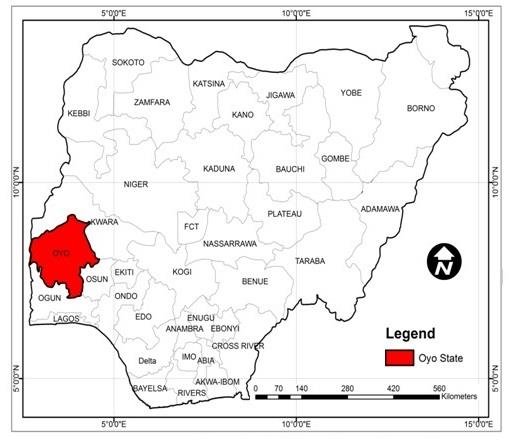
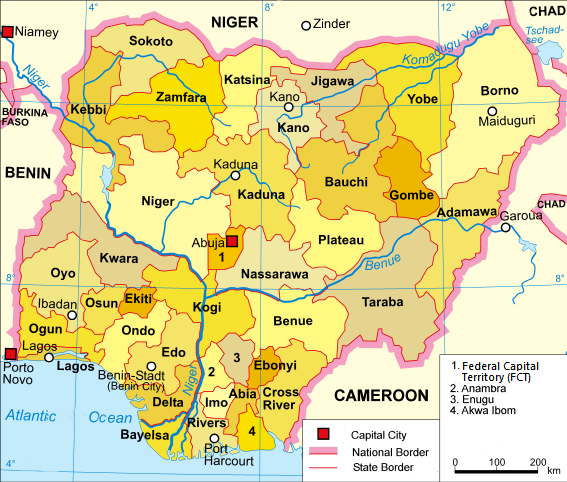
Oyo State is located in located in the South West geopolitical zone of the Federal Republic of Nigeria. 
The Federal Republic of Nigeria is divided into six geopolitical zones commonly called zones. 

Nigeria’s six geopolitical zones

Ibadan is Oyo State’s capital and its most populous city, and Nigeria’s third (after Lagos and Kano). It’s population is estimated at close to 4 million people whereas in its metropolitan area an estimated 6 million people live, mainly Yoruba but also Igbo, Hausa, Edo and Ibibio from other part of Nigeria.

Oyo State is an inland state and Nigeria’s sixth most populous state (after Kano, Lagos, Katsina, Kaduna and Bauchi states) with an estimated 9 to 10 million people (2024) and ranks 14 by surface area with 28,454 km2.
(webmaster FVDK).

Oyo State: Yahoo Boy stabs parents as black magic soap fails to yield fortune

Published: January 27, 2024
By: Kalu Idika – NB News Band, Nigeria

Mr Daniel Bamidele, a 20-year-old man suspected to be a Yahoo Boy, has been arrested in Oyo State.

The he was nabbed after stabbing his parents on Thursday, January 25.

The Nation reported that Daniel’s mother, Titilayo, reportedly ran out of their home in Apabielesin area of Ibadan, Oyo State with serious injury, calling for help as her son sneaked into their home and attacked her and his father with a machete.

This attracted bystanders who hurriedly rushed into the house, held Daniel down and dispossessed him of the machete he had used to attack his parents.

Speaking after he had been held down and freed his father from his grip, Daniel explained that he had been earning a living from cybercrime otherwise called yahoo business for some time.

He said his parents were aware that he already built a three-bedroom bungalow from the proceeds of the cybercrime.

Daniel said he had promised that he would get a store for his mother and stock it with goods so she could become a big trader once he recorded a breakthrough.

He added that his mother and elder brother colluded to fleece him of the sum of N2.5 million despite the promise he made to get her a store and stock it with goods.

Daniel said, “I purposely lured my mother from a church programme she was attending, and as soon as we arrived home, I attacked her with a knife and was already inflicting cuts on her body when my father tried to save her from me.

“I attacked my father too because if I had not stabbed both of them, they would have succeeded in killing me.”

Speaking further on his reasons for attacking his mother and father with a knife, Daniel accused his mother of giving him a fake name which rendered useless the magic black soap he had secured from the priest of a white garment church.

He also noted that he made his elder brother his next of kin in his bank documentation but the same elder brother had been trying to play smart with his money.

He said, “I am a 200-level student of LAUTECH (Ladoke Akintola University of Technology) and I have built a three-bedroom bungalow from the money I made from doing yahoo business.

“I am angry with my parents, particularly my mother, for giving me a fake name instead of her real name.

“There is a particular black magic soap that I have been using lately. The soap was given to me by the priest of a white garment church named Mathew.

“I was the one who bought a generator for Pastor Mathew’s church around Ona Grammar School in Ogbomosho.

“The soap was meant to bring me good fortune, but there was the need for me to call my mother’s name into it before it could work.

“My mother told me that her name is Titilayo. But when I called the name into the soap, it did not work. Hence, I got angry and decided to stab her.”

Daniel’s mother, Titilayo, however said she did not collect any money from him.

She said, “I was called on the phone to come pick up my son from school at LAUTECH when he started exhibiting mental illness.

“When we got home, his father brought a native medicine home and gave him to use. He slept off after taking the medicine.

“However, when he woke up, he demanded the whereabouts of his phone and I told him I did not take his phone. He landed several blows on me.

“He is a liar; I did not collect any money from him.”

But Bamidele’s father accused his wife of being in the know of everything pertaining to how his son ventured into yahoo business and how he built a house from the money he made from the fraudulent activity.

“My wife was the one that indulged him (Daniel). She knew when her son started building a house, yet she did not tell me,” he said.

Source: Yahoo Boy stabs parents as black magic soap fails to yield fortune

More:

Ibadan: ‘Yahoo Boy’ Stabs Parents Over Failed Black Magic Soap

The internet fraudster, Yahoo boy, Daniel Bamidele who allegedly stabbed his parents

Published: January 27, 2024
By: Leadership News, Nigeria

A 20-year-old internet fraudster, identified as Daniel Bamidele, has attacked and stabbed his parents over his mother’s refusal to reveal her real name, necessary for activating a black ritual soap that was supposed to bring him riches.

The incident occurred in the Bamideles’ Apabielesin home in Ibadan, Oyo State capital, when Daniel, enraged by his mother’s actions, assaulted both his parents with a machete. His mother, Titilayo, managed to escape and raise an alarm, leading to the intervention of bystanders who subdued Daniel and disarmed him.

According to Daniel, his parents were aware of his involvement in cybercrime, from which he claimed to have built a three-bedroom bungalow.

He accused his mother and elder brother of cheating him out of N2.5 million, frustration over his mother providing a false name, which rendered his ritual soap, which he said was given to him by a white garment church priest, ineffective. The soap, he added, was intended to bring good fortune but required his mother’s real name for activation.

“I purposely lured my mother from a church programme she was attending, and as soon as we arrived home, I attacked her with a knife and was already inflicting cuts on her body when my father tried to save her from me,” he said in a report by the Nation.

“I attacked my father too because if I had not stabbed both of them, they would have succeeded in killing me.”

Source: Ibadan: ‘Yahoo Boy’ Stabs Parents Over Failed Black Magic Soap

Map showing Nigeria’s 36 states – Oyo State os located in the southwest.

Oluwo Of Iwo, Osun state, Nigeria: Some traditional rulers behind ritual killings in their domains

An inspiring and powerful speech of the Oluwo of Iwo, Osun state, who is not afraid to say what’s on his mind, even if this may disturb his fellow traditional rulers. I quote: “Sadly, as we speak, no traditional ruler, as far as I know in Nigeria, is speaking against ritual killing, which is gradually becoming a norm in our present day society. If I may ask again, why are all these things going on and no king is talking about them? Are some of our kings part of these ugly game? Some kings justify so many ugly things pertaining to ritual killings in the name of customs and traditions. What culture and tradition are they talking about?

He even goes one step further, by directly accusing his fellow kings: “I know these comments will unsettle many kings, still involved in all manner of ritual killings.” Unquote. 

It is no small talk what Abdulrosheed Adewale Akanbi asserts – even though we we may be surprised by certain details.

We should congratulate him with his outspoken views and rejection of the heinous crimes which are the ritualistic killings in Nigeria, also known as ‘money-related rituals’.  

“Ritualism is not culture or tradition, as far as I am concerned”, according to the Oluwo of Iwo.

I sincerely hope that many traditional rulers in Nigeria will soon follow his example.

Read below what Abdulrosheed Adewale Akanbi had to say. 

Thank you Oluwo of Iwo!
(webmaster FVDK),

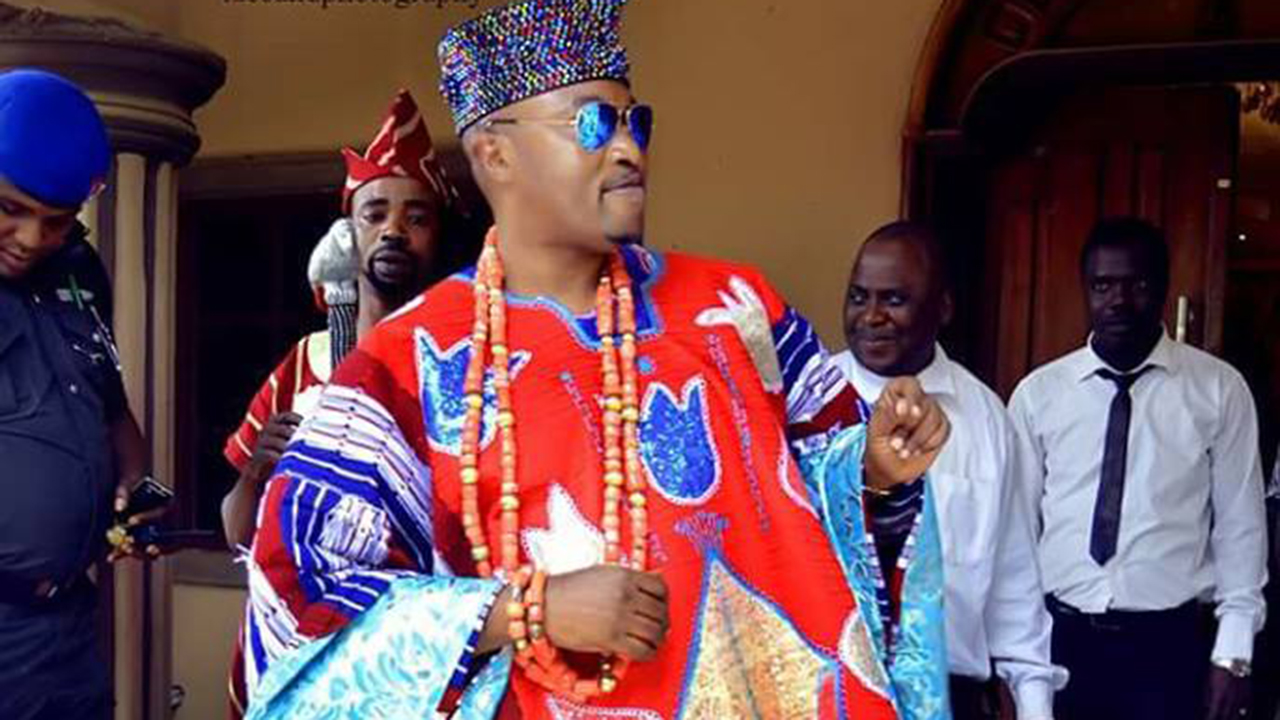
Oluwo of Iwo, Oba Abdulrosheed Adewale Akanbi 
Photo/ Facebook/ emperortelu1/ Taosandphotography

Oluwo of Iwo: some traditional rulers behind ritual killings in their domains

Published: May 19, 2019 – 3:07 am
By: Gabriel Omonhinmin  

On May 7, 2019, at exactly 7.45 a.m., Palace Watch got an SMS from HRM Oba Adewale Abdul-Rasheed Akanbi Telu 1, the Oluwo of Iwo, and the message was “Africans, nay Nigerians are no devils. Yoruba as a people are blessed and our culture and tradition is the best. But what is required now is for all men of goodwill to advocate upgrading of all sectors of our cultural practices to make them more appealing. As a King, I will not stop until I help to make our cultural heritage and traditional values, the envy of the world.”Palace Watch then reached out to Oluwo of Iwo, who shared his thoughts on various national issues.

What brought about the message you sent?
The message arose from the pains I currently suffer over the damming issues of ritual killings, kidnapping and other worrisome crimes, which have continued to unsettle most Nigerians and foreigners alike. For how long will all these crimes be allowed to fester unattended to in our society?

This is not the type of society we inherited, and there is no way I will continue to keep quiet like most monarchs across the country over these very worrisome matters. I have resolved to continue with my advocacy over these issues. I know most traditional rulers, who are involved in all manner of rituals will not be happy with me and will not find my advocacy funny. I am, however, determined to ensure our children no longer die unnecessarily over ritual related matters, due to age-long ignorance of ritual killings by kings and their friends or allies.

The act is not only barbaric, but it is also wicked and unacceptable in any civilized setting. We must, therefore, do all within our powers as traditional rulers to make sure African gods or deities that require only human blood are no longer appeased.Just a little over 100 years ago, it was a great woman called Mary Slessor that fought so hard to stop killings of twins in some Nigerian societies because we ignorantly believed then that twins were devils. All twins in Nigeria should eulogise and celebrate Mary Slessor. 

Nigerians are dying in thousands daily because of ritual killings. The case of Badoo in Lagos is one singular example of this evil. It is a very good example of money rituals, which have become the common practice in our society. Mind you, the practice is all about shedding of innocent blood. The situation has gotten so bad that children can no longer trust their parents and neighbours, due to societal craze and desperation for quick money. 

As if this is not painful enough, most parents, guardians and other relatives are now in the habit of selling their wards and relatives into slavery to places like Italy, Libya, Saudi Arabia and other Arab countries. Some of these children are made sex slaves and in the process killed and unaccounted for. 

Other high level crimes are daily committed, due to desperation of seeking greener pastures abroad, which is a mirage. Enough of this. Government must now begin to act and speak up against this type of crime. If not for President Muhammadu Buhari’s quick intervention, innocent blood would have been shed by Saudi Arabian government in the case of little Zainab Aliyu and the 81-year-old man, who were implicated by a desperate drug cartel at Aminu Kano International Airport, Kano. Their lives would have been wasted just like that. 

With this type of crime, what precedent are we showing our children, especially the youths? All traditional rulers of good conscience should henceforth rise up and do all within their powers to rid the society of these elements, especially those residing in their domains. They should deliberately continue to do all within their powers to assist law enforcement agents to arrest these elements, no matter how wealthy they are. They are not good examples to any society.

It might not be palatable to most traditional rulers across Africa,especially Nigeria and Yoruba land. But we must henceforth learn to do away with traditional and cultural practices that encourage these types of inhuman practices. We as traditional rulers need to show love and compassion at any given time. 

We need to change what we met our forefathers ignorantly doing to harm our society. Such acts are not culture or tradition; they are simply evil that we must do away with. And once we do this, Africa will no longer be regarded as backward and evil by others, especially European countries. 

My prayer, therefore, is that any traditional ruler, especially my fellow Obas, who find it difficult supporting this type of noble act of preserving innocent lives, his family members should also experience the pains family members of victims of ritual killings, kidnappings and other violent crimes currently ravaging our society suffer.

The principal reason for placing this curse is simple. There is a common adage in Yoruba land, which says, “The elderly can’t be around and watch helplessly as children go astray or die recklessly in their presence.” Traditional rulers by our customs and traditions, no matter their age, are the elderly in any society. They, therefore, have a role to play to help stem this ugly trend that is not helping our society in any way or form. 

We are kings, so we must see everyone in our society as our children, especially the very young and vulnerable. Sadly, as we speak, no traditional ruler, as far as I know in Nigeria, is speaking against ritual killing, which is gradually becoming a norm in our present day society. If I may ask again, why are all these things going on and no king is talking about them? Are some of our kings part of these ugly game? Some kings justify so many ugly things pertaining to ritual killings in the name of customs and traditions. What culture and tradition are they talking about? 

I honestly expect my fellow Yoruba Obas to have learnt a lesson or two from the Efon Alaye king, who was hanged sometime in the 60s or early 70s for his complicity in the killing of a young child in the name of rituals. Ritualism is not culture or tradition, as far as I am concerned. That particular incident showed clearly that some of our Yoruba Obas are part of this nonsense. The Efon Alaye Oba was caught, but what about other kings, who are still doing these things and have not been caught? Is it right and proper? We are all sitting down looking in the name of culture, while they are busy killing our children.

And some people call such terrible barbaric acts culture and tradition? It was these types of acts that gave impetus to the money rituals that are almost becoming a norm in our present day society. When will they stop?All these happenings around African countries are contributing to our lack of progress. Mind you, any country that does all these things will never be at peace with itself. These are simply natural reactions that come without any curse. These ugly acts naturally recycle themselves and come with karma. People still have the erroneous belief that karma will never come. Then let’s wait and see, if they don’t stop henceforth, what will happen to them and their generations yet unborn. 

I know these comments will unsettle many kings, still involved in all manner of ritual killings. They will hate me more, but I honestly don’t care about how they feel. If this nonsense is not stopped forthwith, what kind of future are we laying down for our children and generations coming after us?

Why do you think Law enforcement agencies, particularly the Police seem helpless?
How can the police uncover the crimes, if people are not willing to cooperate with them? Police need lots of information to work with, and the people are not forthcoming with such information, just because they have been hoodwinked in name of culture and tradition. 

Just recently, an Oba in the Southwest was to be buried, women were particularly warned not to stray into the town during late hours, otherwise they would be killed. Assuming an illiterate lady that can’t read and write get stranded in that town, what is the guarantee that the innocent lady who is just going about her business would not be killed, to justify one nonsense culture and tradition? Which culture or tradition says that a king or his people should illegally take the life of another person they did not help to create?

With this position, most traditional rulers across the country, especially your fellow Obas from the Southwest, will see you as a rebel. Does this not bother you?
I don’t care what they think of me, I am only after the truth. Will I say because of what other Obas, who are mere mortals like me think or say about me, I should not speak against the barbaric acts they are involved in, and which are not helping society? If we choose to keep quiet, what are kings for? What are leaders for? What are the roles of traditional rulers in helping to make society a better place? 

My friend, people are free to use their mouths anyhow they like. I am for the truth and will never leave that path, which is pleasing to the Almighty Allah. Nigeria is just like the personal domain of every king. Once traditional rulers begin to genuinely speak against these evils, people involved in these acts will no longer have the liver to continue with their acts. And with this position, the entire country will become safer for all of us.

What is the way forward and how do we stop all these acts?
Our message goes out daily to the Obas and kings involved in these ugly acts, but they are not ready to change. The few of us that believe in the truth and the betterment of society will force them to quit the acts that do no one any good. Their alibi is that they inherited these customs from their forefathers, but they fail to realise that their forefathers were not living in a civilized and enlightened society, such as the one we have today.

Most of these secret cults that require human sacrifice, which some of our kings and their people cued into, were never founded by kings. The association founded by kings as a group, is the Assembly of traditional rulers, which is called Council of Traditional rulers in states and local government and the National Council of Traditional Rulers of Nigeria at the national level. 

Indeed, these groups are voluntary associations of kings across the country, where the welfare and well-being of kings are discussed alongside other issues of national importance. These groups or bodies do not demand any form of sacrifice nor human blood or that of an animal. 

So, I am henceforth advocating that we now have bodies that should be known and called for example, the “Yoruba Council of Oba,” an assemblage where all Yoruba speaking Obas should sit down once in a long while and discuss matters concerning the Yoruba nation generally. Similarly, we should have Ijaw Council of Obas, Igbo Council of Obis or Eze, and the Hausa Fulani Council of Emirs.

These groups should be able to meet separately at different times, compare notes about things happening around their areas that are bothering them, and then bring such before the National Council of Traditional Rulers of Nigeria. Please, try to get the point I am pushing here. These Yoruba, Ijaw, Igbos and Hausa Fulani Councils of Kings do not in any way invalidate all other existing councils in the Local Government Areas and the states across the country, which meet more frequently than the one I am proposing, which will only meet in a very long while.

If government wants the security situation in the country to improve drastically, it must henceforth learn to empower traditional rulers and traditional institutions. No security system can impact on the ordinary people without the cooperation and collaboration of traditional rulers across the country. 

Are you comfortable with the level of funding for traditional institutions by government?
Nice to know that efforts are now being made by the Federal Government to channel Local Government Areas’ allocation to them directly. But much as this move is applauded, it will not help the present security situation in the country. The Obas, Obis and Emirs are the Chief Security Officers (CSO) in their domains.

If this is true, then the kings need to be funded. The Federal Government should make provision for a special budgetary allocation for traditional rulers to deal with security needs. This is the way to go. Oftentimes, the kings that are not funded by government are the ones supporting and providing funds and other logistics for the police to fight crimes in their domains.

The Nigeria Police can hardly do anything meaningful without the kings’ cooperation. Honestly, the salaries of Obas, Obis and Emirs are nothing to write home about. If I tell you the monthly salary of a First Class Oba in the Southwest, especially in Osun State where I am, you will be ashamed and scandalised. Yet, so much is expected from these kings. The North is slightly better, but it is still not enough. 

Once the government at the centre begins to offer reasonable resources to kings across the country, and they are legislatively empowered to take some actions and decisions, things will naturally improve security-wise across the country. Most criminals see kings as toothless bulldogs that can do little or nothing. 

When a king wants to correct criminals in their domains, they go to court, saying the king does not have the power to do this or that to them. But if kings are given some legal backing, most criminals will run away from their domains or decide to behave themselves. Criminals are not ghosts, but there is little or nothing a king can do the way things are now.The government should, as a matter of urgency, formulate policies to criminalise some of these practices. Some kings are hiding behind ritual killings to commit all sorts of atrocities. These acts are nothing but cultural corruption.

Source: Some traditional rulers behind ritual killings in their domains — Oluwo Of Iwo