On more than one occasion I have drawn attention to ritual murders and other human rights violations in Malawi, notably the attacks on people with albinism by unscrupulous individuals who mutilate or even kill their fellow-Malawians for private gain, wealth, power and/or prestige. In Malawi, persons with albinism are facing these dangers today, but the problem has a long history in the country (in fact, not only in Malawi but also in other countries in Southern Africa, even beyond the region, but this is not the proper place to dwell on this topic). There have been numerous cases of attacks on albinos in the recent past as wel as in the more distant past. In 2016 a United Nations expert on albinism, Ikponwosa Ero, herself an albino, warned that the situation in Malawi constitutes an emergency. Unfortunately, the situation has not improved since her warning, as recent attacks and murder cases amply demonstrate. Read below what Ikponwosa Ero said in 2016. (Webmaster FVDK)
UN: People with albinism in Malawi face ‘total extinction’
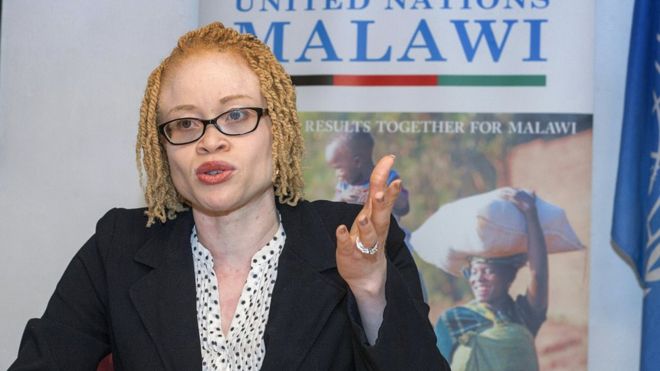
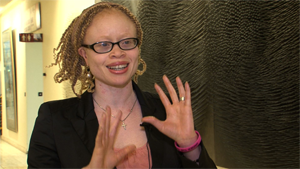
UN expert on albinism Ikponwosa Ero says people with the condition are seen as a form of income
Published: April 29, 2016 By: BBC
Malawi’s estimated 10,000 albinos face “extinction” if they continue to be murdered for their body parts for use in witchcraft, a UN expert has warned.
Ikponwosa Ero said that the situation “constitutes an emergency, a crisis disturbing in its proportions”.
Her call came after two men received a 17-year jail term for murdering a 21-year-old woman with albinism.
Ms Ero said Malawi police have recorded 65 attacks, abductions and murders of albinos since the end of 2014.
Albinos were targeted because of beliefs that their body parts “can increase wealth, make businesses prosper or facilitate employment”, said Ms Ero, the UN human rights council’s expert on albinism.
“Even in death, they do not rest in peace as their remains are robbed from graveyards,” she added.
Ms Ero, herself an albino, said there are economic motivations.
“Malawi is one of the world’s poorest countries and the sale of body parts of persons with albinism is believed to be very lucrative.”
People with albinism, who lack pigment in their skin and appear pale, are regularly killed in several African countries including Malawi, Mozambique and Tanzania.
In Malawi, attacking, mutilating and killing persons with albinism is rampant. Body parts of albinos are mistakenly believed to bring power and wealth. Not a year passes without one or more reports of these heinous crimes. The following example merely illustrates this and definitely is no exception.
In November 2015 three men attacked a 17-year old boy with albinism, Alfred Chikalo, and nearly killed him with the intention to sell his body parts. It was not the only case of attacks on people with albinism in 2015. Police in Phalombe district arrested the three culprits who confessed hacking Alfred Chikalo. A few weeks later, Police in Phalombe district arrested a 29-year old man, Lawo Sambani, who was accused of being the mastermind behind the plot to attack the 17-year old boy. The victim sustained deep stab wounds in the head, both arms and on the upper part of his left leg. He was rushed to the hospital and discharged a couple of weeks later.
It was announced that the four men in police custody will be brought to court. Unfortunately, since their detention, nothing is known about their trial. To be continued. (FVDK)
More details in the following articles (warning: the original articles contain a graphic picture showing the victim):
A must read. Though a very lengthy report that I reproduce here, it contains such a wealth of information on albinism, people living with albinism, their fears, their dangers, the measures taken by the Government of Tanzania, that I thought I must conserve it and present to you. I will not even try to summarize it or give some sketchy details, judge for yourself. (Webmaster FVDK)
Published: February 9, 2019 3:01AM EST By: Human Rights Watch
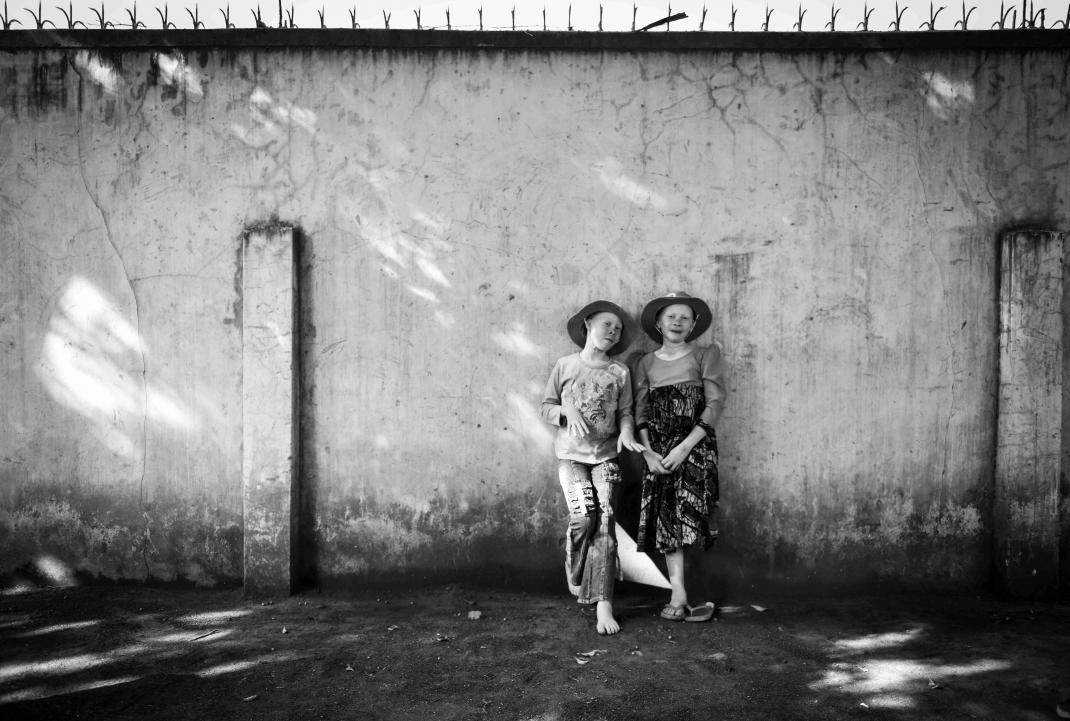
Two girls play in the shade of the outer walls of the orphanage in Mwanza, Tanzania. After the orphanage started accepting children with albinism, the walls were secured with barbed wire.@2016 Sacha de Boer
Introduction
Many children with albinism in Tanzania share similar stories of hardship. The “temporary holding shelters” strategy introduced by the Tanzanian government in the late 2000s may have contributed to a decline in the number of physical attacks, but Human Rights Watch observed that it led to the emergence of additional challenges.
In July 2017, Human Rights Watch interviewed 13 children and young people with albinism, aged 7 to 18 years old, and 26 other people, including family members, education professionals and nongovernmental organizations in the Mwanza, Shinyanga and Simiyu regions of Tanzania. There, we found that Tanzanian government policies designed to protect children with albinism incidentally had a negative impact on their rights to family life, an adequate standard of living and inclusive education. In order to protect their privacy and shield them from potential repercussions, the names of most interviewees referred to hereafter have been changed.
While the Tanzanian government appears sensitive to these concerns, it should now intensify efforts to reinsert children with albinism into their communities and provide them with inclusive education, while continuing to investigate and prosecute those responsible for attacking children with albinism. By doing so, Tanzania has an opportunity to emerge as a strong African leader in ensuring the safety, inclusion and dignity of people with albinism, as outlined in the Regional Action Plan on Albinism in Africa, the first-ever continental strategy to address violations against people with albinism, adopted in 2017.[1]
What Is The Best Interests of the Child Principle?
The Best Interest of the Child principle derives from the United Nations Convention on the Rights of the Child. It requires state parties to prioritize the interests of the child in any action that may impact them. This includes taking into consideration the child’s own views and desires, his identity, his need for care and development and his right to a safe family and community environment. These factors should be considered altogether and balanced against one another if in contradiction. State intervention should be based on individual assessments of the particular child whose situation requires it.
Recommendations To the Government of Tanzania
Increase public sensitization efforts aimed at dispelling deadly and discriminatory myths about albinism, notably through workshops and public service announcements on radio and television, particularly in rural and isolated communities.
Ensure that all teachers in the public education system are trained to adequately provide for the specific needs of children with albinism.
Ensure that resources are at the disposal of schools to meet the specifications needed of children with albinism, notably by providing for textbooks and exams with larger fonts and assistive devices to read the blackboard.
Pursue efforts to promote the safety of people with albinism by investigating threats and crimes against people with albinism and holding those responsible to account.
Work with parents and communities to ensure the safe and orderly reunification of children with albinism with their families, with the goal of progressively dismantling the temporary holding shelters.
Recommendations to International Donors
Support projects dedicated to sensitizing the Tanzanian public to albinism and training teachers to provide for the specific needs of children with albinism in public schools.
Support the Tanzanian government in reuniting children with albinism with their families and ensuring their return to a safe, inclusive community.
Albinism in Tanzania
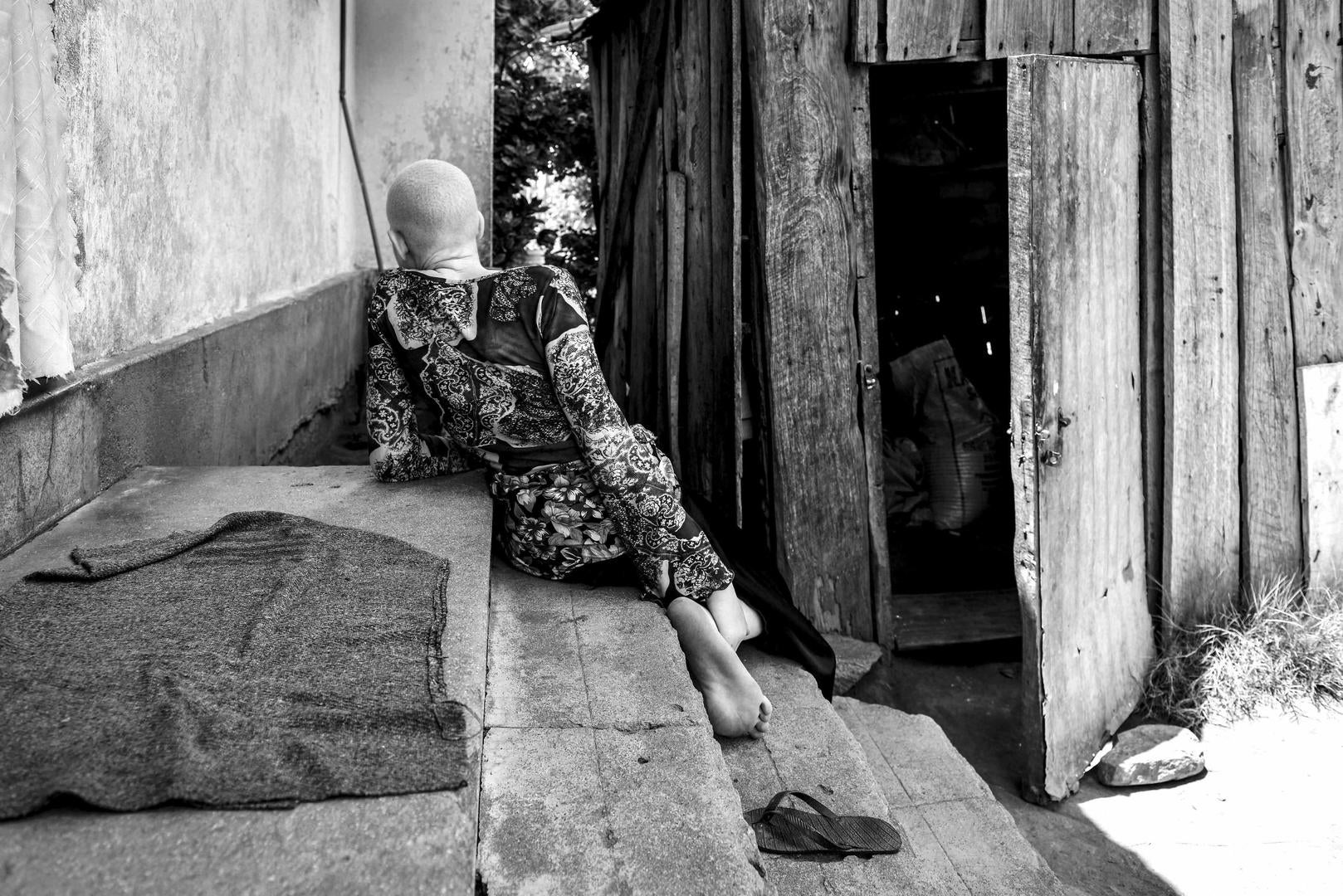
Lightness, a 13-year-old girl with albinism, and her family attend a Lutheran church every Sunday. Ukerewe Island, Tanzania @2016 Sacha de Boer
Albinism is a genetic condition that causes a deficit in the biosynthesis of melanin, a pigment that colours the skin, hair and eyes. While albinism is a rare condition in Europe and North America, affecting one out of about every 17,000 to 20,000 people, it is slightly more widespread in Sub-Saharan Africa, with prevalence rates of 1 in every 5,000 to 15,000 births.[2] Tanzania’s 2012 national census identified 16,477 people with albinism.[3] Today, it is estimated that there are over 18,000 people with albinism in the country.[4]
People with albinism usually have a paler, whiter appearance than their relatives. The deficit of melanin can also result in low vision and an increased vulnerability to sun’s ultra-violet radiation. Consequently, people with albinism living in Sub-Saharan African are about 1,000 times more likely to develop skin cancer than the general population.[5]
As noted by the United Nations Independent Expert on the enjoyment of human rights by persons with albinism, “The complexity and uniqueness of the condition means that their experiences significantly and simultaneously touch on several human rights issues including, but not limited to, discrimination based on color, discrimination based on disability, special needs in terms of access to education and enjoyment of the highest standards of health, harmful traditional practices, violence including killings and ritual attacks, trade and trafficking of body parts for witchcraft purposes, infanticide and abandonment of children.”[6]
In many parts of East Africa, people with albinism are targeted for their body parts, which some believe hold magical powers and bring good fortune. Traditional healers and “sorcerers” have over the years claimed that people with albinism are “ghosts” who never die but merely disappear. In 2009, the International Federation of the Red Cross reported that a senior police officer in Dar es Salaam, Tanzania’s economic capital said that the body of a person with albinism could fetch up to US$75,000.[7]
Over the last decade, Under the Same Sun, a Canadian non-governmental organization working to empower people with albinism, estimates that over 200 people with albinism, many of them children, have been killed in Africa or had their body parts amputated. In Tanzania alone, the group reported that at least 76 people with albinism were killed since 2006.[8]NGOs and local groups reported that criminals have stolen bones from the exhumed remains of people with albinism.[9]
The last reported killing, in February 2015, took place in the region of Geita, in Northwest Tanzania, when men abducted a one-year-old baby with albinism from his mother and “hacked [him] to death.”[10] The men were said to have hit the mother with a machete when she refused to hand over her child, an activist who was with her when she woke up at the hospital told Human Rights Watch.[11]
Faced with increased international scrutiny at the end of the 2000s, Tanzania began to mobilize resources to fight off traffickers and protect people with albinism. Local organizations told us that since 2007, hundreds of children were removed from their families, sometimes with no consultation or consent, and placed in shelters where they were effectively isolated from society.[12]
According to activists who spoke to Human Rights Watch, orders from the government to protect people with albinism were enforced by district commissioners, who oversee security in their respective districts.[13]
“There is an order from the district that says that if anything happens to [a] child with albinism, local leaders would be responsible. It something happens, the whole community will be suspected,” the manager of a local organization working with people with albinism told Human Rights Watch.[14] “Because no one wants trouble in their backyard, there was a big push from the communities to send the children to the shelters.”
The Tanzanian government also moved to combat impunity for ritual crimes, notably by investigating, arresting and prosecuting those who attack or sponsor attacks against people with albinism. In 2015, the Tanzanian government announced a ban on witchdoctors, which came out of a special joint task force between the police and the Tanzanian Albinism Society. As reported by the BBC at the time, then Home Affairs Minister Mathias Chikawe declared there would be a nationwide effort to “arrest them and take them to court” if witch doctors continued their practices.[15] Over 200 suspects, including some allegedly involved in killings of people with albinism, were reportedly arrested by the authorities.[16]
Ten years after the wave of killings and attacks began, these appear to have decreased because of Tanzania’s protective measures and stronger response to ritual crimes and attacks against people with albinism. The temporary holding shelters, however, remain. “The shelters were emergency, temporary solutions. But 10 years is not temporary anymore,” an activist for the rights of people with albinism told Human Rights Watch.[17]
Under international human rights law, children with albinism have the right to live in a family environment. Local NGOs are now making efforts to reunite children and families.[18] The Tanzanian government should do more to reunite families, to combat stigma within communities and ensure that family caregivers have the financial and social support they need to care for these children.
The government’s response should be guided by the best interests of the children involved, and balance the child’s protection and safety with the preservation of the family environment and the enjoyment of other rights. This is particularly important as the government has begun to send some children from the shelters back to their communities.
Key Challenges
Separation from the family and movement restrictions
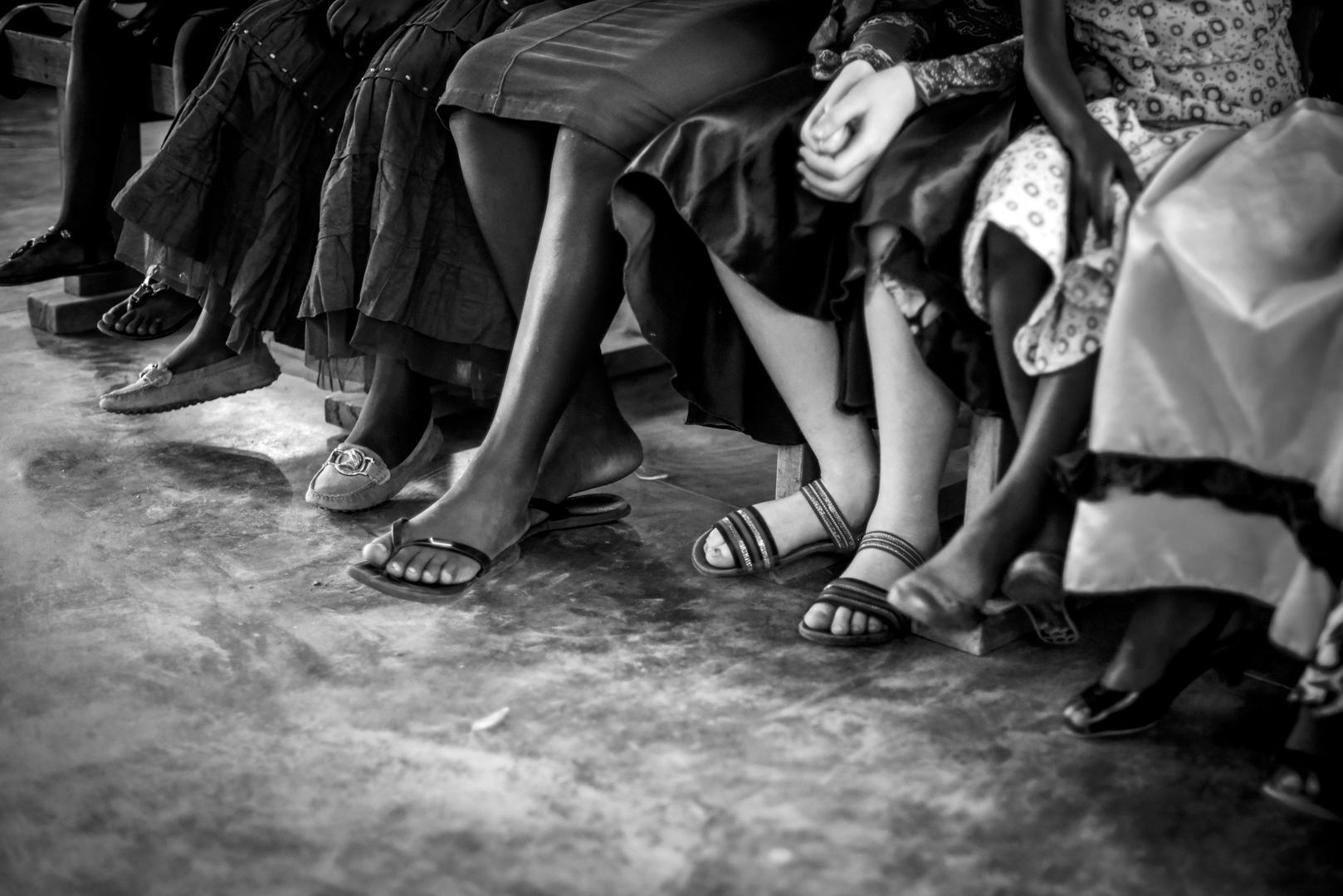
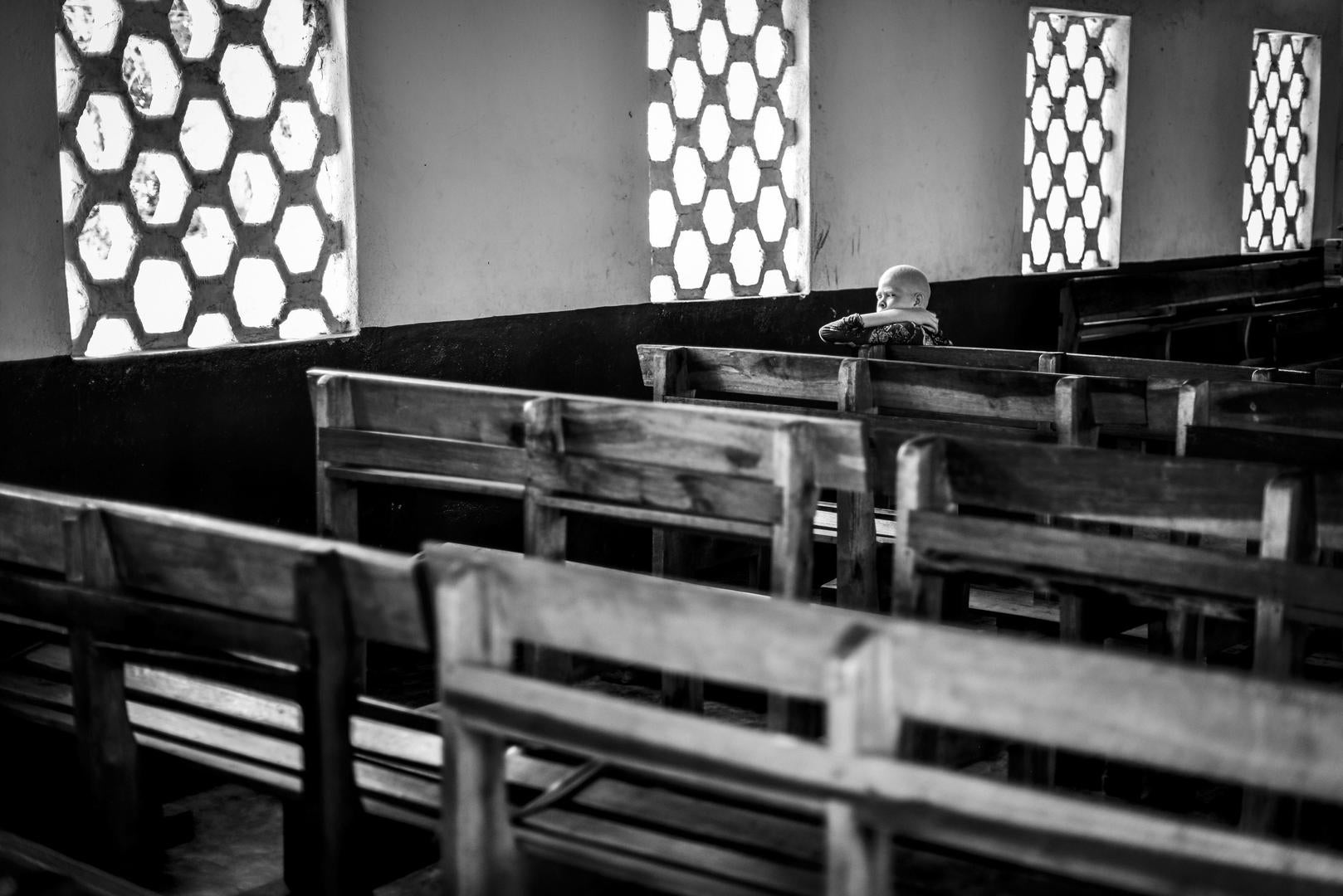
Lightness, a 13-year-old girl with albinism, in a church on Ukerewe Island, Tanzania. @2016 Sacha de Boer
Most of the 13 children and young adults with albinism Human Rights Watch interviewed described how the killings and the ensuing protection measures implemented by the Tanzanian government separated them from their families.
While in many cases, separation was a decision of the parents, five children said they were ordered to go to a shelter or boarding school by government officials (police or district education officers), with no regard for their parents’ consent. Human Rights Watch was not able to confirm this assertion from their parents. Once in the shelters or special boarding schools, the children’s freedom of movement was severely curtailed on security grounds.
Marco, an 18-year-old man with albinism, described to Human Rights Watch how his father had been obliged to let him go to the shelter: “When the killings and attacks happened, the government moved me to the Buhangija temporary shelter (Shinyanga region). Police officers came home and spoke to my dad but he refused to take me to Buhangija immediately because he wanted to find out more about it first. The first time, the police left without problems. The second time, they left with me.”
Augustin, a 14-year-old teenager from Shinyanga who was attacked by criminals who cut his left forearms and fingers on his right hand when he was four-year-old, said the district education officer took him to the shelter when he was seven or eight. “He picked me up at a bus stand. At first, no one explained to me why I was being taken there. I was sad at the beginning because I missed my parents. It felt like a punishment. Now, I understand it was to protect me from bad people,” he told Human Rights Watch.[19]
The mother of Victoria, a young woman with albinism from Shinyanga region who stayed for three years in Buhangija, confirmed that parents did not have any choice but to let their children go: “The government wrote a letter to the school Victoria was attending giving notification that children with albinism should be sent to Buhangija [shelter]. We were given a specific date and time by which she had to be there, which was two days later.”
Victoria’s father added: “When the government said we had to bring Victoria to Buhangija, I didn’t know why. There was security here…. But I had to accept the order. I don’t know what would have happened if I had refused.” [20]
NGOs that promote the rights of people with albinism also reported pressure by the government on local schools and the community to send children away to the shelters, by threatening to hold community leaders and members accountable if a child who remained at home was attacked.[21] “For communities, having a child with albinism among them felt like a burden – because you have to provide protection – so the shelters were a good solution to get rid of that burden. You don’t have to respond to police enquiries if something happens,” a national advocate for the rights of people with albinism told Human Rights Watch.[22]
In addition, parents of children with albinism and organizations working with people with albinism told Human Rights Watch that regardless of whether children had been voluntarily or involuntarily placed in shelters, once they were under the protection of the state, they were no longer allowed to go home – even for vacations – without a letter from the village chairperson, approved by the district commissioner, guaranteeing the area’s safety.[23] An NGO worker explained the process to Human Rights Watch:
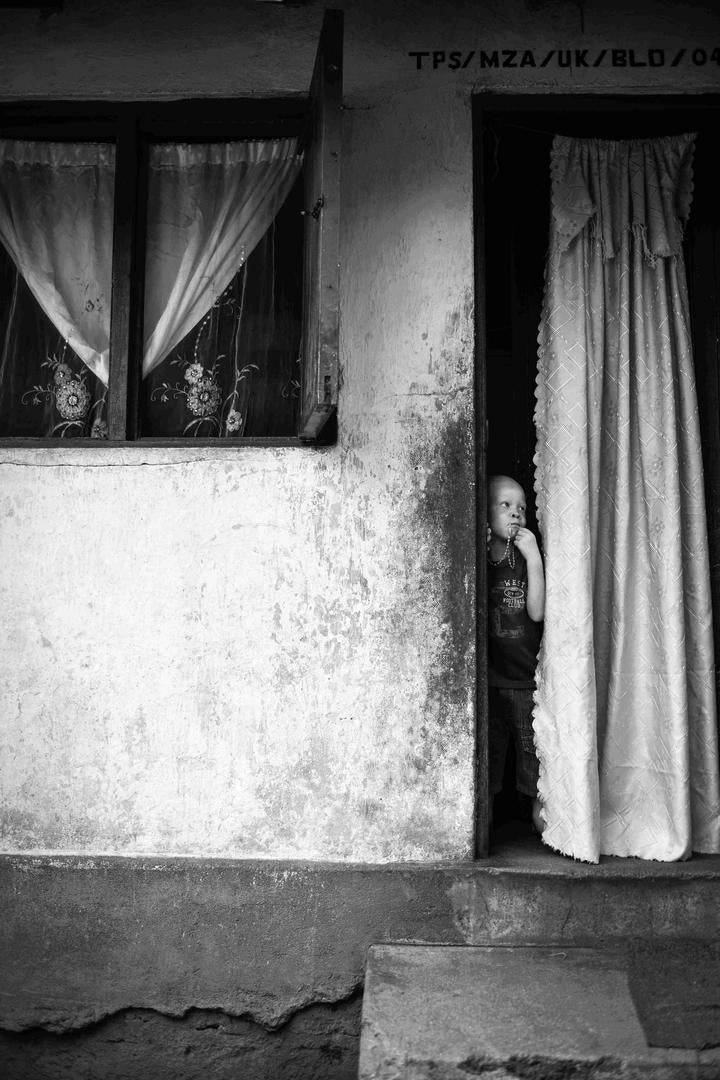
Ivan, a 6-year-old boy with albinism, in his home on Ukerewe Island, Tanzania.@2016 Sacha de Boer
The parents [must] first get a letter from the chairperson of the village and then send it to the district commissioner. The chairperson’s letter should say that the area is safe, that we know the child with albinism is visiting the parents. Without the chairperson’s letter, the district commissioner cannot issue his own letter. Some parents complain and say that they have the right to take the children home. But they generally understand.[24]
Severin, a 14-year-old boy with albinism, said he never went home on vacation while he lived in the shelter. “Once in Buhangija [shelter], we were told we needed a letter to be allowed to go home. My parents didn’t try to get the letter. I felt bad not to be with my family during the vacations because I missed them,” he said.[25]
The parents of Victoria, a young woman with albinism who stayed for three years in Buhangija, who have university degrees, said it was easy to obtain such a letter from the authorities. “When the parents are bringing the letter, it assures the school that there is full security in the family and in the village [for children with albinism],” the mother said. “We wouldn’t have been allowed if we had tried to bring [our daughter] home for good. It was impossible to come out of Buhangija [shelter] without permission. There was full security.”[26]
A representative of an international NGO sponsoring the education of children with albinism told Human Rights Watch that these restrictions also apply to children who have been moved out of shelters and into private schools under their sponsorship program.[27]
As a result of the government’s restrictions, some children had not been home for several years, and some were no longer in contact with their family. In one case, Lucy, a 12-year-old girl with albinism, told Human Rights Watch at the time of the interview that she had not seen her mother in two years and did not know where her family was:
I was 6 years old when I got to Mitindo [shelter in Mwanza]. My mother brought me there because she saw the thieves [people attacking children with albinism] and so she took me to the [shelter]. I was left there alone by my mother and I felt sad because she said she’d come back but did not. She came back only once I went [to a private school, where I am being sponsored by an international NGO] in 2015. She came only for one day to ask who was paying my school fees and asked whether they could pay for my brothers too. I don’t know why she hasn’t come back. We don’t get to speak on the phone. I don’t have her number. So I don’t know about my mother and brothers right now.[28]
According to representatives of local organizations working with people with albinism, another reason why some children placed in shelters no longer see their family is because their parents left no records of where they came from, and tracing the family after several years is difficult.[29]“When some parents brought their children to the shelters, some didn’t leave any contacts and in other cases they did but the phone numbers don’t work,” a local NGO worker told Human Rights Watch.[30] A staff member of another NGO said the temporary holding shelters had become akin to orphanages: “Parents took advantage to drop their kids there. Some children with albinism have been there for four or five years now without seeing their parents.”[31]
The separation from family exerts a heavy emotional toll on young children with albinism. Peter, an 18-year-old man who stayed at the Buhangija for eight years, said his brother was the only one visiting him. “I didn’t want to come [to the shelter]. I was too young. I used to cry all the time. I was a child, I missed my mother, my grandmother and my sister,” he told researchers. “Only my brother would come to visit. I did speak with my mother however, maybe once a month by phone. I felt good talking to her but I missed her.”[32]
Despite the difficulties children with albinism face in the shelters, some, including Severin, said they saw advantages in living among other people with albinism: “My parents did not come to visit at Buhangija. But it was good to be with other children with albinism because we felt we had a right to stay in the world.”
To protect children with albinism from physical attacks, a number of shelters and boarding schools have enforced drastic security measures that deprive children of their freedom of movement.
In July 2017, Human Rights Watch visited Buhangija, a former boarding school for students with disabilities transformed into a temporary holding shelter for children with albinism in 2009. At the time of the visit, 226 children were living in the shelter, out of whom 142 were children with albinism (the others were deaf or blind children attending the inclusive school located next to the shelter). At the shelter, Human Rights Watch researchers observed a barren compound made up of five dormitories surrounded by tall walls topped with barbwire.[33] Children with albinism who attend class walk about 100 meters to the school. The rest of their free time is spent within the compound, which has no recreation space or trees to provide for shade, useful in helping people with albinism shield themselves from the sun.
“My first impression of Buhangija was that it was so difficult because we were staying in [the shelter] for the whole day and I’m a very mobile person. So I first felt very bad but as days went by, I got used to it,” Marco, an 18-year-old who left the shelter in 2017 told Human Rights Watch.[34]
The principal of a secondary boarding school that caters to children with and without albinism in Mwanza region told Human Rights Watch that the movement of children with albinism is restricted even beyond the temporary holding shelter, and in the case of his school, because it lacks resources to adequately protect them outside the compound: “The main challenge with people with albinism is protection and safety,” he explained. “I’ve been asking since last year for one district policemen to be on site at night but there isn’t enough [district]money to do that. So, we talk to those students and discourage them from walking around alone, especially at night.”[35]
A 15-year-old girl with albinism attending that secondary boarding school said they are not allowed to leave the dormitories: “The environment here is not good. We are not allowed to stay outside because the school doesn’t have enough security. Classes usually finish at 2:15 p.m. and we have to be in our dormitories by 2:40 p.m.”[36]
NGOs have reported that children with albinism living in these shelters are progressively being sent back to their communities.[37] While this is important progress, it is essential that the process of reinserting children in their communities complies with the best interests of the child principle. Authorities should ensure that the views of children and their families are taken into account, that children have access to education in their community, and that the community has protection systems in place.
Such consultations did not take place in the case of Mariam, a seven-year-old girl from Simiyu region, who was reunited with her 85-year-old grandmother. “After she was removed from Buhangija, the government forced me to take care of Mariam because her mother and father are not providing for her, “recalled the grandmother.” This happened without the government consulting me beforehand…. They just dumped the child on me.”[38] Mariam does not attend the local school because, her grandmother said, she could not afford to buy textbooks.
Stigma and bias in the community
Lightness, a 13-year-old girl with albinism, says that sometimes she would like to be invisible. Ukerewe Island, Tanzania. @2016 Sacha de Boer
Eight children with albinism interviewed by Human Rights Watch recounted how they experienced stigma and bias in their communities, including name-calling.
Josefina, a seven-year-old living with her grandparents in the Shinyanga region, for example, said other children call her “Mbuliwmelu,” which means “white goat” in the local Sukuma language. “When that happens, it makes me feel sad and very angry, but I stay silent,” she said.[39]
In the Simiyu region, the grandmother of Mariam, a seven-year-old young girl with albinism, said Mariam frequently faced similar experiences:
Most people have a negative perception of Mariam because of her color. They don’t even want to welcome Mariam in their home. If they see her, they’ll see her colour and will see that if she spends too much time in the sun she has sores. If she plays, they fear blood will come out of her. They call her “Mbulimwelu”. Mariam is always sad when they call her like that, and sometimes she locks herself in the house and starts crying. In those cases, I just leave her alone.[40]
In some cases, parents have rejected or attacked their own children. Twelve-year-old Lucy, for instance, now lives at a private boarding school after receiving a scholarship from an international NGO. Choking on her tears, she said her mother told her that her father abandoned her prior to sending criminals to try and kill her: “My mother told me that my father refused me. I don’t want to go back [to my hometown] because it is my father who sent the thieves to get me.”[41]
Despite efforts by the government of Tanzania and NGOs to sensitize the general public in recent years, progress remains fragile, especially in rural areas, where people with albinism continue to face stigma and the rejection of their community and, at times, their own families. This can lead to poor self-esteem among young people with albinism, and difficulties in finding work opportunities later in life. An 18-year-old man with albinism told Human Rights Watch in Shinyanga region that he thought people like him have a harder time at finding work: “My life would definitely be different if I was not a person with albinism. If you have a black skin, you have many more opportunities. You can do the physical work, whereas person with albinism have to be careful because of their skin.”[42]
But, as the parents of four children with albinism pointed out, not all communities and families reject children with albinism. “When I had my first child with albinism, I was happy and thought this was normal. My family was happy too and if they weren’t, they didn’t let it show,” their mother said.[43] “It is the choice of God. God is giving. We should agree with them, be close with them,” their father added.[44]
Barriers to education
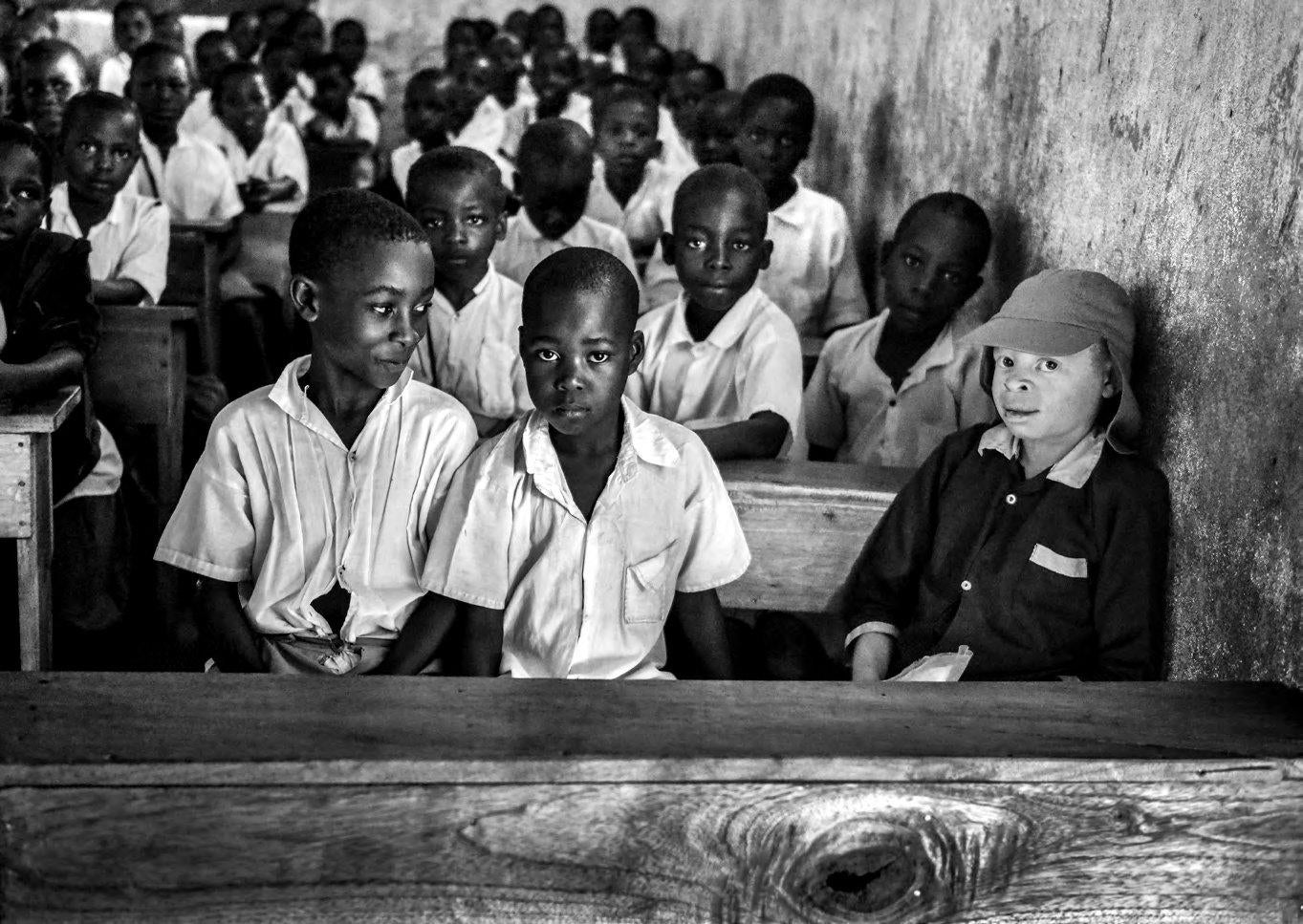
On his first day of school, students ran away when Sabato, a ten-year-old boy with albinism, walked into the classroom; they thought he was a “ghost.” The government then sent an education officer to the school to address the issue, but some children still do not want to sit too close to him. Ukerewe Island, Tanzania. @2016 Sacha de Boer
“People with albinism don’t get education,” a community organizer with albinism told Human Rights Watch.[45] “Firstly because of their low vision. Teachers don’t know how to deal with that. Secondly because [of lack of] interaction [with others]. There is teasing in school. People with albinism face a lack of interaction with local community. People see us as bad people. They see us as people who can’t contribute because of our bad education or lack of education,” he added.[46]
Ensuring a free, safe and dignified access to education is key to upholding the fundamental human rights of people with albinism and to combatting the stereotypes and stigma that continue to expose them to mistreatments and fatal risks.
Children with albinism face a range of barriers impeding their access to education.
Many families of children with albinism for instance are unable to enroll them in school because they lack sufficient income, or fear that having them walk to school may expose them to dangers.[47] The grandmother of Mariam, the seven-year-old girl with albinism, said she is ready to go school but that she doesn’t have the resources to send her. “I wish for Mariam to become a doctor or a teacher. I don’t want her to be a wife. But it costs money to buy books and everything.”[48]
Children with albinism may also face health risks at school due to their sensitivity to the sun. Laura, a 15-year-old student at a public secondary school, told Human Rights Watch that despite efforts to train teachers on the needs of children with albinism, the school still put the health of children with albinism at risk: “This school is not good. They force us to do activities in the sun. Teachers can also punish you if you say you can’t do activities in the sun. They caned me three times and it was very painful.”[49]
In addition, children with albinism do not always get the inclusive education they should be entitled to. In that respect, the existence of the temporary holding shelters and other special boarding schools, while providing safety and an opportunity to attend classes, promotes segregation and denies children the opportunity to learn with their peers without albinism and to feel included in their communities. As 12-year-old Lucy explained to Human Rights Watch, “It was not nice to only be with children with albinism because we stayed without difference – we must mix.”[50]
Children interviewed by Human Rights Watch also said that schools sometimes fail to provide children with albinism with appropriate accommodations for their low vision.[51] This would include assistive devices, such as magnifiers, enlarged printed material, writing in large letters on the blackboard, and seating children with albinism in the front of the classroom.
Gloria, a 14-year-old student with albinism who wants to become an engineer and build airplanes said she had different experiences in public and private schools: “Before, I was going to a public school. I didn’t like it there because there was no good care. In class, the teachers would be writing with small letters on the blackboard. I’d ask them to make the letters bigger, but they’d say that they can’t,” she told Human Rights Watch. “[The private school] was better. They wrote with big letters on the board – it was easier for me to follow the classes and get good grades.” [52]
Some public schools are taking positive steps. The principal of a Mwanza region public secondary boarding school that caters to the general public as well as to several children with disabilities and children with albinism told Human Rights Watch: “There is no segregation. All students are taught together. We have many special education teachers and they are all trained by the government. I insist that children with albinism sit at the front row and that the teachers write with big letters on the blackboards and that exams and other exercises are printed with big font for them,” he said. Yet, the resources are scarce: “We get some equipment from the ministry, but not enough. We have no monoculars [to help children with albinism see the blackboard], for instance.” [53]
Lawrence is a shy nine-year-old boy who attends public school and his father is very proud of him. “When we took him to school for the first time, teachers were very aware of albinism, maybe they had been trained,” Charles said.[54] “The only challenge Lawrence faces is his vision. Sometimes he has difficulties reading the blackboard [but] he gets support from the teachers and sometimes they explain or move him to the front. Lawrence does very well at school and sometimes is at the first position.”[55]
It is important that all teachers be familiarized with the specific needs of students with albinism and that the schools be provided with adequate resources to ensure they can achieve their full educational potential. More efforts are also needed to sensitize family-members and communities about albinism, to ensure that children with albinism in Tanzania can thrive both inside and outside the classroom.
[5] Lekalakala, P., Khammissa, R., Kramer, B., Ayo-Yusuf, O., Lemmer, J. and Feller, L., “Oculocutaneous Albinism and Squamous Cell Carcinoma of the Skin of the Head and Neck in Sub-Saharan Africa,” Journal of Skin Cancer, August 12, 2015, https://www.ncbi.nlm.nih.gov/pmc/articles/PMC4549604/ (accessed January 25, 2019).
[11] Human Rights Watch interview with community activist (pseudonym), Tanzania, July 2017.
[12] Human Rights Watch interview with representatives of three NGOs working in this field, names withheld, Tanzania, July 2017.
[13] Tanzania is a republic made up of 31 regions and 169 districts. Each district operates a security committee, headed by the district commissioner, in charge of enforcing laws.
[14] Human Rights Watch interview with NGO workers, names withheld, Tanzania, July 2017.
[19] Human Rights Watch interview with Augustin (pseudonym), Tanzania, July 2017.
[20] Human Rights Watch interviews with A.Y. and Z.M. (pseudonym), the parents of Victoria (pseudonym), Tanzania, July 2017.
[21] Human Rights Watch interview with representatives of three NGOs working in this field, names withheld, Tanzania, July 2017.
[22] Human Rights Watch interview with community activist (pseudonym), Tanzania, July 2017.
[23] Human Rights Watch separate interviews with representatives of three NGOs working in this field, names withheld, Tanzania, July 2017; Severin (pseudonym), Tanzania, July 2017; and A.Y. and Z.M. (names withheld), Tanzania, July 2017.
[24] Human Rights Watch interview with NGO representative (pseudonym), Tanzania, July 2017.
[25] Human Rights Watch interview with Severin (pseudonym), Tanzania, July 2017.
[26] Human Rights Watch interviews with A.Y. and Z.M. (names withheld), parents of Victoria, Tanzania, July 2017.
[27] Human Rights Watch interview with NGO representative (pseudonym), Tanzania, July 2017.
[28] Human Rights Watch interview with Lucy (pseudonym), Tanzania, July 2017.
[29] Human Rights Watch interview with representatives of three NGOs working in this field, names withheld, Tanzania, July 2017.
[30] Human Rights Watch interview with a representative of one NGO working in this field (pseudonym), Tanzania, July 2017.
[31] Human Rights Watch interview with a representative of one NGO working in this field (pseudonym), Tanzania, July 2017.
[32] Human Rights Watch interview with Peter Mwanzi (pseudonym), Tanzania, July 2017.
[33] Human Rights Watch interview (pseudonym), Tanzania, July 2017.
[34] Human Rights Watch interview with Marco Ndimo (pseudonym), Tanzania, July 2017.
[35] Human Rights Watch interview with A.M. (pseudonym), Tanzania, July 2017.
[36] Human Rights Watch interview with J.P.M. (pseudonym), Tanzania, July 2017.
UNICEF/Julio Dengucho Ritual killings and egregious human rights violations of the worst kind are instigated specifically against persons with albinism – UN experts
After a recent “savage” killing and the abduction of a one-year-old baby in Malawi, United Nations experts have urged the Government to take immediate action to protect people with albinism and “end the ongoing atrocities”.
“We urge the authorities to step up their investigations into these incidents and bring the perpetrators to justice,” the experts said in a statement on Friday.
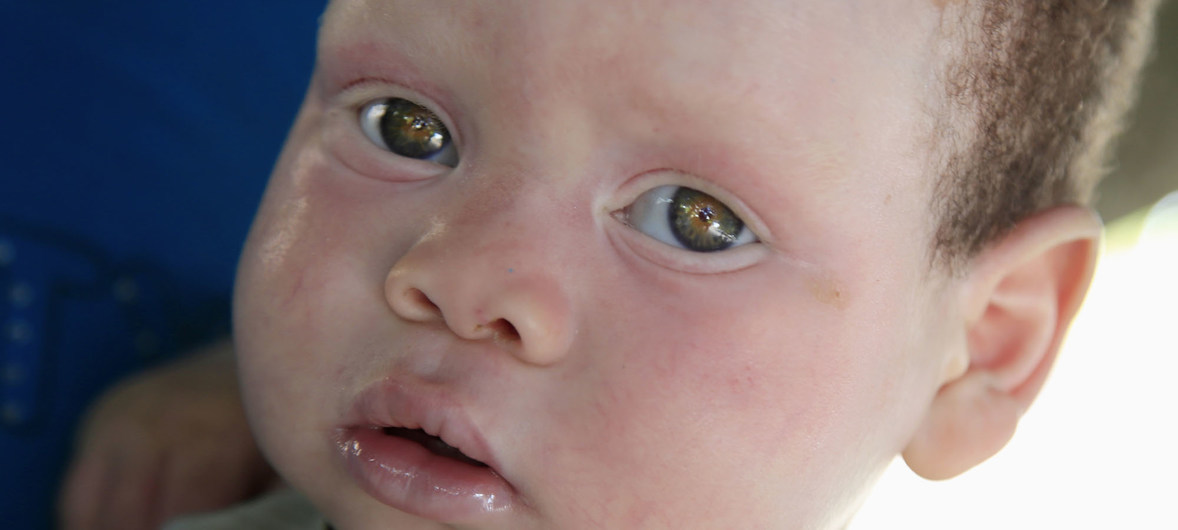
People with albinism are born with lighter than normal skin, hair and eye colour, making them sensitive to the sun and bright light. In some communities they are attacked or even killed for their body parts which are erroneously believed to possess magical powers.
Since 2014, 150 cases of killings, attacks and other human rights violations against persons with albinism have been reported in the southeast African nation. (Italics added by the webmaster, FVDK).
Despite various moves to support people with albinism, “the recent attacks demonstrate that the Government needs to redouble its efforts to end the ongoing atrocities,” according to the experts.
“We call on the Government to urgently address the root causes of these attacks and to strengthen nationwide campaigns to raise awareness, conduct robust investigations and prosecutions in all cases, increase protection for victims, and finance and implement all necessary measures,” stressed the experts.
UN experts fear that presidential and legislative elections due to take place in late May, could further aggravate the situation for persons with albinism. Killings and attacks often spike during election periods “because of false beliefs that their body parts can bring good luck and political power when used in witchcraft-related rituals,” the UN human rights experts said.
Some witchcraft practices result in “serious human rights violations”, such as torture, murder, discrimination and exclusion, including banishment from communities, they added.
“These two incidents are part of a larger disturbing pattern in Malawi where ritual killings and egregious human rights violations of the worst kind are instigated specifically against persons with albinism,” they underscored. “The attacks and violations are astonishing in their brutality.”
“We call on the authorities to ensure the deployment of adequate police and law enforcement personnel to protect persons with albinism where they live,” the experts concluded.
The experts also expressed concern at the reported backlog of cases of human rights violations and crimes against persons with albinism, noting that to date, there have been very few prosecutions, giving the impression of impunity.
The United Nations in Malawi is concerned by the continued gruesome attacks on persons with albinism and strongly condemns the savage killing of Yasin Phiri, aged 54, at Kande in Nkhata Bay on the eve of the new year. The UN is also concerned that there has not been progress to trace 12-year old Joseph Kachingwe who went missing on 6th July 2018.
This latest attack and other violations perpetrated against persons with albinism are a setback to the concerted efforts in the protection of people with albinism.
The UN once again calls upon the Government and all relevant stakeholders to redouble their efforts to effect immediate measures to protect persons with albinism as we go towards elections and implement the National Action Plan on Persons with Albinism. The plan addresses the root causes of attacks on persons with albinism, including a nationwide awareness raising campaign, strengthened investigations and prosecutions, together with strengthened protection and victim assistance measures. If these measures are not accelerated, we will continue registering human rights violations against persons with albinism.
We urge the authorities to ensure a prompt, thorough and impartial investigation into the killing of Yasin Phiri, and bring the alleged perpetrators to justice. We further call upon the authorities to fast-track the investigation and prosecution of outstanding cases on violation of rights of persons with albinism to avoid cultivating a culture of impunity in Malawi.
The UN remains committed to supporting the Government and people of Malawi to proactively promote and protect the rights of persons with albinism and ensure their full participation in the protection measures and socio-economic development of the country in an environment free of stigma, discrimination and physical attacks.
Mr. Benoit Thiry United Nations Resident Coordinator a.i. in Malawi
Ms. Ikponwosa Ero (Nigeria) was designated in June 2015 as the first UN Independent Expert on the enjoyment of human rights by persons with albinism. The vision of Ms. Ero’s mandate is driven by the cross-cutting principle of the UN Sustainable development goals: “leaving no one behind…starting with the furthest behind first.” Ms. Ero has over a decade of experience in the research, policy development, and practice of human rights concerning persons with albinism. She has advised organizations and governments around the world on human rights concerning persons with albinism. As the International Advocacy and Legal Officer for Under the Same Sun — an international organization with a focus on albinism — she developed strategic initiatives involving regional and international human rights mechanisms, prepared guiding documents, and oversaw the implementation of recommendations made by the UN and other human rights organizations. Ms Ero is also the author of numerous papers and articles, particularly with regards to applicable legal frameworks as well as the development and implementation of special measures to facilitate the enjoyment of human rights by persons with albinism.
Warning: The original article shows very graphic photos of the victim (see ‘Source’ below).
Published: February 29, 2016
By: Isaac Dachen
Another young lady has fallen a victim of ritual killers as she was murdered and her heart and intestines removed.
The covered body of the victim.
The quest for money, wealth and power seems to have overtaken the reasoning of many people in this age as they can go to any length to get what they want, including killing their fellow human beings.
This was the case with these very disturbing photographs that were shared on Twitter over the weekend by a usere with the name Aliyu Kwarbai, where an an unfortunate young lady fell a victim of the mindless killers who murdered her, ripped open her stomach and removed the intestines as well as her heart which was also removed.
The gory incident was said to have happened in a community in the eastern part of Nigeria.
See the tweet here (two graphic photos removed – note from the webmaster FVDK):
Rituals Killers Headless body of girl found in Osun [Warning: Very Graphic Photo]
Another headless body of a young lady has been discovered dumped in a bush.
Headless body being taken away (Pulse)
Published: March 1, 2016
By: Isaac Dachen
Two days after the body of an unidentified lady was discovered in a bush with her heart and intestines removed, another body of a girl has been found in a bush in the Akarabata Lagere Area in Ile-Ife, Osun State, with the head, wrists and private parts cut off.
The rate at which ritual killers are operating in the country is becoming quite alarming, with the quest for money, wealth and power seeming to have overtaken the reasoning of many people as they can go to any length to get what they want, including killing their fellow human beings.
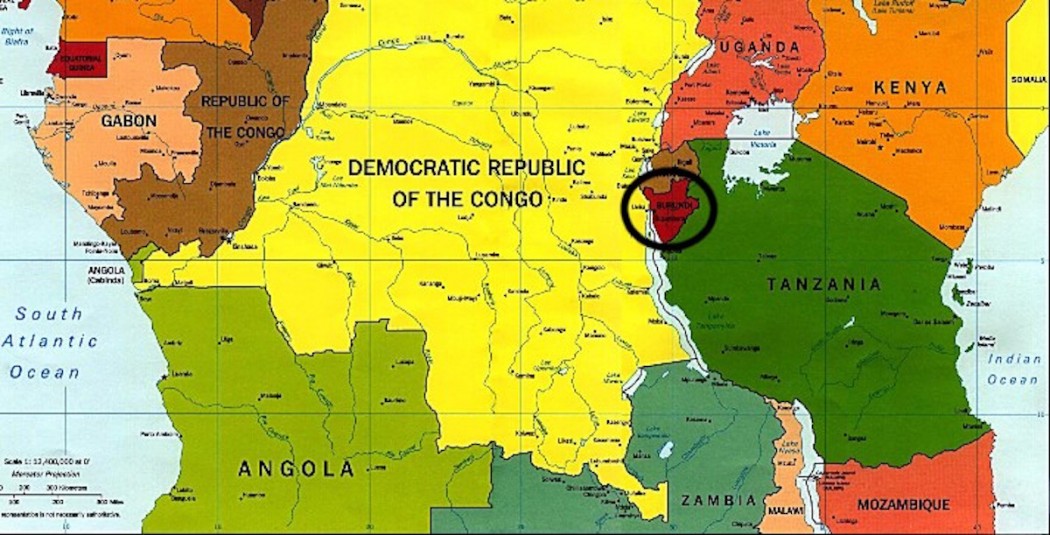
A five-year-old albino girl has been killed and dismembered in Burundi, officials said.
The killing, which is the first reported murder of a person with albinism in Burundi in four years, has been linked to regional witchcraft, according to local officials
“Gunmen broke into the girl’s home around 1:00 in the morning Wednesday, they attacked her parents before taking her,” local administrator Marie-Claudine Hashazinka told AFP.
Neighbours of the family pursued the gunmen, only to discover the victim’s dismembered body, Sky reported.
More than 20 albino people have been killed in Burundi since 2008, with the last case being in 2012 (see my October 4, 2018 post above – Please note: bold & italics added by webmaster FVDK).
In some areas, a complete albino skeleton is worth as much as $75,000, according to the Red Cross.
The Government has banned witch doctors who claim to perform spells and charms using albino body parts to bring good luck and wealth.
An investigation has been opened into the kidnapping and killing.
Published: August 17, 2018
By: Sputnik International / Africa news
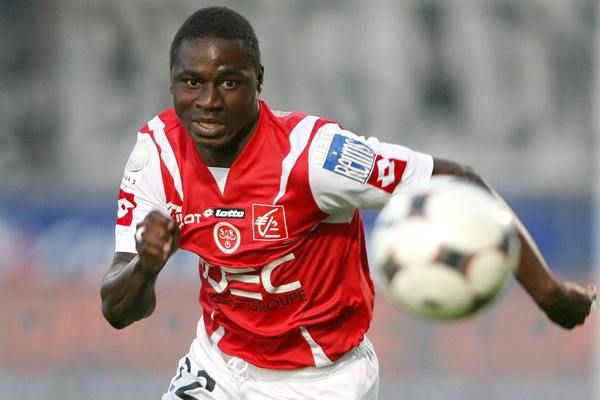
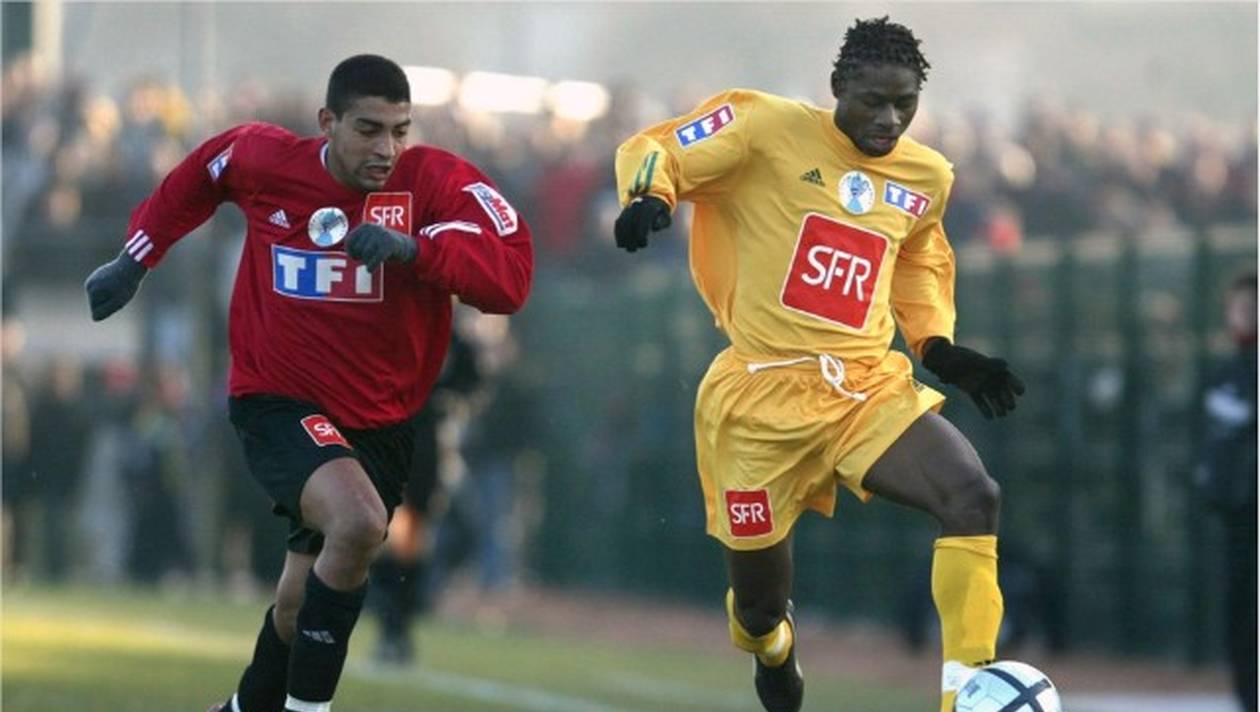
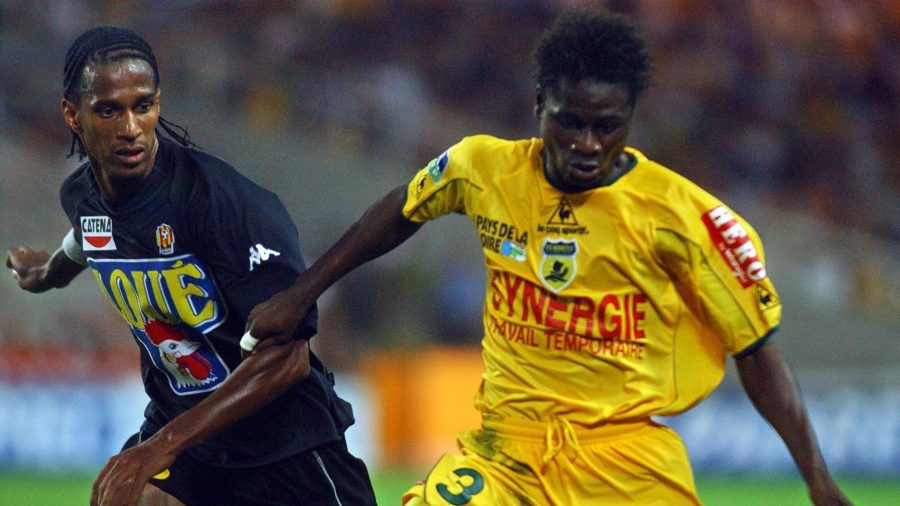
International football player Shiva N’Zigou, who at some point played at the French club Nantes noted that his mother had been killed in a ritual act for him.
In a video, reposted by the Le Chronique du Gabon YouTube channel and apparently first released by a local television channel, former Gabonese forward Shiva N’Zigou addresses the general public revealing his mother was killed for the sake of his football success.
According to Shiva, his father committed the horrendous act as a ritual killing “in the name of his business prosperity,” namely to keep the money his son earned to himself, so that Shiva could then make further progress in football. According to Shiva, the financial aspect had been an issue in the family.
The footballer separately noted that at the beginning of his sports career, his parents faked his ID, changing his name and reducing his age by five years.
Shiva also provided a couple of saucy details about his personal life, saying he had had relationships with men, one of whom he reportedly dated for a year, as well as had “rapports,” or liaisons with his aunt and sister during some religious festivities.
N’Zigou played for multiple football clubs, including French FC Nantes, and rounded off his career in 2016. The player partook in 24 matches as part of the national Gabonese squad from 2000 to 2008, netting five goals. N’Zigou is believed to have been the youngest player in the African Cup championship, reportedly making his debut at the age of 16.
Related article: Football. Les terribles confessions de l’ancien Nantais Shiva Star N’Zigou
Translation: Football. The awful confessions of former FC Nantes player Shiva Star N’Zigou
Published: August 17, 2018, 4:39 PM
By: Ouest France
L’ancien joueur international espoir gabonais Shiva Star N’Zigou, formé à Nantes, s’est confessé sur les dérives du football dont il a été victime dans sa vie.
Il y a des histoires qui font froid dans le dos, celle de Shiva Star N’zigou en fait incontestablement partie. Dans une vidéo publiée sur YouTube où on a du mal à le reconnaître, le joueur formé à Nantes et ancien international espoir gabonais s’est confié sur les zones d’ombre de sa carrière de footballeur lors d’une cérémonie religieuse. Et le moins que l’on puisse dire c’est que le joueur avait le cœur lourd.
Un âge falsifié
C’est une pratique malheureusement répandue dans le monde du football africain même si elle peut paraître un peu clichée. L’ancien canari avoue dans sa confession filmée que son âge a été falsifié en avançant sa date de naissance, de quoi le vieillir de 5 ans. La raison : mieux réussir dans le football. Très vite repéré à l’âge de 14 ans par le SCO d’Angers alors qu’il évolue encore dans son pays natal, Il terminera meilleur buteur des U15 nationaux du SCO, et pour cause il avait 5 ans de plus que ses coéquipiers et adversaires. Il est notamment le plus jeune joueur à avoir disputé une CAN et avoir inscrit un but lors d’une CAN. Dans sa confidence le joueur admet entre autres que son vrai prénom a été modifié à son arrivée en France, le Gabonais s’appellerait en vérité Shiva, nom tiré du spiritueux Chivas.
Déviances sexuelles effroyables
Le Gabonais de naissance en a plus sur le cœur que ce simple aveu et délivre un véritable récit aussi poignant qu’effroyable, qui a au moins le mérite d’une sincérité que peu oseraient avoir. L’ancien footballeur hésite tout en précisant à son auditoire que « c’est délicat » de dévoiler ce qu’il s’apprête à raconter. L’homme, aujourd’hui âgé de presque 40 ans aujourd’hui, dévoile qu’il a dû avoir des relations sexuelles avec sa tante quand il était « plus jeune ». Rien que cet aveu laisse de marbre mais l’homme continue et explique « qu’il a reproduit ces rapports avec sa sœur », faisant comprendre en substance qu’il a eu des rapports sexuels avec sa propre sœur. Partagé entre la sincérité et la noirceur de ses propos, la vidéo continue et l’effroi de ce qu’il a à confesser aussi, de mal en pis. « Après j’ai eu à coucher avec un ami à moi ». On peut donc comprendre selon la tournure de sa phrase que l’acte n’était pas consenti et s’il n’y a pas plus de précision sur le contexte de cette relation on pourrait en déduire qu’il a été contraint et forcé.
Mère sacrifiée
C’est sûrement le point d’orgue de son horrible récit. L’ancien footballeur avoue que sa mère a été sacrifiée. En cause : les discordes créées par les rentrées d’argent provenant des nombreux contrats qu’il a signés. Selon lui son père aurait tout bonnement tué sa mère afin de garder l’argent pour lui seul sous prétexte de vouloir lui « accoler son esprit » pour qu’il réussisse encore mieux sa carrière. Quand on dit que l’argent rend fou…
Impossible de ne pas sortir ému de ce récit, bien que très glauque. Il faut souligner le courage qu’il lui a fallu pour confesser de tels actes qui relèvent de l’horreur pour le commun des mortels mais qui auront peut-être le mérite de délier les langues si de telles pratiques sont monnaie courante.
Si vous suiviez la Ligue 1 au début des années 2000, son nom vous dit sans doute quelque chose. Joueur de Nantes entre 1998 et 2005, puis passé ensuite par Gueugnon et Reims, jusqu’en 2010, Shiva Star N’Zigou refait parler de lui. Et cela fait froid dans le dos. Lors d’une cérémonie religieuse filmée, on voit l’ancien international gabonais se confesser en public au sujet de son passé et de sa famille. Et révéler des choses effroyables.
“Ma mère est décédée par rapport à mon football, elle a été sacrifiée en fait, a-t-il déclaré. Parce que j’ai signé beaucoup de contrats et que ça ramenait beaucoup d’argent à la famille, ça amenait des discordes. Et mon père, pour garder tout l’argent pour lui, a décidé de sacrifier ma mère pour que son esprit me soit accolé et que je réussisse encore plus dans le football. Et c’est ce qui a été fait. Mon père me l’a dit en songe. Moi je n’étais pas d’accord, j’avais refusé, mais malheureusement ça s’est fait. (…) Pour le Seigneur, on a participé, donc le sang de ma mère est tombé sur moi. Donc je demande pardon au Seigneur.”
“J’ai eu des rapports avec ma tante, je les ai reproduits sur ma soeur”
L’ancien international gabonais a aussi révélé que ses papiers et sa date de naissance avaient été modifiés et qu’en réalité, il avait “cinq ans de plus”, soit 39 ans au lieu de 34. N’Zigou a aussi révélé des pratiques incestueuses lors de son enfance. “Quand j’étais plus jeune, j’ai eu des rapports avec ma tante, a-t-il confessé. Je les ai reproduits sur ma sœur”. “J’ai aussi couché avec un ami à moi, un homme, a-t-il poursuivi. J’ai aussi eu une autre relation de longue durée avec un homme, qui était aussi un ami à moi.”
Mid-2017, Amnesty International launched a campaign ‘Stop ritual murders of people with albinism in Malawi’. Read below why.
Amnesty International:
A new wave of killings and attacks targeting people with albinism over the past six months is being fueled by systemic failures in Malawi’s criminal justice system which leave members of this vulnerable group at the mercy of criminal gangs.
Since January 2017, at least two people with albinism have been killed while seven more have reported crimes such as attempted murder or abduction.
Albinism is a rare,non-contagious, genetic condition present at birth that results in absence of pigmentation in the eyes, skin and hair. It is estimated that between 7,000-10,000 people live with albinism in Malawi.
Erroneous beliefs and superstitions have put the safety and lives of people with albinism at risk, including from killings, abductions, and mutilations. Societal attitudes about albinism are not changing, and people with albinism continue to be at risk of attacks with some children being abducted and sold by family members.
Despite stronger legislation since 2016, including reforms to the Penal Code and the Anatomy Act, to tackle attacks against people with albinism, we are seeing an alarming resurgence of killings and attacks against this vulnerable group in 2017.
A new wave of killings and attacks against people with albinism emerged in January 2017, after a six month reprieve between June and December 2016.
On 28 February 2017, Mercy Zainabu Banda, a 31-year-old woman with albinism was found murdered in Lilongwe with her hand, right breast and hair removed.
On 10 January 2017, 19-year-old Madalitso Pensulo was killed after he was invited for afternoon tea at his friend’s house in Mlonda village in Thyolo District. A passer-by heard him scream, but he died before the police arrived at the scene.
The latest abduction took place on 28 May, when a nine-year-old boy, Mayeso Isaac, was taken by a gang of 10 men.
People with albinism are paying for political and social inaction with their lives. This is a matter of life and death.
We’re calling on the president of Malawi to protect people with albinism from attacks and bring the perpetrators of albinism-related crimes to justice.
Dear President Peter Mutharika,
Thousands of people with albinism live in constant fear of being abducted or killed in Malawi, where their body parts are being sold for use in ritual purposes. Ritual killings of people with albinism are influenced by superstitions and myths that their bones or body parts can bring riches.
We, the undersigned, call on you to:
Bring to justice the perpetrators of albinism-related crimes
Offer effective protections for people with albinism. Protect their right to life and right to personal security, in accordance with Malawi’s international human rights obligations and commitments.
Resource the police to adequately and thoroughly investigate crimes related to albinism
Tackle the harmful superstitious beliefs perpetuating the targeting of people with albinism.
The big news of this article is NOT what its heading suggests. I have no doubt, president Barrow is speaking the truth. However, the real meaning of this article – and that’s why I include it here – is that it underscores one of my firm beliefs: “Ritual killings are a – daily – reality in many African countries”. If ritual killings would never occur in the Gambia, this rumor would not have existed. The fact alone that the president of the Gambia finds it necessary to publicly deny any involvement in the ritual killing of his son, says a lot about what’s in peoples’ mind in the Gambia. Also, apparently, the (supposed) link between presidential elections and ritual killing is a logical one, also in the Gambia.
Ritualistic killings, superstition and rumors thrive where there is lack of education and proper information. Hence the key to a better future lies in a better education, accessible to all.
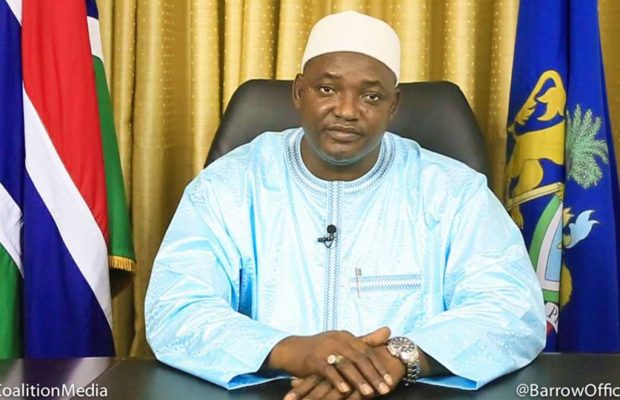
President Barrow denies killing his son for ritual purposes to become president
Adama Barrow won the 2016 presidential election, defeating eccentric dictator Yahya Jammeh (1994 – 2017). Jammeh refused to recognize his defeat and Barrow fled to Senegal. After a diplomatic ECOWAS intervention Jammeh was forced to go into exile. Barrow returned to the Gambia on January 26, 2017 and was installed as Gambia’s third president since independence in 1965.
President Adama Barrow has denied reports attributed to him that he allegedly killed his son for ritual purposes so that he can be elected into office as Gambia’s President. The president made the denial through his Press Director Amie Bojang Sissoho, who addressed a news conference on Wednesday at the President’s office in Banjul. This followed, a statement made by President Barrow, during a recent visit to Faraba Banta, where he was quoted as having said that he (Barrow) had to sacrifice his own son, wealth, and life in order for The Gambia to be freed from Jammeh’s twenty-two years dictatorship. Barrow was in Faraba last week to sympathize with the bereaved families, whose loved ones were killed by Gambia’s police intervention unit— the (PIU).
“ When he lost his son, is because he left the Gambia, as president elect. When his son died, he had to leave the children behind. If he was not the president, he would not have done that at that point in time; he wouldn’t have left his family behind. That is what he was trying to explain; that even he has lost his family, but he had to move on because he has taken a responsibility of serving the country,” State House Press Director Amie Bojang Sissoho clarified.
Mr. Barrow’s statement attracted a huge reaction on social media. Many Gambians were taken aback by Barrow’s statement, in which he allegedly made the appearance that he sacrificed his son for ritual purposes to become the country’s President. But the State House was quick to dismiss such reports saying that the President’s statement was being blown out of proportion. It also says Barrow’s statement was being interpreted out of context.
“We have to understand things into context. And remember that when people are in a difficult situation; we have to understand how, and what was the context in which things happened. And this was what simply he was trying to explain. And that is simply what he was trying to explain. That in a process, anything could happen. This is what happened; these lives were loss because of a cause; to show that even he himself lost his child because of a cause. His child died,” Mrs. Bojang Sissoho further clarified.
Mr. Barrow’s son was bitten by a stray dog, and he died in the process. Barrow and his two wives were in Dakar, Senegal, at the time of the incident. His son was buried in his absence.
Mr. Barrow left the Gambia for Mali, to attend a regional Summit over Gambia’s political impasse. He later resettled in Dakar, Senegal, in the wake of the country’s month long political impasse. Former Gambian dictator Yahya Jammeh had refused to concede defeat during Gambia’s December 2016 Presidential elections, which had thrown the impoverished West African country into a state of turmoil.
“And it was difficult time. We all know that..; when his son died, he was president elect; he was not sworn in; he left the country, but that did not stop him to move on. It is not that he did not feel it; what he was trying to say is that we have our difficult times, but we have to move on as a country,” Mrs Bojang Sissoho told journalists.
“I think people have to calm down on receiving information. What the president was emphasizing was that; we all have lost somebody for the sake of the Gambia; We have been either directly or indirectly affected,” she added.