
The disturbing evidence that witchcraft is spreading across Britain unchecked… 30 years after discovery of horrific voodoo-style murder should have ended it for good

Warning: the article presented below contains graphic details of torture and murder that some readers may find distressing.

The main thrust of the article presented below was already the focus of an 2014 article which I posted in 2019, Children accused of witchcraft: abuse cases on the rise in UK. More than ten year after the publication of the first-mentioned article there is reason to again draw attention to this terrifying phenomenon. It is difficult to imagine that in our immediate environment children are abused, tortured, and sometimes killed because of the belief in witchcraft of the adult perpetrators, sometimes close relatives.

It all began with the discovery of the mutilated torso of a young boy floating in the river Thames, in 2001. The police gave him the name ‘Adam’ and under this name the poor victim became known worldwide. I have covered in much detail the horrific and sickening discovery and the harrowing story behind it. See my posts entitled The unsolved case of the torso in the Thames, Part I (dated March 25, 2019), Part II (March 27, 2019) and Part III (March 28, 2019).

Unfortunately, the case of ‘Adam’ does not stand alone as the article below amply demonstrates.

We must all be vigilant in identifying signs of child abuse and other crimes promptly and bringing them to the immediate attention of the authorities and relevant agencies. Vulnerable individuals in our society, such as young children, deserve a normal, loving life, free from threats and pain.
(webmaster FVDK)

The disturbing evidence that witchcraft is spreading across Britain unchecked… 30 years after discovery of horrific voodoo-style murder should have ended it for good

Published: February 26, 2026
By: Aidan Radnedge and Nick Pyke, The Daily Mail

A quarter of a century has passed since the death of eight-year-old Victoria Climbie and the shocking realisation that voodoo-style murder and abuse were taking hold in the capital of a modern, affluent democracy.

Victoria met a horrific end. Tortured, beaten with implements including coat hangers and a bike chain, deliberately scalded and forced to sleep in a bin liner in a freezing bathroom, she finally died of multiple organ failure at the age of eight. Her tiny body, weighing just 3st 10lb, was marked by 128 separate injuries.

Her ‘crime’? The girl was said by relatives to have been possessed by ‘kindoki’, or evil spirits, requiring exorcism by a pastor and justifying a campaign of sadistic violence.

The killing in 2000 and the public enquiry that followed should have been seismic: a warning to the public and politicians that, however improbable, belief in witchcraft was emerging as a fact of life in Britain.

Yet today, despite the horror of Victoria’s death and subsequent cases, there is disturbing evidence that ritual violence – involving beliefs and practices overwhelmingly imported from abroad – is continuing to spread unchecked.

The latest official figures show a huge increase in the number of children identified as potential victims of abuse ‘linked to faith or belief’, a category including claims of witchcraft and spirit possession.

Analysis released late last year by the Local Government Association, representing councils and their social services departments in England, found there had been 2,180 cases of possible faith-linked abuse in 2024, a disturbing 49 per cent increase in the seven years since 2017.

Moreover, the true scale of the problem could be significantly worse amid fears that ritual abuse is routinely under-reported because social workers and others wish to avoid being labelled racist.

Among the most notorious cases was eight-year-old Victoria Climbié, tortured to death in 2000 by relatives who believed she was possessed

With motives ranging from ignorance and fear to the demented belief that human sacrifice confers supernatural protection, and even wealth, the cases that do reach the public eye are harrowing, the majority with links to sub-Saharan Africa.

A recent documentary film, Kindoki Witch Boy, tells the story of Mardoche Yembi, who had been sent from the Democratic Republic of Congo to live with his aunt and uncle in North London.

At the age of 12, Mardoche was branded a witch by relatives, accused of bringing bad luck and subjected to two months of traumatic exorcisms. The film is now available on YouTube.

An even more disturbing case took place on Christmas Day in 2010, when 15-year-old Kristy Bamu was beaten and drowned by his sister and her boyfriend in the London borough of Newham after being accused of ‘kindoki’, like Victoria Climbie.

Kristy endured four days of torture with knives, sticks, metal bars, a hammer and pliers. He drowned after being forced into a bath for ritual cleansing. Kristy’s siblings were also beaten but survived because they ‘confessed’ to being witches.

Magalie Bamu, then 29, and her partner Eric Bikubi, 28 – both Congolese – were jailed for life in 2012. 

In sentencing them, the judge said: ‘The belief in witchcraft, however genuine, cannot excuse an assault to another person, let alone the killing of another human being.’

There are accusations of ‘possession’ in other cultures, too, with cases of abuse reported in Christian, Hindu and Muslim families, where some still believe in the idea of evil spirits known as ‘djinns’.

Just days before Kristy’s Bamu’s murder, Shayma Ali strangled then disembowelled her four-year-old daughter with a kitchen knife during a frenzied attempt to exorcise the girl.

Ali, who had gouged out the eyes of her daughter’s dolls to prevent them ‘seeing evil’, was sent to a mental hospital.

In 2005, two women were jailed at the Old Bailey after being convicted of child cruelty for torturing and threatening to kill an orphaned child refugee from Angola whom they claimed was a witch.

The Old Bailey was told that the girl, known only as Child B, was starved, cut with a knife, beaten with a belt and a shoe and had chilli peppers rubbed in her eyes to drive ‘the devil out of her’.

At one point, the eight-year-old was bundled into a zip-up laundry bag and told she would be ‘thrown away’ into a river. She was rescued after being found in her bare feet, shivering, outside a council house in Hackney.

The cleansing power of water, whether in a bathtub or a river, is a common element in African witchcraft rituals. In 2001, a young boy – later given the name Adam by the police – was pulled from the Thames after a passer-by spotted his mutilated torso floating near Tower Bridge.

His head, arms and legs had been removed in what detectives believe was a ritual killing, potentially as a sacrifice or in a ‘muti’ ceremony, in which body parts are taken in the belief they produce potent magical remedies.

The boy, aged between four and seven and found wearing only a pair of orange shorts, had recently arrived from Nigeria.

Britain’s leading rituals expert, Dr Richard Hoskins, brought into advise on the case, concluded that Adam was a victim of human sacrifice.

Victoria Climbié had been sent to England by her parents who hoped she would gain a better education than in her native Ivory Coast
Victoria’s parents set up the Victoria Climbié Foundation following her death, campaigning for improvements to child protection in the UK

His 2012 book on the subject, The Boy in the River was serialised in The Mail on Sunday and is now scheduled to be dramatised as a feature film.

Dr Hoskins concluded that the boy had been trafficked to London, speculating that he was butchered while drugged but conscious by a ‘babalawo’ witchdoctor using rituals from the Yoruba people Osagiede of south-west Nigeria.

In Yoruban religion, wrote Dr Hoskins, ‘deities forming a bridge between this world and higher realms require sacrifice.

‘Not necessarily human sacrifice, of course, and especially not nowadays, but the practice persists in some deviant offshoots.’

In 2002, a Nigerian woman called Joyce Osagiede told Glasgow social workers that she had married a member of a cult called The Black Coat Eyes Of The Devil Guru Maharaj. 

When later interviewed by British police in Lagos, she said she had been a cult organiser and had bought a pair of orange-red shorts similar to those found on Adam. She added: ‘I know he was killed in Lewisham.’

Osagiede later claimed to an ITV journalist that she had brought Adam to London and that his real name was Ikpomwosa. No one has ever been charged with his murder.

Yet it is the fate of Victoria Climbié that today remains the most notorious case of witchcraft abuse and killing in this country.

Victoria had been sent to England by her parents to gain a better education than in her native Ivory Coast but found only misery and death.

Victoria Climbié was starved, tortured, beaten with bike chains and kept prisoner in a freezing bathroom by her great-aunt Marie Therese Kouao and her partner Carl Manning (pictured)
Marie-Therese Kouao (left), Victoria Climbié’s great-aunt, was complicit in her murder

Her great-aunt Marie Therese Kouao and her partner Carl Manning were jailed for life in 2001, convicted of murder and child cruelty.

The case was followed by a major public enquiry under Lord Laming which, in turn led to an overhaul of child protection measures in the UK, including the landmark 2004 Children Act.

Even now, ritual violence receives all-too-little attention, says Lancaster University’s Professor Charlotte Baker, who is co-director of the International Network Against Accusations of Witchcraft and Ritual Attacks.

‘If you spoke to many people about this issue, they’d think it was something from about 1,400 years ago,’ she told The Daily Mail last week.

‘Many schoolteachers might feel they shouldn’t ‘go there’, if they suspect something is taking place because they’re not comfortable handling such issues.

‘This needs to be treated seriously, disclosures need to be treated seriously – and the right questions need to be asked.

‘The UK must improve and make sure that anyone who does speak up to make disclosures about this abuse being carried out are taken seriously and responded to professionally.’

Former Conservative MP Tim Loughton, children’s minister in David Cameron’s coalition government and later chairman of the Home Affairs Select Committee, had his own experience of trying to combat ritual abuse.

Victoria’s parents Berthe and Francis are pictured at her grave in Kensal Rise Crematorium in London, along with daughter Joelle, in 2003 on the third anniversary of Victoria’s death
A boy named Adam’s head, arms and legs were removed in what detectives believe was a ritual ‘muti’ killing – his torso was discovered in the River Thames near Tower Bridge in 2001

‘The particular problem [at the time] was among communities of migrants from places such as the Congo, which were very closed communities, mostly but not exclusively in London, with very evangelical Christian church settings,’ he recalls.

‘There were very strange practices, all connected with voodoo – abusing children in attempts to drive the devil out of them and all this sort of nonsense.’

During his time in office, he launched a task force on faith-based child abuse, but he fears that official attention has now slipped.

Rohma Ullah, director of the National FGM (Female Genital Mutilation) Centre – which also tackles what it refers to as witchcraft and spirit possession abuse – is among those who believe frontline staff are wary of raising the alarm.

‘Witchcraft and spirit possession are among the most poorly understood areas in child protection,’ she says. ‘That’s really concerning and alarming. We know the data is not good enough and that professionals don’t know how to act. They don’t know what to do.

‘Professionals are anxious about discussing someone’s faith or beliefs because it’s very personal.

‘They fear being accused of being racist, for example – and so questions don’t get asked and opportunities get missed.’

She says that teachers as well as social workers should be alert to signs of abuse – such as, for example, a child appearing tired through having to pray all night to be rid of a devil inside them, or losing weight because food is being withheld at home.

15-year-old Kristy Bamu was beaten and drowned on Christmas Day 2010 by his sister and her boyfriend in east London after being accused of being a witch
Following the murder, Magalie Bamu (left) and Eric Bikubi (right) were jailed for life 

‘I would say the situation is fragmented,’ she continues. ‘Social workers are skilled in safeguarding, teachers are skilled in educating, police officers are skilling in preventing and addressing crime – but they also need to be equipped with specialist knowledge on this particular issue.’

Ms Ullah suggests the current figures, disturbing as they are, ‘probably don’t reflect the true prevalence of something that’s very hidden.’

She believes allegations of witchcraft and spirit possession receive too little attention when abusers to court and suggests they should be flagged as aggravating features when the perpetrators are sentenced.

And witchcraft has now been included for the first time in new toughened-up Crown Prosecution Guidance, published today in a bid to tackle ‘honour’-based abuse, forced marriage and other abuses. 

Newly included in guidance for prosecutors are practices such as dowry abuse, immigration-related exploitation, transnational marriage abandonment and spiritual or ritualistic abuse linked to beliefs in witchcraft, spirit possession or demonic influence.

While there is no standalone withcraft-related offence, the Home Office said: ‘Prosecutors must treat these cases as serious criminality within the wider context of harmful practices and “honour”-based abuse, assessing which offences may apply on a case-by-case basis.’

Baljit Ubhey, CPS director of policy, said: ‘Our updated guidance equips prosecutors to identify emerging patterns of abuse, understand the wider context in which it occurs, and take swift, effective action to safeguard victims and bring perpetrators to justice.’

It is not as if we haven’t been warned. It is more than a decade since the United Nations reported: ‘Hundreds of children have been abducted from their families in Africa and trafficked to the UK, especially London. Many are raped and sexually abused.’

Commenting in The Mail on Sunday at the time, Dr Hoskins went further, arguing that ‘London has become the hub, the epicentre for a global trafficking enterprise involving thousands of children for exploitation, sexual abuse and even, in some unspeakable cases, ritual voodoo killing…’

‘There is a vast reservoir of lost children gathering in our own capital anonymously shuffled from flat to shabby flat – a dark pool feeding child exploitation and misery across the planet.’

Today’s evidence suggests that, chillingly, this terrible picture might now be darker still. 

Source: The disturbing evidence that witchcraft is spreading across Britain unchecked… 30 years after discovery of horrific voodoo-style murder should have ended it for good

World Day Against Witch Hunts

August 10 is World day against witch hunts.

During the past five years I have frequently posted on this sad topic. See e.g. the following posts: Witchcraft Persecution and Advocacy without Borders in Africa, earlier this year, as well as the following country-specific postings: DRC, Ivory Coast, Ghana, Kenya, Liberia, Nigeria, Tanzania, Uganda, South Africa, Zimbabwe.

Although not the main focus of this website I find it useful and necessary to draw attention to this phenomenon which is based on superstition, violates human rights and creates many innocent victims – not only elderly women and men but also children, just like ritual murders.

I wish to commend Charlotte Müller and Sertan Sanderson of DW (Deutsche Welle) – see below – for an excellent article on this topic. It’s an impressive account of what happens to people accused of witchcraft and victims sof superstition.
(FVDK)

World Day Against Witch Hunts: People With Dementia Are Not Witches
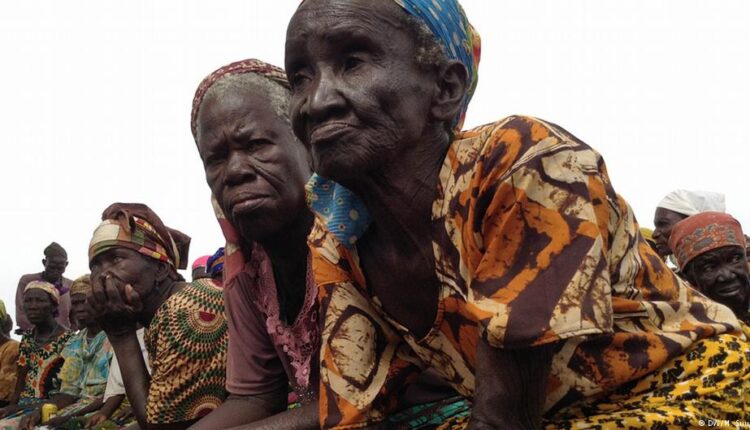
Witch camps in Ghana

Published: August 4, 2023
By: The Ghana Report

August 10 has been designated World Day against Witch Hunts. The Advocacy for Alleged Witches welcomes this development and urges countries to mark this important day, and try to highlight past and contemporary sufferings and abuses of alleged witches in different parts of the globe.

Witchcraft belief is a silent killer of persons. Witchcraft accusation is a form of death sentence in many places. People suspected of witchcraft, especially women and children, are banished, persecuted, and murdered in over 40 countries across the globe. Unfortunately, this tragic incident has not been given the attention it deserves.

Considered a thing of the past in Western countries, this vicious phenomenon has been minimized. Witch persecution is not treated with urgency. It is not considered a global priority. Meanwhile, witch hunting rages across Africa, Asia, and Oceania.

The misconceptions that characterized witch hunting in early modern Europe have not disappeared. Witchcraft imaginaries and other superstitions still grip the minds of people with force and ferocity. Reinforced by traditional, Christian, Islamic, and Hindu religious dogmas, occult fears and anxieties are widespread.

Many people make sense of death, illness, and other misfortunes using the narratives of witchcraft and malevolent magic. Witch hunters operate with impunity in many countries, including nations with criminal provisions against witchcraft accusations and jungle justice.

Some of the people who are often accused and targeted as witches are elderly persons, especially those with dementia.

To help draw attention to this problem, the Advocacy for Alleged Witches has chosen to focus on dementia for this year’s World Day against Witch Hunts. People with dementia experience memory loss, poor judgment, and confusion.

Their thinking and problem-solving abilities are impaired. Unfortunately, these health issues are misunderstood and misinterpreted. Hence, some people treat those with dementia with fear, not respect. They spiritualize these health conditions, and associate them with witchcraft and demons.

There have been instances where people with dementia left their homes or care centers, and were unable to return or recall their home addresses. People claimed that they were returning from witchcraft meetings; that they crash landed on their way to their occult gatherings while flying over churches or electric poles.

Imagine that! People forge absurd and incomprehensible narratives to justify the abuse of people with dementia. Sometimes, people claim that those suffering dementia turn into cats, birds, or dogs. As a result of these misconceptions, people maltreat persons with dementia without mercy; they attack, beat, and lynch them. Family members abandon them and make them suffer painful and miserable deaths. AfAW urges the public to stop these abuses, and treat people with dementia with care and compassion.

Source: World Day Against Witch Hunts: People With Dementia Are Not Witches

And:

Witch hunts: A global problem in the 21st century
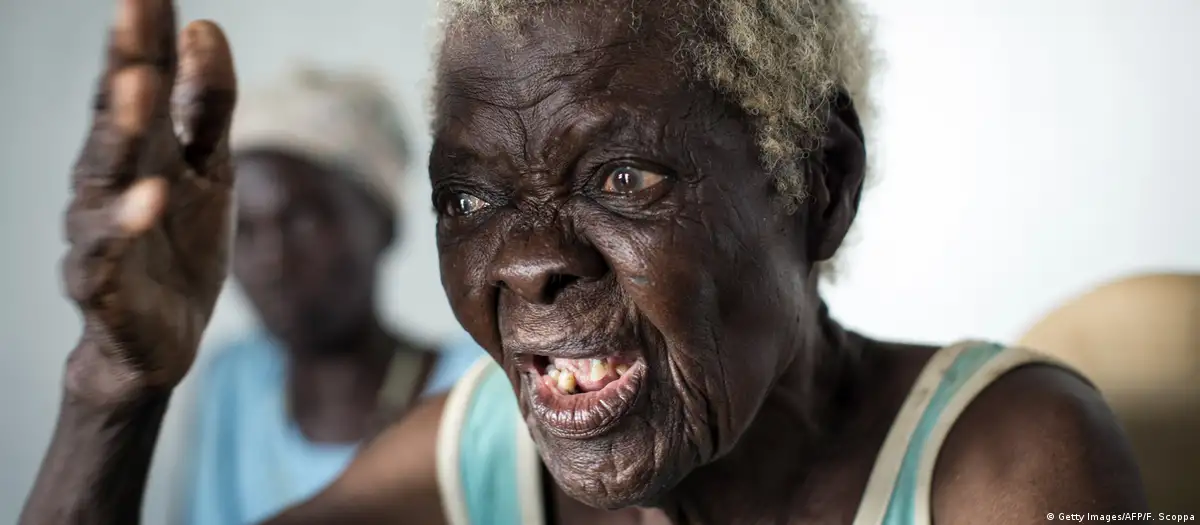
Accusations of witchcraft typically affect the most vulnerable — such as this refugee living in the DRC
Image: Getty Images/AFP/F. Scoppa

Published: August 10, 2023
By: Charlotte Müller | Sertan Sanderson – DW

Witch hunts are far from being a thing of the past — even in the 21st century. In many countries, this is still a sad reality for many women today. That is why August 10 has been declared a World Day against Witch Hunts.

Akua Denteh was beaten to death in Ghana’s East Gonja District last month — after being accused of being a witch. The murder of the 90-year-old has once more highlighted the deep-seated prejudices against women accused of practicing witchcraft in Ghana, many of whom are elderly.

An arrest was made in early August, but the issue continues to draw attention after authorities were accused of dragging their heels in the case. Human rights and gender activists now demand to see change in culture in a country where supernatural beliefs play a big role.

But the case of Akua Denteh is far from an isolated instance in Ghana, or indeed the world at large. In many countries of the world, women are still accused of practicing witchcraft each year. They are persecuted and even killed in organized witch hunts — especially in Africa but also in Southeast Asia and Latin America.
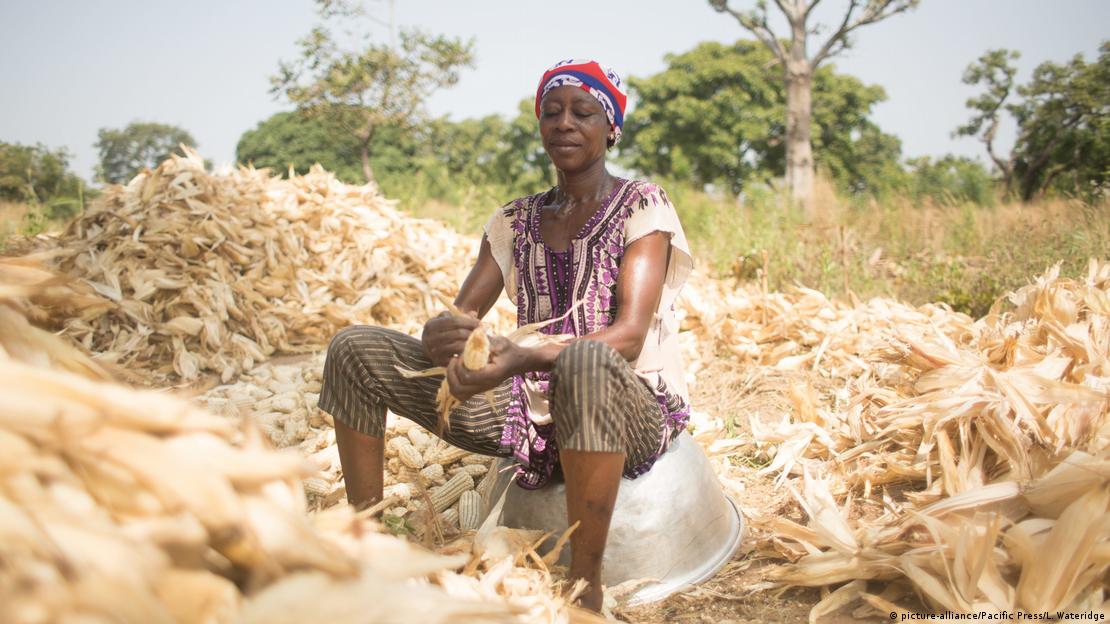
Many women in Ghana are pushed to live in so-called witch camps because they are rejected by society Image: picture-alliance/Pacific Press/L. Wateridge

Witch hunts: a contemporary issue

Those accused of witchcraft have now found a perhaps unlikely charity ally in their fight for justice: the Catholic missionary society missio, which is part of the global Pontifical Mission Societies under the jurisdiction of the Pope, has declared August 10 as World Day against Witch Hunts, saying that in at least 36 nations around the world, people continue to be persecuted as witches.

While the Catholic Church encouraged witch hunts in Europe from the 15th to the 18th century, it is now trying to shed light into this dark practice. Part of this might be a sense of historical obligation — but the real driving force is the number of victims that witch hunts still cost today. 

Historian Wolfgang Behringer, who works as a professor specializing in the early modern age at Saarland University, firmly believes in putting the numbers in perspective. He told DW that during these three centuries, between 50,000 and 60,000 people are assumed to have been killed for so-called crimes of witchcraft — a tally that is close to being twice the population of some major German cities at the time.

But he says that in the 20th century alone, more people accused of witchcraft were brutally murdered than during the three centuries when witch hunts were practiced in Europe: “Between 1960 and 2000, about 40,000 people alleged of practicing witchcraft were murdered in Tanzania alone. While there are no laws against witchcraft as such in Tanzanian law, village tribunals often decide that certain individuals should be killed,” Behringer told DW.

The historian insists that due to the collective decision-making behind these tribunals, such murders are far from being arbitrary and isolated cases: “I’ve therefore concluded that witch hunts are not a historic problem but a burning issue that still exists in the present.”

A picture of so-called witch doctors in Sierra Leone taken roughly around the year 1900 Image:
Getty Images/Hulton Archive

A pan-African problem?

In Tanzania, the victims of these witch hunts are often people with albinism; some people believe that the body parts of these individuals can be used to extract potions against all sorts of ailments. Similar practices are known to take place in Zambia and elsewhere on the continent.

Meanwhile in Ghana, where nonagenarian Akua Denteh was bludgeoned to death last month, certain communities blamed the birth of children with disabilities on practices of witchcraft.

Screenshot – to watch the video please consult the source

In the Democratic Republic of the Congo, it is usually the younger generations who are associated witchcraft. So-called “children of witchcraft” are usually rejected by their families and left to fend for themselves. However, their so-called crimes often have little to do with sorcery at all:

“We have learned of numerous cases of children suffering rape and then no longer being accepted by their families. Or they are born as illegitimate children out of wedlock, and are forced to live with a parent who no longer accepts them,” says Thérèse Mema Mapenzi, who works as a mission project partner in the eastern DRC city of Bukayu.

‘Children of witchcraft’ in the DRC

Mapenzi’s facility was initially intended to be a women’s shelter to harbor women who suffered rape at the hands of the militia in the eastern parts of the country, where rape is used as a weapon of war as part of the civil conflict there. But over the years, more and more children started seeking her help after they were rejected as “children of witchcraft.”

With assistance from the Catholic missionary society missio, Mapenzi is now also supporting these underage individuals in coping with their many traumas while trying to find orphanages and schools for them.

“When these children come here, they have often been beaten to a pulp, have been branded as witches or have suffered other injuries. It is painful to just even look at them. We are always shocked to see these children devoid of any protection. How can this be?” Mapenzi wonders.
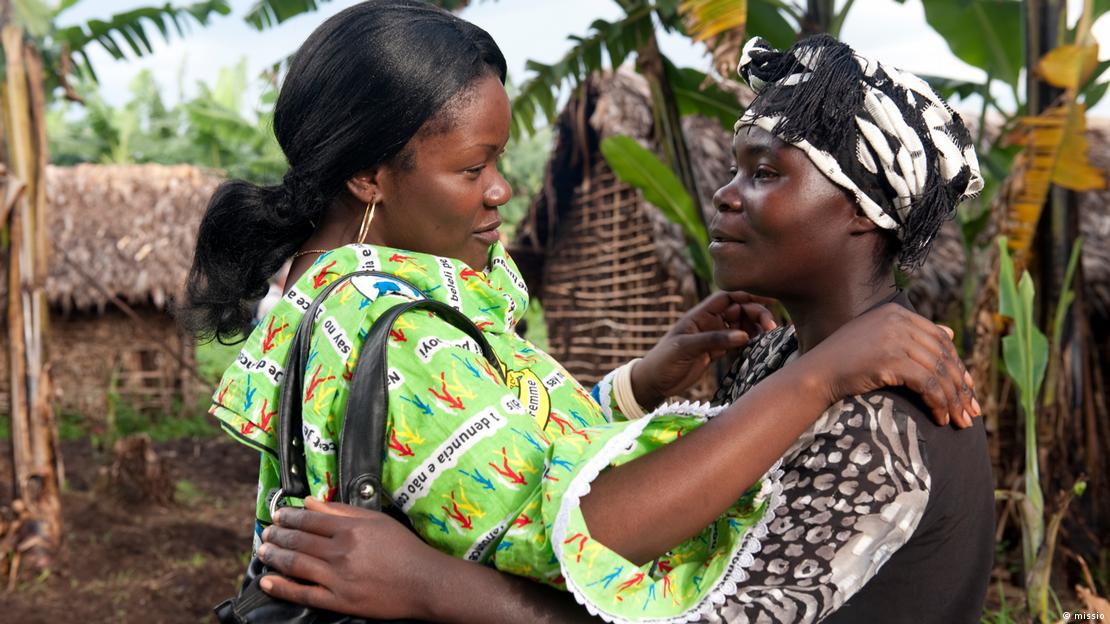
Thérèse Mema Mapenzi is trying to help women and girls accused of being “children of witchcraft”
Image: missio

Seeking dialogue to end witch hunts

But there is a whole social infrastructure fueling this hatred against these young people in the DRC: Many charismatic churches blame diseases such as HIV/AIDS or female infertility on witchcraft, with illegitimate children serving as scapegoats for problems that cannot be easily solved in one of the poorest countries on earth. Other reasons cited include sudden deaths, crop failures, greed, jealousy and more.

Thérèse Mema Mapenzi says that trying to help those on the receiving end of this ire is a difficult task, especially in the absence of legal protection: “In Congolese law, witchcraft is not recognized as a violation of the law because there is no evidence you can produce. Unfortunately, the people have therefore developed their own legal practices to seek retribution and punish those whom call them witches.”

In addition to helping those escaping persecution, Mapenzi also seeks dialogue with communities to stop prejudice against those accused of witchcraft and sorcery. She wants to bring estranged families torn apart by witch hunts back together. Acting as a mediator, she talks to people, and from time to time succeeds in reuniting relatives with women and children who had been ostracized and shamed. Mapenzi says that such efforts — when they succeed — take an average of two to three years from beginning to finish.

But even with a residual risk of the victims being suspected of witchcraft again, she says her endeavors are worth the risk. She says that the fact that August 10 has been recognized as the World Day against Witch Hunts sends a signal that her work is important — and needed.

Hunting the hunters  a dangerous undertaking

For Thérèse Mema Mapenzi, the World Day against Witch Hunts marks another milestone in her uphill battle in the DRC. Jörg Nowak, spokesman for missio, agrees and hopes that there will now be growing awareness about this issue around the globe.

As part of his work, Nowak has visited several missio project partners fighting to help bring an end to witch hunts in recent years. But he wasn’t aware about the magnitude of the problem himself until 2017.

The first case he dealt with was the killing of women accused of being witches in Papua New Guinea in the 2010s — which eventually resulted in his publishing a paper on the crisis situation in the country and becoming missio’s dedicated expert on witch hunts.

But much of Nowak’s extensive research in Papua New Guinea remains largely under wraps for the time being, at least in the country itself: the evidence he accrued against some of the perpetrators there could risk the lives of missio partners working for him.

Not much has changed for centuries, apart from the localities involved when it comes to the occult belief in witchcraft, says Nowak while stressing: “There is no such thing as witchcraft. But there are accusations and stigmatization designed to demonize people; indeed designed to discredit them in order for others to gain selfish advantages.”

Maxwell Suuk and Isaac Kaledzi contributed to this article.

Screenshot – to watch the seven images please consult the source

Source: Witch hunts: A global problem in the 21st century