Whereas the criminal practice of ritualistic murders is a revolting and sad one, another phenomenon also draws our attention. Both phenomena relate to superstition. Of course I know that fearing witches or, rather, fearing persons who people believe are possessed by an evil spirit or are thought to be witches is a universal superstition that can be found on all continents of the globe. Moreover, I certainly do not want to stigmatize a particular group of people or race. However, the focus of this website being on ritualistic practices notably ritual murders in Africa, I cannot ignore the occurrence of ritualistic murders committed by Africans that take place outside the continent. For this reason I drew attention to the high profile case of the torso of a small black boy (‘Adam’) that was found floating in the river Thames in 2001. It proved to be a case of ritualistic murder, very likely committed by persons originating from West Africa. Unfortunately, also reports exist of ritual practices – even killings – of persons of African descent in other European countries (more later on this site).
The inclusion of the cases reported below is justified by the same reason – though these cases do not represent ritual murders. The ’cause-in-common’ of these distinct but related crimes is: superstition. Whereas the battle against superstition should be fought with all strength and conviction that we have, the rule of law should be strictly applied to those who commit these heinous crimes, be it murdering or torturing innocent people, notably children. Their suffering in the hands of the perpetrators of these crimes should end as soon as possible. Each new case is a case too much. (Webmaster FVDK).
Children accused of witchcraft: abuse cases on the rise in UK (2014)
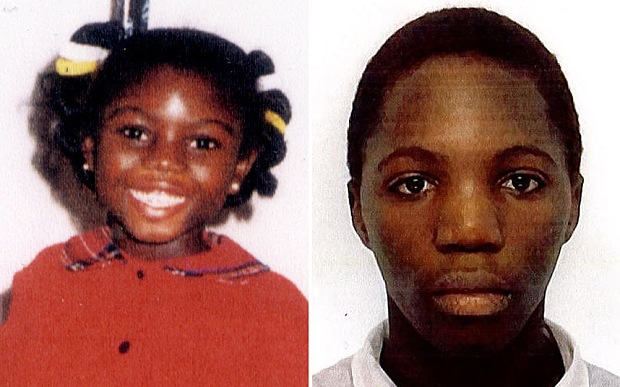
Victoria Climbié (left) and Kristy Bamu (right), tortured to death by relatives who were sentenced to life imprisonment (UK)
Published: October 16, 2014 By: RELIGION NEWS BLOG
London’s Metropolitan Police reports that cases of abuse where the child is accused of being a witch or possessed by an evil spirit are on the rise.
Thus far this year 27 allegations have been received — up from 24 in 2013.
There were 19 such cases reported in 2012, and 9 in 2011. Some 148 cases have been referred to the Metropolitan Police since 2004.
The rise in the number of reports is likely due to greater awareness among social workers, healthcare staff, teachers, pastors and others.
However, police believe many more cases are kept hidden in families and communities.
Parents, other guardians, and in several cases pastors and church members who believe a child is possessed often resort to physical abuse in order to try and get the spirits to leave.
New guidance has now been issued on how to spot children at risk of abuse linked to witchcraft.
On October 8, the Metropolitan Police Service and CCPAS, the Churches’ Child Protection Advisory Service, hosted a multi-agency event at London’s City Hall to raise awareness of child abuse linked to faith or belief.
Speaking ahead of the conference, Det Supt Terry Sharpe explained:
“Abuse linked to belief is a horrific crime which is condemned by people of all cultures, communities and faiths.
“A number of high-profile investigations brought the issue of ritual abuse and witchcraft into the headlines but it is important that professionals are clear about the signs to look for.
“Families or carers genuinely believe that the victim has been completely taken over by the devil or an evil spirit, which is often supported by someone who within the community has portrayed themselves as an authority on faith and belief.
“Regardless of the beliefs of the abusers, child abuse is child abuse. Our role is to safeguard children, not challenge beliefs. We investigate crimes against children, but our main aim is to prevent abuse in the first place. This is a hidden crime and we can only prevent it by working in partnership with the community. Project Violet aims to build trust with communities and emphasise that child protection is everyone’s responsibility.”
A training film aimed at all front-line professionals who work with children was launched at the event. The DVD, commissioned by our Project Violet team in conjunction with CCPAS, advises how to recognise the signs that a child may be suffering, or is likely to suffer, significant harm from abuse linked to witchcraft and spirit possession.
According to CCPAS the training DVD will be made provided to Local Safeguarding Children Boards (LSCBs) so they may make it available to social workers and other front line staff.
HIGH-PROFILE CASES
High-profile cases include Victoria Climbié (link added by the webmaster FVDK) whose great-aunt and her boyfriend — along with their pastor — believed the girl was demon-possessed.
Beaten, burned with cigarettes and forced to sleep in a bathtub, the 8-year-old girl died in February, 2000 — with 128 injuries on her body.
In 2001 the headless, limbless body of a boy aged between five and six was found floating in the river Thames. Evidence strongly suggests the boy was sacrificed in a Muti ritual. (See elsewhere on this site, ‘The unsolved case of the torso in the Thames’. The murder boy was ‘named ‘Adam’ by the investigators. Information added by the webmaster FVDK).
In 2010, 15-year-old Kristy Bamu was tortured for three days by his sister and his boyfriend after being accused of witchcraft, and was subsequently drowned in a bathtub during an exorcism ritual.
HUMAN TRAFFICKING
In 2005 a leaked police report revealed that children are being trafficked into the country in order to be killed as human sacrifices:
A confidential report into the sacrifice and abuse of children at African churches describes how pastors are profiting from the trafficking of black boys into Britain.
Uncircumcised boys are being smuggled into the country for human sacrifice by fundamentalist sects whose members believe that their ritual killing will enhance spells.
TYPES OF WITCHCRAFT
Most reported cases involve what is known as “traditional witchcraft” as opposed to “contemporary witchcraft.”
Traditional Witchcraft, such as performed by shamans or witch doctors, is a magical practice — not a religion. However, it can have religious elements.
Contemporary Witchcraft is one of many types of neo-Paganism. It is religion within the broader context of occultism.
MANY COUNTRIES
The problem of children who are accused of witchcraft is not limited to England. But after several high-profile cases there is a greater awareness — and official response — that highlights such cases.
Immigration also plays a role in the rise of reports — as many immigrants bring along various beliefs and superstitions.
Many Christian churches in Africa are part of the problem as well — as traditional beliefs are mingled with Christian theology regarding demons and exorcism.
An increasing number of children in Africa accused of witchcraft by pastors and then tortured or killed, often by family members. Pastors were involved in half of 200 cases of “witch children” reviewed by the AP, and 13 churches were named in the case files.
Some of the churches involved are renegade local branches of international franchises. Their parishioners take literally the Biblical exhortation, “Thou shalt not suffer a witch to live.”
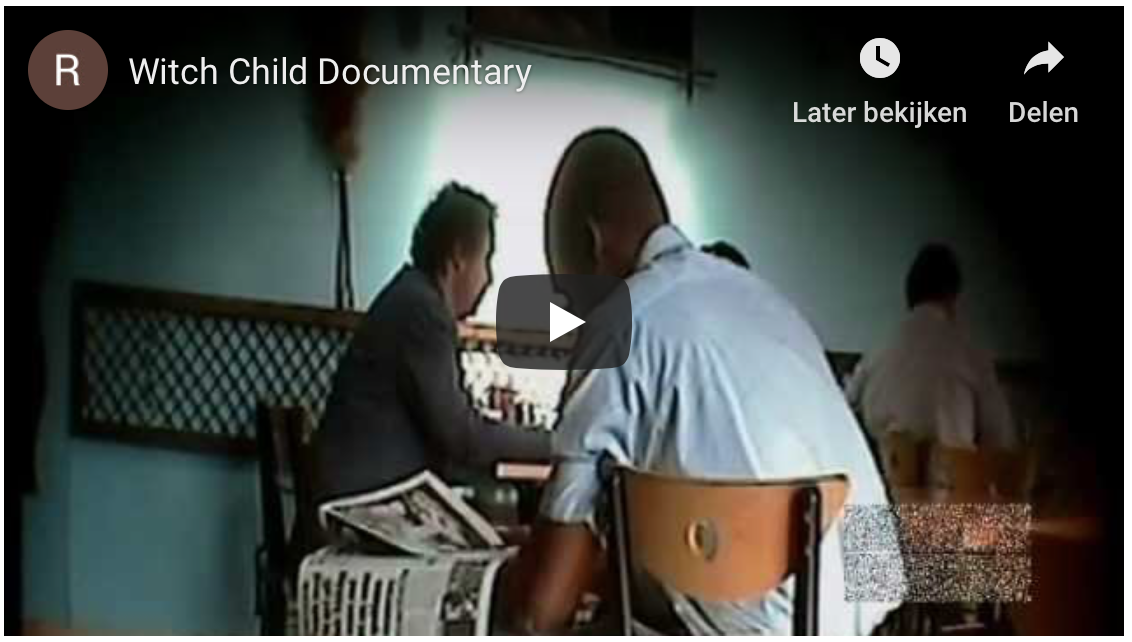
Screen shot – the link to the source (below) gives acces to the video ‘Witch Child Documentary’
In 2010 UNICEF, the United Nations’ children’s charity, said that accusing children of sorcery was a fairly new and growing trend in Africa, despite long-held traditional and mystic beliefs on the continent.
Where previously elderly women were accused, today the focus more often falls on young children, often some of the most vulnerable, such as orphans, disabled or poor.
Throughout Africa, the vast majority of children accused of witchcraft are not murdered but — if torture has not helped remove the evil spirits — are expelled from their homes and communities.
Child abuse linked to witchcraft on the increase “Met reveals it has investigated allegations of children having chilli rubbed into their eyes and being forced to drink noxious liquids in order to rid them of evil spirits.” Published: October 8, 2014 By: Martin Evans, Crime correspondent, The Telegraph
The unidentified boy, named Adam by Metropolitan Police detectives, is believed to have been the victim of a ritual killing after being brought from his native Nigeria to Britain.
A substance found in the boy’s lower intestine was identified by an expert at Kew Gardens in London as the highly toxic calabar bean, from West Africa.
Police believe a preparation of the calabar bean – which can be fatal if swallowed, or cause paralysis in tiny doses – may have been used to subdue the boy, by slow paralysis, before his throat was cut. It was administered at least 24 hours before his death.
It also emerged yesterday that the murder squad, which has spent hundreds of thousands of pounds investigating the boy’s death, has prepared its first file of evidence in the case for the Crown Prosecution Service.
Scotland Yard sources played down suggestions that charges were close but officers have uncovered what they believe is cogent circumstantial evidence.
They have previously arrested a woman in Glasgow – who has since returned to Nigeria – and a man being held by police in Dublin. The pair, who are husband and wife, are not biologically related to Adam, it is understood.
The man in Dublin has been sentenced in his absence in Germany for trafficking offences and is wanted for extradition by the Germans.
A pair of child’s shorts on the headless and limbless torso of Adam, who was probably aged between four and six, also came from Germany.
Charges which might be brought in any trial include murder, conspiracy to murder and trafficking offences.
It also emerged yesterday that the Government’s leading law officer, the Attorney General, Lord Goldsmith, QC, wants to lead the prosecution team in any trial arising from the Adam investigation.
The groundbreaking hunt for Adam’s killers Published: Monday August 4, 2003 By: RELIGION NEWS BLOG
Quoting: Sandro Contenta – Toronto Star (Canada), August 2, 2003 Link disappeared (webmaster FVDK)
DNA tests used to trace victim’s origin Boy’s murder linked to child trafficking
LONDON�One more turn of the tide and the torso of the boy in the River Thames would have been swept out to the North Sea, the story of his chilling end buried perhaps forever in a watery grave.
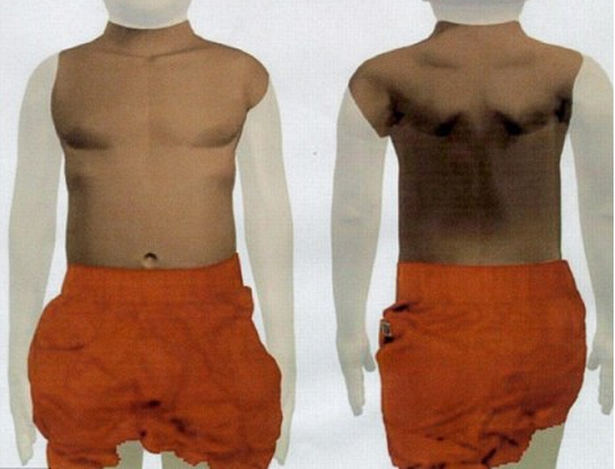
But the alarm was sounded when the bright orange shorts hanging from the torso caught the eye of a passerby up high on Tower Bridge.
Police fished out what was left of Adam, the name they eventually gave the still unidentified boy, at the foot of the Globe Theatre on Sept. 21, 2001
Since then, the story pieced together of what police consider London’s first known ritual killing is macabre enough to have challenged even Shakespeare’s imagination. And the investigative work that has brought police close to cracking the case is groundbreaking.
It combined unprecedented forensic research with old-fashioned legwork that took investigators to Germany, the Netherlands, the U.S., South Africa, Nigeria, Scotland and Ireland.
The latest break in the investigation came Tuesday, when Metropolitan Police raided several homes in London and arrested 21 suspected members of a child trafficking ring.
“We’re pretty convinced that we are on to a group of individuals who trafficked Adam into the country,” said Detective Inspector William O’Reilly.
The arrests highlighted a UNICEF report the next day estimating that thousands of children have been smuggled into Britain during the past several years to be exploited as sex slaves, or for slave labour.
But public attention was especially focused on what police described as evidence of occult rituals found in the raided apartments, such as an animal skull with a nail driven through it.
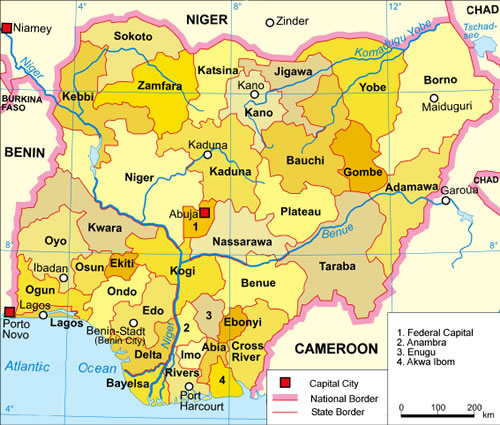
Most of those arrested come from Benin City, Nigeria, an area where remarkable forensic sleuthing in the case has determined as Adam’s home.
“I must stress we are not judging any cultures,” said Andy Baker, the police commander heading the investigation. “We are investigating a crime �the crime of murder.”
When the remains of Adam were found, investigators quickly figured out that his torso had been in the water for up to 10 days, that he was black, he was between four and eight years old, and murder ended his life.
It wasn’t the first limbless and headless torso 50-year-old Ray Fysh had seen in his forensic career. But it left him scratching his head.
Bodies are dismembered, he says, either to hide the victim’s identity, or to more easily transport and dispose of the body. But with Adam, no effort had been made to weigh down or conceal the torso once his killers dumped it in the Thames.
“In fact, he had orange shorts on, which made him stand out like a beacon,” Fysh says.
Even more puzzling was the conclusion that the shorts were placed on the torso after Adam was killed, because his legs could not have been hacked off with them on. The inside tag had washing instructions in German, and the brand was made exclusively in China for a German chain of stores.
“None of us knew, really, what we were dealing with at the time,” says Fysh, a scientist with Britain’s Forensic Science Service, and the forensic co-ordinator in the Adam case.
“Nobody had come across this sort of stuff before,” he adds.
Fysh’s team began with basic forensic work. They mapped a profile of Adam’s DNA, to be used to identify his parents if they’re ever found. They covered his torso with tape in a bid to lift any hairs or fibres that might belong to the murderer, and came up blank. Swab tests found no evidence of sexual assault.
Toxicology tests found only one drug in Adam, a cough suppressant called Pholcodine, bought without a prescription at any pharmacy. Adam was treated for a cough shortly before he was killed.
“It wasn’t obvious then, but looking back on it now, it shows some sort of duty of care to this child,” Fysh says.
The way Adam’s limbs were cut off was brutally precise.
The killer either used a series of heavy, razor-sharp kitchen knives, or one that was sharpened throughout the dismemberment.
“They cut the skin, peeled the muscle back, and then cut through the bone. They never went through a joint,” Fysh says.
Dismemberment occurred when Adam was already dead. But the cause of death was no less horrible. He was slaughtered like an animal.
“The cause of death was a knife trauma to the neck,” Fysh says, choosing his words carefully. “The child then went into extensive blood loss.”
About six weeks after Adam’s torso was discovered, police searching the river for the rest of his body found seven half-burned candles wrapped inside a white cotton bedsheet. The name Adekoyejo Fola Adoye was written three times on the sheet, and cut into the candles.
But in the end, the candles and bedsheet turned out to have nothing to do with Adam. Detectives found that Adoye lived in New York, and his London-based parents had performed a ceremony with the Celestial Church of Christ to celebrate the fact that he had not been killed in the Sept. 11, 2001, attack on the World Trade Centre.
Still, police suspected they were stumbling into an uncharted area of the macabre and supernatural, and turned for guidance to Richard Hoskins, a specialist in African religions at King’s College in London.
Europol estimates there have been at least nine cases of ritual killing across Europe in the past 15 years, and Hoskins believes more are bound to occur as immigration grows.
Every year, about 300 people are killed in South Africa for muti, a Zulu word for traditional medicine. Muti is usually a mixture of herbs, but in rare cases human body parts are used.
About the same number are killed yearly in parts of Nigeria in illegal human sacrifices where the victim’s blood is offered to gods, spirits or ancestors, Hoskins adds. Body parts might be kept powerful trophies or souvenirs.
Tribes that practise animal sacrifices consider the ritual killing of humans a terrible moral and legal crime �a taboo that makes those who break it feel all the more empowered, especially when children are the victims, Hoskins says.
“Because of the innocence and the purity of the child it becomes the most powerful form of magic that can be done.”
The cut in Adam’s neck led Hoskins to believe the ritual was more likely from the west of Africa than the south.
“It was done in a very specific and deliberate way, clearly to bleed him to death in a relatively quick way. The point was to spill blood on the ground as an offering,” he says.
Hoskins says the orange colour of Adam’s shorts, and the dumping of his torso in the river is also ritually significant. He believes the murder or murderers sacrificed Adam to gain some sort of power or good luck for an undertaking in Britain.
For police, Hoskins’ theories were horribly fascinating, but brought them no closer to identifying Adam or his killers. Finding out whatever they could about his short life became the focus of Fysh’s forensic team by January, 2002.
Adam’s stomach was empty. The last time he ate was 12 to 18 hours before his death.
In his lower intestine �an area rarely examined in forensic work �they found traces of pollen from a tree found in London, but not in Africa.
“So we know he was alive and breathing in London before he was killed,” Fysh says.
Also in his lower intestine were tiny clay pellets with specks of pure gold embedded on their surface, along with what appeared to be finely ground up bones. To determine the origin of the crushed bones, they were sent to the New York forensic team that conducted innovative work to identify victims of the Sept. 11 attacks.
Hoskins says the concoction in Adam’s stomach is typical of the potions used to prepare victims for ritual killings in sub-Sahara Africa. It’s part of a process that led to Adam getting cough medicine to ensure he was a healthy offering to the gods.
“The case of Adam is definitely a ritualistic killing. There’s no doubt in my mind,” Hoskins says. “The remarkable thing is that he was brought from Africa to the U.K. specifically for the purpose.”
Hoskins didn’t believe Adam was the victim of a muti killing, but police weren’t ruling it out without hard evidence.
In April, 2002, detectives travelled to South Africa for a Johannesburg press conference where Nelson Mandela made a public appeal for information about Adam.
But in July, a break in the case would point to Hoskins’ theory.
Social workers in Glasgow had reported seeing strange items in the home of a 31-year-old West African asylum seeker. Police searched the flat and found objects they believed were associated with curses, including whisky jars filled with chicken feathers. More significant were the clothes found, which police believe were purchased in the same German shop were Adam’s orange shorts were likely bought.
The woman, Joyce Osagiede, was arrested and questioned about Adam’s murder. She was not charged, and was later deported to her Nigerian hometown, in the Benin City area.
At about the same time, Fysh’s team decided to try something never before attempted in forensic work.
They began by mapping Adam’s “mitochondrial DNA” (mtDNA), which is exclusively passed on from mothers to siblings. Children have the same mtDNA as their mother, who in turn has the same mtDNA as her mother, and so on.
They compared Adam’s mtDNA to 6,000 sequences published in scientific studies. Adam’s sequence had never been found among populations in southern African, or in people in eastern Africa. But it matched mtDNA found in the northwestern part of the continent.
To further narrow the search, the team called on the services of Ken Pye, a professor of soil geology at the University of London. The next series of tests were based on the maxim, “We are what we eat.”
There is a certain level of the mineral strontium that works its way through the food chain; from water, to earth, to plants, to animals, and, finally, into the bones of humans.
In other words, people walk around with a strontium signature that matches the one in their environment. And if a person moves from one country to another, it takes six to 10 years before the strontium signature in the bones changes to match the new habitat.
Given Adam’s likely age, his strontium signature would not only determine the place of his birth, but the place where he grew up. It matched the signature found in a zone of ancient, Precambrian rock, which in Africa is mostly predominant in Nigeria. Suddenly, the forensic evidence also began matching Hoskins’ academic research.
Fysh and detective O’Reilly travelled to Nigeria last November and spent 2�weeks collecting rocks, animal bones and vegetables from local markets in a 10,000 square kilometre area.
They also collected post-mortem human bones from three sites around the country, including Benin City.
They returned to London with 120 samples, and by the end of January matched the strontium signature in Adam’s bones to that found in a corridor stretching from Benin City to Ibaden, where villages of the Yoruba tribe dot the only main road along the way.
It was, in forensic terms, a eureka moment.
“From a torso floating in the Thames, we now think the child was born and raised in the Benin City area,” Fysh says.
Detectives have since gone to the area to post leaflets on trees about Adam’s murder, and to encourage local residents who might have information to come forward. They also publicized a reward of $110,000 for tips leading to the arrest of Adam’s killers and a $5,500 reward for information that will identify him.
The next big break came July 2, when Irish police arrested a 37-year-old Nigerian man in Dublin on an extradition warrant issued by German police.
In March, 2001, Sam Onogigovie was sentenced in his absence to seven years in Germany, for forgery and crimes linked to the trafficking of people.
He’s believed to be the estranged husband of Osagiede, the woman arrested in Glasgow and deported to Benin City last year. Police are seeking a DNA test to determine whether he’s Adam’s father, but believe he was more likely involved in smuggling the boy to London.
“It’s a case we all dearly would like to solve,” Fysh says. “At the end of the day, it’s a murder of a very young boy in grotesque circumstances.
“We want to send a message out there we will not accept this in London. We accept people’s culture. But a murder we will not accept.”
Focus: Muti – The Story of Adam Published: August 4, 2003 By: RELIGION NEWS BLOG
Quoting: Paul Vallely, Independent (England), Aug. 3, 2003 Link disappeared (webmaster FVDK)
The arrest of 21 people in connection with the discovery of a child’s mutilated body in the Thames points to a network of people traffickers and an underworld of abuse and domestic slavery. Paul Vallely, who has followed the case in the two years since the torso of the young African boy was found, says the evidence leads to the bloody ritual of muti, where the body parts of children are sacrificed in pursuit of spiritual power (Independent, England, August 3, 2003).
It was the body of a five-year-old African boy. The corpse had no head. The legs had been severed above the knee and the arms cut off at the shoulder. All that remained was a torso dressed – grotesquely – in a pair of orange shorts, which had been thrown into the Thames shortly before it was discovered in September 2001. Death had been from a violent trauma to the neck, and the limbs had been “skilfully” removed after death by an experienced butcher.
Yet it was not the gruesome details of the murder and dismemberment that last week – almost two years later – led 200 police officers to launch nine simultaneous dawn raids across London and arrest 21 people. It was the contents of the stomach of the child, whom the police – in an attempt to restore some humanity to the desecrated body – had named Adam. That, and the orange shorts in which the post-mortem showed he had been dressed after death.
Ironically, the clue that first put them on the trail to the arrests turned out to be a false lead. The body had been found by Tower Bridge. Initially, detectives wondered if the mutilation might be an attempt to disguise the identity of the victim of an accident, a family row or a sex crime. But then, two miles upstream in Chelsea, they found the remnants of an African ritual, with a Nigerian name written on a sheet, carved into seven half-burned candles. Might this be a ritual killing?
In the event, the Chelsea paraphernalia turned out to be unrelated. But before the police discovered that, they had sent to Johannesburg for Professor Hendrik Scholtz, a South African pathologist who is an expert in so-called muti killings – in which adherents of traditional African magic take human body parts and grind them down to make potions they believe bring good fortune to those who drink them. The professor came to England and, after a second post-mortem, confirmed the detectives’ fears. Muti had come to Britain.
The boy’s throat, he confirmed, had been cut and his blood drained from his body, probably for use in some ritual. Most significantly his first vertebra – the one between neck and spine – had been removed. This is known in Africa as the Atlas bone, for it is said to be the bone on which the mythical giant Atlas carried the world. In muti it is believed to be the centre of the body, where all nerve and blood vessels meet, and where all power is concentrated.
There was something else. Adam’s body was well-nourished and showed no signs of abuse, sexual or otherwise. Analysis of his stomach contents showed someone troubled to give him Pholcodine, a cough linctus, not long before he died. It was the classic muti scenario of an otherwise well-treated child being “volunteered” for sacrifice by his own family.
The police set out on two main lines of inquiry. The shorts – orange, they discovered, was a lucky colour in muti – carried the label Kids & Co, the brand-name for Woolworths in Germany. Detectives traced them to a batch of 820 pairs in size 116cm (age 5-7) that had been sold in 320 German stores. But then the trail went cold.
So, too, did a five-month trawl of London’s ethnic communities. Detectives came across plenty of rumours that muti ceremonies were taking place, but no evidence – and no sign of an identity for the murdered child. Painstaking checks of the attendance registers of 3,000 nurseries and primary schools found no missing five-year-old who tallied with what was known of Adam. When they sent forensic evidence to the United States for testing it came back with the verdict from the FBI that the case was “practically insoluble”. Even a public appeal by Nelson Mandela, broadcast across Africa, was fruitless.
But the dead child had not fallen totally silent. His DNA spoke up, as did the mineral levels in his bones. Analysts were able to establish that Adam had spent his life in a 100-mile corridor in the south-west of Nigeria, between Ibadan and Benin City. Revealingly, most of those arrested last week come from Benin.
The contents of his stomach were eloquent too. Forensic examination showed that the boy had been fed a muti potion of mixed bone, clay and gold.
There was something else. Analysis of pollen found in the boy’s stomach showed he had been alive when he came to London. It is thought he was brought across Northern Europe, possibly via Germany, and lived in Britain for a few weeks before his murder. “We’ve uncovered what we believe is a criminal network concentrating on people trafficking,” said Detective Inspector Will O’Reilly, who is leading the Adam inquiry. “We don’t know how many children are involved in this operation, but it’s certainly in the hundreds, if not the thousands, coming from mainland Africa through Europe into the UK.”
Lurid accounts of child trafficking have suggested the trade is primarily to provide recruits for the sex industry. But police believe that the majority of trafficked children are put to work 12 hours a day, seven days a week, 365 days a year, in what amounts to a modern form of slavery. Only a tiny number fall victim to muti.
Much of muti is innocent. The term derives from umu thi, the Zulu word for tree, which has become a byword for any traditional medicine, good or bad. Its everyday form consists of potions made from Africa’s indigenous herbs and plants to cure common ailments. It works. A pharmaceutical company has just signed a deal with the African National Healers Association to package some muti recipes. The South African Council for Scientific and Industrial Research has, with the aid of traditional healers, launched a “bio-prospecting” project to unlock the secrets of the nation’s 23,000 indigenous plants.
Most adherents stop with the plant recipes. But some believe that more complex complaints can be cured with animal parts such as crocodile fat, hawk wings, monkey heads or dried puff adders. Before the last World Cup qualifiers a hippo, lion, elephant and hyena were slaughtered to make a potion for the Swaziland team to give its footballers extra strength.
Muti becomes disturbing when it is extended to the notion that human body parts can be used to heal or bestow special powers. For muti is not just a medicine, it is a metaphysic. It asserts that there is only so much luck in the world and each person has a limited supply of it. Very young children have not yet used all their luck, which can be transferred to whoever takes the medicine derived from their remains. This is the origin of the widespread African myth that sex with a virgin can cure someone of Aids: the younger the girl, the more potent the “medicine”.
It is unclear how widespread human muti is in West Africa. But in South Africa, where the government set up a Commission of Inquiry into Witchcraft Violence and Ritual Murders after a spate of killings of boys aged between one and six in Soweto, it is estimated that at least 300 people have been murdered for their body parts in the past decade. The figure could be as high as 500 a year. (Italics added by the webmaster FVDK)
The killings are rarely impulsive. They are done to order by sangomas, or witch doctors, commissioned by clients with a particular need. Thus human skulls are placed in the foundations of new buildings to bring good luck to the business. Body parts are buried on farms to secure big harvests, severed hands built into shop entrances to encourage customers. Human hands burnt to ash and mixed into a paste are seen as a cure for strokes. Blood “boosts” vitality; brains, political power and business success. Genitals, breasts and placentas are used for infertility and good luck, with the genitalia of young boys and virgin girls being especially highly prized. There is a belief that body parts taken from live victims are rendered more potent by their screams.
Discovering all this provided the police with another clue. The genitals of the torso in the Thames had not been removed, suggesting that his killers needed muti potions for some other purpose. Adam had been sacrificed for non-sexual reasons.
It was almost a year after the discovery of Adam’s body that the next piece of the jigsaw fell into place. A representative of the social services department in Glasgow contacted Scotland Yard and reported that one of their clients, a West African woman, had said she wanted to perform a ritual with her children. Her name was Joyce Osagiede. When police travelled to Scotland to arrest her they discovered among her daughter’s clothes a pair of orange shorts of the exact size and brand as had been found on Adam. They also discovered that she had been living in Germany – the only place the shorts had been on sale – before coming to Britain with her children. It was not enough to charge her. She later returned to Nigeria.
Then, earlier this month, police tracked down the woman’s estranged husband, Sam Onojhighovie. The 37-year-old Nigerian man had appeared at the High Court in Dublin as part of an ongoing attempt to extradite him to Germany, where he had been convicted in his absence and sentenced to seven years for offences linked to human trafficking. Scotland Yard officers visited him for questioning.
Of the 21 people arrested in the dawn raids last week 10 were illegal immigrants. None have been charged. Following the raids, Inspector O’Reilly said: “We are pretty confident we have a group of individuals who could have trafficked Adam into the country.” Police are investigating a variety of offences, including benefit fraud, selling false passports and credit card and banking swindles. So far they are still some way off piecing together the exact fate of the boy they know as Adam.
“In West Africa there are several reasons for human sacrifices – for power, money, or to protect a criminal enterprise,” said Inspector O’Reilly. “We believe the prime motive for the murder was to bring good fortune. We suspect Adam was killed to bring traffickers luck.”
Police are waiting for the results of tests to compare the DNA of Sam Onojhighovie – and everyone arrested last week – with Adam’s. If it shows that a terrible ritual murder was carried out to bring good fortune to an iniquitous scheme to traffic in human beings, there could be a grim final irony. The muti killing that was supposed to ensure the success of a criminal enterprise may actually have ensured its failure.
Suspect responsible for death of 11 kids, wife tells police Published: August 4, 2003 By: RELIGION NEWS BLOG Quoting: Vanguard (Nigeria), Aug. 4, 2003 Link disappeared (webmaster FVDK)
LONDON – A Nigerian man questioned in connection with the suspected ritual murder of a boy whose torso was found in the River Thames nearly two years ago is responsible for the deaths of 11 children, his wife told British police, The Sunday Times reported yesterday.
Sam Onojhighovie, 37, was arrested July 2 in Dublin under a German extradition warrant for offences linked to human trafficking but has also been questioned in the Adam case, the nickname given to the boy found dead in September 2001.
His wife Joyce Osagiede told British immigration in November 2001 that she was escaping from a religious cult that had been active in her home country of Sierra Leone and in Nigeria, The Sunday Times said. She was later found to be from Nigeria.
Onojhighovie, who had been setting up branches of a new demonic cult in Germany and London, had killed 11 children, including the couples eldest daughter, she said according to the same source.
Police arrested 21 people Tuesday around London in connection with the Adam case. Those arrested were believed to be in their 20s and 30s and mostly Nigerians. They included 10 black men, nine black women and two white women, one of whom was nursing a baby.
Police have requested DNA tests from those arrested, believing one of them could be related to Adam. Adam�s limbless, headless remains were discovered floating in the River Thames near London�s famous Tower Bridge, triggering one of the most gruesome murder cases in the British capital in recent years. Police suspect the boy was the victim of a ritual killing after he was brought to Britain from the vicinity of the Southern Nigerian city of Benin.
Police investigating the murder of a boy whose torso was found in the Thames have arrested 21 people in raids across London.
Nine addresses in east and south-east London were searched by nearly 200 Metropolitan Police officers on Tuesday morning.
Ten men and eleven women were held by police. A baby belonging to one of the women was also taken into care while the woman was being questioned.
Among the items found was the skull of an animal which had a nail driven through it.
Commander Andy Baker, from the Metropolitan Police, said: “Some of the items would raise a few eyebrows – they look like some element of ritualism is involved.”
Most of those arrested were for immigration offences, identity fraud and passport forgery.
The police were acting on information from detectives who have been investigating why the limbless and headless body of a boy ended up in the Thames.
The victim, called Adam by officers, was found in the river near Tower Bridge in September 2001.
Police suspect that he was a victim of ritual killing after being brought over from Nigeria.
Officers travelled to the African country after forensic tests showed he was from the area around Benin City.
All of the people arrested on Tuesday are from the same part of Nigeria and police want to compare their DNA with Adam’s to see if any are related to him.
Police are also looking at their connection with a Nigerian man arrested in Dublin earlier this month in connection with the investigation.
Sam Onogigovie, 37, was held under an extradition warrant issued by police in Germany, where he has been convicted of crimes linked to human trafficking.
Detectives from Scotland Yard also questioned him about the murder of Adam.
Tuesday’s arrests were made by officers from Operation Maxim, the multi-agency unit tasked with targeting organised criminals who are in the UK illegally.
Detective Inspector Will O’Reilly, leading the Adam inquiry, said: “We’ve uncovered what we believe is a criminal network concentrating on people trafficking.
“We are convinced that we are on to a group, or individuals, that were involved in trafficking Adam into the country.”
Police also said there was evidence of children having been at the raided addresses.
Detectives think Adam was aged between four and six, and was alive when he arrived in London.
They are also trying to trace the witch doctor who brewed a potion containing bone fragments which the boy swallowed before he died.
The fragments have been submitted to New York’s medical examiner who will use techniques developed to identify September 11 victims.
“Interesting substances” found in the raids will also be compared with the potion found in Adam’s intestines.
Police think some of the items confiscated could be linked to rituals.
Human parts in bush meat Published: Thursday November 7, 2002 By: RELIGION NEWS BLOG quoting : Western Daily News (England), Nov. 4, 2002 http://www.thisisbristol.com/ Link disappeared (webmaster FVDK).
Human flesh is being smuggled into Britain hidden in consignments of illegal bush meat, experts warned last night.
The horrifying twist to the bush meat trade was revealed with news of a raid on a London shop where it is believed human body parts were being sold.
Detectives investigating the murder of a five-year-old boy, whose torso was found in the Thames and whom officers believe was the victim of a West African ritual killing, joined a raid by environmental health officers.
There they found the first evidence of its kind linking the trade in bush meat to witchcraft ceremonies.
Officers seized items including a crocodile head, used in ritualistic dishes to “increase sexual stamina”.
Other packages of unidentifiable meat have been sent for DNA testing.
Experts say they are convinced human flesh is finding its way on to the streets as part of the illegal trade which deals in flesh from animals such as monkeys.
Clive Lawrence, Heathrow Airport’s meat transport director who joined detectives on the raid, last night said: “We have been told by moles protecting their own businesses that human flesh is being sold in this country. There is also an established trade in smuggling children, a lot disappear and no-one knows what happens to them.
“I think it is not just restricted to London, but to everywhere with high population density.”
Mr Lawrence said it was likely the trade had extended its deadly cargo to Bristol, adding he believed the murder of the Thames child – named Adam by detectives – was not a one-off.
He said underworld sources told him a human head will sell for �10,000. Flesh from a slaughtered child turned into African medicine or a “Muti” pendant, giving the wearer “incredible sexual power”, is said to cost about �5,000.
Detectives from Operation Swalcliffe investigating Adam’s death say he was smuggled in to Britain alive five days before being murdered.
They believe he was sacrificed in a ritual intended to bring good luck to his killers. In the past year police have discovered seven cases of West African religious rituals on the Thames.
Will it never end in Liberia? Will ritualistic murders ever stop in this country? Liberians blame the killings on the country’s contaminated judicial system and inefficiency, corruption, under-qualified lawyers and judges, lack of court facilities, transportation, and others resources, inadequate police investigation, shortage of public defenders, poor case management, and they believe the reintroduction of capital punishment would serve as serious deterrence to would be ritualistic killers. Unquote (see below).
But what is lacking in this ‘explanation’ is “superstition”, the belief that ritualistic practices including murder give the perpetrators or those who command these crimes wealth, political power and/or prestige. Moreover – in my view – any ‘solution’ of this age-old problem must include ‘education’ and the enforcement of the rule of law by objective, impartial and competent judges. (Webmaster FVDK)
Published: March 25, 2019 By: Franklin Doloquee, Nimba County Contributor, FrontPage Africa
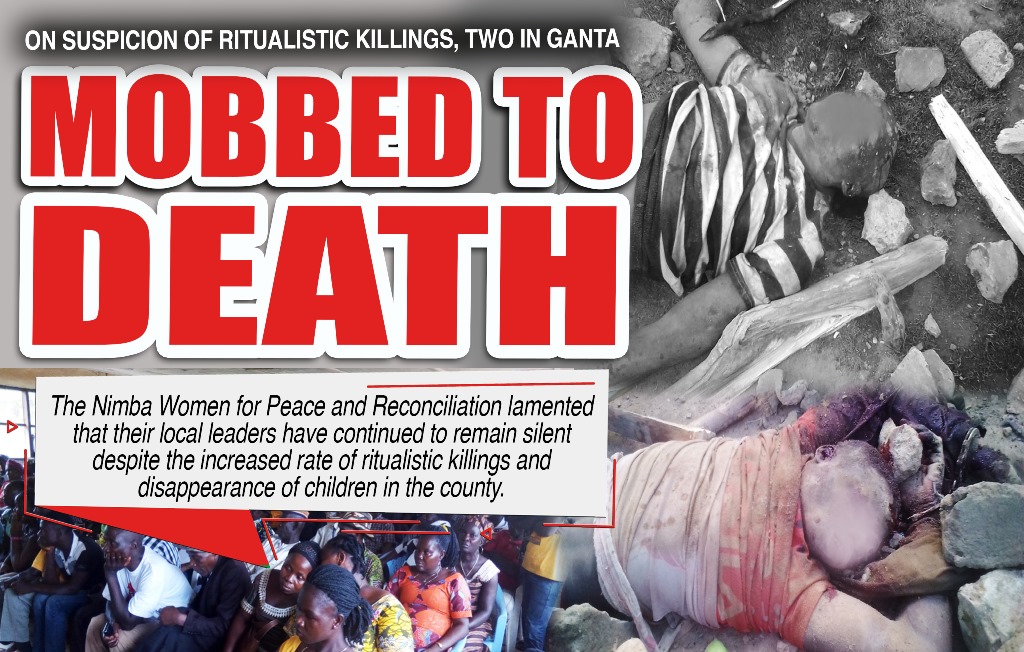
On suspicion of ritualistic killings, two men mobbed to death in Ganta
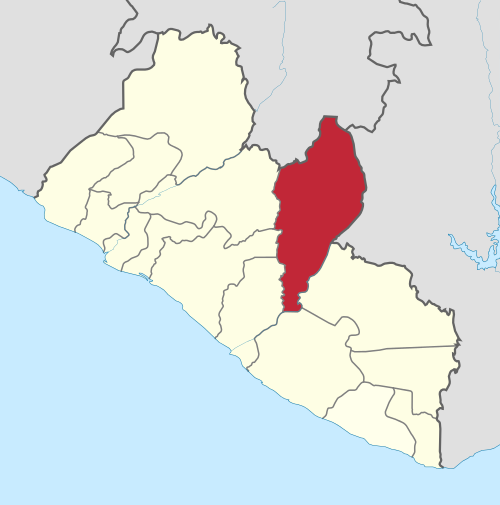
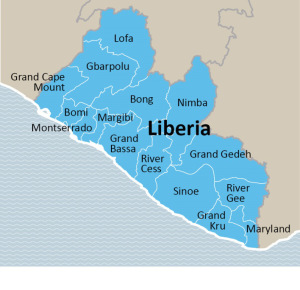
Ganta, Nimba County– Mob violence has taken center stage in Nimba County as locals consider it a means of reprisal to a wave of alleged ritualistic killings happening in recent weeks.
Two men, who were accused of killings of a 14-month-old baby, were mauled to death while they were being transferred to the county’s capital for investigating.
The two men were mauled by angry residents of the LPRC Community in Ganta. The incident occurred on March 19 when angry residents stormed the city, calling for the speedy investigation of the killings.
The violence brought normal activities to a standstill leaving some police and Liberia Drugs Enforcement Agency officers injured.
Earlier, seven men were accused of alleged ritualistic killings in Blavahlay Town, District #7 and they were taken to Sanniquellie for investigation.
The issue of mobbed violence is now on the increase in Nimba County with Ganta experiencing the most incidents, a FrontPageAfrica reporter in the county said. At least 10 persons have been reported killed as a result of mob violence in the last two years.
Since the March 19 incident, the police presence has increased in the county and 93 suspects have been arrested in connection with the disturbance. They are currently in Gbarnga, Bong County undergoing investigation.
The alleged ritualistic killings and subsequent unrests have destabilized Ganta, a major commercial city in northern Liberia. It is drawing concerns for people from all walks of life.
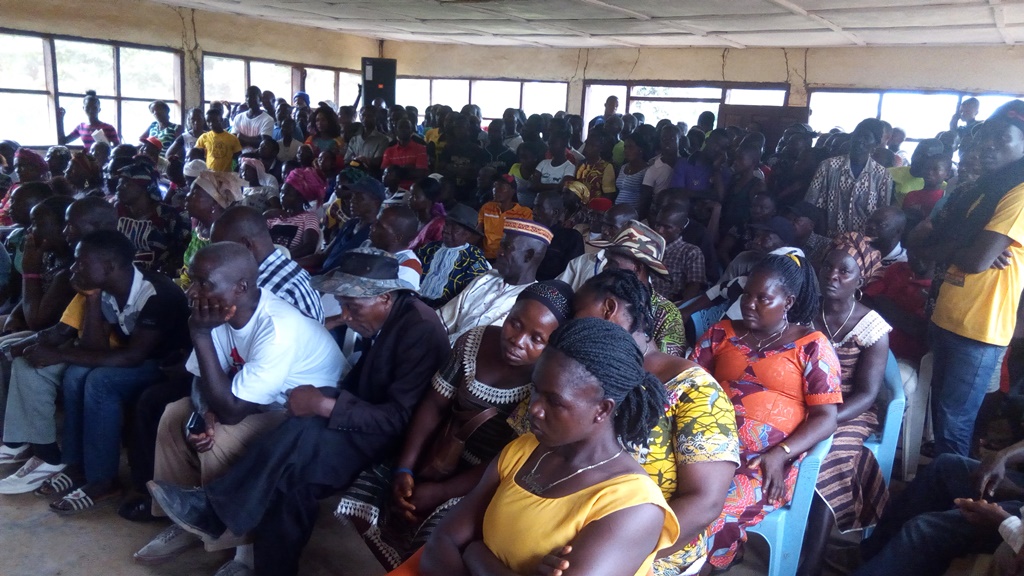
At the weekend, over 200 women under the banner Nimba Women for Peace and Reconciliation presented a position statement on the increase of ritualistic killings in the county recently.
The women, from the 17 administrative districts of the county, gathered at the Christian Bible Church in Ganta. They were very angry and called on the government to combat the strange killings.
The heads of several women groups in the county expressed their dismay and called for swift actions from the government.
They said, “their children are now living in fear, they are not going to schools, and they should not be used for to rich themselves with our children that are the future leaders of the nation”.
The women presented a position statement to the county leadership but only a county official was present.
The Nimba Women for Peace and reconciliation lamented that since the increased of ritualistic killing in the county, “the local authority continues to remain silent while children are going missing”.
They stressed that they feel obliged to undertake the cause to condemn “these evil acts by people who are interested in nothing else but just of power and money”.
They also called for calm among families of victims while urging local leaders and the county lawmakers to stand behind their effort and combat the increase killings in their communities.
The gathering comes four days after the lifeless body of an infant was discovered in Ganta. The body was discovered burned and it was said to be a 14-months-old child.
Another child was reported missing at the Ganta general market while there have been reports of several other alleged killings of children in the county.
There have been brewing tension in the county with hundreds of residents threatening mob justice, prompting the women to emphasized the importance of the government’s intervention.
And the women stressed that timely intervention will avoid a ongoing negative reaction from the public, that is already frustrated and showing a lack of confidence in the authorities and security actors.
The women then called on the government to launch an investigation into the “killing and missing of innocent children in the communities and bring the perpetrators to book and keep the public constantly abreast of the progress of such investigation”.
At the same time, rights advocates in the county have termed the “strange killings of children as “a blatant violation of human rights”.
According to the Executive Director for KIDS Foundation Liberia Augustine Dahn, in the past years, several children and adults had gone missing and were later discovered dead with parts of their bodies extracted for ritual purposes. (Italics added by the webmaster FVDK).
The group joined the Nimba Women for Peace and Reconciliation to condemned the killings and called on government to reintroduce capital punishment.
The group argues that the increasing wave of these human rights violations can be blamed on the country’s “contaminated judicial system and inefficiency, corruption, under-qualified lawyers and judges, lack of court facilities, transportation, and others resources, inadequate police investigation, shortage of public defenders, poor case management.” The management of Kids foundation believes the reintroduction of capital punishment would serve as serious deterrence to would be ritualistic killers.
Published: March 19, 2019 By: MENAFN – Nam News Network
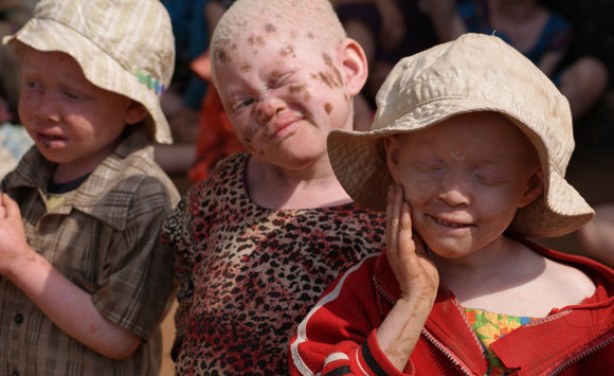
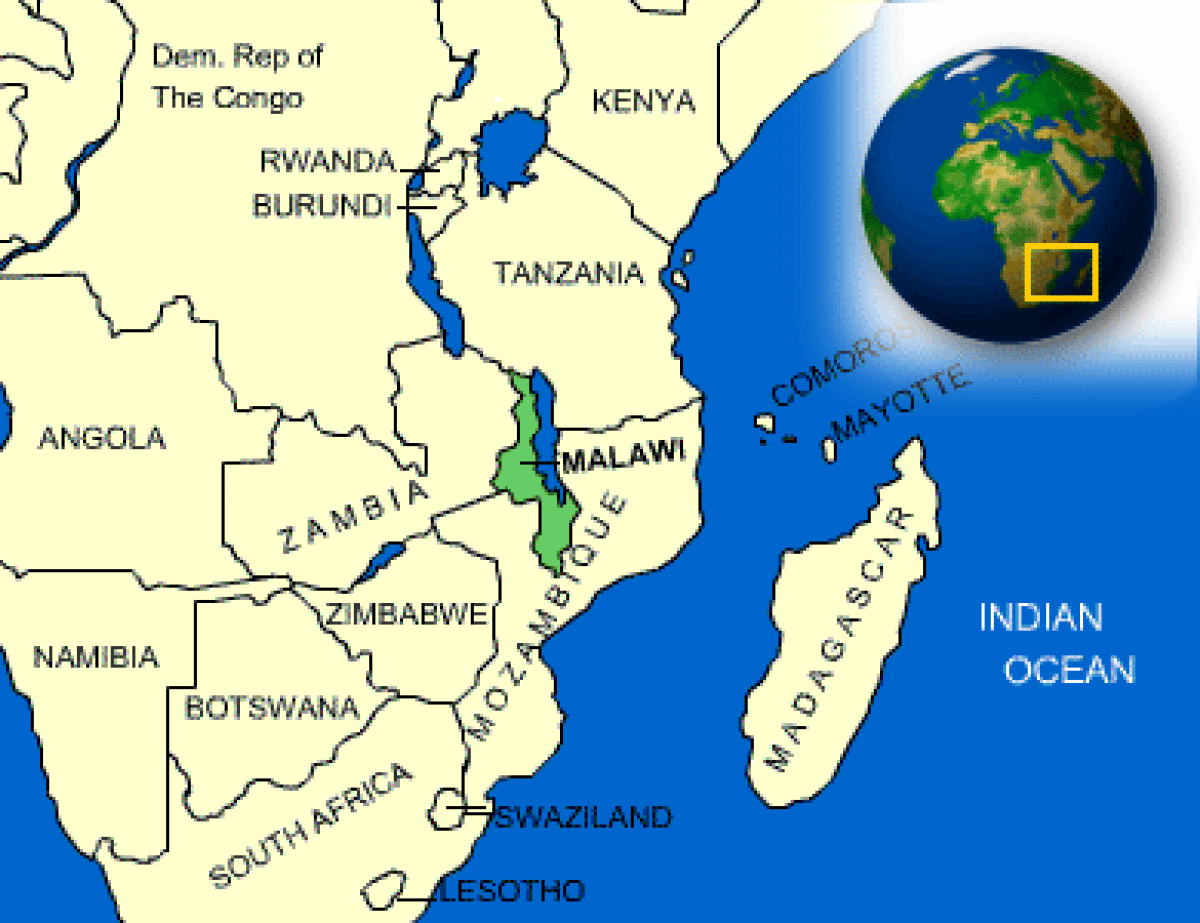
Malawi: UN Sending Experts in Malawi to Investigate Killings of People With Albinism – Pres Mutharika
(MENAFN – Nam News Network) LILONGWE, March 18 (NNN-ALLAFRICA) — President Peter Mutharika has disclosed that the United Nations (UN) will be sending two experts to investigate the attacks of persons with albinism (PWAs), tracing the root cause of the atrocities or markets.
Mutharika made the disclosure at Joho Primary School, Nsanama in Machinga where he visited families who were affected by the continuous rains that fell between March 5 and 8 this year.
The Malawi leader departed from his prepared consolation speech to the disaster affected communities to inform the nation that government would soon get to the bottom of the albino killings.
“Let me make this announcement here that the United Nations is sending two experts to investigate the killings of people with albinism and to establish where the market — if any — is located,” said Mutharika.
He condemned the attacks and killings of people with albinism describing it as: senseless acts fueled by ignorance and stupidity.
“About 25 people have been killed so far since all this madness started; now, tell me: who has become rich because of the killings of persons with albinism for their body parts?” queried Mutharika. (Italics added by the webmaster FVDK).
Commenting on the disaster, Mutharika assured (….)
United Nations to send experts to investigate albino killings in Malawi. Photo courtesy Ritual Killing In Africa
Nine cases of suspected ritualistic killing have been reported to the United Nations since 2012, but local media say there have been at least 10 related murders since this summer
Published: December 18, 2015 Updated 16:22 GMT By: Reuters
Ritual killings, witch trials go unpunished in Liberia
DAKAR, Dec 18 (Thomson Reuters Foundation) – Liberia must tackle a widespread culture of impunity for perpetrators of ritual killings and trials of ordeal and put its human rights obligations before such traditional practices, the United Nations rights chief said on Friday.
Authorities are reluctant to investigate or prosecute such cases, fearful of a backlash from practitioners and politicians, while some state officials are even part of the secret societies that perform the practices, said a U.N. report.
Women, children, the elderly and the disabled are the main victims of harmful cultural practices, including female genital mutilation (FGM) and initiation into secret societies, it said.
“Criminal offences perpetrated through harmful traditional practices often go unpunished due to their perceived cultural dimensions,” said the joint report from the U.N. Mission in Liberia and Office of the High Commissioner for Human Rights.
“This has generated a widespread culture of impunity among traditional actors,” it said.
Liberia’s President Ellen Johnson Sirleaf last month vowed to crack down on those responsible for a rise in ritual killings in the West African nation.
Nine cases of suspected ritualistic killing have been reported to the United Nations since 2012, but local media say there have been at least 10 related murders since this summer. (italics added by the webmaster FVDK).
They occur in some African nations due to a belief that body parts can work magic to obtain success or political power.
It is not yet clear why ritual killings are rising, but the report warned of an increase ahead of national elections in 2017, and some residents have speculated that presidential hopefuls are using black magic to boost their chances.
The report also documented the prevalence of FGM, widely performed by the women’s secret society Sande, and abductions, torture and gang-rapes carried out by the male society Poro.
Many women and children in Liberia are accused of witchcraft, and face “exorcism” rituals, trials by ordeal, expulsion or even death, according to the report.
The trials involve the accused being subjected to pain, such as poison or burning, to determine their innocence or guilt.
“Liberia’s human rights obligations must take precedence over any local practices considered to be ‘cultural’ or ‘traditional’ where such practices are incompatible with human rights,” said U.N. rights chief Zeid Ra’ad Al Hussein.
(Reporting By Kieran Guilbert, Editing by Ros Russell; Please credit the Thomson Reuters Foundation, the charitable arm of Thomson Reuters, that covers humanitarian news, women’s rights, trafficking, corruption and climate change. Visit www.trust.org)
The following article can be found in the AllAfrica archive, which requires a subscription. Unfortunately, the original article, which was published by The News, a Liberian newspaper, is no longer available on the internet. Interested readers are advised to follow the instructions below. (Webmaster FVDK).
The Recent Wave of ritual killings in Liberia have got the entire country petrified, particularly in Monrovia where the bodies of several people allegedly killed for ritual purposes are found. These killings continue to occur in spite of commitment by the Liberian government that it would deal with the situation.
Last Month, President Ellen Johnson Sirleaf vowed to crack down on those responsible for ritual killings in the country. Yet, it would appear no progress has been made by the government to set a dragnet for those responsible for killing innocent men, women and children.
(………)
You must be an allAfrica.com subscriber for full access to this article.
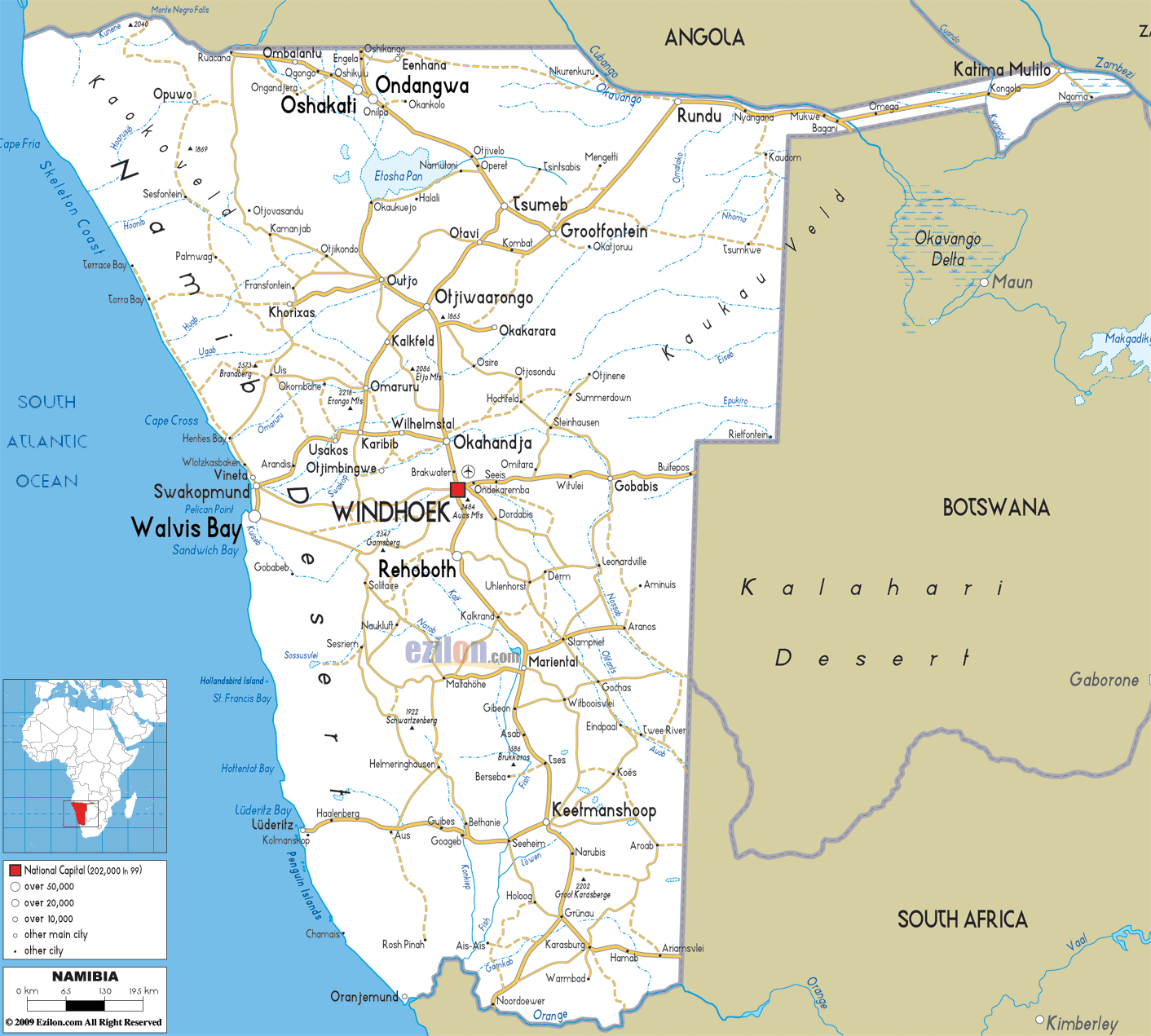
Few cases of ritualistic murders have been reported recently from Namibia. This does not mean that ritual killings do not occur in this country. By definition these heinous crimes take place ‘in the dark’. Years ago, I reported some cases of ritual murders in Namibia on my website Liberia Past and Present. Unfortunately, the links then provided have expired by now. Consequently, the information related to these cases is minimal. Notwithstanding this scant information I decided to include here what I then reported. For the sake of history. (Webmaster FVDK).
WINDHOEK – A three-year-old boy from Kazauli village in the Caprivi Region was murdered in a case suspected to be associated with ritualistic muti killing. (…) There are no statistics of the number of muti murders in Namibia. November 24, 2008 (expired link)
(…) the gruesome murder of a 79-year-old woman whose head was found floating on the Kavango River (…) The elderly woman’s head was found at Shadikongoro village near Mukwe, about 180 kilometres east of Rundu, on Sunday after she disappeared on New Year’s Eve. It is suspected that she was killed for muti (traditional medicine) purposes. January 6, 2005 (expired link)
The ritual murder case referred to in the text below is a very old one: over 65 years. The reason why I include it here is two-fold.
First, because it is a case of ritual murder that reveals the ‘social’ motives of the culprits: to protect the interests of the community (village). Historically, ritual murders were human sacrifices meant to safeguard the interests of the family or community.
The second reason is that it clearly illustrates why, for the present blog, I use the method of ‘copy-paste’ of the entire, original article (with explicit mention of the source and author of the article). In the past – for my website on Liberia – I summarized the contents of articles on ritual murders in African countries and added a link to the source. Unfortunately, after a number of years I discovered that links had vanished, expired, got lost in cyberspace causing an irreparable loss. Valuable material for researchers has thus been lost. To avoid this in the future I have decided to reproduce here the original articles that are being published.
For this reason I can only include here the text as published on my Liberia website. However, the text is clear and hopefully it may ever happen that it contributes to more information on this particular murder case. (Webmaster FVDK)
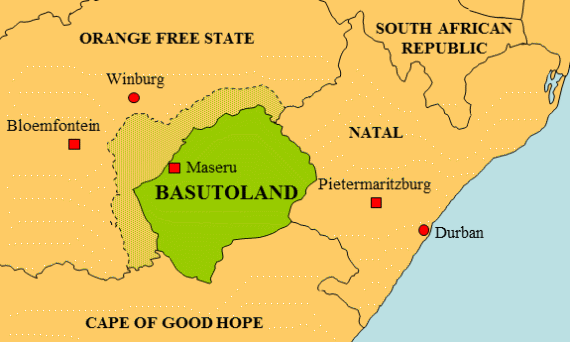
Basutoland was a British Crown colony established in 1884. It was renamed the Kingdom of Lesotho upon its independence from the United Kingdom on 4 October 1966. Source: Wikipedia
An African headman, Pheelo Smith, desperately needed a human sacrifice to save his villagers’ crops. He chose his father-in-law as the victim, and the whole of the village of Maseru in Basutoland (now Lesotho) turned out to watch the ritual murder. Forty-two people were charged with being implicated in the crime, although 11 were finally charged with murder. Eight of them made a break-out from custody and fought a pitched battle with the police before they were recaptured. All 11 – nine men, who included headman Pheelo Smith, and two women – were hanged on Thursday, August 20th, 1953, at Maseru Prison.
The decision of the Nigerian Police to parade arrested individuals suspected of (serious) crimes is a violation of their human rights (webmaster FVDK).
Published: March 1, 2019 By: Nigeria Today
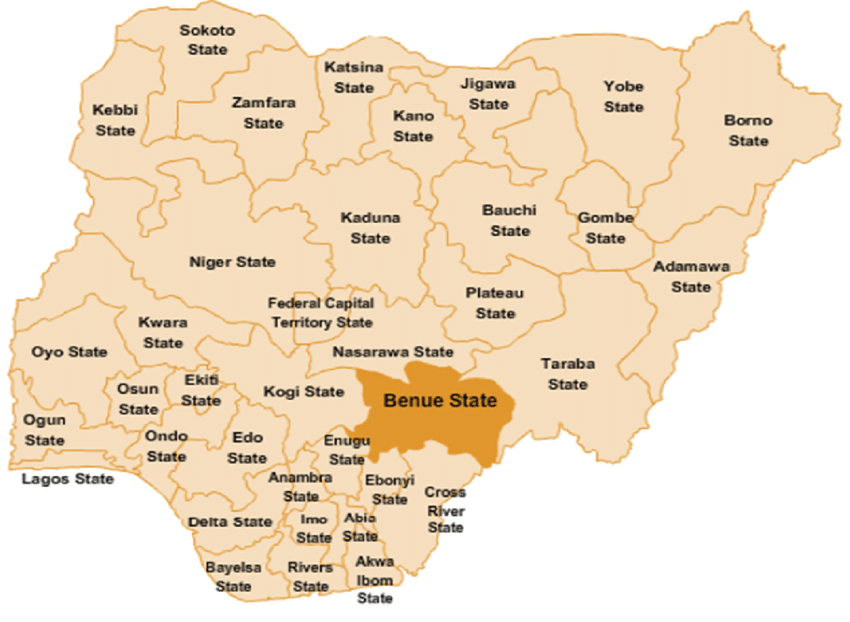
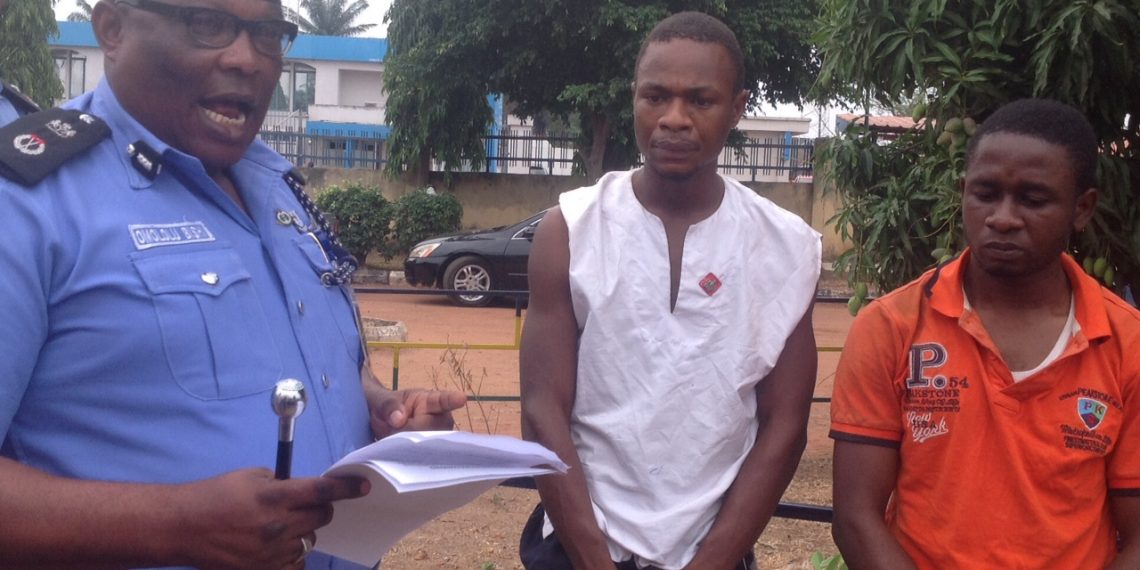
The Benue State Police Command on Tuesday, paraded suspects arrested for various crimes in the state.
Briefing newsmen at the Command Headquarters in Makurdi, the Commissioner of Police, CP Omololu Bishi, said two of the suspects confessed to killing a young man for a ritual purpose.
According to the CP, the father of the victim, Mr. Iorumbur Amanger of Tombo-Mbaya Buruku Local Government Area wrote a petition to the Command stating that Hyginus Lubem Mbachi of the same address defrauded him of the sum of Two Hundred and Nine Thousand; One Hundred and Fifty Naira (₦209, 150) only being fee for the admission of his son Afa Amanger into a University in Cameroon. The said suspect left his house with his son to Cameroon and since then he could not communicate with his son.
“During investigation Hyginus Lubem Mbachii and one Gambo Bulus alias Murphy of Akwanga, Nasarawa State was arrested at Lafia, Nasarawa State on 22/02/2019 in connection with the case. The suspects confessed to have killed Afa Amanger since 05/01/2019 for ritual purpose and has been collecting money from the complainant for his own personal use”
The corpse of the deceased has been recovered from the Hospital where the suspects earlier abandoned the victim and ran away. The suspect will soon be arraigned in Court.
The Command also arrested (….) (omitted since not relevant for the present site – webmaster VDK).
Nemesis has caught up with two young men, Hyginus Mbachi and Gambo Bulus who killed a young man for ritual after one of them took him from his father on the pretext that he was going to help him gain admission in the Republic of Cameroon.
Parading the suspects on Thursday, Benue State Police Commissioner, Omololu Bishi, said the police acted on a petition written by the deceased father, Iorumbur Amanger, stating that Mbachi defrauded him the sum of N208,150 being fee for the admission of his son, Afa, into a university in Cameroon.
“He (Amanger), said the suspect left his house with his son to Cameroon and since then, he could not communicate with his son,” adding that during investigation, Mbachi (22) and Bulus (23) were arrested in Nasarawa State on February 22, 2019, in connection with the case.
Bishi who disclosed that the suspects had already confessed to the crime, said the suspects confessed to have killed Afa since January 5, this year for ritual purposes adding that the herbalist was still on the run with the blood-stained knife.
The CP who said the suspects had also been collecting money from the complainants for their own personal use, revealed that after stabbing Afa, they took him to a hospital on the claims that he was their friend who was involved in an accident.
“As soon as the hospital took the patient into the emergency ward, the two suspected criminals disappeared and never returned to the hospital.”
Bishi who posited that the suspect would soon be arraigned in court said the corpse of the deceased has been recovered from the hospital where the suspects earlier abandoned him and ran away.
Speaking with newsmen while being paraded, the suspects, Mbachi and Bulus who confessed to the crime said the victim whom they alleged was a member of the Young Vikings confraternity was actually not the target for their ritual purpose but was stabbed in error.
Bishi warned parents against giving out their wards to people they don’t really know, stressing that ritual killings, kidnapping and other social vices are now happening at an alarming rate in the country.
Published: March 4, 2019 By: Penelope Paliani-Kamanga – Southern Times
Blantyre – Continued killings of people with albinism in Malawi has made the country unsure of to what to do with the population blaming each other and concerned persons calling on government and the police to seriously do something about it.
The confusion, which has left the country living in fear and on bended knees, comes at a time when 10 people with albinism were recently reported missing amid reports that they may have been abducted. They have been reports of the abduction of a child in Karonga and recently of a teenager in Dedza.
Since November 2014, the number of reported crimes against people with albinism in Malawi has risen to 152 cases, including 25 murders and more than 10 people missing, according to Association of People with Albinism in Malawi. (Italics added by the webmaster FVDK).
Discrimination against people with albinism has been a problem in the past in Malawi and experts had expressed concerned earlier this year that the violence could get worse with the coming May 21 election. Experts called on the government to redouble its efforts and implement all necessary measures to protect people with albinism.
The expected spike around election time is due to the false belief that ritual use of the body parts of people with albinism can bring good luck and political power. This might lead to torture, murder, discrimination and exclusion, including banishment from communities.
Main opposition Malawi Congress Party (MCP) president Lazarus Chakwera, in a recent demand for action, has challenged President Peter Mutharika to put an end to killings and abductions of persons with albinism in the country.
He was speaking at a press conference last week in Lilongwe, following the abduction of a boy with albinism, Goodson Makanjira, 14, of Mphanyama village, traditional authority Chilikumwendo in Dedza.
Chakwera said Mutharika has executive powers to end this barbaric practice but was “sleeping on the job and being a coward”.
“I only have three words for the President; do your job! Stop being a coward and do your job. If you do not end these murders and abductions, you will leave a legacy that will haunt you for the rest of your life.”
Chakwera promised that once voted into power, he will end the abductions and killings within a month.
Chakwera said it was sad that the killings were continuing despite government launching the National Action Plan (NAP) last year to protect those living with albinism.
“I will keep fighting for the rights of our friends. My advice to the President is to act now, use his powers and don’t be afraid of the ‘buyers’, because I know they are there,” he said.
But State House press secretary Mgeme Kalilani, in an interview, described Chakwera’s remarks as a threat to the rule of law and warned him against using the plight of people with albinism for political mileage.
In another demand for action, president of Umodzi Party (UP) one of the parties in the race for the elections, Professor John Chisi, expressed dissatisfaction with the way police were handling albino abductions and killings.
Chisi, who said the situation was pathetic, demanded the resignation of the country’s Inspector General of Police Rodney Jose on the grounds that he had failed to protect people with albinism.
“This issue of albino killings is unacceptable. These are avoidable deaths. The police have failed us, as they have the National Intelligence Bureau but are doing nothing. The Inspector General of Police must conduct a press conference to let us know why they are failing to end the malpractice, if not, he and his people must resign,” said Chisi.
National Coordinator of the Association of Persons with Albinism in Malawi (APAM), Boniface Massah, said in a statement that the refusal to push forward with prosecuting suspects accused of attacking and killing people with albinism has left a persecuted minority on the edge.
Massah said in an interview the government’s failure to conclude cases demonstrated that “security has not improved”, leaving the estimated 10,000-strong community vulnerable and anxious.
“We face a high risk of attack and we have seen government commitment in words, but not in action,” he said.
In a desperate move to tackle this issue, two groups and some concerned citizens have petitioned Malawi’s Ombudsman, Martha Chizuma, to thoroughly investigate the country’s failure to protect persons with albinism.
Specifically APAM, in its petition, wants the Ombudsman to direct President Mutharika to appoint a commission of inquiry and conduct a comprehensive research to trace and identify the alleged source of demand and supply for body parts of PWAs.
Further, APAM also wants Mutharika to seek, as a matter of urgency, international support to conduct investigations, including specialist support for forensic testing and combating human trafficking, to bring perpetrators of these gross human rights abuses to justice.
The petition, signed by APAM president Overstone Kondowe, shows that there are currently 165 cases against PWAs, including 36 concluded cases, 39 cases pending in courts, 79 under investigation and 12 cases closed due to lack of proper evidence.
On the other hand, Federation of Disability Organisations in Malawi (Fedoma) executive director Action Amos said his organisation was concerned that there was no breakthrough in tracing the root cause of the atrocities or markets.
Reads the Fedoma petition: “We are demanding that your office assists with pushing for an establishment of a commission of inquiry. The current technical committee is toothless and won’t bring us any results. We have development partners willing to support the commission of inquiry.
The European Union (EU) has also been one of the organistions that has asked government to do something about the abductions. EU Ambassador Sandra Paesen this week called for serious criminal investigations and coordination among countries to fight abductions and killings of people with albinism.
Paesen said finger pointing will not solve the vice which has left a dent on Malawi.
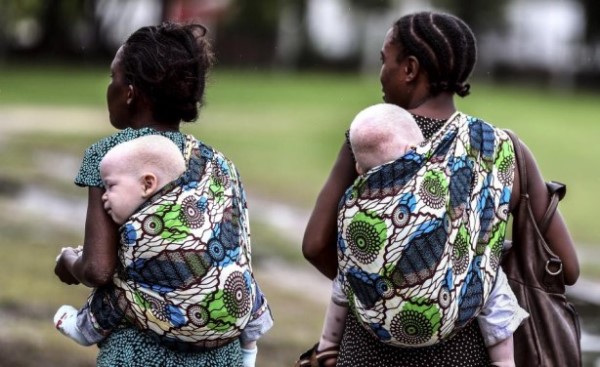
Albinism is a genetically inherited condition. It often results in the lack of pigmentation in the skin, hair and eyes.
The attacks stem from a belief that body parts belonging to people with albinism contain magical powers.
Mutharika, who has of late been talking tough on atrocities against PWAs, has been blamed for simply making podium rants, with little being done on the ground to stop the vice.
The Malawi government launched a four-year National Action Plan on Persons with Albinism aimed at ending atrocities against persons with albinism, and improving their social welfare. Since 2014, at least 23 PWAs have been killed.