Unfortunately, the list of proven and suspected ritual killing cases in Nigeria is – so-to-speak – endless. Ritualistic murders and related activities are know in Nigeria and neighboring (anglophone) countries, such as Ghana, as ‘money rituals’. Everyday, new murders are being discovered and/or reported. I’ve mentioned it earlier on this site: it is not possible to report here or to give comments on every single ‘money ritual’ in Nigeria, Africa’s most populated countries with an estimated population of about 200 million people.
Some of the reported ritual murder cases exposed below have been included in previous posts, some are not. With the help of the ‘search’ button on this page one may easily find previous posts with (more) details of the respective murder cases. (webmaster FVDK)
7 Ritual Killing Cases That Shocked Nigerians
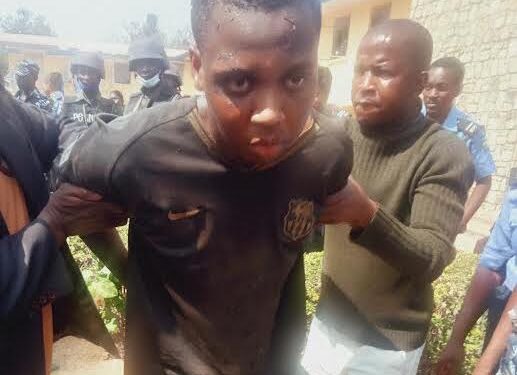
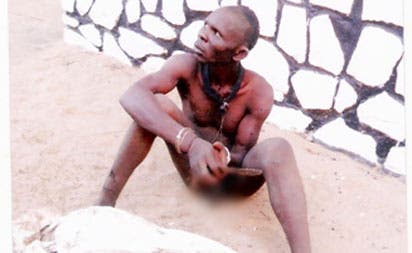
Kehinde Oladimeji and his wife Adejumoke were arrested in Abeokuta, Ogun State, for being in possession of fresh human parts. See below.
Published: April 23, 2022 By: KOKO TV Nigeria
The rise in the rate of people who have been killed for money ritual is alarming and everyone is crying out for this evil trend to come to an end.
Money ritual can be said to be the act of using ritual to get money, now the trick here is the ingredients used in doing the ritual are what makes this act a deadly and terrible option. Most people who indulge in this ritual always want what people call ‘fast money’ because they can’t wait for their time according to the plan of God. There have been several cases of youths caught with one human part or the other or in the process of killing someone whom they want to harvest the body part and use for money ritual. So here 7 ritual killing cases that shocked Nigerians.
Sofiat Kehinde On the 4th of February, 2022, four Nigerian men were charged with the murder of a 20-year-old woman in a suspected ritual killing case. The men, who are aged between 18 to 20 years, were arrested on the last Saturday of January for allegedly killing Sofiat Kehinde and burning her head for money ritual purposes at Oke Aregba area of Abeokuta, Ogun State. According to reports, the deceased was dating one of the killers. She was lured by her boyfriend, Soliu, to his room where she was overpowered and killed.
Jennifer Anthony In the case of Jennifer Anthony; a 20-year-old Moses Oko was been apprehended by the police for allegedly killing her for ritual purposes. Jennifer, who was a student of the University of Jos, was found lifeless at a hotel in Jos, along Zaria Road, on New Year’s Day. Some of her body parts were also missing. Moses was arrested in Benue State after he fled from Jos for committing the crime.
Oluwabamise Ayanwola The 22-year-old fashion designer, Bamise, was found dead in Lagos after boarding a BRT bus heading to Oshodi from Chevron bus stop, Lekki. She was said to have been raped before being killed. Her corpse was later found on the Carter Bridge. The police have since arrested Andrew Nice Omininikoron, the driver of the BRT bus, who is the prime suspect. It was reported that young Bamise was raped, and had parts of her body removed which confirmed the suspicion that she may have been killed for ritual purposes. The bereaved family has demanded justice for her.
Timothy Odeniyi On February 1st, 2022, a suspected ritual killer, Timothy Odeniyi, was arrested by men of the Amotekun Corps in Ondo State, Nigeria. The 35-year-old man confessed to newsmen that he was promised N30m if he could produce and deliver human parts to Lagos. He revealed that the human parts were to be delivered to one of his bosses living in Lagos. Timothy confessed that he went to burial grounds to harvest the body parts from corpses buried claiming that he did not murder anyone.
Kehinde Oladimeji and Adejumoke Nigerian couple Kehinde Oladimeji, 43, and his 35-year-old wife, Adejumoke, were paraded before newsmen at the police command headquarters, Eleweran, Abeokuta. The suspects were arrested in Abeokuta for being in possession of fresh human parts. The couple, who resided on 72, MKO Abiola Way, Leme, Abeokuta, in the Abeokuta South Local Government Area of Ogun State, were arrested with human hands and breasts. It was reported that they killed and severed the body of a lady who was Adejumoke’s friend and sold the head to a merchant, identified as Omo Baale, a resident of Ibadan, Oyo State.
Timothy Adegoke Timothy Adegoke checked into a hotel in Ile-Ife to write his Post Graduate examinations but he never came out alive as he was murdered overnight and buried some metres away from the hotel. The proprietor of the hotel, Mr Adedoyin is currently standing trial. A lot of people reported contrary to what the police said that some of his body parts were missing and had been used for money ritual.
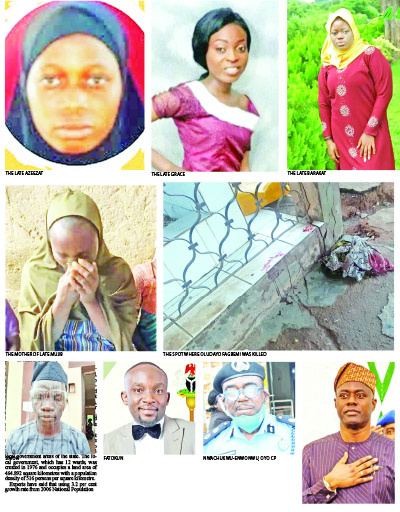
Afeez Olalere Another case is that of 32-year-old Afeez Olalere, who is a suspected internet fraudster. Afeez confessed to killing his younger brother for money ritual purposes. He was arrested during a stop and search operation along Itamaga, Ikorodu road in Lagos State by operatives of the Lagos State Police Command. Afeez confessed during interrogation that his mother encouraged him to kill his younger brother after a herbalist she took him to had told him to sacrifice one life which must be his sibling. He had planned with his mother to poison his 21-year-old brother to death. They harvested the required body parts and took his remains to the mortuary.
The following figures are frightening. Watch out: I don’t want to be misunderstood. Not all of these killings were ritualistic murders, but many if not most of them were related to occult practices including ‘money rituals’.
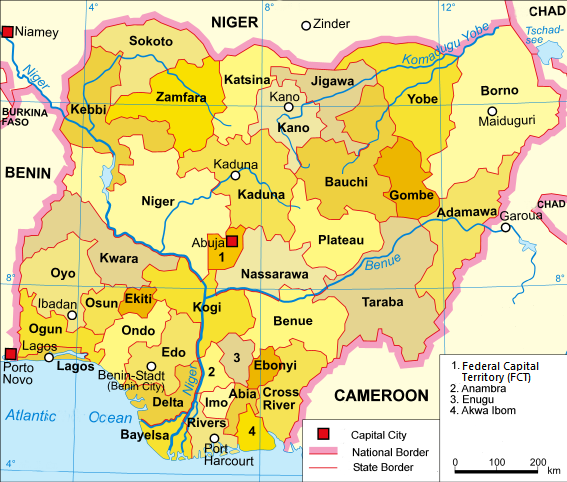
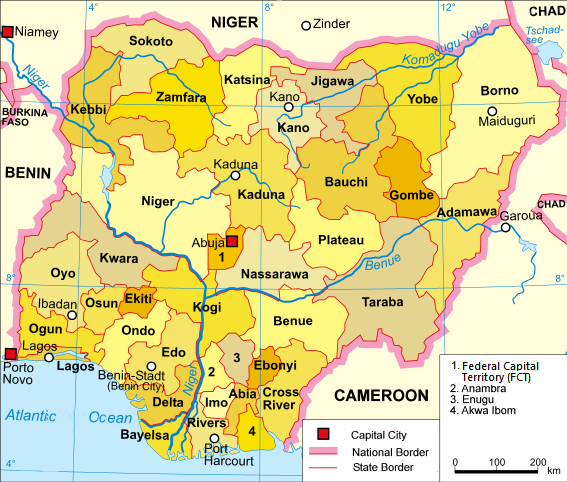
Between April 2021 and April 2022, 281 people were killed in violent cult attacks across 20 states. Anambra state tops the list with 41 cult killings, followed by Benue state: 34, Lagos state: 29, Rivers state: 26, Delta state: 26, Cross River state: 23, Ogun state: 17, Akwa Ibom state: 17, Osun state: 14, Bayelsa state:, 9 and Imo state 9. Notably, Anambra and Ogun states, in recent months, became notorious for cult killings.
In recent weeks, Ogun state became the epicentre of cultism and ritual killings. Between 2019 and 2022, at least 64 people were killed in various violent clashes among cult groups in Ogun state.
Nigeria is at a dangerous crossroads. Persistent state fragility increasingly leads to jungle justice. Poverty and poor perspectives provide powerful motives for the army of jobless young boys and girls to seek a better life in cult groups. The authority of the state is at stake (webmaster FVDK).
Halt rising tide of cult attacks, wars
Published: April 15, 2022 By: Editorial – Daily Trust, Nigeria
While some states in North West and North Central Nigeria contend with banditry and kidnapping, more than a dozen states in the southern part of the country suffer from cult killings. Between April 2021 and April 2022, 281 people were killed in fierce cult attacks across 20 states. The states include Anambra which tops the chart with 41 cult killings, Benue 34, Lagos 29, Rivers 26, Delta 26, Cross River 23, Ogun 17, Akwa Ibom 17, Osun 14, Bayelsa, 9 and Imo 9. Anambra and Ogun states, in recent months, became notorious for cult killings.
In February this year, at least 20 people were killed when suspected cultists invaded a burial in Ebenebe, Awka North Local Government Area of Anambra State. They also desecrated the corpse of a suspected member, identified as Ozo, which had been prepared for burial. In recent weeks, Ogun became the epicentre of cultism and ritual killings. Between 2019 and 2022, no fewer than 64 people were killed in various violent clashes among cult groups in Ogun State.
In the latest onslaught, 16 persons were killed in Abeokuta including a kingpin identified as Tommy, who was hacked down at Panseke in a renewed cult war. Tommy ruled streets of Oluwo, Onikolobo, Adigbe and Panseke areas of Abeokuta. Tommy’s assailants tracked him to the chaotic Pankese area at night, stabbed him in the head and left him to die in the pool of his blood.
Responding to the clashes between the Eiye and Aiye cult groups in Ogun State that lasted for over a week, President Muhammadu Buhari, in a statement issued by his Senior Special Assistant on Media and Publicity, Malam Garba Shehu, directed the police and other law enforcement agencies to confront groups seeking to destroy peace.
Governor of Ogun State Adedapo Abiodun had, in January this year, re-launched the state joint security outfit, code-named OP-MESA, where he threatened to make Ogun inhabitable for all criminals. In February 2022, Abiodun signed a Memorandum of Understanding (MoU) with his Oyo State counterpart, Seyi Makinde, in Abeokuta, where he declared that criminals were after his life because he was “making life unbearable for them”.
Cultism suggests nothing but evil. It involves the coming together of a group with deviant beliefs and practices that are not only exclusively kept away from the knowledge of others but such activities are carried out at odd hours of the day. Some plausible causes of cultism include peer group influence, parental background, drug and substance addiction, societal decadence, poor education standards, loneliness and the lack of recreational facilities.
In Nigerian tertiary institutions, for instance, Black Axe, Buccaneers, Vikings, Aro Mates, Supreme Eiye, Black Eye, Black Beret, Black Bra, Daughters of Jezebel are common names of cult groups. Their common features of identity include initiation through the use of blood or inscription of marks on the bodies of new members; oath-taking; and the use of specific colour as group symbol. It is in the character of cult members to engage in armed robbery, sexual assault, drug abuse, examination malpractice, harassment and bullying of students, and intimidating lecturers for grades.
Cultism has continued to survive partly because of the patronage from the society including politicians who use cultists either as hit men during elections or for assassinating political opponents. While some become cultists in their search for protection, others join cult groups to avenge an assault or a painful past. Some students become cultists out of the desire to become “Big Boys” and superior to their peers.
To halt the rising tide of cultism, parents must give more quality time and attention to their children’s moral development than they give to their businesses or office work. Good parenting requires bridging all communication gaps between parents and their children. To de-radicalise our youths, we call on the National Universities Commission (NUC) to make moral education a General Studies (GST) course for all students of tertiary institutions in the country.
As we recently reiterated on this page, only concrete security measures, not empty directives, would rescue the country from the security challenges confronting it. Government must demonstrate genuine political will to protect lives from cult attacks. The need to deploy modern technology in surveillance, intelligence and detective operations of security agencies cannot be more strategic than now when criminal elements have become more sophisticated.
If “an idle mind” as they say “is a devil’s workshop”, local governments in the country are advised to provide recreational and sports facilities that would keep the army of jobless young boys and girls in their localities busy. While we call on state governments to seasonally organise inter-schools or inter-LGAs sports competitions, we also urge them to support schools with basic sporting equipment. We encourage the NDLEA to sustain its ongoing offensive against drug peddling and abuse, just as we urge the National Orientation Agency (NOA) to, as part of its mandate; orientate the Nigerian public on the sacredness of human life.
NB: Message from The editors, Daily Trust, Nigeria: Dear Reader, Every day, we work hard to provide readers such as you with the most accurate, up-to-date, and comprehensive information. Quality journalism costs money. Today, we’re asking that you support us to do more. Your support means that Daily Trust can keep offering journalism to everyone in the world. See the link included in the source mentioned below to sign up to become a member. (webmaster FVDK)
Ritual murder cases are so numerous in Nigeria that it seems impossible to report on each and every one of them. Last year and the years before showed many ritualistic murder cases – ‘money rituals ‘ – and the new year 2022 is not even six weeks old but already the country was shocked by a number of ‘money rituals’ which seems to justify the fear that 2022 will be a murderous year. (Webmaster FVDK)
Four Ritual Killing Cases That Shocked Nigerians In 2022
Published: February 9, 2022 By: Christine – Daily Trust, Nigeria
Cases of ritual killings in the country are fast increasing. Despite the fact that the year is new and in its second month, 2022 has already experienced the heartache and anguish that ritual killings are causing. Daily Trust highlights top ritual killings cases that have rocked the country in 2022.
Sofiat Kehinde
On the 4th of February, 2022, four Nigerian men were charged with the murder of a 20-year-old woman in a suspected ritual killing case. The men, who are aged between 18 to 20 years, were arrested on the last Saturday of January for allegedly killing Sofiat Kehinde and burning her head for money ritual purposes at Oke Aregba area of Abeokuta, Ogun State. According to reports, the deceased was dating one of the killers. She was lured by her boyfriend, Soliu, to his room where she was overpowered and killed.
Timothy Odeniyi
On February 1st, 2022, a suspected ritual killer, Timothy Odeniyi, was arrested by men of the Amotekun Corps in Ondo State, Nigeria. The 35-year-old man confessed to newsmen that he was promised N30m if he could produce and deliver human parts to Lagos. He revealed that the human parts were to be delivered to one of his bosses living in Lagos. Timothy confessed that he went to burial grounds to harvest the body parts from corpses buried claiming that he did not murder anyone.
Jennifer Anthony
In the case of Jennifer Anthony; a 20-year-old Moses Oko was been apprehended by the police for allegedly killing her for ritual purposes. Jennifer, who was a student of the University of Jos, was found lifeless at a hotel in Jos, along Zaria Road, on New Year’s Day. Some of her body parts were also missing. Moses was arrested in Benue State after he fled from Jos for committing the crime.
Afeez Olalere
Another case is that of 32-year-old Afeez Olalere, who is a suspected internet fraudster. Afeez confessed to killing his younger brother for money ritual purposes. He was arrested during a stop and search operation along Itamaga, Ikorodu road in Lagos State by operatives of the Lagos State Police Command.
Afeez confessed during interrogation that his mother encouraged him to kill his younger brother after a herbalist she took him to had told him to sacrifice one life which must be his sibling. He had planned with his mother to poison his 21-year-old brother to death. They harvested the required body parts and took his remains to the mortuary.
PS We do not want to withhold the publisher’s appeal for a financial support, see below (FVDK)
Dear Reader, Every day, we work hard to provide readers such as you with the most accurate, up-to-date, and comprehensive information. Quality journalism costs money. Today, we’re asking that you support us to do more. Your support means that Daily Trust can keep offering journalism to everyone in the world. sign up for as little as N1,000 to become a member. Learn more about our membership here Bank transfers can be made to: Zenith Bank 1017257739 Media Trust Ltd
Please send details of your bank transfer to the email or Whatsapp number below so that we can contact you.
If you have any questions, please let me know.Inquiries: Email: membership@dailytrust.com Whatsapp: +234 806 990 3410
The cases of ritualistic activities, attacks and murders in Nigeria are too many to include here on a daily basis. I have stated this more than once. The article below not only confirms this. Some of the ritual murder cases referred to in the article have been previously reported on this site, some not. More importantly, the author of the article, Otuya Daniel, explains the reasons for this, seemingly, surge in what is popularly called ‘money rituals’. One of the contributing factors, he argues, is the example set by Nollywood movies idealizing the importance of a social status based on material wealth and the way one can ‘get rich quickly’: through a ‘money ritual’ which implies the use of someone’s organs and other body parts in a ‘juju’ ritual performed by local ‘herbalists’ who often are nothing else but criminals conniving in the act of murder.
For the interested readers: the article also explains the difference between Yahoo boys (internet fraudsters) and Yahoo Plus boys (ritual killers).
Warning: certain descriptions of ritual murders contain shocking, graphic details (FVDK).
The prevalence of ritual killings amongst Nigerian youths
Published: January 28, 2022 By: Otuya Daniel – The Street Journal, Nigeria
Never before have the quest to get riches by all means been so magnified among Nigerian youths than as it is now.
To satisfy the need for getting money, youths today have fully invested their time in learning and practising internet fraud popularly called Yahoo Yahoo.
They have created various ingenious ways to rip unsuspecting victims of hard-earned income.
As if that is not enough, the new wave amongst these fraudsters is to add killing of human beings for money rituals or as it is popularly called, Yahoo Plus.
While families and friends came together to celebrate this past Yuletide, it was not the case for two families who were thrown into grief as in two separate incidents, young girls were killed by their boyfriends in suspected cases of money rituals.
In one of the incidents, it was reported that a Yahoo boy simply identified as Osas who had recently returned to Nigeria from Ghana killed his girlfriend, Elohor Oniorosa for ritual purposes.
It was reported that the deceased and the suspect had gone out only for the young girl to be found dead with her throat slit and the fraudster went on the run.
A few days on, A 300-level student of the University of Jos (UNIJOS), identified as Jennifer Anthony, was found dead in a hotel room with her body mutilated and some body parts missing.
Jennifer was reportedly lured to the hotel by her 20-year-old boyfriend, Moses Okoh who drugged, killed her and proceeded to pluck off her eyes and other body organs before running off.
Such stories are not really new. In fact, in 2018, there was a public outcry in reaction to the gruesome way a student of Delta State University, Abraka, Elozino Ogege was murdered by some group of ritualists and internet fraudsters.
Not only was the poor girl killed, her organs were reportedly harvested while she was still alive.
The frequency of how these incidents has got many wondering, how did moral decadence in the Nigerian society get to the point where someone will unilaterally decide to kill, butcher and harvest another’s organs just for the sake of making quick riches.
Nigerian youths now consider the amount of money they have as the only accepted measure of success as such, they are ready to do any and all things possible to get it.
The ‘glorification’ of internet fraud in Nigeria is the root cause of this trend of ritual killings.
As a matter of fact, that it is called ‘Yahoo Plus’ depicts that many of these youths consider these killings as a necessity in the advancement of their ‘fraud business.’
Some days back, one of such fraudsters was arrested and his confession shocked many.
The 32-year-old, Afeez Olalere who was arrested by operatives of the Lagos State Police Command narrated how his mother encouraged him to kill his younger brother for money rituals.
His words, “My mother took me to a herbalist who told me if I want to be successful in the yahoo business, I will have to sacrifice one life and that person must be a sibling to me.”
Shockingly, the mother and son proceeded to kill a younger sibling for the stipulated rituals and were about to dump the body before they were apprehended.
It is not just parents of fraudsters who ‘support’ them, young girls are also now encouraged by their parents to date these Yahoo boys despite the attendant risks just for the financial ‘gains’.
A lady in Edo State recently said “In Benin city, at least 90% of parents are aware that their daughters are dating Yahoo/ G- boys and they are 100% in support of it.”
She also revealed that parents will gladly give out in marriage their daughters to such Yahoo boys and will even shout the catchphrase “them get money?” when these fraudsters shower them with money.
Worse still, social media has been vehemently used to convey the misleading message of ‘get rich or die trying’ to the youths.
Pictures and videos of flamboyant lifestyles displayed over Facebook, Instagram, TikTok etc deceive these youths and sometimes serve as motivation or the final push to some who were having doubts about going into such business.
Celebrities and/or social media personalities who should know better are not even helping matters. Sometimes even, they themselves display these luxuries lifestyles.
Nollywood actress, Tonto Dikeh recently revealed the extent some of these social media personalities go to display fake lifestyles when she said some people would rent money from bureau de change operators just to show off.
Although many of these displays are fake and only done for social media engagements, it does not register as such to the gullible youths.
Earlier in the month, two 15-year-old boys were caught in the act trying to use a 14-year-old for money rituals in Bayelsa.
According to reports, they lured the girl with charms, cut off her finger and had already begun the ritual process when a passerby saw them, raised alarm and the boys were arrested. It begs the question, where do these kids learn such?
Nigeria music producer, Samklef has said that Nollywood movies are a contributing factor to the rising cases of ritual killings among young people.
The musician argued that by constantly promoting fetish-themed content, Nollywood movies have influenced a lot of young Nigerians negatively.
His words, “Igbo Nollywood, English and Yoruba movie are the reason why a lot of young boys are doing rituals. They keep promoting fetish stuff in all their movies.”
Considered, there is some element of truism in the words of Samklef. For a long time, making money through rituals has been the predominant theme of Nigerian movies.
In fact, just by seeing the cast of a movie gives away the plot as some actors it may seem are only cast to play such ritual roles.
The plot of the movies have always revolved around a struggling young man, who meets a rich friend who introduces the poor man to a group of ritualists and after someone is sacrificed, the poor man instantly becomes extremely rich.
Having been fed with this content for a long time, it comes across to youths that a sure way out of poverty is money rituals and so, it is a route a desperate youth is willing to take.
Peer pressure and the company of friends a youth keep are also contributing factors.
As the saying goes, birds of a feather, flock together. Constant exposure and association with fraudsters will actually have a knock-off effect on many youths considering the fact that at this stage of their life, they make many outlandish decisions.
James McCue of Edith Cowan University, Australia advocates for parents to help guild their teenagers as “A teen’s developing brain places them at greater risk of being reactive in their decision-making, and less able to consider the consequences of their choices.”
In the same vein, Nollywood actor, Ime Bishop Umoh, popularly known as Okon Lagos has said that boy child needs urgent attention to stem the tide of ritual killings.
His words, “Let’s fix the boy child and do it ASAP. It’s a shorter route to decriminalising and putting an end to most societal vices in our fast decaying society.
“Let’s put a central and foundational end to all these killings of young girls by these Benz driving wannabe boys.”
Generally, society has to step up and the paradigm should shift towards appreciating good and honest labour than just money or riches.
Just as a commentator said we need to digress and abandon the mindset that making money by any means establishes fulfilment in life and until we get this right, this generation of youths and the ones to come will continue to do things that are inhumane without any remorse.
More (the following murder case has been referred to in the preceding article):
Police arrest suspected killer of 300L UNIJOS student
Published: January 12, 2022 By: Otuya Daniel – The street Journal, Nigeria
The Police in Plateau State have arrested and paraded Moses Oko, a 20-year-old suspected Yahoo boy who allegedly killed his girlfriend, Jennifer Anthony.
Jennifer, a 300L UNIJOS Student was found on January, 1st, 2022 with her eyes plucked out and other parts of her body mutilated.
According to Vanguard, the suspect was paraded alongside personal effects of the deceased and exhibits from the crime scene which included a blood-soaked bedsheet and a blood-stained fork allegedly used to pluck the deceased’s eyes
The State Commissioner of Police, CP Bartholomew Onyeka who paraded Moses Oko, stated Oko was arrested on Tuesday, January 11 in Benue State.
The CP said, “The Command through my leadership has put together a lot of strategies to prevent crimes in Plateau State. But whenever crime occurs, we put in all efforts to arrest the perpetrators for them to face the consequences of their criminal actions.
“Sequel to the gruesome murder of Miss Jennifer Anthony, a 300 level student of the University of Jos whose lifeless body was found mutilated on 01/01/2022 at Domus Pacis Guest House, Jos by a man named Moses Oko ‘m’, aged 20 years, suspected to be her boyfriend who fled after committing the crime, the Command in a bid to arrest the perpetrator launched an aggressive manhunt on the suspect and tactically trailed him to Benue State where he was arrested by hawked-eye police operatives of the Command.
“The suspect will be arraigned in court as soon as investigation is completed.”
Suspected yahoo boy kills girlfriend for rituals in Edo
Published: December 27, 2021 By: Otyua Daniel – The Street Journal, Nigeria
A suspected internet fraudster popular called Yahoo boy who was simply identified as Osa has allegedly killed his girlfriend identified as Elohor Oniorosa, for ritual purposes.
It was reported that the incident happened in the Egor Local Government Area of Edo State near Benin on December 24, 2021.
It was gathered that the suspect, who recently returned to Nigeria from Ghana, allegedly killed the girl for ritual.
According to the report by Daily Trust, the deceased went out with the suspect but was found dead with her throat slit with a knife even as the suspect absconded.
The details of how it happened are however still sketchy at the moment.
Meanwhile, the Edo State Police Command’s Public Relations Officer, Kongtons Bello, who confirmed the incident, said the suspect is on the run.
He said that the father of the deceased, William Oniorosa, reported the case to the police and investigation is on to arrest the suspect.
The PPRO said, “The suspect’s name is Osas and his surname is unknown, who is a boyfriend of Elohor Oniorosa, daughter of one William Oniorosa, who also reported the incident to the police.
“Investigation is on while the suspect is on the run. The Incident happened on the 24th of December 2021,” the PPRO added.The Street Journal earlier reported how a sex worker developed a strange sickness and started vomiting blood after an encounter with clients suspected to be yahoo boys in Ondo.
One of the craziest stories I read yesterday (see yesterday’s posting) follows below. It contains a wise lesson but also a chilling story. Whereas at fist sight it reports on ‘ordinary’ criminal activities, the reader soon discovers that more is going on: ritualistic activities, ‘money business’, ‘money rituals’ – and that’s the reason why the article has been included here.
The incidents took place in various parts of the country, not related to a particular region, social class, or ethnic group. The first mentioned murder occurred recently in Lagos (June 2021), but other reported ‘money rituals’ happened in Benue State, Ogun State, Ondo State, Osun State, and – again – Lagos State (2012, 2018, 2019, 2020, 2021). Some of these murder cases have been reported on extensively earlier on this site.
Warning: Some readers may find the following story disturbing (FVDK).
MORE AND MORE NIGERIANS ARE FALLING VICTIM TO HARBINGERS OF DEATH DISGUISING AS LOVERS, KUNLE AKINRINADE REPORTS FOLLOWING THE CASE OF A COMPANY’S CHIEF EXECUTIVE FOUND DEAD LAST SUNDAY IN A LAGOS SERVICE APARTMENT HE ALLEGEDLY LODGED IN WITH A SIDE CHIC.
Published: June 26, 2021 By: The Nation, Nigeria- Kunle Akinrinade
Incidents of individuals’ death in the process of romance with the opposite sex increased by one early in the week with the demise of billionaire businessman and chief executive officer of Super TV, Michael Usifo Ataga, allegedly after an outing with a side chic.
Ataga, a resident of highbrow Banana Island in Lagos, was said to have been reported missing on Sunday by concerned friends and family members as his whereabouts became unknown.
Everyone, including his wife and children who were resident in Abuja, was said to have become worried when the checks made at Ataga’s office in Victoria Island, Lagos showed that he was nowhere in sight while he could also not be found at his Banana Island residence.
It turned out later that his lifeless body was found in a three-bedroom service apartment in Lekki Phase 1, Lagos with multiple wounds inflicted on his body and several withdrawals made from his bank account supposedly by a mystery woman he had checked into the apartment with.
Investigation conducted by security agents would later reveal that Ataga’s death occurred about two weeks after he met the woman in question and they checked into the said apartment at Lekki Phase 1.
A combined team of the police and DSS operatives from Abuja were said to have unveiled the identity of the owner of the apartment in which Ataga was found dead and it was discovered that she had received payments from the side chic’s bank account into which Ataga himself had previously made a transfer.
Happily, the side chic in question has since been tracked down by security operatives and arrested alongside the owner of the Lekki Phase 1 apartment.
One death too many
Ataga’s case is one in the long list of Nigerians who in recent times have fallen victim to murderous fraudsters disguising as lovers. For instance, when Akin Alupaida invited his girlfriend from her base in Ibadan, Oyo State to his base in Apomu, Isokan Local Government Area, Osun State on June 8, the unnamed lady had no reason to suspect that she was about to be murdered by the man that had professed love to her.
However, the said lady was butchered into pieces by her supposed lover after a romp at an apartment belonging to the latter’s friend. The police said that Akin’s accomplice and owner of the apartment, Kabiru Oyeduntan, barged into the room and assisted his friend in strangling the 20-year-old lady to death and dismembering her for ritual purposes.
Parading Oyeduntan at the Osun Police Command headquarters on June 11, the Commissioner of Police, Wale Olokode, explained that the suspect was arrested based on a tip-off from members of the public. Olokode said the head, wrist, and other parts of the lady’s body were found by detectives inside a box in one of the suspect’s rooms.
In his confession, Oyeduntan said the lady in question was killed for the purpose of using her for money rituals by his identified as Akin (O’clumsy) Alupaida.
He said: “It was my friend that brought the lady to my place from Ibadan. But he already told me that he wanted to do a money ritual. He sought my assistance and promised to give me N50,000. I agreed.”
“While he was having sex with her, I came in and assisted him to hold her two legs, and he strangled her to death.
“Akin was the one who dismembered the lady’s body. He removed the heart, private parts and took them away.”
Eighteen months after she mysteriously disappeared amid preparations for her wedding in December 2019, the remains of Josephine Cynthia Onche, an operative of the Nigerian Security and Civil Defence Corps (NSCDC), were found in a shallow grave in the Obi Local Government Area, Benue State, where her body was dumped after she was killed for rituals by the same man she had announced in a wedding invite as her husband to-be.
The arrest of Josephine’s would-be husband, Christopher, led to the exhumation of her body from a shallow grave in a local government close to Otukpo.
It was said that a commercial motorcyclist who knew about the incident reported to Josephine’s family.
Christopher had allegedly brought in a native doctor from Ogun State to carry out money rituals with Josephine’s body parts.
“The commercial motorcycle rider led security operatives to arrest Christopher, an Igbo man, and he led the police to Ogun State where they arrested a native doctor who allegedly performed a ritual with the woman’s body in Obi Local Government Area of Benue State before returning to Ogun State,” a source reportedly said.
Like Osun and Benue incidents, the murder of the first daughter of former Deputy Governor of Ondo State, Khadijat Olubiyo, made headlines in 2018.
Khadijat, a final year student of Adekunle Ajasin University in Akungba Akoko (AAUA) was allegedly strangled to death by her boyfriend, Seidu Adeyemi, who was said to have buried her remains in a shallow grave in his room in Okearo area of Akure, the state capital, covered it with the rug and slept on the grave for five days.
In 2019, one Abosede Adeyemi Iyanda was gruesomely murdered by her former boyfriend, Segun Olaniyi, who dismembered her and used her body parts for money-making rituals.
As the story goes, Olaniyi, 42, was Abosede’s ex-lover, who promised to help her with some money but instead hatched a plan to use her for money rituals.
Olaniyi called one Akanbi Babalola and Ayo Adeleye on the phone to come and do the slaughtering of the woman who was formerly his girlfriend but now married to another man when she visited him in his offshore office.
While in his office, Olaniyi told Adeleye to go and buy food for the woman, who they said felt very tired after walking a long distance to get there. Segun then put in the food a drug that would make her feel weak and sleepy.
Olaniyi later told her to go to the stream beside his office and wash her hair while she was completely naked. He asked Adeleye and Akanbi to lead her there.
But while Abosede was washing her hair, Adeleye pushed her head into the river, brought out a pocket knife and killed her. Both of them then pulled her body out from the river and dismembered it, separating the flesh from the bones as instructed by Olaniyi.
They later cut the flesh into pieces and sold them to some herbalists, alfas and a pastor who needed them for money rituals. Some of them also allegedly roasted the meat and ate it, washing it down with hot drinks.
Police said that Olaniyi was tracked and arrested, and his arrest led to the recovery of Abosede’s body parts from different Ogun villages where he buried or sold her mutilated remains.
Other suspects arrested in connection with Abosede’s murder include Adeifa Sogbeyinde (37), Rasaq Rasaq Arabs (27), Sunday Akinyemi (41), Adewole Olwafemi aka Pastor (38), Mustapha Ajibola aka Alfa (31), Mustapha Iliya (30), Shilola Amodu aka Alfa (38), Jamiu Abass (25), Smooth Kazeem aka Alfa (37) and Adesola Oduyemi (56).
Confessing, Olaniyi said: “She called me on the phone saying that she was coming to see me. I asked her the reason for her visit and she said she wanted financial assistance to boost her business.
“I called Akanbi, who is my helping hand, and told him to come around because someone would be visiting us. Already, we had work at hand, so Akanbi suggested that we use her for the work.
“We killed her beside my house. I took the head, two hands and part of the meat. I sold the head to Africa for N40,000. I sold one of the hands to an orthodox doctor named Murideen for N15,000 and the other hand to Tonight for N15,000. I sold the flesh to one Alfa named Sunday Akinyemi (N10,000), Rasaq (N5,000) and Mustafa (N5,000).
“It was Ajibola that introduced Mustapha Iliya to me. I used part of the flesh to do powdered medicine which if taken with a hot drink would draw customers.
“At times, we kill the husbands of some of our customers to turn them into widows so that they would join us in bringing victims to be slaughtered.”
His confession led the IRT detectives to Abeokuta and different Ogun villages like Ifo, Itori, Papalanto and Adigbe, where eleven suspects were arrested and eight of them confessed to the kidnapping, killing and selling of the body parts of the victim.
Among the items recovered by IRT operatives were decomposed human breasts, burnt human flesh mixed with liquid substance in a bottle and calabash, one complete human foot, pieces of dry human skull, a Laura SUV with registration number KTU801FP, one Bajaj Boxer motorcycle with Registration number JGB019VC, one unregistered Toyota Corolla and one Toyota Matrix with Registration number AKD703FU.
Other recent cases
It will be recalled that in June 2020, a 39-year-old man, Chris Ndukwe, committed suicide in Lagos after killing his 25-year-old girlfriend, Olamide Alli.
Police said that Ndukwe and Alli were found dead at the former’s residence at Road 5, House 16A, Victory Point Estate, Ilasan, Lagos, after a tip-off to officers of Ilasan Police Station.
A statement issued by the then police spokesman, Bala Elkana, said: “The woman was found lying in a pool of blood, with deep cuts on her head, while the man’s mouth was foaming with whitish substance.
“It was alleged that the man stabbed the woman to death with a kitchen knife and thereafter drank some poisonous substances suspected to be insecticides.
“Two blood-stained kitchen knives, two empty bottles of the poisonous substances, three empty cans of Red Bull energy drink and a plier were recovered from the scene.”
Elkana added that family members of the deceased lovers revealed that they were not married but had a relationship for over seven years, adding that they had two boys, aged seven and three.
He said: “Their relationship is described as complicated, as the couples were on and off over the years. While the man lives at Victory Point Estate Ibadan, the woman lives at Ogba (Lagos).
“The woman was said to have visited the man alongside her 22-year-old sister a night before the incident, on his invitation.
He said that Alli’s sister was the first to have noticed that they were both dead and raised the alarm.
Elkana added: “In her (Alli’s sister) statement, she was woken up by a loud music from the room where the corpses were found, as herself and the kids slept in a different room.”
On July 21, 2012, a postgraduate student of Nasarawa State University, Cynthia Osokogu, then 25 years old, was lured from Abuja to Lagos by Okwumo Nwabufo, who she had met and befriended on Facebook.
Nwabufo had paid for the deceased’s flight ticket from Abuja and lodged her in Room C1 at Cosmilla Hotel, Lake View Estate, Festac Town, Lagos, where he later connived with one Olisaeloka Ezike, and murdered the young lady.
The duo drugged Cynthia by putting Rohypnol in her drink after which they tied her hands and legs and also gagged her mouth with a handkerchief and part of her hair weave on.
Cynthia’s killers thereafter stole her two Blackberry mobile phones, jewellery, sex toy vibrator, passport and a pair of shoes.
In December 2019, a 23-year old man, Adeeko Owolabi, reportedly connived with a 42-year-old self-acclaimed pastor of a white garment church, Segun Philip, to murder his girlfriend and final year Sociology student at the Lagos State University, Favour Daley-Oladele.
According to the spokesman of Ogun State Police Command, Owolabi, who was arrested in Ikoyi-Ile area of Osun State, confessed that he used his girlfriend to prepare a ritual meal for himself and his own mother who he claimed had been broke.
According to Oyeyemi, “the deceased was reported to have left home to an unknown destination since the 8th of December, 2019 and had not been seen since then; hence, she was reported missing by her parents at Mowe Police Station.
“Upon the report, the DPO Mowe Division, SP Marvis Jayeola, detailed his crack detectives to unravel the mystery behind the sudden disappearance of the 22-year-old woman.
Two months ago I posted on this site a cry from Nigeria, ‘Let the carnage of ritual killings stop‘. Unrelenting, the editors of the Leadership, a leading Nigerian newspaper, again draw attention to the alarming rate of ritual murders and related crimes in the country. I have repeatedly done the same on this place.
This site is entirely devoted to the crime of ritual murders, based on superstition and belief in witchcraft, fed by an insatiable greed for power, wealth or a good health, and facilitated by a weak enforcement of the rule of law, impunity, and in the worst cases, the connivance of people in high places who are put in this position by the people they are supposed to protect. Ritual murders are a flagrant and intolerable violation of the human rights of the victims, whereas a sovereign state is obliged, often by its constitution, to protect its citizens.
It is sheer impossible to report and react here on all ritual murders and other money-ritual related crimes which are surfacing and are being reported and published in various newspapers. It goes without saying that an unknown number of ritual murders are never discovered.
In the past six months I have collected numerous articles on ritual murders in at least 15 Nigerian states: Adamawa, Anambra, Bauchi, Delta, Edo, Enugu, Imo, Kaduna, Kwara, Lagos, Ogun, Ondo, Osun, Oyo, Rivers (which I have not yet been published on this site), although I have reported frequently on money-ritual related crimes in these states (from 2018 onwards). Moreover, I reported various cases of ritual murders and related crimes in other states: Abia, Akwa Ibom, Bayelsa, Benue, Ebonyi, Ekiti, Kebbi, Kogi, Nasawara, Niger, Taraba. Hence, altogether, 26 out of Nigeria’s 36 states. When consulting the general folder ‘Nigeria’ the reader will find other articles, of a more general nature, on the scourge of ritual killing in Nigeria, the Yahoo boys, mob justice, and other atrocities.
The seemingly recent rise of ritual killings in Nigeria has been mentioned here earlier. I only wish to refer to a 2014 article which I published in December last year. In it it was alleged that ritual killings were everywhere in Nigeria. Older reports of ritual murders as far back as 2001 can be found here.
It must be emphasized, however, that nowadays an increasing number of Nigerian raise their voices against these outdated and revolting practices which are ritualistic murders (see the folder ‘Nigeria voices’), among whom the editors of the Leadership newspaper, who are to be commended for the article below (webmaster FVDK).
The Scourge Of Ritual Killings In Nigeria
Published: May 10, 2021 By: Leadership, Nigeria – Monday Column
Iniobong Umoren was a young woman in her early 20’s who lived in Uyo the Akwa Ibom State capital. She shared, on Twitter, her need for a job, and one Twitter user named Uduak Akpan asked her for a private chat concerning her application. According to police reports, Mr Akpan asked Ms Umoren to meet her at a particular location in Uyo.
When the unsuspecting lady got there, the sinister man raped her, killed her, and buried her in a shallow grave. Unfortunately for the serial rapist and murderer, the lady gave her friend the phone number of the person who invited her for an interview. This number led to the apprehension of the culprit after the lady was declared missing for days.
There were reports that Ms Umoren’s gruesome murder was not just a case of rape and murder but that it also involved ritual killing. Mr Akpan’s entire family is said to be involved in the barbaric business of ritual killings.
Two weeks ago, a report indicated that in Kwara State, a next-door neighbour allegedly murdered a groom-to-be for ritual purposes. According to the account in Vanguard, the deceased, who was said to be a devout Christian, did not know that his neighbour with whom he used to eat together was a serial killer and ritualist who has twice served jail terms. This wolf-in-sheep-clothing neighbour allegedly killed his victim, removed some sensitive body parts, poured acid on his remains for speedy decay to prevent it from fouling the area.
Last February in Port Harcourt, a suspected ritual killer was arrested while attempting to sacrifice a nine-year-old girl in the Ibaa community in Emuoha Local Government Area of Rivers State. According to a report in Punch newspapers, the girl’s parents had raised the alarm over her sudden disappearance after she went to dispose of refuse in a nearby bush. It happened that the suspect had taken the minor to an abandoned compound, tied her with white cloths, applied white clay on her body with a coffin already stationed for the ritual purpose. He was in the process of performing the ritual when he ran out of luck.
In 2019, Port Harcourt made international headlines in ritual killings with the case of Gracious David-West, Nigeria’s most celebrated ritual killer in recent times. From July to September 2019, David-West killed at least 15 women, mainly in the Rivers State capital city. After his arrest, he confessed to at least 15 murders.
Official statistics indicate that there has been an increase in the number of missing persons all over the country in recent times. Some are found, while others are not. There is speculation that majority of those who disappear perpetually without a trace are often victims of ritual killings.
Incidents of ritual killings have assumed an alarming rate in Nigeria. There seems to be little or no effort by concerned government agencies to checkmate the trend. We expect that such cruel and barbaric act would no longer exist in our society given our level of exposure, enlightenment, and civilisation . Ironically, as our communities seem to be getting more religious given the proliferation of churches and mosques in all nooks and crannies of the country, it seems these heinous acts are increasing as the quest for filthy lucre pervades our society.
It is disheartening to point out that as developed societies invest in science and technology to keep abreast with a dynamic world, ours are still stuck in the mistaken belief that sacrificing human blood is the surest route to wealth, safety, and protection.
No doubt, ritual killings are performed to obtain human body parts for rituals, potions, and charms. Ritualists search for ‘human parts’ at the request of herbalists, who require these to make sacrifices or prepare various magical potions to give power and wealth to an individual. Some people engage in ritual killings to obtain charms that would make them invincible and protect them from business failure, illness, accidents, and spiritual attacks. Whether they succeed or not is open to debate. However, it is not easy to prove a link between such sacrifices and financial success or any type of success empirically.
Amongst a large group of Nigerians, including the well-educated and people from different faiths and social backgrounds, there is a strong belief in the supernatural and the effectiveness of rituals. This belief has a direct correlation to the prevalence of ritual killings. It is a well-known fact that some elite in society indulge in ritual killings. Some people apprehended for ritual killings, and witch doctors who perform the sacrifices accused politicians, government officials and wealthy businessmen as their sponsors. They are said to use human beings for rituals to sustain their affluence and remain in positions of power.
Therefore, it is not surprising that there are usually increased cases of mysterious disappearances and ritual killings during elections. Some desperate, fetish and superstitious politicians always consult herbalists and native doctors during elections to help them overcome their opponents. These spiritualists usually demand human heads and other body parts to perform hedonistic rituals.
Given the rate of increase of ritual killings, no one is immune from becoming a victim. But some people are at greater risk. People with mental illnesses and virgins are unique targets as the ritualists allegedly believe that their eccentrics and purity make for a more viable sacrifice. Also, people living with albinism have equally become victims of ritual killings, fuelled by the belief that their ‘body-parts’ could allegedly make one wealthy or prolong one’s life.
Sometimes, it is difficult to understand the mind of the ritual killer. How can someone take another person’s life in the quest for wealth, protection, and power? More worrisome is that sometimes it is not just an issue of a depraved mind but also a depraved group of minds.
Sometime in 2017, Lagos State, the country’s commercial hub, was gripped by Badoo ritual killings. According to news reports, over 50 people were killed by a Badoo Boys group, who moved about with an air of invincibility until the Nigerian Police routed them.
The Vanguard newspaper reported about the activities of the group thus: “Before the raid and subsequent arrest of over 200 suspected members of the cult group by the Police with the support of the Oodua Peoples’ Congress, OPC local vigilante and the Neighbourhood Watch Corps, Badoo Boys had been unleashing an orgy of killings, during which they crush the skulls of their victims. Their modus operandi included storming victims’ residences while they are asleep”.
People suspected that they usually hypnotize their victims, as none of them had ever been conscious of their presence. After that, they would smash the heads of their victims with a grinding stone and use a handkerchief to clean the blood and brain before leaving the scene.
During interrogation, one of the suspects confirmed that “they sold each handkerchief stained with blood for N500,000. He further revealed that they were mere errand boys for rich politicians within and outside Lagos state. But in their case, the blood and semen-stained handkerchief were used to prepare the spiritual defence for some wealthy Nigerians.”
What are the root causes of ritual killings? How can society tackle this menace? What role should the government and relevant agencies play in ameliorating the negative impact of these dastardly acts?
Poverty and economic hardship in the land are reasons for ritual killings. However, these are not justifiable reasons to commit ritual murder. Impunity encourages ritualists to commit murders because they believe they will not be apprehended or punished.
Another reason for ritual murders is the collapse in our moral values, ignorance and superstition, and lack of an adequate punishment system. We should also consider poverty and unemployment as a significant risk factor. If Nigerians have equal opportunities to earn income legitimately, there will be a reduction in horrific crimes such as banditry, human killings for ritual, and terrorism.
Besides, the inordinate quest and pursuit of quick wealth are said to be driving some people to resort to the use of human parts for rituals. And some usual suspects include fake clerics and herbalists who carry out the ritual practices for their clients.
Some analysts have recommended that government should investigate suspected pastors and imams and checkmate their activities because what they do under cover of being religious leaders sometimes leaves much to be desired.
o curb the increase in ritual killings, the government should thoroughly explore the intelligence-gathering approach and prosecute arrested culprits. Timely arrest and prosecution of arrested suspects would serve as a deterrent to anybody contemplating perpetrating ritual killing. Record of successful prosecution of ritualist is not in the public domain. When there are not consequences for deviant behavior , it is incentivized.
For the public, commuters should always write down the identification markings of public conveyance vehicles they enter and make phone calls to loved ones to pass on the information. In the case of Iniobong Umoren mentioned earlier, the fact that she confided in her friend about the phone number of the person that invited her for an interview was instrumental in apprehending the culprit.
Most ritual murderers always wish to be unidentified. They want to kill people but do not wish to be apprehended. Once information about them has been exposed to someone else, it becomes difficult for them to remain anonymous and perpetrate evil.
Commuters should also assess public transport vehicles before boarding in order not to board vehicles occupied by hoodlums. I advise ladies to carry whistles on them to raise the alarm if there is an attempt to abduct them.
In addition to these, people should avoid staying in isolated areas where criminals can quickly attack without being noticed, and everybody should be conscious of their immediate environment.
The spate of ritual killings has become so problematic that our political leaders should declare a national emergency on the crises. I call for stiffer jail sentences to deter potential perpetrators from engaging in ritual killings. Citizens should have trust and confidence to motivate them towards providing credible intelligence for security operators.
We should also make good use of whistleblowers. These are invisible law-abiding citizens whose primary function is to disseminate information that provides details towards the arrest of suspected ritual murderers. They should be anonymous, and the law-enforcement institution should not reveal them as their link persons.
The fight against ritual killings and other menaces in our society is for all. We should not rest until we create a culture where we always uphold the sanctity of life at all cost and the safety of everyone is guaranteed irrespective of social status, religion, or ethnic background. This task calls for authentic leadership. We must swim or sink together . Our only option is to swim to survive the social disaster we are becoming as a nation because of the collapse of morality, ethics, and law.
NB: This article was also published, under the same title, in ‘Premium Times’, signed by Dakuku Peterside. It is not clear which article is the original one. I apologize to the original author in case I haven’t attributed the article to the right author. (webmaster FVDK) Source: The Scourge of Ritual Killings In Nigeria, By Dakuku Peterside
Nigeria’s security problems have many faces. In the northeast of the country Boko Haram terrorizes the population and has disrupted ordinary, daily life. The exact number of victims of the jihadist terrorist organization which also operates in neighboring Cameroon, Chad and Niger, can no longer be counted. It is estimated that since the beginning of the uprising, in 2002, between 25,000 and 30,000 people have been killed, over two million people have been displaced, and a countless number of children have been kidnapped – girls for sexual motives, boys to be forcibly recruited as soldier in the terrorist organization which originally started as a campaign against corrupt officials.
The seemingly perennial violent conflicts between herders and farmers in several states also have cost thousands of people their lives. Furthermore, a countless number of people have been abducted by kidnappers, bandits and cultists. Moreover, superstition and the greed for (more) power, prestige or success are at the origin of the notorious ‘money-rituals’ for which Nigeria is known and which is feared by virtually the entire population, not only in the southeastern states as my posting of January 30 could suggest. Last but not least, ‘ordinary’ criminal killings, manslaughter, murder and extrajudicial killings by security personnel add to the many security challenges which Nigeria is facing.
In the coming days and weeks I will elaborate on the ‘money-rituals’ and the criminal activities of cultists, herbalists, witchdoctors, and other perpetrators of heinous, criminal ritualistic acts. If a government wants to effectively fight and eradicate this ugly, partly traditional phenomenon it will have to take the overall (in)security situation of the country into consideration.
The author of the article reproduced here, Femi Falana, SAN, is a Human Rights Lawyer and a recipient of the prestigious Bernard Simmons Award of the International Bar Association. In his article he explains the violent clashes between herders and farmers, and provides a possible solution to their conflict which basically is a dispute over land. Although the topic of his article is beyond the main focus of the present website, the article is reproduced here in its entirety, not only for a well-deserved respect for the author but also for information reasons as well as to illustrate that for every problems there exists a solution (webmaster FVDK).
Violent Clashes Between Herders and Farmers: A Legal Panacea
Published: February 2, 2021 By: This Day, Nigeria – Femi Falana SAN
Introduction
From 1999 to 2021, thousands of people have been brutally killed in herders/farmers’ clashes in several States of the Federation. The mindless killings have continued, due to official impunity and negligence which have led to the virtual collapse of the security architecture of the neocolonial State. Hundreds of other citizens have been abducted by gangs of kidnappers and bandits. While some of the abducted people were killed in gruesome circumstances, others were released after the payment of ransoms running into hundreds of millions of Naira by their family members. The hardened criminal elements, have subjected abducted women to sexual abuse. Over 100 school girls in captivity, have been forced to marry their abductors. In spite of the routine assurance of the security of life and property of every citizen, the Federal Government appears to have lost the monopoly of violence to the criminal gangs.
As a result of desert encroachment, the Fulani herders have been forced to seek fertile land for grazing of their cattle in the middle belt and southern parts of the country. Since the State has failed to address the challenge of desertification, the herders have continued to graze their cattle in the bush. In the process, they graze their cattle without regard to State laws and the rights of the farm owners. In struggling to survive on fertile land, the herders attack farmers who resist the invasion of their land. They attack farmers with AK 47 rifles, which have been acquired to protect cattle from rustlers. The violent clashes between herders and farmers have continued, due to the failure of successive governments to revive the ranches inherited from the regional governments of the First Republic, but which collapsed during years of the locusts under successive military regimes.
History of Ranching in Nigeria
The point that I am struggling to make is that, ranching is not a new phenomenon in the country. It is on record that the regimes of Ahmadu Bello, Obafemi Awolowo and Nnamdi Azikiwe established ranches in the Northern, Western and Eastern regions respectively. The Obudu Cattle Ranch which was the oldest in the country, was established in 1951 by a Scot, but was later taken over by the Eastern Regional Government. The Northern Regional Government established a ranch in Mokwa (Niger State). In the West, there were ranches in Iseyin (Oyo State), Oke Ako (Ekiti State) and Akunu (Ondo State).
Under the Yakubu Gowon regime (1966-1975) , the Kano State Government headed by Police Commissioner Audu Bako, established ranches in the State. All the ranches collapsed during the years of the locusts, under successive military juntas. The famous Obudu Cattle Ranch has since been turned to Obudu holiday resort.
In 2014, the Jonathan regime decided to establish ranches in the country. A team of young people were sponsored to learn animal husbandry in Botswana, while the sum of N100 billion was released to some State Governments to establish the ranches. In a recent probe, the House of Representatives confirmed that the money was diverted, as not a single ranch was established.
In 2016, the Buhari regime also opted for the establishment of ranches, in order to end the perennial violent conflicts between farmers and herders. About 55,000 hectares were acquired in 11 States, for the project. The Federal Government also announced its plan to disarm the herders, and other armed bandits. But, instead of establishing the ranches and disarming the herders, the Federal Government has handled the violent clashes between farmers and herdsmen rather lackadaisically. The sudden embrace of cattle colony or RUGA policy by the Federal Government, was suspected by many citizens as a design to take over and turn over land seized from farmers to herders.
Clashes and Kidnapping
Even though the dangerous policy has been dropped, the plan to establish ranches has equally been abandoned. In recent times, the clashes between herders and farmers has been compounded by many incidents of kidnapping that have been traced to some herders. Owing to the failure of the Federal Government to bring the situation under control, some people have reported to self help and jungle justice. The various State Governments have come up with policies such as enactment of anti-grazing laws, and compulsory registration of all herders and farmers operating in forest reserves. The Umar Ganduje administration, once invited displaced herders in Benue and Taraba States to Kano state.
Instead of adopting knee jerk reactions to the crisis, the Federal Government and State Governments should encourage the immediate establishment of ranches. Apart from ending clashes between herders and farmers, the policy will lead to large scale production of meat which will be distributed throughout the country, and possibly exported. Ranching is working in Botswana, Mozambique, Kenya and South Africa. It has worked before in Nigeria. It can work again. Let the Authorities move speedily to end the violent clashes between herders and farmers, without any further delay. Let the Authorities adopt proactive measures to end kidnapping, banditry, armed robbery and ritual murder, as well as extrajudicial killing by security agencies.
State Governments and Security Challenges
A few years ago, armed robbers launched violent attacks on banks in Lagos State. The criminals killed many bankers, customers and security personnel, and carted away millions of Naira. The then Babatunde Fashola administration, sought the permission of the Federal Government to purchase and import some modern security equipment and gadgets. As soon as the licence was granted by President Umaru Yar’adua, the Lagos State Government brought in the equipment and gave them to the State Police Command. Armed with such equipment, the Police succeeded in securing the banks and other commercial institutions in the State. Shortly thereafter, about 20 well armed members of the Boko Haram sect sneaked into the State and concluded plans to launch bombing attacks on people, religious centres and schools. The terrorists were arrested and detained under the Terrorism Act, a Federal offence. The State Government requested the Federal Government, to try the dangerous suspects.
When it became clear that the Federal Government was foot dragging over the matter, the Attorney-General of Lagos State applied for the fiat of the Attorney-General of the Federation to enable him to prosecute the terror suspects. As soon as the fiat was granted, the suspects were tried, convicted and jailed.
In another development, the State Government faced fresh security challenges when another set of criminal elements embarked on kidnapping school children and other innocent people. Again, with the acquisition of more sophisticated equipment by the Lagos State Government, the Police Command has frontally attacked the crisis and brought the situation under control. About three years ago, the Inspector-General of Police Monitoring Unit recently arrested a billionaire kidnap suspect, Mr. Chukwudimene Onwuamadike (a.k.a Evans). The suspect was alleged to have specialised in extorting millions of dollars and other foreign currencies, from victims of his criminal enterprise. At the end of the Police investigation, the Lagos State Government took over the matter and has since charged the suspect and his cohorts with armed robbery and kidnapping, before the Lagos high court.
Before then, the Ondo State Government had invoked its sovereign powers to deal with the challenge of insecurity. On September 21, 2015, Chief Olu Falae, a former Secretary to the Federal Government was kidnapped by a gang of kidnappers on his farm at Ago Abo in the outskirts of Akure, Ondo State. The criminals demanded a ransom of N100 million, for his release. President Muhammadu Buhari who was embarrassed by the report of the incident, directed the Inspector-General of Police to rescue Chief Falae without further delay. The Chief regained his freedom three days later, after the payment of an undisclosed ransom. The seven kidnap suspects (Abubakar Auta, Bello Jannu, Umaru Ibrahim, Masahudu Mohammed, Idris Lawal, Abdulkadir Umar and Babawo Kato) were arrested and paraded by the Police at Abuja, in the Federal Capital Territory.
As soon as the investigation was concluded by the Police Headquarters, the then Ondo State Government decided to take over the case in exercise its constitutional powers. Since the case had disclosed that the offence of kidnapping was committed in Ondo State, the then State Attorney-General, Mr. Tayo Jegede, SAN requested the Police to transfer the suspects to Akure, together with the case file and the exhibits recovered during the investigation of the case. As soon as the suspects were brought to Akure, they were charged with conspiracy and kidnapping before the Ondo State High Court. At the end of the marathon trial, the presiding Judge, the Honourable Justice Williams Olamide found the Defendants guilty as charged, convicted and sentenced them to life imprisonment.
No doubt, by prosecuting the dangerous kidnappers and armed robbers, both Attorneys-General of Lagos and Ondo States have demonstrated that State Governments are not encumbered from maintaining law and order in their areas of jurisdiction. It is my strong belief that it is the failure of other Attorneys-General to enforce relevant criminal and penal codes, that has led to a breakdown of law in several States of the Federation. Even though hundreds of suspects have been arrested in several parts of the country by the combined teams of Police and Army personnel for abducting several people including children, they have not been brought to book by the Attorneys-General of the affected States. Majority of critics who are not aware that it is the exclusive constitutional responsibility of State Attorneys-General to prosecute suspects indicted for the offences of kidnapping, armed robbery and culpable homicide, have continued to blame the Federal Government for not prosecuting herders who have been arrested by security agencies.
Welfare of the People
Since a country cannot be secured by a Government that is not prepared to attend to the welfare of the people, the Constitution has outlined the socioeconomic rights of the people and embodied them in Chapter two of the Constitution. The said socioeconomic rights are otherwise called, the Fundamental Objectives and Directive Principles of State Policy. Even though the ruling class has made them not justiciable, the workers in alliance with other progressive civil society organisations have compelled the Government to enact a number of laws to promote the welfare of the people. But, the welfare laws have not been implemented due to alleged lack of ,funds in spite of the nation’s enormous wealth. On account of the failure of the Government to fund welfare programmes, Nigeria is said to have the largest number of poor people in the world.
The economic paradox has been fuelled by large scale looting of public funds, by the ruling class. Most of the problems at the root of insecurity in Nigeria, are traceable to the implementation of neoliberal policies imposed on the nation by imperialism. Over 25 million young people including university graduates, are in the unemployment market. In addition to that figure, there are over 10 million children of school age who are roaming the streets, which is said to be the highest figure in the world. Not unexpectedly, such street kids are easily recruited by terrorists, bandits and other criminal gangs to unleash mayhem on the people. The hijack of the recent #EndSARS protests by hoodlums and other criminal elements, has confirmed that the nation is sitting on a keg of gunpowder.
Conclusion
Since armed robbery, kidnapping and murder or culpable homicide are State offences, we have pointed out that State Governments ought to be blamed for failing to end impunity, by prosecuting the herders and other criminal suspects arrested and indicted for kidnapping and killing of innocent people. Instead of engaging in ethnic profiling, concerned citizens should be organised to prevail on the Federal and State Governments to discharge their constitutional duty of protecting the life and property of every citizen. The Governments should also be compelled to put an end to the perennial violent conflicts between farmers and herders, which have needlessly claimed many lives and the destruction of properties worth several billions of Naira in many States of the Federation. As a matter of urgency, herders and bandits should be disarmed by the Federal Government. Having embraced ranching as a permanent solution to the clashes between herders and farmers, the Federal Government and State Governments should proceed to establish ranches in a number of States.
Femi Falana, SAN, Human Rights Lawyer, recipient of the prestigious Bernard Simmons Award of the International Bar Association
The following article sounds unreal. Reading it, one wonders if this can be true. Is it gossip, rumor, fantasy, or indeed the reality? The article dates from July 2014 whereas many ritualistic acts described date from much further back, even 2007.
I will return to this page and add more shortly.
Warning: some images and description of ritualistic acts may be shocking (webmaster FVDK).
Horror: ritual killings everywhere in spite of civilization
Published: July 12, 2014 By: Vanguard, Nigeria – Evelyn Usman and Ebun Sessou
Looking curiously as this reporter approached her make-shift restaurant around J4 , Aketegbo community in Seme Badagry area of Lagos two weeks ago, mama Rilwan as she is popularly called, stood up from her seat, apparently thinking the stranger had come to patronize her.’ ki lefe ra? (what do you want to buy ?) she asked.
But when this writer disclosed her mission, the seeming expectation on her face dropped, giving way to a sad expression of a memory she never wishes to recall. She immediately beckoned on two teenagers later discovered to be her children to take over the stand while she went inside the shop, with this reporter following with caution.
After a long silence accompanied with a long stare at this reporter, she said: “ I recognize you now. You were here in 2007 when the incident that threw my entire life upside down occurred. My son, Rilwan would have been 20 years this month (June), had he not been sent to an early grave by my neighbor. He was my first child and also my back bone”.
Tried as she could to control her emotion as she spoke, her strength failed her. Tears trickled down her cheeks.
All was going on well for the food vendor until September 1, 2007, when her son , Rilwan, was reported missing. Three days later, his remains were found with the throat slashed, signifying that he could have been a victim of ritual killing which was said to be common in the area.
Accusing finger was pointed at one Muyideen Salam whose shop was close to the deceased’s mother’s place. He was said to have been seen with the deceased before his disappearance. After much persuasion which took a brutal dimension, Muyideen confirmed everyone’s fears, by confessing that he killed Rilwan and used his blood for money ritual.
In an interview with Sunday Vanguard at the State Criminal Investigation Department, Yaba , seven years ago (published October 7, 2007) the then 35 year-old Muyideen gave a chilling account of how he gruesomely murdered the teenager and drained his blood, with the help of his friend, one Nuru.
Strange as this sounded, Muyideen disclosed that he was sent to get the blood of a virgin by a herbalist with which to prepare the concoction he would use to bath for nine days, after which he would become rich.
But he never lived to see his devilish wish come true ,even though he succeeded in killing the teenager. This was as a result of his arrest by policemen at Seme division. He was convicted for murder.
Muyideen’s startling confession was, no doubt, a reflection of a society that is fast becoming bestial. Killing of human beings for rituals or whatever reason, dates back to the ancient times when people used to appease the gods of the land with human blood and for the purpose of winning wars. Twins, who were considered an abomination, were killed until its abolition through Mary Slessor’s missionary works.
One would have expected that such pseudoscience should rather be imagined than witnessed in Nigeria in this 21st century, when other countries of the world are experimenting and advancing in technology. More baffling is the fact that some Nigerians still indulge in such superstitious process of ritual killings in spite of the escalation of religious groups across the country as well as the exposure of majority of the populace to education and Western culture.
Sadly, even some acclaimed high and mighty indulge in ritual killings. Some politicians and government officials have been accused by arrested suspects (and herbalists), alleging that they use human beings for rituals in order to sustain their affluence as well as to remain in power. Records also show that cases of ritual killings and subsequent disappearance of persons are usually on the increase whenever elections are around the corner.
In Lagos state for instance, about fifteen cases of kidnap attempts have reportedly been recorded in the last four months. One of the foiled attempts was at Ori-oke, in Ejigbo local council development area, two months ago, where a woman who kidnapped two primary school pupils was heard describing them as goods to an unknown person on the phone.
The saddest part of this evil act is that hundreds of victims of ritual murders only get mentioned as missing persons. While some manage, by sheer stroke of providence to escape the slaughters’ slab, others never live to share their ordeal with any person.
Investigation by Saturday Vanguard revealed that agents of these vampires who hide in forests and other unknown places are spread across the country, lying in wait like a hungry lion for their preys. Majority of their victims are innocent school children, poor street hawkers, commercial sex workers, stranded visitors and unsuspecting commuters.
Watch out for these black spots
Investigation carried out by Saturday Vanguard showed that black spots where these agents prowl include areas like Otta, Ibafo and Mowe , all in Ogun state, Epe, Ikorodu, Shagamu Road Isheri/Olowo Ira,Cele Express along Oshodi/Apapa Expressway, Badagry axis, Ikeja, Toyota Bus-stop, Mile Two, Ajah,all in Lagos State; Lagos / Ibadan Express Road; Lagos/Benin by-pass in Edo State; Igwurita ,Rumuokoro in Port Harcourt, Rivers state; Ilorin/Oro Road in Kwara state; Lokoja, Abuja Highway in Kogi State and River Kaduna. Other areas are bush paths, markets, lonely environments, hotels and brothels, popular bus stopovers or terminals, and other hot spots across the country.
Modus Operandi
Some of these agents, most times disguise as lunatics. A typical case in mind was that Clifford Orji who was arrested under the bridge at Toyota Bus-stop along Oshodi-Apapa Expressway, Lagos with human parts in 2001. He confessed to be selling human parts to prominent Nigerians who undoubtedly used them for ritual purposes. The amazing thing about this peculiar case was the fact that Orji who later died while in Prison custody, was presumed a lunatic. Unknown to passers-by, he only masqueraded as a mad man in order to achieve his sinister motives.
Investigations further revealed that one of their ways is to attack job seekers. They print fliers for recruitment. Some even go the extra mile to advertise for vacancies in national dailies. They then send text messages or email to applicants, informing that they have been listed for the job and will be invited for interviews. In many cases, hotels turn out to be the venues for the interviews. At this point, if the prospective applicant gets to the designated hotel, he/she will reportedly be hypnotized and thereafter taken to the slaughter’s slab which is usually in the bush or some remote places. At other times, an applicant will be informed that the venue for interview has changed on reaching the hotel, from where they will provide a vehicle, which unknown to the applicants, have been sprayed with substance that automatically puts them to sleep.
Barely four months ago, Nigerians received with shock, news of a den in Soka village, Oluyole Local Government area of Oyo state, where about 20 corpses, majority of which were declared missing by their relatives were found and 18 victims were rescued. From all indications, it was obvious that the den has been existing for long before it was uncovered, following a heap of victims’ clothes. One of the rescued victims was reported to have said he was kidnapped in Ogun while attending an interview.
The most celebrated ritual killing in the recent past was the notorious Otokoto saga in Owerri, Imo State where a businessman belonging to a cult was alleged to have used his apprentice for ritual. The boy’s corpse was later exhumed at the premises of Otokoto Hotel. It exposed many other bizarre acts in hotels.
Female parts
Investigation shows that female parts are more in demand than their male counterparts. This is because of what was described as the potency of some parts like the breasts and lower private parts in money rituals and other purposes by herbalists and occult groups.
Virgins and babies on the other hand are also reportedly used by some politicians and government officials for ritual purposes as their blood is said to be used to elongate the user’s life span as well as fortify them against spiritual attacks.
Security hints at Saturday’s Vanguard’s disposal reveal that sometimes, these ‘celebrities’ employ the services of some restaurant owners, hotel operators and their trusted domestic workers to get them virgins who are subsequently murdered for ritual purposes. Majority of girls who have fallen prey to these death traps were discovered to be secondary school students as well as those in tertiary institutions as they were at the initial stage carried away by money and expensive gifts from their assailants.
A particular case in mind was that of a South-West politician alleged to have been caught by his driver with a dissected day-old baby whose blood he was drinking. The incident as reported two years ago, occurred inside a bush, while the driver was taking his boss (names withheld) to a purported function. Half way into the journey, the politician was said to have ordered his driver to pull over.
*Joshua caught with some human skeletons
He thereafter, alighted and headed for a bush with a promise to be back. Having waited without any sight of his boss, the ignorant and curious driver reportedly went in search for him,only to meet him stark naked and pouring the blood of a dissected baby into his mouth. Barely two weeks later, the driver reportedly died under mysterious circumstance. The event that occurred before his death was related by a Pastor friend whom the deceased confided in before his demise.
The lust for money and power drives these people into ritual killings.
While some kill to achieve this unfathomable dream, others resort to digging graves and removing needed human parts for ritual purpose. Saturday Vanguard scooped that most guards at cemeteries connive with agents to sell human parts.
It was learnt that if a fresh human head is needed, an agent will contact some cemetery workers ahead. In this case, the cemetery official will be on the look out for fresh dead bodies, preferably those of Muslims who are usually buried within 24 hours after death. Immediately the body is interred, cemetery worker will exhume the body at night, cut off the needed parts and place the body back in the grave.
Human parts for sale
Those who patronize cemetery officials are usually herbalists, herbal traders and even prominent Nigerians who usually use middle men. Surprisingly, human parts are sold in some markets in Nigeria. We gathered that a fresh human head could go for N60,000 and above, while a skull is sold for N20,000. Fresh legs are sold for N30,000 each while a decomposed leg is sold for N20,000. A fresh finger is sold for N5,000 each while the decomposed is sold for 3,000. Fresh intestines are sold for N20,000 while dry ones are sold for N5000. Pieces of fresh bones are sold for N2,000 and above.
Arrests made
Five months ago, the Oyo State Police Command, arrested a Muslim cleric, one Alfa Gbolagade Dauda Ileanwo, in Agbaje area of Ibadan with three human skulls and charms. The suspect, according to the command, confessed that he had been in the trade for ten years. Though he claimed to be using the human parts for concoctions to assist sterile women, his accomplice, Saheed Azeez, countered the claim, stating rather that his boss was into money making rituals.
The command also arrested two other suspected ritual killers,Musa Dauda and Sango Olojo-Onile with a human head and two heel bones. During interrogation, Dauda revealed that the human parts were removed from a grave at Ojetete village, Kisi, for money ritual.
Olojo-Onile according to the command was arrested in April with a fresh head of a woman which still had cotton wool stuck inside the ears.
Also in Epe, the lifeless body of a 68-year-old man,Ade Lekuti, earlier declared missing was discovered at Owode, near Ogombo in Eti-Osa Local Government Area of Lagos State, with the head, hands and private organs cut off.
Surprisingly, the alleged killer was discovered to be his in-law, one Teju Rajimu. The suspect according to the deceased’s family, confessed to have given the missing parts to a herbalist who prepared concoction with them for him. The missing parts were reportedly pounded into powdery form and mixed with a greasy substance which was discovered in the suspect’s apartment.
Similarly, in Ilorin, the Kwara state capital, a three-man gang led by one Kamaru Yusuf allegedly beheaded one Omobola Moses at Ira, a village in Oyun Local Government Area. The deceased who was a niece to one of the suspects, was reportedly lured from her parents’ abode into a bush where her head was severed. The suspects, according to report, confessed that they took the head to a 52-year-old herbalist whose name they gave as Saliu Oyewole, for money ritual.
From the West to the East and North to the South , the story is same.
In Enugu state for instance, an evil forest suspected to be a den for killers was discovered in Igbo Eze North local government area with fresh and decomposing human parts littered all over,with vital parts of some bodies missing.
Report said the victims were taken to the forest and butchered by killers who then removed the vital parts needed for money-making rituals. Some prominent citizens of the state and environs were alleged to be patrons of herbalists and native doctors who perform rituals in the forest.
One of the mind bugling incidents was the discovery of another horror sight at the Okija shrine in Anambra state. The shrine achieved notoriety in 2004 when it was raided by the Anambra State Police Command ,where 50 decomposing or shrunken bodies and 20 human skulls were found. The shrine was also reportedly patronised by politicians. Till date, politicians still visit Okija shrine.
It is tragic enough that some Nigerians still believe in gaining power and making money through this practice. But more worrisome and astonishing is the use of loved ones, such as one’s parents, siblings and wives for this devilish purpose. One of such horrifying incidents occurred in Abia state, when a 26 year-old boy allegedly killed his mother for ritual. The suspect,Ebi Onu, who hailed from Igbere, Bende council area of the state, reportedly went to Nguzu Edda in Ebonyi State where he consulted a herbalist to make charms that would make him become rich. The herbalist was said to have asked Ebi to kill his mother and bring her private part which he said would be used to prepare concoction for him. He allegedly connived with three of his friends to lay ambush for his mother along a bush path and lured his mother into taking a walk with him along that route. On sighting them, his killer friends reportedly sprang out from their hiding and hacked Ebi’s mother to death after which they cut off her private part .
Worried by her disappearance, a search party with Ebi reportedly combed the vicinity for her without luck. Report said some of the residents said they saw the missing woman with her son and consequently Ebi was subjected to questioning and tortured by some youths until he allegedly owned up and took the youths to where he buried his mother at the bank of a river . The angry youths were said to have beaten him to death , thereby depriving him of living to see his inordinate ambition of becoming rich through ritual means.
In the same vein, residents of Bale Ilado village in Morogbo area of Lagos State were thrown into panic recently after a member of the community identified as Segun Adisa allegedly beheaded his own father for money ritual .
However, in his confessional statement to the Police, the suspect claimed that he had to strike first to prevent his father whom he claimed earlier took him to a shrine where he claimed there was an attempt to kill him for money ritual.
Again in Aba, a landlord was alleged to have killed his two children for ritual purpose. The landlord (names withheld) as gathered, dashed out of his three-storey building on Omenazu road in Aba, on sighting some policemen approaching. Policemen from the Abia state command who acted on tip off, were said to have swooped on the building and according to residents of the area , two unconscious children identified as his children were found inside one of the rooms transfixed.
Not too long ago in Abuja, the Federal Capital Territory , the body of a lady was found in the boot of a Honda car with plate number AG 847 SUL belonging to an Abuja based businessman whose identity was given as Abdullai Ibrahim. The suspect was said to have been arrested by policemen on patrol while he was cleaning the blood stain on the back seat of the car. Preliminary investigation, according to police sources, revealed that the suspect slit the deceased’s throat with a knife for alleged ritual purpose.
In Kaduna state, three youths were reported in 2007 to have lured a 17 year-old sugarcane hawker, Ibrahim Shehu, to the outskirts of a village and strangled him. They were said to have been at the verge of removing his eyes when policemen that were alerted by a farmer swooped on them. The suspects, according to the Kaduna State Police Command, confessed to have wanted to pluck out the eyes for money ritual.
Same year in Ibafo area of Ogun state, a woman who managed to escape from a kidnappers den alerted policemen led by one Charles Ogenegbe, a Deputy Superintendent of Police, who stormed the hideout , where a shrine used as slaughter for human beings was discovered.
Also same year in Benue, a 77 year-old woman identified as Adiya Omachi was murdered in her farmland at Odaleko, along Ikachi Adum road. Not done , her assailants reportedly slashed her private parts, signifying they could be ritualists.
In Niger state, three persons were arrested by the police for allegedly beheading a 10-year-old boy in Amale Village, Kaffi-koro District, Paiko local government area of the state for ritual.
The deceased as gathered, was lured by one Salleh Ibrahim who took him on his motorcycle from Amale village to meet two of his other accomplices: Usman Sarki and Dantala Doma. During interrogation, Sarki told policemen that he was contracted by one Gajere to bring the boy’s head for money ritual. The lad’s headless body was reportedly found in Salleh’s residence while the head was found buried in a shallow grave near Erena in Shiroro local government, pending when they would take it to the herbalist.
If the startling confession of 20 year-old Agu Nwanu, who disclosed that he had so far killed twenty children for money rituals, all in his bid to ensure he does not end up like his poor father must be taken seriously, then all hands must be on deck to address this rising incident of ritual killings. Security operatives appear to be doing their best to curb these evil and very primitive rituals. But their best appears not to be enough as the menace is on the increase going by daily reports of these killings.
Police react
When the Lagos State Police Public Relations Officer, Ngozi Braide was contacted on the spate of ritual killings, she said about Lagos.
“I will disagree with you on the issue of ritual killing being on the increase in Lagos state. There has not been any of such since my assumption. Sometime last year and about two months ago ,we paraded some suspects for being in possession of human parts. The arrests were effected by men of the Special Anti Robbery Squad and the suspects were arrested from other states.
“During interrogation, we discovered they had same modus operandi. They always go to the grave yard to exhume corpses. It’s something they commit in connivance with the security men at the cemetery. And the buyers, comprising the native doctors and other persons will be there.
“Let me state here that the Police as security agents do not believe in mystics. We work with facts and physical evidence. So, when you say people indulge in rituals, we do not understand that language.
What we have also recorded are cases of persons suspected to be kidnappers who were attacked by the mob. It happened at Apapa, Iyana-Ipaja , Shahsha areas . In Shahsha, a man was sighted with a little child in his car and they accused him of wanting to use the child for money ritual and a mob attacked him, without giving him room to explain himself. But for the quick intervention of the traditional ruler of the area who contacted policemen, the man would have been lynched.
“On interrogation, it was discovered that parents of the child begged him to help drop the child in school and on the way, he started crying. We invited the parents who collaborated the claim. If they had killed him, the news would have been all over the place that a ritualist was mobbed.
“Another case was of an elderly woman at Ajegunle who was seen with a day old baby. Before you knew it, people rounded her up and started beating her, claiming she wanted to use the baby for ritual. The local government chairman contacted the police who rescued the woman who said she was the grandmother of the baby and that her daughter just gave birth but was in an unstable condition in the hospital. What we did was to invite the doctor of the hospital who collaborated her claim . The doctor said he advised the woman to take the baby home while they tried to stabilise the mother. I want to use this medium to advise Lagosians not to engage in mob actions.
“On our part, we have a lot of overt and covert policemen in strategic places in the state, considering the nature of security in the country right now. We have tried to cover up sensitive places like churches, schools, motor parks among other places and we have enough security men.”
Nigeria ranks Number One in Sub-Saharan Africa (SSA) when it comes to ritual murders (locally referred to as ‘money rituals’) – and not only because this West African nation is SSA’s most populated country. Nevertheless, I was astonished reading about the number of recent ritual killings in some of Nigeria’s main cities. In Ibadan, the capital of Oyo State, in less than four weeks, beginning from June 1 of this year, at least five persons were savagely murdered by suspected ritual killers. One of the victims was a five-year old boy. Also in August 2019, ritual murders had been reported, with six victims within one month in the same Akinyele Local Government Area. Consequently, the population of Ibadan lives in fear, everyday, of becoming victim of the suspected ritual killers, despite the assurances of the police and governmental authorities and the attention of traditional rulers for these heinous crimes.
As one of the local chiefs stated: “The way the killers have been operating left me with no option than to believe that they are killing for money rituals.”
Warning: the following article contains graphic details (webmaster FVDK).
Ibadan – City of blood Fear, anxiety in Ibadan over ritual killings • Police, government assure residents
Published: June 27, 2020 By: The Sun, Voice of the Nation- Oluseye Ojo, Ibadan
Ibadan is fast turning into a city of blood, no thanks to a yet-to-be-apprehended group of ritual killers that invaded the city recently and left in their wake a long trail of blood of victims. The affected local government district, Akinyele Local Government Area, is currently under a siege. In less than four weeks, beginning from June 1, 2020, at least, five persons had been killed by suspected ritual killers in different communities of the local government.
Understandably, the development has sent shivers down the spines of residents of one of the 11 local governments that makes up Ibadan, the state capital, and one of the 33 local government areas of the state. The local government, which has 12 wards, was created in 1976 and occupies a land area of 464.892 square kilometres with a population density of 516 persons per square kilometre.
Experts have said that using 3.2 per cent growth rate from 2006 National Population Census figures, the 2010 estimated population for the local government has been estimated to be 239,745. It hosts notable institutions including International Institute of Tropical Agricultural (IITA) at Idi-Ose; Nigeria Institute of Social and Economic Research (NISER) at Ojoo, Federal School of Statistics at Ajibode Road; 2nd Division of the Nigerian Army and reasonable percentage of the University of Ibadan land.
A spate of mysterious killings
Since the first ritual killing that took place on June 1, 2020, at Akinyele town, the ritual killings have been consistent. The June 1 incident involved Miss Baraka Bello, a female student of the Department of Science Laboratory Technology (SLT), Federal College of Animal Health and Production, Moor Plantation, Ibadan. She was reportedly raped before being killed. The killers, operating in a way that is reminiscent of the infamous Badoo Boys, were said to have smashed her head at the back of her father’s house at Oloro area of Kara in Akinyele town.
On June 5, 2020, ritualists also smashed the head of 29-year-old woman, Mrs. Azeezat Somuyiwa, with a big stone, at Ijefun community, near Ojoo. She was said to be seven month pregnant at the time of killing.
On Saturday June 13, 2020, a National Diploma student of Oke Ogun Polytechnic, Saki, Oyo State, Grace Oshiagwu, 21, was raped and killed inside a church at Idi Ori, Sasa, Ojoo area of Ibadan.
On Monday, June 22, 2020, five-year-old boy, Mujib Tirimisiyu, was killed by ritual killers, who reportedly hit his head with a shovel at Olorunsogo Phase II, Tose, Moniya, Ibadan. He suffered the fate while he was allegedly defecating behind their house. His loud shout attracting the attention of his mother to rush to where he was defecating. On getting there, she saw some boys dragging his lifeless body into the bush. On sighting her, the attackers reportedly dropped the corpse and fled.
On Wednesday, June 24, 2020, the life of 42-year-old woman, Mrs. Olusayo Fagbemi, residing at Ajibade Street, Sasa, Ibadan, was cruelly cut short by ritual killers. She was allegedly attacked while she washed plates in front of her residence on that Wednesday morning. And, the assailants were said to have hit her on the head, with either a shovel or a cutlass.
On being hit with the weapon, she shouted. This made her husband to rush out from their room. On getting outside, he met his wife in a pool of her own blood. The attackers reportedly took to their heels the moment they sighted her husband and other alamed residents of the house, rushing out. The woman was said to have been rushed to a private hospital for medical attention to save her life. But unfortunately, she could not make it. She was confirmed as ‘brought in dead’ (BID) in the hospital.
Police reassure residents, amid fear
A climate of fear now exists among the natives as no one knows who could be the next victim or when detectives could crack open the conundrum of ritual killings ravaging the community and help bring rest to restless minds. A resident of Sasa, who agreed to speak on the promise of his name not being used in print, blamed suspected ritualists as being behind the incessant killings in the local government area.
“I don’t want my name to be mentioned because those evil people may be residing in the same community with us, and I don’t want them to zero in on my family,” he said. “I think communities should set up vigilance groups to address this ugly trend. Also, the security agencies and the state government should halt the incessant killings in this local government area.”
The Police Public Relations Officer in Oyo State, Olugbenga Fadeyi, who confirmed the death of the five persons, said the police, who he said, are already on the trail of the assailants, have already commenced investigations. Confirming the incident that occurred at about 5:40am on June 24, 2020, he said the deceased “was attacked right at the frontage of her house while she washed plates and she sustained injury on her head. At her shout, her husband rushed out and met her in the pool of her blood, while the assailant(s) ran away. She was rushed to a hospital where she was confirmed dead. Efforts are being intensified to apprehend the culprits as the Police is on their trail.”
Fadeyi who confirmed that some arrests have been made, assured that efforts are being made to nip the incessant killings in the bud. He explained that the Commissioner of Police in the state, Nwachukwu Enwonwu, and Special Adviser to Governor Seyi Makinde on Security, Mr. Fatai Owoseni, a former Commissioner of Police in Lagos and Benue States, had visited Akinyele and have been working assiduously to arrest the situation.
Speculations on the cause of killings
Meanwhile, some residents of the local governments have accused some landlords and village heads (Baales) of either letting their houses or selling their land to suspected ‘Yahoo Boys’ or ‘Badoo Boys’ who have in turn been decided to terrorize the local government. A middle-aged man, who did not want his name mentioned in print said he warned many of the village heads then, but they did not heed his words because of pecuniary purpose.
This correspondent had, in August 2019, exclusively reported two stories in the Daily Sun, about how ritual killers resurfaced in Ibadan, after a similar development was nipped in the bud at Ikorodu in Lagos. It was reported then that at least six persons were dispatched to their early graves within one month. They killed all the six victims then in the same Akinyele Local Government.
Then, the first reported incident occurred at Abatakan, near Ojoo where four persons were said to have been killed. The second and third reported cases happened at Fatokun in Moniya and Olomowewe in Akingbile, on Saturday August 24, 2019. One person each were reportedly killed in the two places. The three incidents followed the same pattern as the assailants, operating like the Badoo Boys that once terrorized Ikorodu, Lagos, were said to have struck their targets at about 10 a.m. The killers, it was gathered, used grinding stones to smash the heads of their victims, and handkerchiefs to wipe their blood before taking their leave, without stealing anything from their victims.
Lawmaker’s advice on how to stay safe
The recent resurgence has filled the residents with déjà vu. Their leaders assure that this time around they are up in arms. Chairman, Oyo State House of Assembly Parliamentary Council, Ayotunde Fatokun, and the member representing Akinyele Constituency I, told Saturday Sun: “On the issue of ritual killings in Akinyele Local Government, we are trying to do a number of things to ensure that the phenomenon is curbed. In terms of security, we appreciate Governor Seyi Makinde for his efforts and for moving the Special Adviser on Security to the local government to see things for himself and have a first-hand view of what is going on there.
“Many arrests have been made in the last couple of weeks on the incessant killings. But the new killings have shown to us that there are more than one group involved. And efforts are ongoing to ensure that we bring the perpetrators of the evil to book. Most importantly, one major concern as the lawmaker representing the constituency is to enlighten my people on basic security tips and steps they should take to ensure that we are able to curb this menace in no time. Of course, I will like to advise people that they should stop staying outside alone and that they should ensure that they are in company of somebody to guide against eventualities.
“For houses that are close to the bush, we should clear the bushes in order to make it uneasy for these perpetrators of evil to get in and out of residences of people, and also make it uneasy for them to run away. If you are inside the house, let us ensure that we lock our doors. If we notice anything, let us make calls so that something can be done. You may need to shout for your neighbours to come to your aid. If you are able to reach your phone, you can call the 615 Emergency Number of Oyo State, so that security agencies can attend to you promptly.”
Traditional rulers speak on security measures
Speaking on the scary insecurity issue, Alakinyele of Akinyele, Oba James Odeniran, in a chat with Saturday Sun, said: “I must confess to you that we have to subscribe to the fact that the people that are committing the crime are living within our local government. That is why as one of the steps being taken, we have resolved that the issue of landlords and tenants relations should be taken into consideration. At the landlord association’s level, they should be able to know where their tenants come from, the jobs they are doing, know whether they have means of livelihood and know if they are working.
“Also, based on the name of the name of this council, people have found it difficult to differentiate between Akinyele Local Government Area and Akinyele town, with regard to the incessant killings in the area. I want to say it categorically here that apart from that of Barakat Bello, all other incidents were not from Akinyele town. As a result of these incidents, people are now afraid of coming to Akinyele town. I want to say to the whole world that there is relative peace in Akinyele town now. We have taken some steps when the incident of Barakat occurred to ensure adequate security in Akinyele town.”
The Oniroko of Iroko, Oba Olasunkanmi Abioye, believes that if the ritual killings have something to do with the alleged sale of land to the so-called Yahoo Boys, it is not so in his domain. “As far as my own town is concerned, there is no land that was sold to ‘Yahoo Boys,” he said. “But these developing areas like Moniya and Ojoo, if you get there, you would find ‘Yahoo boys’ there. The way they behave and the amount they pay to rent houses in those areas is something else. They can rent a flat for N450,000 per year. Is the money available in circulation like that?
“On this development, we should warn landlords and the Baales about accommodating these people in their houses and communities. The baales and Kabiyesis should be vigilant. They should not sit in their houses or palaces without taking actions. They should go round their domains and get people that should be giving them information about their domains. They should not sit down and expect people to come to them and give them envelopes, and many things. What we need in Akinyele Local Government now is to watch out for those ‘Yahoo Boys’ because they are too many in our local government areas now.”
One of the village heads in the local government, the Alagbagi of Agbagi, Chief Babatunde Fabunmi, said he did not believe that the people perpetrating the evil are ‘Yahoo Boys,’ who bought land from Baales. “The baales could have sold land to people, irrespective of whether you hail from this local government or this state or not,” he said. “To fish out the killers, we should not focus only on those we sold our land to. The evil people could also be among our own people from this local government. God is the only ultimate judge.
“The way the killers have been operating left me with no option than to believe that they are killing for money rituals. They would use dangerous objects to break the heads of their victims and would use white handkerchiefs to collect their blood and run away with it. I must tell you that in our different communities, we have put strong security measures in place, with the support of the government. I can tell you that in Ikereku area now, the government has beefed up the presence of security personnel there. If you are passing through Ikereku now, no matter your personality, the security agents would stop you and do thorough search of your vehicle before they allow you to go.”
LG chairman thanks Gov. Makinde
The Chairman, Akinyele Local Government, Toaoheed Adedigba-Jimoh, thanked Governor Makinde, for his continuous support. “The support that we need to overcome this menace in Akinyele Local Government, he is ready to give us,” he said. “He has directed his Special Adviser on Security, and relevant security commanders in the state to visit this local government.
“They have allowed us to incorporate community policing into the security architecture of our local government. They include hunters, Soludero Hunters Associaton, members of Oodua People’s Congress (OPC) and local vigilance group. So, we are using all security means to overcome this challenge.
Mob justice is a serious problem in many if not all of Nigeria’s states. Early January of this year an angry mob set robbers ablaze in Calabar, the capital city of Cross River State. In early October last year an angry mob in Benue State set three suspected armed robbers ablaze over their alleged involvement in the robbery and serial killings witnessed in Gbaste community. I could cite many more examples of jungle justice in Nigeria, but this will do, for the moment. Recently, two – or four, accounts differ, see below – young men were set ablaze for alleged involvement in the killing of an SS3 Secondary Schoolgirl of Azama College, Otuo, Edo State.
The use of violence is a prerogative of State authorities. Moreover, every accused is considered innocent as long as he or she has not been found guilty by an independent and impartial judge during a public, transparent trial. Mob justice is a sign of a weak state authority and should not be tolerated. Mob justice resulting in the death of the victim is a crime; those responsible should be prosecuted and punished by law (webmaster FVDK).
Angry Mob Sets Four On Fire Over Ritual Killing In Edo State
Reports reaching Naija News at this time reveals that there was an uproar at a village in Owan East Local Government Area of Edo state on Monday, following the murder of a young girl who was reportedly beheaded for ritual purpose.
According to a source in the Otuo community in a chat with newsmen, some four young men were set ablaze for alleged involvement in the killing of an SS3 Secondary Schoolgirl of Azama College, Otuo.
The source whose identity was not given due to security purpose reveals that the child’s head was cut off at night hour by the culprits while she was on an errand by her neighbour who sent her to get him sachet water.
Naija News understands that she was murdered at the point of delivering the sachet water.
It was said that the girl’s parents cried out after they could not find their daughter, but that the culprits were nabbed while making moves to dump the victim’s body before the rising of the sun of the next day.
Further information revealed that two out of the four culprits were identified, including the woman who is to perform the rituals for them.
The source said, “The two men were burnt this morning (Monday) along with the woman, while her house was razed. They were all dragged to the popular Women Centre where the community police station is located. The third man was traced to his farm and apprehended,”
However, after the arrest of the culprits, furious residents set the young men on fire.
Meanwhile, a confirmation from the state Police Public Relations Officer, Mr Chidi Nwabuzor, mentioned that only two of the suspects were burnt alive.
“The command is aware that a young girl’s head was cut off and the youth of the community arrested two suspects, brought them to the front of the station and set them ablaze,” he said.
4 burnt to death for kidnapping SS III student for rituals in Edo
Published: February 24, 2020 By: Vanguard – Ozioruva Aliu
BENIN CITY— FOUR persons, including a lady, were, yesterday, set ablaze by a mob in Otuo, Owan East Local Government Area over allegation of kidnapping an SS III female student and killing her for ritual purpose.
It was gathered that the victim, a student of Azama College in Ikhuera quarters of the rustic town, was allegedly sent to buy sachet water by her neighbour Sunday night.
A source said while she was on her way from buying the water that her head was severed from her body apparently for ritual.
It was also gathered that when the young girl’s parents could not find her, they raised the alarm, but her whereabouts remained unknown.
The source said one of the culprits caught in the early hours of yesterday while attempting to dump the victim’s body confessed to the crime and those involved, including the woman, who allegedly performed the rituals for them.
“The two boys were burnt this morning (yesterday) along with the woman while her house was razed. They were all dragged to the popular ‘Women Centre’ where the community police station is located. The third boy was traced to his farm and apprehended,” he said.
Vanguard gathered that the third man apprehended in connection with the ritual killing was later burnt by a mob late yesterday.
One of the suspects, the gang leader, identified as Lukeman, was alleged to be a serial killer while two of the boys, who accompanied Lukeman, are of same parents and from Ikhueran quarter, Otuo.
He also said the woman, who performed the rituals was from Kogi State while Lukeman is said to be from Auchi in Etsako West Local Government Area of the state.
Spokesman for Edo Police Command, Mr Chidi Nwabuzor, while confirming the incident, said it was only two of those arrested that were burnt.
“The command is aware that a young girl’s head was cut off and the youths of the community arrested two suspects they took to the station where they were set ablaze,” he said.