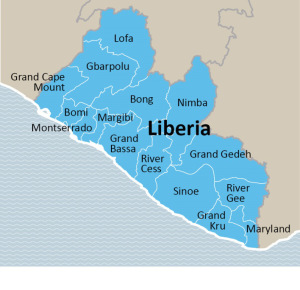
There’s not much to add without risking repeating myself. Let me just briefly mention what I consider the triple motive of the perpetrator(s): first, to intimidate the bystander, the perceived enemy; secondly, to make clear that he, the actor, is the strongest, the conquerer, and thirdly, without doubt, there is a religious or superstitious drive, a belief in the supernatural powers of eating the heart of the enemy. Notably the latter motive makes it a ritualistic act, and murder, a despicable crime.
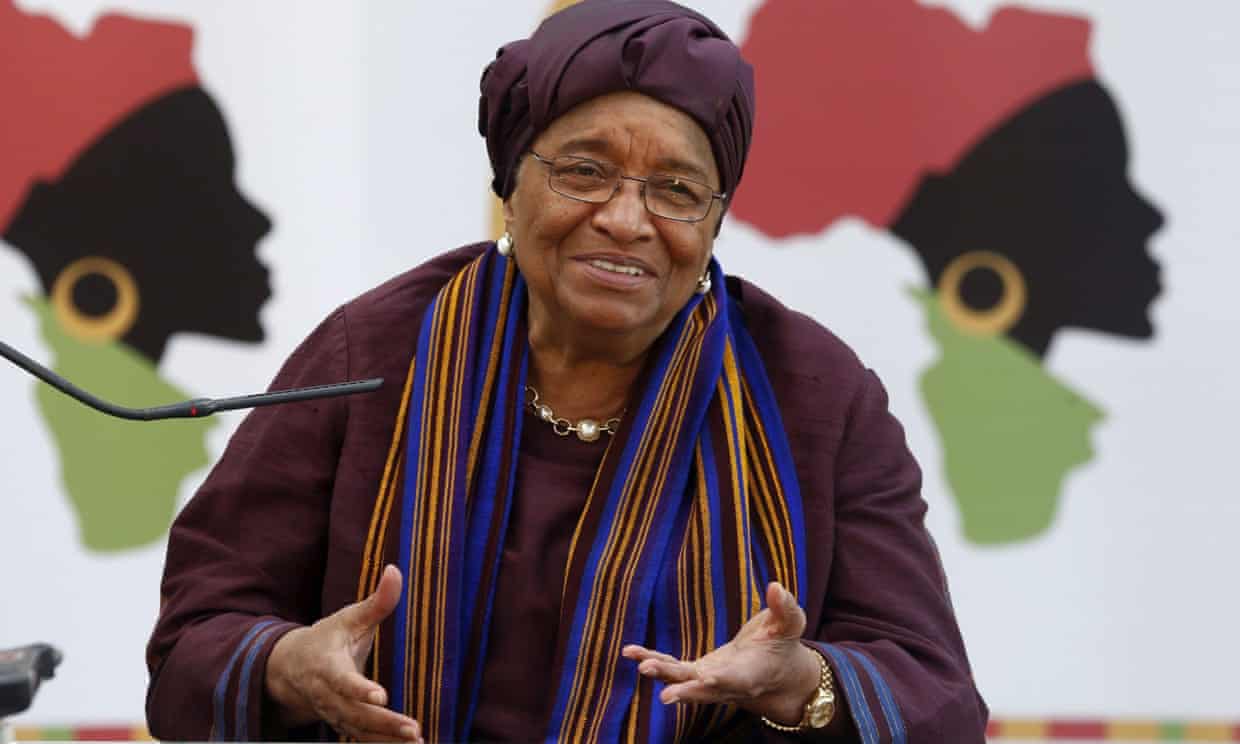
The 2009 report of Liberia’s Truth and Reconciliation Commission (TRC) includes many examples of ritualistic acts committed during the back-to-back civil wars (1989-2003). For reasons only known to herself, President Sirleaf (2006-2018) never implemented the TRC recommendations including the prosecution of the rebel leaders responsible for war crimes and human rights violations, possibly because she was also recommended for a sanction because of her (admitted) support of the NPLF, the rebel organization which started the civil war in 1989. Also President Weah (2018 – present) decided not to start procedures establishing a war crimes court, backtracking on previous statements when still in opposition.
The result is impunity for the perpetrators. Injustice. An insult to the survivors and victims.
Liberians will go to the polls on October 10 to elect a president, vice president and 88 lawmakers. The incumbent president, George Weah, has shown his position when it comes to justice for the victims and survivors. His main challengers are a former Vice President under President Sirleaf, Joseph Boakai, from Lofa County, whose running mate is a political protégé of warlord-turned-senator Prince Johnson – yes, the rebel commander who in 1990 gave his men orders to torture and kill then President Samuel Doe – and Alexander Cummings, who has promised to establish a war crimes tribunal when elected into the highest office.
We’ll closely watch events in Liberia during the coming month(s). (FVDK)
Chopped up with an axe and a heart eaten out: some crimes never die
Published: September 13, 2023 By: Alain Werner – Civitas Maxima
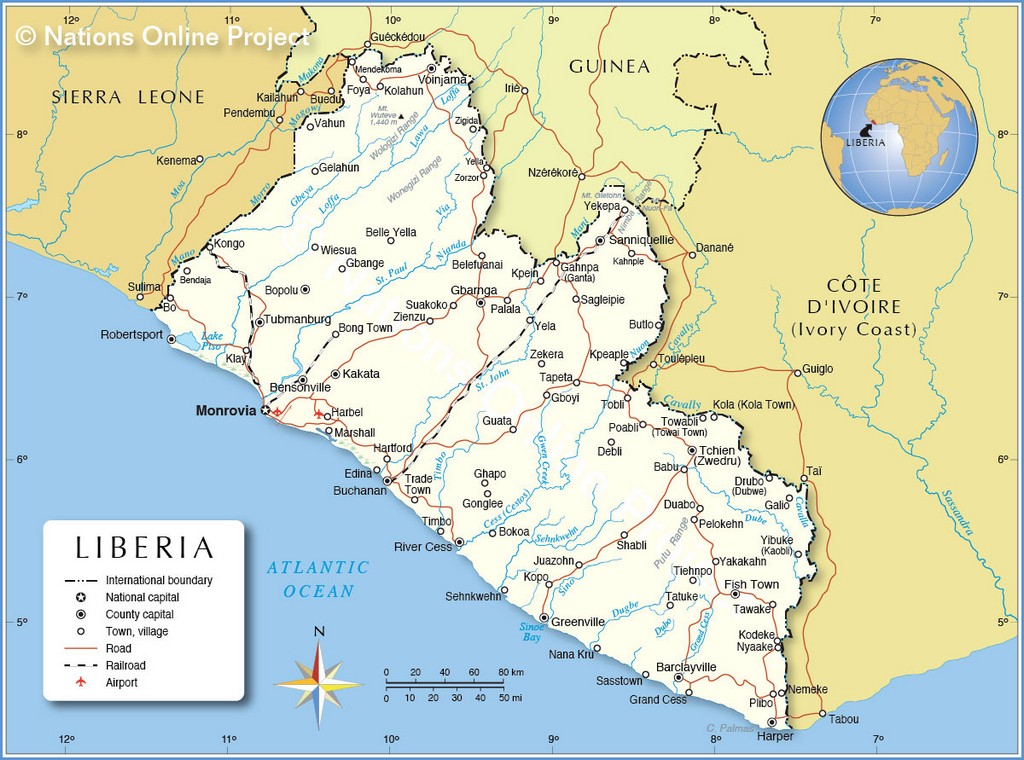
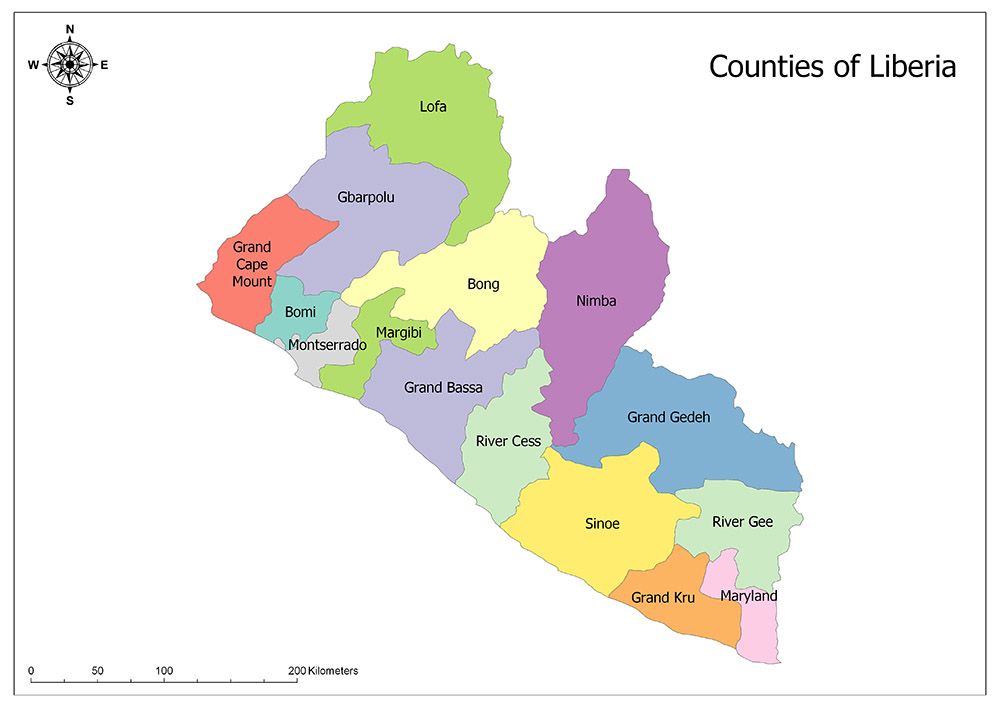
Exactly 30 years ago, in the summer of 1993, a group of rebel soldiers sowed unheard-of terror in the town of Foya, in the small West African country of Liberia, then ravaged by civil war.
Here, 450 kilometers north of the capital Monrovia, a pious man respected by his community had the courage to denounce the rebel group that occupied the premises, ULIMO (United Liberation Movement of Democracy for Liberia). He did so to a humanitarian group, and told them that ULIMO was responsible for the looting of a hospital financed by humanitarian aid.
Once the foreigners had left, the pious man was taken to what was then used as an airstrip and his thorax was cut out by the rebels, his heart extracted and eaten in front of the population. “Try ULIMO, your heart” – which could be translated as “Defy ULIMO, we’ll take your heart” – was one of the slogans used to terrorize the population, a slogan that some civilians who survived that inferno still remember.
The most bloodthirsty of the ULIMO commanders, who opened the pious man’s chest with an axe and spread his killing spree to Foya, was known by the war nickname of “Ugly Boy”, despite his handsome features. The local population, who spoke a different dialect than the ULIMO soldiers, had nicknamed this commander differently among themselves, so as to be able to alert each other to his arrival without being understood by the rebels. They called him “Saah Chuey”, or “the man with the axe” in the Kissi language, as this commander was famous for chopping up civilians with his axe.
“Ugly Boy” was never tried for his ignominious deeds. Indeed, legend has it that he died by popular vindication, having been recognized in Guinea by refugees who had fled Liberia. However, if he were still alive today, “Ugly Boy” would still not have been tried in Liberia.
Indeed, in August we will be celebrating 20 years since the end of the wars in this country, and yet no one has been tried by a court in the country; the government and the United Nations having done nothing for the forgotten victims of Liberia. Despite the fact that a national Truth and Reconciliation Commission recommended in 2009 that the main players in the war should be brought to justice, and that at least 250,000 people lost their lives during these bloody conflicts between 1989 and 2003.
However, on Thursday June 1, 2023, the Federal Criminal Court of Appeal in Switzerland convicted a man, Alieu Kosiah, of participating in the axe murder of the Pious Man. Jurisdiction was given in our country because Mr. Kosiah had been resident in Lausanne since the late 1990s. The conviction came exactly 30 years after the events, and was handed down in Bellinzona, seat of the Federal Criminal Court, some 7,000 kilometers from the scene of the crimes, Foya.
Alieu Kosiah had already been convicted in June 2021 by the Criminal Court for multiple acts of war crimes, including having eaten a piece of the pious man’s heart in the company of “Ugly Boy”. At the time, however, he was found not guilty of the axe-murder, the first judges considering that he had not played an active role in this crime.
The appeal judges decided otherwise and sentenced Alieu Kosiah for complicity in the murder of the pious man, an act qualified as a war crime and a crime against humanity. During the reading of the verdict, the President of the Court, Olivier Thormann, explained that, according to the Court, Alieu Kosiah had handed the pious man over to “Ugly Boy” to be taken to the Foya airstrip, knowing full well what would happen next.
This appeal judgment marks Swiss legal history, as it is the very first conviction in our country for crimes against humanity. It now opens the way for prosecutions in Switzerland for such crimes, even if committed before 2011 and the entry into force of the new provisions of the penal code.
As a lawyer and Director of Civitas Maxima, since 2014 I have represented several Liberian victims in this case alongside Me Romain Wavre, including a friend of the pious man who was present at the scene and witnessed his ordeal, having himself been a victim of ULIMO crimes.
Our clients and other victims have shown exceptional resilience, dignity and courage. Most of them came to Switzerland three times to testify throughout the proceedings, and overcame the obstacles posed by the Ebola epidemic in 2014-2015 and the Covid-19 pandemic in 2020-2021 to finally obtain justice.
War crimes and crimes against humanity are unique in that they “never die”. Indeed, because they concern the international community as a whole, these offences are not extinguished by a statute of limitations after a certain number of years, as is the case for most ordinary crimes. Prosecutions for war crimes and crimes against humanity are thus theoretically possible as long as the person accused of committing them is alive and evidence exists, theoretically even if the victims are all dead. Just as the forgotten victims of Liberia obtained justice in Switzerland in 2023 for crimes committed so far away in 1993, victims of international crimes committed during current or recent armed conflicts must never lose hope. Even if we must do everything to ensure that they obtain justice before 2053 for the crimes they have suffered.
The article first appeared in French on Heidi News on the 16th of July, 2023.
It is not the first time that election campaigns are accompanied by a rising number of ritual murders – or ‘muti murders’, as they are called in Southern Africa. Already in a previous posting, on June 19, 2018 I drew attention to the link between elections and ritual killings in this country.
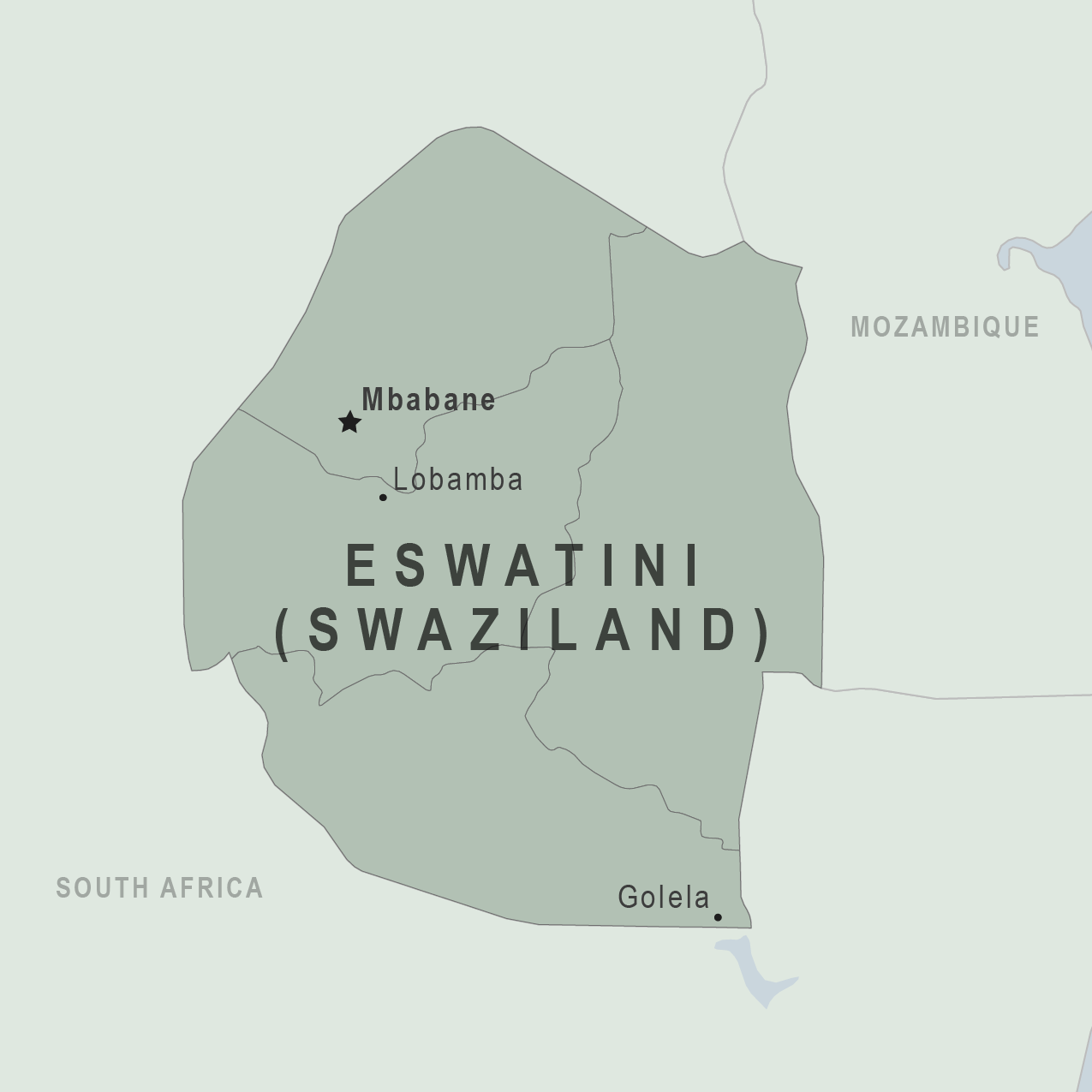
Swaziland (eSwatini) has a long history of ritual murders. In the recent past, in 2003, King Mswati III urged Swaziland’s politicians not to engage in ritual killings to boost their chances in the general elections later that year. Five years later then Prime Minister Absalom Themba Dlamini warned aspiring members of parliament against committing ritual murders to win the vote. In my 2018 posting I revealed that nothing had changed for the better. For briefness sake I further refer to my 2018 posting.
When will it end? What’s the use of repeated warnings? Isn’t it a crazy situation, we’re in the third millennium, and superstition is still rife in a country where democratic elections are being organized.
However, the democratic nature of elections in eSwatini / Swaziland is not what one would expect. Past elections in the kingdom where king Mswati III rules as an absolute monarch, have been characterized by a lack of transparency whereas according to Wikipedia the full results of both the 2018 and 2013 elections have never been published. (FVDK)
Swaziland: King Mswati III frowns at rising number of ritual murders
Published: July 16, 2023 By: NKOSINGIPHILE MYENI , Swaziland Observer
His Majesty King Mswati III is disheartened by the rising number of cruel deaths occurring around the country.
Most of the deaths were those that seemed to be ritually associated as were described as the worst kind of evil.
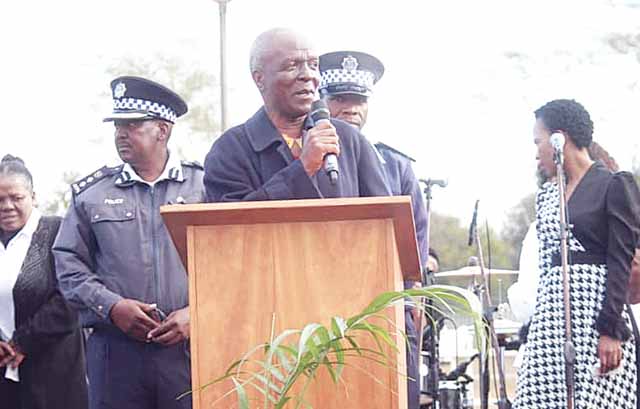
This was shared yesterday through the King’s representative, Minister of Housing and Urban Development Prince Simelane, in one of the biggest prayer services in the country.
The national prayer for the national elections brought together church leaders from the three church mother bodies, being the Council of Swaziland Churches, Conference of Churches and the League of Churches.
There were also other Cabinet ministers, church members of different denominations as well as members of the public.
Rendering his speech, the prince shared a story in the Bible in Genesis 6 verse 6 whereby God showed His regret by creating a person and further said that He was grieving in his heart by the evil that people do.
The King said in just a short space of time spine-chilling deaths have been reported whereby he further depicted the cruelty with which the victims died.
He first referred to an incident which occurred early in the month at Nkoneni in the Shiselweni region whereby the body of a 26-year-old woman was found with multiple stab wounds, her eyes gouged out and her throat slit.
“Let me just point out to two or three of these in the country. Such cruelty Maswati! If you wonder why God is regretful about a person, again just recently, a boy went out from his home to buy goats but he was stabbed and killed.
“His throat was cut while he was alive and could feel it. They placed a tyre on him, doused him with petrol and set him alight,” he said while narrating that it was not only the events that were seen on television that showed cruelty.
He added, “The God of love saw the evil in people on earth. He saw that their hearts and thoughts were evil and regretted why he created them.
Tense This may seem like a past tense but God forever regrets why he created a person, why? because of their sins.”
The King went further and referred to another incident. He said in Malkerns just this week, another man was found dead with stab wounds as well as a slit throat.
He did not spare femicide whereby he said such cases were widely reported in the media. According to the United Nations (UN) Women, femicide is a hate crime which is broadly defined as the intentional killing of women or girls because they are female.
“In our nation we read in the newspapers that men kill women with cruelty. They kill their wives, girlfriends and have also started killing their own children. “Therefore, we are here to pray for elections so that they go smoothly,” he said.
Referring to other countries during elections, the King said violence was also rife whereby he said it was common to hear that political parties fight one another to the extent that people are shot and assassinated while others have their houses burnt.
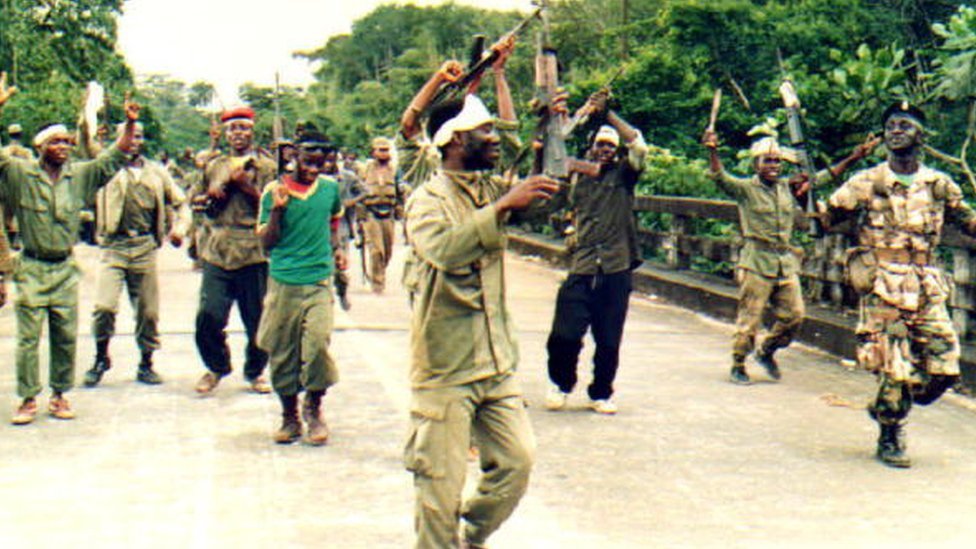
A former ULIMO commander stands trial in France accused of war crimes, human rights violations, murder and cannibalism.
The rebel fighters pictured here are not related to the story below
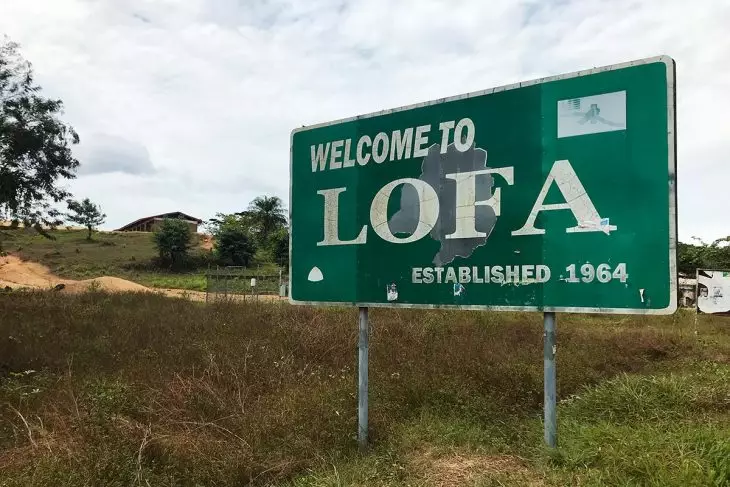
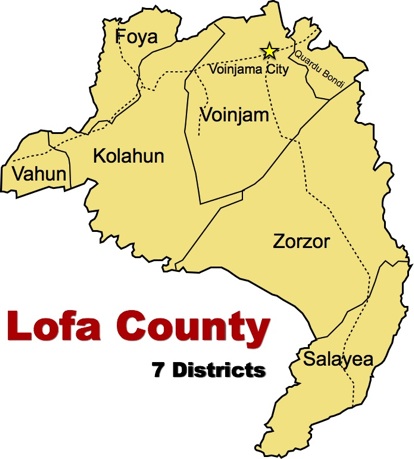
For shortness sake reference is made to Civitas Maxima’s monitoring of the arrest and trial of Kunti Kamara, a former ULIMO commander who was arrested in France in 2018. Kunti Kamara is accused of war crimes and human rights violations including torture, rape, murder and cannibalism committed during Liberia’s first civil war (1989-1997) in Foya, Lofa County, Liberia. His trial started in Paris/France on October 10.
As far back as the 1970s, President William Tolbert (1971-1980) condemned ritualistic murders (‘An eye for an eye‘) and refused to grant clemency to seven convicted ritual murderers in what was perhaps Liberia’s most notorious ritual murder case (‘the Harper Seven‘). In 2005, the Head of the LNTG, Gyude Bryant, warned presidential candidates not to commit ritual murders to boost their chances. President Ellen Johnson Sirleaf (2006-2018) on more than one occasion spoke out against ritualistic murders. In 2017 people in Bong County protested against the ‘election year ritual killings’. More recently, during the Weah Administration (2018 – present), Liberia is again confronted with a wave of mysterious deaths, unexplained disappearances and ritual murders which has led politicians, religious leaders, civilians, to condemn these practices, urging President Weah to act.
Kunti Kamara is not the first or only rebel commander who’s being accused of ritual murder and cannibalism. The Truth and Reconciliation Commission mentions in its 2009 Final Report that hundreds of Liberians were murdered for ritual purposes during the two civil wars. In his book The Mask of Anarchy (1999), the late Stephen Ellis accuses the leader of the National Patriotic Front of Liberia (NPFL) who started Liberia’s first civil war, Charles Taylor, of drinking human blood during a juju ritual. Also Gibril Massaquoi, a RUF commander in neighboring Sierra Leone and a key-witness in the SCSL trial of warlord-turned-president Charles Taylor, was accused of murder for ritual purposes, but acquitted in April (2022). (webmaster FVDK).
“I would never eat human heart” – Kunti Kamara denies accusation before a French War Crimes court
Published: October 18, 2022 By: Prue Clarke, Front Page Africa – Monrovia, Liberia
PARIS, France – The former Ulimo commander Kunti Kamara, on trial here for war crimes and crimes against humanity in Liberia’s civil wars, had his first chance to make a substantive response to the allegations made against him in the first five days of this trial.
Under questioning from the judges, civilian lawyers and prosecution lawyers Kamara denied all the accusations that victims have made against him of torture, rape, murder of civilians and “barbarism” in the town of Foya in Lofa County, Liberia between 1993 and 1994.
Kamara told the nine-person jury and four alternates that the accusations of cannibalism – that he roasted and ate the heart of a civilian who had allegedly reported his crimes to international observers – made him sick.
“Since I was arrested nothing bothered me in the trial like what they’re talking about now. Eating human beings,” Kamara said. “Even if I spend 100 years in jail I will not admit to eating a human being’s heart. Each time I hear it I want to vomit.”
“Since I was born until today I never eat pork,” said Kamara a Muslim. “Why should I eat human being heart? I have nothing to say. I am innocent. I don’t know them today. I don’t know them tomorrow.”
Kamara denied that he had ever knew anyone who had said they ate human heart including in rituals of the Poro, a traditional African society.
“Since I was small that is a rumor in the ear,” he said of Poro human sacrifice and consumption of human flesh. “But I never met anyone who said they ate heart.”
Kamara insisted that the Ulimo committed no atrocities against civilians in the four-month period he was with them in Foya though he conceded Ulimo may have committed atrocities elsewhere during the war.
He said Ulimo in Foya was under the ultimate command of Ulimo Commander Dekau. Kamara said his mandate was only as battalion commander in charge of platoons “on the frontlines”. He denied any leadership role in the town over civilians.
Kamara acknowledged Ulimo fighters that victims have identified in this trial “Ugly Boy”, “Fine Boy” and Alieu Kosiah, convicted of war crimes in Switzerland in 2021, were all with him in Foya but Kamara claimed he hardly ever saw them.
Kamara blamed the accusations that have brought him to trial here were part of a “plot” orchestrated by “a clique” led by Fayah Williams, the late deputy director at Global Justice and Research Project, the Liberian justice activists.
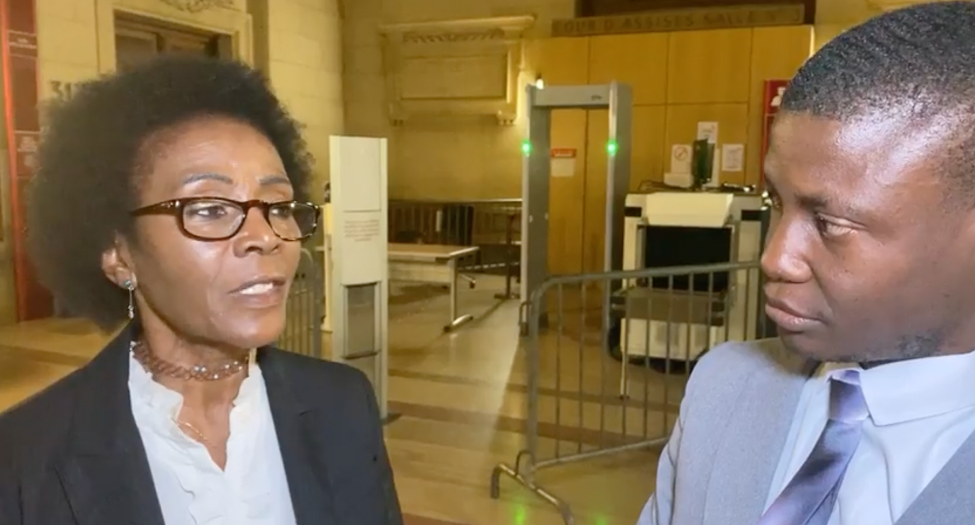
TRC Commissioner Massa Washington is interviewed by New Narratives’ Anthony Stephens after her testimony at the Paris trial
Late in the evening Massa Washington, the former commissioner of the Truth and Reconciliation Commission, gave a powerful testimony that could prove decisive in the trial.
It was designed to answer questions that jurors may have had about whether they should be passing judgement on a Liberian for crimes committed 30 years ago in a country a long way away. That was a question French journalists were asking eachother on the sidelines of the trial.
“These trials are important because they give them people of Liberia justice,” an emotional Washington told the jury. “They give us hope that one day we’ll be able to get justice with our own judges, our own prosecutors, on our own soil. In the meantime we are grateful that some of the people who committed these gross violations of human rights who are in this country, in the US, in every country in the world where they find them they can try to bring them to justice. In the absence of our government addressing accountability these trials are the Liberian people have.”
Washington thanked the jury.
“It sends a message that we belong to the universal human race,” Washington said. “It says that the world has not forgotten Liberia. It says that we all share that common human dignity. We have the same needs. We feel the same pain. We thank you for the opportunity to tell some of these stories. I hope this has provided an important clarification for why this trial is important.”
Washington told some of the horrors she had personally witnessed as a journalist in Monrovia during the first civil war. The jury was riveted by her testimony which made clear that the testimony they were hearing from witnesses here was just a fraction of the myriad atrocities that had been committed during the war. She told of rapes of girls as young as five and of elderly women. She said her work with women made it clear to her than many of the elderly women had not come forward to the TRC hearings because of the stigma.
She told the story of an 82-year-old woman who told her she was made a war wife.
“’I was raped all the time by boys who could have been my grandchildren,’” Massa quoted the woman as saying. “Her story is just one story that represents thousands of stories. The rebels were so bad that when people were on checkpoints trying to get away from the fighting the rebels were raping the wives in front of the husbands. They even forced sons to have sex with mothers in front of the family to destroy the men. They took the young girls away.”
Earlier in the day the fifth victim to testify against Kamara detailed the alleged torture, killing and cannibalism of a schoolteacher in Foya that all victims have claimed was directed by the defendant.
He also talked more broadly of the suffering of people in Lofa during Ulimo’s occupation of the town. His telling of the experience of the women he had planned to marry was a harrowing example of the broader suffering of the people.
“M. was my girlfriend and Ugly Boy took her as a sex slave,” the victim told the Paris court talking of the now deceased perpetrator that many victims have alleged was Kamara’s lieutenant who followed his orders to commit many of the crimes. The court has ordered press to withhold victims’ names for their security.
“This was another blow to me,” the victim told the court. ”I really planned to marry her. The first time I saw her after the war, it was painful, but it had happened. She was not at fault. I saw her but the stigma was too heavy. I could no longer take her as a wife. By tradition anyone who takes a wife after that is easily rejected from society. In addition, because of her time as a sex slave, she conceived. I am feeling it for her now because her situation is too deplorable.”
The trial continues Tuesday with more testimonies from victims about the murder of a woman in Lofa.
This story is a collaboration with New Narratives as part of the West Africa Justice Reporting Project.
Liberia: “You are Kundi. You killed my sister” A third victim identifies Kamara as perpetrator in War Crimes Trial
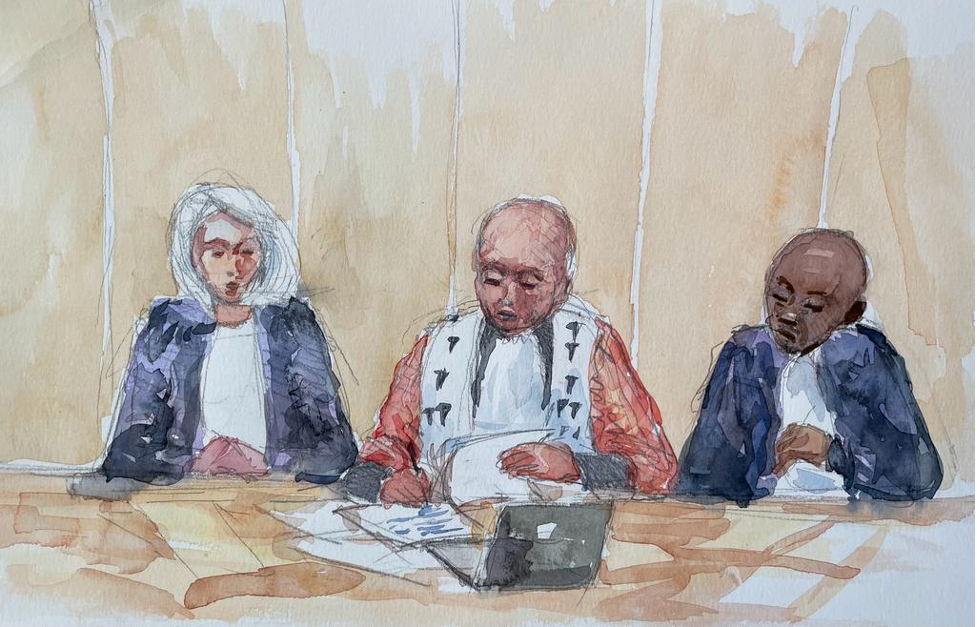
The three judges in the trial of Kunti Kamara in Paris, France (Credit: Leslie Lumeh/New Narratives)
Published: October 19, 2022 By: Anthony Stephens and Prue Clarke with New Narratives, Front Page Africa – Monrovia,
PARIS, France – On Tuesday a third victim identified Kunti Kamara, on trial for torture, cannibalism and crimes against humanity in the Paris Court, as “Co Kundi” the rebel commander who allegedly committed atrocities in Foya, Lofa County, Liberia.
The man was one of four plaintiffs who have brought the case against Kamara here in Paris, France where Kamara was living when he was arrested in 2019 after French investigators built a case against him.
“You are Kundi,” the man said turning to look at Kamara directly, barely containing his obvious emotion and rage. The plaintiff pointed at Kamara who was sitting behind his lawyers in a protective glass case. “I know you very well. You the one that killed my sister.”
The now elderly man told the court Kamara arrived at his house in Foya in late 1993 after the man’s sister’s baby had died. He alleged Kamara gave the family $L100 for their pain.
Soon after that Kamara allegedly ordered the victim’s sick and half naked sister – the mother of the child – dragged from the house. He accused her of witchcraft. The victim said Kamara and his troops had taken over the house for themselves and already had his wife, son and mother in custody at the time. Kamara did not know the man, who was standing with a crowd, was a member of the family.
The victim was overcome with tears as told the court that he had watched as Kamara put three bullets in his sister’s head.
Within months the man’s mother was also dead from illness. The victim blamed Kunti for the grief the murder of his sister had caused her.
“She cried every day,” he said. “So she became sick from not seeing my sister.”
The lawyer for the civil parties asked the victim if he had anything to say to Kamara but he took the opportunity to issue a warning to the judges instead.
“I’m very happy to see all the officers to take care of Kundi,” he said pointing to the court officers who accompany the defendant at all times. “This government should not leave Kundi to come back to Liberia.”
Kamara rejected all the allegations as he has done consistently throughout this trial.
“I’m just shocked,” an agitated Kamara told the president of the court Thierry Fusina. “I don’t know him. These people, it’s my first time to see them in my life. I don’t know them! They are lying on me. I’m not a criminal.”
Earlier in the day another witness to the alleged murder of the sick woman accused of witchcraft gave evidence that appeared to contradict testimony that he gave to an earlier investigating judge in the case.
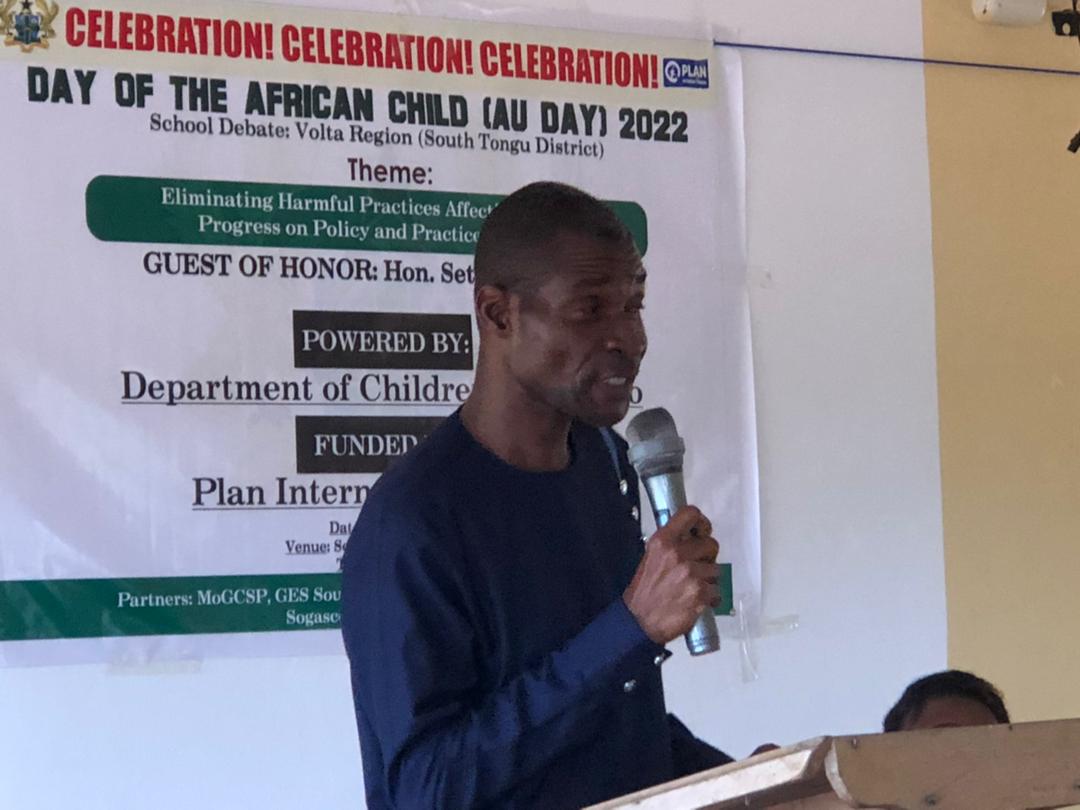
Also in Ghana, the Volta Region office of the Department of Children under the Ministry of Gender, Children and Social Protection (MoGCSP), in collaboration with Plan International, Ghana, celebrated this year’s African Union Day of the African Child.
Mr Seth Kwasi Agbi, the District Chief Executive for South Tongu, in a keynote address, condemned all harmful acts such as child trafficking, child labour, and ritualistic murders which also victimize children. (webmaster FVDK)
NHRC advocates strong mechanisms to fight harmful practices against children
Published: June 17, 2022 By: Michael Olugbode, This Day – Nigeria
The National Human Rights Commission (NHRC) has reiterated the need to devise and strengthen national accountability mechanisms that will deter harmful practices against children, so as to enable them to attain all-around development in life.
The Executive Secretary of the commission, Chief Tony Ojukwu, stated this in his welcome remarks at the commemoration of the 2022 Day of the African Child (DAC).
He noted that the celebration was an opportunity to take stock of what has been done with regards to the adoption of policies and practices targeted at eliminating harmful practices affecting children in Nigeria.
Ojukwu, who was represented at the event by the Director of Monitoring Department, Mr. Benedict Agu, said the 2022 theme of the celebration: ‘Eliminating Harmful Practices Affecting Children: Progress on Policy and Practice since 2013’, is appropriate as it seeks to address the peculiar human rights challenges affecting children.
He noted that these challenges, are negative harmful practices such as early/forced marriage, female genital mutilation, child trafficking among others.
He stated that against this background, the commission’s role in advancing the campaign to end harmful practices affecting children is hinged on its mandate to promote, protect and enforce the rights of all persons in Nigeria.
According to him, “Notably, the commission was a critical partner in the advocacy for the passage of the Child’s Rights Act 2003, and has been involved in continued advocacy for its adoption into Child Rights Laws of about 26 states of the federation.
“It is also a member of the State Child Rights Implementation Committee of several states in Nigeria and has continued to advocate for the mainstreaming of children’s rights in relevant policies of the government.”
Ojukwu stated that the commission has further prioritised Child Rights in its work through the creation of the Department of Women and Children, and the thematic team on the Rights of the Child, which have enabled it to take action against pervasive child rights abuses such as child marriage, Female Genital Mutilation (FGM), Sexual and Gender-based Violence (SGBV), infanticide, child trafficking among others.
In her key message, a member of the African Committee of Experts on the Rights and Welfare of the Child, Ms. Aver She said the commemoration of DAC is an opportunity to sensitise duty bearers on the importance of engaging children in their own issues and promoting participation as well as inclusion in line with the principles of child participation.
Gavar, who is also the director of Human Rights Education and Promotion in the commission, said the focus of the DAC 2022 is also to respond to the high prevalence of harmful practices affecting children in different parts of Africa, including rape, FGM, child marriage, infanticide among others.
She urged the government to strengthen its child protection system through increased budgetary lines across sectors dealing with child rights implementation and through the establishment of one-step centres for integrated response to child survivors of rape, child marriage, FGM and all forms of violence against children.
In her remarks, the Minister of Women Affairs, Dame Pauline Tallen, disclosed that the ministry has made progress in spearheading a range of policy documents to address harmful cultural practices, like the implementation of the Child’s Rights Act (CRA) 2003, National Guidelines on Establishment of Child Care Institutions, and National Strategy on Elimination of Child Marriage.
The Volta Region office of the Department of Children under the Ministry of Gender, Children and Social Protection (MoGCSP), in collaboration with Plan International, Ghana, have celebrated this year’s African Union Day of the African Child with a call to end harmful practices affecting children.
In an address, Mr Israel Akrobortu, the Volta Regional Director of the Department of Children, said some traditional customs and practices conflicted with children’s rights and were harmful to their development.
“Child marriage and Female Genital Mutilation are two of the most discriminatory harmful cultural practices that have been committed regularly over long periods that some communities and societies have come to accept,” he said.
Mr Akrobotu called on duty bearers to take urgent steps to stop such negative practices, which were affecting children, especially female genital cutting, to protect the vulnerable, especially girls from all unnecessary and dangerous practices.
Mr Seth Kwasi Agbi, the District Chief Executive for South Tongu, in a keynote address, said it was important to focus on the vital efforts of communities and child rights activists working on policies and practices to eliminate “these harmful practices affecting children on the continent.”
He explained that the acts, such as child trafficking, child labour, ritual murder, and defilement, if not curbed and eventually eliminated, would be detrimental to the growth and development of the continent.
Mr Alfred Dzikunoo, Programmes Coordinator, and a representative from Plan International, Ghana, said Plan Ghana had made many contributions to end the canker against the Ghanaian Child.
The interventions include empowering girls with life skills, knowledge and networks to become empowered agents of change in their own lives, engagement of duty-bearers such as GHS, DOVVSU, and DSW to improve education on child marriage FGM, and child labour.
Torgbi Atsugah Sogah Il, a Divisional chief from Fieve Traditional Area, implored participating students to be good ambassadors and serve as role models for other children in their communities as well as cultivate the habit of championing the right to education.
The 2022 celebration was on the theme: “Eliminating Harmful Practices Affecting Children: Progress on Policy and Practices since 2013.”
Comboni Senior High Technical School garnered 18 points against 15 by Sogakope Senior High School (SOGASCO) to win the debate on the topic: “Has the policies on harmful socio-cultural practices affecting children since 2013 curbed the menace,?”
The “Day of the African Child” dates back to 1991 when the African Union (AU) initiated a remembrance of the children who lost their lives in a peaceful protest in Soweto, South Africa, in 1976.
The event attracted school children, officials from the South Tongu District Education Directorate, teachers, local government staff, and traditional rulers within the South Tongu District.
The article below refers to statements made by Joseph Marzah, a former rebel-general and a former key ally of Gibril Massaquoi. Joseph Marzah, commonly known as “Zizar Marzah” said that the Finnish District Court got it wrong when it acquitted Massaquoi of charges of war crimes and crimes against humanity allegedly committed in Liberia.
The reason for including Marzah’s observations and denial is to demonstrate the complexity of war crimes courts and the handling of accusations against suspected perpetrators of war crimes including ritualistic murders. The fact that during Liberia’s civil war(s) ritualistic activities including ritual murders have been committed is not disputed. For shortness sake I may refer here to the Final Report of Liberia’s Truth and Reconciliation Commission released in 2009, which report provides ample examples of these horrific crimes.
(To be continued, see my May 24 posting) (webmaster FVDK)
Liberia: Key Massaquoi Ally Says Finnish Court Got it Wrong
Published: May 17, 2022 By: FrontPage Africa – FPA Exclusive by Anthony Stephens with New Narratives
MONROVIA – A key former ally of Gibril Massaquoi, the Revolutionary United Front commander, says a Finnish District Court got it wrong when it acquitted Massaquoi of charges of war crimes and crimes against humanity allegedly committed in Liberia.
Joseph Marzah, commonly known as “Zizar Marzah”, was a fierce general with then-president Charles Taylor’s forces in the period Finnish prosecutors alleged Massaquoi conducted his crimes during a trial that lasted more than a year. Marzah was a key figure, accused repeatedly by witnesses of atrocities allegedly committed with Massaquoi in Lofa County. In an exclusive interview with New Narratives last week at his residence along the Monrovia-Robertsfield highway, Marzah insisted Massaquoi was among the RUF troops Taylor sent to Liberia to help defend his government against the uprising by the Liberians United for Reconciliation and Democracy (LURD) rebel group that would eventually drive Taylor to resign in August 2003.
In an 850-page ruling, the Finnish judges found there was “reasonable doubt” as to whether Massaquoi, who denied the charges, was in Liberia when the alleged crimes took place. They acquitted Massaquoi of all charges. Prosecutors plan to appeal.
“Gibril Massaquoi fully took part in war here,” Marzah said listing the Lofa towns he was with Massaquoi. “He passed through the towns of Zorzor, Fessibu and Vasala.”
Marzah said Massaquoi was decorated with the rank of Captain at Taylor’s direction because of his strong performance on the frontlines of battle.
“Gibril Massquoi was assigned to me. When we sent him for our logistics like arms and ammunition, he went for them and brought them to us,” said Marzah. “Where there was intense fighting, he joined us to fight. In 2001 and 2002, he was with us, and we battled LURD in Chicken Soup Factory, Double Bridge, ELWA and Shefflin.”
Marzah’s claims back the allegations put forward by Finnish prosecutors that Massaquoi had been active in Liberia’s second civil war between 1999 and 2003. The indictment alleged Massaquoi committed rape, torture, ritual murder, torture and recruitment of child soldiers in villages in Lofa County in the years 2000-2002.
In the most shocking crime heard during trial, Liberian witnesses testified that dozens of women and children were forced into a kitchen building that was set alight, burning them to death.
Marzah, no doubt mindful of his own risk of prosecution, did not concede that he and Massaquoi committed any crimes. But he insisted Massaquoi was with him, as many had witnesses testified, in Lofa during the 2001-2002 period.
“If Gibril Massaquoi denies that he was with me, NPFL, I would like for us to sit face-to-face (in court) so that I can question him like the scenario between Taylor and I. I fear nothing.”
However, Marzah cast doubt on the most contentious prosecution accusation: that Massaquoi escaped a UN-backed safehouse in Freetown between June and August 2003 to fight for Taylor in the Waterside area of Monrovia.
“In 2003, I only heard that he came (from Sierra Leone) and went back. I was assigned to Grand Cape Mount County at the time.”
Marzah claimed Massaquoi escaped Liberia in 2002 after he stole from Taylor.
“After we had made two trips (with two jars of diamonds) along with the logistics to Taylor, he left us because he ran away with the third jar of diamonds,” said Marzah. “When the order came that if we saw Gibril Massaquoi, we should execute him because of the diamonds he stole and ran away with, I didn’t see him then.”
Massaquoi’s Lawyer, Kaarle Gummerus denied commenting on Marzah’s allegations, telling this reporter in a WhatsApp message “the defense does not feel the need to comment on Mr. Marzah’s allegations”.
Marzah said he was approached by representatives of the Finnish investigators in the case and was willing to testify. He did not say why he was not called to give evidence.
In a WhatsApp message Tom Laitienen, the Chief Prosecutor for the case said “We considered Marzah as a witness, but practical issues hindered us from hearing him. We will most likely consider him again if he agrees to testify.”
When pressed as to what the practical issues may have been Laitinen said “unfortunately, I cannot discuss them in detail, but they include his possible role in the suspected crimes and his role as a witness to the Special Court.”
It is not clear that Marzah’s testimony would have made a difference in the verdict. The court found many of the witnesses, including those who claimed to be ex-soldiers of Charles Taylor’s army, were unreliable. It said they had provided contradictory and inconsistent statements between the investigation and the trial. The court found it likely they had been influenced to a degree.
“The witnesses’ accounts have been very similar in some respects, and in some respects they have changed in court in the same way compared to the pre-trial phase,” said the ruling. “This has been the case in particular with regard to the time of the events. This suggests a kind of collective processing of the facts on the basis of which the witnesses formed their perceptions, or at least external influences. In some respects it has been difficult to distinguish between what was based on the witness’s own observations and what was otherwise based on information obtained by the witness. These factors undermine the reliability and relevance of individual reports as evidence.”
While the court was persuaded that Massaquoi, whose testimony played a key role in the conviction of Taylor and a dozen top rebel leaders in the Special Court for Sierra Leone, held very high rank in the RUF, it was not convinced he committed war crimes in Liberia.
The Court’s ruling was almost entirely about inconsistencies in the witnesses’ testimonies. It cited as examples, where some of the witnesses were not exact about key dates and names of individuals who may have carried out crimes. In one instance, witnesses accused Massaquoi of being responsible for mass killings in Kamatahun, Lofa County. In another instance, they attributed the crimes to Marzah.
“It has emerged from several witness accounts that “Zig Zag” Marzah or “Stanley” [another Taylor commander] had been responsible for the burning of people in the Lofa area, especially in Kamatahun.”
Marzah Denies Allegations
Marzah, now 64 and living in a remote part of his native Nimba County, denies he committed any atrocities.
He claimed to have provided safety for members of the Gbandi tribe, who were allegedly burnt alive in buildings, because, he claimed, his wife was a Gbandi woman. Marzah denied he was in the town when the alleged killings took place.
“It was Benjamin Yeaten [another top Taylor commander known as “Chief 50”] who sent Brigadier General Gourtor, [known as “Idi Amin” after the late Ugandan President], “Butu Lazen” and the late “Busy Boy”. They went to Kamatahun Hassala to carry out those executions,” Marzah alleged.
Yeaten, whose whereabouts are unknown, was mentioned many times by witnesses. They told the court Yeaten was very close to Taylor and coordinated the operations of government and RUF forces. Taylor, who is currently serving a 50-year sentence in a British jail for aiding and abetting Sierra Leone’s civil war, funded the operations of the RUF by giving them arms and ammunitions in exchange for diamonds according to the Special Court.
Marzah said there were times that both RUF and Taylor’s forces backed up each other, depending on the scale of the attacks they experienced from opponents.
Special Court former Trial Attorney Backs Marzah’s Comments
Marzah’s comments were backed up by Chris Santora, a former Trial Attorney for the UN-backed Special Court for Sierra Leone and on the Taylor trial.
“Whoever really understands well the history of the links between Charles Taylor and the RUF trial knows that top RUF commanders were often in Liberia interacting at many levels with Benjamin Yeaten and Charles Taylor throughout 2000 and 2001,” said Santora.
“The reasons were many not least of which was Taylor’s use of the RUF in his own war in Liberia but also this was when the diamond pipeline was at its peak as the RUF had firm control of the diamond areas of Kono. Many of these RUF commanders including Massaquoi were back and forth frequently through 2001 as they were running diamonds. (sometimes their own side deals others through Taylor) The finding of the Finish District Court which says that Gibril Massaquoi was not anymore traveling at all to Liberia after June 2001 does not accord with the overwhelming evidence I myself have seen. It doesn’t make sense in the larger context of events at that time period,” said Santora.
Marzah Supports a War Crimes Court for Liberia
Once considered a Taylor trusted general, Marzah, dismissed allegations that he betrayed his former boss. But he said he did oppose Taylor by the end. He was “killing our people slowly,” Marzah said. He blamed Taylor for the murders of a long list of individuals, including Enoch Dogolea, Taylor’s first Vice President and Samuel Dokie, a leading opposition politician with the Unity Party at the time.
Marzah is ranked 66th on a list of 100 most notorious perpetrators recommended for prosecution for gross human rights violations by Liberia’s Truth and Reconciliation Commission. But in the interview he expressed support for a war crimes court and said he was willing to appear.
“I prefer it to be in Liberia,” he said. “There are some wicked people. Some did nothing, some went in the government because they have connections. Some carried out destruction. So, it’s better for the war crimes court to come to sifter all of us. I am willing for it to come. That’s the time we all will explain everything in detail.”
Prosecutors will file a motion to appeal the District Court’s acquittal in coming weeks.
This story was produced in collaboration with New Narratives as part of its West Africa Justice Reporting Project.
Gibril Massaquoi is a former commander of the Revolutionary United Front (RUF), a notorious rebel group in Sierra Leone responsible for a long list of atrocities, human rights violations and war crimes. Massaquoi is a Sierra Leonian national and was arrested in Finland in March 2020; accused of war crimes and crimes against humanity allegedly committed in Liberia.
Gibril Massaquoi played an important role – as a key-witness – during the trial of warlord-turned-president Charles Taylor who was found guilty of war crimes and human rights violations in Sierra Leone and sentenced to 50 years in prison by the Special Court for Sierra Leone (SCSL).
For briefness sake I refer to the following site for more background information on this person: Liberia: Past and Present of Africa’s Oldest Republic, click here.
Highly recommended reading is also Justice Info Net, in particular Thierry Cruvelliers’ contribution: THE MASSAQUOI AFFAIR: SPECIAL REPORT ON THE JUDAS OF SIERRA LEONE (PART 1 and PART 2). (webmaster FVDK)
Liberia war crimes: Sierra Leone rebel commander acquitted by court in Finland
Published: April 29, 2022 By: BBC
Gibril Ealoghima Massaquoi denies murders, rape and recruiting child soldiers
A court in Finland has acquitted a rebel commander of rape, ritual murder and the recruitment of child soldiers during Liberia’s civil war.
The court said there was not enough proof to convict Gibril Massaquoi.
The 52-year-old is from Sierra Leone and was a senior member of a notorious rebel group, the Revolutionary United Front (RUF), that also fought in neighbouring Liberia from 1999 to 2003.
He had moved to Finland in 2008 and was arrested two years ago.
Mr Massaquoi was a school teacher when Sierra Leone’s civil war began in 1991. He joined the RUF, quickly rising through the ranks to become spokesman of the group which was notorious for atrocities such as hacking off the limbs of civilians, as well as murder and rape.
But he then gave evidence to the UN-backed Special Court for Sierra Leone set up to investigate war crimes committed in that conflict.
He was relocated to Finland as part of a witness protection programme, which provided immunity for crimes committed in Sierra Leone, but not Liberia.
Prosecutors alleged that in Liberia, Mr Massaquoi had ordered buildings with people locked inside to be torched, and described the widespread rape and murder of civilians, often by enslaved child soldiers.
The ex-rebel said he was not in Liberia at the time.
The Finnish court had decamped to the Liberian capital, Monrovia, for a while to hear local testimony.
Around 250,000 people were killed during the internal conflicts that ended in 2003.
This was the first prosecution over Liberia’s civil war to be partially held in the country, although Mr Massaquoi remained in Finland.
Screenshot – Miatta, former child soldier in Liberia: “I know I killed people” To watch the video, please click on the link mentioned below (under ‘Source’)
Former Liberian President Taylor was convicted by an international criminal court in 2012 of war crimes and crimes against humanity, but that was in connection with the conflict in Sierra Leone. He is serving his 50-year sentence in a prison in the UK.
His son “Chuckie” Taylor was sentenced to 97 years in prison in a US federal court in 2009 for torturing and killing people while he was the head of Liberia’s anti-terrorist services.
Ex-warlord Mohammed “Jungle Jabbah” Jabateh has been jailed for 30 years in the US for lying about his past as a leader of a force that carried out multiple murders and acts of cannibalism.
Yesterday’s post on the alleged recent surge in ritual murders in Liberia and the spike in mysterious deaths is continued today with a cry from a Liberian journalist and pro-child advocate, Fahnie S. Kollie. The author cries for an intervention, be it from local, Liberian authorities, or the international community, to stop the seemingly endless killing of innocent civilians, men, women, children, for ritualistic purposes.
Read her story and plea for help. And – to use Fahnie Kollie’s words: Let’s act together. Either now or never!
Another Liberian who has raised his voice against the silence of President Weah over the wave of ritualistic killings across Monrovia and other parts of the country is Dr. Daniel Cassell.
Dr. Daniel Cassell is the Vision Bearer of the newly certificated People’s Liberation Party (PLP), and also the Chief Executive Officer (CEO)/President of the Dr. Cassell’s Humanitarian Foundation, and Kwenyan Security Firm, operating in Liberia.
I wish to congratulate Fahnie Kollie and Daniel Cassell here for their statements and public intervention. Whereas I commend them, notably for their plea for respect of human rights and their cry for an end to these senseless murders, it is nonetheless important to note that some allegations of ritualistic activities have not been proven even though – it cannot be said enough – every ritualistic murder is one too much. Liberia, unfortunately, has a long history and notorious record when it comes to ritual killings, mysterious deaths, witchcraft and superstition. Previous posts bear ample testimony to this observation.
Warning: some readers may find the graphic details of the description cited disturbing (webmaster FVDK).
Liberia: A Horror Movie – How Did We Get Here?
Fahnie S. Kollie, Liberian journalist and pro-life advocate
Published: September 29, 2021 By: Fahnie S. Kollie – The Perspective, Atlanta/Georgia
Liberia has been known to be a peaceful and calm country since the end of the civil war in August 2003. In fact, it is often referred to as a Sweet Land of Liberty. But is this maxim or aphorism still true today?
Mysterious deaths and ritualistic killings were visible during President Ellen Johnson-Sirleaf’s administration. But why has it drastically increased during this administration? Why now and what’s going on? After the ascendency of ex-Soccer Legend George M. Weah in 2018, Liberians were promised and reassured of a better and safer Liberia; A Liberia where women and children would feel protected and secured; One where the press would be free and citizens would not be haunted because of their individual stance on issues or political affiliation.
A Liberia where the rule of law would be respected and justice would be equally discharged/dispensed to all regardless of status, religion, ethnicity, and background. One that puts the security, safety, and wellbeing of the citizens above all other national priorities.
We weren’t promised a Liberia of terror, horror, and fear as it is being seen today. President Weah’s inaugural speech 4 years ago gave many Liberians renewed hope and assurance of a new Liberia, but are we experiencing that new Liberia? Just few months into Mr. Weah’s Presidency, things began to go the opposite. A big corruption scandal broke out; the infamous alleged missing 16 billion LRD.
After the release of a damning report surrounding this saga which established that over 2 billion LRD was unaccounted for, two Liberian professionals who were declared persons of interest in the investigation mysteriously died. Mr. Matthew J. Innis who was the Deputy Director for Micro-Finance in the Regulation and Supervision Department at the Central Bank of Liberia (CBL) died in an alleged hit-and-run in March 2019.
According to FrontPage Africa, another employee identified as Mr. Kollie Ballah, a general support staff at the CBL, who was believed to be the one that drove one of the trucks with the LD 16 billion from the Freeport, also died in an accident. What seemed like a week’s thing would soon turn into a never ending nightmare for Liberians.
This was the start of another terrifying episode of mysterious deaths, continued disappearances, and ritualistic killings under the leadership of the newly-elected President, George M. Weah. A year later on October 2, 2020, Mrs. Gifty Lama, Acting Manager of Tax Services at the LRA and Mr. Albert Peters, Assistant Commissioner for Internal Audit at LRA were found dead in a vehicle on Broad Street in Monrovia. Two days later, another auditor of the LRA, Mr. George Fahnboto reportedly died in a vehicle accident along the 72nd Boulevard according to FPA. Still dealing with the mysterious deaths of these three auditors, on October 10, the Head of the Internal Audit Agency (IAA), Emmanuel Barten Nyeswa, was also found dead in his compound along the 72nd boulevard.
The death of the four (4) auditors with in a period of two weeks sparked huge fear among Liberians who found themselves in the auditing field and every other sector. People could no longer feel safe to be in the streets at night. An autopsy was conducted and the results were released in November. This created mixed reaction among Liberians including family members of the deceased. At first, the mysterious deaths were just circulating among Liberian professionals especially those in government, but soon, this fearful tragedy extended to every Liberian in the country. A wave of mysterious disappearances and ritualistic killings took center stage in the country.
Shockingly, three boys who were hired by the Proprietor of the St. Moses Funeral Parlor went missing on October 17. Robert M. Blamo, Jr., Bobby S. Gbeanquoi, and Siafa G. Boimah reportedly drowned in a river in Bong County while returning home in canoe which allegedly capsized. Mr. Moses Ahossoushe was accused by some family members of the missing boys of being involved in ritualistic killings but he denied the claim. This incident led to series of protests organized by family members and other concerned Liberians. Up till now, this matter has not been fully resolved.
After a devastating 2020, Liberians expected a boost of security in 2021 to ensure that these mysterious incidences are minimized. Unfortunately, the situation got worse. On March 2, 2021, FPA reported that the body of a woman who was gruesomely murdered was discovered in the 72nd community in Paynesville. According to the police spokesman, Moses Carter, the police was investigating the mysterious death of a 46-year-old woman identified as Florence Massaquoi. Prior to this, the lifeless body of a man believed to be in his 30s was also discovered in the Outland community near the Benson hospital.
Investigation into these cases were still ongoing when another case involving a 22-year-old boy identified as Mordecial Nyemah was reported. He was found in a rubber bush in Plebo Sodoken District with body parts extracted. These numerous cases of mysterious killings have rapidly increased over the past few months and it is alarming.
Just this month of September 2021, there have been several cases of kidnapping and killing of women and men with parts extracted from their bodies. An employee of the LRA reportedly went missing and is yet to be found. On Tuesday, September 14, 2021, the lifeless body of a woman was discovered on a beach on 17th street, Sinkor. The latest incident to occur was involving a woman believed to be in her early 40s. She was discovered dead and half-naked with bruises all over her body in Caldwell on Monday, September 27, 2021. All of these mysterious happenings coupled with the testimonies from some women, who were survivors of kidnapping/abduction for ritual purposes and the startling revelation made by former manager of the Liberia Airport Authority (LAA), have instilled fear in every citizen especially women. Madam Ellen Corkrum accused the Solicitor General of Liberia, Syrenius Cephus and others of being involved in the killing of young virgins for ritualistic purposes, but he denied the allegation.
With everything that is going on which I consider a “Horror Movie”, the fundamental question is “how did we get here”? How did Liberia get to this point? Liberians are no longer safe in their own country. Women and girls can no longer walk around freely without worrying about someone putting a white handkerchief to their nose or drugging their drink. We no longer feel safe riding a vehicle, a motorcycle, or a tricycle.
Borrowing the lyrics from the famous “Liar man” song sang by President Weah, “why are we being tracked down in our own country?” what did Liberians do to deserve this kind of terror and harassment? As though the massive corruption, bad economy, poor educational and healthcare system, appalling living conditions of the people, and the high level of sexual and gender-based violence perpetrated against women are not enough, Liberians are made to suffer painful and gruesome killings due to heartlessness and greed by evil people, some of whom have been entrusted with state power.
Instead of providing security for the people as duty-bearers, they are using the very power to kill people and go with impunity. The situation confronting Liberians is more like the common saying “adding insult to injury or ma die, pa crazy”. It can be recalled that Pres. Weah, speaking during the signing of the book of condolence for the former IAA boss informed Liberians to be their own security thus urging government officials and ordinary citizens to buy and install CCTV camera in their various homes for security protection.
But my question to the president is, did IAA boss not have CCTV camera at his house? He did but did it provide him security protection? No, it didn’t. Did Pres. Weah do a background check before making such statement? I don’t think so. How many Liberians can afford to install CCTV camera in their homes and even if some can afford, does Liberia have stable and accessible electricity to run the CCTV cameras? No.
Didn’t the president consider residents of Brewerville, Bensonville, Fendall, Careyburg, Johnsonville and Liberians in rural areas who don’t have electricity at all? I don’t think he did. How do you expect an old lady or an oldman in Butuo, Salayea, Belle Yala, Pleebo and other villages to operate CCTV cameras?
The situation in the country is horrible and unacceptable. Liberians don’t deserve this kind of terror and wickedness. In the 21 century, when other third world countries are keen on improving their country, coming up with new ideas and inventions, our country is still dealing with the issue of ritualistic killing. Are we serious? This madness must stop. President Weah and the entire joint security force need to take siege of this matter and put it under control once and for all.
Mr. President, you promised to uphold and defend the Constitution of this Republic and that Constitution guarantees every Liberian the right to life and security; therefore, you must ensure that you uphold and defend those rights. I don’t think this is the kind of Liberia you want. If that’s the case, than you must act now against ritualistic killing. The disappearances and killings must stop. Everyone has the right to Life, Liberty and Security of Person. The universal declaration of human rights guarantees that. So, no one has the right to deprive others of living. Mr. President, Mr. Speaker. Mr. Chief Justice, Hon. Daniel Ziakan, Hon. Prince C. Johnson, Col. Patrick Sudue, Cllr. Musa Dean and every other person in the government, we are calling on you to act now and ensure our sisters, mothers, brothers, fathers, and children are protected.
To our partners, the US Embassy, EU, ECOWAS, OAU, Civil society Organizations, and others, we are also calling on you to intervene in this matter. We must go beyond issuing statements and press releases. Let’s act together. Either now or never!
About The Author: Fahnie S. Kollie is a pro-child and pro-girl advocate. She is a senior student at the University of Liberia studying mass communication and an Honor Scholar of Lux-In-Tenebris Scholars Program. Fahnie is also a graduating senior of the Peter Quaqua School Of Journalism and a practicing journalist. Fahnie can be reached via: fskthescholar@gmail.com or 0775069741/0555589644
More on the recent surge in ritualistic killings and the inaction of government:
Dr. Cassell frowns at Weah’s silence on ritualistic killings
Dr. Daniel E. Cassell is the Vision Bearer of the People’s Liberation Party (PLP). He is also the President of the Dr. Cassell’s Humanitarian Foundation and CEO of the Kwenyan Security Firm, operating in Liberia.
The Vision Bearer of the newly certificated People’s Liberation Party (PLP), Dr. Daniel E. Cassell, has expressed disappointment over the conspicuous silence of President George Manneh Weah over the growing wave of ritualistic killings across Monrovia and other parts of the country.
Liberians and other foreign residents in the country continue to wake up to news of the gruesome murder of citizens, especially women, in a communities around Montserrado County.
Parts are extracted from the remains of the victims by the unknown perpetrators, allegedly for ritualistic purposes. The body of a woman, only identified as Oretha, was discovered covered with banana leaves on a dusty road in Caldwell early this week. A day later, another corpse was found in a bush in the Soul Clinic community. Last week, the body of Mr. John Hilary Tubman, son of the late President William V.S. Tubman, was found in a pool of blood, badly beaten to death in his bedroom at his home in Fiamah, a suburb of Monrovia.
The current situation has instilled fear in Liberians and foreign residents, compelling them to return home from their various working and selling places earlier than before. Citizens are now observing a self-imposed curfew in the country to avoid encountering predators.
In a press statement issued in Monrovia on Wednesday, September 29, Dr. Cassell condemned the callous wave of ritualistic killings across the country by those he called “evil-minded individuals.”
He emphasized that besides the escalating media reports on the shameless murdering of fellow citizens for ritualistic purposes, he has also witnessed videos of individuals recounting horrifying stories of how they narrowly escaped death at the hands of these “predatory, ritualistic carnivores.”
“I have also heard a lady identified as Ellen Cockrum made striking revelations of ritualistic killings on various radio stations — linking top brass of the George Weah administration to ritualistic practices,” Dr. Cassell said.
Dr. Cassell maintained that despite the current situation in the country, nothing significant has been heard from the Liberian Chief Executive and other government officials to allay the fears that have gripped citizens and others.
“In the face of these impending tragic developments, I have not heard President Weah or his government officials say or do anything significant about this wave of carnage, to curb the crippling fear being instilled in the public.”
“It is disgusting and disgraceful that a government would stumble on its constitutional obligation to protect its citizens and supinely watch evil-minded men slaughter them in cold blood,” Dr. Cassell added.
Dr. Cassell further called on the government to take the appropriate steps in arresting the situation.
He said state security forces should “Aggressively hunt down these barbaric killers and bring them to justice.”
“I extend condolences to the bereaved families of all who have been murdered by these carnivores. If this scene of horror hasn’t claimed the attention of President George Weah and his government, I hope this statement draws their attention and causes them to expeditiously end the slaughtering of our people for ritualistic purposes”.
Meanwhile, Dr. Cassell has cautioned Liberians to be mindful while in the streets and commuting across Monrovia and other parts of the country. He, however, prayed for God’s grace and protection upon Liberia and its citizens in the wake of numerous challenges and the growing wave of secret and ritualistic killings that have engulfed the post-conflict nation in recent times.
People-smuggler to be quizzed over boy’s body in Thames Published: July 27, 2004 By: RELIGION NEWS BLOG
A child trafficker who may have helped smuggle the River Thames “torso boy” into Britain was jailed for four-and- a-half years yesterday.
Kingsley Ojo headed a “substantial” network thought to have brought hundreds of youngsters and adults into the country to work in the sex trade, as domestic slaves or for benefit fraud. Now police hope he can shed some light on the ritual murder of the five-year-old boy they named Adam.
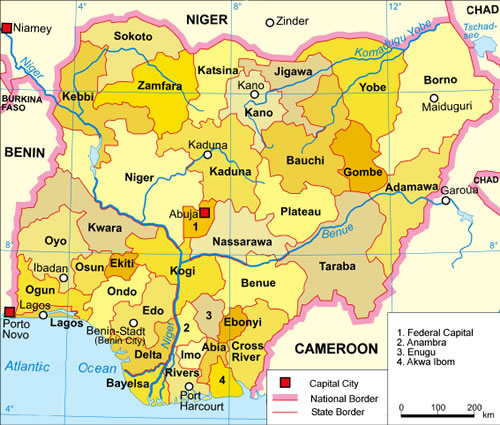
Southwark Crown Court in London heard that Ojo was arrested last year during a co-ordinated series of raids in the capital. He claimed to be Mousa Kamara, 30, from Sierra Leone but was soon identified as a 35-year-old Nigerian, originally from Benin City, where Adam used to live.
The court heard that Ojo had come to Britain in 1997 posing as an asylum seeker from Sierra Leone.
When police searched his flat, they found a video mock-up of ritual killings, a shot of what appeared to be a decapitated head in a basin and a voodoo artefact in the form of a rat’s skull, pierced by a long metal spike and bound in black thread.
Ojo, of Devonshire Close, Stratford, east London, admitted four charges. Two involved dishonestly obtaining a British passport in July 1999, and using a forged driving licence with intent to deceive, while two related to assisting illegal entry into this country in November 2002 and February last year.
Judge Neil Stewart said the offences were so serious that prison was inevitable. He told Ojo: “I’m satisfied your continued presence would be to the detriment of this country and I make a recommendation that you be deported upon your release from prison.”
Detective Chief Inspector Will O’Reilly, the head of the investigation into the unidentified boy’s death, said later that Ojo had been detained because of his close association with a woman, Joyce Osagiede, who was arrested in Scotland. “We believe she is closely involved in the Adam case … we also believe he assisted with her entry into the country,” he said.
He went on: “I firmly believe he [Ojo] can assist us with our inquiries and we will be looking to speak to him as soon as possible.”
Osagiede, who has since been repatriated to Nigeria, also came from Benin City, and the pair lived together for a while at a London address.
The woman, who had Ojo’s address among her belongings, told immigration officers that she had fled her country due to being caught up in a ritual cult.
She claimed her husband, who was arrested in Dublin last year and later deported to Germany, had been involved in a group which carried out “demonic rituals”. He had, she said, played an active part in the deaths of 11 children, one of whom had been their eldest child.
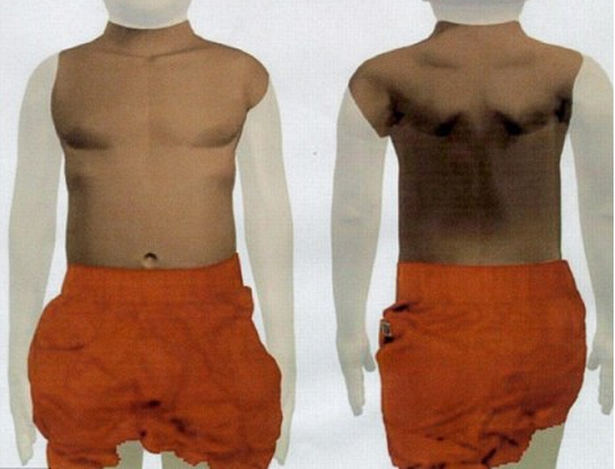
In her flat, police found chicken feathers and a number of other items used in west African curses. They also found clothes believed to have come from the same shop in Germany as the orange shorts found on the headless, limbless body of the child which was found floating near Tower Bridge in central London almost three years ago.
Osagiede’s two daughters are still in foster care in Scotland.
Related article: Jail for torso case people smuggler Published: July 27, 2004 By: RELIGION NEWS BLOG
A man suspected of having smuggled into the UK an African boy whose torso was later found in the Thames was jailed for four years and six months for people trafficking yesterday.
Kingsley Ojo, 35, from Stratford, east London, admitted four charges: bringing two men, whom he provided with false papers, into Britain in November 2002 and February 2003, and using a forged driving licence and passport.
Ojo headed a “substantial” network that is thought to have smuggled in hundreds of children and adults to work as prostitutes or domestic slaves.
Scotland Yard detectives do not think he killed the boy, named Adam by police, whose headless and limbless torso was recovered from the Thames in September 2001. But they believe he could hold the key to the horrific ritual murder.
Officers were initially baffled by the gruesome find. But painstaking forensic analysis of the boy’s bones established his diet, which narrowed down his place of origin to the region around Benin city in Nigeria.
Ojo, who was arrested with 20 others in a series of immigration-linked raids across London last July, is also from Benin city. He had falsely claimed to be Mousa Kamara, 30, from Sierra Leone.
Detective Chief Inspector Will O’Reilly, who heads the investigation, said Ojo was not thought to have murdered Adam, but police wanted to interview him again about his links with a woman arrested in Scotland.
Children’s clothes found in her Glasgow flat came from the same German shop as the orange shorts on Adam’s torso. She also comes from Benin city, and she and Ojo lived at the same address in London for a time.
“We believe she is closely involved in the Adam case,” Mr O’Reilly said. “Her main associate in this country was Ojo. We also believe he assisted her entry into the country. I firmly believe he can assist us with our inquiries and we will be looking to speak to him as soon as possible.”
The woman has since been “repatriated” to Nigeria and Mr O’Reilly said he could not comment further on her as a file had been submitted to the Crown Prosecution Service.
When officers searched Ojo’s flat in London, they found a video of mock-up ritual killings and a rat’s skull, thought to be a voodoo talisman.
Southwark crown court heard that Ojo came to the UK in 1997, posing as an asylum seeker, and was granted leave to remain, but forbidden to travel abroad. But when he discovered his girlfriend, Barbara Bourne, had lost a newborn son a few years previously, he used the dead boy’s birth certificate to obtain a driving licence and passport.
He then brought in illegal immigrants on cheap flights from Naples. Police think those smuggled in may have paid up to 20,000 each for a new life in Britain.
Judge Neil Stewart said he was satisfied that Ojo had an organizational role and had profited from the enterprise, and recommended that he be sent back to Nigeria when he had served his sentence.
Five witchcraft inquiries Published: June 17, 2005 By: RELIGION NEWS BLOG
Police and social services in London are investigating five new suspected cases of child abuse involving witchcraft.
Britain’s leading expert on witchcraft, Dr Richard Hoskins, is working with social services on allegations about fundamentalist churches in Haringey and Hackney.
They involve two boys aged 11 and 14 and three girls aged 10, 12 and 13. They were all allegedly abused after being accused by their family of being “witches”.
A Metropolitan Police report, leaked yesterday, unmasked a “trade” in young African boys brought to London to be murdered as human sacrifices.
An inquiry in which members of the African community in Newham and Hackney were questioned found a number of sects that believe in powerful spells requiring the ritual killing of male children.
It also identified cases of children abused and killed after family members accused them of being possessed by “evil spirits”.
Dr Hoskins, a chief adviser to the Met, said almost all the cases he is investigating have similar features. The children have been accused of being “possessed” and allegedly abused and tortured.
Social services took them into their care after parents called for the children to be exorcised in fundamentalist churches.
Dr Hoskins said: “We are dealing with real cases here. I have got seven cases on my books of children nationwide who have been abused in the name of witchcraft. When you actually talk to them, these are hard and fast facts. But the issue as a whole has to be dealt with very sensitively.”
Dr Hoskins worked with police on the inquiry into “Adam“, the torso found in the Thames, which he is convinced was a ritual sacrifice.
In the Adam case, detectives also spoke to Tussan le Mante, a voodoo priest or hougan, who carries out rituals in his west London flat.
Le Mante was able to tell them accounts of child abuse of which he was aware through his connection with voodoo.
Police also found children are being sold to traffickers on the streets of African cities such as Lagos, Nigeria, for under ?10 then smuggled into the UK.
They arrive in London with false documents and accompanied by adults who believe they will bolster their asylum claims.
Dr Hoskins said: “We know this through work we have been doing on the Adam inquiry. It’s the same in Kinshasa. These children are ripe for people to abuse. They are easy prey.”
The 10-month study was commissioned by the Met following the death of Victoria Climbié who was starved and beaten to death after relatives said she was possessed.
Its aim was to create an “open dialogue” with the African and Asian community in Newham and Hackney. In discussions with African community leaders, officers were told of examples of children being murdered because their parents or carers believed them to be evil.
Earlier this month, Sita Kisanga, 35, was convicted at the Old Bailey of torturing an eight-year-old girl from Angola whom she accused of being a witch. Kisanga was a member of the Combat Spirituel church in Dalston.
Many such churches, supported mainly by people from West Africa, sanction aggressive forms of exorcism.
The caretaker of the building used by the church said its leader was “an extraordinary man”.
“The pastor would come down after preaching with froth coming out of his mouth,” he said.
“The congregation made massive noise and generally caused so much disturbance that the neighbours here kicked up a fuss and got the council to evict them.”
There are believed to be 300 similar churches in the UK, mostly in London. Last month, Scotland Yard revealed it had traced only two of 300 black boys reported missing from London schools in a three-month period. The true figure for missing children is feared to be several thousand a year.
The unidentified boy, named Adam by Metropolitan Police detectives, is believed to have been the victim of a ritual killing after being brought from his native Nigeria to Britain.
A substance found in the boy’s lower intestine was identified by an expert at Kew Gardens in London as the highly toxic calabar bean, from West Africa.
Police believe a preparation of the calabar bean – which can be fatal if swallowed, or cause paralysis in tiny doses – may have been used to subdue the boy, by slow paralysis, before his throat was cut. It was administered at least 24 hours before his death.
It also emerged yesterday that the murder squad, which has spent hundreds of thousands of pounds investigating the boy’s death, has prepared its first file of evidence in the case for the Crown Prosecution Service.
Scotland Yard sources played down suggestions that charges were close but officers have uncovered what they believe is cogent circumstantial evidence.
They have previously arrested a woman in Glasgow – who has since returned to Nigeria – and a man being held by police in Dublin. The pair, who are husband and wife, are not biologically related to Adam, it is understood.
The man in Dublin has been sentenced in his absence in Germany for trafficking offences and is wanted for extradition by the Germans.
A pair of child’s shorts on the headless and limbless torso of Adam, who was probably aged between four and six, also came from Germany.
Charges which might be brought in any trial include murder, conspiracy to murder and trafficking offences.
It also emerged yesterday that the Government’s leading law officer, the Attorney General, Lord Goldsmith, QC, wants to lead the prosecution team in any trial arising from the Adam investigation.
The groundbreaking hunt for Adam’s killers Published: Monday August 4, 2003 By: RELIGION NEWS BLOG
Quoting: Sandro Contenta – Toronto Star (Canada), August 2, 2003 Link disappeared (webmaster FVDK)
DNA tests used to trace victim’s origin Boy’s murder linked to child trafficking
LONDON�One more turn of the tide and the torso of the boy in the River Thames would have been swept out to the North Sea, the story of his chilling end buried perhaps forever in a watery grave.
But the alarm was sounded when the bright orange shorts hanging from the torso caught the eye of a passerby up high on Tower Bridge.
Police fished out what was left of Adam, the name they eventually gave the still unidentified boy, at the foot of the Globe Theatre on Sept. 21, 2001
Since then, the story pieced together of what police consider London’s first known ritual killing is macabre enough to have challenged even Shakespeare’s imagination. And the investigative work that has brought police close to cracking the case is groundbreaking.
It combined unprecedented forensic research with old-fashioned legwork that took investigators to Germany, the Netherlands, the U.S., South Africa, Nigeria, Scotland and Ireland.
The latest break in the investigation came Tuesday, when Metropolitan Police raided several homes in London and arrested 21 suspected members of a child trafficking ring.
“We’re pretty convinced that we are on to a group of individuals who trafficked Adam into the country,” said Detective Inspector William O’Reilly.
The arrests highlighted a UNICEF report the next day estimating that thousands of children have been smuggled into Britain during the past several years to be exploited as sex slaves, or for slave labour.
But public attention was especially focused on what police described as evidence of occult rituals found in the raided apartments, such as an animal skull with a nail driven through it.
Most of those arrested come from Benin City, Nigeria, an area where remarkable forensic sleuthing in the case has determined as Adam’s home.
“I must stress we are not judging any cultures,” said Andy Baker, the police commander heading the investigation. “We are investigating a crime �the crime of murder.”
When the remains of Adam were found, investigators quickly figured out that his torso had been in the water for up to 10 days, that he was black, he was between four and eight years old, and murder ended his life.
It wasn’t the first limbless and headless torso 50-year-old Ray Fysh had seen in his forensic career. But it left him scratching his head.
Bodies are dismembered, he says, either to hide the victim’s identity, or to more easily transport and dispose of the body. But with Adam, no effort had been made to weigh down or conceal the torso once his killers dumped it in the Thames.
“In fact, he had orange shorts on, which made him stand out like a beacon,” Fysh says.
Even more puzzling was the conclusion that the shorts were placed on the torso after Adam was killed, because his legs could not have been hacked off with them on. The inside tag had washing instructions in German, and the brand was made exclusively in China for a German chain of stores.
“None of us knew, really, what we were dealing with at the time,” says Fysh, a scientist with Britain’s Forensic Science Service, and the forensic co-ordinator in the Adam case.
“Nobody had come across this sort of stuff before,” he adds.
Fysh’s team began with basic forensic work. They mapped a profile of Adam’s DNA, to be used to identify his parents if they’re ever found. They covered his torso with tape in a bid to lift any hairs or fibres that might belong to the murderer, and came up blank. Swab tests found no evidence of sexual assault.
Toxicology tests found only one drug in Adam, a cough suppressant called Pholcodine, bought without a prescription at any pharmacy. Adam was treated for a cough shortly before he was killed.
“It wasn’t obvious then, but looking back on it now, it shows some sort of duty of care to this child,” Fysh says.
The way Adam’s limbs were cut off was brutally precise.
The killer either used a series of heavy, razor-sharp kitchen knives, or one that was sharpened throughout the dismemberment.
“They cut the skin, peeled the muscle back, and then cut through the bone. They never went through a joint,” Fysh says.
Dismemberment occurred when Adam was already dead. But the cause of death was no less horrible. He was slaughtered like an animal.
“The cause of death was a knife trauma to the neck,” Fysh says, choosing his words carefully. “The child then went into extensive blood loss.”
About six weeks after Adam’s torso was discovered, police searching the river for the rest of his body found seven half-burned candles wrapped inside a white cotton bedsheet. The name Adekoyejo Fola Adoye was written three times on the sheet, and cut into the candles.
But in the end, the candles and bedsheet turned out to have nothing to do with Adam. Detectives found that Adoye lived in New York, and his London-based parents had performed a ceremony with the Celestial Church of Christ to celebrate the fact that he had not been killed in the Sept. 11, 2001, attack on the World Trade Centre.
Still, police suspected they were stumbling into an uncharted area of the macabre and supernatural, and turned for guidance to Richard Hoskins, a specialist in African religions at King’s College in London.
Europol estimates there have been at least nine cases of ritual killing across Europe in the past 15 years, and Hoskins believes more are bound to occur as immigration grows.
Every year, about 300 people are killed in South Africa for muti, a Zulu word for traditional medicine. Muti is usually a mixture of herbs, but in rare cases human body parts are used.
About the same number are killed yearly in parts of Nigeria in illegal human sacrifices where the victim’s blood is offered to gods, spirits or ancestors, Hoskins adds. Body parts might be kept powerful trophies or souvenirs.
Tribes that practise animal sacrifices consider the ritual killing of humans a terrible moral and legal crime �a taboo that makes those who break it feel all the more empowered, especially when children are the victims, Hoskins says.
“Because of the innocence and the purity of the child it becomes the most powerful form of magic that can be done.”
The cut in Adam’s neck led Hoskins to believe the ritual was more likely from the west of Africa than the south.
“It was done in a very specific and deliberate way, clearly to bleed him to death in a relatively quick way. The point was to spill blood on the ground as an offering,” he says.
Hoskins says the orange colour of Adam’s shorts, and the dumping of his torso in the river is also ritually significant. He believes the murder or murderers sacrificed Adam to gain some sort of power or good luck for an undertaking in Britain.
For police, Hoskins’ theories were horribly fascinating, but brought them no closer to identifying Adam or his killers. Finding out whatever they could about his short life became the focus of Fysh’s forensic team by January, 2002.
Adam’s stomach was empty. The last time he ate was 12 to 18 hours before his death.
In his lower intestine �an area rarely examined in forensic work �they found traces of pollen from a tree found in London, but not in Africa.
“So we know he was alive and breathing in London before he was killed,” Fysh says.
Also in his lower intestine were tiny clay pellets with specks of pure gold embedded on their surface, along with what appeared to be finely ground up bones. To determine the origin of the crushed bones, they were sent to the New York forensic team that conducted innovative work to identify victims of the Sept. 11 attacks.
Hoskins says the concoction in Adam’s stomach is typical of the potions used to prepare victims for ritual killings in sub-Sahara Africa. It’s part of a process that led to Adam getting cough medicine to ensure he was a healthy offering to the gods.
“The case of Adam is definitely a ritualistic killing. There’s no doubt in my mind,” Hoskins says. “The remarkable thing is that he was brought from Africa to the U.K. specifically for the purpose.”
Hoskins didn’t believe Adam was the victim of a muti killing, but police weren’t ruling it out without hard evidence.
In April, 2002, detectives travelled to South Africa for a Johannesburg press conference where Nelson Mandela made a public appeal for information about Adam.
But in July, a break in the case would point to Hoskins’ theory.
Social workers in Glasgow had reported seeing strange items in the home of a 31-year-old West African asylum seeker. Police searched the flat and found objects they believed were associated with curses, including whisky jars filled with chicken feathers. More significant were the clothes found, which police believe were purchased in the same German shop were Adam’s orange shorts were likely bought.
The woman, Joyce Osagiede, was arrested and questioned about Adam’s murder. She was not charged, and was later deported to her Nigerian hometown, in the Benin City area.
At about the same time, Fysh’s team decided to try something never before attempted in forensic work.
They began by mapping Adam’s “mitochondrial DNA” (mtDNA), which is exclusively passed on from mothers to siblings. Children have the same mtDNA as their mother, who in turn has the same mtDNA as her mother, and so on.
They compared Adam’s mtDNA to 6,000 sequences published in scientific studies. Adam’s sequence had never been found among populations in southern African, or in people in eastern Africa. But it matched mtDNA found in the northwestern part of the continent.
To further narrow the search, the team called on the services of Ken Pye, a professor of soil geology at the University of London. The next series of tests were based on the maxim, “We are what we eat.”
There is a certain level of the mineral strontium that works its way through the food chain; from water, to earth, to plants, to animals, and, finally, into the bones of humans.
In other words, people walk around with a strontium signature that matches the one in their environment. And if a person moves from one country to another, it takes six to 10 years before the strontium signature in the bones changes to match the new habitat.
Given Adam’s likely age, his strontium signature would not only determine the place of his birth, but the place where he grew up. It matched the signature found in a zone of ancient, Precambrian rock, which in Africa is mostly predominant in Nigeria. Suddenly, the forensic evidence also began matching Hoskins’ academic research.
Fysh and detective O’Reilly travelled to Nigeria last November and spent 2�weeks collecting rocks, animal bones and vegetables from local markets in a 10,000 square kilometre area.
They also collected post-mortem human bones from three sites around the country, including Benin City.
They returned to London with 120 samples, and by the end of January matched the strontium signature in Adam’s bones to that found in a corridor stretching from Benin City to Ibaden, where villages of the Yoruba tribe dot the only main road along the way.
It was, in forensic terms, a eureka moment.
“From a torso floating in the Thames, we now think the child was born and raised in the Benin City area,” Fysh says.
Detectives have since gone to the area to post leaflets on trees about Adam’s murder, and to encourage local residents who might have information to come forward. They also publicized a reward of $110,000 for tips leading to the arrest of Adam’s killers and a $5,500 reward for information that will identify him.
The next big break came July 2, when Irish police arrested a 37-year-old Nigerian man in Dublin on an extradition warrant issued by German police.
In March, 2001, Sam Onogigovie was sentenced in his absence to seven years in Germany, for forgery and crimes linked to the trafficking of people.
He’s believed to be the estranged husband of Osagiede, the woman arrested in Glasgow and deported to Benin City last year. Police are seeking a DNA test to determine whether he’s Adam’s father, but believe he was more likely involved in smuggling the boy to London.
“It’s a case we all dearly would like to solve,” Fysh says. “At the end of the day, it’s a murder of a very young boy in grotesque circumstances.
“We want to send a message out there we will not accept this in London. We accept people’s culture. But a murder we will not accept.”
Focus: Muti – The Story of Adam Published: August 4, 2003 By: RELIGION NEWS BLOG
Quoting: Paul Vallely, Independent (England), Aug. 3, 2003 Link disappeared (webmaster FVDK)
The arrest of 21 people in connection with the discovery of a child’s mutilated body in the Thames points to a network of people traffickers and an underworld of abuse and domestic slavery. Paul Vallely, who has followed the case in the two years since the torso of the young African boy was found, says the evidence leads to the bloody ritual of muti, where the body parts of children are sacrificed in pursuit of spiritual power (Independent, England, August 3, 2003).
It was the body of a five-year-old African boy. The corpse had no head. The legs had been severed above the knee and the arms cut off at the shoulder. All that remained was a torso dressed – grotesquely – in a pair of orange shorts, which had been thrown into the Thames shortly before it was discovered in September 2001. Death had been from a violent trauma to the neck, and the limbs had been “skilfully” removed after death by an experienced butcher.
Yet it was not the gruesome details of the murder and dismemberment that last week – almost two years later – led 200 police officers to launch nine simultaneous dawn raids across London and arrest 21 people. It was the contents of the stomach of the child, whom the police – in an attempt to restore some humanity to the desecrated body – had named Adam. That, and the orange shorts in which the post-mortem showed he had been dressed after death.
Ironically, the clue that first put them on the trail to the arrests turned out to be a false lead. The body had been found by Tower Bridge. Initially, detectives wondered if the mutilation might be an attempt to disguise the identity of the victim of an accident, a family row or a sex crime. But then, two miles upstream in Chelsea, they found the remnants of an African ritual, with a Nigerian name written on a sheet, carved into seven half-burned candles. Might this be a ritual killing?
In the event, the Chelsea paraphernalia turned out to be unrelated. But before the police discovered that, they had sent to Johannesburg for Professor Hendrik Scholtz, a South African pathologist who is an expert in so-called muti killings – in which adherents of traditional African magic take human body parts and grind them down to make potions they believe bring good fortune to those who drink them. The professor came to England and, after a second post-mortem, confirmed the detectives’ fears. Muti had come to Britain.
The boy’s throat, he confirmed, had been cut and his blood drained from his body, probably for use in some ritual. Most significantly his first vertebra – the one between neck and spine – had been removed. This is known in Africa as the Atlas bone, for it is said to be the bone on which the mythical giant Atlas carried the world. In muti it is believed to be the centre of the body, where all nerve and blood vessels meet, and where all power is concentrated.
There was something else. Adam’s body was well-nourished and showed no signs of abuse, sexual or otherwise. Analysis of his stomach contents showed someone troubled to give him Pholcodine, a cough linctus, not long before he died. It was the classic muti scenario of an otherwise well-treated child being “volunteered” for sacrifice by his own family.
The police set out on two main lines of inquiry. The shorts – orange, they discovered, was a lucky colour in muti – carried the label Kids & Co, the brand-name for Woolworths in Germany. Detectives traced them to a batch of 820 pairs in size 116cm (age 5-7) that had been sold in 320 German stores. But then the trail went cold.
So, too, did a five-month trawl of London’s ethnic communities. Detectives came across plenty of rumours that muti ceremonies were taking place, but no evidence – and no sign of an identity for the murdered child. Painstaking checks of the attendance registers of 3,000 nurseries and primary schools found no missing five-year-old who tallied with what was known of Adam. When they sent forensic evidence to the United States for testing it came back with the verdict from the FBI that the case was “practically insoluble”. Even a public appeal by Nelson Mandela, broadcast across Africa, was fruitless.
But the dead child had not fallen totally silent. His DNA spoke up, as did the mineral levels in his bones. Analysts were able to establish that Adam had spent his life in a 100-mile corridor in the south-west of Nigeria, between Ibadan and Benin City. Revealingly, most of those arrested last week come from Benin.
The contents of his stomach were eloquent too. Forensic examination showed that the boy had been fed a muti potion of mixed bone, clay and gold.
There was something else. Analysis of pollen found in the boy’s stomach showed he had been alive when he came to London. It is thought he was brought across Northern Europe, possibly via Germany, and lived in Britain for a few weeks before his murder. “We’ve uncovered what we believe is a criminal network concentrating on people trafficking,” said Detective Inspector Will O’Reilly, who is leading the Adam inquiry. “We don’t know how many children are involved in this operation, but it’s certainly in the hundreds, if not the thousands, coming from mainland Africa through Europe into the UK.”
Lurid accounts of child trafficking have suggested the trade is primarily to provide recruits for the sex industry. But police believe that the majority of trafficked children are put to work 12 hours a day, seven days a week, 365 days a year, in what amounts to a modern form of slavery. Only a tiny number fall victim to muti.
Much of muti is innocent. The term derives from umu thi, the Zulu word for tree, which has become a byword for any traditional medicine, good or bad. Its everyday form consists of potions made from Africa’s indigenous herbs and plants to cure common ailments. It works. A pharmaceutical company has just signed a deal with the African National Healers Association to package some muti recipes. The South African Council for Scientific and Industrial Research has, with the aid of traditional healers, launched a “bio-prospecting” project to unlock the secrets of the nation’s 23,000 indigenous plants.
Most adherents stop with the plant recipes. But some believe that more complex complaints can be cured with animal parts such as crocodile fat, hawk wings, monkey heads or dried puff adders. Before the last World Cup qualifiers a hippo, lion, elephant and hyena were slaughtered to make a potion for the Swaziland team to give its footballers extra strength.
Muti becomes disturbing when it is extended to the notion that human body parts can be used to heal or bestow special powers. For muti is not just a medicine, it is a metaphysic. It asserts that there is only so much luck in the world and each person has a limited supply of it. Very young children have not yet used all their luck, which can be transferred to whoever takes the medicine derived from their remains. This is the origin of the widespread African myth that sex with a virgin can cure someone of Aids: the younger the girl, the more potent the “medicine”.
It is unclear how widespread human muti is in West Africa. But in South Africa, where the government set up a Commission of Inquiry into Witchcraft Violence and Ritual Murders after a spate of killings of boys aged between one and six in Soweto, it is estimated that at least 300 people have been murdered for their body parts in the past decade. The figure could be as high as 500 a year. (Italics added by the webmaster FVDK)
The killings are rarely impulsive. They are done to order by sangomas, or witch doctors, commissioned by clients with a particular need. Thus human skulls are placed in the foundations of new buildings to bring good luck to the business. Body parts are buried on farms to secure big harvests, severed hands built into shop entrances to encourage customers. Human hands burnt to ash and mixed into a paste are seen as a cure for strokes. Blood “boosts” vitality; brains, political power and business success. Genitals, breasts and placentas are used for infertility and good luck, with the genitalia of young boys and virgin girls being especially highly prized. There is a belief that body parts taken from live victims are rendered more potent by their screams.
Discovering all this provided the police with another clue. The genitals of the torso in the Thames had not been removed, suggesting that his killers needed muti potions for some other purpose. Adam had been sacrificed for non-sexual reasons.
It was almost a year after the discovery of Adam’s body that the next piece of the jigsaw fell into place. A representative of the social services department in Glasgow contacted Scotland Yard and reported that one of their clients, a West African woman, had said she wanted to perform a ritual with her children. Her name was Joyce Osagiede. When police travelled to Scotland to arrest her they discovered among her daughter’s clothes a pair of orange shorts of the exact size and brand as had been found on Adam. They also discovered that she had been living in Germany – the only place the shorts had been on sale – before coming to Britain with her children. It was not enough to charge her. She later returned to Nigeria.
Then, earlier this month, police tracked down the woman’s estranged husband, Sam Onojhighovie. The 37-year-old Nigerian man had appeared at the High Court in Dublin as part of an ongoing attempt to extradite him to Germany, where he had been convicted in his absence and sentenced to seven years for offences linked to human trafficking. Scotland Yard officers visited him for questioning.
Of the 21 people arrested in the dawn raids last week 10 were illegal immigrants. None have been charged. Following the raids, Inspector O’Reilly said: “We are pretty confident we have a group of individuals who could have trafficked Adam into the country.” Police are investigating a variety of offences, including benefit fraud, selling false passports and credit card and banking swindles. So far they are still some way off piecing together the exact fate of the boy they know as Adam.
“In West Africa there are several reasons for human sacrifices – for power, money, or to protect a criminal enterprise,” said Inspector O’Reilly. “We believe the prime motive for the murder was to bring good fortune. We suspect Adam was killed to bring traffickers luck.”
Police are waiting for the results of tests to compare the DNA of Sam Onojhighovie – and everyone arrested last week – with Adam’s. If it shows that a terrible ritual murder was carried out to bring good fortune to an iniquitous scheme to traffic in human beings, there could be a grim final irony. The muti killing that was supposed to ensure the success of a criminal enterprise may actually have ensured its failure.
Suspect responsible for death of 11 kids, wife tells police Published: August 4, 2003 By: RELIGION NEWS BLOG Quoting: Vanguard (Nigeria), Aug. 4, 2003 Link disappeared (webmaster FVDK)
LONDON – A Nigerian man questioned in connection with the suspected ritual murder of a boy whose torso was found in the River Thames nearly two years ago is responsible for the deaths of 11 children, his wife told British police, The Sunday Times reported yesterday.
Sam Onojhighovie, 37, was arrested July 2 in Dublin under a German extradition warrant for offences linked to human trafficking but has also been questioned in the Adam case, the nickname given to the boy found dead in September 2001.
His wife Joyce Osagiede told British immigration in November 2001 that she was escaping from a religious cult that had been active in her home country of Sierra Leone and in Nigeria, The Sunday Times said. She was later found to be from Nigeria.
Onojhighovie, who had been setting up branches of a new demonic cult in Germany and London, had killed 11 children, including the couples eldest daughter, she said according to the same source.
Police arrested 21 people Tuesday around London in connection with the Adam case. Those arrested were believed to be in their 20s and 30s and mostly Nigerians. They included 10 black men, nine black women and two white women, one of whom was nursing a baby.
Police have requested DNA tests from those arrested, believing one of them could be related to Adam. Adam�s limbless, headless remains were discovered floating in the River Thames near London�s famous Tower Bridge, triggering one of the most gruesome murder cases in the British capital in recent years. Police suspect the boy was the victim of a ritual killing after he was brought to Britain from the vicinity of the Southern Nigerian city of Benin.
Police investigating the murder of a boy whose torso was found in the Thames have arrested 21 people in raids across London.
Nine addresses in east and south-east London were searched by nearly 200 Metropolitan Police officers on Tuesday morning.
Ten men and eleven women were held by police. A baby belonging to one of the women was also taken into care while the woman was being questioned.
Among the items found was the skull of an animal which had a nail driven through it.
Commander Andy Baker, from the Metropolitan Police, said: “Some of the items would raise a few eyebrows – they look like some element of ritualism is involved.”
Most of those arrested were for immigration offences, identity fraud and passport forgery.
The police were acting on information from detectives who have been investigating why the limbless and headless body of a boy ended up in the Thames.
The victim, called Adam by officers, was found in the river near Tower Bridge in September 2001.
Police suspect that he was a victim of ritual killing after being brought over from Nigeria.
Officers travelled to the African country after forensic tests showed he was from the area around Benin City.
All of the people arrested on Tuesday are from the same part of Nigeria and police want to compare their DNA with Adam’s to see if any are related to him.
Police are also looking at their connection with a Nigerian man arrested in Dublin earlier this month in connection with the investigation.
Sam Onogigovie, 37, was held under an extradition warrant issued by police in Germany, where he has been convicted of crimes linked to human trafficking.
Detectives from Scotland Yard also questioned him about the murder of Adam.
Tuesday’s arrests were made by officers from Operation Maxim, the multi-agency unit tasked with targeting organised criminals who are in the UK illegally.
Detective Inspector Will O’Reilly, leading the Adam inquiry, said: “We’ve uncovered what we believe is a criminal network concentrating on people trafficking.
“We are convinced that we are on to a group, or individuals, that were involved in trafficking Adam into the country.”
Police also said there was evidence of children having been at the raided addresses.
Detectives think Adam was aged between four and six, and was alive when he arrived in London.
They are also trying to trace the witch doctor who brewed a potion containing bone fragments which the boy swallowed before he died.
The fragments have been submitted to New York’s medical examiner who will use techniques developed to identify September 11 victims.
“Interesting substances” found in the raids will also be compared with the potion found in Adam’s intestines.
Police think some of the items confiscated could be linked to rituals.
Human parts in bush meat Published: Thursday November 7, 2002 By: RELIGION NEWS BLOG quoting : Western Daily News (England), Nov. 4, 2002 http://www.thisisbristol.com/ Link disappeared (webmaster FVDK).
Human flesh is being smuggled into Britain hidden in consignments of illegal bush meat, experts warned last night.
The horrifying twist to the bush meat trade was revealed with news of a raid on a London shop where it is believed human body parts were being sold.
Detectives investigating the murder of a five-year-old boy, whose torso was found in the Thames and whom officers believe was the victim of a West African ritual killing, joined a raid by environmental health officers.
There they found the first evidence of its kind linking the trade in bush meat to witchcraft ceremonies.
Officers seized items including a crocodile head, used in ritualistic dishes to “increase sexual stamina”.
Other packages of unidentifiable meat have been sent for DNA testing.
Experts say they are convinced human flesh is finding its way on to the streets as part of the illegal trade which deals in flesh from animals such as monkeys.
Clive Lawrence, Heathrow Airport’s meat transport director who joined detectives on the raid, last night said: “We have been told by moles protecting their own businesses that human flesh is being sold in this country. There is also an established trade in smuggling children, a lot disappear and no-one knows what happens to them.
“I think it is not just restricted to London, but to everywhere with high population density.”
Mr Lawrence said it was likely the trade had extended its deadly cargo to Bristol, adding he believed the murder of the Thames child – named Adam by detectives – was not a one-off.
He said underworld sources told him a human head will sell for �10,000. Flesh from a slaughtered child turned into African medicine or a “Muti” pendant, giving the wearer “incredible sexual power”, is said to cost about �5,000.
Detectives from Operation Swalcliffe investigating Adam’s death say he was smuggled in to Britain alive five days before being murdered.
They believe he was sacrificed in a ritual intended to bring good luck to his killers. In the past year police have discovered seven cases of West African religious rituals on the Thames.
On numerous occasions Liberian leaders have publicly denounced the ritual murders that take place in the country. We can mention President William Tolbert (1971-1980), Gyude Bryant (Chair of the Transitional Government after the Second Civil War, 2003-2006) and President Ellen Johnson Sirleaf (2006-2018). The fact that the presidents Samuel Doe and Charles Taylor were not so outspoken on this subject, certainly not in public, has special reasons……..
The article below on Ellen Johnson Sirleaf’s warning and reaction does not constitute the first and only time that she denounced the phenomenon of ritualistic killings in her country. More on it at a later stage. (Webmaster FVDK)
Ellen Johnson Sirleaf says increase in ritualistic killings and armed robbery are threatening security
Published: November 20, 2015 By: The Guardian
Liberia’s president, Ellen Johnson Sirleaf, vowed on Thursday to crack down on those responsible for a rise in ritual killings in the West African country as it seeks to emerge from the shadow of an Ebola epidemic.
In some areas of central Africa, body parts are prized for their supernatural powers and are used in black magic ceremonies. Local media have reported at least 10 related murders in Liberia in the past few months. (Italics added by the webmaster, FVDK).
Johnson Sirleaf said in a speech: “We are witnessing the rise in what appears to be ritualistic killings and armed robbery in the country, thus threatening our security.”
“I am instructing the security forces to rigorously enforce the law to the letter and bring this ugly situation under immediate control.”
It is not yet clear why ritual killings are rising and Johnson Sirleaf offered no explanation. Some residents have speculated that presidential hopefuls seeking to replace Johnson Sirleaf when her final term expires in 2017 are using black magic to boost their chances.
Liberia was declared Ebola-free for the second time in September after reporting more than 4,800 deaths but its economy is struggling to recover.
Johnson Sirleaf said in the same speech she would seek to boost power supply and access to electricity and build additional infrastructure in the last two years of her term.