Malawi: man found with human bones of albino ‘killed last year’

It’s being estimated that between November 2014 and March 2017 at least 18 albinos have been murdered in Malawi. Since then, these atrocious ritualistic killings and attacks on people living with albinism have continued unabated – as has been demonstrated by the numerous cases reported and reproduced on this site. These ugly practices must stop, not only in Malawi but also in other sub-Saharan countries! (webmaster FVDK)

Malawian man found with human bones of albino ‘killed last year’ 

Published: March 18, 2017
By: News24Wire

Police in Malawi say investigations have revealed that human bones found with a man arrested in Lilongwe last week were those of a person with albinism, who died in Mchinji last year, a report says.

At least 18 albinos  have been killed across Malawi since November 2014.

According to Malawi 24, police spokesperson Kaitano Lubrino said that preliminary findings indicated that the recovered bones were those of an albino person Spiriano Felix who was buried on April 20 last year, but his grave was tampered and exhumed by unknown criminals on May 6.

Lubrino said that Felix’s lower legs and lower arms were found to had been chopped off from his corpse, thus, prompting the police to launch a manhunt.

The police spokesperson said that after the suspects were arrested last week, a forensic histopatholographic examined the bones to confirm the identity of the bones which had been found.

Amnesty International said last year that albinos in Malawi were being targeted in an “unprecedented wave of brutal attacks”. The rights group blamed police for failing to tackle a scourge fuelled by ritual practices.

At least 18 albinos – who have white skin because of a hereditary condition that causes an absence of pigmentation – have been killed across Malawi since November 2014, the group said at the time.

Source: Malawian man found with human bones of albino ‘killed last year’. Police

BBC crew mistaken for ritual killers in Malawi – narrowly escapes death

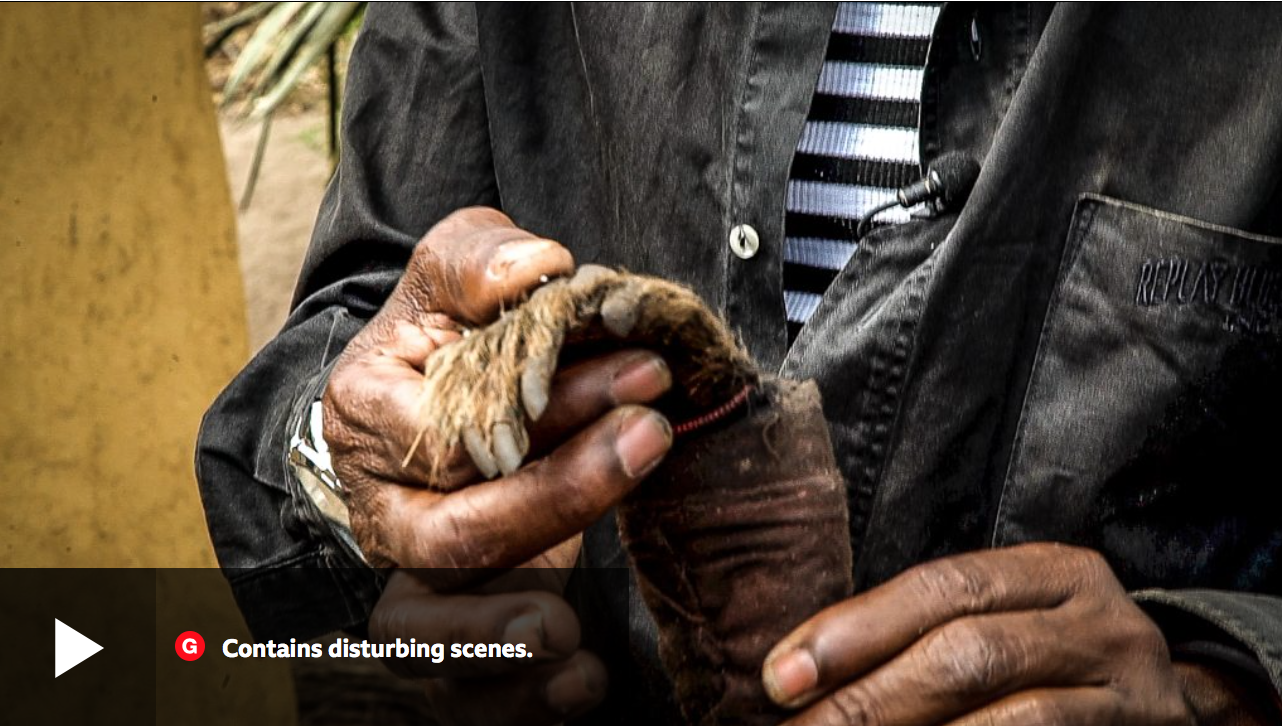
BBC crew mistaken for ritual killers in northern Malawi, narrowly escapes death (Click link at bottom of this page to watch film)

Investigation by: Anas Aremeyaw Anas, Henry Mhango and Darius Bazargan
Published: August 13, 2018

“BBC journalists investigating a series of mysterious murders in Malawi have narrowly escaped death.
The team were working undercover to expose men who claim to suck the blood of children to make get-rich amulets when they were attacked by a crowd of furious villagers.” – BBC Africa Eye

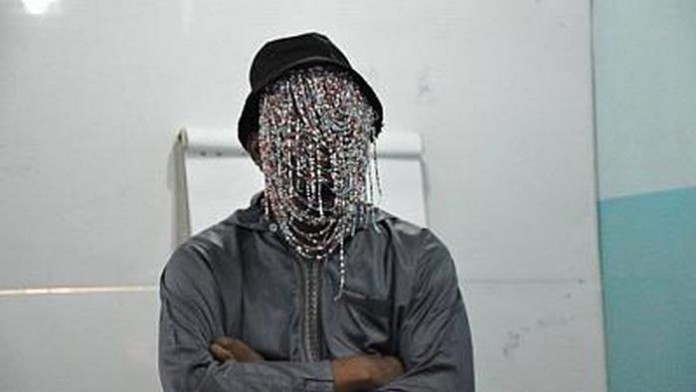
Anas Aremeyaw Anas, a well-known Ghanaian undercover journalist, and a BBC team composed of Henry Mango and Darius Bazargan, were investigating a series of mysterious murders in northern Malawi. The victims had been beheaded, certain body parts had been removed.
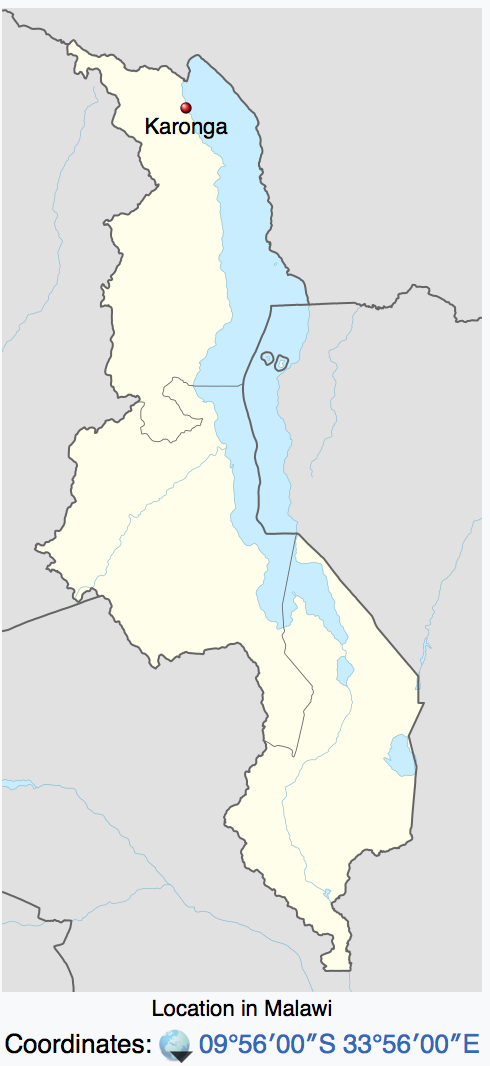
Mr and Mrs Moyo, the parents of one of the victims, are interviewed in the film (shown below). Investigative journalist Anas disguised as a rich businessman looking for witch doctors who allegedly use body parts as charms for wealthy clients. When filming secretly a witch doctor called Kamanga in Karonga, in norther Malawi, the villagers mistook the BBC crew for ritual killers and nearly killed them in an act of mob justice. Fortunately, the crew was saved by community police and a local chief.

Warning: the film contains disturbing images.

Source: BBC crew mistaken for ritual killers 
(click link to watch film)

Ghanaian undercover investigative reporter, Anas Aremeyaw Anas nearly died with his colleagues during his latest undercover piece “Malawi’s Human Harvest.”

Related articles:

How Anas nearly died in fresh Malawi exposé
GhanaWeb
August 13, 2018

Anas and colleagues escape lynching in Malawi in latest undercover job
GhanaWeb
August 2018

Anas Nearly Lynched in Malawi Whilst Investigating Ritual Murders
Ghafla!
August 14, 2018

Campaign Amnesty International: “Malawi: Stop ritual murders of people with albinism”

The right to live without fear is a human right

Originally published: 2017; exact date unknown.
By Amnesty International

Mid-2017, Amnesty International launched a campaign ‘Stop ritual murders of people with albinism in Malawi’. Read below why.

Amnesty International:

A new wave of killings and attacks targeting people with albinism over the past six months is being fueled by systemic failures in Malawi’s criminal justice system which leave members of this vulnerable group at the mercy of criminal gangs.

Since January 2017, at least two people with albinism have been killed while seven more have reported crimes such as attempted murder or abduction.

Albinism is a rare,non-contagious, genetic condition present at birth that results in absence of pigmentation in the eyes, skin and hair. It is estimated that between 7,000-10,000 people live with albinism in Malawi.

Erroneous beliefs and superstitions have put the safety and lives of people with albinism at risk, including from killings, abductions, and mutilations. Societal attitudes about albinism are not changing, and people with albinism continue to be at risk of attacks with some children being abducted and sold by family members.

Despite stronger legislation since 2016, including reforms to the Penal Code and the Anatomy Act, to tackle attacks against people with albinism, we are seeing an alarming resurgence of killings and attacks against this vulnerable group in 2017.

A new wave of killings and attacks against people with albinism emerged in January 2017, after a six month reprieve between June and December 2016.

On 28 February 2017, Mercy Zainabu Banda, a 31-year-old woman with albinism was found murdered in Lilongwe with her hand, right breast and hair removed.

On 10 January 2017, 19-year-old Madalitso Pensulo was killed after he was invited for afternoon tea at his friend’s house in Mlonda village in Thyolo District. A passer-by heard him scream, but he died before the police arrived at the scene.

The latest abduction took place on 28 May, when a nine-year-old boy, Mayeso Isaac, was taken by a gang of 10 men.

People with albinism are paying for political and social inaction with their lives. This is a matter of life and death.

We’re calling on the president of Malawi to protect people with albinism from attacks and bring the perpetrators of albinism-related crimes to justice.

Dear President Peter Mutharika,

Thousands of people with albinism live in constant fear of being abducted or killed in Malawi, where their body parts are being sold for use in ritual purposes. Ritual killings of people with albinism are influenced by superstitions and myths that their bones or body parts can bring riches.

We, the undersigned, call on you to:

  • Bring to justice the perpetrators of albinism-related crimes
  • Offer effective protections for people with albinism. Protect their right to life and right to personal security, in accordance with Malawi’s international human rights obligations and commitments.
  • Resource the police to adequately and thoroughly investigate crimes related to albinism
  • Tackle the harmful superstitious beliefs perpetuating the targeting of people with albinism.

Source: Amnesty International, 2017

Related link: Video – Hunted for their body parts

Malawi: Impunity fuels killing of people with albinism for body parts

The right to live without fear is a human right

Published on June 28, 2018, 12:01am
Amnesty International UK

A wave of killings

Since November 2014, an unprecedented wave of killings and other human rights abuses including abductions and robberies against people with albinism has swept through Malawi. Similar attacks have occurred in neighbouring countries such as Mozambique, Tanzania and South Africa. The current population of people with albinism in Malawi is estimated at between 7,000 and 10,000, representing a ratio of 1 in every 1,800 people.

The Malawian authorities must urgently overhaul the criminal justice system to protect people with albinism, who face the persistent threat of being killed for their body parts in a country where the vast majority of these horrific crimes remain unresolved and unpunished, Amnesty International said today.

In its new briefing, ‘End violence against people with albinism: Towards effective criminal justice for people with albinism in Malawi’, Amnesty found that people with albinism face long delays in getting justice.

Since November 2014, the number of reported crimes against people with albinism in Malawi has risen to 148 cases, including 14 murders and seven attempted murders, according to police figures. However, Amnesty has established that at least 21 people with albinism have been killed since 2014.

Only 30 per cent of the 148 reported cases against people with albinism have been concluded, according to the latest statistics from the Malawi Police Service and the Ministry of Justice and Constitutional Affairs. To date, only one murder and one attempted murder cases have been successfully prosecuted.

Even the police have raised concerns with Amnesty about delays in concluding trials, due to the limited number of senior magistrates qualified to deal with cases relating to people with albinism.

Deprose Muchena, Amnesty International’s Regional Director for Southern Africa, said:

“People with albinism deserve to see justice for these vile, hateful crimes against them. That it takes so long for cases to be investigated or heard in court is a sobering indictment of the systematic failures in Malawi’s criminal justice system.

“The authorities must end impunity for these crimes immediately. As a first step, they must ensure all pending cases are dealt with without undue delay, and in line with international standards of fairness.”

In its 2016 report, Amnesty found that attacks against people with albinismare fuelled by stereotypical beliefs that their body parts bring wealth and good luck.

Among recent victims is Mark Masambuka, a 22-year-old man from Nakawa village, in Machinga district, southern Malawi, who disappeared on 9 March after leaving his home with a friend. His body was found buried in a shallow grave on 1 April.

On 7 December last year, a two-year-old girl, Jean Ngwedula, went missing. Her father reportedly sold the child to a traditional doctor for ritual purposes in neighbouring Mozambique, which has been identified along with Democratic Republic of Congo, South Africa, Swaziland and Tanzania as markets for the cross-border trade in body parts. Jean’s father was later arrested on charges of murder, and investigations were continuing at the time of the publication of this briefing.

Criminal justice failings

The biggest challenges facing the judiciary, prosecutors and police in Malawi include a lack of financial resources and qualified personnel to handle crimes against people with albinism, which has resulted in a backlog of cases. Although serious cases are dealt with in magistrates’ courts, most prosecutors are police officers with no legal training.

According to a senior magistrate interviewed by Amnesty, most police prosecutors struggle to make sound legal submissions, resulting in either acquittals or convictions on lesser charges.

Ending the cycle of killings

Amnesty has noted as a positive step forward the government’s recommitment to protect the rights of people with albinism during a commemoration of International Albinism Awareness Day on 13 June in Kasungu.

However, Amnesty believes that a human rights strategy is needed to address the root causes of crimes against people with albinism and to stop further attacks. The strategy should also include tracing and identifying the source of demand for body parts, as well as enlisting the cooperation of Malawi’s neighbouring countries to stamp out the cross-border trafficking of people with albinism and their body parts.

Deprose Muchena said:

“The Malawian authorities must ensure that people with albinism no longer live in fear of organised criminal gangs who prey on their body parts. The government must overhaul the judicial system to guarantee the security and safety of people with albinism, who are some of society’s most vulnerable.”

Source: Amnesty International UK, June 28, 2018
 

Six people with albinism will stand for election to fight stigma in Malawi

Candidates hope to combat sharp rise in killings of people with albinism, whose body parts are used in ritual practices

Published on June 26, 2018
By Charles Pensulo
The Guardian

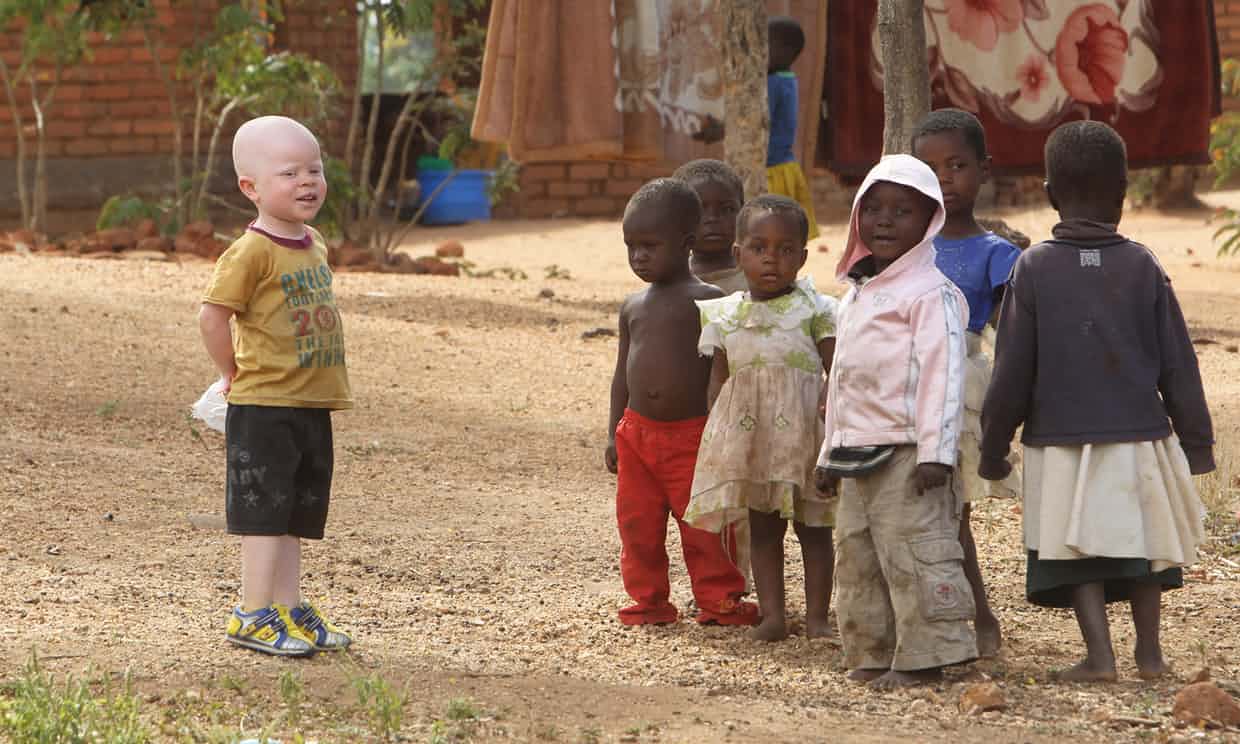
Cassim Jaffalie, three, with his friends at his family home in Machinga, southern Malawi. His father has given up work to protect his son. Photograph: Tsvangirayi Mukwazhi/AP

Being born with albinism can be a death sentence in Malawi. With 22 recorded murders in the past four years, dozens more people have been reported missing – suspected abducted and killed.

Now an association of people with albinism in Malawi has announced it will put forward six candidates for next year’s presidential and parliamentary elections, in an unprecedented move to combat stigma.

Malawi is one of the most dangerous countries in the world for people living with albinism – a lack of pigmentation in the skin, hair and eyes – who are targeted so that their body parts can be used in magic potions and other ritual practices.

The unprecedented rise in ritual and witchcraft-related killing for body parts that has also been documented in Tanzania and Burundi has led to the UN creating a special mandate to protect people with the genetic disorder.

Overstone Kondowe, director of the Association of People with Albinism in Malawi, said fielding political candidates would go a long way in changing how people with albinism were viewed in Malawi.

“We want to show the public that we are more than our skin,” he said.

Elizabeth Machinjiri is one of those planning to stand as a member of parliament in Blantyre. The director of a local charity, Disability Rights Movement, Machinjiri said her experience was key.

“What I have seen is that disability issues are ignored in the country,” she said. “In our parliament there are only one or two people that have a disability. I understand one will not even [stand in] the next election. We need to be represented. Other people may not understand the pain and hard things that we go through every day.”

Machinjiri said she would lobby for schools and hospitals to be disability-friendly.

“Mostly people choose [an MP] because they are rich. I am saying no, because that money is personal and cannot be used for developmental projects. Once elected, I will make sure that I present the voices and wishes of people living in my area and not only my views.”

Machinjiri said that stopping abductions of people living with albinism in the country will take huge political will. She may not find it easy to convince people, and still has to raise money to fund the campaign process.

“We need political commitment in fighting this,” she said, emphasising that attacks are becoming more commonplace. “People should know that I am standing for a reason. I won’t hide evil since I am a courageous person.”

Source: The Guardian, June 26, 2018

Malawi Unveil 6-Point Strategy to Foil Albino Ritual Killers

Published on: June 11, 2018

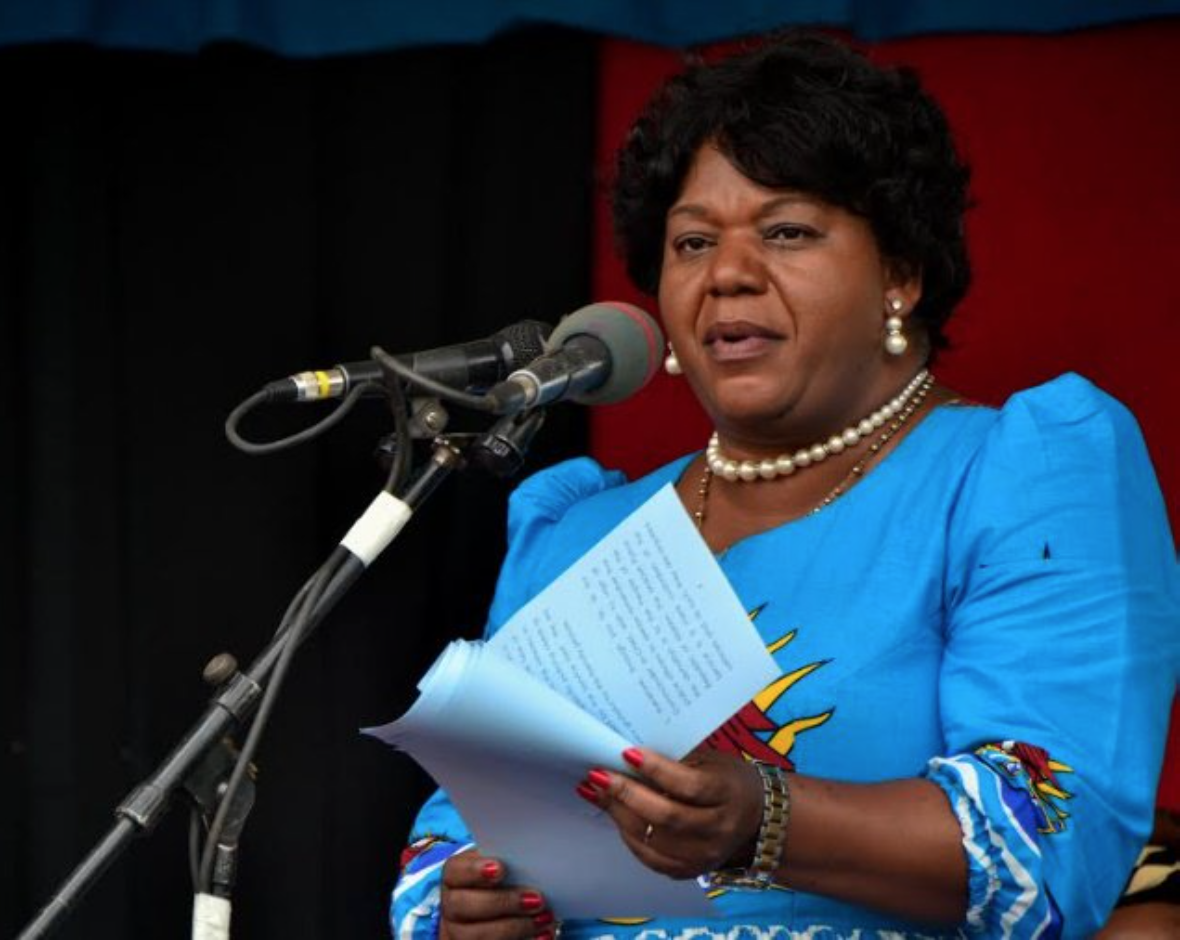
Minister of Home Affairs and Internal Security Cecilia Chazama: Malawi Police has a six-point safety strategy to foil albino ritual killing in the country

Minister of Home Affairs and Internal Security Cecilia Chazama has said Malawi Police has a six-point safety strategy to foil abduction and albino ritual killing in the country.

In a ministerial statement presenter in Parliament in Lilongwe on Fridayon the status of cases handled by the Malawi Police related to attacks on persons living with albinism, Chazama said the strategies include planting informants across the country who will provide police with tips on criminal syndicate.

Chazama said government has embarked on the strategies to ensure greater safety for people living with albinism while they enjoy their normal interactions with their community members.

The minister said community leaders will also be involved in the strategy.

In his contribution, Member of Parliament for Mulanje South Bon Kalindo suggested that people living with albinism be given their own, well-guarded village.

Kalindo said his suggestion for safe albino villages was an idea he learnt during a recent visit to Mongolia, in China, where those ostracised for their skin pigmentation problems live in special villages.

But Chazama said it was improper to isolate any group of people, even if it were for security reasons.

Source: Nyasa Times, June 11, 2018

Catholic priest among 11 charged for killing man with albinism in Malawi

web_photo_priest_02052018

Published: May 4, 2018
By: BRINKWIRE

BLANTYRE, Malawi – A Catholic priest, police officer, and a medical officer are among 11 people facing charges for the murder of a man living with albinism in Malawi, police spokesman James Kadadzera said.

The latest murder of a man with albinism in Malawi – the 22nd in four years – has sparked calls for their killers to be executed to deter a wave of attacks in the poor southern African nation.

Police said the dismembered corpse of 22-year-old McDonald Masambuka was found buried in southern Malawi several weeks after he went missing in March.
Information minister Nicholas Dausi said international rights groups and donors were preventing the government from using the death penalty to deter such crimes in Malawi, where people with albinism are hunted down for their body parts.

“They are stopping us from enforcing capital punishment,” Dausi was quoted by local media as saying at Masambuka’s funeral last month. “Yet in their countries they execute murderers. Is this fair?”

Malawi is one of the most dangerous countries in the world for people with albinism – a lack of pigmentation in the skin, hair and eyes – who are targeted so that their body parts can be used in magical potions and other ritual practices.
The United Nations’ top expert on albinism has said people with the condition risk “extinction” in Malawi due to relentless attacks fuelled by superstitions.

President Peter Mutharika has since said Malawi should have an “honest debate” about whether to apply the death sentence to those found guilty of murdering people with albinism.

Malawi suspended capital punishment more than 20 years ago as it embraced democratic reforms. Although the death penalty still exists in law, it has been declared unconstitutional.

Murders

But rights groups said the focus on the death penalty was misplaced and the government should step up its efforts to investigate unsolved murders and protect people with albinism.

“We never have any experience where the death penalty has been successful as a deterrent,” said Overstone Kondowe, head of the Association of People with Albinism in Malawi (APAM), which helps about 3,400 people with the condition.

It has recorded 146 attacks in Malawi since 2014. About one in 20,000 people worldwide have the congenital disorder, with higher rates in sub-Saharan Africa.

Only five of 22 murders reported since 2014 are in court, said Kondowe, with 17 unsolved. (italics by the webmaster FVDK)“We don’t have even have a suspect and nobody has been prosecuted,” he said of the 17 cases, adding that the police should reopen them now that they have better equipment.

“We didn’t have facilities of DNA testing to help with the investigation, so we’re seeking that because the current capacity can help to shed light on who was responsible.”

Rights groups called on the government to establish a commission of inquiry to find out who is behind the attacks, amid claims that they are organised by criminal gangs.

“There is a green light with the recent case where we have seen high profile people involved,” said Timothy Mtambo, who heads the Centre for Human Rights and Rehabilitation, a charity.“We believe a good investigation can open up our windows as to who is behind the trade … We would be able to say we have unveiled the market and done (away) with the roots.”

Mtambo also echoed a UN’s call on the government to implement its own plan to strengthen protection measures, including buying sturdy locks for poor families at risk of attack, and for public education to eradicate superstitions.

“It should invest in preventative measures, not ‘curing’ the problem,” he said. “It needs to understand where we have people with albinism, which can help in drawing security plans. Currently, there is no proper programme.”

Source: Catholic priest among 11 charged for killing man with albinism in Malawi

mi-area