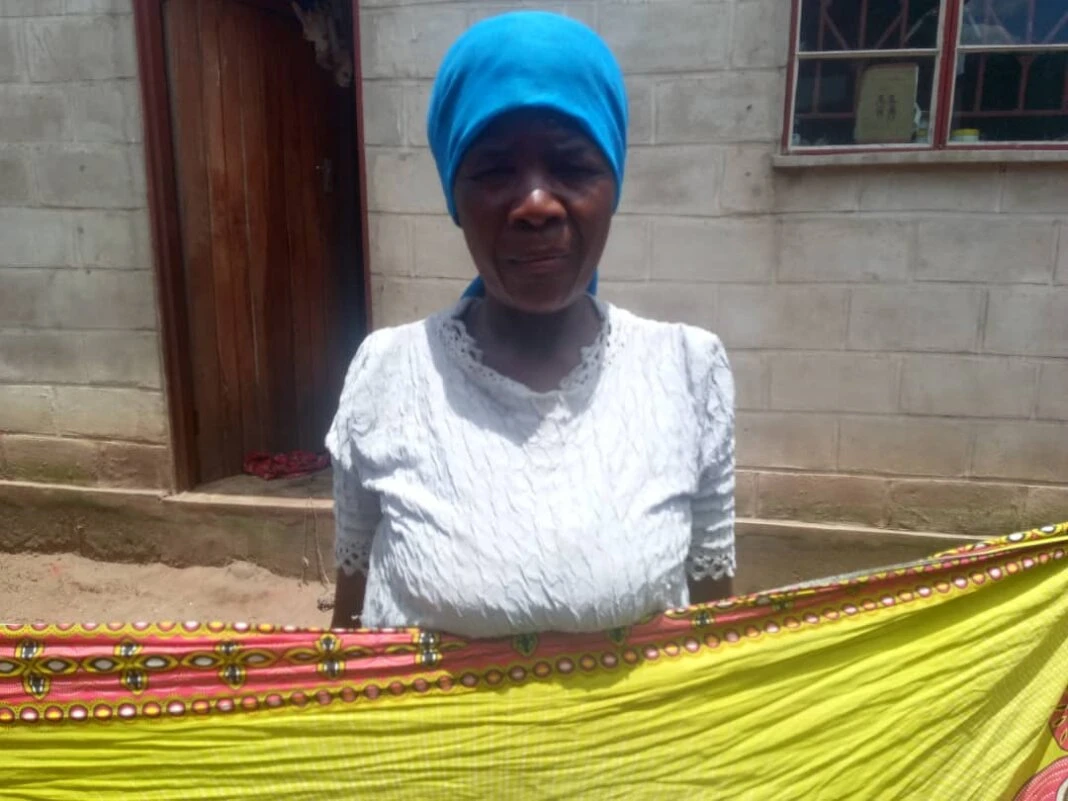
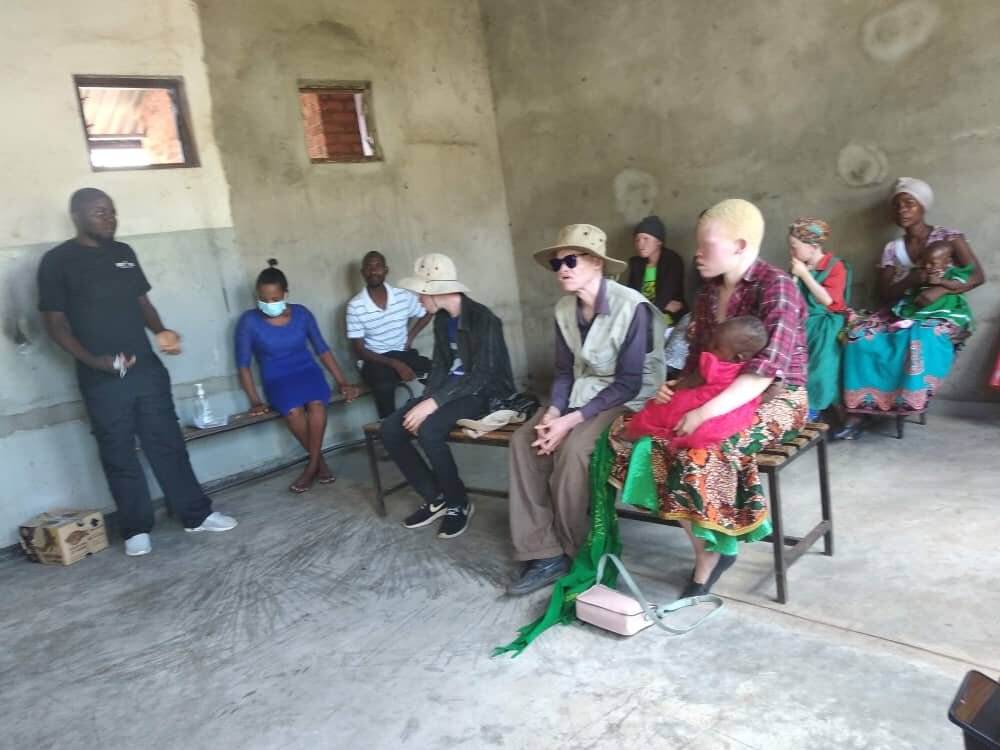
The life of Nelisiwe Shiba, a woman born with albinism, was never the same after dodging the night she was meant to ‘disappear’ for good, as per the age-old legend that people like her do not die — they simply vanish.
They can even leave the house in the middle of the night without informing anyone, as the legend goes, and take on a mysterious journey to a forest or mountain – never to be traced again.
However, just hours before the evening when such was scheduled to happen to Shiba (35), she was given a timely tip-off by a community resident supposedly sent by a member of the very group that had plotted to make her vanish forever. The member seemingly had a change of heart.
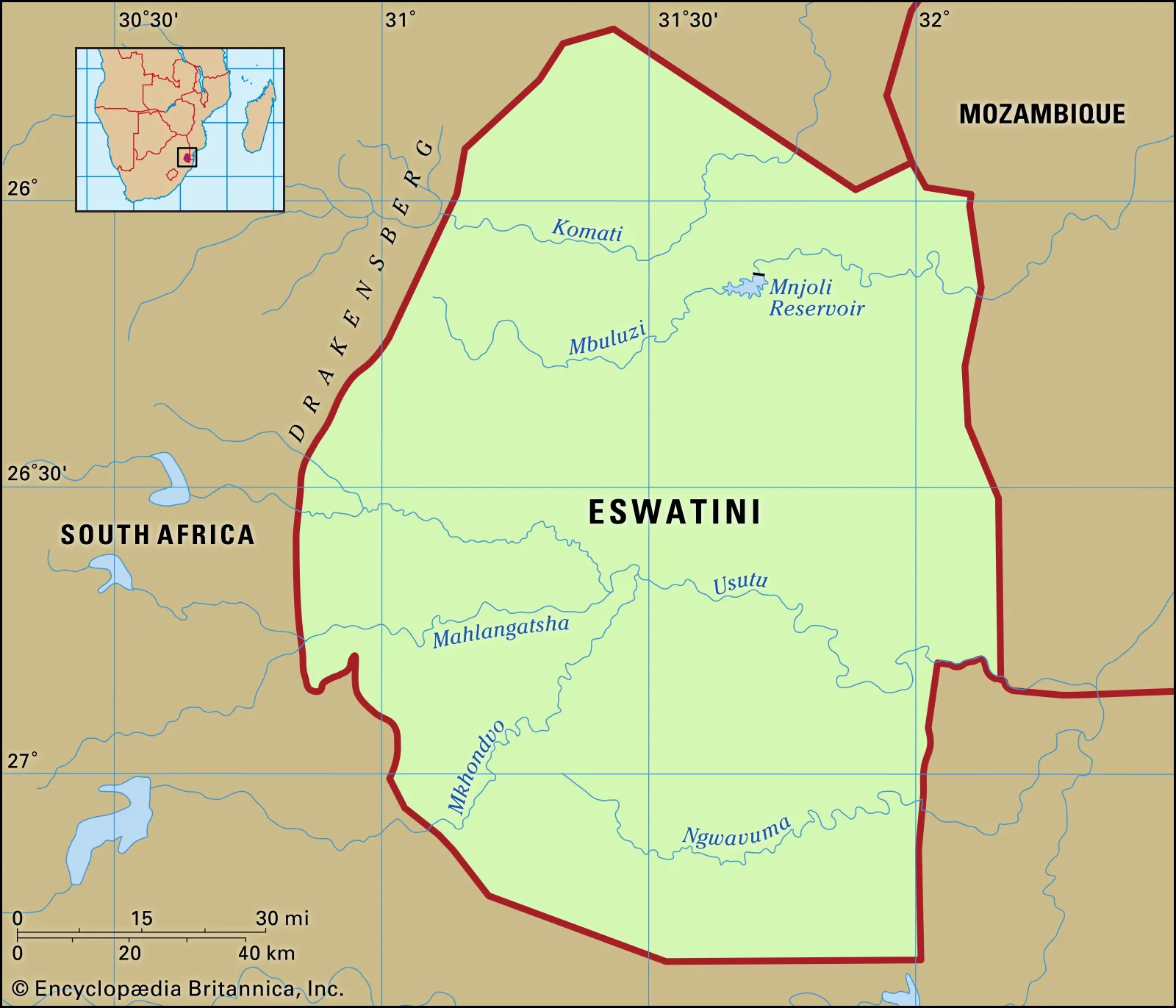
This took place in one of the small rural communities of Northern Hhohho, whose name she preferred not to disclose. She was 25 at the time and had a small child.
Since then, Shiba has been living with the kind of fear that grips people with albinism nowadays — that when the sun sets, they could fall victim to ritual killing disguised as mysterious disappearances. Albinism is a genetic condition in which a person is born with little or no melanin pigment, resulting in lighter skin, hair, and eyes and often causing vision problems.
Harmful myths falsely claim that people with albinism possess magical powers or bring wealth, a misconception that has contributed to discrimination, attacks, and ritual killings.
Elaborating on her account in the wake of International Albinism Awareness Day, commemorated on June 13 to promote the rights, dignity and inclusion of persons with albinism worldwide, Shiba mentioned that she had previously been oblivious to grave dangers faced by people like her.
“After I graduated from Limkokwing University, I relocated to Northern Hhohho because I got a piece-job as a shopkeeper in a grocery shop owned by a relative. The community there was very welcoming and I never felt unsafe, even at night,” she said.
The only challenge she knew and had experienced as a person with albinism was discrimination. Being vulnerable to murder for ritual purposes was a myth to her until the day she got a grave warning that saved her life.
Recounting the events of that day, she stated:
“The community member came to the shop where I worked.
He said he wanted my father’s contact number. I was sceptical about giving it to him, but he insisted with some urgency.”
She yielded after the man bluntly told her that she was not safe and must ensure she did not close the shop late that day.
“He called my father and I overheard the conversation. He informed him about a plot to take my life and that it was a done deal. I had been sold, that night would be the one I disappeared,” she stated.
Shiba also overheard that a certain witchdoctor or sorcerer was part of the group and had approved her as a suitable target. He would be there to oversee the ritual process of the killing. The fact that she had a small child, though without albinism, was viewed as a bonus. Shiba was going to ‘disappear’ with her child.
“When he finished the phone conversation, before departing, he gave me another stern warning not to tell anyone what I had heard.
Shortly afterwards, I received a call from my father, who told me to pack up and find someone to carry on with the shop the following day because he would be fetching me before evening,” she explained.
Shiba remembers being emotionally traumatised by the visit and feeling weak at the knees with fear due to sudden realisation she was never completely safe due to her albinism.
Early that evening, her parents arrived in a car and took her and her child away without giving any hint that it was, in fact, a desperate escape.
She recalled that the community member who warned her father hinted during the phone call that the homestead involved in the deadly plot was nearby.
These were people she interacted with almost daily and would never have suspected to harbour such intentions. Looking back, she says the incident became a turning point that fuelled her distrust of people — something that persists to this day. It takes time for her to let down her guard.
“I don’t hitchhike or accept lifts unless it is from someone very close and trusted. I rely on public transport and would rather go back home than accept a lift from strangers,” she added.
Since that day, she has also become sensitive to noises at night. The slightest sound in or outside the house wakes her up, and she listens carefully to determine its nature.
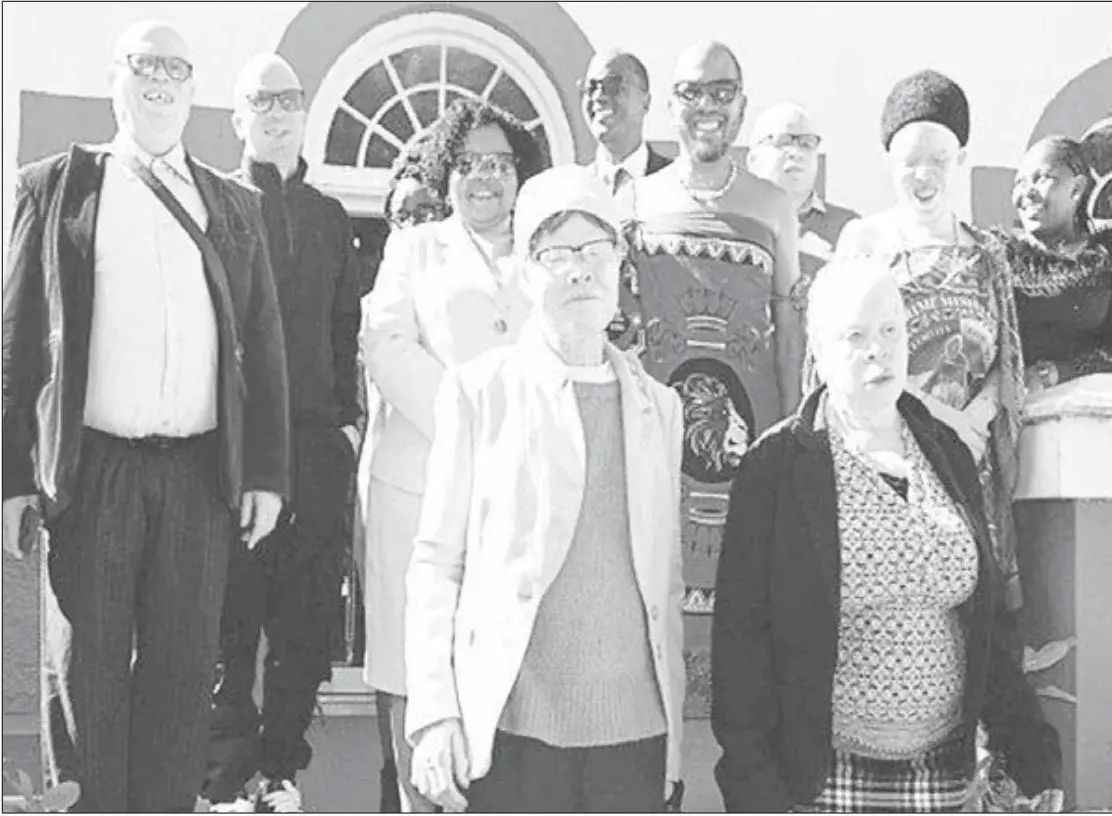
Over the years, Shiba channelled that fear into advocacy by joining the Swaziland Association of Persons with Albinism (SAPA), where she has since risen to the position of president.
“I’ve also become a motivator for persons with albinism and try to fight for our rights. Apart from threats to our lives, we suffer social discrimination a lot, as many people have wrong information about albinism,” she said.
“There’s still a long way to go in educating the nation and debunking all the myths.”
Warning: This post contains graphic views and contents which may upset readers and viewers.
By chance, I recently stumbled upon the impressive BBC film about money rituals in Africa, which was published late last year. The film is bewildering, terrifying and at the same time admirable. Based on an undercover operation in Sierra Leone, investigative journalist Tyson Conteh explains in the 50-minute film how a ‘money ritual’ works.
The film addresses all facets of murder for ritual purposes: naturally, first and foremost, the superstition regarding the supernatural powers derived from ‘juju’ obtained from human organs, body parts, or whatever else. Furthermore, the unscrupulous, criminal nature of the mastermind, the intermediary, the actual murderer, and the role of the witch doctor or traditional healer is clearly revealed. They are willing to sacrifice the life of an innocent victim for their own ambition or greed.
Tyson Conteh also addresses the impunity with which those responsible for these crimes unfortunately often get away, partly explained by the active involvement in some cases of politicians, traditional authorities, and/or other public figures. A complicating factor is that some well-intentioned African law enforcement officers—policemen—also believe in the power of the ‘juju’ that surrounds these crimes and are cautious or even reluctant in investigating and combating these gruesome acts. The practice of ritual killings hits very close to home for Tyson Conteh, who, along with his team, deserves nothing but praise for this insightful film, when he learns that a close family member has fallen victim to ritual killing. The pain and grief of the victim’s parents and other relatives are deeply relatable and moving.
Finally, it is important to mention that the intermediaries and witch doctors filmed by the investigation team were possibly fraudsters who verbally declared themselves willing to carry out a ritual murder on demand for a substantial sum, with the aim of swindling the client out of their money. Needless to say, the undercover journalist did not let it get that far.
I highly recommend viewing this film. To access the film, please click here (webmaster FVDK)
Warning: the following post contains graphic details of abductions, mutilations and other criminal acts including murder which may upset readers.
Unfortunately, the abduction, mutilation and killing of persons with albinism for ritualistic purposes have never disappeared in the Southern African country of Malawi. I have devoted considerable attention to this in the past.
Without pretending to be exhaustive I refer to the following posts: 2015, 2016, 2018, 2019, 2020, 2021, 2022, 2024. Interested readers may use the dropdown menu (under ‘African countries’) for all posts on Malawi. For last year, 2025, I may refer to an article published by The Guardian, A friend killed, and inquiries shelved: life fighting the stigma of albinism in Malawi (not covered on the present ste). It draws attention to the increasing fear among people with albinism in light of the scheduled elections.
As has been reported before, there exists a link between an increase of reported ritualistic killings and elections (see my March 18 post) – and Malawi does not seem to be an exception – whereas the Association of Persons with Albinism in Malawi (APAM) has drawn attention to the connivance of certain politicians who obstruct fair investigations into reported attacks on people with albinism and ritual murder cases or sweep them under the rug, see my 2021 post on the subject.
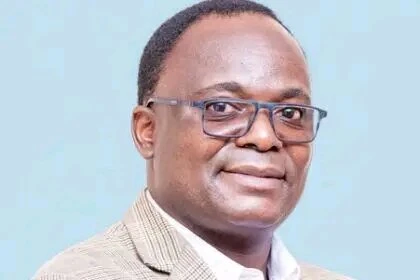
The Malawi-based journalist and media professional Benson Kunchezera has a strong focus on development reporting, particularly in areas such as agriculture, digital innovation, public health, and environmental sustainability. Besides the just mentioned areas of interest and competence he is also interested in human rights issues in particular the position of persons with albinism and their plight in some countries notably Malawi. I commend him for drawing international attention to the precarious position of people with albinism in Malawi and highly recommended reading his recently published article on this topic.
Malawi’s renewed attacks on persons with albinism raise alarm
Attacks, abductions, and grave tampering targeting persons with albinism have resurfaced across Malawi in 2026, reigniting fears that the country’s progress on protecting this vulnerable community is unravelling. Civil society is fighting back — but without a renewed national action plan, advocates warn the worst may be yet to come.
The story of Flora Saidi remains one of the most painful reminders of the violence faced by people with albinism in Malawi. According to accounts documented by advocacy organisations supporting persons with albinism in the country.
Flora Saidi
It was a Monday morning in 2003 when Flora Saidi left her home in Kadewere village under Traditional Authority Chowe in Mangochi, hoping to find piecework to feed her family. She left behind her 19-year-old son, Saidi Daitoni, a young man with albinism.
When she returned home empty-handed later that afternoon, her son had managed to earn a small amount of money. They agreed to share it with his girlfriend, who was visiting. Saidi left with her to look for change so they could divide the money properly. He never returned.
The following morning, Flora began searching for him. By then, he had disappeared. Police were informed, and after a search, his body was discovered near a residence he had visited the previous evening. Some of his body parts had been removed. The perpetrator was later sentenced to 155 years in prison with hard labour.
PERSISTENT THREATS IN RURAL MALAWI
Malawi has 134,636 persons with albinism, with over 117,000 living in rural areas. It is in these rural communities where poverty, limited law-enforcement presence, and entrenched myths combine to create dangerous conditions.
Persons with Albinism, especially in the southern African regions face persecutions, because their body parts are believed to bring lack of wealth after being mixed with some concoctions by a witch doctor.
Others believe that when they have unprotected sexual intercourse with a person with albinism they can get cured of HIV/ AIDS.
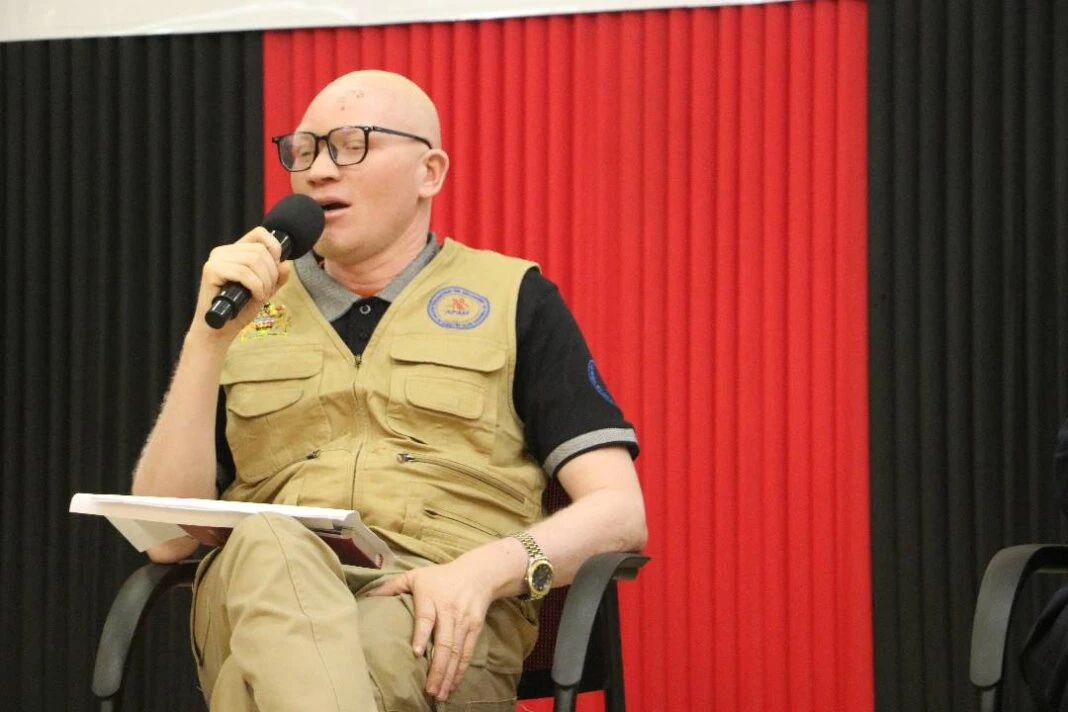
The Association of Persons with Albinism in Malawi (APAM) has documented fresh cases in districts including Mulanje, Kasungu, and Dowa. Grave tampering and disappearances have reignited fear among families who had begun to feel cautiously safe.
In February 2018, Amnesty International published a joint report by the Ministry of Justice and Constitutional Affairs and the Malawi Police Force with 148 cases reported in Malawi’s four districts.
Recently, in 2026, more than 4 cases of persons with Albinism have been recorded by the Malawi Police Service ranging from attacks, abductions and tampering of graves in some parts of the country.
“We thought we were coming to an end of these attacks,” Maynard Zacharia, APAM’s National Coordinator, told FairPlanet. “Now we are seeing signs that the underlying issues were never fully resolved.”
Maynard Zacharia
COMMUNITY PROTECTION IN ACTION
In response, APAM has intensified its on-the-ground efforts. The organisation is not only condemning attacks publicly but also mobilising communities in hotspot districts such as Machinga.
One strategy involves relocating children with albinism from high-risk areas to safer homes. In some cases, this means placing them in boarding facilities or with vetted guardians where security is stronger. At the same time, APAM is lobbying authorities and partners to invest in secure-housing projects with reinforced doors, burglar bars, and community-based surveillance systems.
Beyond physical protection, APAM is conducting awareness campaigns aimed at dismantling the myths that drive violence. Working with chiefs, faith leaders, and local youth groups, activists hold community dialogues that confront harmful beliefs directly. In village meetings, survivors and families share testimonies, reframing albinism as a genetic condition rather than a mystical anomaly.
“These conversations are not easy,” Zacharia told FairPlanet. “But we have seen that when traditional leaders publicly reject the myths, attitudes begin to shift.”
The organisation is also pressing for the conclusion of more than 28 long-pending court cases involving murder and abduction. By monitoring proceedings and engaging legal-aid partners, APAM hopes to prevent cases from stalling indefinitely — a pattern that erodes public trust.
Kaiyatsa told FairPlanet that fear remains a major barrier to reporting threats. In rural areas, families often hesitate to approach police due to mistrust in the justice system and fear of retaliation.
According to him, the situation was further complicated by the controversial pardon of police officers previously convicted in connection with an albinism-related killing. For rights groups, the decision sent a damaging signal.
“To victims’ families, it suggested that justice can be undone,” Kaiyatsa told FairPlanet. “To would-be offenders, it reinforced the perception that accountability is not guaranteed.”
Michael Kaiyatsa
In response, CHRR and other organisations have stepped up advocacy for witness-protection mechanisms and independent monitoring of investigations. They are pushing Parliament and relevant ministries to allocate dedicated funding for protection programmes and to ensure that cases are prioritised within the judiciary.
REVIVING NATIONAL COMMITMENTS
Malawi once drew international praise for adopting a National Action Plan on the Protection of Persons with Albinism. However, the plan expired in 2022 and has yet to be renewed, leaving what activists describe as a dangerous coordination gap.
“Commitments on paper are not enough,” Zacharia says. “We need implementation that reaches the village level.”
REBUILDING TRUST FROM THE GROUND UP
On the ground, solutions are increasingly community-driven. In some districts, local committees made up of chiefs, police representatives, teachers, and activists meet regularly to assess risks and share information. Informal early-warning systems — such as community WhatsApp groups with coordinated night patrols-have been introduced in certain high-risk areas.
Civil society organisations are advocating for long-term assistance for affected families, including counselling, educational support for orphaned children, and income-generating projects for households that have lost breadwinners.
These initiatives aim not only to respond to attacks but to address their ripple-effects — school dropouts, psychological trauma, and deepening poverty.
A FRAGILE BUT DETERMINED PROGRESS
Organisations such as the Scotland Malawi Partnership insist that regression is not inevitable. They point to the increasing visibility of persons with albinism in advocacy spaces, media platforms, and leadership roles.
Flora Saidi, though still grieving, has participated in community meetings where she shares her story. Her testimony serves both as a warning and a call to action.
For Malawi, the struggle to protect persons with albinism is about more than ending ritual killings. It is about strengthening rural policing, restoring faith in the justice system, and dismantling centuries-old myths.
For people like Flora Saidi, safety is still uncertain, but hope lies in the quiet work happening in villages and communities across Malawi.
Their efforts may not end the attacks overnight. But for families living in fear, each community meeting, each court case and each safe home built is a step toward something simple with the chance to live an ordinary life without fear.
Unfortunately, murders for ritualistic purposes are not an exception in the West African country of Sierra Leone even though reported cases are relatively scarce. But, as in many other African countries, there might be a substantial gap between reported cases and the reality. Cases may go unreported for various reasons: protection of the perpetrator or the person who ordered the crime for ritualistic purposes, fear of reprisal, or simply because the victim of the crime was successfully hidden, e.g. in a dense forest area.
The article below is a living testimony that also in Sierra Leone the trade in human body parts makes innocent victims. The criminalization of what was once a traditional ceremony—albeit a deadly one—is not limited to Sierra Leone, unfortunately. The BBC investigation below exposes the grim reality of contemporary ritual killings for individual, personal gain: get-rich-quick schemes, increased social status, or for political purposes.
Warning: some readers may find the following articles disturbing because of their graphic contents. (webmaster FVDK)
Hunting down those who kill people to sell their body parts for ‘magic charms’
Papayo’s mother Sally Kalokoh has not come to terms with her son’s death and wants his killers found
Published: November 24, 2025 By: BBC – Tyson Conteh, Sierra Leone
With many families left traumatised by killings apparently linked to supposed magic rituals in Sierra Leone, BBC Africa Eye looks into those behind the trade in human body parts.
Warning: This article contains details some readers may find disturbing.
The mother of an 11-year-old boy murdered as part of a suspected black magic killing four years ago is devastated that no-one has yet been brought to justice for his death.
“Today I’m in pain. They killed my child and now there is just silence,” Sallay Kalokoh told BBC Africa Eye, explaining how her son Papayo was found with parts of his body removed, including his vital organs, eyes and one arm.
He had gone out to sell fish at the market and never came back.
His family searched for him for two weeks – and finally found his mutilated corpse at the bottom of a well.
“We always tell our children to be careful. If you are selling, don’t go to a corner or take gifts from strangers. It happens frequently in this country,” Ms Kalokoh said.
This murder in my hometown of Makeni, in central Sierra Leone, has haunted me as we often hear of reports of killings linked to black magic, also known as juju, that are never followed up or properly investigated by the authorities.
In Papayo’s case, the police did not even confirm that it was a “ritual killing” – when a person is murdered so that parts of their body can be used in so-called magic rituals by illicit juju practitioners.
They promise things like prosperity and power to clients who pay large sums in the false belief that human body parts can make such charms more potent.
But with the authorities severely under-resourced – there is only one pathologist in a country that has a population of 8.9 million – it is often impossible to gather the evidence needed to track down the culprits.
Belief in witchcraft is also so deeply ingrained in Sierra Leone, even among many police officers, that there is often a fear of pursuing cases further – and most go unsolved.
But I wanted to find out more about this underground trade in human body parts that leaves tragedy in its wake.
Our BBC Africa Eye team was able to find two people who claimed they were juju practitioners and offered to obtain body parts for ritual purposes.
Both said they were part of much larger networks – and one boasted that he had powerful clients across West Africa. The BBC was unable to verify these claims.
One member of our team went undercover, using the name Osman, to pose as a politician who wanted to achieve power through human sacrifice.
We first travelled to a remote area of Kambia district, in the north of the country near the Guinean border, to meet the juju man in his secret shrine – an area in dense bush where he consulted with his clients.
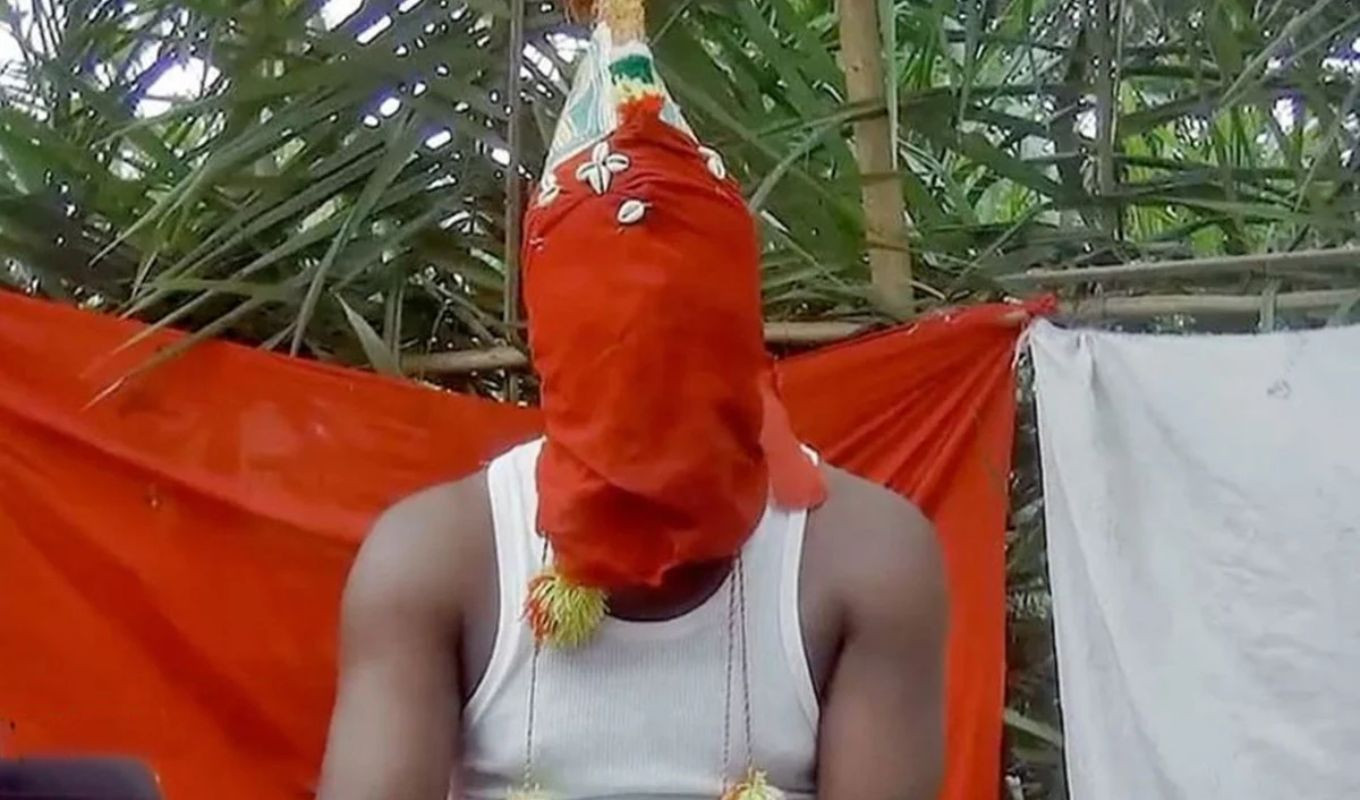
Calling himself Kanu, he wore a ceremonial red mask covering his whole face to conceal his identity and boasted of his political connections.
“I was working with some big, big politicians in Guinea, Senegal and Nigeria. We have our team. Sometimes during election time, at night, this place is full of people,” he claimed.
On a second visit, Kanu became more confident and showed Osman what he said was evidence of his trade – a human skull.
“You see this? This belongs to someone. I dried it for them. It is a woman’s skull. I am expecting the person to pick this up today or tomorrow.”
He also pointed to a pit behind his shrine: “This is where we hang human parts. We slaughter here, and the blood goes down there… Even big chiefs, when they want power, come here. I give them what they want.”
When Osman specified that he wanted limbs from a woman to be used in a ritual, Kanu got down to business: “The price of a woman is 70m leones [£2,500; $3,000].”
Sierra Leone is one of the world’s poorest countries and is recovering from the legacy of a brutal 11-year civil war
Anxious not to put anyone at risk, we did not meet Kanu again. He may have been a scammer, but we handed over our evidence to the local police to investigate further.
Such juju men sometimes refer to themselves as herbalists, the name given to healers who use traditional medicine often made from local plants to treat common illnesses.
World Health Organization data shows that Sierra Leone – which suffered a brutal civil war in the 1990s and was at the centre of the Ebola epidemic a decade ago – had around 1,000 registered doctors in 2022, compared to reported estimates of 45,000 traditional healers.
Most people in the West African nation rely on these healers, who also help with mental health issues and treat their patients in shrines where there is an element of mysticism and spiritualism culturally associated with their craft and the remedies they sell.
Sheku Tarawallie, president of Sierra Leone’s Council of Traditional Healers, is adamant that “diabolic” juju men like Kanu are giving healers a bad name.
“We are trying very hard to clear our image. The ordinary person doesn’t understand, so they class us [all] as bad herbalists. One rotting fish can destroy the batch of fish… We are healers, we are not killers,” he told BBC Africa Eye.
Mr Tarawallie is in fact trying to work with the government and another non-governmental organisation to open a traditional medicine clinic to treat patients.
It was those with a lust for power and money who were often behind the ritual killings, he believed.
“When somebody wants to become a leader… they remove parts from human beings. They use that one as a sacrifice. Burn people, use their ashes for power. Use their oil for power.”
The number of ritual killings in Sierra Leone, where most people identify as Muslim or Christian, is not known.
“In most African countries, ritual murders are not officially recorded as a separate or sub-category of homicide,” Emmanuel Sarpong Owusu, a lecturer at the UK’s Arden University, told the BBC.
“Some are misclassified or misreported as accidents, deaths resulting from attacks by wild animals, suicides, natural deaths… Most perpetrators – possibly 90% – are not apprehended.”
When we found another suspected supplier of body parts, he was located in a suburb of the capital, Freetown, called Waterloo, which is notorious for drug abuse and other crime.
“I’m not alone, I have up to 250 herbalists working under my banner,” the man calling himself Idara told Osman, who was again undercover and wearing a secret camera.
“There are no human parts that we don’t work with. Once we call for a specific body part, then they bring it. We share the work,” Idara said.
He went on to explain how some of his collaborators were good at capturing people – and on Osman’s second visit played a voice message from one of them who claimed they were prepared to start going out every night in search of a victim.
Osman told him not to proceed yet but when he later received a call from Idara claiming his team had identified a victim, we contacted Police Commissioner Ibrahim Sama.
He decided to organise a raid – but said his officers would not do so without the involvement of Mr Tarawallie, who often assists the police on such operations.
“When we got intelligence that there is a particular dangerous witchdoctor operating a shrine, we will work with the traditional healers,” said an officer on the raid, Assistant Superintendent Aliu Jallo.
He went on to express the superstitions some officers have about tackling rogue herbalists: “I will not go and provoke situations. I know that they have their own powers that are beyond my knowledge.”
After Idara was captured – discovered hiding in the roof clutching a knife – Mr Tarawallie began searching the property for evidence, saying there were human bones, human hair and piles of what looked like dirt from cemeteries.
This was enough for the police to arrest Idara and two other men, who were charged in June with practising sorcery as well as being in possession of traditional weapons used in ritual killings. They pleaded not guilty to the charges and have since been granted bail, pending further investigations.
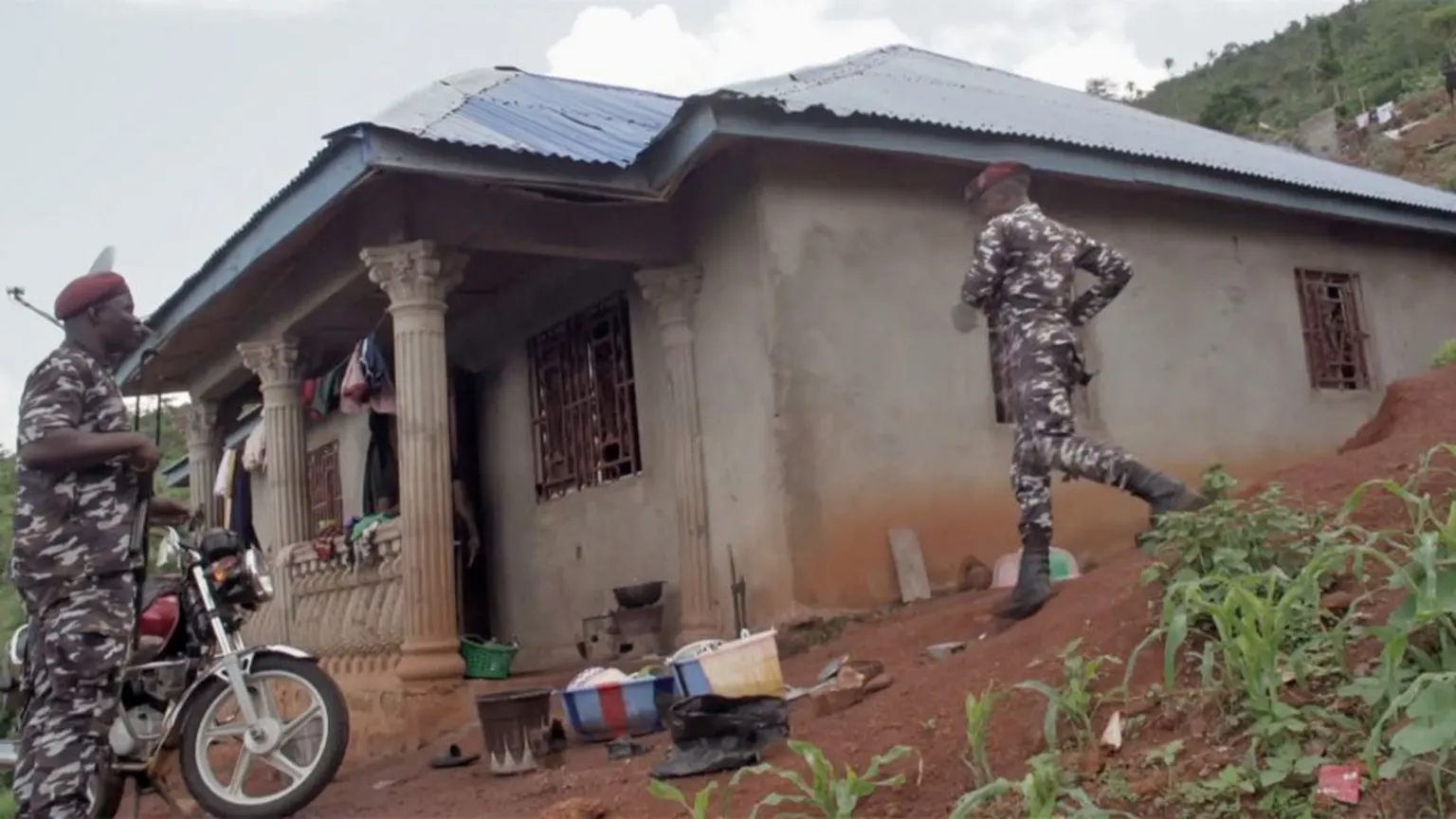
The police raided this house in Waterloo and arrested the occupants, including Idara, who were later charged under anti-witchcraft laws
As we never heard back from the police in Kambia about Kanu, I tried to call him myself to challenge him about the allegations directly, but he was unreachable.
There are occasions when even high-profile cases appear to stall. Two years ago, a university lecturer went missing in Freetown and his body was later found buried in what police say was the shrine of a herbalist in Waterloo.
The case was referred in August 2023 by a magistrate to the High Court for trial, but two sources have told the BBC it has not been pursued so far and those detained by police have been released on bail.
My family is facing similar hurdles finding justice. In May, during our BBC investigation, my 28-year-old cousin Fatmata Conteh was murdered in Makeni.
A hairdresser and mother of two, her body was dumped the day after her birthday by the side of the road where a resident told the BBC two other bodies had been found in recent weeks.
Several of her front teeth were missing, leading the community to believe it was a ritual killing.
“She was a lady that never did harm. She was very peaceful and hard-working,” said one mourner as family, friends and colleagues gathered for a big funeral at her local mosque.
We may never know the true motive for Fatmata’s murder. The family paid for her body to be transported to Freetown for an autopsy – something the authorities could not afford to do – but the post-mortem was inconclusive and no arrests have yet been made.
As is the case for Papayo’s mother, the lack of closure and feeling of abandonment by the police fuels fear and terror in poor communities like Makeni.
Additional reporting by Chris Alcock and Luis Barrucho
‘Murder for black magic’: when body parts are sold for ‘magical amulets’
A series of murders suspected of being caused by black magic rituals has shaken Sierra Leone
“Murder for black magic”: The horrific stories in Africa where body parts are sold for ‘magical amulets’
Published: November 26, 2025 By: Vox News
Four years ago, 11-year-old Papayo was killed in a crime believed to have been part of a black magic ritual. His mother, Sallay Kalokoh, is devastated that no one has yet been brought to justice. Papayo was found butchered at the bottom of a well, with body parts removed, including vital organs, eyes and one arm. He had gone to sell fish at the market and never returned.
“We always advise children to be careful. If you sell something, don’t go to some remote corner and don’t accept gifts from strangers. This happens a lot in this country,” Kalokoh said.
Papayo’s murder in the central city of Makeni is just one of many suspected cases of black magic (juju) that are often not investigated or pursued by authorities. In his case, police never confirmed that it was a “ritual killing.”
The dark market for body parts
Juju practitioners promise prosperity and power to clients who pay large sums, believing that human body parts make their spells more powerful. However, with authorities having limited resources – just one pathologist for a population of 8.9 million – it is difficult to gather evidence to prosecute the perpetrators.
Belief in witchcraft is so ingrained in Sierra Leone, even among some police officers, that there is often a fear of pursuing cases, and most remain unsolved.
According to a BBC Africa Eye investigation, the team managed to contact two people who claimed to be juju practitioners and offered body parts for rituals. They said they were part of larger networks and one claimed to have powerful clients in West Africa, but the BBC was unable to verify these claims.
A team reporter went by the name Osman, posing as a politician seeking power through human sacrifice. In a remote area of ??Kambia district, he met a practitioner who wore a red ceremonial mask and threatened to work with top politicians in Guinea, Senegal, and Nigeria. He showed a human skull and a pit where body parts were placed.
When Osman asked for body parts from a woman for the ritual, the practitioner estimated the price at 70 million leones (around £2,500 / $3,000). For the safety of the team, the BBC did not meet the practitioner again, but handed over the evidence to the local police.
The role of traditional healers
Some practitioners are also called traditional healers and use plants to treat common ailments. Sierra Leone has about 1,000 registered doctors and about 45,000 traditional healers, who often also help with mental health issues.
Sheku Tarawallie, president of the Traditional Healers Council, points out that “evil” practitioners give all healers a bad name: “We are healers, not killers. One rotten fish can spoil all the wheat… We are trying to clean up our image.”
He believes that behind the ritual killings are those who covet power and money “when someone wants to become a leader… they remove parts from people. They use them as sacrifices, they burn people, they use the ashes and oil for power.”
Police operations and arrests
A suspected supplier was found in Waterloo, a Freetown neighborhood known for crime and drug use. He claimed to have 250 healers working under him and could provide any body part required.
The police, in collaboration with Tarawallie, organized a raid. Idara was caught hiding on the roof with a knife. Bones, human hair, and cemetery soil were found on the property. He and two others were charged with practicing witchcraft and possessing ritual weapons. They pleaded not guilty and were released on bail.
Other cases and lack of justice
Two years ago, a university lecturer disappeared in Freetown and was later found in a ritual square. Families like Papayo’s and those of her 28-year-old cousin Fatmata Conteh, who was killed in Makeni, face the same obstacles to justice. The autopsy was inconsistent and there were no arrests.
The market for body parts for witchcraft rituals in Sierra Leone remains secretive, dangerous and largely unsolved. A lack of resources, deep-rooted belief in witchcraft and challenges to proper investigation leave communities impoverished and terrified, as families seek justice for their loved ones.
Human Sacrifice in Sierra Leone Driven by Black Magic Practices
Published: November 26, 2025 By: Khaborwala International Desk
The superstition surrounding black magic remains deeply rooted in Sierra Leone, where numerous families have suffered killings linked to the illegal trade in human body parts. Shocking details have emerged in an investigation by BBC Africa Eye.
Four years ago, 11-year-old Papayo was murdered in the name of black magic. His mother, Sallai Kaloka, is still waiting for justice. She told the BBC, “I am in great pain. They killed my child, and now there is only silence.”
Sallai said Papayo never returned home after she left for the market to sell fish. When his body was found, vital organs, his eyes, and one hand had been removed. After being missing for two weeks, his mutilated body was discovered in an abandoned well.
She said, “We always warn our children—don’t go to deserted places, be cautious before accepting anything from strangers. Incidents like this happen frequently here.”
According to Sallai, such killings are common in their town, Makeni. Police often do not even classify them as ritual killings. Juju practitioners use human body parts for charms or rituals and lure clients by promising wealth or power. With only one pathologist for a population of 8.9 million, proper investigations are nearly impossible.
Belief in black magic is so strong in Sierra Leone that even police officers are often afraid to investigate these cases, leaving most crimes unresolved. BBC Africa Eye found two individuals who claimed to be juju practitioners and offered to supply human body parts.
One of them said they had clients across several West African countries. A BBC Africa Eye member, disguised as a politician named Osman, travelled to Kambia district near the Guinea border to meet a juju practitioner named Kanu, whose face was covered with a red cloth throughout the meeting.
Kanu said, “I have worked with major politicians in Guinea, Senegal, and Nigeria. People flock here during election periods.” He then showed a dried human skull, claiming, “This belonged to a woman. Someone will take it within a few days.” According to him, female body parts cost 70 million leones, or around 3,000 dollars.
For safety reasons, the BBC made no further contact with him. The collected information has been handed to the police.
Many juju practitioners in Sierra Leone identify themselves as herbalists. Yet, as of 2022, the country had only about 1,000 registered doctors, compared to nearly 45,000 traditional healers. Many people seek help from these healers for mental health and other issues.
Sheku Tarawali, president of the Sierra Leone Council of Traditional Healers, said black magic practitioners like Kanu are tarnishing the reputation of herbalists. He accused some individuals of committing these murders for power and money.
BBC Africa Eye also identified another suspected supplier of body parts in Waterloo. The man, using the alias “Idara”, claimed to have 250 witchdoctors and spirit practitioners working under him and said they could provide any body part if required.
During one meeting, he played a voice note from an associate saying they were ready to hunt for a “victim” that night. After receiving this information, Police Commissioner Ibrahim Sama launched a raid with Sheku Tarawali and a specialist team. Human bones, hair, and various body parts were recovered.
Earlier, the body of a university lecturer had been found in a temple in Waterloo. The case went to the High Court but never progressed, and the suspects were released on bail.
During the BBC investigation, 28-year-old Fatmata Conteh was murdered in Makeni. Her body was found by the roadside the day after her birthday, with several front teeth missing—leading locals to believe it was a ritual killing. Her family sent the body to Freetown for an autopsy at their own expense, but no findings emerged.
Like Papayo’s mother, many families continue to suffer without justice. Police inaction and a culture of fear have intensified widespread panic across the region.
Witchcraft accusations are not uncommon in Liberia – nor in other African countries, as can be read in my recent post of August 18 and older posts.
I’ve commented in older posts on the outdated practice of witchcraft accusations and related maltreatment, sassywood practices (trial by ordeal) and mob justice. For briefness sake I present here some of my earlier posts on this subject. The reader is warned that some graphic details may be shocking.
Accusations of witchcraft are not limited to a particular area, county, town, village or tribe, as the following lists shows. Moreover, it must be emphasized that reported cases are usually the tip of an iceberg. It must be feared that many cases remain unreported.
It’s unclear whether the rising numbers of missing persons, abductions and suspected and confirmed cases of ritualistic killings are related to internal Tanzanian politics. However, what is clear is that there is is increasing level of insecurity in certain parts of this East African country notably in the Singida region whereas the role played by certain witchdoctors seems undeniable.
The Tanzanian police arrested seven people. Will this stop the abductions and killings? It all depends on the follow-up of these arrests – and may be more to come? – that is to say it all depends on the authorities to show seriousness and perseverance to restore security and the rule of law in the country thereby restoring confidence in their government of local residents. (webmaster FVDK)
Tanzania: Police crackdown on rising ritual killings in Singida
The Tanzania Police Force spokesperson David Misime. PHOTO | COURTESY
Published: August 26, 2024 By: The Citizen, Tanzania
The following article is a painful read. It is a horrifying murder, a child sacrifice.
In Kiboga District two witchdoctors have been seized suspected of murdering a 11-year old girl, Oliver Amanda, for ritual purposes. The girl had been missing since June 11. She was found dead, mutilated, with body parts missing.
This is not the first suspected ritualistic murder in the region. Recently, in April, police arrested a witchdoctor, Sulaiman Ssentongo, on suspicion of having murdered for ritual purposes two siblings, two-year old Esther Nakasumba, and five-year Sylvia Nantongo. The headless bodies of the victims were discovered the day after they had disappeared. See my April 25 post on this ritual murder case.
When will it stop? How to stop child sacrifice and other criminal ritualistic acts – in Uganda and elsewhere on the African continent? (FVDK)
Two witchdoctors remanded over Kiboga girl killed in ritual sacrifice
Madina Nakyeyuna (in pink) accompanied by a prison warder as she appeared at the Kiboga Chief Magistrate Court where she was charged with murder alongside her colleague Hamimu Luyombya (not pictured). Photo/ Courtesy
Due to time constraints I haven’t posted much recently. The ritual murder reported below dates from early April. A witchdoctor killed two childen for ritual purposes in Kiboga District, approximately 120 kilometres (75 mi), by road, northwest of Kampala, Uganda’s capital. The headless bodies of the victims were discovered the day after the two children, siblings, got missing.
The police and authorities in Uganda are to be commended for their swift action. The witchdoctor, Sulaiman Ssentongo, and an accomplice, Maureen Namuleme, were arrested. More arrests are not excluded. (FVDK)
Witchdoctor arrested over murder of two siblings in ritual sacrifice
Published: April 9, 2024 By: The Observer, Uganda
The directorate of crime intelligence (DCI) has arrested a witch doctor, Sulaiman Ssentongo, suspected of having killed two children in Kiboga on Wednesday last week for ritual sacrifice.
After committing the crime, Ssentongo reportedly fled to Kireka, Kira Municipality, in Wakiso district. Shock engulfed residents of Kasega parish, Kapeke sub-county, when the siblings; Sylvia Nantongo aged five and Esther Nakasumba aged two mysteriously went missing. Locals launched a search for the siblings on Wednesday night and their headless bodies were discovered the next day.
Upon finding the bodies, police in Kiboga launched investigations using sniffer dogs which ended up at Ssentongo’s shrine. It was later established that Ssentongo aged 32 had fled the area with the help of his accomplice Maureen Namuleme, aged 41.
Kiboga police quickly alerted DCI and the police’s cyber unit which started tracking the duo’s movement using a mobile phone until they were found hiding in Kireka township, one of the busiest suburbs of Kampala.
Detectives have revealed that Ssentongo has confessed that he was given transport money to run to safety after committing the crime by Namuleme – something which he later denied. The duo has been transported back to Kiboga where they allegedly committed the crime. SP Racheal Kawala, Wamala regional police spokesperson, has confirmed Ssentongo and Namuleme’s arrest.
“Our crime intelligence operatives have apprehended two suspects in connection with the double murders that occurred in Kasega parish, Kapeke sub-county, Kiboga district. The suspects have been identified as Sulaiman Ssentongo, 32 years old Namuleme Maureen, 41 years old,” said Kawala.
Ssentongo is a resident of Kirinda village, Kasega parish, Kapeke sub-county, in Kiboga district while Namuleme is a resident of Kisingiri cell, Namiremebe Bakuli ward, Rubaga division, Kampala.
Kawala said Ssentongo was tracked using his mobile phone. She also said that Ssentongo alleges that Namuleme is the person who helped him with money to flee the scene.
“The suspects are currently detained at Kiboga CPS for interrogation, bringing the total number of arrests to three. Preliminary findings suggest that on April 3, 2024, at 10:00 pm, two children, were reported missing. Unfortunately, their torsos were discovered on April 4, 2024, in Kirinda village, Kasega parish, Kapeke sub-county,” Kawala explained.
However, it is not yet clear whether the children were alone at the time they were abducted by the witch doctor or whether there was assistance from a close relative since they went missing in the night hours.
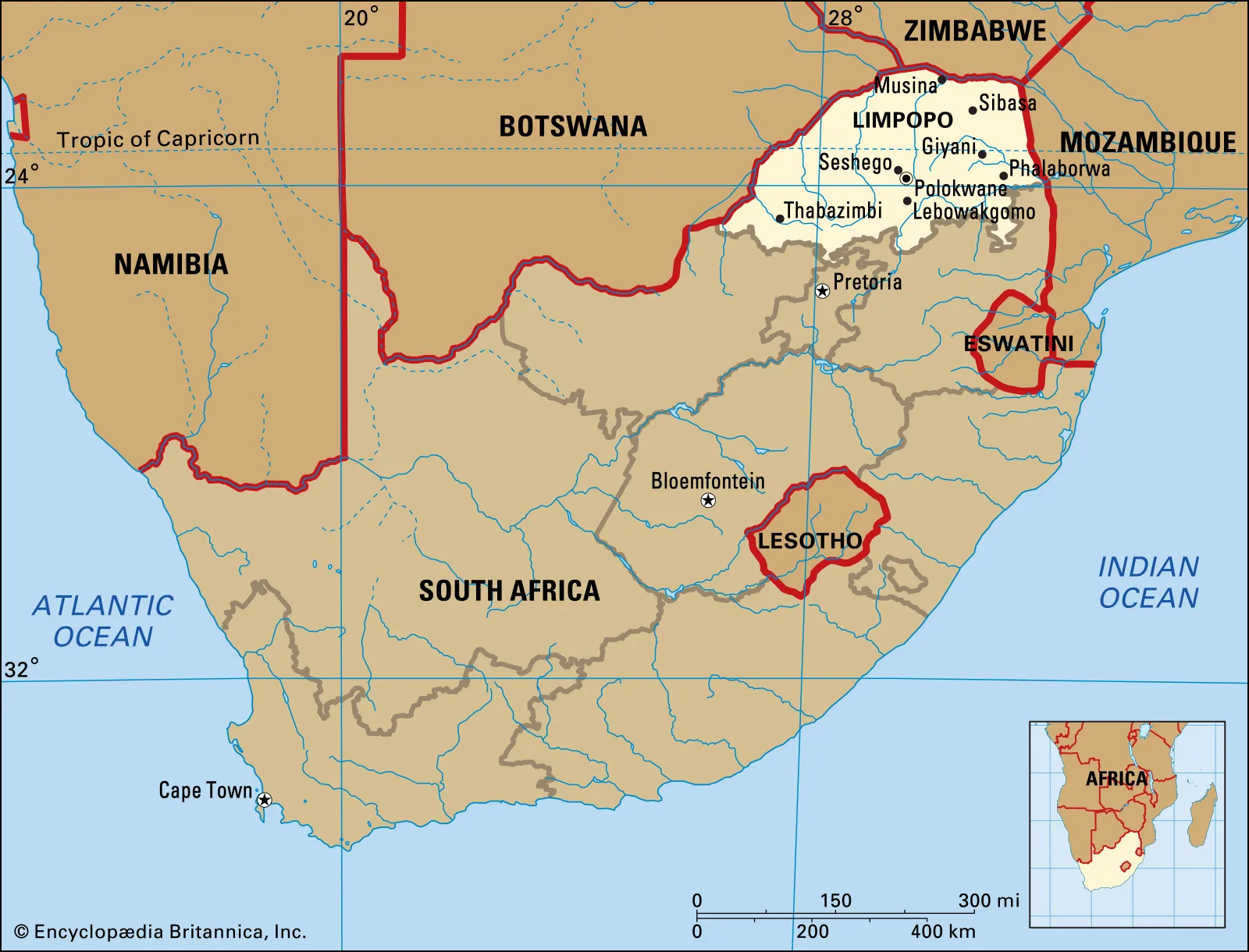
Limpopo province is notorious for its ritualistic murders and feared disappearances. It is South Africa’s northernmost province and named after the Limpopo River.
The province’s main ethnic groups are the Pedi, the Tsonga and the Venda. Traditional leaders still hold an important position in society. The total population of about 5.5 million people is made up of a large black majority (96.5%) and small minorities of whites (2.5%), Indian or Asia (0.5%) and colored people (0.3%). (Source: Wikipedia.)
An unknown number of sangomas are involved in criminal ritualistic activities and acts, notably ritual murder. Reportedly, this is the case with the sangoma arrested in Mokomene village in Botlokwa, Limpopo province, earlier this week. Read the gruesome story below. The authorities are to be commended for their swift action. It is not excluded that more arrests will follow.
Warning: The articles’ graphic details may upset readers (FVDK)
Teen’s body parts missing, sangoma bust!
A sangoma has been arrested for the brutal murder of Modjadji Thoka, who was found mutilated.
Published: January 18, 2024 By: Daily Sun – South Africa
LIMPOPO police arrested a sangoma in connection with the brutal murder of Modjadji Thoka (18).
The sangoma (30) was arrested in the early hours of Wednesday morning, 17 January at Mokomene Village in Botlokwa, Limpopo.
Modjadji went missing on Friday, 5 January, and her mutilated body was found on Monday, 8 January, at an advanced stage of decomposition with her body parts removed.
She was found with her head, legs, hands, private parts and breasts missing.
This left villagers in shock and fuming as they wanted to know who committed the gruesome act.
Limpopo police spokesman Colonel Malesela Ledwaba said cops in Botlokwa made a breakthrough following the arrest of a 30-year-old man who is linked to the murder of Modjadji, whose body was found in the Botlokwa policing area.
“Through an intensive investigation, the suspect allegedly took the team to the place where he buried the head of Modjadji and was immediately arrested for murder,” he said.
Ledwaba said the arrest comes after police were notified about the discovery of the body of a woman at an abandoned house, and upon arrival at the scene, they found the body of the woman in an advanced state of decomposition.
“Further investigations revealed that the body was dismembered,” he said.
The suspect will appear before the Morebeng Magistrates Court soon while police investigations continue.
Acting provincial police commissioner Major-General Jan Scheepers praised the team for ensuring that the ruthless criminal is put behind bars.
“I also commend the community for providing crucial information. We are relieved that the suspect is arrested and expect more arrests,” said Scheepers.
Traditional healer leads police to where he buried the head of 18-year-old girl after butchering her
The victim, 18-year-old Modjadji Niccol Thoka
Published: January 18, 2024 By: Linda Ikeji’s Blog
The police in South Africa have made a major breakthrough following the arrest of a 30-year-old Sangoma (traditional healer) who is linked to murder of an 18-year-old girl, Modjadji Niccol Thoka.
Thoka’s lifeless body was found on the 8 January 2024, at Mokomene, Ga-Thoka village in Botlokwa policing area, Limpopo a few days after she went missing.
She was found with several body parts missing, including her head, breasts, both hands and legs missing. Only her torso was discovered on the scene. The incomplete body was only recognised by a family member after residents alerted them.
According to police spokesperson, Colonel Malesela Ledwaba, members of Provincial detectives and Botlokwa detectives activated an operation to trace and arrest the suspect.
“In the early hours of Wednesday, 17 January 2024, the suspect was arrested at Mokomene village,” he said.
“Through the intensive investigation the suspect allegedly took the team to the place where he buried the head of the deceased. “He was immediately arrested for murder.
His arrest comes after Police were notified about the discovery of the lifeless body of a woman at an abandoned house.
“Upon arrival at the scene, they found a body of the woman in an advanced state of decomposition. Further investigations, revealed that the body was dismembered,” Colonel Ledwaba added.
The Acting Provincial Commissioner of the South African Police Service in Limpopo, Major General Jan Scheepers has praised the Police team that ensured that this ruthless criminal is put behind bars.
He further commended the community and Police collaboration that resulted in the providing of crucial information. “We are now relieved that the suspect is arrested and expect more arrests,” concluded Major General Scheepers.
The suspect will appear before Morebeng magistrate’s court soon. The police investigations are still ongoing.
Published: January 11, 2024 By: Daily Sun – South Africa
THE Thoka family from the small community of Mokomene in Botlokwa, Limpopo, could not have foreseen such a terrible start to the year 2024.
Five days into the new year, Modjadji Thoka (18) went missing on Friday, 5 January.
Panicking, the family set off in search of the teenager.
It didn’t take long for the family to find their loved one, but it wasn’t a pretty find. On Monday, 8 January, Modjadji’s body was found mutilated and dumped in the bushes.
All that was left of her body was her skull. Her breasts, two legs, both hands and genitals had been cut out.
The teenager’s body was discovered by local residents who alerted the police and the family of the deceased.
This horrific discovery, believed to be the first of its kind in the area, has sent shockwaves through the community.
Limpopo police commissioner Lieutenant-General Thembi Hadebe has appealed to the public to provide information that could assist the cops in their investigations after the body of a woman was discovered at Mokomene in Ga-Thoka Village at about 9am on Monday, 8 January.
Hadebe told Daily Sun that the police responded to a report of a woman’s body abandoned in the bushes.
“When they arrived, they realised that the woman’s body was in an advanced stage of decomposition. The identity of the deceased could not be determined as the investigation is still at an early stage,” she said.
Hadebe said the motive for the gruesome crime was yet to be established.
“Anyone with information that can assist in the investigation is asked to contact the investigating officer, Captain Ngwetsana, on 082 718 9781 or the emergency number 08600 10111, the nearest police station or the MySAPS app,” Hadebe said.
Suspect linked to murder of an 18-year-old woman in Botlokwa, nabbed following intensive investigation
Published: January 17, 2024 By: Media Statement, South African Police Service, Office of the Provincial Commissioner Limpopo
POLOKWANE – The Police in Botlokwa have made a major breakthrough today following the arrest of a 30-year-old man, also a Traditional Healer, who is linked to murder of an 18-year-old Modjadji Niccol Thoka, whose lifeless body was found on 08 January 2024 , at Mokomene, Ga-Thoka village in Botlokwa policing area.
Members of Provincial Detectives and Botlokwa Detectives activated an operation to trace and arrest the suspect. In the early hours of Wednesday, 17 January 2024, the suspect was arrested at Mokomene village. Through the intensive investigation the suspect allegedly took the team to the place where he buried the head of the deceased. He was immediately arrested for murder.
His arrest comes after Police were notified about the discovery of the lifeless body of a woman at an abandoned house. Upon arrival at the scene, they found a body of the woman in an advanced state of decomposition.
Further investigations, revealed that the body was dismembered.
The Acting Provincial Commissioner of the South African Police Service in Limpopo, Major General Jan Scheepers, has praised the Police team that ensured that this ruthless criminal is put behind bars. He further commended the community and Police collaboration that resulted in the providing of crucial information. “We are now relieved that the suspect is arrested and expect more arrests,” concluded Major General Scheepers.
The suspect will appear before Morebeng Magistrate’s Court soon.
Botlokwa police investigate the gruesome discovery of the body of an 18-year-old woman
Published: January 10, 2024 By: Anita Nkonki – IOL, South Africa
The Provincial Commissioner of Limpopo Lieutenant General Thembi Hadebe has urged community members to provide valuable information that can assist the police in the investigation following the gruesome discovery of the body of a young woman.
A female was found dead at Mokomene, Ga-Thoka Village under Botlokwa policing precinct, North West, on Monday at about 9 am.
Police received a complaint about the body of a woman at an abandoned house and rushed to the scene.
Upon arrival, they found the body of the woman in an advanced state of decomposition.
“The deceased’s identity will be released in due course as the investigation is still in its preliminary stages. The motive behind this gruesome act is not yet established.”
GRAPHIC CONTENT: Teenager’s murder shocks Limpopo community
Published: January 12, 2024 By: YouTube
Please note, that the following report contains graphic content which may upset some viewers. Some residents at Mokomene village at Botlokwa in Limpopo say they feel unsafe after the discovery of the mutilated body of an 18-year-old girl. Modjadji Thoka’s decomposed remains were found in an abandoned house. Her family reported her missing last week. Angry community members have called on the police to intensify their investigation.
Screenshot. To watch the video click here. Warning: GRAPHIC CONTENT: Teenager’s murder shocks Limpopo community
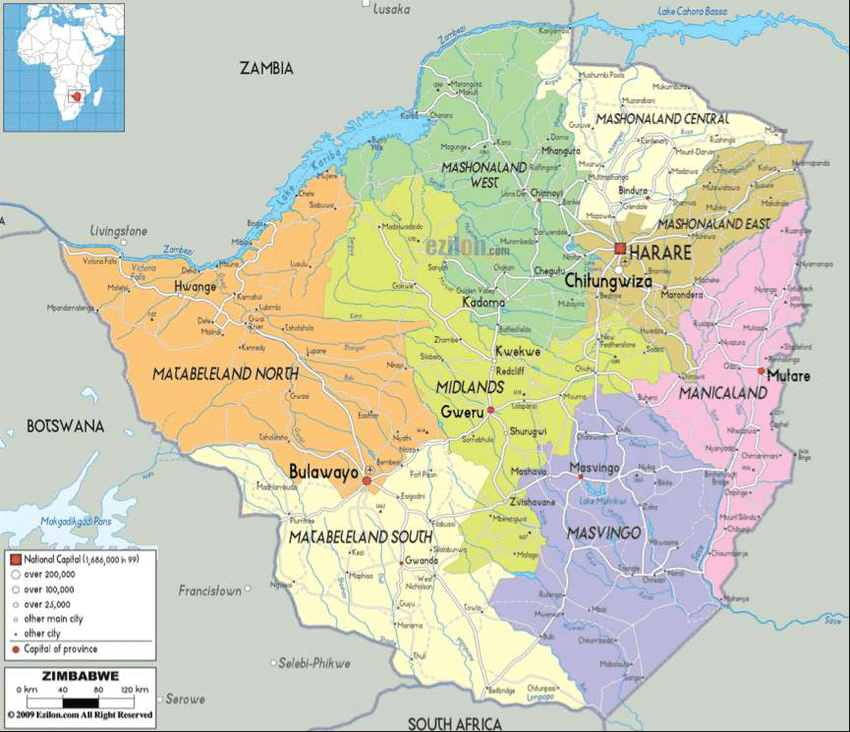
Murder cases show a rising trend in Zimbabwe, according to statistics released by the Zimbabwe National Statistics Agency. In 2018 more than 1,450 murders were reported, this number increased to more than 1,700 cases in 2019 and to nearly 3,600 cases in the two-year period between January 1, 2020 and December 31, 2021. The yearly average of 1,500-1,600 murder cases means that each month more than 100 persons are being murdered.
It is not known how many ritualistic murders (‘muti murders’) are included in this yearly average of 1,500 – 1,600 victims. Statistics only reveal part of the truth. By definition, ‘muti murders’ are murders committed in secret, and some victims (statistically recorded as ‘missing persons’) are never found. Only discovered bodies of victims with ‘parts’ (often organs) missing indicate that a murder for ritualistic purposes has been committed, but even then one has to be careful and not jump to conclusions as the perpetrator(s) may intentionally mislead the investigators by removing body parts.
Notwithstanding the foregoing, the occurrence of ritual murders constitutes a problem in this Southern Africa country (as it does in neighboring countries). Recently, a debate on the persistent problem of muti murders arose after the discovery of a mutilated body in Greystone Parts, near Hatfield, in Mashonaland East and southeast of the capital Harare.
In the article presented below also reference is made to the notorious Tapiwah Makore case, referring to the seven-year old boy who was murdered for ritualistic purposes by his uncle in 2020 (see previous posts). But, as the article relates, Tapiwah Makoreh (also spelled as Tapiwa Makore) was not the only or last victim of unscrupulous murderers who are driven by greed and superstition. Unfortunately, the discovery of the dead body of Faith Musonza in Greystone Park only confirms this sad conclusion. (webmaster FVDK)
Zimbabwe grapples with ritual murders
Some people blame witch doctors for rising cases of ritual murders
Published: February 26, 2023 By: Staff reporter – The Zimbabwe Mail
IT is late afternoon in the heart of Greystone Park, some 20 kilometres from Hatfield, where the gruesome murder of Spar employee Faith Musonza is said to have occurred.
A relative’s home in Greystone Park is where her funeral is taking place.
A gentle breeze steadily blows across the yard as if everything is normal, but this is not the case.
Mourners have been stunned into silence as they struggle to come to terms with the sad news of Musonza’s untimely death.
“We are still trying to process everything; it feels like a dream,” said one of the relatives who appeared non-plussed at the funeral wake.
Musonza’s husband, Fradreck Chasara, was visibly disturbed, as he unsteadily alternated between a black leather couch and the carpeted floor.
Musonza was recently killed in Hatfield by unknown assailants as she headed to her rented house in Cranborne from work.
Her mutilated body was found dumped in a storm drain. Heinous crimes involving grisly murders have become prevalent of late. The sanctity of human life is no longer being observed.
In 2020, the nation woke up to news of the callous murder of seven-year-old Tapiwa Makore in a suspected ritual killing.
He was buried the following year, with his head still missing. The incident left many with a lot of unanswered questions.
Last year, in Nyanga, two related seven-year-olds were found dead in a disused house in the village, with their throats cut open and blood drained.
Several other murder cases have been reported across the country.
According to the Zimbabwe National Statistics Agency, the number of murder cases continue to rise with each passing year. At least 1 453 cases were recorded in 2018, before rising to 1 733 the following year. Between January 2020 and December 2021, 3 583 cases were recorded.
Overall, the cases averaged between 1 500 and 1 600 every year.
“A murder case is recorded every week; in some situations, even two or more, with the trend growing in all provinces,” said Zimbabwe Republic Police (ZRP) spokesperson, Assistant Commissioner Paul Nyathi.
Most of the killings, he said, are associated with infidelity, alcohol abuse and rituals. Statistics from the Zimbabwe Prisons and Correctional Service (ZPCS) also corroborate the same trend.
“In January 2021, we had 630 people incarcerated for murder and the figure rose to 845 by October that same year.
“In January 2022, we had 817 and the figure stood at 984 by November,” said ZPCS.
Mental health issues
Psychologist and University of Johannesburg post-doctoral researcher Dr John Ringson believes most murders are caused by mental health issues.
“When one is mentally unstable, even a small argument can trigger aggression. We have had cases of people who committed murder for beer or small amounts of money. Mental health issues need to be addressed at national level,” he said.
Drugs and substance abuse, he added, were also causing mental health challenges that push people to commit crimes.
Traditionalist Mbuya Calista Magorimbo says some bogus witch doctors who encourage harvesting of body parts for rituals (kuromba) to boost business fortunes are also causing the unnecessary loss of human lives.
“Ritual killings for purposes of becoming wealthy have existed since time immemorial. However, the situation has since gone out of hand due to prevailing economic hardships,” she said.
“Some even harvest body parts for charms to make them powerful at work or to get healed from certain ailments. Women and children are often murder targets.”
She, however, argues that such rituals have never been proved to be effective.
“This is pure cultism, which yields nothing but generational curses, yet some people believe it actually works. Murder only brings trouble!” she warned.
Killings only attract avenging spirits and generational curses, according to Sekuru Peter Maponda, which he believes only serve to perpetuate a vicious circle of crime and murder. Roman Catholic priest Father Paul Mayeresa says avenging spirits exist.
“The Bible values the sanctity of life and does not allow killing under any circumstances. Some murders are due to either temporary or permanent insanity, while others are premeditated revenge,” he said.
“Avenging spirits exist and depending on the relatives of the deceased and their spirituality, some families end up forgiving the perpetrators while others prefer to let the dead fight from the grave.”
House of Refuge International Ministries founder Apostle Partson Machengete is of the opinion that “poverty has left most people desperate to get rich overnight”.
“As a result, they are forced to believe myths that ostensibly offer solutions to their problems. Witch doctors are fleecing the vulnerable and pushing them into unholy acts. They are made to believe the rituals will make them rich.”
He, however, feels some murder cases are genuine accidents and, in some instances, a result of self-defence.
Remedy
There is consensus that communities need to be sensitised on the need to observe the sanctity of human life.
“We need all stakeholders to come together and formulate programmes that educate the community on the issues and bridge existing gaps,” urges Laws of Attraction psychologist Blessed Chinyangare.
“There is a human element and a spiritual element to this issue, hence it has to be tackled from both ends.”
Headman Zvinowanda Pfumbidzai of Machera village in Hwedza said in murder cases, the funerals and burials should be different from ordinary ones.
In African tradition, he said, murder invites curses for both the victim and the perpetrator’s families, hence rituals become necessary to cleanse the parties involved.
“Traditionally, the wronged family conducts rituals — kureverera — to provoke the spirit of the deceased to go and get revenge, so, in return, the murderer should pay damages — kuripa.
“The victim’s family should be given room to indicate their price during the process. Likewise, the victim’s family should also conduct a cleansing ceremony,” he said.
Meanwhile, in neighbouring South Africa, murder cases reportedly increased by 22 percent since 2012.
Most of the killings usually occur between Friday and Sunday.
The South African Police Service has since deployed desk-based police officers to the streets, particularly in identified hotspots, while dedicated detectives track and arrest suspects wanted for violent crimes. – Sunday Mail