Nigerian human rights activist and lawyer Dr. Leo Igwo needs no introduction on these pages.
Dr. Leo Igwe and I have more in common than a birthday (26 July); we both abhor human rights violations, mob justice, superstition, ritual murders, impunity and other forms of injustice.
I would like to take this opportunity to congratulate Dr. Leo Igwe on his relentless fight against superstition, witch hunting and ritual murders, and encourage him to continue to do so.
(webmaster FVDK)

Nigeria – Making Witch Hunting History: Dr. Leo Igwe’s Fight for Justice

Published: September 26, 2025
By: Scott Douglas Jacobsen – The Good Men Project
How can Nigeria’s legal system be strengthened to effectively prosecute witchcraft-related abuses?
Dr. Leo Igwe is a Nigerian human rights advocate, scholar, and founder of the Advocacy for Alleged Witches (AfAW). With decades of activism, Igwe has dedicated his career to defending those falsely accused of witchcraft, combating superstition, and advancing secular human rights. He has partnered with international and national organizations to confront harmful practices rooted in fear and cultural beliefs, particularly targeting women, children, and people with disabilities. A vocal critic of religious extremism and media sensationalism, Igwe promotes critical thinking, education, and legal reform. His work stands at the intersection of grassroots advocacy, public enlightenment, and global humanism.
In this interview with Scott Douglas Jacobsen, Igwe intensified campaigns across Nigeria in 2025 to defend victims of witchcraft accusations. Through unprecedented collaborations with organizations such as the International Federation of Women Lawyers, the National Human Rights Commission, and disability rights groups, AfAW has expanded its outreach to over 15 states. Initiatives include memorial events, legal interventions, media engagement, and direct support for victims. Despite cultural and religious resistance, Igwe emphasizes that witchcraft is a myth, urging communities to shift from fear-driven persecution to rights-based advocacy. His work highlights growing momentum, though challenges remain entrenched.
Scott Douglas Jacobsen: Today, we are here with the prolific activist, Dr. Leo Igwe of Nigeria, founder of the Advocacy for Alleged Witches (AfAW). Our primary focus is advocacy for people accused of witchcraft. A lot has happened this year, and we can dive into some specific events because I have notes. In your view, what have been the most significant achievements so far?
Dr. Leo Igwe: One of the most significant developments this year is that we have organized more meetings and awareness programs than in any previous year since 2020. Even as I speak with you, I am in Port Harcourt, in Rivers State, where we are organizing an awareness event—an event to remember victims of witch hunts and ritual attacks. It is the first of its kind in the country and in the history of our campaign: victims are being remembered rather than demonized.
These victims are not being pre-judged as guilty or condemned. There has also been considerable interest from groups wanting to partner with us. We have seen unprecedented requests and welcoming gestures from different organizations and civil society groups. For instance, the International Federation of Women Lawyers (FIDA)—several state chapters—has reached out to co-organize events. Historically, their focus has been on women and children, and accusations of witchcraft were not central; that is changing as AfAW’s work gains traction.
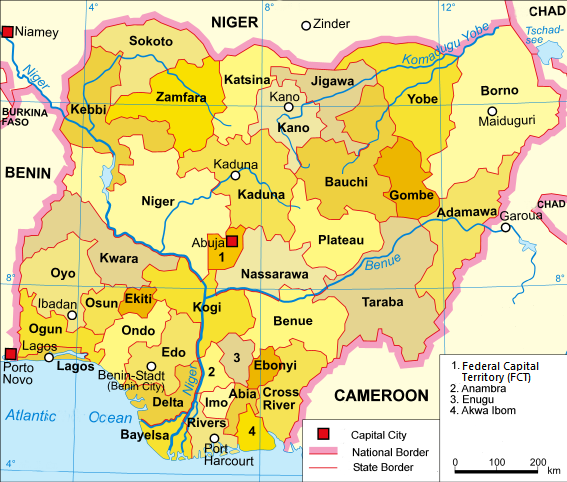
We have also engaged with the National Human Rights Commission of Nigeria (NHRC). Nigeria has 36 states and the Federal Capital Territory (Abuja), and some NHRC state offices are reaching out to co-organize events like the one we are holding on Saturday. They are ready to collaborate to highlight these abuses.
The Down Syndrome Foundation Nigeria has also contacted us to partner. They work on disability issues. Unfortunately, people with disabilities are often stigmatized or labelled as “possessed,” which leads to ostracism and harmful so-called “spiritual” interventions.
A recent example that drew national attention was a reported case in Calabar in February 2025, where a pastor allegedly killed his daughter, a child with Down syndrome, claiming she could transform into a snake. Cases like this show how superstition and stigma can turn deadly, and we are working with disability advocates to confront these beliefs and protect vulnerable families.
In terms of people who are accused, demonized, or stigmatized—whether because of disability or because of problems within the community—this has been a significant focus this year. We have now organized or collaborated in organizing events in over 15 states across Nigeria. By next week, we are planning an event in Niger State, in the north of the country. That will be the first event we have organized there, and we hope to use the opportunity to strengthen our partnerships with local groups and build a more robust mechanism for defending the accused.
That said, these collaborations do not come without challenges. For instance, in Niger State, we are partnering with women’s rights and children’s rights groups. They told us they would prefer not to have accused persons present, because their presence might trigger confrontation with accusers or with those who suspect them of being witches. This has been difficult, but we see it as a step toward educating people that everyone should stand as an advocate for the accused.
Many people still hold on to those beliefs and fears, even while showing some sympathy for the accused. However, sympathy is not enough. The accused are innocent. The law is on their side. So we want to find ways to reduce fear and anxiety and encourage communities to join us in openly and categorically supporting those accused of witchcraft.
Our meetings are not always characterized by unanimous support for advocacy on behalf of alleged witches. Sometimes, participants insist that witchcraft oppression is real. For example, at a recent meeting in Owerri, a pastor argued that witchcraft affliction must be addressed.
This is the contradiction we face. People say they oppose torture, killing, and persecution, but at the same time, they continue to insist witches exist. For us at AfAW, this is contradictory. If anyone claims people really are witches, then the burden is on them to prove it—to vindicate or exonerate those accused, rather than subject them to persecution.
Religion and culture also reinforce these challenges. Christianity, Islam, and Nollywood movies all perpetuate the belief that witchcraft and demonic possession are real. These institutions and cultural products continue to fuel the mindset that sustains witchcraft accusations.
In the churches and in the mosques, these harmful ideas are still being promoted. We are working to weaken the grip of these narratives on people’s minds and to chip away at what I call “witchcraft evangelism.” It does enormous damage and undermines our work. We also want people to recognize that Nollywood films and African movies are fiction, not fact.
The filmmakers reflect the myths and beliefs of society, but they are still telling stories, not recording reality. We want to help reorient society so that these movies are understood as cultural fiction. These are some of our successes, but also some of our challenges. Still, we see steady progress as more people begin to realize that something does not add up when it comes to witchcraft accusations. More groups are welcoming us and reaching out to cooperate, so that together we can address and dispel this phenomenon.
Jacobsen: Now, about specifics, in Owerri, Imo State, on September 2–3, we observed the International Day Against Witch Hunts. That was an event reaffirming material and psychosocial support. What was the big takeaway from that event this year?
Igwe: A lot. In Owerri, for the first time, we marched through the streets of the city, sharing flyers and speaking with people about the problem. We also visited the palace of the traditional ruler, Eze Clinton, who received us warmly and pledged his support to our campaign. That was an important milestone.
Another highlight was a presentation by our legal counsel, Mr. Okorie, on witchcraft accusations and the law. In Nigeria, accusing someone of witchcraft is a criminal offence. It is a form of criminal defamation, but most Nigerians are unaware of this—or if they are, they do not take it seriously, because their beliefs often outweigh what is written in the law. Mr. Okorie made it clear that even calling someone a witch can lead to prosecution. If this is done in a church or public gathering, the entire act is criminal.
He gave the example of a crusade organized in Imo State shortly after our event. The theme was “That Witch Must Die.” We reported it to the police, who summoned the pastor, but unfortunately did not prosecute him. Mr. Okorie explained to our participants that such gatherings are legally actionable, and anyone who participates in them could also be held liable. His legal perspective shocked many people, as they were unaware that the law was so clear on this matter.
We also had some victims from different communities share their experiences, which reinforced the urgency of our campaign.
We also heard from victims who recounted their stories and experiences. One woman in particular, Mrs. Regina, told us that after some people in her family died, she was forced to undergo a ritual. They bathed the corpse, washed the body, and gave her the water to drink as an “exoneration” ritual. She is one of the people we are supporting now, trying to provide her with all the necessary help to get back on her feet.
Another experience I had was visiting a street named after a victim of ritual killing, Ikechukwu Okoroho, who was murdered about 30 years ago. A street was named in his memory. I went to that street and to the scene where he was killed, according to reports. These are some of the key takeaways from the Owerri, Imo State event.
Jacobsen: There was also a case intervention in Ebonyi State on August 20, involving the banishment of Joseph Agwu from Unwuhu community. The case called on the state to prosecute the attackers, compensate the victim, and end the practice of banishment. Could you elaborate on that specific case?
Igwe: Yes, Joseph’s case is one of several in Ebonyi. He was accused of witchcraft and banished from his community. His property was destroyed, and he was forced to leave. We reached out to him, and he recounted his ordeal. We are appealing to the state authorities to step in and protect people like him.
Another successful intervention we made was in the case of Mr. Kingsley, who had also been accused. He was paraded through the streets, humiliated, and substances were poured over his body. When we got the information, we immediately contacted the police.
Thanks to that intervention, Kingsley is now back in his community. I met him recently, and he told me how happy and relieved he was. People now look at him with respect rather than the scorn he used to face. This was a real success story.
Of course, not all cases succeed. Sometimes incidents happen in rural communities where it is difficult for us to intervene. Accessing those areas can be dangerous—there are threats of beatings, mob attacks, or even killings. People in those communities often suspect that anyone investigating is there to help the police prosecute them. So yes, we have had some successes, but the challenges remain significant.
Jacobsen: There were also several roundtables. For example, in Ekiti State from August 19 to 21, there was a stakeholder roundtable aligned with the World Day Against Witch Hunts. There were also NHRC partnerships in Kano, Okoro, Ondo, and Yola, Adamawa. Across the year, there were several such meetings—on January 21, March 6, July 21, and August 19–21. What is the role of these roundtables, and what were the key takeaways from each?
Igwe: For the one we held in Yola early in the year, the big takeaway was that too often, when these cases are reported, nothing is done. They appear in the news and then disappear. Victims receive no help or support.
Since 2020, AfAW has been a game-changer. We step in on the side of the accused to support and empower them. In Yola, our message was clear: there is now an organization that stands for the accused. We introduced ourselves, explained what we do, and intervened in a specific case where a parent and his partner tortured a girl to death. The mother had been accused of witchcraft, and the children were said to have “inherited” it from her. The girl was tortured and died. We have been working hard to support the mother and her three surviving children, and to push for justice.
That was our first meeting in Yola, and like with many of these events, participants told us nobody else was doing what we are doing. We know why—few people have the conviction and understanding that we at AfAW bring. However, we made it clear there is now a place where the accused can seek support, and an organization keeping watch on these cases. That was our takeaway from Yola.
In Ondo, we also held an event and combined it with a radio program. A woman named Olaemi Ijogun attended after hearing us on the radio. She told us how she had been accused as a child and beaten. Her case was heartbreaking. She said that both she and her sister had been accused of being initiated into a coven when they were very young.
In Olaemi’s case, the accusations came from a relative who claimed to have seen her and her sister in a dream. The parents were told the girls were going to covens at night. As a result, they were not allowed to sleep. They were forced to kneel and raise their hands through the night because the parents believed that if they slept, they would travel spiritually to the coven. The girls were denied sleep for several nights.
The stigma followed Olaemi to school, where it negatively impacted her social life. She still breaks down when recounting the trauma, which she did at our event. She called on people to stop making accusations because they leave an indelible mark on the minds and psyches of children. Since then, she has been working with us to advocate against witchcraft accusations.
For instance, she joined us in Ekiti State during the World Day Against Witch Hunts event. There, we encountered a case where a 10-year-old girl accused her grandmother of initiating her into a coven and of spiritually murdering people. This accusation was made on the radio after a station invited the family to speak. As a result, the grandmother’s business collapsed, and she was ostracized; the community avoided her. We intervened to reassure her that she had no hand in such things.
The background is that the family’s youngest child, about two years old, had been sick since birth. The grandmother was blamed for the illness. When I interviewed the mother of the 10-year-old, she even told me that the grandmother had “taken away the intelligence” of the children, causing them to do poorly in school, and was also responsible for the family’s financial struggles. In other words, they blamed the grandmother for virtually every problem.
To address this, we provided the family with money to conduct a medical test on the child, so we can determine the real medical problem and treat it appropriately. This shows that we are not only holding events, but also taking practical steps to intervene. We extend solidarity by combining advocacy with direct support. We are helping the grandmother, the victim of the accusation, while also ensuring that the sick child receives medical treatment. These are some of the key outcomes from the Ekiti State event.
Jacobsen: How did the World Day Against Witch Hunts itself go?
Igwe: It was observed on August 10. That year it fell on a Sunday. In Nigeria, the best thing you can do on a Sunday is either go to church or stay at home. Suppose you organize anything else on that day. In that case, it is not likely to attract much participation—except for the few atheists and humanists in the country.
On August 10, the World Day Against Witch Hunts, I attended a church where the pastor regularly preaches against witch hunting. In our work, we identify religious leaders who speak out against these practices. It is not easy, of course, but we make every effort to find such churches. I was told about this one, contacted the pastor, and he confirmed that he preaches against witch hunting. So I went there to listen to his sermon. We also recorded it so that we could use it later to show other churches that this kind of preaching is possible and necessary.
It was a small church, with maybe 50 participants—tiny compared to the massive congregations you see in Nigeria, where tens or even hundreds of thousands gather. That probably explains why this church holds what you might call a minority position in the religious landscape. Still, that was where I spent the day.
Before and after August 10, we have continued organizing events in various states to remember victims of witch hunts and ritual attacks. It has gone well. People are coming out and saying, “At last, there is a space where we can feel vindicated, where we can share our stories in front of an audience that supports us, rather than seeing us as guilty.” That has been the spirit of these gatherings. In fact, we could not accommodate all the events in August, which is why some of them were pushed into September. For us at AfAW, the World Day Against Witch Hunts has not really ended. Our event this Saturday will conclude this year’s cycle of activities tied to that observance.
Jacobsen: Let us turn to the media side of things—ongoing public education, advocacy, op-eds, and briefings. Which news and opinion publications have been most effective in disseminating information about this campaign, the organization, and the harm caused by these superstitions?
Igwe: We have had coverage of our activities in several online and mainstream media outlets. Some journalists have even drawn our attention to cases in which we later intervened. Among Nigerian media organizations, I must mention Sahara Reporters, ThisDay, and The Eagle Online, which have been supportive.
We have also had coverage in other outlets, such as the Nigerian Tribune, Punch, and The Sun. Some of these online and print organizations have tried to highlight the work we are doing.
However, let me be clear—before now, media agencies have overwhelmingly been part of the problem. Their reporting on witchcraft accusations often reinforces the very narratives we are trying to dismantle. This is something I consistently point out to them during media interactions.
Many journalists still report accusations in sensational ways. They tell me the more spectacular, the better—for clicks and traffic. They call it “clickbait.” So, you see headlines like “Witch Crash-Lands” or “Bird-Woman Found in Village.” It is absolute nonsense, but it generates attention. Moreover, in their pursuit of attention, they misinform the public, mislead communities, and do real harm.
These reports are unprofessional and unethical. Journalism should be about reporting facts, and it should be balanced. Instead, in their quest for traffic, media houses end up endangering lives. For example, there was a radio program where a child accused her grandmother of initiating her into witchcraft. We intervened, and when we left, the station manager admitted to me, “Leo, it was this radio program that caused the problem.” He realized it had put an innocent woman in danger and destroyed her socially.
So yes, the media have been part of the problem. However, with the kind of engagement we are doing at the Advocacy for Alleged Witches (AfAW), some outlets are beginning to rethink. Some are realigning and realizing just how unprofessional and unethical their reporting has been. They are slowly starting to highlight our perspective. However, we still have a long way to go. Nigerian media organizations still thrive on sensationalism.
The media still thrives on sensational headlines—stories designed to attract attention and appeal to primitive superstitions that people find exciting. Slowly and steadily, some outlets are beginning to support what we are doing. However, there is still a tremendous amount of work ahead.
Another challenge is this: while media agencies are quick to publish sensational, false, and misleading reports about witchcraft—often for free—when we want to put forward our perspective, they demand large sums of money. Both online and broadcast outlets do this.
For example, if we want to appear on television, they charge between $500 and $1,000 just for the appearance. Additionally, you may need to travel, pay for flights, and cover accommodation costs. This makes enlightenment and advocacy extremely expensive, even though it is precisely what the country needs to counter these harmful narratives.
Jacobsen: Do you have any final points on that last topic?
Igwe: Yes, while a few media organizations are beginning to report witchcraft accusations more responsibly—rather than treating witchcraft itself as a fact or as a “certified” part of African culture—the progress is limited. Some outlets are starting to understand AfAW’s position and provide more balance. However, we are still far from the cultural shift we need. That kind of change will not happen through one report or even one event. It requires intensive public education and sustained enlightenment.
Unfortunately, in this area, many media stations have not been supportive. They are quick to publish sensational stories, like “an elderly woman turned into a bird” or “a witch crash-landed on her way to a meeting,” as was recently reported in Delta State. These kinds of stories get free publicity.
However, when AfAW attempts to purchase airtime to educate the public, we encounter significant costs. Media outlets charge us considerable amounts of money, making enlightenment campaigns very expensive. The imbalance is stark: free space for superstition, but costly barriers for rational education.
Meanwhile, churches and religious organizations that actively promote witchcraft narratives are given abundant airtime. They advertise events with themes like “That Witch Must Die” or “Exposing the Mysteries of Witchcraft.” These programs receive free promotion, which reinforces harmful beliefs.
By contrast, when we present our position—saying plainly that witchcraft is a myth—we are given little space, asked to pay heavily, and sometimes even put under pressure during media interviews. The pressure is on us to “prove” that something imaginary does not exist, instead of challenging those who claim it does.
The media landscape is still heavily skewed toward reinforcing witchcraft beliefs. We have not yet reached the paradigm shift where media establishments themselves start questioning and dismantling these narratives. That remains the challenge before us.
The cultural shift we need will only come when the media itself transforms. Until then, they will not welcome our programs in the way they should. Even when we pay for airtime, they often schedule us in the middle of the day, when people are busy at work. They refuse to give us prime slots in the evening or late at night—times when churches preach about witchcraft to audiences at home around the dinner table.
Without media on our side, we cannot fully succeed in making witch-hunting history in this region. That is why this work is so critical.
Jacobsen: There was a memorial action on August 29, connected to victims of ritual killings. You visited a hotel site linked to one of those incidents, to connect memory with today’s anti–witch hunt work. Could you explain what happened at that hotel, and how many victims are we talking about?
Igwe: I visited because of the incident that happened there in September 1996, almost 29 years ago. What happened then is still happening today. For example, earlier this year, in February 2025, in Lagos, a young man murdered his girlfriend, used an axe to break her head, and drained her blood into a calabash, supposedly for rituals. That case mirrors what happened at the Otokoto Hotel in 1996.
At Otokoto, the victim was an 11-year-old boy who sold peanuts on the streets. A hotel gardener lured him inside, gave him a drugged drink, and when the boy became unconscious, he cut off his head. The man was apprehended while attempting to deliver the head to someone who had ordered it for ritual purposes.
The news caused a massive uproar. There were riots in the city, and people began burning the houses of those suspected of being involved.
The people labelled as “ritualists,” in other words, those involved in ritual syndicates or racketeering, were the focus of that uproar. My visit to the Otokoto Hotel aimed to remind the people of Imo State that this practice has been ongoing for far too long and must come to an end.
The government seized the hotel property, and today it is used by the police. Not far from the police station, there is a street named after the young boy who was murdered. Those responsible were eventually arrested, and some received life imprisonment while others were sentenced to death.
I visited that property to show that the same problem we saw nearly three decades ago is still with us today—only in new forms. Now, people kill their girlfriends, relatives, or acquaintances for what they call organ harvesting. They believe specific organs can be used in rituals to produce wealth, success, or power.
The narratives of religion, miracles, magic, and supernatural intervention fuel these beliefs. All of them reinforce the idea that ritual killings can deliver prosperity. What we are confronting is a Herculean task—a complex, many-headed monster of superstition and fear. Only the flame of reason, compassion, critical thinking, and skeptical inquiry can provide hope for society and for the victims.
Jacobsen: Thank you for the opportunity and your time, Leo.
Source: Making Witch Hunting History: Dr. Leo Igwe’s Fight for Justice