I have no doubt that Nigerian human rights activist Leo Igwe is among the top five fighters against superstition, witchcraft, ritual killings, and impunity on the African continent, and he is most likely the most active and best known.
Dr. Leo Igwe is active in numerous human rights groups, among others he directs the organization ‘Advocacy for Alleged Witches‘ (AfAW), an advocacy group defending the rights and dignity of people who have been accused of witchcraft, and working and campaigning to end all forms of human rights abuses linked to witchcraft allegations in African countries.
I have mentioned and quoted Dr. Igwe numerous times on this site, for which I owe him a great debt of gratitude.
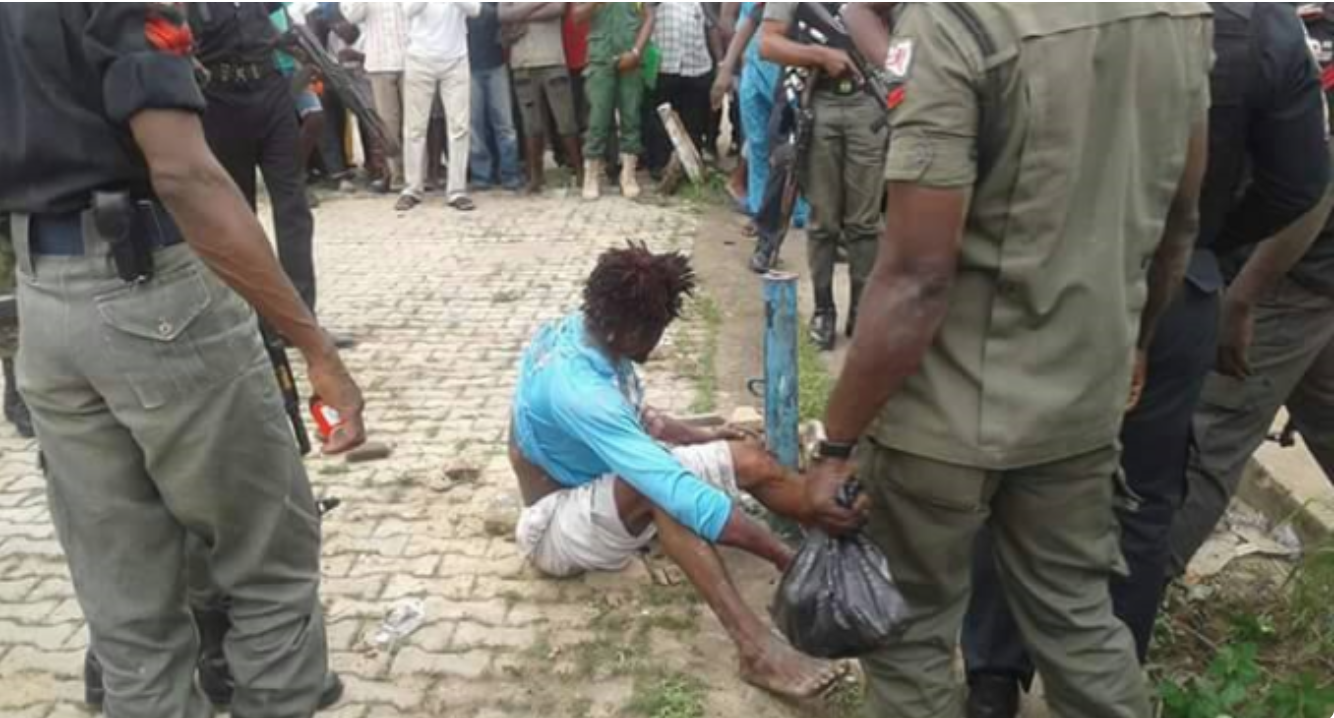
The article below focuses on a recent case in Rivers state, Nigeria. In February, a man, accused of witchcraft, was killed. AfAW is concerned for his relatives and calls on the authorities to bring the perpetrator to justice. Between the lines, it can be read that the organization—learned from past experiences—has little faith in the Nigerian rule of law.
Dr. Leo Igwe, thanks again for this timely intervention! (webmaster FVDK).
Witchcraft and Killing in Rivers State: Nobody Can Hamper the Progress of Others Through Magical Means
Local sources informed AfAW that Isaiah had a wife and four children. His first child just finished secondary school. AfAW plans to visit the community and meet with family and community members to understand what happened and explore ways of supporting the family of the deceased during these difficult moments. Advocates will continue to pressure the police to bring the suspect to justice. Witchcraft accusations and jungle justice are against the law. The inability of the police to enforce the law drives these abuses.
Leo Igwe directs the Advocacy for Alleged Witches
The Advocacy for Alleged Witches is saddened by the brutal murder of Chidiebere Isaiah by a relative, Nwalozie Chiwendu, following an accusation of witchcraft in Ofeh, Rivers State, in Southern Nigeria. The tragic news reached AfAW on February 15, 2026. AfAW contacted The Punch and Vanguard correspondents in Port Harcourt for the phone number of the youth president of the Ofeh community in Omuma Local Government Area. Through an advocate in the state, AfAW contacted a legal counsel from the community who confirmed the incident and has volunteered to facilitate any intervention. This legal counsel said he knew the victim and the suspected murderer very well. As reported, Chiwendu accused and murdered Isaiah for being responsible for his lack of progress. The legal counsel stated that Chiwendu dropped out of primary school. He never went to secondary school. “How did he expect to make significant progress and become rich if he was not educated?” He queried.
Chiwendu reportedly fled after the incident. The local police claimed that he was at large. As in previous cases in Rivers state, this matter will fizzle out after a while. The police stated that the investigation was ongoing, but that was all that would be heard about the case. There are no indications that the police are taking the case seriously, that they are tracking the suspect, or that they will bring him to justice soon. Witch persecution persists in the region due to impunity and lack of accountability, due to a failure of the police and the justice system. Last year, the police in Rivers state refused to prosecute pastors arrested for abusing children during exorcism and ritual cleansing in the state. All efforts and pressures on police authorities to bring these violators to justice came to nothing.
Meanwhile, advocates have been reacting and expressing their outrage following the horrific murder of Isaiah. One advocate stated, “See what ignorance has done: a tragedy for that community and the family. One brother is dead, and another brother is certainly going to be hanged for murder. Terrible!. Meanwhile, the pastors who preached this rubbish mentality into his ignorant head are walking about free, indoctrinating other ignorant people”. Another noted: “This is evil. So you claim to do something good by killing your brother because he is a witch, and you are running? You are not supposed to run away; rather, you should stay so we can tell you what a hero you are. Witchcraft does not exist. Say no to witch-hunts”. Furthermore, one advocate described the incident as: ” Absolutely tragic. No one should ever be killed over superstition or accusations of witchcraft. Education, awareness, and justice are the only answers. End the witch hunts now”.
Local sources informed AfAW that Isaiah had a wife and four children. His first child just finished secondary school. AfAW plans to visit the community and meet with family and community members to understand what happened and explore ways of supporting the family of the deceased during these difficult moments. Advocates will continue to pressure the police to bring the suspect to justice. Witchcraft accusations and jungle justice are against the law. The inability of the police to enforce the law drives these abuses.
In addition, AfAW will organize public awareness programs to reorient the minds of people in Rivers State. AfAW will educate the public to understand that nobody can harm, frustrate, or undermine the progress of others through magical or occult means.
That such a belief is superstitious and based on fear and ignorance!
Opinion Nigeria is a practical online community where both local and international authors through their opinion pieces, address today’s topical issues. In Opinion Nigeria, we believe in the right to freedom of opinion and expression. We believe that people should be free to express their opinion without interference from anyone especially the government.
Give to Gain: Justice for Women Accused of Witchcraft in Africa
On March 6, 2026, the online Ghanaian newspaper ‘Modern Africa’ published an article written by Leo Igwe, ‘Give to Gain: Justice for Women Accused of Witchcraft in Africa’ presenting three cases of women who were victims of witch hunts in Nigeria: (1) 49-year-old Obiageri Ottih from Imo state, (2) 86-year-old Arit Inyang from Akamkpa, in Cross River state, and (3) Adijat Pereira from Lagos, Lagos state, Nigeria.
The three women were accused of witchcraft, but the police failed to intervene or to seriously investigate the matter. It is feared that Arit Inyang has been murdered. Advocacy for Alleged Witches is following the cases.
Nigerian human rights activist and lawyer Dr. Leo Igwo needs no introduction on these pages.
Dr. Leo Igwe and I have more in common than a birthday (26 July); we both abhor human rights violations, mob justice, superstition, ritual murders, impunity and other forms of injustice.
I would like to take this opportunity to congratulate Dr. Leo Igwe on his relentless fight against superstition, witch hunting and ritual murders, and encourage him to continue to do so. (webmaster FVDK)
How can Nigeria’s legal system be strengthened to effectively prosecute witchcraft-related abuses?
Dr. Leo Igwe is a Nigerian human rights advocate, scholar, and founder of the Advocacy for Alleged Witches (AfAW). With decades of activism, Igwe has dedicated his career to defending those falsely accused of witchcraft, combating superstition, and advancing secular human rights. He has partnered with international and national organizations to confront harmful practices rooted in fear and cultural beliefs, particularly targeting women, children, and people with disabilities. A vocal critic of religious extremism and media sensationalism, Igwe promotes critical thinking, education, and legal reform. His work stands at the intersection of grassroots advocacy, public enlightenment, and global humanism.
In this interview with Scott Douglas Jacobsen, Igwe intensified campaigns across Nigeria in 2025 to defend victims of witchcraft accusations. Through unprecedented collaborations with organizations such as the International Federation of Women Lawyers, the National Human Rights Commission, and disability rights groups, AfAW has expanded its outreach to over 15 states. Initiatives include memorial events, legal interventions, media engagement, and direct support for victims. Despite cultural and religious resistance, Igwe emphasizes that witchcraft is a myth, urging communities to shift from fear-driven persecution to rights-based advocacy. His work highlights growing momentum, though challenges remain entrenched.
Scott Douglas Jacobsen: Today, we are here with the prolific activist, Dr. Leo Igwe of Nigeria, founder of the Advocacy for Alleged Witches (AfAW). Our primary focus is advocacy for people accused of witchcraft. A lot has happened this year, and we can dive into some specific events because I have notes. In your view, what have been the most significant achievements so far?
Dr. Leo Igwe: One of the most significant developments this year is that we have organized more meetings and awareness programs than in any previous year since 2020. Even as I speak with you, I am in Port Harcourt, in Rivers State, where we are organizing an awareness event—an event to remember victims of witch hunts and ritual attacks. It is the first of its kind in the country and in the history of our campaign: victims are being remembered rather than demonized.
These victims are not being pre-judged as guilty or condemned. There has also been considerable interest from groups wanting to partner with us. We have seen unprecedented requests and welcoming gestures from different organizations and civil society groups. For instance, the International Federation of Women Lawyers (FIDA)—several state chapters—has reached out to co-organize events. Historically, their focus has been on women and children, and accusations of witchcraft were not central; that is changing as AfAW’s work gains traction.
We have also engaged with the National Human Rights Commission of Nigeria (NHRC). Nigeria has 36 states and the Federal Capital Territory (Abuja), and some NHRC state offices are reaching out to co-organize events like the one we are holding on Saturday. They are ready to collaborate to highlight these abuses.
The Down Syndrome Foundation Nigeria has also contacted us to partner. They work on disability issues. Unfortunately, people with disabilities are often stigmatized or labelled as “possessed,” which leads to ostracism and harmful so-called “spiritual” interventions.
A recent example that drew national attention was a reported case in Calabar in February 2025, where a pastor allegedly killed his daughter, a child with Down syndrome, claiming she could transform into a snake. Cases like this show how superstition and stigma can turn deadly, and we are working with disability advocates to confront these beliefs and protect vulnerable families.
In terms of people who are accused, demonized, or stigmatized—whether because of disability or because of problems within the community—this has been a significant focus this year. We have now organized or collaborated in organizing events in over 15 states across Nigeria. By next week, we are planning an event in Niger State, in the north of the country. That will be the first event we have organized there, and we hope to use the opportunity to strengthen our partnerships with local groups and build a more robust mechanism for defending the accused.
That said, these collaborations do not come without challenges. For instance, in Niger State, we are partnering with women’s rights and children’s rights groups. They told us they would prefer not to have accused persons present, because their presence might trigger confrontation with accusers or with those who suspect them of being witches. This has been difficult, but we see it as a step toward educating people that everyone should stand as an advocate for the accused.
Many people still hold on to those beliefs and fears, even while showing some sympathy for the accused. However, sympathy is not enough. The accused are innocent. The law is on their side. So we want to find ways to reduce fear and anxiety and encourage communities to join us in openly and categorically supporting those accused of witchcraft.
Our meetings are not always characterized by unanimous support for advocacy on behalf of alleged witches. Sometimes, participants insist that witchcraft oppression is real. For example, at a recent meeting in Owerri, a pastor argued that witchcraft affliction must be addressed.
This is the contradiction we face. People say they oppose torture, killing, and persecution, but at the same time, they continue to insist witches exist. For us at AfAW, this is contradictory. If anyone claims people really are witches, then the burden is on them to prove it—to vindicate or exonerate those accused, rather than subject them to persecution.
Religion and culture also reinforce these challenges. Christianity, Islam, and Nollywood movies all perpetuate the belief that witchcraft and demonic possession are real. These institutions and cultural products continue to fuel the mindset that sustains witchcraft accusations.
In the churches and in the mosques, these harmful ideas are still being promoted. We are working to weaken the grip of these narratives on people’s minds and to chip away at what I call “witchcraft evangelism.” It does enormous damage and undermines our work. We also want people to recognize that Nollywood films and African movies are fiction, not fact.
The filmmakers reflect the myths and beliefs of society, but they are still telling stories, not recording reality. We want to help reorient society so that these movies are understood as cultural fiction. These are some of our successes, but also some of our challenges. Still, we see steady progress as more people begin to realize that something does not add up when it comes to witchcraft accusations. More groups are welcoming us and reaching out to cooperate, so that together we can address and dispel this phenomenon.
Jacobsen: Now, about specifics, in Owerri, Imo State, on September 2–3, we observed the International Day Against Witch Hunts. That was an event reaffirming material and psychosocial support. What was the big takeaway from that event this year?
Igwe: A lot. In Owerri, for the first time, we marched through the streets of the city, sharing flyers and speaking with people about the problem. We also visited the palace of the traditional ruler, Eze Clinton, who received us warmly and pledged his support to our campaign. That was an important milestone.
Another highlight was a presentation by our legal counsel, Mr. Okorie, on witchcraft accusations and the law. In Nigeria, accusing someone of witchcraft is a criminal offence. It is a form of criminal defamation, but most Nigerians are unaware of this—or if they are, they do not take it seriously, because their beliefs often outweigh what is written in the law. Mr. Okorie made it clear that even calling someone a witch can lead to prosecution. If this is done in a church or public gathering, the entire act is criminal.
He gave the example of a crusade organized in Imo State shortly after our event. The theme was “That Witch Must Die.” We reported it to the police, who summoned the pastor, but unfortunately did not prosecute him. Mr. Okorie explained to our participants that such gatherings are legally actionable, and anyone who participates in them could also be held liable. His legal perspective shocked many people, as they were unaware that the law was so clear on this matter.
We also had some victims from different communities share their experiences, which reinforced the urgency of our campaign.
We also heard from victims who recounted their stories and experiences. One woman in particular, Mrs. Regina, told us that after some people in her family died, she was forced to undergo a ritual. They bathed the corpse, washed the body, and gave her the water to drink as an “exoneration” ritual. She is one of the people we are supporting now, trying to provide her with all the necessary help to get back on her feet.
Another experience I had was visiting a street named after a victim of ritual killing, Ikechukwu Okoroho, who was murdered about 30 years ago. A street was named in his memory. I went to that street and to the scene where he was killed, according to reports. These are some of the key takeaways from the Owerri, Imo State event.
Jacobsen: There was also a case intervention in Ebonyi State on August 20, involving the banishment of Joseph Agwu from Unwuhu community. The case called on the state to prosecute the attackers, compensate the victim, and end the practice of banishment. Could you elaborate on that specific case?
Igwe: Yes, Joseph’s case is one of several in Ebonyi. He was accused of witchcraft and banished from his community. His property was destroyed, and he was forced to leave. We reached out to him, and he recounted his ordeal. We are appealing to the state authorities to step in and protect people like him.
Another successful intervention we made was in the case of Mr. Kingsley, who had also been accused. He was paraded through the streets, humiliated, and substances were poured over his body. When we got the information, we immediately contacted the police.
Thanks to that intervention, Kingsley is now back in his community. I met him recently, and he told me how happy and relieved he was. People now look at him with respect rather than the scorn he used to face. This was a real success story.
Of course, not all cases succeed. Sometimes incidents happen in rural communities where it is difficult for us to intervene. Accessing those areas can be dangerous—there are threats of beatings, mob attacks, or even killings. People in those communities often suspect that anyone investigating is there to help the police prosecute them. So yes, we have had some successes, but the challenges remain significant.
Jacobsen: There were also several roundtables. For example, in Ekiti State from August 19 to 21, there was a stakeholder roundtable aligned with the World Day Against Witch Hunts. There were also NHRC partnerships in Kano, Okoro, Ondo, and Yola, Adamawa. Across the year, there were several such meetings—on January 21, March 6, July 21, and August 19–21. What is the role of these roundtables, and what were the key takeaways from each?
Igwe: For the one we held in Yola early in the year, the big takeaway was that too often, when these cases are reported, nothing is done. They appear in the news and then disappear. Victims receive no help or support.
Since 2020, AfAW has been a game-changer. We step in on the side of the accused to support and empower them. In Yola, our message was clear: there is now an organization that stands for the accused. We introduced ourselves, explained what we do, and intervened in a specific case where a parent and his partner tortured a girl to death. The mother had been accused of witchcraft, and the children were said to have “inherited” it from her. The girl was tortured and died. We have been working hard to support the mother and her three surviving children, and to push for justice.
That was our first meeting in Yola, and like with many of these events, participants told us nobody else was doing what we are doing. We know why—few people have the conviction and understanding that we at AfAW bring. However, we made it clear there is now a place where the accused can seek support, and an organization keeping watch on these cases. That was our takeaway from Yola.
In Ondo, we also held an event and combined it with a radio program. A woman named Olaemi Ijogun attended after hearing us on the radio. She told us how she had been accused as a child and beaten. Her case was heartbreaking. She said that both she and her sister had been accused of being initiated into a coven when they were very young.
In Olaemi’s case, the accusations came from a relative who claimed to have seen her and her sister in a dream. The parents were told the girls were going to covens at night. As a result, they were not allowed to sleep. They were forced to kneel and raise their hands through the night because the parents believed that if they slept, they would travel spiritually to the coven. The girls were denied sleep for several nights.
The stigma followed Olaemi to school, where it negatively impacted her social life. She still breaks down when recounting the trauma, which she did at our event. She called on people to stop making accusations because they leave an indelible mark on the minds and psyches of children. Since then, she has been working with us to advocate against witchcraft accusations.
For instance, she joined us in Ekiti State during the World Day Against Witch Hunts event. There, we encountered a case where a 10-year-old girl accused her grandmother of initiating her into a coven and of spiritually murdering people. This accusation was made on the radio after a station invited the family to speak. As a result, the grandmother’s business collapsed, and she was ostracized; the community avoided her. We intervened to reassure her that she had no hand in such things.
The background is that the family’s youngest child, about two years old, had been sick since birth. The grandmother was blamed for the illness. When I interviewed the mother of the 10-year-old, she even told me that the grandmother had “taken away the intelligence” of the children, causing them to do poorly in school, and was also responsible for the family’s financial struggles. In other words, they blamed the grandmother for virtually every problem.
To address this, we provided the family with money to conduct a medical test on the child, so we can determine the real medical problem and treat it appropriately. This shows that we are not only holding events, but also taking practical steps to intervene. We extend solidarity by combining advocacy with direct support. We are helping the grandmother, the victim of the accusation, while also ensuring that the sick child receives medical treatment. These are some of the key outcomes from the Ekiti State event.
Jacobsen: How did the World Day Against Witch Hunts itself go?
Igwe: It was observed on August 10. That year it fell on a Sunday. In Nigeria, the best thing you can do on a Sunday is either go to church or stay at home. Suppose you organize anything else on that day. In that case, it is not likely to attract much participation—except for the few atheists and humanists in the country.
On August 10, the World Day Against Witch Hunts, I attended a church where the pastor regularly preaches against witch hunting. In our work, we identify religious leaders who speak out against these practices. It is not easy, of course, but we make every effort to find such churches. I was told about this one, contacted the pastor, and he confirmed that he preaches against witch hunting. So I went there to listen to his sermon. We also recorded it so that we could use it later to show other churches that this kind of preaching is possible and necessary.
It was a small church, with maybe 50 participants—tiny compared to the massive congregations you see in Nigeria, where tens or even hundreds of thousands gather. That probably explains why this church holds what you might call a minority position in the religious landscape. Still, that was where I spent the day.
Before and after August 10, we have continued organizing events in various states to remember victims of witch hunts and ritual attacks. It has gone well. People are coming out and saying, “At last, there is a space where we can feel vindicated, where we can share our stories in front of an audience that supports us, rather than seeing us as guilty.” That has been the spirit of these gatherings. In fact, we could not accommodate all the events in August, which is why some of them were pushed into September. For us at AfAW, the World Day Against Witch Hunts has not really ended. Our event this Saturday will conclude this year’s cycle of activities tied to that observance.
Jacobsen: Let us turn to the media side of things—ongoing public education, advocacy, op-eds, and briefings. Which news and opinion publications have been most effective in disseminating information about this campaign, the organization, and the harm caused by these superstitions?
Igwe: We have had coverage of our activities in several online and mainstream media outlets. Some journalists have even drawn our attention to cases in which we later intervened. Among Nigerian media organizations, I must mention Sahara Reporters, ThisDay, and The Eagle Online, which have been supportive.
We have also had coverage in other outlets, such as the Nigerian Tribune, Punch, and The Sun. Some of these online and print organizations have tried to highlight the work we are doing.
However, let me be clear—before now, media agencies have overwhelmingly been part of the problem. Their reporting on witchcraft accusations often reinforces the very narratives we are trying to dismantle. This is something I consistently point out to them during media interactions.
Many journalists still report accusations in sensational ways. They tell me the more spectacular, the better—for clicks and traffic. They call it “clickbait.” So, you see headlines like “Witch Crash-Lands” or “Bird-Woman Found in Village.” It is absolute nonsense, but it generates attention. Moreover, in their pursuit of attention, they misinform the public, mislead communities, and do real harm.
These reports are unprofessional and unethical. Journalism should be about reporting facts, and it should be balanced. Instead, in their quest for traffic, media houses end up endangering lives. For example, there was a radio program where a child accused her grandmother of initiating her into witchcraft. We intervened, and when we left, the station manager admitted to me, “Leo, it was this radio program that caused the problem.” He realized it had put an innocent woman in danger and destroyed her socially.
So yes, the media have been part of the problem. However, with the kind of engagement we are doing at the Advocacy for Alleged Witches (AfAW), some outlets are beginning to rethink. Some are realigning and realizing just how unprofessional and unethical their reporting has been. They are slowly starting to highlight our perspective. However, we still have a long way to go. Nigerian media organizations still thrive on sensationalism.
The media still thrives on sensational headlines—stories designed to attract attention and appeal to primitive superstitions that people find exciting. Slowly and steadily, some outlets are beginning to support what we are doing. However, there is still a tremendous amount of work ahead.
Another challenge is this: while media agencies are quick to publish sensational, false, and misleading reports about witchcraft—often for free—when we want to put forward our perspective, they demand large sums of money. Both online and broadcast outlets do this.
For example, if we want to appear on television, they charge between $500 and $1,000 just for the appearance. Additionally, you may need to travel, pay for flights, and cover accommodation costs. This makes enlightenment and advocacy extremely expensive, even though it is precisely what the country needs to counter these harmful narratives.
Jacobsen: Do you have any final points on that last topic?
Igwe: Yes, while a few media organizations are beginning to report witchcraft accusations more responsibly—rather than treating witchcraft itself as a fact or as a “certified” part of African culture—the progress is limited. Some outlets are starting to understand AfAW’s position and provide more balance. However, we are still far from the cultural shift we need. That kind of change will not happen through one report or even one event. It requires intensive public education and sustained enlightenment.
Unfortunately, in this area, many media stations have not been supportive. They are quick to publish sensational stories, like “an elderly woman turned into a bird” or “a witch crash-landed on her way to a meeting,” as was recently reported in Delta State. These kinds of stories get free publicity.
However, when AfAW attempts to purchase airtime to educate the public, we encounter significant costs. Media outlets charge us considerable amounts of money, making enlightenment campaigns very expensive. The imbalance is stark: free space for superstition, but costly barriers for rational education.
Meanwhile, churches and religious organizations that actively promote witchcraft narratives are given abundant airtime. They advertise events with themes like “That Witch Must Die” or “Exposing the Mysteries of Witchcraft.” These programs receive free promotion, which reinforces harmful beliefs.
By contrast, when we present our position—saying plainly that witchcraft is a myth—we are given little space, asked to pay heavily, and sometimes even put under pressure during media interviews. The pressure is on us to “prove” that something imaginary does not exist, instead of challenging those who claim it does.
The media landscape is still heavily skewed toward reinforcing witchcraft beliefs. We have not yet reached the paradigm shift where media establishments themselves start questioning and dismantling these narratives. That remains the challenge before us.
The cultural shift we need will only come when the media itself transforms. Until then, they will not welcome our programs in the way they should. Even when we pay for airtime, they often schedule us in the middle of the day, when people are busy at work. They refuse to give us prime slots in the evening or late at night—times when churches preach about witchcraft to audiences at home around the dinner table.
Without media on our side, we cannot fully succeed in making witch-hunting history in this region. That is why this work is so critical.
Jacobsen: There was a memorial action on August 29, connected to victims of ritual killings. You visited a hotel site linked to one of those incidents, to connect memory with today’s anti–witch hunt work. Could you explain what happened at that hotel, and how many victims are we talking about?
Igwe: I visited because of the incident that happened there in September 1996, almost 29 years ago. What happened then is still happening today. For example, earlier this year, in February 2025, in Lagos, a young man murdered his girlfriend, used an axe to break her head, and drained her blood into a calabash, supposedly for rituals. That case mirrors what happened at the Otokoto Hotel in 1996.
At Otokoto, the victim was an 11-year-old boy who sold peanuts on the streets. A hotel gardener lured him inside, gave him a drugged drink, and when the boy became unconscious, he cut off his head. The man was apprehended while attempting to deliver the head to someone who had ordered it for ritual purposes.
The news caused a massive uproar. There were riots in the city, and people began burning the houses of those suspected of being involved.
The people labelled as “ritualists,” in other words, those involved in ritual syndicates or racketeering, were the focus of that uproar. My visit to the Otokoto Hotel aimed to remind the people of Imo State that this practice has been ongoing for far too long and must come to an end.
The government seized the hotel property, and today it is used by the police. Not far from the police station, there is a street named after the young boy who was murdered. Those responsible were eventually arrested, and some received life imprisonment while others were sentenced to death.
I visited that property to show that the same problem we saw nearly three decades ago is still with us today—only in new forms. Now, people kill their girlfriends, relatives, or acquaintances for what they call organ harvesting. They believe specific organs can be used in rituals to produce wealth, success, or power.
The narratives of religion, miracles, magic, and supernatural intervention fuel these beliefs. All of them reinforce the idea that ritual killings can deliver prosperity. What we are confronting is a Herculean task—a complex, many-headed monster of superstition and fear. Only the flame of reason, compassion, critical thinking, and skeptical inquiry can provide hope for society and for the victims.
Jacobsen: Thank you for the opportunity and your time, Leo.
The Emir of Ilorin (Kwara State) and Chairman of the Kwara State Traditional Rulers Council joined religious leaders in condemning the ritual killing of Hafsoh Lawal. By publicly condemning the violent crime, the Emir of Ilorin Alhaji Sulu-Gambari also joined other traditional rulers who recently spoke out against the crime of ritual murder in this West African country.
The religious leaders and traditional rulers who speak out against the crime of ritual murder are to be commended.
Nigeria’s political leaders and legislators, and the police and judicial authorities of Africa’s most populated country should leave no stone unturned to apprehend and prosecute the perpetrators of ritualistic murders while simultaneously campaigning for the eradication of the get-rich-quick mentality which in combination with the belief in tradition and superstition perpetuate the cruel crime of murder for ritualistic motives and gross human rights violations. (webmaster FVDK)
Emir of Ilorin condemns ritual killing of final-year student, says justice must be served
The Emir of Ilorin and Chairman Kwara State Traditional Rulers Council, Mai-Martaba Alhaji (Dr) Ibrahim Sulu-Gambari CFR
The Emir of Ilorin and Chairman Kwara State Traditional Rulers Council, Mai-Martaba Alhaji (Dr) Ibrahim Sulu-Gambari CFR, has expressed sadness over the gruesome killing of Hafsoh Lawal, a final-year student of the Kwara State College of Education, (KWCOE), Ilorin by one Abdulrahman Bello, an acclaimed ‘alfa’.
Alhaji Sulu-Gambari, in a statement issued by his spokesman, Mallam Abdulazeez Arowona, condemned the incident, saying, “It is most unfortunate, alien and regrettable act of wickedness.”
According to him, “It has become pertinent for parents, guardians as well as people in the neighbourhood to remain vigilant to happenings around them, especially ensuring that their children and wards are in the company of people of tested and trusted characters with well-researched family background.
“It is only hardwork that pays; total war should be declared against idleness, laziness and unwarranted loitering around the society by youths in the name of finding means of survival.”
Alhaji Sulu-Gambari also urged clerics in the Ilorin Emirate and beyond to sanitise the system by ensuring that the likes of Abdulrahman Bello are expressly exposed to the law enforcement agencies before wrecking more havoc and damaging the lives of innocent persons.
While commiserating the families of the late Hafsoh Lawal over the unfortunate end to the life of the promising daughter, Alhaji Sulu-Gambari urged the Nigeria Police and the Judiciary to ensure that toral justice is served in this matter while also directing religious leaders, especially Imams in Mosques in Ilorin Emirate and Kwara State at large to ensure that their Friday Khutbah focuses more attention on morality, dignity in labour as well as importance and respect for the souls of fellow human-being irrespective of tribe, religion and status.
The Informant247 reports that an Ilorin-born middle-aged man identified as Abdulrahman Bello has allegedly killed and dismembered the body of Lawal Hafsoh, a final-year student of Kwara State College of Education, Ilorin, for suspected ritual purposes.
According to reports, the deceased, Lawal Hafsoh, had on Monday, 10th of February 2025, declared missing after receiving a call at the naming ceremony.
It was gathered that the lady’s whereabouts were unknown since she received the call.
Meanwhile, on Tuesday, 11th of February 2025, the deceased parents reported the case to the Divisional Police Station at Oja Oba Police Station in Ilorin, the state capital.
However, the police requested her phone number and used it to track her last call, which was traced to an individual living in the Offa garage area of Ilorin,
The suspect, whose family house is in Isalekoto, was tracked and arrested, where he initially denied the knowledge of the lady’s whereabouts. However, when the police searched his house, he confessed that the lady was in his area and had died from an asthma attack after he called her to come over.
Upon further investigation, the police found the lady’s body dismembered and hidden in a bowl, along with the equipment used to dismember her. The suspect is now at the police headquarters in Ilorin.
It was reported that the suspect and the deceased met on Facebook, where they both got connected.
However, an effort to speak to the Kwara State Police Public Relations Officer SP Toun Ejire-Adeyemi proved abortive as she didn’t pick up her call at the time of filing this report.
An Ilorin-born middle-aged man identified as Abdulrahman Bello has allegedly killed and dismembered the body of Lawal Hafsoh, a final-year student of Kwara State College of Education, Ilorin, for suspected ritual purposes.
According to reports, the deceased, Lawal Hafsoh, had on Monday, 10th of February 2025, declared missing after receiving a call at the naming ceremony.
It was gathered that the lady’s whereabouts were unknown since she received the call.
Meanwhile, on Tuesday, 11th of February 2025, the deceased parents reported the case to the Divisional Police Station at Oja Oba Police Station in Ilorin, the state capital.
However, the police requested her phone number and used it to track her last call, which was traced to an individual living in the Offa garage area of Ilorin,
The suspect, whose family house is in Isalekoto, was tracked and arrested, where he initially denied the knowledge of the lady’s whereabouts. However, when the police searched his house, he confessed that the lady was in his area and had died from an asthma attack after he called her to come over.
Upon further investigation, the police found the lady’s body dismembered and hidden in a bowl, along with the equipment used to dismember her. The suspect is now at the police headquarters in Ilorin.
It was reported that the suspect and the deceased met on Facebook, where they both got connected.
However, an effort to speak to the Kwara State Police Public Relations Officer SP Toun Ejire-Adeyemi proved abortive as she didn’t pick up her call at the time of filing this report.
The Oluwo of Iwo, Oba Abdulrasheed Akanbi, has a solid reputation as to speaking out agains ritual killings, human sacrifice, other human rights violations and superstition. Nigerians, other Africans and all who believe in the protection of human rights should say a big ‘Thank you’ to him.
The fact that a person of the level and reputation of the Oluwo of Iwo, the traditional ruler of Iwo, a prominent city located in Osun State, raises his voice against these outdated and cruel practices is another sign of the widespread occurrence of killings for ritualistic purposes in Nigeria, Africa’s most populated country, and an implicit accusation directed to the country’s political leaders and authorities for failing to take adequate action to eradicate these gruesome practices which sometimes are based on outdated traditions.
Sadly, if political, traditional and spiritual leaders set a bad example in this respect, what can we expect from the ‘common people’? (….) (FVDK)
‘This will be your last’ – Oluwo calls out Ekiti, Kwara kings, politicians, others over ritual killings [VIDEO]
The Oluwo of Iwo, Oba Abdulrasheed Akanbi
Published: January 10, 2025 By: Rachael Ayodele – Daily Post, Nigeria
The Oluwo of Iwo, Oba Abdulrasheed Akanbi, has accused Ekiti and Kwara monarchs of engaging in ritual killings.
Oluwo spoke in a now trending video on social media.
In the video cited by DAILY POST on Friday, Oba Akanbi condemned the rising tide of bloodshed under the guise of tradition, spiritual renewal and power preservation.
The outspoken monarch called out his Ekiti and Kwara counterparts, as well as royal chiefs, pastors, traditional worshipers and politicians, for perpetrating the gruesome acts.
While calling for justice against them, he said, “All the traditional rulers from Ekiti State to Kwara State must stop using human beings for any forms of rituals or sacrifice.
“Stop killing our children. Stop using human heads. Those you are killing are my children because I’m a father to Yoruba land. We know some of the kings that are sacrificing humans monthly to elongate their lives and reigns.
“If you think we don’t know, the all-knowing God knows, and he is telling us. I’m warning kings, royal chiefs, native doctors, pastors, Alfas, including Ifa priests, politicians and others to stop killing our children.
“This will be your last. After this warning, you will not be fortunate if you dare use anyone again.”
Video:
Oluwo of Iwo @emperortelu1 sends warning to ritualists in South West Screenshot – to watch the video (Instagram), please click here to access the original article
Nigeria has an immense security problem. Boko Haram and other terrorists, armed criminal groups, bandits, kidnappers, communal clashes, political killings and – last but not least – ritual and cult-related murders terrorize the population of this West African country.
When President Bola Tinubu assumed office on May 29 last year he promised to end or reduce the insecurity in Africa’s most populated country (an estimated 225 million people in 2023). One year later we have a quick look at some data. The result is frightening.
On this site I focus on murders for ritual purposes, therefor I will skip the other atrocities here (though mentioned in the article below). In 2023 there were reportedly 166 people murdered in ritual and cult-related killings in the South West. Presumably the author of the article, Jeph Ajobaju, refers here to the South West geopolitical zone.
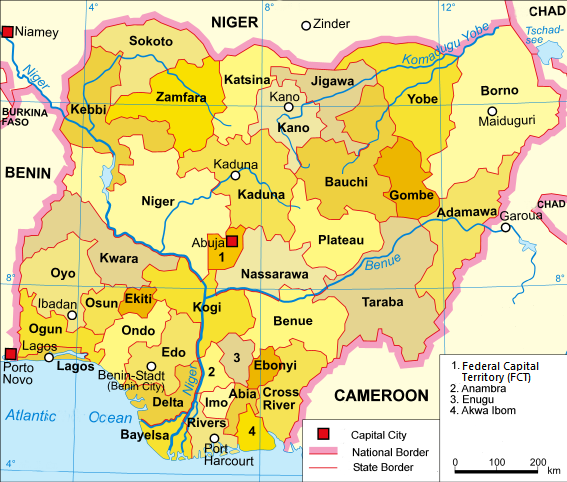
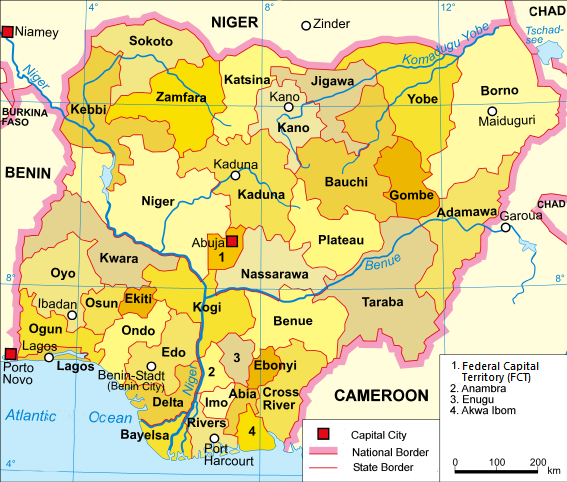
The Federal Republic of Nigeria is divided into six geopolitical zones commonly called zones.
The six geopolitical zones of Nigeria
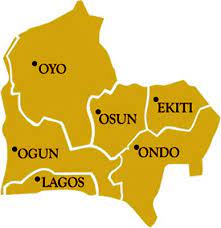
The South West geopolitical zone consists of of Ekiti, Lagos, Ogun, Ondo, Osun, and Oyo States (6 out of Nigeria’s 36 states) with an estimated combined population of about 50 million people (2023).
Based on Ajobaju’s information that in the South West in 2023 166 persons died as a result of ritual and cult related killings, I estimate that in Nigeria at least one person a day dies as a result of ‘money rituals’, murder for ritual purposes. And this is a conservative estimate. (FVDK)
Insecurity rubbishes Tinubu’s inaugural speech to spew mass atrocities
Published: June 3, 2024 By: Jeph Ajobaju – The Niche, Nigeria
Bola Tinubu marked one year in office on May 29 as President against the backdrop of major concerns over insecurity he promised to end or reduce during the hustings last year.
Historical data plus new reports of abductions, kidnappings, and attacks show terrorists’ invasions persist despite more money being poured into security architecture.
Abuja in 2020 deployed technology to track and close the bank accounts of peaceful EndSars protesters who did not commit a fraction of the atrocities terrorists have inflicted on citizens, but it fails to also use the same apparatus to track and prosecute kidnappers.
Tinubu promised in his inaugural speech that “security shall be the top priority of our administration because neither prosperity nor justice can prevail amidst insecurity and violence.”
However, data from various tracking institutions shows an upsurge in mass killings by criminals as well as other forms of criminal conduct.
All demographics – old, young rich, and poor – live in fear of non-state actors who perpetrate violence on a large scale.
Fatalities
Daily Post writes that verified media reports and confirmation from security agencies show up to 500 people and counting have been kidnapped in mass abductions in the North so far in 2024.
February 2024
Up to 200 women and children were kidnapped from an Internally Displaced Persons (IDPs) camp in Gamboru Ngala in Borno.
March 2024
287 schoolchildren were snatched by bandits in Chikun in Kaduna.
Some 15 children were taken from a Tsangaya school in Sokoto.
61 people were kidnapped by gunmen in Kajuru in Kaduna.
November 2023
Coordinated attacks by armed groups saw the kidnapping of 150 people from four villages in Zamfara.
December 2023
At least 190 people were killed and over 300 injured between 23 and 25 December in attacks on at least 20 communities in remote parts of Plateau.
North West
Armed Conflict Location & Events Data (ACLED) also found between 2019 and 2023, the North West witnessed 662 kidnapping-related incidents.
South East
The South East recorded 533 insecurity-related incidents in 2023, according to ACLED, with over 224 people killed by gunmen between January and May 2023.
South West
Media reports show 166 people were murdered in ritual and cult-related killings in the South West
Global Rights through its on-site tracking, recorded more than 6,945 mass atrocities across the country in the first 11 months of Tinubu’s tenure.
May 2023-April 2024
Between 29 May 2023 and 23 April 2024, Global Rights found 3,707 killings and 3,238 abductions.
A minimum 4,416 innocent civilians were killed along with 262 security personnel.
Zamfara led the numbers – mainly abductions – at 636 in 2023, followed by Plateau with 627 killings.
Figures compiled by Global Rights
A recent report by Global Rights said in 2023 alone
1,781 people were killed by bandits
637 by ISWAP or Boko Haram
524 died in communal clashes
475 died in herdsmen attacks
118 were murdered through political killings
Figures collated by Nigeria Mourns
2,423 killings between 29 May 2023 and 26 January 2024
1,872 abductions in the same period
‘‘Global Right’s data is what we call the minimum. If you look at the various data from SBM Intelligence, from Data 5, from Nestia, and others, you will see similarities,” explained Global Rights Programme Manager Edosa Oviawe,
“It just shows that even though we are all doing it independently, we are reporting the same issues. We have backup documents for all of these.
“We are not just putting out numbers, we have the locations, we have the names of victims.”
Oviawe warned the efforts of the government may never be appreciated until it tackles insecurity.
“Doing other things, the economy and the rest are good, but security is paramount.
”If the people are dying and are being killed, every other thing you are doing makes no sense for Nigerians.
“If a man cannot live in safety, if he doesn’t have that assurance that as he steps out of his house, he is not going to become one of the numbers we are counting, then every other thing you are putting together as a government makes no meaning.’’
“It is time we put an end to these barbaric practices.”
What can I add to this cry for the rule of law, to respect human life, and to act. Governments can no longer ignore these barbaric practices based on superstition, poverty and ignorance, and fed by greed. The numerous examples of ritual murders given in this Op-Ed are frightening: all over the country though I’ve pointed at the widespread occurrence of ritual murders in Nigeria in previous postings (webmaster FVDK).
The Illusion of money-making rituals in Nigeria – Editorial
Published: February 20, 2023 By: Editorial – This Day, Nigeria
Ritual killing remains largely a crime driven by ignorance and poverty
The recent arrest of two teenagers by operatives of the Edo State Security Vigilante Network has once again brought into sharp focus the bizarre practice of money rituals. The young men were apprehended following a tipoff by the female herbalist from whom they sought help in their desperate bid for wealth through diabolical means. But they are not alone. Just recently, some young men were reported to have stormed a health centre in Ado-Ekiti, Ekiti state capital, asking for day-old babies. The unanswered question remains: What do they want to do with day-old babies? We can hazard a guess. They must belong to the growing group of desperadoes murdering innocent people, particularly women, children and sometimes the physically challenged, for ritual purposes.
These murderers, sometimes called headhunters, can go to any extent in the search of body parts for money-making rituals. And they are all over the country. Not long ago, there was a shocking discovery of three human heads inside a hotel room in the commercial city of Onitsha, Anambra State. The three heads said to have been kept inside polythene bags were reportedly discovered by police officers following a raid on the hotel. Eleven persons suspected to be kidnappers or ritualists were arrested but typically, nothing was ever heard again about the case. At about the same time, the police in Kagura in Rafi Local government area of Niger State arrested four people in connection with the alleged murder of a 13-year-old son of an Islamic scholar. They reportedly lured the young boy to a secluded area where they removed his intestines and other vital organs after he had been murdered.
So rampant is this crime that in cosmopolitan cities like Lagos, Ibadan, Benin City and Kano, cases of ritual murders have now become commonplace. Indeed, incidence of ritual killings is said to account for many missing people in the country. But illiteracy is also a great factor in this crime. Even though the belief lacks common sense, many people indulge in these bestial acts for the purpose of making “instant wealth”, what some have aptly dubbed “blood money”. Yet, it is difficult to prove that these sacrifices, done at the instruction of some crafty traditional medicine practitioners and witch doctors, can catapult people from penury into instant wealth. At least, for now, there is no single person that can be named to have become rich because of human sacrifices, except the characters in some Nollywood movies. So, to that extent, ritual killing remains largely a crime driven by ignorance and poverty.
Meanwhile, the old image of the country as a citadel of humanitarianism, peacefulness, fraternity, cultural and moral renaissance seems blurred. There is disorderliness and chaos everywhere. Amid the moral confusion, it is difficult for many young Nigerians to understand that work comes before wealth. The estrangement from pristine values now finds dramatic expression in crass materialism, inordinate ambition to get rich quick at all costs. But on the prevalence of money rituals, this is also a law-and-order failure. Indeed, the increasing cases of abduction and killing of many innocent men, women and children is a poignant reminder that the police and the other security agencies have not sent a forceful message on what awaits the perpetrators of such a most heinous crime. The largely indifferent treatment of those caught has encouraged the commitment of more crime.
This is an issue that the relevant authorities must deal with and very quickly. There is also an urgent need for enlightenment campaigns to put a lie to the erroneous belief that money can grow out of the body parts of murdered people. It is time we put an end to these barbaric practices.
Recently, I posted on this site a large number of ritual murder cases in Nigeria. For this reason I wished to draw the readers’s attention to other African countries where similar crimes are being committed. However, these days Nigeria is making headlines which one cannot ignore. The number of ritual murders in Africa’s most populated country can no longer be counted – if that ever was the case. In my research and reporting on ‘money rituals’ in Nigeria – as ritualistic killings are commonly called in this West African country – I already experienced that I could hardly cope with the fast rising number of reported ritualistic murders committed by Yahoo boys, Yahoo Plus boys and whatever the names are that are given to these criminals who have no respect for a human life.
The below article by Hakim Jamiu is a cry to end these gruesome practices. She offers a grim insight in the recent spate in ritual murder cases in Nigeria, a devastating picture, and sketches a possible explanation for these practices which are based on superstition and fed by greed. I recognize a number of cases she mentions, some are notorious cases, whereas I am always unpleasantly surprised to learn about more ritual murder cases hitherto unknown. She does not have to dig deep to unveil ritual murder cases in nine states: Akwa Ibom, Ekiti, Kwara, Lagos, Plateau, Rivers, Ogun, Ondo, Osun. I can without much effort add nine more states. Also see my previous posts on Nigeria (click on the category African countries in the top bar and select Nigeria in the drop down menu thus appearing).
I have repeatedly mentioned on this site that Nigeria ranks Number One in ritual murder cases in Africa. The following article confirms this sad conclusion. (FVDK)
Nigeria: a harvest of ritual deaths
Published: March 17, 2022 By: Hakim Jamiu – The Cable, Nigeria
Nigeria is fast gaining notoriety as a country of ritualists with stories of ritual killings daily reported in the traditional and social media. The latest of this cannibalistic atrocity is the gruesome murder of 22-year-old Oluwabamise Ayankole who was abducted after boarding a Lagos state government-owned Bus Rapid Transport (BRT) bus and was later murdered and had parts of her body removed which confirmed the suspicion that she may have been killed for ritual purposes. Bamise, who was on her way home from work, was thereafter tossed out of the BRT Bus at Ebute Ero. Bamise, according to eyewitnesses, was still alive after she was tossed out of the vehicle at the Ebute Ero bridge but she gave up the ghost because she did not get help on time. Social media was awash with her last chat and video expressing fears for her safety inside the desolate BRT bus in which she and another lady and three men were the only occupants. As if she knew, her instinct warned her of the danger ahead but she was helpless. Murder in a BRT bus which is expected to be one of the safest means of transportation owned by the government of Lagos state is a sacrilege.
Bamise’s gruesome murder is only an addition to the harvest of deaths by ritualists in the last few weeks across Nigeria. While many Nigerians are yet to grapple with the shock of the gruesome beheading of Sofiat Kehinde, a 17-year-old girl in Abeokuta by four ritualists between ages 18 and 20, the murder of Bamise sent shock waves to all as anybody’s child, relative or friend could be the next victim. Late last year in Ado Ekiti, a seven-year-old girl, Demilade was sent on an errand by her mother four houses away but the little girl disappeared immediately and all efforts to find her proved abortive until her corpse was found in a pastor’s house the following day! Timothy Adegoke checked into a hotel in Ile-Ife to write his postgraduate examinations but he never came out alive as he was murdered overnight and buried some metres away from the hotel. The proprietor of the hotel is currently standing trial!
In Ogun state, a woman connived with her husband to kill her visiting friend and dismembered her. The remains of the victim were later found in a bucket in the couple’s room. A ritual killer, Timothy Odeniyi who was arrested by Amotekun Corps in Ondo state confessed that he used to harvest human parts at burial grounds which he sells to his clients. In Jos, 20-year-old Moses Oko killed Jennifer, a student of the University of Jos and removed some of her body parts. In Ikorodu, Lagos state, a suspected internet fraudster (Yahoo+), 32-year-old Afeez Olalore killed his younger brother for ritual purposes. In Uyo, Akwa Ibom state, Uduak Akpan, a serial ritual killer killed 20-year-old Iniobong Umoren, a job seeker and buried her in a shallow grave. In Ilorin, Kwara state, a next-door neighbour allegedly murdered a groom-to-be for ritual purposes.
In 2019, Nigerians were alarmed about the arrest of one of Nigeria’s notorious ritual killers called Gracious David West in Port Harcourt who confessed to having killed at least 15 women for ritual purposes. In November 2019, one-year-old boy Eniola Kolawole was declared missing at Sotitobire Miracle Centre, Akure, Ondo state and has not been found till today. Irate youths set the church ablaze but the pastor who had been on trial has since been discharged and acquitted. One Shakirat was murdered in Iwo, Osun state and her body was dumped behind her mother’s shop with some of her parts missing!
It is an understatement to say that Satan has taken over our affairs completely as cases of ritual killings keep rising by the day! The question now is, are rituals for money-making real? Perhaps this is why the Nigerian-American media scholar, newspaper columnist and activist, Farooq Kperogi while bemoaning the unending spate of ritual murders in Nigeria argued, “the only solution lies in the liberation of Nigerians from stupid, backward, unproductive and murderous superstitions. The witch doctors who tell people to bring the body parts of murdered people to make them rich are often one of the most wretched people you can find on earth. If money rituals were real, they would be wealthy and won’t let anybody in on the secret”. Not many people agree with the view of Kperogi because if money-making rituals do not exist, why is ritual killing on the increase across the country? There have been many unverifiable variants and anecdotes concerning how money rituals work especially among yahoo boys which is called Yahoo plus. There is a type whereby ebora (a spirit) will bring the money to the yahoo boy after necessary sacrifices with human parts have been done. There is another type that will make the victim, usually, a foreigner obey whatever the yahoo boy says including sending millions of dollars on request. There is yet another type that involves using the pant of a woman. The pant, as they say, will fetch the ritualist a lot of money. It is not only yahoo boys that are into the ritual killing but they may have influenced others who are not into internet fraudsters to kill for rituals because of the belief that it is working for them. Some yahoo boys even go to the extent of eating human faeces, having spiritual baths in broad daylight at a public place, appearing only in pants in broad daylight to withdraw money from ATMs and so many bizarre and silly things!
The question remains, how much is ritual killing giving those involved in it that is worth the desperation of taking the life of a fellow human being? Definitely, it cannot give billions because many of the Yahoo plus boys even get broke after about three to six months while some go mad! So what’s the need for ritual killing? Apart from Yahoo boys, there are reports of a well-organised clientele of ritual killers which means that not all who are involved in ritual killing directly use the human parts but they are agents of some powerful personalities who buy the parts from them. There are reports that human parts markets exist in some areas of Lagos. It is also ridiculous that human life has been so reduced to nothingness that a human head is sold for as low as N20,000. Research also shows that many people who seek power and wealth like politicians and businessmen also use human parts for charms for good fortune and for fortification against real and perceived enemies! I wish to remind this group of politicians and businessmen that the greatest fortification and blessings come from God who is the custodian of power and fortune.
The underlying factor responsible for the present malaise is desperation on the part of our young ones who are eager to get rich quick. There is unprecedented moral bankruptcy and total collapse of family values of hard work, honesty and integrity. We should go beyond lamentations and take drastic actions. We must dig into the root cause of this barbaric act and approach it from there. What we are seeing are symptoms rather than cause. Our society has been sold to the dogs and many souls sold to the devil, the result is what is confronting us. A 17-year-old wanting to ride the latest automobile sold for millions of naira, not through any work but by any means. Society celebrating any rich person not minding the source of his or her wealth is responsible for the present madness. Images of boys displaying wealth on social media and messages that all that matter is money and the message is sinking fast and spreading like wildfire!
In one of the videos that circulated on the social media, a boy was asked if he could use her mother for rituals, he didn’t hesitate before saying yes as long as he will be rich! That’s what our society has turned to! We are breeding monsters and heartless beings who would not mind going to any length just to be rich! A child who would not blink an eyelid before killing his own mother for rituals would kill anybody without thinking about it! It is such a pity! It is common these days to find human head in a cellophane bag carried by a teenager sitting next to you in a bus! Human parts have become very common like animal parts ! It is such a shame that we have become a cannibalistic society! It is now normal to suspect the man or woman sitting next to you in a public place as a ritualist! It is that bad!
Beyond lamentations that have not helped, we must all resolve to end this monster that is threatening to consume all of us. Nobody is immune from ritual death. Bamise and other victims of ritual killings must not die in vain. Now that the driver of the BRT bus and his cohorts have been apprehended, their trial must be swift and transparent. Cameras must be installed in all BRT buses that would be monitored at a base station and on no account must this be switched off by any BRT driver.
The national and state houses of assembly should begin to work on laws to empower special courts to try ritual murder cases with stiffer penalties. Everybody must be vigilant and we must de-emphasise material wealth in our society while the source of wealth of emergency millionaires and new kids on the block must be questioned and such characters ostracized by the rest of the society as it was the practice on the days of yore when there was sanity.
We must say no to ritual killings! We are neither animals nor vampires! Even animals don’t kill themselves senselessly as we are witnessing presently!
During the past year, many of my posts on this site focused on Nigeria and the alarming scale of ritual murders and related crimes in this country, contributing to a nation-wide security problem though, one knows, Nigeria’s security problem has many faces. See my February 2, 2021 post Security challenges in Nigeria.
On May 26, 2021 a Nigerian reporter, Ayodele Oluwafemi, of The Cable, a Nigerian news outlet, published a frightening analysis of mysterious disappearances and ritual murders during the past seven years. Already the list of missing and/or murdered persons is impressive.
“Although reported cases of ritual killings show that the incident happens in all regions of the country — media reports suggest that the south-west accounts for a large percent of the killings.”
Subsequently the author analyses some of the media reports published in the past few years on ritual killings in the south-west region of the country.
Warning: the graphic description of the ritual murders may upset certain readers (FVDK).
NB: The links included in the following Cable article are the original links and consequently, I am not responsible for their proper functioning (FVDK).
Overview: how south-west is becoming a hotbed of ritual killings in Nigeria
In recent times, reported cases of ritual killings have surged in many parts of the country. Law enforcement agencies have arrested many suspects of ritual killings — with gory pictures of human skulls and dismembered bodies.
Aside from the arrest and parade of suspected ritualists by the police, the Nigerian social media space has become a place where users mobilise members of the public to help find missing friends, colleagues, and family members.
As a result of this trend of missing persons, Enough is Enough (EiE), a civil society organisation, created a website alongside social media platformsto document cases of missing persons.
“Nigerians are reported missing daily. But most often, there are no records of these missing people, it is our mandate to document these records and make it easy to find those who are lost and missing,”an excerpt on the website’s front page says.
In most cases, some of these persons declared missing are found but many remain missing — with the hope of getting found by their families and friends dimming every passing day.
The trend of missing persons and the police’ arrest of suspected ritual killers suggest that many of those declared missing may have been victims of ritual killers.
Although reported cases of ritual killings show that the incident happens in all regions of the country — media reports suggest that the south-west accounts for a large percent of the killings.
TheCable analysed some of the media reports published in the past few years on ritual killings in the south-west region of the country.
On March 24, 2014, the nation was thrown into a moment of confusion when a kidnappers’ den was discovered in Soka community, Ibadan, Oyo state.
The den was discovered by some commercial motorcyclists, popularly known as ”okada”, who were searching for two of their colleagues after they took two passengers to the community without returning.
After the den was busted, human skulls, dried human parts alongside malnourished victims which were reserved for ritual purposes, were discovered.
Personal items like bags, shoes, and identity cards which appeared to be victims’ belongings were also seen at the den.
Since the 2014 shocking discovery at Soka, there have been multiple revelations of suspected ritual killings, especially in the south-west of the country.
The police also rescued a 28-year-old woman found in the uncompleted building.
In 2016, the Ogun police discovered a ritualists’ den located within an abandoned filling station at Iyana-Ilogbo axis of Sango-Ota of Ogun state, following a tip-off from a member of the community.
The police arrested two suspected ritualists in connection with the activities carried out in the den.
On August 30, 2017, two people were killed by a mob in the Mushin area of Lagos state over alleged involvement in kidnappings and ritual killings.
The incident was said to have happened at Challenge bus stop, Mushin, after a vulcaniser sighted a suspected mad man discussing with someone in a tunnel at the bus stop.
On October 7, 2017, the Ogun police arrested six members of a syndicate allegedly involved in killing people for ritual purposes at different locations across the state.
The police said two members of the syndicate were caught with a bag containing fresh and dried human parts.
On August 20, 2018, the Lagos police arrested Taiwo Akinola, a suspected cult member, for allegedly attempting to kill Alice Akinola, his mother, for money rituals.
It was reported that the assailant attacked his mother by hitting a plank on her head at their residence at Raji Ajanaku street, Alaja road, Ayobo axis of Lagos after he had sent his nephew to go and buy a white handkerchief and a pack of cigarette.
It was reported that the suspects cut off the boy’s head for the purpose of selling it for N200,000.
The suspects have been remanded in prison.
On January 18, 2019, the Ekiti police busted a ritualists’ den in Odo, Ado Ekiti, and arrested two suspected ritualists, after a tip-off from members of the community on suspicion of ritual activities in the area.
On June 20, 2019, Dotun Ogunlade, a prophet popularly called ‘Arole Jesu’, was arrested in Igboora area of Oyo state for the alleged murder of Bosede Ogunlade, a 25-year-old housewife for ritual purposes.
The prophet was said to have lured Bosede, who hailed from Ilorin in Kwara state, with the promise of providing solution to her economic and marital problems.
On October 5, 2019, the Ogun police arrested two men, Emmanuel Aro, aged 25, and Anu Olofinju, aged 25, with a human skullalong Ijoun road, Eggua axis of the state.
The two suspects were said to have been sighted at a cemetery, digging the grave of the mother of one Amoo Bankole.
Within one month, three young ladies — Grace Oshiagwu, Barakat Bello, and Azeezat Somuyiwa — were murdered in their residences located in Akinyele LGA in a pattern that suggested ritual killing.
He said he was sent on the mission by a 50-year-old herbalist, whom he claimed was his master.
“Anytime I’m to go for the killing, baba (referring to the herbalist) will give me some charms and also teach me some incantation to be recited so that nobody will see me at the scene of the crime,” he said.
The suspects were arrested after a phone belonging to a missing person was tracked to one of the suspects. Corpses were also discovered in the suspects’ house — a development that made angry youths in the area raze the building.
On January 17, 2021, an elderly man, who according to residents, usually acts like a mentally unstable person, was arrested by the police for alleged kidnapping and ritual activities in Ado-Ekiti, Ekiti state.
The police discovered some items belonging to his victims like cheque books, wigs, and ATM cards in an abandoned uncompleted building adjacent to the Ekiti State Teaching Hospital, where the suspect lived.
On April 12, 2021, a woman — identified as Iya Elekuru — was murdered in a building by suspected ritualists in Ile-Ife, Osun state. Her killers were said to have lured her into the building under the pretence they went to buy food from her.
When her corpse was discovered, the head and hands had been cut off.
RIGHT TO LIFE
Every Nigerian citizen is entitled to the right to life as enshrined in section 33 of the 1999 constitution (as amended). The right to life can only be denied if such a person is sentenced by the court when found guilty of a criminal offence.
Those who engage in ritual killings risk heavy punishment when convicted by the court as states have legal provisions to punish ritual killers and kidnappers.
Despite the legal provisions against ritual killings and other related capital offences, ritual killings still persist.
Introduction The alleged money ritual described in the first article below is not a ritual murder in the traditional sense. However, this is not meant to say that ‘traditional’ ritual murders are not repulsive and not criminal. All ritual murders are cruel and criminal.
The ritualistic act planned or performed by the three West Africans involved in the first reported case here – a Nigerian, a Togolese and a Benin national – has in common with ‘traditional ritualistic killings’ that the perpetrators act in the firm belief that their nefarious act will bring them luck, more wealth or increased power. in short, superstition in combination with unscrupulous behavior.
Unfortunately, this case is not an isolated case. On November 1, men of the Amotekun Corps in Ogun State arrested two ritualists who were in possession of a casket containing the dismembered corpse of a man, victim of a ritual killing. Operation Amotekun was created in January 2020 by the governors of six South Western states, namely: Oyo, Ogun, Osun, Ondo, Ekiti and Lagos in order to combat the widespread insecurity in the region. Operation Amotekun is a kind of paramilitary security network and was declared unconstitutional by the FG in Abuja.
The two suspects who were arrested have confirmed that the corpse in the casket was for money rituals. The State Commander of Amotekun Corps in Ogun, David Akinremi, confirmed to the press that the two suspects have been handed over to the Police for further investigation.
The third case is about the arrest of two suspected ritualists in Oyo State. With their arrest, the police recovered a fresh human head and the dismembered body of the victim of a ritual murder, a young Lagos girl.
It illustrates that money rituals take place all over the South West of Nigeria, if not in more states. Sadly, if I were to report on alle cases of money ritual in Nigeria, I would fast run out of space and time.
This is a sad conclusion but unfortunately very true (webmaster FVDK).
Ogun police arrests Benin national, Togolese for killing daughter, beheading neighbour’s corpse for money ritual
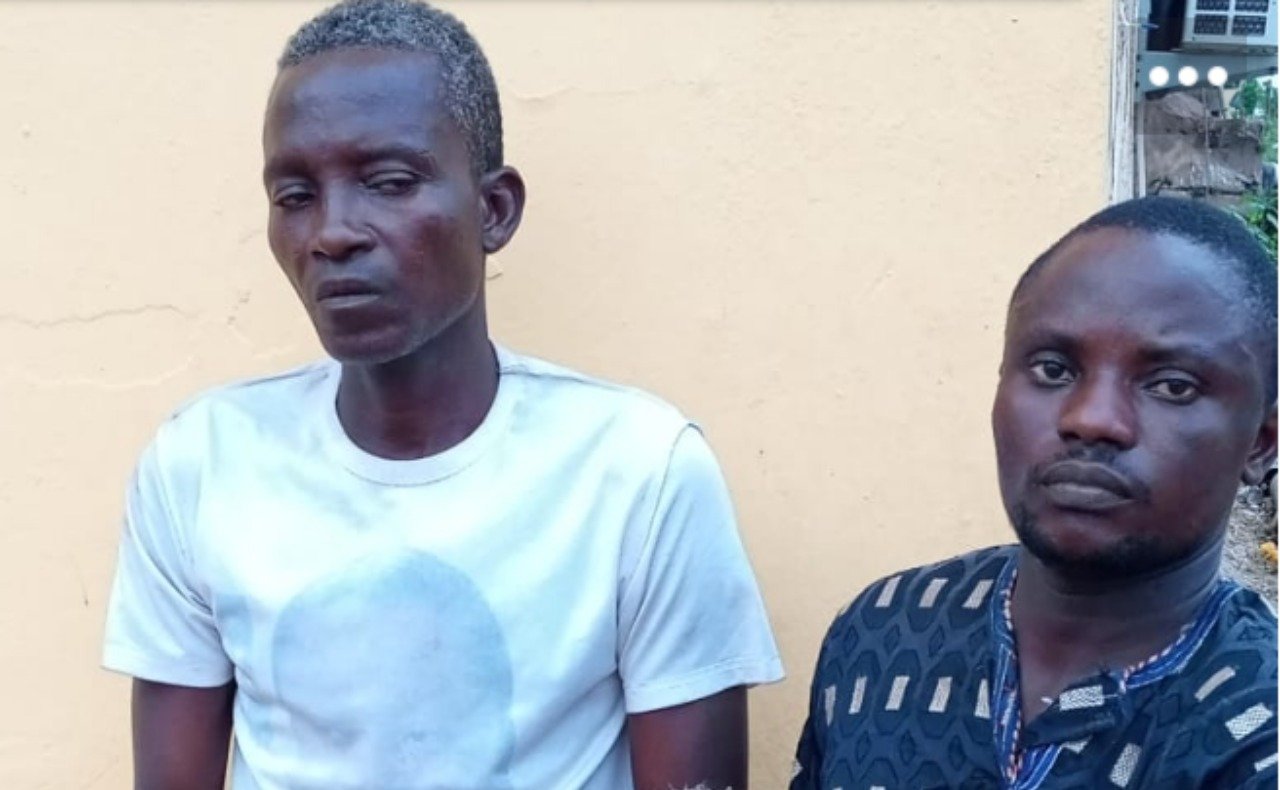
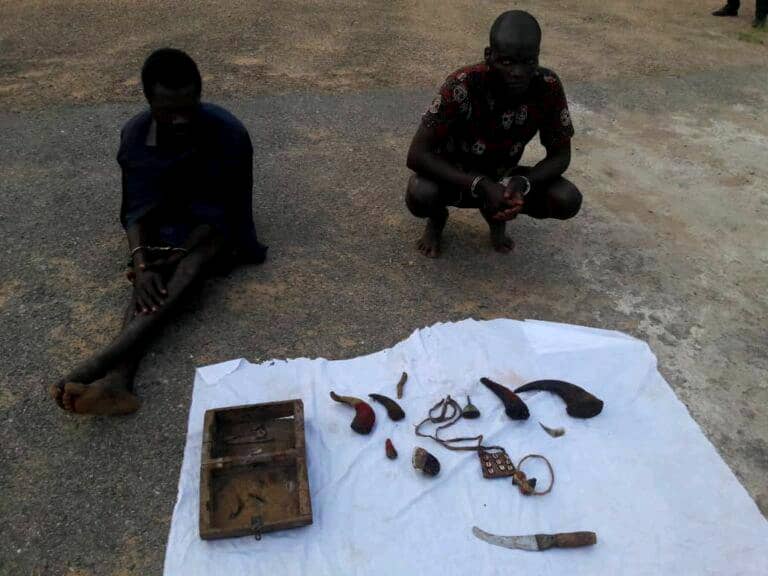
The two suspected ritualists
Published: November 15, 2021 By: Otuya Daniel – The Street Journal
Men of the Ogun State Police Command have arrested two suspected ritualists, Monday Karezu, 32, a national of Benin Republic and Anagonou Kamelan, 44, a Togolese for unlawful possession of a fresh human head.
The suspects were arrested at the house of a herbalist while attempting a money ritual, Punch Nigeria reports.
The state Police Public Relations Officer, DSP Abimbola Oyeyemi, in a statement on Sunday, said the suspects were arrested on November 3, 2021, following information received by men of the Modus Operandi Section of the State Criminal Investigation and Intelligence Department.
The PPRO added that the policemen got a hint that some men were going to a herbalist’s house with a human head to make a money ritual. He said, “Upon the information, the DSP Nurudeen Gafar-led team swiftly moved to the area where the herbalist’s house was situated and laid ambush there.
Two hours after being there, the two suspects arrived on a motorcycle with a bag containing the human head, and they were promptly arrested.
On interrogation, Karezu informed the police that he got the head from a place known as Ijale Papa.”
Further investigation revealed that Karezu is a resident of the Sabo area of Abeokuta, and that the human head with him was that of a woman who died three months ago during childbirth and was buried not too far from his house.
It was further discovered that the suspect had one time killed his nine months old daughter and used her head for the same purpose, but did not succeed.
He had also exhumed another corpse, removed the head and used it for money-making ritual, but failed.
The latest one that landed them in trouble was introduced to him by Anagonou Kamalen, a Togolese, who informed him that he knew a herbalist who could do an original money-making ritual for him with a human head, hence he exhumed the corpse of the woman buried not too far to his house, cut off the head and in the company of his accomplice, took it to the herbalist’s house, where they were apprehended before delivering it.
Oyeyemi said the state Commissioner of Police, Lanre Bankole, had ordered a full investigation into the past activities of the suspects with a view to charging them to court at the end of investigation.
Ogun Amotekun arrests two ritualists with casket of dismembered corpse
Published: November 2, 2021 By: Otuya Daniel – The Street Journal
Two suspected ritualists, Dare Banjo and Toheeb Talubi were arrested by men of the Amotekun Corps in Ogun State on Monday, November 1st, 2021 in the Ijebu-Igbo area of the state with a casket of a dismembered corpse, Daily Post is reporting.
The State Commander of Amotekun Corps in Ogun, CP David Akinremi (rtd) said in a statement on Tuesday that the suspects were apprehended following a tip-off that “some persons were sighted bringing in a casket in the middle of the night.”
As a result of the information, Akinremi said his officers quickly mobilized to the scene, where they arrested Dare Banjo, who claims to be a herbalist and one of his accomplices, Toheeb Talubi.
The statement reads, “At about 8pm yesterday, November 1st, 2021, Amotekun operatives in Ijebu Igbo received an information that some persons were sighted bringing in a casket into a house in Fara area of the town.
“The operatives quickly mobilized to the scene and on arrival, they discovered that the building is the residence of one Dare Banjo, who is a herbalist.
“A casket was seen at a corner of a room in the house and the stench from the casket triggered suspicion. The herbalist, Dare Banjo was then asked to open the casket.
“Behold, inside the casket was a dismembered corpse, without head, of a suspected male victim of ritual killing by the herbalist and his cohorts.
“Hence the said Dare Banjo and of his accomplice named Toheeb Talubi ‘m’ were immediately arrested.
“The two suspects who confirmed the corpse was for money rituals have been handed over to the Police for further investigation,” Akinremi concluded.
Published: October 28, 2021 By: Otuya Daniel – The Street Journal
Operatives of the Nigeria Police Force Oyo State Command have arrested two suspected ritualists, Ismaila Wasiu and Mutairu Shittu and recovered a fresh human head from them,Vanguard is reporting.
The state Police Public Relation Officer, DSP Adewale Osifeso made this disclosure in a statement issued on Wednesday, October 27th, 2021 in Ibadan, the state capital.
Osifeso said that the police received credible intelligence from residents of Ayekale, Saki Area of Oyo State, at about 2:30 pm on Monday who alleged the suspected ritualists, Ismaila Wasiu, 29, and Mutairu Shittu, 35, were in possession of a fresh human head.
He said, “Oyo State Police Command attached to Saki Divisional Police Headquarters immediately swung into action which resulted in the arrest of the duo, the recovery of the fresh human head and the dismembered body of the victim, who has been identified to be one Mujidat.
“Preliminary investigation reveals that the victim was lured from Lagos through a phone call by one of the suspects, Ismaila Wasiu, before they killed her.”
Osifeso said that the investigation into the incident was ongoing and the dismembered body of the victim has been deposited in a morgue.
“The dismembered body has been deposited at the morgue, while intensive investigations regarding the incident continues,” he added.
He noted that the suspects will be charged to court after investigation.
The Commissioner of Police of Oyo state, CP Ngozi Onadeko urged citizens to draw lessons from the gruesome murder of the victim.
She also called on all law-abiding people resident in the state to give their unwavering cooperation towards the rendition of timely and actionable information capable of fueling the Command’s crusade against crime in the state.
Almost nine weeks have elapsed since my last post, on June 30. As was the case when I introduced a four-week pause in my reporting on ritualistic activities and killings in Sub-Saharan Africa, this silence does not mean that there weren’t any ritual murders in this period. On the contrary, far from it!
The nine weeks’ pause resulted in a substantial backlog. Newspaper articles published during this period report new ritual murders all over the continent. A quick scan shows that in the past two months ritual murders have been committed in Ghana, Kenya, Nigeria, South Africa, Tanzania, Uganda, and Zimbabwe (in alphabetical order), in most countries more than one. In Nigeria, with 211 million people Africa’s most populated country, ritual murders – aka ‘money rituals’ – were reported in the following states: Delta, Ekiti, Imo, Niger, Osun, Ondo, Osun, Oyo and in the FCT Abuja.
Moreover, newspapers in Ghana reported extensively on the Kasoa case whereas in Zimbabwe the Tapiwa Makore trial was widely covered.
It is important to mention that the murder cases reported are likely to constitute the tip of the iceberg and that our quick scan only covers the anglophone African countries.
Of the countries mentioned above two countries stand out: Ghana and Nigeria. For this reason I will elaborate on the ritual murders in these two West African countries in my next postings (webmaster FVDK).