‘The children are not safe here’: the Nigerian couple fighting infanticide

When I first read the article presented below and published by the Guardian, entitled ‘The children are not safe here’, about a Nigerian couple – Olusola and Chinwe Stevens – fighting infanticide in their own home country, I remembered an earlier article describing this courageous couple and their admirable work. In 2018, to be precise on May 9, 2018, I published a post entitled ‘Nigerian couple working to eliminate infanticide in Nigeria‘, on two Christian missionaries, Steven Olusola Ajayi and his wife Chinwe who in 2004 had opened a shelter for so-called ‘evil children’, the Vine Heritage Home.

Without any doubt, this is the same couple and the same home presented in the 2026 Guardian article below. The 2018 article on the missionary couple was originally published on a website called ‘This Is Africa’. It was an opinion-article. Unfortunately, the exact title is missing. lIn 2018 I had juist started the present site on ritual killings, superstition, witchcraft, infanticide and human rights, and – with hindsight – at that time there was still lack of a systematic presentation.

Unfortunately, the original 2018 article no longer exists on he internet. This is precisely the reason why I have opted for the actual approach to copy-paste articles selected for my postings (together with my comments), as I had this experience before. See the section Why publish this site?

Infanticide is a crime, caused by ignorance and superstition. Nigeria is certainly not the only African country where systematic infanticide exists, i.e. the systematic killing of small children, babies. I regularly read about infanticide in other countries where sometimes desperate mothers kill their newborns. But the shelter created by Olusola and Chinwe Stevens, VIne Heritage, is for other babies whose life is threatened: new born babies who are considered ‘evil’ children, who are believed to be bad omens. Babies with disabilities, albino babies, twins, are suspected to bring curses and bad luck. Hence… they are killed, buried alive, or ‘simply’ disappear.

I express my deep respect to the Stevens couple and am convinced that their work is not in vain and that it will ultimately contribute to the eradication of a terrible crime that has existed for too long.
(webmaster FVDK).

If you would like to support The Guardian financially, please click here.

‘The children are not safe here’: the Nigerian couple fighting infanticide

Triplets Paul, Pauline and Paulina at the Vine Heritage Home Foundation, Gwagwalada, aged six months in July 2025. Photograph: Adesegun Adeokun/The Guardian

Published: February 5, 2026
By: Adaobi Tricia Nwaubani – The Guardian

In a few isolated communities in central Nigeria, some babies are believed to be bad omens. Olusola and Chinwe Stevens run a thriving home for babies at risk. But what happens when the families want them back?

Esther Stevens’ life nearly ended as soon as it began. She was born in 2007, in a village on the outskirts of Abuja, Nigeria’s capital city. Her mother died giving birth to her, and in the eyes of some villagers, that meant the baby was cursed. According to tradition, there was only one way to deal with such a child. The villagers tied the newborn to her mother’s lifeless body and prepared to bury them together.

When word reached a Nigerian missionary living in the community, she rushed to the burial site and pleaded for the baby’s life. After the villagers and relatives refused, she appealed to the traditional priest who had been called on to perform the rite. “Finally, the priest agreed and said, let them give her the evil child and see what the child will become,” Esther said. “The child, that’s me.”

The missionary took Esther to a children’s home in Abuja run by a Christian couple, Olusola and Chinwe Stevens, who brought her up as their own. Today, Esther is 18, tall, with a broad smile. She laughs easily and has a quick sense of humour.

In Nigeria, children are widely regarded as gifts from God or the spirit world, but according to some traditional belief systems, certain children were once thought to bring misfortune. Children born with albinism, visible deformities or disabilities were said to bring curses, or to be omens sent from ancestors or deities. In parts of southern Nigeria, particularly among the Igbo, twins and triplets were feared. Although these beliefs have largely faded, in isolated pockets of the country, they persist. In some of these communities, says the human rights activist Leo Igwe, the death of the mother in childbirth is believed to be the fault of the child.

The couple who run the children’s home where Esther grew up have been confronting these practices since 1996. Sent by the Christian Missionary Foundation to Abuja, the Stevenses discovered that some children were still being killed: poisoned, abandoned to starve or buried alive. In 2004, they created the Vine Heritage Home Foundation, a refuge for vulnerable children. Twenty years later, they provide a home for more than 200 children.

When Nigeria moved its capital from Lagos to Abuja in 1976, the new site was presented by the government as a neutral location, symbolically distant from centres of ethnic and regional tensions. But less than 40 miles away from this gleaming modern capital, with its wide boulevards and high-rise buildings, are communities that become nearly impassable in the rainy season. Many of these communities depend largely on subsistence farming, and the few healthcare facilities are poorly equipped and understaffed. According to Olusola, 75% of the children living in Vine Heritage are there because their mothers died in childbirth. (Nigeria is “the most dangerous country in the world to give birth”, according to UN data from 2023, which shows that one in every 100 women dies during childbirth or shortly after, many from postpartum haemorrhage.)

After their shocking discovery, the Stevenses began going around the communities, begging the families to hand over to them any of the “cursed” children rather than kill them. Then they began to speak with other local missionaries, asking them to spread the word that they were willing to take in any child deemed evil.

One of their contacts, missionary Andrew Tonak, told me that Chinwe is one of the most open-hearted people he has met, a mother and leader whose counsel, generosity and instinct to give have touched countless lives. Tonak is 61, and has lived in Kaida village, about 40 miles west of Abuja, since 2000. He recalled visiting women who had just given birth to twins. On his next visit, he would often be told, “The children are no more. They died.” Over the years, he says he has rescued 20 children from the village and neighbouring communities.

By the time some of the children now at Vine Heritage were rescued, they were already weakened by poisoning or severe malnutrition. Most required urgent medical attention. But increasingly, communities are becoming aware of the Stevenses’ work and now bring newborns to them directly, before harm can come to them.

Olusola said: “On their own, they come asking, ‘Please, where is that house where they keep the children?’ And then they bring them.”


Today, Vine Heritage is home to more than 200 children, from newborn to young adults. The oldest, Godiya, is 21 and has been at Vine Heritage since she was a baby. The newest arrival before my visit, a baby born on 27 May 2025, has been fighting for her life in a hospital crib since the day she was brought to the home.

About four years ago, Vine Heritage moved from a cramped facility that was originally designed to accommodate 55 children, to a much larger compound in Gwagwalada, built with funding from the EU in partnership with global charity ActionAid. The home has 18 dedicated staff working in shifts to provide round-the-clock care for the babies and toddlers. In a spacious hall, everyone gathers for morning prayers, group meetings and TV time. (Like any home full of children, there’s a constant battle for control of the remote.)

As I followed Olusola on a tour of the neatly laid-out grounds, he moved in a sprightly fashion, his greying beard framing a warm smile. At the youngest children’s dormitory, a chorus rang out: “Daddy! Daddy! Daddy!” They are not allowed out unaccompanied, and their small faces were pressed against the windows.

Esther Stevens, 18, who has been living at the home since birth. Photograph: Adesegun Adeokun/The Guardian

The multiple-birth siblings all have names that sound alike: Victor and Victoria, Mabel and Bethel, Zion and Zipporah. Among the youngest residents are triplets named Paul, Pauline and Paulina. Their parents arrived at the home one morning about six months ago, cradling the newborns in their arms. “I asked, ‘Why did you bring them?’ They said, ‘We don’t want them to die,’” Olusola recalled. The parents have visited once since then. They love their children, but fear that if the babies remained in their village, they would be killed.

Esther is clearly a favourite among the younger children. They love to follow her around and clamber on to her back, and as she and I chatted, they hovered close by. Esther knew nothing of her true origins or how she had come to live in the house until she was 14. She had been among the first children to arrive, joining the household in 2007 when there were only nine or 10 others. Olusola and Chinwe have one biological child, Praise, now 24 and studying at university. In those early years, Esther assumed she was also their biological daughter. As more children joined over time, she believed she was simply growing up in an orphanage run by her own parents. All the children bear the surname Stevens. “I knew it was an orphanage home, but I thought I was their real child. I look like mummy,” she said, and she does share some resemblance to Chinwe, with the same complexion.

Esther’s illusion was shattered when members of her biological family unexpectedly arrived at the home. At the time, the missionary who had rescued her as a newborn was preparing to leave the community. Before departing, she contacted Esther’s biological family to ask if they wanted to see where she had taken their child, knowing that once she left, they might never have the chance. “My grandmother came from the village and said she wanted to see me,” Esther recalled. “She wanted to see if I was still alive. When she told my father I was alive, he came to see with his own eyes.”

To prepare her for the meeting, Olusola sat her down and told her the truth about her past. “I was more than shocked,” she said quietly. “I felt sad. I felt bad.” Wanting to know more, Esther asked for her file. She read it cover to cover. What hurt most was discovering that her family had never come for her in all the 14 years she had been there. “Finding out about my parents’ true identity … It was just … I shed tears because they didn’t even care.”


Kaida, a village in Gwagwalada, is the closest community to Abuja’s city centre where there is evidence that infanticide may still sometimes take place. There are no tarred roads to the village, and the route is rough and bumpy, but it is better connected than most. There is a patchy phone signal here.

In Kaida, I met Abubakar Auta, a father of 13 and a husband to two wives. His twins Eric and Erica were sent to Vine Heritage about seven years ago. Like almost every adult in Kaida, Abubakar and his wife, Amina, farm for a living. To supplement their income, Amina digs sand from the river to sell to builders. She arrived to meet me straight from her work, dripping wet, sand clinging to her bare feet. Of her husband’s 13 children, seven are hers. Abubakar said he sent the twins away to “save their mother from suffering”. He believed they would not be safe in Kaida. Speaking to me in Hausa through a interpreter, he explained, “If I had left my children here, people would keep their eyes on them, and that would make them a target.” (Eric later died at the children’s home after falling ill.)

Kaida village has solar power, which provides a few hours of electricity each day for its two clinics: one government-run, the other operated by missionaries trained in community health. The government facility stands silent and empty. Locals say its staff are rarely present. The missionary clinic, by contrast, is alive with activity.

While I was there, a community health worker tended to a woman whose young grandson had a toe injury, the wound still raw and red. The woman had told me earlier on, in her home, that she had previously given birth to three sets of twins. All of them died within months. “They just fell sick,” she said. “In a short time, they were dead.”

Olusola Stevens with some of the children at Vine Heritage Home in Gwagwalada, July 2025.Photograph: Adesegun Adeokun/The Guardian

Her eldest child in his early 20s, sitting nearby, looked up and interrupted. “It was an evil hand that killed them,” he said, his tone defiant. At his words, his mother fell silent and turned her face aside, making it clear she wanted no part in that line of conversation.

The village head described the killing of children as belonging to “a time when people did not know these children were human beings”. He repeatedly used the phrase “in those days” to explain that their “eyes are now open” and such killings no longer happen. (He confirmed that the practice continued until at least a little more than 10 years ago, and that his “those days” referred to the years before then. Lakai has served as village head for the past 26 years.)

Community members are reluctant to speak openly, whether out of fear of stigma, distrust of outsiders, or the sensitivity of exposing cultural taboos. What I was able to piece together from these guarded, euphemistic conversations suggests that decisions involved a mix of family elders and traditional religious leaders. Leo Igwe, the human rights activist, acknowledged the role of patriarchy in situations where women surrender their babies to die. In 2019, ActionAid ran a survey in 57 villages around Abuja in which 16% of male respondents openly expressed support for the practice.


The shroud of secrecy has made it hard to tackle these beliefs. When I contacted various government officials, each one said they had never heard of such practices. Infanticide is against the law, but enforcement is hampered by secrecy and denial. Arinze Orakwue worked for nearly 20 years for the state body responsible for rescuing vulnerable children. From the early 2000s, he visited many communities where infanticide is practised, meeting with traditional chiefs and local leaders in an effort to change entrenched beliefs. “Many of them are living in denial. They tell you that it used to happen in their community a long time ago but it doesn’t happen any more.”

As more children were brought to their home, the Stevenses realised the scale of the problem. In 2013, when they decided to speak publicly about infanticide, the Federal Capital Territory government summoned them, accusing them of spreading falsehoods and damaging Nigeria’s image, just to attract attention and donations. Yet this scepticism faded after officials were shown clear evidence. The government eventually commissioned the couple to run awareness campaigns in the affected communities. They have built new partnerships, most notably with ActionAid. “The greatest problem is denial,” said Andrew Mamedu, ActionAid’s Nigeria head. “The community will insist, ‘Oh, there’s nothing like that.’ But when you go there, you see the evidence. You see the altars to the dead twins. Sometimes, the parents can’t account for their children. They are pregnant and before you know it, they’ve given birth and the baby is gone.”

ActionAid’s approach to the problem was patient, practical and deliberately indirect. Staff set up committees in each community – made up of men and women, young people, traditional rulers and religious leaders – and framed their aim as community development. “We don’t start with infanticide because they would just drive us away,” Mamedu said. The teams began by focusing on livelihoods, education, hygiene and access to healthcare, and only then moved on to tackling infanticide, under the broader banner of maternal and child health. Committee members acted as local advocates. One of their most effective tools was radio, still the most widespread and trusted source of news in northern Nigeria.

Chinwe Stevens at home.Photograph: Adesegun Adeokun/The Guardian

The strategy produced some measurable gains. In two communities ActionAid’s advocacy helped secure government investment in health centres. In four communities, the killings gradually stopped. Parents who had handed over children returned to the home to ask for them back. New local “champions” began to emerge, ordinary people willing to speak up. Still, the effort had its limits. Resistance from influential elders persisted, and when funds ran short in 2022, much of the work was left unfinished.

The Stevenses continue to work closely with missionaries stationed across the area. But not all rescues come through Christian networks. In Godiya’s case, it was a Muslim cleric who stepped in. “The Islamic preacher went to the community to preach and make converts, just like I do,” Olusola recalled. “He saw a child strapped to the dead body of her mother. They were preparing the grave. He asked, ‘Please, this child, what happened?’ They told him she was an evil child, and that their culture was to bury such children with their mothers. He said, ‘Can you permit me? Let me call my pastor friend so he can come and pick up the child.’ So he called me, and we went to the community and took her.”

When the Stevenses first established the Vine Heritage Home, their vision was simple: to raise the rescued children as their own and, once they were older, return them to their communities so they could become agents of change in the very places that had once rejected them. In recent years, 36 children have been returned to their families. In each case, the families themselves came asking for the children. But reintegration is rarely smooth. For one thing, many of these rural communities speak local languages understood by few outsiders.

When Esther visited her family in Dako village for the first time in December 2021, she met her siblings: two older brothers, two older sisters, and a younger sister. She was the only child from her mother, who had been the last of her father’s three wives. Two of her siblings were already married with children. They were glad to see her, but communication was difficult. “I couldn’t talk with them because they speak Basa,” she said. Only her elder brother could speak English, because he was in school.

The contrast in education was stark. When Esther told them she was in her third year of junior secondary school, they thought she was lying; most of the people her age in the village were still in primary school.

At Vine Heritage, every child goes to school. Of the current residents, 182 are enrolled, from primary and secondary pupils to university students like Godiya, who is studying sociology at Nasarawa State University, just across the border from Abuja. Godiya dreams of a career that comes with a uniform – any one will do. Esther has just finished secondary school and hopes to begin university later this year to study law. For many like her, returning to their villages would probably end those dreams.

Sometimes, a compromise is possible. Fifteen-year-old Mabel and Bethel spend their school holidays in Kaida village with their family, then come back to the home once classes resume. Their family first came to reclaim them when they were 10 years old. “I was happy, but I was not happy,” Bethel said. “I was happy that I had seen the place where they gave birth to me, but I was not happy to leave here,” she added. “Whenever I go there, nobody disturbs me, but I always want to come back.”

Beyond communication difficulties, the adjustment to rural life can be harsh. Children accustomed to running water, electricity and regular meals must fetch water from streams, adapt to harder living conditions, and endure the curiosity or suspicion of villagers.

The Stevenses usually wait until they consider the children old enough to understand before telling them how they came to the home. When Godiya turned 17, in 2021, her people came looking for her. “At first I said I was not going to see them because for how many years they did not come,” she recalled.

Gloria, 11, playing with other children at Vine Heritage Home.Photograph: Adesegun Adeokun/The Guardian

“It took us two hours to convince her,” Olusola said. “I pleaded with her, telling her that their coming was a sign of progress.”

Since then, Godiya has stayed in touch with her family, but she only made her first trip back in January 2025. Without proper roads, the only way to reach Bari village was by motorbike. Hours after leaving Gwagwalada, she finally arrived exhausted, and the entire village gathered to stare. “Everybody was just looking at me,” she said. “I didn’t understand the language and the journey was stressful. They were speaking, but I didn’t understand them.”

The youngest of nine children, Godiya was welcomed with joy by her older sisters, who embraced her through tears. They urged her to come back for Christmas, but she was dismayed by the lack of electricity or phone network, and currently has no plans to return.

Esther’s experience in Dako was similar. “When I went to the village, everybody came to see me,” she said. Some of the stares unsettled her. “The community was scary. The way some villagers look at you, as if there’s some evil thought in their mind. I was so scared because I didn’t want anything to happen to me.”

Sometimes, the danger is real. Four years ago, eight-year-old Monday was sent back to his village at his grandfather’s request. Monday’s mother had died giving birth to him. The family had recently converted to Christianity, and after Monday’s father remarried, the grandfather felt it was the right time to bring home the boy once deemed “evil”. But just two weeks later, Monday was returned to Vine Heritage. The elders in the village had been resentful, asking the grandfather how they should feel when others had killed their own children but he had brought his back alive. Fearing for the boy’s safety, the grandfather decided it was better for him to leave. “He called me and said, ‘I am returning your child to you,’” Olusola said.

When a family asks for their child back, the Stevenses try to find out if it is safe for them to return. But they cannot prevent every tragedy. About eight years ago, the Stevenses visited a mother who had recently given birth to an albino girl. She assured them that attitudes towards albinos in her community had changed in recent years, so they did not insist on bringing the new baby to the home. “I was asking questions: has anybody threatened you or the child? She said no,” Olusola recalled. Shortly afterwards, word reached him that the baby had died without explanation. He has never been able to discover what happened.


The years have taken their toll on Chinwe and Olusola. About two years ago, Chinwe’s health began to deteriorate, and Olusola urged her to move into a small flat nearby so she could focus on recovery. During school holidays, two of the oldest children, including Godiya, take turns staying with her, helping with everyday needs, while the others visit in small groups from time to time.

Chinwe has had a stroke, developed high blood pressure and undergoes regular dialysis. I visited her in the modest flat where she lives alone, after spending her entire married life surrounded by dozens of children. She spoke candidly about how she poured herself into caring for others while neglecting her own health. Apart from the small income the Stevens received as missionaries, they earned nothing, relying entirely on donations to care for the children. Now, Chinwe herself depends on donations to cover her medical expenses.

On the walls hang photographs of her in a graduation gown, taken when she earned her doctorate in agriculture from the prestigious University of Nigeria, Nsukka. Another, from two years ago on her 59th birthday, shows her nearly three times her current, frail size. Pointing to one, she said softly, “Look at me then, and look at me now.” She managed a wry laugh.

Olusola said the home had its future leaders among the older children, those willing to step up and already involved in administration and management. Some, he explained, had made it clear that even after graduating from university, they intended to remain committed to running the home. Whenever he was away for meetings, they kept things running. Unless visitors specifically asked to see him, the children received guests, handled day-to-day operations, managed money and accounts, and reported back to him. “The only thing they can’t do is sign cheques,” he said. “I have already told them that in the next 10 years, I will sit back and the home will be in their hands.”

Most donations to Vine Heritage come from individuals. On the day I visited, a donated cow stood in the compound. But with Nigeria’s soaring inflation, now at its highest in nearly three decades, many longtime supporters have cut back or stopped entirely. “Sometimes, when you phone people to remind them of their promise to pay school fees, they get irritated,” Olusola said. “Because of Nigeria’s economy, some of the people that used to support the home before are now finding it difficult.”

Mamedu, at ActionAid, believes the issue is more complex. The challenge, he says, lies in how the home is run. It is neither a formal organisation nor a business. There is no business plan, governance structure, or consistent paperwork like a typical NGO or charity would have. It is registered as a foster home. There are no clear systems for tracking how funds are spent or how accounts are managed.

“We supported the home to try to institutionalise the process,” Mamedu said. “We trained the staff on hygiene, childcare, some record keeping, even partner management. From the start, we told Olusola, let’s have a central way to account for every fund that comes in, so that when we say we don’t have money, it’s backed by proper records. But he tells us that this is not an orphanage; it’s a home.”

ActionAid still supports the home, providing monthly funds for food and covering urgent medical bills for the children. But the future is uncertain. The Stevens’ family-first approach has undoubtedly saved lives and nurtured emotional bonds among the children, Mamedu believes. But the original vision of reintegrating children into their communities appears to have faltered, which means the home keeps growing. Olusola admits that he once believed those communities would be more developed by the time the children grew up. He had expected more progress.

I asked Olusola if he would have done things differently. “When God asks you to do something you only obey,” he said. “It never occurred to me that we would ever have more than 20 children. After saving seven children, we had a pause of about one-and-a-half years, and we thought that would be all. We made our decision that whatever we gave to our biological child, we would give the rest.” But after the seven-year hiatus, Olusola recalled, “the floodgates opened, and more children started coming”.

Source: ‘The children are not safe here’: the Nigerian couple fighting infanticide

Anambra State, Nigeria: widow initially banished over alleged witchcraft gets new apartment

This post is about harmful widowhood practices and belief in witchcraft. It’s not about a ritual murder.

It all happened in Umunankwo, a village in the Ogbaru Local Government Area of Anambra State, in south-east Nigeria. The story goes back to April last year, when three brothers chased and banished their widowed sister, a 53-year old mother of two children, from the community accusing her of being a witch. The incident was filmed and went viral. Subsequently, the three men were arrested. For briefness sake I may refer to the second and third articles below.

The incident drew once more attention to existing harmful widowhood practices and the plight of women in Anambra State in general.

Moreover, also in Anambra State the belief in the power of supernatural forces exist, though it is unknown at which scale. Related superstitious practices may go hand-in-hand with ritualistic killings (‘money rituals’) and trafficking in human organs which unfortunately also occur in this state in South-East Nigeria. See my February 19, 2023 post ‘Anambra State Police Officers in alleged ritual killing, organ harvesting ring arrested‘. 

Anambra State is located in the South East geopolitical zone of the Federal Republic of Nigeria. The Federal Republic of Nigeria is divided into six geopolitical zones commonly called zones. 

Nigeria’s six geopolitical zones

Anambra State is an inland state and one of Nigeria’s smallest states with a surface area of only 4,844 km2 (only Lagos State is smaller). Anambra ranks number 14 by population with an estimated population of 8 – 10 million people (2024), most of them christians though traditional beliefs continue to exist. The majority of the population belong to the Igbo ethnic group (in the 1960s, Anambra State was part of the failed secessionist Republic of Biafra). The region nowadays known as Anambra State has a a rich cultural history.

I already mentioned a prime reason to post this item, the existence of harmful widowhood practices, another major reason is the wish to draw attention to local initiatives and organizations to end these outdated and cruel practices which in fact represent human rights violations.

In this context I wish to mention the commendable work of the organization Advocacy for Alleged Witches, an interventionist group leading campaigns to end witch persecution in Africa. The organization’s Director is the well-known Leo Igbe, more than once mentioned on the present site. His work cannot be overrated and I wish to congratulate him once more with his work and achievements.

Last but not least I wish to congratulate Genevieve Osakwe, the Magistrate of the Children, Sexual and Gender-Based Violence Court, in Awka, the state capital, and the Commissioner for Women and Social Welfare in the state, Ify Obinabo, for their swift actions.

Thanks to them the perpetrators of the crime are being prosecuted and the victim, Nneka Uzor, can now start a new life in a new apartment.
(webmaster FVDK)

Anambra State, Nigeria: widow initially banished over alleged witchcraft gets new apartment

The widow, Nneka Uzor, a 54-year-old mother of two, was banished by her three brothers from Umunankwo Community in Ogbaru Local Government Area of the south-east state on 30 April 2023.

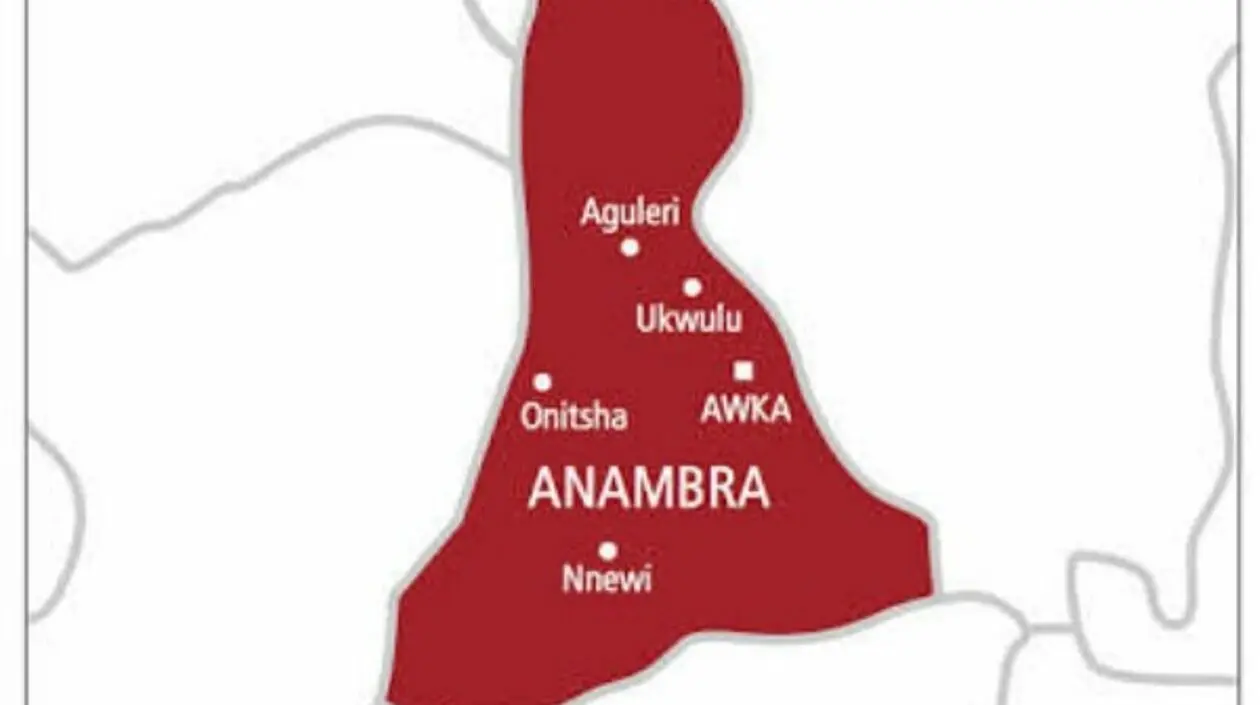
Map of Anambra State

Published: February 25, 2024
By: Chinagorom Ugwu – Premium Times Nigeria

A widow in Anambra State, who recently returned to her community after she was banished for allegedly being a witch, has gotten a new apartment.

The woman, Nneka Uzor, a 54-year-old mother of two, was banished by her three brothers from Umunankwo Community in Ogbaru Local Government Area of the south-east state on 30 April 2023.

PREMIUM TIMES, last year, reported (see below – webmaster FVDK) how the widow was spotted in a video clip being led out of the Umunankwo by the community members who hurled abuses at her while two masquerades flogged her.

The three brothers —- Lazarus Uzor, Anozie Uzor and Valentine Okwuosa —- were later arrested and arraigned before the Children, Sexual and Gender-Based Violence Court in Awka.

The arrest and arraignment of the suspects were facilitated by the Commissioner for Women and Social Welfare in the state, Ify Obinabo, who promised to ensure that the woman was reunited with the community.

This newspaper also reported that Mrs Uzor, the banished widow, returned to the community in January and reconciled with the villagers, following the commissioner’s intervention and the traditional ruler of the community, Fidelis Nsofor.

New apartment

Mrs Uzor has now gotten a self-contained apartment through the assistance of Advocacy for Alleged Witches, an interventionist group leading campaigns to end witch persecution in Africa.

The Director of the group, Leo Igwe, told PREMIUM TIMES on Saturday that the group decided to help Mrs Uzor after they learnt that the widow had been staying with a relative after her return to the community.

“We found out that while she returned to the community, she had no money, no apartment; her business had collapsed. Nothing. She was almost displaced,” Mr Igwe said, recalling that the widow also made the request when the group reached out to her.

“So, we raised some money and we sent it to her to rent an apartment,” he said.

The group director commended PREMIUM TIMES, saying it was the paper’s report that made them aware of the widow’s travail.

Joy overflow

Mrs Uzor expressed joy while she shared a video clip of the new apartment with the group director.

“You people have met me in my point of need,” she said in the three-minute video clip, almost shedding tears of joy.

“This is wonderful,” the widow exclaimed as she showed the inner part of the apartment.

“So, at last, I can boast of saying this is my own.”

She asked God to bless members of the group who secured the apartment for her.

Source: Widow initially banished over alleged witchcraft gets new apartment

Related:

Widow banished over alleged witchcraft returns to community

The woman, a 54-year-old mother of two, was banished by her three brothers from Umunankwo Community in Ogbaru Local Government Area of Anambra State.

Published: January 23, 2024
By: Chinagorom Ugwu – Premium Times Nigeria

A widow in Anambra State, who was banished for allegedly being a witch, has been reunited with her community.

The woman, Nneka Uzor, a 54-year-old mother of two, was banished by her three brothers from Umunankwo Community in Ogbaru Local Government Area of the south-east state on 30 April 2023.

PREMIUM TIMES, last year, reported how the widow was spotted in a video clip being led out of the Umunankwo by the community members who hurled abuses at her while two masquerades flogged her.

In the clip, the people, who were heard accusing Mrs Uzor of poisoning the community’s food and refusing to go for appeasement, led the woman to a road junction where they pronounced her banished from the community.

At the time they pronounced her banished, the widow had collapsed in the middle of a road, apparently due to fatigue.

The three brothers – Lazarus Uzor, Anozie Uzor and Valentine Okwuosa – were later arrested and arraigned before the Children, Sexual and Gender-Based Violence Court in Awka.

The arrest and arraignment of the suspects were facilitated by the Commissioner for Women and Social Welfare in the state, Ify Obinabo, who promised to ensure that the woman was reunited with the community.

Reunion

Mrs Uzor, the banished widow, has been reconciled to the villagers and brought back to the community, according to a statement on Monday by Chidinma Ikeanyionwu, a media aide to the commissioner.

Ms Ikeanyionwu said the reconciliation took place at the palace of the traditional ruler of Umunankwo, Fidelis Nsofor.

She said the commissioner, heads of men and women groups in the community, community leaders and the suspects, among others, attended the event.

The statement indicated that following the traditional ruler’s directive, community members gathered at the junction, where they had earlier banished the widow, to bring her back.

Masquerades also accompanied her back to the community.

Source: Widow banished over alleged witchcraft returns to community

This is how it started:

Brothers label their widowed sister witch, banish her from community

The victim is a mother of two .

Published: May 22, 2023
By; Chinagorom Ugwu – Premium Times Nigeria

Three people have banished their widowed sister from their community for allegedly being a witch.

The incident happened on 30 April in Umunankwo, a community in Ogbaru Local Government Area of Anambra State, south-east Nigeria.

Chidinma Ikeanyionwu, a media aide to the Commissioner for Women and Social Welfare in the state, Ify Obinabo, disclosed this in a statement on Monday.

The widow, Nneka Uzor is a 53-year-old mother of two. She is also a caterer.

Ms Ikeanyionwu gave the names of the suspects as Lazarus Uzor, Anozie Uzor and Valentine Okwuosa.

She said the suspects’ arrest was facilitated by the commissioner, Mrs Obinabo, after a video clip showing the widow being abused and banished from the community went viral on social media.

Viral video

In the clip, seen by PREMIUM TIMES earlier this month, the widow was spotted being led out of the community by members of the community and two masquerades.

As she walked, the community members hurled abuses on her, while the two masquerades flogged her.

“On this day, Nneka (Uzor) committed an atrocity. She poisoned the food of the community, and she refused to go for appeasement. On that purpose, masquerades have arisen to say a final goodbye to Nneka to the boundary of no return,” a voice was in the background of the video was heard saying.

“Nneka, you shall not come back again (to the community). You have been ostracised. Today, marks her last day (in the community). The masquerade has ostracised her,” the voice added.

Apparently exhausted and weak, the widow collapsed in the middle of a road and the people abandoned her there.

Arraignment

Ms Ikeanyionwu said the suspects were later arrested and arraigned before the Children, Sexual and Gender-Based Violence Court, in Awka.

The statement was silent on the details of the charges against the suspects.

When the charges were read and interpreted to the defendants, they pleaded not guilty of the charges, she said.

Ruling on bail application by the suspects, the Magistrate, Genevieve Osakwe, held that the matter was a bailable offence.

Ms Osakwe, consequently, granted them bail in the sum of N700, 000, but demanded that the suspects should provide the traditional ruler of the Umunankwo Community, the parish priest of the community’s Catholic Church or the president-general of the community as sureties.

In her reaction, the commissioner, Mrs Obinabo, expressed satisfaction with the decision of the court, Ms Ikeanyionwu said.

The commissioner assured that she would get justice for the widow and other widows in the state who are going through such ill-treatment.

She warned residents of the state to desist from any form of harmful traditional practices against widows, pointing out that Anambra State Government has zero tolerance for such “inhumane acts.”

Banished widow speaks

Mrs Uzor told the commissioner that she began living in her parents’ house in the community nine years ago after she lost her husband.

The widow regretted that her brothers and other family members had been abusing her since she began living with them in their parents’ house.

On the issue of being banished from the community, she narrated that someone had died in the community and that on the day of the person’s burial, she was invited like others, which made her pass a night there.

She said she was surprised that her brothers and other family members woke her up the next morning at about 5:30 a.m. with the masquerades and subsequently chased her out of the community.

Nkiru Uzor, a sister to the widow, alleged that it was one of the suspects, Lazarus, the immediate past president-general of the community, that instigated the banishment while Nnamdi, another suspect, coordinated the act and also filmed the incident.

Source: Brothers label their widowed sister witch, banish her from community

READ ALSO: Anambra women protest against harmful widowhood practices

Nigeria: what we know about ritual killings for money, Juju priests, Imams, Pastors, others speak

The article below contains a number of interesting views – from various points of view – which throw light on the why and how of ritualistic murders and associated activities in Nigeria, commonly referred to as ‘money rituals’. It also mentions a number of recent ritual murder cases, some of them have been included in previous posts.

Personally I find the statement of a Catholic priest, Fr. Oluoma, perhaps the most convincing, simple as it was. He said that, had killing for money rituals been proven to have any form of potency, juju priests would have been on the World’s Richest Peoples list. Hilarious, simple, and convincing.

But another expert spoken to, the Chief Priest of Aroh Deity in Abagana community, Njikoka Local Government Area, Dr Paul Anieto, said that logic alone cannot explain the whole of life, including the accumulation of wealth.

Without mincing his words he stated that money rituals work. Nevertheless, he was quick to point out that there are various kinds of rituals for wealth.

According to the Aroh Deity Priest, some rituals involve the use of human body parts while others don’t. (…)

The native doctor clearly stated that he does not engage in the kind of money ritual that involves human body parts or blood, because it is criminal. Moreover, he said, it has deadly consequences for everyone involved: the instigator, the perpetrator, and the juju priest who executes the ritual.

Let’s hope he was sincere.
(webmaster FVDK)

What we know about ritual killings for money, Juju priests, Imams, Pastors, others speak

• Money ritual real but there are consequences —Aroh Deity Priest
• If money rituals have potency, juju priests would be on Forbes’ rich list —Fr. Oluoma …
Faulty parenting, poor education, bad governance driving youths to money rituals —Rev. Hayab …
Money rituals promoted by materialistic clerics – Sheikh Nuru Khalid …
Killing for money rituals, haram in Islam —Shi’ite cleric

Published: April 30, 2022
By: Luminous Jannamike, Abuja – Vanguard News, Nigeria

These days, reports of certain killings in Nigeria, where the human body is decapitated and sensitive parts harvested are believed to be for ritual purposes. In some instances, especially, if the motive remains unclear, some people assume they must have been about money-making.

However, other people, including Christian and Muslim clerics, don’t believe in the efficacy of money rituals. By that, they mean there is nowhere in the history of humankind where anybody has made real cash appear through the means of magic. They simply describe such an idea as a mirage.

But the belief in the efficacy of money ritual killings continues to be rife, especially in a society like the Nigerian context where religion and the supernatural appear to be the opium of the people due to bewildering economic hardship and widespread poverty.

Investigations reveal that the ritual killings heighten around December and the year before general elections, because people need money to spend during the annual yuletide celebrations and other financially draining pre-election meetings and rallies.

As the gap between the rich and the poor; the haves and the have-nots widen across the country, the desperation to overcome the expanding class divide propel many citizens, particularly the youth demography to turn to the dark sides of the supernatural with the hope there will be a wealth redistribution in their favour through unseen support.

Recall the recent tragic drama in Ogun State where a 20-year-old lady, Sofiat Kehinde, was gruesomely murdered and her head severed for money ritual by four teenager suspects; Soliu Majekodunmi; 18, Wariz Oladehinde, 18; Abdulgafar Lukman, 19, and Balogun Mustaqeem, 20.

They conspired to kill Kehinde and played different roles in her murder. Her skull was severed in her lover’s( Majekodunmi) room after a passionate round of love-making.

Fortunately, the teenagers were apprehended by security men after they got wind that the boys were engaging in something sinister in a building located at Isale-Ijade, Oke-Aregba area of the State.

That is the nature of the Nigerian society where people, including kids who should be minding their studies and dreaming of a glorious future for themselves are pre-occupied with looking for metaphysical explanations to clarify otherwise simple phenomena of pervasive poverty in the land.

However, while some traditional religion practitioners speak of some fetish rituals some embark on for money-making, religious leaders, especially in Christendom and Islam agree to an extent that although life in general is guided by faith in the invisible, those who pursue wealth through the execution of any form of violent homicide are under an illusion, from a spiritual standpoint, that genuine help will come to them.

One of such clerics is Rev. Fr. Oluoma Chinenye John, a priest of the Catholic Archdiocese of Abuja who commands a following of 689,903 people on Facebook alone.

If money rituals have potency, juju priests would be on Forbes’ rich list — Fr. Oluoma

According to the Catholic priest, had killing for money rituals been proven to have any form of potency, juju priests would have been on the World’s Richest Peoples list.

In an exclusive chat with Saturday Vanguard, he blamed society’s emphasis on material prosperity for the pressure felt by those, particularly youths who resort to voodoo to make money.

Fr. Oluoma also chided fellow preachers who promote the perception that financial “seed-sowing” in religious houses would translate into miracle wealth.

“Two things I want to say are: First, ritual killing for money is an illusion, it doesn’t work. If it did,  the Babalawo (juju priest) who is paid to do the rituals would have done it for himself and be living large. Even the governments would have been using prisoners condemned to death for money rituals instead of wasting their blood by hanging or firing squads. It (money rituals) is an illusion like magic.

“Secondly, preachers of the gospel should stop the prosperity gospel, they should teach people the values of honesty, diligence, generosity and hard work. The emphasis on material prosperity puts pressure on people who resort to any means to make it,” Fr. Oluoma, who shepherds a congregation at St. John Mary Vianney Catholic Church, Trademore Estate, Lugbe Abuja, said.

Faulty parenting, poor education, bad governance leading youths to money rituals —Rev. Hayab

For Rev. John Hayab, the Vice Chairman of the Christian Association of Nigeria in the 19 Northern States and the FCT, nowadays many people including minors seek supernatural solutions to basic economic issues that could be resolved through education and logic partly because of bad leadership and the faulty upbringing of children. 

Speaking with Saturday Vanguard, the vocal preacher who is also the Country Director of Global Peace Foundation in Nigeria, also said people who traffic in stories of how supernatural power has prospered certain people do so largely to further mislead those who find it hard to accept that someone else can succeed through the ethics of hard work, prudence, and sheer ingenuity.

He said, “The way and manner many of our youths are deviating from moral values and embracing evil just to make money are dangerous for a peaceful future. There are many factors responsible for their going into ritual killings to make money instead of pursuing education that will lead them into researching and investing in science and technology.

“Other nations are doing well in these regard because they have laid a good solid foundation for both the educational, moral and spiritual growth of their nation and children.

“The Bible has admonished us to train a child in the way he should go so that when he grows old he will not depart from it (Prov 22: 6). So, what type of training and upbringing are many Nigerian children getting from parents, neighbors, and even leaders?

“Our society celebrates rich people without questioning the source of their wealth. Churches recognise the best-dressed worshippers and members with big cars not minding the source of all they flaunt around.

How will poorly brought-up children not think that money is everything and go after money anyhow just to be recognised and celebrated?

“Our society and our youths will reject the temptation of killing for money when parents bring them up in the fear of God and love for fellow human beings. Everyone should therefore take parenting seriously by helping to raised godly and responsible children.

“Also, the government must help to make sure our teeming youths have an equal opportunity like their counterparts around the world. A country where basic services are not available can make the youths who are not patient want to make money by all means just to afford some basic human needs.

“When you (government) give your youths poor education, they will use their half-baked knowledge to do wrong things. We should lead our youth by example.

“Likewise, faith leaders should preach sermons that will guide the young people right not misleading some of them with wrong definitions of prosperity. Prosperity is not just about having money. A healthy man, contented, and happy doing what he knows best for the glory of God and the good of all humanity even if he has not much cash in his account or pocket is a prosperous person.”

While there appears to be no logical link between wealth and rituals, the rising incidences of gory killings in our society by suspects who got into trouble with the law, because of their desperation for money are worrying and the society must be held to account for the phenomenon.

Money rituals promoted by materialistic clerics —Sheikh Nuru Khalid 

The immediate past Chief Imam of the National Assembly Legislative Quarters’s Jum’mat Mosque, Apo, Abuja, Sheikh Muhammad Nuru Khalid who spoke to Saturday Vanguard from his location in Mecca, Saudi Arabia, where he is currently observing the lesser Hajj, said the society has lost its sense of value; thereby, placing materialism above spirituality.

He also said that the ultimate goal of some people who engage in gruesome murders for money was the acquisition of political power in the country; stressing that greed also forms the basis of such gory killings.

Sheikh Khalid maintained that greed was condemnable not only in Islam, but in other religions.

The Islamic scholar, who also commands a mass following of 138,266 people on Facebook, stated: “We have to acknowledge that our society is in trouble. Values are lost. Gradually, we are becoming a valueless society. We glorify money and other forms of materialism above spirituality which is increasingly becoming absent in the mosques and churches.

“Materialism is taking the place of spiritualism in our preaching and actions, because the Imams and Pastors are less concerned about spiritual things. If you have a lot of money, you can garner a lot of respect in the society.

“Other issues responsible for the mad rush for money rituals are corruption and the get-rich-quick deceit. Our political system is also one of the factors fueling criminality in the form of money rituals, because without money, you don’t have power. People want money to acquire power. So, they are desperate in search money to reach the political position of power.

“But, if you put all these things together, they will tell you why all the religions are against greed.  There are many verses of the Qu’ran and Hadiths of the Holy Prophet, cautioning people to desist from greed. That is why Islam is against inhuman activities that endanger lives, dignity, and the wealth of the common man.

“Above all, we need to do more to bring back the society to its normal sense, because abnormalities are becoming norms in our society.”

There is a telling example of this odd trend of abnormality becoming the norm in the story of 33-year-old  suspected ritualist, Afeez Odusanya, who was arrested by operatives of the Osun State Security Network, codenamed ‘Amotekun’ for extracting teeth of dead bodies at a burial ground.

Odusanya, who said he did it for a money ritual when he was paraded at Amotekun command, Sabo area, Osogbo, disclosed he started his quest for money ritual in 2016 but it failed twice after extracting teeth from two different bodies in Sagamu, Ogun State.

Rather than accept that what he set out to achieve is impossible, the suspected money ritualist doubled down on his exhumation of buried corpse believing it would ultimately succeed if he added this and that to the process.

People like Odusanya have never seen the rituals translate into money or success, but they still attempt it anyway. By killing people, they get drawn into the relatively profitable trade in human body parts. They do not need to see it work; they just need to believe and start relating to the phenomenon as true.

Killing for money rituals, haram in Islam —Shi’ite cleric

But, a leading Muslim cleric of the Shi’ite sect in Sokoto caliphate, Sheikh Sidi Munir, maintains that tampering with the human body for ritual purposes whether efficacious or not is inglorious in Islam.

He, however, noted that the more killing for money ritual is hyped, the more people believe that others participate in it because it is perceived to be efficacious, and the more those who benefit in the trading of human parts oil the demand and supply chain.

In an exclusive interview with Saturday Vanguard, the Islamic cleric said: “In Islam, human dignity is a right given by God to all humans, who are referred to in the Qur’ân as God’s vicegerents on earth.

“Islam grants certain rights to humans before they are even born and others after their death. Whether dead or alive, the human body, created by God in the perfect shape, must be given dignity and respect.

“So, money ritual is condemnable in Islam, and the use of human body parts for making medicine, charms and amulet for any reason is haram (forbidden). It is unlawful in Islam to tamper with a human body, and a Muslim who persists in committing these kinds of rituals will find himself on a path that will eventually lead him into becoming a non-Muslim.”

On how to turn the minds of people, especially the youths from killings for money rituals, Sheikh Munir alluded to one of the Hadiths (traditions) to buttress the need for clerics to keep preaching repentance messages from the pulpits.

He said, “In one of the Hadiths of the Prophet Mohammad (SAW), a man was in the habit of digging up graves to harvest human body parts.

One day, he met a woman in a grave and had sexual intercourse with her. Afterwards, a great calamity befell him. He went to a Mallam who told him he would burn in hell fire, because his predicament was a result of his evil deeds.

“The distressed man seized the Mallam and killed him. Then, he went to another Mallam who told him that if he would repent of his sins, the Almighty God will forgive him and take away his reproach. The evil man turned away from his evil ways and became a good Muslim. So, as clerics, we need to keep preaching repentance always.”

Money ritual is real, but… —Aroh Deity Priest

Meanwhile, the Chief Priest of Aroh Deity in Abagana community, Njikoka Local Government Area, Dr Paul Anieto, told Saturday Vanguard that logic alone cannot explain the whole of life, including the accumulation of wealth.

According to him, to say there is nothing like money rituals is to say there is nothing like mysticism in life. He said that to stretch the logic of that denial, implies that there is nothing like God, because many believe that there is a mystical side to the nature of God.

He explained that there are Christians who believe in the transubstantiation of substances i.e. the transformation of forms, for instance, of the water and the wine into the body and the blood of Jesus Christ once they are consumed in the Holy Communion.

Chief Anieto without mincing his words stated that money rituals work. Nevertheless, he was quick to point out that there are various kinds of rituals for wealth.

According to him, some rituals involve the use of human body parts while others don’t. However, the blood of certain animals like rams, bulls, and birds are required.

The native doctor clearly stated that he does not engage in the kind of money ritual that involves human body parts or blood, because it is not only criminal, but also has deadly repercussions for all the parties – the wealth seeker, his collaborators, and the juju priest who executed the ritual – involved.

Dr Anieto said: “Some ignorant juju priest make use of human beings as sacrificial materials for money rituals and lucky charms. But this is not what the African culture teaches.

“Rituals are basically an intercession between the mundane and the spiritual. It is unfortunate that what we see today are so many committing various forms of dangerous and inhuman acts in the name of money rituals.

“I don’t engage in human money rituals and you can never see any real adherent of Odinnani (Igbo traditional religion) engage in money ritual, because “Ani” forbids the shedding of human blood. Violating this taboo comes with devastating consequences, because all deities in Igbo culture requires tooth-for-tooth and blood-for-blood.

“To accumulate wealth requires hardwork and business acumen. This is what Odinaani teaches but it is unfortunate that today’s youths lack this important virtue. They want to succeed at all costs, not minding who gets hurt in the process. They are ready to kill and sacrifice human beings for money rituals without considering the consequences of their action.

“There is prosperity charm which does not require the use of human beings or human parts but you must first have a mundane source of income to make it work. Do not be deceived into believing that there is a spirit that brings money for anyone out of thin air without a mundane source of income even in odious money rituals where human blood and body parts are involved.”

Psychologist speaks

Above all, a professor of psychology at the University of Lagos (UNILAG), Oni Fagboungbe, said rituals for both money and success exist only in the perception of the people.

He explained that for those who do money ritual, it is their faith that makes the ritual for money work for them and not the incantation or the ritual itself.

To him, it is the law of perception that is at work in cases of successful money rituals. If you perceive a situation as real, it becomes real. That is it. It is not the ritual that brings money, it is their mind and the attachment they give to it.

Fagboungbe decried the spate of ritual killings for money among the youths, and said there are several psychological laws that explain these behaviours.

According to him, “There is the Destalk psychology that says the part can never be better than the whole. The children cannot do something that is not rampant in their country.

“There is also what is called observational learning. This is the most active form of learning. These youths observe what goes on and imbibe it.

“Additionally, the law of effect says any stimulus that brings pleasure will be maximised and the one that brings pain will be minimised. These youth see the society. They see politicians commit crimes and they also see them get out of them and all sort of things. They see how the society eulogise and applaud dubious characters.

“So, there are no deterrent variables available. People do as they like and get away with it. You will hear Yahoo boys say that if they give money to the police, they will be let off the hook.”

While Christian and Muslim religious leaders attempt to undermine the phenomenon of money rituals by appealing to reason and by pointing out how illogical such a belief is, some analysts say that both logic and the law are powerless to serve as the basis of dissuading those who would not be dissuaded from their culturally perception of life and their place in it, because the irrational often trumps the rational in the real world.

Legal prosecution of suspect may have the power to nip in the bud any attempt at senseless killing in the name of seeking wealth, but people will keep believing what they want to believe about the  efficacy of money rituals.

Therefore, to effectively tackle the obnoxious practice of money rituals in the society, the government must entrench the practice of good governance and do all it would take to pull the economy out of the doldrums that has widened the gulf between the rich and the poor in the country.

Ritual killing is real, herbalist speaks too

Additional report

By Evelyn Usman

According to him: ‘ I inherited this trade from my late father. Before he died, he warned me never to indulge in any rituals that involves human blood. He told me that some of his professional colleagues died miserably because they practiced money rituals.

“He also told me one of them lost seven of his children after killing a virgin for money rituals. My job is to prepare concoctions with herbs and soap for cure of diseases that are planted into individuals by wicked people.

“Unfortunately, some of us who do legitimate business in this profession are not rich, when compared to those who are into money rituals.  While they could be paid  between N500,000 and N2 million naira depending on the outcome of the rituals, the legitimate herbalists may die without having N100,000 in bulk .

“Blood is potent for money ritual making. It has several types . But the only thing those patronizing herbalists who practice money rituals don’t know, is that one killing  may never be enough.  Killing  of one person is just the introductory part. As long as the person wants to be rich, he would be sacrificing human beings to renew that evil covenant because the demon in charge of money always requires blood.

“Unfortunately, most people who patronize these herbalists don’t also  know they are destined to  be rich. These herbalists only demand human blood to fast track their predestined wealth”.

Some recent ritual killings —Lagos

A vivid instance was the murder of 24-year-old Precious Okeke,  who just concluded her National Youth Service Corp. The unsuspecting lady had paid a visit to her fiancé ,Maxwell Njoku, at his Ajah , Lagos abode, only for her  decomposing remains to be discovered in the apartment three weeks ago.

Report had it that her supposed fiancé  allegedly killed her for money rituals, with an instruction by his herbalist to keep her body in the apartment for seven days, after which he would  transform into a multimillionaire. Unfortunately, a curious neighbour traced the disturbing stench to the apartment before the expiration of the seven days .Another  bizarre incident occurred  at Araromi Street in the densely populated Oshodi area of Lagos, following the alleged  killing of a mother of five by her husband for money rituals.

In this case, the suspect Sogei Jafairu, who hails from Etsako Central Local  Government Area of Edo state, was suspected to have poisoned his wife’s food  and mistakenly ate it. While his wife did not survive it, he did and reportedly opened up on his deed.

Again in Lagos, One Sherifat Bello  was arrested by the Police after  he confessed to killing his wife and burying her remains in a shallow grave, for money rituals .

Rivers state

This barbaric act assumed a cannibalistic dimension following the arrest of a suspected kidnapper alleged to have killed one of his victims and used his intestines to prepare pepper soup in River State.

The suspect, Roland Peter,  according to the Police in River State ,  abducted his victim  from his house  and  was at the verge of eating pepper soup and yam porridge prepared with parts of the body of his victim’s  when the police swooped on him and some accomplices.

Ogun State

Ogun State seems to be taking the lead in the  report on killings for money rituals. Recently, three teenagers  were allegedly caught burning the head of a girl they killed for money ritual purposes  at the Oke Aregba area of Abeokuta in Ogun State.

The teenagers: Wariz Oladehinde, 17, and Abdul Gafar Lukman, 19, and the 20-year-old, Mustakeem Balogun,  confessed during interrogation that the victim identified simply as Rofiat,  was the girlfriend of one of them who was lured into their apartment, where they cut off their heads .

On why teenagers engage in money rituals remains a riddle to unravel.

Other arrests made by the Police in Ogun State involved Pastors  and  Islamic clerics allegedly involved in killings for money rituals.

There had been several other cases of killings for money rituals in the state .

Enugu

In   Enugu, the south-east region of Nigeria, the story is the same. A housewife, Mrs Ifebuchukwu Onyeishi narrated recently,  how her husband, Chidi Onyeishi, a tricycle operator , in connivance with a nonagenarian Pastor, allegedly killed their seven-year-old son for a money ritual.

The list is endless, with the introduction of different devices to achieving the devilish act.

Clergyman speaks

  Speaking with Saturday Vanguard,  the General Overseer, Apply Praise Ministry International and Chairman, Christian Association of Nigeria, Jakande /Bungalow district of Ejigbo, Pastor Segun Olatunde , said killings  for money ritual did not just begin today, adding that he met the ugly phenomenon while growing up as a child.

Asked if it worked , he replied affirmatively . According to him: “Yes, it works for them. Because if it isn’t, people will not be indulging it in the practice . It has been for a long time . I recall as a growing child , our parents warned us never to accept anything from strangers, especially when going to school.

Today, there are different versions of it. Some use human parts to prepare charms , while others use the parts to enhance their business. For some, it is to attract money and favour, to  them.  It is mysterious, just as money is mysterious and answers to blood.

“Recently some persons were arrested while they were burning some human parts to prepare charms for money rituals.  I don’t know how they do it but those arrested  said they were burning the human hand for money rituals. For some, the money must be spent in  a day, for new ones to come and failure to finish it that day attracts  dire consequences.

Killing humans does not guarantee being rich — Ifa Priest, Araba Ifayemi Elebuibon

By Shina Abubakar, Osogbo

A foremost traditionalist and Ifa priest, Araba Ifayemi Elebuibon has said that killing human does not guarantee being rich stressing that many spiritualists that embark on it are actually living a miserable life.

According to the renown Ifa Priest, “money ritual is in two ways, first, the popular gruesome killing of human with a view to using their body parts for money is more of magical than ritual. Over the years of my being a priest, I have never seen or heard any Ifa corpus about killing human for money rituals. It is not a certainty but magical. Many of the spiritualists involved in the illegality are themselves poor.

“If it is certain that once you kill someone and severe body part, mix it with certain things you start getting money, why are the herbalists still poor? Many of those caught after perpetrating the killings and used the body parts still complained that it didn’t work for them. So, it is not ritual but magic. Ritual is what you do regularly to sustain a level of flow of spirituality. In Yoruba tradition, the money ritual does not involve killing humans. It is called ‘Awure’, ‘Osole’. It involves mixing natural materials to enhance business and getting favours, it does not involve killing humans, it may involve using goats, pigeon etc. Those who are responsible for the act are mostly Muslim and Christian clerics. The records are always clear, most of those arrested by police and even paraded are either pastors of Church or Muslim clerics. “To stop the menace, parents must be responsible and train their children in the way of God. We must return to our values, placing integrity above materialism. Parents must be responsible for their children’s welfare and they should not be expecting their children to pay house rent and feed the family. Also, religious leaders must stop giving respect or title to those with questionable wealth. We must collectively eliminate the menace in our society. Killing humans does not guarantee being rich.

Source: What we know about ritual killings for money, Juju priests, Imams, Pastors, others speak

Oluwo to Yoruba activists: use energy for pursuing herders to address ritual killings in southwest of the country (Nigeria)

The Paramount Ruler of Iwoland, Abdulrosheed Adewale Akanbi, has again raised his voice against the seemingly endless killing of innocent citizens for ritual purposes in Nigeria. Its is not the first time, as I have repeatedly said here on this site.

In 2020, on at least three occasions, and also the year before, he drew attention to this ugly crime and spared no one when elaborating on the culprits. Read what he said on October 21 (‘Ritual killing deadlier and more devastating than SARS’), August 20 (‘Oluwo to lead protest against ritual killings‘), January 29 (‘Amotekun should fight ritual killings’) in 2020 and on August 9, 2019 (“I’ll declare traditional war against ritual killings if FG fails to address menace”).  

This week, on February 24, he said what I always feared and have indicated multiple times. The Paramount Chief said no one can account for the number of lives lost to ritual per day. He said: “No crime is good but there are more ritual killings in the South. It consumes an unaccountable number of our sons and daughters every day. Only a few are reported while many were not caught.”

A gruesome reality. Repeatedly I have drawn attention to the unaccountable number of ritualistic murders in Africa’s most populated country. More action is needed by federal authorities and on the state level. Perpetrators must be caught and tried, the rue of law should be upheld, and a nation-wide public awareness campaign should start immediately aiming at rooting out this cancer of the Nigerian society, fighting this disease based on superstition and ignorance. (webmaster FVDK)

Oluwo To Yoruba Activists: Use Energy For Pursuing Herders To Address Ritual Killings In South-West

Oluwo said no one can account for the number of lives lost to ritual per day, saying it will amount to disservice if such could not be addressed by Yoruba activists.

The Paramount Ruler of Iwoland, Abdulrosheed Adewale Akanbi

Published: February 24, 2021
By: SaharaReporters, News York

The Paramount Ruler of Iwoland, Abdulrosheed Adewale Akanbi, has urged Yoruba agitators and freedom fighters to commit their energy towards ending ritual killings consuming innocent sons and daughters of Yoruba in their thousands rather than attacking Fulani herdsmen.

The monarch urged agitators to be more interested in probing crimes and not attacking ethnic groups.

He, however, condemned the kidnapping, raping, and killing by some herders across the region.

Oluwo said no one can account for the number of lives lost to ritual per day, saying it will amount to disservice if such could not be addressed by Yoruba activists.

He said, “No crime is good but there are more ritual killings in the South. It consumes an unaccountable number of our sons and daughters every day.

“Only a few are reported while many were not caught. Yorubas should dissipate more energy in checkmating ritual killers and openly protest against them.  Someone’s son and daughter are being killed by ritualists at the moment. There is a baby-making factory in the South.  When are we protesting against that?”

Oba Akanbi claimed he is a preacher of peace and a united Nigeria, describing ethnicity as “ungodly and enemy of humanity”.

He said, “I stand on the path of peace and to me, that is the path of honor. Nigeria’s ethnic diversity is too fragile to be drumming ethnic war. I remain an unrepentant preacher of peace and a one, united Nigeria.

“Ethnicity is Ungodly. No faith preaches attack on all because of the crime committed by the few. Prosecute the criminals and probe crimes, not the tribe. Nigeria is a nation of ethnic diversities. Peace and unity are our strengths, not war. I never regret beating the drum of peace. We should rather hang on Fulanis to produce the bad eggs among them and not a total condemnation of the tribe. Even if it is the Igbo tribe that is being persecuted because of the bad few, I will stand to defend the good ones among them.

“Yoruba race is one of the best with rich cultural value. I love her people. I’ve never sold even a plot of my subjects’ land or anything from them since enthronement. Even, my salary is dedicated to the poor in my hometown. For what gain and purpose will I now mislead or sell them out? Never. What I preach is peace and truthfulness. The path to peace is to prosecute individual crimes and not their tribe. I stand on this and will keep repeating it.”

He further called on the government to ensure quality formal education and enlightenment on modern ranching for Fulani children.

Source: Oluwo To Yoruba Activists: Use Energy For Pursuing Herders To Address Ritual Killings In South-West