‘The children are not safe here’: the Nigerian couple fighting infanticide

When I first read the article presented below and published by the Guardian, entitled ‘The children are not safe here’, about a Nigerian couple – Olusola and Chinwe Stevens – fighting infanticide in their own home country, I remembered an earlier article describing this courageous couple and their admirable work. In 2018, to be precise on May 9, 2018, I published a post entitled ‘Nigerian couple working to eliminate infanticide in Nigeria‘, on two Christian missionaries, Steven Olusola Ajayi and his wife Chinwe who in 2004 had opened a shelter for so-called ‘evil children’, the Vine Heritage Home.

Without any doubt, this is the same couple and the same home presented in the 2026 Guardian article below. The 2018 article on the missionary couple was originally published on a website called ‘This Is Africa’. It was an opinion-article. Unfortunately, the exact title is missing. lIn 2018 I had juist started the present site on ritual killings, superstition, witchcraft, infanticide and human rights, and – with hindsight – at that time there was still lack of a systematic presentation.

Unfortunately, the original 2018 article no longer exists on he internet. This is precisely the reason why I have opted for the actual approach to copy-paste articles selected for my postings (together with my comments), as I had this experience before. See the section Why publish this site?

Infanticide is a crime, caused by ignorance and superstition. Nigeria is certainly not the only African country where systematic infanticide exists, i.e. the systematic killing of small children, babies. I regularly read about infanticide in other countries where sometimes desperate mothers kill their newborns. But the shelter created by Olusola and Chinwe Stevens, VIne Heritage, is for other babies whose life is threatened: new born babies who are considered ‘evil’ children, who are believed to be bad omens. Babies with disabilities, albino babies, twins, are suspected to bring curses and bad luck. Hence… they are killed, buried alive, or ‘simply’ disappear.

I express my deep respect to the Stevens couple and am convinced that their work is not in vain and that it will ultimately contribute to the eradication of a terrible crime that has existed for too long.
(webmaster FVDK).

If you would like to support The Guardian financially, please click here.

‘The children are not safe here’: the Nigerian couple fighting infanticide

Triplets Paul, Pauline and Paulina at the Vine Heritage Home Foundation, Gwagwalada, aged six months in July 2025. Photograph: Adesegun Adeokun/The Guardian

Published: February 5, 2026
By: Adaobi Tricia Nwaubani – The Guardian

In a few isolated communities in central Nigeria, some babies are believed to be bad omens. Olusola and Chinwe Stevens run a thriving home for babies at risk. But what happens when the families want them back?

Esther Stevens’ life nearly ended as soon as it began. She was born in 2007, in a village on the outskirts of Abuja, Nigeria’s capital city. Her mother died giving birth to her, and in the eyes of some villagers, that meant the baby was cursed. According to tradition, there was only one way to deal with such a child. The villagers tied the newborn to her mother’s lifeless body and prepared to bury them together.

When word reached a Nigerian missionary living in the community, she rushed to the burial site and pleaded for the baby’s life. After the villagers and relatives refused, she appealed to the traditional priest who had been called on to perform the rite. “Finally, the priest agreed and said, let them give her the evil child and see what the child will become,” Esther said. “The child, that’s me.”

The missionary took Esther to a children’s home in Abuja run by a Christian couple, Olusola and Chinwe Stevens, who brought her up as their own. Today, Esther is 18, tall, with a broad smile. She laughs easily and has a quick sense of humour.

In Nigeria, children are widely regarded as gifts from God or the spirit world, but according to some traditional belief systems, certain children were once thought to bring misfortune. Children born with albinism, visible deformities or disabilities were said to bring curses, or to be omens sent from ancestors or deities. In parts of southern Nigeria, particularly among the Igbo, twins and triplets were feared. Although these beliefs have largely faded, in isolated pockets of the country, they persist. In some of these communities, says the human rights activist Leo Igwe, the death of the mother in childbirth is believed to be the fault of the child.

The couple who run the children’s home where Esther grew up have been confronting these practices since 1996. Sent by the Christian Missionary Foundation to Abuja, the Stevenses discovered that some children were still being killed: poisoned, abandoned to starve or buried alive. In 2004, they created the Vine Heritage Home Foundation, a refuge for vulnerable children. Twenty years later, they provide a home for more than 200 children.

When Nigeria moved its capital from Lagos to Abuja in 1976, the new site was presented by the government as a neutral location, symbolically distant from centres of ethnic and regional tensions. But less than 40 miles away from this gleaming modern capital, with its wide boulevards and high-rise buildings, are communities that become nearly impassable in the rainy season. Many of these communities depend largely on subsistence farming, and the few healthcare facilities are poorly equipped and understaffed. According to Olusola, 75% of the children living in Vine Heritage are there because their mothers died in childbirth. (Nigeria is “the most dangerous country in the world to give birth”, according to UN data from 2023, which shows that one in every 100 women dies during childbirth or shortly after, many from postpartum haemorrhage.)

After their shocking discovery, the Stevenses began going around the communities, begging the families to hand over to them any of the “cursed” children rather than kill them. Then they began to speak with other local missionaries, asking them to spread the word that they were willing to take in any child deemed evil.

One of their contacts, missionary Andrew Tonak, told me that Chinwe is one of the most open-hearted people he has met, a mother and leader whose counsel, generosity and instinct to give have touched countless lives. Tonak is 61, and has lived in Kaida village, about 40 miles west of Abuja, since 2000. He recalled visiting women who had just given birth to twins. On his next visit, he would often be told, “The children are no more. They died.” Over the years, he says he has rescued 20 children from the village and neighbouring communities.

By the time some of the children now at Vine Heritage were rescued, they were already weakened by poisoning or severe malnutrition. Most required urgent medical attention. But increasingly, communities are becoming aware of the Stevenses’ work and now bring newborns to them directly, before harm can come to them.

Olusola said: “On their own, they come asking, ‘Please, where is that house where they keep the children?’ And then they bring them.”


Today, Vine Heritage is home to more than 200 children, from newborn to young adults. The oldest, Godiya, is 21 and has been at Vine Heritage since she was a baby. The newest arrival before my visit, a baby born on 27 May 2025, has been fighting for her life in a hospital crib since the day she was brought to the home.

About four years ago, Vine Heritage moved from a cramped facility that was originally designed to accommodate 55 children, to a much larger compound in Gwagwalada, built with funding from the EU in partnership with global charity ActionAid. The home has 18 dedicated staff working in shifts to provide round-the-clock care for the babies and toddlers. In a spacious hall, everyone gathers for morning prayers, group meetings and TV time. (Like any home full of children, there’s a constant battle for control of the remote.)

As I followed Olusola on a tour of the neatly laid-out grounds, he moved in a sprightly fashion, his greying beard framing a warm smile. At the youngest children’s dormitory, a chorus rang out: “Daddy! Daddy! Daddy!” They are not allowed out unaccompanied, and their small faces were pressed against the windows.

Esther Stevens, 18, who has been living at the home since birth. Photograph: Adesegun Adeokun/The Guardian

The multiple-birth siblings all have names that sound alike: Victor and Victoria, Mabel and Bethel, Zion and Zipporah. Among the youngest residents are triplets named Paul, Pauline and Paulina. Their parents arrived at the home one morning about six months ago, cradling the newborns in their arms. “I asked, ‘Why did you bring them?’ They said, ‘We don’t want them to die,’” Olusola recalled. The parents have visited once since then. They love their children, but fear that if the babies remained in their village, they would be killed.

Esther is clearly a favourite among the younger children. They love to follow her around and clamber on to her back, and as she and I chatted, they hovered close by. Esther knew nothing of her true origins or how she had come to live in the house until she was 14. She had been among the first children to arrive, joining the household in 2007 when there were only nine or 10 others. Olusola and Chinwe have one biological child, Praise, now 24 and studying at university. In those early years, Esther assumed she was also their biological daughter. As more children joined over time, she believed she was simply growing up in an orphanage run by her own parents. All the children bear the surname Stevens. “I knew it was an orphanage home, but I thought I was their real child. I look like mummy,” she said, and she does share some resemblance to Chinwe, with the same complexion.

Esther’s illusion was shattered when members of her biological family unexpectedly arrived at the home. At the time, the missionary who had rescued her as a newborn was preparing to leave the community. Before departing, she contacted Esther’s biological family to ask if they wanted to see where she had taken their child, knowing that once she left, they might never have the chance. “My grandmother came from the village and said she wanted to see me,” Esther recalled. “She wanted to see if I was still alive. When she told my father I was alive, he came to see with his own eyes.”

To prepare her for the meeting, Olusola sat her down and told her the truth about her past. “I was more than shocked,” she said quietly. “I felt sad. I felt bad.” Wanting to know more, Esther asked for her file. She read it cover to cover. What hurt most was discovering that her family had never come for her in all the 14 years she had been there. “Finding out about my parents’ true identity … It was just … I shed tears because they didn’t even care.”


Kaida, a village in Gwagwalada, is the closest community to Abuja’s city centre where there is evidence that infanticide may still sometimes take place. There are no tarred roads to the village, and the route is rough and bumpy, but it is better connected than most. There is a patchy phone signal here.

In Kaida, I met Abubakar Auta, a father of 13 and a husband to two wives. His twins Eric and Erica were sent to Vine Heritage about seven years ago. Like almost every adult in Kaida, Abubakar and his wife, Amina, farm for a living. To supplement their income, Amina digs sand from the river to sell to builders. She arrived to meet me straight from her work, dripping wet, sand clinging to her bare feet. Of her husband’s 13 children, seven are hers. Abubakar said he sent the twins away to “save their mother from suffering”. He believed they would not be safe in Kaida. Speaking to me in Hausa through a interpreter, he explained, “If I had left my children here, people would keep their eyes on them, and that would make them a target.” (Eric later died at the children’s home after falling ill.)

Kaida village has solar power, which provides a few hours of electricity each day for its two clinics: one government-run, the other operated by missionaries trained in community health. The government facility stands silent and empty. Locals say its staff are rarely present. The missionary clinic, by contrast, is alive with activity.

While I was there, a community health worker tended to a woman whose young grandson had a toe injury, the wound still raw and red. The woman had told me earlier on, in her home, that she had previously given birth to three sets of twins. All of them died within months. “They just fell sick,” she said. “In a short time, they were dead.”

Olusola Stevens with some of the children at Vine Heritage Home in Gwagwalada, July 2025.Photograph: Adesegun Adeokun/The Guardian

Her eldest child in his early 20s, sitting nearby, looked up and interrupted. “It was an evil hand that killed them,” he said, his tone defiant. At his words, his mother fell silent and turned her face aside, making it clear she wanted no part in that line of conversation.

The village head described the killing of children as belonging to “a time when people did not know these children were human beings”. He repeatedly used the phrase “in those days” to explain that their “eyes are now open” and such killings no longer happen. (He confirmed that the practice continued until at least a little more than 10 years ago, and that his “those days” referred to the years before then. Lakai has served as village head for the past 26 years.)

Community members are reluctant to speak openly, whether out of fear of stigma, distrust of outsiders, or the sensitivity of exposing cultural taboos. What I was able to piece together from these guarded, euphemistic conversations suggests that decisions involved a mix of family elders and traditional religious leaders. Leo Igwe, the human rights activist, acknowledged the role of patriarchy in situations where women surrender their babies to die. In 2019, ActionAid ran a survey in 57 villages around Abuja in which 16% of male respondents openly expressed support for the practice.


The shroud of secrecy has made it hard to tackle these beliefs. When I contacted various government officials, each one said they had never heard of such practices. Infanticide is against the law, but enforcement is hampered by secrecy and denial. Arinze Orakwue worked for nearly 20 years for the state body responsible for rescuing vulnerable children. From the early 2000s, he visited many communities where infanticide is practised, meeting with traditional chiefs and local leaders in an effort to change entrenched beliefs. “Many of them are living in denial. They tell you that it used to happen in their community a long time ago but it doesn’t happen any more.”

As more children were brought to their home, the Stevenses realised the scale of the problem. In 2013, when they decided to speak publicly about infanticide, the Federal Capital Territory government summoned them, accusing them of spreading falsehoods and damaging Nigeria’s image, just to attract attention and donations. Yet this scepticism faded after officials were shown clear evidence. The government eventually commissioned the couple to run awareness campaigns in the affected communities. They have built new partnerships, most notably with ActionAid. “The greatest problem is denial,” said Andrew Mamedu, ActionAid’s Nigeria head. “The community will insist, ‘Oh, there’s nothing like that.’ But when you go there, you see the evidence. You see the altars to the dead twins. Sometimes, the parents can’t account for their children. They are pregnant and before you know it, they’ve given birth and the baby is gone.”

ActionAid’s approach to the problem was patient, practical and deliberately indirect. Staff set up committees in each community – made up of men and women, young people, traditional rulers and religious leaders – and framed their aim as community development. “We don’t start with infanticide because they would just drive us away,” Mamedu said. The teams began by focusing on livelihoods, education, hygiene and access to healthcare, and only then moved on to tackling infanticide, under the broader banner of maternal and child health. Committee members acted as local advocates. One of their most effective tools was radio, still the most widespread and trusted source of news in northern Nigeria.

Chinwe Stevens at home.Photograph: Adesegun Adeokun/The Guardian

The strategy produced some measurable gains. In two communities ActionAid’s advocacy helped secure government investment in health centres. In four communities, the killings gradually stopped. Parents who had handed over children returned to the home to ask for them back. New local “champions” began to emerge, ordinary people willing to speak up. Still, the effort had its limits. Resistance from influential elders persisted, and when funds ran short in 2022, much of the work was left unfinished.

The Stevenses continue to work closely with missionaries stationed across the area. But not all rescues come through Christian networks. In Godiya’s case, it was a Muslim cleric who stepped in. “The Islamic preacher went to the community to preach and make converts, just like I do,” Olusola recalled. “He saw a child strapped to the dead body of her mother. They were preparing the grave. He asked, ‘Please, this child, what happened?’ They told him she was an evil child, and that their culture was to bury such children with their mothers. He said, ‘Can you permit me? Let me call my pastor friend so he can come and pick up the child.’ So he called me, and we went to the community and took her.”

When the Stevenses first established the Vine Heritage Home, their vision was simple: to raise the rescued children as their own and, once they were older, return them to their communities so they could become agents of change in the very places that had once rejected them. In recent years, 36 children have been returned to their families. In each case, the families themselves came asking for the children. But reintegration is rarely smooth. For one thing, many of these rural communities speak local languages understood by few outsiders.

When Esther visited her family in Dako village for the first time in December 2021, she met her siblings: two older brothers, two older sisters, and a younger sister. She was the only child from her mother, who had been the last of her father’s three wives. Two of her siblings were already married with children. They were glad to see her, but communication was difficult. “I couldn’t talk with them because they speak Basa,” she said. Only her elder brother could speak English, because he was in school.

The contrast in education was stark. When Esther told them she was in her third year of junior secondary school, they thought she was lying; most of the people her age in the village were still in primary school.

At Vine Heritage, every child goes to school. Of the current residents, 182 are enrolled, from primary and secondary pupils to university students like Godiya, who is studying sociology at Nasarawa State University, just across the border from Abuja. Godiya dreams of a career that comes with a uniform – any one will do. Esther has just finished secondary school and hopes to begin university later this year to study law. For many like her, returning to their villages would probably end those dreams.

Sometimes, a compromise is possible. Fifteen-year-old Mabel and Bethel spend their school holidays in Kaida village with their family, then come back to the home once classes resume. Their family first came to reclaim them when they were 10 years old. “I was happy, but I was not happy,” Bethel said. “I was happy that I had seen the place where they gave birth to me, but I was not happy to leave here,” she added. “Whenever I go there, nobody disturbs me, but I always want to come back.”

Beyond communication difficulties, the adjustment to rural life can be harsh. Children accustomed to running water, electricity and regular meals must fetch water from streams, adapt to harder living conditions, and endure the curiosity or suspicion of villagers.

The Stevenses usually wait until they consider the children old enough to understand before telling them how they came to the home. When Godiya turned 17, in 2021, her people came looking for her. “At first I said I was not going to see them because for how many years they did not come,” she recalled.

Gloria, 11, playing with other children at Vine Heritage Home.Photograph: Adesegun Adeokun/The Guardian

“It took us two hours to convince her,” Olusola said. “I pleaded with her, telling her that their coming was a sign of progress.”

Since then, Godiya has stayed in touch with her family, but she only made her first trip back in January 2025. Without proper roads, the only way to reach Bari village was by motorbike. Hours after leaving Gwagwalada, she finally arrived exhausted, and the entire village gathered to stare. “Everybody was just looking at me,” she said. “I didn’t understand the language and the journey was stressful. They were speaking, but I didn’t understand them.”

The youngest of nine children, Godiya was welcomed with joy by her older sisters, who embraced her through tears. They urged her to come back for Christmas, but she was dismayed by the lack of electricity or phone network, and currently has no plans to return.

Esther’s experience in Dako was similar. “When I went to the village, everybody came to see me,” she said. Some of the stares unsettled her. “The community was scary. The way some villagers look at you, as if there’s some evil thought in their mind. I was so scared because I didn’t want anything to happen to me.”

Sometimes, the danger is real. Four years ago, eight-year-old Monday was sent back to his village at his grandfather’s request. Monday’s mother had died giving birth to him. The family had recently converted to Christianity, and after Monday’s father remarried, the grandfather felt it was the right time to bring home the boy once deemed “evil”. But just two weeks later, Monday was returned to Vine Heritage. The elders in the village had been resentful, asking the grandfather how they should feel when others had killed their own children but he had brought his back alive. Fearing for the boy’s safety, the grandfather decided it was better for him to leave. “He called me and said, ‘I am returning your child to you,’” Olusola said.

When a family asks for their child back, the Stevenses try to find out if it is safe for them to return. But they cannot prevent every tragedy. About eight years ago, the Stevenses visited a mother who had recently given birth to an albino girl. She assured them that attitudes towards albinos in her community had changed in recent years, so they did not insist on bringing the new baby to the home. “I was asking questions: has anybody threatened you or the child? She said no,” Olusola recalled. Shortly afterwards, word reached him that the baby had died without explanation. He has never been able to discover what happened.


The years have taken their toll on Chinwe and Olusola. About two years ago, Chinwe’s health began to deteriorate, and Olusola urged her to move into a small flat nearby so she could focus on recovery. During school holidays, two of the oldest children, including Godiya, take turns staying with her, helping with everyday needs, while the others visit in small groups from time to time.

Chinwe has had a stroke, developed high blood pressure and undergoes regular dialysis. I visited her in the modest flat where she lives alone, after spending her entire married life surrounded by dozens of children. She spoke candidly about how she poured herself into caring for others while neglecting her own health. Apart from the small income the Stevens received as missionaries, they earned nothing, relying entirely on donations to care for the children. Now, Chinwe herself depends on donations to cover her medical expenses.

On the walls hang photographs of her in a graduation gown, taken when she earned her doctorate in agriculture from the prestigious University of Nigeria, Nsukka. Another, from two years ago on her 59th birthday, shows her nearly three times her current, frail size. Pointing to one, she said softly, “Look at me then, and look at me now.” She managed a wry laugh.

Olusola said the home had its future leaders among the older children, those willing to step up and already involved in administration and management. Some, he explained, had made it clear that even after graduating from university, they intended to remain committed to running the home. Whenever he was away for meetings, they kept things running. Unless visitors specifically asked to see him, the children received guests, handled day-to-day operations, managed money and accounts, and reported back to him. “The only thing they can’t do is sign cheques,” he said. “I have already told them that in the next 10 years, I will sit back and the home will be in their hands.”

Most donations to Vine Heritage come from individuals. On the day I visited, a donated cow stood in the compound. But with Nigeria’s soaring inflation, now at its highest in nearly three decades, many longtime supporters have cut back or stopped entirely. “Sometimes, when you phone people to remind them of their promise to pay school fees, they get irritated,” Olusola said. “Because of Nigeria’s economy, some of the people that used to support the home before are now finding it difficult.”

Mamedu, at ActionAid, believes the issue is more complex. The challenge, he says, lies in how the home is run. It is neither a formal organisation nor a business. There is no business plan, governance structure, or consistent paperwork like a typical NGO or charity would have. It is registered as a foster home. There are no clear systems for tracking how funds are spent or how accounts are managed.

“We supported the home to try to institutionalise the process,” Mamedu said. “We trained the staff on hygiene, childcare, some record keeping, even partner management. From the start, we told Olusola, let’s have a central way to account for every fund that comes in, so that when we say we don’t have money, it’s backed by proper records. But he tells us that this is not an orphanage; it’s a home.”

ActionAid still supports the home, providing monthly funds for food and covering urgent medical bills for the children. But the future is uncertain. The Stevens’ family-first approach has undoubtedly saved lives and nurtured emotional bonds among the children, Mamedu believes. But the original vision of reintegrating children into their communities appears to have faltered, which means the home keeps growing. Olusola admits that he once believed those communities would be more developed by the time the children grew up. He had expected more progress.

I asked Olusola if he would have done things differently. “When God asks you to do something you only obey,” he said. “It never occurred to me that we would ever have more than 20 children. After saving seven children, we had a pause of about one-and-a-half years, and we thought that would be all. We made our decision that whatever we gave to our biological child, we would give the rest.” But after the seven-year hiatus, Olusola recalled, “the floodgates opened, and more children started coming”.

Source: ‘The children are not safe here’: the Nigerian couple fighting infanticide

Ritual killings: Experts call for urgent action over rising cases in Northern Nigeria

Warning: the following post contains graphic details which may upset readers (webmaster FVDK)..

Nigeria is a federal republic comprising 36 states and the Federal Capital Territory (FCT) of Abuja. The 36 states are divided into six geopolitical zones commonly called zones.

Nigeria’s six geopolitical zones

The North West (NW), North East (NE) and North Central (NC) zones constitute Northern Nigeria. Politically, historically and culturally we may distinguish Northern and Southern Nigeria, but these broad categories don’t do justice to the great differences that exist within these areas. When I first went to Nigeria, in 1999, I asked a friend who knows the country very well what to expect. ‘Nigeria is a nice set of countries‘, she said.

This short statement says it all. It’s hard to speak of one country, although it has one constitution and one flag and is a member of many international organizations.

The Northern region consists of 19 states and the Federal Capital territory (FCT) of Abuja, the Southern region houses 17 states.

Map of Nigeria showing states in the northern and southern regions.

In the past I have on many occasions paid attention to the scourge of ritualistic murders in Nigeria and related practices such as abductions and torture. Let me suffice to refer to my recent post dated March 15, The horror of ritual killings in Nigeria, which also includes ritual murder cases in Northern Nigeria.

The article below provides several examples of reported ritual murders both in Northern and Southern Nigeria. The author, Hadiza Musa, pleading for more attention to the surge in ritual killing in northern states, reports that ‘Between January and April 2025 alone, at least 10 cases have been reported across Kwara, Nasarawa, Jigawa, Benue, Abuja and Bauchi states.’ Not surprisingly, residents of northern states (Kaduna, Kano, Katsina) came into the public eye calling for the death penalty for ritual killers and cannibals.

Moreover, it is necessary to emphasize that the number mentioned above refers only to reported ritual killings, and thus in all likelihood is only the tip of the iceberg.

On more than one occasion I’ve stated here that most likely Nigeria holds a dismal continental record of being the country with the highest number of ritual murders – only partly explained by being Africa’s most populous country. Hadiza Musa refers to research by an NGO, the West African Network for Peace Building, revealing that Nigeria recorded 185 ritual-related deaths between January 2021 and January 2022.

In addition, the National Bureau of Statistics (NBS) reported that over 150 ritual killing cases often linked to young people seeking quick wealth, were recorded in Nigeria in the past six months.
(FVDK)

Ritual killings: Experts call for urgent action over rising cases in Northern Nigeria

Published: April 8, 2025
By: Hadiza Musa – Daily Post, Nigeria

“Ritual Killing” a term referring to the intentional murder of individuals for spiritual, economic, or supernatural purposes, often involving body mutilation or organ harvesting were often associated with Southern Nigeria where they were linked to wealth-seeking practices, political power struggles, and deep-rooted traditional beliefs.

Over the years, several high-profile cases have reinforced this perception.

One of the most infamous cases was the 2004 Okija Shrine discovery in Anambra State, where the police uncovered dozens of human skulls and decomposing bodies allegedly used for sacrifices by politicians and businessmen.

Similarly, in 2014, the Ibadan ‘Forest of Horror’ was exposed, revealing a den of ritualists who had abducted, killed, and harvested body parts from their victims.

In recent years, however, there has been a notable shift, with cases of ritual killings increasingly reported in Northern states such as Kwara, Nasarawa, Jigawa, and Bauchi.

While ritual killings were once largely associated with Southern Nigeria, the rising economic challenges and the erosion of moral values have played a significant role in their spread to the North.

Between January and April 2025 alone, at least 10 cases have been reported across Kwara, Nasarawa, Jigawa, Benue, Abuja and Bauchi states.

In January and in Nasarawa State, Timileyin Ajayi, described as a gospel singer, allegedly murdered a lady, 24-year-old Salome Adaidu, and dismembered her body.

He was caught carrying the severed head of his victim in a bag, which alarmed onlookers, leading to his apprehension.

When he was arrested by the police, other dismembered parts of the deceased’s body were recovered from his home.

The deceased, Salome Adaidu was identified as a member of the National Youth Service Corps who was serving in Abuja.

Also, in Kwara, a final-year student, Hafsoh Lawal, was lured and killed by Abdulrahman Bello, a self-proclaimed cleric and her boyfriend whom she met on Facebook.

According to the Kwara State Police Command, the 29-year-old suspect killed Lawal and dismembered her for alleged ritual purposes at a location in the Olunlade area of Ilorin on Tuesday, February 11, 2025.

The headless corpse of the pupil was discovered by the roadside in Jikas-Dabaja village, Gwaram Local Government Area, Jigawa on March 12 (Wednesday).

The body was mutilated, with the private parts removed, prompting the police to launch an investigation into the circumstances surrounding the gruesome act.

On Sunday, March 16, the Police Command in Jigawa State announced the arrest of a 45-year-old suspect in connection with the crime.

The suspect, a teacher of the deceased, was apprehended and detained following a tip-off.

Experts call for urgent action as ritual killings surge in Northern Nigeria

The incidents and many others highlighted the urgent need for comprehensive measures to address ritual killings in the region with stakeholders, attributing the trend to economic struggles, poverty, and lack of education.

Comrade Umar Hamisu Kofar Naisa, Executive Director of the Society for Educational Development and Socio-Democratic Activities (SEDSAC), linked the surge in ritual killings to poverty and the worsening economic conditions in the region.

He told DAILY POST that illiteracy and lack of education play a significant role in fueling such heinous acts.

According to him, ritual killings violate human rights, instill fear, and create insecurity in communities.

“If we examine the situation closely, ritual killings not only violate human rights but also instill fear and insecurity in communities. The psychological trauma experienced by victims’ families and survivors is immeasurable,” he stated in an interview with DAILY POST.

On legal responses, he urged the government to strengthen policies that protect human rights and enact specific legislation to prosecute perpetrators of ritual killings.

He also stressed the need for collaboration among various stakeholders to curb the menace.

Hamisu called on NGOs to intensify awareness campaigns on the dangers of ritual killings, provide support to victims’ families, and advocate for policy reforms.

“We must ensure that policies are created and enforced to put an end to ritual killings in Nigeria,” he added.

He further advocated for grassroots strategies and community engagement, emphasizing the role of traditional and religious leaders in tackling the issue.

“What was once seen as a problem in the South is now happening here. We must work together to stop it,” he urged.

Suleiman Hamza, a student in Ibrahimul Ahmadul Qadhi Islamiyya, highlighted the strong stance of both Islam and Christianity against killings.

He referenced Islamic teachings, noting that taking a life unjustly is akin to killing all of humanity.

“In Islam, the sanctity of human life is paramount. Even in cases of accidental killing, compensation is required, which today can amount to as much as ₦344.8 million,” he explained in an interview with DAILY POST.

Hamza described ritual killings as a new and disturbing phenomenon in the North, stating that in some cases, perpetrators even resort to exhuming corpses from graves for ritualistic purposes.

According to him, there have been more sermons in both churches and mosques, as well as intersectoral conferences and seminars, emphasizing the need to address ritual killings and their root causes.

He called on religious leaders to intensify sermons against such practices and educate the public on the severe consequences of engaging in ritual killings.

Nigeria accounts for a significant number of ritual killings

According to research by an NGO, the West African Network for Peace Building, Nigeria recorded 185 ritual-related deaths between January 2021 and January 2022.

The National Bureau of Statistics (NBS) revealed that over 150 ritual killing cases often linked to young people seeking quick wealth, were recorded in Nigeria in the past six months.

The experts argued that the surge in ritual killings in Northern Nigeria signals a disturbing shift that demands urgent intervention and unless decisive action is taken by policymakers, security agencies, and societal leaders, ritual killings could become an even greater threat to public safety and human rights in the region.

Source: Ritual killings: Experts call for urgent action over rising cases in Northern Nigeria

Many ritual killings, murder cases happen in homesteads —Ogun State Commissioner of Police, Nigeria

The Commissioner of Police in charge of Ogun State Command, Dr Lanre Ogunlowo made a remarkable statement while being interviewed on the subject of the alarming rise in crimes and how to ensure security and safety in this southwestern coastal state. Ogun State borders Lagos, Ondo, Osun and Oyo states in the south, east and north and the republic of Benin in the west.

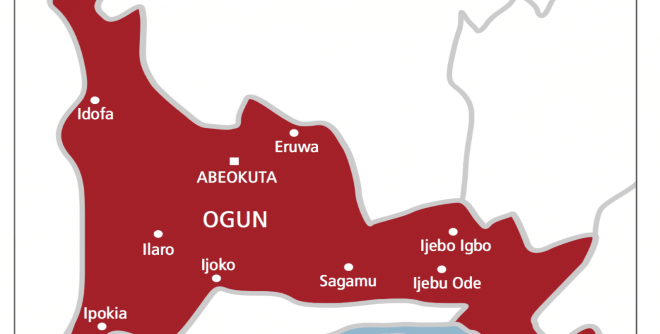
Ogun State is located in the South West geopolitical zone of the Federal Republic of Nigeria (Nigeria is divided into six geopolitical zones commonly called zones). With a surface area of 16,762 km2 Ogun State ranks 24th (out of 36 states) and with a population of about 7 million people in 2024 it occupies the 13th position.

The majority of the population belongs to the Yoruba ethnic group, their language being the lingua franca of the state. The dominant religions in Ogun State are majority Islam and minority Christianity although a certain amount of traditional religion is still practiced.

The capital of Ogun State is Abeokuta

CP Ogunlowo made the chilling acknowledgement that “Quite a number of this issue of ritual killing and murder cases happen in homesteads (….)”

True, he combines in this particular sentence both ritual murders and ‘ordinary’ murders, but nonetheless his comments warrant more than superficial attention. Besides, if this is the case in Ogun State, what about the other 35 Nigerian states?

It is common knowledge that the scourge of ritual killings (known as ‘money rituals’ in Nigeria) scares millions of Nigerians, young and old, males and females – with over 220 million people Nigeria is Africa’s most populous country – and constitutes a serious violation of one of the most basic human rights, the right to live without fear. Ogunlowo’s recognition means even at home Nigerians are not safe.

The states’ governments and the federal government in Abuja have work to do!
(FVDK)

Many ritual killings, murder cases happen in homesteads —Ogun State Commissioner of Police Ogunlowo

Ogun State Commissioner of Police, Dr. Lanre Ogunlowo. Photo: Oluwatoyin Malik

Published: April 4, 2025
By: Oluwatoyin Malik – Nigerian Tribune

In this interview with Crime Editor, OLUWATOYIN MALIK, the Commissioner of Police in charge of Ogun State Command, Dr Lanre Ogunlowo, speaks on the efforts in curbing crimes and ensuring security and safety in the state. Excerpts:

KIDNAPPING in the South West states, Ogun inclusive, is of utmost concern currently. What is Ogun State Police Command doing about it?

We don’t take things for granted because anything can happen at any time. So, even in peace times, we are still on our toes. And for the Area Commanders, Divisional Police Officers and tactical units, all of us keep putting pressure on one another that our areas must be calm. So, you can’t be executive DPO, executive Area Commander. There is always need to go out and see what is happening in your domain.

We try to get feedbacks from people. We can’t go the press and tell them Ogun is peaceful and calm while people experience otherwise. We tell the people to be candid and tell us if we are not doing enough. We don’t take it as criticism. Let them tell us how they feel. That will guide our own actions too.

God is helping us, and the governor is doing his utmost, I must say that. Ogun state government is assisting us all the way. It is not that we don’t have one-off situations but as they come up, we deal with them.

The last major one we had was in Ogijo area about three weeks ago when they a young boy was kidnapped. Eventually, we put pressure on the kidnappers and the boy escaped unhurt because of the pressure. During our encounter, one of them (kidnappers) was neutralised by the police firepower.

What we are trying to do is to let people know this: if you are committing crime, you have two options – either stop or get caught. Stop it or you answer to the law. But like I do say, what we just do majorly is to continue to put pressure on our personnel that they must be awake for the people of Ogun State to sleep soundly.

Except the one-offs, does it mean kidnappings have reduced?

The Inspector General of Police has been very helpful. I know we have five functional Armoured Personnel Carriers (APCs) in recent time. We have one at Ijebu Ode, we have one by Sagamu interchange, we have one at Ilaro axis, we have one at Iperu Remo and we have one patrolling Abeokuta. We just want people to have peace of mind because the fear of security forces is also security on its own.

I will be honest; that does not mean that we are not having challenges, especially attacks on commercial motorcyclists. We have tried to educate them and create awareness that as they are looking for money, they ride bike 10 p.m., 11 p.m., 1 a.m., and they see two, three people who wave them down and ask to be taken to a place, and you pick them. Constantly, we have cases of attacks on these commercial bike riders and we have reached out to them that they should take a rest after working till 8 or 9 p.m. because late-hour attacks are of concern, but we are still having them because the riders will not listen. They seem not to care about their security. This is a major thing we have been dealing with. We can only just continue to keep vigil so that we don’t have such incidents during the coming celebration of Easter as we did at Eid-el-Fitr celebration.

What about the ritual killers?

Just as all other incidents we are talking about, in ritual killing, I don’t know where they got this idea that you can kill or use human being to make money. It’s a sad development. In Ogun State, we are dealing with them as best as we can. As many as we are able to get hold of, we investigate and prosecute, so we enjoin citizens to be self-aware, to be concerned about their security. Quite a number of this issue of ritual killing and murder cases happen in homesteads where no security personnel can protect anyone. We have relations, families where one person kills the other. These are things happening in homes which we can’t do much about”. (italics added – webmaster FVDK)
Be that as it may, the Deputy Commissioner, Criminal Investigation Department (DCCID) and the Assistant Commissioner, Criminal Investigation Department (ACCID) are doing their best in that regard. We just keep trying.

Some people go to graveyards and cemeteries to exhume corpses to remove body parts, with the belief that the offence is bailable and they will regain their freedom soon. What’s your take on this?

We can only speak for the police and their activities. We investigate and process them to court. We are law enforcement agents. We don’t make law, we enforce it, and we can only operate within the ambit of the law. If the law declares a particular act as bailable, it is not within our own competence to say otherwise. It is just as the issue of land grabbing, it’s everyday incident in Ogun. And we say, look, the police cannot apportion land, and we cannot declare A or B as the owner of land. If you have any issue, go to court. But what the police will not allow to happen is the breakdown of law and order. If we see people disturbing public peace because of a piece of land, our own is to move everybody to court. Let them tell the court that they are having issues over land ownership. The police cannot decide who owns the land.

The moment we take cases to court, it is outside police purview. If the law classifies it as bailable offence, then it is. A lot of people usually say that police cannot be trusted because when they take confirmed criminals to them, by a week after, such criminals would be seen in town, free. If we arrest, we detain them for investigation, but such cannot be prolonged. If it’s a bailable offence, the person will be released on bail. And when we complete our investigation, we go to court. The court will exercise its power if it is a bailable offence, and we cannot fault them for that.

Source: Many ritual killings, murder cases happen in homesteads —CP Ogunlowo

Nigeria: Kaduna, Kano, Katsina residents seek death sentence for ritualists, cannibals

In previous posts I’ve reported on death sentences pronounced in Nigerian states. In Delta State (2024), Niger State (2024), Rivers State (2020), Osun State (2020), Ondo State (2019), to be more specific. Shortly, more states may follow, as the following article implies. The increase in ritualistic murders has led the population in Kaduna, Kano and Katsina states to press their governments to allow for the death penalty for ritualists and those found selling or eating human parts, according to the article cited below.

As mentioned before on this site, Nigeria is a signatory to the Universal Declaration of Human Rights, adopted by the UN in 1948. National and international organizations emphasize that the death penalty breaches human rights including the right to life and the right to live free from torture or cruel, inhuman or degrading treatment or punishment. Both rights are protected under the 1948 Universal Declaration of Human Rights,

The surge in criminal killings for ritualistic purposes, human sacrifices, child trafficking, and various sorts of witchcraft activities in a number of SSA countries have resulted in an increasing number of countries adopting laws allowing for the death penalty for convicted criminals. In Nigeria a number of states have adopted legislation allowing the sentencing to death of convicted ritual murderers which does not always mean that they are actually executed. 

Though I strongly support the prosecution of suspected ritual murderers and the rule of law, I have my doubt about the effectiveness of the capital punishment as a deterrent. The phenomenons of ritualistic murders and witchcraft are too complicated to eradicate by only harsh punishments. I can cite many examples, in various countries – to name one: Liberia.

I witnessed the public execution by hanging of seven convicted ritualistic murderers, in Harper, Maryland County, almost fifty years ago, in 1979.

Did this eradicate ritual murders in Liberia? No.
Did this eradicate the belief in witchcraft in Liberia: No.
Did this eradicate superstition in Liberia? No.

Hanging of the Harper Seven, Liberia, February 16, 1979. Source: F. van der Kraaij Collection Wikimedia.

In my opinion only education will bring the desired result, in combination with the strict rule of law, not allowing any exception, political interference of ‘big shots’: political, religious or traditional leaders, resulting in a shameful impunity. All what is needed is the political will to end these cruel outdated and criminal practices and atrocities. They have no place in the 21st century.
(webmaster FVDK)

Kaduna, Kano, Katsina residents seek death sentence for ritualists, cannibals

Published: March 3, 2025
By: Agency Report – Daily Nigerian

There have been growing concerns about the obnoxious increasing trend of of ritual killings across Nigeria.

The News Agency of Nigeria reports that the heightened situation of ritual killings is driven by the quest for quick wealth, poverty, unemployment, and lack of effective legislation.

There have also been sustained calls for stronger laws against ritual killings to effectively stem the tide of the menace.

There have also been appeals for plausible economic empowerment programmes and public awareness campaigns to deal with the dastardly phenomenon.

Analysts have posited that the government, civil society, and individuals must work together to address the underlying factors and put an end to these heinous crimes.

In Katsina State, the residents of have urged the government to provide a death sentence against ritualists and those found selling or eating human parts.

They made the call in an interview with the News Agency of Nigeria (NAN)in Katsina.

The residents said the call has become imperative in view of the increasing cases of ritual killings, particularly in some parts of the country.

Ayuba Inusa, a resident of Katsina, said that was the only way to prevent the people from joining the ritual and cult groups.

He said: “Since the perpetrators have no mercy, they deserve to be treated with no mercy, to serve as a deterrent to those willing to join the groups.”

Inusa further stressed the need for the traditional and religious leaders to intensify efforts in preaching against the ugly act.

On his part, Kabir Tukur, advised the people against the desire to accumulate worldly materials using such inhumane and ugly methods.

He said,”That is because most of the victims were those who want to accumulate material things easily and anyhow.”

Tukur further urged parents to be monitoring their sons and daughters and discourage them against such bad habits to prevent them from becoming victims of such circumstances.

He also urged girls and women to be wary of friendship in the social media, saying, “because, most of the victims were easily caught up through that platform.”

Another correspondent, Grace Jacob, also urged girls to desist from going to the persons they met through the social media to avoid becoming victims.

She further urged the government to provide stiffer punishments against perpetrators of those barbaric acts.
In Kaduna State, the Police Command said it has recorded zero ritual killing in the state.

The command’s Public Relations Officer, DSP Mansir Hassan, confirmed to the News Agency of Nigeria (NAN) in Kaduna.

He said, “This remarkable achievement is a testament to the state’s unwavering commitment to combating this heinous crime.

He said the command has not received a single complaint of ritual killing in the past three years.

According to him, the ways to curb this incident include stopping hard drugs’ abuse, public enlightenment, and addressing youth motivations.

“The command’s proactive approach to preventing ritual killings has included increased patrols, intelligence gathering, and community engagement,”Hassan said.

He advised that the youths should be engaged with the local communities to raise awareness about the dangers of ritual killings.

Hassan said, “Religious leaders have a role to play in educating the public about the importance of upholding human life and the sanctity of human dignity.”

He said the youths should be engaged on education and job creation programmes, as well as counseling services to address anxiety and other mental health issues.

“We will continue to prioritise the safety and security of citizens,” Hassan said.

In Kano State, some experts have called on community leaders to collaborate in efforts to combat ritual killings, urging action to address the underlying factors driving the crime.

Some of the residents, who spoke to the News Agency of Nigeria (NAN) urged the government at all levels to address the crime.

One of them, Musa Abubakar, a lecturer at the Kano State Polytechnic, attributed the increasing frequency of ritual killings to economic hardship and widespread poverty.

According to Abubakar, these challenges have driven many, especially young people, to seek alternative, albeit criminal, means of wealth acquisition.

He said that the high unemployment rate has led to increased desperation, with some individuals believing that ritual sacrifices may offer a shortcut to financial success.

Abubakar said: “Moral decay is on the rise. If this decay is not addressed, it could lead to an increase in other forms of criminality.

“They include human trafficking, organ harvesting, and cult-related violence, further destabilising the nation.$
A public affairs commentator, Isa Muhammad, stressed the importance of collaboration between the security agencies and community leaders to curb these crimes.

“Community policing initiatives should be expanded to encourage local participation in crime detection and reporting.

” Vigilance groups should also be involved in monitoring suspicious activities,” he said.

Isa further emphasised that traditional and religious leaders must take a strong stance against immoral practices, while educational institutions should enforce ethics that all.the students must adhere to.

Similarly , Abdulrazak Abdullahi, a Lawyer, expressed concern over the growing incidents of ritual killings, highlighting a shift in values where human life was no longer sacred.

“The increasing prevalence of ritual killings suggests a dangerous shift in societal values, with people willing to engage in barbaric acts for personal gains,” Abdullahi said,

He urged the law enforcement agencies to act proactively rather than only responding after crimes have been committed.

Abubakar then called for closer cooperation between the Police, judiciary, intelligence agencies, and community leaders to dismantle criminal syndicates behind these killings.

“The government should strengthen legal frameworks, improve law enforcement, and ensure the swift prosecution of offenders,” he added.

An activist, Amina Ali, also called for the intensification it public awareness campaigns and the enactment of stricter laws to create a safer and more secure society.

She stated that the high unemployment had fueled desperation, with some resorting to ritual sacrifices as a shortcut to wealth.

Ali warned, “If the growing moral decay is not addressed, it could lead to increased criminal activities, including human trafficking, organ harvesting, and cult-related violence, further destabilising the nation.” (NAN)

Source: Kaduna, Kano, Katsina residents seek death sentence for ritualists, cannibals

And:

Ritual Killings: Why I Advocate Death Penalty For Perpetrators –Campaigner

Published: March 3, 2025
By: New Telegraph-Admin – New Telegraph, Nigeria

A campaigner against ritual killing, Mr Sunday Oyinloye, has advocated death penalty for perpetrators of the act. He told the News Agency of Nigeria (NAN) yesterday in Abuja that the increasing cases of ritual killings had become a source of worry.

Oyinloye, who blamed the development on the decay in family values, laziness and desire to get rich at all cost, said death penalty would be a great deterent.

The campaigner said society, schools, families, religious bodies and government were not doing enough to address the vice.

Oyinloye called for more engagements on ritual killings in the country, adding that the seeming nonchalance about the menace over time was part of the reasons for its increased rate.

He said: “As it is now, there is no conversation about ritual killings and we keep having cases on daily basis.

“Relevant stakeholders must rise up against this menace and speak out against this ugly trend where women and young girls are often the victims.”

Source: Ritual Killings: Why I Advocate Death Penalty For Perpetrators –Campaigner

Nigerian government bans ritual killings in movies 

I have a special reason for including the recent ‘noise’ in Nigerian newspapers and other news media about the Federal Government’s decision to ban smoking, ritual killings (‘money rituals’) and other harmful, indecent and/or criminal habits and practices in movies and music videos – and the subsequent denial of such a measure as well as the rationale of a ban. The at times contradictory articles are very confusing but I leave it to the reader to appreciate what really happened.

The reason for including these articles here is that it clearly shows how ‘normal’ it is to talk about ritual killings in Nigeria. It clearly demonstrates how much ‘money rituals’ are part of daily life in Nigeria. In fact, the occurrence of ritual murders in movies reflect the occurrence of ritualistic murders in daily life. A sad reality.

There was no reason to include these articles on the FG’s ban on ritual killings in movies to prove that these outdated, criminal and repulsive practices and crimes still occur in one of Africa’s most modern countries. As stated before, it is impossible to include here all reports of discovered bodies with organs or other body parts missing, and all reported cases of ‘money rituals’ in this West African country. I estimate that every day at least one ritual murder is committed in Nigeria. After all, Nigeria also is Africa’s most populated country with a population exceeding 225 million people.
(webmaster FVDK)

Nigerian govt bans smoking, ritual killings in movies, music videos, skits – Published May 24, 2024 – Screenshot – To access the YouTube video, please click here

JUST IN:
Tinubu Bans Money Ritual, Smoking Scenes in Nollywood Films, Gives Reason

Published: May 23, 2024
By: Esther Odili – Legit, Nigeria
Legit.ng journalist Esther Odili has over two years of experience covering political parties and movements.

  • The federal government led by Bola Tinubu has announced the ban on money ritual, ritual killing and other vices in Nollywood movies.
  • Shaibu Husseini, the executive director of the National Film and Video Censors Board, confirmed the development at a national stakeholders’ engagement in Enugu on Wednesday.
  • Dr Husseini explained that the move became imperative to urgently address the ugly trend.

President Bola Ahmed Tinubu’s led federal government has approved the prohibition of money rituals and the glamorising of vices in Nigerian films.

Tinubu’s government confirmed the ban on smoking, rituals, and other negative vices in Nollywood films. Photo credit: Asiwaju Bola Ahmed Tinubu Source: Facebook

“To sanitise the film industry”, FG says
As reported by The Punch, Shaibu Husseini, the executive director and CEO of the National Film and Video Censors Board (NFVCB), disclosed this at a National Stakeholders Engagement on Smoke-Free Nollywood held in Enugu on Wednesday, May 22.

Husseini lamented that the present day movie industry is facing an “industry emergency” requiring bold and ambitious actions from all parents, guardians and stakeholders, Vanguard reported. He added that the regulation to ban smoking and other crimes has been approved by Hannatu Musawa, the minister of arts, culture and the creative economy, The Cable reported.

“As you all know, the film industry occupies a central position in the entertainment and creative sector and it is imperative that we continue to place the highest premium on the progress of the film industry,” he said.

“When my predecessor approached the former Minister of Information, Alhaji Lai Muhammed on the need to make a subsidiary legislation to curtail the display of smoking in Nigerian movies, he saw the need to include money rituals.

“Others included in the regulation are ritual killings and glamorising other crimes to further sanitise the film industry.”

Movie producers, directors and actors drawn from different parts of the country, as well as leaders of various guilds and associations in the Nigerian film industry were present at the event.

Kano government bans movies promoting cross-dressing
In a similar development, Legit.ng reported that the Kano state government banned all movies and cinematic productions promoting thuggery and cross-dressing in the state.

This was announced in a press statement issued by the media officer of the state’s censorship board, Abdullah Sani Sulaiman. “It is high time we put a stop to this sort of films that corrupt the morals of the Kano people,” the board stated.

Source: Legit.ng

Source: JUST IN: Tinubu Bans Money Ritual, Smoking Scenes in Nollywood Films, Gives Reason

Read also:

Kanayo O Kanayo Attacks FG Over Plans to Ban Rituals Scenes, Others in Movies: “Arrant Nonsense”

Published: May 24, 2024
By: Chinasa Afigbo – Legit, Nigeria

  • Nigerian actor Kanayo O. Kanayo is enraged over the latest regulations by the government to ban ritual scenes and more in Nollywood movies.
  • The veteran known for portraying such continuous roles dropped a message for the minster and his cohorts. 
  • The new restriction claimed that such movie interpretations had a negative impact on teens and young adults.

Prominent Nigerian actor Kanayo O. Kanayo, aka Nnayi Sacrifice, is displeased over the government’s new laws to scrap rituals and other likely portrayals from films, music videos, and skit content.

The Executive Director/CEO of National Film and Video Censors Board (NFVCB), Shaibu Husseini, stated days ago that the Federal Government has approved the prohibition of money rituals and glamourising of vices in Nigerian films.

Husseini disclosed this while speaking at a National Stakeholders Engagement on Smoke-Free Nollywood in Enugu on Wednesday, May 22. The NFVCB boss said in part:

“When my predecessor approached the former Minister of Information, Alhaji Lai Muhammed, about the need to make a subsidiary legislation to curtail the display of smoking in Nigerian movies, he saw the need to include money rituals. Others included in the regulation are ritual killings and glamourising other crimes to further sanitise the film industry.”

According to Husseini, in addition to the health concerns, glamorising smoking in films has a negative impact on teens and young adults, who make up the majority of Nigeria’s moviegoers. He stated that the board planned to implement extensive enlightenment campaigns in secondary schools, tertiary institutions, local communities, faith organisations, and other institutions.

Kanayo O Kanayo reacts 
Kanayo criticised the policy and classified it as “arrant nonsense”. He questioned Barrister Hannatu Musa Musawa’s justification for imposing such restrictions on filmmakers and mocked his tenure.

“Arrant NONSENSE. This Minister has no work, just like Liar Mohammed.”

See his remark here:

Source: Kanayo O Kanayo Attacks FG Over Plans to Ban Rituals Scenes, Others in Movies: “Arrant Nonsense”

And:

I Didn’t Pronounce Ban on Smoking and Ritual Scenes in Movies – Shaibu Husseini

Published: May 24, 2024
By: Thandiubani – tori.ng

The event was organised by the NFVCB and Corporate Accountability and Public Participation Africa (CAPPA). 

Executive director of the National Film and Video Censors Board (NFVCB) Shaibu Husseini has denied reports that the Federal Government has placed a ban on money rituals and smoking in Nigerian films and skits.

Clarifying the report, Husseini while speaking at a national stakeholders engagement on smoke-free Nollywood in Enugu on Wednesday, debunked the viral report.

The event was organised by the NFVCB and Corporate Accountability and Public Participation Africa (CAPPA).

Movie producers, directors and actors drawn from different parts of the country, as well as leaders of various guilds and associations in the Nigerian film industry were present at the event.

However, in a statement on Thursday released on social media, Husseini said in part:

“I did NOT announce a ban on ‘smoking, or smoking, and ritual scenes in movies’ at the (southeast zone) stakeholders engagement on a healthy screen and the campaign to have a smoke free Nollywood which held in Enugu in collaboration with @CAPPAfrica. No, I did NOT.

“What I mentioned in a speech that I have shared here is the existence of a regulation (NFVCB Regulations 2024) that in line with global best practices prohibits the PROMOTION and GLAMOURISATION of Money Ritual, Ritual Killing, Tobacco, Tobacco product, Nicotine products in movies, musical videos and skits. The regulation aims at discouraging the ‘unnecessary’ depiction, promotion, advertisement, or glamourisation of tobacco or nicotine products in movies, musical videos, and skits.”

Husseini assured that the NFVCB would not implement any policy that will muzzle creativity. He added:

“Any movie, skit, or musical video that displays or depicts tobacco or nicotine products, brands, or use that is necessary to the realization of a narrative shall be given the appropriate classification (rating) and shall not be shown to persons below the age of 18.”

Source: I Didn’t Pronounce Ban on Smoking and Ritual Scenes in Movies – Shaibu Husseini

More links:

Ban On Smoking And Ritual In Nollywood: Kanayo .O. Kanayo and Mike Okori Berate Action
May 23, 2024

NFVCB clarifies ban on ritual, smoking scenes in Nollywood
May 24, 2024

Nigeria Bans Money Rituals And Smoking In Movies
May 24, 2024

Kanayo O. Kanayo Fumes as FG Bans ‘Money Rituals’ in Nollywood
May 24, 2024

‘Nnayi sacrifice’ Kanayo O. Kanayo Rages as FG Bans ‘Money Rituals’ in Nollywood
May 24, 2024

NFVCB Didn’t Announce Ban On Smoking, Rituals — DG, Husseini Shaibu
May 25, 2024

FG denies placing ban on smoking, rituals in films
May 25, 2024

FG clarifies placing ban on smoking, rituals in films
May 25, 2024

NFVCB clarifies ban on ritual, smoking scenes in Nollywood
May 25, 2024

NFVCB: Why FG Banned Rituals, Smoking In Movies
May 25, 2024

Rid Nollywood Of Money Rituals – FG Tells Filmmakers
May 25, 2024

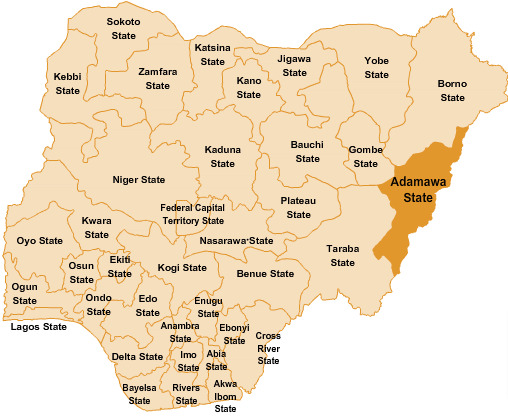
Political map of Nigeria showing the 36 states and the seat of the Federal Government (FG), Abuja

Nigeria: daughter accuses Adamawa traditional ruler of attempted ritual murder, bribing Police Commissioner (2017 article)

Abamawa State in Nigeria was in the spotlight during my recents postings. For this reasons I consider it appropriate to post the following article, though dating from 2017.

Presenting the article – which was originally published by Sahara Reporters – here does not imply that I accept its contents without criticism or reticence. It’s no small thing, the accusation leveled at her father by the daughter of the traditional ruler is very serious. It is worth noting though that Sahara Reporters is a credible source of information. For that reason I have no hesitation presenting the article below. Hence read it and judge for yourself.

Adamawa State is located in the North East geopolitical zone of the Federal Republic of Nigeria and one of Nigeria’s largest states, it is the eight largest in land mass ( with a total land mass of 36,917 km2. It is Nigeria thirteenth or fourteenth least populous state with an estimated population of 6 – 7 million people. Adamawa State is mainly inhabited by Fulani people. Other ethnic groups in Adamawa State are the Mumuye, Higi, Kapsiki, Chamba, Margi (Marghi), Hausa, Kilba, Gude, Wurkum, Jukun, and Bata peoples. An estimated 100 indigenous ethnic groups live in this northeastern state which borders Cameroon.

Adamawa State shares its eastern border with Cameroon

Adamawa State is also religiously very diverse. About 50% of the population is Muslim and 40% is Christian while the remaining 10% are adherents of traditional ethnic religions. 
(Source: Wikipedia.)
(FVDK)

Daughter Accuses Adamawa Traditional Ruler Of Attempted Ritual Murder, Bribing Police Commissioner

Published: March 26, 2017
By: Sahara Reporters, New York

Ms. Umar claimed that her siblings – Murtala, Aisha, Abubakar and Aliyu – were hired by her father to carry out the murder.

Fadimatu Umar, daughter of the district head of Umar Ardo in Yola, Adamawa State, has claimed that her father bribed the Police Commissioner in charge of Force Criminal Investigations Department (FCID) in Abuja to cover up a case of an attempt to kill her.

She alleged that her father planned to use her corpse for a ritual. Ms. Umar claimed that her siblings – Murtala, Aisha, Abubakar and Aliyu – were hired by her father to carry out the murder.

Her siblings, she told SaharaReporters, attacked her in front of the National Identity Card Management Office in Yola, leaving her with a badly damaged arm, which may have to be amputated, according to doctors treating her.

The victim, 28, disclosed that less than a year ago, her stepmother, Bintu, died under mysterious circumstances, which she alleged was the handiwork of her father. The woman’s death, Ms. Umar added, convinced her that she would be the next target.

After hearing noises coming from the front gate of her home, Ms. Umar jumped through her window in fear of her life. She alleged that she was pursued by her siblings, who were armed until they caught up with her in front of the National Identity Card Management Office.

Ms. Umar said she reported the attack to the police, who subsequently arrested Aisha and Abubakar. But Aliyu Umar Ardo, an Air Force officer, and Muitala, who works with Intels Services, escaped arrest by fleeing.                   

The Air Force officer, she said, later emerged from hiding and wanted to shoot her with a pistol, a fate she escaped through the intervention of family friends. She maintained that Aliyu and Murtala have continued with their plot to kill her in an effort to end the case of attempted ritual killing she reported to the police.

Ms. Umar then fled Yola and petitioned the FCID in Abuja. The petition led to the arrest of Murtala in Calabar.  

Their father, along with influential people in Adamawa State, used their connections to free Murtala, who proceeded to bribe Mr. Jonah Mava, Police Commissioner in charge of the FCID, to dump the case.    

“They asked us to come back the next day by 10:00 a.m. But when I got there at 10:00 a.m., they didn’t allow me to go inside to see the Commissioner. But when I saw the Investigative Police Officer (IPO) in charge of the matter, he told me that Murtala had been around and that I should go in to see the commissioner,” she said.

Having received encouragement from the IPO, Ms. Umar barged into the Commissioner’s office, where she saw Murtala handing an envelope to the Commissioner of Police.       

“The Police Commissioner quickly stuffed it in his drawer and said we should come back at noon,” she said.                      

Ms. Umar said she suspected that the envelope contained a bribe from her father. Her suspicion became stronger when, a few days later, the Police Commissioner told her to forget the matter because it was a family affair.                               

“My mind is not at peace because they are still after my life and I cannot step into Adamawa State,” she told SaharaReporters.  

She also disclosed that her case with the family would be brought to court in Adamawa State on April 6, but she has been warned not to appear in court because she would be abducted.    

“I have been given privileged information that my father has also paid some men of the Directorate of State Security and the Police to look out for me and arrest me either at the airport or anywhere near te court.”, Ms. Umar revealed.

Source: Daughter Accuses Adamawa Traditional Ruler Of Attempted Ritual Murder, Bribing Police Commissioner

Incessant killings including ritual killings – Nigerians should be allowed to carry guns, says Senator Nwoko

Senator Nwoko’s plea to allow Nigerians to carry arms to protect themselves and their families against the multiple threats which they face everyday including armed robbery, banditry, kidnapping, extrajudicial killings, environmental unrest, ethnoreligious violence, clashes between herders and farmers, and ritualistic murders (‘money rituals’) is understandable in view of the government’s inaction or incapacity to improve the security situation in the country.

The reason to include his plea here is the repeated reference to ritualistic murderers who terrorize the population of Africa’s most populated country (over 213 million in 2021) notably in the southwest, southeast and south-south of the country – but one cannot escape the impression that no state is spared from these heinous crimes (also see my January 9 posting).
(webmaster FVDK)

Incessant Killings: Nigerians should be allowed to carry guns, says Sen Ned Nwoko

Published: January 4, 2024
By: Henry Umoru, Abuja – Vanguard, Nigerią

Senator  Ned Nwoko, PDP, Delta North has said that if the incessant cases of armed banditry, kidnappings and wanton destruction of property must be nipped in the bud in the country, there should be the introduction of a bill that would allow civilians to own and carry firearms.

According to him, a bill to be introduced to that effect has become imperative following the security challenges, particularly the recent Plateau killings of December 24, where no less than 100 civilians were killed in the attack.

In his proposed bill tilled,  My Amendment Bill on Controlled Firearms Ownership. Matters Arising and made available to Journalists yesterday in Abuja,  Senator Nwoko said, “The prevailing insecurity in Nigeria has become a pressing concern for all conscientious citizens, leaving many questioning the root causes that led to this dire situation where safety feels elusive. Instead of abating, the issue continues to worsen, spiralling out of control.

“The northeast has been entrenched in a humanitarian crisis for almost two decades due to the Boko Haram insurgency. The northwest deals with illegal mining, ethnoreligious violence, and banditry. In the southwest, there’s a surge of armed robbery, kidnappings, extrajudicial killings, clashes between herders and farmers, ritual killings, and banditry. The southeast grapples with ritual killings, secessionist movements, kidnappings, conflicts between herders and farmers, attacks by unidentified gunmen, and banditry. Meanwhile, the south-south is still troubled by militancy, kidnappings, and environmental unrest.” (italics and bold letters added – webmaster FVDK).

“In light of the alarming escalation of insecurity in our communities, the safety and protection of citizens have become paramount concerns. The persistent threats and violence have left many feeling vulnerable and defenceless. A recent and poignant example is the violent attack that occurred during the last Christmas season, where about 200 people were killed by terrorists across different communities in Plateau state. Considering these dire circumstances, there’s a growing call for responsible firearm ownership as a means of self-defence.

“An amendment bill allowing civilian firearm ownership must be introduced in the Senate. My bill on self-defence and firearms ownership regulation, currently listed in the Senate awaiting its first reading, deals with this pressing issue. I am pleased that the topic has gained national significance, sparking diverse opinions and discussions that predominantly fall into two camps – one in opposition and the other in support.

“It is evident that the existing security measures have not been sufficient in safeguarding our communities. Allowing law-abiding citizens to possess firearms could potentially provide a sense of security and a means to protect themselves and their families from immediate threats.

However, it is crucial to emphasize that the initiative to permit firearm ownership is accompanied by stringent regulations and comprehensive training. This approach ensures that firearms are in the hands of responsible individuals who understand the gravity of such ownership and are equipped to handle these weapons safely.

“The illegal smuggling of arms is a significant concern due to the prohibition on bearing arms. Introducing licensed dealerships for firearms could potentially address this issue by creating a regulated avenue for legal firearm acquisition. This move not only seeks to curtail illegal arms trafficking but also provides an opportunity for generating income through licensing fees and taxes imposed on these dealerships.

“The revenue generated from licensing fees and taxes on firearm dealerships could be allocated towards bolstering law enforcement agencies, improving security infrastructure, and implementing initiatives aimed at addressing the root causes of insecurity. 

“The qualifications for firearm ownership must involve obtaining references from four medical doctors affirming mental soundness, endorsement from the local government chairman for community validation, a traditional leader’s (such as the king) guarantor role emphasizing cultural trust, and confirmation by the Divisional Police Officer to verify the absence of criminal involvement. These requirements aim to ensure a comprehensive vetting process, emphasizing mental fitness, community support, cultural ties, and a clean record for responsible firearm ownership.

“Proposed firearms for civilian ownership include single and double-barrel shotguns, pistols with a maximum capacity of six rounds, pump-action shotguns, and any other types suggested by the Ministry of Defence. This selection offers diverse options suitable for self-defence while emphasizing control, regulation, and expert recommendations to ensure responsible ownership and mitigate potential risks associated with firearm possession.

“Nonetheless, this approach necessitates a meticulous regulatory framework and oversight to prevent any adverse consequences and prioritize public safety above all else.”

Source: Incessant Killings: Nigerians should be allowed to carry guns, says Sen Ned Nwoko

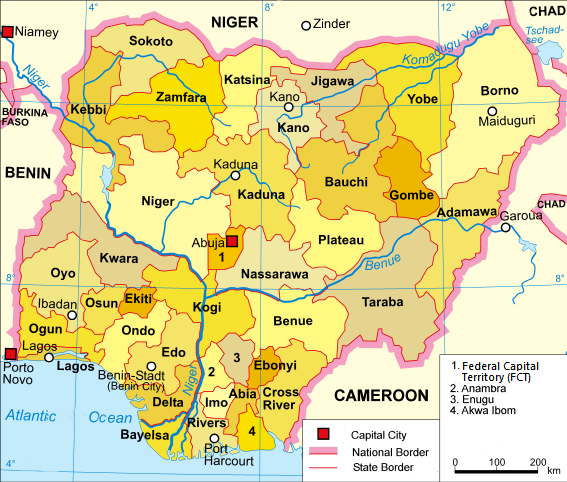
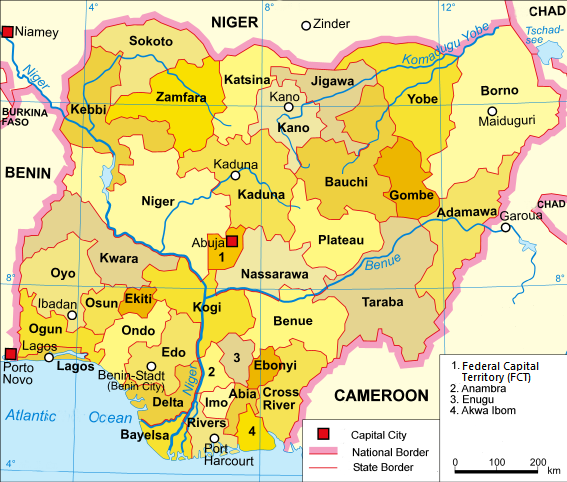
Nigeria counts 36 states; the capital Abuja is located in the Federal Capital Territory.

At least 15 ritual murders in Ogun State (Nigeria) in 2023 

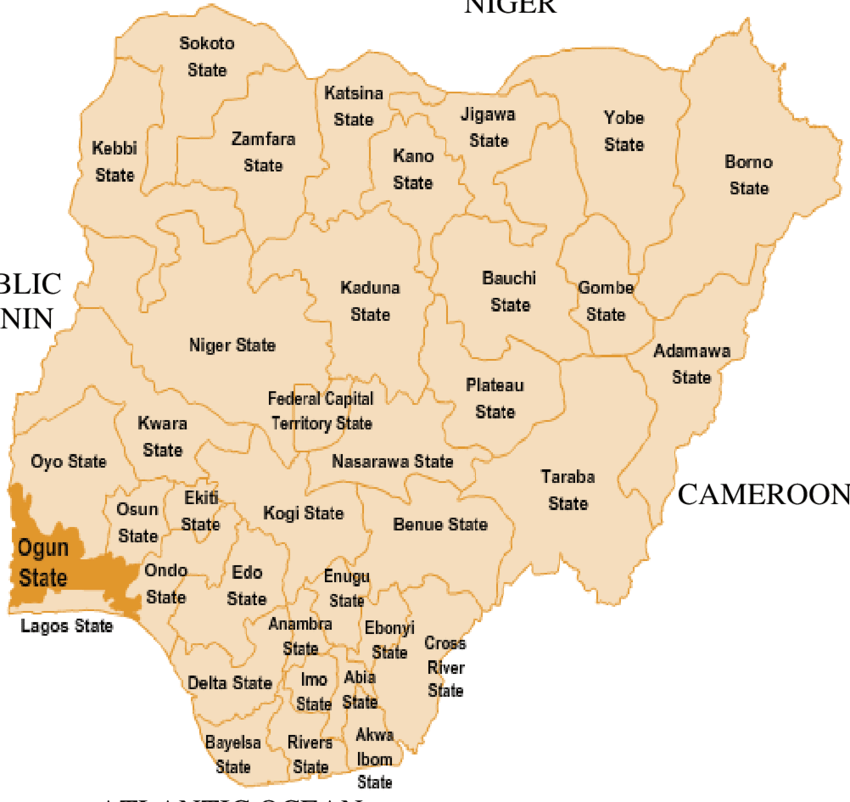
Nigeria is a federation of 36 semi-autonomous states. The country’s capital city is Abuja, located in the Federal Capital Territory (FCT) – in the centre of the country. The FCT is not a state.

Map of Nigeria showing Ogun State among the 36 states of the Federation

Ogun State is one of Nigeria’s smallest states. With a land area of 16,762 square kilometers it is the country’s 24th largest state; it is Nigeria’s 16th most populated state with an estimated 7 million people (source: Wikipedia).

Abeokuta is Ogun State’s capital; other important cities in the state include Ijebu-Ode and Sagamu.

In the year 2023 criminals held Ogun State to ransom. As stated in the article below:

“Criminal activities such as armed robbery, kidnapping, cultism, ritual killing, highway robbery and sexual offenses, among others rose to the highest crescendo during the year. 2023 would be remembered as the year cultists held sway, armed robbers reigned with terror, ritualists went on killing spree and kidnappers became the king of highways.”

Yet, the State Commissioner of Police, Abiodun Alamutu, while admitting that 2023 had been a challenging year for the police following the wave of crime across the state, insisted that based on available records Ogun State remains one of the safest States in the country as at today.

Read the article below to judge for yourself.

Before concluding, just allow me one remark. If indeed Ogun State is one of the safest states in Nigeria, as Police Commissioner Abiodun Alamutu alleges, life in the other states of Africa’s most populated country – with a total population of about 220 million people – must be a hell.

A quick calculation leads us to a pulse-pounding conclusion. With 15 ritual murders in Ogun State alone, if this would be representative for the country as a whole, then we may conclude that yearly more than 500 ritual murders are committed in Nigeria (36 x 15) which means three innocent deadly victims of ritualistic violence every two days.

Presumably, this number is just the tip of the iceberg…

Warning: the following article contains graphic contents.
(webmaster FVDK).

2023, the Year Criminals Held Ogun to Ransom

Ritual killers on the rampage

Published; December 30, 2023
By: Olufemi Adediran – New Telegraph, Nigeria

The year 2023 would be remembered by many residents of Ogun State as the year criminals and men of the underworld held the State in “captive”. Criminal activities such as armed robbery, kidnapping, cultism, ritual killing, highway robbery and sexual offenses, among others rose to the highest crescendo during the year. 2023 would be remembered as the year cultists held sway, armed robbers reigned with terror, ritualists went on killing spree and kidnappers became the king of highways.

Hardly did a week go by without Ogun State being in the news for one form of criminal activity or the other. The state also recorded one of the most violent elections in its history during the March 18 Governorship election. The election was characterised by killings, gunshots, ballot box snatching, vote buying and arson.

(…)

Ritual killers on the rampage

Suspected ritualists in their reign of terror during the year put the state on the edge with their and criminal activities. Missing persons, human parts trading and exhuming of corpses from their graves were common stories that emanated from the state during this year. Many families, especially that of victims were been thrown into untold anguish through the wicked acts of these men of the underworld. According to available data, no fewer than 15 cases ritual killings were recorded in different parts of the State in 2023.

Most recent is the killing of an 100 level student of the Obafemi Awolowo University (OAU), Quadri Salami for money ritual by an herbalist, Ifadowo Niyi and Akeem Usman. The duo of Akeem and Ifadowo allegedly slaughtered 18-year-old Salami and dismembered his body parts and buried his remains in a shallow grave. According to the police, “Ifadowo went away with Quadri’s head and his two wrists after paying the sum of N100,00 into Akeem Usman’s account as proceeds from the sale of the human body parts.

“The suspects thereafter continued to sell the victim’s other body parts on demand to Internet fraudsters and buried the heart, two legs, and flesh inside a plastic rubber for rituals and used the remaining parts for ‘Awure’ (money ritual).” In November, the corpse of a 12-year-old boy, John Soyinka was discovered in Abeokuta after being murdered by suspected ritualists. The corpse of the boy was discovered at Kotogbo community inside Asero Estate, Abeokuta with his eyes removed while his wrists were also cut off.

Soyinka, who was living with her mother was declared missing for about a week before his corpse was later discovered. Ritualists in their reign of terror did not spare the dead. Early this year, suspected ritualists went on the rampage, invading burial grounds and exhuming corpses. Our correspondent gathered that, no fewer than 50 graves were dug and corpses exhumed by the perpetrators who chopped off their heads for ritual purposes. The incident occurred in Ipokia community, the headquarters of Ipokia Local Government Area of the State.

The incident went on unabated for almost three months with the perpetrators operating in the cover of the night. While residents were asleep, the hood- lums stormed graveyards and in many cases, compounds where people buried their loved ones to carry out their heinous crimes. “They (suspected ritualists) sneak into people’s compounds, dig the grave and remove the skull and any other parts they need. They will do it in a manner residents won’t wake up to know there is anything going on around them.

“You will just wake up in the morning to see that the grave in your compound has been dug and the skull removed. But nobody has been arrested since two months ago when this aberration started”, a resident told our correspondent. “This crime is being committed every day in the town where we have DSS, police and other security outfits. No one has been arrested. Definitely, the perpetrators of this crime are indigenes, they are not strangers, another resident, Ade Ashade said.

Cult war claims 50 lives
(…)

(…)

2023, challenging year for police – CP

The State Commissioner of Police, Abiodun Alamutu, admitted that 2023 had been a challenging year for the police following the wave of crime across the state. Alamutu in an interview with Saturday Telegraph says the police will engage members of the public in more advocacy and enlightenment to combat crime in the coming year. However, despite the security challenges across the state, Alamutu insisted that Ogun State remained one of the safest states in the country.

Alamutu said: “It has been a challenging year because of wave of crime across the country but I still insist based on available records that Ogun State remains one of the safest States in the country as at today. “We have our own peculiar challenges and we are trying to level up, we are trying to be at least a step ahead of them (criminals). “But, the most disturbing trend now is the issue of ritual killings which by its nature is never done in the open except through credible intelligence before the act is committed and we are trying to catch up with them, but unfortunately, the trend has continue to rise.

“In the coming year, we are going to concentrate more on advocacy, so that people will be aware of the fact that there is really nothing like money ritual. You cannot make money by killing people, it is an aged-long myth that has been proved to be a total fallacy. “Our efforts in the coming year will be more on sensitisation of members of the public and for parents to be conscious of the category of persons their kids relate with because the trend is becoming disturbing, but we are not going to fold our hands in despair, we will continue to hit them hard and place more emphasis on advocacy, all that people will be conscious of fact that it is a total myth and it is never a reality.

“Cultism too is actually a serious men- ace and you can recollect the terrible experience we had in Sagamu and some other places, but the truth is that on daily basis we keep arresting these people. ‘I think the way forward is to make a stiffer punishment for these people and I am happy the government is looking towards that direction too because cultism is fast becoming a pass time and everybody wants to belong to one cult group or the other. “The most disturbing part of it is that most of these people are either students or artisans, they are just out to take advantage innocent and law abiding citizens, but we are on top of the situation.

“The youths must know that involving in cultism is like delving into a dangerous voyage, nothing good can come out of it. “Amnesty for cultists is a consistent pro- gramme. People are coming out on their own because we cannot grant everybody amnesty. If anyone has genuine interest in renouncing cultism, such person would have come before he is arrested. We are being careful about granting amnesty to cultists because some people will want to use that as a way of evading prosecution.”

Source: 2023, the Year Criminals Held Ogun to Ransom

Map of Nigeria showing Ogun State among the 36 states of the Federation

Abuja, Nigeria: Missing 4 year old found dead with missing body parts

Warning: the following article contains graphic details and may shock readers
(webmaster FVDK)

Missing 4 Year Old Found Dead With Missing Body Parts

Published: March 9, 2023
By: UniqueGracee – Opera News, Nigeria  

The dead body of a 4 year old boy identified as Eleazar Ishiya, was found in a Manhole in Jabi area, Abuja. It was reported that he was declared missing three days ago at Filing Ball, Jabi Daki Biyu.

According to an eye witness identified as Joel Joseph, Eleazar’s grandmother attempted to jump into the hole when she found out her grandson’s body was inside. Luckily she was held and pushed out of the hole, it was Joseph that jumped into the hole and brought out the boys corpse.

When the little boy was brought out of the hole, his body was already rotten. It was also discovered that he was missing some vital organs, his genitals and tongue were cut off while his eyes were plugged out.

From the state of the young boy’s body, it was evident that it was a ritual killing and the killers had dumped his body in the pit after killing him at night.

Mrs Precious Ishaya who is the boy’s Mother described the little boy as being smart, he was also the only child of his parents. She explained that the day he went missing, he was about to bath but instead he decided to go out to by sweets from their neighbors shop and he went missing.

The Mother explained that it was not the death of her son that hurt her the most, but it was the horrible way he died that hurt her the most. She said that she doesn’t know who did such a thing to her child but she rests the case to God. 

She also said she did not have the courage to look at the body of her son when he was found dead, it was later that she managed to look at his dead body in pictures.

Source: Daily Trust

Content created and supplied by: UniqueGracee (via Opera News )

Source: Missing 4 Year Old Found Dead With Missing Body Parts

Nigeria: villagers protest ritual killings in Imo State 

On Wednesday, January 11, the people of Arondizuogu in Imo State, In Nigeria’s delta region, took to the streets to protest over a number of unexplained killings in their communities. The killings were described as ‘strange happenings’ and linked to politics. One does not need much imagination to associate these killings with ritualistic murders.

Imo State is located in the country’s south-east, is the third smallest in area of Nigeria’s 36 states and has a population of about 6 – 7 million people. It is not the first time the people in Imo State are confronted with deadly ritualistic activities in their communities. In 2009, a large group of women from Ndiakunwata and Arondizuogu, Ideato North, a Local Government Area of Imo State, stormed the state capital Owerri to stage a peaceful protest over a wave of ritual killings in their area. See the second article presented below for more details.

The third article below describes another horrible ritual murder which occurred in 2009. The mentioning of Otokoto in the 2009 article refers to the 1996 Otokoto riots which happened in the aftermath of another ritual murder in Imo State in that year (of an 11-year-old schoolboy boy, Anthony Ikechukwu Okoronkwo, though the uprising was also caused by the rampant corruption in the state).
Readers are warned that the described murder cases contain graphic details.

Finally, for shortness sake I refer to my previous postings for more ritual murder cases in Imo State. To access these postings, click on ‘African countries’ in the dropdown menu and select: Nigeria (webmaster FVDK).

Villagers protest ritual killings, burning of vehicles in Imo State

Published: January 11, 2023
By: Chinonso Alozie – Vanguard, Nigeria

Elderly men, women and Youths of Arondizugo, Ideato North Local Government Area of Imo state, on Wednesday continued to protest over the alleged killings and burning of vehicles by suspected hoodlums in their communities.

The youths were seen on a video that went viral on social media, they marched around the Ideato North communities demanding no further delay for government to intervene in their situation.

At the time of filing this report, some of the villagers who could not give reasons for the attacks described some of the killings as “strange happenings” and linked to politics.

The latest was the alleged killing of a young man and a tricycle rider whose names were withheld. It happened Tuesday night at Ndiejezie Izuogu in Ideato’s local government area of Imo State.

They lamented the burning of about three vehicles one of the vehicle’s plate numbers was given as a YAB-225DY Range rover vehicle.

One of the villagers who preferred not to mention his name said: “My brother these killings have been happening for some time. We have cried for help nothing is happening. Even sometime last year, our royal fathers from Arondizugo came out and protested. I saw you were among the journalists that they addressed and pleaded for government intervention because this is too much.

“We want the government to come and save us. We don’t need much delay again. We are in pain now. We want an end to these killings and burning of vehicles.

“Many of roads are not safe now. this is bad we want help. let us end this killings. We are tired. Why the killings? why these troubles. We want government to end it.”

However, at the time of filing this report, the elders in the various villages were still having strategic meetings to see how to end the reported killings and burning of vehicles.

When the Imo state Police Public Relations Officer, PPRO, Micheal Abattam, was contacted he was yet to respond.

Source: Villagers protest killings, burning of vehicles in Imo

Also:

Women protest ritual killings in Imo State

Published: November 12, 2009
By: Chidi Nkwopara – Vanguard, Nigeria

OWERRI – Scores of women from Ndiakunwata, Arondizuogu, Ideato North Local Government Area of Imo State, stormed Owerri to stage a peaceful protest over recent ritual killings in their area.

Vanguard gathered that unidentified ritualists killed an octogenarian, Mrs. Beatrice Asoanya, and her granddaughter, Miss Chinaza Okereke, while they were sleeping in their home.

The women displayed placards with varying inscriptions, which included “Our lives are in serious danger”, “We are no longer safe in our community”, “We need government’s intervention” and “Ohakim save us”.

Speaking to newsmen amidst sobs, Lady Patricia Okereke, the mother of the slain Chinaza, said the suspected ritualists cut off the breast of her mother, Mrs. Asoanya, and drained her blood.

Lady Okereke said the women were angered that the suspected killer of the two citizens have been released, adding that the released suspects had since been moved to Abuja by his masters.

Okereke wondered why her daughter and mother would be murdered in such a gruesome manner, while the alleged culprits were left off the hook because of alleged influence of those backing him.

I demand that the perpetrators be brought to face the full weight of the law with a view to serving as a deterrence to others, she pleaded.

Source: Women protest ritual killings in Imo

Also:

Otokoto again in Imo! Girl, 18, beheaded for rituals

Published: November 5, 2009 (headlines: August 19, 2009)
By: Chidi Nkwopara – Nairaland, Nigeria

Residents of Owerri were Wednesday morning treated to a morbid spectacle as the police command paraded four suspects and the decomposing head of an 18-year old Chinwe Doris Perpetua Obieri, who was murdered for ritual purposes.

The bizarre scene, which was a replica of the infamous Otokoto saga of September 1996, had the prime suspect, 24-year old Emeka Uwakwe, from Ndiakunwata, Arondizuogu, Ideato North local government area of the state, clutching the decapitated head of his girl friend, Chinwe.

Speaking to newsmen, the Commissioner of Police, Mr. Aloy Okorie, gave the names of the other suspects as Chigamezu Anyaoha from Orodo, Mbaitoli local council area, Anthony Obioha from Lude, Ahiazu Mbaise local government area, and the medicine man, Damian Joseph from Obot Akara, Akwa Ibom State.

Mr. Okorie gave a graphic account of how the sordid crime was committed and the efforts made by the state police command to apprehend the suspects in far away Lagos State.

“You can see we have a case of murder for ritual murder. What happened was that on Sunday, July 26, 2009, the young lady whose head you are seeing (pointing at the decapitated head of Chinwe) left her Akokwa home, Ideato North local government area of Imo State. You can see the head without the body.

Late Chinwe before her death
“The young man, Emeka Uwakwe, is the boy friend of this girl and he came all the way from Lagos and lured her to his house in the village. He murdered the girl, cut off her head for ritual purpose and dumped the headless body in a bush. Apparently, the girl had told her parents that she was going to visit her maternal uncle in another village.

“As at 7.04pm on that same Sunday, she called her parents and informed them she was already in her maternal uncle’s compound and they believed her. Later, her parents made a call to her and the call was not pulling through up till the next morning and by Monday when it was obvious that she was not coming back, they made a report to the police that their daughter was missing.

“The names of the parents are Mr. Nicholas and Mrs. Theresa Obieri from Umuezeala, Umueziama Kindred in Akokwa. It was after they made the report to the police that some vigilante people on the same date, came around and said they saw a headless body in the bush. The police invited the girl’s parents and they identified the headless body to be that of their daughter.

“It was at that point that the police swung into action and started making investigations. From information, we got to know that she had a boy friend who is resident in Lagos and who was seen around home within that period. So, we went to Lagos and we were able to arrest Emeka Uwakwe. You can see him now with the head of the slain girl (pointing at Emeka).

“When we now got him, he made a confession that Mr. Damian Joseph of Obot Akara in Akwa Ibom State, though he is based in Lagos also, was the one who made the charm with which, if he got the head of this girl, mix it with the charm and bury it, money will start flowing, he will start plucking money as if he was plucking fruits from the tree. That was exactly what the man did. He (Emeka) got the concoction, mixed it with the head and buried it in his room.

“We also went for the Native Doctor and got him. Meanwhile, Emeka made a confession too that it was his friends, Chigaemezu Anyaoha and Anthony Obioha, that introduced him to the Native Doctor and that he was capable of making medicine for money. They also confirmed that they had done such a medicine before with human scrotum. We do not know whether it their own scrotum or other people’s scrotum. We will surely find out in due.

“You can see the pretty 18-year old girl (displaying her photograph). I am sure if you had seen this girl when she was alive, you will weep. You will certainly weep because I have never seen a thing like that in my life. I just imagine my own daughter of that age being slaughtered for ritual purposes.

“Well, in an era where we talking about people going to live in the moon, that is the age we are in, 21st century, and people are still being fooled that they can use human head to make money. It is very unfortunate.

“Emeka Uwakwe was arrested on Wednesday last week (August 12, 2009) and when he gave us the information on how he got about the whole show, our men left for Lagos on Sunday and we were able to arrest both the Native Doctor and the other two boys. The next line of action is that they will pay the price prescribed by the laws of the land. We all know the price for somebody who has committed murder. He will pay with his own life. There is no duplicate for life. If he had the courage to kill somebody, he should also be prepared to face the consequence. He should be in a position to say if he killed her with a knife or first strangulated her before he cut off the neck.

“It is very clear that the girl deceived her parents. My advice is simple. I have a daughter of that age. I know how we monitor her. Most times, especially in this era, if she has to go out, we must let go with somebody because you never can tell. That age is a critical period in the training of children. Parents should monitor their daughters closely. It is easy to make contacts in this GSM era. I am sure that if the parents had raised alarm that very night they did not see her, may be things would have come out differently.

Source: Otokoto Again In Imo! Girl, 18, Beheaded For Rituals