Warning: this post contains graphic details which may upset some readers.
The following article, about the trial of a ritual murderer in Tanzania, was published in a Kenyan online newspaper. The author articulates very well what this is all about: the clash between modernity and archaic, harmful superstition. Reading of the article is highly recommended.
With respect to the death sentence in Tanzania: whereas the capital punishment is in accordance with the law in Tanzania, de facto there exists a moratorium on the actual execution. Those sentenced usually remain in prison for the rest of their lives.
The importance of imposing the death penalty lies primarily in its symbolic value and the deterrent it may provide, although I have serious doubts about the latter.
(webmaster FVDK)
Shadows of Superstition: Court Upholds Death Sentence in Ritual Murder
A Tanzanian court has upheld the death sentence for a Babati man who murdered his stepson on the promise of wealth, highlighting a grave social crisis.

Published: March 16, 2026
By: Streamlinefeed – Kenya
The heavy doors of the Court of Appeal in Tanzania swung shut, effectively sealing the fate of Emmanuel Safari, a man whose actions in a quiet Manyara village shattered the sanctity of familial protection. In a chilling judgment delivered by Justices Winfrida Korosso, Lilian Mashaka, and Paul Ngwembe, the judiciary affirmed a death sentence for the murder of an innocent child, a crime rooted not in sudden passion, but in the dark, persistent belief in occult practices intended to manifest wealth.
This judicial affirmation serves as a grim marker of the persistent collision between modern legal standards and archaic, harmful superstitions that continue to plague rural communities in East Africa. For a one-and-a-half-year-old child in Babati District, the betrayal was absolute entrusted to his stepfather, he instead became the focal point of a lethal, misguided ritual. As the court documents detail, the child’s life was extinguished in a manner that defies comprehension, leaving behind a community grappling with the dual scars of grief and the unsettling reality that such practices remain a motivation for violence in the modern age.

The Anatomy of a Heinous Betrayal
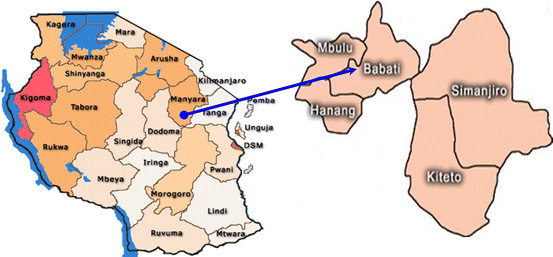
The tragedy unfolded on March 21, 2021, at Maganjwa Village in Babati District. Emmanuel Safari, who had entered into a household with a mother and her two children, occupied a position of trust—a role that the prosecution proved he abused with devastating brutality. While the defense attempted to navigate the complexities of circumstantial evidence, the Court of Appeal found the narrative of innocence unsustainable.
Court records depict a harrowing timeline of the events leading to the child’s death. Safari, having been instructed by a local practitioner of witchcraft that ritual sacrifice would bring him prosperity, turned his attention to his stepson. The physical evidence presented at the High Court of Tanzania at Manyara and subsequently reviewed by the appellate judges was damning. Upon being rushed to Dareda Mission Hospital, the child exhibited severe internal trauma, including the penetration of the rectal intestine, accompanied by extensive swelling and bruising in the pelvic region. Safari, despite having been the sole caregiver in the hours preceding the discovery of the injuries, claimed ignorance of the cause—a defense that collapsed under the weight of medical and circumstantial scrutiny.
The Evidence Behind the Verdict
The legal process relied on the strength of circumstantial proof, a common necessity in cases where the victim is unable to speak and witnesses are scarce. The prosecution, led by Senior State Attorney Saada Mohamed, successfully argued that the chain of events left no logical room for an alternative perpetrator.
- Incident Date: March 21, 2021
- Location: Maganjwa Village, Babati District, Manyara Region
- Victim Age: One-and-a-half years old
- Legal Outcome: Death sentence for murder and unnatural sexual offence upheld by the Court of Appeal
- Primary Evidence: Medical examination from Dareda Mission Hospital confirming physical trauma consistent with violent assault
The appellate justices underscored the necessity of the verdict by noting that the deceased was under Safari’s exclusive care during the timeframe in which the fatal injuries were inflicted. The lack of explanation for the child’s condition, juxtaposed with the timeline of events, led the court to conclude that the appellant was solely responsible. This ruling reinforces a zero-tolerance approach toward such crimes, signaling that no claim of superstition can mitigate the legal consequences of child murder.
The Societal Scourge of Occult Violence
This case is far from an isolated anomaly in the region. Across Tanzania and neighboring nations, the intersection of economic desperation and belief in witchcraft creates a dangerous environment for the most vulnerable, particularly children and the elderly. Human rights organizations, including the Legal and Human Rights Centre, have long documented how the promise of wealth, or the fear of supernatural curses, can drive individuals to commit horrific acts of violence.
Sociologists observing the region point out that rapid socioeconomic shifts, which have seen wealth disparities widen, often correlate with a resurgence in occult-linked crime. When traditional avenues for economic stability feel inaccessible, vulnerable populations are sometimes exploited by opportunistic individuals claiming spiritual authority. These “witchdoctors” provide a convenient, albeit deadly, mechanism for individuals to project their frustrations and desires onto defenseless victims.
The Legal Landscape and the Death Penalty
The imposition of the death sentence in this case brings into focus the complex legal reality of capital punishment in Tanzania. While the death penalty remains on the statute books, the nation has maintained a long-standing de facto moratorium on actual executions, with those sentenced often remaining on death row for decades or having their sentences commuted to life imprisonment.
However, the judicial commitment to handing down such sentences—and the appellate court’s refusal to overturn them—acts as a significant punitive statement. It sends a chilling signal regarding the gravity with which the Tanzanian judiciary views the murder of children. As the country balances international human rights obligations against the local demand for justice in the face of brutal crimes, the ruling remains a stark reminder that legal systems are evolving to prioritize the protection of the innocent above all else.
As Emmanuel Safari faces the finality of his legal journey, the tragedy in Maganjwa Village leaves behind an uncomfortable question: what further efforts are required to sever the link between superstition and violence in rural communities? Until the promise of occult shortcuts is replaced by tangible socioeconomic opportunity, the shadow of such tragedies will continue to loom over the most vulnerable among us.
Source: Shadows of Superstition: Court Upholds Death Sentence in Ritual Murder