Despite six gruesome murders involving mutilated bodies over the past decade, the government of Botswana insist none can be classified as ritual killings. The reason? Minister for State President, Defence, and Security, Moeti Mohwasa, responding to a parliamentary question from Member of Parliament for Serowe South, Leepetswe Lesedi, explained that ‘In our statuses in general and the penal code in particular , we don’t have an offence called ritual killing.’ However, he admitted that Botswana is currently faced with a high number of reported missing persons – see the article below for the exact number of missing persons who were never recovered.
This is not to say that all missing persons have been murdered, let alone murdered for ritualistic reasons. But the harsh reality is that ritual murders – known in Southern Africa as ‘muti murders’ – do indeed occur in Botswana. See my posts of 2018 (referring to a suspected ritual murder case in 2017), 2019 (referring to a 2006 case), 2020 (including a 2011 article), 2021, 2022 (detailing a devastating 2019 report) and 2023. Some of these posts concern albino victims, see the 2022 post mentioned. In 2023 then Botswana president Mokgweetsi Masisi (2018-2024) condemned ritual murder practices.
Hence, Minister Mohwasa’s statement may be theoretically true, in the strict sense of the law, but that says nothing about the fact that ritual murder does indeed occur in Botswana. (webmaster FVDK).
‘There is no such thing as ritual killings in our laws’ – Minister for State President, Defence, and Security Moeti Mohwasa
Published: March 24, 2026 By: Mmegionline – Botwana
This was revealed by the Minister for State President, Defence, and Security Moeti Mohwasa. Mohwasa was responding to a parliamentary question from Member of Parliament (MP) for Serowe South, Leepetswe Lesedi.
Lesedi had sought to find out from government a comprehensive report on the number of persons who have gone missing and those who have been reported missing in Botswana in the last 10 years.
The MP also sought to find out how many cases were due to kidnapping and ritual killings and what is being done to sensitize the public about such incidents.
To which the minister explained, “ In our statuses in general and the penal code in particular , we don’t have an offence called ritual killing. We are therefore constrained to speak to a crime that is not in our statutes. The taking of human life is criminalised as murder’.
Mohwasa however admitted that the country is currently grappling with high number of reported missing persons.
“Most of them are the youth who go away without informing their relatives and guardians about their whereabouts. 6677 reports of missing persons which involved 6765 from 2016 to 2025 of the total, 3,412 were male , whilst 3,353 were female,” the Minister shared.
The Minister further stated that through search efforts by the police, the communities and publication on BPS Facebook page a total of 6,3330 missing persons were recovered while 426 were never recovered.
According to statistics in 2023 Botswana recorded 728 missing persons with 686 found, and 42 still missing, in 2024 709 were reported, with 647 found whilst 62 are still missing , in 2025 a total of 618 missing persons report was filed whilst 586 were recovered 32 are still missing.
Unfortunately, ‘muti’ murders and violence related to ‘muti’ – literally: traditional medicine, but in practice closely associated with witchcraft – are no exception in Southern Africa notably in the Republic of South Africa. Numerous cases have been reported on this site (for specific cases: please use the scroll down menu ‘African countries’ to access ‘South Africa’).
The accompanying article presented below also confirms this sad and often cruel realty which is widespread in South Africa and neighboring countries. Reportedly, an academic investigation revealed that in South Africa alone, in 2001 almost 2500 individuals were caught with body parts in their possession, a frightening statistic. Moreover, discovered bodies with parts missing are no exception whereas it is very likely that some bodies are never found and thus, reported cases of ‘muti’ violence and murder constitute in fact the tip of the iceberg. (FVDK)
South African Man Abducted, Hands Amputated in Suspected Muti Attack
Published: March 24, 2024 By: Atlas News
What You Need to Know:
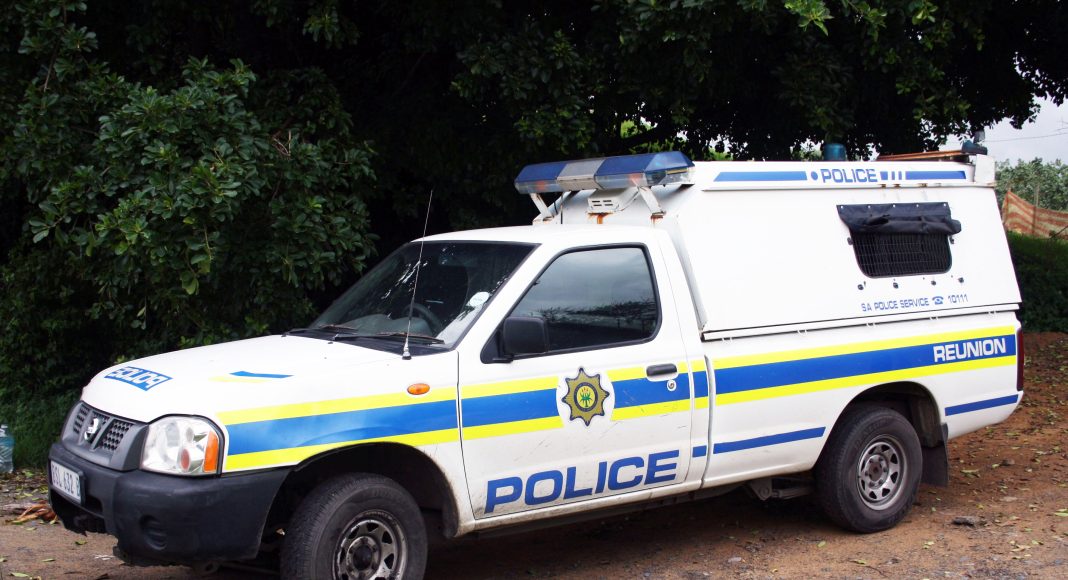
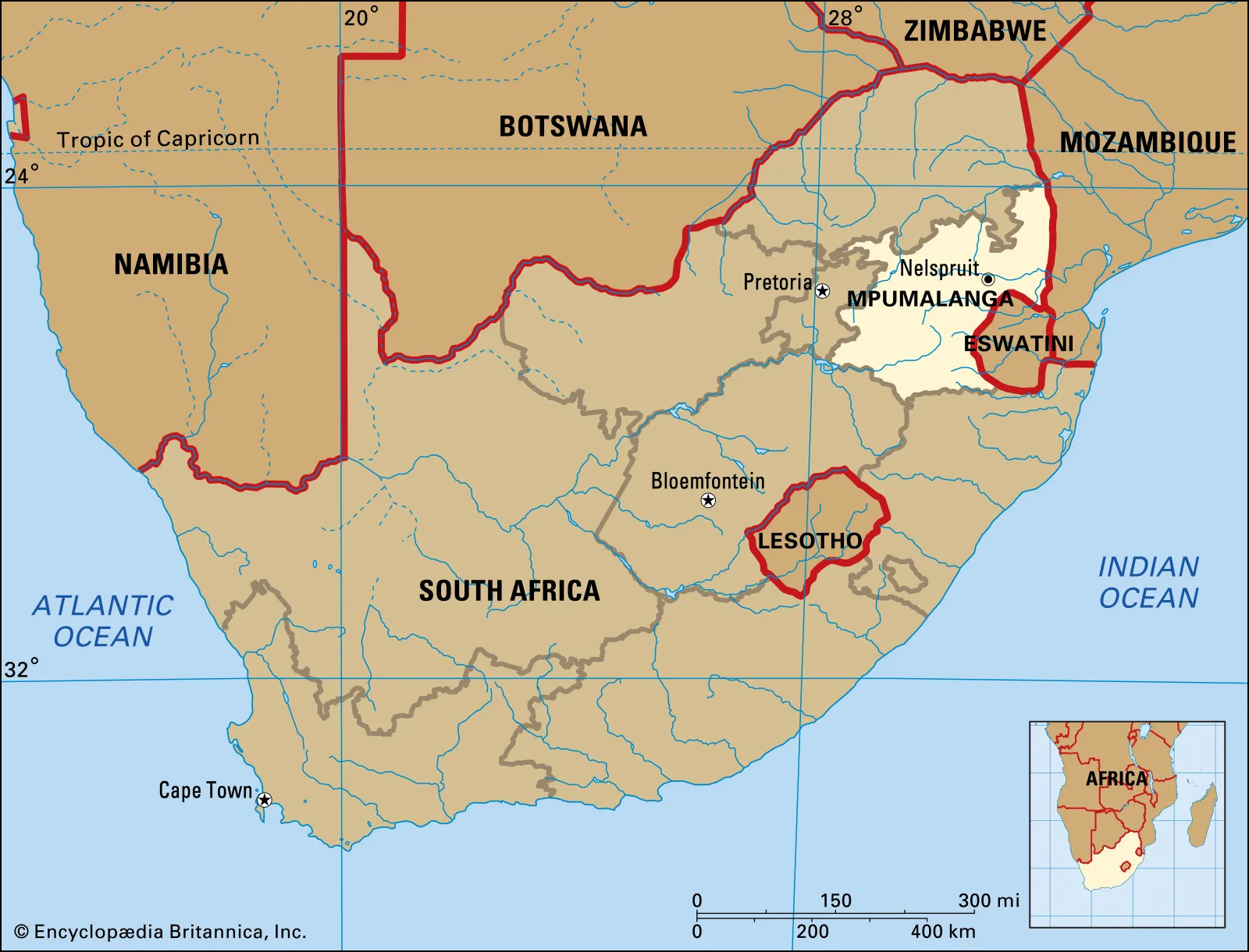
A 30-year-old walking during the early hours of the morning in Vosman, near Witbank, was attacked by six unidentified assailants on March 20th. The man had his hands and feet bound, and was told by his attackers that they planned to kill him. Instead, the attackers took the victim into a bush, amputated both of the victims hands, and took off with his body parts, leaving him to die.
Security services arrived at the scene and the man is currently recovering in hospital. Police have opened a case of attempted murder, but have yet made no breakthroughs in locating the attackers.
Lieutenant General Semakaleng Daphney Manamela, Provincial Police Commissioner in Mpumalanga stated, “though the victim was not killed however the acts committed by the suspects are heartless and should be strongly condemned in the strongest possible way.”
The Details:
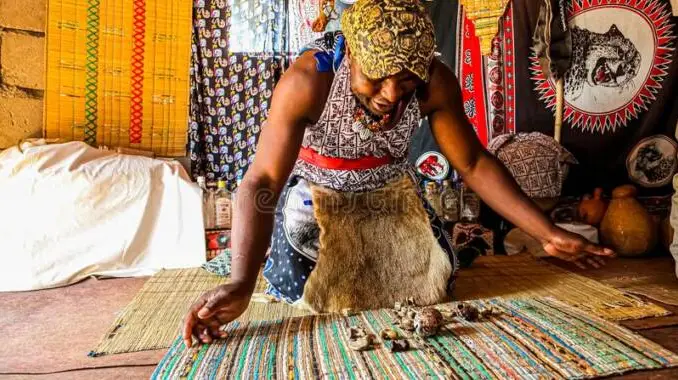
Muti, also known as umuthi in Zulu, is an alternative word for medicine in some localities but colloquially refers to witchcraft. Muti is characterized by the use of body parts in rituals to bring protection or strength to an individual or tribe. Oftentimes, victims are healthy young males, or the strongest warrior from a rival tribe.
‘Muti murders’ involve the ritual killing of an individual for the use of the victims body parts in creating ‘magical medicine.’ As stated by Harriet Ngubane, a South African Anthropologist, “in a definable part of southern African medical practice … ethics permit a practitioner to recommend in certain special cases a ritual killing.”
“Ritual homicide [carries] very high professional fees … The inyanga [expert] who prescribes a muti homicide … arrives at his advice … within the … worldview of African traditional medicine.”
However, with ritual killing now illegal in South Africa, attacks on individuals which stop short of murder but involve the amputation of limbs has increased.
An academic investigation into ‘Violent Hand Amputation and Replantation in South Africa’ conducted by Wendy Young, Pragashnie Govender, and Deshini Naidoo, claims that in 2001, almost 2500 individuals were caught with body parts in their possession. This highlights just how ingrained the practice of ritual killing is in the nation.
Analysis:
It is highly likely the man attacked in this case was a victim of a crime with connections to the practice of muti.
The practice of muti is particularly prevalent in Mpumalanga, with three doctors and a nurse suspended from Bernice Samuel Hospital in 2021 after an infant admitted with diarrhea had her hand amputated. A case of negligence was opened against the nurse and three doctors, and officially a possible muti motive was not investigated, but it is also highly likely the amputation was done so the hand could be used for ritualistic magic.
Murder cases show a rising trend in Zimbabwe, according to statistics released by the Zimbabwe National Statistics Agency. In 2018 more than 1,450 murders were reported, this number increased to more than 1,700 cases in 2019 and to nearly 3,600 cases in the two-year period between January 1, 2020 and December 31, 2021. The yearly average of 1,500-1,600 murder cases means that each month more than 100 persons are being murdered.
It is not known how many ritualistic murders (‘muti murders’) are included in this yearly average of 1,500 – 1,600 victims. Statistics only reveal part of the truth. By definition, ‘muti murders’ are murders committed in secret, and some victims (statistically recorded as ‘missing persons’) are never found. Only discovered bodies of victims with ‘parts’ (often organs) missing indicate that a murder for ritualistic purposes has been committed, but even then one has to be careful and not jump to conclusions as the perpetrator(s) may intentionally mislead the investigators by removing body parts.
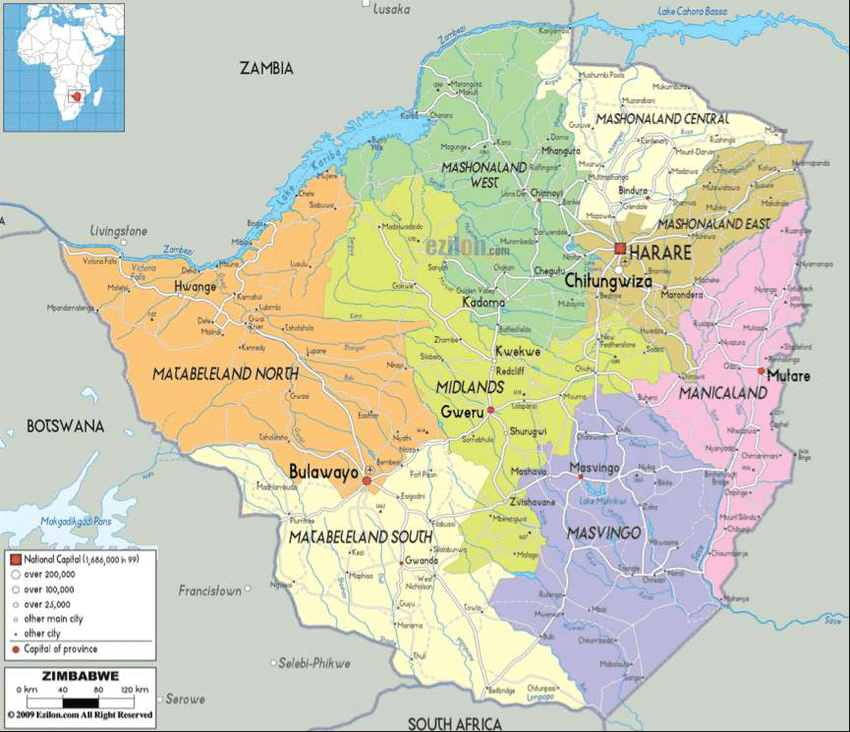
Notwithstanding the foregoing, the occurrence of ritual murders constitutes a problem in this Southern Africa country (as it does in neighboring countries). Recently, a debate on the persistent problem of muti murders arose after the discovery of a mutilated body in Greystone Parts, near Hatfield, in Mashonaland East and southeast of the capital Harare.
In the article presented below also reference is made to the notorious Tapiwah Makore case, referring to the seven-year old boy who was murdered for ritualistic purposes by his uncle in 2020 (see previous posts). But, as the article relates, Tapiwah Makoreh (also spelled as Tapiwa Makore) was not the only or last victim of unscrupulous murderers who are driven by greed and superstition. Unfortunately, the discovery of the dead body of Faith Musonza in Greystone Park only confirms this sad conclusion. (webmaster FVDK)
Zimbabwe grapples with ritual murders
Some people blame witch doctors for rising cases of ritual murders
Published: February 26, 2023 By: Staff reporter – The Zimbabwe Mail
IT is late afternoon in the heart of Greystone Park, some 20 kilometres from Hatfield, where the gruesome murder of Spar employee Faith Musonza is said to have occurred.
A relative’s home in Greystone Park is where her funeral is taking place.
A gentle breeze steadily blows across the yard as if everything is normal, but this is not the case.
Mourners have been stunned into silence as they struggle to come to terms with the sad news of Musonza’s untimely death.
“We are still trying to process everything; it feels like a dream,” said one of the relatives who appeared non-plussed at the funeral wake.
Musonza’s husband, Fradreck Chasara, was visibly disturbed, as he unsteadily alternated between a black leather couch and the carpeted floor.
Musonza was recently killed in Hatfield by unknown assailants as she headed to her rented house in Cranborne from work.
Her mutilated body was found dumped in a storm drain. Heinous crimes involving grisly murders have become prevalent of late. The sanctity of human life is no longer being observed.
In 2020, the nation woke up to news of the callous murder of seven-year-old Tapiwa Makore in a suspected ritual killing.
He was buried the following year, with his head still missing. The incident left many with a lot of unanswered questions.
Last year, in Nyanga, two related seven-year-olds were found dead in a disused house in the village, with their throats cut open and blood drained.
Several other murder cases have been reported across the country.
According to the Zimbabwe National Statistics Agency, the number of murder cases continue to rise with each passing year. At least 1 453 cases were recorded in 2018, before rising to 1 733 the following year. Between January 2020 and December 2021, 3 583 cases were recorded.
Overall, the cases averaged between 1 500 and 1 600 every year.
“A murder case is recorded every week; in some situations, even two or more, with the trend growing in all provinces,” said Zimbabwe Republic Police (ZRP) spokesperson, Assistant Commissioner Paul Nyathi.
Most of the killings, he said, are associated with infidelity, alcohol abuse and rituals. Statistics from the Zimbabwe Prisons and Correctional Service (ZPCS) also corroborate the same trend.
“In January 2021, we had 630 people incarcerated for murder and the figure rose to 845 by October that same year.
“In January 2022, we had 817 and the figure stood at 984 by November,” said ZPCS.
Mental health issues
Psychologist and University of Johannesburg post-doctoral researcher Dr John Ringson believes most murders are caused by mental health issues.
“When one is mentally unstable, even a small argument can trigger aggression. We have had cases of people who committed murder for beer or small amounts of money. Mental health issues need to be addressed at national level,” he said.
Drugs and substance abuse, he added, were also causing mental health challenges that push people to commit crimes.
Traditionalist Mbuya Calista Magorimbo says some bogus witch doctors who encourage harvesting of body parts for rituals (kuromba) to boost business fortunes are also causing the unnecessary loss of human lives.
“Ritual killings for purposes of becoming wealthy have existed since time immemorial. However, the situation has since gone out of hand due to prevailing economic hardships,” she said.
“Some even harvest body parts for charms to make them powerful at work or to get healed from certain ailments. Women and children are often murder targets.”
She, however, argues that such rituals have never been proved to be effective.
“This is pure cultism, which yields nothing but generational curses, yet some people believe it actually works. Murder only brings trouble!” she warned.
Killings only attract avenging spirits and generational curses, according to Sekuru Peter Maponda, which he believes only serve to perpetuate a vicious circle of crime and murder. Roman Catholic priest Father Paul Mayeresa says avenging spirits exist.
“The Bible values the sanctity of life and does not allow killing under any circumstances. Some murders are due to either temporary or permanent insanity, while others are premeditated revenge,” he said.
“Avenging spirits exist and depending on the relatives of the deceased and their spirituality, some families end up forgiving the perpetrators while others prefer to let the dead fight from the grave.”
House of Refuge International Ministries founder Apostle Partson Machengete is of the opinion that “poverty has left most people desperate to get rich overnight”.
“As a result, they are forced to believe myths that ostensibly offer solutions to their problems. Witch doctors are fleecing the vulnerable and pushing them into unholy acts. They are made to believe the rituals will make them rich.”
He, however, feels some murder cases are genuine accidents and, in some instances, a result of self-defence.
Remedy
There is consensus that communities need to be sensitised on the need to observe the sanctity of human life.
“We need all stakeholders to come together and formulate programmes that educate the community on the issues and bridge existing gaps,” urges Laws of Attraction psychologist Blessed Chinyangare.
“There is a human element and a spiritual element to this issue, hence it has to be tackled from both ends.”
Headman Zvinowanda Pfumbidzai of Machera village in Hwedza said in murder cases, the funerals and burials should be different from ordinary ones.
In African tradition, he said, murder invites curses for both the victim and the perpetrator’s families, hence rituals become necessary to cleanse the parties involved.
“Traditionally, the wronged family conducts rituals — kureverera — to provoke the spirit of the deceased to go and get revenge, so, in return, the murderer should pay damages — kuripa.
“The victim’s family should be given room to indicate their price during the process. Likewise, the victim’s family should also conduct a cleansing ceremony,” he said.
Meanwhile, in neighbouring South Africa, murder cases reportedly increased by 22 percent since 2012.
Most of the killings usually occur between Friday and Sunday.
The South African Police Service has since deployed desk-based police officers to the streets, particularly in identified hotspots, while dedicated detectives track and arrest suspects wanted for violent crimes. – Sunday Mail