Warning: the following post and related articles contain graphic details which may upset readers.
On previous occasions I have stated here that the numbers of abductions and murders for ritual motives are running sky-high in Nigeria, not to speak of missing persons leaving no trace. Having a brief look at the contents of this site since I started it in 2018, one is tempted to say that this West African country is well covered but by far I do not report all recorded cases of ritualistic murders in Africa’s most populated country (over 225 million inhabitants in 2024).
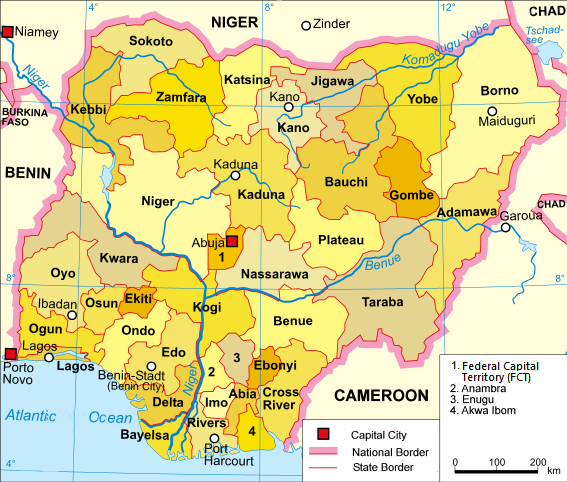
On March 4, the Daily Champion, a Nigerian online newspaper, reported that a group of community women under the name, ” concerned mothers” have raised alarm over the increase in ritual killings in Imo State. Two days later, another online newspaper, the Daily Post, published an alarming article, Kogi, Nasarawa, Niger residents decry rising cases of ritual killings. The following day, a fashion’s designer’s head was cut off in a suspected ritual killing in Edo State. On Monday, March 10, Lagos State police arrested a fourth suspect after the discovery of the mutilated body of a Lagos State University graduate student – who had been missing since January 16, 2025 – in a shallow grace. The same day, Delta State police announced it intensified the hunt for killers of two women who were found dead on farms. They were allegedly killed for ritual purposes, as locals claimed that some of their vital organs were missing. In the same week, women took to the streets in Anambra State protesting against gender-based violence and ritual killings.

The list is too long to continue. Each day new ritual killing cases are unearthed, sometimes literally.
Given this background, the article below is not surprising and the reader will not be surprised that I fully support the author’s view: that greed is a basic ingredient and motive for ritualistic violence.
However, after having read the article I remain with two – related – unanswered questions.
Why is it that superstition is so widespread in Nigeria? Ritual murders and the harvesting of organs, other body parts, in short, ‘money rituals’, are carried out – by ‘ordinary criminals’ as well as by ‘ordinary citizens’ – because it is believed that ritual murders can make people rich or famous. Why is it that the belief in ‘juju’, the power of the supernatural, is so persistent?
(webmaster FVDK)
it is believed that ritual killings can make people rich
When wealth demands blood: The horror of ritual killings in Nigeria

Published: March 13, 2025
By: Kelly Odaro – The Nigerian Observer
Amidst Nigeria’s economic quagmire, a more sinister affliction festers — ritual killings. This grotesque practice, once whispered in hushed tones and relegated to the annals of folklore, has metamorphosed into an alarming commonplace reality.
The nation wakes up to a grim litany of media headlines detailing the heinous acts of individuals who, in their insatiable pursuit of material prosperity, desecrate human life with blood ritual. The moral fabric of our society is unravelling at an alarming pace, frayed by an unsettling obsession with overnight wealth.
The recent gruesome murder in the Evbuotubu community of Benin City, where a young man’s head was severed, has once again spotlighted the disturbing prevalence of ritual killings in the region. This heinous act is not an isolated incident but part of a growing pattern of bloodshed fuelled by a dangerous obsession with instant wealth and power.
Ritual killings, often driven by superstitious beliefs and occult practices, have persisted in many parts of Nigeria despite modernisation and law enforcement efforts. In Benin City, several cases have been reported over the years, each more chilling than the last. Many of the unsuspecting victims are young men and women, often lured, kidnapped, and gruesomely murdered in rituals meant to bring fortune to perpetrators.
In past years, there have been numerous reports of mutilated bodies discovered in forests, abandoned buildings, or shallow graves, their organs harvested for money-making rituals. In
2020, a similar case rocked the Otuo community in Owan East Local Government Area of Edo State where three young men and a woman were set ablaze by a mob for allegedly beheading a secondary school student in a suspected ritual killing (Punch, 25 February, 2020). In 2018, four brothers allegedly unalived their grandmother for money rituals in Ohovbe quarters, Ikpoba Hill in Benin City, according to Vanguard News (January 9, 2018).
Likewise, in 2019, police uncovered a shrine where human skulls and body parts were found, indicating that ritual killings were being carried out on a large scale. More so, over twenty mummified bodies were discovered in a building in Benin City (The Guardian, August 8, 2022), and a myriad of similar incidents occurred across Nigeria.
Despite widespread condemnation, these horrific acts continue, largely because of deep-rooted societal attitudes that glorify sudden wealth without questioning its source. Many individuals with dubious riches are still celebrated, given chieftaincy titles, and honoured in religious circles simply because of their financial influence. This cultural acceptance creates an environment where desperate individuals, especially young men, resort to extreme measures to attain wealth and social status.
Addressing this crisis requires more than just police crackdowns. There must be a fundamental shift in societal values —one that prioritises ethical wealth over ill-gotten riches. Religious institutions, traditional rulers, and community leaders must take a firm stand against the glorification of questionable affluence.
The Evbuotubu incident is a grim reminder that Nigeria is still battling the scourge of ritual killings. Until society collectively condemns and rejects wealth acquired through bloodshed, such horrors will persist, leaving a trail of innocent victims in their wake.
Once upon a time, wealth in Nigerian society was synonymous with industry, resilience, and ingenuity. The elders of old (traders, craftsmen, farmers, and entrepreneurs) prided themselves on the sweat of their brows. A man’s affluence was a direct reflection of his diligence and years of toil.
Today, however, a corrosive paradigm has taken root, one that glorifies instant affluence, irrespective of the means through which it is obtained. The insidious doctrine of “making it by any means necessary” has replaced the time-honoured principle of hard work.
This paradigm shift is not accidental. It is the consequence of a deeply flawed value system where wealth, no matter how dubiously acquired, commands reverence. The very individuals who should be ostracised for their morally reprehensible conduct are, instead, venerated. This toxic culture emboldens desperate youth to explore even the most abhorrent means to attain affluence.
The most disheartening aspect of this trend is the complicity (both tacit and overt) of society’s supposed moral gatekeepers. Religious leaders, who should be the custodians of righteousness, have too often become enablers of corruption. In the grandiose edifices of faith, where the gospel of prosperity is preached with fervour, those with questionable sources of wealth are celebrated.
They are given front-row seats, called upon for prayers, and sometimes elevated to positions of religious leadership, all because their ill-gotten wealth fuels the construction of mega worship centres.
Traditional rulers, the custodians of Nigeria’s cultural ethos, are equally culpable. The hallowed institution of chieftaincy, once reserved for men of impeccable character, has been commercialised. Titles that once symbolised honour are now available to the highest bidder. The affluent, irrespective of their moral standing, are conferred with chieftaincy titles in elaborate ceremonies attended by society’s crème de la crème.
In many instances, these so-called ‘chiefs’ are known for their nefarious dealings, yet they are paraded as paragons of success.
The elite, politicians, and corporate magnates are not innocent either. Many continue to patronise, endorse, and associate with individuals whose wealth bears the stench of blood money. By doing so, they lend credibility to criminality and normalise the abnormal. When men who are rumoured to have amassed their fortunes through dark means are invited to state functions, given government contracts, or honoured in grand events, the message to the struggling youth is clear — wealth, regardless of its origin, is the ultimate measure of success.
The media, which should serve as society’s watchdog, is often a double-edged sword. While some journalists and media houses expose the nefarious activities of ritual killers, others glorify the very individuals whose sources of wealth are dubious. The extravagant lifestyles of these questionable figures are routinely splashed across the pages of newspapers, magazines, television, and online platforms, painting them as role models rather than cautionary tales.
Reality television, social media influencers, and music videos further exacerbate the problem by promoting a culture of ostentation. Young people, bombarded with images of expensive cars, lavish mansions, and extravagant vacations, begin to equate self-worth with material possessions. Those who lack the patience for legitimate wealth creation resort to criminality, with some taking the ultimate plunge into the dark world of ritual killings.
At the core of ritual killings is the utter dehumanization of victims. The perpetrators, in their frenzied pursuit of wealth, strip their victims of all humanity, reducing them to mere commodities for sacrifice. The gruesome nature of these killings — dismembered bodies, missing vital organs, and ritualistic symbols points to an eerie level of barbarism that should have no place in civilised society.
Many victims are unsuspecting individuals. Children are lured with sweets or money, young women deceived by fake lovers, and travellers waylaid by ritual syndicates. The lack of stringent security measures, poor law enforcement, and a failing judicial system embolden these criminals, who often evade justice or buy their way out of prosecution.
One of the greatest tragedies of Nigeria’s legal system is its failure to serve as a deterrent to ritual killers. Reports of arrests are frequent, but convictions are rare. The wheels of justice turn at a sluggish pace, and in many cases, perpetrators with financial clout secure their freedom.
Corruption within the police force further compounds the problem. Cases of ritual killings are sometimes swept under the carpet in exchange for bribes, leaving families of victims without closure. Even when cases proceed to court, the judiciary’s lethargy allows them to drag on indefinitely, creating a loophole for criminals to manoeuvre their way back into society.
If Nigeria is to rid itself of the scourge of ritual killings, a fundamental societal reorientation is imperative. The following measures must be taken:
Schools must incorporate value-based education that emphasises the dignity of labour and the dangers of illicit wealth.
The youth must be taught that wealth, when pursued through righteous means, is more fulfilling and sustainable; religious leaders must take an uncompromising stance against those who amass wealth through dubious means. Places of worship should cease to be sanctuaries for financial criminals.
Besides, traditional rulers should uphold the sanctity of their institutions by ensuring that only men and women of impeccable character are honoured – chieftaincy titles must not be ‘commoditised.’
More so, the media as watchdog of the society must prioritise investigative journalism that exposes ritual killers rather than glorify ostentatious lifestyles. Content creators should promote positive role models rather than individuals with questionable affluence.
Again, the police and judiciary must be restructured to ensure that ritual killers are swiftly apprehended, tried, and convicted.
There must be no sacred cows; the law must take its course without favouritism.
Moreover, citizens must become more vigilant and report suspicious activities. Neighbourhood watch groups should be empowered to work with security agencies in identifying and apprehending suspected ritualists.
Ritual killings in Nigeria are symptomatic of a deeper societal malaise — a value system that places wealth above humanity. The tragedy is not merely in the blood spilt but in the indifference with which society treats this growing menace. If the nation does not recalibrate its moral compass, the ritualistic shedding of human blood will continue unchecked, and our collective humanity will be the ultimate casualty.
Ritual killers are on the prowl, preying on unsuspecting victims across the country. These criminals lurk in both rural and urban areas, taking advantage of isolated locations, late hours, and unsuspecting individuals.
Parents and guardians must take proactive measures to safeguard their children and wards from falling victim to these nefarious acts. Educating young people about the dangers of accepting rides from strangers, wandering off alone, or engaging with unknown individuals is crucial. Additionally, people must exercise caution in their daily movements, ensuring they avoid desolate areas, especially at night.
Men and women alike must remain vigilant and prioritise personal safety. Walking alone on lonely paths or deserted streets, particularly in poorly lit areas, increases the risk of being targeted. Instead, people should move in groups whenever possible and be mindful of their surroundings. Until then, everyone must stay alert because in a society where ritual killers operate with impunity, personal vigilance is the first line of defence.
Let those who have ears listen and let those in positions of influence act. Posterity will not forgive a society that sacrifices its own on the altar of unbridled greed.
Odaro, a columnist, lectures in the Department of Mass Communication, Auchi Polytechnic, Auchi.
Source: When wealth demands blood: The horror of ritual killings in Nigeria