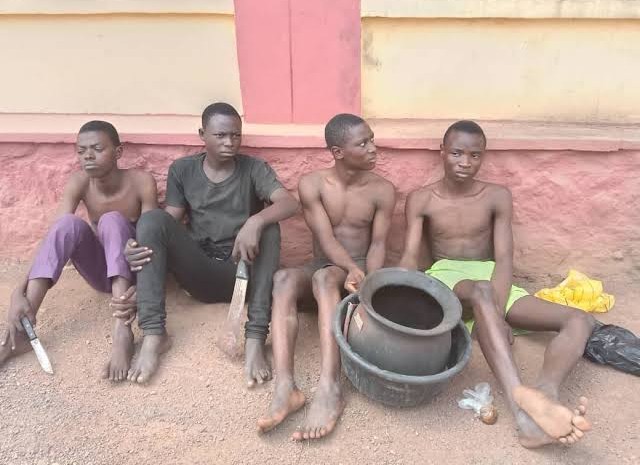
The following article, below, resonates deeply with me. In recent years, I have written so often about ritual murders in Nigeria (‘money business’) that it will surprise no one what moved the writer of this article. In Africa’s most populous country, ritual murders are committed perhaps daily: murders with ritual motives, superstition, belief in the power of ‘juju’, with the aim of enriching oneself, acquiring a better political or social position, or other selfish purposes.
Why is it so difficult to put an end to these vile, outdated and criminal acts? (FVDK)
The scourge of ritual killings
Published: June 3, 2026 By: This Day, Editorial, Nigeria
The criminals should be served full weight of the law
Increasingly, many Nigerians are now living in fear over growing cases of ritual killings. Last week, security operatives arrested a suspected serial killer who reportedly confessed to murdering dozens of people in the Odukpani Local Government Area of Cross River State. The suspect claimed he was assisted by a woman who usually lured unsuspecting victims to isolated locations where they were murdered, obviously for ritual purposes. But the Odukpani killings are not isolated incidents. While there may be no reliable statistics, the menace of missing persons and ritual killings across the country has become pronounced. Indeed, it has become so obvious that a civil society organisation, ‘Enough is Enough’, has since opened a website to document the trend.
From Lagos to Port Harcourt, Enugu and other cities across the country, hardly a week passes without tales of some people killed for what are attributed to ritual purposes. Last November, a Federal Road Safety Corps (FRSC) officer and her 12-year-old daughter, were gruesomely murdered in Osun State by a family friend who lured them to the shrine of a herbalist where they were slaughtered and dismembered, with their vital organs removed. And in April this year, the Kwara State Police Command apprehended a man with the skull of a deceased family member whose remains he had exhumed.
Ritual killing is not a new criminal challenge. In March 2014, the nation was thrown into confusion when a kidnappers’ den was discovered in Soka community, Ibadan, Oyo State. After the den was raided by some commercial motorcyclists who were searching for two of their missing colleagues, human skulls, dried human parts alongside malnourished victims reportedly reserved for ritual purposes, were discovered. In August 2018, the Lagos police arrested one Taiwo Akinola, a suspected cult member, for allegedly attempting to kill his mother for money rituals.
But perhaps one of the most celebrated cases was that of the Port Harcourt serial killer, Gracious David-West who reportedly lured seven young ladies with high-risk lifestyle across Lagos, Imo and Rivers State to hotels and murdered them for rituals. Similarly, a young graduate who was raped and murdered while searching for a job in Uyo environs, Akwa Ibom State, few years ago, was reportedly used for ritual purposes. There was also the horrifying murder of a 300-Level undergraduate of Delta State University, Abraka, by a gang of four yahoo boys. One of the criminals told the police that they took the young lady to a bush where they plucked out her eyes, removed her breast and heart.
But the questions inevitably arise: What are the motives? What could be the cause of these grim acts of violence against fellow human beings, and indeed, the society? What could account for these barbaric acts of violence even among the supposedly educated citizens? Many attribute the menace to the growing sense of desperation to acquire wealth, without work. Amid the prevailing poverty and joblessness in the land, many have resorted to doing anything, no matter how weird, for wealth. Yet, there is no proven link between the costly rituals and the instant wealth promised through magical potions by herbalists and voodoo practitioners even when our society is now ravaged by it.
Today, many of our university campuses have become breeding grounds for Yahoo boys and girls who are looking for instant wealth. Sadly, the education they received does not rid them of the superstition that wealth comes from productive enterprises and not from human body. And with that, many innocent citizens are becoming victims to barbaric killings.
I have no doubt that Nigerian human rights activist Leo Igwe is among the top five fighters against superstition, witchcraft, ritual killings, and impunity on the African continent, and he is most likely the most active and best known.
Dr. Leo Igwe is active in numerous human rights groups, among others he directs the organization ‘Advocacy for Alleged Witches‘ (AfAW), an advocacy group defending the rights and dignity of people who have been accused of witchcraft, and working and campaigning to end all forms of human rights abuses linked to witchcraft allegations in African countries.
I have mentioned and quoted Dr. Igwe numerous times on this site, for which I owe him a great debt of gratitude.
The article below focuses on a recent case in Rivers state, Nigeria. In February, a man, accused of witchcraft, was killed. AfAW is concerned for his relatives and calls on the authorities to bring the perpetrator to justice. Between the lines, it can be read that the organization—learned from past experiences—has little faith in the Nigerian rule of law.
Dr. Leo Igwe, thanks again for this timely intervention! (webmaster FVDK).
Witchcraft and Killing in Rivers State: Nobody Can Hamper the Progress of Others Through Magical Means
Local sources informed AfAW that Isaiah had a wife and four children. His first child just finished secondary school. AfAW plans to visit the community and meet with family and community members to understand what happened and explore ways of supporting the family of the deceased during these difficult moments. Advocates will continue to pressure the police to bring the suspect to justice. Witchcraft accusations and jungle justice are against the law. The inability of the police to enforce the law drives these abuses.
Leo Igwe directs the Advocacy for Alleged Witches
The Advocacy for Alleged Witches is saddened by the brutal murder of Chidiebere Isaiah by a relative, Nwalozie Chiwendu, following an accusation of witchcraft in Ofeh, Rivers State, in Southern Nigeria. The tragic news reached AfAW on February 15, 2026. AfAW contacted The Punch and Vanguard correspondents in Port Harcourt for the phone number of the youth president of the Ofeh community in Omuma Local Government Area. Through an advocate in the state, AfAW contacted a legal counsel from the community who confirmed the incident and has volunteered to facilitate any intervention. This legal counsel said he knew the victim and the suspected murderer very well. As reported, Chiwendu accused and murdered Isaiah for being responsible for his lack of progress. The legal counsel stated that Chiwendu dropped out of primary school. He never went to secondary school. “How did he expect to make significant progress and become rich if he was not educated?” He queried.
Chiwendu reportedly fled after the incident. The local police claimed that he was at large. As in previous cases in Rivers state, this matter will fizzle out after a while. The police stated that the investigation was ongoing, but that was all that would be heard about the case. There are no indications that the police are taking the case seriously, that they are tracking the suspect, or that they will bring him to justice soon. Witch persecution persists in the region due to impunity and lack of accountability, due to a failure of the police and the justice system. Last year, the police in Rivers state refused to prosecute pastors arrested for abusing children during exorcism and ritual cleansing in the state. All efforts and pressures on police authorities to bring these violators to justice came to nothing.
Meanwhile, advocates have been reacting and expressing their outrage following the horrific murder of Isaiah. One advocate stated, “See what ignorance has done: a tragedy for that community and the family. One brother is dead, and another brother is certainly going to be hanged for murder. Terrible!. Meanwhile, the pastors who preached this rubbish mentality into his ignorant head are walking about free, indoctrinating other ignorant people”. Another noted: “This is evil. So you claim to do something good by killing your brother because he is a witch, and you are running? You are not supposed to run away; rather, you should stay so we can tell you what a hero you are. Witchcraft does not exist. Say no to witch-hunts”. Furthermore, one advocate described the incident as: ” Absolutely tragic. No one should ever be killed over superstition or accusations of witchcraft. Education, awareness, and justice are the only answers. End the witch hunts now”.
Local sources informed AfAW that Isaiah had a wife and four children. His first child just finished secondary school. AfAW plans to visit the community and meet with family and community members to understand what happened and explore ways of supporting the family of the deceased during these difficult moments. Advocates will continue to pressure the police to bring the suspect to justice. Witchcraft accusations and jungle justice are against the law. The inability of the police to enforce the law drives these abuses.
In addition, AfAW will organize public awareness programs to reorient the minds of people in Rivers State. AfAW will educate the public to understand that nobody can harm, frustrate, or undermine the progress of others through magical or occult means.
That such a belief is superstitious and based on fear and ignorance!
Opinion Nigeria is a practical online community where both local and international authors through their opinion pieces, address today’s topical issues. In Opinion Nigeria, we believe in the right to freedom of opinion and expression. We believe that people should be free to express their opinion without interference from anyone especially the government.
Give to Gain: Justice for Women Accused of Witchcraft in Africa
On March 6, 2026, the online Ghanaian newspaper ‘Modern Africa’ published an article written by Leo Igwe, ‘Give to Gain: Justice for Women Accused of Witchcraft in Africa’ presenting three cases of women who were victims of witch hunts in Nigeria: (1) 49-year-old Obiageri Ottih from Imo state, (2) 86-year-old Arit Inyang from Akamkpa, in Cross River state, and (3) Adijat Pereira from Lagos, Lagos state, Nigeria.
The three women were accused of witchcraft, but the police failed to intervene or to seriously investigate the matter. It is feared that Arit Inyang has been murdered. Advocacy for Alleged Witches is following the cases.
Nigerian human rights activist and lawyer Dr. Leo Igwo needs no introduction on these pages.
Dr. Leo Igwe and I have more in common than a birthday (26 July); we both abhor human rights violations, mob justice, superstition, ritual murders, impunity and other forms of injustice.
I would like to take this opportunity to congratulate Dr. Leo Igwe on his relentless fight against superstition, witch hunting and ritual murders, and encourage him to continue to do so. (webmaster FVDK)
How can Nigeria’s legal system be strengthened to effectively prosecute witchcraft-related abuses?
Dr. Leo Igwe is a Nigerian human rights advocate, scholar, and founder of the Advocacy for Alleged Witches (AfAW). With decades of activism, Igwe has dedicated his career to defending those falsely accused of witchcraft, combating superstition, and advancing secular human rights. He has partnered with international and national organizations to confront harmful practices rooted in fear and cultural beliefs, particularly targeting women, children, and people with disabilities. A vocal critic of religious extremism and media sensationalism, Igwe promotes critical thinking, education, and legal reform. His work stands at the intersection of grassroots advocacy, public enlightenment, and global humanism.
In this interview with Scott Douglas Jacobsen, Igwe intensified campaigns across Nigeria in 2025 to defend victims of witchcraft accusations. Through unprecedented collaborations with organizations such as the International Federation of Women Lawyers, the National Human Rights Commission, and disability rights groups, AfAW has expanded its outreach to over 15 states. Initiatives include memorial events, legal interventions, media engagement, and direct support for victims. Despite cultural and religious resistance, Igwe emphasizes that witchcraft is a myth, urging communities to shift from fear-driven persecution to rights-based advocacy. His work highlights growing momentum, though challenges remain entrenched.
Scott Douglas Jacobsen: Today, we are here with the prolific activist, Dr. Leo Igwe of Nigeria, founder of the Advocacy for Alleged Witches (AfAW). Our primary focus is advocacy for people accused of witchcraft. A lot has happened this year, and we can dive into some specific events because I have notes. In your view, what have been the most significant achievements so far?
Dr. Leo Igwe: One of the most significant developments this year is that we have organized more meetings and awareness programs than in any previous year since 2020. Even as I speak with you, I am in Port Harcourt, in Rivers State, where we are organizing an awareness event—an event to remember victims of witch hunts and ritual attacks. It is the first of its kind in the country and in the history of our campaign: victims are being remembered rather than demonized.
These victims are not being pre-judged as guilty or condemned. There has also been considerable interest from groups wanting to partner with us. We have seen unprecedented requests and welcoming gestures from different organizations and civil society groups. For instance, the International Federation of Women Lawyers (FIDA)—several state chapters—has reached out to co-organize events. Historically, their focus has been on women and children, and accusations of witchcraft were not central; that is changing as AfAW’s work gains traction.
We have also engaged with the National Human Rights Commission of Nigeria (NHRC). Nigeria has 36 states and the Federal Capital Territory (Abuja), and some NHRC state offices are reaching out to co-organize events like the one we are holding on Saturday. They are ready to collaborate to highlight these abuses.
The Down Syndrome Foundation Nigeria has also contacted us to partner. They work on disability issues. Unfortunately, people with disabilities are often stigmatized or labelled as “possessed,” which leads to ostracism and harmful so-called “spiritual” interventions.
A recent example that drew national attention was a reported case in Calabar in February 2025, where a pastor allegedly killed his daughter, a child with Down syndrome, claiming she could transform into a snake. Cases like this show how superstition and stigma can turn deadly, and we are working with disability advocates to confront these beliefs and protect vulnerable families.
In terms of people who are accused, demonized, or stigmatized—whether because of disability or because of problems within the community—this has been a significant focus this year. We have now organized or collaborated in organizing events in over 15 states across Nigeria. By next week, we are planning an event in Niger State, in the north of the country. That will be the first event we have organized there, and we hope to use the opportunity to strengthen our partnerships with local groups and build a more robust mechanism for defending the accused.
That said, these collaborations do not come without challenges. For instance, in Niger State, we are partnering with women’s rights and children’s rights groups. They told us they would prefer not to have accused persons present, because their presence might trigger confrontation with accusers or with those who suspect them of being witches. This has been difficult, but we see it as a step toward educating people that everyone should stand as an advocate for the accused.
Many people still hold on to those beliefs and fears, even while showing some sympathy for the accused. However, sympathy is not enough. The accused are innocent. The law is on their side. So we want to find ways to reduce fear and anxiety and encourage communities to join us in openly and categorically supporting those accused of witchcraft.
Our meetings are not always characterized by unanimous support for advocacy on behalf of alleged witches. Sometimes, participants insist that witchcraft oppression is real. For example, at a recent meeting in Owerri, a pastor argued that witchcraft affliction must be addressed.
This is the contradiction we face. People say they oppose torture, killing, and persecution, but at the same time, they continue to insist witches exist. For us at AfAW, this is contradictory. If anyone claims people really are witches, then the burden is on them to prove it—to vindicate or exonerate those accused, rather than subject them to persecution.
Religion and culture also reinforce these challenges. Christianity, Islam, and Nollywood movies all perpetuate the belief that witchcraft and demonic possession are real. These institutions and cultural products continue to fuel the mindset that sustains witchcraft accusations.
In the churches and in the mosques, these harmful ideas are still being promoted. We are working to weaken the grip of these narratives on people’s minds and to chip away at what I call “witchcraft evangelism.” It does enormous damage and undermines our work. We also want people to recognize that Nollywood films and African movies are fiction, not fact.
The filmmakers reflect the myths and beliefs of society, but they are still telling stories, not recording reality. We want to help reorient society so that these movies are understood as cultural fiction. These are some of our successes, but also some of our challenges. Still, we see steady progress as more people begin to realize that something does not add up when it comes to witchcraft accusations. More groups are welcoming us and reaching out to cooperate, so that together we can address and dispel this phenomenon.
Jacobsen: Now, about specifics, in Owerri, Imo State, on September 2–3, we observed the International Day Against Witch Hunts. That was an event reaffirming material and psychosocial support. What was the big takeaway from that event this year?
Igwe: A lot. In Owerri, for the first time, we marched through the streets of the city, sharing flyers and speaking with people about the problem. We also visited the palace of the traditional ruler, Eze Clinton, who received us warmly and pledged his support to our campaign. That was an important milestone.
Another highlight was a presentation by our legal counsel, Mr. Okorie, on witchcraft accusations and the law. In Nigeria, accusing someone of witchcraft is a criminal offence. It is a form of criminal defamation, but most Nigerians are unaware of this—or if they are, they do not take it seriously, because their beliefs often outweigh what is written in the law. Mr. Okorie made it clear that even calling someone a witch can lead to prosecution. If this is done in a church or public gathering, the entire act is criminal.
He gave the example of a crusade organized in Imo State shortly after our event. The theme was “That Witch Must Die.” We reported it to the police, who summoned the pastor, but unfortunately did not prosecute him. Mr. Okorie explained to our participants that such gatherings are legally actionable, and anyone who participates in them could also be held liable. His legal perspective shocked many people, as they were unaware that the law was so clear on this matter.
We also had some victims from different communities share their experiences, which reinforced the urgency of our campaign.
We also heard from victims who recounted their stories and experiences. One woman in particular, Mrs. Regina, told us that after some people in her family died, she was forced to undergo a ritual. They bathed the corpse, washed the body, and gave her the water to drink as an “exoneration” ritual. She is one of the people we are supporting now, trying to provide her with all the necessary help to get back on her feet.
Another experience I had was visiting a street named after a victim of ritual killing, Ikechukwu Okoroho, who was murdered about 30 years ago. A street was named in his memory. I went to that street and to the scene where he was killed, according to reports. These are some of the key takeaways from the Owerri, Imo State event.
Jacobsen: There was also a case intervention in Ebonyi State on August 20, involving the banishment of Joseph Agwu from Unwuhu community. The case called on the state to prosecute the attackers, compensate the victim, and end the practice of banishment. Could you elaborate on that specific case?
Igwe: Yes, Joseph’s case is one of several in Ebonyi. He was accused of witchcraft and banished from his community. His property was destroyed, and he was forced to leave. We reached out to him, and he recounted his ordeal. We are appealing to the state authorities to step in and protect people like him.
Another successful intervention we made was in the case of Mr. Kingsley, who had also been accused. He was paraded through the streets, humiliated, and substances were poured over his body. When we got the information, we immediately contacted the police.
Thanks to that intervention, Kingsley is now back in his community. I met him recently, and he told me how happy and relieved he was. People now look at him with respect rather than the scorn he used to face. This was a real success story.
Of course, not all cases succeed. Sometimes incidents happen in rural communities where it is difficult for us to intervene. Accessing those areas can be dangerous—there are threats of beatings, mob attacks, or even killings. People in those communities often suspect that anyone investigating is there to help the police prosecute them. So yes, we have had some successes, but the challenges remain significant.
Jacobsen: There were also several roundtables. For example, in Ekiti State from August 19 to 21, there was a stakeholder roundtable aligned with the World Day Against Witch Hunts. There were also NHRC partnerships in Kano, Okoro, Ondo, and Yola, Adamawa. Across the year, there were several such meetings—on January 21, March 6, July 21, and August 19–21. What is the role of these roundtables, and what were the key takeaways from each?
Igwe: For the one we held in Yola early in the year, the big takeaway was that too often, when these cases are reported, nothing is done. They appear in the news and then disappear. Victims receive no help or support.
Since 2020, AfAW has been a game-changer. We step in on the side of the accused to support and empower them. In Yola, our message was clear: there is now an organization that stands for the accused. We introduced ourselves, explained what we do, and intervened in a specific case where a parent and his partner tortured a girl to death. The mother had been accused of witchcraft, and the children were said to have “inherited” it from her. The girl was tortured and died. We have been working hard to support the mother and her three surviving children, and to push for justice.
That was our first meeting in Yola, and like with many of these events, participants told us nobody else was doing what we are doing. We know why—few people have the conviction and understanding that we at AfAW bring. However, we made it clear there is now a place where the accused can seek support, and an organization keeping watch on these cases. That was our takeaway from Yola.
In Ondo, we also held an event and combined it with a radio program. A woman named Olaemi Ijogun attended after hearing us on the radio. She told us how she had been accused as a child and beaten. Her case was heartbreaking. She said that both she and her sister had been accused of being initiated into a coven when they were very young.
In Olaemi’s case, the accusations came from a relative who claimed to have seen her and her sister in a dream. The parents were told the girls were going to covens at night. As a result, they were not allowed to sleep. They were forced to kneel and raise their hands through the night because the parents believed that if they slept, they would travel spiritually to the coven. The girls were denied sleep for several nights.
The stigma followed Olaemi to school, where it negatively impacted her social life. She still breaks down when recounting the trauma, which she did at our event. She called on people to stop making accusations because they leave an indelible mark on the minds and psyches of children. Since then, she has been working with us to advocate against witchcraft accusations.
For instance, she joined us in Ekiti State during the World Day Against Witch Hunts event. There, we encountered a case where a 10-year-old girl accused her grandmother of initiating her into a coven and of spiritually murdering people. This accusation was made on the radio after a station invited the family to speak. As a result, the grandmother’s business collapsed, and she was ostracized; the community avoided her. We intervened to reassure her that she had no hand in such things.
The background is that the family’s youngest child, about two years old, had been sick since birth. The grandmother was blamed for the illness. When I interviewed the mother of the 10-year-old, she even told me that the grandmother had “taken away the intelligence” of the children, causing them to do poorly in school, and was also responsible for the family’s financial struggles. In other words, they blamed the grandmother for virtually every problem.
To address this, we provided the family with money to conduct a medical test on the child, so we can determine the real medical problem and treat it appropriately. This shows that we are not only holding events, but also taking practical steps to intervene. We extend solidarity by combining advocacy with direct support. We are helping the grandmother, the victim of the accusation, while also ensuring that the sick child receives medical treatment. These are some of the key outcomes from the Ekiti State event.
Jacobsen: How did the World Day Against Witch Hunts itself go?
Igwe: It was observed on August 10. That year it fell on a Sunday. In Nigeria, the best thing you can do on a Sunday is either go to church or stay at home. Suppose you organize anything else on that day. In that case, it is not likely to attract much participation—except for the few atheists and humanists in the country.
On August 10, the World Day Against Witch Hunts, I attended a church where the pastor regularly preaches against witch hunting. In our work, we identify religious leaders who speak out against these practices. It is not easy, of course, but we make every effort to find such churches. I was told about this one, contacted the pastor, and he confirmed that he preaches against witch hunting. So I went there to listen to his sermon. We also recorded it so that we could use it later to show other churches that this kind of preaching is possible and necessary.
It was a small church, with maybe 50 participants—tiny compared to the massive congregations you see in Nigeria, where tens or even hundreds of thousands gather. That probably explains why this church holds what you might call a minority position in the religious landscape. Still, that was where I spent the day.
Before and after August 10, we have continued organizing events in various states to remember victims of witch hunts and ritual attacks. It has gone well. People are coming out and saying, “At last, there is a space where we can feel vindicated, where we can share our stories in front of an audience that supports us, rather than seeing us as guilty.” That has been the spirit of these gatherings. In fact, we could not accommodate all the events in August, which is why some of them were pushed into September. For us at AfAW, the World Day Against Witch Hunts has not really ended. Our event this Saturday will conclude this year’s cycle of activities tied to that observance.
Jacobsen: Let us turn to the media side of things—ongoing public education, advocacy, op-eds, and briefings. Which news and opinion publications have been most effective in disseminating information about this campaign, the organization, and the harm caused by these superstitions?
Igwe: We have had coverage of our activities in several online and mainstream media outlets. Some journalists have even drawn our attention to cases in which we later intervened. Among Nigerian media organizations, I must mention Sahara Reporters, ThisDay, and The Eagle Online, which have been supportive.
We have also had coverage in other outlets, such as the Nigerian Tribune, Punch, and The Sun. Some of these online and print organizations have tried to highlight the work we are doing.
However, let me be clear—before now, media agencies have overwhelmingly been part of the problem. Their reporting on witchcraft accusations often reinforces the very narratives we are trying to dismantle. This is something I consistently point out to them during media interactions.
Many journalists still report accusations in sensational ways. They tell me the more spectacular, the better—for clicks and traffic. They call it “clickbait.” So, you see headlines like “Witch Crash-Lands” or “Bird-Woman Found in Village.” It is absolute nonsense, but it generates attention. Moreover, in their pursuit of attention, they misinform the public, mislead communities, and do real harm.
These reports are unprofessional and unethical. Journalism should be about reporting facts, and it should be balanced. Instead, in their quest for traffic, media houses end up endangering lives. For example, there was a radio program where a child accused her grandmother of initiating her into witchcraft. We intervened, and when we left, the station manager admitted to me, “Leo, it was this radio program that caused the problem.” He realized it had put an innocent woman in danger and destroyed her socially.
So yes, the media have been part of the problem. However, with the kind of engagement we are doing at the Advocacy for Alleged Witches (AfAW), some outlets are beginning to rethink. Some are realigning and realizing just how unprofessional and unethical their reporting has been. They are slowly starting to highlight our perspective. However, we still have a long way to go. Nigerian media organizations still thrive on sensationalism.
The media still thrives on sensational headlines—stories designed to attract attention and appeal to primitive superstitions that people find exciting. Slowly and steadily, some outlets are beginning to support what we are doing. However, there is still a tremendous amount of work ahead.
Another challenge is this: while media agencies are quick to publish sensational, false, and misleading reports about witchcraft—often for free—when we want to put forward our perspective, they demand large sums of money. Both online and broadcast outlets do this.
For example, if we want to appear on television, they charge between $500 and $1,000 just for the appearance. Additionally, you may need to travel, pay for flights, and cover accommodation costs. This makes enlightenment and advocacy extremely expensive, even though it is precisely what the country needs to counter these harmful narratives.
Jacobsen: Do you have any final points on that last topic?
Igwe: Yes, while a few media organizations are beginning to report witchcraft accusations more responsibly—rather than treating witchcraft itself as a fact or as a “certified” part of African culture—the progress is limited. Some outlets are starting to understand AfAW’s position and provide more balance. However, we are still far from the cultural shift we need. That kind of change will not happen through one report or even one event. It requires intensive public education and sustained enlightenment.
Unfortunately, in this area, many media stations have not been supportive. They are quick to publish sensational stories, like “an elderly woman turned into a bird” or “a witch crash-landed on her way to a meeting,” as was recently reported in Delta State. These kinds of stories get free publicity.
However, when AfAW attempts to purchase airtime to educate the public, we encounter significant costs. Media outlets charge us considerable amounts of money, making enlightenment campaigns very expensive. The imbalance is stark: free space for superstition, but costly barriers for rational education.
Meanwhile, churches and religious organizations that actively promote witchcraft narratives are given abundant airtime. They advertise events with themes like “That Witch Must Die” or “Exposing the Mysteries of Witchcraft.” These programs receive free promotion, which reinforces harmful beliefs.
By contrast, when we present our position—saying plainly that witchcraft is a myth—we are given little space, asked to pay heavily, and sometimes even put under pressure during media interviews. The pressure is on us to “prove” that something imaginary does not exist, instead of challenging those who claim it does.
The media landscape is still heavily skewed toward reinforcing witchcraft beliefs. We have not yet reached the paradigm shift where media establishments themselves start questioning and dismantling these narratives. That remains the challenge before us.
The cultural shift we need will only come when the media itself transforms. Until then, they will not welcome our programs in the way they should. Even when we pay for airtime, they often schedule us in the middle of the day, when people are busy at work. They refuse to give us prime slots in the evening or late at night—times when churches preach about witchcraft to audiences at home around the dinner table.
Without media on our side, we cannot fully succeed in making witch-hunting history in this region. That is why this work is so critical.
Jacobsen: There was a memorial action on August 29, connected to victims of ritual killings. You visited a hotel site linked to one of those incidents, to connect memory with today’s anti–witch hunt work. Could you explain what happened at that hotel, and how many victims are we talking about?
Igwe: I visited because of the incident that happened there in September 1996, almost 29 years ago. What happened then is still happening today. For example, earlier this year, in February 2025, in Lagos, a young man murdered his girlfriend, used an axe to break her head, and drained her blood into a calabash, supposedly for rituals. That case mirrors what happened at the Otokoto Hotel in 1996.
At Otokoto, the victim was an 11-year-old boy who sold peanuts on the streets. A hotel gardener lured him inside, gave him a drugged drink, and when the boy became unconscious, he cut off his head. The man was apprehended while attempting to deliver the head to someone who had ordered it for ritual purposes.
The news caused a massive uproar. There were riots in the city, and people began burning the houses of those suspected of being involved.
The people labelled as “ritualists,” in other words, those involved in ritual syndicates or racketeering, were the focus of that uproar. My visit to the Otokoto Hotel aimed to remind the people of Imo State that this practice has been ongoing for far too long and must come to an end.
The government seized the hotel property, and today it is used by the police. Not far from the police station, there is a street named after the young boy who was murdered. Those responsible were eventually arrested, and some received life imprisonment while others were sentenced to death.
I visited that property to show that the same problem we saw nearly three decades ago is still with us today—only in new forms. Now, people kill their girlfriends, relatives, or acquaintances for what they call organ harvesting. They believe specific organs can be used in rituals to produce wealth, success, or power.
The narratives of religion, miracles, magic, and supernatural intervention fuel these beliefs. All of them reinforce the idea that ritual killings can deliver prosperity. What we are confronting is a Herculean task—a complex, many-headed monster of superstition and fear. Only the flame of reason, compassion, critical thinking, and skeptical inquiry can provide hope for society and for the victims.
Jacobsen: Thank you for the opportunity and your time, Leo.
Although the following article dates from early this year (January 30), its contents warrants presentation here.
Nigeria is notoriously known for its ritual murders, locally called ‘money rituals’, and I’ve included many news reports on ritual murder cases on this site. Nevertheless, the following is worth reading.
What makes the article even more harrowing is the, presumably, big gap between reported ritual murders and actual ritualistic murders. In Nigeria as well as elsewhere on the African continent, an unknown but significant number of people disappear without trace every year.
Warning: the following article may disturb readers because of its graphic contents. (FVDK)
Nigeria records 150 ritual killings in 6 months, experts call for urgent action
Kaduna, Kano, Katsina residents seek death sentence for ritualists, cannibals
Published: January 30, 2025 By: Pulse, Nigeria
NAN reports that the police have apprehended many of the ritualists including a man who killed his mother, grandmother, sister and her son in Enugu.
A security expert, Mr Seyi Babaeko has raised concerns over the surge in ritual killings in the country, calling for urgent measures to address the trend.
Babaeko, the Managing Director of Absolute Security and Advance Protocol Ltd. expressed his feelings in an interview with the News Agency of Nigeria (NAN) on Thursday in Lagos.
The National Bureau of Statistics (NBS) revealed that over 150 ritual killing cases were recorded in Nigeria in the past six months.
NAN reports that the police have apprehended many of the ritualists including a man who killed his mother, grandmother, sister and her son on November 27 in the Amaeze community in Nsukka Local Government Area of Enugu State.
The Ogun Police also apprehended twin brothers for alleged murder and dismembering of a lady after luring her to their Abeokuta residence on December 22.
Similarly, a local church operator allegedly killed a 55-year-old widow on November 6, in her apartment at Umuediabali community in Ahiazu Mbaise LGA of Imo. He cut off her private organs and her breasts.
Also, the police apprehended a man, 29, who killed his mother on Christmas Day, shaved her hair and dumped her body in a well in Batriko, Eastern Boki LGA of Cross River State.
According to Babaeko, the rise in ritual killings in Nigeria is a disturbing trend that reflects deeper socio-economic, cultural, and security challenges.
He said that the growing desperation for wealth, widespread belief in supernatural influences on success, and the erosion of moral values had fueled the menace.
Economic hardship, high unemployment rates, and the glamorisation of sudden wealth in society have pushed many, especially young people into desperate and criminal actions.
The responsibility for the increase is multifaceted. While individuals who perpetrate these crimes are primarily to blame, societal values and institutional failures also contribute
According to him, the media, particularly social media, often amplifies stories of young people acquiring wealth mysteriously, indirectly encouraging others to seek similar paths.
The expert said that some traditional and religious leaders, who should condemn such acts, remain silent or complicit.
He said that the law enforcement agencies, which should deter such crimes through swift investigations and punishments, had not been proactive enough in tackling the issue.
The failure of law enforcement to track and punish offenders effectively contributes to the increase, he added.
He urged the government to take urgent steps to address the growing insecurity.
Expert raises concern over rising cases of ritual killings in Nigeria.
The government should strengthen the criminal justice system to ensure swift prosecution of offenders is critical. He stated;
Security agencies must intensify intelligence gathering and surveillance to dismantle networks involved in ritual killings.
Public enlightenment campaigns should be launched to counter the belief that human sacrifice leads to wealth.
Additionally, economic policies should prioritise job creation, as financial stability will reduce the desperation that drives some individuals toward such crimes
According to him, a coordinated effort among stakeholders is necessary to curb the menace and restore security across the country. He noted;
Community and religious leaders must play a more active role in addressing the root causes of ritual killings.
Traditional institutions should publicly denounce these practices, while faith-based organisations should emphasise ethical means of achieving success.
Schools must incorporate moral education into their curricula to instil strong values in young people.
Parents also have a role to play in guiding their children away from negative influences.
Tackling ritual killings requires a holistic approach that combines strong law enforcement, economic empowerment, community engagement, and a reorientation of societal values.
Warning: the following post and related articles contain graphic details which may upset readers.
On previous occasions I have stated here that the numbers of abductions and murders for ritual motives are running sky-high in Nigeria, not to speak of missing persons leaving no trace. Having a brief look at the contents of this site since I started it in 2018, one is tempted to say that this West African country is well covered but by far I do not report all recorded cases of ritualistic murders in Africa’s most populated country (over 225 million inhabitants in 2024).
The list is too long to continue. Each day new ritual killing cases are unearthed, sometimes literally.
Given this background, the article below is not surprising and the reader will not be surprised that I fully support the author’s view: that greed is a basic ingredient and motive for ritualistic violence.
However, after having read the article I remain with two – related – unanswered questions.
Why is it that superstition is so widespread in Nigeria? Ritual murders and the harvesting of organs, other body parts, in short, ‘money rituals’, are carried out – by ‘ordinary criminals’ as well as by ‘ordinary citizens’ – because it is believed that ritual murders can make people rich or famous. Why is it that the belief in ‘juju’, the power of the supernatural, is so persistent? (webmaster FVDK)
it is believed that ritual killings can make people rich
When wealth demands blood: The horror of ritual killings in Nigeria
Published: March 13, 2025 By: Kelly Odaro – The Nigerian Observer
Amidst Nigeria’s economic quagmire, a more sinister affliction festers — ritual killings. This grotesque practice, once whispered in hushed tones and relegated to the annals of folklore, has metamorphosed into an alarming commonplace reality.
The nation wakes up to a grim litany of media headlines detailing the heinous acts of individuals who, in their insatiable pursuit of material prosperity, desecrate human life with blood ritual. The moral fabric of our society is unravelling at an alarming pace, frayed by an unsettling obsession with overnight wealth.
The recent gruesome murder in the Evbuotubu community of Benin City, where a young man’s head was severed, has once again spotlighted the disturbing prevalence of ritual killings in the region. This heinous act is not an isolated incident but part of a growing pattern of bloodshed fuelled by a dangerous obsession with instant wealth and power.
Ritual killings, often driven by superstitious beliefs and occult practices, have persisted in many parts of Nigeria despite modernisation and law enforcement efforts. In Benin City, several cases have been reported over the years, each more chilling than the last. Many of the unsuspecting victims are young men and women, often lured, kidnapped, and gruesomely murdered in rituals meant to bring fortune to perpetrators.
In past years, there have been numerous reports of mutilated bodies discovered in forests, abandoned buildings, or shallow graves, their organs harvested for money-making rituals. In
2020, a similar case rocked the Otuo community in Owan East Local Government Area of Edo State where three young men and a woman were set ablaze by a mob for allegedly beheading a secondary school student in a suspected ritual killing (Punch, 25 February, 2020). In 2018, four brothers allegedly unalived their grandmother for money rituals in Ohovbe quarters, Ikpoba Hill in Benin City, according to Vanguard News (January 9, 2018).
Likewise, in 2019, police uncovered a shrine where human skulls and body parts were found, indicating that ritual killings were being carried out on a large scale. More so, over twenty mummified bodies were discovered in a building in Benin City (The Guardian, August 8, 2022), and a myriad of similar incidents occurred across Nigeria.
Despite widespread condemnation, these horrific acts continue, largely because of deep-rooted societal attitudes that glorify sudden wealth without questioning its source. Many individuals with dubious riches are still celebrated, given chieftaincy titles, and honoured in religious circles simply because of their financial influence. This cultural acceptance creates an environment where desperate individuals, especially young men, resort to extreme measures to attain wealth and social status.
Addressing this crisis requires more than just police crackdowns. There must be a fundamental shift in societal values —one that prioritises ethical wealth over ill-gotten riches. Religious institutions, traditional rulers, and community leaders must take a firm stand against the glorification of questionable affluence.
The Evbuotubu incident is a grim reminder that Nigeria is still battling the scourge of ritual killings. Until society collectively condemns and rejects wealth acquired through bloodshed, such horrors will persist, leaving a trail of innocent victims in their wake.
Once upon a time, wealth in Nigerian society was synonymous with industry, resilience, and ingenuity. The elders of old (traders, craftsmen, farmers, and entrepreneurs) prided themselves on the sweat of their brows. A man’s affluence was a direct reflection of his diligence and years of toil.
Today, however, a corrosive paradigm has taken root, one that glorifies instant affluence, irrespective of the means through which it is obtained. The insidious doctrine of “making it by any means necessary” has replaced the time-honoured principle of hard work.
This paradigm shift is not accidental. It is the consequence of a deeply flawed value system where wealth, no matter how dubiously acquired, commands reverence. The very individuals who should be ostracised for their morally reprehensible conduct are, instead, venerated. This toxic culture emboldens desperate youth to explore even the most abhorrent means to attain affluence.
The most disheartening aspect of this trend is the complicity (both tacit and overt) of society’s supposed moral gatekeepers. Religious leaders, who should be the custodians of righteousness, have too often become enablers of corruption. In the grandiose edifices of faith, where the gospel of prosperity is preached with fervour, those with questionable sources of wealth are celebrated.
They are given front-row seats, called upon for prayers, and sometimes elevated to positions of religious leadership, all because their ill-gotten wealth fuels the construction of mega worship centres.
Traditional rulers, the custodians of Nigeria’s cultural ethos, are equally culpable. The hallowed institution of chieftaincy, once reserved for men of impeccable character, has been commercialised. Titles that once symbolised honour are now available to the highest bidder. The affluent, irrespective of their moral standing, are conferred with chieftaincy titles in elaborate ceremonies attended by society’s crème de la crème.
In many instances, these so-called ‘chiefs’ are known for their nefarious dealings, yet they are paraded as paragons of success.
The elite, politicians, and corporate magnates are not innocent either. Many continue to patronise, endorse, and associate with individuals whose wealth bears the stench of blood money. By doing so, they lend credibility to criminality and normalise the abnormal. When men who are rumoured to have amassed their fortunes through dark means are invited to state functions, given government contracts, or honoured in grand events, the message to the struggling youth is clear — wealth, regardless of its origin, is the ultimate measure of success.
The media, which should serve as society’s watchdog, is often a double-edged sword. While some journalists and media houses expose the nefarious activities of ritual killers, others glorify the very individuals whose sources of wealth are dubious. The extravagant lifestyles of these questionable figures are routinely splashed across the pages of newspapers, magazines, television, and online platforms, painting them as role models rather than cautionary tales.
Reality television, social media influencers, and music videos further exacerbate the problem by promoting a culture of ostentation. Young people, bombarded with images of expensive cars, lavish mansions, and extravagant vacations, begin to equate self-worth with material possessions. Those who lack the patience for legitimate wealth creation resort to criminality, with some taking the ultimate plunge into the dark world of ritual killings.
At the core of ritual killings is the utter dehumanization of victims. The perpetrators, in their frenzied pursuit of wealth, strip their victims of all humanity, reducing them to mere commodities for sacrifice. The gruesome nature of these killings — dismembered bodies, missing vital organs, and ritualistic symbols points to an eerie level of barbarism that should have no place in civilised society.
Many victims are unsuspecting individuals. Children are lured with sweets or money, young women deceived by fake lovers, and travellers waylaid by ritual syndicates. The lack of stringent security measures, poor law enforcement, and a failing judicial system embolden these criminals, who often evade justice or buy their way out of prosecution.
One of the greatest tragedies of Nigeria’s legal system is its failure to serve as a deterrent to ritual killers. Reports of arrests are frequent, but convictions are rare. The wheels of justice turn at a sluggish pace, and in many cases, perpetrators with financial clout secure their freedom.
Corruption within the police force further compounds the problem. Cases of ritual killings are sometimes swept under the carpet in exchange for bribes, leaving families of victims without closure. Even when cases proceed to court, the judiciary’s lethargy allows them to drag on indefinitely, creating a loophole for criminals to manoeuvre their way back into society.
If Nigeria is to rid itself of the scourge of ritual killings, a fundamental societal reorientation is imperative. The following measures must be taken:
Schools must incorporate value-based education that emphasises the dignity of labour and the dangers of illicit wealth.
The youth must be taught that wealth, when pursued through righteous means, is more fulfilling and sustainable; religious leaders must take an uncompromising stance against those who amass wealth through dubious means. Places of worship should cease to be sanctuaries for financial criminals.
Besides, traditional rulers should uphold the sanctity of their institutions by ensuring that only men and women of impeccable character are honoured – chieftaincy titles must not be ‘commoditised.’
More so, the media as watchdog of the society must prioritise investigative journalism that exposes ritual killers rather than glorify ostentatious lifestyles. Content creators should promote positive role models rather than individuals with questionable affluence.
Again, the police and judiciary must be restructured to ensure that ritual killers are swiftly apprehended, tried, and convicted.
There must be no sacred cows; the law must take its course without favouritism.
Moreover, citizens must become more vigilant and report suspicious activities. Neighbourhood watch groups should be empowered to work with security agencies in identifying and apprehending suspected ritualists.
Ritual killings in Nigeria are symptomatic of a deeper societal malaise — a value system that places wealth above humanity. The tragedy is not merely in the blood spilt but in the indifference with which society treats this growing menace. If the nation does not recalibrate its moral compass, the ritualistic shedding of human blood will continue unchecked, and our collective humanity will be the ultimate casualty.
Ritual killers are on the prowl, preying on unsuspecting victims across the country. These criminals lurk in both rural and urban areas, taking advantage of isolated locations, late hours, and unsuspecting individuals.
Parents and guardians must take proactive measures to safeguard their children and wards from falling victim to these nefarious acts. Educating young people about the dangers of accepting rides from strangers, wandering off alone, or engaging with unknown individuals is crucial. Additionally, people must exercise caution in their daily movements, ensuring they avoid desolate areas, especially at night.
Men and women alike must remain vigilant and prioritise personal safety. Walking alone on lonely paths or deserted streets, particularly in poorly lit areas, increases the risk of being targeted. Instead, people should move in groups whenever possible and be mindful of their surroundings. Until then, everyone must stay alert because in a society where ritual killers operate with impunity, personal vigilance is the first line of defence.
Let those who have ears listen and let those in positions of influence act. Posterity will not forgive a society that sacrifices its own on the altar of unbridled greed.
Odaro, a columnist, lectures in the Department of Mass Communication, Auchi Polytechnic, Auchi.
Warning: the following article contains graphic details which may upset readers.
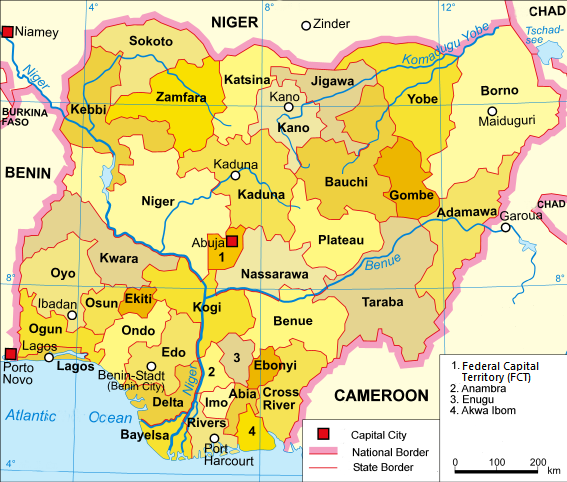
The Federal Republic of Nigeria is divided into six geopolitical zones commonly called zones. Abia State is located in the South East geopolitical zone of the Federal Republic of Nigeria. (It is not to be confused with Abia, a town in Enugu State, north of Abia State, also in the South East geopolitical zone.)
Abia State is an inland state and one of Nigeria’s smallest states. With a surface area of 6,320 km2 it ranks 32nd (out of 36 states). It had an estimated population of nearly 5 million people, the majority of whom are Christians (2024) resulting in a 26th position. The most populous city is Aba, the state’s commercial center.
In 1991, Abia state was created out of Imo State, the two states are considered sister states and were part of the Eastern Region which in the late 1960s attempted to secede (Biafran War). The Igbo people are one of the indigenous peoples of the South-eastern part of Nigeria and make up 95% of the population.
A traditional local ruler, His Royal Highness (HRH) Eze Philip Ajomuiwe, recently raised the alarm, revealing that over 30 bodies had been dumped into the Imo river between 2024 and February 2025. Reportedly the corpses found were mutilated, a sign that the victims had been killed for ritualistic purposes.
The traditional ruler of Oriendu Autonomous Community in Umuahia North Local Government Area of Abia State, His Royal Highness Eze Philip Ajomiwe, has expressed deep concern following the discovery of more than 30 unidentified bodies in the Imo River over the past year. In a recent press briefing at his palace, Eze Ajomiwe disclosed that the victims, predominantly young women, were often found unclothed, with missing body parts, or enclosed in bags. Source: Instagram – peopleofabia_en myowerriblog
Since the authorities have failed to arrest any suspects, the monarch expressed his worries that the situation of fear in the region will last and he was appealing to the state government to take immediate and adequate action. (webmaster FVDK)
Police probe discovery of 30 mutilated corpses in Abia community
Published: February 7, 2025 By: Steve Oko – Vanguard, Nigeria
The Abia State Police Command said it had launched an investigation into the alleged discovery of 30 bodies of suspected ritual killings in Imo River in Oriendu community.
This is coming on the heels of the alarm by the traditional ruler of the community, HRH Eze Philip Ajomuiwe, that over 30 bodies had been dumped into the river between 2024 and February 2025.
Abia State Police Public Relations Officer, Maureen Chilaka, told Vanguard that the Divisional Police Officer in charge of Ohuhu Police Division, had commenced an investigation into the sad development.
She said the community shared a boundary with Imo State, adding that Police were collaborating with vigilantes in the area to unravel those behind the dastardly act.
The PPRO said that even though there had been no official complaint to the police about the ugly incident, the Command based on the inquiries by Vanguard, had initiated an investigation into the matter.
She vowed that those behind the heinous crime would not escape the long arm of the law.
Eze Ajomuiwe had while addressing newsmen in his palace at the weekend, revealed that over 30 bodies, mostly young ladies had been dumped into the river by suspected ritualists from Imo State.
He said that the bodies, usually naked and without private parts, were dumped into the river in the middle of the night by the killers as the community wakes to see them in the morning.
He said: “The bodies, like the recent one, are either completely naked and without their private parts or in a bag. There have also been cases of two decomposing bodies seen beside the NNPC pipeline.
“The victims are mostly young girls. The ritualists from Imo usually come at night to dump the bodies of their victims inside the Imo River, and in the morning we wake to see them”.
The monarch expressed worry that no arrest had been made by security agencies since the incident began, adding that his subjects now live in fear.
According to him, efforts by the community’s vigilante group to arrest the suspects had failed too, because the group is not as equipped as the suspects are said to be.
“So, we’re appealing to the state government to empower the vigilante group with the necessary logistics and the wherewithal to enable it to match the suspects,” he said.
He argued that nobody ever embarks on such a mission with empty hands especially when the enemy is fully armed with sophisticated weapons and is ready to fight back.
The monarch said that his complaints about the situation to security agents had been to no avail, noting that the latest was a letter to the Speaker of the State House of Assembly on February 7.
“ We have reported even to the DSS and they came here and held a meeting with us. We need the Government’s intervention to apprehend those behind this atrocity”.
Imo State is located in the South-East geopolitical zone of Nigeria, bordering Anambra State in the north, Rivers State to the west and south, and Abia State to the east. The Federal Republic of Nigeria is divided into six geopolitical zones commonly called zones.
Imo State is Nigeria’s 16th most populous state with an estimated population of over 6 million (2024). With a surface area of 5,530 km2 it is the third smallest state. The state capital is Owerri. (FVDK)
Ritualists killed pregnant woman, dumped corpse in the bush
Published: May 29, 2024 By: Stories from Everest Ezihe, Owerri/Imo State
Exhibiting serious act of wickedness, residents around the Amaraku-Umudim road in Isiala Mbano local Government Area, Imo State were startled as they woke up on Tuesday with the ugly sight of a decomposing body of a yet-to-be-identified woman found in the bush within the area.
The deceased was allegedly seen to be victim of ritual killing.
An eyewitness (names withheld) told The AUTHORITY that the persistent barking of a dog within the vicinity prompted some residents to enter the bush and made the eye sour discovery.
The commotion that followed the discovery triggered an upsurge of sympathizers who also noticed that the deceased was pregnant and and had her breasts and private parts chopped-off.
This prompted the sympathisers to rush to the Amaraku Police Station and reported the incident.
Thee Police Division consequently removes the corpse to nearby government hospital for autopsy and identification.
When contacted, the Imo State Police Command’s Spokesman, ASP Henry Okoye, said he had yet to be briefed on the matter.
On Wednesday, January 11, the people of Arondizuogu in Imo State, In Nigeria’s delta region, took to the streets to protest over a number of unexplained killings in their communities. The killings were described as ‘strange happenings’ and linked to politics. One does not need much imagination to associate these killings with ritualistic murders.
Imo State is located in the country’s south-east, is the third smallest in area of Nigeria’s 36 states and has a population of about 6 – 7 million people. It is not the first time the people in Imo State are confronted with deadly ritualistic activities in their communities. In 2009, a large group of women from Ndiakunwata and Arondizuogu, Ideato North, a Local Government Area of Imo State, stormed the state capital Owerri to stage a peaceful protest over a wave of ritual killings in their area. See the second article presented below for more details.
The third article below describes another horrible ritual murder which occurred in 2009. The mentioning of Otokoto in the 2009 article refers to the 1996 Otokoto riots which happened in the aftermath of another ritual murder in Imo State in that year (of an 11-year-old schoolboy boy, Anthony Ikechukwu Okoronkwo, though the uprising was also caused by the rampant corruption in the state). Readers are warned that the described murder cases contain graphic details.
Finally, for shortness sake I refer to my previous postings for more ritual murder cases in Imo State. To access these postings, click on ‘African countries’ in the dropdown menu and select: Nigeria (webmaster FVDK).
Villagers protest ritual killings, burning of vehicles in Imo State
Published: January 11, 2023 By: Chinonso Alozie – Vanguard, Nigeria
Elderly men, women and Youths of Arondizugo, Ideato North Local Government Area of Imo state, on Wednesday continued to protest over the alleged killings and burning of vehicles by suspected hoodlums in their communities.
The youths were seen on a video that went viral on social media, they marched around the Ideato North communities demanding no further delay for government to intervene in their situation.
At the time of filing this report, some of the villagers who could not give reasons for the attacks described some of the killings as “strange happenings” and linked to politics.
The latest was the alleged killing of a young man and a tricycle rider whose names were withheld. It happened Tuesday night at Ndiejezie Izuogu in Ideato’s local government area of Imo State.
They lamented the burning of about three vehicles one of the vehicle’s plate numbers was given as a YAB-225DY Range rover vehicle.
One of the villagers who preferred not to mention his name said: “My brother these killings have been happening for some time. We have cried for help nothing is happening. Even sometime last year, our royal fathers from Arondizugo came out and protested. I saw you were among the journalists that they addressed and pleaded for government intervention because this is too much.
“We want the government to come and save us. We don’t need much delay again. We are in pain now. We want an end to these killings and burning of vehicles.
“Many of roads are not safe now. this is bad we want help. let us end this killings. We are tired. Why the killings? why these troubles. We want government to end it.”
However, at the time of filing this report, the elders in the various villages were still having strategic meetings to see how to end the reported killings and burning of vehicles.
When the Imo state Police Public Relations Officer, PPRO, Micheal Abattam, was contacted he was yet to respond.
Published: November 12, 2009 By: Chidi Nkwopara – Vanguard, Nigeria
OWERRI – Scores of women from Ndiakunwata, Arondizuogu, Ideato North Local Government Area of Imo State, stormed Owerri to stage a peaceful protest over recent ritual killings in their area.
Vanguard gathered that unidentified ritualists killed an octogenarian, Mrs. Beatrice Asoanya, and her granddaughter, Miss Chinaza Okereke, while they were sleeping in their home.
The women displayed placards with varying inscriptions, which included “Our lives are in serious danger”, “We are no longer safe in our community”, “We need government’s intervention” and “Ohakim save us”.
Speaking to newsmen amidst sobs, Lady Patricia Okereke, the mother of the slain Chinaza, said the suspected ritualists cut off the breast of her mother, Mrs. Asoanya, and drained her blood.
Lady Okereke said the women were angered that the suspected killer of the two citizens have been released, adding that the released suspects had since been moved to Abuja by his masters.
Okereke wondered why her daughter and mother would be murdered in such a gruesome manner, while the alleged culprits were left off the hook because of alleged influence of those backing him.
I demand that the perpetrators be brought to face the full weight of the law with a view to serving as a deterrence to others, she pleaded.
Otokoto again in Imo! Girl, 18, beheaded for rituals
Published: November 5, 2009 (headlines: August 19, 2009) By: Chidi Nkwopara – Nairaland, Nigeria
Residents of Owerri were Wednesday morning treated to a morbid spectacle as the police command paraded four suspects and the decomposing head of an 18-year old Chinwe Doris Perpetua Obieri, who was murdered for ritual purposes.
The bizarre scene, which was a replica of the infamous Otokoto saga of September 1996, had the prime suspect, 24-year old Emeka Uwakwe, from Ndiakunwata, Arondizuogu, Ideato North local government area of the state, clutching the decapitated head of his girl friend, Chinwe.
Speaking to newsmen, the Commissioner of Police, Mr. Aloy Okorie, gave the names of the other suspects as Chigamezu Anyaoha from Orodo, Mbaitoli local council area, Anthony Obioha from Lude, Ahiazu Mbaise local government area, and the medicine man, Damian Joseph from Obot Akara, Akwa Ibom State.
Mr. Okorie gave a graphic account of how the sordid crime was committed and the efforts made by the state police command to apprehend the suspects in far away Lagos State.
“You can see we have a case of murder for ritual murder. What happened was that on Sunday, July 26, 2009, the young lady whose head you are seeing (pointing at the decapitated head of Chinwe) left her Akokwa home, Ideato North local government area of Imo State. You can see the head without the body.
Late Chinwe before her death “The young man, Emeka Uwakwe, is the boy friend of this girl and he came all the way from Lagos and lured her to his house in the village. He murdered the girl, cut off her head for ritual purpose and dumped the headless body in a bush. Apparently, the girl had told her parents that she was going to visit her maternal uncle in another village.
“As at 7.04pm on that same Sunday, she called her parents and informed them she was already in her maternal uncle’s compound and they believed her. Later, her parents made a call to her and the call was not pulling through up till the next morning and by Monday when it was obvious that she was not coming back, they made a report to the police that their daughter was missing.
“The names of the parents are Mr. Nicholas and Mrs. Theresa Obieri from Umuezeala, Umueziama Kindred in Akokwa. It was after they made the report to the police that some vigilante people on the same date, came around and said they saw a headless body in the bush. The police invited the girl’s parents and they identified the headless body to be that of their daughter.
“It was at that point that the police swung into action and started making investigations. From information, we got to know that she had a boy friend who is resident in Lagos and who was seen around home within that period. So, we went to Lagos and we were able to arrest Emeka Uwakwe. You can see him now with the head of the slain girl (pointing at Emeka).
“When we now got him, he made a confession that Mr. Damian Joseph of Obot Akara in Akwa Ibom State, though he is based in Lagos also, was the one who made the charm with which, if he got the head of this girl, mix it with the charm and bury it, money will start flowing, he will start plucking money as if he was plucking fruits from the tree. That was exactly what the man did. He (Emeka) got the concoction, mixed it with the head and buried it in his room.
“We also went for the Native Doctor and got him. Meanwhile, Emeka made a confession too that it was his friends, Chigaemezu Anyaoha and Anthony Obioha, that introduced him to the Native Doctor and that he was capable of making medicine for money. They also confirmed that they had done such a medicine before with human scrotum. We do not know whether it their own scrotum or other people’s scrotum. We will surely find out in due.
“You can see the pretty 18-year old girl (displaying her photograph). I am sure if you had seen this girl when she was alive, you will weep. You will certainly weep because I have never seen a thing like that in my life. I just imagine my own daughter of that age being slaughtered for ritual purposes.
“Well, in an era where we talking about people going to live in the moon, that is the age we are in, 21st century, and people are still being fooled that they can use human head to make money. It is very unfortunate.
“Emeka Uwakwe was arrested on Wednesday last week (August 12, 2009) and when he gave us the information on how he got about the whole show, our men left for Lagos on Sunday and we were able to arrest both the Native Doctor and the other two boys. The next line of action is that they will pay the price prescribed by the laws of the land. We all know the price for somebody who has committed murder. He will pay with his own life. There is no duplicate for life. If he had the courage to kill somebody, he should also be prepared to face the consequence. He should be in a position to say if he killed her with a knife or first strangulated her before he cut off the neck.
“It is very clear that the girl deceived her parents. My advice is simple. I have a daughter of that age. I know how we monitor her. Most times, especially in this era, if she has to go out, we must let go with somebody because you never can tell. That age is a critical period in the training of children. Parents should monitor their daughters closely. It is easy to make contacts in this GSM era. I am sure that if the parents had raised alarm that very night they did not see her, may be things would have come out differently.
Ritualistic activities and ritual murders are based on superstition, but the occurrence of ritual killings also has everything to do with the lack of rule of law. Countries with a weak rule of law tend to show a higher prevalence of ritual murders, be it a causal relationship or a correlation.
One such a country where a weak rule of law results in a high level of insecurity is Nigeria – as repeatedly stated on this site. Very likely, not all regions of Africa’s most populated country show a similar scale of insecurity. The article below focuses on Nigeria’s South-East.
The main theme of the article concerns the prevailing lack of security in the South-East. Ritual murders contribute to this high level of insecurity, as mentioned in the article – enough reason to include the article here (webmaster FVDK).
Nigeria’s South-East is plagued by a surge in cybercrime, armed robbery, kidnapping, domestic crime, extrajudicial killings, ritual killings, and banditry.
Published: December 17, 2022 By: Garbxtpen (self media writer) – Opera News, Nigeria
Insecurity has been one of the major threats Nigerians are facing nowadays. Even though the Buhari-led administration has been putting everything in place to make sure that normalcy returns to every region of the country, some bad people in Nigeria are still causing havocs in some region of the country.
The South-East is plagued by a surge in cybercrime, armed robbery, kidnapping, domestic crime, extrajudicial killings, ritual killings, and banditry. However, while some people are so unfortunate to scrape through these insecurities, some Nigerians were so fortunate to escape from the dens of these perpetrators.
On Friday, Christopher Eleghu, the candidate of the Labour Party (LP) for Onuimo constituency, Imo state house of assembly in 2023 general election was reportedly killed by some unknown gunmen who stormed his house in the early hours of the day, the Punch reports.
An eyewitness who claimed anonymity disclosed that the gunmen who stormed the area operated for over two hours before they left the deceased’s house to also attack some other top politicians in the community.
While the eyewitness was further speaking to newsmen, he noted that when the villagers gathered at Eleghu’s house this morning, they all saw his dead body been inflicted with matchet cuts after the unknown gunmen killed him.
The eyewitness said, “They have killed Christopher Elehu, popularly known as Wasco. Until his death he was the Labour Party candidate in Onuimo Local Government Area. They invaded his house when everybody had gone to sleep and shot for over two hours. They killed the man and burnt his house. They also destroyed his property. His corpse was laying on the floor with matchet cuts when villagers gathered in the morning.”
Nevertheless, the Commissioner of Police in Imo State, Mohammad Ahmed Barde has vowed the the perpetrators of this crime would soon be arrested and charged to court for taking the life of this innocent LP chieftain.
Everyday I see new reports of ritual killings in Nigeria – locally called ‘money rituals’ – and although I haven’t stopped presenting these articles here, on this site, I have been forced to limit reporting on these barbaric and cruel crimes due to their overwhelming number. Unfortunately, there are many more African countries where ambitious, unscrupulous and criminal people commit the same repulsive crimes and governments fail to act effectively, as is the case in Nigeria.
Nevertheless the foregoing, I wish to draw the readers’ attention to the article below, a Nigerian plea to address the escalating wave of ritual killings terrorizing Africa’s most populated country, divided in 36 states.
Let the article speak for itself. The reader may find useful background reading in my February 13 2022 posting whereas I also wish to remind the reader that on February 9 of this year, the House of Representatives asked the Federal Government to declare state of emergency on ritual killings, signaling the urgency and spread of the problem. (webmaster FVDK)
Addressing the escalating ritual killings challenge
Published: July 25, 2022 By: Business hallmark – Hallmark News
From all available indications, the killing of humans in Nigeria for ritual purposes is escalating. And it has to be severely addressed.
In some of the more confounding instances, the alleged perpetrators are most shockingly, young people.
An obvious trigger for the disreputable behaviour from many accounts is the parlous economic state of the nation. With inflation, unemployment and the exchange rate posting very dismal statistics, millions of Nigerians are at their wits end as to how to make ends meet. And some are being lulled into the false trap of ritual killings.
Compounding the extant challenges that the average Nigerian is faced with today are the atrocious governance failings countrywide, the unbridled rate of urbanisation and the collapse of both the traditional community structure and family values.
Some others would add factors like the parlous state of public education and very importantly, the untoward practices of several disreputable traditional and religious leaders who hardly inspire a better orientation for the embattled and impressionable in the society at a moment like this.
Indeed, given the reported close synergy between ritual killing practices and traditional and spiritual related observances and leaders, this is one critical area where the searchlight must be beamed as we seek a resolution of the menace. Traditional and spiritual leaders must be put on the spot.
This is more so when the entire ritual industry complex is predicated on traditional and religious factors. Within this framework, the thinking is that when the traditional ‘medicine man’ administers an appropriate mix of fitting incantations and sacrifices, the end result is that a mystical power transfer of sorts can then be effected in which the human sacrifice is then accepted by the superintending spiritual forces who then sign off on the efficacy and acceptability of the sacrifice and thereafter dispense the requested security, material or other similarly incredulous favours to the beneficiaries.
Alarmed by the rising incidence of the nefarious practice, the Federal House of Representatives had in February this year tasked the executive ‘to declare a state of emergency on the rising incidence.’ This was via a motion that was sponsored by its Deputy Minority Leader Toby Okechukwu.
In the same breath, the lawmakers requested Inspector General of Police, Usman Alkali Baba, to “take urgent steps to increase surveillance and intelligence gathering with a view to apprehending and prosecuting all perpetrators of ritual killings in Nigeria.”
And establishing a cultural nexus to the challenge, the lawmakers equally urged that the National Orientation Agency (NOA) “initiate a campaign towards changing the situation in the country.”
Five months after these resolutions were seemingly passed and carried, there is no let in the rate of incidence as regards the killing for rituals challenge.
Underscoring the depth of the challenge is the fact that pontificating political actors are not innocent of the practice. Indeed, some are minded to believe that they are indeed the prime enablers of the gory ring of shame.
Now and again, the airwaves are littered with news reports and revelations linking political players with acts of ritual. Whether in the Okija shrine incidents earlier in the current democratic disposition where a then serving governor openly confessed to having been taken to a shrine to swear an oath of allegiance to a godfather; or in the Otokoto saga that wracked the Imo State capital, Owerri; or even the Baddoo incidents in Ikorodu, Lagos State, political players have been implicated now and again.
Beyond the immediate precincts of politics is the fact that many of our supposed elite role models also get to be fingered from time to time as being somewhat involved in the ring. At the moment for example, a very notable and high profile tertiary education complex proprietor is being tried on account of the mysterious death of a lodger in his hotel premises.
With clearly both the high and mighty being implicated in the challenge and with many members of the public increasingly being led to believe that you really cannot make good progress in today’s Nigeria without getting involved with shady and nefarious underground groups that are associated with ritual killings and related vices, it is really a herculean task addressing the cankerworm.
An expanded part of the challenge is even more deeply historical. We refer to a time in the distant past when different communities were engaged in acts of war and where, it is believed that the prevalent spiritual environment back then tended to accommodate human ritual killings under certain communally defined conditions. While in the modern social environment this has since been formally outlawed, very clearly some rogue practitioners continue to find ways around its outlawing.
This situation has also not been helped by the continued prevalence of traditional and modernist cult groups that many a time have been widely believed to be associated with ritual killings. While one or more of such groups now and again comes out to the public domain to swear their non-involvement with ritual killings, the deeper fact remains that the tar on the entire sub-set remains. And then you have the yahoo yahoo plus segment of the irascible internet fraud ring.
In the view of the newspaper, what is needed is a firm will to act, to enforce the laws and vigorously drive a campaign to wean our people off the accursed path of ritual killing. And while we are at it, can our leaders all commit to simply going back to the basics and doing very simple things to raise the governance bar? Half of the crisis would be addressed in that way.
Teens arrested in Abeokuta, Ogun State over murder of a teenager girl – Click here for more postings on ritual murders in Ogun State