Fear of ritual killings grows in Swaziland

Richard Rooney’s blog on Swazi Media Commentary, Information and commentary in support of human rights in Swaziland is one of te best, if not the best, source of information on Swaziland and the archaic rule of king Mswati III, the absolute monarch of Swaziland.

The site contains precious information and commentary about human rights in Swaziland.
(webmaster FVDK)

Fear of being kidnapped and killed for ritual purposes made 258 children of the Mafutseni Children’s Care Point stay home on Monday.

Published: Thursday, 14 June 218

BY RICHARD ROONEY
SWAZI MEDIA COMMENTARY – INFORMATION AND COMMENTARY ON HUMAN RIGHTS IN SWAZILAND

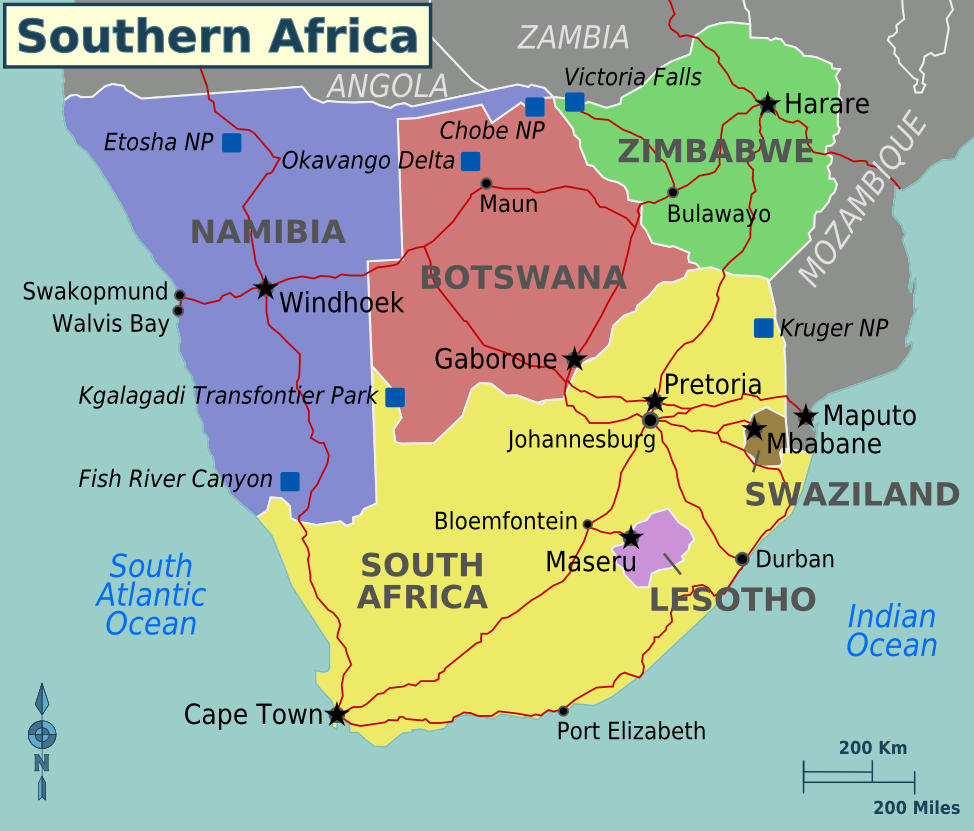
Something close to panic has gripped Swaziland / Eswatini as the fear that children will be kidnapped and ritually murdered has taken hold.

The Swazi Observer reported on Thursday (14 June 2018) that 258 children absconded from school at Mafutseni Children’s Cup Care Point in fear of being kidnapped and killed.

It reported one of the teachers Zine Mkhwanazi told a meeting of parents children were afraid to go to the school because of an incident in May where a 16-year-old boy escaped from three knife-wielding men who had cornered him in a forest and tried to slice his throat in what was believed to be a ritual murder attempt. The boy escaped and was admitted to hospital.

The newspaper reported Mkhwanazi said what happened scared everyone, more so, because the attempt on the boy was made at a spot children pass on their way to school.

The Swazi Observer reported on Tuesday (12 June 2018) that parents were now trailing their children wherever they go. ‘It is said some of the parents even accompany their children to Sunday school, just to make sure prowling killers do not go near them,’ it reported. Parents also go with their children to school.

This has happened after reports, many unconfirmed, that children across Swaziland are being abducted and ritually murdered. Body parts are then said to be used in muti to create spells to bring good luck. There is a belief that some people are doing this to help them win seats in the forthcoming National Assembly election.

The Observer quoted one concerned parent saying, ‘Elections are a curse to some of us as that’s the period where children go missing. It’s bad that such incidents are now associated with the elections and it paints a bad picture of the country because in the eyes of the world we are known as a nation where ritual murders are rife during elections.’

Another parent said, ‘There is fear that when we let our children leave school on their own, that places them in danger.’

The Times of Swaziland reported on Thursday (14 June 2018) an alleged ritual killer was assaulted by a mob and set on fire at Mafutseni. It happened after a man made a joke that his own blood was not fit to be used as muti. A mob singled him out as a ritual killer because he appeared to have knowledge about how blood was used to make spells. It added the incident happened about a month after one of the man’s relative went missing.

Source: Fear of Ritual Killings Grows, June 14, 2018

Why ritualistic killings are on the increase in Nigeria

Ritualistic killings in Nigeria are rampant. Nigerians call these appalling crimes ‘money rituals’. I have been studying ritualistic killings in Africa since the mid-1970s and have come to the conclusion that Nigeria ranks among the Top-Five of African countries where ritual killings are most widespread. Even if we take into account that Nigeria is Africa’s most populated country, with close to 200 million people in 2017. The following article illustrates this conclusion. (webmaster FVDK)

Why killings for rituals are on the increase in Nigeria

By Evelyn Usman
Vanguard Nigeria
Date published: September 2, 2017, 8:27 AM

The spate of killings for ritual purposes is gradually assuming an alarming rate in Nigeria with little or no effort by concerned government agencies to checkmate the trend. One would have expected such pseudoscience acts to be a thing of the past going by increase in religious activities and in civilization. But murdering people to appease the deities appears to be on the increase.
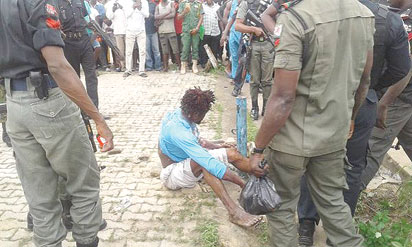
Suspected ritualist arrested – Nigeria

These dastardly acts are carried out in a 21 st century, when other countries of the world are experimenting and advancing in technology. It is also shocking to know that some acclaimed high and mighty indulge in ritual killings. For instance, some politicians and government officials have been accused by arrested suspects and herbalists who allege that they use human beings for rituals in order to sustain their affluence as well as remain in positions of power.

Investigations revealed that cases of ritual killings and disappearance of persons are usually high whenever elections are around the corner. Just last week, this barbaric act assumed a cannibalistic dimension following the arrest of a suspected kidnapper alleged to have killed one of his victims and used his intestines to prepare pepper soup. The suspect, Roland Peter,  according to the Rivers State Commissioner of Police, Zaki Ahmed, abducted his victim  from his house on August 2017, adding that the suspect was at the verge of eating pepper soup and yam porridge when the police swooped on him and some accomplices.

These vampires hide under different covers to get their victims. For some, they kidnap their victims from various points, while others who pretend to be commercial bus drivers, pick unsuspecting commuters at bus-stop only to take them to their slaughter slabs to carry out what they know how to do best.

Killings for money rituals

On August 17, 2017, the lifeless body of the four-year-old girl was found  close to a shrine at 28 Ogbe Close in Iwaya area of Lagos, with her throat slit. In her case, the toddler who strayed from her siblings’ watch, on their way from the mosque, was suspected to have been used for sacrifice on the Ogun shrine which ironically is built in the same compound with her parents. Till date perpetrators of the dastardly act are yet to be fished out.

A week earlier, precisely August 20, another lifeless body of an eight-year-old girl, Chikamso Victory, was found in the apartment of one Ifeanyi Chukwu Dike (23) at Messiah street, Eliozu area of Port Harcourt. Helpless and defenseless Victory was not only abducted by Dike, she was raped before she was killed. As at the time her body was recovered, some parts had been removed. They included her vagina, eyes, tongue and breasts which the suspect kept in a polythene bag awaiting the appropriate time to take them to his contacts. He was however, arrested by members of a local vigilante group while going to dispose of the body. But the incident assumed a laughable dimension following report by the Police that the suspect had disappeared from custody.

Elsewhere in Oyo state, on March 30, 2017, a suspected ritualist,  Tunde Jimoh, who was arrested by the Police, gave a chilling description of how he and other members of his gang abducted their victim, Akintoye Oyeyemi, took him into a deep forest and murdered him in cold blood. Thereafter, they took the body to a Muslim cleric to prepare concoction for money rituals for him. At the end of the day, the wrists, heart and legs were cut off. Luck ran out on the suspect while on his way to dump the body in the bush.

Not too long ago, reports had it that an evil forest used as ritualists’ den was uncovered in Enugu state with the recovery of fresh and decomposing human parts .

The nation’s Federal Capital Territory is not speared from the rising trend of killing for rituals. Late last year, a dismembered body of an unidentified lady was recovered at the  Lower Usuma Dam junction, along Dutse-Bwari Road. One of her breasts was cut off, while the rest of the body was cut into two from the abdomen, an indication that the killing was for ritual.

Badoo ritual killing

In Lagos state, the commercial hub of the country, different methods are devised by ritualists. One of such was the surge in the killing of residents by members of a dreaded cult group identified as Badoo Boys in Ikorodu area of Lagos. So far, over 50 persons have had their lives snuffed out of them by the perpetrators who were initially thought to be invisible, until they were decimated by the Police, under the watch of the new Commissioner of Police, Lagos State Command, Mr Edgar Imohimi, while he was the Deputy Commissioner of Police in charge of operations.

Before the raid and subsequent arrest of over 200 suspected members of the cult group by the Police with the support of the Oodua Peoples Congress, OPC local vigilante and the Neighborhood Watch Corps, Badoo Boys had been  unleashing an orgy of killings, during which they used heavy stones to crush the skulls of their victims. Their modus operandi included storming victims’ residences while they are asleep. It is suspected that they usually hypnotize their victims, as none of them had ever been conscious of their presence. They would, thereafter, smash heads of their victims with a grinding stone and after which they use a handkerchief to clean the blood and brain before leaving the scene.

During interrogation, one of the suspects confirmed that each handkerchief stained with blood was sold for N500,000 . He further revealed that they were mere errand boys for rich politicians within and outside Lagos state. But in their case , the blood and semen stained handkerchief were used to prepare spiritual defence for well to do Nigerians.

Mad people in disguise

The latest method devised is the feigning of madness by these criminal elements. Recently in Lagos, some persons who disguised as lunatics were discovered to be using tunnels as dens for their activities.
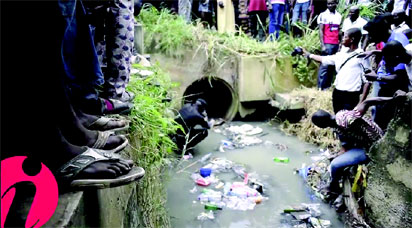
Ritual den – Nigeria

Two instances of note were along Lagos-Abeokuta road and Ile Zik, along Agege Motor road. The latest was an uncovered ritualits’ den Wednesday , at Challege bus-stop, Mushin, where some suspected members who posed as lunatics were found with sophisticated phones, four ATM cards and over 100 syringes with blood stains. One of the suspects was lynched by a mob while two others were rescued by policemen from Area ‘D’ command, Mushin.

Not too long  Nigerians received with shock, news of a den in Soka village, Oluyole Local Government area of Oyo state, where about 20 corpses, majority of which were earlier declared missing by their relatives, were found while 18 victims were rescued. From all indications, it was obvious that the den had been existing for long before it was uncovered, following a heap of victims’ clothes. One of the rescued victims was reported to have said he was kidnapped in Ogun while attending an interview.

The most celebrated ritual killing appeared to be the notorious Otokoto saga in Owerri, Imo State where a businessman belonging to a cult was alleged to have used his apprentice for ritual. The boy’s corpse was later exhumed at the premises of Otokoto Hotel. It exposed many other bizarre acts in hotels.

Religious leaders also involved

One would have expected such primitive acts to be going down, going by the increasing religious groups in the country. Regrettably,  some leaders of religious have been caught in the act. But investigations have shown that many evil men only use religion as a cover up. They are never true religious leaders.

One of the ready cases that comes to mind was that of the arrest of a Pastor who allegedly killed a seven-year-old boy and buried his head where the church’s alter was mounted. This action was to ensure the influx of members into the church located at  Odokekere/ Odogunyan in Ikorodu area of Lagos state.

Elsewhere in Edo state and Ogun states, some pastors were also arrested over similar acts. Few months ago, an unidentified woman who left her abode in Sango Otta area of Ogun in search of spiritual cleansing at the place of a Muslim cleric popularly called Alfa, in Badagry area of Lagos, ended up being victim of ritual killing. A 61-year-old landlord, Toafeek Hassan, who confessed to have slaughtered the woman, was found with her fresh human head and other body parts which were to be used to prepare concoction by the  alfa.

Investigation shows that female parts are more in demand than their male counterparts.  This is because of  what was described as the potency of some parts like the breasts and lower private parts in money rituals and other purposes by herbalists and occult groups.

Ritual used to elongate life 

One of the herbalists who spoke with Vanguard at the State Criminal Investigation and Intelligence Department, SCIID, Oseni Bello, admitted to be preparing concoction with human body parts but said he was not involved in the killings. Oseni disclosed that some of the rituals were done to elongate lives. He added that the heart was used to prepare concoction for boldness and fear. He stated further that virgins and babies on the other hand, were used by some politicians and government officials for ritual purposes as their blood is said to be used to elongate the user’s life span as well as fortify them against spiritual attacks. These are some of the reasons, he said, killings for rituals are on the increase.

A particular case in mind was that of a South-West politician alleged to have been caught by his driver with a dissected day-old baby whose blood he was drinking. The incident as reported two years ago, occurred inside a bush, while the driver was taking his boss (names withheld) to a function. Half way into the journey, the politician was said to have ordered his driver to pull over. He thereafter, alighted and headed for a bush with a promise to be back. Having waited without any sight of his boss, the ignorant and curious driver reportedly went in search for him, only to meet him stark naked and pouring the blood of a dissected baby into his mouth. Barely two weeks later, the driver reportedly   died under mysterious circumstance.

The event that occurred before his death was related by a Pastor friend whom the deceased   confided in before his demise. The lust for money and power drives these people into ritual killings.

While some kill to achieve this unfathomable dream, others resort to digging graves and removing needed human parts for ritual purpose. Saturday Vanguard scooped that most guards at cemeteries connive with agents to sell human parts. It was learnt that  if a fresh human head is needed, an agent will contact some cemetery workers ahead. In this case, the cemetery official will be on the look out for fresh dead bodies, preferably those of Muslims who are usually buried within 24 hours after death. Immediately the body is interred, they exhume the body at night, cut off the needed parts and place the body back in the grave.

Human parts for sale

Those who patronize cemetery officials are usually herbalists, herbal traders and even prominent Nigerians who usually use middle men. Surprisingly, human parts are sold in some markets in Nigeria. We gathered that a fresh human head could go for N60,000 and above, while a skull is sold for N20,000. Fresh legs are sold for N30,000 each while a decomposed leg is sold for N20,000. A fresh finger is sold for N5,000 each while the decomposed is sold for 3,000. Fresh intestines are sold for N20,000 while dry ones are sold for N5000. Pieces of fresh bones are sold for N2,000 and above.

Public react

Reacting to the upsurge, the president, Association of Industrial Security and Safety Operators of Nigeria, AISSON Dr. Ona. Ekhomu called on the Nigeria Police to set up Special Ritual Murder Squads in various State Commands to focus on the investigation, detection, arrest and prosecution of ritual killers.

He said that the high incidence of serial ritual killings demands an urgent action at the level of the police high command.

According to the first chartered security professional in West Africa, citizens were rapidly losing faith in the ability of the police agency to detect and punish ritual killers. This, he said was responsible for the increase in lynching of suspects as members of the public resort to jungle justice to get redress for the heinous murders.

Said he: “The conscience of Nigerians should be troubled by reports of recent ritual murders including that of one-year-old Success lme in Calabar whose heart was ripped out from her small body for ritual purposes and was discovered in a Church along with other items for occult rituals.
There is also the case of Pastor Samuel Okpara in Ahoada East LGA of Imo State who was kidnapped, killed and cannibalized by ritualists. The pastor was reportedly beheaded and his liver and intestines used for pepper soup and plantain porridge. What a horrific occurrence?”

He also decried the excesses of the Baddoo murder cult in Ikorodu Lagos State, saying it was a direct challenge to the Police.

Economic recession in the land is not a license to commit ritual murder.   Impunity encourages ritualists to commit murders because they believe they will not be apprehended or punished.

I advise Nigerians against late night outings because if a vehicular breaks down one could fall victim of kidnap by ritualists. Commuters should always write down the identification markings of public conveyance vehicles which they enter and make phone calls to loved ones to pass on the information. Because ritual murderers always wish to be unidentified. They want to kill people, but don’t wish to be apprehended. Once information about them has been passed on to someone else, it becomes difficult for them to do evil”.

Nigerians should also assess public transport vehicles before boarding in order not to board the “wrong bus. Likewise, women are advised to carry whistles on them in order to raise an alarm if there is an attempt to abduct them”.

On his part, the national Coordinator,  Network on Police Reform in Nigeria , NOPRIN  Mr Okechukwu Nwanguma, attributted the rise in  cases of killing for ritual   to collapse in moral values “

It is also caused by ignorance and superstition, the inordinate quest and pursuit of quick wealth and lack of effective punishment system. In a way, poverty and unemployment may also be a risk factor. If Nigerians have equal opportunities to earn income in legitimate ways, there will definitely be reduction in such abominable crimes like humans killing fellow humans for ritual.”

Also baring his opinion on the matter, Treasurer of the Action Democratic Party, Cross River State Chapter, Offiong Okon, in a recent interview, advised that:  “Before a church is established, government should carry out investigation before license is granted because many of the church leaders and founders are ritualists, acting in the capacity of being Pastors.”

“Government should investigate the Pastors and checkmate their activities because what they do under the cover of being a religious leader.”

Source: The Vanguard Nigeria, dated September 2, 2017

Related articles:

How “Badoo killings” sent shock waves across Lagos State in 2017
Vanguard Nigeria, dated January 2, 2017

Assembly to legislate against ritual killings in Kwara
Vanguard Nigeria, dated December 6, 2017
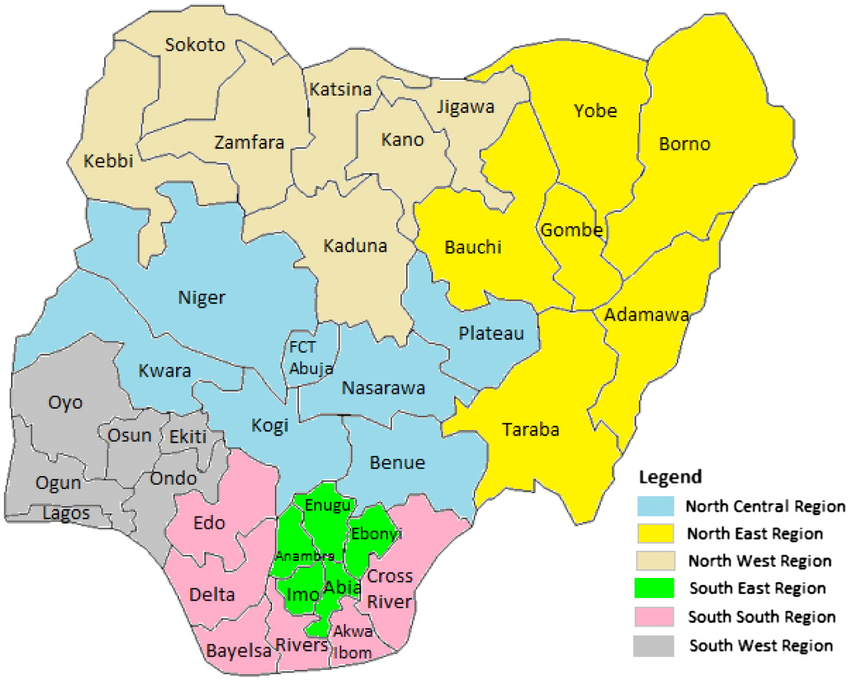
Map of Nigeria showing the 36 states

Albino girl abducted and killed in Mali

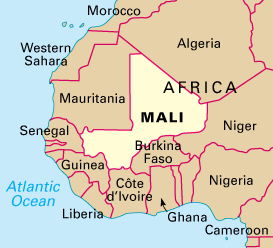
Reports on murdered albinos and ritual killings in Mali are rare. When living in Mali in the 1980s I was told by Malians about rumors related to disappeared albinos during the presidency of Modibo Keita (1960 – 1968). True or not true? We may never know. However, the BBC report based on an article of Malian Studio Tamani reproduced below shows that still in 2018 albinos do not live without fear in Mali, notably when elections are near. (webmaster FVDK)

Published: May 15, 2018
BBC News, Africa

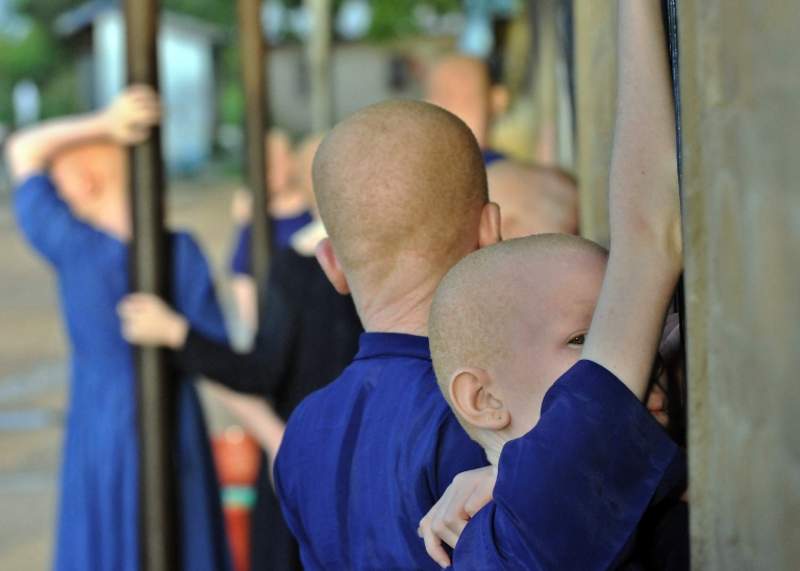
Albino children in parts of Africa are targeted by groups who believe their body parts bring luck (stock image)

Angry villagers have set fire to police headquarters after a five-year-old girl with albinism was abducted and killed by armed men in Mali.

Djeneba Diarra, who lived in a village in Fana, 125km (78 miles) north of the capital Bamako, was taken from the courtyard where she was sleeping with her mother and sister in the early hours of Sunday morning.

The little girl’s headless body was later found beside the mosque.

“We demand justice. Her head was taken. This is a ritual crime,” activist Mamadou Sissoko told news agency AFP after going to the scene.

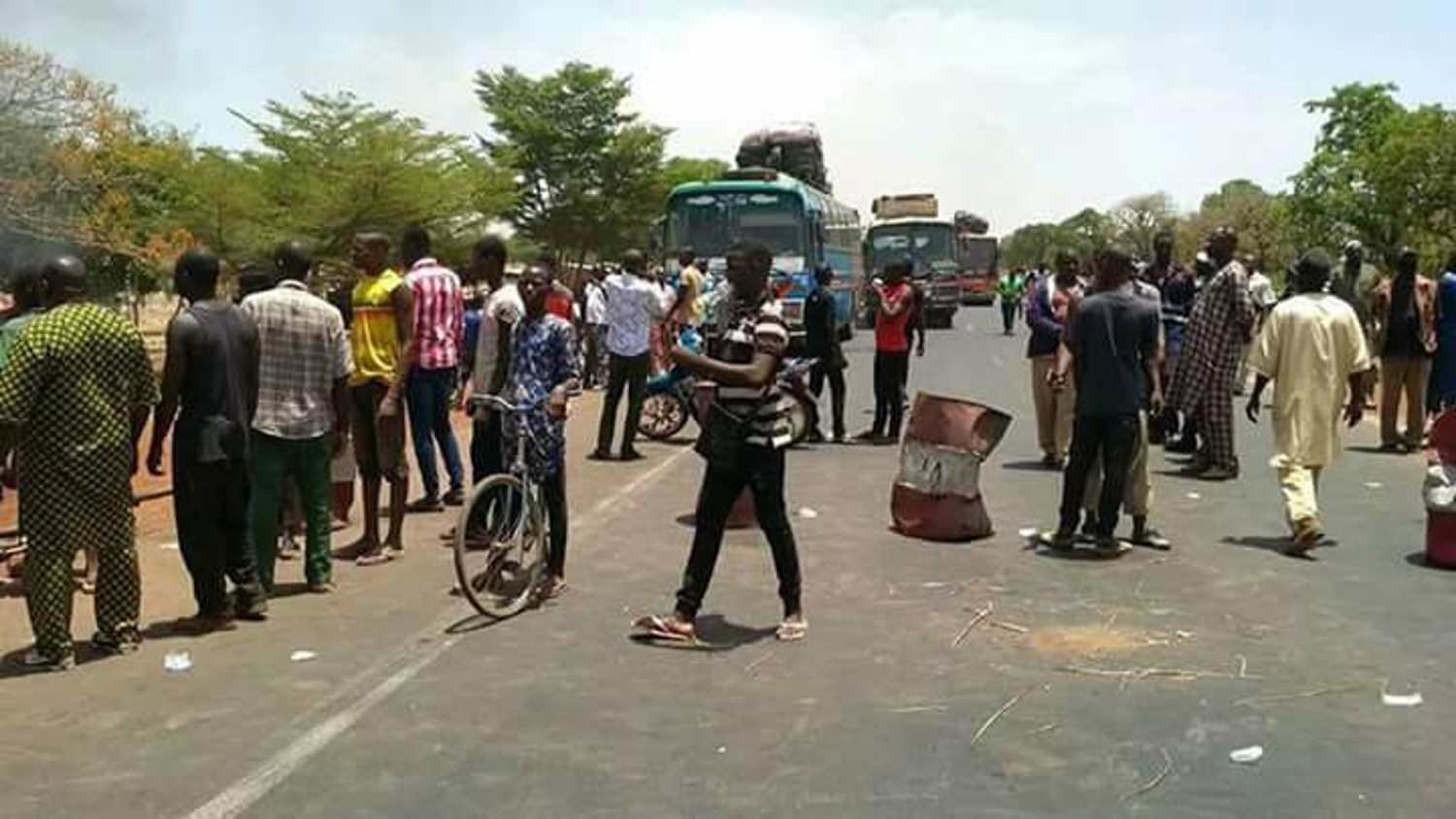
Witnesses said angry villagers then partially burned down the paramilitary police headquarters. Shops remained closed for most of Monday as protests continued, according to Studio Tamani [in French]. See below (article in French included).

There are concerns the killing may be linked to Mali’s presidential election, which is taking place at the end of July.

There is a belief among some groups in parts of Africa that potions made from the body parts of people with albinism can bring good luck and wealth.

Mr Sissoko said: “Every time there are elections, we become prey for people who want to make ritual sacrifices. This is not the first time this has happened in Fana.

“The state needs to take up its responsibilities.”

Source:  BBC News Africa, May 15, 2018 (16:04)
Albino girl, five, abducted and killed in Mali

Related article: Protest in Fana: Calm after “the storm”
Manifestations à Fana : le calme après “la tempête”

lundi 14 mai 2018 16:24

Manifestations à Fana (Mali) : le calme après “la tempête” – Image d’illustration

Le calme est revenu à Fana, localité située une centaine de kilomètres de Bamako après la violente manifestation de ce dimanche 13 mai. Le mouvement de colère faisait suite à l’assassinat, la veille, d’une fille atteinte d’albinisme. Elle a été retrouvée égorgée. Les manifestants ont incendié la brigade de gendarmerie et plusieurs bars, avant de poser des barricades sur les principales voies de la ville.

Un important dispositif de sécurité était visible ce lundi 14 mai matin à Fana. Les magasins sont restés fermés pour la plupart, malgré le calme précaire qui règne dans la ville. Tout a commencé samedi 12 mai dernier lorsqu’un homme s’est introduit nuitamment dans la famille de la petite Ramata Diarra pour l’enlever avant de disparaître dans la nature. Quelques heures plus tard, le corps de la fillette décapitée a été retrouvé.

L’acte a provoqué la colère des habitants de Fana. Des dizaines de femmes et des jeunes sont sortis pour manifester, mettant à sac la gendarmerie et d’autres bâtiments administratifs. Les manifestants ont également bloqué toutes les voies principales dans la ville. Cet assassinat est le deuxième en moins d’un mois à Fana. Une femme et son enfant ont été également assassinés il y a quelques semaines dans cette même localité. L’Association pour la promotion et l’insertion sociale de l’enfant atteint d’albinisme « SOS ALBINOS » a condamné l’acte et décide de porter plainte contre X auprès du Procureur de Koulikoro. L’association appelle les autorités à retrouver les auteurs de ce crime et les traduire devant les tribunaux.

Des enquêtes ont été ouvertes pour retrouver les auteurs de ce crime. Selon le maire de la localité, des suspects ont été identifiés et les investigations sont en cours. Toutefois la famille de la victime appelle les autorités régionales à plus de protection et réclame que justice soit faite.

Oumar Sidi Coulibaly proche de la victime :
(lien ne marche pas, cliquez sur l’original ‘Source’ s.v.p.)

L’association malienne pour la protection des albinos décide de porter plainte contre les auteurs avec l’accord de la famille de la victime. Selon elle, à l’approche des élections, “les albinos sont ciblés pour des sacrifices”. Les responsables de l’association exigent que les enquêtes soient accélérées afin de punir les coupables.

Mahine Koita dit Albihi Secrétaire général de l’Association pour la protection des albinos :
(lien ne marche pas, cliquez sur l’original ‘Source’ s.v.p.)

Source : Studio Tamani : Manifestations à Fana : le calme après “la tempête” (publié le 14 mai 2018)

Swaziland: Campaign to educate on albinism

There are also positive and encouraging newspaper reports and blogs, like e.g. Richard Rooney’s post on Swazi Media Commentary, Information and commentary in support of human rights in Swaziland. On March 30, 2018 Richard Rooney published the following report on ‘A campaign to educate on albinism in Swaziland’. Also in other African countries, people rise up against ritualistic killings and related human rights violations, e.g. in Gabon.

‘Freedom of fear is a human right;  rule of law an obligation of the state’. The answer to ritualistic killings in the short term is the rule of law – but the only real answer to these heinous crimes is EDUCATION.
(webmaster FVDK)

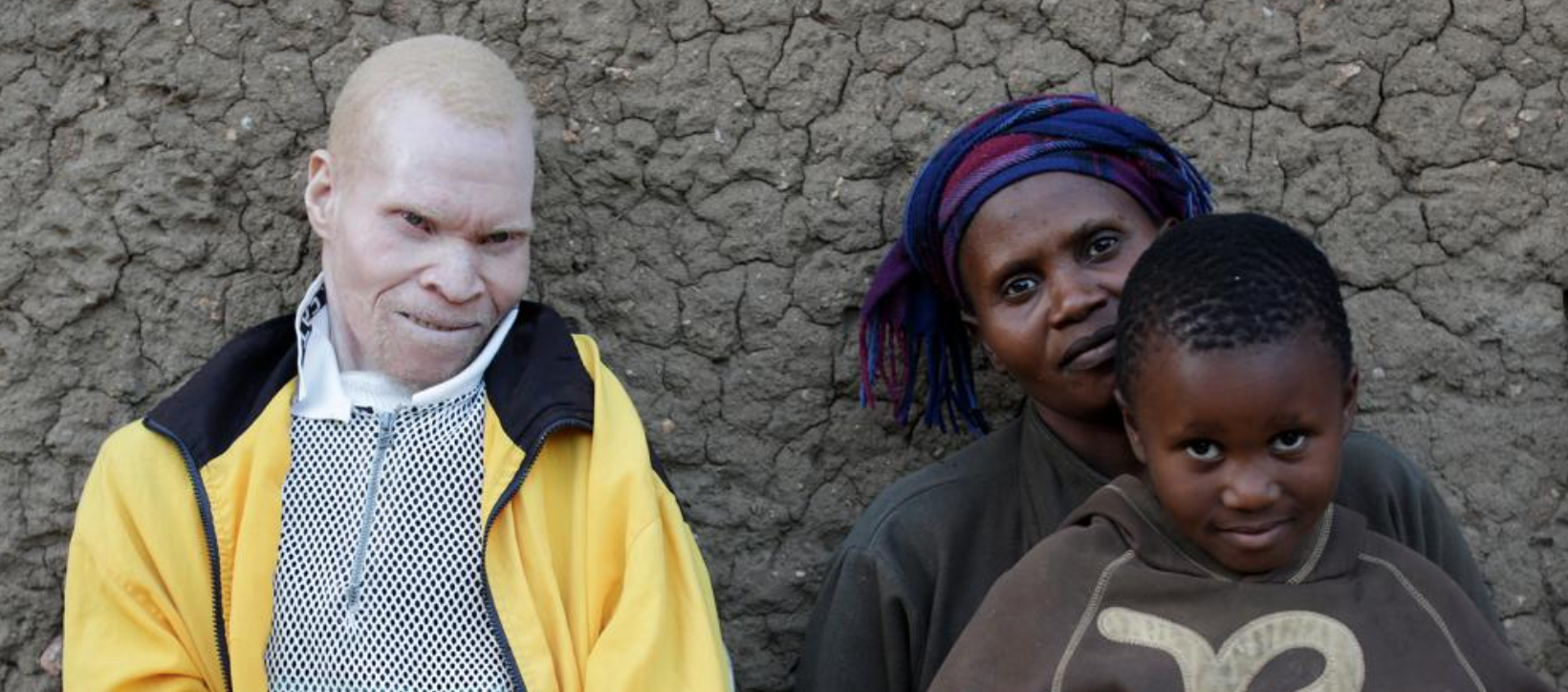
Like many people living with albinism in Swaziland, Albert fears for his life.

CAMPAIGN TO EDUCATE ON ALBINISM

BY RICHARD ROONEY
SWAZI MEDIA COMMENTARY – INFORMATION AND COMMENTARY ON HUMAN RIGHTS IN SWAZILAND
Published: March 30, 2018

A campaign has started in Swaziland called ‘Don’t kill us, we are human beings too’ to raise awareness about people with albinism.

People in Swaziland with the skin condition live in fear of their lives as some traditional healers, witchdoctors and others use their body parts in spells to bring good luck.

The Stukie Motsa Foundation is now using social media to dispel the false belief that people with albinism cleanse back luck and bring fortune to people.

There have been concerns in Swaziland for years that people with albinism have been targeted and murdered. Witchdoctors use the body parts to make spells that they claim bring people good luck.  Sport teams have also been known to use spells to bring them good fortune during matches. Witchdoctors’ services are especially sought after by candidates contesting parliamentary and local elections. An election is due in Swaziland later in 2018.

In January 2017, the Director of Public Prosecution’s office in Swaziland told witchdoctors in the kingdom to stop murdering people for body parts. The witchdoctors, also known as tinyanga, were advised to go to the Ministry of Health for body parts, such as bones.

During the national elections in Swaziland in 2013, people with albinism lived in fear that their body parts would be harvested by candidates seeking good luck.

Independent Newspapers in South Africa reported at the time, ‘In the past [people with albinism], who lack the skin pigment melanin, as well as epileptics have been specifically targeted, prompting the police to set up registries.

‘In 2010, the killing and mutilation of [people with albinism], including in one instance the decapitation of two children in Nhlangano, prompted panic.’

In August 2013, Independent Newspapers quoted an academic at the University of Swaziland, who did not want to be named, saying, ‘Ritual killings to achieve elected office are a natural outgrowth of a government based not on rationality or democratic principles but on superstitious beliefs.

‘The Swazi king claims power through an annual Incwala festival where a bull is brutally sacrificed and mysterious rituals occur, and this sets the tone. No one knows how office-holders are appointed in Swaziland. It’s all done in secret, without recourse to merit or any rhyme or reason, so this fuels irrational beliefs.

‘Ritual murder has long been part of Swazi life.’

At present, a Swazi traditional healer is in police custody in South Africa for allegedly killing two children from Vosman near Witbank, one of them living with albinism. The South African Deputy Minister for Social Development, Hendrietta Bogopane-Zulu said the killing of people living with albinism by people believed to be Swazis has become a national crisis in her home country.

The Swazi Observer reported on Tuesday (27 March 2018), ‘The deputy minister said she wanted to know what Swaziland was doing to stop the killing of people living with albinism. She also stated that some of these people were quitting their jobs and schools in fear of being kidnapped.’

Albinism affects the production of melanin, the pigment that colours skin, hair and eyes. It’s a lifelong condition, but it doesn’t get worse over time. People with albinism have a reduced amount of melanin, or no melanin at all. This can affect their colouring and their eyesight. Albinism is caused by faulty genes that a child inherits from their parents.

See also :
PEOPLE WITH ALBINISM WANT PROTECTION

Source: A campaign to educate on albinism, March 30, 2018

More on Swazi Media Commentary (source: Pambazuka News):
Swazi Media Commentary: Telling the truth about Swaziland
by Peter Kenworthy | February 2, 2011

Related article on albinism in Swaziland: Why Albert is living in fear

Sierra Leone: The country where children fear election time

WARNING: Readers may find this story disturbing

Mabinty Kamara – she was found murdered with several parts missing

Published: March 31, 2018
By: BBC

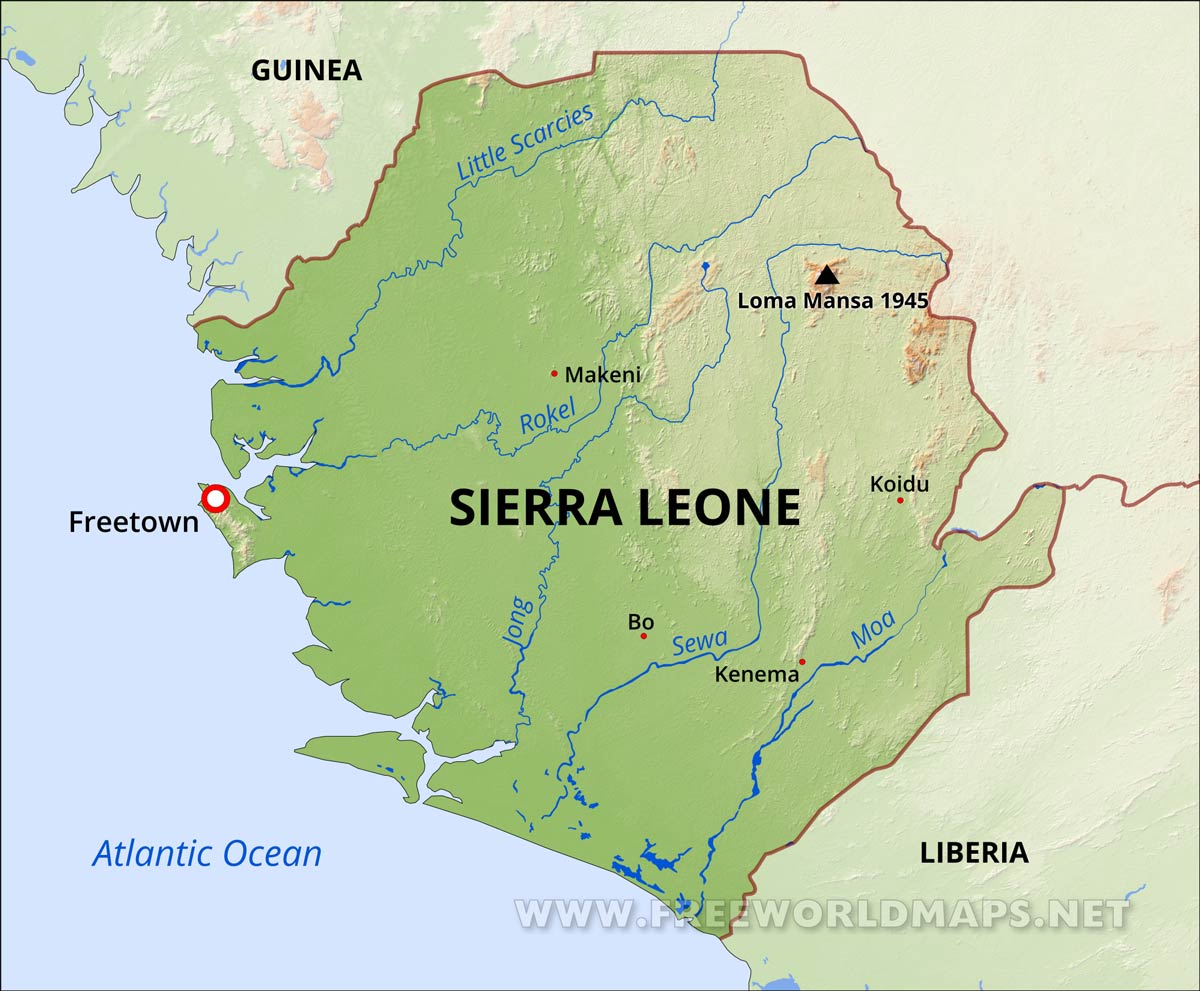
When elections come round in Sierra Leone parents are warned to take extra care of their children, as it’s feared that candidates or their supporters may abduct them and use their organs in black magic rituals. Olivia Acland reports on troubling signs that the rumours may be true.

At 10:00 on Friday 16 February, less than a month before Sierra Leone’s presidential, parliamentary and local elections, 14-year-old Mabinty Kamara clambered down the rocky path outside her house in Freetown. She was wearing a knee-length black skirt and grey polo shirt, and was swinging two plastic jerry cans.

The water pump was about 800m away – just a few minutes’ scramble down and up the stony mud lane carved into the hillside. With her mother away visiting relatives, Mabinty had been told to fetch water by her 25-year-old sister, Alimatu, who was at home finishing up the other morning chores. As Muslims, this was the first day of their weekend.

Alimatu swept the floor of their scruffy, tin-roofed house and shook out the bed sheets. She cooked some rice for her younger brother, sister, and cousin, and washed up the pans. After a couple of hours, though, she started to wonder why Mabinty had not returned. She scrambled down the path, shouting her sister’s name, expecting to find her sitting with friends and gossiping.

At the water pump a gaggle of women said that they hadn’t seen Mabinty, so she started knocking on neighbours’ doors and questioning people on the streets. After hours of fruitless searching she went home and waited, thinking that perhaps her sister had returned to the house when she was out, and since left again. Anxious hours passed and finally at 18:30 Alimatu went to the police station to report her sister missing.

“A policeman told me to go home and that he’d call me if they found her,” she says, twisting one of her short dreadlocks. “I couldn’t sleep at all that night, it’s not like her to stay out. I was very worried.”

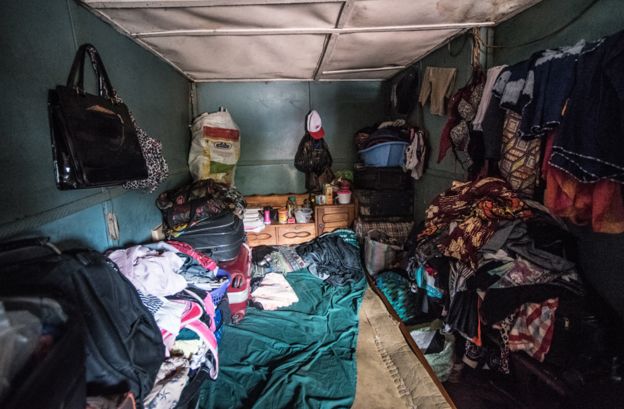
The room where Mabinty lived with Alimatu, another sister and a younger brother

Alimatu spent the next four days wandering all over Freetown, checking areas where runaway children are known to sleep rough. She showed a zoomed-in picture of Mabinty, which she had downloaded to her phone from Facebook, to more than 100 strangers.

Five days later she had reached Waterloo, a traffic-clogged industrial suburb an hour’s drive from her house, when she received a call from one of her neighbours. He shouted down the phone that Mabinty had been found: her dead body was wedged between some buildings at the back of the Ministry of Education. She was identifiable by her black skirt, grey top, and the two empty jerry cans lying beside her. Her right leg had been cut off at the knee.

But she was missing more than just a leg, says Dr Owiss Koroma, Sierra Leone’s only pathologist. On examining her body he found that her tongue, ovaries, intestines, womb, fallopian tube and vagina had also been taken. Someone had removed them with surgical precision. The case, says Koroma, has all the hallmarks of a ritual killing.

These murders, carried out so that body parts can be used in black magic rituals, usually involve child victims, whose younger and healthier organs are thought to be more powerful than those of an adult.

“People use body parts for fame, wealth, or to gain power,” says Ibrahim Samura, head of media for Sierra Leone’s police force. The parts can be used in different ways, depending on the purpose. Tongues are thought to empower a person to speak well, for example. A juju man will say, “I need a female breast,” Samura says. “It will be used as a charm or a sacrifice.”

Ibrahim Samura: Parents should not allow unaccompanied children to the beach or to parties

It’s thought that the juju man’s clients could be local or national politicians, or anyone with a strong interest in the outcome of the vote – and that the body parts may sometimes be eaten.

Koroma says cases of ritual killing occur in Sierra Leone every so often, even when elections are not approaching, but he is aware of three cases in the last six months – significantly more than usual.

The first of the victims was a 10-year-old girl in Western Freetown, whose remains were found in a large, checked bag made from thick plastic. She was missing her left ear, left leg, left arm and part of her vagina. After this case, he examined Mabinty Kamara’s mutilated body, and most recently – on 15 March, after the first day of voting but before this weekend’s elections – the dismembered body of a four-year-old, found in a forest in Port Loko, in the north-west of the country. The child had been decapitated, and every organ had been removed, except for the liver. There were two holes in the back of the cranium. Koroma says he is alarmed by the precision of the surgery, as it suggests that someone with significant medical experience was involved.

Police also say there has been a spike in reports of missing children – though they are unable to provide statistics – and have responded with a nationwide publicity campaign.

“We use community radio stations right across the country to alert parents and community leaders about the trend of crime relating to missing children,” says Ibrahim Samura. We tell them that they shouldn’t allow their children under 18 to go to the beach or to parties unaccompanied.”

The message seems to have got through.

A shy schoolgirl told me last week that she is now scared to walk the 4km from school to her house in the village. Anxious parents have said that they are warning their offspring to be particularly cautious – not to accept sweets or lifts from friendly-looking strangers.

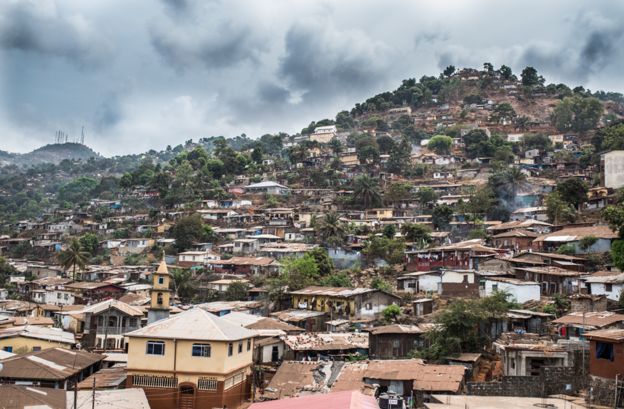
Outskirts of Freetown – Sierra Leone

But rumours can swirl out of control. When two children were found dead in the back of a car in January, an online newspaper reported that “cannibalistic rituals, by “devilish politicians” had long been a problem at election times. Pathologist Owiss Koroma examined the bodies, though, and says the children died from carbon monoxide poisoning; there was no evidence of ritual killing.

Those most at risk of abduction are children sleeping out on the streets. Jorge Crisfulli, country director for the Don Bosco Fambul child-welfare organisation, says that between 20 and 25 children have approached his staff seeking shelter in Freetown in recent weeks and that others have returned to their villages.

Twelve-year-old Abdul says he narrowly escaped a ritual killing after climbing on to a neighbour’s roof to retrieve a lost football. The occupants of the house seized him and started beating his head against a step, accusing him of trying to steal from them. He was then held for days in a room, where he was tortured and drugged, he says, until he overheard a chilling conversation between two of the men.

“One of the brothers said let him kill me, cut the parts that you want, and put the rest into black plastic bags to throw in the gutter,” Abdul says.

That evening he escaped and went to the police, who called Don Bosco asking them to take him into their care.

Adia Benton, a cultural anthropologist at Northwestern University in Chicago who has studied Sierra Leone for years, says ritual killing, or at least rumours of ritual killing, “escalate around elections, or times of power struggle”. She remembers hearing similar stories during elections in the country in 2007. The alleged victims were always children.

The country’s most notorious court case, however, involved an adult and was not election-related.

In 2015 a DJ, known as DJ Clef, was invited to play a set at a party in the house of famous herbalist Baimba Moy Foray. Clef, whose real name is Sydney Buckle, was later found dead, missing his genitals, toes, fingers and nose. It’s rare for anyone to be arrested and prosecuted in ritual killing cases, but Baimba Moy Foray and an accomplice were convicted and sentenced to death by hanging – though this was later changed to life imprisonment.

Nobody has yet been prosecuted in connection to Mabinty’s case. Thirteen suspects were rounded up and then released on bail. Alimatu is one of them.

“Every day I must report to the police station to sign in,” she says.

She would normally spend her days selling oil and rice to make money to support her younger siblings, but lately she’s just been sitting listlessly on the steps of her house.

“I don’t feel like selling now, I don’t feel good,” she says.

“It makes me so sad. Only God knows what happened to my sister.”

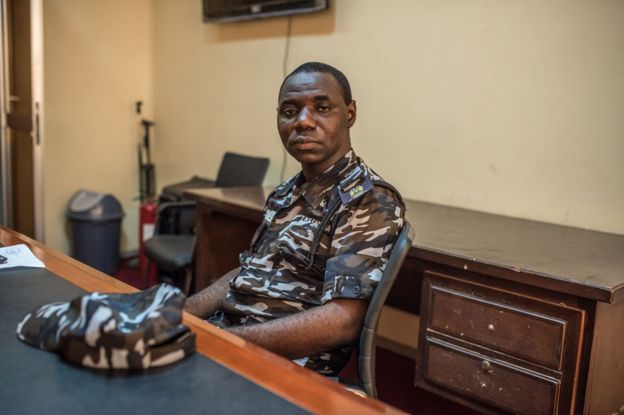
The police officer who was initially in charge of the case, A S P Mansaray, says three of the suspects were guards from the Ministry of Education and another nine were a random selection of Mabinty’s neighbours who were around at the time of the crime.

He hoped that even if they were not the killers they might be able to provide useful information. However, so far no leads or evidence have emerged. It looks set to be another unsolved crime.

Photographs by Olivia Acland

Source: BBC, 31 March 2018

Archbishop condemns ritual killing of children in Senegal

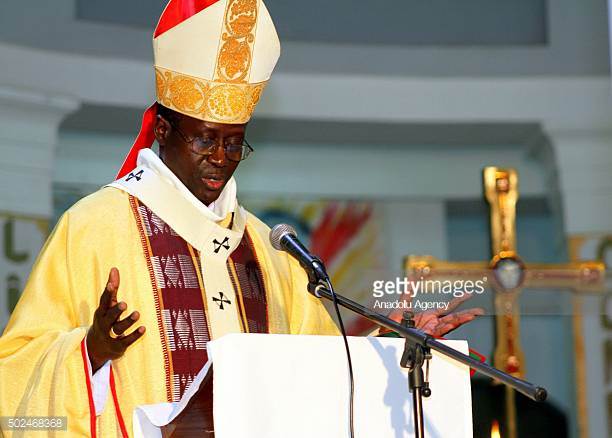
Dakar Archbishop Benjamin Ndiaye

YAOUNDÉ, Cameroon – Senegal’s top Catholic cleric has condemned a series of ritualistic killings in the West African country.

This year has seen a sharp rise in child killings in Senegal – a phenomenon blamed on politicians looking for wealth and power approaching witchdoctors to perform black magic rituals.

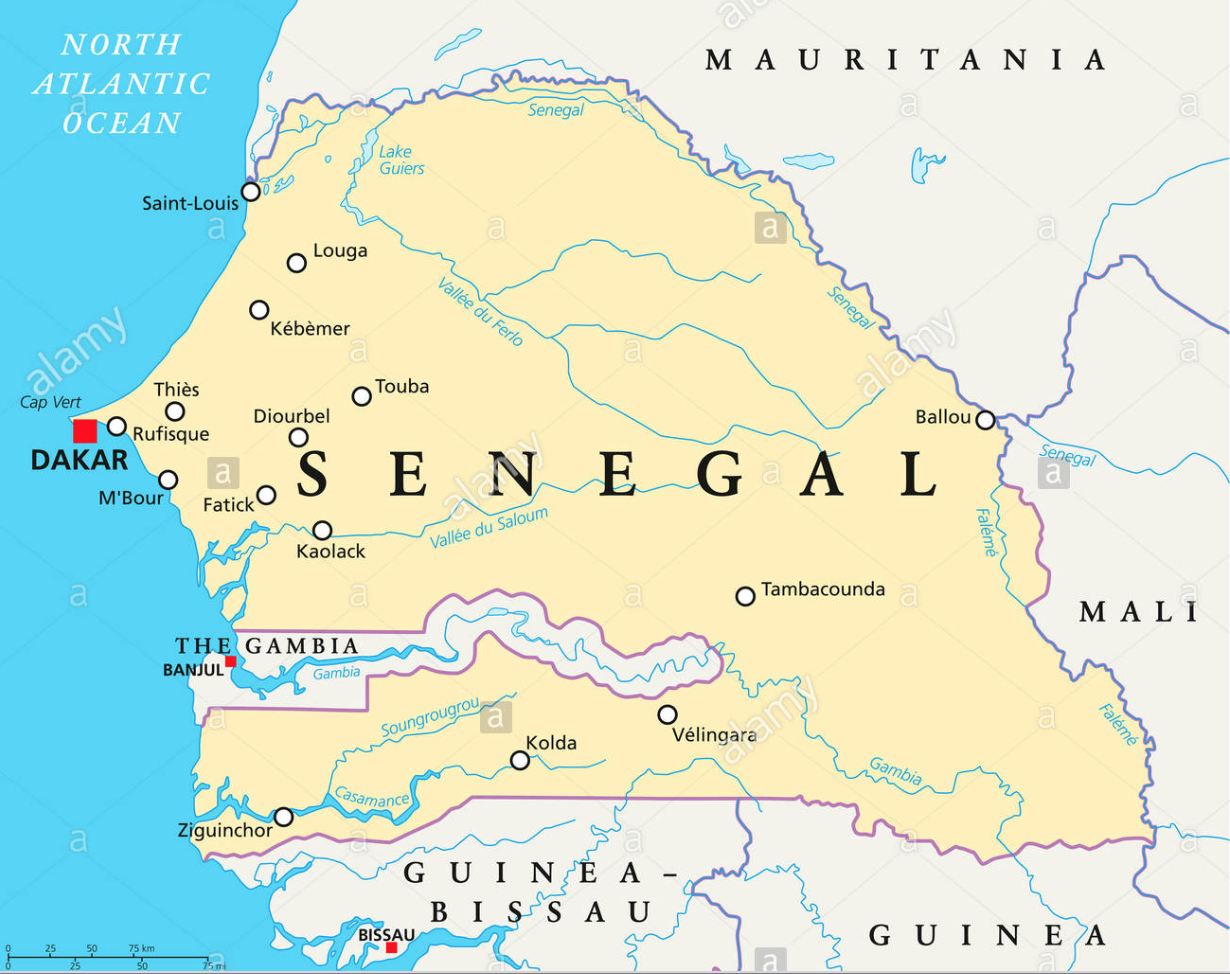
Local media have counted at least six cases in Dakar, the capital, this year. The corpses of the victims are usually found days after they disappear-mutilated, certain parts like the genitals, the heart and the kidneys taken away.

Dakar Archbishop Benjamin Ndiaye said that “no amount of political ambition, or the taste for riches, or any other motive justifies the taking away of innocent lives or any threat to their dignity.” He was speaking to over 20,000 young people at the 33rd edition of diocesan World Youth Day.

The archbishop referred to the Prophet Jeremiah’s warning – “do not shed innocent blood” – noting that that warning made in Old Testament times is still relevant today in view of what is happening with children in Senegal. “When I think about the abduction of children, at ritual killings, I have the impression that these prophetic words are addressed directly to us today,” Ndiaye said. “No one has the right to take another’s life,” the archbishop said. “If you can’t give life, why should you have the power to take it?”

Over 90 percent of Senegal’s population professes to be Muslim, while only 5 percent are Christian, with the majority of Christians being Catholic. Despite this fact, many still practice animist rituals and almost all cities and villages have resident witch doctors.

In March, a 14-year-old girl from Khombole College, east of Dakar, was taken by unknown assailants, but the girl was too old for whoever hired the kidnappers. “Fortunately for me, I did not meet the criteria,” the girl told Radio Futurs Médias. “The man wanted children aged between 2-4 years.”

But two-year-old Fallou Diop wasn’t so lucky. His body was found on March 22 on a farm near his parents’ home in Rufisque – less than 20 miles east of Dakar. “He was playing with his twin sister when unknown people took him away,” the child’s mother told the newspaper Le Monde.

The killings have created a climate of fear in Senegal and the government has promised to take action.

President Macky Sall has promised to track down and bring the perpetrators to justice, saying he learned about the killings and abductions “with much pain.” “Senegal will do more than in the past to halt these terrible acts,” he told Radio Futurs Médias.

Senegal’s Director of Public Security and Senior Superintendent of Police Abdoulaye Diop said he had set up a taskforce to fight the practice. “The general feeling of insecurity will be dissipated,” he told Le Monde. “That is why we have taken strong measures to reinforce national security.”

The phenomenon is not specific to Senegal alone. Ritual killings have been reported in several other African countries, including Uganda, Liberia, Ivory Coast, Cameroon and South Africa.

Those who practice human sacrifice and ritual killings believe them to be acts of spiritual fortification.

Witch doctors use human body parts for supposed medicinal purposes and for black magic rituals which aim to bring prosperity and protection.

Many of the killings usually go unreported and uninvestigated, often because they involve those at the highest levels of power, both in government and business.

Popular protests

On Saturday, March 24, about 500,000 people gathered in Dakar to protest against ritual killings, many of them dressed in black in a symbol of mourning. They brandished slogans such as “Dafadoy” meaning “it’s enough!”

“It’s a cry from the heart to call on parents and the government to take their responsibilities and protect our children,” said Anta Pierre Loum, one of the organizers of the march.

“I am only a mother who has stood up to protest. The death of little Fallou was one more death too many. Senegal has never known a similar wave of assaults on children. The other day, my son woke up with a start – he just had a nightmare and was crying: ‘Don’t take me away!’ This has to stop.”

With one year remaining until Senegal’s next presidential election, many observers are suggesting that the spike in killings is due to candidates seeking help from witch doctors.

Source: CruxNow, April 5, 2018

On the same topic:
Crux Facebook