The following is an interesting case. This time it’s not about a ritual murder, a killing for ritual purposes, to enhance one’s wealth, prestige or power. However, it does concern an unlawful killing (are there any killings that are lawful??): it was a killing based on superstition which the accused committed, according to the verdict of the judge.
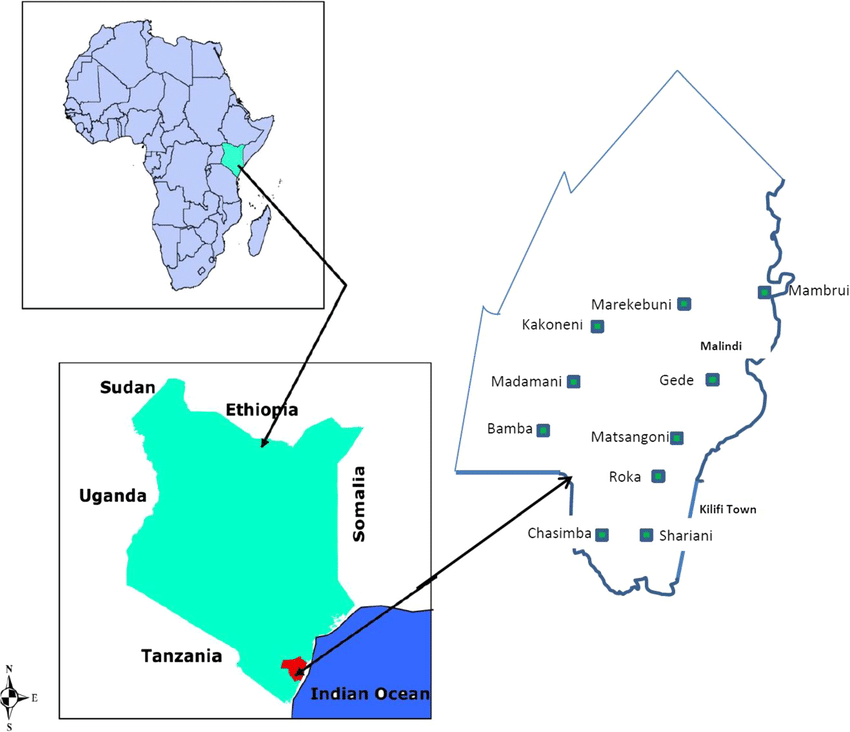
The good thing about this case is that the rule of law was upheld, even though the crime dates from eight years ago. Three accused, Mr Chengo Kadenge, Safari Kombe Koi and his son Kahindi Safar Kombe, were found guilty of murdering Mr. Karisa Katoi Kani, on suspicion of bewitching a women, Mr. Koi’s wife. The judge found them guilty of the murder which happened in Matsongoni Village in Ganze, in Kilifi County, on December 8, 2012. The convicted men will spend the next 35 years in jail.
It is interesting to note that judge Nyakundi explicitly stated that “(..) belief in witchcraft as a justification to kill another human being, is not excusable (…).” Justice Nyakundi added that a fundamental principle is that courts should intervene where culture and traditions are used as a defense or justification to commit murder. (webmaster FVDK).
Father, son to serve 35 years in jail for killing village mate over witchcraft claim
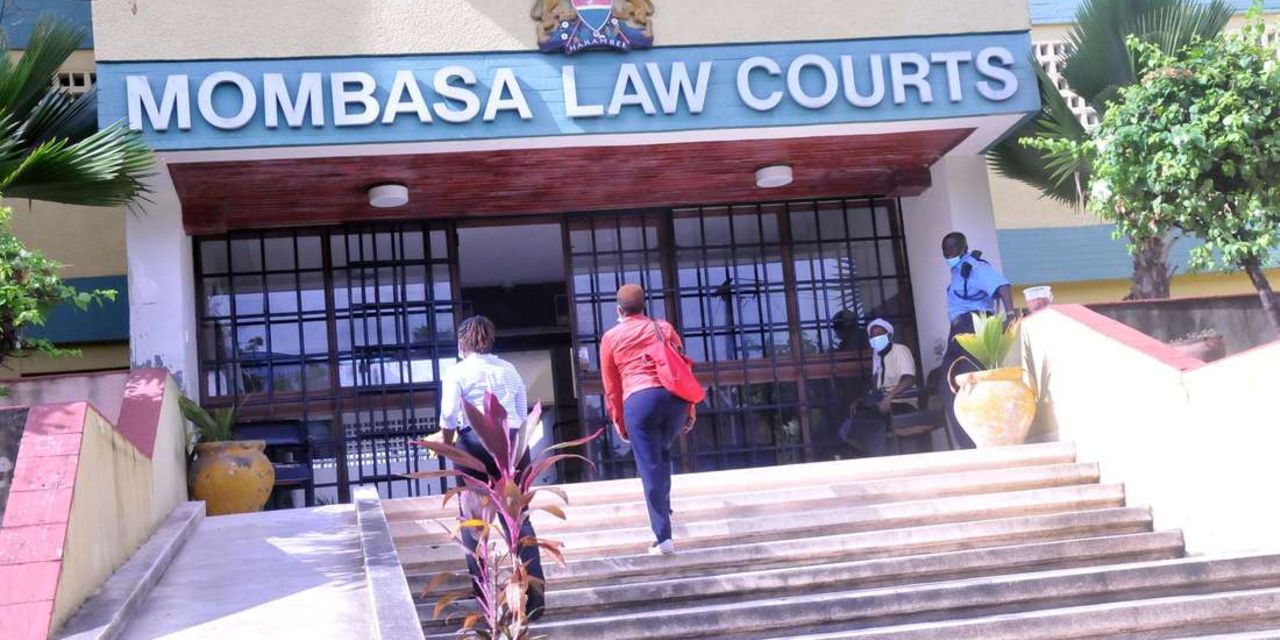
The entrance to Mombasa Courts
Published: December 10, 2020 By: The Nation, Kenya – Philip Muyanga
Three villagers, among them a man and his son, will spend the next 35 years in jail after they were found guilty of murdering their villagemate on suspicion of bewitching a woman.
Mr Chengo Kadenge, Safari Kombe Koi and his son Kahindi Safari Kombe were found guilty of murdering Mr Karisa Katoi Kani, whom they had accused of committing deadly witchcraft.
The woman who died is said to have been Mr Koi’s wife. In sentencing the accused, Justice Reuben Nyakundi said the murder was well planned and executed with a joint common enterprise and malice aforethought.
Justice Nyakundi further noted that a fundamental principle is that courts should intervene where culture and traditions are used as a defence or justification to commit murder.
“This court, being in the exalted position of a trial court in murder cases, has a right and obligation to speak firmly and expand jurisprudence touching on belief in witchcraft as a justification to kill another human being, is not excusable,” said Justice Nyakundi.
Cultural practices
Justice Nyakundi said it is evident that the social-cultural structures on witchcraft beliefs can result in the killing of vulnerable aged men and women of the community especially older people who are socially and economically disadvantaged and lack legal protection.
The accused, jointly with others not in court, murdered Mr Kani on December 8, 2012, in Matsongoni Village in Ganze, in Kilifi County.
The court noted that prosecution witnesses supported a clear narrative that the accused engaged the deceased in a physical altercation following a witchcraft cleansing ritual at the home of Mr Koi.
The accused person gave the deceased a cup and water with a concoction which was to be used to heal or restore the life of the wife of the third accused (Mr Koi).
“From the evidence, the accused persisted in violent attacks against the deceased, as confirmed by prosecution witnesses one to four. The acts of violence involved the use of hard sticks and clubs to inflict harm on the head, and within a few minutes the victim died,” said Justice Nyakundi.
He further ruled that the measure of unlawfulness and omissions by the accused demonstrates beyond reasonable doubt that the victim’s death was neither justified nor excusable.
Justice Nyakundi also rejected the alibi defence by the accused.
“The nuances of the alibi defence generated by the accused persons are of such a character as incapable of credible rebuttal,” said Justice Nyakundi.
In their defence, the accused denied committing the offence, saying they were not near the scene of the crime and, therefore, would not be expected to have killed the man.
A Gambian businessman, Sillibah Samateh, testifying before the nation’s Truth, Reconciliation and Reparations Commission has accused former Gambia dictator-president Yahya Jammeh of sacrificing babies for ritualistic purposes. Is it a lie, a phantasy or the truth?
The fact that I have decided to include here Mr. Samateh’s testimony before Gambia’s Truth, Reconciliation and Reparations Commission (TRRC) is no approval of his allegations and accusations implicating the former dictator who was chased out of his country in January 2017. Jammeh was forced into exile in Equatorial Guinea where he now lives, with the millions he stole before boarding the plane that brought him to the republic whose president is Africa’s longest ruling president, Teodoro Obiang. Equatorial Guinea has one of the worst human rights records in the world.
Lieutenant Yahya Jammeh – his full name being Yahya Abdul-Aziz Jemus Junkung Jammeh – seized power in a military coup in 1994 and ruled the tiny West African republic with an iron fist during more than 20 years. Thousands of his opponents died or disappeared during his dictatorship. He has been accused of numerous human rights violations, murders, killing migrants, shooting students, arbitrary arrests, suppression of the press, corruption, rape, witch hunting campaigns – the list of accusations and crimes is even much longer. From this point of view the allegations made by Mr. Samateh gain some credibility, but – as I have repeatedly said in this place – ‘nobody is guilty unless found guilty by an independent, impartial judge after a public, transparent trial‘.
Therefor, I present the allegations without comments. I don’t say they are true, I don’t say they are not true. I only say that the accusations have to been proven (webmaster FVDK).
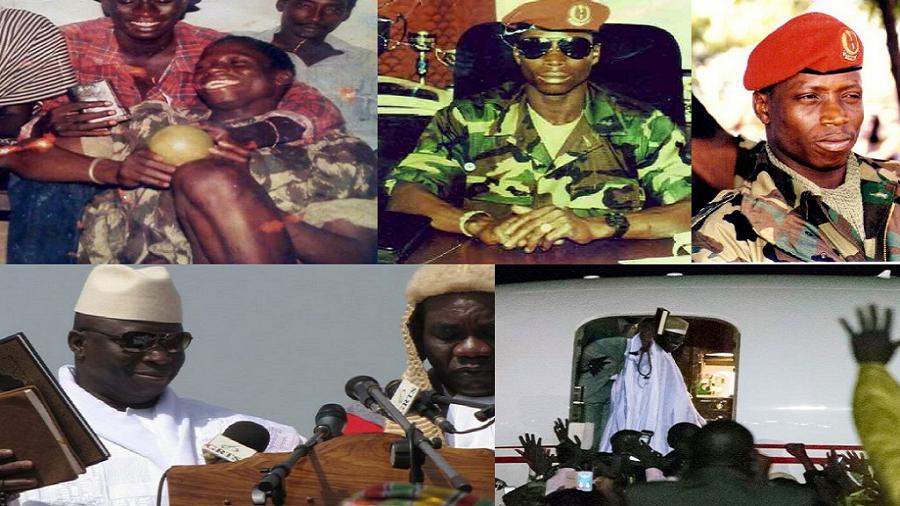
The rise and exile of Gambia’s ex-President Yahya Abdul-Aziz Jemus Junkung Jammeh
Gambia: Exiled Gambian dictator accused of stealing babies from hospitals for ritualistic purposes; Jammeh’s supporters reject accusations
Published: December 9, 2020 By: Freedom Newspaper
A Gambian businessman has accused the former Gambian President Yahya Jammeh of sacrificing newborn babies for ritualistic purposes. He says the babies were taken from hospitals and sacrificed. Sillaba Samateh made the allegations before the Truth, Reconciliation and Reparations Commission (TRRC) on Tuesday. As Pa Nderry Mbai reports from Raleigh, North Carolina, Jammeh’s supporters are denying the allegations.
Speaking before an interpreter businessman Sillaba Samateh claimed that he learned about Jammeh’s alleged babies’ ritual while he was under detention at the National Intelligence Agency in Banjul. Samateh said he himself was being used to transport the stolen babies into the office of the late NIA Director General Numo Kujabi.
The two former security officers Samateh named in his testimony Nfanli Jabang and Numo Kujabi have died.
“You know the seriousness of this accusations. That the President of this country, was taking babies from hospitals and take them to prison to Kanilai for human sacrifice,” Lead Counsel Essa Faal told Mr. Samateh.
Samateh still stands by his story. He says Jammeh was allegedly killing babies for ritual purposes.
Samateh was held at the NIA on drug trafficking related charges. He later jumped bail and fled to Holland.
He claimed that while at the NIA, he was often asked to pick up dead bodies and put them in body bags.
Dodou Jah is the Deputy Spokesman for the former ruling APRC party.
“If these allegations were true, where are the parents of those kids, they have relatives, knowing for example, my wife is pregnant, goes to the hospital to deliver, we are expecting a baby. Even if my wife happens to pass away, but the baby belongs to the family, if the family doesn’t see it, the hospital is responsible. And these are issues that cannot go under the carpet, the media would be in the epicenter of it and this news is going to spread, but how come no such story ever emerged,” Mr. Jah said.
Jah says Samateh’s claims should be treated with pinch of salt. He added that witnesses should testify the truth and stop making baseless allegations against Yahya Jammeh.
“Not I don’t trust the TRRC, but some of the revelations I don’t know what to believe and the lead counsel is proving to them that they are lying. A witness comes to the TRRC and the lead counsel is telling them you are lying, but people want me to believe what they are saying. You know until somebody said it is red, another said it is black, I am asking who do I have to believe,” Mr. Jah remarked.
Samsudeen Sarr is the former Gambian Ambassador to the United Nations. Sarr is also a sympathizer of the APRC party.
“If thing of that nature as gruesome that is, would have been talked about everywhere in this country. So, I have serious doubts as to the credibility of the story of Sillaba Samateh,” Sarr remarked.
Sarr says Sillaba’s reputation is questionable. He is not convinced that Samateh was being truthful to the Commission.
“His reputation in this country has not been very good. You that, you know better than I do, Sillaba’s name it was not associated with good things in the past and since the change of government, he has been trying to sanitize his name and join the Barrow government,” Sarr added.
Lead Counsel Essa Faal says given the seriousness of Samateh’s allegations; it is important for the Commission’s Investigation team to investigate the matter.
Samateh was in tears while giving evidence. He claimed that one of the NIA officers Omar Cham had even threatened to rape his wife while they were being held there.
In another development, a former NIA detainee, who wished not to be named has dismissed Sillaba’s claims. He has accused Samateh of lying to the TRRC.
“We were detained at the same location at the NIA. No babies were brought to the NIA for ritual sacrifices. That was a figment of Sillaba’s own imagination. I am calling you, because I feel that he was untruthful to the Commission,” he said.
“As you rightly pointed out in your radio show, Numo Kujabi and Nfanli Jabang are not alive to substantiate his allegations. He is using the death to sell a false story,” the caller added.
A strange story from Malawi. A fisherman wanted to sacrifice his stepson in a ritual that would enable him to catch more fish, but the boy’s mother refused to cooperate. Later, he killed the boy anyhow and was subsequently arrested by the police and charged with murder. (webmaster FVDK)
Toddler killed after mother refuses to offer him for ritual
Published: December 2, 2020 By: IOL, South Africa – Molaole Montsho
RUSTENBURG – A 3-year-old boy was killed, allegedly by his stepfather, in central Malawi after his mother refused to offer him to be used in a ritual, local media reported on Wednesday.
News website Malawi24, citing police, reported that the boy was killed on Monday at Mtambalala village, near Kasungu in central Malawi.
His stepfather, 29, who is a fisherman, had allegedly asked his wife to offer him the boy so that he might use him in a ritual that would enable him to catch more fish.
The boy’s mother refused and sent her son to his grandparents.
A few days later the man apologised to his wife and asked her to bring the child back to the house. The wife forgave him and the boy returned home.
On Sunday, the man allegedly raised the matter of the ritual again and she confronted him. The man allegedly assaulted her and intentionally stepped on the boy, who was asleep, until he lost consciousness.
The mother rushed him to hospital, but he was declared dead on arrival. A post-mortem revealed that the death was due to head injuries.
In Ghana, superstition is widespread, and Ghana is not the only SSA country where people firmly believe in the power of witches, witchdoctors, and witchcraft. The fear which many people have for those perceived to be witches may lead to abnormal reactions, as the case below illustrates. A woman was beaten to death just because she was thought to be a witch and accused of causing irregular rain.
Education is the only effective means to fight superstition. Meanwhile the rule of law must apply. A government and society cannot tolerate the law of the jungle.
The article presented below is only part of the original article. Members only have access to the full article published by the online news site Christianity Today. See the original link below. (Webmaster FVDK)
Ghana Pentecostals Come to the Defense of Accused Witches
Published: November 23, 2020 By: Christianity Today, Ghana – Daniel Silliman and Griffin Paul Jackson
An old woman was killed when she refused to confess to causing irregular rain. Christians had to speak up.
Pentecostals everywhere sing about the power of Jesus’ name. But in Ghana, they sing specifically that his name is powerful against witches.
More than 90 percent of Ghanaian Christians believe witchcraft is a problem in the country, and more than half have visited a Pentecostal prayer camp to ask for deliverance from witches and demons, according to a study by Opoku Onyinah, theologian and past president of the Ghana Pentecostal and Charismatic Council (GPCC). The Spirit-empowered churches in the West African country don’t take the issue of witches lightly.
But this summer, the GPCC decided to speak up for the women who are accused of witchcraft. The Pentecostal group, an umbrella organization of 200 denominations and parachurches, called for new laws and a national conversation about how to better take care of the more than 2,000 widows who have been exiled over allegations of working with demons.
The churches decided to make a statement after an elderly Muslim woman in a rural village was beaten to death when she refused to confess to witchcraft. Akua Denteh was accused of causing irregular rain, starting fires, and killing children with supernatural powers. A video of her violent death—as a crowd stood watching—was shared widely around the country, and Christian leaders decided they could no longer be silent.
“The elderly, weak and vulnerable must be targeted for the care and protection of our society,” the GPCC statement said. “We must, at all cost, seek justice for this 90-year-old woman and all those who have suffered such atrocities in the past.”
Onyinah, speaking on a popular radio program, called for laws controlling witch hunts and witch identifications. He added a specific ….. the rest of the article is available for ‘members-only’ (follow the link below)
On November 22, Blessing Mandabva, from Zimbabwe, shared with us his view on the history of human sacrifices as well as present-day practices of this age-old ritual. His contribution was published in The Standard, a Zimbabwean Sunday newspaper. Recently, I posted other articles with African voices protesting against this phenomenon of ritualistic murders, commonly called muti murders in Southern Africa. See the Op-Ed article in the online Namibian newspaper New Era Live, entitled: ‘Ritual killings: Cry my beloved humankind’, posted on October 27, 2020 and an older article, dating from 2011, ‘Africa: Breaking the silence in ritual killings‘, written by Fanuel Hadzizi, also from Zimbabwe and posted on November 14, 2020.
The recent turmoil in Zimbabwe, following the death of a 7-year old boy, Tawire Makore, who was murdered for muti purposes, clearly shows that the gruesome practice of human sacrifices has not disappeared. See my October 26 posting on this ritual murder that shocked Zimbabwe.
As Blessing Mandabva describes, more people have raised their voices against muti murders including Zimbabwe National Traditional Healers Association (Zinatha) president George Kandiero who distanced his association and all members from all acts of ritual killings. George Kandieo, who also mentioned the ritual murder of Tawire Makore, confirmed what I have stated repeatedly on these pages: “These ritual killings are just a tip of the iceberg (…)“.
Also the Zimbabwe Human Rights Commission (ZHRC) has denounced ritually-motivated killings and issued the following statement: “The ZHRC has noted with concern the alarming rise and high frequency of ritually-motivated killings in Zimbabwe, specifically targeted at children and young people.”
What else can I add?? Read the following contribution and join the struggle against ritualistic murders and other acts based on superstition and motivated by the greed for power and/or wealth.
Warning: the following article contains graphic details of ritual murders (webmaster FVDK).
Human sacrifices, myth or reallity?
Published: November 22, 2020 By: The Standard, Zimbabwe – Blessing Mandabva
Since time immemorial, human beings the world over have pursued answers to the puzzling questions of their origins, sickness, death and after death, poverty, power, the meaning of natural phenomena such as earthquakes, diseases and accidents, among others. They have also inquired on how to protect themselves from such mysterious events. Invention of personified deities, gods and the occult sciences, witchcraft, divination and soothsaying in order to seek the protection of supernatural powers has been the order of the day. Individuals used them for protection from their enemies, to dominate others in societies be it in business, politics, churches and other religious circles to gain power and to accumulate wealth. Human sacrifice has been a phenomenon which has been passed from generation to generation albeit it appearing in various forms.
Human sacrifice is defined as the ritualised, devotedly motivated killing of human beings. It is a fundamental which is not endorsed by any state, but was once practiced by societies across the globe in the past. In this landlocked country of Zimbabwe, there is a misconception on many deaths of humans, children, women and albinos being attributed to human sacrificial rituals which are said to bring quick wealth and fortunes. Human sacrifice, especially of children, occurs frequently despite the government’s efforts to stop it. Times are tough in Zimbabwe, and people are looking for sacrifices to improve their fortunes. Hunger and starvation coupled with the purported economic meltdown which has been attributed to the economic sanctions by the ruling elite whilst those in the opposition blame the ruling elite for poor governance.
Zimbabwe National Traditional Healers Association (Zinatha) president George Kandiero distanced his association and all members from all heinous acts of ritual killings.
He, however, said those ritual killings are mainly done by witches and witchdoctors. According to Kandiero, Zinatha has some specialists who could have been involved in the case of Tapiwa Makore to give guidance in finding a lasting solution.
“It’s rather unfortunate Tapiwa is no more, but we believe the full wrath of the law will take its course. The perpetrators must be brought to book even if they are members of our associations,” said Kandiero.
”These ritual killings are just a tip of the iceberg since a lot of sacrifices in various forms are happening in the underworld.
“Those who do such are everywhere including churches, homes and workplaces and this has to be addressed for people to live in harmony.”
Reverend John Makaniko, a United Methodist Church in Zimbabwe pastor, said: “Human sacrifice is a reality though in this contemporary world it’s now rare.
“The law has abolished human sacrifice and it’s now treated as murder.” According to him, in Christianity, only Jesus Christ was sacrificed for sins of all humanity. He becomes a sacrifice once and for all [Hebrew 10:10].
“Jesus Christ becomes a sacrificial lamb for salvation of all humanity. The human sacrifice done by individuals is for selfish reasons like riches and fame. “This human sacrifice that is shedding blood of other people for selfish ends is evil, sinful and a serious crime.”
“As Christians, we are guided by the scripture’s teachings and commandments like: ‘Thou shalt not kill’ (Exodus 20:13) and our social principles say, ‘life is a sacred gift’; therefore, every human life should be treated with dignity and shouldn’t be sacrificed.
“In short, human sacrifice is a devilish act that has no place in Christianity and progressive society.”
Rev Makaniko added: “In contemporary society, faith in God and appreciating the dignity of hard work will result in success and prosperity.
“The core values of the United Methodist Church clearly state that, ‘we do good, do no harm and stay in love with God’; thus human sacrifice isn’t good because it brings harm to other people and breaks relationships with God.”
According to some South African media reports, body parts can be sold for as little as R3 000 in that country.
I recall vividly growing up in a township when public transport in the form of the commuter omnibuses had just been introduced. At that age, we were scared to death by the stories doing the rounds in the township of the disappearance of children. We were told how kids were being lured by strangers who promised them sweets.
The next thing, their bodies would be found in the bushes with body parts missing. Rumours were that businesspeople were taking the children’s heads to Durban and were trading them off for taxis, kombis and grinding mills. Another unfortunate case is that of Given Flint Matapure who disappeared at Harare Exhibition Park in August 2011. The case took ages to be finalised.
Ritual killings, or human sacrifices, are committed for the purpose of taking human body parts which are said to be used to prepare charms and other traditional medicines for spiritual fortification. In some instances, ritualists and occults target vulnerable members of society such as the poor, women, children and albinos whose families often do not have the resources to demand justice.
In some African countries there is a belief that female body parts possess supernatural powers that bring good fortune or make criminals invisible to police and other authorities. Children and young people are mostly preferred since they will be having a whole lot of life to live than the elderly.
All the success which could have happened to them will now be transferred to the ritualist as the children continue to live in the underworld. It is time governments turned up the heat on culprits and put an end to this violation of human rights.
Heavy sentences should be given to those who commission and carry out the ritual killings.
The Zimbabwe Human Rights Commission (ZHRC) denounced ritually-motivated killings.
“The ZHRC has noted with concern the alarming rise and high frequency of ritually-motivated killings in Zimbabwe, specifically targeted at children and young people,” the ZHRC statement read.
“The heinous murder and mutilation of innocent people is disheartening and should be denounced in the strongest terms by our society and nation as a whole.”
ZHRC also stated that participation in ritual killings violates Sections 48 (1), the universal human right to life, of the Constitution and other sections of international agreements on rights to human life, such as the Universal Declaration of Human Rights (1948), and the International Covenant on Civil and Political Rights.
The rights body called for a collective effort among authorities to end the ritual killings and urged police to undergo further training to adequately deal with issues of human rights violations.
In July 2015, a four-year old pupil from St Lucy Primary School in the Kombo area of Insiza district in Matabeleland South province was found dead with her lips, liver and other body parts missing in a suspected case of ritual murder. Her body was found mutilated in a pond. The incident struck fear into villagers who indicated that they suspected the child was killed for ritual purposes. They started escorting their children to and from school.
Legislator Pupurai Togarepi has moved a motion on the proliferation of chilling incidents of murder indicating that victims of such heinous crimes are the vulnerable and unsuspecting members of society, mostly women and children.
In another bizarre suspected ritual killing in June 2020, a 25-year-old woman, Thabelo Mazolo, had her body mutilated and stashed into a drum filled with acid in Bulawayo. Part of the body, from the waist going down, was missing while breasts and palms appeared to have been sliced off. The ritualist murder had message from a sangoma with instructions to perform on the body, it reads “you must cut yourself and spill your blood onto a mirror. Gaze into the mirror and say out loud that you are selling your soul for riches.”
The practice of ritual killing and human sacrifice continues to take place in several African countries in contravention of the African Charter on Human and People’s Rights and other human rights instruments. In this 21st century, human beings are still being hunted down, mutilated, murdered or sacrificed for ritual purposes across the region.
Several cases of kidnapping and disappearance of persons are traced to the vicious schemes and activities of ritualists. Ritualists hunt for blood and harvest human body parts to prepare charms and magical concoctions. In some cases desperate ritualists invade cemeteries and exhume dead bodies to extract body parts, said one anonymous source.
Many cases of ritual sacrifice take place in secret locations. They are largely unreported, not investigated and go unpunished. The perpetrators and their collaborators capitalise on the prevalent irrational fear of the supernatural among Africans, and the poor and corrupt policing and justice system, to get away with these egregious violations.
Victims of ritual sacrifice are mostly minors nd vulnerable individuals who do not live to seek justice or redress or who lack the resources to seek redress if ever they survive the ordeal.
Human sacrifice is real, it is neither fallacious, frivolous nor fiction. It is a cancer which needs urgent attention and collective efforts by all stakeholders from grassroots level before it is normalised by satanic and evil forces in our societies.
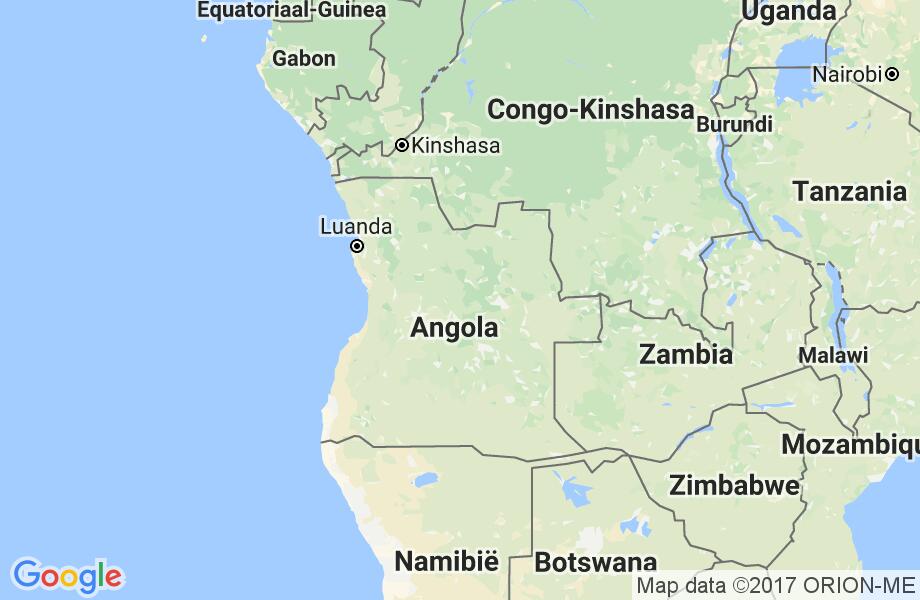
The ritual murder case reported in the article below is the first one related to Angola posted on this site. This is not to say that in Angola no or only a few ritual murders are committed. In fact, little is known about the frequency of ritual or muti murders in this country. The reason for it’s under-reporting is most probably linguistic. In general, events in lusophone countries are only occasionally covered by anglophone and francophone press agencies. This does not mean that nothing noteworthy happens in these countries, on the contrary – as the case below illustrates.
The ritualistic killing took place in the nation’s capital. As described in the article below, in July 2019, a mother (32) killed her 11- year old daughter in a gruesome ritualistic act. I must apologize for presenting the article in Portuguese. Unfortunately, no translation is available though the essential message of the article is clear: a ritual murder was committed. More details will be published on this site as soon as they become available (webmaster FVDK).
Uma criança de 11 anos morreu, na terça-feira, depois de ter sido queimada por uma mulher, de 32 anos, que praticava um ritual de ocultismo, no município de Belas, em Luanda.
Em ritual de ocultismo mulher mata criança de 11 anos em Luanda
Published: July 24, 2019 By: Angola 24 horas
Uma criança de 11 anos morreu, na terça-feira, depois de ter sido queimada por uma mulher, de 32 anos, que praticava um ritual de ocultismo, no município de Belas, em Luanda.
O oficial de informação do comando provincial da Polícia Nacional, inspector Euler Matari, disse à Angop que a mulher levou o menino até a sua residência, por volta das 10 horas da manhã, no distrito da Vila Verde, bairro das Tendas, onde cometeu o homicídio.
Euler Matari disse que a criança ficou queimada quando a mulher acendeu velas vermelhas e brancas e com um liquido inflamável, ainda por se identificar, atirou para o corpo do menino, resultando em morte imediata.
“Momentos depois tentou desfazer-se do cadáver, depositando-o num contentor de lixo, mas fruto de denúncia pública e do trabalho de investigação policial foi possível a identificação e detenção da mulher”, disse Euler Matari.
A vítima não tinha qualquer grau de parentesco com a mulher e a polícia desconhece ainda se a criança morava nos arredores ou não.
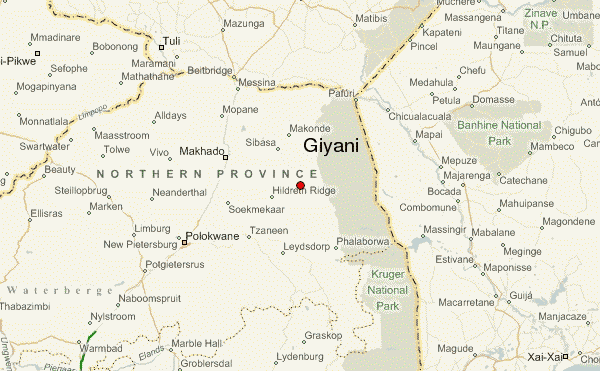
Speaking at a traditional medicine day held in Giyani in 2016, the President of traditional healers association in SADC region, Dr Sylvester Hlathi, urged local traditional healers to stop ritual killings. Isn’t this remarkable – and courageous? On the one hand one could argue that apparently his appeal hasn’t prevented muti murderers in the northeastern part of the country to continue their ugly practices, on the other hand it is promising and encouraging to realize that voices are raised against these heinous crimes based on superstition and a repulsive greed for money and/or power.
Dr. Hlathi’s remarks gave me goose pimples, he spoke openly and publicly, and didn’t beat around the bush. “We as traditional healers must stop using human parts to make medicine, we must stop ritual killings as we are called to heal people not to kill people,” he said.
Kudos for Dr. Hlathi! I wonder what has become of him. (webmaster FVDK).
Traditional leaders urged to stop ritual killings
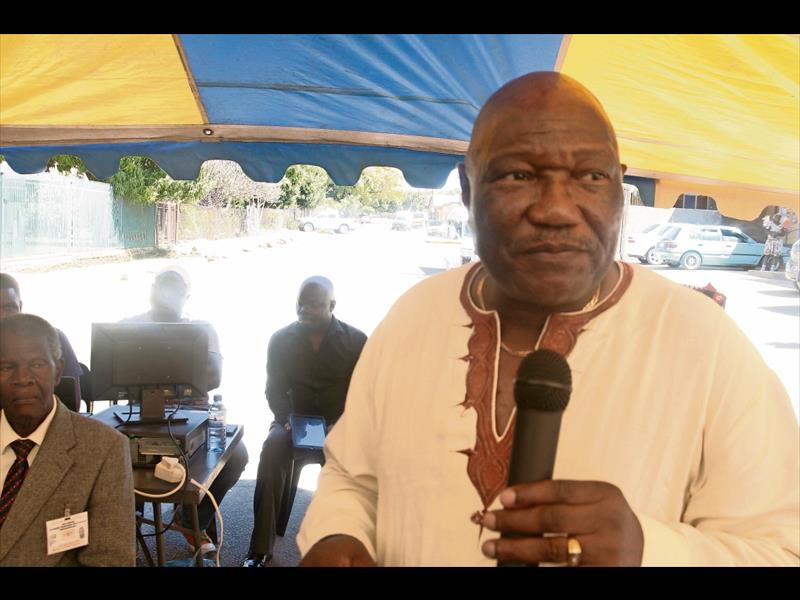
Dr Sylvester Hlathi addressing local traditional healers during the traditional medicine day. Photo by Tony Myambo.
Published: September 8, 2016 By: Letaba herald – Tony Myambo
The President of traditional healers association in SADC region Dr Sylvester Hlathi has urged local traditional healers to stop ritual killings.
Hlathi was speaking during a traditional medicine day held in cheapside complex outside Giyani on Wednesday.
“We as traditional healers must stop using human parts to make medicine, we must stop ritual killings as we are called to heal people not to kill people,” said Hlathi.
He also urged traditional healers to stop raping patients telling them that they will get healed if they sleep with them.
“We must stop sleeping with our own patients telling them they will be healed only if they sleep with us, this will weaken our traditional medicine not to work as it is not human and ancestors will punish us,” he said.
He also encouraged them to go test for HIV/AIDS. “You must also go get tested, you must stop this thing of saying I don’t have a boyfriend/girlfriend you must get tested so that you can also encourage your patients to go for tests because using only traditional medicine to cure this disease is not good,” he explained.
He also told them to stop giving medicine to criminals to come out of prison or charms to do crime but work with police in order to fight crime.
He however pleaded with traditional leaders to chase away fake traditional healers in their villages.
“Traditional leaders you must demand certificates of practice from these traditional healers, if they don’t have any – chase them away,” said Hlathi.
Hosi Edward Chauke, Congress of traditional leaders of South Africa (CONTRALESA) in Malamulele secretary, applauded local traditional healers for coming together to celebrate traditional medicine day and uniting with one another.
“As traditional leaders we would like to acknowledge you for coming together and for celebrating our traditional medicine. I would like to assure you that as traditional leaders, we recognize you.”
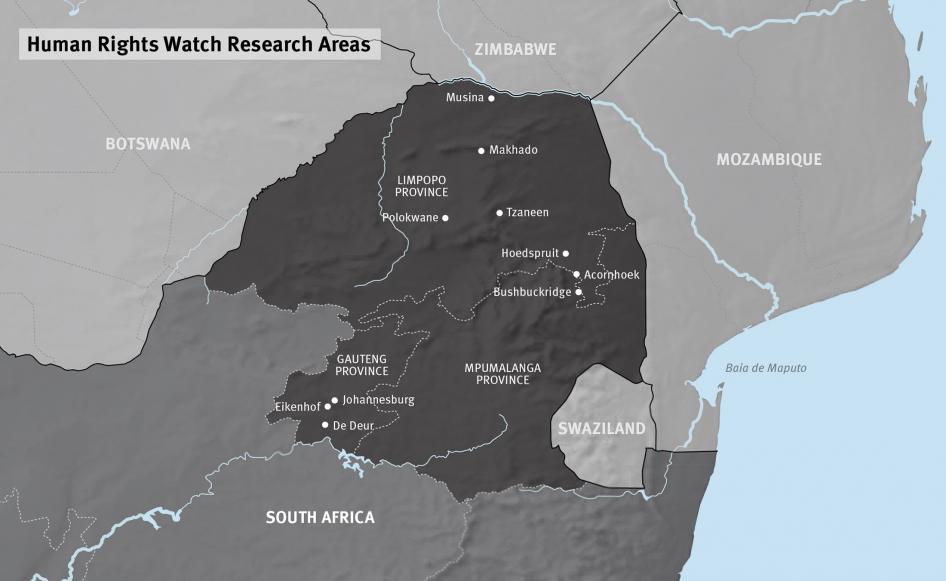
The northeastern provinces of South Africa have a bad reputation when it comes to ritualistic activities and murders. Whereas commendable steps have been taken by local authorities to arrest and put on trial those suspected of involvement in these heinous crimes (see my previous postings), still much is left to be desired. This is illustrated by the article reproduced below, dating from 2017, focusing the citizens of Acornhoek in Mpumalanga province. The danger exists that citizens will take the law into their own hand if the authorities fail to react properly. In a country, ruled by the principles of the rule of law, mob justice has no place. Mob justice, however, is an important signal that the legal authorities fall short of the expectations which people justly hold (webmaster FVDK).
Acornhoek community marches against alleged ritual killings
COMMUNITY MEMORANDUM HANDOVER: A memorandum regarding the crime in the communities was submitted to Acornhoek Police Station Commander Colonel Ntwane.
Published: July 11, 2017 By: Letaba Herald – Refiloe Matome
The community of Acornhoek (consisting of Cottondale, Timbavati, RDP and Plaza View) presented a memorandum to the Acornhoek SAPS regarding crime which is happening within their communities on June 28.
The memorandum presented to the station management in order for them to address the cases of ritual practices and child trafficking that is allegedly taking place within the community.
“As the citizens of this country, we no longer feel safe within our communities and the constitution clearly stated that we all have the right to live freely,” said Ndlovu of The Bushbuckridge Residents Association.
Three incidents were clearly highlighted where they believe victims were unfairly treated and justice was not served. The first being Wilson Mokoena’s case who was killed in Plaza View earlier this year and according to information provided to the Hoedspruit Herald, the suspect is a government official and is well known but no arrests have been made thus far.
“Alfred Madalane was found killed and dumped at an Acornhoek scrap yard with body parts missing, three suspects were arrested after confessing to his killing, but they were later released by the court stating that there was not enough evidence while the perpetrators confessed to his death,” added Ndlovu.
The last case that was presented to the SAPS for query was that of Maluleke who was killed and dumped at Pendulane cross with his blood allegedly drained from his body.
“The above mentioned cases need to be considered, we call upon the station commander to urgently intervene in these cases and all suspects need to be rearrested immediately. We expect to get a respond with immediate effect before the community takes the law into their own hands,” concluded Ndlovu.
Yesterday I posted an article on the sentencing to life imprisonment of four people found guilty of ritual murder in Limpopo Province, South Africa. It is not the first time that the rule of law was applied by prosecuting and sentencing a ritual murderer in Limpopo Province, a region which unfortunately is notorious for the occurrence of muti murders. In October 2015, a Mocambican man who had been apprehended in possession of body parts was sentenced to life imprisonment by a Limpopo High Court at Makhado (webmaster FVDK).
Life sentence for ritual murderer
Life imprisonment for a Mocambican man found guilty by a Limpopo Province Court
Published: October 29, 2015 By: Letaba Herald, Matome Maila
A Mocambican man who was found in possession of body parts last year was sentenced to life imprisonment during a sitting of the Limpopo High Court at Makhado last Tuesday.
Nkovani Samson Majoko (36), originally from Mocambique, but residing a Xiphuraphuleni Settlement in Malamulele, outside Giyani was arrested in June last year after he was found in possession of a bag containing two hands and male sexual organs
The court heard that he lured the victim, John Miyambo (35), from Mocambique to South Africa with the promise of a job and then killed him and cut off the body parts to sell as muti.
He was arrested after information was received of a man trying to sell body parts in the Malamulele area.
He was found guilty on a charge of murder and sentenced to life imprisonment.
Whereas the following article on the gruesome murder of a 54-year man cannot be labelled a ‘ritual murder’ before the investigation surrounding his death has ended, some newspapers already call his cruel death a ‘ritual killing’ (see the second article below).
As usual, I wish to plead for prudence. However, notwithstanding the foregoing, I present the case here – with a disclaimer – for reasons which may be clear after reading the report below.
Warning: the following article contains graphic details of a gruesome murder (webmaster FVDK).
Police probing motive of 54-year-old man’s brutal killing
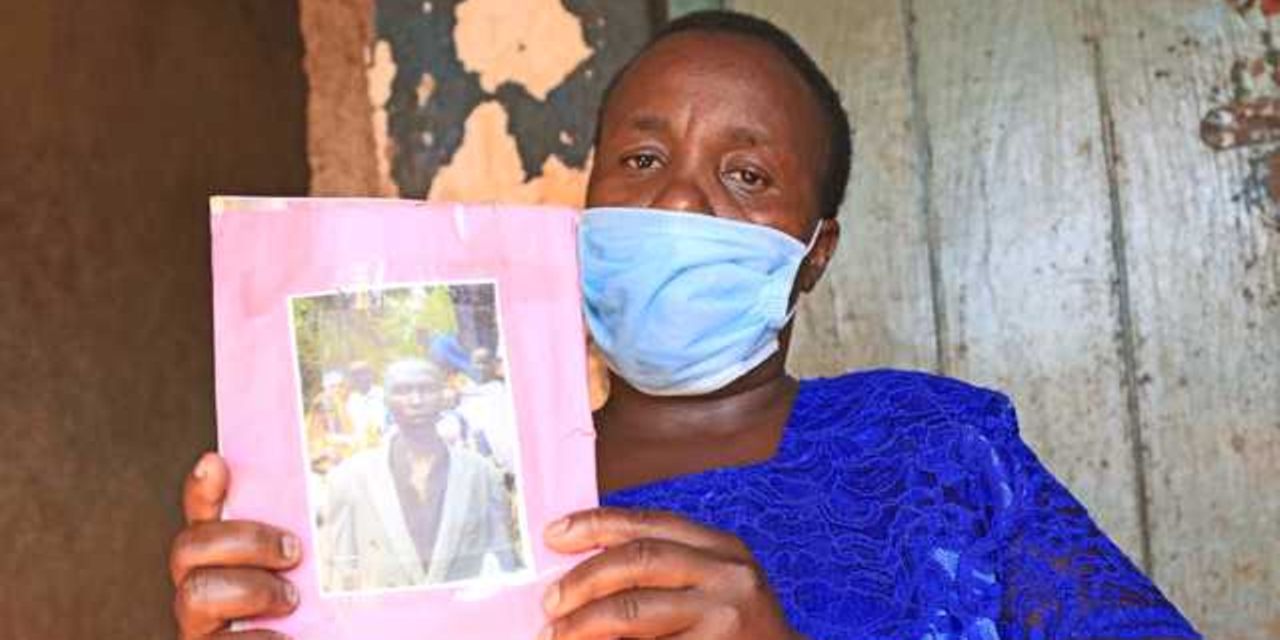
Naomi Wanjiru holds a photograph of her uncle Samuel Mungai who was murdered at Kabogo village in Murang’a County on November 5. Police are trying to establish the motive of the killing. Credit: Joseph Kanyi | Nation Media Group
Published: November 11, 2020 By: Nation, Kenya – Mwangi Muiruri
What you need to know:
The victim’s body was found in a pool of blood, about 300 metres from his house.
Police believe the elaborate murder was executed between 9pm and 11pm.
Residents of Kambogo village in Murang’a County are yet to come to terms with the horrific murder of Mr Samuel Mungai Gachihi on October 22.
The body of the 54-year-old man had no private parts, tongue, ears, eyes and nose when it was found — a murder that bore the marks of a ritual killing.
“The scene details indicate devilish work of a killer or killers who had all the time with the victim, going to the extent of skinning his head and harvesting all those organs,” said Kigumo police boss Michael Ndegwa.
The post-mortem report indicated that the man first suffered blunt force trauma to the top of his head, which cracked his skull.
The assailant(s) then slit his throat and then “the evil of harvesting the organs was executed”.
Police believe the elaborate murder was executed between 9pm and 11pm, which was corroborated by some neighbours who reported hearing the man scream twice from around 9.30pm.
At the scene was an iron bar, three unused condoms, an empty cigarette packet and snuff wrappings.
Why anyone would want to kill Mungai so cruelly is the puzzle the police are trying to solve.
Horrific scene
No suspect has been arrested so far.
When the Nation team visited the village, journalists were shown where the body was found by a man who was taking milk to the dairy co-operative society. The body was found in a pool of blood, about 300 metres from his house.
“The scene was so horrifying that I have been seeing a counsellor weekly. It is a miracle that I’m still sane. It is the most horrible sight I have encountered in my 72 years in this world,” said Mr Moses Njau, who was among the first to arrive at the scene.
Mr Mungai’s niece, Naomi Wanjiru, said he never married and was known for loathing relationships.
Kigumo police boss Ndegwa said the man is confirmed to have arrived home on that fateful night at around 7pm and herded his two goats and five hens into his one-roomed house where they usually slept to avoid being stolen.
However, Mr Ndegwa said the motive was not stealing the animals and that Mr Mungai was most likely lured out of the house by a person known to him.
The police boss said getting the killers hinged on the motive.
“We are working around some possibilities revolving around family feud, business rivalry, occultism and normal crime,” he said.
Person of interest
Mr Mungai was one of three siblings — a brother Harun Muhia and sister, Joyce Nyambura.
Mr Muhia died in 2013, leaving his widow Jane Nduta, 61, and six daughters and one son.
However, Mr Mungai is reported to have expressed a desire to get married.
He was to get part of the family’s 0.7 acres, worth Sh800,000.
Mr Ndegwa said police are also looking into the religious inclination of all of Mr Mungai’s relatives and villagers, looking for evidence of occult practices.
Another theory is that the deceased was embroiled in a business feud.
“There is one specific character being mentioned by the locals as a person of interest owing to macabre statements he was heard uttering at the scene and in the burial.
“We are working on starting an onslaught against the suspects,” said Mr Ndegwa.
RITUAL BLOODBATH Man, 54, slaughtered before his head skinned and eyes, ears and tongue cut out in horror ‘ritual killing’ in Kenya
Published: November 11, 2020 By: The Sun (UK) – Magda Ibrahim
The horror killing took place in a small village in Kenya’s Murang’a County Credit: Getty Images – Getty
THE ‘DEVILISH’ work of a killer is being probed by police after the mutilated body of a man was found with his head skinned and eyes, ears and tongue cut out.
Samuel Mungai Gachihi, 54, was found in a pool of blood just metres from his home in Kenya.
His butchered body was found with his throat slit, his head skinned and his eyes gouged out, reported local media.
Tragic Mr Gachihi’s face had been completely disfigured, with his ears, tongue, nose missing, along with his private parts.
Residents of Kambogo village in Kenya’s central Murang’a County, around 100 miles north east of the capital Nairobi, claim the missing body parts point to a ritual killing.
We are working on possibilities revolving around…occultism
“The scene details indicate devilish work of a killer or killers who had all the time with the victim, going to the extent of skinning his head and harvesting all those organs,” said Kigumo Superintendent of Police Michael Ndegwa.
The post-mortem report indicated Mr Gachihi first suffered blunt force trauma to the top of his head, cracking his skull in the attack earlier this month.
His throat was then slit and “the evil of harvesting the organs was executed” in the elaborate killing, reported the country’s Nation newspaper.
At the crime scene, officers found an iron bar, along with cigarettes, three unused condoms, and snuff wrappings.
Neighbour Moses Njau, 72, was the first to come across the grisly scene and told local media he had been left traumatised by his discovery.
“The scene was so horrifying that I have been seeing a counsellor weekly. It is a miracle that I’m still sane. It is the most horrible sight I have encountered in my 72 years in this world,” he said
The victim’s niece, Naomi Wanjiru, said her uncle had never married and lived alone.
Police said after he arrived home the evening of the attack, he herded his two goats and five hens into his house to avoid them being stolen.
It is believed he was later lured out of his house, around 300m away to the scene of the attack.
“We are working around some possibilities revolving around family feud, business rivalry, occultism and normal crime,” Supt Ndegwa told local media.
No arrests have been made.
The victim’s niece, Naomi Wanjiru, said her uncle had never married Credit: nation.africa