News about ritualistic activities in Nigeria abound. Nigeria is, as we all know, Africa’s most populated country. Hence, for that reason it is not surprising that the country ranks Number One in ritual murders, commonly referred to as ‘money rituals’ in this West African country.
The next few days I will present more articles on these crimes, because that is what these activities are. Cruel murders, claiming the lives of innocent people, young girls, boys, children, elder people, terrorizing the local communities. And why? – Just for superstition reasons, the belief that these practices will enhance one’s wealth, health, prestige or power. (webmaster FVDK)
Ritual victim’s head, hand sold to native doctor for N130,000
As distraught family demands justice
Published: December 19, 2020 By: Vanguard, Nigeria – Ozioruva Aliu
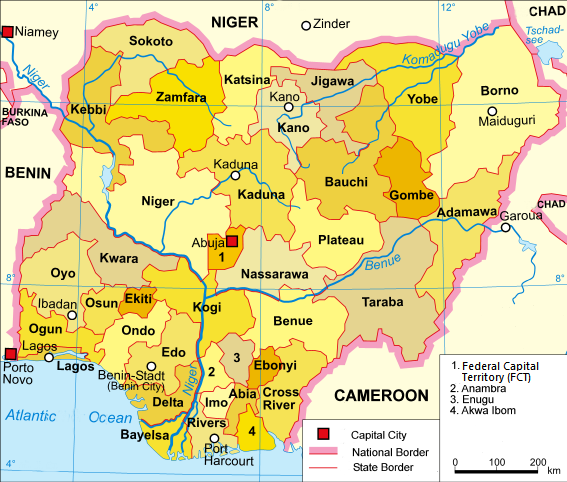
THE family of 35-year-old Eneshero Sunday Daudu from Igarra, Akoko-Edo Local Government Area of Edo state who was declared missing about a month ago and later found dead and buried in a shallow grave by persons who have confessed to have used parts of his body for ritual has demanded thorough investigation and prosecution of all those involved. After weeks of uncertainty when Eneshero was declared missing in Koko, Delta state where he had visited his sister for a burial event, the family had hoped that he would soon find his way back believing he must have missed his way especially as he was said to have called a friend in Igarra that he was on his way back home but it was never to be.
The family therefore lodged a complaint with the police about his disappearance and also assisted the police in the investigation. Last week, their efforts paid off as a 25-year old Peace Onoshakpokaye who was arrested in connection with the alleged killing and dismembering of Eneshero was said to have made confession. been stranded.
According to a police source, the arrested suspect confessed that: “the deceased became stranded around 7 p.m. around Koko junction axis of the Benin – Sapele Highway in Delta state when the vehicle he boarded to Benin City developed a fault. In the course of waiting for another vehicle by the roadside, some persons approached him and asked him to follow them. We learnt that the deceased put up some resistance, but he was dragged to a large trench at the roadside and was murdered on the spot by four persons. His head and hands were severed and later taken to a native doctor in the locality for alleged money rituals.”
The said principal suspect later took the police team and health officials to recover the body that was already decomposing and he was said to have confessed that the body parts were requested by a man in Koko, Delta state who paid them N130,000.
The Edo state commissioner of police, Johnson Babatunde Kokumo who confirmed the incident said the young man was abducted and murdered in Delta state but the police in Edo state command intervened because he was declared missing in Edo and promised that a dragnet had been extended to all parts of the country in order to arrest the fleeing gang members.
A family member told Saturday Vanguard: “It has been a traumatic one month for the family since he went missing. He had attended a burial ceremony in Koko where his sister also stayed. He left his sister’s house in the morning of the fateful day and his sister thought he would be back home but that was the last seen of him. They waited patiently and they concluded that he may have gone back to Igarra but calls to his phone were no longer going through and he did not arrive at Igarra. The last conversation was when he called a friend in Igarra that he would soon arrive but he never came. We first reported the case in Igarra police station and later at the state command in Benin City where investigation began by the police which led to the situation we are in now.
This incident was carried out by a gang but only one person has been arrested, so we are calling on the police to ensure that all the other persons involved are arrested and brought to justice.
“Eneshero was a hard working young man whose elder brother stays abroad. Eneshero has been helping him to take care of the home. The news devastated all of us in the family, particularly his elder brother who had to vowed a financial reward for anybody who was able to his missing brother until we got to this sad point. The dead cannot be brought back to life but the only solace we will have is for the authorities to ensure justice for our late brother”.
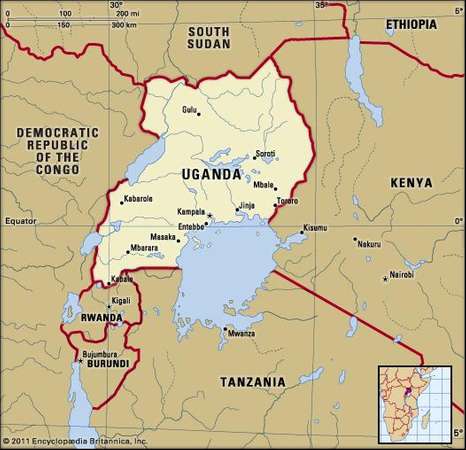
Pastor Peter Sewakiryanga plays a leading role in the fight against child sacrifice in Uganda. He runs Kyampisi Childcare Ministries, a Christian organization focusing on education, health, economic empowerment and protection of children.
KCM was founded in the community of Kyampisi in 2009. At the time, there were several cases of child sacrifice; many homesteads had shrines and practiced witchcraft.
Pastor Peter Sewakiryanga says the mostly gruesome murdering of innocent children happens almost each month. Child sacrifice in Uganda is a widespread phenomenon and crime. In the past I have posted various articles on these cruel practices which are based on superstition and the unscrupulous pursuing of more wealth, prestige or power. E.g. on October 6 and February 28 of the current year and on August 3,(two posts) and February 6, 2019. The postings partly overlap the article below.
The following article presents various murder cases and interviews with bereaved parents. Fortunately, some children managed to escape from their agressors, like e.g. Allan Ssembatya. His horrifying experience is told below.
Warning: the following article contains graphic illustrations including a video and description of gruesome ritualistic practices (webmaster FVDK).
Still from video shown below. Two men attacked Allan Ssembatya on his way home from school. The attackers attempted to slice his head with a machete but Allan survived miraculously. The scar is clearly visible.
Uganda: the country where sacrificing children is a thriving business
KAMPALA, Uganda – Each year hundreds of Ugandan children are kidnapped and murdered as part of a thriving human sacrifice business.
A Christian pastor is now teaming up with police and politicians to stop this brutal practice.
Screenshot – the video does not play. The original article shows the video (see ‘Source’). WARNING: Some of the content in this report is disturbing and will be unsuitable for younger viewers.
Published: March 23, 2017 By: CBN News, The Christian Perspective – George Thomas
It’s a little after 2 in the morning. About an hour’s drive south of Kampala.
CBN News has joined undercover detectives, armed police and a pastor hunting for a witch doctor accused of kidnapping and killing children.
“Witch doctors believe that when you kidnap a child you get wealth, you get protection.”
Brutal Ritual of Child Sacrifice
Pastor Peter Sewakiryanga leads the search. He runs Kyampisi Childcare Ministries, a Christian effort to stamp out child sacrifice in Uganda. He describes the witch doctors’ brutal ritual.
“When they get the child, most times they cut the neck, they take the blood out, they take the tissue, they cut the genitals or any other body organs that they wish that the spirits want.”
A few hours in, the trail for the killer goes cold.
Pastor Peter says these gruesome crimes happen almost each month.
“The problem is increasing and many children are killed, and there are very few actually that survive, most of them die.”
Rachel Kaseggu knows the heartbreak of losing a child.
“I had high hopes and dreams for Clive,” Kaseggu told CBN News as she sobbed uncontrollably.
Kaseggu’s 3-year-old son Clive disappeared June 2, 2015 while playing in the backyard of their home.
“It was around 10 in the morning when we noticed he was nowhere to be found,” Kaseggu said.
CBN News met Kaseggu the day police told her what happened to her son.
“I’ve never even heard of child sacrifice, I didn’t even know what that phrase meant.”
Superstition and Desire to Get Rich Drive Child Sacrifice
Detective Emmanuel Mafundo took us to the spot, not too far from his home, where they found Clive’s remains in this pit toilet filled with human feces.
Mafundo said the key suspect turned out to be Kaseggu’s neighbor, a wealthy businessman who allegedly hired two men to kidnap and mutilate Clive’s body, believing the act would bring “good luck” to his new hotel project.
Detective Mafundo said the suspect paid the equivalent of $1,400 for Clive’s life.
“I found it so queer how someone, because of superstition, can be able to sacrifice a three-year-old kid,” Mafundo, a Uganda police superintendent told CBN News.
Child sacrifice in Uganda is such a serious and widespread problem that the government has even set up an anti-child sacrifice and human trafficking task force.
Chief investigator Moses Binoga heads up the agency.
He says that in addition to decapitation and genital mutilation, witch doctors often slice the child’s tongue and mix it with herbs for special powers.
“The tongue is used, they believe, to silence enemies,” Binoga described.
Mike Chibita is Uganda’s top law enforcement official, the equivalent of America’s Attorney General. He says superstition and the desire to get rich quick contribute to high child sacrifice rates in his country.
“The connection is that these witch doctors come and tell people who want to get rich that in order to get rich you need to sacrifice human blood,” said Chibita, who serves as Uganda’s director of public prosecutions.
Three Boys Who Survived
Best friends Kanani Nankunda, George Mukisa and Allan Ssembatya are fortunate to be alive, but bear the physical and emotional scars of their past. The three are child sacrifice survivors.
A few years back, Kanani and his seven-year-old sister were attacked in the bush.
He has a ten-inch scar on the back of his neck where the witch doctor tried to drain his blood.
“I fainted and when I regained consciousness, I found my sister dead with her head missing,” Nankunda described to us in a low voice.
Two men attacked Allan Ssembatya on his way home from school.
“I tried to scream for my parents but my voice was not strong enough for them to hear me,” Ssembatya said.
They stabbed his neck, sliced his head with a machete then castrated him. Allan remained in a coma for two months after his miraculous rescue.
George Mukisa’s mother found him lying in a pool of blood after a man castrated his privates with a blunt knife.
Doctors had to reconstruct his genitals with skin grafted from his forearm.
The boys say they encourage each other to look past their physical challenges.
“God is helping us in many different ways,” Ssembatya said. “When we think about what happened to us, we just pray and ask God that this would never happen to anybody else.”
The three boys are now under Pastor Peter’s care.
Long-Term Care for Survivors
Kyampisi Childcare Ministries is the only organization in the country providing long-term financial and medical care for survivors of child sacrifice.
“We want to see that the life of a child who has survived is supported, that they are socially able to stand and heal from the injuries, and that they can have a life after that,” said Pastor Sewakiryanga.
Screenshot – the video does not play. The original article shows the video (see ‘Source’).
He also works with Ugandan lawmakers like Komuhangi Margaret to help draft specific laws targeting perpetrators of child sacrifice.
“Every Ugandan must wake and and say, ‘No to sacrificing our children’,” said Margaret, a member of Uganda’s parliament. “Our children are the future of this country.”
Rachel Kaseggu says life without Clive will never be the same. Still, she has a message for the men who brutally murdered her 3-year-old son:
“Because of my faith in Jesus, I believe in second chances, and I would give it to them because there’s nothing I can do to bring Clive back. My message to them is: confess your sins and come to the Lord. Because when you come to the Lord, he will forgive your sins!”
Sad news. Of course, every murder or ritualistic murder is a sad event, both for the victim and for the families left behind. Senseless murders of people with physical disabilities hurt us even more. In Kogi State the recent murder of a 62-year old hunchback, Ahmed Suberu, is not an isolated crime. Recently, more people with humps have disappeared in Kogi State, to be found back dismembered, with vital organs missing.
Two persons have been arrested in connection with the abduction and murder of Ahmed Suberu. Whether they are guilty, it’s up to the judges to determine.
The swift move of police authorities does not mean that ritualistic murders of this type will no longer be committed. To realize this, we need a change of mindset. Superstitious people should be taught that witchcraft does not help to increase one’s wealth, health, reputation or success. Education is, next to the rule of law, are main weapon against these odious crimes. (webmaster FVDK).
Suspected ritualist abduct, murder Kogi hunchback
The victim, Ahmed Suberu
Published: December 14, 2020 By: Punch. Nigeria
Tension has gripped Obeiba Ihima community, in the Okehi Local Government Area of Kogi State, following the abduction and murder of a 62-year-old hunchback, Ahmad Suberu, by suspected ritual killers.
Sources in the community told PUNCH Metro that persons with humps had been disappearing in Obeiba Ihima and Ihima Ba in recent times.
Before Suberu, another pregnant woman with a hump was said to have been abducted about two weeks earlier and murdered by suspected ritual killers.
Suberu, an indigene of Ihima Ba, was reportedly kidnapped on Monday, November 23, 2020, at Obeiba Ihima, while on his way to a mosque for prayers.
His dismembered corpse was said to have been found on December 8 in a bush at Ega community, in the Adavi LGA, with his heart, kidney and other sensitive organs missing.
The Executive Director of Disability Rights Action Group, Raphael Chikwado, and deceased’s daughter, Zuleihat Suberu, confirmed the incident in separate interviews with PUNCH Metro.
“His hump was taken away, as confirmed from his dead body, which made us to come to the conclusion that it was taken for some odious reasons. From the way we met the dead body, it revealed that he was dumped at Ega some days after being killed,” the 23-year-old only child of the victim said.
Chikwado said, “He was abducted by gunmen in a black SUV while waiting to cross the road leading to Oride Mosque, beside St. Paul’s Church, Obeiba Ihima. An eyewitness reported that the vehicle drove from Okene axis, picked him up and drove off through Ega Road.
“Unfortunately, the coordinator, Kogi State chapter of DRAG, Ahmed Onimisi, contacted the DRAG office headquarters in Lagos around 5pm on December 9 when he broke the news to us that Suberu was found dead in the early hours of Tuesday, December 8, at Ega in Adavi LGA of the state.
“Before his death, the late Suberu was an ardent member of DRAG. DRAG is going to explore every legal avenue within the organisation to pursue justice for the deceased’s family and for the entire community of persons with disabilities in Nigeria.”
He said two suspects had been arrested in connection with the crime, adding that they were being detained at the police command headquarters in Lokoja.
The Officer-in-Charge of the case at the Kogi State Police Command, Gabriel Obafemi, told PUNCH Metro that investigation was on to track the killers.
He said, “We are only trying to see if we can know the perpetrators. I heard that his corpse has been recovered and I sent my boys to go there and check because the information came to me yesterday (Saturday).”
The following is an interesting case. This time it’s not about a ritual murder, a killing for ritual purposes, to enhance one’s wealth, prestige or power. However, it does concern an unlawful killing (are there any killings that are lawful??): it was a killing based on superstition which the accused committed, according to the verdict of the judge.
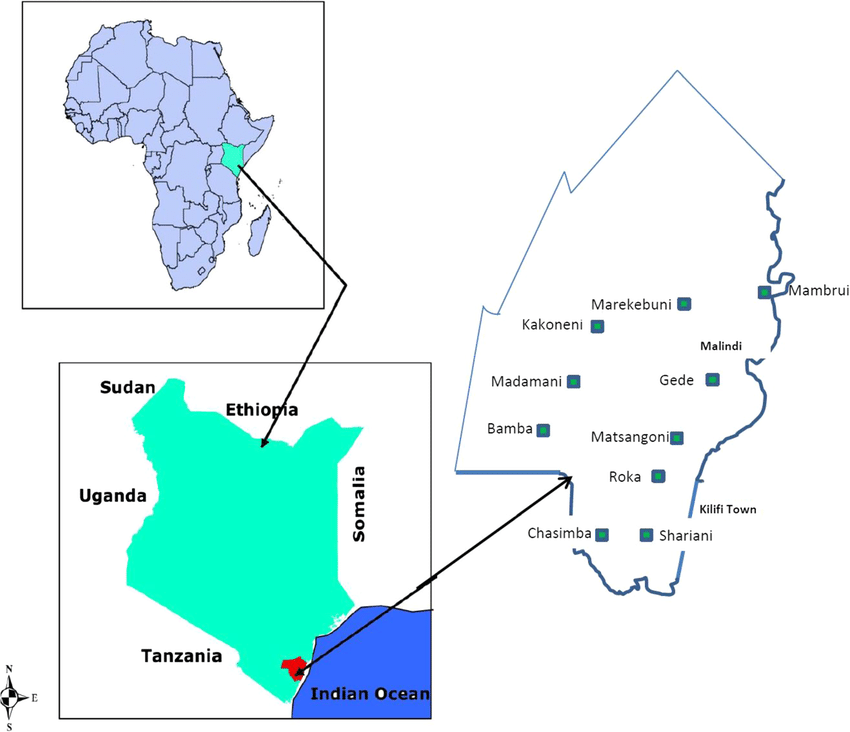
The good thing about this case is that the rule of law was upheld, even though the crime dates from eight years ago. Three accused, Mr Chengo Kadenge, Safari Kombe Koi and his son Kahindi Safar Kombe, were found guilty of murdering Mr. Karisa Katoi Kani, on suspicion of bewitching a women, Mr. Koi’s wife. The judge found them guilty of the murder which happened in Matsongoni Village in Ganze, in Kilifi County, on December 8, 2012. The convicted men will spend the next 35 years in jail.
It is interesting to note that judge Nyakundi explicitly stated that “(..) belief in witchcraft as a justification to kill another human being, is not excusable (…).” Justice Nyakundi added that a fundamental principle is that courts should intervene where culture and traditions are used as a defense or justification to commit murder. (webmaster FVDK).
Father, son to serve 35 years in jail for killing village mate over witchcraft claim
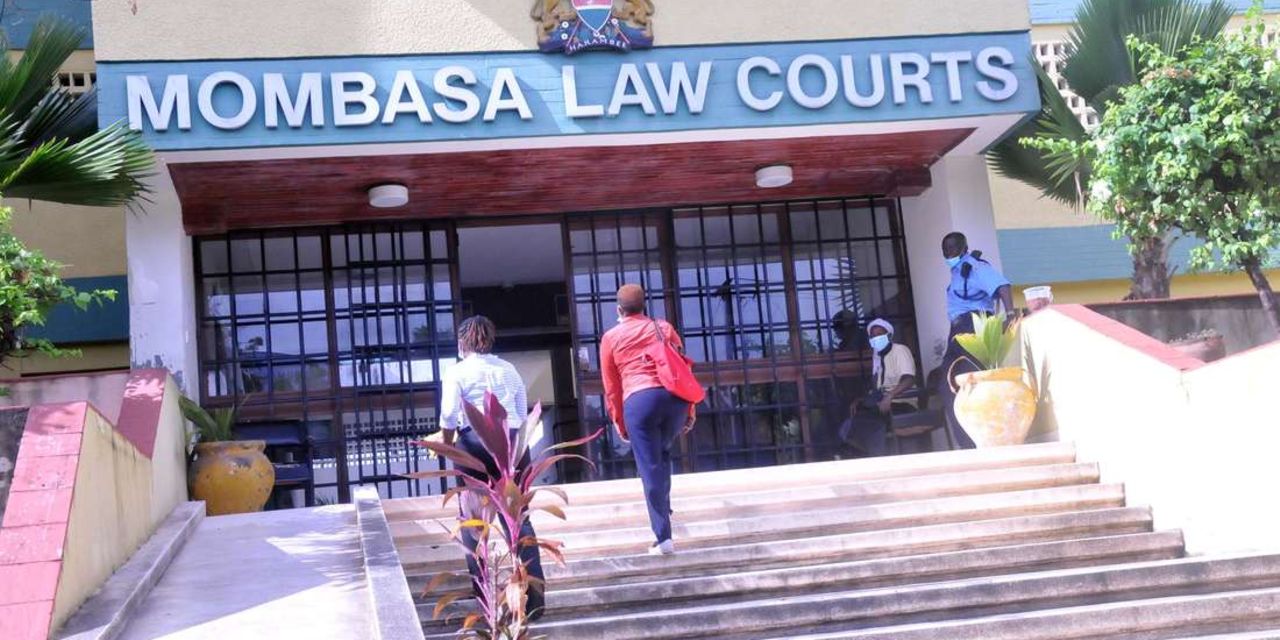
The entrance to Mombasa Courts
Published: December 10, 2020 By: The Nation, Kenya – Philip Muyanga
Three villagers, among them a man and his son, will spend the next 35 years in jail after they were found guilty of murdering their villagemate on suspicion of bewitching a woman.
Mr Chengo Kadenge, Safari Kombe Koi and his son Kahindi Safari Kombe were found guilty of murdering Mr Karisa Katoi Kani, whom they had accused of committing deadly witchcraft.
The woman who died is said to have been Mr Koi’s wife. In sentencing the accused, Justice Reuben Nyakundi said the murder was well planned and executed with a joint common enterprise and malice aforethought.
Justice Nyakundi further noted that a fundamental principle is that courts should intervene where culture and traditions are used as a defence or justification to commit murder.
“This court, being in the exalted position of a trial court in murder cases, has a right and obligation to speak firmly and expand jurisprudence touching on belief in witchcraft as a justification to kill another human being, is not excusable,” said Justice Nyakundi.
Cultural practices
Justice Nyakundi said it is evident that the social-cultural structures on witchcraft beliefs can result in the killing of vulnerable aged men and women of the community especially older people who are socially and economically disadvantaged and lack legal protection.
The accused, jointly with others not in court, murdered Mr Kani on December 8, 2012, in Matsongoni Village in Ganze, in Kilifi County.
The court noted that prosecution witnesses supported a clear narrative that the accused engaged the deceased in a physical altercation following a witchcraft cleansing ritual at the home of Mr Koi.
The accused person gave the deceased a cup and water with a concoction which was to be used to heal or restore the life of the wife of the third accused (Mr Koi).
“From the evidence, the accused persisted in violent attacks against the deceased, as confirmed by prosecution witnesses one to four. The acts of violence involved the use of hard sticks and clubs to inflict harm on the head, and within a few minutes the victim died,” said Justice Nyakundi.
He further ruled that the measure of unlawfulness and omissions by the accused demonstrates beyond reasonable doubt that the victim’s death was neither justified nor excusable.
Justice Nyakundi also rejected the alibi defence by the accused.
“The nuances of the alibi defence generated by the accused persons are of such a character as incapable of credible rebuttal,” said Justice Nyakundi.
In their defence, the accused denied committing the offence, saying they were not near the scene of the crime and, therefore, would not be expected to have killed the man.
On November 22, Blessing Mandabva, from Zimbabwe, shared with us his view on the history of human sacrifices as well as present-day practices of this age-old ritual. His contribution was published in The Standard, a Zimbabwean Sunday newspaper. Recently, I posted other articles with African voices protesting against this phenomenon of ritualistic murders, commonly called muti murders in Southern Africa. See the Op-Ed article in the online Namibian newspaper New Era Live, entitled: ‘Ritual killings: Cry my beloved humankind’, posted on October 27, 2020 and an older article, dating from 2011, ‘Africa: Breaking the silence in ritual killings‘, written by Fanuel Hadzizi, also from Zimbabwe and posted on November 14, 2020.
The recent turmoil in Zimbabwe, following the death of a 7-year old boy, Tawire Makore, who was murdered for muti purposes, clearly shows that the gruesome practice of human sacrifices has not disappeared. See my October 26 posting on this ritual murder that shocked Zimbabwe.
As Blessing Mandabva describes, more people have raised their voices against muti murders including Zimbabwe National Traditional Healers Association (Zinatha) president George Kandiero who distanced his association and all members from all acts of ritual killings. George Kandieo, who also mentioned the ritual murder of Tawire Makore, confirmed what I have stated repeatedly on these pages: “These ritual killings are just a tip of the iceberg (…)“.
Also the Zimbabwe Human Rights Commission (ZHRC) has denounced ritually-motivated killings and issued the following statement: “The ZHRC has noted with concern the alarming rise and high frequency of ritually-motivated killings in Zimbabwe, specifically targeted at children and young people.”
What else can I add?? Read the following contribution and join the struggle against ritualistic murders and other acts based on superstition and motivated by the greed for power and/or wealth.
Warning: the following article contains graphic details of ritual murders (webmaster FVDK).
Human sacrifices, myth or reallity?
Published: November 22, 2020 By: The Standard, Zimbabwe – Blessing Mandabva
Since time immemorial, human beings the world over have pursued answers to the puzzling questions of their origins, sickness, death and after death, poverty, power, the meaning of natural phenomena such as earthquakes, diseases and accidents, among others. They have also inquired on how to protect themselves from such mysterious events. Invention of personified deities, gods and the occult sciences, witchcraft, divination and soothsaying in order to seek the protection of supernatural powers has been the order of the day. Individuals used them for protection from their enemies, to dominate others in societies be it in business, politics, churches and other religious circles to gain power and to accumulate wealth. Human sacrifice has been a phenomenon which has been passed from generation to generation albeit it appearing in various forms.
Human sacrifice is defined as the ritualised, devotedly motivated killing of human beings. It is a fundamental which is not endorsed by any state, but was once practiced by societies across the globe in the past. In this landlocked country of Zimbabwe, there is a misconception on many deaths of humans, children, women and albinos being attributed to human sacrificial rituals which are said to bring quick wealth and fortunes. Human sacrifice, especially of children, occurs frequently despite the government’s efforts to stop it. Times are tough in Zimbabwe, and people are looking for sacrifices to improve their fortunes. Hunger and starvation coupled with the purported economic meltdown which has been attributed to the economic sanctions by the ruling elite whilst those in the opposition blame the ruling elite for poor governance.
Zimbabwe National Traditional Healers Association (Zinatha) president George Kandiero distanced his association and all members from all heinous acts of ritual killings.
He, however, said those ritual killings are mainly done by witches and witchdoctors. According to Kandiero, Zinatha has some specialists who could have been involved in the case of Tapiwa Makore to give guidance in finding a lasting solution.
“It’s rather unfortunate Tapiwa is no more, but we believe the full wrath of the law will take its course. The perpetrators must be brought to book even if they are members of our associations,” said Kandiero.
”These ritual killings are just a tip of the iceberg since a lot of sacrifices in various forms are happening in the underworld.
“Those who do such are everywhere including churches, homes and workplaces and this has to be addressed for people to live in harmony.”
Reverend John Makaniko, a United Methodist Church in Zimbabwe pastor, said: “Human sacrifice is a reality though in this contemporary world it’s now rare.
“The law has abolished human sacrifice and it’s now treated as murder.” According to him, in Christianity, only Jesus Christ was sacrificed for sins of all humanity. He becomes a sacrifice once and for all [Hebrew 10:10].
“Jesus Christ becomes a sacrificial lamb for salvation of all humanity. The human sacrifice done by individuals is for selfish reasons like riches and fame. “This human sacrifice that is shedding blood of other people for selfish ends is evil, sinful and a serious crime.”
“As Christians, we are guided by the scripture’s teachings and commandments like: ‘Thou shalt not kill’ (Exodus 20:13) and our social principles say, ‘life is a sacred gift’; therefore, every human life should be treated with dignity and shouldn’t be sacrificed.
“In short, human sacrifice is a devilish act that has no place in Christianity and progressive society.”
Rev Makaniko added: “In contemporary society, faith in God and appreciating the dignity of hard work will result in success and prosperity.
“The core values of the United Methodist Church clearly state that, ‘we do good, do no harm and stay in love with God’; thus human sacrifice isn’t good because it brings harm to other people and breaks relationships with God.”
According to some South African media reports, body parts can be sold for as little as R3 000 in that country.
I recall vividly growing up in a township when public transport in the form of the commuter omnibuses had just been introduced. At that age, we were scared to death by the stories doing the rounds in the township of the disappearance of children. We were told how kids were being lured by strangers who promised them sweets.
The next thing, their bodies would be found in the bushes with body parts missing. Rumours were that businesspeople were taking the children’s heads to Durban and were trading them off for taxis, kombis and grinding mills. Another unfortunate case is that of Given Flint Matapure who disappeared at Harare Exhibition Park in August 2011. The case took ages to be finalised.
Ritual killings, or human sacrifices, are committed for the purpose of taking human body parts which are said to be used to prepare charms and other traditional medicines for spiritual fortification. In some instances, ritualists and occults target vulnerable members of society such as the poor, women, children and albinos whose families often do not have the resources to demand justice.
In some African countries there is a belief that female body parts possess supernatural powers that bring good fortune or make criminals invisible to police and other authorities. Children and young people are mostly preferred since they will be having a whole lot of life to live than the elderly.
All the success which could have happened to them will now be transferred to the ritualist as the children continue to live in the underworld. It is time governments turned up the heat on culprits and put an end to this violation of human rights.
Heavy sentences should be given to those who commission and carry out the ritual killings.
The Zimbabwe Human Rights Commission (ZHRC) denounced ritually-motivated killings.
“The ZHRC has noted with concern the alarming rise and high frequency of ritually-motivated killings in Zimbabwe, specifically targeted at children and young people,” the ZHRC statement read.
“The heinous murder and mutilation of innocent people is disheartening and should be denounced in the strongest terms by our society and nation as a whole.”
ZHRC also stated that participation in ritual killings violates Sections 48 (1), the universal human right to life, of the Constitution and other sections of international agreements on rights to human life, such as the Universal Declaration of Human Rights (1948), and the International Covenant on Civil and Political Rights.
The rights body called for a collective effort among authorities to end the ritual killings and urged police to undergo further training to adequately deal with issues of human rights violations.
In July 2015, a four-year old pupil from St Lucy Primary School in the Kombo area of Insiza district in Matabeleland South province was found dead with her lips, liver and other body parts missing in a suspected case of ritual murder. Her body was found mutilated in a pond. The incident struck fear into villagers who indicated that they suspected the child was killed for ritual purposes. They started escorting their children to and from school.
Legislator Pupurai Togarepi has moved a motion on the proliferation of chilling incidents of murder indicating that victims of such heinous crimes are the vulnerable and unsuspecting members of society, mostly women and children.
In another bizarre suspected ritual killing in June 2020, a 25-year-old woman, Thabelo Mazolo, had her body mutilated and stashed into a drum filled with acid in Bulawayo. Part of the body, from the waist going down, was missing while breasts and palms appeared to have been sliced off. The ritualist murder had message from a sangoma with instructions to perform on the body, it reads “you must cut yourself and spill your blood onto a mirror. Gaze into the mirror and say out loud that you are selling your soul for riches.”
The practice of ritual killing and human sacrifice continues to take place in several African countries in contravention of the African Charter on Human and People’s Rights and other human rights instruments. In this 21st century, human beings are still being hunted down, mutilated, murdered or sacrificed for ritual purposes across the region.
Several cases of kidnapping and disappearance of persons are traced to the vicious schemes and activities of ritualists. Ritualists hunt for blood and harvest human body parts to prepare charms and magical concoctions. In some cases desperate ritualists invade cemeteries and exhume dead bodies to extract body parts, said one anonymous source.
Many cases of ritual sacrifice take place in secret locations. They are largely unreported, not investigated and go unpunished. The perpetrators and their collaborators capitalise on the prevalent irrational fear of the supernatural among Africans, and the poor and corrupt policing and justice system, to get away with these egregious violations.
Victims of ritual sacrifice are mostly minors nd vulnerable individuals who do not live to seek justice or redress or who lack the resources to seek redress if ever they survive the ordeal.
Human sacrifice is real, it is neither fallacious, frivolous nor fiction. It is a cancer which needs urgent attention and collective efforts by all stakeholders from grassroots level before it is normalised by satanic and evil forces in our societies.
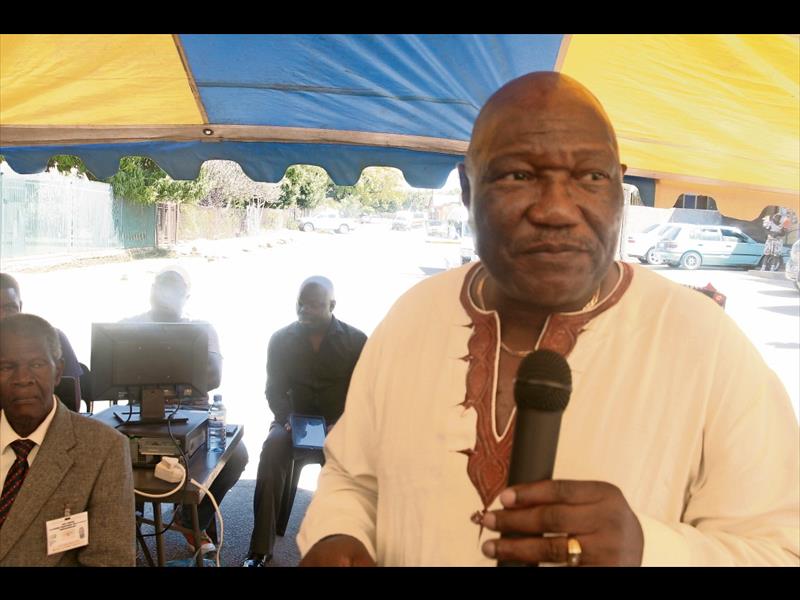
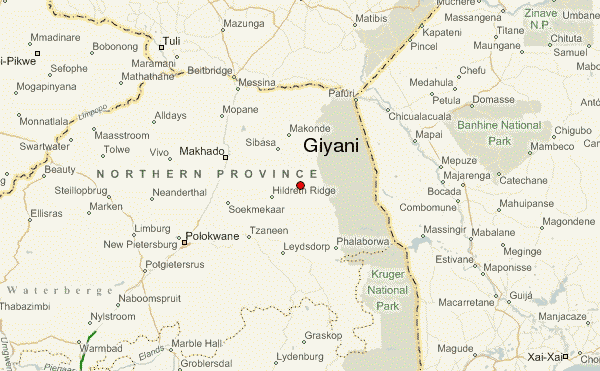
Speaking at a traditional medicine day held in Giyani in 2016, the President of traditional healers association in SADC region, Dr Sylvester Hlathi, urged local traditional healers to stop ritual killings. Isn’t this remarkable – and courageous? On the one hand one could argue that apparently his appeal hasn’t prevented muti murderers in the northeastern part of the country to continue their ugly practices, on the other hand it is promising and encouraging to realize that voices are raised against these heinous crimes based on superstition and a repulsive greed for money and/or power.
Dr. Hlathi’s remarks gave me goose pimples, he spoke openly and publicly, and didn’t beat around the bush. “We as traditional healers must stop using human parts to make medicine, we must stop ritual killings as we are called to heal people not to kill people,” he said.
Kudos for Dr. Hlathi! I wonder what has become of him. (webmaster FVDK).
Traditional leaders urged to stop ritual killings
Dr Sylvester Hlathi addressing local traditional healers during the traditional medicine day. Photo by Tony Myambo.
Published: September 8, 2016 By: Letaba herald – Tony Myambo
The President of traditional healers association in SADC region Dr Sylvester Hlathi has urged local traditional healers to stop ritual killings.
Hlathi was speaking during a traditional medicine day held in cheapside complex outside Giyani on Wednesday.
“We as traditional healers must stop using human parts to make medicine, we must stop ritual killings as we are called to heal people not to kill people,” said Hlathi.
He also urged traditional healers to stop raping patients telling them that they will get healed if they sleep with them.
“We must stop sleeping with our own patients telling them they will be healed only if they sleep with us, this will weaken our traditional medicine not to work as it is not human and ancestors will punish us,” he said.
He also encouraged them to go test for HIV/AIDS. “You must also go get tested, you must stop this thing of saying I don’t have a boyfriend/girlfriend you must get tested so that you can also encourage your patients to go for tests because using only traditional medicine to cure this disease is not good,” he explained.
He also told them to stop giving medicine to criminals to come out of prison or charms to do crime but work with police in order to fight crime.
He however pleaded with traditional leaders to chase away fake traditional healers in their villages.
“Traditional leaders you must demand certificates of practice from these traditional healers, if they don’t have any – chase them away,” said Hlathi.
Hosi Edward Chauke, Congress of traditional leaders of South Africa (CONTRALESA) in Malamulele secretary, applauded local traditional healers for coming together to celebrate traditional medicine day and uniting with one another.
“As traditional leaders we would like to acknowledge you for coming together and for celebrating our traditional medicine. I would like to assure you that as traditional leaders, we recognize you.”
I have repeatedly said it on these pages: Nigeria is Africa’s most populated country, with about 200 million people. Hence, in a way it is not surprising that reports of ritual murders frequently refer to this West African country. However, this does not make the crime less cruel, senseless, and repulsive. How can we ever stop these gruesome practices, based on superstition and greed?
Another word must be said about the police questioning one of the suspects. As can be read in the article below, the confession of the alleged perpetrator was obtained afterintense pressure. What does this imply? We must realize that confessions extracted under duress are not only illegal but also not reliable. Whether this indeed has been the case cannot be concluded with certainty from the text below, but it is useful to be vigilant, given the reputation of the Nigerian police force.
Warning: the article below contains graphic details of the gruesome murder (webmaster FVDK).
How Ibadan secondary school student was tricked, killed by those he trusted
Quadri Olalekan, a student of Ifesowapo Community Secondary School in Ibadan, Oyo state capital, was looking forward to his 14th birthday before he was cut in his prime. As a result of the closure of schools due to COVID-19 lockdown, his parent allowed him to work under Biodun Owolabi, a bricklayer.
The victim, secondary school student Quadri Olalekan.
The families of Owolabi and Olalekan reside at Bodmas junction, Iyana Church area of Ibadan. Perhaps it was one of the factors that they considered before allowing Quadri to work under him. But unknowingly, they had signed him up for a journey of no return.
A day to his birthday, the mother asked him to do some chores and it was while doing this that Owolabi came calling. He had followed his boss who reportedly tricked him that there was a job to do. However, when the mother could not find him after several hours, she raised the alarm and a search began.
According to a family source, a resident of Bodmas junction told the search team that Olalekan was last seen with Owolabi. The team was said to have approached Owolabi who initially denied but confessed to killing the missing child after intense pressure (italics added by the webmaster FVDK).
Owolabi and the cleric accused of orchestrating the murder
Owolabi later took members of the community to the place where Olalekan was buried after life was snuffed out of him. Witnesses said the victim’s arm and his private organ were missing when the corpse was exhumed. He was said to have confessed that a cleric, residing in the community, was the one who orchestrated the murder.
“Owolabi is a son of a landlord in the area and he lives in his father’s house. He is around 21 years. The father is also a bricklayer. Owolabi and Alfa worked together and because schools were closed for a long time, the two engaged Quadri as labourer. Quadri was a student of Ifesowapo Community Secondary School,” said the witness who preferred anonymity.
“When it was discovered that the boy was missing, Owolabi was approached but he said he did not know where the boy was. When members of the community intervened, he said the boy had been killed and buried. He said he and the Alfa killed the boy and took parts of his body for ritual purposes. According to him, a popular baker and another individual in the area paid them to bring the body parts.
“He then took them to the place where the boy was buried. His remains were stuffed in a sack before being buried in a shallow grave. The arms were cut off while part of the buttock was also sliced off. The sack was dripping with blood when it was exhumed.
“When Alfa was apprehended, he denied knowing anything about it. His reaction triggered anger among the youths and members of the community and they set him on fire. When the houses of the killers were searched, we found charms and other dangerous weapons in their rooms. The belongings of the Alfa were also set ablaze.”
When TheCable visited Quadri parents’ house, the mother, Adenike Olalekan, was still in grief, weeping uncontrollably.
A relative of the mother who simply identified herself Bisi said Quadri was to mark his 14th birthday a day after he was killed and his mother had already bought clothes for the occasion.
“Quadri woke up in the morning and his mother asked him to go and wash plates. He was doing that when Owolabi approached him to help them in bricklaying work. They had been working together before,” she said.
“We expected him till evening but he did not return. We called Owolabi’s number several times but he did not pick the call. Then we went to his parents’ house where we saw him. He denied whereabouts of Quadri.
“He later took us to Alfa house. When Alfa saw us, he wanted to run away but he was caught by the people that followed us. He also denied knowing where Quadri. The youths in the area were angry so they forced his door open and searched his house. Charms and other fetish objects were found inside, including women pants.
“Owolabi later told us that Alfa strangulated the boy in a place called Agric bush. When we got there, we saw Quadri’s mutilated body and corpse of another boy there. Our son’s hands, eyes and buttock were cut off.
“His 14th birthday was on Sunday and his mother bought clothes for him to celebrate it. But he was killed a day before his birthday. His father works in Port Harcourt.”
Oyo police commissioner at a press briefing at a media briefing.
Gbenga Fadeyi, public relations officer of Oyo police command, told TheCable through a text message that the victim’s family did not report the incident.
The Nigerian authorities have been facing nation-wide protests against the human rights abuses, including extrajudicial killings, intimidation and harassment of citizens, of the Special Anti-Robbery Squad (SARS). Despite its dissolution by the Inspector-General of Police, the protests haven’t waned. On social media the hashtag #EndSARS has become trending. However, on this site we are not dealing with the abuse of power by public authorities, unless it relates to ritualistic acts, muti murder, witchcraft practices, superstition or a cover-up of high-placed individuals implicated in these outdated practices.
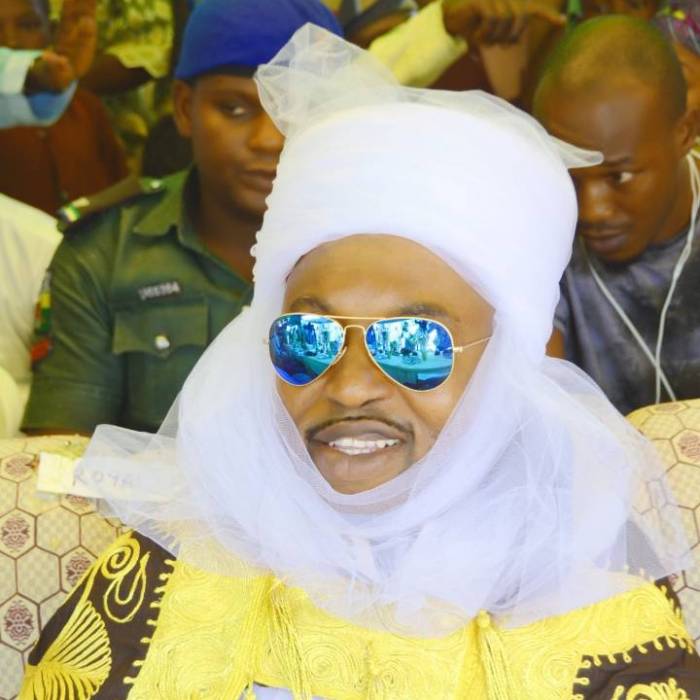
Recently, the Oluwo of Iwo, Oba Abdulrosheed Akanbi challenged the #EndSARS protesters to focus on ritual killing, cultism and other social vices which terrorize the Nigerian people. According to the monarch, ritual killing was deadlier and more devastating to the youth than SARS could be.
The monarch is to be commended for his outspoken position in the fight against ritual killings. Let’s hope that his outspokenness helps in eradicating ‘money rituals’ in Nigeria (webmaster FVDK).
The Oluwo of Iwo, Oba Abdulrosheed Akanbi
The Oluwo of Iwo, Oba Abdulrosheed Akanbi, speaks out against ritual killings
Despite the dissolution of the Special Anti-Robbery Squad by the Inspector-General of Police, Mohammed Adamu, on Sunday, protests against the unit for gross human rights abuse, including extrajudicial killings, intimidation and harassment of citizens, have continued.
However, the police authorities also received support from some Nigerians, who kicked against the scrapping of the unit.
Some protesters, on Sunday, stormed the head office of PUNCH Newspaper to demand the scrapping of the unit.
One of the protesters, Damilola Ayanniyi, said it was to demand the scrapping of SARS, adding that the policemen working under the unit had harassed him on three different occasions.
23 Ogun protesters arrested with guns, charms
In Abeokuta, Ogun State, 23 protesters were arrested by the police with guns and assorted charms.
They were arrested on Saturday during a protest that turned violent.
The Police Public Relations Officer in the state, DSP Abimbola Oyeyemi, stated this in a statement on Sunday.
According to him, after the Alake of Egbaland, Oba Adedotun Gbadebo, and the Commissioner of Police, Edward Ajogun, had addressed them, the protesters headed for the palace of the Olowu of Owu, Oba Adegboyega Dosunmu, where the Owu Day was ongoing and violently disrupted the ceremony, which had former President Olusegun Obasanjo and the Deputy Governor of the state, Noimot Salako, in attendance.
The PPRO added that the protesters damaged the back windshield of the deputy governor’s official car and later went to the SARS office at Magbon, Abeokuta, fired some gunshots at the men and injured one Sergeant Akabudike Augustine.
Oluwo advises protesters
Meanwhile, the Oluwo of Iwo, Oba Abdulrosheed Akanbi, has challenged the #EndSARS protesters to channel their energy into kicking against ritual killing, cultism and other social vices in the land.
The Oluwo spoke on Sunday in response to calls on Instagram that he should lend royal in support of the protests.
The monarch said ritual killing was deadlier and more devastating to the youth than SARS could be.
Oba Akanbi, who lamented the increasing cases of ritual killings, said it was disappointing that despite the high level of crime in the land, Nigerians had not protested against ritual killings.
Campaign’ll ensure respect for human rights – Catholic Secretariat
A few days ago my attention was drawn by an Op-Ed article in an online Namibian newspaper, New Era Live. The article was entitled: “Ritual killings: Cry my beloved humankind“. It is a cry for attention, a cry for vigilance, a cry for leadership and for stiffer sanctions for those who are responsible for these heinous crimes, including traditional healers and – too often – relatives of the innocent victims, in many cases young children.
The anonymous author (a staff reporter) starts his or her plea stating “I want to share with you the excruciating pain that stabs my heart every time I read or hear about the senseless loss of life due to ritual or muti killings.”
I was shocked reading this. Is the present situation that bad? How frequent are ritual murrders (‘muti murders’) in Southern Africa?
I monitor relevant events in African countries with particular interest, as this site also demonstrates. Whereas I feel a kind of pride or joy when confronted with readers and/or reporters rejecting the repulsive practices of ritual or muti murders, it also hurts to see a confirmation of the plague that terrorizes too many people in too many African countries.
“One shudders to think about the many muti killings of people, young and old, that are happening almost on a daily basis in Southern Africa in particular, (…)”, the anonymous author continues.
Also revealing is the following statement:
“A study carried out in South Africa by scholars Randitsheni, Masoga and Madzusi (2017) revealed that “[some] pastors, businessmen, traditional leaders and leaders are involved in ritual murders”. The three scholars give more details of their research findings in their paper titled “Some perspectives on the impacts of ritual murders in the Vhembe district of South Africa: An interpretive phenomenological approach” which was published in the Journal of Social Sciences (Volume 48, Number 3). This is not to give an impression that ritual murders occur in South Africa only. Other scholars who have conducted researches in this area have revealed similar results in Zimbabwe, Zambia, Botswana, Tanzania, Nigeria, Eswatini, Uganda, and Namibia, just to mention a few countries. “
I am flabbergasted. At the same time I am proud of the author and everyone who thinks alike. It strikes me that this cry for justice, for the eradication of this scourge in our contemporary societies, comes from Namibia. Apparently, much more occurs beneath the surface in this Southern African country than one would think at first glance. The ‘New Era’ newspaper which published this op-ed is a leading source of community and national news in Namibia. Its owners and editors are to be commended for their courageous decision to publish this view. May many more newspaper owners, editors and journalists join the war against ritualistic murders in Africa.
Together it will be possible to eradicate this medieval belief in superstition. Nothing is impossible. “You never fail until you stop trying.” (webmaster FVDK)
“Ritual killings: Cry my beloved humankind”
Published: October 22, 2020 By: New Era Live, Namibia
If you are reading this article, wherever you are, prepare to shed tears. Prepare to travel with me on this emotional journey, as I interrogate the evil that men do, that of ritual killings, which have left people questioning the essence of life, since some people can take it away from you or someone at once, just like that. I want to share with you the excruciating pain that stabs my heart every time I read or hear about the senseless loss of life due to ritual or muti killings.
The world has turned topsy-turvy, completely upside down, and everyone’s life is at risk, either directly or indirectly. People fear for their lives and the lives of their children and loved ones. Everyone’s life is in danger as there are some immoral people who have taken the law into their hands, and can decide how many more days you are left with alive on this earth. It is horrendous.
The stonehearted murderers can be anyone ranging from, paradoxically, people closest to you, to complete strangers. The love of riches and fame, the eagerness to get rich quickly without working for it, and the love of power and fame have led people to involve themselves in atrocious, inhuman activities. One shudders to think about the many muti killings of people, young and old, that are happening almost on a daily basis in Southern Africa in particular, and elsewhere in the world. Research reveals that ritual killings are so rampant in Africa that some researchers have described ritual murder as a pandemic. The grisly killings of innocent victims, especially children and women, have shocked communities, societies and the whole world.
Many unsuspecting victims have been lured by people they know and killed for ritual purposes. We have read and heard about small children and teenagers who have been brutally murdered by their close relatives. As you read this article, or as you sit there at home or in a classroom – wherever you are – always bear in mind that you may be a candidate for ritual murder. Many victims have lost their lives through the involvement of their close relatives or loved ones. In these cases, it becomes tricky for the law enforcement agents to prevent such murders as relatives and loved ones are supposed to take care of the children, and not to kill them.
The belief that a human being’s body parts or limps bring luck, riches and power to people has fuelled the crime of ritual killing. Corpses have been discovered without heads, private parts and internal organs, suggesting that these are the most sought-after parts to be used in muti or medicinal concoctions. As the evil men harvest human body parts for their benefits, societies are traumatised, yet it is in these societies that we find the perpetrators of this heinous crime. It is in these societies that most of the killings are secretly planned and executed. The irony is that some respectable members of these communities promote these ritual murders for various reasons. Some of them are leopards clothed in sheep’s skins.
A study carried out in South Africa by scholars Randitsheni, Masoga and Madzusi (2017) revealed that “[some] pastors, businessmen, traditional leaders and leaders are involved in ritual murders”. The three scholars give more details of their research findings in their paper titled “Some perspectives on the impacts of ritual murders in the Vhembe district of South Africa: An interpretive phenomenological approach” which was published in the Journal of Social Sciences (Volume 48, Number 3). This is not to give an impression that ritual murders occur in South Africa only. Other scholars who have conducted researches in this area have revealed similar results in Zimbabwe, Zambia, Botswana, Tanzania, Nigeria, Eswatini, Uganda, and Namibia, just to mention a few countries. As I write, the Zimbabwean community is failing to come to terms with how a man could have allegedly taken part in the planning and ritual killing of his brother’s seven-year-old son. The account of the cold blooded murder of the fateful boy by the co-accused man, in this case, is available on Youtube for those who have the guts to listen to such a chilling narrative of a despicable act.
The ubiquity of ritual murders in Africa proves that the crime is a scourge in our contemporary societies. The crime is a cancer that is spreading in our societies at an alarming rate. The belief in supernatural powers and superstition are the driving forces of ritual murders and sacrificial killings in our societies. Traditional healers tell you, for example, that in order for you to be successful in life, you must kill your son or daughter, or someone you love dearly like your wife. Foolishly, some people believe this and they murder their loved ones for nothing. It is also true that the moral fabric of our societies is decaying at a fast rate. The African concept of Ubuntu seems to be melting away fast, leaving a culture of violence in our societies. One result of the loss of Ubuntu is that the sanctity of human life is no longer respected; this is why some people can be hired to kill for money.
Concerned researchers on ritual murders have gone to the extent of studying ancient civilisations. They have revealed that the bible is replete with sacrificial killings or offerings of human beings. In some religions, sacrificial killings happen today. In order to curb ritual murders, families should be vigilant and protect their children. Community leaders and politicians must denounce these killings at gatherings. Stiffer sentences must be imposed on criminals convicted of ritual murders. Let us teach the love of one another as humans in our homes. Ubuntu teachings should find a place in our homes. Let us be exemplary to our children since psychologists have proved that children learn what they live. Say no to ritual killings and save lives.
Another development in the sad saga of the ritualistic murder of the young, 7-year old Tapiwa Makore. It must be said that local authorities and notably the local police acted swiftly after the discovery of the victims’ mutilated body, on September 18. Even President Mnangagwa reacted on the muthi (muti) murder, condemning the heinous crime on September 25 (see my posting dated October 2, 2020).
It is believed by superstitious, wicked people that body parts which have been taken – from a living victim (!) – and processed in a particular way, by a traditional healer or witchdoctor (n’anga), that these ritualistic activities will enhance one’s power or wealth.
There is no place for such superstition and disrespect for human life in the year 2020 (or before that year). The rule of law must apply, suspects should be put on trial and judged by an independent judge. And more prevention should take place: through education.
Warning: The following articles contain graphic details of the cruel murder (webmaster FVDK).
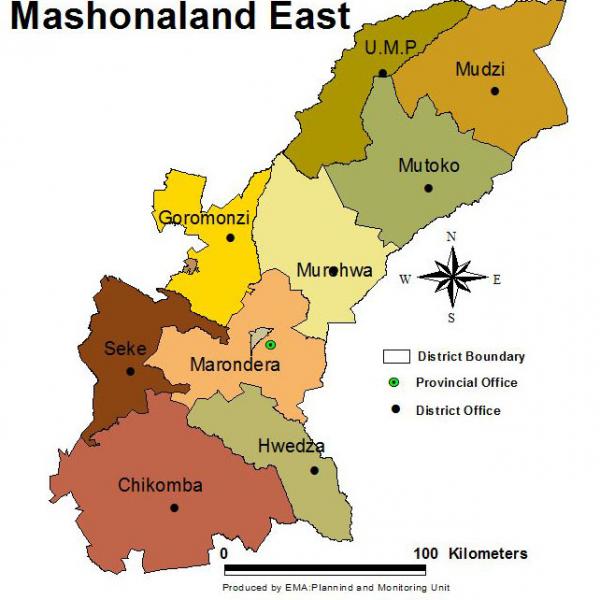
Murehwa ritual murder: Police quiz n’anga
Asst Comm Paul Nyathi
Published: October 16, 2020 By: The Herald, Zimbabwe – Investigations Editor
POLICE have picked up a traditional healer for questioning over the missing head of the seven-year-old Murehwa boy, Tapiwa Makore, suspected to have been murdered for ritual purposes.
Body parts taken in a ritual murder which occurred at Makore Village under Chief Mangwende, would have to be processed in particular ways, the superstitious believe, so that they bring good fortune and riches.
Police started hunting for the traditional healer they believed was implicated in this killing soon after they arrested the two men they suspect were the actual killers.
Only a torso and legs were recovered from the dismembered body, but the head is still missing.
In their investigations, police recovered the head of another child, a 12-year-old, in the same village, but think it may have been exhumed from a grave.
Although the police did not disclose the name of the traditional healer, they confirmed he was being questioned.
National police spokesperson Assistant Commissioner Paul Nyathi said police have established that they had been given a lot of misleading information on the death of the boy and people were hiding crucial information.
“We have realised that some people are not telling the truth and they are hiding crucial information. But we will surely get to the bottom of the matter and the truth will come out,” said Asst-Comm Nyathi.
Tapiwa was allegedly murdered for ritual purposes by his uncle Tapiwa Makore (Senior) who used his own domestic worker, Tafadzwa Shamba (40).
The boy was kidnapped in the family garden in the village.
Shamba, a herdsman, and the boy’s uncle have since been arrested and taken to court facing murder charges.
They now await trial while in remand prison. They were remanded in custody to October 26 in absentia yesterday, as they are still assisting police with investigations.
Meanwhile, police have taken the head of a 12-year-old child recently found in the same village for forensic analysis.
There has been no report of another missing child in that age group, creating room for suspicion that the head could have been exhumed from a grave.
“The other head found in Makore village is now subject to forensic analysis. So far no report of a missing person falling in that category has been received by the police. We are still investigating that matter,” said Asst-Comm Nyathi.
During investigations, Shamba recently told detectives he killed the boy by cutting off the head with a knife in the dead of the night, while the boy’s uncle was holding a torch.
Shamba said after the alleged murder, he carried a black plastic bag containing the head and the dismembered body while his employer, who is the boy’s uncle, carried another bag containing the arms and legs.
He led the team of detectives to the uncle’s homestead where he said he fed the boy, drugged him with kachasu and locked him up in a room for hours.
Shamba said he met the boy’s uncle around midnight and took the boy to a nearby mountain, where they allegedly killed him.
“Around midnight, we opened the door and I carried the boy, who was still in deep slumber to a mountain in the village. Mr Makore carried the knives and the plastic bags. While here (in the mountain), I pressed the boy to the ground and cut off his head with a sharp knife, while his uncle was holding a torch for lighting.
“I also cut off the hands and legs, but we packed the parts in different plastic bags. I carried the one with the torso and the head while Mr Makore carried another one containing the legs and hands,” he said.
At the scene, investigators saw human waste, believed to have been excreted by the boy during the murder.
Shamba told detectives that he cleaned the scene of the blood and set the grass on fire to destroy evidence.
He said while walking back to Makore’s homestead, he felt the load was becoming heavier before dumping the torso near Mr Summer Murwira’s homestead.
While at Makore’s homestead, Shamba said he was instructed to put the head in one of the rooms, which he did.
The following day, Shamba said he dumped the arms and legs at a nearby grave as police investigations were intensifying.
Pastor Charles Charamba Speaks Out On Murehwa Ritual Killing
Pastor Charles Charamba
Published: October 14, 2020 By: iHarare, Zimbabwe – Audrey L. Ncube
Gospel musician Pastor Charles Charamba has condemned the killing of children for ritual purposes. The condemnation comes in the wake of the murder of a seven-year-old Murehwa boy, Tapiwa Makore, for ritual purposes, allegedly by his uncle.
In an interview with Hmetro, Pastor Charamba decried the loss of young children as a result of heinous and evil actions for rituals and witchcraft purposes.
“The disappointing aspect in this account of Tapiwa from Murewa is that those men that wanted to be rich, wanted to be rich during this lockdown knowing that everyone in the world has been impoverished.
“They were led by that need to be rich when everything else around the world is stagnant, that is very evil,” Pastor Charamba said.
Pastor Charamba revealed that he is pained by the unfortunate killing of Tapiwa Makore for ritual purposes. He emphasized how the Bible talks about the sacredness of life.
“For me as a pastor, it is very unfortunate that we lost Tapiwa and others of his age but I am saying that life is sacred.
He explained it is painful and unfortunate that these killings are done by people very close to the children. He called on guardians to keep children safe and not to fall under the influence of superstition as it is an enemy of society.
“It is something that is very sad and very unfortunate because it is being done by people who are supposed to be trusted custodians of the children. They abuse their offices and also abuse their relationships with their victims.
“We are hoping that the Almighty guides us so that our society changes and improves when it comes to issues that have to do with trust.
“Above all, the way in which we people want money nowadays is not a good way at all and this is also being caused by what is known as superstition because what people usually regard as worshipping is not actually worshipping,” he said.
Murehwa Ritual Murder Details Emerge… Victim’s Uncle Wanted To Use Body Parts To Get Rich And For Horticulture Project
Tapiwa Makore Senior
Published: October 1, 2020 By: iHarare, Zimbabwe – Sharon Chirisa
Murehwa Ritual Murder Details… Victim’s Uncle Wanted To Get Rich
The senseless murder of 7 year old Tapiwa Makore from Makore Village under Chief Mangwende, in Murehwa, left the whole country with a bitter taste in their mouths.
The whole country is still recovering from the heinous crime and never has been the pursuit of justice been swift and urgent before.
Tapiwa Makore was abducted while he was watching over his family’s garden from thieving monkeys, only for his mutilated corpse to turn up the next day, being ravaged by the Makore neighbors’ oblivious dogs.
A breakthrough emerged in the case, after the cattle herdman, Tafadzwa Shamba was arrested in connection with the murder, eventually leading to Tapiwa’s namesake and uncle, as being the mastermind behind the cold blooded killing.
The police were correct in treating it as a ritual murder, because that is what it turned out to be after further investigations.
Ritual murders are often accompanied by mutilation and the dismemberment of certain body parts which are believed to be the main ingredients for spells, this mostly includes the head, private parts, tongue and sometimes the eyes and limbs.
The reason behind Tapiwa Makore’s murder is more shocking like the murder itself.
According to state broadcaster reports earlier this week, his uncle had him killed because he wanted to increase his wealth and boost his horticulture project using dark magic.
Tapiwa Makore’s other body parts were taken to a yet to be identified witch doctor, who would then perform the spell.
Even more chilling was the fact that Tapiwa Makore Senior stood by, holding a torch for illumination, as Tafadzwa Shamba was murdering his nephew.
Tapiwa Makore’s final hours must have been frightening and lonely as he was detained in the home of the man who was not only a trusted family member, but his namesake as well.
The boy was restrained, drugged using an illicit brew of alcohol and then taken to a mountain in the night where he was decapitated and mutilated.
His uncle Tapiwa Makore Snr , initially denied the accusations but an arrest was made.
Makore and Shamba are currently remanded in custody, awaiting trial on the 13th of October 2020.
The stain of his death is one that will linger on in the psyches of many.