The four-year old toddler whose body had been found in the Thuci river ten days ago has been laid to rest. The bereaved parents can only hope that there is justice, but they depend on action of the authorities. It is not the first murder case in the area. Three months ago a little girl was also found dead in a nearby water. What happens in Kenya these days? (webmaster FVDK)
A cry for justice: murdered boy buried in Embu County; Brayden Mutwiri murder linked to ritual killing
Published: January 23, 2021 By: KTN news, from The Standard – video
A somber mood engulfed the burial ceremony of Brayden Mutwiri, a four year old boy whose body was found decomposing at river Thuci last week in Embu County. The boy whose death is suspected to have been linked to a ritual killing was today laid to rest in Kanyuambora, Mbeere North Sub-County, Embu County.
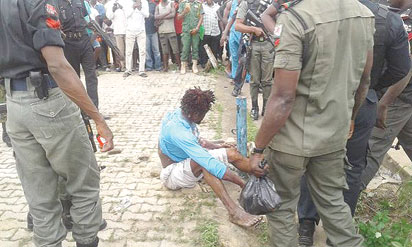
It’s not the first time that Kenyans take the law into their own hands – and it won’t be the last time either. Of course, this is wrong. The rue of the law must apply. People who are suspected of committing a crime should be apprehended, put on trial, and an impartial judge should find them guilty or not-guilty. However, the anger of local residents sometimes unlashes forces which result in mob justice. It happened in Kavengero village, in Embu County, after the mutilated, dead body of a four-year old toddler had been found in a nearby river.
An autopsy must confirm whether this was a case of ritual murder. Meanwhile the local population has no doubts. Their anger was fed by the fact that three months ago, a little girl was also found dead and floating in the water.
The obligation of the state is to protect its citizens and to arrest, try and sentence people who break the law (webmaster FVDK).
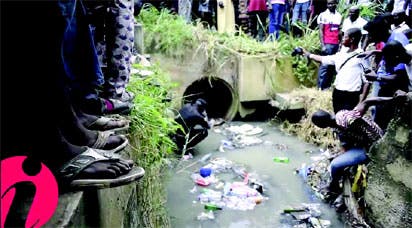
Residents of Kavengero village in Embu County at the scene near Thuci River where the body of a four-year-old-boy was found on January 13, 2021. Photo: George Munene
Angry Residents Burn Down 4 Houses Belonging to Trader
Published: January 14, 2021 By: Kenyans.co.ke – Michael Musyoka
Angry residents on Wednesday, January 13, descended on the homestead of a trader in Embu burning down four houses, whom they believed was behind the kidnapping and eventual murder of boy in the area.
Confirming the incident, Mbeere North Sub-County Police Commander Kilonzo Kivinda stated that the residents went on a rampage after police discovered the body of a four-year-old boy dumped in the Thuci river.
“The mob became violent and destroyed property owned by the trader over the death of the boy but we are investigating the matter,” he stated.
According to the security official, the residents raided the man’s shop setting it ablaze using petrol before heading to his homestead where they burnt down all the buildings there.
The mob also uprooted his Muguka crop in their outrage.
The police commander warned the residents against taking the law into their own hands adding that they had arrested the trader for questioning.
We have picked up the trader and he is assisting us with investigations,” he stated.
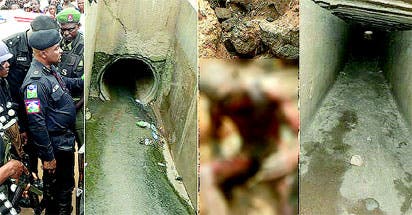
The body of the boy who had gone missing in December 2020, was discovered by criminal investigation officers in between rocks in the river with the tongue missing.
The body was taken to Siakago Hospital mortuary for a post-mortem.
Area chief Charles Njeru noted that the residents launched a search for the boy when he had gone missing.
He added that the boy was the second child from the area to be retrieved from the river.
“Three months ago, a little girl was also found dead and floating in the water,” he added.
Recently, there has been an upsurge in ritualistic murders or allegations of ritual killings in the country. See my previous postings (January 2021, December 2020, November 2020) on suspected and reported cases – although we always have to bear in mind that very likely the number of suspected and discovered ritual murders are only the tip of the iceberg.
The reason for this apparent increase in the number of ritual murders is not known.
The case reported below has all the characteristics of a ritual murder. However, since the body found had decomposed beyond recognition after remaining in water for weeks, an autopsy will be needed the determine the cause of the victim’s death.
It was reported that three months ago another child had been found dead in the river. (webmaster FVDK).
Ritual killing? Embu pupil says he slaughtered cousin, drank blood
Image: The Star
Published: January 15, 2021 By: The Star, Kenya – Reuben Githinji
In Summary
• Mutwiri went missing in late December from his home in Kavengero, Mbeere North.
• The suspect and his accomplices lured him as he played at home and took him to the river.
A Embu boy, 16, led police in the search and recovery of the body of his four-year-old cousin he allegedly murdered and drank his blood in a suspected ritual sacrifice.
The Standard 8 pupil on Wednesday led detectives to River Thuci where they recovered the body of Brayden Mutwiri. It had decomposed beyond recognition after remaining in water for weeks. Mutwiri went missing in late December from his home in Kavengero, Mbeere North.
The suspect and one of his accomplices were arrested on Monday and held at Siakago police station. He directed the police to the river where the body was found stuck between two rocks.
Speaking to the press at the scene, their uncle Nephat Nyaga said the suspect narrated how he and his accomplices murdered the boy, drank his blood, then threw his body into the river.
The suspect and his accomplices lured the boy as he played at home and took him to the river.
Area chief Charles Njeru told the press that the boy mysteriously disappeared from home in late December and residents had been searching for him since.
Njeru said the bereaved family will have to wait for the postmortem result to ascertain that the body is Mutwiri’s.
The local administrator said this was the second incident of a missing child being found dead in the river. The first was a girl who went missing and her body retrieved from the river three months ago.
Njeru cautioned residents against settling their family grudges by attacking and killing children, urging them instead to follow the legal procedures of resolving disputes.
Residents condemned the killing and called for quick investigations so the killers are brought to book.
Purity Muringo said parents from the area now live in fear for the security of their schoolchildren. She said lives are at stake. Muringo called for thorough investigations to unravel the mysterious killings of innocent children.
Police retrieve body of four-year old who went missing
The body of Brayden Mutwiri was retrieved from River Thuci in Embu County. [Standard]
Published: January 14, 2021 By: The Standard, Kenya – Murithi Mugo
The body of a four-year-old boy from Kavengero in Mbeere North Sub-County, Embu who went missing three weeks ago was yesterday found and retrieved from Thuci River.
The body of Brayden Mutwiri was retrieved after a long search since late December when he went missing.
Nephat Nyaga, uncle to the deceased said a 16-year-old boy is the main suspect.
Nyaga said the boy narrated how, with other accomplices from the area lured the deceased while playing at home and took him to the river where they killed him before dumping his body.
According to Nyaga, the suspects used the boy to commit the crime with a promise of monetary reward.
The story presented below is not about ritual killing, or muti murders, as these crimes based on superstition and witchcraft are called in Southern Africa. It’s about the violent death of children including muti murder, however.
As stated in the article below, “According to official figures, around 1,000 children are murdered every year in South Africa, nearly three a day. But that statistic, horrific as it may be, may be an undercount.”.
The same applies for muti murders. The muti cases known are just the top of the iceberg.
For this reason I have decided to include the following article which was originally published by Associated Press (webmaster FVDK).
In South Africa, child homicides show violence ‘entrenched’
Mourners look at the body of 5-year-old Wandi Zitho at his funeral in Orange Farm, South Africa, on April 28, 2020. The boy was murdered in a suspected witchcraft ritual and his body was found in his neighbor’s tavern. (AP Photo/Bram Janssen)
Published: December 22, 2020 By: KSAT.com / Associated Press – Gerald Imray And Bram Janssen
CAPE TOWN – At night, Amanda Zitho worries her little boy is shivering and cold in his coffin and yearns to take him a blanket. She knows Wandi’s dead and gone and it’s senseless, but that doesn’t stop the ache.
Wandi was 5 when he was killed in April, allegedly strangled with a rope by a Johannesburg neighbor — another dead child in a land where there are too many.
According to official figures, around 1,000 children are murdered every year in South Africa, nearly three a day. But that statistic, horrific as it is, may be an undercount.
Shanaaz Mathews thinks many more children are victims of homicides that are not investigated properly, not prosecuted or completely missed by authorities. The official figures are “just the tip of the iceberg,” said Mathews, the director of the Children’s Institute at the University of Cape Town and probably the country’s leading expert on child homicides.
In a country where more than 50 people are murdered every day, children are not special and are not spared.
“Violence has become entrenched” in the psyche of South Africa, Mathews said.
“How do we break that cycle?” she asked.
In 2014, she embarked on a research project to uncover the real extent of those child deaths. She did it by getting forensic pathologists to put the dead bodies of hundreds of newborn babies, infants, toddlers and teenagers on examination tables to determine exactly how they died.
Child death reviews are common in developed countries but had never been done in South Africa before Mathews’ project. As she feared, the findings were grim.
Over a year, the pathologists examined the corpses of 711 children at two mortuaries in Cape Town and Durban and concluded that more than 15% of them died as a result of homicides. For context, Britain’s official child death review last year found 1% of its child deaths were homicides. Mathews’ research showed homicide was the second most common cause of death for children in those two precincts.
“And the numbers are not going down,” she said. “If anything, they are going up.”
There are two patterns in South Africa. Teenagers are being swallowed up in the country’s desperately high rate of violent street crime. But also, large numbers of young children aged 5 and under are victims of deadly violence meted out not by an offender with a gun or a knife on a street corner, but by mothers and fathers, relatives and friends, in kitchens and living rooms, around dinner tables and in front of TVs.
Fatal child abuse is where the justice system often fails and cases are “falling through the cracks,” Mathews said.
There was, she says, the case of a 9-month-old child who had seizures after being dropped off at day care. Though rushed to the hospital, the child died.
Doctors found severe head injuries and told the mother to go to the police, but no one followed up. The mother never reported the death. When investigators tried to revive the case nearly two years later, the baby had long been buried and the evidence was cold.
Joan van Niekerk, a child protection expert, recounts numerous cases tainted by police ineptitude and corruption.
“I sometimes go through stages when I am more angry with the system than I am with the perpetrators and that’s not good,” she said. She said justice for children in South Africa is unacceptably “hard to achieve.”
And failures of justice sometimes lead to more deaths.
The neighbor originally charged with killing Wandi Zitho was released and the case provisionally dropped because the police didn’t deliver enough evidence, possibly because of a backlog in analyzing forensic evidence, according to one policeman working the case. Months later, the woman was arrested again and charged with murdering two other children.
Then there was the case of Tazne van Wyk.
Tazne was 8 when her body was found in February dumped in a drain near a highway nearly two weeks after she disappeared. She had been abducted, raped and murdered, police said.
Tazne’s parents blame the correctional system for paroling the man charged with their daughter’s murder despite a history of violent offenses against children. He’d already violated his parole once. They also fault police for failing to act on a tip that might have saved Tazne in the hours after her disappearance.
The case was high profile. The Minister of Police spoke at Tazne’s funeral and admitted errors. “We have failed this child,” he conceded, pointing at Tazne’s small white coffin, trimmed in gold. South African President Cyril Ramaphosa visited the van Wyk home and promised meaningful action.
Nine months later, Tazne’s parents feel it was all lip service.
“How many children after Tazne have already passed away? Have been kidnapped? Have been murdered? Still nothing is happening,” said her mother, Carmen van Wyk.
She sheds no tears. Instead, anger bubbles inside her and her community. Houses connected with the suspect and members of his family were set on fire in the wake of Tazne’s killing.
It’s not just on the police to stop the abuse, said Marc Hardwick, who was a policeman for 15 years, 10 of them as a detective in a child protection unit.
He recalls one case, from 20 years ago. A 6-year-old girl was beaten to death by her father because she was watching cartoons and, distracted as any 6-year-old would be, wasn’t listening to him.
When they arrested the father and took him away — he was later sentenced to life in prison — the victim’s 9-year-old cousin approached Hardwick and said: “I think you stopped my bad dreams today.”
Clearly, children in that household had been living a nightmare, and the other adults had remained silent, said Hardwick: “The reality is that child abuse is not a topic people want to talk about.”
Allegedly, another case of ritual murder in Zimbabwe. A 6-year-old girl brutally murdered in Mwenezi, for apparent superstitious reasons. Zimbabwe has not yet recovered from one of its most notorious ritual murder cases in its recent history – the murder of 7-year-old Tapiwa Makore, in Murehwa village, in September 2020, extensively covered on this site – and of the cruel murder of a juvenile in Gokomere, Masvingo last month.
It is difficult to say whether there is in increase in ritualistic activities and murders in Zimbabwe or – also a likely explanation – there is an increased attention of local and regional authorities as well as the press – for this type of crimes and to report actual or suspected incidents. (Webmaster FVDK)
Mwenezi girl (6) killed in suspected ritual murder
In a yet another case of ritual murder, two men from Mwenezi allegedly murdered a six-year-old girl and burnt her body after removing her private parts.
This comes after the dust has hardly settled following the murder of a 7-year-old Murehwa boy, Tapiwa Makore, which was followed by another gruesome murder of a juvenile in Gokomere, Masvingo last month, yet another murder case of a minor has been recorded in Mwenezi.
The suspects, Taruziva Sithole (37) and Shackmore Dube (26), have since appeared in court to answer to murder charges following an incident which happened on the 29th of December, 2020.
The deceased, Irene Sithole, allegedly died after being assaulted by her uncle, Taruziva Sithole, who is said to have carried the body to a nearby bush where Shackmore Dube allegedly cut off the deceased’s private parts.
The two accused allegedly burnt the deceased’s body using firewood and were arrested after villagers reported the matter to Mwenezi police.
Police officers found the deceased’s burnt skull, teeth and ribs at the crime scene.
The two accused persons were remanded in custody to the 14th of January 2021.
Allegedly, five girls have been murdered for ritualistic purposes in the past two years. Are these murders linked? Is a serial murderer responsible for these heinous crimes? Or have all five girls been lost to ritual killings?
Unfortunately, information is lacking wether anyone has been caught in relation to these murders. But the residents of the area are outspoken: “These senseless killings have to be stopped by the government.”
Indeed, the government must protect its citizens and arrest and bring to trial perpetrators of ugly crimes such as kidnapping, rape, torture and murder. (Webmaster FVDK)
Mutilated body of girl, 14, discovered in thicket
Published: December 17, 2020 By: The Standard, Kenya – Osinde Obare
Residents of Moi’s Bridge Township are mourning the death of a 14- year-old girl in a suspected ritual killing.
The mutilated body of Mary Erwusa, a pupil at Nabiswa primary school, was discovered in a sack dumped at Baharani forest near the township.
Erwasu had been sent by her parents to a local shop on Tuesday at around 9am to buy sacks to store maize when she was waylaid by unknown assailants.
After the disappearance of the girl, residents formed four groups and embarked on a search mission up to midnight.
On Wednesday morning the group discovered the body in a nearby forest.
George Omenga, the girl’s father, strongly condemned the attack that took away his daughter’s life.
“I had sent my daughter to buy some sacks to store maize…It is a beastly act and it has left us with a big mark,” said Omenge.
Maurice Odour, a resident, said they suspected that the deceased was gang-raped before she was killed.
He said Erwusa’s killing brings to five the number of minors killed in the past two years under similar circumstances.
Odour linked the killing to a ritual owing to the state of the body.
“We have lost five girls to ritual killings. These senseless killings have to be stopped by the government,” he said.
Late last year, Stacy Nasibo, 10, disappeared before her body was discovered at a thicket near Moi’s bridge.
On February 15 this year, Lucy Wanjiku, 13, was murdered and her body dumped at the same thicket.
The trial wil start tomorrow, on December 29, 2020 (webmaster FVDK).
Suspect tells court police offered K300,000, a house for him to implicate 2 soldiers indicted for murder of 7 Lusaka men
Published: December 23, 2020 By: The Mast On Line, Mwaka Ndawa – Zambia
A WITCH doctor has told the Lusaka High Court that senior investigation officers at Lusaka Central Police offered him a house and K300,000 to frame two soldiers, Lucky Siame and Elvis Nyanga, in the murder of seven men in Lusaka.
Lewis Chishimba Bwalya of Kalundu, Lusaka West, told justice Florence Lengalenga that the police charged him with seven counts of murder because he refused to connive with them in framing Siame and Nyanga for the ritual killings that hit Lusaka in 2016.
In this matter, Bwalya is jointly charged with Siame, Christopher Kasapo, a Zambia Air Force office assistant and Elvis Nyanga, for the alleged murder of seven men between March 5 and April 17, 2016 by removing their hearts and mutilating their ears, and male organs.
In his defence, Bwalya narrated that on April 17, whilst he was sleeping at his home, he heard a knock on the door to which he asked who it was and someone responded they were police officers.
“I dressed up and went to check who was at the door and indeed I noticed it was the police. They asked if I was Lewis Chishimba Bwalya and I confirmed and they told me they had come to pick me up. I accompanied them to Matero Police Station where I was detained for 30 minutes and later taken to Northmead Police,” Bwalya narrated.
He told court that at 10:00 hours on a Sunday, he was taken to Lusaka Central Police Station where police officers requested him to assist them.
“They started telling me that ‘we want you to help us as police, we should work together and put our minds together. We want you to assist us. There are suspects we have apprehended, we will show you these suspects so that you know them and you should assist us at court’. They also told me that because I’m a witch doctor, I should tell the court that I gave the suspects charms for cleansing evil spirits. I told them that my job as a witch doctor was that of selling charms and not for cleansing,” Bwalya narrated.
“I told them that I can’t stand as a witness against people I don’t know. They got me and put me in a cell. After 10 minutes, they called the captain of the cells. They brought another person and I heard them say this person should not mix with me. The person was badly beaten and was handcuffed and limping. I only came to know this person at court as Lwambazi Mumbo.”
Bwalya said on May 9, 2016, he was taken to Woodlands Police Station where the police officers read a statement to him in English and asked him to sign it.
Bwalya said he told the police officers that he could not sign the statement because he does not understand English.
“They told me it was for the record’s sake that I sign the documents to which I complied as I had the thought of going home,” Bwalya said.
He recounted that on May 29, the police officers picked him up from the cells and took him to force headquarters for interrogations.
“The boss offered some chips and a drink (Fanta) and asked me to be calm. After I finished eating, they (police) asked me to be a state witness and testify against the two soldiers, Siame and Nyanga and frame them for murdering people in Lusaka’s Zingalume area,” Bwalya said.
“They offered to buy me a house in Kasama and a K300,000. I refused to be a false witness because I am a Christian but the police officers insisted that I testify against the soldiers and they would tell me what to say before court. They said that I should tell the court that Siame and Nyanga came to me for exorcism but I refused because I didn’t want to sin in the eyes of God as it was a heavy burden.”
Bwalya said the police officers decided to give him three days to think about their proposal and after three days they asked him if he had made a decision but one of the officers said he was a fool and was wasting their time to which he was later detained.
He said before he was apprehended, Jabes told him that information had circulated that people were being murdered and their body parts were being sold to Indians and Chinese in exchange for dollars.
Bwalya said he decided to inform his neighbour Kasapo about what was going on.
“Kasapo was my neighbour in Zingalume. We used to live in the same yard while I knew Siame and Nyanga when we were jointly charged. I am asking this court to consider my evidence,” said Bwalya.
In cross-examination by state advocate Frank Sikazwe, Bwalya denied selling male organs saying Jabe was the one who informed him about the killings and he informed the police.
He denied being cautioned by Lwambazi Mumbo, a witch doctor, against killing his uncle in case they met him anywhere.
During the past three days I have posted three articles related to the alarming rate of ritual killings in Nigeria, in 2014. The article below contains a similar cry for attention, but now in a 2017 article. In other words, there is no interruption in the occurrence of ritual murders in Nigeria, locally called ‘money rituals’. Moreover, also in November and December 2018 and February 2020 newspapers reported that ritual killing was rampant in Nigeria. In other words, nothing has changed over the years.
This means that ritual murders are a structural problem in the Nigerian society and that both the federal government and the government of the individual states repeatedly and continuously fail to protect their citizens, which is a ****** shame. Governments have an obligation to protect the population, notably the most vulnerable, and to arrest, try and punish perpetrators of heinous crimes.
Warning: the following contains a graphic description of ritualistic acts and murders (webmaster FVDK).
NB This article was posted before, on May 24, 2018.
Why killings for rituals are on the increase in Nigeria
Published: September 2, 2017 By: Vanguard, Nigeria – Evelyn Usman
…‘Human parts for sale’
The spate of killings for ritual purposes is gradually assuming an alarming rate in Nigeria with little or no effort by concerned government agencies to checkmate the trend.
One would have expected such pseudoscience acts to be a thing of the past going by increase in religious activities and in civilization. But murdering people to appease the deities appears to be on the increase.
Ritual den
These dastardly acts are carried out in a 21 st century, when other countries of the world are experimenting and advancing in technology.
It is also shocking to know that some acclaimed high and mighty indulge in ritual killings. For instance, some politicians and government officials have been accused by arrested suspects and herbalists who allege that they use human beings for rituals in order to sustain their affluence as well as remain in positions of power.
Investigations revealed that cases of ritual killings and disappearance of persons are usually high whenever elections are around the corner.
Just last week, this barbaric act assumed a cannibalistic dimension following the arrest of a suspected kidnapper alleged to have killed one of his victims and used his intestines to prepare pepper soup.
The suspect, Roland Peter, according to the Rivers State Commissioner of Police , Zaki Ahmed, abducted his victim from his house on August 2017, adding that the suspect was at the verge of eating pepper soup and yam porridge when the police swooped on him and some accomplices.
These vampires hide under different covers to get their victims. For some, they kidnap their victims from various points , while others who pretend to be commercial bus drivers, pick unsuspecting commuters at bus-stop only to take them to their slaughter slabs to carry out what they know how to do best.
Killings for money rituals
On August 17, 2017 , the lifeless body of the four-year-old girl was found close to a shrine at 28 Ogbe Close in Iwaya area of Lagos, with her throat slit. In her case , the toddler who strayed from her siblings’ watch, on their way from the mosque, was suspected to have been used for sacrifice on the Ogun shrine which ironically is built in the same compound with her parents . Till date perpetrators of the dastardly act are yet to be fished out.
A suspected ritualist
A week earlier, precisely August 20, another lifeless body of an eight-year-old girl, Chikamso Victory , was found in the apartment of one Ifeanyi Chukwu Dike (23) at Messiah street , Eliozu area of Port Harcourt. Helpless and defenseless Victory was not only abducted by Dike, she was raped before she was killed. As at the time her body was recovered, some parts had been removed. They included her vagina, eyes, tongue and breasts which the suspect kept in a polythene bag awaiting the appropriate time to take them to his contacts. He was however, arrested by members of a local vigilante group while going to dispose of the body. But the incident assumed a laughable dimension following report by the Police that the suspect had disappeared from custody.
Elsewhere in Oyo state, on March 30, 2017 , a suspected ritualist, Tunde Jimoh, who was arrested by the Police, gave a chilling description of how he and other members of his gang abducted their victim, Akintoye Oyeyemi, took him into a deep forest and murdered him in cold blood. Thereafter, they took the body to a Muslim cleric to prepare concoction for money rituals for him. At the end of the day, the wrists, heart and legs were cut off. Luck ran out on the suspect while on his way to dump the body in the bush.
Not too long ago, reports had it that an evil forest used as ritualists’ den was uncovered in Enugu state with the recovery of fresh and decomposing human parts. The nation’s Federal Capital Territory is not speared from the rising trend of killing for rituals. Late last year, a dismembered body of an unidentified lady was recovered at the Lower Usuma Dam junction, along Dutse-Bwari Road. One of her breasts was cut off, while the rest of the body was cut into two from the abdomen, an indication that the killing was for ritual.
Badoo ritual killing
In Lagos state, the commercial hub of the country, different methods are devised by ritualists. One of such was the surge in the killing of residents by members of a dreaded cult group identified as Badoo Boys in Ikorodu area of Lagos. So far, over 50 persons have had their lives snuffed out of them by the perpetrators who were initially thought to be invisible, until they were decimated by the Police , under the watch of the new Commissioner of Police, Lagos State Command, Mr Edgar Imohimi, while he was the Deputy Commissioner of Police in charge of operations.
Ritualist den
Before the raid and subsequent arrest of over 200 suspected members of the cult group by the Police with the support of the Oodua peoples Congress, OPC local vigilante and the Neighborhood Watch Corps, Badoo Boys had been unleashing an orgy of killings, during which they used heavy stones to crush the skulls of their victims.
Their modus operandi included storming victims’ residences while they are asleep. It is suspected that they usually hypnotize their victims, as none of them had ever been conscious of their presence. They would, thereafter, smash heads of their victims with a grinding stone and after which they use a handkerchief to clean the blood and brain before leaving the scene.
During interrogation, one of the suspects confirmed that each handkerchief stained with blood was sold for N500,000 . He further revealed that they were mere errand boys for rich politicians within and outside Lagos state.
But in their case , the blood and semen stained handkerchief were used to prepare spiritual defence for well to do Nigerians.
Mad people in disguise
The latest method devised is the feigning of madness by these criminal elements. Recently in Lagos, some persons who disguised as lunatics were discovered to be using tunnels as dens for their activities. Two instances of note were along Lagos-Abeokuta road and Ile Zik, along Agege Motor road.
The latest was an uncovered ritualits’ den Wednesday , at Challege bus-stop , Mushin, where some suspected members who posed as lunatics were found with sophisticated phones, four ATM cards and over 100 syringes with blood stains.
One of the suspects was lynched by a mob while two others were rescued by policemen from Area ‘D’ command, Mushin.
Not too long Nigerians received with shock, news of a den in Soka village, Oluyole Local Government area of Oyo state, where about 20 corpses, majority of which were earlier declared missing by their relatives, were found while 18 victims were rescued. From all indications, it was obvious that the den had been existing for long before it was uncovered, following a heap of victims’ clothes.
One of the rescued victims was reported to have said he was kidnapped in Ogun while attending an interview. The most celebrated ritual killing appeared to be the notorious Otokoto saga in Owerri, Imo State where a businessman belonging to a cult was alleged to have used his apprentice for ritual. The boy’s corpse was later exhumed at the premises of Otokoto Hotel. It exposed many other bizarre acts in hotels.
Religious leaders also involved
One would have expected such primitive acts to be going down, going by the increasing religious groups in the country. Regrettably, some leaders of religious have been caught in the act. But investigations have shown that many evil men only use religion as a cover up. They are never true religious leaders.
One of the ready cases that comes to mind was that of the arrest of a Pastor who allegedly killed a seven-year-old boy and buried his head where the church’s alter was mounted. This action was to ensure the influx of members into the church located at Odokekere/ Odogunyan in Ikorodu area of Lagos state .
Elsewhere in Edo state and Ogun states, some pastors were also arrested over similar acts.
Few months ago, an unidentified woman who left her abode in Sango Otta area of Ogun in search of spiritual cleansing at the place of a Muslim cleric popularly called Alfa , in Badagry area of Lagos, ended up being victim of ritual killing.
A 61-year-old landlord, Toafeek Hassan, who confessed to have slaughtered the woman, was found with her fresh human head and other body parts which were to be used to prepare concoction by the alfa
Investigation shows that female parts are more in demand than their male counterparts. This is because of what was described as the potency of some parts like the breasts and lower private parts in money rituals and other purposes by herbalists and occult groups.
Ritual used to elongate life —suspect
One of the herbalists who spoke with Vanguard at the State Criminal Investigation and Intelligence Department, SCIID , Oseni Bello, admitted to be preparing concoction with human body parts but said he was not involved in the killings. Oseni disclosed that some of the rituals were done to elongate lives . He added that the heart was used to prepare concoction for boldness and fear.
He stated further that virgins and babies on the other hand , were used by some politicians and government officials for ritual purposes as their blood is said to be used to elongate the user’s life span as well as fortify them against spiritual attacks. These are some of the reasons, he said, killings for rituals are on the increase.
A particular case in mind was that of a South-West politician alleged to have been caught by his driver with a dissected day-old baby whose blood he was drinking. The incident as reported two years ago, occurred inside a bush, while the driver was taking his boss (names withheld) to a function. Half way into the journey, the politician was said to have ordered his driver to pull over.
He thereafter, alighted and headed for a bush with a promise to be back. Having waited without any sight of his boss, the ignorant and curious driver reportedly went in search for him,only to meet him stark naked and pouring the blood of a dissected baby into his mouth. Barely two weeks later, the driver reportedly died under mysterious circumstance.
The event that occurred before his death was related by a Pastor friend whom the deceased confided in before his demise. The lust for money and power drives these people into ritual killings.
While some kill to achieve this unfathomable dream, others resort to digging graves and removing needed human parts for ritual purpose. Saturday Vanguard scooped that most guards at cemeteries connive with agents to sell human parts. It was learnt that if a fresh human head is needed, an agent will contact some cemetery workers ahead.
In this case, the cemetery official will be on the look out for fresh dead bodies, preferably those of Muslims who are usually buried within 24 hours after death. Immediately the body is interred, they exhume the body at night, cut off the needed parts and place the body back in the grave.
Human parts for sale
Those who patronize cemetery officials are usually herbalists, herbal traders and even prominent Nigerians who usually use middle men. Surprisingly, human parts are sold in some markets in Nigeria. We gathered that a fresh human head could go for N60,000 and above, while a skull is sold for N20,000. Fresh legs are sold for N30,000 each while a decomposed leg is sold for N20,000. A fresh finger is sold for N5,000 each while the decomposed is sold for 3,000. Fresh intestines are sold for N20,000 while dry ones are sold for N5000. Pieces of fresh bones are sold for N2,000 and above.
Public react
Reacting to the upsurge , the president, Association of Industrial Security and Safety Operators of Nigeria , AISSON Dr. Ona. Ekhomu called on the Nigeria Police to set up Special Ritual Murder Squads in various State Commands to focus on the investigation, detection, arrest and prosecution of ritual killers. He said that the high incidence of serial ritual killings demands an urgent action at the level of the police high command.
According to the first chartered security professional in West Africa, citizens were rapidly losing faith in the ability of the police agency to detect and punish ritual killers. This, he said was responsible for the increase in lynching of suspects as members of the public resort to jungle justice to get redress for the heinous murders.
Said he: “The conscience of Nigerians should be troubled by reports of recent ritual murders including that of one-year-old Success lme in Calabar whose heart was ripped out from her small body for ritual purposes and was discovered in a Church along with other items for occult rituals. There is also the case of Pastor Samuel Okpara in Ahoada East LGA of Imo State who was kidnapped, killed and cannibalized by ritualists. The pastor was reportedly beheaded and his liver and intestines used for pepper soup and plantain porridge. What a horrific occurrence?”
He also decried the excesses of the Baddoo murder cult in Ikorodu Lagos State , saying it was a direct challenge to the Police.
Economic recession in the land is not a license to commit ritual murder. Impunity encourages ritualists to commit murders because they believe they will not be apprehended or punished.
I advise Nigerians against late night outings because if a vehicular breaks down one could fall victim of kidnap by ritualists. Commuters should always write down the identification markings of public conveyance vehicles which they enter and make phone calls to loved ones to pass on the information. Because ritual murderers always wish to be unidentified. They want to kill people, but don’t wish to be apprehended. Once information about them has been passed on to someone else, it becomes difficult for them to do evil”.
Nigerians should also assess public transport vehicles before boarding in order not to board the “wrong bus. Likewise, women are advised to carry whistles on them in order to raise an alarm if there is an attempt to abduct them”.
On his part, the national Coordinator, Network on Police Reform in Nigeria , NOPRIN Mr Okechukwu Nwanguma, attributted the rise in cases of killing for ritual to collapse in moral values “
It is also caused by , ignorance and superstition, the inordinate quest and pursuit of quick wealth and lack of effective punishment system.In a way, poverty and unemployment may also be a risk factor. If Nigerians have equal opportunities to earn income in legitimate ways , there will definitely be reduction in such abominable crimes like humans killing fellow humans for ritual.”
Also baring his opinion on the matter, Treasurer of the Action Democratic Party , Cross River State Chapter, Offiong Okon, in a recent interview, advised that: “Before a church is established, government should carry out investigation before license is granted because many of the church leaders and founders are ritualists, acting in the capacity of being Pastors.”
“Government should investigate the Pastors and checkmate their activities because what they do under the cover of being a religious leader.”
This is the third posting in a row on ritualistic murders in Nigeria, locally known as ‘money rituals’. All articles were originally published in 2014. On December 20, I posted ‘Nigeria: ritual killings everywhere‘ and on December 21 ‘Nigeria: ‘How I killed, drained teenager’s blood for money ritual’ – Suspect‘. The reason for including the 2014 articles here is to demonstrate that the occurrence of ritual murders in Nigeria is not a recent phenomenon.
In fact, the history of ritual murders in Nigeria is a long one although nobody knows when the first ritual murder was committed or the total number of ritual killings. Nigeria as an independent country exists since 1960. A partial overview of ritual murders since the year 2000 can be found on the website ‘Liberia: Past and Present of Africa’s Oldest Republic, on the page ‘Not only in Liberia – ritual killings in Nigeria.’ The overview includes over 60 ritual murder cases, but it should be emphasized that it does not pretend to be exhaustive.
Warning: Readers are warned that the following article contains a graphic description of a ritualistic act (webmaster FVDK).
How 18-yr-old boy killed girl, 12, for money ritual
Ikechukwu Friday, the suspect
Published: January 8, 2014 By: Vanguard, Nigeria – Ifeanyi Okolie
LAGOS — The police in Lagos State, yesterday, said they have arrested an 18-year-old boy, Ikechukwu Friday, who allegedly killed a 12-year-old girl for money ritual.
The suspect, who is currently being interrogated at the State Criminal Investigation Department, SCID, Panti, Yaba, was paraded before newsmen.
According to him, a pastor he asked for money instructed him to kill a young girl and obtain her faeces.
He said the pastor promised him N100,000 if he was able to accomplish the task.
According to him, “I attend a popular church around Ketu Street, Aguda but I live with my parents in Badagry. I just finished secondary school and I have been very broke so I approached the pastor for money but he told me that I should strangulate a little girl.
“He said when strangulating the girl, she would pass out faeces. The pastor said I should obtain the faeces and bring it to him. He said if I could do this, he would give me N100,000.
“So, on December 30, 2013, I approached a young girl, Bose Ogoja. Her mother sells food in Badagry and I usually patronise them, so she trusted me. I told the girl that I wanted to show her something and that she should follow me. So I took her to an abandoned NITEL building and locked the door.
“I pressed her neck tightly and she passed out faeces. I was, however, not able to get the faeces because I was caught before I could escape.”
The suspect, an indigene of Onitsha, Anambra State, pleaded for mercy, adding that this was his first crime.
State Police Public Relations Officer, Ngozi Braide, said the boy was arrested by neighbours in the area and handed over to the Badagry Police Division.
Braide said the pastor, who allegedly gave the boy the instruction, had been arrested and was already cooperating with the police.
While displaying the gruesome picture of the slain girl, Braide said: “He was arrested in an uncompleted building. The security guard manning the building told the police that he saw the boy entering the building with the girl.
“He said a few minutes later, he heard the girl screaming and later saw the boy leaving. The security guard raised the alarm and the neighbours were alerted and they arrested the boy.”
On entering the building, the discovered that the girl was dead.
“The picture of the girl’s corpse shows that the girl was naked and defecated on the floor.”
Yesterday I posted an article entitled ‘Nigeria: ritual killings everywhere‘, describing in great detail the widespread occurrence of ritualistic activities for ‘money rituals’, i.e. ritual murders, in Africa’s most populated country. One of the cases included in the article is about the murder of a 13-year old boy, Rilwan Amuda, by Muyideen Salaam, a 35 year-old apprentice at Aketegbo community in Seme, Badagry area of Lagos. The murderer gave a chilling confession of how he killed his victim.
Warning: the following article contains a graphic description of the ritual murder committed (webmaster FVDK)
‘How I killed, drained teenager’s blood for money ritual’ – Suspect
Published: July 12, 2014 By: Vanguard, Nigeria
Muyideen Salaam, a 35 year-old apprentice at Aketegbo community in Seme, Badagry area of Lagos, gave this chilling confession of how he killed a 13 year-old boy, Rilwan Amuda, in his crave for materialism.
The Ibadan-born suspect claimed he was tempted to opt for money ritual after his wife left with their two children when feeding became an uphill task for him.
According to him: “ I was alone in the video shop club owned by my master when one of my friends named Nuru came and said he knew someone who could make us rich . He told me all that was needed was just the blood of a boy of about 15 years of age.
He said all I needed to do was to get the person since he had already contacted a herbalist. In my desperation, I told him we would take Rilawan, mama elewa’s son since I had easy access to him because he usually ran errands for me and sometimes I gave him money and used closthes. We felt it was useless to go out and get someone else since Rilawan stayed in the same area with us. I made him understand that getting someone was not the problem but taking him to the herbalist’s shrine where he would be killed.
When we told baba our constraint, he gave Nuru a ring and instructed us to just touch whoever we wanted to bring with it, that the person would follow us without hesitation.
On that fateful day, I called Rilwan and touched him with the ring . To my surprise, he became dumb and followed us to the shrine. We kept him there until it was dark.
When it was midnight and there was no one in sight, we took him away from the shrine and laid him on the ground. While Nuru slashed his throat with a knife given to us by the herbalist, I held a bowl close to his neck for the blood to pour into it.
Rilwan did not put up any resistance as promised by baba because he was hypnotized. And his memory was gone.
After we collected the blood, we gave the bowl to baba and carried Rilawan’s body far away from the shrine to avoid suspicion and dumped it on the expressway so as to give an impression that he was hit by a vehicle. We thereafter, went to bath with the blood as instructed by baba.
He performed some rituals fore us and mixed the blood with a black native soap and gave us to bath with after which he said we would become rich.
But after bathing with the substance, by the third day, we did not see any money as promised by baba. We were as poor as we used to be. We were so angry and decided to go to baba’s place to fight with him.
But on our way, Rilwan’s mother held me and asked me to produce his son for him. She said she was informed that he was last seen with me. She vehemently refused to let go of my trouser even when I denied. This caused a scene and people gathered around me and started beating me. Nuru who was with me managed to escape. Policemen from Seme division came and took me away. It was at that moment I opened up.
But Nuru who lured me into it is nowhere to be found. I am left to bear the brunt alone. If I had known, I would have continued working for my master where I was paid N1,500 every month. The most painful aspect is that I do not have a mother, father, sister or brother. I am just all alone in the world. I do not want to die even though I partook in killing somebody “, he said in an emotional laden tone.
After his arrest, policemen reportedly took him to the herbalist shrine where the suspect showed them the bowl that was used to drain Rilwan’s blood. The herbalist identified as Soji Akodiya did not deny demanding for a human blood from Muyideen and his fleeing friend but he stated that the killing never took place in his shrine.
Out of curiosity, this reporter was forced to ask why he looked so haggard and tattered when he could make money to take care of himself. In response,he looked at the reporter, smiled sheepishly and said, “you will not understand”.
Continuing he said : “ Yes, I told them what they needed for money ritual was human blood. Because money ritual is one of the greatest tasks in our line. I told them they could either use their own blood for it but I believe they never wanted to and brought that of the boy. I was not around when the boy was slaughtered . I did not even know when they brought him. He was not even killed in my shrine….”
But Muyideen interrupted saying “It is a lie. You knew when we brought him. It was even you that gave us knife and a bowl to put the blood. You even told us not to kill him in your shrine for security purpose and you were aware we were going to kill him that night”.
But the herbalist ignored the interjection and continued “ I am a herbalist who speacialise in attending to barren women. I also help people to get jobs and also give charms to traders to sell more than their fellow traders. I collect, N50 to N500 , depending on what the oracle demands. It is then left for my clients to appreciate me. I got money ritual charm from a colleague ten years ago when all herbalists went for a meeting in Ijebu-ode . Usually, what we do at such meeting is to help ourselves. For instance, if I have the cure for any disease and others do not, I will give to them and vice visa.
That was how the baba gave all of us ogun owo (money ritual charm)and instructed us on how to administer to our clients . I have never used it before, this is my first time. It was even when Nuru came to me that I realised I had the charm”.
Asked why it did work for the suspect and his fleeing partner in crime, the herbalist relied “ it did not work because they did not follow my instruction. The instruction was to bathe with the prepared concoction nine days after its preparation but they used it on the third day. Had they followed the instruction, they would have noticed a total turn around in whatever they set their hands to do . Their businesses would have been lucrative . And if they leave N1000 in the bag, they would wake up to meet triple of what was there”.
Mystics. Pure mystics. It’s unbelievable the extent many go to get rich. There are the politicians who believe that charms can make them powerful and transport them into powerful positions. Even when the efficacy of these rituals is in doubt, some people still believe that rituals can change their lives for the better. Evil men continue to chase their shadows. One thing is clear. Evil begets evil. There’s a price for every bad thing. Those who indulge in these primitive and devilish tendencies never end up well.