Making Witch Hunting History: Dr. Leo Igwe’s Fight for Justice

Nigerian human rights activist and lawyer Dr. Leo Igwo needs no introduction on these pages.

Dr. Leo Igwe and I have more in common than a birthday (26 July); we both abhor human rights violations, mob justice, superstition, ritual murders, impunity and other forms of injustice.

I would like to take this opportunity to congratulate Dr. Leo Igwe on his relentless fight against superstition, witch hunting and ritual murders, and encourage him to continue to do so.
(webmaster FVDK)

Dr. Leo Igwe

Nigeria – Making Witch Hunting History: Dr. Leo Igwe’s Fight for Justice

Published: September 26, 2025
By: Scott Douglas Jacobsen – The Good Men Project

How can Nigeria’s legal system be strengthened to effectively prosecute witchcraft-related abuses?

Dr. Leo Igwe is a Nigerian human rights advocate, scholar, and founder of the Advocacy for Alleged Witches (AfAW). With decades of activism, Igwe has dedicated his career to defending those falsely accused of witchcraft, combating superstition, and advancing secular human rights. He has partnered with international and national organizations to confront harmful practices rooted in fear and cultural beliefs, particularly targeting women, children, and people with disabilities. A vocal critic of religious extremism and media sensationalism, Igwe promotes critical thinking, education, and legal reform. His work stands at the intersection of grassroots advocacy, public enlightenment, and global humanism.

In this interview with Scott Douglas Jacobsen, Igwe intensified campaigns across Nigeria in 2025 to defend victims of witchcraft accusations. Through unprecedented collaborations with organizations such as the International Federation of Women Lawyers, the National Human Rights Commission, and disability rights groups, AfAW has expanded its outreach to over 15 states. Initiatives include memorial events, legal interventions, media engagement, and direct support for victims. Despite cultural and religious resistance, Igwe emphasizes that witchcraft is a myth, urging communities to shift from fear-driven persecution to rights-based advocacy. His work highlights growing momentum, though challenges remain entrenched.

Scott Douglas Jacobsen: Today, we are here with the prolific activist, Dr. Leo Igwe of Nigeria, founder of the Advocacy for Alleged Witches (AfAW). Our primary focus is advocacy for people accused of witchcraft. A lot has happened this year, and we can dive into some specific events because I have notes. In your view, what have been the most significant achievements so far?

Dr. Leo Igwe: One of the most significant developments this year is that we have organized more meetings and awareness programs than in any previous year since 2020. Even as I speak with you, I am in Port Harcourt, in Rivers State, where we are organizing an awareness event—an event to remember victims of witch hunts and ritual attacks. It is the first of its kind in the country and in the history of our campaign: victims are being remembered rather than demonized.

These victims are not being pre-judged as guilty or condemned. There has also been considerable interest from groups wanting to partner with us. We have seen unprecedented requests and welcoming gestures from different organizations and civil society groups. For instance, the International Federation of Women Lawyers (FIDA)—several state chapters—has reached out to co-organize events. Historically, their focus has been on women and children, and accusations of witchcraft were not central; that is changing as AfAW’s work gains traction.

We have also engaged with the National Human Rights Commission of Nigeria (NHRC). Nigeria has 36 states and the Federal Capital Territory (Abuja), and some NHRC state offices are reaching out to co-organize events like the one we are holding on Saturday. They are ready to collaborate to highlight these abuses.

The Down Syndrome Foundation Nigeria has also contacted us to partner. They work on disability issues. Unfortunately, people with disabilities are often stigmatized or labelled as “possessed,” which leads to ostracism and harmful so-called “spiritual” interventions.

A recent example that drew national attention was a reported case in Calabar in February 2025, where a pastor allegedly killed his daughter, a child with Down syndrome, claiming she could transform into a snake. Cases like this show how superstition and stigma can turn deadly, and we are working with disability advocates to confront these beliefs and protect vulnerable families.

In terms of people who are accused, demonized, or stigmatized—whether because of disability or because of problems within the community—this has been a significant focus this year. We have now organized or collaborated in organizing events in over 15 states across Nigeria. By next week, we are planning an event in Niger State, in the north of the country. That will be the first event we have organized there, and we hope to use the opportunity to strengthen our partnerships with local groups and build a more robust mechanism for defending the accused.

That said, these collaborations do not come without challenges. For instance, in Niger State, we are partnering with women’s rights and children’s rights groups. They told us they would prefer not to have accused persons present, because their presence might trigger confrontation with accusers or with those who suspect them of being witches. This has been difficult, but we see it as a step toward educating people that everyone should stand as an advocate for the accused.

Many people still hold on to those beliefs and fears, even while showing some sympathy for the accused. However, sympathy is not enough. The accused are innocent. The law is on their side. So we want to find ways to reduce fear and anxiety and encourage communities to join us in openly and categorically supporting those accused of witchcraft.

Our meetings are not always characterized by unanimous support for advocacy on behalf of alleged witches. Sometimes, participants insist that witchcraft oppression is real. For example, at a recent meeting in Owerri, a pastor argued that witchcraft affliction must be addressed.

This is the contradiction we face. People say they oppose torture, killing, and persecution, but at the same time, they continue to insist witches exist. For us at AfAW, this is contradictory. If anyone claims people really are witches, then the burden is on them to prove it—to vindicate or exonerate those accused, rather than subject them to persecution.

Religion and culture also reinforce these challenges. Christianity, Islam, and Nollywood movies all perpetuate the belief that witchcraft and demonic possession are real. These institutions and cultural products continue to fuel the mindset that sustains witchcraft accusations.

In the churches and in the mosques, these harmful ideas are still being promoted. We are working to weaken the grip of these narratives on people’s minds and to chip away at what I call “witchcraft evangelism.” It does enormous damage and undermines our work. We also want people to recognize that Nollywood films and African movies are fiction, not fact.

The filmmakers reflect the myths and beliefs of society, but they are still telling stories, not recording reality. We want to help reorient society so that these movies are understood as cultural fiction. These are some of our successes, but also some of our challenges. Still, we see steady progress as more people begin to realize that something does not add up when it comes to witchcraft accusations. More groups are welcoming us and reaching out to cooperate, so that together we can address and dispel this phenomenon.

Jacobsen: Now, about specifics, in Owerri, Imo State, on September 2–3, we observed the International Day Against Witch Hunts. That was an event reaffirming material and psychosocial support. What was the big takeaway from that event this year?

Igwe: A lot. In Owerri, for the first time, we marched through the streets of the city, sharing flyers and speaking with people about the problem. We also visited the palace of the traditional ruler, Eze Clinton, who received us warmly and pledged his support to our campaign. That was an important milestone.

Another highlight was a presentation by our legal counsel, Mr. Okorie, on witchcraft accusations and the law. In Nigeria, accusing someone of witchcraft is a criminal offence. It is a form of criminal defamation, but most Nigerians are unaware of this—or if they are, they do not take it seriously, because their beliefs often outweigh what is written in the law. Mr. Okorie made it clear that even calling someone a witch can lead to prosecution. If this is done in a church or public gathering, the entire act is criminal.

He gave the example of a crusade organized in Imo State shortly after our event. The theme was “That Witch Must Die.” We reported it to the police, who summoned the pastor, but unfortunately did not prosecute him. Mr. Okorie explained to our participants that such gatherings are legally actionable, and anyone who participates in them could also be held liable. His legal perspective shocked many people, as they were unaware that the law was so clear on this matter.

We also had some victims from different communities share their experiences, which reinforced the urgency of our campaign.

We also heard from victims who recounted their stories and experiences. One woman in particular, Mrs. Regina, told us that after some people in her family died, she was forced to undergo a ritual. They bathed the corpse, washed the body, and gave her the water to drink as an “exoneration” ritual. She is one of the people we are supporting now, trying to provide her with all the necessary help to get back on her feet.

Another experience I had was visiting a street named after a victim of ritual killing, Ikechukwu Okoroho, who was murdered about 30 years ago. A street was named in his memory. I went to that street and to the scene where he was killed, according to reports. These are some of the key takeaways from the Owerri, Imo State event.

Jacobsen: There was also a case intervention in Ebonyi State on August 20, involving the banishment of Joseph Agwu from Unwuhu community. The case called on the state to prosecute the attackers, compensate the victim, and end the practice of banishment. Could you elaborate on that specific case?

Igwe: Yes, Joseph’s case is one of several in Ebonyi. He was accused of witchcraft and banished from his community. His property was destroyed, and he was forced to leave. We reached out to him, and he recounted his ordeal. We are appealing to the state authorities to step in and protect people like him.

Another successful intervention we made was in the case of Mr. Kingsley, who had also been accused. He was paraded through the streets, humiliated, and substances were poured over his body. When we got the information, we immediately contacted the police.

Thanks to that intervention, Kingsley is now back in his community. I met him recently, and he told me how happy and relieved he was. People now look at him with respect rather than the scorn he used to face. This was a real success story.

Of course, not all cases succeed. Sometimes incidents happen in rural communities where it is difficult for us to intervene. Accessing those areas can be dangerous—there are threats of beatings, mob attacks, or even killings. People in those communities often suspect that anyone investigating is there to help the police prosecute them. So yes, we have had some successes, but the challenges remain significant.

Jacobsen: There were also several roundtables. For example, in Ekiti State from August 19 to 21, there was a stakeholder roundtable aligned with the World Day Against Witch Hunts. There were also NHRC partnerships in Kano, Okoro, Ondo, and Yola, Adamawa. Across the year, there were several such meetings—on January 21, March 6, July 21, and August 19–21. What is the role of these roundtables, and what were the key takeaways from each?

Igwe: For the one we held in Yola early in the year, the big takeaway was that too often, when these cases are reported, nothing is done. They appear in the news and then disappear. Victims receive no help or support.

Since 2020, AfAW has been a game-changer. We step in on the side of the accused to support and empower them. In Yola, our message was clear: there is now an organization that stands for the accused. We introduced ourselves, explained what we do, and intervened in a specific case where a parent and his partner tortured a girl to death. The mother had been accused of witchcraft, and the children were said to have “inherited” it from her. The girl was tortured and died. We have been working hard to support the mother and her three surviving children, and to push for justice.

That was our first meeting in Yola, and like with many of these events, participants told us nobody else was doing what we are doing. We know why—few people have the conviction and understanding that we at AfAW bring. However, we made it clear there is now a place where the accused can seek support, and an organization keeping watch on these cases. That was our takeaway from Yola.

In Ondo, we also held an event and combined it with a radio program. A woman named Olaemi Ijogun attended after hearing us on the radio. She told us how she had been accused as a child and beaten. Her case was heartbreaking. She said that both she and her sister had been accused of being initiated into a coven when they were very young.

In Olaemi’s case, the accusations came from a relative who claimed to have seen her and her sister in a dream. The parents were told the girls were going to covens at night. As a result, they were not allowed to sleep. They were forced to kneel and raise their hands through the night because the parents believed that if they slept, they would travel spiritually to the coven. The girls were denied sleep for several nights.

The stigma followed Olaemi to school, where it negatively impacted her social life. She still breaks down when recounting the trauma, which she did at our event. She called on people to stop making accusations because they leave an indelible mark on the minds and psyches of children. Since then, she has been working with us to advocate against witchcraft accusations.

For instance, she joined us in Ekiti State during the World Day Against Witch Hunts event. There, we encountered a case where a 10-year-old girl accused her grandmother of initiating her into a coven and of spiritually murdering people. This accusation was made on the radio after a station invited the family to speak. As a result, the grandmother’s business collapsed, and she was ostracized; the community avoided her. We intervened to reassure her that she had no hand in such things.

The background is that the family’s youngest child, about two years old, had been sick since birth. The grandmother was blamed for the illness. When I interviewed the mother of the 10-year-old, she even told me that the grandmother had “taken away the intelligence” of the children, causing them to do poorly in school, and was also responsible for the family’s financial struggles. In other words, they blamed the grandmother for virtually every problem.

To address this, we provided the family with money to conduct a medical test on the child, so we can determine the real medical problem and treat it appropriately. This shows that we are not only holding events, but also taking practical steps to intervene. We extend solidarity by combining advocacy with direct support. We are helping the grandmother, the victim of the accusation, while also ensuring that the sick child receives medical treatment. These are some of the key outcomes from the Ekiti State event.

Jacobsen: How did the World Day Against Witch Hunts itself go?

Igwe: It was observed on August 10. That year it fell on a Sunday. In Nigeria, the best thing you can do on a Sunday is either go to church or stay at home. Suppose you organize anything else on that day. In that case, it is not likely to attract much participation—except for the few atheists and humanists in the country.

On August 10, the World Day Against Witch Hunts, I attended a church where the pastor regularly preaches against witch hunting. In our work, we identify religious leaders who speak out against these practices. It is not easy, of course, but we make every effort to find such churches. I was told about this one, contacted the pastor, and he confirmed that he preaches against witch hunting. So I went there to listen to his sermon. We also recorded it so that we could use it later to show other churches that this kind of preaching is possible and necessary.

It was a small church, with maybe 50 participants—tiny compared to the massive congregations you see in Nigeria, where tens or even hundreds of thousands gather. That probably explains why this church holds what you might call a minority position in the religious landscape. Still, that was where I spent the day.

Before and after August 10, we have continued organizing events in various states to remember victims of witch hunts and ritual attacks. It has gone well. People are coming out and saying, “At last, there is a space where we can feel vindicated, where we can share our stories in front of an audience that supports us, rather than seeing us as guilty.” That has been the spirit of these gatherings. In fact, we could not accommodate all the events in August, which is why some of them were pushed into September. For us at AfAW, the World Day Against Witch Hunts has not really ended. Our event this Saturday will conclude this year’s cycle of activities tied to that observance.

Jacobsen: Let us turn to the media side of things—ongoing public education, advocacy, op-eds, and briefings. Which news and opinion publications have been most effective in disseminating information about this campaign, the organization, and the harm caused by these superstitions?

Igwe: We have had coverage of our activities in several online and mainstream media outlets. Some journalists have even drawn our attention to cases in which we later intervened. Among Nigerian media organizations, I must mention Sahara Reporters, ThisDay, and The Eagle Online, which have been supportive.

We have also had coverage in other outlets, such as the Nigerian Tribune, Punch, and The Sun. Some of these online and print organizations have tried to highlight the work we are doing.

However, let me be clear—before now, media agencies have overwhelmingly been part of the problem. Their reporting on witchcraft accusations often reinforces the very narratives we are trying to dismantle. This is something I consistently point out to them during media interactions.

Many journalists still report accusations in sensational ways. They tell me the more spectacular, the better—for clicks and traffic. They call it “clickbait.” So, you see headlines like “Witch Crash-Lands” or “Bird-Woman Found in Village.” It is absolute nonsense, but it generates attention. Moreover, in their pursuit of attention, they misinform the public, mislead communities, and do real harm.

These reports are unprofessional and unethical. Journalism should be about reporting facts, and it should be balanced. Instead, in their quest for traffic, media houses end up endangering lives. For example, there was a radio program where a child accused her grandmother of initiating her into witchcraft. We intervened, and when we left, the station manager admitted to me, “Leo, it was this radio program that caused the problem.” He realized it had put an innocent woman in danger and destroyed her socially.

So yes, the media have been part of the problem. However, with the kind of engagement we are doing at the Advocacy for Alleged Witches (AfAW), some outlets are beginning to rethink. Some are realigning and realizing just how unprofessional and unethical their reporting has been. They are slowly starting to highlight our perspective. However, we still have a long way to go. Nigerian media organizations still thrive on sensationalism.

The media still thrives on sensational headlines—stories designed to attract attention and appeal to primitive superstitions that people find exciting. Slowly and steadily, some outlets are beginning to support what we are doing. However, there is still a tremendous amount of work ahead.

Another challenge is this: while media agencies are quick to publish sensational, false, and misleading reports about witchcraft—often for free—when we want to put forward our perspective, they demand large sums of money. Both online and broadcast outlets do this.

For example, if we want to appear on television, they charge between $500 and $1,000 just for the appearance. Additionally, you may need to travel, pay for flights, and cover accommodation costs. This makes enlightenment and advocacy extremely expensive, even though it is precisely what the country needs to counter these harmful narratives.

Jacobsen: Do you have any final points on that last topic?

Igwe: Yes, while a few media organizations are beginning to report witchcraft accusations more responsibly—rather than treating witchcraft itself as a fact or as a “certified” part of African culture—the progress is limited. Some outlets are starting to understand AfAW’s position and provide more balance. However, we are still far from the cultural shift we need. That kind of change will not happen through one report or even one event. It requires intensive public education and sustained enlightenment.

Unfortunately, in this area, many media stations have not been supportive. They are quick to publish sensational stories, like “an elderly woman turned into a bird” or “a witch crash-landed on her way to a meeting,” as was recently reported in Delta State. These kinds of stories get free publicity.

However, when AfAW attempts to purchase airtime to educate the public, we encounter significant costs. Media outlets charge us considerable amounts of money, making enlightenment campaigns very expensive. The imbalance is stark: free space for superstition, but costly barriers for rational education.

Meanwhile, churches and religious organizations that actively promote witchcraft narratives are given abundant airtime. They advertise events with themes like “That Witch Must Die” or “Exposing the Mysteries of Witchcraft.” These programs receive free promotion, which reinforces harmful beliefs.

By contrast, when we present our position—saying plainly that witchcraft is a myth—we are given little space, asked to pay heavily, and sometimes even put under pressure during media interviews. The pressure is on us to “prove” that something imaginary does not exist, instead of challenging those who claim it does.

The media landscape is still heavily skewed toward reinforcing witchcraft beliefs. We have not yet reached the paradigm shift where media establishments themselves start questioning and dismantling these narratives. That remains the challenge before us.

The cultural shift we need will only come when the media itself transforms. Until then, they will not welcome our programs in the way they should. Even when we pay for airtime, they often schedule us in the middle of the day, when people are busy at work. They refuse to give us prime slots in the evening or late at night—times when churches preach about witchcraft to audiences at home around the dinner table.

Without media on our side, we cannot fully succeed in making witch-hunting history in this region. That is why this work is so critical.

Jacobsen: There was a memorial action on August 29, connected to victims of ritual killings. You visited a hotel site linked to one of those incidents, to connect memory with today’s anti–witch hunt work. Could you explain what happened at that hotel, and how many victims are we talking about?

Igwe: I visited because of the incident that happened there in September 1996, almost 29 years ago. What happened then is still happening today. For example, earlier this year, in February 2025, in Lagos, a young man murdered his girlfriend, used an axe to break her head, and drained her blood into a calabash, supposedly for rituals. That case mirrors what happened at the Otokoto Hotel in 1996.

At Otokoto, the victim was an 11-year-old boy who sold peanuts on the streets. A hotel gardener lured him inside, gave him a drugged drink, and when the boy became unconscious, he cut off his head. The man was apprehended while attempting to deliver the head to someone who had ordered it for ritual purposes.

The news caused a massive uproar. There were riots in the city, and people began burning the houses of those suspected of being involved.

The people labelled as “ritualists,” in other words, those involved in ritual syndicates or racketeering, were the focus of that uproar. My visit to the Otokoto Hotel aimed to remind the people of Imo State that this practice has been ongoing for far too long and must come to an end.

The government seized the hotel property, and today it is used by the police. Not far from the police station, there is a street named after the young boy who was murdered. Those responsible were eventually arrested, and some received life imprisonment while others were sentenced to death.

I visited that property to show that the same problem we saw nearly three decades ago is still with us today—only in new forms. Now, people kill their girlfriends, relatives, or acquaintances for what they call organ harvesting. They believe specific organs can be used in rituals to produce wealth, success, or power.

The narratives of religion, miracles, magic, and supernatural intervention fuel these beliefs. All of them reinforce the idea that ritual killings can deliver prosperity. What we are confronting is a Herculean task—a complex, many-headed monster of superstition and fear. Only the flame of reason, compassion, critical thinking, and skeptical inquiry can provide hope for society and for the victims.

Jacobsen: Thank you for the opportunity and your time, Leo. 

Source: Making Witch Hunting History: Dr. Leo Igwe’s Fight for Justice

The scourge of ritual killings in Nigeria

Two months ago I posted on this site a cry from Nigeria, ‘Let the carnage of ritual killings stop‘. Unrelenting, the editors of the Leadership, a leading Nigerian newspaper, again draw attention to the alarming rate of ritual murders and related crimes in the country. I have repeatedly done the same on this place.

This site is entirely devoted to the crime of ritual murders, based on superstition and belief in witchcraft, fed by an insatiable greed for power, wealth or a good health, and facilitated by a weak enforcement of the rule of law, impunity, and in the worst cases, the connivance of people in high places who are put in this position by the people they are supposed to protect. Ritual murders are a flagrant and intolerable violation of the human rights of the victims, whereas a sovereign state is obliged, often by its constitution, to protect its citizens.

It is sheer impossible to report and react here on all ritual murders and other money-ritual related crimes which are surfacing and are being reported and published in various newspapers. It goes without saying that an unknown number of ritual murders are never discovered.

In the past six months I have collected numerous articles on ritual murders in at least 15 Nigerian states: Adamawa, Anambra, Bauchi, Delta, Edo, Enugu, Imo, Kaduna, Kwara, Lagos, Ogun, Ondo, Osun, Oyo, Rivers (which I have not yet been published on this site), although I have reported frequently on money-ritual related crimes in these states (from 2018 onwards). Moreover, I reported various cases of ritual murders and related crimes in other states: Abia, Akwa Ibom, Bayelsa, Benue, Ebonyi, Ekiti, Kebbi, Kogi, Nasawara, Niger, Taraba. Hence, altogether, 26 out of Nigeria’s 36 states. When consulting the general folder ‘Nigeria’ the reader will find other articles, of a more general nature, on the scourge of ritual killing in Nigeria, the Yahoo boys, mob justice, and other atrocities.

The seemingly recent rise of ritual killings in Nigeria has been mentioned here earlier. I only wish to refer to a 2014 article which I published in December last year. In it it was alleged that ritual killings were everywhere in Nigeria. Older reports of ritual murders as far back as 2001 can be found here.

It must be emphasized, however, that nowadays an increasing number of Nigerian raise their voices against these outdated and revolting practices which are ritualistic murders (see the folder ‘Nigeria voices’), among whom the editors of the Leadership newspaper, who are to be commended for the article below (webmaster FVDK).

The Scourge Of Ritual Killings In Nigeria

Published: May 10, 2021
By: Leadership, Nigeria – Monday Column

Iniobong Umoren was a young woman in her early 20’s who lived in Uyo the Akwa Ibom State capital. She shared, on Twitter, her need for a job, and one Twitter user named Uduak Akpan asked her for a private chat concerning her application. According to police reports, Mr Akpan asked Ms Umoren to meet her at a particular location in Uyo.

When the unsuspecting lady got there, the sinister man raped her, killed her, and buried her in a shallow grave. Unfortunately for the serial rapist and murderer, the lady gave her friend the phone number of the person who invited her for an interview. This number led to the apprehension of the culprit after the lady was declared missing for days.

There were reports that Ms Umoren’s gruesome murder was not just a case of rape and murder but that it also involved ritual killing. Mr Akpan’s entire family is  said to be involved in the barbaric business of ritual killings.

Two weeks ago, a report indicated that in Kwara State, a next-door neighbour allegedly murdered a groom-to-be for ritual purposes. According to the account in Vanguard, the deceased, who was said to be a devout Christian, did not know that his neighbour with whom he used to eat together was a serial killer and ritualist who has twice served jail terms. This wolf-in-sheep-clothing neighbour allegedly killed his victim, removed some sensitive body parts, poured acid on his remains for speedy decay to prevent it from fouling the area.

Last February in Port Harcourt, a suspected ritual killer was arrested while attempting to sacrifice a nine-year-old girl in the Ibaa community in  Emuoha Local Government Area of Rivers State. According to a report in Punch newspapers, the girl’s parents had raised the alarm over her sudden disappearance after she went to dispose of refuse in a nearby bush. It happened that the suspect had taken the minor to an abandoned compound, tied her with white cloths, applied white clay on her body with a coffin already stationed for the ritual purpose. He was in the process of performing the ritual when he ran out of luck.

In 2019, Port Harcourt made international headlines in ritual killings with the case of Gracious David-West, Nigeria’s most celebrated ritual killer in recent times. From July to September 2019, David-West killed at least 15 women, mainly in the Rivers State capital city. After his arrest, he confessed to at least 15 murders.

Official statistics indicate that there has been an increase in the number of missing persons all over the country in recent times. Some are found, while others are not. There is speculation that majority of those who disappear perpetually without a trace are often victims of ritual killings.

Incidents of ritual killings have assumed an alarming rate in Nigeria. There seems to be little or no effort by concerned government agencies to checkmate the trend. We expect that such cruel and barbaric act would no longer exist in our society given our level of exposure, enlightenment, and civilisation . Ironically, as our communities seem to be getting more religious given the proliferation of churches and mosques in all nooks and crannies of the country, it seems these heinous acts are increasing as the quest for filthy lucre pervades our society.

It is disheartening to point out that as developed societies invest in science and technology to keep abreast with a dynamic world, ours are still stuck in the mistaken belief that sacrificing human blood is the surest route to wealth, safety, and protection.

No doubt, ritual killings are performed to obtain human body parts for rituals, potions, and charms. Ritualists search for ‘human parts’ at the request of herbalists, who require these to make sacrifices or prepare various magical potions to give power and wealth to an individual. Some people engage in ritual killings to obtain charms that would make them invincible and protect them from business failure, illness, accidents, and spiritual attacks. Whether they succeed or not is open to debate. However, it is not easy to prove a link between such sacrifices and financial success or any type of success empirically.

Amongst a large group of Nigerians, including the well-educated and people from different faiths and social backgrounds, there is a strong belief in the supernatural and the effectiveness of rituals. This belief has a direct correlation to the prevalence of ritual killings. It is a well-known fact that some elite  in society indulge in ritual killings. Some people apprehended for ritual killings, and witch doctors who perform the sacrifices accused politicians, government officials and wealthy businessmen  as their  sponsors. They are said to use human beings for rituals to sustain their affluence and remain in positions of power.

Therefore, it is not surprising that there are usually  increased cases of mysterious disappearances and ritual killings during elections. Some desperate, fetish and superstitious politicians always consult herbalists and native doctors during elections to help them overcome their opponents. These spiritualists usually demand human heads and other body parts to perform hedonistic rituals.

Given the rate of increase of ritual killings, no one is immune from becoming a victim. But some people are at greater risk. People with mental illnesses and virgins are unique targets as the ritualists allegedly believe that their eccentrics and purity make for a more viable sacrifice. Also, people living with albinism have equally become victims of ritual killings, fuelled by the belief that their ‘body-parts’ could allegedly make one wealthy or prolong one’s life.

Sometimes, it is difficult to understand the mind of the ritual killer. How can someone take another person’s life in the quest for wealth, protection, and power? More worrisome is that sometimes it is not just an issue of a depraved mind but also a depraved group of minds.

Sometime in 2017, Lagos State, the country’s commercial hub, was gripped by Badoo ritual killings. According to news reports, over 50 people were killed by a Badoo Boys group, who moved about with an air of invincibility until the Nigerian Police routed them.

The Vanguard newspaper reported about the activities of the group thus: “Before the raid and subsequent arrest of over 200 suspected members of the cult group by the Police with the support of the Oodua Peoples’ Congress, OPC local vigilante and the Neighbourhood Watch Corps, Badoo Boys had been unleashing an orgy of killings, during which they crush the skulls of their victims. Their modus operandi included storming victims’ residences while they are asleep”.

People suspected that they usually hypnotize their victims, as none of them had ever been conscious of their presence. After that, they would smash the heads of their victims with a grinding stone and use a handkerchief to clean the blood and brain before leaving the scene.

During interrogation, one of the suspects confirmed that “they sold each handkerchief stained with blood for N500,000. He further revealed that they were mere errand boys for rich politicians within and outside Lagos state. But in their case, the blood and semen-stained handkerchief were used to prepare the spiritual defence for  some wealthy Nigerians.”

What are the root causes of ritual killings? How can society tackle this menace? What role should the government and relevant agencies play in ameliorating the negative impact of these dastardly acts?

Poverty and economic hardship in the land are reasons for ritual killings. However, these are not justifiable reasons to commit ritual murder.  Impunity encourages ritualists to commit murders because they believe they will not be apprehended or punished.

Another reason for ritual murders is the collapse in our moral values, ignorance and superstition, and lack of an adequate punishment system. We should also consider poverty and unemployment as a significant risk factor. If Nigerians have equal opportunities to earn income legitimately, there will be a reduction in horrific crimes such as banditry, human killings for ritual, and terrorism.

Besides, the inordinate quest and pursuit of quick wealth are said to be driving some people to resort to the use of human parts for rituals. And some usual suspects include fake clerics and herbalists who carry out the ritual practices for their clients.

Some analysts have recommended that government should investigate suspected pastors and imams and checkmate their activities because what they do under cover of being religious leaders sometimes leaves much to be desired.

o curb the increase in ritual killings, the government should thoroughly explore the intelligence-gathering approach and prosecute arrested culprits. Timely arrest and prosecution of arrested suspects would serve as a deterrent to anybody contemplating perpetrating ritual killing. Record of successful prosecution of ritualist  is not in the public domain. When there are not consequences for deviant behavior , it is incentivized.

For the public, commuters should always write down the identification markings of public conveyance vehicles they enter and make phone calls to loved ones to pass on the information. In the case of Iniobong Umoren mentioned earlier, the fact that she confided in her friend about the phone number of the person that invited her for an interview was instrumental in apprehending the culprit.

Most ritual murderers always wish to be unidentified.  They want to kill people but do not wish to be apprehended. Once information about them has been exposed to someone else, it becomes difficult for them to remain anonymous and perpetrate evil.

Commuters should also assess public transport vehicles before boarding in order not to board vehicles occupied by hoodlums. I advise ladies to carry whistles on them to raise the alarm if there is an attempt to abduct them.

In addition to these, people should avoid staying in isolated areas where criminals can quickly attack without being noticed, and everybody should be conscious of their immediate environment.

The spate of ritual  killings has become so problematic that our political leaders should declare a national emergency on the crises.  I call for stiffer jail sentences to deter potential perpetrators from engaging in ritual killings. Citizens should have trust and confidence to motivate them towards providing credible intelligence for security operators.

We should also make good use of whistleblowers. These are invisible law-abiding citizens whose primary function is to disseminate information that provides details towards the arrest of suspected ritual murderers. They should be anonymous, and the law-enforcement institution should not reveal them as their link persons.

The fight against ritual killings and other menaces in our society is for all. We should not rest until we create a culture where we always uphold the sanctity of life at all cost and the safety of everyone is guaranteed irrespective of social status, religion, or ethnic background. This task calls for authentic leadership. We must swim or sink together . Our only option is to swim to survive the social disaster we are becoming as a nation because of the collapse of morality, ethics, and law.

RELATED: Ritual Killing: Let The Carnage Stop

Source: The Scourge Of Ritual Killings In Nigeria

NB: This article was also published, under the same title, in ‘Premium Times’, signed by Dakuku Peterside. It is not clear which article is the original one. I apologize to the original author in case I haven’t attributed the article to the right author. (webmaster FVDK)
Source: The Scourge of Ritual Killings In Nigeria, By Dakuku Peterside

Nigeria: ritual killings everywhere (2014 article)

The following article sounds unreal. Reading it, one wonders if this can be true. Is it gossip, rumor, fantasy, or indeed the reality? The article dates from July 2014 whereas many ritualistic acts described date from much further back, even 2007.

I will return to this page and add more shortly.

Warning: some images and description of ritualistic acts may be shocking (webmaster FVDK).

Horror: ritual killings everywhere in spite of civilization

Published: July 12, 2014
By: Vanguard, Nigeria – Evelyn Usman and Ebun Sessou

Looking curiously as this reporter approached her make-shift restaurant around J4 , Aketegbo community in Seme Badagry area of Lagos two weeks ago, mama Rilwan as she is popularly called, stood up from her seat, apparently thinking the stranger had come to patronize her.’ ki lefe ra? (what do you want to buy ?)  she asked.

But when this writer disclosed her mission, the seeming expectation on her face dropped, giving way to a sad expression of a memory she never wishes to recall. She immediately beckoned on two teenagers later discovered to be her children to take over the stand while she went inside the shop, with this reporter following with caution.

After a long silence accompanied with a long stare at this reporter, she said: “ I recognize you now. You were here in 2007 when the incident that threw my entire life upside down occurred. My son, Rilwan would have been 20 years this month (June), had he not been sent to an early grave by my neighbor. He was my first child and  also my back bone”.

Tried as she could to control her emotion as she spoke, her strength failed her. Tears trickled  down her cheeks.

All was going on well for the food vendor until September 1, 2007, when her son , Rilwan, was reported missing. Three days later, his remains were found with the throat slashed, signifying that he could have been a victim of ritual killing which was said to be common in the area.

Accusing finger was pointed at one Muyideen Salam whose shop was close to the deceased’s mother’s place. He was said to have been seen with the deceased before his disappearance. After much persuasion which took a brutal dimension, Muyideen confirmed everyone’s fears, by confessing that  he killed Rilwan and used his blood for money ritual.

In an interview with Sunday Vanguard at the State Criminal Investigation Department, Yaba ,  seven years ago (published October 7, 2007) the then  35 year-old Muyideen gave a chilling account of how he gruesomely murdered the teenager and drained his blood, with the help of his friend, one Nuru.

Strange as this sounded, Muyideen disclosed that he was sent to get the blood of a virgin by a herbalist with which to prepare the  concoction  he would use to bath for nine days, after which he would become rich.

But he never lived to see his devilish  wish come true ,even though he succeeded in killing the teenager. This was as a result of his arrest by policemen at Seme division. He was convicted for murder.

Muyideen’s startling confession was, no doubt, a reflection of a society that is fast becoming bestial. Killing of human beings for rituals or whatever reason, dates back to the ancient times when people used to appease the gods of the land with human blood and for the purpose of winning wars. Twins, who were considered an abomination, were killed until its abolition through Mary Slessor’s missionary works.

One would have expected that such pseudoscience should rather  be imagined than witnessed  in Nigeria in this 21st century, when other countries of the world are experimenting and advancing in technology. More baffling is the fact that some Nigerians still indulge in such superstitious process of ritual killings in spite of  the escalation of religious groups across the country as  well as the exposure of majority of  the populace to education and Western culture.

Sadly, even some acclaimed high and mighty indulge in ritual killings. Some politicians and government officials have been accused by arrested suspects (and herbalists), alleging that they use human beings for rituals in order  to sustain their affluence as well as  to remain in power. Records also show that cases of ritual killings and subsequent disappearance of persons are usually on the increase whenever elections are around the corner.

In Lagos  state for instance, about fifteen cases of kidnap attempts have reportedly been recorded in the last four months. One of the foiled attempts was at Ori-oke, in Ejigbo local council development area, two months ago, where a woman who kidnapped two primary school pupils was heard describing  them as goods to an unknown person on the phone.

The saddest part of this evil act  is that hundreds of victims of ritual murders only get mentioned as missing persons. While some manage, by sheer stroke of providence to escape the slaughters’ slab, others never live to share their ordeal with any person.

Investigation by Saturday Vanguard revealed that agents of these vampires who hide in  forests and other unknown places are spread across the country, lying in wait like a hungry lion for their preys. Majority of their victims  are innocent school children, poor street hawkers, commercial sex workers, stranded visitors  and unsuspecting commuters.

Watch out for these black spots

Investigation carried out by Saturday Vanguard showed that black spots where these agents prowl include areas like Otta, Ibafo and Mowe , all in Ogun state,  Epe, Ikorodu, Shagamu Road Isheri/Olowo Ira,Cele Express along Oshodi/Apapa Expressway, Badagry axis, Ikeja, Toyota Bus-stop, Mile Two, Ajah,all in Lagos State; Lagos / Ibadan Express Road; Lagos/Benin by-pass in Edo State; Igwurita ,Rumuokoro in Port Harcourt, Rivers state; Ilorin/Oro Road in Kwara state; Lokoja, Abuja Highway in Kogi State and River Kaduna. Other areas are bush paths, markets, lonely environments, hotels and brothels, popular bus stopovers or terminals, and other hot spots across the country.

Modus Operandi

Some of these agents, most times disguise as lunatics. A typical case in mind was that Clifford Orji  who  was arrested under the bridge at Toyota Bus-stop along Oshodi-Apapa Expressway, Lagos with human parts in 2001. He confessed  to be selling human parts to prominent Nigerians who undoubtedly used them for ritual purposes. The amazing thing about this peculiar case was the fact that Orji who later died while in Prison custody, was presumed a lunatic. Unknown to passers-by, he only masqueraded as a mad man in order to achieve his sinister motives.

Investigations further revealed that one of their ways is to attack job seekers. They print fliers for recruitment. Some even go the extra mile to advertise for vacancies in national dailies. They then send text messages or email to applicants, informing that they have been listed for the job and will be invited for interviews. In many cases, hotels turn out to be the venues for the interviews. At this point, if the prospective  applicant gets to the designated hotel, he/she will reportedly  be hypnotized and thereafter taken to the slaughter’s slab which is usually in the bush or some remote places. At other times, an applicant will be informed that the venue for interview has changed on reaching the hotel, from where they will provide a vehicle, which unknown to the applicants, have been sprayed with substance that automatically puts them to sleep.

Barely four months ago, Nigerians received with shock, news of a den in Soka village, Oluyole Local Government area of Oyo state, where about 20 corpses, majority of which were  declared missing  by their relatives were found and 18 victims were rescued. From all indications, it was obvious that the den has been existing for long before it was uncovered, following a heap of victims’ clothes. One of the rescued victims was reported to have said he was kidnapped in Ogun while attending an interview.

The most celebrated ritual killing in the recent past was the notorious Otokoto saga in Owerri, Imo State where a businessman belonging to a cult was alleged to have used his apprentice for ritual. The boy’s corpse was later exhumed at the premises of Otokoto Hotel. It exposed many other bizarre acts in hotels.

Female parts

Investigation shows that female parts are more in demand than their male counterparts. This is because of  what was described as the potency of some parts like the breasts and lower private parts in money rituals and other purposes by herbalists and occult groups.

Virgins  and  babies on the other hand are also reportedly used by some politicians and government officials  for ritual purposes as their blood is said to be used to elongate the user’s life span as well as fortify them against spiritual attacks.

Security hints at Saturday’s Vanguard’s disposal reveal that sometimes, these ‘celebrities’ employ the services of some restaurant owners, hotel operators and their trusted domestic workers  to get them virgins who are  subsequently murdered for ritual purposes. Majority of girls who have fallen prey to these death traps were discovered to be secondary school students as well as those in tertiary institutions as they were at the initial stage carried away by money and expensive gifts from their  assailants.

A particular case in mind was that of a South-West politician alleged to have been caught by his driver with a dissected day-old baby whose blood he was drinking. The incident as reported two years ago, occurred inside a bush, while the driver was taking his boss (names withheld) to a purported function. Half way into the journey, the politician was said to have ordered his driver to pull over.

*Joshua caught with some human skeletons

He thereafter, alighted and headed for a bush with a promise to be back. Having waited  without any sight of his boss, the ignorant and curious  driver reportedly went in search for him,only to meet  him stark naked and pouring the blood of a dissected baby into his mouth. Barely two weeks later, the driver reportedly  died under mysterious circumstance. The event that occurred  before his death was related by a Pastor friend whom the deceased  confided in before his demise.

The lust for money and power drives these people into ritual killings.

While some kill to achieve this unfathomable dream, others  resort to digging graves  and removing needed human parts for ritual purpose. Saturday Vanguard scooped that most guards at cemeteries connive with agents to sell human parts.

It was learnt that if a fresh human head is needed, an agent will contact some  cemetery workers ahead. In this case, the cemetery official will be on the look out for fresh dead bodies, preferably those of Muslims  who are usually buried within 24 hours after death. Immediately the body is interred, cemetery worker will exhume the body at night, cut off the needed parts and place the body back in the grave.

Human parts for sale

Those who patronize cemetery officials are usually herbalists, herbal traders and even prominent Nigerians who usually use middle men. Surprisingly, human parts  are sold in some markets in Nigeria. We gathered that a fresh human head could go for N60,000 and above, while a skull is sold for N20,000. Fresh legs are sold for N30,000 each while a decomposed leg is sold for N20,000. A fresh finger is sold for N5,000 each while the decomposed is sold for 3,000. Fresh intestines are sold for N20,000 while dry ones are sold for N5000. Pieces of fresh bones are sold for N2,000 and above.

Arrests made

Five months ago, the Oyo  State Police Command, arrested a Muslim cleric, one  Alfa Gbolagade Dauda Ileanwo, in Agbaje area of Ibadan with  three human skulls and charms. The suspect, according to the command, confessed that he had been in the trade for ten years. Though he claimed to be using the human parts for concoctions to assist sterile women, his accomplice, Saheed Azeez, countered  the  claim, stating rather that his boss was into money making rituals.

The command also arrested two other suspected ritual killers,Musa Dauda and Sango Olojo-Onile with a human head and two heel bones. During interrogation, Dauda revealed that the human parts were removed from a grave at Ojetete village, Kisi, for money ritual.

Olojo-Onile  according to the command was  arrested in April  with a fresh head of a woman which still had cotton wool stuck inside the ears.

Also in Epe, the  lifeless  body of a  68-year-old man,Ade Lekuti, earlier declared missing was discovered at Owode, near Ogombo in Eti-Osa Local Government Area of Lagos State, with the head, hands and  private organs cut off.

Surprisingly, the alleged killer was discovered to be his in-law, one Teju Rajimu. The suspect according to the deceased’s family, confessed to have given the missing parts to a herbalist who prepared  concoction with them for him. The missing parts were reportedly pounded into powdery form and mixed with a greasy substance which was discovered in the suspect’s apartment.

Similarly, in Ilorin, the Kwara state capital, a three-man gang  led by one Kamaru Yusuf allegedly  beheaded  one Omobola Moses at Ira, a village in Oyun Local Government Area.  The deceased who was a niece to one of the suspects, was reportedly lured from her parents’ abode into a bush where her head was severed. The suspects, according to report, confessed that they took  the head to  a 52-year-old herbalist whose name they gave as Saliu Oyewole, for money ritual.

From the West to the East and North to the South , the story is same.

In Enugu state for instance, an evil forest suspected to be a den for killers was discovered  in Igbo Eze North local government area with fresh and decomposing human parts littered all over,with vital parts of some bodies missing.

Report said the  victims were taken to the forest and butchered by killers who then removed the vital parts needed for money-making rituals. Some prominent citizens of the state and environs were alleged  to be patrons of herbalists and native doctors who perform rituals in the forest.

One of the mind bugling  incidents was the discovery of another horror sight at the Okija shrine in Anambra state.  The shrine achieved notoriety in 2004 when it was raided by the Anambra State Police Command ,where  50 decomposing or shrunken bodies and 20 human skulls were found. The shrine was also  reportedly patronised by politicians. Till date, politicians still visit Okija shrine.

It is tragic  enough that some Nigerians still believe in gaining power and making money through this practice. But more worrisome and astonishing   is the use of loved ones, such as one’s parents, siblings and wives  for this devilish purpose. One of such horrifying incidents occurred in Abia state, when a 26 year-old boy allegedly killed his mother for ritual. The suspect,Ebi Onu, who hailed  from Igbere, Bende council area of the state, reportedly  went to Nguzu Edda in Ebonyi State where he consulted a herbalist to make charms that would make him become rich. The herbalist was said to have asked Ebi to kill his mother and bring her private part  which he said  would be used  to prepare  concoction for him. He allegedly connived with three of his friends to lay ambush for his mother along a bush path and lured his mother into taking a walk with him along that route.  On sighting them, his killer friends reportedly sprang out from  their hiding and hacked Ebi’s mother to death after which they  cut off her  private part .

Worried by her disappearance, a search party with Ebi  reportedly combed the vicinity for her without luck.  Report said some of the residents said they saw the missing woman with her son and consequently Ebi was subjected to questioning  and tortured by some youths until he allegedly owned up and took the youths to where he buried his mother at the bank of a river .  The angry youths were said to have beaten him to death , thereby depriving him of living to see his  inordinate ambition of becoming rich through ritual means.

In the same vein, residents  of Bale Ilado village in Morogbo area of Lagos State were thrown into panic recently after  a member of the community identified as Segun Adisa allegedly  beheaded his own father for money ritual .

However, in his confessional statement to the Police, the suspect claimed that he had to strike first to prevent his father whom he claimed earlier took him to a shrine where he claimed there was an attempt to kill him for money ritual.

Again in Aba, a landlord was alleged to have killed his two children for ritual purpose. The landlord (names withheld) as gathered, dashed out of his  three-storey  building on Omenazu road in Aba, on sighting some policemen approaching. Policemen from the Abia state command who acted on tip off, were said to have  swooped on the  building and according to residents of the area , two unconscious children identified as his children were found inside one of the rooms transfixed.

Not too long ago in Abuja, the Federal Capital Territory , the body of a lady was found in the boot  of  a Honda  car with plate number AG 847  SUL belonging to an Abuja based businessman whose identity was given as Abdullai Ibrahim.  The suspect was said to have been arrested by policemen on patrol while he was cleaning the blood stain on the back seat of the car. Preliminary investigation, according to police sources, revealed that the suspect slit the deceased’s throat with a knife for alleged ritual purpose.

In Kaduna state, three youths were reported in 2007 to have lured a 17 year-old sugarcane hawker,  Ibrahim Shehu, to the outskirts of a village and  strangled him. They were said to have been at the verge of removing his eyes when  policemen  that were  alerted by a farmer swooped on them. The suspects, according to the Kaduna State Police Command, confessed to have wanted to pluck out the eyes for money ritual.

Same year in Ibafo area of Ogun state, a woman who managed to escape from a kidnappers den alerted policemen led by one Charles Ogenegbe, a Deputy Superintendent of Police, who  stormed the hideout , where a shrine used as slaughter for human beings was discovered.

Also same year in Benue, a 77 year-old woman identified as Adiya Omachi was murdered in her farmland at Odaleko, along Ikachi Adum road. Not done , her assailants reportedly slashed her private parts, signifying they could be ritualists.

In Niger state, three persons were arrested by the police for allegedly   beheading a 10-year-old boy in Amale Village, Kaffi-koro District, Paiko local government area of the state for ritual.

The deceased as gathered, was  lured by one Salleh Ibrahim who took him on his motorcycle from Amale village to meet two of his other accomplices: Usman Sarki and Dantala Doma. During interrogation, Sarki told policemen that he was contracted   by one Gajere to bring the boy’s head  for money ritual. The lad’s headless body was reportedly found in Salleh’s residence while the head was found buried in a shallow grave  near Erena in Shiroro local government, pending when they would take it to the herbalist.

If the startling confession  of 20 year-old Agu Nwanu, who disclosed that he had  so far killed  twenty children for money rituals, all in his bid to ensure he does not end up like his poor father must be taken seriously,  then all hands must be on deck to address this rising incident of ritual killings. Security operatives appear to be doing their best to curb these evil and very primitive rituals. But their best appears not to be enough as the menace is on the increase going by daily reports of these killings.

Police react

When the Lagos State Police Public Relations Officer, Ngozi Braide was contacted on the spate of ritual killings, she said about Lagos.

“I will disagree with you on the issue of ritual killing being on the increase in Lagos state. There has not been any of such since my assumption. Sometime last year and   about two months ago ,we paraded some suspects for being in possession of human parts. The arrests were effected by men of the Special Anti Robbery Squad and the suspects were arrested from other states.

“During interrogation, we discovered they had same modus operandi. They always go to the grave yard to exhume corpses. It’s something they commit in connivance with the security men at the cemetery. And the buyers, comprising the native doctors and other persons will be there.

“Let me state here that the Police as security agents do not believe in mystics. We work with facts and   physical evidence. So, when you say people indulge in rituals, we do not understand that language.

What we have also recorded are cases of persons suspected to be kidnappers who were attacked by the mob. It happened at Apapa, Iyana-Ipaja , Shahsha areas . In Shahsha, a man was sighted with a little child in his car and they accused him of wanting to use the child for money ritual and a mob attacked him, without giving him room to explain himself. But for the quick intervention of the traditional ruler of the area who contacted policemen, the man would have been lynched.

“On interrogation, it was discovered that parents of the child begged him to help drop the child in school and on the way, he started crying. We invited the parents who collaborated the claim. If they had killed him, the news would have been all over the place that a ritualist was mobbed.

“Another case was of an elderly woman at Ajegunle who was seen with a day old baby. Before you knew it, people rounded her up and started beating her, claiming she wanted to use the baby for ritual. The local government chairman contacted the police who rescued the woman who said she was the grandmother of the baby and that her daughter just gave birth but was in an unstable condition in the hospital. What we did was to invite the doctor of the hospital who collaborated her claim . The doctor said he advised the woman to take the baby home while they tried to stabilise the mother. I want to use this medium to advise Lagosians not to engage in mob actions.

“On our part, we have a lot of overt and covert policemen in   strategic places in the state, considering the nature of security in the country right now. We have tried to cover up sensitive places like churches, schools, motor parks among other places and we have enough security men.”

Source: Horror: ritual killings everywhere in spite of civilization

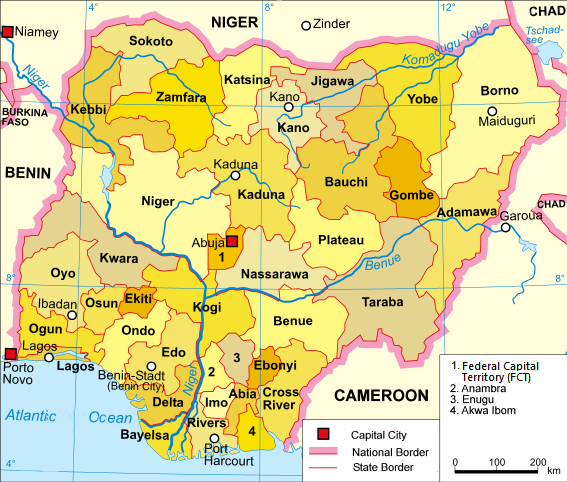
A community in Ebonyi State (Nigeria) overwhelmed by cult, ritual killings

Lawlessness, fear, impunity. Reportedly, the people of Elugwu-Ettam Okpoitumi, Ikwo Local Government Area of Ebonyi State, don’t dare to wander outside after sunset. During the last seven years, not less than 10 people have disappeared, they have vanished. Why and how? Ritual killings? Cultism? Superstition? Land disputes? Revenge? What is sure that is that the law is not upheld. Impunity reigns. And fear. The absence of fear is a human right, the protection of its citizens is an obligation of the state. Nigeria is a huge country where a lot is taking place. Due to its size and importance the rulers of Nigeria are also obligated to give a good example, to the region, to the outside world. One cannot escape the conclusion that the Nigerian government, local and national leaders, fail to establish the rule of law. A leader who does not lead, who does not protect its people should no longer rule. This is the year 2020. (webmaster FVDK)

A community overwhelmed by cult, ritual killings

Published: January 16, 2020
By: New Telegraph Nigeria, Uchenna Inya (in Abakaliki)

The people of Elugwu Ettam, Okpoitumo in Ikwo Local Government Area of Ebonyi State are in state of worry, confusion and under siege. That is following the disappearances of some of their people. They are suspecting that cultists and ritual people may have taken over the community. 

In Elugwu-Ettam Okpoitumi, Ikwo Local Government Area of Ebonyi State, the people don’t stay outside their various homes beyond 6pm of each day.

Once it is 6pm of every day, any indigene of the area who is not in his or her house, may not return to the house any more. Such  person may be declared missing in the community and may not been seen again.

Within seven years, no fewer than 10 persons in the community have been declared missing in suspected cult and ritual killings in the area.

Cultists have been having their ways in  the area,  killing and maiming  persons who are opposing their activities.

The people have searched for those who reportedly got missing in the community but to no avail. They have deployed every method including spiritual, traditional and legal means to know if the missing ones can be found and then forestall further occurrence.

Some of the people reportedly got missing around the Edukwu Agbalegu play ground in the community. One of them is the community announcer(town crier), John Igboji.

Igboji was abducted in the playground on March 2013 when he was making announcement in the community. He has not been seen till today neither has his corpse been found.

Igboji’s abduction, shocked his people and they have not recovered from the shock till today.  No one in the community has agreed to take

up his town crier duty  since his sudden disappearance from the area.

Another person in the area, Joseph Nwichi Alegu, is also missing. He had gone to the Edukwu Agbalegu playground in the evening to buy food condiments when he was waylaid on the way back to his house.

He has not been since also. The food condiments he went to buy were picked up by his people on the road. The incident occurred in June last year and the matter was reported to the police.

Since then, the community has been in disarray while his family members and  relatives are demanding his corpse if he has been killed.

Speaking to our Correspondent, Alegu’s widow, Christiana, lamented that since the disappearance of her husband, she finds it very difficult to cope and feed her children.

She said: “I and my four children have been suffering since they kidnapped and killed my husband, Joseph Nwichi Alegu. Things are very

difficult for us because we no longer have somebody to feed us a father. My husband was all and all for us. If they have killed him, they should release the corpse for us. He was last seen in our community in June last year.”

Another woman, Angelina Igboji,  whose husband also got missing said: “My husband was appointed town crier by the community. Our then village Chairman sent him to go and make an announcement for the community. They kidnapped and killed him. We have not seen him or his corpse till today. They should bring him alive or bring his corpse to us. I want my husband’s corpse if they have killed him.

“I am a peasant farmer. Feeding the seven children my husband left for me has been very difficult for me. I do all manner of menial jobs to feed my children.”

On his part, Emmanuel Igboji, a farmer and younger brother of John Igboji said: “John Igboji was my elder brother. On 29th March, 2013, he was sent on town announcement by our former village “Chairman. My brother got missing at our playground, Edukwu Agbalegu playground in front of one of our brother’s house. He got missing while carrying out the announcement duty sent to him by our former village.  After the announcement, he didn’t return again. We searched for him everywhere and we didn’t find him.

“Our then village Chairman ran to police and made report but one Cele Okah started querying that our former village Chairman why he went and reported the matter  to the police without informing him first. The then village Chairman replied him ‘who gave you the audacity to query me on my action, who are you in this community’? From there, Cele Okah started having problems with the community.

“I am not happy the way he got missing. He is the breadwinner of his family and he has seven children . Only the wife is struggling to feed the children. I have not recovered from the shock of his sudden disappearance from the community because we have spent a lot to know if we can see him but to no avail.”

The village Chairman, Eze Ejike Innocent, said over 10 persons have been lost in the area, lamenting that cultists and ritualists have taken over the area.

He called on Inspector-General of Police to intervene in the matter.

He alleged that some persons arrested in connection with the persistent missing of people of the community have been released by the police and are walking freely. He accused a prominent person in the area of sponsoring them.

A community leader in the area, who did not want his name in print for fear of being attacked, told New Telegraph that the people of the area had issues over the community’s land and that it sharply divided them into two groups.

He said although the matter was later resolved, those who were not happy the way it was settled, employed cultists and ritualists to undo the people, leading to disappearances of some people of the area.

He accused one Chief Celestine Okah whose wife is a Commissioner in the state of sponsoring cultists against some persons in the community who are not comfortable with his stand on issues in the area.

He said: “The only crisis I can talk of is the time the community decided to take over their resources from their age groups because formerly, it was being managed by the age groups and whoever that was not among the age groups had no access to the lands.

“But at a certain stage, the people interestingly and compromisingly agreed that the land should not belong to the age groups. Rather, it should be in the hands of the development union that will ensure that everybody has a share of the land.

“This incident somehow divided us into two opposing groups; one was the idea of the land be taken over by the community and the other one was for the idea that it should remain with the age groups and those that are doing these evil things in our community are those that are against the taking over of the land by the community just to make sure that they frustrate the efforts of those who have made sure that the people have access to portions of the land that they supposed to have.

“We have been so much embarrassed because of these ugly incidents like the one that happened in 2013. People were so surprised that it happened that way because up till now, it is difficult for anyone to volunteer himself to be the town announcer because of the incident of that particular man and nobody is happy about it and all our efforts to make sure that we unravel the circumstances behind his missing were futile because the perpetrators were bent on frustrating any group of persons that tried to know what actually happened.

“In the case of the one that happened in June last year in which Joseph Alegu got missing, it was a big blow on all of us because we never knew that could happen and the most ugly aspect of it is that this man got missing at the door gate of one our leaders and which we expected that the man could have spent his last card to ensure that Alegu was found but ever since it happened, he has been paying deaf ear on it and we are not happy.

“It has made the situation so worse that people don’t even send their children on errand. In fact, immediately it is 6pm, everybody will be indoor because of being afraid of being kidnapped and murdered and we are not happy. We want government to come into it to ensure that we are free because we are in bondage because of the activities of these evil ones.”

In his reaction, Chief Celestine Okah challenged  those who are insinuating that he is behind cultism and ritual killings in the community to come up with facts.

He said his accusers are jealous of his progress especially his wife being a commissioner in the state, alleging that he was being blackmailed by them.

“I am not known for any crime or offence. I am peaceful, a civil servant and I don’t know what they are talking about. I do also know that in life, you will have some people who will not admire you and that may be out of their personal interest but it is normal thing in the society.

“We are in border areas. We have common boundaries with some communities in Cross River State and there is no security in these places and you can know what it means to live in a border area. We are living in a very difficult place; no access road and nobody would have been sure of what is happening in our community”, he said.

When contacted, the state Police Public Relations Officer, DSP Loveth Odah, said a case of cultism in the community was reported to Ikwo Divisional police station and about six persons who said confessed to be members of Vikings confraternity were arrested for causing problems in the community.

“There are some people who are suspected to be cultists according to DPO Ikwo. He said those people are from Okpoitumo Ikwo and they confessed to be cultists and belonging to Vikings confraternity and that was all.

“If actually people have been missing as a result of ritual killings to the extent of up to 10 persons, that means the people of that area are not doing well because they have never reported the case of missing persons.

“Though so many persons are claiming that those cultists are ritualists but they are talking about 1985, 1986. So, by that time, the police that we have in Ebonyi State now have not come and myself has not joined police by that time. So, there is nothing like that. It’s a case of suspected cultism and we have arrested some of them.

“Case of cultism is not pardonable in Ebonyi. They are going to be charged to court as soon as investigation is concluded”, she said.

Source: A community overwhelmed by cult, ritual killings

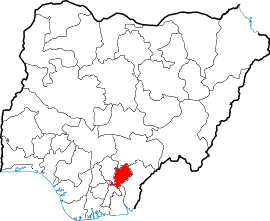
Ebonyi State, Nigeria