Legal expert, Zimbabwe: ‘Time to look beyond ritual murderers’

The following reflection is important. It shows that there are good-hearted and highly educated Zimbabweans who convincingly argue that the recent ritual murders necessitate an adjustment of the country’s laws. This reaction is partly motivated by the ritualistic killing of Tapiwa Makore (7) of Murehwa and the two Benza cousins Delan (7) and Melissa (7) of central Mutasa (see my previous postings).

The author of the article presented below also focuses on a person who is often behind these ritual killings: the songoma or faith healer. Too often, the songoma is left out of the investigations following the ritual murder and not implicated in the trial of the actual killer(s) whereas in fact the songoma can be considered an important driving force behind the heinous crime which is committed during the murderous traditional ritual.

Let’s monitor how swiftly Zimbabwe’s rulers including lawmakers and the judiciary act!
I will keep you informed (webmaster FVDK).

Time to look beyond ritual murderers

Published: April 30, 2021
By: Zimbabwe Independent –  Sharon Hofisi  

I ONCE represented people charged with murder in court. That was where I had my first real encounter with the subject of intentional or negligent killing. It was not a positive experience. Nevertheless, I got some acquittals. I remember the cases well. They took my inexperienced product of law school and taught me to understand the criminal laws and procedures of this country with deep preparation. So I took the cases on a pro deo basis. Put simply, this means acting for God. But with the increasing ritual killings, a lack of deliberate offences on ritual killings and honour crimes is a serious lacuna in our criminal justice system.

The purpose of criminal laws should mirror the nature of the society itself. Societies that are governed through laws are called to heal the divisions caused by violators of the law. When a society seems to be in danger of endless commissions of heinous crimes, focusing too much on investigation machinery and work and neglecting criminal law reform may pose further deep seated challenges. What often happens, however, is that even if the laws are reformed, we need to guard against reactionary responses to endemic problems. If the purpose of criminal law reform is to curb impunity in all forms of killings and deal decisively with utter disregard of the sanctity of human life, then a law can be a healthy first step in protecting the rights of vulnerable sections of society such as women, children, persons with albinism and other disabilities.

Even a criminal law reform committee will be horrified to learn that ritual motivators are not part of the suspects to be arrested. We are encouraged by the fact that our criminal laws allow for the arrest and prosecution of accomplices. But psyched people are usually afraid of the unknown. The psyched ritual killers strike fast, simultaneously attacking unsuspecting children or persons with disabilities.

The details that usually emerge after the gruesome killings are too numerous and disturbing. We definitely cannot bring our conscience to understand the difference between the actual killer and the one who motivates the killer to do so. The killer believes it is going to be an “all-for-purple-life” killing. Later, he is taught that the act was natural after all when he gets caught. It was his darkest ritual psyched moments that brought the longest, bloodiest, most heinous crimes to carry out. It costs innocent lives and no financial rewards as promised. And most families of the killers are left destitute. The breadwinner is locked up and the family is drawn into incessant wars of appeasing vengeful spirits as contemplated in our traditional faiths.

The hideous scars born by the families of the victims will last a very long time. But these ritual killing motivators are cunning and they will continue to hoodwink many people into psyched killings. They may never get their comeuppance. Certainly the time has come to act decisively on criminal law reform on ritual murder and honour crimes in Zimbabwe. Legislation, the passing of Acts in Parliament, is the most important of Parliament’s many tasks. I believe many stakeholders can agree on the explanatory memorandum for a Ritual Murders and Honour Crimes Bill. The long title of that Bill can deal with issues relating to the ritual murders and honour crimes and other purposes connected with these issues. The enacting formula can be decided by the nature of offences being committed usually against vulnerable sections of societies such as children, elderly women, persons with disabilities and so forth.

Perhaps the major point to grasp about ritual killings is that a psychic person, or even a bogus part of a psychic person, promises someone a lavish lifestyle once a heinous crime is committed. It could be the killing of a sibling, distant relative or some stranger. Exactly what is meant by “ritual” is not necessarily obvious since the killing of the person is controlled by the killer who uses the elaborate descriptions from the psychic leader. A small change in the psychic instructions can make a huge difference – so we hear from failed ritual killing missions. Each small step is catalysed and crystallised by the need for hot porridge riches. Many of these random killings may do the killer no harm if he observes the instructions (muko). Sometimes the killer will destroy the fighting powers of the deceased through some further rituals, kutsipika ngozi. This means that in any event, the killer is fully aware that they intentionally committed murder.

Reading stories about gruesome murders of young children by people who were promised material or financial gains tests our resolve as a polity of relationships between crime and fighting crime. We are given a set of criminal instances and must choose another set of responses that is related in the same way.

Many reforms of criminal laws are possible. Reading the modus operandi of criminals test our ability to understand and interpret the criminal laws we can promulgate in response. This is probably the most important ability we need as a society at the moment.

In analysis of the killings of children in our media reportages, we are presented with situations detailing criminal events and then a result of something that is steered by someone who is believed to possess some supernatural or magical powers to make people rich, overnight.

Our task is to decide in the legal and non-legal fraternity whether certain statements or motivations to commit crimes provide adequate explanations of how we can curb violent crimes. Each new crime provides us with a new format for criminal law reform.

For Zimbabwe and the disturbing killings, it’s now much more than just a usual ritual murder, headlines and efficient state response. We need to move beyond crime scene visits and the arrest of suspects. Ritual murders are now shaping an entire generation of criminal inquiry. It’s now the time to transform the changing and disturbing criminal scenes of the last ten or so years into a clear and widely-reformed criminal justice system in Zimbabwe. The motivating variable in this urgent need for criminal justice reform is steeped in legal realism. Law may be stable, but it cannot stand still if I may employ Roscoe Pound’s philosophy.

Are these ritual crimes something reflective of honour crimes, where relatives and close acquaintances are the pawns in the much bigger chess game? Barely when the Makore killing had left our minds we hear of the gruesome murder of two children. Zimbabwe has witnessed the targeted ritual killings which encourage criminal responsibility to be broadened in scope. Each killing achieves a disturbing measure of brutality and mental intention to kill. The recurring pattern of failed rituals that are broken by arrest of the suspects and eventual incarceration of such suspects all have at most one thing in common: each killing in its own way forces the killer and the ritual motivator to forge an unholy alliance; share the same mental and actual intention to kill, only from the opposite perspective.

The actual killer is psyched to kill. The ritual motivator psyches the ultimate killer. Each fails to see that confronted with effective investigation machinery the prospective ritual will inevitably not succeed. Equally gruesomely, each fails to see that the criminal path between hatching a heinous act of killing and frenzied killing act is not only false but leads towards a catastrophic breakdown of the family fabric.

The falsity of the ritual shows that one or two or more or many suspects are arrested. The ritual motivator, the instigator of the death of the innocent young souls remains. He or she continues hoodwinking many people into killing many young children.

All in the name of enhancing business or getting filthy money! Here too, there is more criminality in the sangoma or faith healer than criminal intention in the actual killer. The sangoma or ritual motivator does not simply aim to alleviate poverty through the loss of innocent blood of a family member, gruesome murder, psyched actions, and so forth. Efforts to control and encourage killing, no matter how important or necessary, are only one aspect of “intentional killing”. The sanctity of human life, and human life itself, as we know from our Constitution and even various types of our faiths, depend on more than the alleviation of poverty and the satisfaction of material needs. The reason for which we were created is to enjoy life and the maker of it forever.

Hofisi is a transformative transitional justice practitioner, normative influencer and disruptive thinker.

Source: Time to look beyond ritual murderers
Burkina Faso: traditional spiritual rituals providing protection

The belief in supernatural powers is an important driving force behind ritual murders. Yet there exists another area in which the belief in supernatural powers is crucial. The following two articles focus on traditional spiritual practices which provide protection against violence and aggression to its believers and users.

The objective of including these articles here is to offer the reader insight into the cultural side of spiritual practices and rituals. After all, is is easy – and absolutely warranted from various points of view – to condemn ritual murders, but in order to fight effectively these crimes which constitute gross human rights violations we must understand the minds of the perpetrators of these intolerable and outdated crimes.

For this reason I found it justified to include the following two articles. To avoid any misunderstanding: the ritual practices described below have nothing to do with ritual murders.
(webmaster FVDK).

Burkina Faso fighters seek protection with spiritual rituals

Published: April 29, 2021
By: Star Tribune, Minneapolis, St. Paul and Minnesota, Associated Press – Sam Mednick

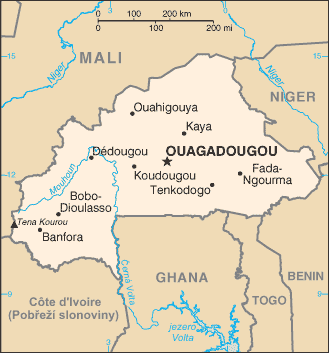
OUAGADOUGOU, Burkina Faso — Antoine Ouedraogo didn’t run when Islamic extremist fighters killed his colleagues only feet away from him in northern Burkina Faso. Instead, the 53-year-old says, he simply recited a secret word and became invisible.

The father of 17, who used to arrest bandits and now fights the extremists as part of a local defense militia, says a secret medicine he took as a child continues to protect him from bullets and machetes.

“As adults, we still have that medicine inside of us,” he said. “Even now if something happens, I can disappear.”

Fighters like Ouedraogo are putting their faith in these traditional spiritual practices to protect them as attacks linked to al-Qaida and the Islamic State ravage the West African nation, killing thousands and displacing more than 1 million people. The deeply rooted tradition holds that plants, animals and ritual objects mixed with verses from holy texts can provide protection before going to battle.

“Before someone faces a challenge, they know there are supernatural powers and spirits they can call upon in any situation,” said Jean Celestin Ky, professor of history at Joseph Ki-Zerbo University in Ouagadougou.

People have believed in these powers since the beginning of time and it remains strong in Burkina Faso because it’s been passed down from generations, he said.

Some people say the practice is rooted in animism, the belief that all things, from rocks and trees to animals and places, have a spirit. Approximately 15% of Burkina Faso’s population identify as animists, according to a report from the International Crisis Group, which says the belief holds considerable weight in the majority-Muslim country.

However, cultural anthropologists say regardless of the origins, what the rituals speak to is human nature when faced with violence.

“These fighters are taking incredible risks, often risks that they don’t understand and can’t control and that it’s hard to imagine anybody in that position who doesn’t rely on a really complicated set of belief systems and sometimes magical thinking in order to stay safe and understand their place in the world,” said Danny Hoffman, chair of the African Studies Program at the Jackson School of International Studies at the University of Washington, who researched fighters using spiritual protections during the civil war in Sierra Leone.

Fighters in Burkina Faso were reluctant to divulge too much about the process and types of plants used, saying those are kept secret even from family members.

But they explained that one way to become “bulletproof” involves mixing 13 plants, inserting the paste into food and eating it out of a hole in the ground. The meal is prepared with water that was used to soak a metal arrow for 72 hours — the idea being that since the arrow is metal, a person will be protected from the heat of the bullet if shot.

While many Burkinabe grew up familiar with these practices, some never participated in them until the jihadis arrived several years ago.

Soumaila, a 19-year-old volunteer fighter tasked with helping the army combat extremists in rural parts of the country, said he only started using spiritual protection for the first time when jihadis attacked his village in the north.

Even before receiving a gun, community leaders gave Soumaila and other fighters bracelets, rings and special clothing that would stave off severe injury and death, he said. The AP is only using his first name to protect his identity as he feared reprisals for speaking to journalists.

Soumaila has survived at least 10 clashes with jihadis over a year and a half, a feat he attributes to a custom-made jacket he believes repels bullets. It cost nearly $90, a huge sum in rural Burkina Faso.

“When you go to dangerous fights and you survive, and nothing happens, then you realize that (the jacket) works,” he said. “If we didn’t have these protections, we would lack the courage to go to some fights.”

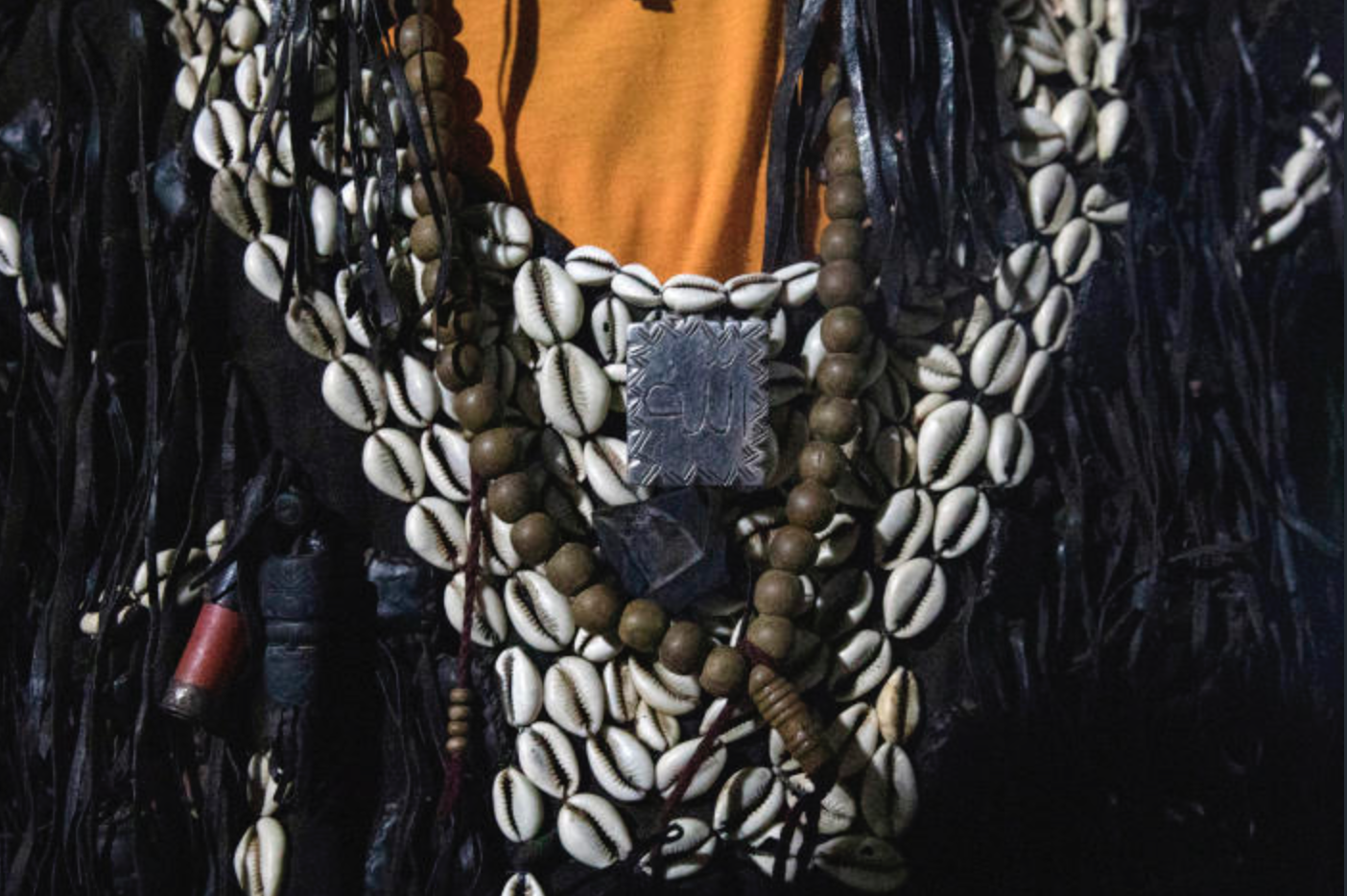
Made from cotton by a local tailor who studied the Quran for more than a decade in Mecca, the jacket is soaked in water from leaves and has several Arabic phrases written on animal hide sewn into it. Some of the writings include the name of the jacket’s owner, while others say different things which Soumaila said he could not reveal lest the jacket lose its powers. Being photographed in the jacket can also rid it of its powers, he said.

Some religious leaders, though, worry the rituals provide a false sense of security for fighters, many of whom are ill-equipped and lack training.

“If you rely on the power of the shirt and then go and fight and (the powers are) fake, you can be killed. It’s as if you caused your own death,” said Ali Kamena, an imam in the capital.

He called the practice “satanic” because the Quran says anyone who needs protection should ask God. Anything else is idolatry, he said.

Kamena has provided blessings to members of Burkina Faso’s armed forces from the Quran before going to fight, including for his son, a soldier in the army. One of the verses he uses says: “With the grace of God, you may come back healthy and safe.”

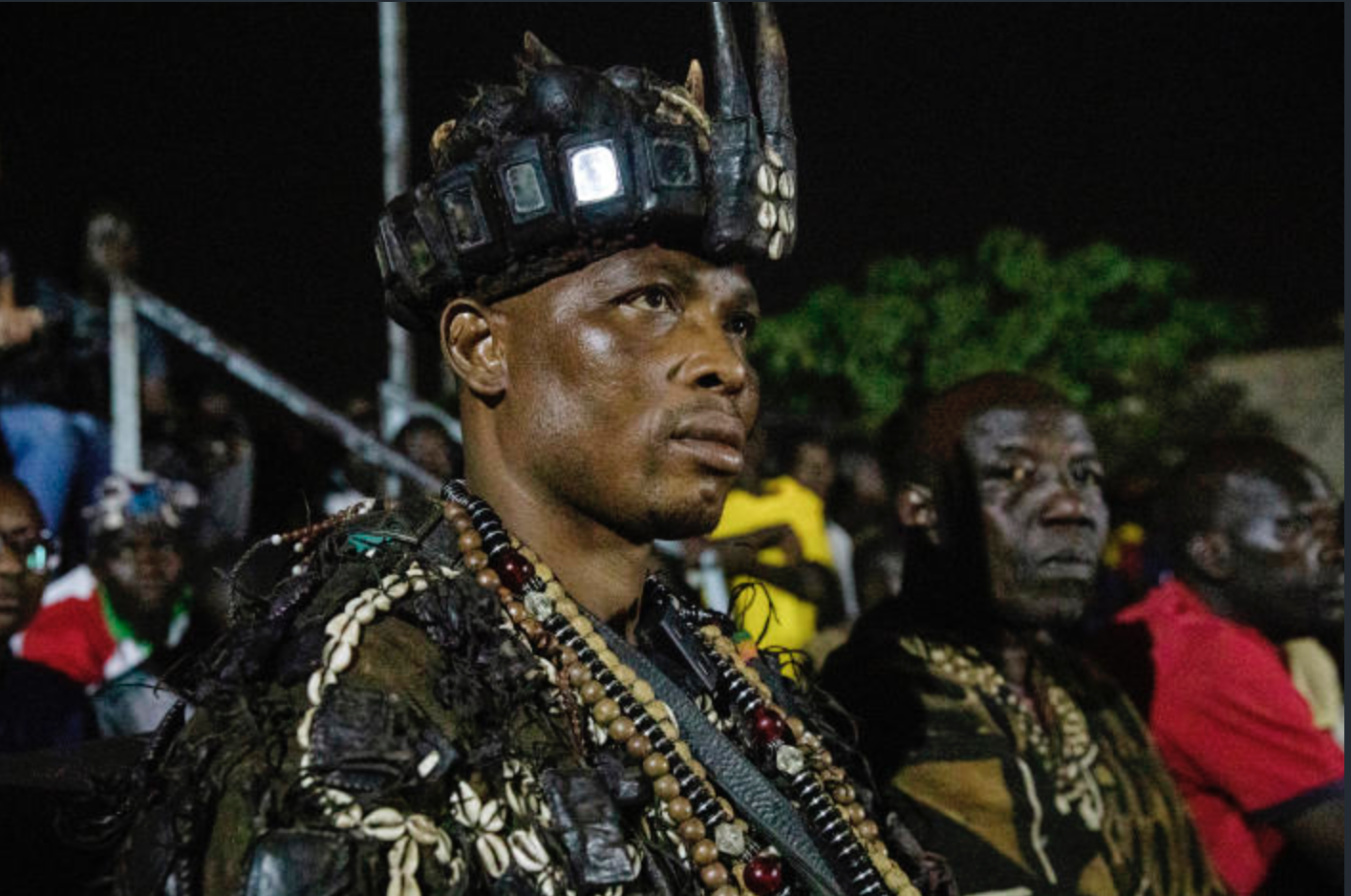
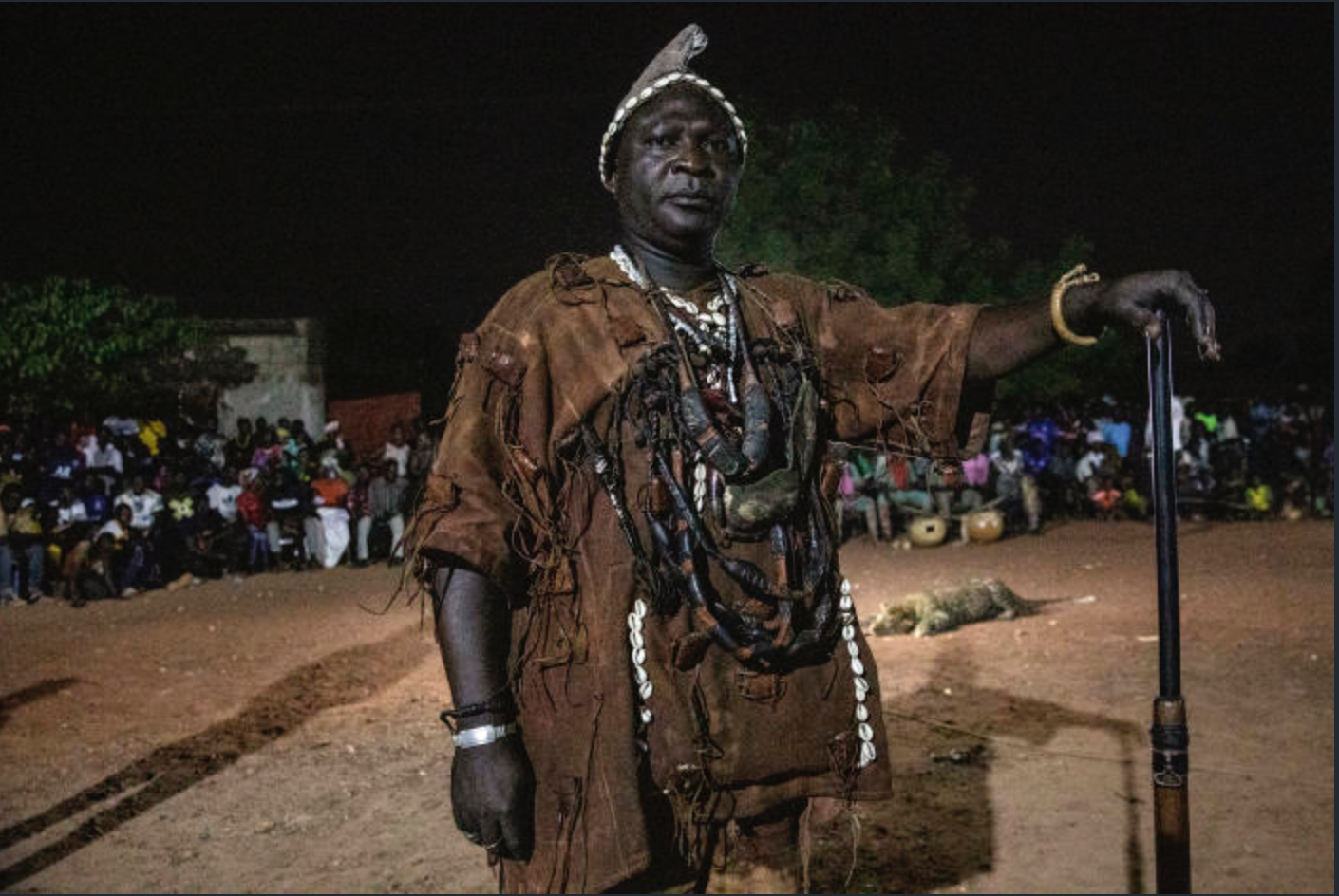
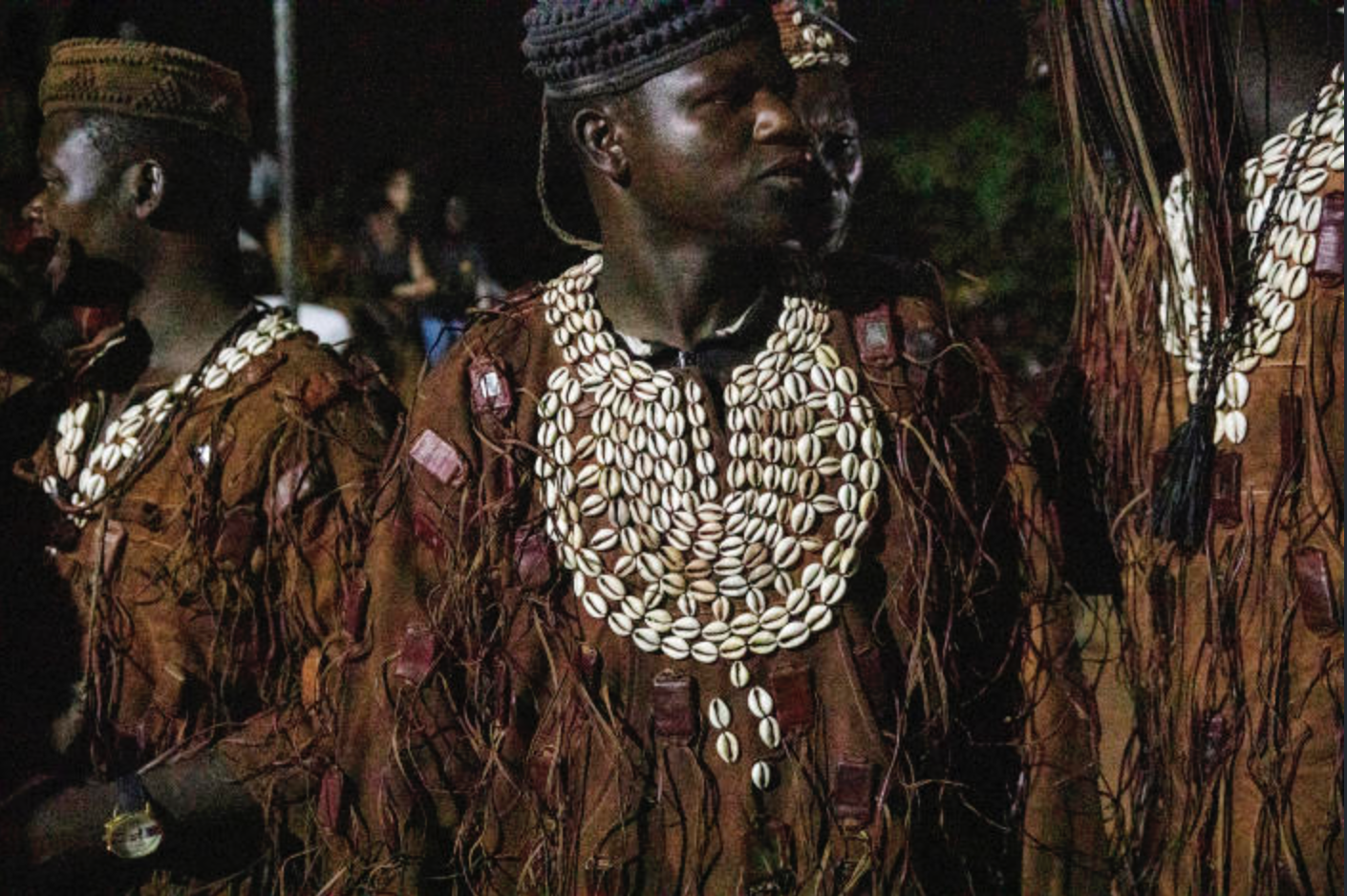
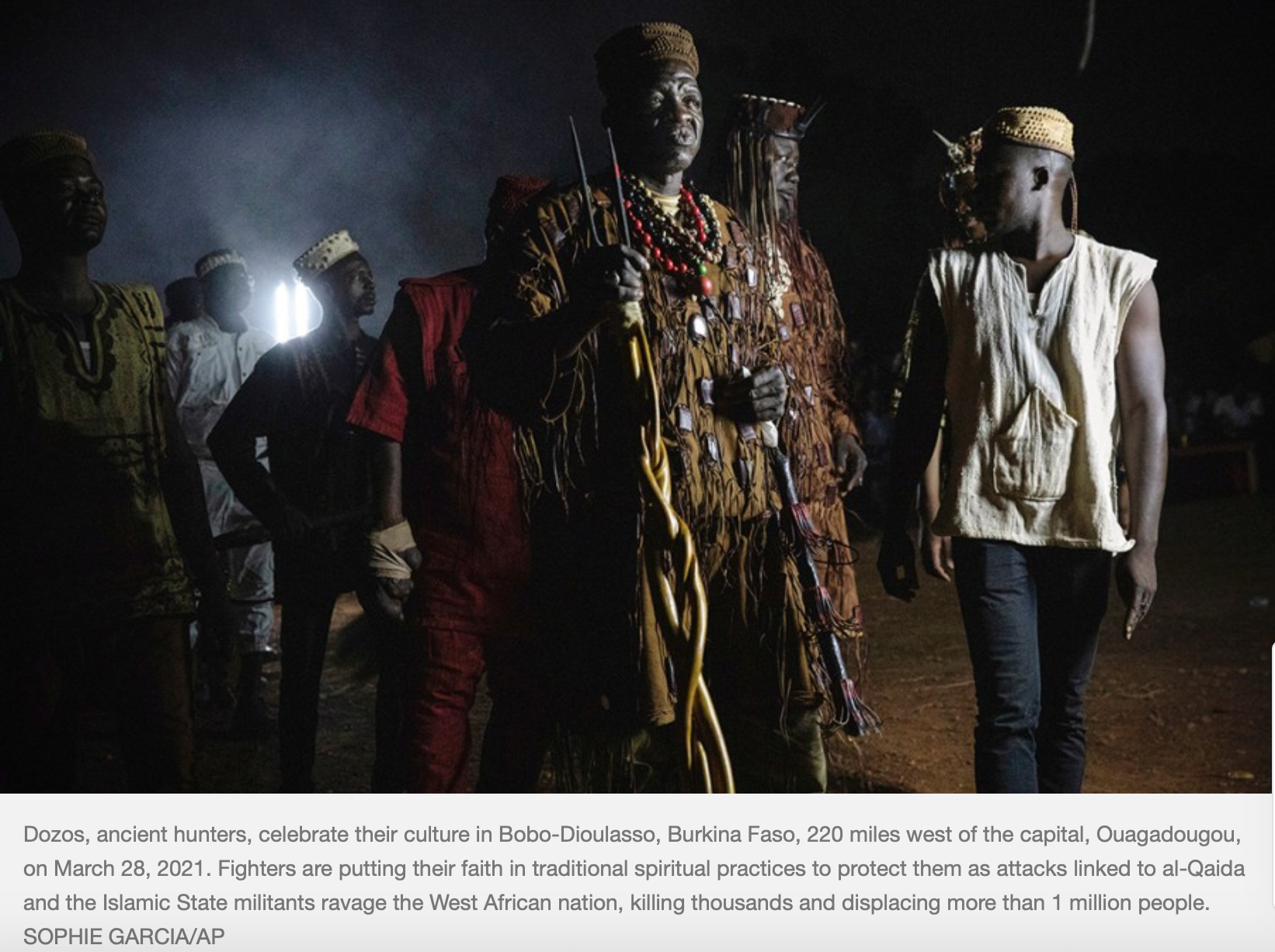
But for some fighters, these beliefs transcend religion. The Dozos, ancient hunters who have been drawn into the fight, believe people can rely on powers from their ancestors. Spiritual protections can be granted so long as someone is a good person, believes in the process and undergoes an initiation.

Since the violence broke out, many Dozos have been working with the army to help protect their country, relying on traditions to keep them safe. But many Dozos fighting on the front lines say they feel ill-equipped and want the government to provide them with better arms in order to stave off the jihadis.

Soumaila, too, said that if body armor were provided for him to protect himself, he would use it.

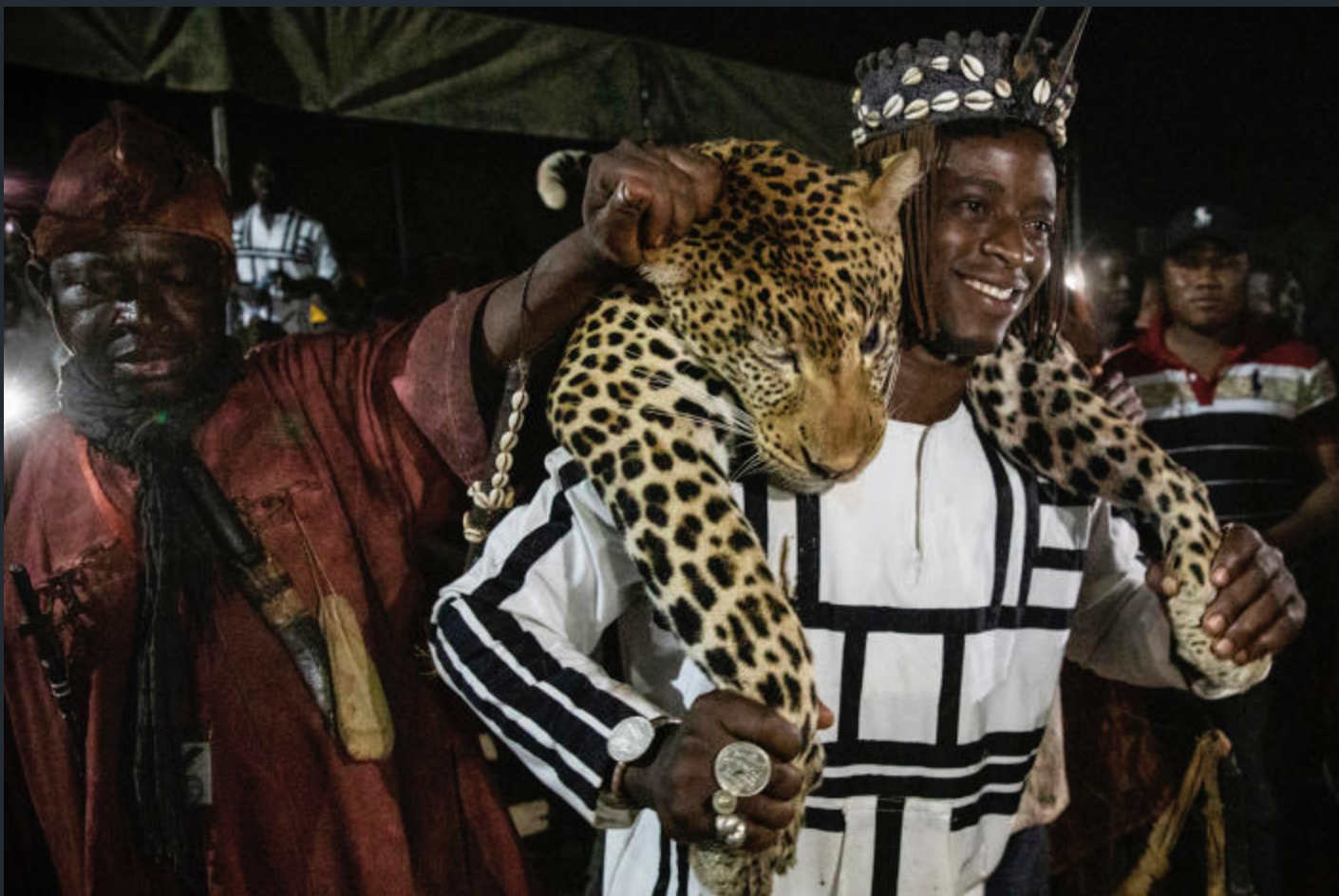
At a March celebration of Dozo culture in the western city of Bobo-Dioulasso attended by the AP, new initiates about to receive spiritual protections together with seasoned Dozos fired guns, danced and paraded with a dead leopard draped around their bodies.

Firing his rifle in the air and giddily twirling it between his fingers, Idrissa Cisse said he wouldn’t be able to help the army fight extremists without the ancestral powers he says make him bulletproof.

“When we go into the bush, our ancestors give us their goodwill and we go to fight, to do what we have to do,” he said.

Associated Press religion coverage receives support from the Lilly Endowment through The Conversation U.S. The AP is solely responsible for this content.

Source: Burkina Faso fighters seek protection with spiritual rituals
Also, with pictures: Burkina Faso fighters seek protection with spiritual rituals

Burkina Faso fighters seek protection with spiritual rituals.
Source: Stars and Stripes.

Burkina Faso Fighters’ Faith In Tradition Amid Attacks

Published: April 29, 2021
By: Republic World, India – Written by Associated Press Television News 

Some fighters in Burkina Faso are putting their faith in traditional spiritual practices to protect them as attacks linked to al-Qaida and the Islamic State ravage the West African nation, killing thousands and displacing more than 1 million people.

Some fighters in Burkina Faso are putting their faith in traditional spiritual practices to protect them as attacks linked to al-Qaida and the Islamic State ravage the West African nation, killing thousands and displacing more than 1 million people.

Since the jihadist violence broke out, some Dozos – ancient hunters who have been drawn into the jihadist fight – have been working with the army to help protect their country, relying on traditions to keep them safe.

Their deeply rooted traditions holds that plants, animals and ritual objects mixed with verses from holy texts can provide protection before going to battle.

“Many Dozos are participating in the fight against the jihadists with the authorities, with the armed forces, we help them because we are true Burkinabè, true fighters,” said Idrissa Cisse, who attended a celebration of Dozo culture in the western city of Bobo-Dioulasso in March.

The ceremony brought new initiates about to receive spiritual protections together with seasoned Dozos who fire guns, dance and parade with a dead leopard draped around their bodies.

The support among the Dozos and their unity is what made Dramane Sanou decide to become part of the group.

“I want to join this group because of their honesty. You must be united as members of the same family, as brothers,” he said while waiting for the day of his initiation ceremony.

Philosophy professor and university researcher Jean-Baptiste Sanou said the rituals were linked to the “archaic” human need for protection when faced with violence.

Some people say the practice is rooted in animism, the belief that all things, from rocks and trees to animals and places, have a spirit.

Approximately 15% of Burkina Faso’s population identify as animists, according to a report from the International Crisis Group, which says the belief holds considerable weight in the majority Muslim country.

Some religious leaders, though, worry the rituals provide a false sense of security for fighters, many of whom are ill-equipped and lack training.

“They use this (magical protection) because they learned it from their parents. But we are Muslims and Islam forbids us to do that,” said Ali Kamena, an imam in the capital.

Fighters in Burkina Faso were reluctant to divulge too much about the process and types of plants used, saying those are kept secret even from family members.

But they explained that one way to become “bulletproof” involves mixing 13 plants, inserting the paste into food and eating it out of a hole in the ground.

The meal is prepared with water that was used to soak a metal arrow for 72 hours — the idea being that since the arrow is metal, a person will be protected from the heat of the bullet if shot.

Source: Burkina Faso Fighters’ Faith In Tradition Amid Attacks

Association of Persons with Albinism in Malawi (APAM) asks government to speed upon ‘albino’ cases, criticises cover-ups and the protection of high-placed politicians

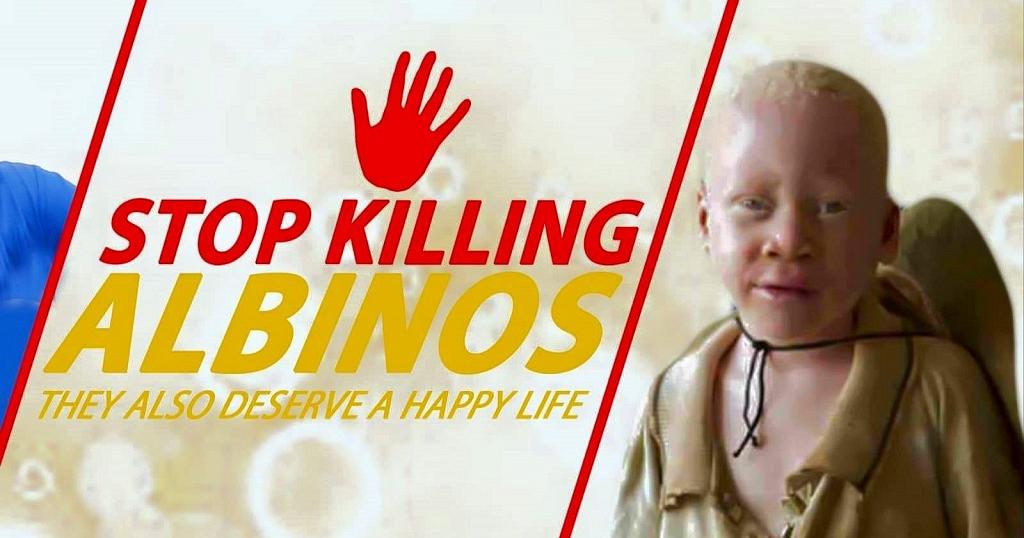
Unfortunately, the below article contains a too familiar story. Attacks on persons with albinism, mutilation, murder, involvement of high-placed politicians, cover up practices. The President of the Associations of Persons with Albinism in Malawi (APAM), Ian Simbota, again turned his attention to the country’s rulers and requested the government of President Lazarus Chakwera to speed up all abduction and murder cases which targeted people with albinism (PWA) for ritualistic purposes, often involving high-profile politicians.

It is shocking to read the following article. I won’t repeat here what follows. Once more, however, I want to draw attention to these heinous crimes which threaten people with albinisme on a daily basis. Ritual murders must end. Politicians and other culprits who are involved must be apprehended, put on trial and sentenced. Simultaneously, a national awareness campaign must start, emphasizing the sanctity of life, the need to protect innocent people, the promotion of human rights notably to right to live and the right to live without fear. The government must take its responsibility and act accordingly – or resign.
(webmaster FVDK).

APAM asks Tonse Alliance Govt. to speed upon ‘albino’ cases

Published: April 29, 2021
By: Nyasa Times – Tiwonge Kumwenda

Source: APAM asks Tonse Alliance Govt. to speed upon ‘albino’ cases

Cry from Zimbabwe: Let us stop child sacrifice

The following plea and and cry from Zimbabwe, following the ritual murder of Tapiwa Makore (7), and the two cousins Delan (7) and Melissa (7), is long overdue but 100% warranted. Child sacrifice and more general human sacrifice is not a rare phenomenon in Zimbabwe, neither is it in a number of other countries in Sub-Sahara Africa. The gruesome murders have recently led to a general campaign to stop child sacrifice, the 777 Campaign. It goes without saying that I join this initiative.

Warning: the following article contains graphic details of ritual killing of children (FVDK).

Let us stop child sacrifice

Published: April 27, 2021
By: Bulawayo 24, Heaven Munyuki   

The death of a child of any age is devastating. The pain and anguish can be compounded when the death comes at the hands of another human being. Parents and family members can face many complicated issues, even as they try to make sense of the incomprehensible – that someone knowingly, willingly or intentionally killed their child.

Children are gifts from God,  they are precious and bundles of joy. Birth of children represent generational continuity and procreation is devine as God commanded: Be fruitful and multiply and fill the earth and subdue it. Mwanachipo Africa Trust is a local NGO that works with people who are infertile and childless. As people who are infertile and childless, we are pained most when these gifts we are failing to get are hurt or ill treated and when they are murdered, our hearts are pierced. We are hurt most because, some of us have undergone unimaginable ordeals and forked huge sums of money in trying to bear children whilst heartless people and cowards, who prey on vulnerable children, are busy chopping off their heads and mutilating their bodies. To us, killing of children for whatever reason is termination of generational continuity and destruction of families instead of growing and expanding them.

The recent surge in ritual killings and murder cases  of children in Zimbabwe is not only worrisome but also inhumane and horrifying.The gruesome murder of Tapiwa Makore (7) of Murehwa who was buried without a head and the recent heinous killings of two Benza cousins Delan (7) and Melissa (7) of central Mutasa  by uncles should not go unchallenged. These brutal killings have prompted Mwanachipo to initiate the Stop Child Sacrifice:The 777 Campaign.

The 777 Campaign is in honour of the 3 slain innocent children (Tapiwa, Delan and Mellisa) who were all murdered aged 7 and the suspected ritual killers being uncles. Tapiwa was fed with food and later drugged with Kachasu( traditional illicit beer) before being brutally killed in a mountain. His torso was found the following morning being dragged by dogs and his head is nowhere to be found up to this day. Mellisa and Delan’s remains were found stashed in a toilet pit.

These gruesome murders are targeted mainly at children for ritual purposes. Vulnerable, innocent children are mutilated and murdered by ruthless and criminal people who want to increase their wealth, health, power or reputation – by all means. Like Tapiwa, Delan and Mellisa, a lot of children have fallen victim to murderers and ritual killers. Due to their vulnerability, they are easily abducted on their way to or from school or when conducting their daily home activities such as fetching water and collecting firewood. Children are the main victims because they are considered pure or unblemished ,easy to lure and their blood sacrifice is considered more powerful than that of adults as children represent new life, prosperity and growth to the one procuring the sacrifice. They are sacrificed by witch doctors to appease ‘the gods’ and bring a myriad of solutions which include wealth, good health and political power  among others.Adults drawn to the practice are tricked into believing that the purity of child makes the ritual more powerful.
Hearts, ears, livers and genitals are considered as key ingredients of the rituals.These body parts are said to be removed when children are still alive and they die as a result of bleeding or are killed by the murderers to conceal evidence.
The repeated occurrences of these ritual killings is a blatant violation of UN’s Universal Declaration of Human Rights of 1948 and Convention on
the Rights of the Child (CRC) of 1989. The CRC applies to
all children below the age of 18, and contains 54
articles covering almost all aspects of the life of a child.More so, this child sacrifice violates the African Charter on Human and People’s Rights. According to this charter, an individual is entitled to respect for his life and integrity of his person.

Biblically, God sanctified life.This  means that human life is sacred ( made in the very image of the Creator himself according to Genesis 1:26-27), holy and precious. The sanctity of life is inherent as man cannot create life. Therefore, man has no authority to destroy life including the life of children. God chooses when life begins and ends and murder in all its forms is forbidden. It is the only way for humankind to exist.

Through the Stop Child Sacrifice: 777 Campaign , Mwanachipo Africa Trust is mobilising resources to be used to prevent  sacrifice of children.
 Our children are not safe until every child is safe.
Let us join hands to end child sacrifice. Everyone is duty bound to protect every child.Be part of the change which starts with all of us.Together we can make Zimbabwe a safer country for our children.

Pasi nekuchekeresa vana!
Stop child sacrifice!
Yekelani ukunikela ngabantwana libabulala!
#ChildrenAreNotSafeUntilEveryChildIsSafe

(Other organisations and individuals who wish to join us in this campaign can contact us on +263718745374 mwanachipoafricatrust@gmail.com)

Source: Let us stop child sacrifice


Zimbabwe – Editorial comment: combined effort needed to thwart ritual murders

A recent surge in ritual murders of children has shocked Zimbabwe. Within a short period, three children were murdered for ritualistic purposes: Tapiwa Makore (7) of Murehwa and the two Benza cousins Delan (7) and Melissa (7) of central Mutasa. I have extensively covered the murder of Tapiwa. The following days I will provide more details about the murder of Delan and Melissa.

The child sacrifices have led to many reactions. One of these comments follows here. It contains a plea for tougher measures for the culprits, even the capital punishment. There is much to say about (and against) the death penalty but let us know focus here on the editorial comments. 
To be cont’d.
(webmaster FVDK)

EDITORIAL COMMENT : Combined effort needed to thwart ritual murders

Published: April 27, 2021
By: The Herald, Zimbabwe

The murder of three children for what appears to be ritual purposes in just seven months is a worrying dark cloud over Zimbabwe and requires action at both community level and among a number of sections of society.

These are not the first such killings, perhaps just the best publicised for some time since the victims were all seven-years-old and the police moved swiftly and effectively to track down the suspects, with other family members among those arrested and remanded.

There is a superstitious belief among a minority that killing a child or another young person in a particular way, which can be equated to torture before the murder, and then processing certain body parts in a set-down manner will create, increase and maintain wealth.

This is nonsense, and with the competent homicide investigations now in progress it must be becoming obvious that initiating such a killing is totally unlikely to bring anything, but a very long jail sentence for the killers.

Although the death penalty is still on the books for aggravated murder by an adult man, and aggravating circumstances do not come more aggravating than pre-meditated murder of a child for financial gain, the fact remains that Zimbabwe does not implement death penalties any more, and instead life imprisonment is substituted.

There are already many positive developments that can help to end this practice of ritual killings. It is now clear that communities are willing to take action, rather than quiver in fear and keep quiet. 

People are not afraid to stand up and be counted and are willing to pass on whatever information they have to the police. 

In fact one of the major problems now in such investigations is that some are passing on confusing fifth-hand hearsay, which still needs to be properly investigated, rather than hard fact of what they saw. But homicide detectives are trained to separate the chaff from the hard fact, and better that too many try and help than too few.

A second problem is more serious, and has already been mentioned by legislators, including recently Senator Michael Nyambuwa who visited the Mutasa families. 

We need investigations to be pursued to bring the person who gave the ritual advice and who might well have promised to process any body parts.

Even if they did not initiate the killings, and accept some sort of lie when organs are presented, they are still involved in a murder and can be tried as an accomplice. 

N’angas still have a lot of respect and are feared by some, so it can be difficult to get a name, let alone evidence. 

Obviously the actual killers believe in the powers of the n’anga they are using; even in the days when the killers were hanged they refused to give the name and walked silently to the gallows.

Here communities need to encourage people to come forward. There will be a lot of vague and wrong information, but police can then run down the leads. The point is that a person ready to apply their traditional learning to criminal purposes cannot be totally unknown in an area.

The Zimbabwe National Traditional Healers Association can also become more involved, first by teaching very clearly that such killings do not create wealth, only misery, and then encouraging people to come forward. 

In fact traditional healers in a particular area might well have a better idea of which one of their number has turned to the dark side than the average lay person, and should be encouraged to pass on this information.

Traditional leaders, who have already made their abhorrence of such crimes very clear, can also go further in prevention, as well as doing what they do now by calling on their communities to assist after a crime. 

The ideal is to have a murder trial with both the killers and the n’anga who offered advice all in the dock, with sufficiently good evidence that all can be convicted and then go to jail together. 

Detectives chosen for such investigations might need to be carefully selected; there is still a significant number of superstitious people, and even some Christian churches who worry about the creativity of evil, although this is a heretical belief in mainstream Christianity.

Such severely aggravating murders also stress the need for Zimbabwe to upgrade its sentencing laws for murder, now that we have effectively abandoned the death penalty as an active punishment. 

The reforms need to give judges setting sentences more discretion, and as we have argued before we need a system of parole.

In his latest clemency order, the President, with Cabinet consent and what must have been detailed advice, in effect set 15 years behind bars as the absolute minimum for a life sentence. This is not unreasonable and is the effective minimum period of incarceration in many jurisdictions for an “ordinary” murder.

However, countries that have formally abolished the death penalty and substituted life imprisonment usually allow the sentencing judge to make a recommendation over the minimum term in each case. 

In most cases this is whatever the standard is in that country before parole can be considered, frequently 15 years. 

But where there are aggravating circumstances the judge can set a longer minimum term before release can even be considered and, in exceptionally aggravating circumstances, can even call for a “whole life” sentence, or “life imprisonment without any possibility of parole”, as some American states word it. 

Because the killer is not executed this can always be adjusted later if perceptions change or new evidence emerges, but meanwhile the deterrent is in place.

A parole system also means that a released lifer is monitored for the rest of their lives, forbidden to do certain jobs, enter certain businesses and possess anything on a list of prohibited items, such as anything that could be used as a weapon.

And parents clearly need to be protective. This is always difficult, of deciding where do you draw the lines. But one general rule is safety in numbers and having older children helping to shepherd younger children.

We have all seen gaggles of schoolchildren who live near each other moving as a group and automatically having some older teenagers in that group.

Admittedly a lot of this breaks down, as in the latest two cases, when relatives are suspected to be involved, people who are normally trusted. 

But every bit helps and at least there are witnesses if a child is whisked away by an uncle or aunt. 

That is precisely how the police made their initial arrests in the latest two child killings, by following up reports from people who saw something that in retrospect needed to be told.

Source: EDITORIAL COMMENT : Combined effort needed to thwart ritual murders

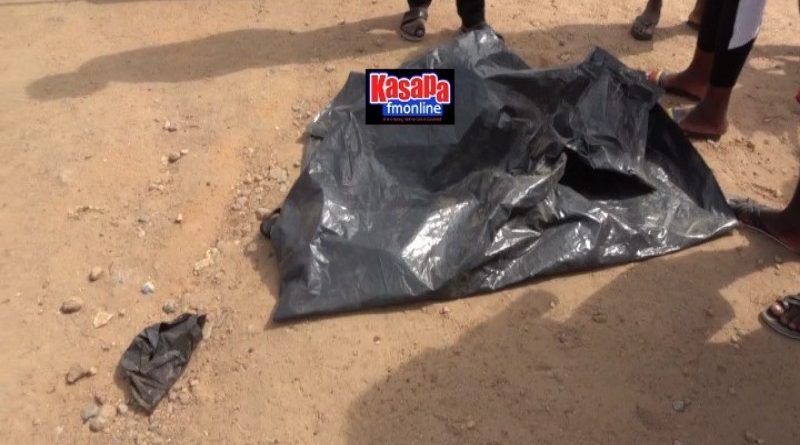
Ghana, Central Region: palm wine tapper’s lifeless body found without the head

When the dead body of a man believed to be in his fifties was found with his head missing, everyone thought of a ritual crime. Although nobody knows exact how many ritual murders are being committed and the official number of victims of ritualistic acts being (relatively speaking) low, dead bodies with missing body parts immediately lead to the conclusion that a ritual murder has been committed. 

Let’s hope the police investigations into the crime are fruitful and the exact circumstances of the man’s death are soon known. If indeed a heinous crime was committed, the perpetrator(s) must be apprehended soon and brought to justice. The rule of law must apply and superstition must be banned from society as quick as possible. Living without fear for his / her life is a human right (webmaster FVDK).

Palm wine tapper’s lifeless body found without the head

Palm wine tapper’s lifeless body found without the head

Published: April 21, 2021
By: Pulse, Ghana – Andreas Kamasah

The lifeless body of a palm wine tapper believed to be in his 50’s has reportedly been discovered but his head could not be found.

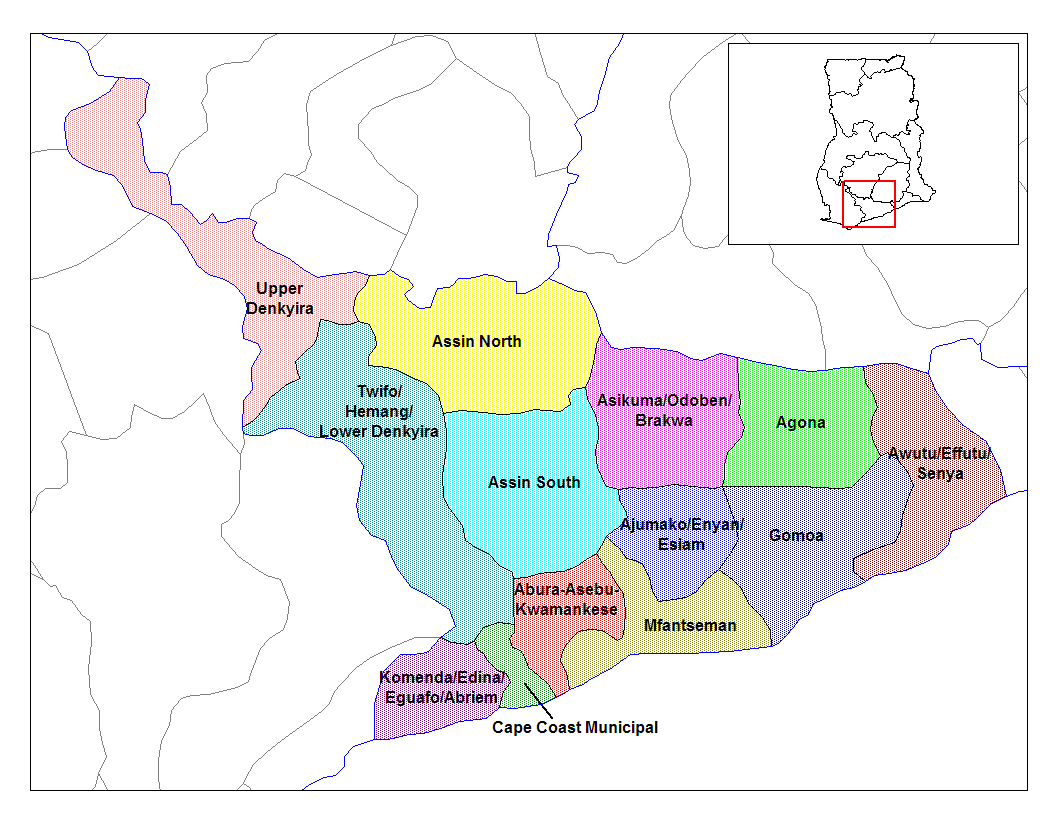
The deceased identified as Agya Manu is believed to have been killed on a farm at Dunkwa Asoboa in the Upper Denkyira East District of the Central Region, according to a report by Starrfm.com.gh.

Kasapa FM’s Yaw Boagyan reported that he was alleged to have been killed and dumped in the bush with his head severed for alleged money rituals.

Agya Manu left home on Sunday 18 April around 5:30 am for his farm to tap some palm wine before returning to join the family for the Sunday service, but unusual of him, as at 4:PM in the evening he had still not returned.

His worried children were sent to trace his footsteps but they only returned with the bottle he had left home with at the exact end he was to fetch the palm wine.

Residents and family of the deceased became even more alarmed and organised a search for him but that did not yield any result.

Then, on Tuesday 20th April, a lady named Maame Otu found the body which was suspected to be that of Agya Manu lying at the entrance to her farm.

She hurried home to break the sad news to the community, members of which converged on the scene and confirmed through physical examination that the corpse was indeed that of Agya Manu.

Police in Dunkwa have taken custody of the body and samples of his blood have been taken to Dunkwa On-Offin government hospital for examination while an investigation is expected to commence into the incident.

Source: Palm wine tapper’s lifeless body found without the head

Districts of the Central Region, Ghana

Buduburam, Ghana: Okada rider found dead with manhood, ears and eyes missing

Was the killing of an Okada rider a ritual murder in light of the missing body parts or was it an ‘ordinary murder’ by Buduburam criminals who by removing the body parts wanted creating a cover-up for their crime? A legitimate question, but the neighborhood has no doubts. It was a murder for ritual purposes.

The body was found at Blue Rose Estate, a suburb of Buduburam, in the Gomoa East District of Ghana’s Central Region.

The murder took place only a few days after the lifeless body of a man, estimated to be in his 50s, had been discovered – whereas his head cold not be found – and some weeks after the ritual murder of Ishmael Mensah Abdallah, a 10-year old boy, both in the Central Region. Apparently, so-called ‘money rituals’ are on the increase in Ghana. In this indeed a growing trend and, if yes, what is the explanation for this phenomenon based on superstition and greed?

We will closely watch future events in Ghana and come back to you when more facts emerge (webmaster FVDK).

Buduburam: Okada rider found dead with manhood, ears and eyes missing

Buduburam: Okada rider found dead with manhood, ears and eyes missing

Published: April 25, 2021
By: Pulse, Ghana – Emmanuel Ayamga

A commercial motorbike rider, locally known as Okada, has been found dead with some of his body parts missing.  The lifeless body of the unidentified man was found at Blue Rose Estate, a suburb of Buduburam in the Gomoa East District of the Central Region.

According to a report by Adomonline, the deceased, who is in his 20s, was found without his penis, ears and eyes.

Other parts were also missing from the body of the motorbike rider, in what is widely suspected to be a murder for ritual purposes.

Reports suggest the killers hired the rider but murdered him midway through the journey and also bolted with his motorbike.

The body of the deceased has since been deposited at the St Gregory Hospital mortuary, with the Police also commencing investigations. 

Meanwhile, the Chief of Buduburam, Nana Kojo Essel II, has bemoaned the high rate of crime in the community.

He appealed to the government to demolish the Buduburam “Gab”, which has become a hideout for criminals.

This comes just weeks after 10-year-old Ishmael Mensah Abdallah was gruesomely murdered at Kasoa in the Central region for money rituals.

Source: Buduburam: Okada rider found dead with manhood, ears and eyes missing

Related article (identical to the previous one):

Central Region: Okada Rider Murdered; Manhood, Ears and Eyes missing

Published: April 26, 2021
By: Africa At Random – Mustafa Sana

A commercial motorbike rider, locally known as Okada, has been found dead with some of his body parts missing. The lifeless body of the unidentified man was found at Blue Rose Estate, a suburb of Buduburam in the Gomoa East District of the Central Region.

According to a report by Adomonline, the deceased, who is in his 20s, was found without his penis, ears and eyes.

Other parts were also missing from the body of the Okada rider, in what is widely suspected to be a murder for ritual purposes.

Reports suggest the killers hired the rider but murdered him midway through the journey and also bolted with his motorbike.

The body of the deceased has since been deposited at the St Gregory Hospital mortuary, with the Police also commencing investigations.

Meanwhile, the Chief of Buduburam, Nana Kojo Essel II, has bemoaned the high rate of crime in the community.

He appealed to the government to demolish the Buduburam “Gab”, which has become a hideout for criminals.

This comes just weeks after 10-year-old Ishmael Mensah Abdallah was gruesomely murdered at Kasoa in the Central region for money rituals.

The heinous crime was committed by two teenagers, identified as Felix Nyarko and Nicholas Kiki, who have since been apprehended by the Police.

The suspects, aged 16 and 18, later confessed to taking their young neighbour’s life on the instruction of a spiritualist, whom they had discovered on television.

Source: Pulse news

Source: Central Region: Okada Rider Murdered; Manhood, Ears and Eyes missing

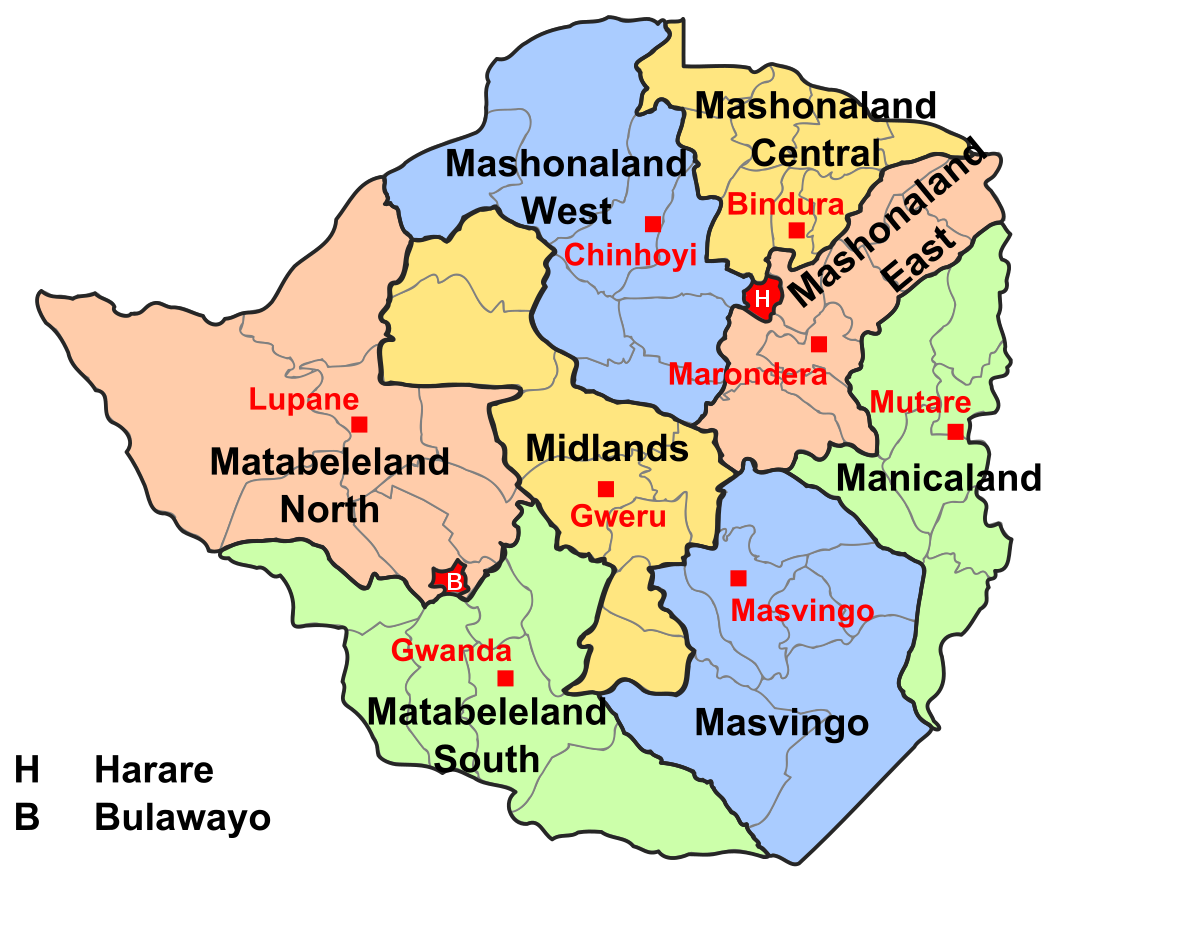
Blue Rose Estate is a suburb of Buduburam in the Gomoa East District, Central Region, Ghana

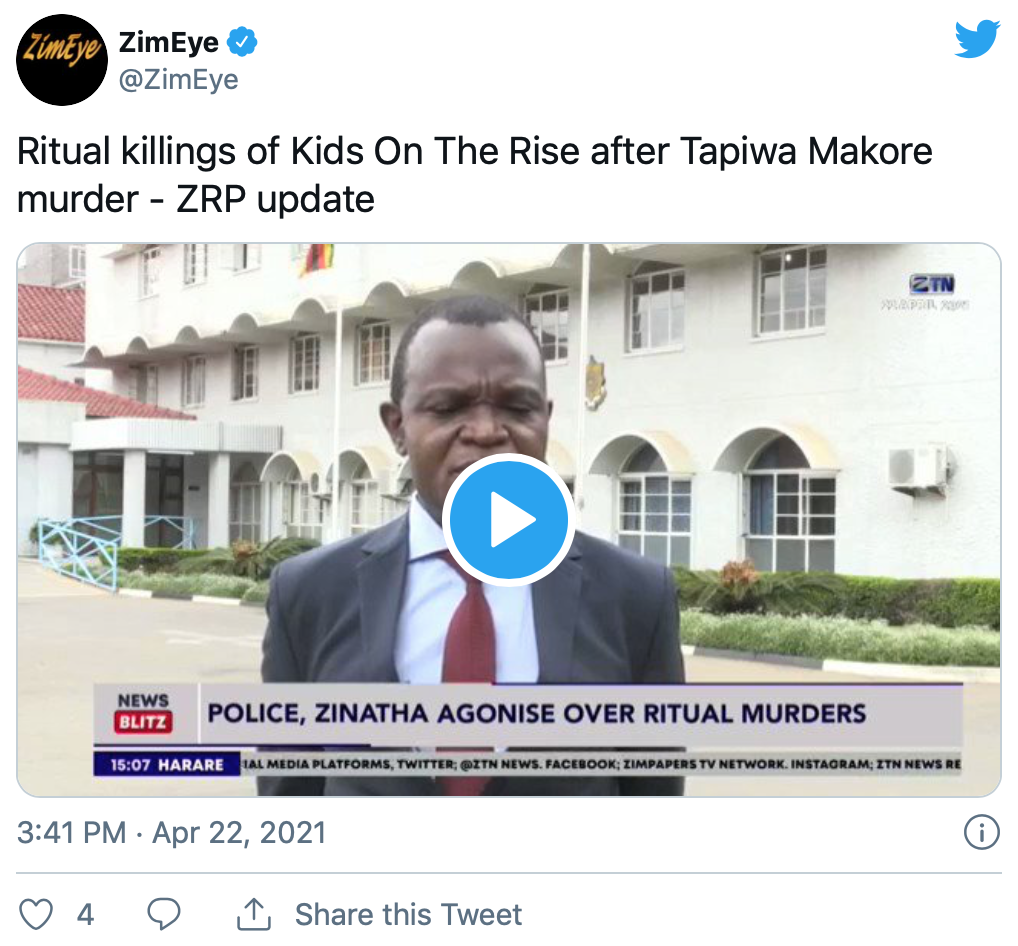
Zimbabwe: ritual killings of kids on the rise following Tapiwa Makore murder

The Makore murder case has become one of Zimbabwe’s most notorious ritual killing cases in the country’s recent history. I reported extensively on this revolting crime in September and October last year. See e.g. my postings dated September 24, ‘Zimbabwe: Murewa boy murdered in ritual killing, body parts missing’; October 1, ‘Full details of Murewa ritual killing revealed‘; October 2, ‘Murewa ritual killing: President Mnangagwa decries evil act‘; October 3, ‘Murehwa ritual killer speaks about the Tapiwa Makore murder in his own words‘; October 4, ‘One week after the ritual murder of 7-year old Tapiwa Makore‘; October 12, ‘Rtual murder unites nation‘ and ‘Murehwa ritual killing: N’anga speaks on Murehwa boy’s murder‘; October 18, ‘Murehwa ritual murder: Police quiz n’anga‘. 
My last posting on this murder case dates from October 26, 2020, ‘Latest news on the ritual murder of Tapiwa Makore‘. After that date more has been published on the murder of the 7-year old boy. However, I ceased temporarily covering this case. I will continue following the Makore murder case and the trial of the accused and report back to you after more news will have come available.

More ritual murder cases have been reported recently whereas – as I have said repeatedly – discovered or reported cases are just the tip of the iceberg. I fear that most cases remain unknown to the outside world, even within the country.

The following report is worrisome. It confirms a disturbing trend which, unfortunately, I already signaled in February: Zimbabwe: a surge in ritual murders?

According to the report presented below, ritual killings of kids are on the rise after the Tapiwa Makore ritual murder. To listen to the report, click on the link below the screenshot. More in the next few days (webmaster FVDK).

Screenshot – click the link below (‘Source’) to watch the video (2:19 minutes).
Zinatha stands for Zimbabwe National Traditional Healers Association 

Source: Ritual Killings of Kids On The Rise Following Tapiwa Makore Murder

Published: April 22, 2021
By: ZimEye, The Truth & the Future

Group of Liberian citizens petitions US Government on mysterious deaths, ritualistic, secret killings in Liberia

After yesterday’s article on the spread of ritualistic killings in Liberia by the Daily Observer, this leading Liberian newspaper surprises us today again with another article focusing a phenomenon which seems so difficult to eliminate in this West African country. Another group of citizens is protesting against the mysterious deaths in the country, which they blame on certain people responsible for ritualistic and secret killings. Citizens against secret killings (CUASK) allege that while the Sirleaf administration era saw a number of mysterious, ritualistic deaths as well as secret killings, such deaths are even more alarming under the George Weah administration.

True of untrue? It’s a fact that nobody in Liberia is surprised by news of another ritual murder that has been committed. In the last paragraph of the Daily Observer newspaper article – presented below – two recent examples are being given.

A 46-year old woman named Florence Massaquoi was found dead on the Samuel Kanyon Doe (SKD) Boulevard, in the Greater Monrovia area, with some body parts missing. In Maryland County, Mordecial Nyemah, a twelfth-grade student of Pleebo High School, was murdered for ritualistic purposes, causing a major protest and rioting from angry citizens. See my earlier postings on this murder case, dated April 3, ‘Liberia: protests inMaryland County over alleged ritual killing of young people‘, April 5, ‘Liberia: Maryland County student leader condemns allied ritualistic murder, recalling similar cases‘, and April 22, ‘Ritual murders in Liberia, a remarkable plea: ‘Dire need to respect the sanctity of human life in Liberia‘.

Ritualistic murders in Liberia, when wil it end? Will it ever end?

The Government of Liberia needs to act, NOW. If it’s not part of the solution, it’s part of the problem (webmaster FVDK).

Group Petitions U.S. Gov’t on Mysterious Deaths, Ritualistic, Secret Killings in Liberia

Rufina Earley, widow of EPS Melvin Earley makes statement at the memorial service after CUASK’s petition presentation to the U.S. Embassy near Monrovia.

Published: April 23, 2021
By: Daily Observer, Liberia, David S. Menjor

-As families of the deceased fear for their lives for speaking in public on how they feel about the loss of their loved ones

A group of angry citizens, some of whom are mourning the mysterious deaths of their loved ones, marched on Wednesday, April 21, 2021 marched petitioned the United States government, through its Embassy near Monrovia to call on President George Weah administration to see reason and conduct further investigations in order to establish causes of the deaths and bring the perpetrators to book.

The group, under the banner “Citizens United Against Secret Killings (CUASK)” said they are saddened to know that the Liberian government has failed or is failing to properly investigate circumstances leading to the deaths of a number of people, including some high profile government officials including security personnel, financial experts, among others.

CUASK said it strongly believes that there are hidden motives behind the alleged killings of several of those who lost their lives and that the only way those motives can be aborted and prevented from causing further harm in the Liberian society is to incessantly push the government to act appropriately rather than what they have so far done.

“We are aware that the secret and ritualistic killings have been going on, even in the previous government but the exponential rate at which it is now going is alarming. We say so because we never tell who is next among us who have come to present this petition today,” said Jethro Emmanuel Kolleh, leader of CUASK.

Kolleh added: “We also believe that the autopsy reports given were done surreptitiously to cover the facts. The doubtful reports by these governments, we mean the Ellen Johnson Sirleaf-led administration and now the Weah led administration, have left us in fear about the growing rate of impunity.

“In fact, impunity has become a monster among us and if nothing is done about it now; there may be more disastrous happenings across the country, with the perpetrators having nothing to fear simply because they will be pre-informed that doing wrong, no matter how grievous, is nothing to worry about in the country.”

In their petition, CUASK listed several names of people, including children who died through alleged questionable means as raised by the concerned citizens.

“Our motto is “All Liberians Lives Matter,” and this is why we will not stop mentioning the names of all those great sons and daughters who died under mysterious circumstances,” Kolleh further noted.

He named Harry Greaves, former managing director of Liberia Petroleum Refinery Corporation (LPRC), Michael Allison, a whistle blower and Shakie Kamara, a 15 year old boy in West Point as individuals who died during the administration former President Ellen Johnson Sirleaf under troubling circumstances. 

Others who died during the Sirleaf administration and named in the CUASK petition as questionable deaths were Victoria Zayzay, a young lady who Police claimed, committed suicide overnight while in custody and little Angel Togba who lived with Hans Williams and his wife in Monrovia, prior to her (Angel Togba) death which was attributed to suicide.

“We strongly believe that the deaths of Greaves and Allison were political and arbitrary. They were killed but justice was never served,” he emphasized.

The Weah era

Citizens against secret killings (CUASK) said while the Sirleaf administration era saw a number of mysterious, ritualistic deaths as well as secret killings, such deaths are more alarming under the George Weah administration.

The advocacy group said it is disappointed in the George Weah led administration because, while in opposition, they (Coalition for Democratic Change — CDC) condemned former President Sirleaf and her administration for failing to protect the lives they took oaths to protect.

“We are aware that the U.S. government is fully informed on a daily basis about happenings in Liberia. We are aware and that has been made clearly known by the State Department’s human rights report as well as the Global Magnitsky Human Rights and Accountability Act of 2021,” Jethro Kolleh said.

The group referenced the death of Zenu Miller, a journalist at OK FM 99.5 as one case that ended inconclusively, but due to his family’s wish to avoid the unnecessary rigmarole that could have proven nothing worthy, Miller was buried without justice.

Zenu Miller was beaten by Presidential security personnel (Executive Protection Service (EPS) at the Samuel Kanyon Doe Sports Complex on January 25, 2020. He became sick and was admitted at the ELWA Hospital in Paynesville, the place re stayed at until his passing on February 15 of the same year.

He posted on his Facebook account saying that he was experiencing severe pain in his chest following the EPS’ brutality meted against him but in the end, Miller’s family informed the public that he died of hypertension (high blood pressure).

In October of 2020 alone, three auditors and a tax expert suffered mysterious deaths that raised public outcries.

On October 2, 2020, Gifty Lamah and Albert Peters, workers at the Liberia Revenue Authority (LRA), were found dead on Broad Street in a car said to have been owned by Albert Peters.

Another employee of LRA, Joseph Fahnboto, died two days later, October 4, 2020. 

On October 10, 2020, news broke, announcing the passing Emmanuel B. Nyenswa, head of Liberia’s Internal Audit Agency (IAA).

Following the deaths of the auditors and staffs of LRA and IAA, Dr. Benedict B. Kolee and Dr. Zoebon B. Kpadeh, employees of the Ministry of Health and the John F. Kennedy Memorial Hospital respectively, were hired by government to conduct the autopsies on the remains of the victims.

However, the autopsies reports released by the two pathologists were received with discontent by the public.

In their report, as read by Justice Minister Frank Musah Dean, Gifty Lamah and Albert Peters died in the vehicle due to carbon monoxide.

The reports had it that the IAA boss, Emmanuel Nyenswa died as a result of massive hemorrhage, multiple bone and soft tissue injuries which he sustained after falling from the height of his home.

According to the Justice Minister, the IAA boss’s death requires further investigation, stating that circumstances leading to the cause of his demise are unnatural.

For George Fahnboto, the autopsy report indicated that he died as a result of the accident he was allegedly involved in along the Samuel Kanyon Doe Boulevard while driving.

Following those deaths, Melvin Earley, a U.S.-trained Presidential guard who served former President Ellen Johnson Sirleaf and later President Weah, was said to have died by suicide using his own gun, while on the nationwide tour with Weah in Tapitta, Nimba County.

The family of Earley and many critics of the Weah led government disagreed with the government’s allegation that he committed suicide. His widow and all of his family members as well as their supporters called on the Weah led government to provide evidence that he (Earley) took his own life, but no report came, according to them, as the widow said there is no death certificate to show cause of her husband’s death.

Several other deaths, mysterious and questionable, occurred in the weeks and months that followed. To name two more, Florence Massaquoi, 46, was found dead on the Samuel Kanyon Doe (SKD) Boulevard, with some parts of her body extracted, while in Maryland County, Mordecial Nyemah, a graduating high school student, was killed for ritualistic purpose, causing a major protest and rioting from the angry citizens of the county.

The advocacy group, citizens united against secret killings (CUASK) said they will not rest their pursuit for justice until it is served in each of the cases.

Source: Group Petitions U.S. Gov’t on Mysterious Deaths, Ritualistic, Secret Killings in Liberia

Ritual murders in Liberia, a remarkable plea: ‘Dire need to respect the sanctity of human life in Liberia’

I reported on the murder of Mordecial Nyemah, a commercial motor cyclist and a twelfth-grade student of Pleebo High School, Pleebo, Maryland County, earlier this month. See my postings of April 3,  ‘Liberia: protests in Maryland County over alleged ritual killing of young people‘, and of April 5, ‘Liberia: Maryland County student leader condemns alleged ritualistic murder, recalling similar cases‘.

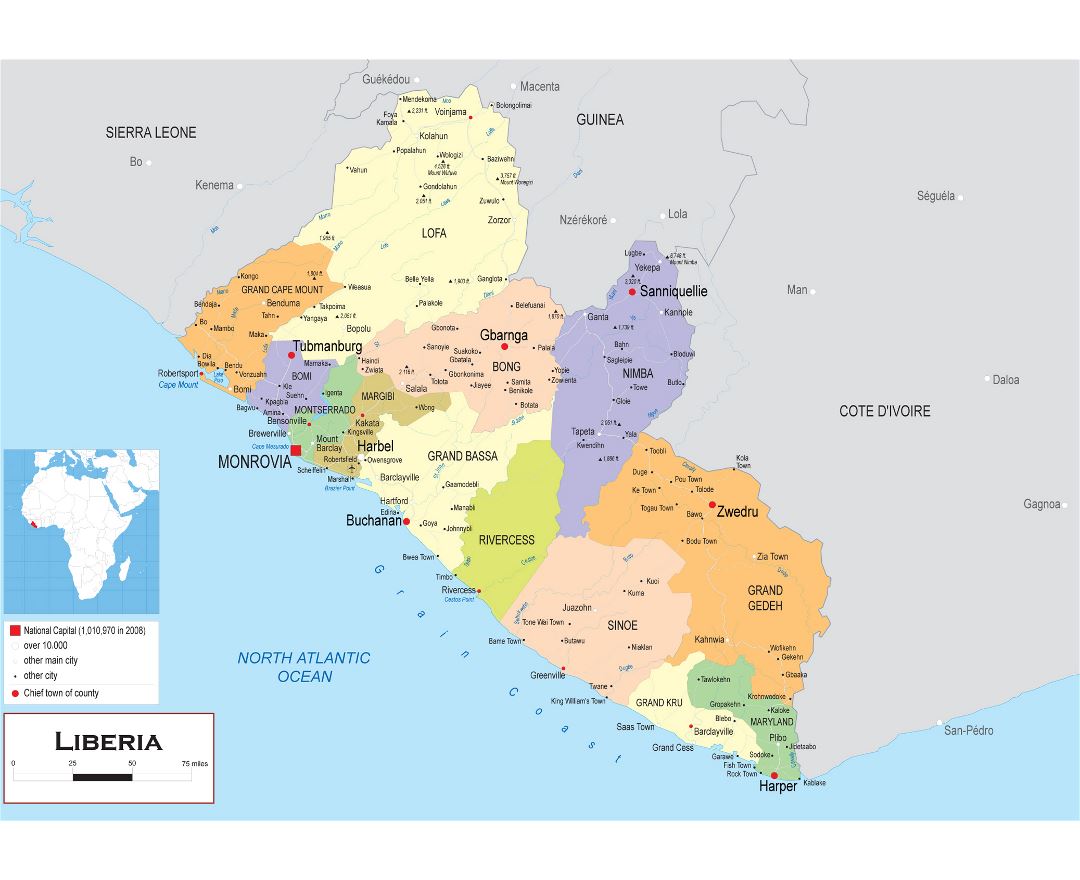
One of Liberia’s leading newspapers, the Daily Observer, today pays attention to the gruesome murder of Mordecial Nyemah and subsequent events: the protests of women in Pleebo, the vandalization of the Harper Prison Compound by protesters, the attack on the property of Bhopal Chambers, the Speaker of the House of Representatives, and the curfew imposed to quell the unrest. Most remarkable however is the elaborated overview of ritualistic murders in the country (without going into details of specific cases), in the aftermath of a visit of the Peace Advocates of the Maryland/Gbenelue Chapter of Dehkontee Artists Theatre, Inc. (DATI). The delegation visited the family of the late Mordecial Nyema on Monday, April 19, 2021 in Pleebo City, Maryland County.

Both the DATI peace advocates and the Daily Observer newspaper editors are to be commended for their frankness and their plea for the rule of law and to end the medieval practices which are human sacrifices. The following article gives a rare insight in the occurrence and background  of ritualistic murders and human sacrifices in Liberia. It is highly recommended reading! 

Notwithstanding the foregoing, a footnote seems warranted. In the Daily Observer article it is explicitly mentioned that in Liberia ritual killings are mostly if not only occurring in Maryland and Montserrado counties. This, however, is not in line with what has been reported elsewhere. Honesty commands me to say that this has been based on my own research and experience in Liberia. 

Nonetheless I agree with the main conclusion and plea of the article which is presented below. Respect for human life is an essential human right. The rule of law is basic to a 21st country. A civilized nation and people respect human life (webmaster FVDK).
 
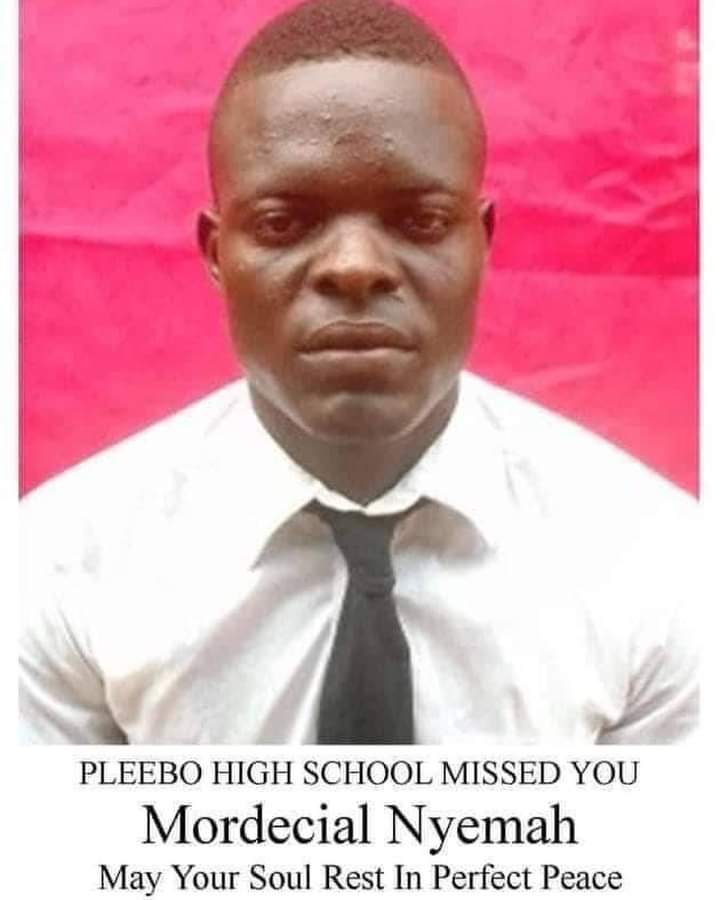
RIP Mordecial Nyemah!

The late Mordecial Nyemah, 22, a commercial motorcyclist, was gruesomely murdered in Pleebo, Maryland County.

Dire Need to Respect the Sanctity of Human Life in Liberia:

Peace Advocates Visit Family of Mordecial Nyemah in Pleebo

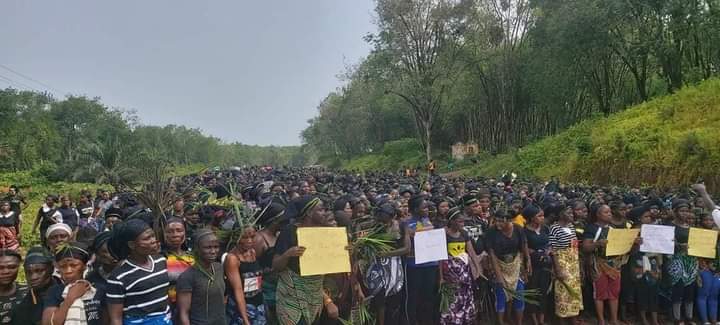
Women in Pleebo take to the streets of Pleebo, protesting the murder of Mordecial Nyemah.

Published: April 22, 2021
By: Daily Observer, Liberia  

Peace Advocates of the Maryland/Gbenelue Chapter of Dehkontee Artists Theatre, Inc. (DATI) visited the family of Mordecial Nyema on Monday, April 19th, 2021 in Pleebo City, Maryland County. The high-powered DATI delegation was led by its Maryland County Director Meshach Sieh Elliott. During the solemn ceremony, the youths of Dehkontee Artists Theatre’s Maryland Chapter expressed their deepest condolences to Ms. Mary Nyemah, the surrogate mother of slain youth and commercial motor cyclist Mordecial Neyma and his family, for their irreparable loss. Mordecial Nyemah was a twelfth-grade student of Pleebo High School.

DATI also presented a humble consolation package to Ms. Nyema and her family to help defray some of the funeral expenses for their son. During the ceremony, libation was poured to acknowledge the presence of the spirits of our forefathers so they would bless the gathering. Mr. Thomas Kuwait Nyemah expressed gratitude on behalf of the family. He stated that what DATI did to reach out to his family was heartwarming. He thanked Dr. Gbaba and the DATI team for a job well done. Ms. Mary Nemah, aunt of the deceased also thanked DATI for their general support.

What Really Happened in Maryland?

Recently, Mordecial Nyema was gruesomely murdered in Pleebo, Maryland County by twenty-eight-year-old suspect named Roland Appleton and three other individuals identified as Moses Malmah, Francis Clarke, and Daniel Wesseh—all youths. According to the April 9, 2021 edition of  “The Bush Chicken” online magazine, Mordecial Nyemah was murdered along the Maryland-Grand Kru Highway in Gbolobo-Bessiken, Pleebo Sodoken Statutory District. As a result, concerned citizens, including mothers, youths, and students organized a peaceful protest and marched from Pleebo to Harper City to seek  timely justice and redress from County authorities regarding the death of their slain son and colleague.

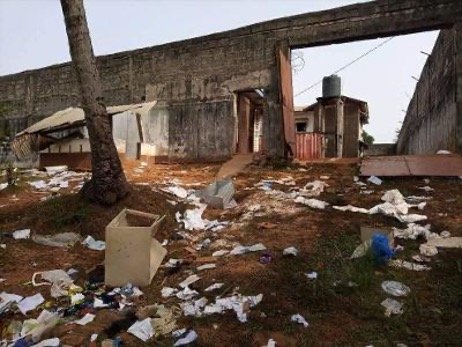
Harper Prison Compound vandalized by protesters seeking transparent justice for Mordecial Nyemah.

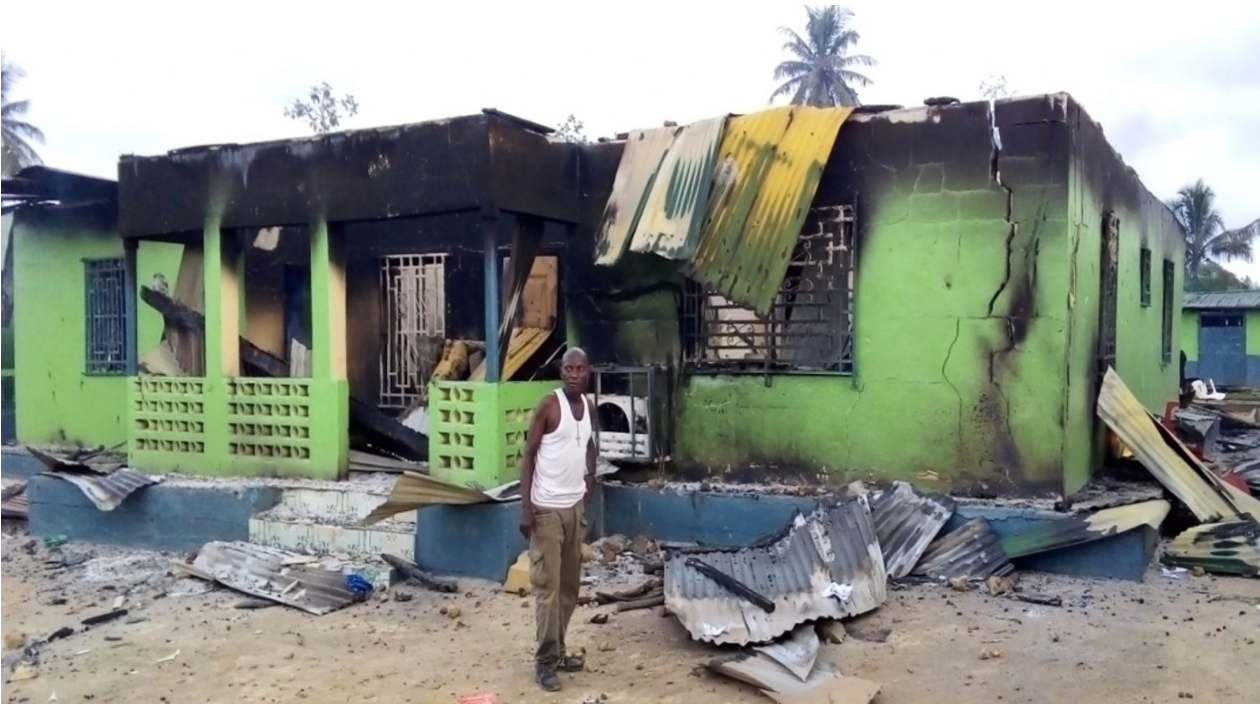
However, observers reported that the crowd turned angry when the Acting Superintendent informed peaceful protesters Mordecial Nyemah’s murder would be addressed during the August court term while the protesters had hoped their grievances would be addressed by carrying out a speedy investigation and trial.  Consequently, angry protestors burned down and vandalized several private and public properties including but not limited to the home of Borfur Chambers, Speaker of the House of Representatives of the Republic of Liberia, the Harper Central Prison Compound, and vehicles, while expressing their frustrations for the continual ritualistic killings that occur in Maryland with impunity.

In response, the government of Liberia imposed a dusk to dawn curfew and arrested several individuals and youths, including students from Tubman University. They were incarcerated at the Zwedru Palace of Corrections. Those arrested have not been arraigned and/or no fixed court dates have been set for their trial. In addition, the Liberia National Police confirmed that the

The Sanctity of Human Life

Human life is very sacred. It cannot be manufactured in a scientific laboratory, neither does man have the power to create a human being, except Almighty God. Though man plays a role through sexual intercourse during the procreation process, yet, that process of itself is a divine plan which can only occur when a male sperm mates with a female egg. Therefore, to emphasize the essence of human life God included “Thou shall not kill” as part of his Ten Commandments he gave to the Children of Israel. 

Furthermore, to make himself very clear regarding the issue about the sanctity of human life, God rescued Isaac’s when God tested Abraham and asked him to sacrifice his only child. When Abraham raised the dagger to sacrifice Isaac, God miraculously intervened and changed what would have been a human sacrifice to one with an unblemished lamb. God performed this miracle because he wanted to teach mankind that we do not need human sacrifice to please him and/or to get or retain big government jobs.  Ever since then, it became customary and the acceptable norm of every civilized society to slaughter an animal if one desires to make a sacrifice, whether to appease the dead, or to seek greater fortune in life.

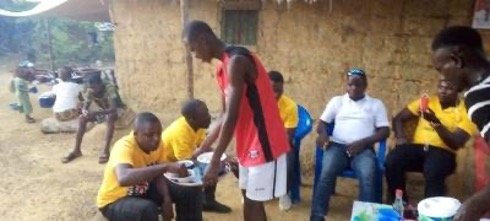
Grebo culture is very rich. In the photo above, the young man is passing out kola nuts and pepper to traditionally greet the DATI Peace Advocates to the Nyemah home before any other business can be conducted. This is followed by the presentation of water or anything in the form of a liquid, such as gin, rum, etc., as a sacred drink. In which t-shirt is Thomas Kuwait Nyemah, cousin of the deceased.

The slaughtering of human beings is a barbaric act. It dates to barbaric eras when there was no rule of law. During those dark eras, man naively believed that offering another human being as an ultimate sacrifice would bring them fame, wealth, and success in life. However, when man became civilized and began to conglomerate there was a need to put an end to ritualistic killing because there is no scientific proof that killing another man makes you to become successful in life. In most instances success in life derives from hard work, steadfastness, and a firm determination to make ends meet. Therefore, ritualist killing and/or snatching another man’s life away in the darkness of the night is wrong and should be discouraged at all levels of society.

Compound of Bhofal W. Chambers, Speaker of the House of Representatives of Liberia, set ablaze during the protest. It is not clear why Speaker Chambers property was signaled out.

Ritualistic Killing Is Not Kwa or Grebo Culture and Not Liberian Culture Either!

Ritualistic killing is not Kwa or Grebo culture or Liberian culture either. It is mainly prevalently carried out in two specific regions of Liberia—Maryland and Montserrado Counties. This does not mean that ritualistic killings do not occur in other parts of Liberia. Nevertheless, when it comes to the frequency with which ritualistic killings occur in Liberia, these two regions rank top on the list. Hence, in my view and observation ritualistic killing as a foreign cult or custom was imposed on the Liberian people through the introduction of foreign cults or secret ‘societies’ in Liberia. Below, I submit some reasons for my assertion and observation as a cultural researcher.

Throughout the narratives that were told by our Kwa ancestors I have not heard any mention made of people being brutally killed outside of tribal wars like the way ritualistic killings have taken place in Maryland and Montserrado Counties over the past century. Centuries back, the Krahns were referred to by their Grebo, Kru, Bassa brothers and sisters as “Pineyoun” (Rich People). As descendants of biological brothers, members of these Kwa ethnic groups travelled to one another’s countries (territories) frequently. The Krus, Grebos, Bassas came on pilgrimage to Mount Gedeh to see the Oracle at Putu and the Krahns or Pineyoun travelled by foot to go to Gbenelue (Cape Palmas) or Zinonqlee (Krus call it Siloklee) in Sinoe County, just to see the Atlantic Ocean or to purchase salt, tobacco and other foreign goods that were not produced in the hinterland of Liberia.

Due to their fraternal relationships, those days a Krahn man traveling to Maryland or Sinoe or Grand Kru or Bassa could stop for days or weeks in any family house along his journey trail without any questions asked. They would accommodate themselves when the hosts were on the farm and when the hosts arrived, they would warmly greet their guests and accommodate them until it was time for them to leave. Not once did I hear the old folks say anyone got ‘mysteriously missing’ or was ritualistically murdered while traveling through Grebo, Bassa, or Kru land. In addition, it is also safe to say that even in the Mel and Mande territories of Liberia (western, northern, central Liberia) people roamed about freely without any incidents of ritualistic killings in Nimba, Bong, Lofa, Bomi, Barpolu, Grand Cape Mount, except for Montserrado where such diabolical act is also rampant!

Therefore, individuals who are members of the “Gboyo Cult” in Maryland must stop tarnishing the reputation of the Grebo people. Ritualistic killings are not an inherent attribute of Grebo or Kwa culture. It is a custom derived from the imposition of a foreign cult that is mainly prevalent in Maryland and Montserrado Counties.

Conclusion of DATI Peace Advocates Visit with the Nyemah Family in Pleebo

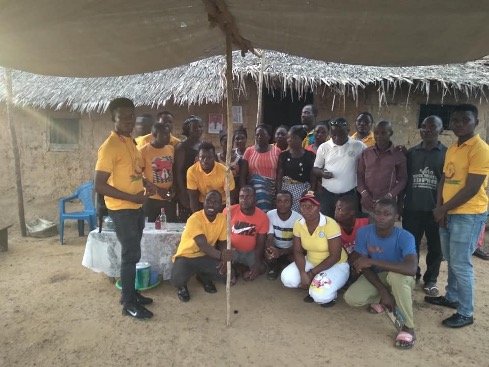
Members of Dehkontee Artists Theatre, Inc. (DATI) dressed in yellow t-shirts pose with the Neyemah Family at their residence in Pleebo, Maryland County. DATI Kukatonon Peace Project in Liberia was established in 2019 to promote peace and reconciliation and rule of law. The organization is comprised of college students and graduates of Tubman University in Harper, Maryland County.

During DATI Peace Advocates’ visit with Mordecial Nyemah’s family, Ms. Mary Neymah, aunt and surrogate mother of the deceased, bitterly wept for the loss of her son and nephew. She said Mordicial’s biological parents passed when he was a child and she reared him. She lamented that he would not be graduating from high school when his colleagues successfully complete their secondary education.

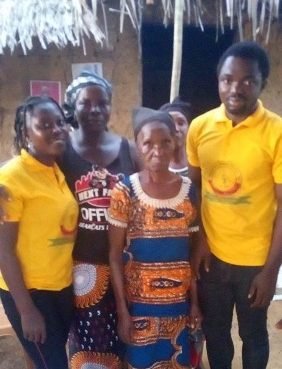
DATI Peace Advocates pose with mothers of the deceased during the condolence visit in Pleebo.

However, despite the pain she and her family are going through, the Nyemah family is appealing to the Liberian government to please release those that are imprisoned as a result of their involvement in the peaceful protest that turned violent.  Ms. Nyeman was speaking on behalf of her family on whose behalf thousands of citizens (mothers, fathers, students) took to the streets to protest and to march many miles from Pleebo to Harper City to present their grievances to the authorities. She says the Nyemah family regrets that what was intended to be a peaceful march turned into vandalism. However, she is also appealing to His Excellency George Manning Weah, to please release Tubman University students who are incarcerated so they can return to school. Dehkontee Artists Theatre, Inc. also condemns the violent act perpetrated by individuals to derail the good intent of the peaceful march by the women of Pleebo and pray that our farsighted leader will ensure justice is served and that those who paid teenagers to perpetrate such violent ritualistic act will have their day in court.

Published by Dehkontee Artists Theatre, Inc. Public Relations Section

April 21, 2021

Source: Dire Need to Respect the Sanctity of Human Life in Liberia: