Liberia constitutes another never ending story as far as ritual killings are concerned. The reported ritual murder case below is shocking but, unfortunately, has a strong ‘seen before’ character.
The killing of Worteh Koffa is another murder in the southeastern part of Liberia, notorious for its ritualistic murders. The article below elaborates on these cases including Liberia’s most notorious ritual murder case which led to the arrest and subsequent conviction and sentencing – ‘death by hanging’ – of seven convicted rituals murderers, among whom two so-called ‘big shots’, the Superintendent of Maryland County, James Daniel Andersen (the personal representative of then Present Tolbert in this part of the country) , and the representative of Maryland County in the House of Representatives, Allen Yancy. (webmaster FVDK)
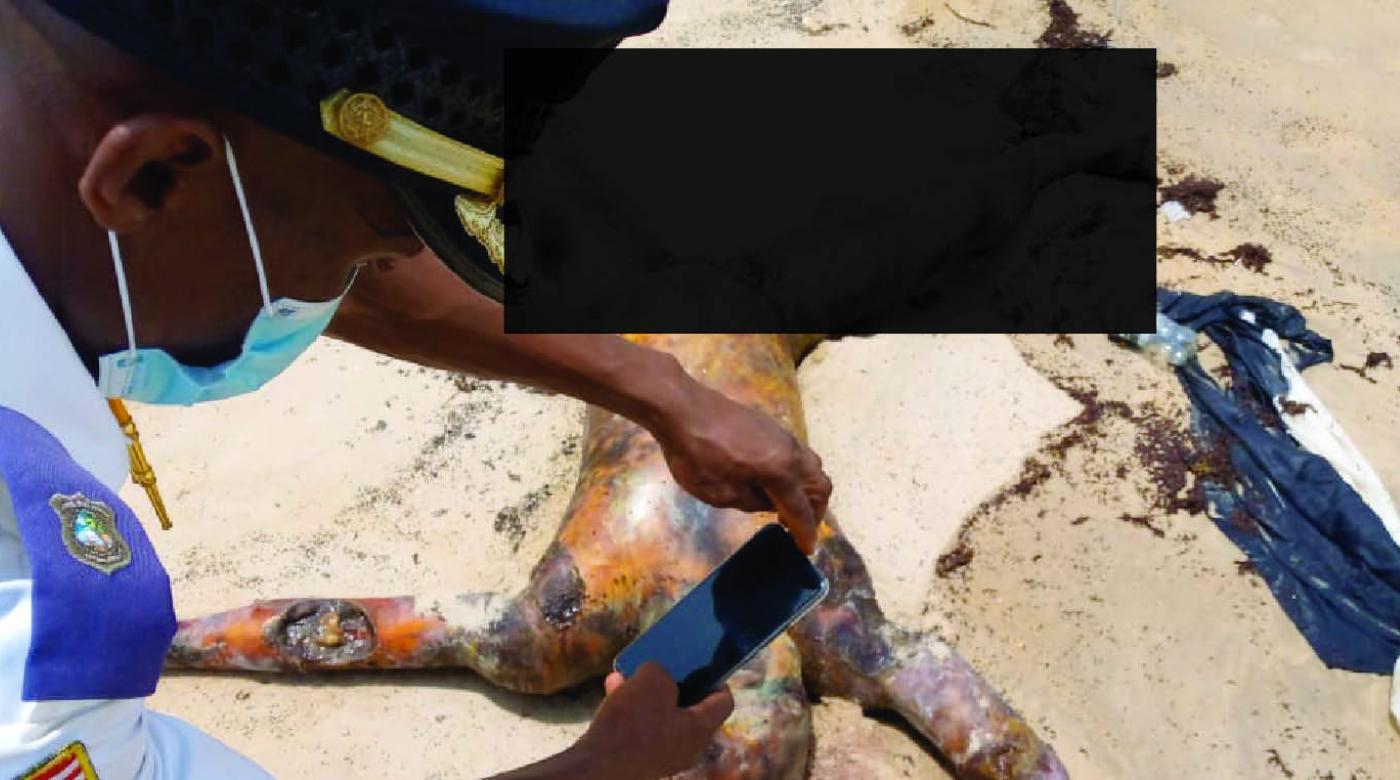
A man in his late 20s, named Worteh Koffa, has been found dead “with body parts missing” in Grand Kru County.
The deceased, according to a 15-man coroner jury in Grand Kru County died as a result of ritualistic killing. The coroner jury reported that the late Worteh’s eyes, tongue, fingers and toenails, and other body parts were missing upon discovery of his body in early April 2022 on the beach in Grandcess City, Grand Kru County District #1.
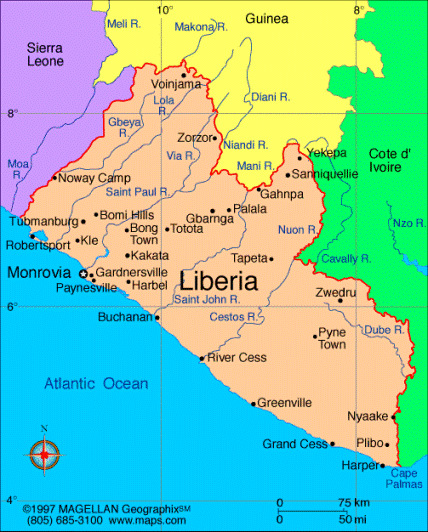
Worteh’s death comes just a year after a 23-years old motorcyclist named Mordecail Nyemah for ritualistic purposes in Maryland County, which is a southeastern county like Grand Kru. The deceased was discovered dead with his right eye plugged, and right fingers cut off in Pleebo during the morning hours of March 25, 2021, and it triggered a wave of violent riot both in Pleebo and the Maryland County’s capital, Harper.
Suspect Moses Mlamah said in a video interview that he was sent by a man identified as Daniel Wesseh to get blood for reasons and was paid to do so. He added that he enlisted the help of two others to carry out the act. The issue about ritualistic killings in the southeast is not anything strange with Maryland County seeing a series of ritualistic murders that occurred around Harper, in the 1970s.
Between 1965 and 1977 over 100 murders occurred in Maryland County, many of which were considered ritualistic due to the mutilation and removal of body parts. During the 1970s, Liberians in Maryland County were constantly under the threat of ritual murders. Between November 1976 and July 1977, 14 people had disappeared in the county prompting Liberian president William Tolbert to fire Superintendent of Maryland County, James Daniel Anderson, who failed to report the missing people. Tolbert publicly declared “Anyone who kills deliberately: The law will kill that person.”
These murders went unreported and uninvestigated until the murder of a local fisherman and popular singer, Moses Tweh. Tweh was abducted on June 26, 1977. His body was discovered on July 4, 1977, heavily mutilated with his eyes, ears, nose, tongue and penis removed. Prior to the discovery of Tweh’s body, Wreh Taryonnoh, the girlfriend of Assistant Supervisor of Schools, Francis Nyepan, was allegedly heard by a group searching for Tweh saying that “if they would be so lucky to find him, only his bones they might see”. This sparked the arrest of 12 people, a majority of whom were government officials.
During the first Harper Trial, Joshua Brown and Teah Toby were released and later became state witnesses. The other ten defendants were found guilty and sentenced to public execution by hanging. Tagbedi Wisseh appealed his conviction and was pardoned by Tolbert before execution. Wonplu Boye and Koti Weah both died before execution, it was rumored their own family members poisoned them to avoid shame.
On 16 February 1979, the seven remaining people convicted of Moses Tweh’s murder were publicly hanged at dawn in Harper. The media dubbed them the “Harper Seven” The crimes back then were regarded as “Liberia’s most notorious ritual killing case” due to the number of murders, the involvement of high ranking government officials and their subsequent public executions.
Meanwhile, up to press time, the Liberian National Police Detachment in Grand Kru County is still tightlipped on the investigation of Worteh’s death.
Worteh’s mother has therefore called on the government to probe the mysterious death of her son as “her family remains peaceful and awaits the outcome of any investigation. His death has caused fear among youths in the county and there appears to be a self-imposed curfew among residents of the area, fearing for their own safety.
Meanwhile, Deputy Speaker and Acting Chairman of the Grand Kru County Legislative Cllr. J. Fonati Koffa, on has condemned the gruesome and ritualistic murder of Worteh Koffa and called on the Minister of Justice to put more resources into the investigation and prosecution of the perpetrators.
On his Facebook page, the Grand Kru County District #2 lawmaker noted that: “We condemn in the strongest terms the gruesome and ritualistic murder of young Worteh Koffa. I have placed a call to the Minister of Justice to put more resources in the investigation and prosecution of the perpetrators.”
Cllr. Koffa added: “The age-old practice of ritualistic killings, for whatever purpose, must end. I call on the peaceful citizens of Grandcess to remain calm and law-abiding and assist in the investigation. No young person should have his promising life taken away by nefarious and heartless creatures. I call for a swift and speedy investigation.”
The following figures are frightening. Watch out: I don’t want to be misunderstood. Not all of these killings were ritualistic murders, but many if not most of them were related to occult practices including ‘money rituals’.
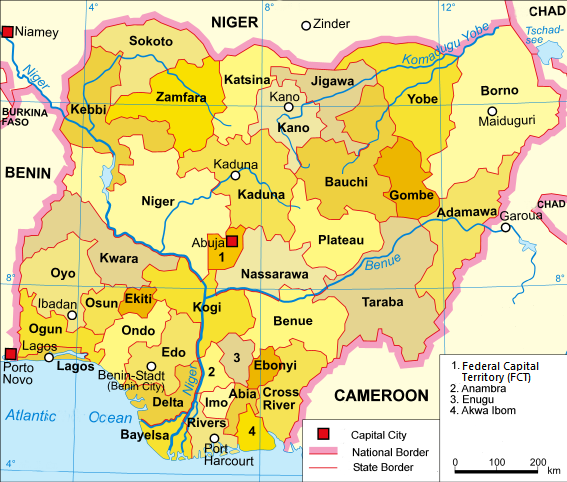
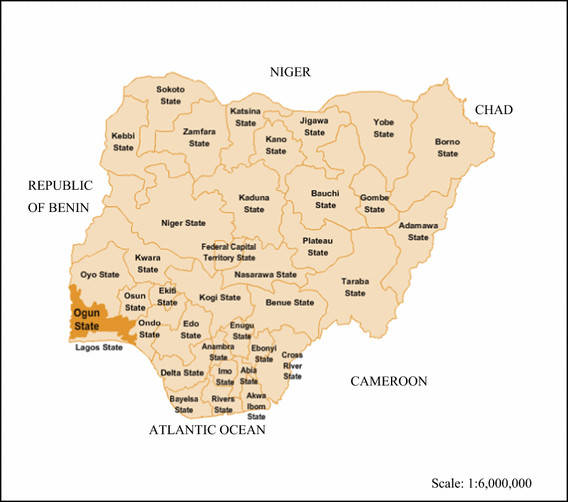
Between April 2021 and April 2022, 281 people were killed in violent cult attacks across 20 states. Anambra state tops the list with 41 cult killings, followed by Benue state: 34, Lagos state: 29, Rivers state: 26, Delta state: 26, Cross River state: 23, Ogun state: 17, Akwa Ibom state: 17, Osun state: 14, Bayelsa state:, 9 and Imo state 9. Notably, Anambra and Ogun states, in recent months, became notorious for cult killings.
In recent weeks, Ogun state became the epicentre of cultism and ritual killings. Between 2019 and 2022, at least 64 people were killed in various violent clashes among cult groups in Ogun state.
Nigeria is at a dangerous crossroads. Persistent state fragility increasingly leads to jungle justice. Poverty and poor perspectives provide powerful motives for the army of jobless young boys and girls to seek a better life in cult groups. The authority of the state is at stake (webmaster FVDK).
Halt rising tide of cult attacks, wars
Published: April 15, 2022 By: Editorial – Daily Trust, Nigeria
While some states in North West and North Central Nigeria contend with banditry and kidnapping, more than a dozen states in the southern part of the country suffer from cult killings. Between April 2021 and April 2022, 281 people were killed in fierce cult attacks across 20 states. The states include Anambra which tops the chart with 41 cult killings, Benue 34, Lagos 29, Rivers 26, Delta 26, Cross River 23, Ogun 17, Akwa Ibom 17, Osun 14, Bayelsa, 9 and Imo 9. Anambra and Ogun states, in recent months, became notorious for cult killings.
In February this year, at least 20 people were killed when suspected cultists invaded a burial in Ebenebe, Awka North Local Government Area of Anambra State. They also desecrated the corpse of a suspected member, identified as Ozo, which had been prepared for burial. In recent weeks, Ogun became the epicentre of cultism and ritual killings. Between 2019 and 2022, no fewer than 64 people were killed in various violent clashes among cult groups in Ogun State.
In the latest onslaught, 16 persons were killed in Abeokuta including a kingpin identified as Tommy, who was hacked down at Panseke in a renewed cult war. Tommy ruled streets of Oluwo, Onikolobo, Adigbe and Panseke areas of Abeokuta. Tommy’s assailants tracked him to the chaotic Pankese area at night, stabbed him in the head and left him to die in the pool of his blood.
Responding to the clashes between the Eiye and Aiye cult groups in Ogun State that lasted for over a week, President Muhammadu Buhari, in a statement issued by his Senior Special Assistant on Media and Publicity, Malam Garba Shehu, directed the police and other law enforcement agencies to confront groups seeking to destroy peace.
Governor of Ogun State Adedapo Abiodun had, in January this year, re-launched the state joint security outfit, code-named OP-MESA, where he threatened to make Ogun inhabitable for all criminals. In February 2022, Abiodun signed a Memorandum of Understanding (MoU) with his Oyo State counterpart, Seyi Makinde, in Abeokuta, where he declared that criminals were after his life because he was “making life unbearable for them”.
Cultism suggests nothing but evil. It involves the coming together of a group with deviant beliefs and practices that are not only exclusively kept away from the knowledge of others but such activities are carried out at odd hours of the day. Some plausible causes of cultism include peer group influence, parental background, drug and substance addiction, societal decadence, poor education standards, loneliness and the lack of recreational facilities.
In Nigerian tertiary institutions, for instance, Black Axe, Buccaneers, Vikings, Aro Mates, Supreme Eiye, Black Eye, Black Beret, Black Bra, Daughters of Jezebel are common names of cult groups. Their common features of identity include initiation through the use of blood or inscription of marks on the bodies of new members; oath-taking; and the use of specific colour as group symbol. It is in the character of cult members to engage in armed robbery, sexual assault, drug abuse, examination malpractice, harassment and bullying of students, and intimidating lecturers for grades.
Cultism has continued to survive partly because of the patronage from the society including politicians who use cultists either as hit men during elections or for assassinating political opponents. While some become cultists in their search for protection, others join cult groups to avenge an assault or a painful past. Some students become cultists out of the desire to become “Big Boys” and superior to their peers.
To halt the rising tide of cultism, parents must give more quality time and attention to their children’s moral development than they give to their businesses or office work. Good parenting requires bridging all communication gaps between parents and their children. To de-radicalise our youths, we call on the National Universities Commission (NUC) to make moral education a General Studies (GST) course for all students of tertiary institutions in the country.
As we recently reiterated on this page, only concrete security measures, not empty directives, would rescue the country from the security challenges confronting it. Government must demonstrate genuine political will to protect lives from cult attacks. The need to deploy modern technology in surveillance, intelligence and detective operations of security agencies cannot be more strategic than now when criminal elements have become more sophisticated.
If “an idle mind” as they say “is a devil’s workshop”, local governments in the country are advised to provide recreational and sports facilities that would keep the army of jobless young boys and girls in their localities busy. While we call on state governments to seasonally organise inter-schools or inter-LGAs sports competitions, we also urge them to support schools with basic sporting equipment. We encourage the NDLEA to sustain its ongoing offensive against drug peddling and abuse, just as we urge the National Orientation Agency (NOA) to, as part of its mandate; orientate the Nigerian public on the sacredness of human life.
NB: Message from The editors, Daily Trust, Nigeria: Dear Reader, Every day, we work hard to provide readers such as you with the most accurate, up-to-date, and comprehensive information. Quality journalism costs money. Today, we’re asking that you support us to do more. Your support means that Daily Trust can keep offering journalism to everyone in the world. See the link included in the source mentioned below to sign up to become a member. (webmaster FVDK)
Ritualistic murders are no exception in Ogun State, Nigeria. That’s a mild way of saying that ritual murders are rife in this southwestern part of Africa’s most populated country. I have repeatedly drawn attention on reported cases of ‘money rituals’ which demand a human sacrifice, see my postings of murder cases in 2017, 2018, 2019, 2020, 2021 and the current year 2022.
I have no doubt that many more ritual murders have been committed in Ogun State but, first of all, not all murders are being reported and investigated and, secondly, not all ritual killings are detected.
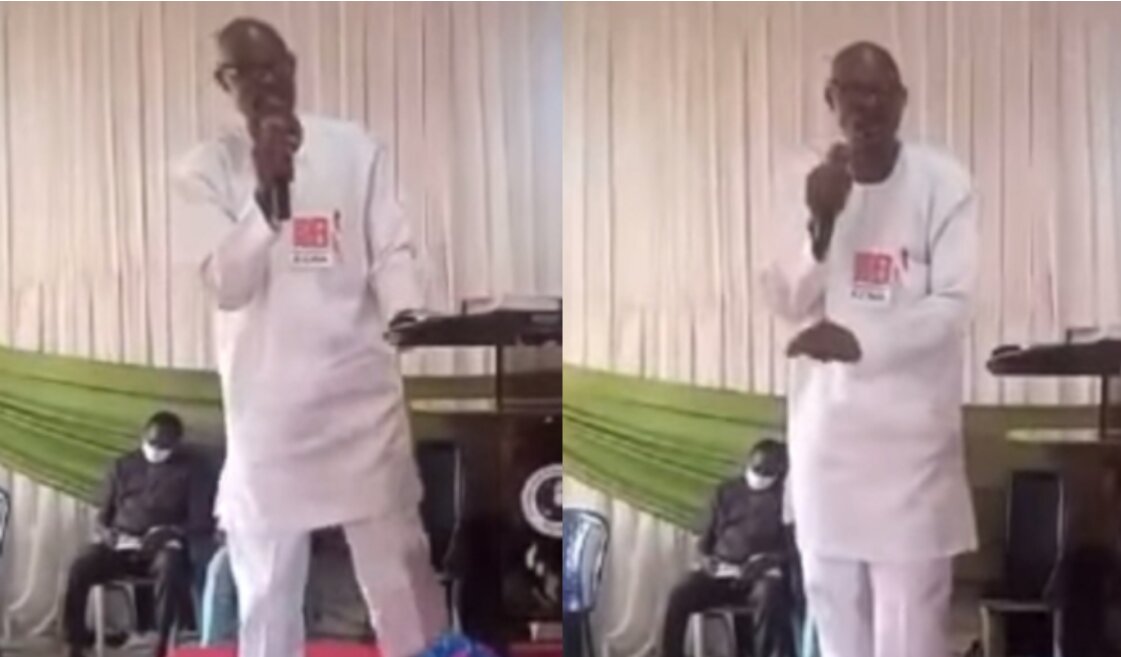
Recently, there have been increasing protests against these cruel crimes. On Sunday April 3, a preacher at the Evangelical Church Winning All (ECWA), Onikoko, Abeokuta, Chief Francis Oluwole Ogunnusi raised his voice against ritual killings, lashing out at ‘money rituals’. Suddenly he slumped and he died on the spot causing consternation and confusion in the church.
It is not known whether deacon Francis Ogunnusi was suffering from any health related problem.
I haven’t run across a newspaper article mentioning the following suspicion, but I won’t be surprised if quite a large number of churchgoers and other ordinary people reacted on the news of the deacon’s sudden demise – albeit silently – with awe and conviction that a terrifying and powerful person who possessed an extra-ordinary strong ‘juju’ was responsible for the death of Chief Francis Oluwole Ogunnusi (webmaster FVDK).
Deacon dies while preaching against ritual killings in Ogun State
Deacon Francis Ogunnusi
Published: April 5, 2022 By: Adekunle Dada – Within Nigeria
A deacon at the Evangelical Church Winning All (ECWA), Onikoko, Abeokuta, Ogun State, Francis Ogunnusi, reportedly slumped and died while against the ‘get-rich-quick’ syndrome during a Sunday service.
The church was thrown into confusion when the Deacon, also said to be the Baale of Onikoko, a community, near the Panseke area suddenly slumped with a microphone in his hand.
According to Daily Trust, a viral video showed the Deacon alongside an interpreter, warning against the rising cases of money-making rituals.
Delivering his sermon in Yoruba, Ogunnusi said “The money you make through unlawful means, killing people, sucking human blood; when death comes, it will belong to another person.”
However, when the interpreter was still trying to present the words in the English language, the man slumped and threw the church into commotion.
He was reportedly rushed to the Federal Medical Centre, Idi-Aba, Abeokuta, where he was pronounced dead.
The aforementioned publication reported that a congregant said, “The man was not the pastor of that church, he was just an elder. He was the Baale of Onikoko. But he was the one that delivered the sermon on Sunday.
“He was talking about death and people who make money by killing other people. All of a sudden, he collapsed. He was rushed to the FMC, but he died. We don’t know what happened. I was very scared. Everything was disrupted. We just shared the grace and went home.”
The source could not confirm whether the deceased was battling any health challenges.
Deacon dies on pulpit while preaching against ritual killings + Video
Screenshot – To access the video, please click here
Published: April 5, 2022 By: The Eagle Online, Nigeria
A Deacon of the Evangelical Church Winning All, Onikoko, Abeokuta, Ogun State, Francis Ogunnusi, has been confirmed dead after slumping while preaching during a service.
The incident occurred during the Sunday service on April 3 as the Deacon preached against “get-rich-quick” syndrome.
The church was thrown into confusion after the Deacon, who is also the Baale of Onikoko, a community near Panseke area in Abeokuta metropolis, suddenly slumped with a microphone in his hand.
Delivering his sermon in Yoruba, Ogunnusi said: “The money you make through unlawful means, killing people, sucking human blood, when death comes, it will belong to another person.”
The interpreter was still trying to present the words in the English language when the Deacon slumped.
According to Daily Trust, the Deacon was rushed to the Federal Medical Centre, Idi-Aba, Abeokuta, where he was pronounced dead.
A congregant told the publication: “The man was not the pastor of that church, he was just an elder.
“He was the Baale of Onikoko.
“But he was the one that delivered the sermon on Sunday.
“He was talking about death and people who make money by killing other people.
“All of a sudden, he collapsed.
“He was rushed to the FMC, but he died.
“We don’t know what happened.
“I was very scared.
“Everything was disrupted.
“We just shared the grace and went home.”
It was however not clear if he had any health challenges.
The corpse of Chief Ogunnusi has been deposited in the mortuary.
Confusion as deacon dies while preaching against ritual killings in Ogun
Published: April 5, 2022 By: Peter Moses – Daily Trust, Nigeria
There was a commotion at the Evangelical Church Winning All (ECWA), Onikoko, Abeokuta, Ogun State, when a Deacon, Francis Ogunnusi, reportedly slumped and died…
Our correspondent gathered that the incident occurred on Sunday when Ogunnusi was preaching against the ‘get-rich-quick’ syndrome.
There have been worrying cases of ritual killings in Ogun State and other parts of the country. No less than three cases of killings for money rituals were recorded in different parts of the state last month.
A viral video sighted by our correspondent showed the deacon alongside an interpreter, warning against the rising cases of money rituals.
Ogunnusi was also said to be the Baale of Onikoko, a community near the Panseke area in Abeokuta metropolis.
The church was thrown into confusion when the deacon suddenly slumped with a microphone in his hand.
Delivering his sermon in Yoruba, Ogunnusi said, “The money you make through unlawful means, killing people, sucking human blood; when death comes, it will belong to another person.”
However, when the interpreter was still trying to present the words in the English language, the man slumped and threw the church into a commotion.
He was reportedly rushed to the Federal Medical Centre, Idi-Aba, Abeokuta, where he was pronounced dead.
A congregant said, “The man was not the pastor of that church, he was just an elder. He was the Baale of Onikoko. But he was the one that delivered the sermon on Sunday.
“He was talking about death and people who make money by killing other people. All of a sudden, he collapsed. He was rushed to the FMC, but he died. We don’t know what happened. I was very scared. Everything was disrupted. We just shared the grace and went home.”
The source could not confirm whether the deceased was battling any health challenges.
It was gathered that the lifeless body of Ogunnusi had been deposited in the mortuary.
Ogun: ECWA ‘Pastor’ slumps, dies on pulpit while preaching against ‘Money Rituals’
Published: April 6, 2022 By: Olufemi Adediran, Abeokuta – New Telegraph, Nigeria
A Deacon at the Evangelical Church Winning All (ECWA), Onikoko area of Abeokuta, Ogun State, has slumped and died while preaching in the church on Sunday.
The Deacon, identified as Chief Francis Oluwole Ogunnusi, was the Baale of Onikoko community, near Panseke area of Abeokuta.
It was gathered that, Ogunnusi was in the pulpit on Sunday preaching against the ‘get-rich-quick’ syndrome that has become rampant, especially among Nigerian youths when he suddenly slumped.
In a video sighted by our correspondent, the Deacon warned those killing people and drinking human blood to get rich, saying when they die, the money would be taken by another person. In the video that had since gone viral on Social Media, the community leader who was preaching in Yoruba said,
“The money you make through unlawful means, killing people, sucking human blood; when death comes, it will belong to another person.” However, when the interpreter was still trying to present the words in English language, the man suddenly fell heavily with the microphone in his hand.
This led to commotion in the church hall as people ran to carry him to the hospital. A member of the church, who did not want to be mentioned, said the man was rushed to the Federal Medical Centre, Idi-Aba, Abeokuta, where he was pronounced dead.
“The man was not the pastor of that church, he was just an elder. He was the Baale of Onikoko. But he was the one that delivered the sermon on Sunday. “He was talking about death and people who make money by killing other people. All of a sudden, he collapsed. He was rushed to the FMC, but he died. We don’t know what happened. I was very scared.
Everything was disrupted. We just shared the grace and went home,” the worshipper said. The source said he would not know whether or not the man had any health challenge before his sudden death on Sunday, adding that the deceased preacher may be between age 60 and 70 years.
It was gathered that the church at Onikoko is the headquarters of ECWA in the state. The lifeless body of Chief Ogunnusi has been deposited in the mortuary, it was gathered.
Ogun Church Scatters As Preacher Dies During Sermon Against Ritualists
Published: April 6, 2022 By: Daud Olatunji – Punch, Nigeria
A deacon at the Evangelical Church Winning All, Onikoko, Abeokuta, Ogun State, Francis Ogunnusi, has died while preaching in the church on Sunday.
The late deacon was the Baale of Onikoko community, near the Panseke area of Abeokuta.
Our correspondent gathered that Ogunnusi was on the pulpit on Sunday preaching against the get-rich-quick syndrome that had become the order of the day in different parts of the country.
Our correspondent saw a video where the deceased was heard warning those killing others to get rich, saying when they died, the money would be taken by other people.
Ogunnusi, while preaching in Yoruba, said, “The money you make through unlawful means, killing people, sucking human blood, when death comes, it will belong to another person.”
However, as his interpreter was about presenting the words in English language, Ogunnusi fell with the microphone in his hand.
This led to commotion in the church hall, as people rushed him to a hospital.
A member of the church, who did not want to be identified, said the victim was rushed to the Federal Medical Centre, Idi Aba, Abeokuta, where he was pronounced dead.
The source said, “The man was not the pastor of that church; he was just an elder. He was the Baale of Onikoko. He was the one that delivered the sermon on Sunday.
“He was talking about death and people who made money by killing other people. All of a sudden, he collapsed. He was rushed to the FMC, where he died. We don’t know what happened. I was very scared. Everything was disrupted. We just said the grace and went home.”
The source could not tell if Ogunnusi had any health challenge before the incident, adding that the deceased was between 60 and 70 years old.
It was gathered that the church at Onikoko is the headquarters of ECWA in Ogun State.
The corpse was said to have been deposited in a mortuary.
After protests in other states: Abia, Adamawa, Bayelsa, Kwara, Osun, Oyo – to name but a few – Ebonyo state residents joined the increasing number of people raising their voices against the heinous practices of ritual murders (‘money rituals’), calling on the government to act. Most Nigerians are fed up with the unscrupulous murders of innocent citizens, men, women, children, for purposes linked to witchcraft and superstition. (FVDK)
Insecurity: Ebonyi residents decry ritual killings across the country
Spokesperson of the Ebonyi State Police Command DSP Loveth Odah, Wednesday condemned the number of missing persons in recent times all over the country.
Published: February 2, 2022 By: NAN – The Eagle Online
Residents in Abakaliki, the Ebonyi State capital have decried the rising cases of missing persons and killings for rituals across states of the federation, urging concerned government agencies to checkmate the trend.
In a vox pop by the News Agency of Nigeria (NAN) they attributed the reason for quest to acquire wealth.
Spokesperson of the Ebonyi State Police Command DSP Loveth Odah, Wednesday condemned the number of missing persons in recent times all over the country.
“Yes, the case of missing persons is on the increase. We condemn the act and urge members of the public to be security conscious,” Odah said.
It would be recalled that five engineers from the Nelan Consultants Limited were on Nov. 3, 2021 reported missing by the Command.
The engineers were deployed to a road project at Effium in Ebonyi in continuation of routine supervisory works.
The victims traveled from Enugu to Effium with the project vehicle, Toyota Hilux with registration number ERR 001 EB.
Another recent case was that of four brothers, who left home on Dec. 26, 2021, in two Daystar 125 model motorcycles but have yet to be seen.
The brothers left to attend a traditional marriage of their cousin at Okpa-Ogegen Village in Oju Local Government Area of Benue, through Effium/Benue route and had yet to return.
Mr Ezekiel Igboji, Human Right Activist, decried the act of abduction and murder for ritual, blaming the current rise on collapse in our moral values.
On what was responsible for the increase, Igboji attributed it to parents and guardians’ failure in their responsibilities to bring up their children and wards uprightly.
“The dwindling value system in the country is another reason.
“Murder for ritual is worrisome to the society. How can someone take another person’s life in the quest for wealth, protection, and power?
“Parents should wake up to their responsibilities in the efforts to tackle the menace. The public should desist from night traveling.
“Nigerians should always assess public transport vehicles before boarding in order not to board the “wrong bus,” he advised.
A teacher Mary Okoronkwo, called for improved security around public and private schools in curtailing the trend and protect the school.
“There is need for increased security in all schools, school children have become victims due to inadequate security around them,” Okoronkwo said.
Ebonyi residents decry rising wave of ritual killings, missing persons
Published: February 2, 2022 By: Agency reporter – The Nation, Nigeria
Residents in Abakaliki, Ebonyi capital have decried the rising cases of missing persons and killings for rituals across states of the federation, urging concerned government agencies to checkmate the trend.
In a vox pop by the News Agency of Nigeria (NAN) on Wednesday, they attributed the reason for the quest to get quick wealth.
DSP Loveth Odah, Spokesperson of the Ebonyi Police Command, condemned the number of missing persons in recent times all over the country.
“Yes, the case of missing persons is on the increase. We condemn the act and urge members of the public to be security conscious,” Odah said.
NAN recalls that five engineers from the Nelan Consultants Limited were on Nov. 3, 2021 reported missing by the Command.
The engineers were deployed to a road project at Effium in Ebonyi in continuation of routine supervisory works.
The victims traveled from Enugu to Effium with the project vehicle, Toyota Hilux with registration number ERR 001 EB.
Another recent case was that of four brothers, who left home on Dec. 26, 2021, in two Daystar 125 model motorcycles but have yet to be seen.
The brothers left to attend a traditional marriage of their cousin at Okpa-Ogegen Village in Oju Local Government Area of Benue, through Effium/Benue route and had yet to return.
The cases of ritualistic activities, attacks and murders in Nigeria are too many to include here on a daily basis. I have stated this more than once. The article below not only confirms this. Some of the ritual murder cases referred to in the article have been previously reported on this site, some not. More importantly, the author of the article, Otuya Daniel, explains the reasons for this, seemingly, surge in what is popularly called ‘money rituals’. One of the contributing factors, he argues, is the example set by Nollywood movies idealizing the importance of a social status based on material wealth and the way one can ‘get rich quickly’: through a ‘money ritual’ which implies the use of someone’s organs and other body parts in a ‘juju’ ritual performed by local ‘herbalists’ who often are nothing else but criminals conniving in the act of murder.
For the interested readers: the article also explains the difference between Yahoo boys (internet fraudsters) and Yahoo Plus boys (ritual killers).
Warning: certain descriptions of ritual murders contain shocking, graphic details (FVDK).
The prevalence of ritual killings amongst Nigerian youths
Published: January 28, 2022 By: Otuya Daniel – The Street Journal, Nigeria
Never before have the quest to get riches by all means been so magnified among Nigerian youths than as it is now.
To satisfy the need for getting money, youths today have fully invested their time in learning and practising internet fraud popularly called Yahoo Yahoo.
They have created various ingenious ways to rip unsuspecting victims of hard-earned income.
As if that is not enough, the new wave amongst these fraudsters is to add killing of human beings for money rituals or as it is popularly called, Yahoo Plus.
While families and friends came together to celebrate this past Yuletide, it was not the case for two families who were thrown into grief as in two separate incidents, young girls were killed by their boyfriends in suspected cases of money rituals.
In one of the incidents, it was reported that a Yahoo boy simply identified as Osas who had recently returned to Nigeria from Ghana killed his girlfriend, Elohor Oniorosa for ritual purposes.
It was reported that the deceased and the suspect had gone out only for the young girl to be found dead with her throat slit and the fraudster went on the run.
A few days on, A 300-level student of the University of Jos (UNIJOS), identified as Jennifer Anthony, was found dead in a hotel room with her body mutilated and some body parts missing.
Jennifer was reportedly lured to the hotel by her 20-year-old boyfriend, Moses Okoh who drugged, killed her and proceeded to pluck off her eyes and other body organs before running off.
Such stories are not really new. In fact, in 2018, there was a public outcry in reaction to the gruesome way a student of Delta State University, Abraka, Elozino Ogege was murdered by some group of ritualists and internet fraudsters.
Not only was the poor girl killed, her organs were reportedly harvested while she was still alive.
The frequency of how these incidents has got many wondering, how did moral decadence in the Nigerian society get to the point where someone will unilaterally decide to kill, butcher and harvest another’s organs just for the sake of making quick riches.
Nigerian youths now consider the amount of money they have as the only accepted measure of success as such, they are ready to do any and all things possible to get it.
The ‘glorification’ of internet fraud in Nigeria is the root cause of this trend of ritual killings.
As a matter of fact, that it is called ‘Yahoo Plus’ depicts that many of these youths consider these killings as a necessity in the advancement of their ‘fraud business.’
Some days back, one of such fraudsters was arrested and his confession shocked many.
The 32-year-old, Afeez Olalere who was arrested by operatives of the Lagos State Police Command narrated how his mother encouraged him to kill his younger brother for money rituals.
His words, “My mother took me to a herbalist who told me if I want to be successful in the yahoo business, I will have to sacrifice one life and that person must be a sibling to me.”
Shockingly, the mother and son proceeded to kill a younger sibling for the stipulated rituals and were about to dump the body before they were apprehended.
It is not just parents of fraudsters who ‘support’ them, young girls are also now encouraged by their parents to date these Yahoo boys despite the attendant risks just for the financial ‘gains’.
A lady in Edo State recently said “In Benin city, at least 90% of parents are aware that their daughters are dating Yahoo/ G- boys and they are 100% in support of it.”
She also revealed that parents will gladly give out in marriage their daughters to such Yahoo boys and will even shout the catchphrase “them get money?” when these fraudsters shower them with money.
Worse still, social media has been vehemently used to convey the misleading message of ‘get rich or die trying’ to the youths.
Pictures and videos of flamboyant lifestyles displayed over Facebook, Instagram, TikTok etc deceive these youths and sometimes serve as motivation or the final push to some who were having doubts about going into such business.
Celebrities and/or social media personalities who should know better are not even helping matters. Sometimes even, they themselves display these luxuries lifestyles.
Nollywood actress, Tonto Dikeh recently revealed the extent some of these social media personalities go to display fake lifestyles when she said some people would rent money from bureau de change operators just to show off.
Although many of these displays are fake and only done for social media engagements, it does not register as such to the gullible youths.
Earlier in the month, two 15-year-old boys were caught in the act trying to use a 14-year-old for money rituals in Bayelsa.
According to reports, they lured the girl with charms, cut off her finger and had already begun the ritual process when a passerby saw them, raised alarm and the boys were arrested. It begs the question, where do these kids learn such?
Nigeria music producer, Samklef has said that Nollywood movies are a contributing factor to the rising cases of ritual killings among young people.
The musician argued that by constantly promoting fetish-themed content, Nollywood movies have influenced a lot of young Nigerians negatively.
His words, “Igbo Nollywood, English and Yoruba movie are the reason why a lot of young boys are doing rituals. They keep promoting fetish stuff in all their movies.”
Considered, there is some element of truism in the words of Samklef. For a long time, making money through rituals has been the predominant theme of Nigerian movies.
In fact, just by seeing the cast of a movie gives away the plot as some actors it may seem are only cast to play such ritual roles.
The plot of the movies have always revolved around a struggling young man, who meets a rich friend who introduces the poor man to a group of ritualists and after someone is sacrificed, the poor man instantly becomes extremely rich.
Having been fed with this content for a long time, it comes across to youths that a sure way out of poverty is money rituals and so, it is a route a desperate youth is willing to take.
Peer pressure and the company of friends a youth keep are also contributing factors.
As the saying goes, birds of a feather, flock together. Constant exposure and association with fraudsters will actually have a knock-off effect on many youths considering the fact that at this stage of their life, they make many outlandish decisions.
James McCue of Edith Cowan University, Australia advocates for parents to help guild their teenagers as “A teen’s developing brain places them at greater risk of being reactive in their decision-making, and less able to consider the consequences of their choices.”
In the same vein, Nollywood actor, Ime Bishop Umoh, popularly known as Okon Lagos has said that boy child needs urgent attention to stem the tide of ritual killings.
His words, “Let’s fix the boy child and do it ASAP. It’s a shorter route to decriminalising and putting an end to most societal vices in our fast decaying society.
“Let’s put a central and foundational end to all these killings of young girls by these Benz driving wannabe boys.”
Generally, society has to step up and the paradigm should shift towards appreciating good and honest labour than just money or riches.
Just as a commentator said we need to digress and abandon the mindset that making money by any means establishes fulfilment in life and until we get this right, this generation of youths and the ones to come will continue to do things that are inhumane without any remorse.
More (the following murder case has been referred to in the preceding article):
Police arrest suspected killer of 300L UNIJOS student
Published: January 12, 2022 By: Otuya Daniel – The street Journal, Nigeria
The Police in Plateau State have arrested and paraded Moses Oko, a 20-year-old suspected Yahoo boy who allegedly killed his girlfriend, Jennifer Anthony.
Jennifer, a 300L UNIJOS Student was found on January, 1st, 2022 with her eyes plucked out and other parts of her body mutilated.
According to Vanguard, the suspect was paraded alongside personal effects of the deceased and exhibits from the crime scene which included a blood-soaked bedsheet and a blood-stained fork allegedly used to pluck the deceased’s eyes
The State Commissioner of Police, CP Bartholomew Onyeka who paraded Moses Oko, stated Oko was arrested on Tuesday, January 11 in Benue State.
The CP said, “The Command through my leadership has put together a lot of strategies to prevent crimes in Plateau State. But whenever crime occurs, we put in all efforts to arrest the perpetrators for them to face the consequences of their criminal actions.
“Sequel to the gruesome murder of Miss Jennifer Anthony, a 300 level student of the University of Jos whose lifeless body was found mutilated on 01/01/2022 at Domus Pacis Guest House, Jos by a man named Moses Oko ‘m’, aged 20 years, suspected to be her boyfriend who fled after committing the crime, the Command in a bid to arrest the perpetrator launched an aggressive manhunt on the suspect and tactically trailed him to Benue State where he was arrested by hawked-eye police operatives of the Command.
“The suspect will be arraigned in court as soon as investigation is completed.”
Suspected yahoo boy kills girlfriend for rituals in Edo
Published: December 27, 2021 By: Otyua Daniel – The Street Journal, Nigeria
A suspected internet fraudster popular called Yahoo boy who was simply identified as Osa has allegedly killed his girlfriend identified as Elohor Oniorosa, for ritual purposes.
It was reported that the incident happened in the Egor Local Government Area of Edo State near Benin on December 24, 2021.
It was gathered that the suspect, who recently returned to Nigeria from Ghana, allegedly killed the girl for ritual.
According to the report by Daily Trust, the deceased went out with the suspect but was found dead with her throat slit with a knife even as the suspect absconded.
The details of how it happened are however still sketchy at the moment.
Meanwhile, the Edo State Police Command’s Public Relations Officer, Kongtons Bello, who confirmed the incident, said the suspect is on the run.
He said that the father of the deceased, William Oniorosa, reported the case to the police and investigation is on to arrest the suspect.
The PPRO said, “The suspect’s name is Osas and his surname is unknown, who is a boyfriend of Elohor Oniorosa, daughter of one William Oniorosa, who also reported the incident to the police.
“Investigation is on while the suspect is on the run. The Incident happened on the 24th of December 2021,” the PPRO added.The Street Journal earlier reported how a sex worker developed a strange sickness and started vomiting blood after an encounter with clients suspected to be yahoo boys in Ondo.
Warning: the following graphic details of heinous crimes may upset the reader.
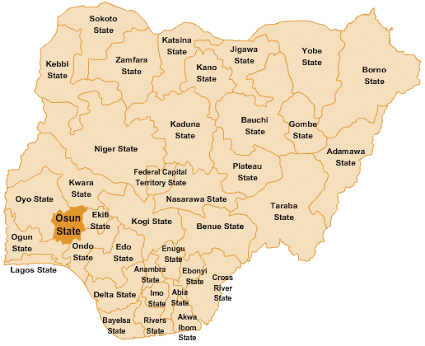
Osun State is with an area of less than 10,000 km2 one of the smallest of the 36 Nigerian states and with an estimated population of 4-5 million people the state has one of the highest population densities in the country, Africa’s most populated country. The history and cultural diversity and richness of the people in Osun State are phenomenal and well-known. It’s also interesting to know that Osun State has a literacy rate of about 80%, one of the highest literacy rates in the country.
Unfortunately, and seemingly in contradiction with the educational level of the people in general, the state is also notoriously known for its ritual murders which are locally called ‘money rituals’. In the past I have posted a large number of reported ritual murder cases, too many to mention here.
Interested readers may use the drop-down menu (under ‘African countries’ on the home page) and then use the search option for ‘Osun State’ if interested in more information on the subject.
A civil society group called Every Life Matters recently stood up raising alarm over the increasing numbers of ritual murders in the state, calling on the authorities to act and end this frightening trend. The founder of the organisation, Mrs. Babalola Atinuke, and her associates are to be commended for their action. Hopefully their action will be successful in curbing the incidence of ritual killings in this part of the country with the long-term goal of ending these practices which have no place in the 21st century.
The article presented below summarizes a number of recent ritual murder cases, only the tip of an iceberg as we know, their gruesome details may shock certain readers. (FVDK)
Civil society group raises alarm over surge in ritual killings
A State of Osun based civil society group, Every Life Matters (ELM), has raised the alarm over increasing rate of ritual killings in the state, calling on the government, security agencies and all other state actors to work together to curb the menace.
The founder of the organisation, Mrs. Babalola Atinuke, while speaking with OSUN DEFENDERon Tuesday, said cases of killing for ritual purposes are dishearteningly on the rise in Osun, a situation she said calls for drastic action from stakeholders.
Atinuke attributed ritual killings to the inordinate desire of youth of nowadays and few older people to get quick and easy money without working.
According to Atinkue, if drastic step is not taken to curb the situation, the state might become unsafe for the good citizens and residents.
She said: “The spate of killing for ritual purposes is gradually assuming an alarming rate in the state of Osun and if not quickly checked, it can make the state unsafe for the good people.
“Children and some people are no longer safe to go out at night and I want to urge the government, security agencies and all other state actors to rise up and work together to clamp down on those perpetrating this act.
“The cases, when read or heard of, are disheartening, weepy, pathetic and calls for a sober reflection. As an organisation, we are trying our best by orientating our people, most especially the youth, on the need to thread carefully on their quest for money.”
Ritual Killings On The Rise In Osun
OSUN DEFENDER takes a look at some cases of alleged ritual killings in the state in the past few months.
On January 5, 2022, a native doctor, Ganiyu Wasiu, living in Igege town, Ola-Oluwa local government, was caught with mutilated human body parts.
The suspect, according to the Osun State Security Network, codenamed Amotekun, was arrested while conveying the mutilated human parts in a ‘Ghana-Must-Go’ bag.
On December 14, 2021, an Islamic cleric, Lukman Salawudeen (36), was arrested by policemen in the state in connection with the murder of a lady, Bolaji Akerele.
The cleric attested to the fact that he prepared ritual soap for his customer, even as he denied kown how his client got the human part he used to prepare the ritual soap.
The State Commissioner of Police, Mr. Olawale Olokode while briefing Newsmen, said: “The police discovered a dead body identified as Bolaji Akerele dumped somewhere in Ile-Ife.
“Upon investigation, it was discovered that her head and palms have been severed from the body. One Sunday Olajide was arrested in connection with the murder
“The arrest of the first suspect on December 6, 2021, led to the arrest of three other suspects in Iwo, Osun state by a police tactical team. They all confessed to having strangulated the woman to death with the motives of using her for money rituals”.
On August 9, 2021, an Ikirun based Ogboni cult member, Ifadare Afolabi, and his friend, Ifaseun Afolabi, a herbalist, were arrested for allegedly conspiring to kill a 35-year-old man, Ayoade Fasesin, and use his body parts for ritual purposes.
Speaking to newsmen when he was paraded by the police, Ifadare said he used his victim’s head and legs for a charm to draw clients to his temple in Ikirun.
He, however, lamented that the charm did not work, as his temple did not see an influx of people as expected.
Also, a lady, Toyin Adewale, was sometimes in June, last year brutally murdered by her boyfriend for ritual purpose after having sex with her.
The boyfriend, Akin, according to his accomplice Kabiru, invited the deceased from Ibadan to Apomu, in the State of Osun, with the sole aim of using her head and heart for money ritual.
Narrating how they killed the lady, Kabiru said the victim was brought from Ibadan by his friend Akin, to his residence at Agunla Junction in Apomu, where he had sexual intercourse with her.
“Akin brought the deceased to my house at Agunla Junction Apomu. The lady is not from our area. She probably came from Ibadan. She was Akin’s girlfriend. Akin is an herbalist and my friend. After sleeping with the lady, I entered the room and he had already strangulated her. I only helped him to hold the lady’s leg.
“Akin told me he wanted to do a money ritual and needed some organs for the ritual. He promised that whatever I needed would be given to me, if I helped him. I didn’t kill the woman, Akin did. I gave him a knife that he used to dismember the body and we packed it inside a box in my room.”
As is clear from the article below, all Liberian presidents including William Tubman, William Tolbert, Samuel Doe, Charles Taylor, Ellen Johnson-Sirleaf as well as other political leaders are aware of the occurrence of ritual murders in the country, notably during election campaigns. It is even whispered that some presidents had a more than passive role in this respect but these – sometimes persistent – rumors have never been confirmed or proven.
The author, Melvin Pyne, presents an astonishing – sketchy – overview of ritualistic murders from the 1960s onwards hence covering a period of over half a century.
He hasn’t mentioned them all. Certain cases have never been discovered. The thick Liberian forests hide many ritual murder crimes, I am very sure about this harsh reality, though without having proof of it. Nevertheless I am pretty sure that many people in Liberia will confirm this ‘gut feeling’ of mine (webmaster FVDK).
The Liberian government must take charge of our security, or else…
Published: January 17, 2022 By: Melvin D. Weh – Front Page Africa
Last year ended on a rather low note for many Liberians with the wave of alleged ritualistic, serial killings which instilled fear across the country. Communities and residents were on the brink of paranoia. Thus is upsetting the way of life for everyone.
Liberian history tells us that such killings have happened in the past. In the 60s and 70s, Gboyos (Heartmen) ravaged the southeastern parts of the country. Gboyos were a feared society that allegedly wore top hats, black suits, and captured people for ritualistic purposes. They took body parts, especially the hearts of their victims, thus earning them the nickname, Heartmen. The situation was so bad that the citizens pressured the government to act.
In 1979, the administration of President William Tolbert, took action. It investigated and convicted seven individuals including top government officials who were involved in the ritualistic murder of Mr. Moses Tweh in Harper, Maryland County. The court, after hearing the case, established a precedent. They handed down the verdict of guilty. The convicts were sentenced to death and subsequently executed publicly in Harper. Amongst those executed were James Anderson, Superintendent of Maryland County, Allen Yancy, representative of Maryland County and Philip B. Seyton, Senior Inspector of the Ministry of Commerce, Maryland County. This deterrent action practically slowed the act.
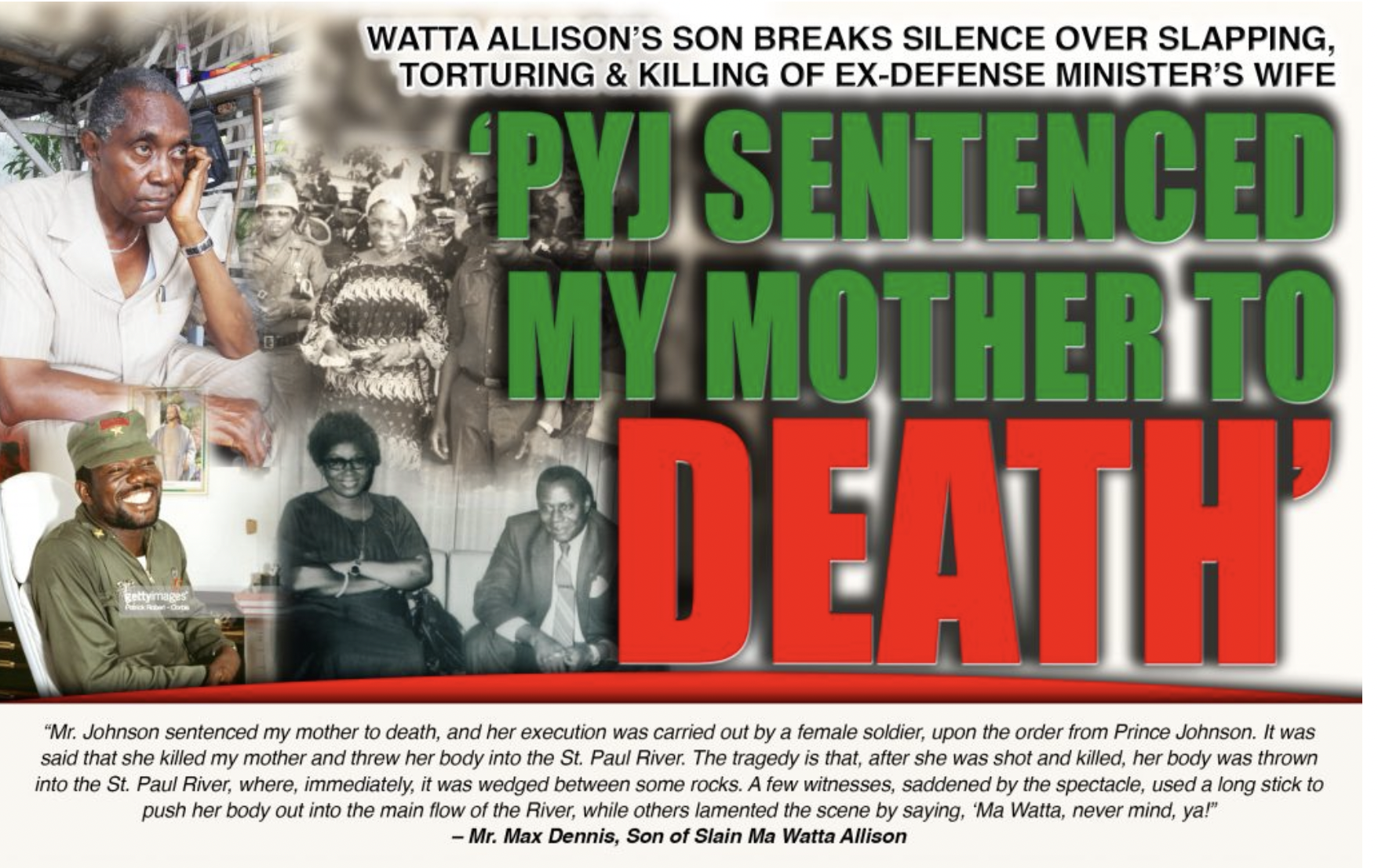
Years later in 1989, President Samuel Doe’s administration tried and convicted Defense Minister Maj. General Gray D. Allison and his wife Mrs. Angeline Watta Allison for the ritual murder of a police officer, J. Melvin Pyne in the Caldwell community. Gen. Allison was tried under the Uniform Code of Military Justice (UCMJ) at a military tribunal, found guilty and sent to Belleh Yalla, the maximum-security prison in Lofa County. His wife was convicted at ‘Criminal Court C’, and sentenced to life imprisonment according to the Mr. Max Dennis, son of Mrs. Allison.
Allison was the most renowned government official convicted during the Doe regime. However, it is reported that an aide to president Doe, Mr. David K. Clarke and five others were tried, convicted and executed for the ritual murder of two little boys in 1987.
During the war years and President Taylor’s administration, there were rumors of murders for ‘Juju’ purposes. We must note that those were years of injustice and arbitrary justice, therefore there is not much record on how those cases were legally handled. Men in arms allegedly conducted speedy quasi-investigations and punished alleged perpetrators, wrongly too. Serious attention was not placed on the issues perhaps because killings were almost the norm, sadly.
On 29 June 2005 before the special general elections, there were reports of ritualistic killings almost across the country. The interim leader, Gyude Bryant warned that candidates tempted to boost their chances by carrying out human sacrifices will be executed if caught. While no one was successfully tried and convicted, Mr. Bryant’s warning seemed to have eased the situation for sometimes, as it was observed. ( BBC News, 29 June 2005)
In 2017 during the reign of President Ellen Johnson-Sirleaf, protesters (women in majority) stormed Gbarnga City in demand of answers to over series of young women including 12 years old girl who were seen dead with missing body parts. The women of the county under the banner Bong Women Association and the Bong Christian Association marched in the streets demanding more actions from the government in addressing such monstrous crimes.
Another notable case of ritual killing was the murder of seventeen years old Cyrus Yeawonyee in September 2015 in the suburb of the commercial city of Ganta. Cyrus was killed and body parts including eyes, ears and tongue were extracted according to report. Cyrus’ convicted killer was another teenager, Jacob Vambo who was sentenced to life in prison in February 2016. Vambo confessed to luring his friend Cyrus into the trap of powerful muscular men who allegedly killed him for a well-connected government official. His claims of the involvement of others in the killing could not be authenticated to punish those he had accused.
However, his lawyer (a Public Defendant) Cllr. Mewaseh Payebayee (late) and some observers believed his claims as they felt such a lanky looking child was incapable of overpowering someone and committing such gruesome murder.
A day after the investigation into Cyrus’ murder case by the Liberia National Police-LNP on 29th September 2015, Ganta experienced one of the most violent disruptions since the civil war. This time, it was a motorcyclist. The news of Cyrus killing was gradually fueling tension when the young man was discovered dead with blood allegedly drained from his body for the wealthy businessperson. Though, investigation disproved the allegation of ritual killing and established that the killing happened as a result of robbery, the damage was done. The popular Alvino Hotel in the City was looted and burned while two persons were reported dead, among the many damages done. About fifty arrests were made in connection to the riot.
Blood and Power: Investigating a Ritual Murder in Liberia. November 28, 2017 article. While a teenager is convicted of a gruesome killing, questions linger about occult violence among the power elite. By Ashoka Mokpo Click on image to access article
With such history, it is no surprise why the public will be alarmed if there is a rearing up of such activities. The FrontPage Africa News Paper September 23, 2021 edition reported the alleged murder of John Tubman at his residence with deep cuts in the neck. John was the son of Liberia’s longest serving president William V.S. Tubman. Barely a month later, the death was reported of the renowned Rev. William Richard Tolbert, III, a peace ambassador and son of another former president, William Richard Tolbert, Jr. then, a Madam Maude Elliot of the Liberia Immigration Services (LIS) was also found dead. Both were murdered in their respective homes in similar conditions.
Additionally, amongst many others, the FrontPage Africa newspaper published on November 8, 2021 a list of several murders all of which occurred this year alone with victims displaying similar conditions. On that list was Jane Doe (Unidentified Woman) found on 17th Street Beach (September); Mordecai Nyemah (May), Florence Massaquoi (February), as well as, Robert M. Blamo, Jr., Bobby S. Gbeanquoi, and Siafa G. Boimah.
While last year, amidst the global Covid-19 pandemic, several other killings occurred- Elijah Polumah, Abraham Tumay, and George B. Fanbutu, mentioning a few.
But most troubling of all this were two separate incidents. First, is a statement by President George Weah in November, when he signed the book of condolence for the late Mr. Emmanuel Barten Nyenswa. Mr. Weah is on record urging citizens and residents to install at their premises, Closed Circuit Television (CCTV) Cameras. He pointed out that government’s focus of security was on the country’s borders. Mr. Nyensuah’s death like three other auditors from the Liberia Revenue Authority (LRA) is still being investigated. Many believe their deaths were for political reasons or cover up for some malpractices they may have uncovered.
Mr. Weah is either unaware of the financial hardship in the country or does not care much about the innocent lives being lost. A people that can barely afford, how does he expect them to buy CCTVs that cost $1000 USD at a minimum? With many parts of the city out of electricity, how does he expect the cameras to work?
The second concerning issue is the remark made by the Liberia National Police Inspector General, Col. Patrick Sudue at Ministry of Information Cultural Affairs and Tourism (MICAT) press conference. Col. Sudue alleged that the news of serial and ritualistic killings in Monrovia and other parts of the country were fake stories being created by opposition politicians who want to implant fear and give negative image of the country and malign government’s reputation.
The IG’s statement on these recent issues suggests a political posturing. While Col. Sudue is a political appointee, the office of the Inspector General needs to be apolitical and professional, always endeavoring to maintain the integrity and independence of the Liberia National Police.
In midst of this scaring security situation, such comments undermine the confidence of the people in the government and the ability of the Liberian National Police to combat these criminal acts.
Such levels of insecurities lead to several dire consequences. Those who can afford, would now take the law into their own hands, those who can’t might find other means not necessarily legal. Are we to now become a lawless society? Then, there is the investment angle. It doesn’t present a secured environment for investors. They could then leave the country and with them other citizens and residents out of fear would flee the country. Investors (local and international) do shy away from investing due to insecurity and lack of justice. When investors do not invest, economically the country is affected as unemployment increases. Government incomes (personal and corporate income taxes are lost. Aggrieved citizens usually take mob justice as the only alternative. These amongst many negative reactions are recipes for chaos and anarchy.
The questions now are: what can be done here to change the atmosphere of fear? And how can we do it?
To these questions considering the preceding, the government is under obligation to protect the lives of those residing in the country. To ensure that the citizens do not regret electing the current administration, she has to act, and do it now. To avoid mob justice, the government must take charge of matters immediately. To avoid fleeing of citizens and other residents from the country, the government must muster the courage to dig deep into these happenings and punish perpetrators. To ensure current and potential investors that their lives and properties will be protected here, the government must change gear and expedite investigations into these matters.
In closing, while these acts have happened in the past, the onus is always on the government to fight them and protect the people. The Liberian National Police has to step-up, take control of the security, and avoid becoming political in handling these issues.
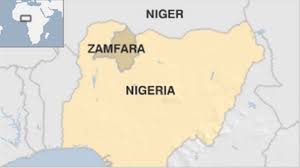
Another sad story about the ritual killing of a 9-year old boy for ‘money rituals’ in Nigeria, this time in Zamfara State, in the islamic north of Africa’s most populated country. As I have recounted several times before, ritual murders occur in virtually every state in Nigeria and I fear that the cases which become known are just the tip of an iceberg.
Fortunately the police has reacted swiftly and arrested a number of suspects. Let’s pray that the story doesn’t fizzle out and that after a fair trial justice will be done. But there’s more work to do: the prevention of future ritual murders by eradicating the belief in ‘juju’ (webmaster FVDK).
Six suspected ritualists nabbed over killing of 9-year-old boy In Zamfara State
Zamfara State police command has arrested six people in connection with the killing of a nine-year-old boy for ritual purpose in Gusau, Caliphate Trust has learnt.
The police had launched a manhunt for the culprits after a tip-off that the boy was seen with one of them on the day he was abducted and killed.
The suspects, upon interrogation by the police, revealed that they were assigned to kill the boy and extract parts of his body by an individual in Tudun Wada area of Gusau metropolis.
One of them was reported to have said they had earlier killed two persons for ritual. He said he had been experiencing nightmares over the killing as the slain boy kept appearing to him in his dream smiling.
The ring leader of the group responsible for the ritual killing was later apprehended and confessed to security operatives that he was the brain behind the killing of the boy.
Sources said the suspects had named one person in the state’s business community but that could not be independently verified.
The remains of the boy, identified Ahmad Aliyu Ijaba, was found in an uncompleted building in Barakallahu area of Gusau metropolis in December.
The owner of the building spotted the decomposing body of the little boy when he went to continue his construction work and immediately alerted the police.
Ahmad went missing shortly after he came back from Islamiyya School in Gadar Baga area of the city.
The state police command’s spokesman, SP Muhammad Shehu, said investigation is ongoing and that he would not talk further about the matter.
The article below illustrates well how ‘money rituals’ are being organized and performed in Nigeria. A 55-year-old man who wanted to become rich, ordered ‘a fresh human head’ which was ‘delivered’ to him at his home as if he had ordered something at Amazon.com
Of course, one wonders if this man is not insane. But jumping to that conclusion is, first of all, not my job – I prefer to leave that judgement to a judge. However, the whole situation demonstrates the evil which results from the belief in superstition in combination with greed and moral decay. Hail to the Ondo police to have apprehended this man who will have to account for his deeds (read: misdeeds)! (webmaster FVDK).
55-year-old man arrested with human head in Ondo State
Published: December 23, 2021 By: Hakeem Gbadamosi – Nigerian Tribune
Men of the Ondo State Police Command have arrested a 55-year old man, Tunde Olayiwola, who was allegedly caught with a fresh human head meant for money ritual in Ondo, headquarters of Ondo West Local Government Area of the state.
Speaking during the parade, on Thursday, the State Commissioner of Police, Oyeyemi Oyediran, said the suspect was arrested by men of the state police command after an intelligence report that the suspect was about to receive a consignment.
He said the suspect was apprehended with the fresh head delivered to him and confessed that the head was meant to be used by him to ensure a better life.
He said: “On the 23rd of December, 2021, at about 9 am, the police received information that a self-acclaimed cleric named Alfa Tunde Olayiwola, a suspected ritualistic was about to receive a consignment suspected to be human head.
“The police immediately swung into action and the cleric was apprehended at Ajagbale area of Oka in Ondo town.
“A free head was found in his custody. He confessed that the head found in his possession was to be used to ensure he had a better life.”
Confessing to the crime, Olayiwola who said he hailed from Oshogbo said he ordered for the fresh head for money ritual at the sum of N60,000.
He said the consignment was delivered to him at home by a man he met at a social function on Thursday morning, saying he was about to commence the ritual when he was arrested.
He said, “I purposely ordered for the human head to make my life better and it was delivered to me. This is my first time but I want to do it to become rich and live a better life. The head was delivered to me today.”