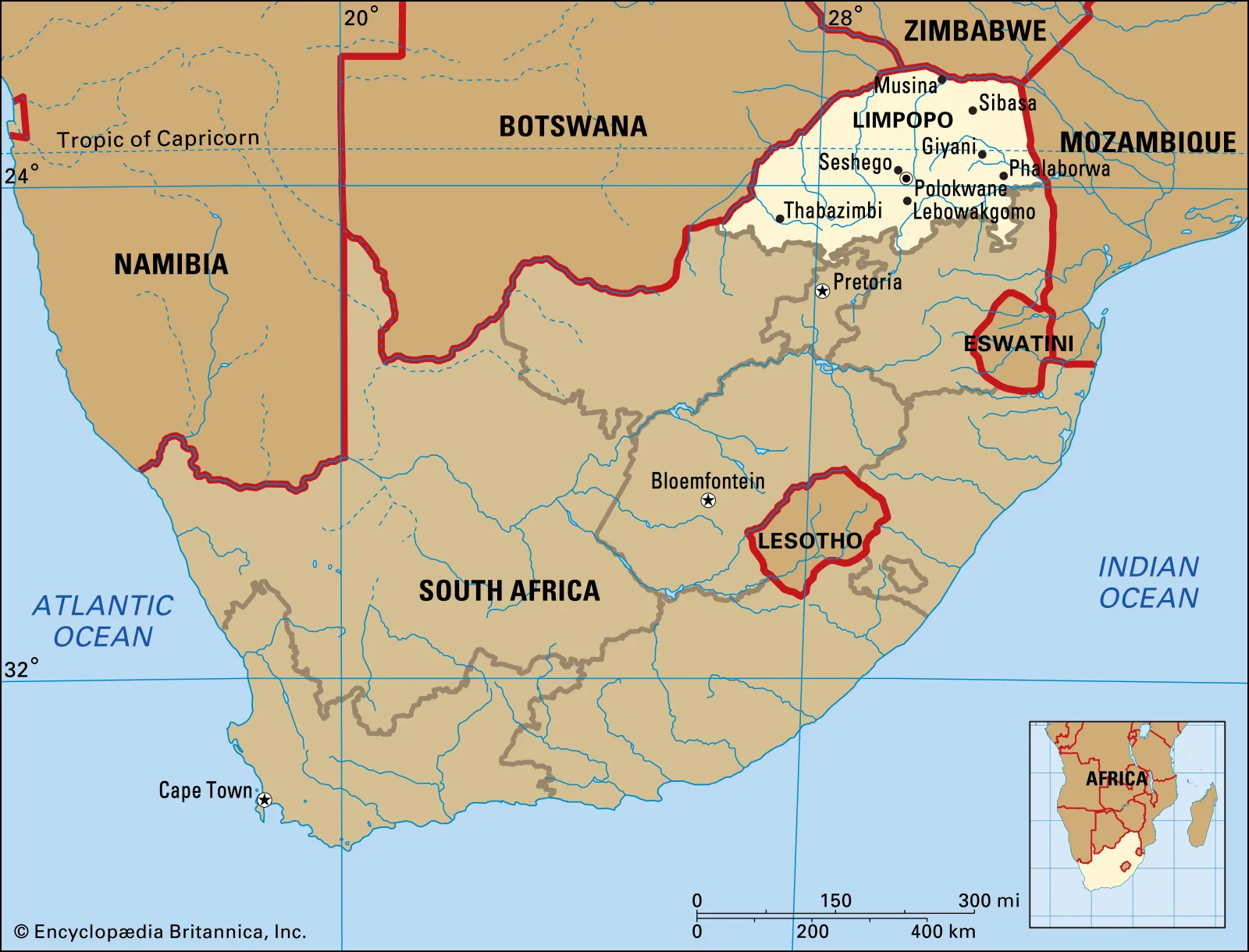
On November 21, the Polokwane High Court found the accused guilty and sentenced them in the presence of the victim’s family members. Judge Gerrit Muller sentenced Joshua Hlako, Marcus Makgatho and Khumbelo Mabirimisa each to 22 years in prison for murder, seven years for kidnapping and four years for defeating the ends of justice. Amanda Makgatho was sentenced to seven years’ imprisonment for kidnapping.
The body of Ronny Makgatho was dismembered, packed up and taken to various businesses to promote prosperity.
Joshua Hlako, Marcus Makgatho, Amanda Makgatho and Khumbelo Mabirimisa are sentenced for the murder of Ronny Makgatho after what has been found to be a brutal ritual killing, according to the National Prosecuting Authority.
POLOKWANE -The Polokwane High Court sentenced those responsible for the ritual killing of Ronny Makgatho in 2006, in the presence of the victim’s close family members last Tuesday.
Judge Gerrit Muller ordered that Joshua Hlako, Marcus Makgatho and Khumbelo Mabirimisa will each serve 22 years’ imprisonment for murder, seven years for kidnapping and four years for defeating the ends of justice.
Amanda Makgatho was sentenced to seven years’ imprisonment for kidnapping. Muller ordered that the sentences run concurrently.
At the time of the incident, Makgatho was murdered after he was kidnapped in Soshanguve and brought to Seshego.
Hlako is a business owner in the farming and liquor trading sectors and Marcus Makgatho, in hospitality. The deceased was the cousin of Amanda and Marcus.
During the trial, the court heard that one witness reported the matter only last year after having relinquished his employment ties with Hlako whom he worked for from 2001.
Asked about the cause of the delay, the witness said he feared that Hlako was connected to the police in Seshego and that he would face a similar fate as the deceased.
“The witness further told the court that when he approached the police to report the offence, his fear was confirmed as he was detained without any charges brought against him and the police accused him of reporting Hlako. He was then released and could not make further attempts to report as he feared the police. He was adamant that he was part of the team and he did it under the instructions of his boss,” National Prosecuting Authority spokesperson, Mashudu Malabi-Dzhangi remarked. The second witness, who also worked for Hlako, confirmed the first witness’s testimony that on the day of the incident, they were with Hlako, Marcus, Mabirimisa and a woman unknown to them.
“Knives were brought into the shack in Seshego, and Hlako was giving the instructions. The second witness had to write the name of Ronny from Soshanguve in a notebook where they kept records of the deceased before killing him in the shack of Hlako’s homestead. The body of the deceased was dismembered, packed up and taken to various businesses to promote prosperity,” Malabi-Dzhangi added.
House of Representatives Seeks End To Ritual Killings Of Young Girls
The House of Representatives on Wednesday called on the Inspector General of Police to address the dangerous trend of killings of young girls for ritual…
Published: November 2, 2023 By: Itodo D. Sule – Daily Trust, Nigeria
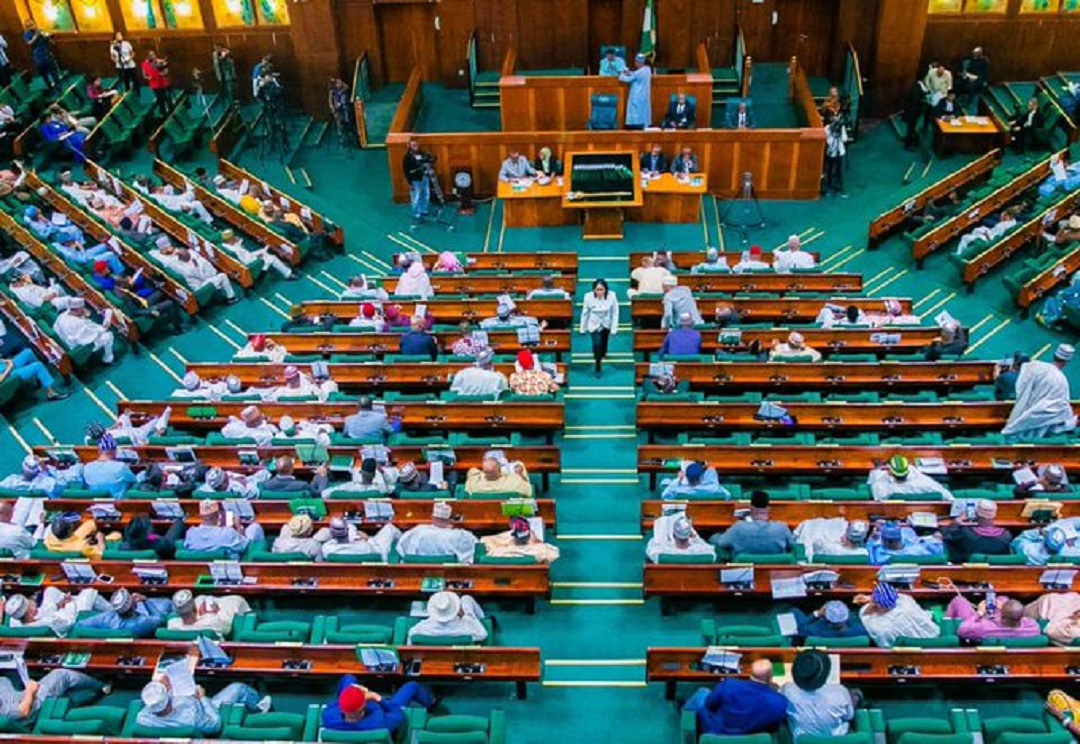
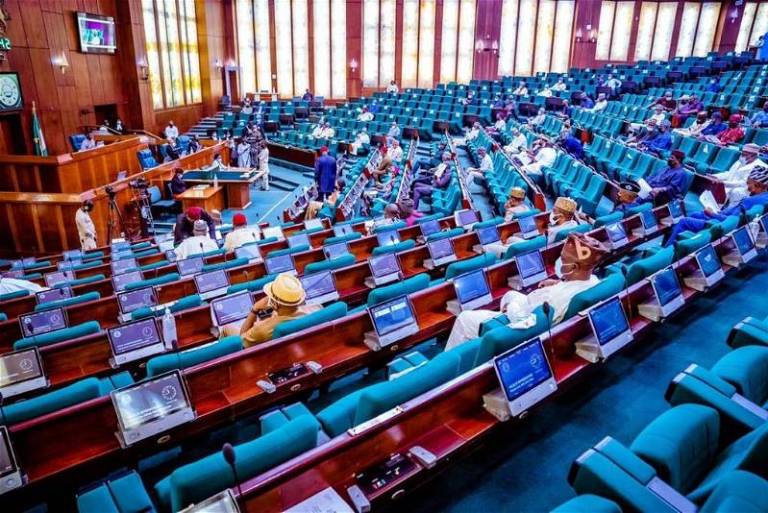
The House of Representatives on Wednesday called on the Inspector General of Police to address the dangerous trend of killings of young girls for ritual purposes in the country.
The House also called on the Inspector General of Police to set up a crack team to conduct a holistic investigation with the sole aim of unmasking the cartels behind the killings and bringing them to justice. This followed the adoption of a motion of matter of urgent public importance moved by Rep Awaji-Inombek D. Abiante at plenary.
Abiante while moving his motion decried the recent wave and sustained killings of young girls who are mostly undergraduates by their supposed boyfriends for ritual purposes.
He particularly noted with dismay, the recent murder of a 20-year-old Miss Justina Otuene, an undergraduate student of the Department of Biochemistry, University of Port Harcourt by one Damian Okoligwe who is also an undergraduate student of the same university last week.
Abiante also made reference to the murder of Augusta Osedion, a final year student of Lead City University in July 2023 by her boyfriend, Benjamin Best who goes by the nickname, killaboi in Lagos.
He equally recalled the murder of Miss Oghenefejiro Ochuko, a final year student of Ambrose Ali University who was killed in August 2023 by her boyfriend, Victor Ochonogor in Benin, and several other unreported cases.
He expressed worries that the killings have almost become a daily occurrence with several other reported cases of missing females with their whereabouts still unknown.
Abiante lamented the rising cases of missing victims who are often found dead with vital parts of their bodies missing without traces of the perpetrators.
He said young girls have become endangered species, hence, the urgent need to curb the trend.
Lawmakers call on IGP to end ritual killings of young girls
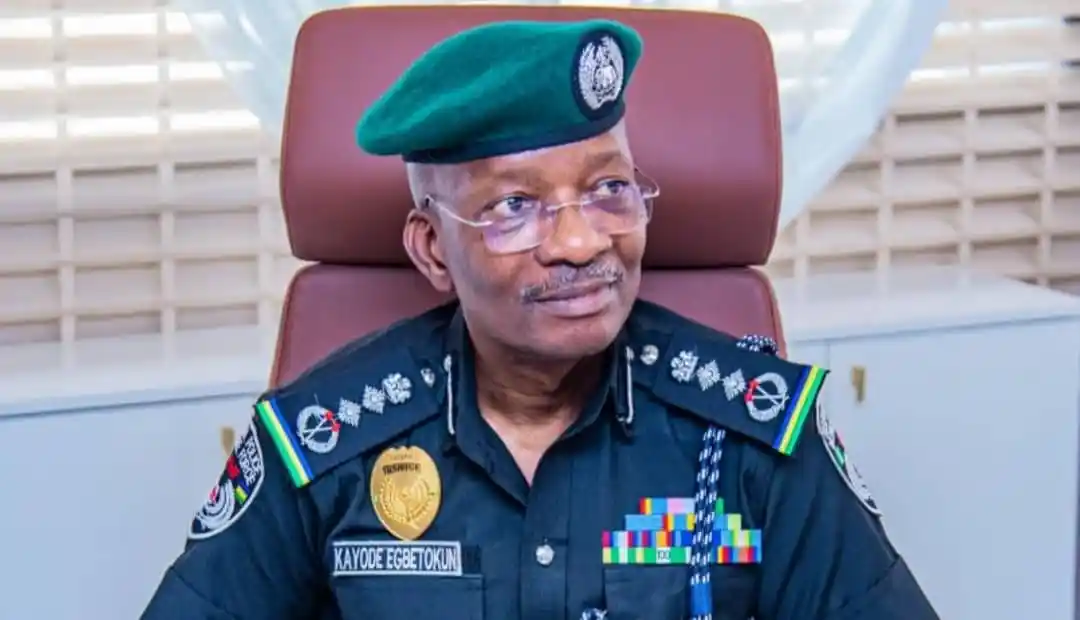
Inspector General of Police Kayode Egbetokun
Published: November 2, 2023 By: John Chukwu – RipplesNigeria
The House of Representatives has appealed to the Inspector General of Police, Kayode Egbetokun, to, as a matter of urgency, exert effort in addressing the spate of killing of young girls for ritual purposes.
The appeal was sequel to the adoption of a motion on a matter of urgent public importance moved by the lawmaker representing Adoni/Opobo/Nkoro Federal Constituency, Rivers State, Awaji-Inombek Abiante.
In his lead debate, Abiante stated that recent wave of killing of young girls, especially undergraduates by supposed boyfriends for ritual purposes remains an ugly trend that should be stopped.
He made reference to the recent murder of Justina Otuene, a 20-year-old undergraduate in the Department of Biochemistry, University of Port Harcourt, by Damian Okoligwe of the same university.
Abiante also narrated the murder of Augusta Osedion, “a final year student of Lead City University in July 2023 by her boyfriend, Benjamin Best, who goes by the nickname Killaboi in Lagos; the murder of Miss Oghenefejiro Ochuko, a final year student of Ambrose Alli University, who was equally killed in August 2023 by her boyfriend; Victor Ochonogor in Benin and several other unreported cases.
“These killings take similar patterns of dismembering the bodies of the victims whereby their vital organs are removed and that the perpetrators of these heinous crimes are young boys who might not be working alone but with strong cartels.”
The Hosue, hence, also called on Egbetokun “to set up a crack team to conduct a holistic investigation with the sole aim of unmasking the cartels behind these killings and bring them to justice.”
House Urges IG to Constitute Crack Team to Unmask Cartel Behind Ritual Killings
Published: November 1, 2023 By: Adedayo Akinwale, Abuja – This Day, Nigeria
The House of Representatives yesterday called on the Inspector General of Police to set up a crack team to unmask and prosecute the cartels behind ritual killings across the nation.
The resolution of the House followed the adoption of a matter of urgent public importance moved under Order 8 Rule 4 on the need to curb the dangerous trend in the killing of young girls for ritual purposes in Nigeria.
Moving the motion at the plenary, Hon. Awaji-Inombek Abiante, decried the recent wave and sustained killings of young girls who are mostly undergraduates by their supposed boyfriends, for ritual purposes.
The lawmaker expressed dismay at the recent murder of 20-year-old Miss Justina Otuene, an undergraduate of the Department of Biochemistry, University of Port Harcourt by Damian Okoligwe, a student of the same university.
Abiante also recalled the murder of Augusta Osedion, a final year student of Lead City University in July, 2023 by her boyfriend, Benjamin Best who goes by the nickname killaboi in Lagos.
He also cited the murder of Miss Oghenefejiro Ochuko, a final year student of Ambrose Ali University who was equally killed in August, 2023 by her boyfriend, Victor Ochonogor in Benin.
He expressed worry that the killings had almost become a daily occurrence with several other reported cases of missing females with their whereabouts still unknown.
The lawmaker further expressed worry that few of the reported missing victims were often found dead without traces of the perpetrators.
Abiante stressed that the killings take similar patterns of dismembering the bodies of the victims and removal of their vital organs.
He added that the perpetrators of the heinous crimes were young boys who might not be working alone but with strong cartels, while lamenting that young girls have become endangered species.
The lawmaker stressed the need to protect young girls and indeed every Nigerian as enshrined in section 14(2)(b) of the 1999 Constitution of the Federal Republic of Nigeria (as amended).
The House, therefore, called on “the Inspector General of police to set up a crack team to conduct a holistic investigation with the sole aim of unmasking the cartels behind these killings and bringing them to justice.”
Reps urge IGP to take urgent steps to address cases of ritual killings
Published: November 2, 2023 By: Ifeanyi Nwokocha – Lagos Post, Nigeria
The House of Representatives, on Wednesday, called on the Inspector General of Police, Kayode Egbetokun, to take urgent steps to address cases of killing of young girls in Nigeria for ritual purposes.
This followed the adoption of a motion on a matter of urgent public importance moved by the lawmaker representing Adoni/Opobo/Nkoro Federal Constituency, Rivers State, Mr Awaji-Inombek Abiante.
Leading the debate, Abiante said the recent wave and sustained killings of young girls who are mostly undergraduates by their supposed boyfriends for ritual purposes could not be allowed to continue.
He recalled the recent murder of 20-year-old Justina Otuene, an undergraduate in the Department of Biochemistry, University of Port Harcourt, by Damian Okoligwe of the same university.
He also recalled the murder of Augusta Osedion, “a final year student of Lead City University in July 2023 by her boyfriend, Benjamin Best, who goes by the nickname Killaboi in Lagos; the murder of Miss Oghenefejiro Ochuko, a final year student of Ambrose Alli University, who was equally killed in August 2023 by her boyfriend; Victor Ochonogor in Benin and several other unreported cases.”
He said it was disturbing that “these killings take similar patterns of dismembering the bodies of the victims whereby their vital organs are removed and that the perpetrators of these heinous crimes are young boys who might not be working alone but with strong cartels.”
The House called on the Inspector General of police “to set up a crack team to conduct a holistic investigation with the sole aim of unmasking the cartels behind these killings and bring them to justice.”
Human sacrifice is a widespread phenomenon in Uganda while some specific regions are notoriously known for their ritualistic killings. Yesterday, November 5, I posted an article on the sentencing of a man from Mayunge District who had killed his son for personal gain in 2017, and the day before, on November 4, I posted an article on a mother in the Kiira region who had killed two of her children, also for ritual purposes. These are not isolated cases as the following demonstrates.
Two witchdoctors in the Kamuli District were arrested earlier this year, suspected of a ritual child sacrifice while in Luwero District on January 7 an 8-year boy was kidnapped from his family’s courtyard and found back without head, fingers and toes. In November 2022 two men from Kayunga District were found guilty of child sacrifice committed in 2009. Within Uganda the Kayunga District has earned the dubious reputation of being one of the most notorious killing places.
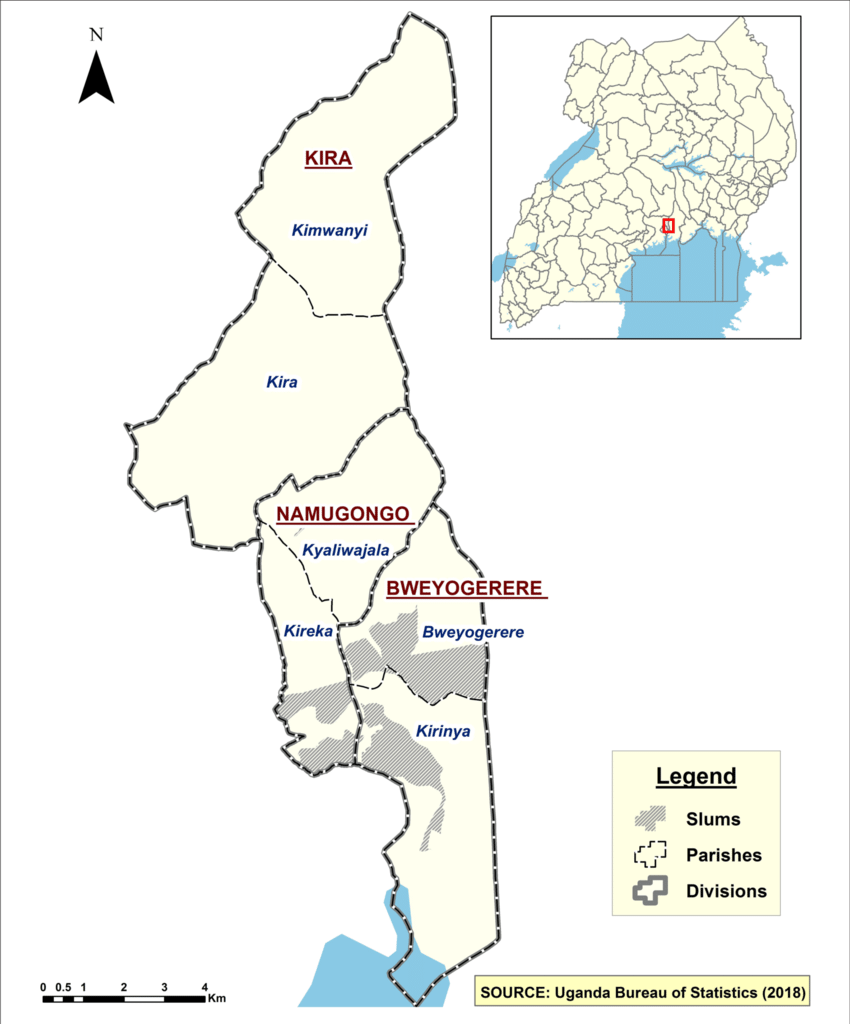
Kayunga District shares this reputation with the Kiira region (Wakisi District, Central Region). The most recent ritual murder case in this region is the one reported above but also in August 2022 a man and his wife in Jinja District were arrested for killing their child in a ritual practice. In May 2021 police in Kayunga District had to protect a man from a mob threatening to kill him after he had allegedly killed two of his children for rituals purposes.
In July 2022 a spike was reported in human sacrifices. I’m afraid that the child sacrifice and other ritual murder cases mentioned in this report (see my July 11 posting) and the above mentioned murders are just the tip of the iceberg. After all, it is only logical to assume that not all ritual killing cases are being discovered or reported. An unknown number of children or elderly people, victims of ritualistic practices, may have disappeared without leaving traces.
Since 2021 convicted ritual murderers in Uganda may face the death penalty. In May parliament enacted the Prevention and Prohibition of Human Sacrifice Bill, 2020, which includes the capital punishment or life imprisonment for any person found guilty of human sacrifice. The bill inspired me to some reflections – see my May 7 posting.
Since the enactment of the bill a number of convicted ritual murderers have been sentenced to heavy sentences and many years in prison, but the ugly phenomenon has not been eradicated. It’s a sad reality.
Law enforcement officers as well as the High Court Judge are to be commended for the bringing to justice of a father who brutally killed his own son believing that would bring him wealth. Greed and superstition were the ingredients for a repulsive act. Hopefully the 52-year prison sentence for the convicted murderer will act as a deterrent for others who might be tempted to engage in this practice of child sacrifice for personal gains.
Warning: the following article contains graphic details of a cruel crime which may upset some readers (webmaster FVDK).
Father jailed 52 years for son’s ritual sacrifice, witch doctor set free
The accused persons arrive at court. COURTESY PHOTO/URN
Published: November 1, 2023 By: Michael Wandati – DISPATCH, Uganda’s News Monthly
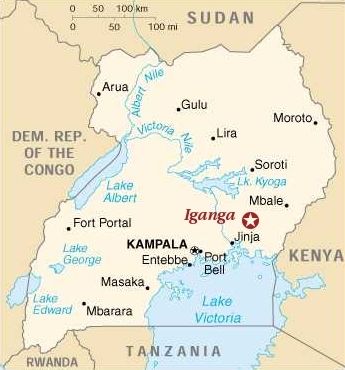
Iganga, Uganda | In a significant legal ruling, High Court Judge, Justice David Batema, has handed down a verdict resulting in a 52-year prison sentence for Hassan Kafudde, a father convicted of the murder of his son in a ritual sacrifice. The case also involved lengthy sentences for one accomplice, while the witch doctor implicated in the case, who had spent six years in remand, was released.
The proceedings unfolded within the High Court of Uganda Circuit located in Iganga. The prosecution’s case contended that Kafudde sacrificed his son in a ritual murder with the belief that it would bring him wealth.
According to the prosecution’s account, on the 6th of June 2017, the convicted individuals, situated in Musita village within the Mayuge District, gruesomely beheaded and mutilated a child known as MJ in a ritualistic act.
Earlier in the legal proceedings, one of the accused, Issa Muyita, entered a guilty plea, reached a plea bargain agreement, and offered to testify as a prosecution witness. Consequently, he received a 25-year prison sentence. The trial continued against Kafudde and Kabaale Mubaraka, both of whom pleaded not guilty.
During the trial, Muyita confessed that he had accompanied Kafudde from Musita trading center to a sugarcane plantation, where Kafudde presented his son MJ. The child was tragically murdered in the sugarcane plantation near a stream. Kafudde collected the child’s blood in a polythene bag and transported the severed body parts in a bag. Additionally, he dug a shallow grave to bury the decapitated remains of the sacrificed child.
As a result, Kafudde was found guilty of the ritual murder of the child MJ and convicted as charged. It was subsequently established in court that Mubaraka did not actively participate in the commission of the offense.
However, the court determined that Mubaraka, identified as a witch doctor with shrines in Musita village, had been informed of the criminal act by Hassan Kafudde. Mubaraka subsequently went into hiding after the incident and was subsequently found guilty of being an accessory to the murder, as per section 394 of the Penal Code Act.
At the conclusion of the trial, Justice Batema, presiding over the High Court of Uganda Circuit in Iganga, convicted and sentenced the accomplices, Muyita, Kafudde, and Mubaraka, on the charge of trafficking in persons, in violation of section 4(a) and 5(c) of the Prevention of Trafficking in Persons Act. Hassan Kafudde was sentenced to 52 years in prison, while Mubaraka received a 3-year prison term.
In his judgment, Justice Batema strongly denounced the heinous practice of ritual child sacrifice, the dismemberment of children, and the illegal trade in body parts, emphasizing the gravity of such offenses.
Justice Batema justified the lengthy custodial sentence for Kafudde by pointing to his lack of remorse throughout the court proceedings and his failure to demonstrate regret for the crime. Accordingly, Kafudde was sentenced to spend 52 years in Kirinya prisons, which includes the six years spent in pretrial detention.
The judge found Kabaale Mubaraka guilty of being an accessory to the crime but observed hesitancy on his part to report the incident to the police. Consequently, Mubaraka was sentenced to three years in prison, but given his prior six-year remand period, he was ordered to be immediately released.
Jacqueline Okui, the spokesperson for the Directorate of Public Prosecutions (DPP), commended the court for its landmark judgment, asserting that it will serve as a deterrent to individuals involved in such criminal acts.
Okui further challenged parents to take a proactive role in safeguarding their children’s well-being, emphasizing that engaging in child rights abuses such as ritual murders, whether directly or indirectly, would result in significant custodial sentences.
The investigation of this case was led by Aliwali Kizito, Chief State Attorney, with the prosecution being conducted by Racheal Bikhole, Assistant Director of Public Prosecutions and Head of the Prevention of Trafficking in Persons Division, along with Nyanzi Gladys, Assistant Director of Public Prosecutions, Biira Peace, Chief State Attorney, and Arap Malinga, a Senior State Attorney within the Office of the Director of Public Prosecutions.
Allegedly, another ritual murder case in Uganda. The suspect arrested, mother of the two murdered children, will undergo a psychiatric examination. In my opinion, a wise decision. If indeed she committed the crime, she must be mentally ill. If not, how could she treat her own flesh and blood that way? (webmaster FVDK)
Woman arrested for allegedly killing her two children in ritual sacrifice
Published: November 2, 2023 By: Michael Wandati – DISPATCH, Uganda’s News Monthly
Jinja, Uganda | By Michael Wandati | In the Kiira region, law enforcement authorities have taken into custody a 28-year-old woman named Rose Musiya for allegedly murdering her two children in ritualistic sacrifice.
According to reports, Musiya, who resides in Buwagi cell in the Northern Division of Jinja City, has been accused of taking her children’s lives in what is believed to be an act of ritual sacrifice. Shockingly, it has come to light that she buried one of the children within their residence.
The father of the children, Magada Kyagulanyi, a casual laborer hailing from Bukunjja in Buikwe district, recounted his return home on Sunday 29, October 2023 when Musiya disclosed to him that their children had been missing for the past two days.
Kyagulanyi further stated that when the police arrived at their residence, Musiya initially feigned possession by malevolent spirits. However, under scrutiny, she eventually confessed to her involvement in the tragic incident.
Lydia Karemera, the Deputy Resident City Commissioner of Jinja North, confirmed that investigators have thoroughly examined the scene of the crime. She also mentioned that, in addition to the legal proceedings, Musiya will be required to undergo a psychiatric evaluation.
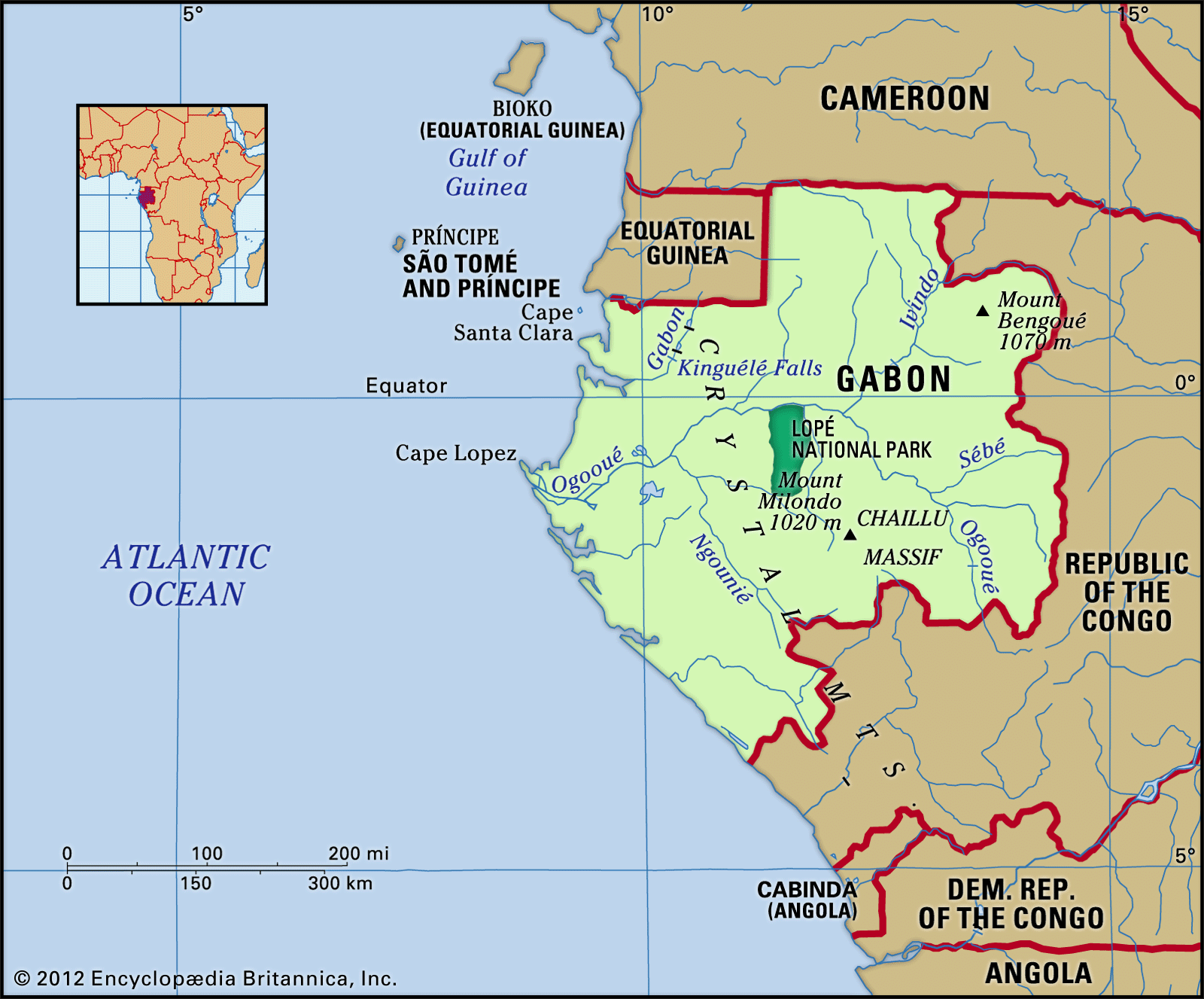
Not much is known about the occurrence of ritualistic murders and related activities in Gabon. The 2013 article cited below strongly suggests that the belief in the supernatural powers derived from ritualistic murders exists and may even be widespread in this Central African country. According to the president of Gabon’s Association for the Prevention of Ritual Crimes, Jean-Elvis Bang Ondo, there were more than 20 ritual murders in the country in the first quarter of 2013, a staggering number,
The article also refers to a 2009 ritual murder implicating a senator. It wasn’t the first time a high-profile politician was involved in a ritual murder case (also see my earlier posting on the case) and I’m afraid it won’t be the last time. After all, though President Ali Bongo is no longer president of Gabon (he was deposed earlier this year, on August 30) and the country has a new leader, Transitional President Brice Clotaire Oligui Nguema, this does not mean that ritual killing has stopped. Recently new reports emerged with details of ritual murders. Gabon’s new leaders face many challenges including the fight against superstition and ritualistic violence. (webmaster FVDK)
Anger rises in Gabon after rash of ritual killings
Screenshot – not related to the article below
Published: March 26, 2013 By: Jean Rovys Dabany – Reuters
LIBREVILLE (Reuters) – A rising number of mutilated bodies washing up on Gabon’s beaches this year has sown fear in the normally sleepy capital Libreville of a resurgence in ritual killings.
The body parts of humans and animals are prized by some in central Africa for their supposed supernatural powers, including among some politicians bent on gaining influence.
“We have seen 20 killings since the start of the year,” said Jean-Elvis Ebang Ondo, the president of Gabon’s Association for the Prevention of Ritual Crimes, in Libreville.
He said most of the victims were young girls whose lips, tongues, genitals and other organs had been removed.
The killings have stirred rising anger against President Ali Bongo’s government for doing too little to halt the murders.
“We want to shout out our fury and tell the authorities that this needs to stop,” said Jessy Biyambou, a member of the Cry of Women advocacy group, which is organizing an April 6 rally in support of victims’ families.
Roland Akoumba, whose 8-year-old daughter was found dead in mid-March, told Reuters he was losing hope for justice.
“When the police removed the body from the water, they saw that the tongue, the lips, and the genitals were cut off,” he said. “I filed a complaint but I know it will go nowhere.”
Officials from the notoriously closed-door government of the former French colony have declined to comment publicly on the killings.
Bongo was elected president in 2009 in polls that triggered days of rioting and opposition complaints of fraud. He succeeded his father Omar Bongo, who held a tight grip on power in the oil producing state from 1967 until his death 42 years later.
“The phenomenon of ritual crimes is real. But no one here is willing to turn anyone else in for fear they too will be in danger,” said a member of parliament, who asked that his name not be used for fear of reprisals.
In the most high-profile ritual murder court case in Gabon to date, a convicted killer accused a Gabonese senator of ordering the 2009 murder of a 12-year-old girl for her organs.
The senator’s immunity was lifted after the accusation was made late last year, but he has not been indicted. The senator has denied any involvement.
Gabon is not the only African country with a black market trade in human organs.
Tomb raiders dug up more than 100 graves in Benin’s capital in November. Cameroonian authorities in September arrested five people for trafficking after they were stopped at a checkpoint with a severed human head.
A chilling account of a ritualistic murder by unscrupulous businessmen who wanted to promote their businesses. In this case, justice delayed has not resulted in ‘justice denied’. A triumph for the rule of law in South Africa.
‘Better late than never’.
Warning: the following article contains graphic details which may upset some readers (webmaster FVDK)
Employees blow whistle on ritual murder by bosses ‘to promote business’
A witness says he came forward 16 years later because he suffered from nightmares and would hear voices.
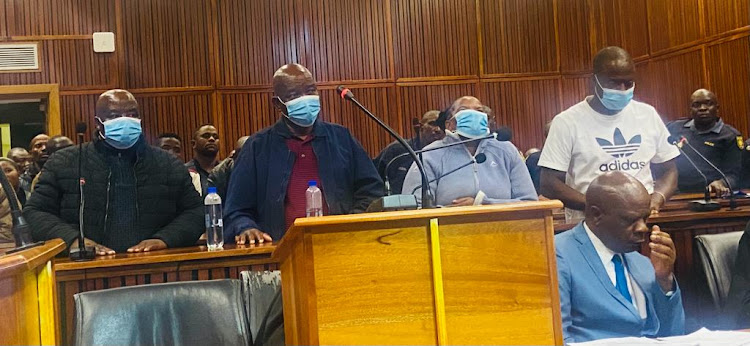
From left Joshua Hlako, Marcus Makgatho, Amanda Makgatho and Khumbelo Mabirimisa who have been sentenced for the murder of Ronny Makgatho. Image: Suppied: NPA
Two Limpopo businessmen and their accomplices have been jailed after their employees testified how a man was kidnapped, his body dismembered, packed and taken to various businesses to “promote their prosperity”.
The victim, Ronny Makgatho, was taken from Soshanguve to Limpopo in 2006 for the ritual murder.
The Polokwane high court has now convicted and sentenced the two businessmen, Joshua Phuthi Hlako and Marcus Maropeng Makgatho, and their co-accused, Amanda Makgatho and Khumbelo Mabirimisa.
Judge Gerrit Muller sentenced Hlako, Marcus Makgatho and Mabirimisa to 22 years’ imprisonment for murder, seven years for kidnapping and four years for defeating the ends of justice. The female accomplice was sentenced to seven years direct imprisonment for kidnapping.
The National Prosecuting Authority said Ronny Makgatho was killed in Seshego by Hlako and Amanda Makgatho with their co-accused Mabirimisa, after being abducted in Soshanguve.
Hlako had transport, farming and sale of liquor businesses. Marcus Makgatho was in hospitality.
Ronny Makgatho was Amanda and Marcus’s cousin.
During the trial, the court heard that the first state witness, who was testifying in return for indemnity from prosecution under section 204 of the Criminal Procedure Act, had reported the crime after 16 years.
“He testified that he worked for businessman Hlako since 2001 and that all that he was directed to do [participating in the ritual murder] formed part and parcel of his duties. This was put to him to establish why he never reported this matter to the police. He testified that the reason is that his employer Hlako is connected to the SAPS in Seshego, and he was scared that what happened to the deceased could happen to him, an assertion that was never challenged by Hlako,” said NPA spokesperson Mashudu Malabi Dzhangi.
The witness said when he approached the police to report the offence, his fear was confirmed as he was detained, she said. No charges were subsequently levelled against him and he was released. He felt he could not make further attempts to report his boss as he feared the police.
“He was adamant that he was part of the team, and he did it under the instructions of his boss Hlako. He decided later to tell the truth because he suffered from nightmares and would also hear voices.”
Malabi Dzhangi said a second witness also worked for Hlako.
“Both witnesses testified that on the day of the incident, they were with Hlako, Marcus, Mabirimisa and an unknown lady. Knives were brought into the shack, and Hlako was giving instructions.”
One of the group was instructed to write Ronny’s name in a notebook before they killed him in a shack at Hlako’s homestead.
“The body of the deceased was dismembered, packed and taken to various businesses to promote the prosperity of the business,” she said.
In aggravation of sentence, advocate Kobus Jacobs said the actions of the accused affected the lives of the deceased’s family, relatives, and friends.
The NPA has welcomed the sentence which director of public prosecutions advocate Ivy Thenga said would send a strong message to ritual murderers that the justice system will not tolerate any form of violence against humankind.
The court ordered that the sentences run concurrently with the sentence of murder.
Warning: the following story’s graphic content and photo may upset the reader.
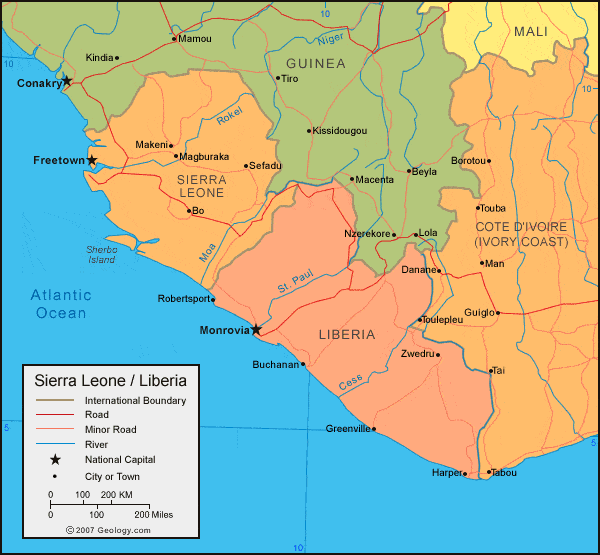
One of Liberia’s best and most reliable newspapers, FrontPageAfrica, yesterday published a harrowing and scaring report on an attempted kidnapping, presumably for ritualistic purposes. It all happened in Paynesville, Greater Monrovia, Montserrado County, around 3:00 a.m. last Thursday, September 21.
When hearing or reading about alleged or attempted ritualistic murders I am always wary of the danger of jumping too soon to conclusions. But certain details of the story which the aimed victim Sherman Cooper tells us are very realistic: the black, unmarked car, a Nissan Pathfinder, the way he managed to escape from his agressors, as observed by an eyewitness, and above all his wounds, the cutting marks around his neck and another on his genitals. Moreover, and the author of the article, Lennart Dodoo, also mentions this explicitly, it is election time in Liberia: ‘Ritualistic killings during elections are not a new phenomenon in Liberia.’
It sounds unreal, in the 21st century, but we cannot close our eyes for the at times brutal reality. Investigations into real or alleged ritual killings very often fizzle out in Liberia, reportedly because of the alleged, suspected or real involvement of ‘big shots’ (politicians, high-ranking government officials or other highly-placed Liberians) – similar to investigations into alleged or real corruption.
We’ll see whether we ever hear more about this case… (webmaster FVDK)
Liberia: Man Narrowly Escapes Attempted Ritualistic Murder; Brother Abducted by Kidnappers, Still Missing
Published: September 27, 2023 By: Lennart Dodoo – FrontPageAfrica, Liberia
MONROVIA – Saved by an act of bravery but severely wounded, Sherman Cooper, a victim of an alleged kidnapping and attempted ritualistic killing, now wonders about the whereabouts of his brother, Michael, whom the alleged kidnappers escaped with.
Sherman jumped out of the black, unmarked speeding Nissan Pathfinder, which had given him and his brother a lift from Paynesville, near the Fabulous opposite Bethesda.
FrontPageAfrica has confirmed that Sherman is currently receiving medical attention at the John F. Kennedy Memorial Medical Center’s trauma unit.
Some residents of the area and eyewitnesses say the unmarked black Nissan Pathfinder is often seen patrolling the VOA area in Paynesville.
An eyewitness who was driving behind the speeding SUV said he saw Sherman jump out of the moving vehicle. He said the kidnappers looked foreign and suspected them of being Burkinabe.
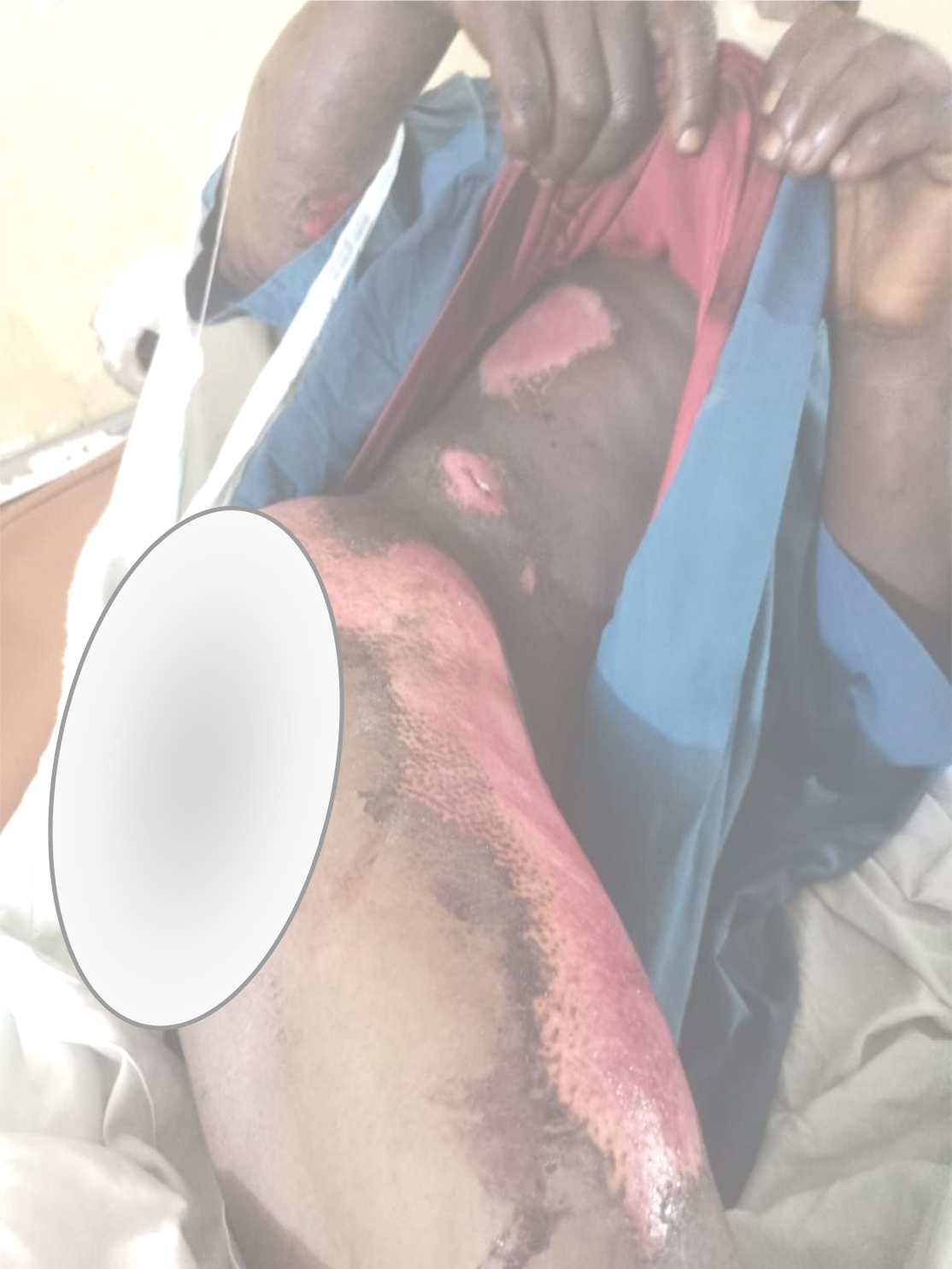
In a video seen by FrontPageAfrica, Sherman, who was stark naked and bloody, is seen with cutting marks around his neck and another on his genitals. He also sustained severe injuries on his knee, head, forehead, back, buttock, and thigh.
He is heard wailing, “I’m in pain, oh, I’m in pain, oh. Y’all help me. They carried my brother. They’re going to kill my brother. Y’all, please carry me to the hospital.”
He added, “The people put the windshield [glass] up, I fought. The passenger seat behind [extra cabin seat in the trunk] and two people were sitting behind we didn’t know. When we sat, that’s when they… I said ooh they want to kill us.”
FrontPageAfrica learned that the police and security authorities have been interrogating Sherman as the whereabouts of Michael remain unknown.
According to the eyewitness who saw Sherman jumping down from the car, he stopped his car and observed when he saw Sherman jump from the car. “He started crawling towards me, crying ‘Please help me, please help me,’” he explained.
This happened around Rehab.
According to the eyewitness, the incident occurred at about 3:30 a.m. last Thursday. In his narrative, he said Sherman and his brother were supposed to alight at Rehab, but as the vehicle approached Rehab, it increased its speed, and that’s when Sherman and his brother started fighting.
“The guys put a rope around their necks. They had two guys in the back seat, so they put a rope around their necks, and they started fighting. But he was fighting for his life, so he managed to hold on to the glass, and they tried to put the glass up, but his hands were already between the glass, so he managed to pull the glass down with strength while they were concentrating on taking off his private part, and he managed to jump through the window while they were at the junction,” the eyewitness explained.
Ritualistic killings during elections are not a new phenomenon in Liberia. In 2021, a UN human rights expert called on the government to investigate a series of killings that have occurred this year, some of which have reportedly been linked to ritualistic practices.
At least 10 people were killed in unclear circumstances in December 2021, including five in September, reportedly with suspected links to ritualistic practices or political motivations.
Last week, Dr. Alan W. White, Co-Executive Director of the Advocacy Foundation for Human Rights, delivered a compelling testimony before the Committee on Foreign Affairs, Subcommittee on Global Health, Global Human Rights, and International Organizations, addressing the pressing issue of ritualistic killings in Africa, with a particular focus on Liberia. Dr. White shed light on the Foundation’s mission to combat human rights violations, including ritualistic killings and the alarming allegations linking these acts to high-ranking government officials, including the Executive Mansion.
In his testimony, Dr. White detailed the challenges faced in gathering information and conducting investigations into ritualistic killings, emphasizing the danger faced by sources who dare to speak out against these crimes.
Dr. White’s testimony also touched upon recent cases of ritualistic killings in Liberia, such as the mysterious disappearance of three young men hired for a task in Bong County in October 2020 by the St. Moses Funeral Home. The bodies of these young men were never returned to their families, and investigations into their deaths remain unresolved, raising suspicions of involvement by influential individuals with close government ties.
“The Foundation has received disturbing information about the frequency of such killings and the allegations linking it to the Executive Mansion (The Office of the President) and other high-ranking government officials. Details of these atrocities are difficult to obtain,” he said.
He also linked the past regime to acts of ritualistic killings, saying, “The Ellen Johnson Sirleaf administration during her 12 years (2006-2018) in office was plagued with ritual killings, and despite vows to bring them to an end, they continued. The same problems continue under the Weah administration, and unlike Sirleaf, there were no insiders reporting her direct involvement with the ritual killings.”
A graphic picture showing the injuries Sherman Cooper sustained. He’s currently receiving medical attention in the trauma unit of the John F. Kennedy Memorial Medical Center
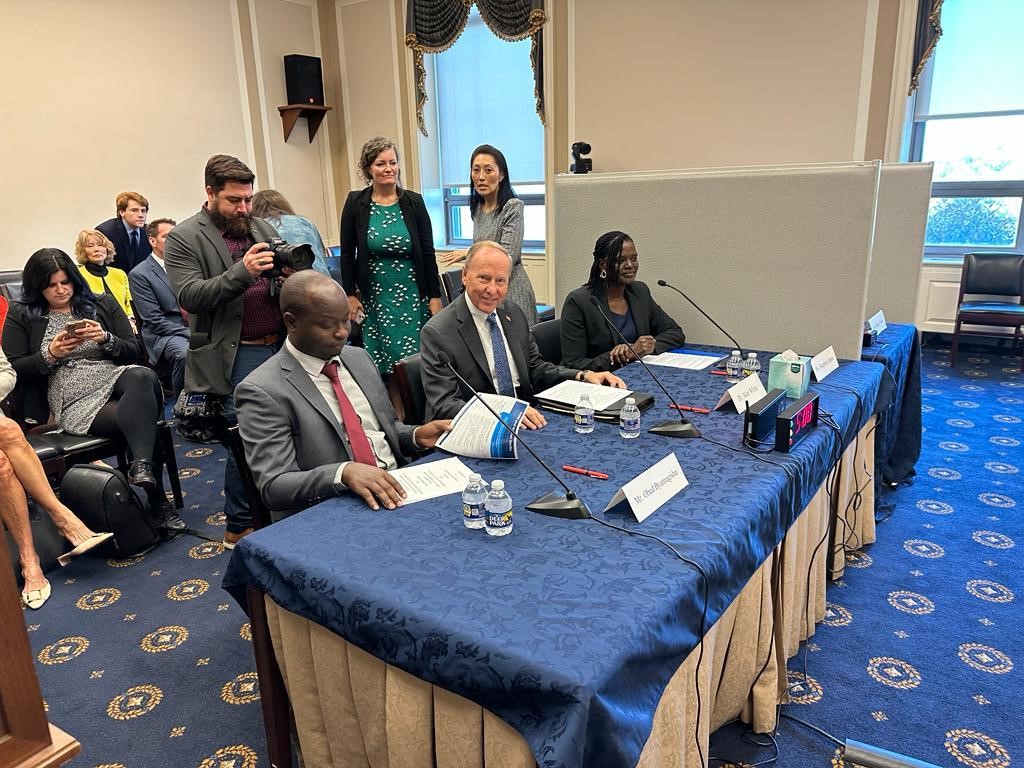
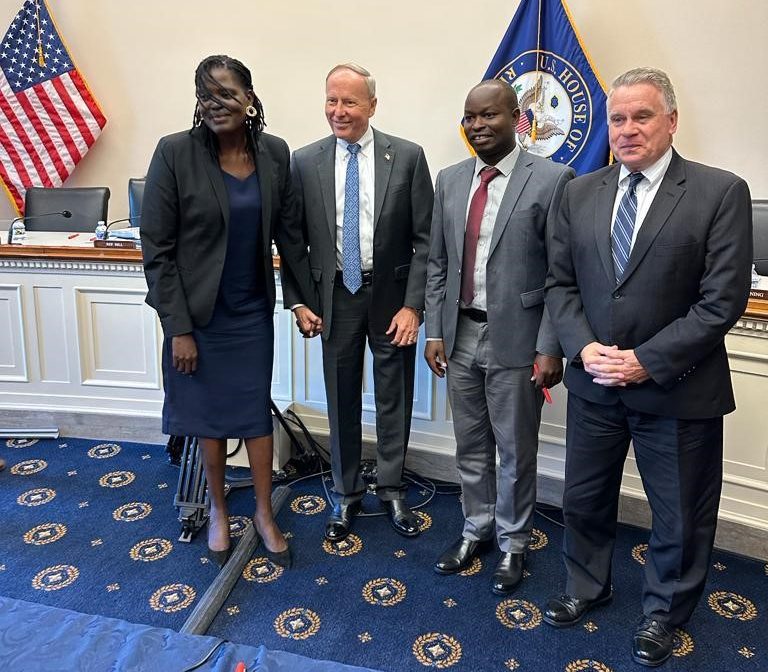
A few days ago, on September 19, an important meeting took place in the United States, in the House of Representatives to be precise. A subcommittee on global human rights, of the Commission of Foreign Affairs, held a hearing on ‘Efforts to Address Ritual Abuse and Sacrifice in Africa’.
Witnesses invited to speak were Obed Byamugisha, Program Advisor, Kyampisi Childcare Ministries, Miriam Fullah, Trafficking in Persons Protection Manager, World Hope International, Dr. Alan White, Co-Executive Director, Advocacy Foundation for Human Rights and former Chief of Investigations of the Special Court for Sierra Leone (SCSL, which sentenced former Liberian warlord and president Charles Taylor to 50 years in prison), and Josephine Aparo, Founding Member, Global Survivor Network and International Justice Mission.
At least three leading Liberian newspapers published articles on the hearing, revelations and accusations notably of Dr. Alan White, who linked immediate past and present Liberian governments to ritualistic killings. The three articles – in the Daily Observer, Front Page Africa, and The New Dawn – are reproduced below. In a separate posting I will pay attention to the testimonies of the other witnesses.
The responsibility for the reporting on Dr. Alan White’s testimony in the three Liberian newspapers rests entirely with the publishers of said newspapers. White’s testimony addresses the roles of former president Sirleaf (2006 – 2018) and president Weah (2018 – present) and he formulates his observations and conclusions carefully. The newspapers’ headings are meant to attract the attention of the readers (buyers), without nuance. Therefore and to avoid any misunderstanding about White’s statements I’ve also included the full text of his important testimony (below).
Dr. White, who – as Chief Investigator of the SCSL – has extensive knowledge of ritualistic practices and abuses which occurred in Sierra Leone during this country’s civil war (1991-2002), also referred to these atrocities in his testimony. Moreover, he said, “This practice continues today in Sierra Leone and surges during election periods where people running for office believe that sacrificing a person, mostly younger boys and girls because it is believed the younger they are, the more power they get.”
With respect to Liberia he provides more than one example of ritualistic abuse and murder. His most serious accusation addresses the previous Administration of President Sirleaf and the present Weah Administration: “The Ellen Johnson Sirleaf administration during her 12 years (2006-2018) in office was plagued with ritual killings and despite vows to bring them to an end they continued. The same problems continue under the Weah administration and unlike Sirleaf there were no insiders reporting her direct involvement with the ritual killings. However, we have received information that current administration has been linked to ritualistic killings of children. Sources advise the police are not allowed to investigate these matters or if they do, it is done superficially as to not get to close to those involved. Also, because of the high-level links to the government it is taboo to say anything about it or otherwise you could be the next victim.”
White could hardly be more specific when stating: “The Foundation has received disturbing information about the frequency of such killings and the allegations linking it to the Executive Mansion (The Office of the President) and other high-ranking government officials. Details of these atrocities are difficult to obtain.”
On October 10, presidential and legislative elections will be held in Liberia. Should I add more? (webmaster FVDK).
Liberia: Alan White Accuses Weah’s Gov’t of Extrajudicial, Ritualistic Killings
…. Calls for justice for murdered auditors, three missing boys resound at U.S. Congressional hearings
Piublished: September 20, 2023 By: William Q. Harmon – Daily Observer, Liberia
Renowned human rights activist and Co-Executive Director for the Advocacy Foundation for Human Rights (AFHR), Dr. Alan White has told the United States House Subcommittee on Foreign Affairs that President George Weah and his Congress for Democratic Change (CDC) are involved in acts of extrajudicial and ritualistic killing.
Addressing the subcommittee on Global Health, Global Human Rights, and International Organizations, under the House Foreign Affairs Committee, Dr. White said that at least 10 people were killed in unclear circumstances in 2021, including five in September of that year reportedly with suspected links to ritualistic practices or political motivations.
The killings referenced by Dr. White, all of which occurred during the Weah administration, were never solved and remain fresh on the minds of Liberians as the country goes to the polls on October 10 this year, to elect a president, vice president and 88 legislators.
On December 10, 2021, the United Nations issued a public statement –“A UN human rights expert today called on the Liberian Government to promptly investigate a series of killings that have occurred this year, some of which have reportedly been linked to ritualistic practices.”
White told the subcommittee that his organization has received disturbing information about the frequency of such killings and the allegations linking it to the Executive Mansion (The Office of the President) and other high ranking government officials. Details of these atrocities, he said, are difficult to obtain.
“Sources advise the police are not allowed to investigate these matters or if they do, it is done superficially as to not get too close to those involved,” White told the Subcommittee on Global Health, Global Human Rights, and International Organizations at a hearing on Tuesday, 19 September. “Also, because of the high-level links to the government it is taboo to say anything about it or otherwise you could be the next victim.”
White called on the U.S. government and global partners for the prosecution for these heinous crimes. “The killing must stop and hope your legislation can effect change and stop this madness once and for all,” he told the subcommittee.
White’s AFHR, a nonprofit organization, located in Washington, DC, USA, targets human rights violators, that engage in public corruption and seek justice and accountability for the victims of such atrocities. The group is also actively engaged in conducting investigations and compiling information about those individuals who are committing ritualistic killings, especially in Liberia.
In his testimony, White made specific references to the mysterious disappearance of three young men who were hired by Moses Ahossouhe, owner of the St. Moses Funeral Parlor in Monrovia, to undertake a task in Bong County; the high profile death of four auditors; as well as other mysterious deaths that took place in the country under the Weah administration.
On October 17, 2020, Robert M. Blamo, Jr, 29, Siafa Gbana Boimah, 34, and Bobby S. Gbeanquoi, 32, were reported drowned in a river in Fuamah District, lower Bong County, when a canoe they were allegedly riding capsized.
“The bodies of the three young men were retrieved by Ahoussouhe and never returned to the parents. He has close ties to the President and the government,” White told the committee. “And the Ministry of Justice has failed to provide an update or release the outcome of an investigative report on circumstances that led to the conclusion they drowned. Why didn’t they release the bodies to the family?”
The aggrieved families believed that their children are being kept in a sacred place to be used for alleged ‘ritualistic purposes’. The family members sought the assistance of the international community, including the US Embassy and the United Nations.”
Three of the most recent victims were either former officials or had links to high profile former politicians, he said. “Even a recent death of some young girls involved in political campaign event held by the CDC sparked outrage by the citizens and allegations their deaths were done for ritualistic reasons,” he said while referencing the headline of a local newspaper which said: Citizens to President Weah: ‘No ritual can help you from leaving office after the elections.’
White noted that the Ellen Johnson Sirleaf administration during her 12 years (2006-2018) in office was plagued with ritual killings and despite vows to bring them to an end they continued. “The same problems continue under the Weah administration and, unlike Sirleaf, there were no insiders reporting her direct involvement with the ritual killings,” he said.
Over the past 20 years White has been actively engaged in seeking justice and accountability for victims of human rights violations and conducting criminal investigations of war crimes and crimes against humanity in Africa, most specifically West Africa. From July 2002-July 2005, he was detailed to the United Nations backed Special Court for Sierra Leone located in Freetown, Sierra Leone West Africa where he served as the Chief of Investigations.
“As Chief of Investigations of the Special Court for Sierra Leone, I directed all criminal investigations which led to numerous indictments and convictions, most notably was former Liberian President Charles Taylor who was the first sitting Head of State to be indicted and convicted for war crimes and continues to serve his 50 year prison sentence.”
White was one of four witnesses who testified during the hearing on the theme: “Efforts to Address Ritual Abuse and Sacrifice in Africa” on Tuesday, September 19, 2023. The others were Obed Byamugisha, Program Advisor, Kyampisi Childcare Ministries; Miriam Fullah, Trafficking in Persons Protection Manager, World Hope International; and Josephine Aparo, Founding Member, Global Survivor Network and International Justice Mission.
He applauded the work of the Subcommittee and its members, noting that his organization will continue to work on the issues. “We hope that this Hearing will shed a very bright light on a very dark issue plaguing many African countries and especially Liberia, who experienced this despicable crime against humanity during war and peace, yet it doesn’t stop,” he said.
His testimony to the U.S. House Subcommittee is the latest deposit in a trove of numerous reports with claims of crime and corruption on the part of the Weah administration. So far, some of these claims have resulted in sanctions against three of Weah’s top lieutenants — former Minister of State for Presidential Affairs, Nathaniel McGill; former Solicitor General, Cllr. Saymah Syrenius Cephus; and former Managing Director of the National Port Authority, Bill Twehway.
Yet, amid the U.S. sanctions, the three individuals continue to wield influence across the country — especially during the current election period, as Both McGill and Twehway are splurging cash to gain favor with voters in order to be elected to legislative office come October 10.
Dr. White’s hope that the U.S. Congress’ “… legislation can effect change and stop this madness once and for all,” might resonate with many Liberians at home and abroad, but the October 10 elections will be the litmus test of whether the critical mass of Liberians at home feel the same way about the state of affairs in their country.
Liberia: Dr. Alan White Highlights Ritualistic Killings in Liberia before U.S. House Foreign Affairs Subcommittee; Links Immediate Past and Current Government
Published: September 20, 2023 By: Lennart Dodoo – Front Page Africa, Liberia
Washington, D.C. – Dr. Alan W. White, Co-Executive Director of the Advocacy Foundation for Human Rights, delivered a compelling testimony before the Committee on Foreign Affairs, Subcommittee on Global Health, Global Human Rights, and International Organizations, addressing the pressing issue of ritualistic killings in Africa, with a particular focus on Liberia. Dr. White shed light on the Foundation’s mission to combat human rights violations, including ritualistic killings and the alarming allegations linking these acts to high-ranking government officials, including the Executive Mansion.
The Advocacy Foundation for Human Rights, a non-profit organization based in Washington, D.C., has been dedicated to targeting human rights violators, exposing public corruption, and advocating for justice and accountability for the victims of such atrocities.
Others who testified before the Committee headed by Congressman Chris Smith Obed Byamugisha, Program Advisor, Kyampisi Childcare Ministries; Miriam Fullah, Trafficking in Persons Protection Manager, World Hope International; Josephine Aparo Founding Member, Global Survivor Network and International Justice Mission.
In his testimony, Dr. White detailed the challenges faced in gathering information and conducting investigations into ritualistic killings, emphasizing the danger faced by sources who dare to speak out against these crimes.
Dr. White’s credentials as Chief of Investigations for the Special Court for Sierra Leone, where he directed criminal investigations leading to numerous indictments and convictions, lent significant weight to his testimony. He notably highlighted the conviction of former Liberian President Charles Taylor, the first sitting Head of State to be indicted and convicted for war crimes, serving a 50-year prison sentence.
The Special Court for Sierra Leone was established to investigate and prosecute those responsible for the devastating civil war in Sierra Leone, spanning from 1991 to 2002, which resulted in the deaths of over 70,000 people. Dr. White’s investigations led him to neighboring Liberia, which also experienced two brutal civil wars, resulting in the deaths of over 250,000 Liberians.
During his tenure as Chief of Investigations, Dr. White bore witness to unspeakable human rights violations perpetrated through ritualistic activities, a phenomenon he had not encountered before. He recounted a chilling story from 2002, where a 70-year-old man seeking a political position in a local Village, believed in black magic and sacrificed a 9-year-old boy to gain power. This horrifying act shed light on the prevalence of ritualistic killings in West Africa, where individuals commission murders to obtain body parts for magic spells and gain political power.
The Foundation has received disturbing information about the frequency of such killings and the allegations linking it to the Executive Mansion (The Office of the President) and other high-ranking government officials. Details of these atrocities are difficult to obtain.
Dr. Alan W. White, Co-Executive Director of the Advocacy Foundation for Human Rights
Dr. White’s testimony revealed the widespread practice of ritualistic killings during Sierra Leone’s civil war, with various rebel groups and warring factions, such as the Revolutionary United Front (RUF), the Armed Forces Revolutionary Council (AFRC), and the Civil Defense Force (CDF), routinely engaging in such acts. He described how rebels would boast about consuming the organs of their victims, believing it granted them supernatural power.
Importantly, Dr. White highlighted that ritual killings persist in Sierra Leone today, often escalating during election periods when some politicians believe they can gain power through human sacrifices. These alarming practices have also been reported in Liberia, where ritualistic killings are a combination of traditional beliefs and the criminal behavior of unscrupulous politicians.
Liberia has a history of ritualistic killings during its civil wars, with figures like Milton Blahyi, also known as ‘General Butt Naked’, publicly admitting to eating children’s hearts and taking part in human sacrifices to ensure victory in battle.
Dr. White’s testimony also touched upon recent cases of ritualistic killings in Liberia, such as the mysterious disappearance of three young men hired for a task in Bong County in October 2020 by the St. Moses Funeral Home. The bodies of these young men were never returned to their families, and investigations into their deaths remain unresolved, raising suspicions of involvement by influential individuals with close government ties.
“The Foundation has received disturbing information about the frequency of such killings and the allegations linking it to the Executive Mansion (The Office of the President) and other high-ranking government officials. Details of these atrocities are difficult to obtain,” he said.
He also linked the past regime to acts of ritualistic killings, saying “The Ellen Johnson Sirleaf administration during her 12 years (2006-2018) in office was plagued with ritual killings and despite vows to bring them to an end they continued. The same problems continue under the Weah administration and unlike Sirleaf there were no insiders reporting her direct involvement with the ritual killings.”
Dr. White commended the Subcommittee for its work and called for a thorough examination of the issue of ritualistic killings in Africa, especially in Liberia. He urged legislation that could bring an end to these heinous crimes, emphasizing the importance of exposing those involved and prosecuting them for their actions. The Advocacy Foundation for Human Rights remains committed to addressing this dark issue plaguing many African countries and hopes that the Subcommittee’s efforts will help put an end to these atrocities once and for all.
— Dr. Alan White asks U.S. for prosecution of those in ritualistic killings in Liberia
Published: September 20, 2023 By: New Dawn, Liberia
The U.N. former chief investigator for the special court of Sierra Leone, Dr. Alan White is requesting prosecution for ritualistic killings and despicable crimes against humanity in Liberia during war and in peace, saying “the killings must stop.”
Dr. Alan briefed U.S. lawmakers in Washington Tuesday, 19 September 2023, giving historical accounts of recent killings and those carried out during Liberia’s civil war for ritualistic purposes.
“Those involved need to be exposed and prosecuted for these heinous crimes. The killings must stop, and we hope that through legislature can effect change and stop this madness once and for all,” said Dr. White.
Dr. White indicated that former President Ellen Johnson-Sirleaf’s administration was plagued with ritualistic killings, and the same problem continues under incumbent President George Manneh Weah’s administration.
Unlike Sirleaf’s administration, Dr. White said, there was no insider reporting on her direct involvement on ritualistic killings.
However, he said he has received information that President Weah’s administration is being linked to the ritualistic killings of children.
He said sources have revealed that the police are only allowed to investigate these matters in a conspicuous but very superficial manner.
Dr. White explained that notable of these cases is the incident involving victims Robert Blamo, Jr., 29, Siafa Boimah, 33 and Blama, who went missing after being hired by St. Moses Funeral Parlor proprietor Mr. Moses Ahoussouhe to undertake a contract in Bong Mines.
Mr. Ahoussouhe was accused of hiring the three men on Saturday, 15 October 2020 to travel to Bong Mines to do technical work for him at his diamond creek when all three of them went missing. They were alleged to have drowned when a canoe they were riding in had capsized.
Dr. White said Ahoussouhe (St. Moses) retrieved the bodies of the three young men but they were never returned to their parents.
“He has close ties with the president and the Government of Liberia, and through the Ministry of Justice, he has contact as well. They failed to provide update or release the outcome of the investigation or report on the circumstances that led to the conclusion [that] they drowned,” said Dr. White.
Dr. White indicated that the aggrieved families believe that their children are being kept in a secret place to be used for ritualistic purposes.
He said the family members sought the assistance of the international community including the U.S. Embassy and the United Nations, leading the UN to call on the Liberian government to investigate killings which had been reported to link to ritual practice.
In 2021 alone, Dr. White said at least ten people were killed, reportedly linked to ritualistic killing or political motivation.
He added that they were either former officials or had links to former politicians. White noted that recent deaths involving some girls during President George Manneh Weah’s 2023 political campaign outraged the citizens.
He said the allegation is that the killings were done for ritualistic reasons. He also referenced citizens’ message to President Weah which was carried in the NewDawn newspaper’s headline that no amount of money or rituals can help President Weah and his Coalition for Democratic Change from leaving office after the 10 October 2023 elections.
Dr. White said his organization will continue to work on these issues in African countries, especially Liberia which experiences despicable crimes against humanity during war and in peace.
He recalled that during the 14 years civil war in Liberia, there were so many cases where gunmen, some of them child soldiers, ate victims’ body parts.
He stated that it was well documented that during Liberia’s civil war, ritualistic killing was a common place, naming Gen. Butt Naked, now Evangelist Milton Blayee as of the notorious culprits.
According to Dr. White, Mr. Blayee testified before Liberia’s Truth and Reconciliation Commission (TRC) that he ate children’s hearts.
He said Blayee indicated that human sacrifices were intended to ensure victories in battles.
Full text of the Testimony Submitted to The Committee on Foreign Affairs, Subcommittee on Global Health, Global Human Rights, and International Organizations – “Efforts to Address Ritual Abuse and Sacrifice in Africa” – September 19, 2023 – 10:00 a.m. Statement of Dr. Alan W. White, Co-Executive Director – Advocacy Foundation for Human Rights – Washington, D.C. and Founding Chief of Investigations of the United Nations backed Special Court for Sierra Leone.
First of all I would like to the thank Chairman Congressman Chris Smith and Ranking Member Congresswoman Susan Wild, of the U.S. House of Representatives Global Health, Global Human Rights, International Organizations and other members of this Subcommittee for holding this very important hearing. I also want to publicly commend Congressman Smith for his tireless and unwavering efforts in seeking justice and accountability for countless victims of human rights violations from around the Globe. You provide a voice that otherwise would go unheard and a platform to those victims, who have suffered and continue to suffer with no one to turn to. Your steadfast support is globally recognized and very much needed in these troubled times we live in, and where so many atrocities are being committed around the world.
I am the Co-Executive Director for the Advocacy Foundation for Human Rights, a non- profit organization, located in Washington, DC. The Advocacy Foundation for Human Rights targets human rights violators, that engaged in public corruption and justice and accountability for the victims of such atrocities. We are actively engaged in conducting investigations and compiling information about those individuals who are committing ritualistic killings, especially in Liberia. The Foundation has received disturbing information about the frequency of such killings and the allegations linking it to the Executive Mansion (The Office of the President) and other high-ranking government officials. Details of these atrocities are difficult to obtain.
Sources to the Foundation are endangered just by speaking out – and I will discuss this later in my testimony.
Over the past 20 years I have been actively engaged in seeking justice and accountability for victims of human rights violations and conducting criminal investigations of war crimes and crimes against humanity on the continent of Africa, most specifically West Africa. During my last 3 years of Federal Law Enforcement service from July 2002-July 2005, I was detailed to the United Nations backed Special Court for Sierra Leone located in Freetown, Sierra Leone West Africa where I served as the Chief of Investigations. As Chief of Investigations of the Special Court for Sierra Leone I directed all criminal investigations which led to numerous indictments and convictions, most notably was former Liberian President Charles Taylor who was the first sitting Head of State to be indicted and convicted for war crimes and continues to serve his 50 year prison sentence.
The Special Court for Sierra Leone was established to investigate and prosecute those who bear the greatest responsibilty for the civil war in Sierra Leone, which lasted from March 1991 to January 2002 and resulted in the deaths of over 70,000 people. Our investigations led us to neighboring Liberia which had suffered two civil wars, the first from December 1989 to August 1997 and then again in 1999 to 2003 where over 250,000 Liberians were killed.
While serving as the Chief of Investigations I witnessed and investigated some of the most horrific and unspeakable human rights violations no one could ever imagine that someone could inflict on another human being. The horrors of civil war are always tragic, however, to see those involved in the commission of killing and torturing another human being by engaging in ritualistic activities was something I had not seen before and quite frankly prepared to deal with. Yet shortly after I arrived in Freetown, Sierra Leone I recall in August 2002 a news story where a 70-year-old man seeking to become a Paramount Chief of a local Village, a political position in traditional system of local government and an integral element of governance, was convicted of a ritualistic killing. I learned quickly that ritualistic killings were common place, particularly in West Africa. This story reported the man seeking to become a Paramount Chief believed in black magic and in order to get elected he needed to sacrifice a young child and in this case he bought a 9-year old boy for 800,000 leones ($160) from a family desperate for money.
Reportedly he gruesomely killed the 9-year-old boy by slitting his throat and removing his liver and taking some blood to local witch doctors in the neighboring country of Guinea where they would use in making a liquid concoction he could drink and give him what is known as “Juju”. This was a term I learned later meant power and used in ritualistic killings by rebels fighting in the civil wars, both in Sierra Leone and Liberia. Suprisingly, I learned that ritual killings or human sacrifices to local deities were customary in parts of West Africa, where some people commission killings to obtain body parts for magic spells to gain political power and influence.
Early on during my criminal investigations of war crimes and crimes against in Sierra Leone I heard routinely about ritualistic killings involving the various rebel group and warring factions in Sierra Leone, which included the Revolutionary United Front (RUF), the Armed Forces Revolutionary Council (AFRC) and the Civil Defense Force (CDF).
The war started in Kailahun, so we started our investigations in that part of the country where we uncovered numerous mass graves and in most cases the victims were civilians, including children. Their identities were mostly unknown, although some names were given. However, our witness interviews revealed that the RUF or RUF/AFRC were identified as the alleged perpetrator.
There were several causes of death of the victims reported including they were locked in houses and burnt, “ritual human sacrifice for protection” and gunshot and knife wounds. One of the witnesses interviews I recall involved a female RUF ex-child combatant, who advised that ritual killings were routinely practiced on enemy fighters or on civilians, including children. Sadly, the rebels from the various warring factions would boast about killing their enemy, many of which were young child soldiers, and eating their heart, drinking their blood, or eating other body parts claiming they received extra power from doing so.
This practice continues today in Sierra Leone and surges during election periods where people running for office believe that sacrificing a person, mostly younger boys and girls because it is believed the younger they are, the more power they get. The Voice of America (VOA) in Freetown in 2012 reported on the so-called ritual murders during election time and have been a part of African society for centuries. “In Sierra Leone, some believe ritual murders increase during election time because some politicians think they will gain political power from another human’s body parts.”
Chief Minister, NaCSA Boss Indicted in Attempted Ritual Murder of Virgins Girls in Freetown (sierraloaded.sl)
In October 2021 a senior government official, who reported to the President of Sierra Leone was indicted for an attempted ritual murder of six “Virgin Girls” in Freetown. The Chief Minister in Sierra Leone has been accused of forcing a primary school teacher to kidnap six virgin schoolgirls for ritualistic purposes. Fortunately, the plot was foiled when one of the whistleblowers came forward and reported it to the police which led to the Chief Minister’s arrest and indictment. However, reportedly he was released from custody while the investigation continued and to date no prosecution has occurred.
Dr Fred P.M. VAN DER KRAAIJ, author of a blog known as liberiapastandpresent.org, who lived and worked in Liberia as an Economist has chronicled a number of the ritualistic killings and other significant events in Liberia. In one of his blogs, he writes — “Today’s practice of ritual killings in Liberia – because it still exists! – mainly is a combination of traditional beliefs which inspire men-eating and modern-day criminal behavior of unscrupulous politicians who consider their ambitions worth more than the life of their victims. During the 14-year civil war (1989-2003) there were so many cases of gunmen – some of them child soldiers – eating their victim’s hearts and other body parts that the Catholic Church issued a formal denunciation of these practices (Stephen Ellis, The Mask of Anarchy, 1999: dust jacket). Liberia.”
It is well documented that during the civil wars in Liberia that ritual killings were commonplace and one of the most notorious rebels engaged in such horrific acts, is Milton Blahyi aka General Butt Naked, a feared former Rebel Commander who fought in the Liberian civil war. He testified before the Liberian Truth and Reconciliation Commission (TRC) where he publicly stated “I ate children’s hearts,” and admitted to taking part in human sacrifices as part of traditional ceremonies intended to ensure victory in battle. He also told BBC that his forces his forces had killed over 20,000 people.
During the first civil war (1989-1996) there were also other reports about Charles Taylor and his rebels accounts reportedly the formation of a group of cannibals called Top 20 of which he was a member. Reportedly the group, comprised of Taylor and 16 rebels of his own army known as the National Patriotic Front for Liberia (NPFL) engaged in human sacrifices at Taylor’s house.
On December 10, 2004, BBC publicly reported Hundreds of Liberian women had taken to the streets of the capital, Monrovia, protested against a recent wave of ritual killings. Bodies of children had been found with some of their organs missing, taken for what are viewed as magical properties. These killings were reportedly linked to politicians and the wealthy, who many believe to pay for the murders to increase their chances of good fortune.
There were other media reports documenting, including the Analyst, the discovery of the bodies of two unidentified children around the Du River area. One of the victims was a girl believed to be 12 years old. The media reports quoted eyewitnesses as saying that the body was discovered with “fresh blood coming from its mouth and nose.”
The Ellen Johnson Sirleaf administration during her 12 years (2006-2018) in office was plagued with ritual killings and despite vows to bring them to an end they continued. The same problems continue under the Weah administration and unlike Sirleaf there were no insiders reporting her direct involvement with the ritual killings. However, we have received information that current administration has been linked to ritualistic killings of children. Sources advise the police are not allowed to investigate these matters or if they do, it is done superficially as to not get to close to those involved. Also, because of the high-level links to the government it is taboo to say anything about it or otherwise you could be the next victim.
One of the most notable allegations of ritualistic killings involve the mysterious disappearance of three young men who were hired by the Proprietor of the St. Moses Funeral Parlor to undertake a task in Bong County. On October 17, 2020, Robert M. Blamo, Jr, 29, Siafa Gbana Boimah, 34, and Bobby S. Gbeanquoi, 32, were reported drowned in a river in Fuama district, lower Bong County when a canoe they were allegedly riding capsized while returning to their respective homes. They were reportedly contracted to do a, “piece of job” at the Oriental mining company owned and operated by Mr. Moses H. Ahossouhe (Proprietor of St. Moses Funeral Parlour), and one Mr. Abraham S. Samuels. It was reported by Mr. Ahoussouhe that the three young men drowned. The bodies were retrieved by Mr. Ahoussouhe and never returned to the parents. He has close ties to the President and the Government of Liberia (GOL), through the Ministry of Justice has failed to provide an update or release the outcome of an investigative report on circumstances that led to the conclusion they drowned. Why didn’t they release the bodies to the family?
The aggrieved families believed that their children are being kept in a sacred place to be used for alleged “ritualistic purposes.” The family members sought the assistance of the international community, including the US Embassy and the United Nations.
On December 10, 2021, the United Nations issued a public statement –“ A UN human rights expert today called on the Liberian Government to promptly investigate a series of killings that have occurred this year, some of which have reportedly been linked to ritualistic practices.”
At least 10 people have been killed in unclear circumstances in 2021, including five in September reportedly with suspected links to ritualistic practices or political motivations. According to information received by the Special Rapporteur on extrajudicial, summary, or arbitrary executions, Morris Tidball-Binz, three of the most recent victims were either former officials or had links to high profile former politicians.
Even a recent death of some young girls involved in political campaign event held by the CDC sparked outrage by the citizens and allegations their deaths were done for ritualistic reasons. The local headlines read – Liberia – Citizens to President Weah: ‘No ritual can help you from leaving office after the elections.’
On August 24, 2023, the New Dawn News reported Several residents of Montserrado County have told incumbent President George Manneh Weah that no amount of alleged human sacrifice, ritual, and money can prevent him and the Coalition for Democratic Change (CDC) from leaving office.
“We want to tell President Weah that no amount of human sacrifice, ritual, and money can help in this election,” potential voters said in Montserrado County.”
The foundation will continue to work on this issue and applauds the work of this Subcommittee and its members. We hope that this Hearing will shed a very bright light on a very dark issue plaguing many African countries and especially Liberia who experienced this despicable crime against humanity during war and peace, yet it doesn’t stop. Those involved need to be exposed and prosecuted for these heinous crimes. The killing must stop and hope your legislation can effect change and stop this madness once and for all.
On October 10 general and presidential elections will be held in Liberia. At least 20 candidates are vying for the presidency. The opposition is determined to make incumbent president George Weah, a famous soccer star turned politician, a one-term-president. The ruling CDC wants to stay in power. After all, elections in Liberia – and elsewhere on the African continent – is all about access to resources, ideologies and political vision hardly play any role.
Elections and ritualistic murders often go hand in hand in Liberia (also elsewhere on the continent). Reportedly there was a surge in ritual killings in this West African country in recent years. Recently, people in Montserrado County, the seat of the government and the country’s capital Monrovia, told President Weah that no ritual, human sacrifice or money can prevent his loss and that of the ruling CDC in the ensuing elections.
Of course, such a public outcry is no proof or indication of any real or suspected involvement of an ambitious politician, named or unnamed, or of the ruling coalition or the fragmented opposition in criminal acts such as ritual murders. However, the hidden message is noteworthy.
That’s why I consider it worthwhile to include it here. (webmaster FVDK)
No ritual & money can help CDC
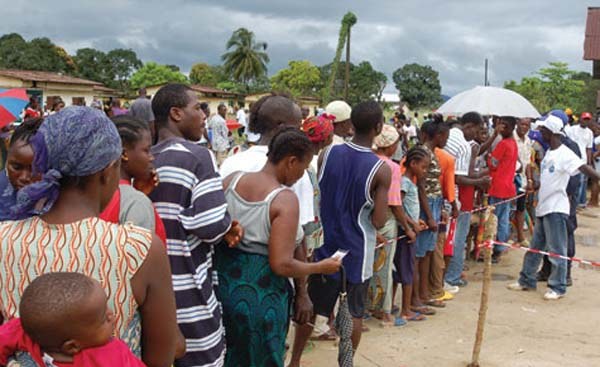
Voters in queue – Liberia, elections
Published: August 26, 2023 By: Lincoln G. Peters – The New Dawn, Liberia
Several residents of Montserrado County have told incumbent President George Manneh Weah that no amount of alleged human sacrifice, ritual, and money can prevent him and the Coalition for Democratic Change (CDC) from leaving office.
“We want to tell President Weah that no amount of human sacrifice, ritual, and money can help in this election,” potential voters said in Montsrrado County.
They were responding to President Weah’s urge for his supporters to consider the tragic motor accident that killed some of his supporters last week and then give him a resounding one-round victory this October.
But some Liberians in Montserrado have criticized Mr. Weah’s statement, describing it as completely heartless and worthless.
” We listen to the President telling his supporters to not allow the death of the Daughters of Weah to go in vain. President Weah urged them to use the death for a resounding one-round victory for him and CDC,” the citizens said.
“We are aware that he used the death of those people to remain in power. But let them be informed that it will not work because God is not sleeping,” they noted.
On Wednesday, 23 August 2023, President Weah and his party held a program to mourn the death of some members of the Daughters of Weah who were involved in an accident while en route to Gbarnga, Bong County for a political campaign.
During the mourning, President Weah urged supporters of the CDC not to allow the death of their partisans to go in vain.
Mr. Weah urged CDCians to ensure that the deaths of the Daughters of Weah be repaid with a resounding one-round victory.
“I want to urge every one of you here today, don’t allow the blood and death of those that died in the accident go in vain,” said Mr. Weah.
“We [want] you to ensure that this be repaid with a resounding one-round victory. We have to make sure that we pay for the death of those that died by giving me, CDC one-round victory, ” President Weah stated.
In response Thursday, 24 August 2023, one of those interviewed, Mr. Jeremiah Doe, a resident of Logan Town Community, said President Weah is daydreaming.
Mr. Doe said Liberians have resolved to democratically remove President Weah, claiming that no amount of human sacrifice, rituals, and money spent by President Weah and the entire CDC can help them to remain in power.
” We are aware that President Weah and the CDC sacrificed those girls. But what I want to say is that President Weah is daydreaming because he can never be elected again,” Mr. Doe alleged.
“This President has failed us and the only way to prevent this is to stop him from being re-elected,” he noted.