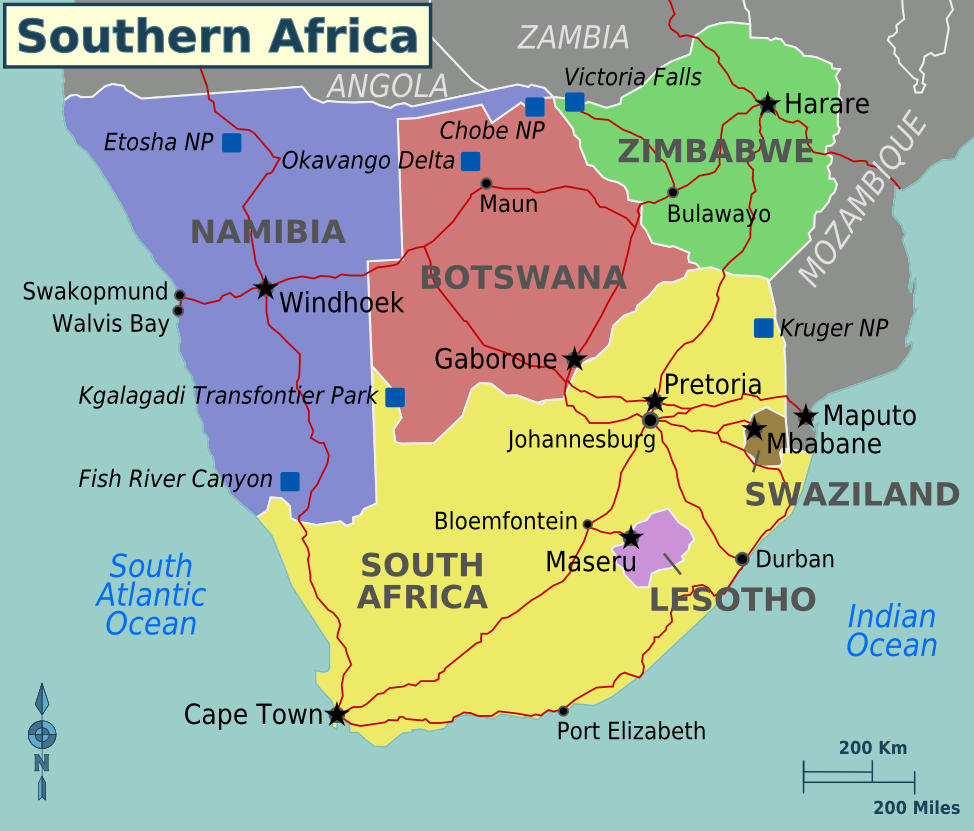
Fear of ritual killings grows in Swaziland

Richard Rooney’s blog on ‘Swazi Media Commentary, Information and commentary in support of human rights in Swaziland is one of te best, if not the best, source of information on Swaziland and the archaic rule of king Mswati III, the absolute monarch of Swaziland.

The site contains precious information and commentary about human rights in Swaziland.
(webmaster FVDK)

Fear of being kidnapped and killed for ritual purposes made 258 children of the Mafutseni Children’s Care Point stay home on Monday.

Published: Thursday, 14 June 218

BY RICHARD ROONEY
SWAZI MEDIA COMMENTARY – INFORMATION AND COMMENTARY ON HUMAN RIGHTS IN SWAZILAND

Something close to panic has gripped Swaziland / Eswatini as the fear that children will be kidnapped and ritually murdered has taken hold.

The Swazi Observer reported on Thursday (14 June 2018) that 258 children absconded from school at Mafutseni Children’s Cup Care Point in fear of being kidnapped and killed.

It reported one of the teachers Zine Mkhwanazi told a meeting of parents children were afraid to go to the school because of an incident in May where a 16-year-old boy escaped from three knife-wielding men who had cornered him in a forest and tried to slice his throat in what was believed to be a ritual murder attempt. The boy escaped and was admitted to hospital.

The newspaper reported Mkhwanazi said what happened scared everyone, more so, because the attempt on the boy was made at a spot children pass on their way to school.

The Swazi Observer reported on Tuesday (12 June 2018) that parents were now trailing their children wherever they go. ‘It is said some of the parents even accompany their children to Sunday school, just to make sure prowling killers do not go near them,’ it reported. Parents also go with their children to school.

This has happened after reports, many unconfirmed, that children across Swaziland are being abducted and ritually murdered. Body parts are then said to be used in muti to create spells to bring good luck. There is a belief that some people are doing this to help them win seats in the forthcoming National Assembly election.

The Observer quoted one concerned parent saying, ‘Elections are a curse to some of us as that’s the period where children go missing. It’s bad that such incidents are now associated with the elections and it paints a bad picture of the country because in the eyes of the world we are known as a nation where ritual murders are rife during elections.’

Another parent said, ‘There is fear that when we let our children leave school on their own, that places them in danger.’

The Times of Swaziland reported on Thursday (14 June 2018) an alleged ritual killer was assaulted by a mob and set on fire at Mafutseni. It happened after a man made a joke that his own blood was not fit to be used as muti. A mob singled him out as a ritual killer because he appeared to have knowledge about how blood was used to make spells. It added the incident happened about a month after one of the man’s relative went missing.

Source: Fear of Ritual Killings Grows, June 14, 2018

Spirit Child: Ritual Killings in Ghana

Years ago, I drafted an article on infanticide in Benin for the present website on ritual killings in Africa. I never published it, because I hesitated. Thought it wasn’t ready yet. I may publish it one of these days.

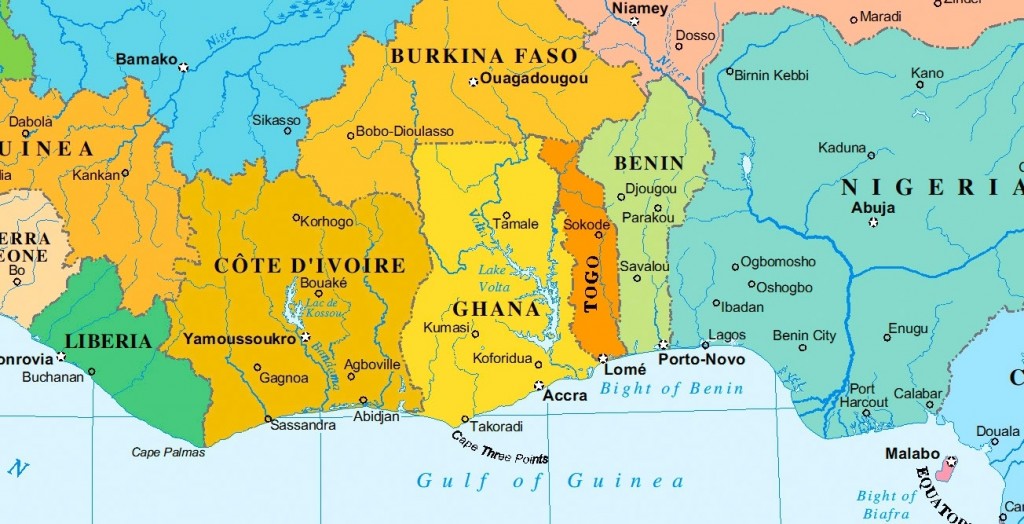
This morning I ran into the article below on infanticide in Ghana – and Benin, Burkina Faso, Nigeria – and who knows in which other African countries this age-old practice occurs. The article is a follow-up to a 2013 investigative report of the same journalist and filmmaker, Anas Aremeyaw Anas. He fights a honorable battle against these murders, since we’re talking about the murdering of children.

Infanticide is an age-old horrible practice, but we’re living in the 21st c. and it’s absolutely necessary that governments take action in this respect. People are afraid to speak about infanticide, as Anas Aremeyaw Anas writes, since they fear the consequences of revealing a secret: death.

Witchcraft, the fear of witchcraft, superstition and ritual killings are closely related. Education can end this nexus. And economic development: jobs. It’s a fight against poverty and ignorance.

Moreover, people have the right to live without fear. It’s a human right.
(webmaster FVDK)

Spirit Child: Ritual Killings in Ghana

Published: June 3, 2018
Author: Anas Aremeyaw Anas
Published by Aljazeera

WARNING: both original articles (2018; 2013) include a film with graphic images that may be shocking.
Anas Aremeyaw Anas investigates the ritual killings of Ghanaian children deemed to be possessed by evil spirits.

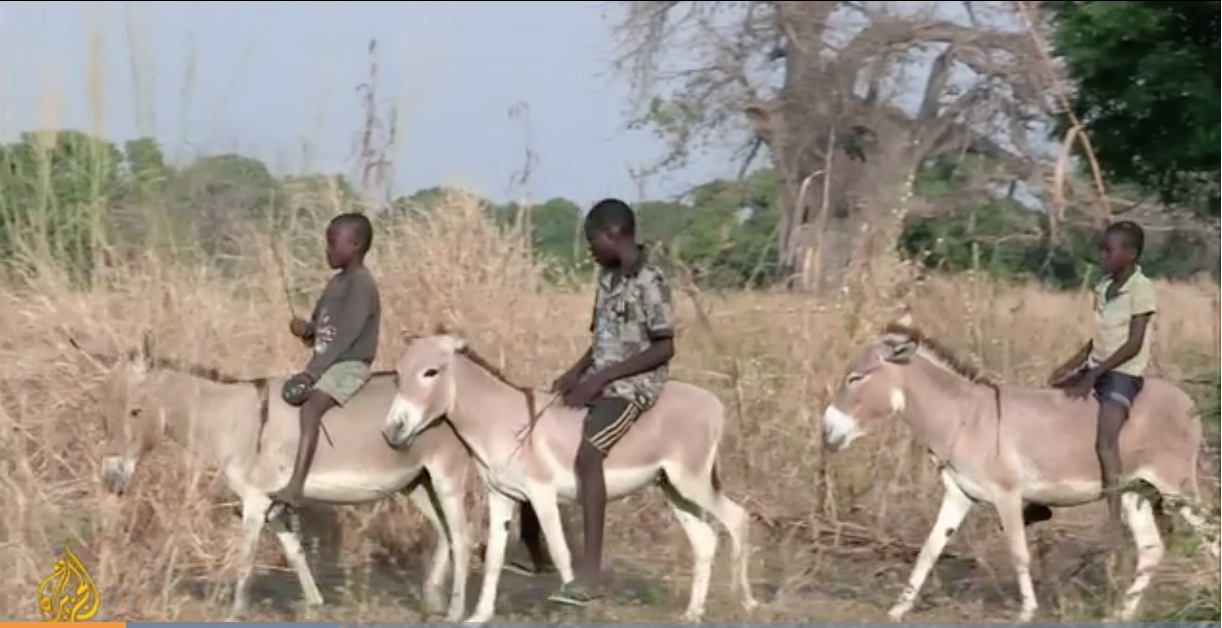
Every year an unknown number of children – most of them disabled in some way – are murdered in northern Ghana because of the belief that they are in some way possessed by evil spirits set on bringing ill fortune to those around them.

The practice is the consequence of ancient traditions and customs and is shaped by poverty and ignorance in remote and often marginalised communities. No one knows the exact number of these ritual deaths across Ghana, Benin, Burkina Faso and parts of Nigeria, but some believe it could be in the thousands.

For years, NGOs and the Ghanaian authorities have tried advocacy and education in an attempt to eradicate the practice but with only marginal success. Well into the 21st century, Ghana’s so-called spirit children are still being killed because they carry the blame for the misfortunes of everyday life.

In 2013, award-winning Ghanaian investigative reporter Anas Aremeyaw Anas set out to track down and expose some of those responsible for the senseless killings – determined to bring them to justice and stop the practice.

Back then, he wrote: “When I first heard about this I could not believe it was happening in my country in the 21st century … The practice originally emerged as a way for poor families to deal with deformed or disabled children that they cannot look after. These families approach village elders known as concoction men and inform them that they suspect their child to be a so-called spirit child.

The concoction man then takes the father of the child to visit a soothsayer who confirms whether or not the child is truly evil, without ever actually laying eyes on them. Once this confirmation has been received, the concoction man brews a poisonous liquid from local roots and herbs and force-feeds it to the child, almost always resulting in death.

Over time, this practice has become a perceived solution to any problems a family might be having at the time of a child’s birth. By blaming the child for sickness in the family, or the father’s inability to find work or provide money to support his dependants, these communities have found an otherworldly explanation for their problems … But infanticide has always been a crime against humanity.”

Now, five years later, Anas, spoke to REWIND about why he doesn’t want to show his identity, the dangers of undercover journalism in Africa, and what has become of the concoction men that killed those children.

“Most African journalists who do investigations have a series of dangers pointing at them. You just have to be yourself and think about how to survive. I came up with the beads that I wear, so people don’t see my face. I’m sure that some of my colleagues, in Nigeria or Malawi have other ways to protect themselves,” Anas told Al Jazeera.

Talking about the threats facing investigative journalists, he said: “Generally, people definitely want to point guns at you or some will try to kidnap you. And most of these things have happened; getting death threats and legal suits is normal, most of my colleagues in the continent suffer that.”

“There is nothing more frustrating than doing a story on someone and then walking on the same streets with that person. It is even more dangerous and that can easily end the life of any journalist.”

“We don’t make stories so that people can just read them and smile in their bedrooms. We make stories that have impact on the society. For me, it is a good story when the bad guy is named, shamed and put in jail … Many people have gone to jail as a result of my work and I’m proud of it.”

Anas also talked about the concoction men that he met during his Spirit Child investigation.

“A legal process was started but they were too old, so at the time that the process could finish, some of them couldn’t even make it to court. But the key thing that happened in that story is that it told the community that whoever you are, when you attempt to do some of these things, you are going behind bars.”

“For the first time, those witch doctors were arrested and put before court. That sends a strong signal to all witch doctors to be careful, that when you are dealing with the life of a child it’s a completely different matter. And we can’t sit down for these children to be killed in the way they are being killed.”

Source: Al Jazeera, June 3, 2018

Related: Spirit Child
By Anas Aremeyaw Anas
Published: January 10, 2013

Every year an unknown number of children – most of them disabled in some way – are murdered in northern Ghana because of the belief that they are in some way possessed by evil spirits set on bringing ill fortune to those around them.

The practice is the consequence of ancient traditions and customs and is shaped by poverty and ignorance in remote and often marginalised communities. But it is still infanticide and no less horrifying than the killing of children anywhere. For years NGOs and the Ghanaian authorities have tried advocacy and education in an attempt to eradicate the practice but with only marginal success. Well into the 21st century, Ghana’s so-called spirit children are still being killed because they carry the blame for the misfortunes of everyday life.

Award-winning Ghanaian investigative reporter Anas Aremeyaw Anas is determined to do something to stop this senseless slaughter. In this shocking and remarkable film for People & Power he sets out to track down and identify some of those responsible and to bring them to justice.

Thousands of children have been killed in Ghana because the communities they are born into believe they are evil spirits. When I first heard about this I could not believe it was happening in my country in the 21st century.

The practice originally emerged as a way for poor families to deal with deformed or disabled children that they cannot look after. These families approach village elders known as concoction men and inform them that they suspect their child to be a so-called spirit child. The concoction man then takes the father of the child to visit a soothsayer who confirms whether or not the child is truly evil, without ever actually laying eyes on them.

Once this confirmation has been received, the concoction man brews a poisonous liquid from local roots and herbs and force-feeds it to the child, almost always resulting in death.

Over time, this practice has become a perceived solution to any problems a family might be having at the time of a child’s birth. By blaming the child for sickness in the family, or the father’s inability to find work or provide money to support his dependents, these communities have found an otherworldly explanation for their problems.

In this highly patriarchal society it enables heads of family to pass the blame for their struggles onto someone else. And by branding the child a spirit from outside the family, they can disassociate themselves and feel justified in murdering their own offspring, while telling those around them that now all will be well – the evil presence is gone.

But infanticide has always been a crime against humanity. I believe there is plenty of evidence of infanticide in the history of all human societies and its continued and widespread practice makes a mockery of the democratic credentials of the countries, including mine, where this crime still takes place. Many forms of civic engagement and advocacy have been used in a bid to eradicate this practice in Ghana and other West African nations. Sadly though, the limited efficacy of such techniques is illustrated by the fact that today children are still being killed in this way.

Ready to spill blood in the name of tradition

And sometimes a strong focus on understanding and education when dealing with traditional practices can distance us from the reality of a situation; it can place us in an ivory tower where we fail to engage with the true manner in which those involved are behaving. Far from acting like a man fulfilling a sad but necessary duty, the concoction man I hired to kill my fictitious child for the purposes of this film was excited; his eyes pinned wide with zeal as he went about preparing for the task at hand.

He laughed and joked about his previous experience, telling me about how he had recently killed a 12-year-old girl by tricking her into drinking his concoction and boasting about how effective his methods are. Without knowing the context, any casual observer would surely consider his disposition nothing short of murderous.

While I understand that he was misguided – ready to spill innocent blood in the name of tradition – I also strongly believe that, no matter what the circumstances, where children are being murdered the state must step in to punish those responsible in the same way that the citizens of any developed democracy would expect it to.

That is not to say that some understanding cannot be afforded to the concoction men and the communities that continue to practice these rituals. Unlike those with the benefit of technology who can see a badly developed fetus and terminate it before birth, the mothers whose babies are killed in northern Ghana have no such options.

They may find themselves giving birth to a child only to discover that it is not normal: it will never be accepted and will always be a burden on those around it. In the absence of technology or a refuge for mother and child to escape to, the concoction man is the only solution. As a result, the parents perceive him as a saviour; the only one who can deliver them from enduring further hardship. And the concoction men in turn thrive on the standing and power this affords them in the community.

When we think of slavery or the burning of alleged witches, these crimes against humanity were only eradicated when key actors in government decided to take a stand. By declaring these practices as unacceptable and threatening those who continue to perpetrate them with prosecution, governments have brought about the abolition of centuries-old traditions in a relatively short space of time.

Permitting evil to triumph over good

From northern Ghana, where the spirit child story is set, through Burkina Faso, Benin and parts of Nigeria, countless babies are killed based on age-old cultural beliefs. But despite this, we were unable to find any evidence of previous arrests for these crimes.

During the three weeks that I worked on this story, I came across 10 men who were willing to kill a baby for spiritual reasons. They were easy to find. Yet when I asked a senior police officer why no arrests have been made, his response was: “It is a very difficult thing to do. It’s unfortunate, we have no idea why this is happening, who is behind this and why they have not been arrested.”

My intention is not to suggest that one investigation or police arrest can stop this trend. But in many ways, the practice’s continued existence is a result of the impunity enjoyed by those involved. The fact that the police have never acted in any way to prevent these children being killed is surely a strong incentive for the concoction men to continue their business as usual. Invariably, this type of laisser-faire attitude is what permits evil to triumph over good.

Democracy has no value if it is only limited to occasional ceremonies for power holders. It is worthless if the voiceless are crushed and the perpetrators of atrocities are allowed to continue living their life without suffering any consequences. It certainly cannot exist where freedom and justice, selectively applied, mean that children are killed with impunity.

A Killing, A Torture & A Death Sentence For Ritual Murder (Sierra Leone)

The case presented here is not a recent one. It relates to the year 2000. A young boy, Brima Kposowa, had been missing for several days from the village of Temede in Bumpeh District, Sierra Leone. His mutilated body was found after an apparently intensive search in early May 2000. A number of suspects was soon arrested, but the subsequent investigation and trial of the accused raise many questions.

Dr. Lans Gberie has been studying the case, as part of an ongoing research into ritual killings. In Dr. Gberie’s own words: “(…) I recently read the trial records of this case, known as ‘Abubakar Kallon vs. the State’. Meticulously bound, they run to 193 pages: consisting of the transcripts of police statements taken, court testimonies, a so-called forensic report, the Judge’s summing up for the juries and Foremen, and the verdict and sentencing statement. The trial appeared to have followed all the formal rules of such proceedings; it certainly was ponderous. But it is hard to say that it was fair.”

For this reason I present his findings and conclusions here. Maintaining ‘the rule of law’ also implies a fair trial. Please judge for yourself whether this has been the case here. It is a lengthy article but certainly worth reading. (webmaster FVDK)

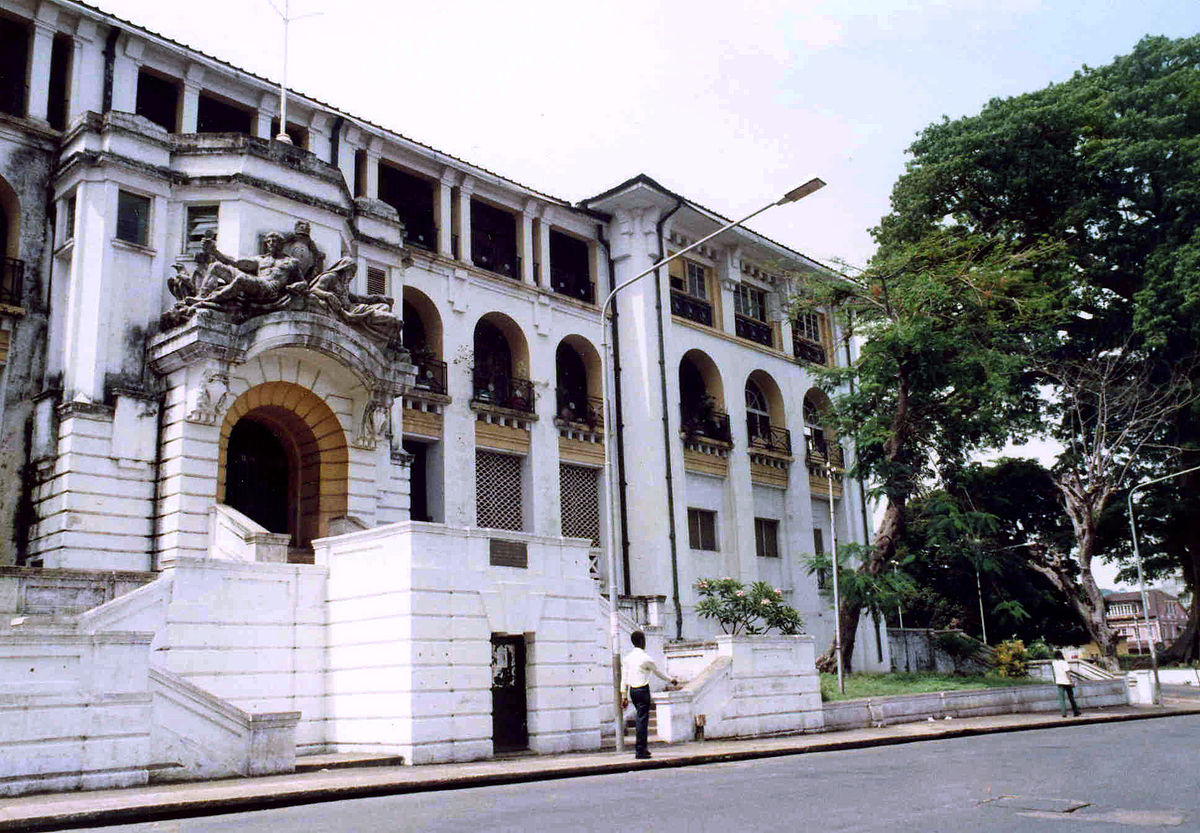
Supreme Court of Sierra Leone

A Killing, A Torture & A Death Sentence For Ritual Murder
By Dr. Lans Gberie
Article in Global Times – Sierra Leone by Amadu Daramy
Published on May 16, 2018

Alhaji Bockarie Kallon was sentenced to ‘suffer death’ by the circuit court sitting in Bo on 24 August 2002. He was 70. Mr. Kallon had been convicted of murdering, for ritual purposes, a 9-year old boy, Brima Kposowa, two years earlier. Judge Olu Ademusu, presiding, noted, apropos of the severity of the crime and the death sentence, that ritual killing was “becoming rampant” in Sierra Leone. “The sentence of the court upon you,” Mr. Ademusu told Mr. Kallon, “is that you be taken from this place to a lawful prison, and thence to a place of execution, and that you there suffer death by hanging until you are dead. And may the Lord have mercy on your soul.”

Mr. Kallon was then taken to Pademba Road Prison and gaoled; I have found no record anywhere of what happened to him next. He might have died forgotten in the prison shortly after (he was 70), as so many condemned prisoners have; but he almost certainly was not hanged.

As part of an ongoing research into ritual killings, I recently read the trial records of this case, known as ‘Abubakar Kallon vs. the State’. Meticulously bound, they run to 193 pages: consisting of the transcripts of police statements taken, court testimonies, a so-called forensic report, the Judge’s summing up for the juries and Foremen, and the verdict and sentencing statement. The trial appeared to have followed all the formal rules of such proceedings; it certainly was ponderous. But it is hard to say that it was fair.

The police report containing the statements of several accused persons upon which the case was built were obtained through torture of almost medieval severity; the doctor who did the ‘forensic examination’ was not a pathologist and his report was inept and ridiculous; and the involvement of certain powerful local forces who were certainly not beyond suspicion with respect to their culpability in the crime raises the probability of a mistrial.

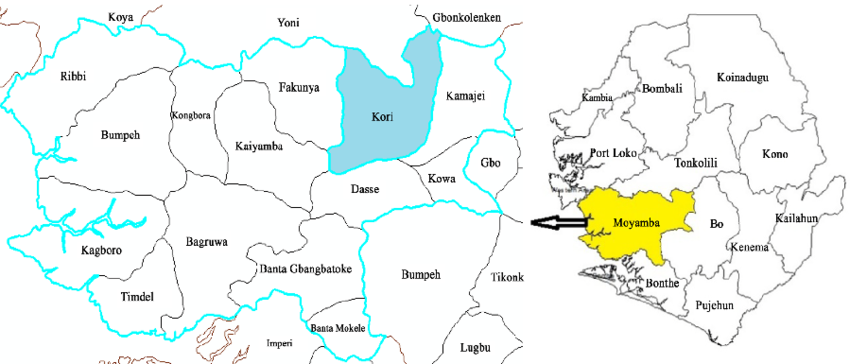
Map of Sierra Leone – showing Bumpeh District

Context

The context of the trial is of more than incidental interest. The body of young Brima Kposowa, who had been missing for several days from the village of Temede in Bumpeh District, was found after an apparently intensive search in early May 2000. At almost exactly this moment, the Revolutionary United Front (RUF) rebels had abducted 300 United Nations peacekeepers and killed some, triggering a massive crisis for the UN’s budding peace operation in Sierra Leone. The Kamajors, then a very powerful pro-government force combating the RUF, was active in the Temede area. Their spiritual leader, Alieu Kondewa, appears in the pages of the trial records; he and the local chief ordered the Kamajors to apprehend four people in connection to the disappearance; they arrested those four people even before the body was found. They four were taken to a police station in Bo. The Bo police, under Karrow Kamara, then despatched a team to the village to search for the missing boy. The police team joined the Kamajors in this search. The body was found in a swamp some distance away from the village: it had not been hidden or buried, suggesting that if it was murder there was no real attempt at cover up.

The police then brought Dr. Brima Kargbo, a senior medical officer attached to the Bo Government Hospital, to examine the body where it had been found. This was on 5 May. He was not a pathologist. His report, tendered to the court as Exhibit A, is confusing: it outrages chronology and sequencing, not to mention probability. He said he found the body “lying and almost decomposing”, and that he conducted the examination on the spot. “Looking at the corpse I did not see the head,” he said. Upon further search, he said, “we found the head under a shrub about two to three yards from where the deceased was lying.” The search party had to wait for the doctor to look for the head? Though the body was decomposing, Dr. Kargbo’s report does not mention that it was smelling, something that surely would have led the search party earlier to the head, which must have been similarly decomposing. The body appeared to have been purposively decapitated: “the heart and liver were not seen,” Dr. Kargbo said.

Borfina

In one of his statements – which he later recanted in court because he claimed, credibly, that it had been extracted from him through torture – Mr. Kallon had claimed that he had removed those body parts after killing Kposowa to take to Guinea, there to be used by some unnamed ‘Meresin’ men to make ‘borfina’. This ‘borfina’, a powerful concoction, would have aided him in his quest to become a Paramount Chief.

The word ‘borfina’ is massively resonant in the literature relating to the Human Leopard phenomenon: it entered the popular imagination after the British colonial authorities set up a special commission court to try several dozen cases relating to mysterious killings attributed to ‘human leopards’ in 1912. Sir William Brandford Griffith, a former governor of the Gold Coast, was summoned from his retirement in London to preside over the commission. He described the ‘borfina’ as “a terrible fetish” which must be “frequently supplied with human fat” to remain potent. He later ventured the opinion that the incidental uses of human flesh by the Human Leopards was not “to satisfy any craving for human flesh nor in connection with any religious rite, but in the belief that the victims’ flesh will increase their virility.” He drew this conclusion from the fact that “all the principal offenders were men of mature age, past their prime.”

I shall return to the Griffith commission, his fatuous opinion, and the details of what was almost certainly a terrible mistrial that led to the hanging of a large number of perfectly innocent men during a moment of colonial hysteria. Griffith won international renown as a champion of Western civilization in one of the barbarous corners of the world for this trial; it earned him obituary notices in the Times of London and the New York Timesupon his death.

In Mr. Kallon’s trial, several people, including the parents of Kposowa, were charged with being accessory to the murder of the boy. Karrow Kamara, who was then officer in charge at the Bo Police Station, was the chief statement taker. He emerges from the pages of the trial records as a vicious torturer of demented cruelty. His preferred method was to use a plier, a club, and other blunt heavy instruments to beat up witnesses and the accused; he had the ear of one witness sliced off; he put out fire from cigarettes on their faces; and he had the mother and aunt of Kposowa so severely beaten that they bled through their genitalia, in which he then inserted a cocktail of meshed pepper – causing such pain, the aunt said, that it reminded her of when she was circumcised…

(To be continued)

Sierra Leone Supreme Court (2015)

A Killing, Torture & A Death Sentence For Ritual Murder (Part II)
By Dr. Lans Gberie
Article in Global Times – Sierra Leone by Amadu Daramy
Published on May 17, 2018

The State Counsel, Monfred Sesay, charged a total of nine people in connection with the alleged killing. They were Alhaji Abu Bockarie Kallon, for murder; Gassimu Ndanema, Francis Leigh, Abdulai Lamboi, Alhaji Sam, Joseph Sandy, Munda Alfred, Amie Dauda (mother of the deceased), and Mamie James (aunt of the deceased) as accessories to the crime of murder. The nine individuals, the indictment ran, “on 17 April 2000…conspired together with other persons unknown to commit a felony” in the judicial district of Bo.

The evidentiary exhibits upon which the indictment drew were mainly confessions; the accused seemed to condemn themselves with their own mouths. In fact, the so-called confessions, extracted through savage torture, were of an extremely dubious probative value. It is hard to believe, reading those statements, that any lawyer would have used them to make such grave charges: they are very obviously contrived. Here, for example, is how Amie Dauda, the mother of the deceased, described her own role in the murder (to her torturer Karrow Kamara): “The death of my son, Brima Kposowa, was not a natural death. It was caused by five of us, namely myself Amie Kposowa, Jose Sandy, Muda Alfred… We sold Brima Kposowa to one Alhaji Gassimu of Bo.”

Mr. Kallon, the first accused, in his first statement to the police on 4 May 2000 denied any knowledge of the killing. Several hours with the torturer Karrow Kamara the next day, 5 May, produced the following statement: “I now say that I have knowledge about the death of Brima Kposowa…I now say that I killed the deceased…on 17th April 2000 in a swamp, at Timiday bush at about 6:30pm. I alone did the killing…I now say that I have a right to stand for Paramount Chief at Koya Chiefdom…as I hailed from a ruling families [sic].” As part of his preparation to contest for Paramount Chief, Mr. Kallon, described as businessman, said he consulted “co-suspect Gassimu Ndanema,” telling Ndanema that in order to be successful in this endeavour, he must protect himself “by offering human sacrifice to wash” his body, according to the testimony.

To acquire the human being for the sacrifice, Mr. Kallon said he gave Danema Le.300,000 to purchase a boy, money Mr. Nanema used to purchase Brima Kposowa from his parents. The amount of money paid for the boy changed several times during the trial, from Le.300,000 to Le.600,000 and finally Le.800,000. Once bought, Ndanema gave the boy to Mr. Kallon, and drove them away from the village. Mr. Kallon then took the boy, alone, into a swampy area in the bush and – Mr. Kallon’s testimony read – “I laid him flat on the grass and offered my sacrifice…wherein I read ‘Al-Fatiah’ on the said Brima Kposowa five times and thereafter I had to use my knife to cut his throat and in the exercise the head of Brima Kposowa cut off.” He had not wanted to decapitate Kposowa, so he threw the head away. He then slit Kposowa’s stomach and extracted the liver and then “collected some of [Kposowa’s] blood in a red plastic.” He was to take the body part and blood to Labbeh in Guinea for the making of ‘borfina’. In the event, Mr. Kallon said in his testimony, he did not get anywhere near Guinea, because the plastic bag containing the ‘sacrifice’ got burst, spilling its prized content. Mr. Kallon said he got disoriented after this loss, “and this obliged me to give a false statement to the Police.”

The knife with which Mr. Kallon claimed he slaughtered Kposowa, which he described in precise terms, was never found – much like the British were never able to apprehend, after dozens of arrests, the exactly described forked knives allegedly used by Human Leopards. Where the liver and blood got wasted was never identified; Mr. Kallon did not seem to remember such an immensely striking detail. In Mr. Ndanema’s testimony, the decomposing body of Kposowa described by Dr. Kargbo became “skulls”. Amie Dauda did not state how much money she received. Another salient fact is that all the accused were not literate in English, and the statements were taken from them in either Mende or Krio and rendered in English by Karrow Kamara and his co-torturers.

Under cross-examination by the defence, an immensely salient detail emerged from Amie Dauda’s (mother of the deceased). In the morning that her son disappeared, she was home with the boy when he went behind the house “to the toilet.” Shortly after, she said Alieu Kondewa, the Kamajors spiritual leader, drove by the house. “As the vehicle passed, I did not see the child again,” she said. She went in search of the boy and never found him, whereupon she reported the matter to the local authorities, the most powerful of whom were Kamajors. They immediately had her tied “with a Kamajors rope called Baime” and beat her mercilessly. She and others arrested that day were taken to the Bo Police Station where Karrow Kamara “inserted pepper in my vagina.” It was then that “I admitted it was my doing, because the pepper was burning…. It was Karrow Kamara who suggested to me that I sold the child and which is not true.” She acquiesced with Kamara’s accusation, she said, “because of the burning pepper and this was what the police read to me.”

Her sister and co-accused, Mamie, was similarly tortured to ‘confess’ to doing what Karrow Kamara, acting in concert with the local authorities and the Kamajors, wanted her to confess to. “Mr. Karrow Kamara had a rubber with which he was flogging me,” she during her cross-examination. “[Police] Sergeant Gaima came to the scene. He slapped me in my mouth causing one of my teeth to come out.” The torturers then kicked her in the abdomen and “I started bleeding until I lost consciousness,” she said. Once she regained consciousness, they “inserted kanya pepper into my vagina. After that I was unable to walk. I was,” she said, evoking what to her must have been her primal experience of terror, “I was feeling like somebody who had been circumcised.”

Judge Ademusu, summing up for the jury, ignored these statements. He focused on Mr. Kallon who, he said, told the jury that “he was tortured and beaten by OC Karrow Kamara at the scene” of the murder (untrue: Mr. Kallon said he was beaten at the Police Station). However, Ademusu continued, the evidence of Dr. Kargbo, who played the role of pathologist though he had no such qualification, in his “post mortem examination report shows that the first accused’s indirectly made the confession.” Needless to say, it wasn’t Dr. Kargbo’s job to extract any confession, direct or indirect, from the accused.

The jury convicted Mr. Kallon of first-degree murder; and the judge sentenced him to death. The jury found the rest (8 accused persons) Not Guilty of the crime of accessory to the murder, and the judge had them freed.

Nothing in the records of the case prepared me enough for this curious verdict.

Article by Dr. Lans Gberie
Source: Global Times – Sierra Leone

A Killing, A Torture & A Death Sentence For Ritual Murder
Published May16, 2018

A Killing, A Torture & A Death Sentence For Ritual Murder (Parrt II)
Published May 17, 2018

Nigeria – Teenager sells brother to ritual killer to pay bride price

In Nigeria, ‘money rituals’ often imply ritual murders and trading in body parts for rituals. Below, yet another example, out of many.

It is imperative that the government of Nigeria maintains the law (“thou shalt not kill”), but it is equally important that the accused gets a fair trial and is assisted by a criminal defense lawyer – if needed, a public defender. After all, ‘civilization’ is more than just upholding the law. And we should not forget that the only way to attack this problem of ritualistic killings is to educate people. (webmaster FVDK)

Teenager sells brother to ritual killer to pay bride price

Published on June 1, 2018
By Dan Atori

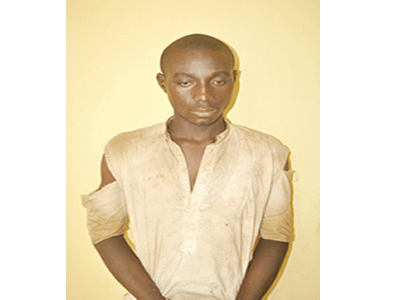
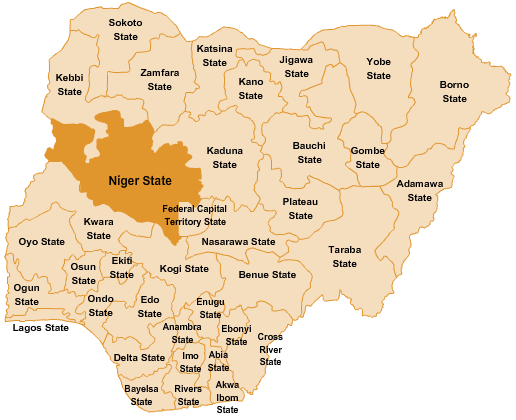
Police in Niger State have arrested a teenager for allegedly selling his six-year-old brother to a ritual killer for N20,000. The 19-year-old suspect, Aliyu Basala Yakutchi, without mincing words, confessed to have sold his kid brother, Yamusa Ibrahim Yakutchi, to ritual killer in order to raise money to pay his wife’s bride price. The incident was said to have occurred about 10 days ago.

The 19-year-old suspect, Aliyu Basala Yakutchi

Aliyu, from Nagenu village in Katcha Local Government Area, sold his brother to 30-year-old Legbo, from Afuwagi village in Mokwa Local Government Area. Police disclosed that Legbo was presently on the run. Aliyu, who claimed to be the third among his mother’s six children, said that he sold his brother on credit.

Aliyu, who apparently didn’t know or understand the gravity of his action, pleaded with the police to release him unconditionally so that he could go and tend to his farm. He said: “I decided to sell my younger brother for N20,000 on credit so that I can raise money to pay for the bride price of my 14-year-old lover.

I took my younger brother, Yamusa, to Malam Legbo for money rituals because he promised to pay me N20,000 if he succeeded in using him for money rituals. I wanted to use the money to finance my marriage to Fatimah. Our father is dead, but our mother is still alive, her name is Hajiya Yakure.

“Prior to my arrest by the police, I had not been paid by Legbo. The money might not even be enough for my marriage requirements.” Asked the whereabouts of Legbo, Aliyu said: “I think he ran away with my brother when he got the information that the police were looking for him.

I blame the devil for pushing me into hatching this evil plan against my brother. I don’t even know where Legbo has taken my brother to.” While exonerating Fatimah from the crime, Aliyu noted: “She does not know about my evil plan to sell my little brother to offset her bride price.

I’m a farmer and a bachelor. I got enrolled into an Islamic school during my childhood days but my parents couldn’t afford to send me to school. I only speak our local dialect, Nupe language; I cannot speak or understand Hausa language too.”

As at the time of filing this report, the whereabouts of Legbo and Yamusa were still unknown. The police had already paid a visit to Legbo’s village, but met a cold trail.

Source: New Telegraph, June 1, 2018

South Africa: Mutilated body found on the Onverwacht Road, outside Polokwane

‘Muti murders’ are typical for Southern Africa. ‘Muti’ is the Zulu word for ‘medicine’. These crimes are ritualistic murders. The murderers and the person(s) who requested the body parts thus obtained should be brought to justice. For how long people in southern African countries have been living in fear for these ‘muti murders’? It is estimated that the number of muti murders range from one per month to one per day in South Africa alone.

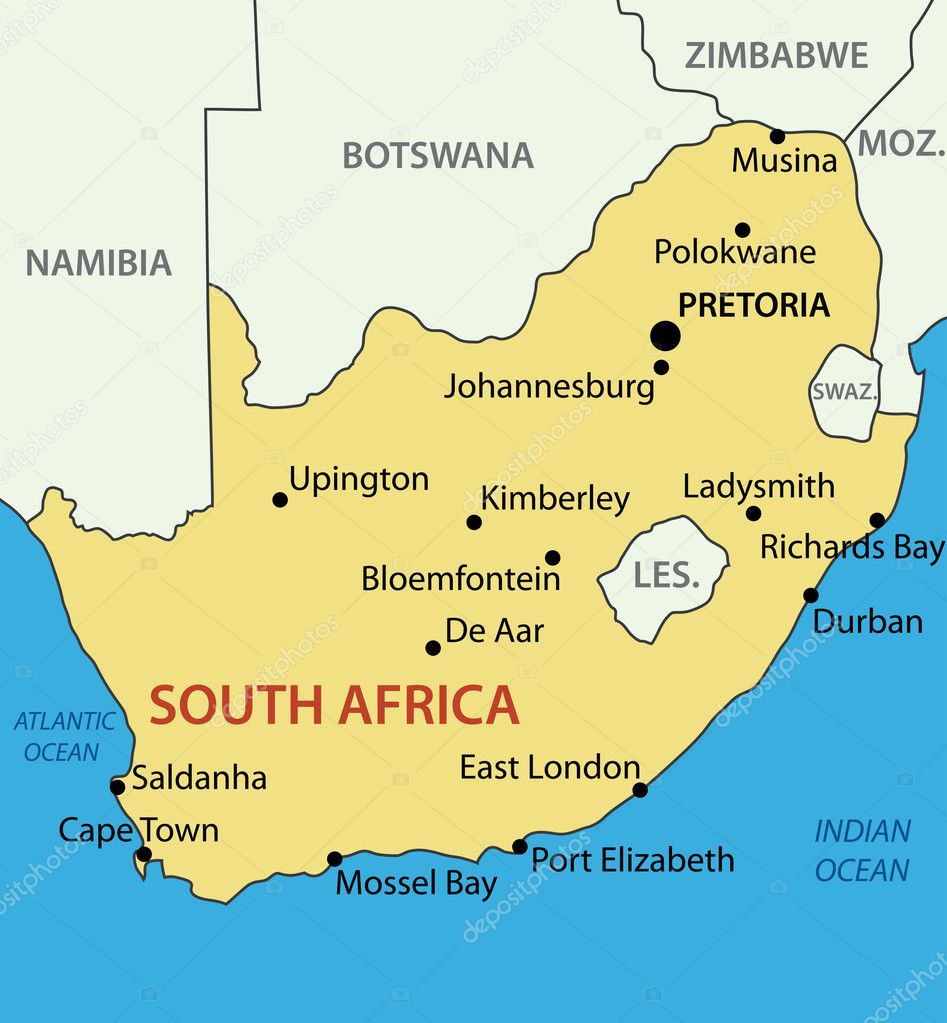
A few days ago, a case of a (suspected) ‘muti murder’ was reported in the city of Polokwane, also known by its former name Pietersburg, the capital of the Limpopo Province of South Africa. Ordinary crimes may be disguised as a ‘muti murder’ in order to mislead the police, but isn’t it already quite revealing that as soon as a mutilated body is found, one thinks of a ‘muti murder’? (webmaster FVDK)

Mutilated body found on the Onverwacht Road, outside Polokwane

Published: May 29, 2018

POLOKWANE – Police have launched a manhunt for unknown suspect(s) following the discovery of a mutilated body on Monday afternoon, 28 May.

According to police spokesperson, Lt Col Moatshe Ngoepe, police received a tip off from the community about a body that was dumped in the bushes near the Onverwaght road, a few kilometres outside Polokwane.

“Upon their arrival, the mutilated body of a man in his forties was found with some body parts missing. The motive for this killing is still unknown at this stage but ritual murder cannot be ruled out,” he said.

Anyone with information which can assist the police in arresting the suspect(s) involved in the murder and who can assist in the identification of the deceased, are to contact Captain Richard Boshomane at 079 894 5501; the crime stop number 0860010111; the crime line sms 32211 or the nearest police station.

Source: Weekend Bosveld Review, May 29, 2018

Related articles:

Published by Times Live, 30 May, 2018
Mutilated man’s body found, possible muti link 

Grisly ritual killing in Zimbabwe…. Body dumped on highway to disguise murder

When I read this newspaper report on a gruesome ritual killing case in Zimbabwe, I remembered what my Zimbabwean friend Muchaneta Nyambuya had told me in Monrovia in the late 1970s.
We were then both teaching at the University of Liberia and we were discussing the wave of ritual killings in the country. I asked him about these horrible practices. ‘Did they only happen in Liberia?’ ‘Did they also happen in other African countries?’ Mucha looked at me, paused, and when he spoke again he didn’t give me a straight answer, but instead returned my question: “Do you think it’s different in other countries?”
It was only much later that I became familiar with the phenomenon of ‘muti murders‘. ‘Muti‘ is the Zulu word for ‘medicine‘. ‘Muti murders’ are ritualistic murders and occur not only in the Republic of South Africa, but in other countries in Southern Africa as well. So, also in Zimbabwe, or Rhodesia, as Mucha’s country was then still called. Forty years after Mucha and I spoke about these age-old practices, apparently, some people in Zimbabwe still believe in the power of ‘muti’. (webmaster FVDK)

By Lex Vambe
Published May 25, 2018

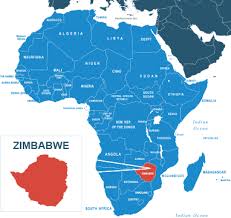
Homicide detectives in Mutare, Zimbabwe, are battling to put pieces together and solve how a man who was initially believed to have been killed in a hit-and-run accident ended up with some of his body parts missing. The mysterious incident which happened in Zimunya on Monday has left villagers with their mouths ajar with many now pointing to ritual murder.

In a bid to conceal the heinous crime, perpetrators of the ritual murder dumped the body of the deceased man in the middle of the road along the Mutare-Masvingo highway.

They wanted it to be overrun by vehicles, conceal evidence and subsequently put traffic cops on a wild goose chase. Indeed some vehicles ran over the body.

Naturally, traffic police officers attended the scene, believing it was a genuine matter that falls under their purview, but they soon raised their homicide counterparts upon realising that they have been sold a dummy.

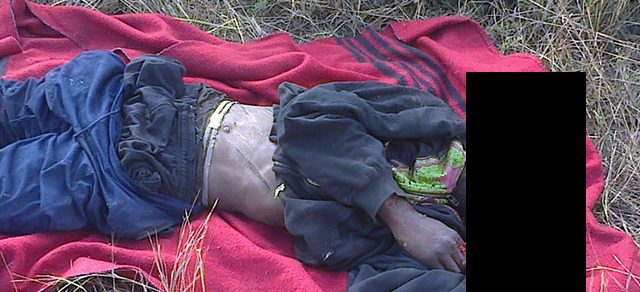
The corpse had some body parts missing around the private parts area and finger nails.

When The Weekender attended the scene, traffic police officers had moved the body of a man, who is yet to be identified to the roadside where they conducted further examinations.

The cops, who refused to talk to the Press citing protocol, quickly contacted the homicide section and advised them that they suspected murder.

From the crime scene investigations, the road traffic incident was a decoy.

Villagers quickly gathered at the scene and they told horror cases of ritual murders that have ravaged their community in recent months.

Murder victim – Zimbabwe

They said they were now living in constant fear while some were now escorting their children to school. Walking at night in the area is now considered dangerous.

An elderly villager who only identified herself as Gogo MaSibanda said the area was now a hunting ground for criminals. She said most of the murders were being perpetrated in Chigodora and bodies were being dumped there to cloud police investigations.
“I suspect that this man was killed for ritual purposes. Whoever did it went on to dump him on the road so that the body would be run over and destroy evidence. The plan has evidently failed,” she said.

Manicapost

Source: PaZimbabwe, May 25 2018

Related article treating the same crime:
Ritual killing dumped on highway to disguise murder
By Staff reporter
Bulawayo 24 News
25 May 2018, 6:50 hrs

Why ritualistic killings are on the increase in Nigeria

Ritualistic killings in Nigeria are rampant. Nigerians call these appalling crimes ‘money rituals’. I have been studying ritualistic killings in Africa since the mid-1970s and have come to the conclusion that Nigeria ranks among the Top-Five of African countries where ritual killings are most widespread. Even if we take into account that Nigeria is Africa’s most populated country, with close to 200 million people in 2017. The following article illustrates this conclusion. (webmaster FVDK)

Why killings for rituals are on the increase in Nigeria

By Evelyn Usman
Vanguard Nigeria
Date published: September 2, 2017, 8:27 AM

The spate of killings for ritual purposes is gradually assuming an alarming rate in Nigeria with little or no effort by concerned government agencies to checkmate the trend. One would have expected such pseudoscience acts to be a thing of the past going by increase in religious activities and in civilization. But murdering people to appease the deities appears to be on the increase.
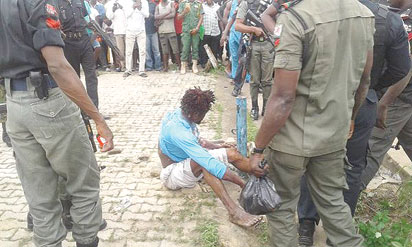
Suspected ritualist arrested – Nigeria

These dastardly acts are carried out in a 21 st century, when other countries of the world are experimenting and advancing in technology. It is also shocking to know that some acclaimed high and mighty indulge in ritual killings. For instance, some politicians and government officials have been accused by arrested suspects and herbalists who allege that they use human beings for rituals in order to sustain their affluence as well as remain in positions of power.

Investigations revealed that cases of ritual killings and disappearance of persons are usually high whenever elections are around the corner. Just last week, this barbaric act assumed a cannibalistic dimension following the arrest of a suspected kidnapper alleged to have killed one of his victims and used his intestines to prepare pepper soup. The suspect, Roland Peter,  according to the Rivers State Commissioner of Police, Zaki Ahmed, abducted his victim  from his house on August 2017, adding that the suspect was at the verge of eating pepper soup and yam porridge when the police swooped on him and some accomplices.

These vampires hide under different covers to get their victims. For some, they kidnap their victims from various points, while others who pretend to be commercial bus drivers, pick unsuspecting commuters at bus-stop only to take them to their slaughter slabs to carry out what they know how to do best.

Killings for money rituals

On August 17, 2017, the lifeless body of the four-year-old girl was found  close to a shrine at 28 Ogbe Close in Iwaya area of Lagos, with her throat slit. In her case, the toddler who strayed from her siblings’ watch, on their way from the mosque, was suspected to have been used for sacrifice on the Ogun shrine which ironically is built in the same compound with her parents. Till date perpetrators of the dastardly act are yet to be fished out.

A week earlier, precisely August 20, another lifeless body of an eight-year-old girl, Chikamso Victory, was found in the apartment of one Ifeanyi Chukwu Dike (23) at Messiah street, Eliozu area of Port Harcourt. Helpless and defenseless Victory was not only abducted by Dike, she was raped before she was killed. As at the time her body was recovered, some parts had been removed. They included her vagina, eyes, tongue and breasts which the suspect kept in a polythene bag awaiting the appropriate time to take them to his contacts. He was however, arrested by members of a local vigilante group while going to dispose of the body. But the incident assumed a laughable dimension following report by the Police that the suspect had disappeared from custody.

Elsewhere in Oyo state, on March 30, 2017, a suspected ritualist,  Tunde Jimoh, who was arrested by the Police, gave a chilling description of how he and other members of his gang abducted their victim, Akintoye Oyeyemi, took him into a deep forest and murdered him in cold blood. Thereafter, they took the body to a Muslim cleric to prepare concoction for money rituals for him. At the end of the day, the wrists, heart and legs were cut off. Luck ran out on the suspect while on his way to dump the body in the bush.

Not too long ago, reports had it that an evil forest used as ritualists’ den was uncovered in Enugu state with the recovery of fresh and decomposing human parts .

The nation’s Federal Capital Territory is not speared from the rising trend of killing for rituals. Late last year, a dismembered body of an unidentified lady was recovered at the  Lower Usuma Dam junction, along Dutse-Bwari Road. One of her breasts was cut off, while the rest of the body was cut into two from the abdomen, an indication that the killing was for ritual.

Badoo ritual killing

In Lagos state, the commercial hub of the country, different methods are devised by ritualists. One of such was the surge in the killing of residents by members of a dreaded cult group identified as Badoo Boys in Ikorodu area of Lagos. So far, over 50 persons have had their lives snuffed out of them by the perpetrators who were initially thought to be invisible, until they were decimated by the Police, under the watch of the new Commissioner of Police, Lagos State Command, Mr Edgar Imohimi, while he was the Deputy Commissioner of Police in charge of operations.

Before the raid and subsequent arrest of over 200 suspected members of the cult group by the Police with the support of the Oodua Peoples Congress, OPC local vigilante and the Neighborhood Watch Corps, Badoo Boys had been  unleashing an orgy of killings, during which they used heavy stones to crush the skulls of their victims. Their modus operandi included storming victims’ residences while they are asleep. It is suspected that they usually hypnotize their victims, as none of them had ever been conscious of their presence. They would, thereafter, smash heads of their victims with a grinding stone and after which they use a handkerchief to clean the blood and brain before leaving the scene.

During interrogation, one of the suspects confirmed that each handkerchief stained with blood was sold for N500,000 . He further revealed that they were mere errand boys for rich politicians within and outside Lagos state. But in their case , the blood and semen stained handkerchief were used to prepare spiritual defence for well to do Nigerians.

Mad people in disguise

The latest method devised is the feigning of madness by these criminal elements. Recently in Lagos, some persons who disguised as lunatics were discovered to be using tunnels as dens for their activities.
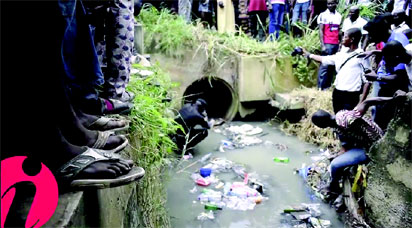
Ritual den – Nigeria

Two instances of note were along Lagos-Abeokuta road and Ile Zik, along Agege Motor road. The latest was an uncovered ritualits’ den Wednesday , at Challege bus-stop, Mushin, where some suspected members who posed as lunatics were found with sophisticated phones, four ATM cards and over 100 syringes with blood stains. One of the suspects was lynched by a mob while two others were rescued by policemen from Area ‘D’ command, Mushin.

Not too long  Nigerians received with shock, news of a den in Soka village, Oluyole Local Government area of Oyo state, where about 20 corpses, majority of which were earlier declared missing by their relatives, were found while 18 victims were rescued. From all indications, it was obvious that the den had been existing for long before it was uncovered, following a heap of victims’ clothes. One of the rescued victims was reported to have said he was kidnapped in Ogun while attending an interview.

The most celebrated ritual killing appeared to be the notorious Otokoto saga in Owerri, Imo State where a businessman belonging to a cult was alleged to have used his apprentice for ritual. The boy’s corpse was later exhumed at the premises of Otokoto Hotel. It exposed many other bizarre acts in hotels.

Religious leaders also involved

One would have expected such primitive acts to be going down, going by the increasing religious groups in the country. Regrettably,  some leaders of religious have been caught in the act. But investigations have shown that many evil men only use religion as a cover up. They are never true religious leaders.

One of the ready cases that comes to mind was that of the arrest of a Pastor who allegedly killed a seven-year-old boy and buried his head where the church’s alter was mounted. This action was to ensure the influx of members into the church located at  Odokekere/ Odogunyan in Ikorodu area of Lagos state.

Elsewhere in Edo state and Ogun states, some pastors were also arrested over similar acts. Few months ago, an unidentified woman who left her abode in Sango Otta area of Ogun in search of spiritual cleansing at the place of a Muslim cleric popularly called Alfa, in Badagry area of Lagos, ended up being victim of ritual killing. A 61-year-old landlord, Toafeek Hassan, who confessed to have slaughtered the woman, was found with her fresh human head and other body parts which were to be used to prepare concoction by the  alfa.

Investigation shows that female parts are more in demand than their male counterparts.  This is because of  what was described as the potency of some parts like the breasts and lower private parts in money rituals and other purposes by herbalists and occult groups.

Ritual used to elongate life 

One of the herbalists who spoke with Vanguard at the State Criminal Investigation and Intelligence Department, SCIID, Oseni Bello, admitted to be preparing concoction with human body parts but said he was not involved in the killings. Oseni disclosed that some of the rituals were done to elongate lives. He added that the heart was used to prepare concoction for boldness and fear. He stated further that virgins and babies on the other hand, were used by some politicians and government officials for ritual purposes as their blood is said to be used to elongate the user’s life span as well as fortify them against spiritual attacks. These are some of the reasons, he said, killings for rituals are on the increase.

A particular case in mind was that of a South-West politician alleged to have been caught by his driver with a dissected day-old baby whose blood he was drinking. The incident as reported two years ago, occurred inside a bush, while the driver was taking his boss (names withheld) to a function. Half way into the journey, the politician was said to have ordered his driver to pull over. He thereafter, alighted and headed for a bush with a promise to be back. Having waited without any sight of his boss, the ignorant and curious driver reportedly went in search for him, only to meet him stark naked and pouring the blood of a dissected baby into his mouth. Barely two weeks later, the driver reportedly   died under mysterious circumstance.

The event that occurred before his death was related by a Pastor friend whom the deceased   confided in before his demise. The lust for money and power drives these people into ritual killings.

While some kill to achieve this unfathomable dream, others resort to digging graves and removing needed human parts for ritual purpose. Saturday Vanguard scooped that most guards at cemeteries connive with agents to sell human parts. It was learnt that  if a fresh human head is needed, an agent will contact some cemetery workers ahead. In this case, the cemetery official will be on the look out for fresh dead bodies, preferably those of Muslims who are usually buried within 24 hours after death. Immediately the body is interred, they exhume the body at night, cut off the needed parts and place the body back in the grave.

Human parts for sale

Those who patronize cemetery officials are usually herbalists, herbal traders and even prominent Nigerians who usually use middle men. Surprisingly, human parts are sold in some markets in Nigeria. We gathered that a fresh human head could go for N60,000 and above, while a skull is sold for N20,000. Fresh legs are sold for N30,000 each while a decomposed leg is sold for N20,000. A fresh finger is sold for N5,000 each while the decomposed is sold for 3,000. Fresh intestines are sold for N20,000 while dry ones are sold for N5000. Pieces of fresh bones are sold for N2,000 and above.

Public react

Reacting to the upsurge, the president, Association of Industrial Security and Safety Operators of Nigeria, AISSON Dr. Ona. Ekhomu called on the Nigeria Police to set up Special Ritual Murder Squads in various State Commands to focus on the investigation, detection, arrest and prosecution of ritual killers.

He said that the high incidence of serial ritual killings demands an urgent action at the level of the police high command.

According to the first chartered security professional in West Africa, citizens were rapidly losing faith in the ability of the police agency to detect and punish ritual killers. This, he said was responsible for the increase in lynching of suspects as members of the public resort to jungle justice to get redress for the heinous murders.

Said he: “The conscience of Nigerians should be troubled by reports of recent ritual murders including that of one-year-old Success lme in Calabar whose heart was ripped out from her small body for ritual purposes and was discovered in a Church along with other items for occult rituals.
There is also the case of Pastor Samuel Okpara in Ahoada East LGA of Imo State who was kidnapped, killed and cannibalized by ritualists. The pastor was reportedly beheaded and his liver and intestines used for pepper soup and plantain porridge. What a horrific occurrence?”

He also decried the excesses of the Baddoo murder cult in Ikorodu Lagos State, saying it was a direct challenge to the Police.

Economic recession in the land is not a license to commit ritual murder.   Impunity encourages ritualists to commit murders because they believe they will not be apprehended or punished.

I advise Nigerians against late night outings because if a vehicular breaks down one could fall victim of kidnap by ritualists. Commuters should always write down the identification markings of public conveyance vehicles which they enter and make phone calls to loved ones to pass on the information. Because ritual murderers always wish to be unidentified. They want to kill people, but don’t wish to be apprehended. Once information about them has been passed on to someone else, it becomes difficult for them to do evil”.

Nigerians should also assess public transport vehicles before boarding in order not to board the “wrong bus. Likewise, women are advised to carry whistles on them in order to raise an alarm if there is an attempt to abduct them”.

On his part, the national Coordinator,  Network on Police Reform in Nigeria , NOPRIN  Mr Okechukwu Nwanguma, attributted the rise in  cases of killing for ritual   to collapse in moral values “

It is also caused by ignorance and superstition, the inordinate quest and pursuit of quick wealth and lack of effective punishment system. In a way, poverty and unemployment may also be a risk factor. If Nigerians have equal opportunities to earn income in legitimate ways, there will definitely be reduction in such abominable crimes like humans killing fellow humans for ritual.”

Also baring his opinion on the matter, Treasurer of the Action Democratic Party, Cross River State Chapter, Offiong Okon, in a recent interview, advised that:  “Before a church is established, government should carry out investigation before license is granted because many of the church leaders and founders are ritualists, acting in the capacity of being Pastors.”

“Government should investigate the Pastors and checkmate their activities because what they do under the cover of being a religious leader.”

Source: The Vanguard Nigeria, dated September 2, 2017

Related articles:

How “Badoo killings” sent shock waves across Lagos State in 2017
Vanguard Nigeria, dated January 2, 2017

Assembly to legislate against ritual killings in Kwara
Vanguard Nigeria, dated December 6, 2017
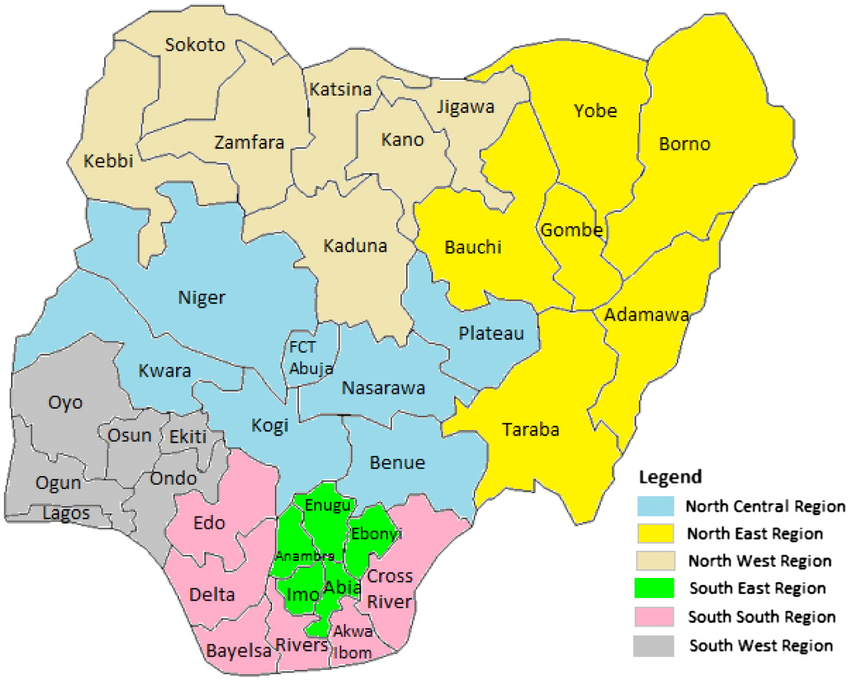
Map of Nigeria showing the 36 states

Albino girl abducted and killed in Mali

Reports on murdered albinos and ritual killings in Mali are rare. When living in Mali in the 1980s I was told by Malians about rumors related to disappeared albinos during the presidency of Modibo Keita (1960 – 1968). True or not true? We may never know. However, the BBC report based on an article of Malian Studio Tamani reproduced below shows that still in 2018 albinos do not live without fear in Mali, notably when elections are near. (webmaster FVDK)

Published: May 15, 2018
BBC News, Africa

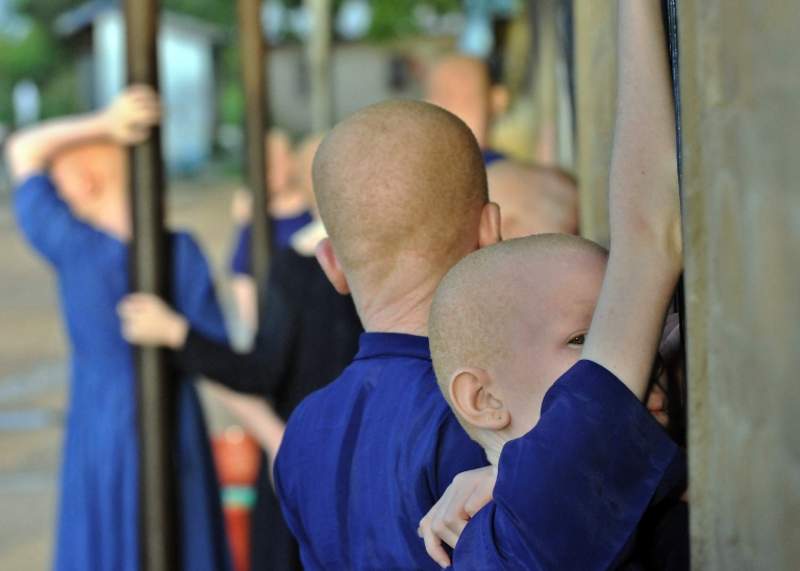
Albino children in parts of Africa are targeted by groups who believe their body parts bring luck (stock image)

Angry villagers have set fire to police headquarters after a five-year-old girl with albinism was abducted and killed by armed men in Mali.

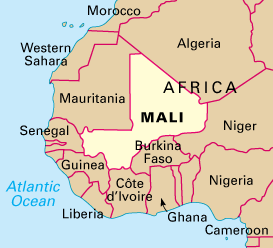
Djeneba Diarra, who lived in a village in Fana, 125km (78 miles) north of the capital Bamako, was taken from the courtyard where she was sleeping with her mother and sister in the early hours of Sunday morning.

The little girl’s headless body was later found beside the mosque.

“We demand justice. Her head was taken. This is a ritual crime,” activist Mamadou Sissoko told news agency AFP after going to the scene.

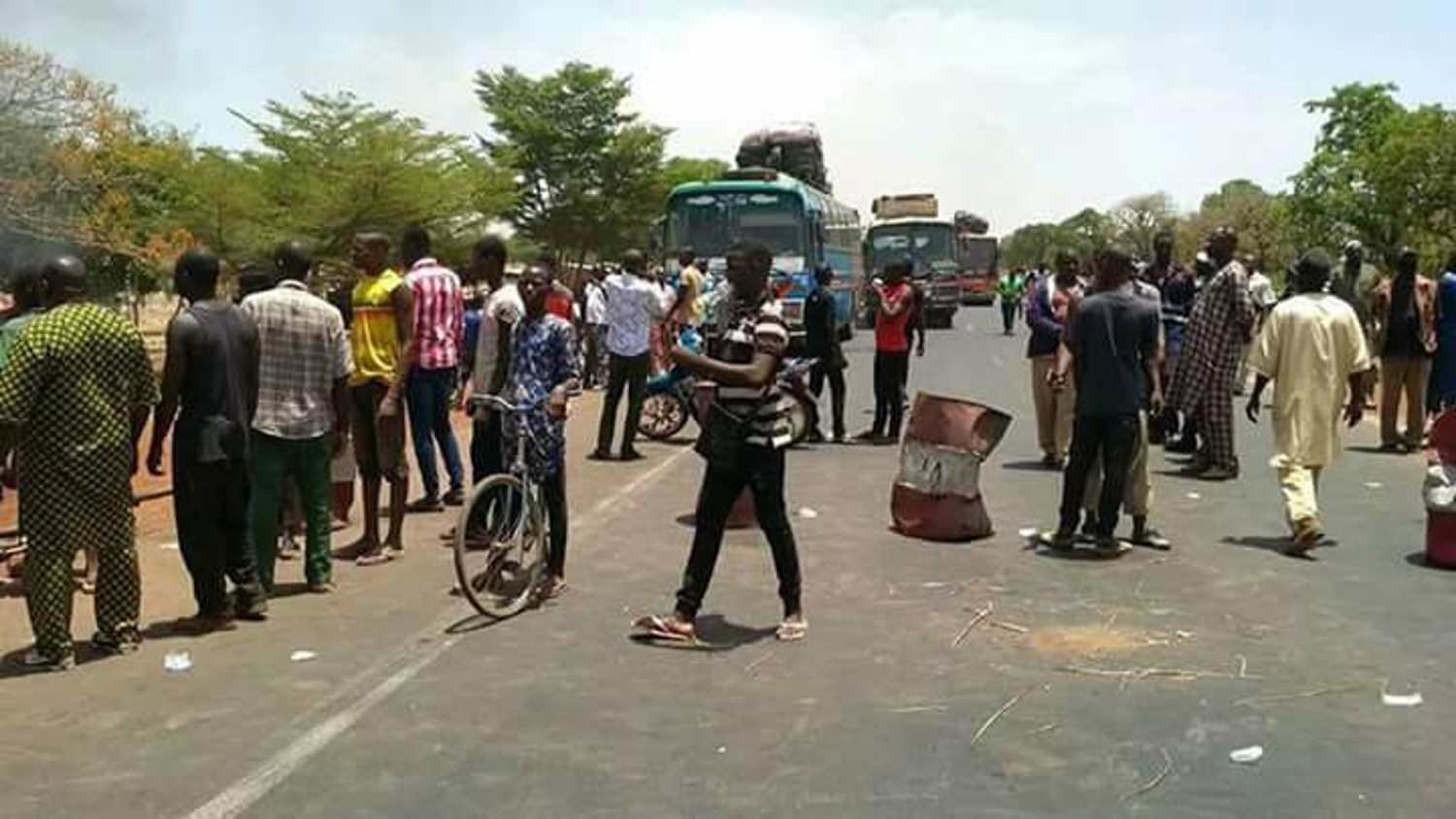
Witnesses said angry villagers then partially burned down the paramilitary police headquarters. Shops remained closed for most of Monday as protests continued, according to Studio Tamani [in French]. See below (article in French included).

There are concerns the killing may be linked to Mali’s presidential election, which is taking place at the end of July.

There is a belief among some groups in parts of Africa that potions made from the body parts of people with albinism can bring good luck and wealth.

Mr Sissoko said: “Every time there are elections, we become prey for people who want to make ritual sacrifices. This is not the first time this has happened in Fana.

“The state needs to take up its responsibilities.”

Source:  BBC News Africa, May 15, 2018 (16:04)
Albino girl, five, abducted and killed in Mali

Related article: Protest in Fana: Calm after “the storm”
Manifestations à Fana : le calme après “la tempête”

lundi 14 mai 2018 16:24

Manifestations à Fana (Mali) : le calme après “la tempête” – Image d’illustration

Le calme est revenu à Fana, localité située une centaine de kilomètres de Bamako après la violente manifestation de ce dimanche 13 mai. Le mouvement de colère faisait suite à l’assassinat, la veille, d’une fille atteinte d’albinisme. Elle a été retrouvée égorgée. Les manifestants ont incendié la brigade de gendarmerie et plusieurs bars, avant de poser des barricades sur les principales voies de la ville.

Un important dispositif de sécurité était visible ce lundi 14 mai matin à Fana. Les magasins sont restés fermés pour la plupart, malgré le calme précaire qui règne dans la ville. Tout a commencé samedi 12 mai dernier lorsqu’un homme s’est introduit nuitamment dans la famille de la petite Ramata Diarra pour l’enlever avant de disparaître dans la nature. Quelques heures plus tard, le corps de la fillette décapitée a été retrouvé.

L’acte a provoqué la colère des habitants de Fana. Des dizaines de femmes et des jeunes sont sortis pour manifester, mettant à sac la gendarmerie et d’autres bâtiments administratifs. Les manifestants ont également bloqué toutes les voies principales dans la ville. Cet assassinat est le deuxième en moins d’un mois à Fana. Une femme et son enfant ont été également assassinés il y a quelques semaines dans cette même localité. L’Association pour la promotion et l’insertion sociale de l’enfant atteint d’albinisme « SOS ALBINOS » a condamné l’acte et décide de porter plainte contre X auprès du Procureur de Koulikoro. L’association appelle les autorités à retrouver les auteurs de ce crime et les traduire devant les tribunaux.

Des enquêtes ont été ouvertes pour retrouver les auteurs de ce crime. Selon le maire de la localité, des suspects ont été identifiés et les investigations sont en cours. Toutefois la famille de la victime appelle les autorités régionales à plus de protection et réclame que justice soit faite.

Oumar Sidi Coulibaly proche de la victime :
(lien ne marche pas, cliquez sur l’original ‘Source’ s.v.p.)

L’association malienne pour la protection des albinos décide de porter plainte contre les auteurs avec l’accord de la famille de la victime. Selon elle, à l’approche des élections, “les albinos sont ciblés pour des sacrifices”. Les responsables de l’association exigent que les enquêtes soient accélérées afin de punir les coupables.

Mahine Koita dit Albihi Secrétaire général de l’Association pour la protection des albinos :
(lien ne marche pas, cliquez sur l’original ‘Source’ s.v.p.)

Source : Studio Tamani : Manifestations à Fana : le calme après “la tempête” (publié le 14 mai 2018)

Swaziland: Campaign to educate on albinism

There are also positive and encouraging newspaper reports and blogs, like e.g. Richard Rooney’s post on ‘Swazi Media Commentary, Information and commentary in support of human rights in Swaziland’. On March 30, 2018 Richard Rooney published the following report on ‘A campaign to educate on albinism in Swaziland’. Also in other African countries, people rise up against ritualistic killings and related human rights violations, e.g. in Gabon.

‘Freedom of fear is a human right;  rule of law an obligation of the state’. The answer to ritualistic killings in the short term is the rule of law – but the only real answer to these heinous crimes is EDUCATION.
(webmaster FVDK)

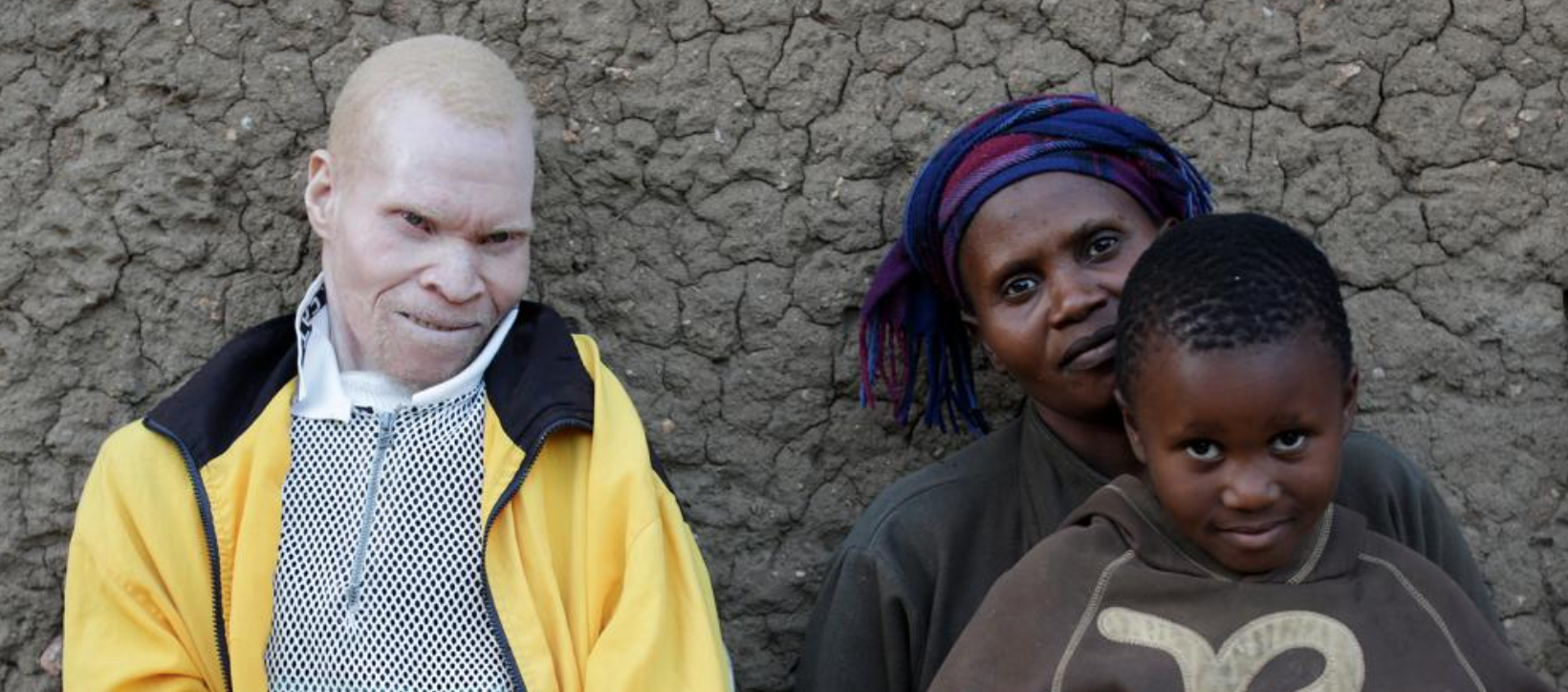
Like many people living with albinism in Swaziland, Albert fears for his life.

CAMPAIGN TO EDUCATE ON ALBINISM

BY RICHARD ROONEY
SWAZI MEDIA COMMENTARY – INFORMATION AND COMMENTARY ON HUMAN RIGHTS IN SWAZILAND
Published: March 30, 2018

A campaign has started in Swaziland called ‘Don’t kill us, we are human beings too’ to raise awareness about people with albinism.

People in Swaziland with the skin condition live in fear of their lives as some traditional healers, witchdoctors and others use their body parts in spells to bring good luck.

The Stukie Motsa Foundation is now using social media to dispel the false belief that people with albinism cleanse back luck and bring fortune to people.

There have been concerns in Swaziland for years that people with albinism have been targeted and murdered. Witchdoctors use the body parts to make spells that they claim bring people good luck.  Sport teams have also been known to use spells to bring them good fortune during matches. Witchdoctors’ services are especially sought after by candidates contesting parliamentary and local elections. An election is due in Swaziland later in 2018.

In January 2017, the Director of Public Prosecution’s office in Swaziland told witchdoctors in the kingdom to stop murdering people for body parts. The witchdoctors, also known as tinyanga, were advised to go to the Ministry of Health for body parts, such as bones.

During the national elections in Swaziland in 2013, people with albinism lived in fear that their body parts would be harvested by candidates seeking good luck.

Independent Newspapers in South Africa reported at the time, ‘In the past [people with albinism], who lack the skin pigment melanin, as well as epileptics have been specifically targeted, prompting the police to set up registries.

‘In 2010, the killing and mutilation of [people with albinism], including in one instance the decapitation of two children in Nhlangano, prompted panic.’

In August 2013, Independent Newspapers quoted an academic at the University of Swaziland, who did not want to be named, saying, ‘Ritual killings to achieve elected office are a natural outgrowth of a government based not on rationality or democratic principles but on superstitious beliefs.

‘The Swazi king claims power through an annual Incwala festival where a bull is brutally sacrificed and mysterious rituals occur, and this sets the tone. No one knows how office-holders are appointed in Swaziland. It’s all done in secret, without recourse to merit or any rhyme or reason, so this fuels irrational beliefs.

‘Ritual murder has long been part of Swazi life.’

At present, a Swazi traditional healer is in police custody in South Africa for allegedly killing two children from Vosman near Witbank, one of them living with albinism. The South African Deputy Minister for Social Development, Hendrietta Bogopane-Zulu said the killing of people living with albinism by people believed to be Swazis has become a national crisis in her home country.

The Swazi Observer reported on Tuesday (27 March 2018), ‘The deputy minister said she wanted to know what Swaziland was doing to stop the killing of people living with albinism. She also stated that some of these people were quitting their jobs and schools in fear of being kidnapped.’

Albinism affects the production of melanin, the pigment that colours skin, hair and eyes. It’s a lifelong condition, but it doesn’t get worse over time. People with albinism have a reduced amount of melanin, or no melanin at all. This can affect their colouring and their eyesight. Albinism is caused by faulty genes that a child inherits from their parents.

See also :
PEOPLE WITH ALBINISM WANT PROTECTION

Source: A campaign to educate on albinism, March 30, 2018

More on Swazi Media Commentary (source: Pambazuka News):
Swazi Media Commentary: Telling the truth about Swaziland
by Peter Kenworthy | February 2, 2011

Related article on albinism in Swaziland: Why Albert is living in fear

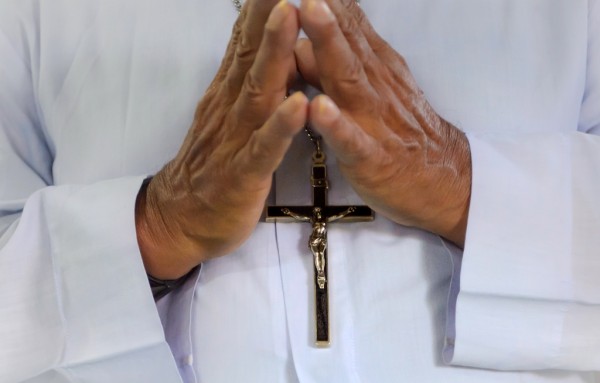
Catholic priest among 11 charged for killing man with albinism in Malawi

web_photo_priest_02052018

Published: May 4, 2018
By: BRINKWIRE

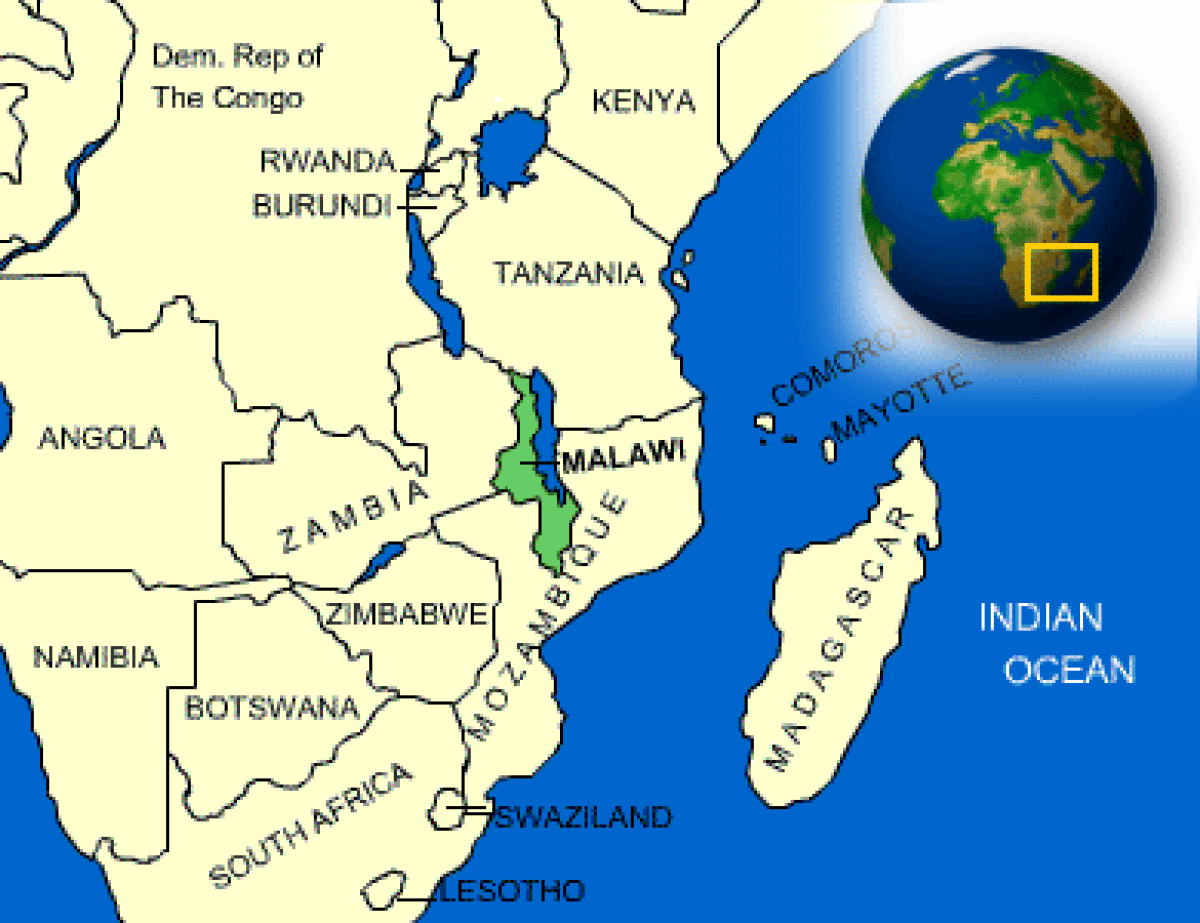
BLANTYRE, Malawi – A Catholic priest, police officer, and a medical officer are among 11 people facing charges for the murder of a man living with albinism in Malawi, police spokesman James Kadadzera said.

The latest murder of a man with albinism in Malawi – the 22nd in four years – has sparked calls for their killers to be executed to deter a wave of attacks in the poor southern African nation.

Police said the dismembered corpse of 22-year-old McDonald Masambuka was found buried in southern Malawi several weeks after he went missing in March.
Information minister Nicholas Dausi said international rights groups and donors were preventing the government from using the death penalty to deter such crimes in Malawi, where people with albinism are hunted down for their body parts.

“They are stopping us from enforcing capital punishment,” Dausi was quoted by local media as saying at Masambuka’s funeral last month. “Yet in their countries they execute murderers. Is this fair?”

Malawi is one of the most dangerous countries in the world for people with albinism – a lack of pigmentation in the skin, hair and eyes – who are targeted so that their body parts can be used in magical potions and other ritual practices.
The United Nations’ top expert on albinism has said people with the condition risk “extinction” in Malawi due to relentless attacks fuelled by superstitions.

President Peter Mutharika has since said Malawi should have an “honest debate” about whether to apply the death sentence to those found guilty of murdering people with albinism.

Malawi suspended capital punishment more than 20 years ago as it embraced democratic reforms. Although the death penalty still exists in law, it has been declared unconstitutional.

Murders

But rights groups said the focus on the death penalty was misplaced and the government should step up its efforts to investigate unsolved murders and protect people with albinism.

“We never have any experience where the death penalty has been successful as a deterrent,” said Overstone Kondowe, head of the Association of People with Albinism in Malawi (APAM), which helps about 3,400 people with the condition.

It has recorded 146 attacks in Malawi since 2014. About one in 20,000 people worldwide have the congenital disorder, with higher rates in sub-Saharan Africa.

Only five of 22 murders reported since 2014 are in court, said Kondowe, with 17 unsolved. (italics by the webmaster FVDK)“We don’t have even have a suspect and nobody has been prosecuted,” he said of the 17 cases, adding that the police should reopen them now that they have better equipment.

“We didn’t have facilities of DNA testing to help with the investigation, so we’re seeking that because the current capacity can help to shed light on who was responsible.”

Rights groups called on the government to establish a commission of inquiry to find out who is behind the attacks, amid claims that they are organised by criminal gangs.

“There is a green light with the recent case where we have seen high profile people involved,” said Timothy Mtambo, who heads the Centre for Human Rights and Rehabilitation, a charity.“We believe a good investigation can open up our windows as to who is behind the trade … We would be able to say we have unveiled the market and done (away) with the roots.”

Mtambo also echoed a UN’s call on the government to implement its own plan to strengthen protection measures, including buying sturdy locks for poor families at risk of attack, and for public education to eradicate superstitions.

“It should invest in preventative measures, not ‘curing’ the problem,” he said. “It needs to understand where we have people with albinism, which can help in drawing security plans. Currently, there is no proper programme.”

Source: Catholic priest among 11 charged for killing man with albinism in Malawi

mi-area