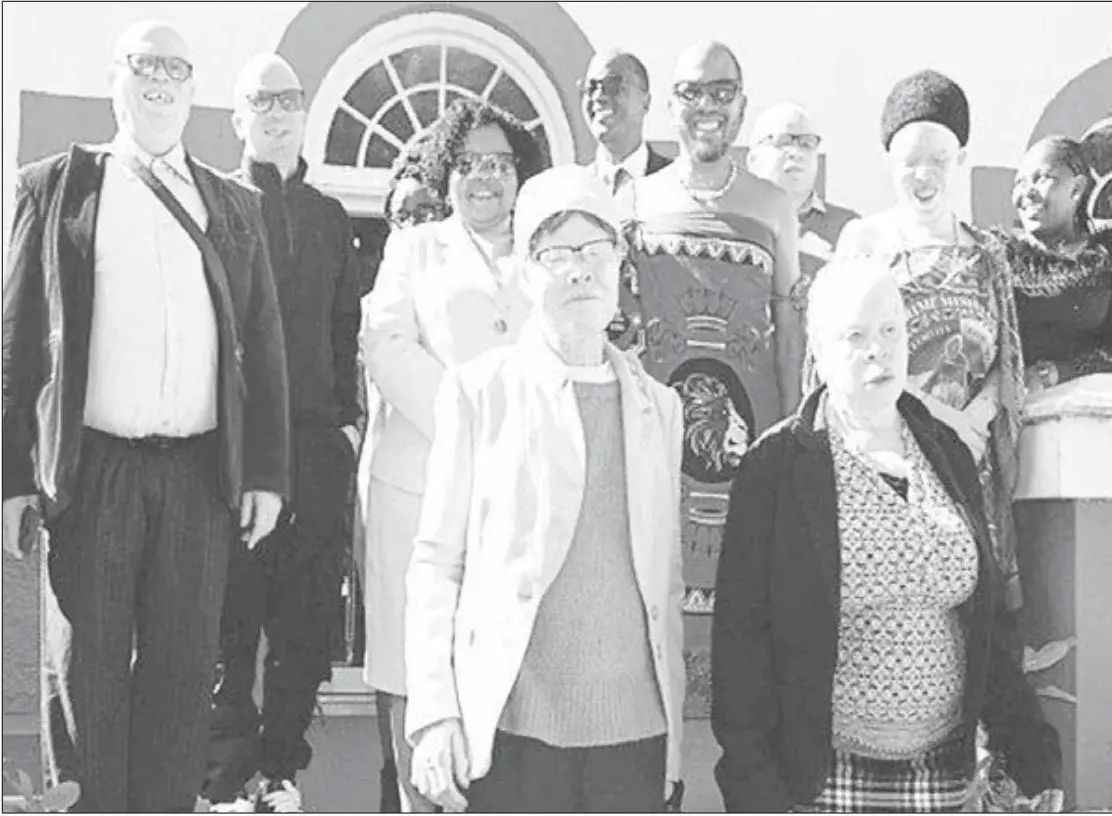
The life of Nelisiwe Shiba, a woman born with albinism, was never the same after dodging the night she was meant to ‘disappear’ for good, as per the age-old legend that people like her do not die — they simply vanish.
They can even leave the house in the middle of the night without informing anyone, as the legend goes, and take on a mysterious journey to a forest or mountain – never to be traced again.
However, just hours before the evening when such was scheduled to happen to Shiba (35), she was given a timely tip-off by a community resident supposedly sent by a member of the very group that had plotted to make her vanish forever. The member seemingly had a change of heart.
This took place in one of the small rural communities of Northern Hhohho, whose name she preferred not to disclose. She was 25 at the time and had a small child.
Since then, Shiba has been living with the kind of fear that grips people with albinism nowadays — that when the sun sets, they could fall victim to ritual killing disguised as mysterious disappearances. Albinism is a genetic condition in which a person is born with little or no melanin pigment, resulting in lighter skin, hair, and eyes and often causing vision problems.
Harmful myths falsely claim that people with albinism possess magical powers or bring wealth, a misconception that has contributed to discrimination, attacks, and ritual killings.
Elaborating on her account in the wake of International Albinism Awareness Day, commemorated on June 13 to promote the rights, dignity and inclusion of persons with albinism worldwide, Shiba mentioned that she had previously been oblivious to grave dangers faced by people like her.
“After I graduated from Limkokwing University, I relocated to Northern Hhohho because I got a piece-job as a shopkeeper in a grocery shop owned by a relative. The community there was very welcoming and I never felt unsafe, even at night,” she said.
The only challenge she knew and had experienced as a person with albinism was discrimination. Being vulnerable to murder for ritual purposes was a myth to her until the day she got a grave warning that saved her life.
Recounting the events of that day, she stated:
“The community member came to the shop where I worked.
He said he wanted my father’s contact number. I was sceptical about giving it to him, but he insisted with some urgency.”
She yielded after the man bluntly told her that she was not safe and must ensure she did not close the shop late that day.
“He called my father and I overheard the conversation. He informed him about a plot to take my life and that it was a done deal. I had been sold, that night would be the one I disappeared,” she stated.
Shiba also overheard that a certain witchdoctor or sorcerer was part of the group and had approved her as a suitable target. He would be there to oversee the ritual process of the killing. The fact that she had a small child, though without albinism, was viewed as a bonus. Shiba was going to ‘disappear’ with her child.
“When he finished the phone conversation, before departing, he gave me another stern warning not to tell anyone what I had heard.
Shortly afterwards, I received a call from my father, who told me to pack up and find someone to carry on with the shop the following day because he would be fetching me before evening,” she explained.
Shiba remembers being emotionally traumatised by the visit and feeling weak at the knees with fear due to sudden realisation she was never completely safe due to her albinism.
Early that evening, her parents arrived in a car and took her and her child away without giving any hint that it was, in fact, a desperate escape.
She recalled that the community member who warned her father hinted during the phone call that the homestead involved in the deadly plot was nearby.
These were people she interacted with almost daily and would never have suspected to harbour such intentions. Looking back, she says the incident became a turning point that fuelled her distrust of people — something that persists to this day. It takes time for her to let down her guard.
“I don’t hitchhike or accept lifts unless it is from someone very close and trusted. I rely on public transport and would rather go back home than accept a lift from strangers,” she added.
Since that day, she has also become sensitive to noises at night. The slightest sound in or outside the house wakes her up, and she listens carefully to determine its nature.
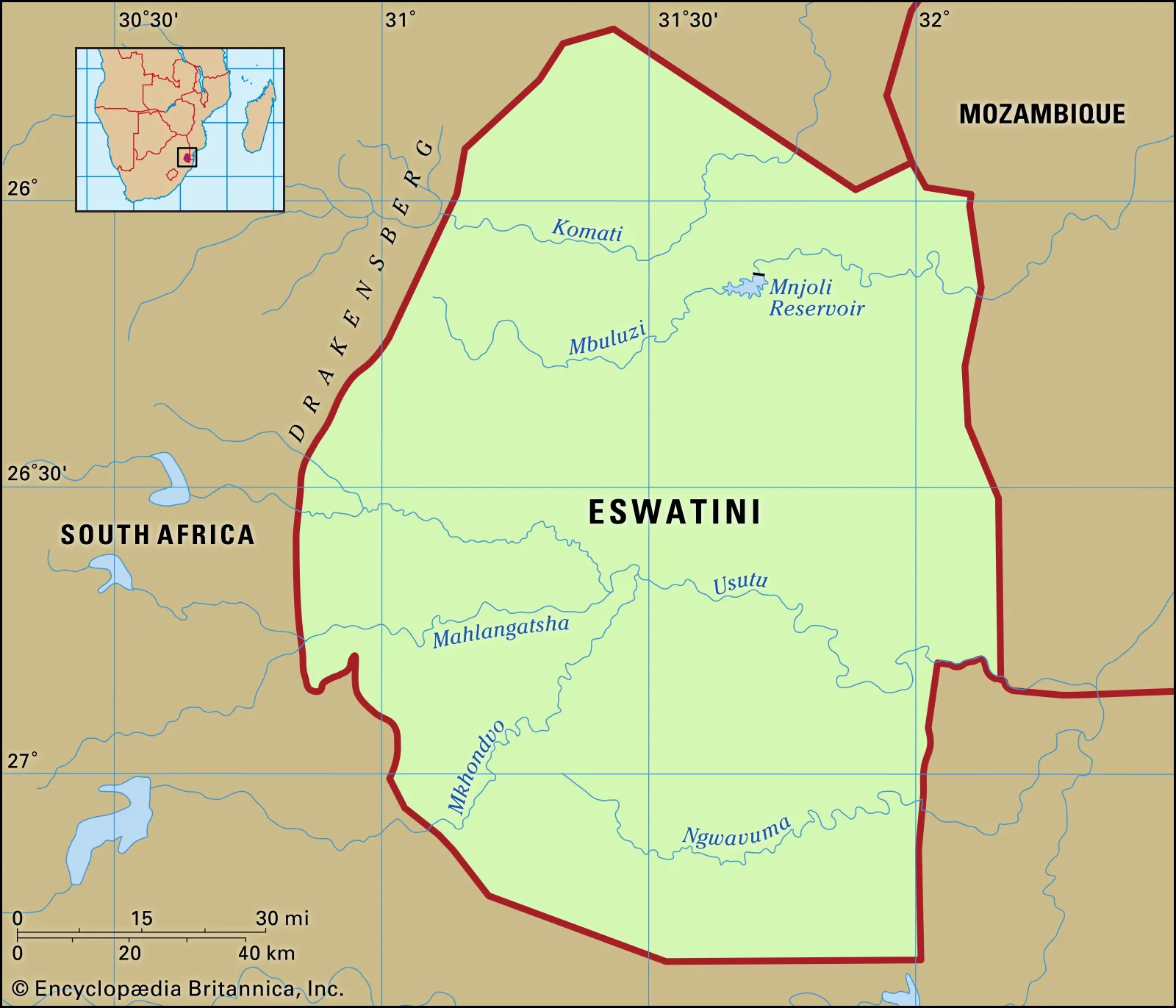
Over the years, Shiba channelled that fear into advocacy by joining the Swaziland Association of Persons with Albinism (SAPA), where she has since risen to the position of president.
“I’ve also become a motivator for persons with albinism and try to fight for our rights. Apart from threats to our lives, we suffer social discrimination a lot, as many people have wrong information about albinism,” she said.
“There’s still a long way to go in educating the nation and debunking all the myths.”
The suspect stated that he acted possessed by a compulsive thought. “I always feel like cutting off a human head whenever the spirit arrives,” he said. However, authorities have confirmed that in a recent case the suspect allegedly mutilated the victim’s body, removing specific parts to be used for ritualistic purposes.
Hence it is not clear whether this murder qualifies as a typical ritual murder that forms the focus of the present site.
This site focuses on murders committed to perform ritual acts with the sole purpose of benefiting from them, out of superstition. Mentally unstable murderers therefore do not belong to this category of ritual murderers.
To be continued. (webmaster FVDK)
‘I feel compelled to behead people when possessed’: ritual killer confesses.
Published: March 14, 2026 By: MyOnline – Ghana
Cudjoe Hlolary, the fetish priest accused of the gruesome murder of a 41-year-old woman, Joyce Akua Amponmaa, in the Central Region, has offered a chilling justification for his actions, claiming that he experiences an uncontrollable, violent urge to decapitate human beings whenever he is under a spiritual trance.
In a disturbing confession following his arrest, Hlolary detailed a pattern of erratic behaviour linked to what he described as a malevolent spirit.
He admitted that the attack on the deceased, whom he acknowledged was a “good woman”, was not an isolated incident but rather the culmination of urges he had been struggling to suppress.
During interrogation, the suspect revealed that his internal conflict began long before the murder of Joyce Amponmaa. He alleged that he had previously been possessed by the same spirit and had come perilously close to killing his own brother.
“I always feel like cutting off a human head whenever the spirit arrives,” Hlolary stated, adding that he had previously managed to restrain himself but failed to do so during the encounter with the deceased.
The confession has deepened the sense of shock within the Awutu Bentum community in the Central Region, with many questioning how a man who openly admitted to harbouring homicidal impulses was permitted to operate as a healer for vulnerable members of the public.
The investigation into the case has revealed disturbing details regarding the treatment of the victim’s remains. Authorities confirm that the suspect allegedly mutilated the victim’s body, removing specific parts to be used for ritualistic purposes.
Police are currently pursuing leads to verify the suspect’s claims that these remains were transported to his hometown in the Volta Region. The investigation team is working in coordination with traditional authorities in the region to locate the alleged burial site.
The family of the deceased remains devastated by the suspect’s attempt to use “spiritual possession” as a defense.
Speaking to the media, relatives of the late Joyce Amponmaa dismissed the priest’s narrative as a calculated tactic to evade accountability for a premeditated crime.
Reportedly, the suspect, a spiritualist who allegedly inherited his father’s deities, confessed the ritual murder. The victim, his girlfriend, was found with body parts mutilated and missing. A source, present at the site where the victim’s body was discovered, reported that her head, hands, legs, private part had all been cut off (source: Eyewitness details how spiritualist allegedly killed girlfriend at Bentum, GhanaWeb, dated March 12, 2026).
This ritual murder case follows a previous one, which occurred two weeks ago. A newborn baby was found dead in a nearby community with body parts missing.
As a result, fear has struck the region. When will the perpetrators strike again? Who will be the next victim? Who are the perpetrators? (webmaster FVDK)
Spiritualist arrested over suspected murder of woman in Awutu Senya District
Published: March 12, 2026 By: myjoyonline.com
Police in the Central Region have arrested a man in his early twenties, identified as Horlali Alatusa, in connection with the suspected killing of a woman believed to be his girlfriend at Bentum in the Awutu Senya District.
The suspect was apprehended after a farmer lodged a complaint about a strong and unpleasant odour coming from a section of his farmland, raising suspicions among residents.
According to community members, some residents escorted the suspect to the farm on Tuesday, March 10, where they attempted to locate the body by digging a trench believed to have been earlier created by him. However, the initial search did not produce any results.
The situation was later reported to the police after residents noticed bloodstains around the area that had been dug, further deepening suspicions of foul play.
Police investigations subsequently led to the arrest of the suspect, who allegedly confessed during interrogation and directed officers to another location where the body of the deceased had been concealed.
The remains of the unidentified woman were discovered with several parts of the body mutilated.
Some residents suspect the killing may be linked to ritual practices, noting that the suspect is known in the community as a spiritualist who reportedly inherited his father’s deities.
Eyewitnesses who spoke to the media said the deceased had last been seen in the company of the suspect in the community on Sunday before she suddenly went missing.
Angered by the discovery of the body, some residents vandalised and demolished the suspect’s residence.
Police have since conveyed the remains for further examination while the suspect remains in custody to assist with ongoing investigations.
Fear in Awutu Bentum: Spiritualist Arrested Over Suspected Ritual Killing – YouTube
Residents of Awutu Bentum in the Central Region are gripped by fear following a series of suspected ritual killings in the community.
Police have arrested a spiritualist, Horlali Alatusa, in connection with the suspected murder of an unidentified woman believed to be his girlfriend. Residents became suspicious after the woman suddenly went missing and a foul stench was noticed from the suspect’s farm. After interrogation, the suspect reportedly led police to a spot where the decomposing remains of the victim were discovered.
The disturbing incident comes just two weeks after a newborn baby was found dead in a nearby community with body parts missing, deepening concerns about safety in the area.
Screenshot – to access the YouTube video, please click here
Traditional healers Mandla Lekhuleni popularly known as Prof Lekhuleni, Rei Magoxa Mozambique and Sefadi Mohami are to be commended for their outspoken condemnation of ritualistic violence, muti murders and sexual abuse of women and children. Likewise, police sergeant Nomsa Katekani Macevele did a great job in bringing to justice an unscrupulous father who violated and raped his own daughter.
It is hearthening to realize that we should not tar all sangomas with the same brush. It is never correct to generalize!
Notwithstanding the foregoing, the article below also establishes beyond any doubt that South Africa and South Africans face a harsh reality: sexual violence, accusations of witchcraft, child mutilation, human sacrifice and muti murder are no exception in this southern African country whereas in some case sangomas play a perverse role in these heinous crimes. The present site contains numerous examples proving this observation to be correct. (NB Use the dropdown menu under ‘African countries’ to access all posts on South Africa). (webmaster FVDK)
Sangomas strongly condemn abuse as Limpopo father raped teenage daughter after rituals at a grave
Published: March 2, 2026 By: Jonisayi Maromo – IOL, South Africa
Traditional healers Mandla Lekhuleni popularly known as Prof Lekhuleni, Rei Magoxa Mozambique and fellow traditional healer Sefadi Mohami during a gathering in Ekangala, City of Tshwane, where they united in condemning muthi murders, ritual killings and the abuse of women and children, saying such acts have no place in African traditional healing. (Image: Jonisayi Maromo/ IOL)
The Malamulele Regional in Limpopo court has imposed a life-term imprisonment against a 44 year-old man who was accused of raping his 17-year-old biological daughter at Matiyani village.
Provincial police spokesperson, Colonel Malesela Ledwaba, said on 20 September 2023 at about 5 pm, the victim was at home with her parents when her father decided to take her to a graveyard to perform rituals at her grandfather’s grave.
The name of the rapist father is withheld to protect the identity of the abused child from secondary victimisation.
“On their arrival at the graveyard, the accused (father) performed the rituals and finished in the evening at about 21:00. Afterward, the duo retreated to their residence, and while walking in the bushes, the accused grabbed his daughter and suddenly raped her,” said Ledwaba.
“Following the horrendous act, the victim was threatened and instructed not to tell anyone about the incident.”
After a year of silence, the abused teenager ultimately revealed the ordeal to her uncle’s wife in February 2024.
The incident was reported to the local police and immediately transferred to the Giyani family violence, child protection and sexual offences (FCS) unit.
“Sergeant Nomsa Katekani Macevele was assigned to investigate the matter, and through her indefatigable efforts, the 44 year-old male accused was apprehended the next day on 20 February 2024,” said Ledwaba.
Macevele successfully opposed bail until the accused father was sentenced to life-term imprisonment by the Malamulele Regional Court on Tuesday. Police in Limpopo have welcomed the harsh sentence.
Provincial commissioner of police in Limpopo, Lieutenant General Thembi Hadebe (Image: SAPS)
In some instances, children are sexually abused as part of so-called rituals falsely believed to provide healing or prosperity for the perpetrator.
Traditional healers, commonly known as sangomas, are often implicated in these heinous acts. Some have been arrested by the South African Police Service, while others have been attacked by community members when such incidents come to light.
“Speaking the truth does not break any friendship or a spaza shop. Those people using body parts of children or albinos — that is a crime. There is no such thing. Since I started practising, I was never taught that if you want money or your business to grow, you must kill someone or use human blood. That is 100% criminal,” he said.
He rejected claims that human sacrifice or abuse of women and children forms part of African traditional healing.
Traditional healer Mandla Lekhuleni popularly known as Prof Lekhuleni, condemned muthi murders, ritual killings and the abuse of women and children, saying such acts have no place in African traditional healing. (Image: Jonisayi Maromo/ IOL)
“I hear people saying sangomas use human sacrifices to make people rich. That is not what I learnt or what my gobela taught me. I was taught to go to the mountains, to rivers, to dig and collect medicine from nature — herbs that help uplift a person who is down,” he said.
Traditional medicine and rituals are widely believed across South Africa and in Africa to help cure illnesses or improve people’s livelihoods. Lekhuleni, who has a large social media following, regularly shares content about traditional healing practices.
“In my indumba (traditional room where a sangoma practices), you will never find even a small human bone. Killing someone to make another person rich is not African traditional medicine. African traditional medicine uses herbs, sometimes combined with iziwasho ,” he said.
“That is pure criminality, and I am willing to assist the police. Wherever such so-called traditional healers are found, I will work with the police to ensure they are arrested and never practise again. They must never see the light of day.”
Lekhuleni said traditional healers across the Southern African Development Community were increasingly alarmed by the rise in so-called muthi murders and were working together to combat the practice.
‘That is not African tradition’: Traditional healers condemn muthi murders and child abuse in South Africa
Published: January 12, 2026 By: Jonisayi Maromo – IOL, South Africa
South Africa has for decades grappled with the scourge of child mutilation and abuse cases in which body parts, especially those of children, are used in brutal rituals purported to enhance wealth or bring good fortune.
In some instances, children are sexually abused as part of so-called rituals falsely believed to provide healing or prosperity for the perpetrator.
Traditional healers, commonly known as sangomas, are often implicated in these heinous acts. Some have been arrested by the South African Police Service (SAPS), while others have been attacked by community members when such incidents come to light.
During an intensive police operation at Hlabeni, under the Saselamani policing area, officers arrested the two suspects. One of them, a traditional healer from Muraga village under the Thohoyandou policing precinct, was allegedly found in possession of the severed heads of the victims.
“Further police investigations led the members to the residence of a 38-year-old traditional healer at Muraga village under the Thohoyandou precinct. The traditional healer was allegedly found in possession of the missing heads of the two victims and was also placed under arrest,” Limpopo police spokesperson Colonel Malesela Ledwaba said at the time.
Police said a credible lead resulted in the discovery of the bodies of the mother and child, after which the suspects were immediately linked to the crime and arrested.
Against this backdrop, IOL this week travelled to Ekangala, and spoke to celebrity sangoma Mandla Lekhuleni, popularly known as Prof Lekhuleni, on the sidelines of a traditional celebration attended by healers from South Africa and Mozambique.
“Speaking the truth does not break any friendship or a spaza shop. Those people using body parts of children or albinos — that is a crime. There is no such thing,” Lekhuleni said. “Since I started practising, I was never taught that if you want money or your business to grow, you must kill someone or use human blood. That is 100% criminal.”
He rejected claims that human sacrifice forms part of African traditional healing.
“I hear people saying sangomas use human sacrifices to make people rich. That is not what I learnt or what my gobela taught me. I was taught to go to the mountains, to rivers, to dig and collect medicine from nature — herbs that help uplift a person who is down,” he said.
Traditional medicine and rituals are widely believed across South Africa and in Africa to help cure illnesses or improve people’s livelihoods. Lekhuleni, who has a large social media following, regularly shares content about traditional healing practices.
“In my indumba (traditional room where a sangoma practices), you will never find even a small human bone. Killing someone to make another person rich is not African traditional medicine. African traditional medicine uses herbs, sometimes combined with iziwasho ,” he said.
“That is pure criminality, and I am willing to assist the police. Wherever such so-called traditional healers are found, I will work with the police to ensure they are arrested and never practise again. They must never see the light of day.”
Lekhuleni said traditional healers across the Southern African Development Community were increasingly alarmed by the rise in so-called muthi murders and were working together to combat the practice.
From Maputo, Mozambique, prominent traditional healer Rei Magoxa said ritual killings had tarnished the work of genuine African traditionalists.
“As someone representing SADC, I want to make it clear that this is not our habit and not from us as traditional healers,” he said. “Traditional healers do not do this. Perhaps there are people with bad habits using our name, but we do not know where this comes from.”
“The law must take its course against such people, because this is not part of African traditional healing,” Magoxa added.
Academic and traditional health practitioner Sefadi Mohami echoed these sentiments, describing perpetrators of muthi murders as criminals masquerading as healers.
“That is not us, and it cannot be done under our name,” Mohami said. “As traditional healers, we are custodians of African traditions and amadlozi (ancestors). We represent those who walked before us, including kings and queens, and our work must be carried out with dignity.”
Mohami, who is affiliated with the SADC University of African Medicine, said the institution had taken a firm stance against ritual killings and child abuse.
“We are saying no to ritual killings. We are saying no to the abuse of children and to children being molested in the name of traditional healing. That is not us,” he said. “Unfortunately, it is happening under our name, but those responsible are thugs and have nothing to do with African traditional healing.”
Gauteng spokesperson for the National Prosecuting Authority (NPA), Lumka Mahanjana, said a charge of premeditated murder was also added against the baby’s mother, Kuneuwe Portia Shalaba.
The 32-year-old mother was previously facing charges of human trafficking, conspiracy to commit robbery and making a false statement to the police.
“It is alleged that on 10 November 2024, the mother of the child (Kuneuwe) took the child to the sangoma (Khounyana) and requested him to kill her child because she was not happy with the gender of the baby and was tired of hiding it from her family. The child (Kutlwano) was a girl,” said Mahanjana.
“The mother then allegedly fed the baby poison, and after the baby died, it is alleged that the two took the child and buried her body in a shallow grave in Waterpan.”
Unfortunately, murders for ritualistic purposes are not an exception in the West African country of Sierra Leone even though reported cases are relatively scarce. But, as in many other African countries, there might be a substantial gap between reported cases and the reality. Cases may go unreported for various reasons: protection of the perpetrator or the person who ordered the crime for ritualistic purposes, fear of reprisal, or simply because the victim of the crime was successfully hidden, e.g. in a dense forest area.
The article below is a living testimony that also in Sierra Leone the trade in human body parts makes innocent victims. The criminalization of what was once a traditional ceremony—albeit a deadly one—is not limited to Sierra Leone, unfortunately. The BBC investigation below exposes the grim reality of contemporary ritual killings for individual, personal gain: get-rich-quick schemes, increased social status, or for political purposes.
Warning: some readers may find the following articles disturbing because of their graphic contents. (webmaster FVDK)
Hunting down those who kill people to sell their body parts for ‘magic charms’
Papayo’s mother Sally Kalokoh has not come to terms with her son’s death and wants his killers found
Published: November 24, 2025 By: BBC – Tyson Conteh, Sierra Leone
With many families left traumatised by killings apparently linked to supposed magic rituals in Sierra Leone, BBC Africa Eye looks into those behind the trade in human body parts.
Warning: This article contains details some readers may find disturbing.
The mother of an 11-year-old boy murdered as part of a suspected black magic killing four years ago is devastated that no-one has yet been brought to justice for his death.
“Today I’m in pain. They killed my child and now there is just silence,” Sallay Kalokoh told BBC Africa Eye, explaining how her son Papayo was found with parts of his body removed, including his vital organs, eyes and one arm.
He had gone out to sell fish at the market and never came back.
His family searched for him for two weeks – and finally found his mutilated corpse at the bottom of a well.
“We always tell our children to be careful. If you are selling, don’t go to a corner or take gifts from strangers. It happens frequently in this country,” Ms Kalokoh said.
This murder in my hometown of Makeni, in central Sierra Leone, has haunted me as we often hear of reports of killings linked to black magic, also known as juju, that are never followed up or properly investigated by the authorities.
In Papayo’s case, the police did not even confirm that it was a “ritual killing” – when a person is murdered so that parts of their body can be used in so-called magic rituals by illicit juju practitioners.
They promise things like prosperity and power to clients who pay large sums in the false belief that human body parts can make such charms more potent.
But with the authorities severely under-resourced – there is only one pathologist in a country that has a population of 8.9 million – it is often impossible to gather the evidence needed to track down the culprits.
Belief in witchcraft is also so deeply ingrained in Sierra Leone, even among many police officers, that there is often a fear of pursuing cases further – and most go unsolved.
But I wanted to find out more about this underground trade in human body parts that leaves tragedy in its wake.
Our BBC Africa Eye team was able to find two people who claimed they were juju practitioners and offered to obtain body parts for ritual purposes.
Both said they were part of much larger networks – and one boasted that he had powerful clients across West Africa. The BBC was unable to verify these claims.
One member of our team went undercover, using the name Osman, to pose as a politician who wanted to achieve power through human sacrifice.
We first travelled to a remote area of Kambia district, in the north of the country near the Guinean border, to meet the juju man in his secret shrine – an area in dense bush where he consulted with his clients.
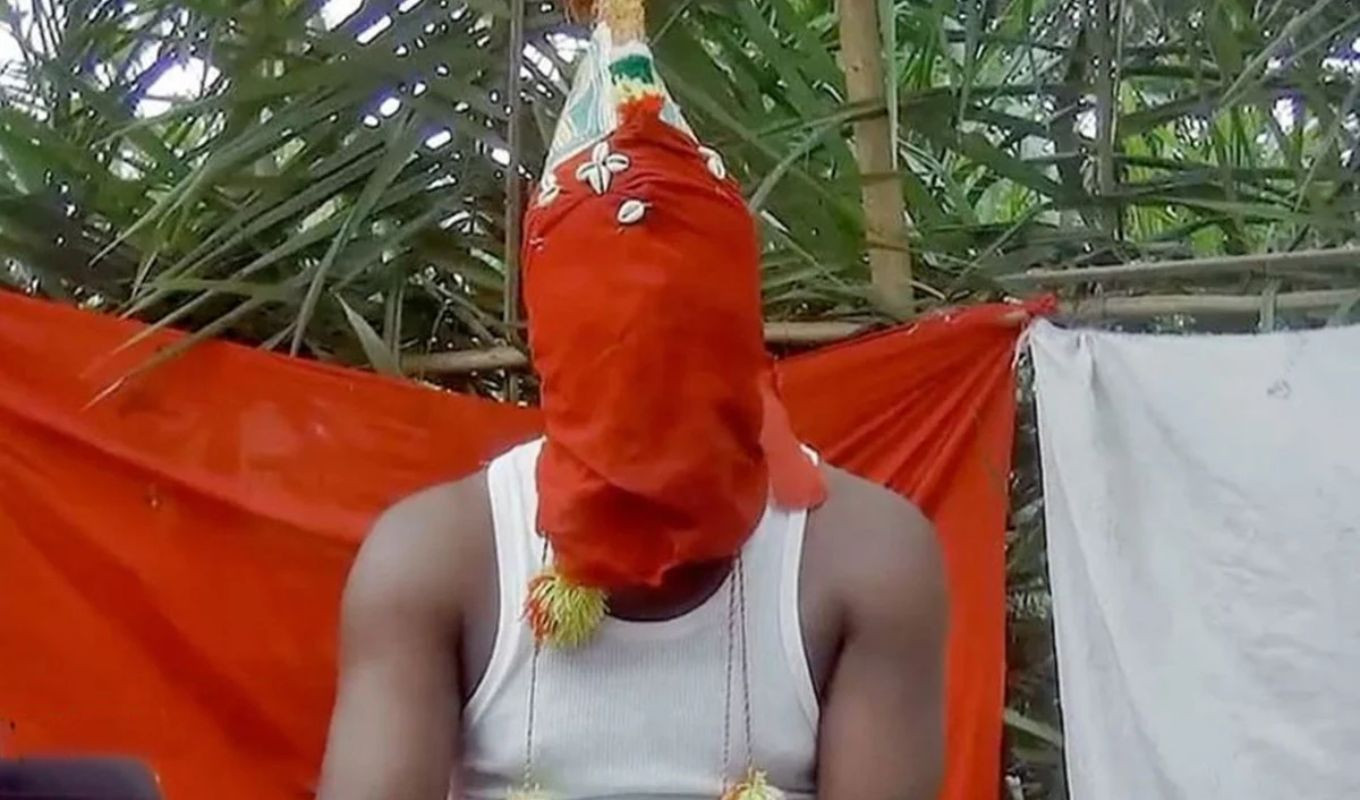
Calling himself Kanu, he wore a ceremonial red mask covering his whole face to conceal his identity and boasted of his political connections.
“I was working with some big, big politicians in Guinea, Senegal and Nigeria. We have our team. Sometimes during election time, at night, this place is full of people,” he claimed.
On a second visit, Kanu became more confident and showed Osman what he said was evidence of his trade – a human skull.
“You see this? This belongs to someone. I dried it for them. It is a woman’s skull. I am expecting the person to pick this up today or tomorrow.”
He also pointed to a pit behind his shrine: “This is where we hang human parts. We slaughter here, and the blood goes down there… Even big chiefs, when they want power, come here. I give them what they want.”
When Osman specified that he wanted limbs from a woman to be used in a ritual, Kanu got down to business: “The price of a woman is 70m leones [£2,500; $3,000].”
Sierra Leone is one of the world’s poorest countries and is recovering from the legacy of a brutal 11-year civil war
Anxious not to put anyone at risk, we did not meet Kanu again. He may have been a scammer, but we handed over our evidence to the local police to investigate further.
Such juju men sometimes refer to themselves as herbalists, the name given to healers who use traditional medicine often made from local plants to treat common illnesses.
World Health Organization data shows that Sierra Leone – which suffered a brutal civil war in the 1990s and was at the centre of the Ebola epidemic a decade ago – had around 1,000 registered doctors in 2022, compared to reported estimates of 45,000 traditional healers.
Most people in the West African nation rely on these healers, who also help with mental health issues and treat their patients in shrines where there is an element of mysticism and spiritualism culturally associated with their craft and the remedies they sell.
Sheku Tarawallie, president of Sierra Leone’s Council of Traditional Healers, is adamant that “diabolic” juju men like Kanu are giving healers a bad name.
“We are trying very hard to clear our image. The ordinary person doesn’t understand, so they class us [all] as bad herbalists. One rotting fish can destroy the batch of fish… We are healers, we are not killers,” he told BBC Africa Eye.
Mr Tarawallie is in fact trying to work with the government and another non-governmental organisation to open a traditional medicine clinic to treat patients.
It was those with a lust for power and money who were often behind the ritual killings, he believed.
“When somebody wants to become a leader… they remove parts from human beings. They use that one as a sacrifice. Burn people, use their ashes for power. Use their oil for power.”
The number of ritual killings in Sierra Leone, where most people identify as Muslim or Christian, is not known.
“In most African countries, ritual murders are not officially recorded as a separate or sub-category of homicide,” Emmanuel Sarpong Owusu, a lecturer at the UK’s Arden University, told the BBC.
“Some are misclassified or misreported as accidents, deaths resulting from attacks by wild animals, suicides, natural deaths… Most perpetrators – possibly 90% – are not apprehended.”
When we found another suspected supplier of body parts, he was located in a suburb of the capital, Freetown, called Waterloo, which is notorious for drug abuse and other crime.
“I’m not alone, I have up to 250 herbalists working under my banner,” the man calling himself Idara told Osman, who was again undercover and wearing a secret camera.
“There are no human parts that we don’t work with. Once we call for a specific body part, then they bring it. We share the work,” Idara said.
He went on to explain how some of his collaborators were good at capturing people – and on Osman’s second visit played a voice message from one of them who claimed they were prepared to start going out every night in search of a victim.
Osman told him not to proceed yet but when he later received a call from Idara claiming his team had identified a victim, we contacted Police Commissioner Ibrahim Sama.
He decided to organise a raid – but said his officers would not do so without the involvement of Mr Tarawallie, who often assists the police on such operations.
“When we got intelligence that there is a particular dangerous witchdoctor operating a shrine, we will work with the traditional healers,” said an officer on the raid, Assistant Superintendent Aliu Jallo.
He went on to express the superstitions some officers have about tackling rogue herbalists: “I will not go and provoke situations. I know that they have their own powers that are beyond my knowledge.”
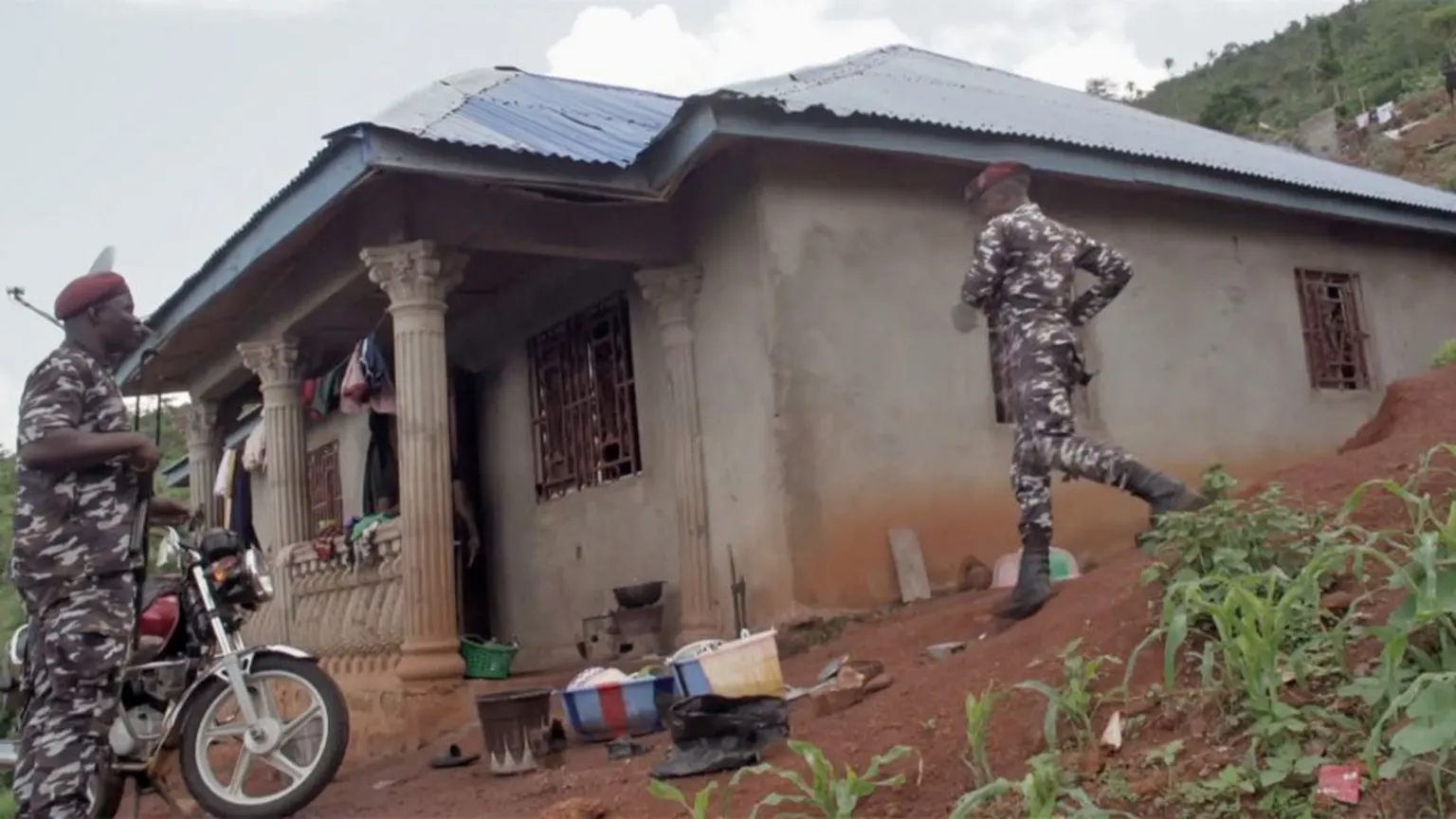
After Idara was captured – discovered hiding in the roof clutching a knife – Mr Tarawallie began searching the property for evidence, saying there were human bones, human hair and piles of what looked like dirt from cemeteries.
This was enough for the police to arrest Idara and two other men, who were charged in June with practising sorcery as well as being in possession of traditional weapons used in ritual killings. They pleaded not guilty to the charges and have since been granted bail, pending further investigations.
The police raided this house in Waterloo and arrested the occupants, including Idara, who were later charged under anti-witchcraft laws
As we never heard back from the police in Kambia about Kanu, I tried to call him myself to challenge him about the allegations directly, but he was unreachable.
There are occasions when even high-profile cases appear to stall. Two years ago, a university lecturer went missing in Freetown and his body was later found buried in what police say was the shrine of a herbalist in Waterloo.
The case was referred in August 2023 by a magistrate to the High Court for trial, but two sources have told the BBC it has not been pursued so far and those detained by police have been released on bail.
My family is facing similar hurdles finding justice. In May, during our BBC investigation, my 28-year-old cousin Fatmata Conteh was murdered in Makeni.
A hairdresser and mother of two, her body was dumped the day after her birthday by the side of the road where a resident told the BBC two other bodies had been found in recent weeks.
Several of her front teeth were missing, leading the community to believe it was a ritual killing.
“She was a lady that never did harm. She was very peaceful and hard-working,” said one mourner as family, friends and colleagues gathered for a big funeral at her local mosque.
We may never know the true motive for Fatmata’s murder. The family paid for her body to be transported to Freetown for an autopsy – something the authorities could not afford to do – but the post-mortem was inconclusive and no arrests have yet been made.
As is the case for Papayo’s mother, the lack of closure and feeling of abandonment by the police fuels fear and terror in poor communities like Makeni.
Additional reporting by Chris Alcock and Luis Barrucho
‘Murder for black magic’: when body parts are sold for ‘magical amulets’
A series of murders suspected of being caused by black magic rituals has shaken Sierra Leone
“Murder for black magic”: The horrific stories in Africa where body parts are sold for ‘magical amulets’
Published: November 26, 2025 By: Vox News
Four years ago, 11-year-old Papayo was killed in a crime believed to have been part of a black magic ritual. His mother, Sallay Kalokoh, is devastated that no one has yet been brought to justice. Papayo was found butchered at the bottom of a well, with body parts removed, including vital organs, eyes and one arm. He had gone to sell fish at the market and never returned.
“We always advise children to be careful. If you sell something, don’t go to some remote corner and don’t accept gifts from strangers. This happens a lot in this country,” Kalokoh said.
Papayo’s murder in the central city of Makeni is just one of many suspected cases of black magic (juju) that are often not investigated or pursued by authorities. In his case, police never confirmed that it was a “ritual killing.”
The dark market for body parts
Juju practitioners promise prosperity and power to clients who pay large sums, believing that human body parts make their spells more powerful. However, with authorities having limited resources – just one pathologist for a population of 8.9 million – it is difficult to gather evidence to prosecute the perpetrators.
Belief in witchcraft is so ingrained in Sierra Leone, even among some police officers, that there is often a fear of pursuing cases, and most remain unsolved.
According to a BBC Africa Eye investigation, the team managed to contact two people who claimed to be juju practitioners and offered body parts for rituals. They said they were part of larger networks and one claimed to have powerful clients in West Africa, but the BBC was unable to verify these claims.
A team reporter went by the name Osman, posing as a politician seeking power through human sacrifice. In a remote area of ??Kambia district, he met a practitioner who wore a red ceremonial mask and threatened to work with top politicians in Guinea, Senegal, and Nigeria. He showed a human skull and a pit where body parts were placed.
When Osman asked for body parts from a woman for the ritual, the practitioner estimated the price at 70 million leones (around £2,500 / $3,000). For the safety of the team, the BBC did not meet the practitioner again, but handed over the evidence to the local police.
The role of traditional healers
Some practitioners are also called traditional healers and use plants to treat common ailments. Sierra Leone has about 1,000 registered doctors and about 45,000 traditional healers, who often also help with mental health issues.
Sheku Tarawallie, president of the Traditional Healers Council, points out that “evil” practitioners give all healers a bad name: “We are healers, not killers. One rotten fish can spoil all the wheat… We are trying to clean up our image.”
He believes that behind the ritual killings are those who covet power and money “when someone wants to become a leader… they remove parts from people. They use them as sacrifices, they burn people, they use the ashes and oil for power.”
Police operations and arrests
A suspected supplier was found in Waterloo, a Freetown neighborhood known for crime and drug use. He claimed to have 250 healers working under him and could provide any body part required.
The police, in collaboration with Tarawallie, organized a raid. Idara was caught hiding on the roof with a knife. Bones, human hair, and cemetery soil were found on the property. He and two others were charged with practicing witchcraft and possessing ritual weapons. They pleaded not guilty and were released on bail.
Other cases and lack of justice
Two years ago, a university lecturer disappeared in Freetown and was later found in a ritual square. Families like Papayo’s and those of her 28-year-old cousin Fatmata Conteh, who was killed in Makeni, face the same obstacles to justice. The autopsy was inconsistent and there were no arrests.
The market for body parts for witchcraft rituals in Sierra Leone remains secretive, dangerous and largely unsolved. A lack of resources, deep-rooted belief in witchcraft and challenges to proper investigation leave communities impoverished and terrified, as families seek justice for their loved ones.
Human Sacrifice in Sierra Leone Driven by Black Magic Practices
Published: November 26, 2025 By: Khaborwala International Desk
The superstition surrounding black magic remains deeply rooted in Sierra Leone, where numerous families have suffered killings linked to the illegal trade in human body parts. Shocking details have emerged in an investigation by BBC Africa Eye.
Four years ago, 11-year-old Papayo was murdered in the name of black magic. His mother, Sallai Kaloka, is still waiting for justice. She told the BBC, “I am in great pain. They killed my child, and now there is only silence.”
Sallai said Papayo never returned home after she left for the market to sell fish. When his body was found, vital organs, his eyes, and one hand had been removed. After being missing for two weeks, his mutilated body was discovered in an abandoned well.
She said, “We always warn our children—don’t go to deserted places, be cautious before accepting anything from strangers. Incidents like this happen frequently here.”
According to Sallai, such killings are common in their town, Makeni. Police often do not even classify them as ritual killings. Juju practitioners use human body parts for charms or rituals and lure clients by promising wealth or power. With only one pathologist for a population of 8.9 million, proper investigations are nearly impossible.
Belief in black magic is so strong in Sierra Leone that even police officers are often afraid to investigate these cases, leaving most crimes unresolved. BBC Africa Eye found two individuals who claimed to be juju practitioners and offered to supply human body parts.
One of them said they had clients across several West African countries. A BBC Africa Eye member, disguised as a politician named Osman, travelled to Kambia district near the Guinea border to meet a juju practitioner named Kanu, whose face was covered with a red cloth throughout the meeting.
Kanu said, “I have worked with major politicians in Guinea, Senegal, and Nigeria. People flock here during election periods.” He then showed a dried human skull, claiming, “This belonged to a woman. Someone will take it within a few days.” According to him, female body parts cost 70 million leones, or around 3,000 dollars.
For safety reasons, the BBC made no further contact with him. The collected information has been handed to the police.
Many juju practitioners in Sierra Leone identify themselves as herbalists. Yet, as of 2022, the country had only about 1,000 registered doctors, compared to nearly 45,000 traditional healers. Many people seek help from these healers for mental health and other issues.
Sheku Tarawali, president of the Sierra Leone Council of Traditional Healers, said black magic practitioners like Kanu are tarnishing the reputation of herbalists. He accused some individuals of committing these murders for power and money.
BBC Africa Eye also identified another suspected supplier of body parts in Waterloo. The man, using the alias “Idara”, claimed to have 250 witchdoctors and spirit practitioners working under him and said they could provide any body part if required.
During one meeting, he played a voice note from an associate saying they were ready to hunt for a “victim” that night. After receiving this information, Police Commissioner Ibrahim Sama launched a raid with Sheku Tarawali and a specialist team. Human bones, hair, and various body parts were recovered.
Earlier, the body of a university lecturer had been found in a temple in Waterloo. The case went to the High Court but never progressed, and the suspects were released on bail.
During the BBC investigation, 28-year-old Fatmata Conteh was murdered in Makeni. Her body was found by the roadside the day after her birthday, with several front teeth missing—leading locals to believe it was a ritual killing. Her family sent the body to Freetown for an autopsy at their own expense, but no findings emerged.
Like Papayo’s mother, many families continue to suffer without justice. Police inaction and a culture of fear have intensified widespread panic across the region.
Detailed circumstances are not yet unknown but one thing is clear: the brutal killing of an innocent woman who was accused of witchcraft.
The revolting crime was allegedly committed by three men including a son of the murdered lady. It all happened in the Northern state of Jigawa.
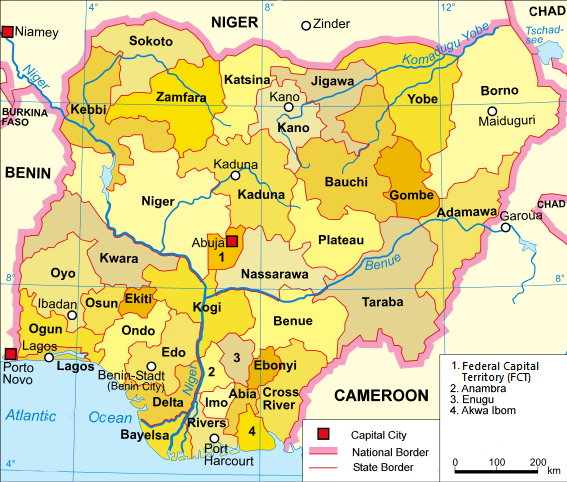
Jigawa State is located in the North West geopolitical zone of the Federal Republic of Nigeria (Nigeria is divided into six geopolitical zones commonly called zones). With a surface area of 23.154 km2 Jigawa State ranks 18th (out of 36 states) and with an estimated population of about 7.3 million people in 2025 (7 million in 2020) it occupies the 9th position.
Until 1991, Jigawa State was part of Kano State. Its bordes the Republic of Niger. The majority of the population are Muslim and of Hausa or Fulani (called Peul in francophone Africa) background. JIwaga State is with eleven other Nigerian States governed by Sharia law.
Jigawa man arrested for killing mother over witchcraft claim
Published: August 29, 2025 By: Dayo Oyewo – Punch, Nigeria
A 25-year-old man, Jibrin Ado, has been nabbed by the police in Jigawa State for killing his mother on suspicion of witchcraft in the Gerawa area of the state.
PUNCH Metro learnt this on Thursday from a statement on X by security expert, Zagazola Makama. (See article below Police arrest man over alleged killing of mother accused of witchcraft in Jigawa – webmaster FVDK)
According to him, Ado perpetrated the act alongside some accomplices on Tuesday.
The accomplices were identified as Musa Kwalle, Dan Abba, Sule Musa, and one Arrow, all of Gerawa village.
“Sources said that on August 26 at about 4:30 p.m., the suspect, identified as Jibrin Ado of Daneji Village, conspired with others – Musa Kwalle, Dan Abba, Sule Musa, and one Arrow, all of Gerawa Village – and trespassed into the home of his father, Adamu Saleh.
“The suspects beat up his (Saleh’s) wife, Magajiya Ado, 50, with heavy sticks until she became unconscious, accusing her of witchcraft,” he wrote.
Makama further stated that the victim was rushed to General Hospital in the Ringim area of the community, where she died while receiving treatment.
“Sources said that her corpse had since been released to the family for burial. The sources added that one of the suspects, Jibrin Ado, had been arrested while others were still at large,” he concluded.
When contacted, the state Police Public Relations Officer, Lawan Shiisu, promised to find out and revert. He had yet to do so as of the time the report was filed.
Police arrest man over alleged killing of mother accused of witchcraft in Jigawa
Published: August 28, 2025 By: By: Zagazola Makama Nigeria (
The Police Command in Jigawa has arrested a 25-year-old man over the death of his mother, whom he and accomplices allegedly attacked on suspicion of witchcraft.
Sources said that on Aug. 26 at about 4:30 p.m., the suspect, identified as Jibrin Ado of Daneji Village, conspired with others – Musa Kwalle, Dan Abba, Sule Musa and one Arrow, all of Gerawa Village – and trespassed into the home of his father, Adamu Saleh.
“The suspects beat up his wife, Magajiya Ado, 50, with heavy sticks until she became unconscious, accusing her of witchcraft,”said the sources.
According to the sources, the victim was rushed to General Hospital, Ringim, where she died while receiving treatment.
Sources said that her corpse had since been released to the family for burial.
The sources added that one of the suspects, Jibrin Ado, had been arrested while others were still at large.
The current site presents little news about ritual practices, including ritual murders (“muti murders”) in Mozambique, mainly due to a bias in my research, which focuses primarily on Anglophone countries in sub-Saharan Africa.
Warning: I have included the last news article below (implicating Peter “Cool Dud” Muparutsa (66) of the RUNN Family fame, who has found himself at the centre of a storm after being accused by some relatives of the ritual murder of a Mozambican woman for fame during his hey days in music – for illustrative purposes: to indicate that ritualistic practices are not an unknown phenomenon in Mozambique – and would like to emphasize that inclusion in no way implies that I endorse the accusation. (webmaster FVDK)
‘Undocumented’ Mozambican sangoma in court over possession of human tissue
A Mozambican traditional healer, 26, Aizeque Zacaria Cumbuia, appeared in the Ga-Rankuwa Magistrates’ Court on Friday, for possession of human body parts.
Published: August 22, 2025 By: Mbalenhle Zuma – Sunday World (South Africa)
A 26-year-old Mozambican traditional healer, Aizeque Zacaria Cumbuia, appeared in the Ga-Rankuwa Magistrate’s Court on Friday, charged with possession of human tissue.
The discovery was made on August 7 during a police investigation into a gruesome murder in Brits. A female victim was killed, her body parts removed, and her remains burned.
“We were horrified to find human tissue in the suspect’s possession,” said a police spokesperson, underscoring the gravity of the case.
Found with murder victim’s body parts
Cumbuia was allegedly found with human tissue in a room where he practised as a sangoma (traditional healer).
“The evidence was uncovered during a thorough search linked to the Brits murder investigation,” the spokesperson added.
According to the National Prosecuting Authority (NPA), Cumbuia may also face charges of kidnapping, murder, defiling a corpse, and violating South Africa’s Immigration Act, as he is suspected of being in the country illegally.
The murder is linked to the 2023 killing of 20-year-old Gontse Makhubela. Her organs were allegedly found in Cumbuia’s possession.
During his arrest he was found in possession of human remains believed to be that of Makhubela, 20.
The young woman was allegedly lured by another man, Serame Moroke. The instruction allegedly came from Cumbuia, for Makhubela to be killed for ritual purposes.
Victim lured from shop by ‘client’
Makhubela was establishing her post-matric life when she was brutally murdered.
She was working as an intern at a furniture shop. Her assailants, posing as potential clients at the shop, lured her to her death.
Two other suspects, including another Mozambican traditional healer, have been arrested.
In court, the case was postponed to August 28, 2025, for a formal bail application. The state has, however, voiced out that they plan to oppose Cumbuia’s bail.
A prosecutor stated: “The severity of these crimes and the ongoing investigation demand that the accused remain in custody.”
Traditional healer in court for possession of human tissue linked to murder investigation
Aizeque Zacaria Cumbuia (26) a traditional healer from Mozambique appeared at the Ga-Rankuwa Magistrates’ Court. He is facing a charge of possession of human tissue
Published: August 22, 2025 By: IOL (South Africa)
Aizeque Zacaria Cumbuia, a 26-year-old traditional healer from Mozambique, made a brief appearance at the Ga-Rankuwa Magistrates’ Court, facing a serious charge of possession of human tissue.
The allegations against Cumbuia emerged from police operations that were initially focused on a separate murder case, according to National Prosecuting Authority spokesperson, Lumka Mahanjana.
She explained that police discovered evidence on August 7, when they found human tissue within the premises where Cumbuia practiced his traditional healing.
“This was discovered by police officers when they were conducting investigations in relation to a Brits murder case, where a deceased female was killed, body parts removed, and her body burned,” Mahanjana said.
Police have stepped up their efforts to trace the circumstances surrounding the crime, and Cumbuia’s alleged involvement has only intensified their inquiries.
During the court proceedings, the magistrate heard that the state intends to oppose any application for bail, arguing that Cumbuia’s release could pose significant risks to the ongoing investigation and the safety of the community.
The matter has been postponed until August 28 August when Cumbuia is expected to make a formal bail application.
Case of a Mozambican traditional healer accused of ritual murder postponed (YouTube)
Screenshot – to listen to the report, please click here
Published: August 22, 2025 By: SABC News – South Africa
The National Prosecuting Authority (NPA) is confident of a successful prosecution in the trial of a Mozambican national found in possession of human remains believed to be that of a murdered 20-year-old woman. 26-year-old Isaac Shikomboya’s arrest follows that of two other people who were apprehended after being found in possession of the slain victim’s cellphone. The two men led the police to Shikomboya. The case has been postponed to Thursday next week for a bail application.
Warning: I have included the news article below for illustrative purposes – to indicate that ritualistic practices are not an unknown phenomenon in Mozambique – and would like to emphasize that inclusion in no way implies that I endorse the accusation. (webmaster FVDK)
Weekender Reporter VETERAN producer and musician, Peter “Cool Dud” Muparutsa (66) of the RUNN Family fame, has found himself at the centre of a storm after being accused by some relatives of the ritual murder of a Mozambican woman for fame during his hey days in music.
The explosive allegations were thrown at the ageing producer by his grandnephew — Macdonald Nyamajiya — who claimed that Muparutsa later married him and his two brothers off to the slain woman’s blood-thirsty avenging spirit.
He alleged that the woman’s restless ghost has been haunting their family.
The matter was heard before Chief Mutasa’s community court recently after Muparutsa had reported Nyamajiya, accusing him of tormenting him through the “frivolous” allegations.
Muparutsa produced before the court a tirade of text messages, in which Nyamajiya accused him of being a heartless murderer and ritualist, who had destroyed his family.
“If you are free, come to Dangamvura today so that we see each other face-to-face. You know your stories or give me an address of where you stay so that I come there myself.
“Let us not meet in the spirit, but let us meet during daylight, enough is enough,” reads one of his text messages.
Another message, dripping with rage, reads: “I am not afraid of you, you are not God. Personally, it is now boring me because you are responsible for our suffering, so we have to meet. There shall come a time where we will be assaulting each other and striking each other with axes.
“I do not want a grandfather who makes me his scapegoat. What you have done is enough. If you do anything to me, know that you and your family will perish. Play your guitar at church later after you have finished appeasing this spirit,” he charged.
Startled by the venom, Muparutsa confirmed the accusations.
“I am being accused by my older brother’s daughter’s son of wizardry, possessing goblins, and causing all the mishaps in their family. I was shocked when I went through his text messages,” he said.
In response, Nyamajiya told the court that he had written the offensive messages out of deep pain.
“My late mother was a Muparutsa and my father hails from Bocha. However, I grew up within the Muparutsa family and use their surname.
Growing up, we were told that he (Peter) has goblins, and that he was being haunted by an avenging spirit because he killed someone in Mozambique.
“In April, the spirit started manifesting on my younger brother and we consulted healers, who told us that our grandfather, Peter, was responsible for it.
“My brother acted as if he was paralysed and would shout Peter’s name. It is still happening up to now,” he alleged. He further claimed that the spirit insisted that he and his two brothers were spiritually ‘wedded’ to a female goblin by the musician.
“It is said that he killed a woman of the Tembo Clan, and is the one whose spirit we were married to. She was from Mozambique.
“The woman claims she was killed for rituals to enhance his musical fame. Every healer we consulted pointed an accusing finger at him,” said Nyamajiya.
Another family member, Bridget Muparutsa, weighed in, saying the allegations have haunted them for generations.
“We heard about it as we grew up. We would get married and come back home widowed because our husbands would have died. We wanted to be here with the rest of the family, but in the process of taking the matter to Headman Muparutsa, Peter brought the case before this court,” she said.
The matter took an unexpected turn after Chief Mutasa ruled that Nyamajiya had no right to sue Peter.
“Macdonald, you are not a Muparutsa, it is your mother, who was a Muparutsa. If a Muparutsa killed someone, it is not possible for the avenging spirit to torment you because you are not a member of the Muparutsa family by blood.
You cannot come here accusing your uncle because you are not a Muparutsa. His family should report him, and not you,” warned Chief Mutasa.
He further warned Nyamajiya against being dragged in his uncles’ family feuds.
“Do not be too convinced of what you are hearing — what if it is someone else that is using his face? Do not be used to fight battles that are not yours. Let the Muparutsa family approach my court to sue him, not you. I am not favouring anyone in this matter, but we need to help you guys,” said Chief Mutasa.
Nyamajiya was fined a beast for disrespecting his uncle.
“You were disrespectful. For that, you must pay him a beast. You cannot challenge an elder in this manner,” he ruled.
Chief Mutasa also ordered the Muparutsa family to unite and consult traditional healers together to settle the matter.
The Emir of Ilorin (Kwara State) and Chairman of the Kwara State Traditional Rulers Council joined religious leaders in condemning the ritual killing of Hafsoh Lawal. By publicly condemning the violent crime, the Emir of Ilorin Alhaji Sulu-Gambari also joined other traditional rulers who recently spoke out against the crime of ritual murder in this West African country.
The religious leaders and traditional rulers who speak out against the crime of ritual murder are to be commended.
Nigeria’s political leaders and legislators, and the police and judicial authorities of Africa’s most populated country should leave no stone unturned to apprehend and prosecute the perpetrators of ritualistic murders while simultaneously campaigning for the eradication of the get-rich-quick mentality which in combination with the belief in tradition and superstition perpetuate the cruel crime of murder for ritualistic motives and gross human rights violations. (webmaster FVDK)
Emir of Ilorin condemns ritual killing of final-year student, says justice must be served
The Emir of Ilorin and Chairman Kwara State Traditional Rulers Council, Mai-Martaba Alhaji (Dr) Ibrahim Sulu-Gambari CFR
The Emir of Ilorin and Chairman Kwara State Traditional Rulers Council, Mai-Martaba Alhaji (Dr) Ibrahim Sulu-Gambari CFR, has expressed sadness over the gruesome killing of Hafsoh Lawal, a final-year student of the Kwara State College of Education, (KWCOE), Ilorin by one Abdulrahman Bello, an acclaimed ‘alfa’.
Alhaji Sulu-Gambari, in a statement issued by his spokesman, Mallam Abdulazeez Arowona, condemned the incident, saying, “It is most unfortunate, alien and regrettable act of wickedness.”
According to him, “It has become pertinent for parents, guardians as well as people in the neighbourhood to remain vigilant to happenings around them, especially ensuring that their children and wards are in the company of people of tested and trusted characters with well-researched family background.
“It is only hardwork that pays; total war should be declared against idleness, laziness and unwarranted loitering around the society by youths in the name of finding means of survival.”
Alhaji Sulu-Gambari also urged clerics in the Ilorin Emirate and beyond to sanitise the system by ensuring that the likes of Abdulrahman Bello are expressly exposed to the law enforcement agencies before wrecking more havoc and damaging the lives of innocent persons.
While commiserating the families of the late Hafsoh Lawal over the unfortunate end to the life of the promising daughter, Alhaji Sulu-Gambari urged the Nigeria Police and the Judiciary to ensure that toral justice is served in this matter while also directing religious leaders, especially Imams in Mosques in Ilorin Emirate and Kwara State at large to ensure that their Friday Khutbah focuses more attention on morality, dignity in labour as well as importance and respect for the souls of fellow human-being irrespective of tribe, religion and status.
The Informant247 reports that an Ilorin-born middle-aged man identified as Abdulrahman Bello has allegedly killed and dismembered the body of Lawal Hafsoh, a final-year student of Kwara State College of Education, Ilorin, for suspected ritual purposes.
According to reports, the deceased, Lawal Hafsoh, had on Monday, 10th of February 2025, declared missing after receiving a call at the naming ceremony.
It was gathered that the lady’s whereabouts were unknown since she received the call.
Meanwhile, on Tuesday, 11th of February 2025, the deceased parents reported the case to the Divisional Police Station at Oja Oba Police Station in Ilorin, the state capital.
However, the police requested her phone number and used it to track her last call, which was traced to an individual living in the Offa garage area of Ilorin,
The suspect, whose family house is in Isalekoto, was tracked and arrested, where he initially denied the knowledge of the lady’s whereabouts. However, when the police searched his house, he confessed that the lady was in his area and had died from an asthma attack after he called her to come over.
Upon further investigation, the police found the lady’s body dismembered and hidden in a bowl, along with the equipment used to dismember her. The suspect is now at the police headquarters in Ilorin.
It was reported that the suspect and the deceased met on Facebook, where they both got connected.
However, an effort to speak to the Kwara State Police Public Relations Officer SP Toun Ejire-Adeyemi proved abortive as she didn’t pick up her call at the time of filing this report.
An Ilorin-born middle-aged man identified as Abdulrahman Bello has allegedly killed and dismembered the body of Lawal Hafsoh, a final-year student of Kwara State College of Education, Ilorin, for suspected ritual purposes.
According to reports, the deceased, Lawal Hafsoh, had on Monday, 10th of February 2025, declared missing after receiving a call at the naming ceremony.
It was gathered that the lady’s whereabouts were unknown since she received the call.
Meanwhile, on Tuesday, 11th of February 2025, the deceased parents reported the case to the Divisional Police Station at Oja Oba Police Station in Ilorin, the state capital.
However, the police requested her phone number and used it to track her last call, which was traced to an individual living in the Offa garage area of Ilorin,
The suspect, whose family house is in Isalekoto, was tracked and arrested, where he initially denied the knowledge of the lady’s whereabouts. However, when the police searched his house, he confessed that the lady was in his area and had died from an asthma attack after he called her to come over.
Upon further investigation, the police found the lady’s body dismembered and hidden in a bowl, along with the equipment used to dismember her. The suspect is now at the police headquarters in Ilorin.
It was reported that the suspect and the deceased met on Facebook, where they both got connected.
However, an effort to speak to the Kwara State Police Public Relations Officer SP Toun Ejire-Adeyemi proved abortive as she didn’t pick up her call at the time of filing this report.
The following report illustrates well how widespread killing for ritualistic purposes is in Nigeria.
Ritual murders occur in all parts of the country, both in the predominantly christian south of the country and the islamic north, and are committed by educated and uneducated people, and by ‘ordinary’ people as well as high-placed persons, in traditional, political and religious organizations.
Despite this disturbing phenomenon, it is important and useful to emphasize also that the majority of the population abhor the cruel, outdated and criminal practices based on superstition, greed, and tradition, often facilitated or covered by the backing or involvement of ‘higher-ups’, resulting in a revolting impunity of these atrocities. (webmaster FVDK)
Religious leaders bemoan surge in ritual killings among clerics
•Teenage suspects arrested for the murder of a female teenager in Ogun Photo: File copy
Christian and Islamic leaders have expressed concerns over the increasing cases of suspected ritual killings involving clerics across the country, attributing the disturbing trend to greed, and economic hardship.
Last week, an acclaimed Islamic cleric, Abdulrahman Bello, gruesomely murdered a final-year student of the Kwara State College of Education, Ilorin, Hafsoh Lawal.
According to the Kwara State Police Command, the 29-year-old suspect killed Lawal and dismembered her for alleged ritual purposes at a location in the Olunlade area of Ilorin on Tuesday, February 11, 2025.
On January 23, the Rivers State Police Command arrested two pastors, Prophet Bassey Umoren (60) and Prophet Elijah Anietie (50), after discovering fetish items—including caskets, monkey skulls, carved skeletons, and other ritual materials—inside their churches.
Several cases of ritual killings were also recorded in 2024, including the arrest of an Islamic cleric, Oluwafemi Idris, popularly known as Alfa, by the Ondo State Police Command. He was caught with human parts, including hands, kidneys, and tongues.
Speaking with Saturday PUNCH, some religious leaders attributed the relentless pursuit of wealth, power, and economic desperation as the driving forces behind the gruesome acts.
Archbishop of the Methodist Diocese in Lagos, Most Rev. Isaac Olawuyi, decried the killings, noting that it was fueled by an insatiable hunger for fame and fortune.
He said some pastors saw their ministry as money-making enterprises, hence their desperation to get money at all cost.
Olawuyi said, “We have seen cases where pastors kill their church members and use their body parts either to expand their congregation or gain supernatural power. Some clerics even engage in ritual practices purely for financial gain.
“It is unfortunate, but it happens because some pastors see ministry as a money-making enterprise. They are willing to do anything to grow their church and personal wealth. Today, many people enter clerical work, ministries, and prophecy with no divine calling—only the ambition to enrich themselves.”
Similarly, the Chairman of the Christian Association of Nigeria in Lagos, Bishop Stephen Adegbite, condemned the ritual killings, stating that clerics involved in such practices were driven not by greed and deception.
He described the clerics involved in ritual killings as agent of darkness.
“A true servant of God would never take a human life. The Bible and the Quran are clear: ‘Thou shalt not kill.’ So, anyone engaging in ritual killings—whether Christian or Muslim—is not a minister of God. They are agents of darkness in clerical robes, and we must not mistake them for true men of God.
“If caught, they should face the full weight of the law. The church stands vehemently against such evil, and I am certain Islam forbids it as well. Such practices have no place among believers, let alone religious leaders,” he said.
In his comment, the Chief Imam of the Federal University of Agriculture, Abeokuta, Ogun State, Prof. Idris Ayinde, noted that many of the Muslims involved in ritual killings were young clerics who lack wisdom to complement their religious knowledge.
Ayinde said many young men who study Islamic theology end up tarnishing the image of Islam because they rush into leadership without acquiring wisdom.
“Learning wisdom requires sacrifice and patience—gaining insight from personal experiences of a tutor. This cannot be taught academically. However, many young clerics today refuse to serve under experienced scholars. They lack the humility to learn and grow,” he said.
Ayinde added, “In Islam, we believe whoever is destined to be rich will be rich. Islam encourages hard work, but it is Allah who grants success. Some people’s hard work may correlate directly with their prosperity, while for others, it may not.
However, no one should seek shortcuts to wealth. Islam does not condone any backdoor approach to riches. Any so-called scholar who engages in ritual killings cannot be considered a true Muslim, as Allah strictly forbids such acts.”