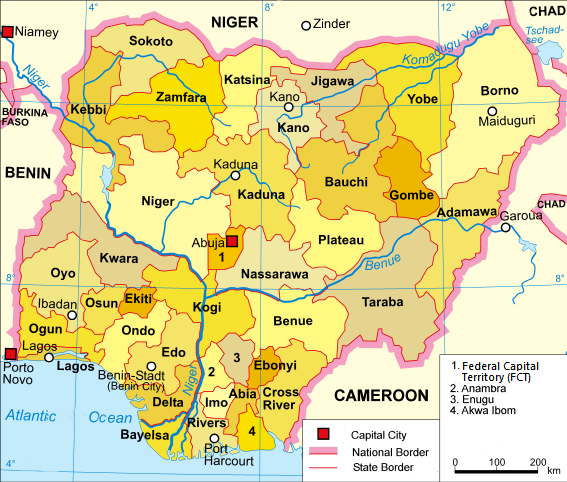
Child killings including ritual murder in Cameroon (2022-2025)

Cameroon isn’t often in the news with respect to ritualistic killings. As a mainly Francophone country, it escapes my daily search for Internet news about ritual killings in Sub-Saharan Africa (SSA). However, this does not mean that the country is an exception in SSA.

Almost by accident I stumbled upon a suspected case of ritual murder and another case of a child beaten to death after being accused of witchcraft. Horrible cases, senseless killings.

Both incidents happened in 2023 as the following report shows.

The article ends with a cry for justice, condemning the present situation of silence becoming the norm in this Central African country.
(webmaster FVDK)

A nation in mourning – innocent lives lost to senseless violence

Published: May 14, 2025
By: Cameroon Concord

(…)

From urban centres like Douala and Yaoundé to towns like Sangmélima and Bamenda, child killings have become a recurring and underreported national crisis.

Chronology of Recent Child Murders in Cameroon (2022–2025)

DateName / AgeLocationSummary
Nov 2022Baby Bisong, 4 mo.BueaKilled by a stray bullet during military patrol in Molyko.
Jan 2023Ariane, 6YaoundéAllegedly beaten to death by her aunt, accused of witchcraft.
Mar 2023Baby Divine, 7 mo.BamendaShot during military raid. Claimed to be collateral.
Aug 2023Unnamed, 8KribiFound mutilated on the beach. Suspected ritual murder.
Oct 2023Baby Chantal, 2DoualaMurdered by domestic worker. Arrest made.
May 2025Mathis, 6YaoundéStabbed by neighbour in revenge killing.
May 2025Unnamed, 2SangmélimaFound dead in water. Authorities refused to open an investigation.

Each case bears a similar theme: impunity, silence, and failing institutions. Whether by bullet, blade, or beatings, children are paying the ultimate price in a country where violence festers unchecked.

(…)

Cameroonians are asking hard questions:

  • Why are more disputes ending in bloodshed?
  • Why does poverty, anger, and hopelessness often turn inward — toward the most vulnerable?
  • Why do authorities fail to act, even when evidence and outcry are overwhelming?

From ritual killingsdomestic abusemilitary violence, to mob justice, a terrifying normalization of brutality is taking hold.

“Le crime devient une norme silencieuse. La peur habite les esprits. L’indifférence gagne les cœurs.”

Translation:

“Crime becomes a silent norm. Fear inhabits our minds. Indifference wins our hearts.”

Source: A Nation in Mourning

Important study explores ritual murders of children in Ghana and Kenya, identifies perpetrators and their motivation

There are not many in-depth studies of the phenomenon of ritual murders and even less of the killing of children for ritualistic purposes. The article below discusses the ritual murder of children in Ghana and Kenya, examines who the perpetrators are and why they came to their crime.

The study by Emmanuel Sarpong Owusu is a must read. The author is to be commended for a serious and interesting study.

Interestingly, a number of the author’s findings and conclusions – based on online news reports in eight media outlets in Ghana and Kenya and on interviews with 28 experts – are consistent with my experiences after years of studying ritual killings in Sub-Saharan Africa. In particular I wish to mention here the main factors driving the motivation of the majority of the ritual murderers: superstition, greed and illiteracy, whereas the for various reasons failing reaction of authorities and the resulting lack of rule of law facilitate the impunity and the continuity of the cruel and outdated phenomenon.

According to the study, in Ghana, the media reported at least 160 ritual murders between 2012 and 2021. Of this number, 94 (about 58.8%) were children. Of the 102 ritual murders in Kenya in the study period (2012-2021), 66 (64.7%) were children.

I refer to the study below for more details. Please note that, unfortunately, three links in the original article seem to be incorrect: (i) ‘juju in Ghana’ leads to general information on juju (link should be placed under ‘juju’); (ii) ‘juju in Kenya’ leads to nowhere; (iii) reference to members of occult sects leads to ‘juju in Kenya’.
(webmaster FVDK).

Ritual murder of children: study in Ghana and Kenya explores who’s doing it and why

Published: April 15, 2025
By: Emmanuel Sarpong Owusu – The Conversation, UK

Superstition, an irrational belief in paranormal influences or a false attribution of events, is an age-old phenomenon found in probably all human societies or cultures. It encompasses a wide range of beliefs, practices and behaviours. Some of these have harmful or even deadly consequences.

In many African communities, there are widespread beliefs relating to the use of human body parts for traditional healing rituals. Human body parts and blood are said to enhance the potency of traditional medicines and rituals that supposedly guarantee wealth, business success, fertility, protection and longevity, among others. 

Ritual killings, including those of children, are reported regularly around Africa. A case in point is the targeting of children with albinism for ritual purposes in Tanzania. One research report says one in five people in Mozambique and one in four people in South Africa believe that rituals and traditional medicines made with human body parts are more potent and effective than those using nonhuman objects. 

Children are particularly targeted for killing because they can’t repel attacks, and because of beliefs about the potency of their body parts. The victims in more than half of all the ritual murders reported in Ghana and Kenya in 2022 were children.

I am a legal scholar with years of research on superstition-driven crimes against vulnerable groups in African settings and the criminal justice response to such crimes. In a recent study I explored the magnitude, characteristics and motivations, as well as the socio-cultural and economic contexts, of ritual child murder in Ghana and Kenya. My study was carried out through in-depth analysis of news reports of ritual murders for a period of 10 years, coupled with semi-structured interviews with academics and other experts.

I found that the major factors contributing to the persistence of ritual child murders were superstition, economic hardship, illiteracy and inefficient criminal justice systems. A new consumerist ethos also plays a role: wanting a life of luxury and the admiration that comes with it.

The study seeks to enhance awareness of the ritual child murder phenomenon and encourage support for the enforcement of child rights protection laws. When policymakers know more about the scale and circumstances of ritual child murders, they are better equipped to act on it.

Ritual murders in Ghana and Kenya

Belief in juju is widespread in Ghana and Kenya. This is the belief that people can mystically control events by using incantations (“magic words”) and, sometimes, objects. 

My study analysed data drawn from online news reports in eight media outlets in Ghana and Kenya. I used media content because the countries don’t have national data sets on ritual homicide, and empirical research is limited. Secondly, I interviewed 28 experts in criminology and criminal justice, sociology, African religions, and child and family welfare and social protection. These participants were selected using the purposeful sampling technique.

In Ghana, the media reported at least 160 ritual murders between 2012 and 2021. Of this number, 94 (about 58.8%) were children. This suggests that an average of 9.4 children fall victim to ritual murder each year in the country. Of the 102 ritual murders in Kenya in the study period, 66 (64.7%) were children. This represents an annual average of 6.6 in the country. 

In both countries, most victims (over 80%) tend to be drawn from families of low socio-economic backgrounds in rural and semi-rural communities. In Kenya, children with albinism are also targeted

The overwhelming majority of offenders are males. There are three main categories of perpetrators of ritual child murders: 

  • the juju practitioner or traditional healer who usually prescribes the required body parts and effects the medicine or ritual 
  • the client who consults traditional healers and stands to benefit directly from the ritual or medicine 
  • the (hired) ritual murderer, who abducts the victim and extracts the required body parts.

Data from media reports show that most of the perpetrators apprehended are those directly involved in the killing. They are usually aged between 20 and 39 years and of low socio-economic status in rural communities. However, some interviewees insisted that some rich and prominent persons are also involved.

In Ghana, uncles, fathers and stepfathers were the dominant perpetrators in cases where victims and perpetrators were known to be related. Unlike other types of homicide, ritual child murder generally involves strangers nearly as often as it involves family members and acquaintances.

Motivations and responses

The dominant motivation for ritual murder is financial gain. This conclusion is drawn from the media accounts and the interviews. Perpetrators are promised money in exchange for specific human body parts. Others kill to use the body parts for rituals that are supposed to ensure a long life, fertility, business growth, or protection against evil. In Kenya, some perpetrators kill in fulfillment of their obligations as members of occult sects

Other factors that sustain the practice – based on media reports and interviews – are superstition, unemployment and economic hardship. Adding to these are illiteracy, which fosters unfounded beliefs, and an inefficient criminal justice system, which enables these crimes to thrive.

Poor parental supervision is an important risk factor for ritual child murder. In both countries, over 70% of the ritual murder victims were under 10 years old. They were abducted or murdered while going to or returning home from school. Others were abducted while running errands such as fetching water from a stream unaccompanied. Some may have been playing outside their homes unsupervised, or running errands by themselves for relatives. 

In both countries, the criminal justice system’s response is evidently ineffective. In Kenya, over 90% of perpetrators are not apprehended. Of 68 suspects arrested in Ghana, only four convictions were reported. Crime scenes are poorly managed and preserved by police officers and detectives in both countries. 

Crime scene videos show the victims’ remains being removed by authorities and conveyed to the morgue without diligent forensic examination of the body and the crime scene for evidence.

What governments can do

The belief in the power of juju and associated rituals and medicines cannot be wished away. It can only be combated in various ways:

  • bringing the activities of traditional healers and occult-related sects under closer scrutiny
  • promoting education and awareness, emphasising the need for supervision of children
  • stronger criminal justice systems.

Source: Ritual murder of children: study in Ghana and Kenya explores who’s doing it and why

More on the same study:

Why child sacrifice in Kenya and Ghana is happening

Published: April 17, 2025
By: The Daily Nation, Kenya

Source: Why child sacrifice in Kenya and Ghana is happening

And:

Ritual murder of children: Study in Ghana and Kenya explores who’s doing it and why

Volunteers assist forensic experts and homicide detectives from the Directorate of Criminal Investigations (DCI), to exhume bodies of suspected followers of a Christian cult named as Good News International Church, whose members believed they would go to heaven if they starved themselves to death, in Shakahola forest of Kilifi county, Kenya April 25, 2023. (PHOTO/ REUTERS)

Published: April 18, 2025
By: The Eastleigh Voice, Kenya

Source: Ritual murder of children: Study in Ghana and Kenya explores who’s doing it and why

More:

Ritual murder of children: study in Ghana and Kenya explores who’s doing it and why

Published: April 19, 2025
By: Swisher Post, South Africa

Source: Ritual murder of children: study in Ghana and Kenya explores who’s doing it and why

And:

The dark side of superstition and the reality of ritual child murder

Published: around April 20, 2025
By: IOL, Sunday Tribune – South Africa

EMMANUEL SARPONG OWUSU, A DOCTORAL RESEARCHER AND LECTURER AT ABERYSTWYTH UNIVERSITY IN WALES, WRITES ABOUT SUPERSTITION-DRIVEN CRIMES AGAINST VULNERABLE GROUPS IN AFRICAN SETTINGS.

Source: The dark side of superstition and the reality of ritual child murder

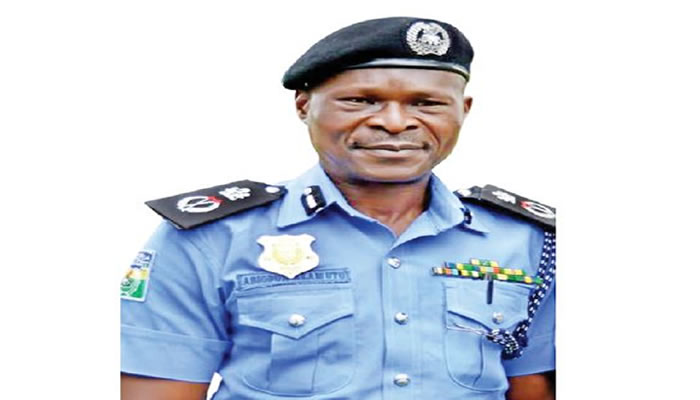
Many ritual killings, murder cases happen in homesteads —Ogun State Commissioner of Police, Nigeria

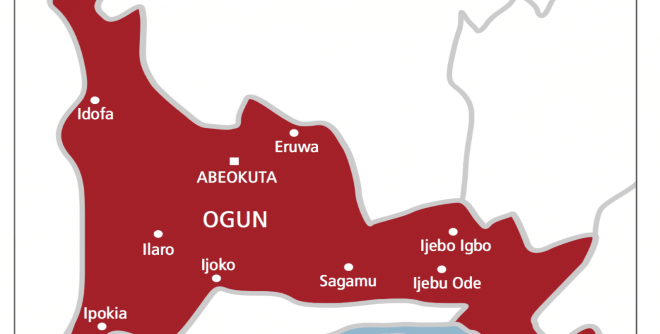
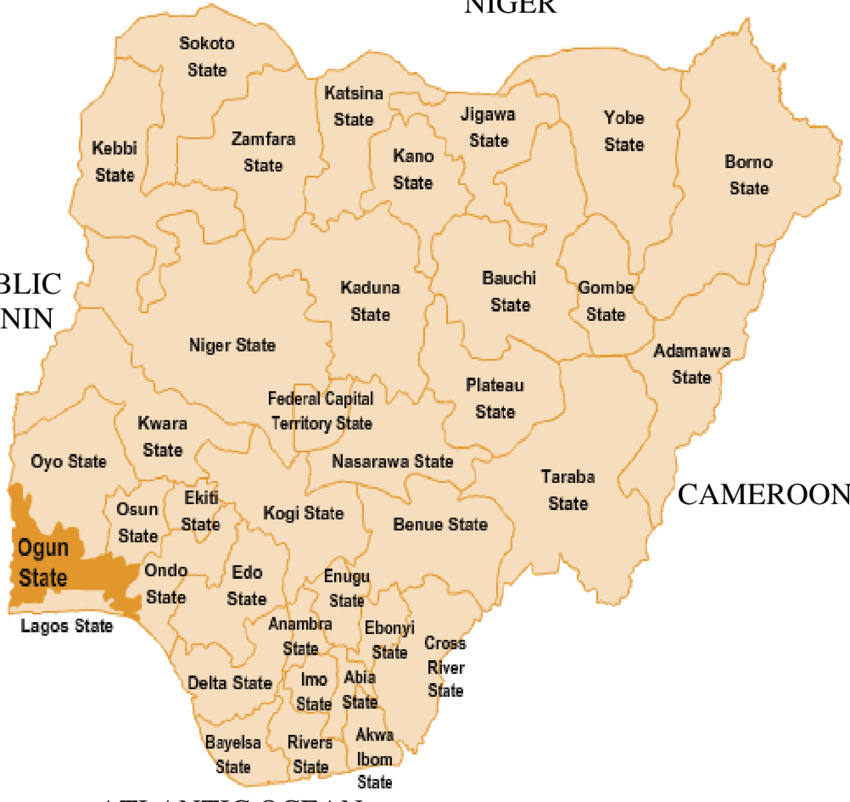
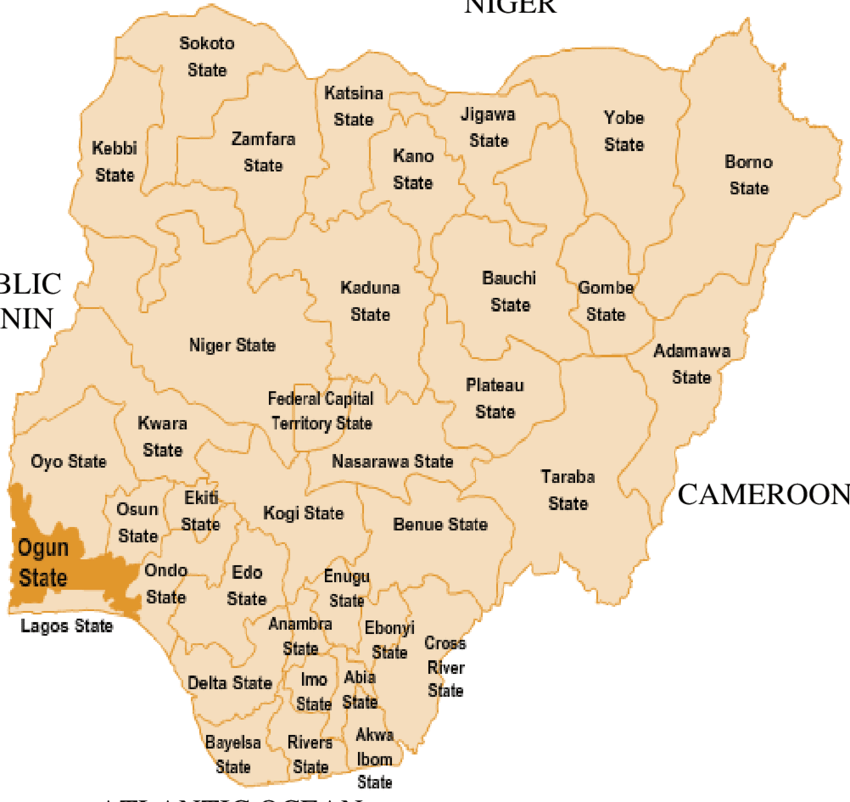
The Commissioner of Police in charge of Ogun State Command, Dr Lanre Ogunlowo made a remarkable statement while being interviewed on the subject of the alarming rise in crimes and how to ensure security and safety in this southwestern coastal state. Ogun State borders Lagos, Ondo, Osun and Oyo states in the south, east and north and the republic of Benin in the west.

Ogun State is located in the South West geopolitical zone of the Federal Republic of Nigeria (Nigeria is divided into six geopolitical zones commonly called zones). With a surface area of 16,762 km2 Ogun State ranks 24th (out of 36 states) and with a population of about 7 million people in 2024 it occupies the 13th position.

The majority of the population belongs to the Yoruba ethnic group, their language being the lingua franca of the state. The dominant religions in Ogun State are majority Islam and minority Christianity although a certain amount of traditional religion is still practiced.

The capital of Ogun State is Abeokuta

CP Ogunlowo made the chilling acknowledgement that “Quite a number of this issue of ritual killing and murder cases happen in homesteads (….)”

True, he combines in this particular sentence both ritual murders and ‘ordinary’ murders, but nonetheless his comments warrant more than superficial attention. Besides, if this is the case in Ogun State, what about the other 35 Nigerian states?

It is common knowledge that the scourge of ritual killings (known as ‘money rituals’ in Nigeria) scares millions of Nigerians, young and old, males and females – with over 220 million people Nigeria is Africa’s most populous country – and constitutes a serious violation of one of the most basic human rights, the right to live without fear. Ogunlowo’s recognition means even at home Nigerians are not safe.

The states’ governments and the federal government in Abuja have work to do!
(FVDK)

Many ritual killings, murder cases happen in homesteads —Ogun State Commissioner of Police Ogunlowo

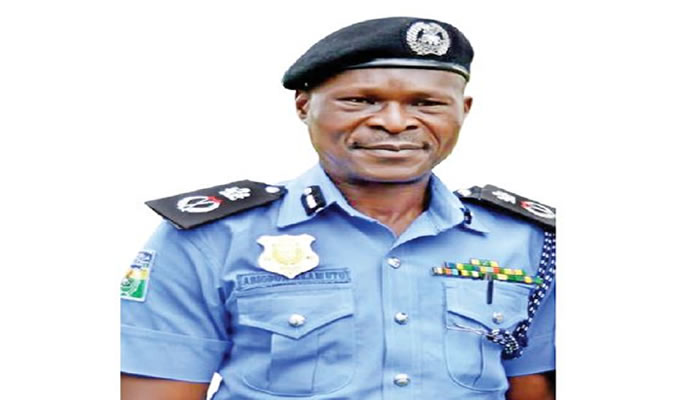
Ogun State Commissioner of Police, Dr. Lanre Ogunlowo. Photo: Oluwatoyin Malik

Published: April 4, 2025
By: Oluwatoyin Malik – Nigerian Tribune

In this interview with Crime Editor, OLUWATOYIN MALIK, the Commissioner of Police in charge of Ogun State Command, Dr Lanre Ogunlowo, speaks on the efforts in curbing crimes and ensuring security and safety in the state. Excerpts:

KIDNAPPING in the South West states, Ogun inclusive, is of utmost concern currently. What is Ogun State Police Command doing about it?

We don’t take things for granted because anything can happen at any time. So, even in peace times, we are still on our toes. And for the Area Commanders, Divisional Police Officers and tactical units, all of us keep putting pressure on one another that our areas must be calm. So, you can’t be executive DPO, executive Area Commander. There is always need to go out and see what is happening in your domain.

We try to get feedbacks from people. We can’t go the press and tell them Ogun is peaceful and calm while people experience otherwise. We tell the people to be candid and tell us if we are not doing enough. We don’t take it as criticism. Let them tell us how they feel. That will guide our own actions too.

God is helping us, and the governor is doing his utmost, I must say that. Ogun state government is assisting us all the way. It is not that we don’t have one-off situations but as they come up, we deal with them.

The last major one we had was in Ogijo area about three weeks ago when they a young boy was kidnapped. Eventually, we put pressure on the kidnappers and the boy escaped unhurt because of the pressure. During our encounter, one of them (kidnappers) was neutralised by the police firepower.

What we are trying to do is to let people know this: if you are committing crime, you have two options – either stop or get caught. Stop it or you answer to the law. But like I do say, what we just do majorly is to continue to put pressure on our personnel that they must be awake for the people of Ogun State to sleep soundly.

Except the one-offs, does it mean kidnappings have reduced?

The Inspector General of Police has been very helpful. I know we have five functional Armoured Personnel Carriers (APCs) in recent time. We have one at Ijebu Ode, we have one by Sagamu interchange, we have one at Ilaro axis, we have one at Iperu Remo and we have one patrolling Abeokuta. We just want people to have peace of mind because the fear of security forces is also security on its own.

I will be honest; that does not mean that we are not having challenges, especially attacks on commercial motorcyclists. We have tried to educate them and create awareness that as they are looking for money, they ride bike 10 p.m., 11 p.m., 1 a.m., and they see two, three people who wave them down and ask to be taken to a place, and you pick them. Constantly, we have cases of attacks on these commercial bike riders and we have reached out to them that they should take a rest after working till 8 or 9 p.m. because late-hour attacks are of concern, but we are still having them because the riders will not listen. They seem not to care about their security. This is a major thing we have been dealing with. We can only just continue to keep vigil so that we don’t have such incidents during the coming celebration of Easter as we did at Eid-el-Fitr celebration.

What about the ritual killers?

Just as all other incidents we are talking about, in ritual killing, I don’t know where they got this idea that you can kill or use human being to make money. It’s a sad development. In Ogun State, we are dealing with them as best as we can. As many as we are able to get hold of, we investigate and prosecute, so we enjoin citizens to be self-aware, to be concerned about their security. Quite a number of this issue of ritual killing and murder cases happen in homesteads where no security personnel can protect anyone. We have relations, families where one person kills the other. These are things happening in homes which we can’t do much about”. (italics added – webmaster FVDK)
Be that as it may, the Deputy Commissioner, Criminal Investigation Department (DCCID) and the Assistant Commissioner, Criminal Investigation Department (ACCID) are doing their best in that regard. We just keep trying.

Some people go to graveyards and cemeteries to exhume corpses to remove body parts, with the belief that the offence is bailable and they will regain their freedom soon. What’s your take on this?

We can only speak for the police and their activities. We investigate and process them to court. We are law enforcement agents. We don’t make law, we enforce it, and we can only operate within the ambit of the law. If the law declares a particular act as bailable, it is not within our own competence to say otherwise. It is just as the issue of land grabbing, it’s everyday incident in Ogun. And we say, look, the police cannot apportion land, and we cannot declare A or B as the owner of land. If you have any issue, go to court. But what the police will not allow to happen is the breakdown of law and order. If we see people disturbing public peace because of a piece of land, our own is to move everybody to court. Let them tell the court that they are having issues over land ownership. The police cannot decide who owns the land.

The moment we take cases to court, it is outside police purview. If the law classifies it as bailable offence, then it is. A lot of people usually say that police cannot be trusted because when they take confirmed criminals to them, by a week after, such criminals would be seen in town, free. If we arrest, we detain them for investigation, but such cannot be prolonged. If it’s a bailable offence, the person will be released on bail. And when we complete our investigation, we go to court. The court will exercise its power if it is a bailable offence, and we cannot fault them for that.

Source: Many ritual killings, murder cases happen in homesteads —CP Ogunlowo

Liberia Human Rights report condemns continuation of female genital mutilation, trial by ordeal, and ritual killings

As elaborated further in the article presented below, the human rights situation in Liberia, as reported by the Independent National Commission on Human Rights (INCHR) in its 2024 Human Rights Situation Report, is very worrisome with severe human rights violations across the country. Notably, I quote, “The report (…) condemned the continuation of harmful traditional practices, particularly female genital mutilation (FGM), trial by ordeal, and ritual killings. Despite calls from both the government and traditional leaders to end these practices, they remain rampant (….)” Unquote.

Ritual killings, trial by ordeal (‘sassy wood trial’) and witchcraft accusations are persistent problems in Liberia and on many occasions I have drawn attention to these practices, reporting on particular ritual murder cases. In the recent past there have only been a few reported cases of ritual violence including murder but, as the 2024 Human Rights Situation Report of the INCHR demonstrates, this does not mean that the ugly practice of killing human beings for ‘juju’ purposes, traditional trials by ordeal and witchcraft accusations have vanished – unfortunately not.

It is interesting to note that the INCHR categorizes ritual killings as a traditional practice. It is a fact, that the origin of killing for ritual purposes (to obtain ‘juju’) in Liberia goes back to the history of certain tribal communities, but Liberia’s recent past contains an abundance of ritual murders which were committed because of sheer greed and which are hardly distinguishable from ordinary criminal acts including abduction, torture and murder.

Providing an exhaustive list of examples here would require too much space, I will just give three examples covering the past 50 years: (1) the Maryland murders in the late 1970s; (2) ritual killings in the Doe era (1990s) ; and (3) accusations linking the Weah Administration (2018 – 2024) to ritual killings – underligning that ritualistic murders are being committed in Liberia every year.
(Note: I purposely omit here the back-to-back civil wars (1989-2003) with its many atrocities, ritualistic killings and cannibalism.).

The one million dollar question that emerges is of course: ‘Why are there still ritual murderers in Liberia, why hasn’t the phenomenon of ritual killings disappeared?

He/she who knowns the answer should speak.
(webmaster FVDK)

Liberia: INCHR 2024 Report Highlights Alarming Human Rights Violations in Liberia

Published: March 28, 2025
By: Front Page Africa, Liberia

Monrovia-The 2024 Human Rights Situation Report released by the Independent National Commission on Human Rights (INCHR) has shed light on severe human rights violations across Liberia, pointing to troubling trends that persist despite some positive efforts in certain sectors.

The report, presented by INCHR Chairperson Cllr. Dempster Brown, paints a concerning picture of the state of human rights in Liberia, with key violations spanning state security brutality, prolonged pretrial detention, gender-based violence, and the continued prevalence of harmful traditional practices.

State Security Brutality and Excessive Use of Force

The most pressing concern raised in the report is the brutality of state security forces. Instances of excessive use of force by law enforcement, often leading to deaths, have continued to occur with alarming frequency.

One such incident highlighted in the report was the killing of a 17-year-old student by a police officer on July 1, in Paynesville City.

The officer was involved in a confrontation with a suspect, and in an attempt to restrain the individual, he discharged his weapon, fatally injuring the student. Despite the officer being arrested and charged with murder, this case underscores a broader issue of unchecked violence by state security forces.

Prolonged Pretrial Detention and Judicial Delays

Another critical violation addressed in the report is the widespread issue of prolonged pretrial detention. Many individuals are held in detention for extended periods without trial, contributing to overcrowding in Liberia’s prisons.

These delays are further compounded by a shortage of judicial officers in rural areas, preventing timely adjudication of cases.

Prolonged Pretrial Detention and Judicial Delays

Another critical violation addressed in the report is the widespread issue of prolonged pretrial detention. Many individuals are held in detention for extended periods without trial, contributing to overcrowding in Liberia’s prisons.

These delays are further compounded by a shortage of judicial officers in rural areas, preventing timely adjudication of cases.

This backlog in the judicial system according to the report, has led to a growing distrust in the country’s ability to deliver justice.

Gender-Based Violence and Rape

The INCHR report also expressed grave concern over the persistence of gender-based violence (GBV), with rape cases, particularly those involving minors, remaining a constant threat.

Despite ongoing efforts to address this issue, there has been no significant reduction in the prevalence of sexual violence, with victims often left without adequate protection or recourse to justice.

Harmful Traditional Practices

The report further condemned the continuation of harmful traditional practices, particularly female genital mutilation (FGM), trial by ordeal, and ritual killings. (italics added by the webmaster)
Despite calls from both the government and traditional leaders to end these practices, they remain rampant, with young girls being particularly vulnerable. The practice of FGM, in particular, continues to impact young children who are often subjected to the procedure at the expense of their education and well-being.

Enforced Disappearances and Extrajudicial Killings

The issue of enforced disappearances was also highlighted, with the case of Abrahima Kalil Cherif standing out.

Cherif, who was arrested in 2024, was reported missing after being detained at the Monrovia Central Prison. His case, along with other instances of enforced disappearances and extrajudicial killings, points to serious lapses in Liberia’s adherence to both national and international human rights standards.

The appalling conditions in Liberia’s prisons were another critical area of concern. Overcrowding, lack of medical care, and the rampant spread of diseases like tuberculosis and hepatitis B have created a dire situation for inmates.

The report stressed that the prolonged pretrial detention system exacerbates these conditions, placing detainees at severe risk of health complications.

Child Protection and Violations in Concession Areas

Additionally, the report said children in Liberia remain vulnerable to exploitation, with widespread reports of child labor, sexual violence, and even torture.

“Children accused of witchcraft are often subjected to public humiliation and violence, highlighting the need for stronger child protection measures. Additionally, the report pointed to violence in concession areas, where communities protesting against poor conditions have been met with deadly force from state security, leading to significant human rights abuses,” the report added.

Call for Immediate Action

In light of these grave violations, the INCHR has called for government immediate action to address the issues raised in the report.

The Commission has further recommended Investigations into all killings by state and non-state actors, with appropriate accountability, Expedited reforms to address the backlog in the judicial system and alleviate overcrowding in prisons, the criminalization of harmful traditional practices such as FGM and trial by ordeal, strengthened protections for women and children, particularly in the areas of gender-based violence and child labor and Enhanced oversight of law enforcement agencies to ensure accountability for misconduct.

Meanwhile, the 2024 INCHR report underscores the urgent need for reforms in Liberia’s approach to human rights, noting that continued violations, particularly those involving state security forces, judicial delays, gender-based violence, and harmful traditional practices, demand immediate attention from the government.

The INCHR said that without significant changes, Liberia risks undermining its commitment to human rights, both domestically and on the international stage.

Source: Liberia: INCHR 2024 Report Highlights Alarming Human Rights Violations in Liberia

Uganda: Protesters set Soroti school on fire over delayed justice in pupil’s ritual murder

Last month, I posted twice on this gruesome ritual killing case in Uganda, see my posts of February 17 and February 12. The brutal murder of the victim, Joan Faith Apio, a five-year-old pupil at Jozan Nursery and Primary School, shocked Soroti City. Read the following report.
(webmaster FVDK)

Protesters Set Soroti School on Fire Over Delayed Justice in Pupil’s Murder

Published:
By: Eddy Enuru – – Nile Post, Uganda

In February, Faith Apio, 5, was found in a pool of blood at the school just three days into her enrollment. 

Angry residents in Soroti City set Jozan Nursery and Primary School ablaze on Thursday, protesting the delayed justice in the murder of five-year-old Joan Faith Apio.

The violent unrest followed a court decision to adjourn the high-profile case to March 20, 2025, sparking outrage among community members who accused authorities of frustrating the legal process.

Apio’s body was found on February 5 in a pit latrine at the school, her throat slit in what many suspect was a ritual killing.

The gruesome discovery shocked the community, leading to calls for swift action.

However, tensions flared when Grade One Magistrate Kibirige Apollo Kasuja adjourned the case during a virtual session, with the suspects—including school administrators, cooks, and two juveniles—appearing in court via video link.

Believing the delay was a ploy to deny justice, an irate crowd stormed the school, setting fire to the administration block, dormitories, and food store.

The mob also tore down the school’s fence, looted property, and vandalized offices.

Security forces fired live bullets into the air and used tear gas to disperse the protesters, but firefighters struggled to contain the flames as resistance continued.

Thick smoke billowed over the city, and panicked residents fled as the chaos escalated.

“We are tired of waiting. A five-year-old was murdered in cold blood, and now they are playing games with justice,” one protester shouted.

Authorities have yet to issue a statement on the situation, but local leaders condemned the violence, urging patience as investigations proceed.

Despite the destruction, protesters remain adamant that they will keep pressing for justice until Apio’s killers are held accountable.

The unrest in Soroti comes at a time of heightened tensions across Uganda, with similar concerns about justice and security playing out in the upcoming Kawempe North by-election.

Opposition leaders have accused security forces of intimidation and violence, raising fears about the broader political climate as the country moves toward the 2026 general elections.

Source: Protesters Set Soroti School on Fire Over Delayed Justice in Pupil’s Murder

When wealth demands blood: The horror of ritual killings in Nigeria

Warning: the following post and related articles contain graphic details which may upset readers.

On previous occasions I have stated here that the numbers of abductions and murders for ritual motives are running sky-high in Nigeria, not to speak of missing persons leaving no trace. Having a brief look at the contents of this site since I started it in 2018, one is tempted to say that this West African country is well covered but by far I do not report all recorded cases of ritualistic murders in Africa’s most populated country (over 225 million inhabitants in 2024).

On March 4, the Daily Champion, a Nigerian online newspaper, reported that a group of community women under the name, ” concerned mothers” have raised alarm over the increase in ritual killings in Imo State. Two days later, another online newspaper, the Daily Post, published an alarming article, Kogi, Nasarawa, Niger residents decry rising cases of ritual killings. The following day, a fashion’s designer’s head was cut off in a suspected ritual killing in Edo State. On Monday, March 10, Lagos State police arrested a fourth suspect after the discovery of the mutilated body of a Lagos State University graduate student – who had been missing since January 16, 2025 – in a shallow grace. The same day, Delta State police announced it intensified the hunt for killers of two women who were found dead on farms. They were allegedly killed for ritual purposes, as locals claimed that some of their vital organs were missing. In the same week, women took to the streets in Anambra State protesting against gender-based violence and ritual killings.

The list is too long to continue. Each day new ritual killing cases are unearthed, sometimes literally.

Given this background, the article below is not surprising and the reader will not be surprised that I fully support the author’s view: that greed is a basic ingredient and motive for ritualistic violence.

However, after having read the article I remain with two – related – unanswered questions.

Why is it that superstition is so widespread in Nigeria? Ritual murders and the harvesting of organs, other body parts, in short, ‘money rituals’, are carried out – by ‘ordinary criminals’ as well as by ‘ordinary citizens’ – because it is believed that ritual murders can make people rich or famous. Why is it that the belief in ‘juju’, the power of the supernatural, is so persistent?
(webmaster FVDK)

it is believed that ritual killings can make people rich

When wealth demands blood: The horror of ritual killings in Nigeria

Published: March 13, 2025
By: Kelly Odaro – The Nigerian Observer

Amidst Nigeria’s economic quagmire, a more sinister affliction festers — ritual killings. This grotesque practice, once whispered in hushed tones and relegated to the annals of folklore, has metamorphosed into an alarming commonplace reality.   

    The nation wakes up to a grim litany of media headlines detailing the heinous acts of individuals who, in their insatiable pursuit of material prosperity, desecrate human life with blood ritual. The moral fabric of our society is unravelling at an alarming pace, frayed by an unsettling obsession with overnight wealth.

    The recent gruesome murder in the Evbuotubu community of Benin City, where a young man’s head was severed, has once again spotlighted the disturbing prevalence of ritual killings in the region. This heinous act is not an isolated incident but part of a growing pattern of bloodshed fuelled by a dangerous obsession with instant wealth and power.

Ritual killings, often driven by superstitious beliefs and occult practices, have persisted in many parts of Nigeria despite modernisation and law enforcement efforts. In Benin City, several cases have been reported over the years, each more chilling than the last. Many of the unsuspecting victims are young men and women, often lured, kidnapped, and gruesomely murdered in rituals meant to bring fortune to perpetrators.

    In past years, there have been numerous reports of mutilated bodies discovered in forests, abandoned buildings, or shallow graves, their organs harvested for money-making rituals. In 

2020, a similar case rocked the Otuo community in Owan East Local Government Area of Edo State where three young men and a woman were set ablaze by a mob for allegedly beheading a secondary school student in a suspected ritual killing (Punch, 25 February, 2020). In 2018, four brothers allegedly unalived their grandmother for money rituals in Ohovbe quarters, Ikpoba Hill in Benin City, according to Vanguard News (January 9, 2018). 

    Likewise, in 2019, police uncovered a shrine where human skulls and body parts were found, indicating that ritual killings were being carried out on a large scale. More so, over twenty mummified bodies were discovered in a building in Benin City (The Guardian, August 8, 2022), and a myriad of similar incidents occurred across Nigeria.

   Despite widespread condemnation, these horrific acts continue, largely because of deep-rooted societal attitudes that glorify sudden wealth without questioning its source. Many individuals with dubious riches are still celebrated, given chieftaincy titles, and honoured in religious circles simply because of their financial influence. This cultural acceptance creates an environment where desperate individuals, especially young men, resort to extreme measures to attain wealth and social status.

Addressing this crisis requires more than just police crackdowns. There must be a fundamental shift in societal values —one that prioritises ethical wealth over ill-gotten riches. Religious institutions, traditional rulers, and community leaders must take a firm stand against the glorification of questionable affluence.    

    The Evbuotubu incident is a grim reminder that Nigeria is still battling the scourge of ritual killings. Until society collectively condemns and rejects wealth acquired through bloodshed, such horrors will persist, leaving a trail of innocent victims in their wake.

    Once upon a time, wealth in Nigerian society was synonymous with industry, resilience, and ingenuity. The elders of old (traders, craftsmen, farmers, and entrepreneurs) prided themselves on the sweat of their brows. A man’s affluence was a direct reflection of his diligence and years of toil. 

    Today, however, a corrosive paradigm has taken root, one that glorifies instant affluence, irrespective of the means through which it is obtained. The insidious doctrine of “making it by any means necessary” has replaced the time-honoured principle of hard work.

    This paradigm shift is not accidental. It is the consequence of a deeply flawed value system where wealth, no matter how dubiously acquired, commands reverence. The very individuals who should be ostracised for their morally reprehensible conduct are, instead, venerated. This toxic culture emboldens desperate youth to explore even the most abhorrent means to attain affluence.

The most disheartening aspect of this trend is the complicity (both tacit and overt) of society’s supposed moral gatekeepers. Religious leaders, who should be the custodians of righteousness, have too often become enablers of corruption. In the grandiose edifices of faith, where the gospel of prosperity is preached with fervour, those with questionable sources of wealth are celebrated.    

    They are given front-row seats, called upon for prayers, and sometimes elevated to positions of religious leadership, all because their ill-gotten wealth fuels the construction of mega worship centres.

    Traditional rulers, the custodians of Nigeria’s cultural ethos, are equally culpable. The hallowed institution of chieftaincy, once reserved for men of impeccable character, has been commercialised. Titles that once symbolised honour are now available to the highest bidder. The affluent, irrespective of their moral standing, are conferred with chieftaincy titles in elaborate ceremonies attended by society’s crème de la crème. 

    In many instances, these so-called ‘chiefs’ are known for their nefarious dealings, yet they are paraded as paragons of success.

    The elite, politicians, and corporate magnates are not innocent either. Many continue to patronise, endorse, and associate with individuals whose wealth bears the stench of blood money. By doing so, they lend credibility to criminality and normalise the abnormal. When men who are rumoured to have amassed their fortunes through dark means are invited to state functions, given government contracts, or honoured in grand events, the message to the struggling youth is clear — wealth, regardless of its origin, is the ultimate measure of success.

The media, which should serve as society’s watchdog, is often a double-edged sword. While some journalists and media houses expose the nefarious activities of ritual killers, others glorify the very individuals whose sources of wealth are dubious. The extravagant lifestyles of these questionable figures are routinely splashed across the pages of newspapers, magazines, television, and online platforms, painting them as role models rather than cautionary tales.

    Reality television, social media influencers, and music videos further exacerbate the problem by promoting a culture of ostentation. Young people, bombarded with images of expensive cars, lavish mansions, and extravagant vacations, begin to equate self-worth with material possessions. Those who lack the patience for legitimate wealth creation resort to criminality, with some taking the ultimate plunge into the dark world of ritual killings.

    At the core of ritual killings is the utter dehumanization of victims. The perpetrators, in their frenzied pursuit of wealth, strip their victims of all humanity, reducing them to mere commodities for sacrifice. The gruesome nature of these killings — dismembered bodies, missing vital organs, and ritualistic symbols points to an eerie level of barbarism that should have no place in civilised society.

    Many victims are unsuspecting individuals. Children are lured with sweets or money, young women deceived by fake lovers, and travellers waylaid by ritual syndicates. The lack of stringent security measures, poor law enforcement, and a failing judicial system embolden these criminals, who often evade justice or buy their way out of prosecution.

    One of the greatest tragedies of Nigeria’s legal system is its failure to serve as a deterrent to ritual killers. Reports of arrests are frequent, but convictions are rare. The wheels of justice turn at a sluggish pace, and in many cases, perpetrators with financial clout secure their freedom.

Corruption within the police force further compounds the problem. Cases of ritual killings are sometimes swept under the carpet in exchange for bribes, leaving families of victims without closure. Even when cases proceed to court, the judiciary’s lethargy allows them to drag on indefinitely, creating a loophole for criminals to manoeuvre their way back into society.

    If Nigeria is to rid itself of the scourge of ritual killings, a fundamental societal reorientation is imperative. The following measures must be taken:

Schools must incorporate value-based education that emphasises the dignity of labour and the dangers of illicit wealth.

   The youth must be taught that wealth, when pursued through righteous means, is more fulfilling and sustainable; religious leaders must take an uncompromising stance against those who amass wealth through dubious means. Places of worship should cease to be sanctuaries for financial criminals.

    Besides, traditional rulers should uphold the sanctity of their institutions by ensuring that only men and women of impeccable character are honoured – chieftaincy titles must not be ‘commoditised.’

More so, the media as watchdog of the society must prioritise investigative journalism that exposes ritual killers rather than glorify ostentatious lifestyles. Content creators should promote positive role models rather than individuals with questionable affluence.       

    Again, the police and judiciary must be restructured to ensure that ritual killers are swiftly apprehended, tried, and convicted. 

There must be no sacred cows; the law must take its course without favouritism.

    Moreover, citizens must become more vigilant and report suspicious activities. Neighbourhood watch groups should be empowered to work with security agencies in identifying and apprehending suspected ritualists.

   Ritual killings in Nigeria are symptomatic of a deeper societal malaise — a value system that places wealth above humanity. The tragedy is not merely in the blood spilt but in the indifference with which society treats this growing menace. If the nation does not recalibrate its moral compass, the ritualistic shedding of human blood will continue unchecked, and our collective humanity will be the ultimate casualty.

Ritual killers are on the prowl, preying on unsuspecting victims across the country. These criminals lurk in both rural and urban areas, taking advantage of isolated locations, late hours, and unsuspecting individuals.

    Parents and guardians must take proactive measures to safeguard their children and wards from falling victim to these nefarious acts. Educating young people about the dangers of accepting rides from strangers, wandering off alone, or engaging with unknown individuals is crucial. Additionally, people must exercise caution in their daily movements, ensuring they avoid desolate areas, especially at night.

    Men and women alike must remain vigilant and prioritise personal safety. Walking alone on lonely paths or deserted streets, particularly in poorly lit areas, increases the risk of being targeted. Instead, people should move in groups whenever possible and be mindful of their surroundings. Until then, everyone must stay alert because in a society where ritual killers operate with impunity, personal vigilance is the first line of defence.

    Let those who have ears listen and let those in positions of influence act. Posterity will not forgive a society that sacrifices its own on the altar of unbridled greed.

Odaro, a columnist, lectures in the Department of Mass Communication, Auchi Polytechnic, Auchi.

Source: When wealth demands blood: The horror of ritual killings in Nigeria

Kwara State, Nigeria: The Emir of Ilorin condemns ritual killing of final-year student, says justice must be served

Recently, I published two posts on the ritual murder of Hafsoh Lawal, a final-year student of the Kwara State College of Education, (KWCOE), Ilorin, reportedly by one Abdulrahman Bello. Please see my posts of February 18, Nigeria: Yetunde Lawal’s murder – A reflection of societal decadence, and of March 3, Nigeria: religious leaders bemoan surge in ritual killings among clerics.

The Emir of Ilorin (Kwara State) and Chairman of the Kwara State Traditional Rulers Council joined religious leaders in condemning the ritual killing of Hafsoh Lawal. By publicly condemning the violent crime, the Emir of Ilorin Alhaji Sulu-Gambari also joined other traditional rulers who recently spoke out against the crime of ritual murder in this West African country.

Last month monarch Eze Philip Ajomuiwe raised the alarm in Abia State, revealing that over 30 bodies had been dumped into the Imo river between 2024 and February 2025. Reportedly the corpses found were mutilated, a sign that the victims had been killed for ritualistic purposes. Earlier in the same month, a monarch in Delta State, the Asagba of Asaba, banned native doctors for aiding ritual killers. Moreover, early February the Oluwo of Iwo, Oba Abdulrasheed Akanbi, in Ogun State, accused Ekiti and Kwara monarchs of engaging in ritual killings.

The religious leaders and traditional rulers who speak out against the crime of ritual murder are to be commended.

Nigeria’s political leaders and legislators, and the police and judicial authorities of Africa’s most populated country should leave no stone unturned to apprehend and prosecute the perpetrators of ritualistic murders while simultaneously campaigning for the eradication of the get-rich-quick mentality which in combination with the belief in tradition and superstition perpetuate the cruel crime of murder for ritualistic motives and gross human rights violations.
(webmaster FVDK)

Emir of Ilorin condemns ritual killing of final-year student, says justice must be served

The Emir of Ilorin and Chairman Kwara State Traditional Rulers Council, Mai-Martaba Alhaji (Dr) Ibrahim Sulu-Gambari CFR

Published: February 16, 2025
By: Abdulrahaman Taye Damilola – The Informant, Nigeria

The Emir of Ilorin and Chairman Kwara State Traditional Rulers Council, Mai-Martaba Alhaji (Dr) Ibrahim Sulu-Gambari CFR, has expressed sadness over the gruesome killing of Hafsoh Lawal, a final-year student of the Kwara State College of Education, (KWCOE), Ilorin by one Abdulrahman Bello, an acclaimed ‘alfa’.

Alhaji Sulu-Gambari, in a statement issued by his spokesman, Mallam Abdulazeez Arowona, condemned the incident, saying, “It is most unfortunate, alien and regrettable act of wickedness.”

According to him, “It has become pertinent for parents, guardians as well as people in the neighbourhood to remain vigilant to happenings around them, especially ensuring that their children and wards are in the company of people of tested and trusted characters with well-researched family background.

“It is only hardwork that pays; total war should be declared against idleness, laziness and unwarranted loitering around the society by youths in the name of finding means of survival.”

Alhaji Sulu-Gambari also urged clerics in the Ilorin Emirate and beyond to sanitise the system by ensuring that the likes of Abdulrahman Bello are expressly exposed to the law enforcement agencies before wrecking more havoc and damaging the lives of innocent persons.

While commiserating the families of the late Hafsoh Lawal over the unfortunate end to the life of the promising daughter, Alhaji Sulu-Gambari urged the Nigeria Police and the Judiciary to ensure that toral justice is served in this matter while also directing religious leaders, especially Imams in Mosques in Ilorin Emirate and Kwara State at large to ensure that their Friday Khutbah focuses more attention on morality, dignity in labour as well as importance and respect for the souls of fellow human-being irrespective of tribe, religion and status.

The Informant247 reports that an Ilorin-born middle-aged man identified as Abdulrahman Bello has allegedly killed and dismembered the body of Lawal Hafsoh, a final-year student of Kwara State College of Education, Ilorin, for suspected ritual purposes.

According to reports, the deceased, Lawal Hafsoh, had on Monday, 10th of February 2025, declared missing after receiving a call at the naming ceremony.

It was gathered that the lady’s whereabouts were unknown since she received the call.

Meanwhile, on Tuesday, 11th of February 2025, the deceased parents reported the case to the Divisional Police Station at Oja Oba Police Station in Ilorin, the state capital.

However, the police requested her phone number and used it to track her last call, which was traced to an individual living in the Offa garage area of Ilorin,

The suspect, whose family house is in Isalekoto, was tracked and arrested, where he initially denied the knowledge of the lady’s whereabouts. However, when the police searched his house, he confessed that the lady was in his area and had died from an asthma attack after he called her to come over.

Upon further investigation, the police found the lady’s body dismembered and hidden in a bowl, along with the equipment used to dismember her. The suspect is now at the police headquarters in Ilorin.

It was reported that the suspect and the deceased met on Facebook, where they both got connected.

However, an effort to speak to the Kwara State Police Public Relations Officer SP Toun Ejire-Adeyemi proved abortive as she didn’t pick up her call at the time of filing this report.

Source: Emir of Ilorin condemns ritual killing of final-year student, says justice must be served

Related:

Police arrest suspected ritualist for killing final-year student in Ilorin, Kwara State

Police arrest suspected ritualist for killing final-year student in Ilorin

Published: February 15, 2025
By: Abdulrahaman Taye Damilola – The Informant, Nigeria

An Ilorin-born middle-aged man identified as Abdulrahman Bello has allegedly killed and dismembered the body of Lawal Hafsoh, a final-year student of Kwara State College of Education, Ilorin, for suspected ritual purposes.

According to reports, the deceased, Lawal Hafsoh, had on Monday, 10th of February 2025, declared missing after receiving a call at the naming ceremony.

It was gathered that the lady’s whereabouts were unknown since she received the call.

Meanwhile, on Tuesday, 11th of February 2025, the deceased parents reported the case to the Divisional Police Station at Oja Oba Police Station in Ilorin, the state capital.

However, the police requested her phone number and used it to track her last call, which was traced to an individual living in the Offa garage area of Ilorin,

The suspect, whose family house is in Isalekoto, was tracked and arrested, where he initially denied the knowledge of the lady’s whereabouts. However, when the police searched his house, he confessed that the lady was in his area and had died from an asthma attack after he called her to come over.

Upon further investigation, the police found the lady’s body dismembered and hidden in a bowl, along with the equipment used to dismember her. The suspect is now at the police headquarters in Ilorin.

It was reported that the suspect and the deceased met on Facebook, where they both got connected.

However, an effort to speak to the Kwara State Police Public Relations Officer SP Toun Ejire-Adeyemi proved abortive as she didn’t pick up her call at the time of filing this report.

Source: Police arrest suspected ritualist for killing final-year student in Ilorin

Nigeria: Ogun State and the death penalty

To the already long list of Nigerian States which have allowed the death penalty as ultimate sanction for ritual killers – see my March 6 post – we should add Ogun State. The following article is chrystal clear: people are fed up with the terrorism of unscrupulous ritualists, cultists, kidnap­pers, armed robbers, etc.

The author of the article presented below, Eli Jah Udofia, writes that “Since the return to democratic rule in Nigeria about 26 years ago, it is on record that no Nigerian gov­ernor has signed and ordered the execution of condemned criminals despite being empowered by the na­tion’s constitution.” He continues, with (quote) “Refusal or unwillingness to sign execution orders have no doubt con­tributed to the high rise of heinous crimes that most often led to loss of lives because in a situation where the Biblical “an eye for an eye” in­junction is not followed to the letter and where justice is not seen to have been served, it emboldens criminals to commit more heinous crimes, “af­ter all nothing go happen”. Unquote

The capital punishment as deterrent or as revenge?

Whatever the answer to this question, I – personally – am not convinced that the execution of condemned ritual murderers will significantly decrease the number of murders for ritual purposes (‘money ritual’) in Nigeria.

What is needed is an educational campaign aimed at eradicating superstition, in combination with the rule of law, respecting international agreements and human rights.
(webmaster FVDK)

Background information:

Ogun State is located in the South West geopolitical zone of the Federal Republic of Nigeria (Nigeria is divided into six geopolitical zones commonly called zones). With a surface area of 16,762 km2 Ogun State ranks 24th (out of 36 states) and with a population of about 7 million people in 2024 it occupies the 13th position.

The majority of the population belongs to the Yoruba ethnic group, their language being the lingua franca of the state. The dominant religions in Ogun State are majority Islam and minority Christianity although a certain amount of traditional religion is still practiced.

The capital of Ogun State is Abeokuta


Ogun State and the death penalty option

Governor Abiodun

Published: March 11, 2025
By: Eli Jah Udofia – Independent, Nigeria

There is no doubt that killings and acts of killings have become the or­der of the day in Nigeria. Apart from death in the hands of terrorists, the lives of Nigerians are daily been cut short by ritualists, cultists, kidnap­pers, armed robbers, etc.

From the North to the South, East to West, it is one killing after the oth­er. It is either husband killing his wife or the wife killing her husband; father killing his daughter or son killing his mother. It so appalling that one begins to wonder when the country became a jungle, where life is so cheap. Even in the jungle, ani­mals do not kill each other for the fun of it except for food and defending territories.

In Nigeria today, killing has be­come a hobby or a pass time for some people. While ritualists kill and har­vest body parts for money making rituals, some kill to take possession of the deceased property. Others, like cultists, carry out revenge killing or kill to show superiority while others kill for ransom.

About two years ago, the media, both traditional and new, was awash with the story of how a boy who re­sides in Abeokuta, the Ogun State capital, connived with his friends, killed his girl-friend and used the head for money ritual purposes af­ter disposing the body by burning. Sometimes one begins to wonder the benefits of these senseless killings or is it that humans have lost their humanity?

Also in Ogun State, in the middle of last year, three Indians and a Nige­rian were kidnapped along the Ijebu- Ode-Ore road but were lucky to be rescued by men of the Nigeria Police. Similarly, not too long ago, the wife of Retd. Assistant Inspector General of Police, Mrs. Folasade Odumosu, was kidnapped on her way to work and the sum of N40m demanded for her release.

Apart from kidnapping, cult relat­ed killings are also rampant in plac­es like Abeokuta, the State capital, Sagamu and Ijebu-Ode. Cultists reign of terror saw the killings of rival members and sometimes cut short the lives of innocent people.

The question now is, when did Ni­geria and Nigerians descend to this abysmal low in morality? Can this be attributed to exposure to moder­nity, technology or influence of social Media? What really went wrong in the past few decades that people no longer regards life as sacred?

Though the Nigeria’s legal system is noted for undue and prolong delays in delivering justice, it has also made some landmark judgements especial­ly in cases involving murders and the likes by passing death sentences on those who took other people’s lives.

On the third of February, 2025, an Ogun State High Court sitting in Abeokuta, sentenced he trio of Lekan Adekanbi, Ahmed Odetola, and Wa­heed Adeniyi to death by hanging for the murder of Kehinde Fatinoye, his wife, Bukola Fatinoye, and their son, Oreoluwa, on January 1, 2023.

The Fatinoyes were attacked at their Ibara GRA residence shortly after returning from a crossover church service. Led by their driver, Adekanbi, the assailants broke into the home around 2 am, murdered the couple and set both their bodies and the house on fire.

Not done, the attackers also tied up their son, Oreoluwa, along with an adopted son, before throwing them into the Ogun River. While Ore­oluwa unfortunately lost his life, the adopted son miraculously survived.

After their arrest by the police, Adekanbi, in an interview with jour­nalists, admitted spearheading the attack, citing his employers’ refusal to increase his salary or grant him a loan request.

Many Nigerians observed with dismay that death row inmates re­main in prisons for years, living off taxpayers’ money after the death sentence had been passed on them. Concerns have also arisen over the government reluctance to sign exe­cution orders—a trend that has left many death row inmates languish­ing in correctional facilities indefi­nitely.

Since the return to democratic rule in Nigeria about 26 years ago, it is on record that no Nigerian gov­ernor has signed and ordered the execution of condemned criminals despite being empowered by the na­tion’s constitution. This act is quite contrary to what obtained during the military era where Military Admin­istrators or Governors approved ex­ecution once the death sentence was pronounced by competent Courts.

Refusal or unwillingness to sign execution orders have no doubt con­tributed to the high rise of heinous crimes that most often led to loss of lives because in a situation where the Biblical “an eye for an eye” in­junction is not followed to the letter and where justice is not seen to have been served, it emboldens criminals to commit more heinous crimes, “af­ter all nothing go happen”.

Disturbed by this ugly trend and the need to eradicate incidences of violent crimes like kidnapping, cult­ism, ritual killings and the likes as well as ensure that victims of these crimes get justice, the State govern­ment is considering a drastic action by looking at the death penalty op­tion through signing Death Warrants of those sentenced to death by com­petent Courts.

The State Attorney General and Commissioner for Justice, Mr. Olu­wasina Ogungbade (SAN), gave this indication and expressed concern on the increase in criminal activities in recent times in the State.

According to Mr. Ogungbade, gov­ernment is ready to take the bull by the horns by implementing the law by signing the Death Warrants.

He observed that despite the pro­active measures put in place by se­curity agencies in tackling crimes, there appears to be an upsurge par­ticularly in ritual killings, adding that government has identified the wrong perception that there will be no repercussions when some of these crimes are committed to be the root cause.

“I can tell you that we are looking seriously at this as a means of send­ing across a message that Ogun State is not a place where you can come and commit such serious crimes and get away with it.

“It is part of the duty of the gover­nor to sign Death Warrants and I am certain that when he took that oath of office, he took it knowing full well the responsibilities that come with it and he is a governor that uphold the rule of law so I can assure that in deserving cases, he will not shirk away from that constitutional duty.”

Ogungbade believes that if some­body has gone through the process of fair trial, made use of all his appeals, then “we will begin to look seriously at implementing those judgements hoping that it will serve as a deter­rent to those who still intend on car­rying out such crimes. But in doing so, I can assure you that we will be systematic about it, we will not be reckless about it.”

From time immemorial, society has always found a way of dispens­ing justice and death penalty has always been a way of ensuring that those who commit serious crimes es­pecially the ones that involve human lives pay dearly for them.

It is often said that “drastic situ­ation requires drastic solution” and since criminals have decided not to heed several warnings of Governor Dapo Abiodun, who on many occa­sions, advised them to turn a new leaf, then it is time for them to begin to face the hangmen’s noose.

*Udofia writes from Laderin, Abeokuta

Source: Ogun And The Death Penalty Option

Nigeria: Kaduna, Kano, Katsina residents seek death sentence for ritualists, cannibals

In previous posts I’ve reported on death sentences pronounced in Nigerian states. In Delta State (2024), Niger State (2024), Rivers State (2020), Osun State (2020), Ondo State (2019), to be more specific. Shortly, more states may follow, as the following article implies. The increase in ritualistic murders has led the population in Kaduna, Kano and Katsina states to press their governments to allow for the death penalty for ritualists and those found selling or eating human parts, according to the article cited below.

As mentioned before on this site, Nigeria is a signatory to the Universal Declaration of Human Rights, adopted by the UN in 1948. National and international organizations emphasize that the death penalty breaches human rights including the right to life and the right to live free from torture or cruel, inhuman or degrading treatment or punishment. Both rights are protected under the 1948 Universal Declaration of Human Rights,

The surge in criminal killings for ritualistic purposes, human sacrifices, child trafficking, and various sorts of witchcraft activities in a number of SSA countries have resulted in an increasing number of countries adopting laws allowing for the death penalty for convicted criminals. In Nigeria a number of states have adopted legislation allowing the sentencing to death of convicted ritual murderers which does not always mean that they are actually executed. 

Though I strongly support the prosecution of suspected ritual murderers and the rule of law, I have my doubt about the effectiveness of the capital punishment as a deterrent. The phenomenons of ritualistic murders and witchcraft are too complicated to eradicate by only harsh punishments. I can cite many examples, in various countries – to name one: Liberia.

I witnessed the public execution by hanging of seven convicted ritualistic murderers, in Harper, Maryland County, almost fifty years ago, in 1979.

Did this eradicate ritual murders in Liberia? No.
Did this eradicate the belief in witchcraft in Liberia: No.
Did this eradicate superstition in Liberia? No.

Hanging of the Harper Seven, Liberia, February 16, 1979. Source: F. van der Kraaij Collection Wikimedia.

In my opinion only education will bring the desired result, in combination with the strict rule of law, not allowing any exception, political interference of ‘big shots’: political, religious or traditional leaders, resulting in a shameful impunity. All what is needed is the political will to end these cruel outdated and criminal practices and atrocities. They have no place in the 21st century.
(webmaster FVDK)

Kaduna, Kano, Katsina residents seek death sentence for ritualists, cannibals

Published: March 3, 2025
By: Agency Report – Daily Nigerian

There have been growing concerns about the obnoxious increasing trend of of ritual killings across Nigeria.

The News Agency of Nigeria reports that the heightened situation of ritual killings is driven by the quest for quick wealth, poverty, unemployment, and lack of effective legislation.

There have also been sustained calls for stronger laws against ritual killings to effectively stem the tide of the menace.

There have also been appeals for plausible economic empowerment programmes and public awareness campaigns to deal with the dastardly phenomenon.

Analysts have posited that the government, civil society, and individuals must work together to address the underlying factors and put an end to these heinous crimes.

In Katsina State, the residents of have urged the government to provide a death sentence against ritualists and those found selling or eating human parts.

They made the call in an interview with the News Agency of Nigeria (NAN)in Katsina.

The residents said the call has become imperative in view of the increasing cases of ritual killings, particularly in some parts of the country.

Ayuba Inusa, a resident of Katsina, said that was the only way to prevent the people from joining the ritual and cult groups.

He said: “Since the perpetrators have no mercy, they deserve to be treated with no mercy, to serve as a deterrent to those willing to join the groups.”

Inusa further stressed the need for the traditional and religious leaders to intensify efforts in preaching against the ugly act.

On his part, Kabir Tukur, advised the people against the desire to accumulate worldly materials using such inhumane and ugly methods.

He said,”That is because most of the victims were those who want to accumulate material things easily and anyhow.”

Tukur further urged parents to be monitoring their sons and daughters and discourage them against such bad habits to prevent them from becoming victims of such circumstances.

He also urged girls and women to be wary of friendship in the social media, saying, “because, most of the victims were easily caught up through that platform.”

Another correspondent, Grace Jacob, also urged girls to desist from going to the persons they met through the social media to avoid becoming victims.

She further urged the government to provide stiffer punishments against perpetrators of those barbaric acts.
In Kaduna State, the Police Command said it has recorded zero ritual killing in the state.

The command’s Public Relations Officer, DSP Mansir Hassan, confirmed to the News Agency of Nigeria (NAN) in Kaduna.

He said, “This remarkable achievement is a testament to the state’s unwavering commitment to combating this heinous crime.

He said the command has not received a single complaint of ritual killing in the past three years.

According to him, the ways to curb this incident include stopping hard drugs’ abuse, public enlightenment, and addressing youth motivations.

“The command’s proactive approach to preventing ritual killings has included increased patrols, intelligence gathering, and community engagement,”Hassan said.

He advised that the youths should be engaged with the local communities to raise awareness about the dangers of ritual killings.

Hassan said, “Religious leaders have a role to play in educating the public about the importance of upholding human life and the sanctity of human dignity.”

He said the youths should be engaged on education and job creation programmes, as well as counseling services to address anxiety and other mental health issues.

“We will continue to prioritise the safety and security of citizens,” Hassan said.

In Kano State, some experts have called on community leaders to collaborate in efforts to combat ritual killings, urging action to address the underlying factors driving the crime.

Some of the residents, who spoke to the News Agency of Nigeria (NAN) urged the government at all levels to address the crime.

One of them, Musa Abubakar, a lecturer at the Kano State Polytechnic, attributed the increasing frequency of ritual killings to economic hardship and widespread poverty.

According to Abubakar, these challenges have driven many, especially young people, to seek alternative, albeit criminal, means of wealth acquisition.

He said that the high unemployment rate has led to increased desperation, with some individuals believing that ritual sacrifices may offer a shortcut to financial success.

Abubakar said: “Moral decay is on the rise. If this decay is not addressed, it could lead to an increase in other forms of criminality.

“They include human trafficking, organ harvesting, and cult-related violence, further destabilising the nation.$
A public affairs commentator, Isa Muhammad, stressed the importance of collaboration between the security agencies and community leaders to curb these crimes.

“Community policing initiatives should be expanded to encourage local participation in crime detection and reporting.

” Vigilance groups should also be involved in monitoring suspicious activities,” he said.

Isa further emphasised that traditional and religious leaders must take a strong stance against immoral practices, while educational institutions should enforce ethics that all.the students must adhere to.

Similarly , Abdulrazak Abdullahi, a Lawyer, expressed concern over the growing incidents of ritual killings, highlighting a shift in values where human life was no longer sacred.

“The increasing prevalence of ritual killings suggests a dangerous shift in societal values, with people willing to engage in barbaric acts for personal gains,” Abdullahi said,

He urged the law enforcement agencies to act proactively rather than only responding after crimes have been committed.

Abubakar then called for closer cooperation between the Police, judiciary, intelligence agencies, and community leaders to dismantle criminal syndicates behind these killings.

“The government should strengthen legal frameworks, improve law enforcement, and ensure the swift prosecution of offenders,” he added.

An activist, Amina Ali, also called for the intensification it public awareness campaigns and the enactment of stricter laws to create a safer and more secure society.

She stated that the high unemployment had fueled desperation, with some resorting to ritual sacrifices as a shortcut to wealth.

Ali warned, “If the growing moral decay is not addressed, it could lead to increased criminal activities, including human trafficking, organ harvesting, and cult-related violence, further destabilising the nation.” (NAN)

Source: Kaduna, Kano, Katsina residents seek death sentence for ritualists, cannibals

And:

Ritual Killings: Why I Advocate Death Penalty For Perpetrators –Campaigner

Published: March 3, 2025
By: New Telegraph-Admin – New Telegraph, Nigeria

A campaigner against ritual killing, Mr Sunday Oyinloye, has advocated death penalty for perpetrators of the act. He told the News Agency of Nigeria (NAN) yesterday in Abuja that the increasing cases of ritual killings had become a source of worry.

Oyinloye, who blamed the development on the decay in family values, laziness and desire to get rich at all cost, said death penalty would be a great deterent.

The campaigner said society, schools, families, religious bodies and government were not doing enough to address the vice.

Oyinloye called for more engagements on ritual killings in the country, adding that the seeming nonchalance about the menace over time was part of the reasons for its increased rate.

He said: “As it is now, there is no conversation about ritual killings and we keep having cases on daily basis.

“Relevant stakeholders must rise up against this menace and speak out against this ugly trend where women and young girls are often the victims.”

Source: Ritual Killings: Why I Advocate Death Penalty For Perpetrators –Campaigner

Uganda: emotions run high as thousands bury ritual murder victim Apio in Soroti

As announced in my previous post covering this tragic murder – now beyond doubt a ritual murder – dated February 12, Uganda: Wife of school director arrested over suspected ritual sacrifice in pupil’s murder, more news on the last moments of the victim, Joan Faith Apio, a five-year-old pupil at Jozan Nursery and Primary School, whose brutal murder has left Soroti City in shock.

When will it end? Will there ever be a day that ritualistic killings will have ceased to occur?

As the article below describes, outside the cathedral, emotions ran high as thousands of mourners stood in sorrow and solidarity, demanding justice. The pictures tell all.
(FVDK)

Emotions Run High As Thousands Bury Ritual Murder Victim Apio in Soroti

Joan Apio had only attended the school for two days when she was brutally murdered

Published: February 16, 2025
By: Eddy Enuru – Nile Post, Uganda

On Sunday, February 16, mourners gathered at St. Immaculate Catholic Parish to pay their last respects. Rev. Fr. Michael Omaria offered condolences to Apio’s grieving family, urging them to seek solace in faith.

Tension ran high at the requiem mass for Joan Faith Apio, a five-year-old pupil at Jozan Nursery and Primary School, whose brutal murder has left Soroti City in shock.

Her lifeless body was discovered locked inside a staff pit latrine on February 5, sending waves of grief and fear through the community.

The tragic incident has raised urgent concerns over the safety of children in private schools.

On Sunday, February 16, mourners gathered at St. Immaculate Catholic Parish to pay their last respects. Rev. Fr. Michael Omaria offered condolences to Apio’s grieving family, urging them to seek solace in faith.

He strongly condemned the ritualistic nature of the crime, calling it abhorrent.

Outside the cathedral, emotions ran high as thousands of mourners stood in sorrow and solidarity, demanding justice.

As public pressure mounted, police intensified their investigations, leading to multiple arrests. Soroti Resident City Commissioner Peter Pex Paak addressed mourners, confirming that several suspects had confessed and would soon face trial.

“Joan’s murder was like a movie. It was carefully planned, and several people played a role in killing her,” Paak stated.

According to investigators, the murder was premeditated and involved at least seven individuals.

Apio and her twin sister, Achen, had only recently joined Jozan Nursery and Primary School after their mother, Evelyn Akol, was reportedly manipulated into enrolling them.

On February 3, Akol unknowingly left her daughters in the hands of those who would later be implicated in the crime.

Two days later, Apio was lured into the staff latrine at around noon, where she was murdered.

Authorities believe one accomplice waited inside the latrine while another led the child in. A third suspect allegedly washed away the evidence immediately after the crime.

Apio’s blood was reportedly collected, wrapped in black plastic, and handed to an unidentified individual who fled the scene.

“We are now hunting for the person who received the blood from behind the school fence and escaped with it,” Paak added.

Police confirmed that all primary suspects were in custody and had provided statements detailing their roles. Meanwhile, authorities are actively pursuing the individual who took the blood.

Investigations also suggest that the director of another school in Soroti played a role in persuading Akol to enroll her daughters at Jozan.

East Kyoga Regional Police Commander Damalie Nakyuha confirmed the arrests of five individuals, including Joseph Okedi, the director of Jozan Nursery and Primary School, his wife, Suzan Vivian Okedi, and head teacher David Kadimba.

She assured the public that more arrests were expected as the probe continued.

Joan Faith Apio, born on December 17, 2019, was laid to rest on February 17, 2025, at her family home in Ateuso, Kapelebyong District.

As the city mourns, the demand for justice grows louder, with parents and authorities calling for greater oversight to protect children from similar tragedies.

Source: Emotions Run High As Thousands Bury Ritual Murder Victim Apio in Soroti

Also (though limited access):

Soroti Pupil was Killed for Ritual Sacrifices- RCC

The Soroti Resident City Commissioner, Peter Pex Paak says the murder was properly planned and executed by seven people whom he declined to name.

Published: February 17, 2025
By: Edward Eninu (Bureau Chief, Soroti) and Morris Okwi (freelancer) – UgandaRadioNetwork URN

You need to Log in and be a client to read this story in full and get access to audio and images.

Photo frame of Faith Joan Apio, the pupil killed at Jozan Nursery and Primary School in Soroti city.

Source: Soroti Pupil was Killed for Ritual Sacrifices- RCC