Nigeria: Delta court sentences man to death for killing twins for rituals

Warning: The following articles may upset readers because of the graphic contents (webmaster FVDK).

The surge in murders for ritualistic purposes and related witchcraft activities in certain SSA countries has led to an increasing cry for the restoration of the death penalty for convicted ritual killers. In recent years, several African countries have resorted to the (sometimes) re-introduction of capital punishment in an attempt to stop these criminal and outdated traditional practices. In Nigeria a number of states have adopted legislation allowing the sentencing to death of convicted ritual murderers which does not always mean that they are actually executed.

National and international organizations like Amnesty International emphasize that the death penalty breaches human rights including the right to life and the right to live free from torture or cruel, inhuman or degrading treatment or punishment. Both rights are protected under the Universal Declaration of Human Rights, adopted by the UN in 1948. Nigeria is a signatory to the Universal Declaration of Human Rights.

Please note: the link which leads to the Punch article reproduced below also mentions three other cases of ritualistic killings (‘money rituals’) in Nigeria: two in Anambra State (including a suspected case of ritual killing) and one in Ogun State. Though a coincidence it illustrates well that ‘money rituals’ are rampant in Africa’s most populated country.
(webmaster FVDK)

Nigeria: Delta court sentences man to death for killing twins for rituals

Published: July 16, 2024
By: Matthew Ochei – Punch, Nigeria

A High Court sitting at Asaba, the Delta State capital, has sentenced one Onuwa Ijie to death, and Nwanozie Uzor to 14 years imprisonment for murder and conspiracy to commit the murder of twin boys, Chidalu and Chigozie Agwunobi.

The court presided over by Justice Onome Marshal-Umukoro sentenced two convicts over the murder of the seven-year-old boys.

The prosecution conducted by a Deputy Director in the Ministry of Justice, Mrs Paula Akpoguma, in proof of the case called five witnesses.

The court held that the testimony of the five witnesses proved the case against the two defendants beyond reasonable doubt.

The prosecution stated that tragedy struck the family of Olise Agwunobi of Oko-Ogbele Community on March 5, 2020, when their seven-year-old twin boys were lured by the defendants to a bush and they proceeded to cut off their penis, eyes, tongues and hands which they hurriedly took to a native doctor at Aguleri in Anambra State.

“One of the defendants had earlier gone to the school of the twin children to take them but was turned down by the school teacher, one Mrs Emelda Ezekwude,” she said.

Delivering his judgment, Justice Marshal-Umukoro stated that after carefully evaluating the evidence presented before him, the prosecution had discharged the burden of proof as the first defendant from his confessional statement was the person who sowed the seed of committing human rituals in the mind of the second defendant by giving the phone number of one Chukwudi  Edemuzor who was alleged to be searching for twins to kill for money.

The court maintained that the law is settled that the testimony of an investigating police officer was not hearsay evidence, and the court can rely on it.

Speaking with journalists after the judgment on Tuesday, the prosecuting counsel, Akpoguma thanked the court for upholding the cause of justice, “reaffirming that the judicial system works.”

Source: Delta court sentences man to death for killing twins for rituals

Read also:

Court sentences man to death over murder of twins in Delta

Published: July 17, 2024
By: Damilare Famuyima – Pulse, Nigeria

The twins boys were seven years old (Daily Trust)

The suspect and his accomplice were said to have murdered the twin boys for ritual purposes.

Justice Onome Marshal Umukoro of a High Court in Asaba, Delta State Capital, has sentenced Onuwa Ijie to death and his accomplice, Nwanozie Uzor, to 14 years imprisonment for the murder and conspiracy to murder twin boys, Chidalu and Chigozie Agwunobi.

The sentencing came after the court heard the case against the two men for the murder of the seven-year-old boys.

Deputy Director in the Ministry of Justice, Paula Akpoguma, led the prosecution, presenting five witnesses to support the case. 

A sixth witness, 15-year-old Iweka Ajie, the younger brother of one of the defendants, initially agreed to testify via video link but ultimately refused out of fear.

The court determined that the testimony of the five witnesses sufficiently proved the case against the defendants beyond a reasonable doubt. 

According to the prosecution, on March 5, 2020, the family of Olise Agwunobi of Oko-Ogbele Community suffered a tragedy when their seven-year-old twin boys were lured to a bush by the defendants. 

There, the boys were mutilated, and their body parts were taken to a native doctor in Aguleri, Anambra State.

“One of the defendants had earlier attempted to take the children from their school but was turned away by the school teacher, Mrs. Emelda Ogugua Ezekwude,” Akpoguma said.

Justice Onome Marshal-Umukoro, in his judgment, concluded that the prosecution had met the burden of proof.

He noted that the first defendant’s confessional statement indicated that he had introduced the idea of human rituals to the second defendant by providing the phone number of Chukwudi Edemuzor, who was allegedly seeking twins for ritual purposes.

The court held that the testimony of the Investigating Police Officer was admissible and not hearsay.

After the judgment, Akpoguma expressed gratitude to the court for delivering justice, reaffirming her belief in the effectiveness of the judicial system.

Source: Court sentences man to death over murder of twins in Delta

Nigerians donate N1m for ex-inmates wrongfully jailed 24 years over ritual murder

Ex-inmates Ismail Lasisi and Lukman Adeyemi spent 24 years in prison for the ritual killing of a woman they knew nothing about.

The following story is a horror story. The rule of law in Nigeria shows, to say the least, flaws. The two key persons in this article, Ismael Lasisi and Lukman Adeyemi, were arrested and detained in 2000, severely tortured by law enforcers (sic!) and sentenced to death in 2009 – but were released this year, in 2024.

Their painful and harrowing experience teaches us a lesson: to be careful with our judgements and always check facts.

On the positive side: Nigerians have donated N1m to the two former inmates. I sincerely hope that the two wrongfully jailed Nigerians will recover and that they will be able to re-build their lives despite the 24 wasted years.
(FVDK)

Some information on Oyo State where it all happened.

Oyo State is located in the South West geopolitical zone of the Federal Republic of Nigeria.
The Federal Republic of Nigeria is divided into six geopolitical zones commonly called zones. 

Oyo State is an inland state and Nigeria’s sixth most populous state (after Kano, Lagos, Katsina, Kaduna and Bauchi states) with an estimated 9 to 10 million people (2024) and ranks 14 by surface area with 28,454 km2. 

Ibadan is Oyo State’s capital and its most populous city, and Nigeria’s third (after Lagos and Kano). It’s population is estimated at close to 4 million people whereas in its metropolitan area an estimated 6 million people live, mainly Yoruba but also Igbo, Hausa, Edo and Ibibio from other parts of Nigeria. 

Nigerians donate N1m for ex-inmates wrongfully jailed 24 years over ritual murder

Published: July 28, 2024
By: Enitan Daramola – Punch, Nigeria

Well-meaning Nigerians have donated at least one million naira on behalf of ex-inmates Ismail Lasisi and Lukman Adeyemi, who spent 24 years in prison for the ritual killing of a woman they knew nothing about.

In an emotional interview with The Punch, Lasisi and Adeyemi shared their harrowing experience. They were arrested and detained in August 2000, coerced into confessing to the murder under severe torture by security operatives. They were sentenced to death in 2009 but were miraculously released on June 12, 2024.

Adeyemi, who had housed Lasisi after a fallout with the prime suspects, was arrested with his friend when they visited a police station in Oyo State, following police inquiries about Lasisi.

“In August 2000, after returning home from work with a friend living with me, Ismaila Lasisi, we were told that the Police came to look for Ismaila and he was asked to report himself to the station.

“I immediately decided to follow him to the station, lo and behold I was arrested and detained along with him. I was tortured to the point of death over a crime I knew nothing about, right from the police station. I had a close shave with death over the murder of a woman who was hired by some ex-friends of Ismaila Lasisi to fetch water for them at the construction site. The woman left home in the morning and she never returned home,” Adeyemi told Vanguard.

The ex-inmates credited their release to the Centre for Justice Mercy and Reconciliation (CJMR), led by Pastor Hezekiah Olujobi, who facilitated their exoneration.

In a surprising twist, the herbalist arrested in connection with the murder was later released by the police. But another suspect who was said to be innocent reportedly died under torture.

After seeking assistance to rebuild their lives, Lasisi’s account details were shared on The Punch’s social media pages. Within hours, he received donations totalling at least one million naira.

Lasisi revealed in a chat with one of our correspondents that as of 1:35 p.m. Saturday, they had received over 500,000 naira. By the time of this report, donations had reached one million naira.

“My friend, Lukman, decided to follow me to the police station to prove my innocence,” Lasisi told The Punch. “When we got there, the police detained us. Three days later, some SARS operatives from Abeokuta came to meet us,” Adeyemi chorused.

Lasisi added, “They battered and tied me up like an Ileya festival ram. They placed an iron on my chest and I was in distress. They beat me mercilessly from 4pm to 7pm. They took turns to beat me. I only survived by God’s grace because I could have died…”

Lasisi described how, after being untied but unable to move, he was carried to another room by an unknown person. He was unable to speak and could only stand up four days later, though the interrogation continued.

“Later that night, they untied me but I couldn’t move. I was motionless and an unrecognized person carried me to another room. I could no longer talk. I was able to stand up four days later but the interrogation continued.”

Under intense torture, Lasisi and Adeyemi were forced to falsely confess to the crime to end the brutality, but this only led to their death sentence.

Continuing the story, Adeyemi said, “They tortured someone beside me to death and showed me his corpse, We learnt that the person was also innocent but they tortured him to death.” Lasisi added, “They promised to stop the torture if I confessed to the murder and when I couldn’t take it anymore, I lied against myself to prevent further torture.”

Adeyemi also confessed to the crime he had no part in, due to the relentless torture. “When they wouldn’t stop torturing me, I lied against myself that I was involved in the murder.”

Watch the full video below:

Screenshot – to watch the video, please click here (Please note: original link not working properly)

Source: Nigerians donate N1m for ex-inmates wrongfully jailed 24 years over murder

Nigeria: a surge in ritual killings worries Ondo State residents

Yesterday’s post was about an editorial of a leading Nigerian newspaper, the Nigerian Tribune, calling for immediate government action to stop and eradicate all criminal activities related to ‘money rituals’ – as illegal and inhumane ritualistic practices for personal gains are referred to in Nigeria. Today more on the same topic, underscoring the editorial appeal for a more rigorous enforcement of the rule of law in Nigeria, with more than 225 million people Africa’s most populated country.

Before leaving this space and allowing you to read the Leadership article presented below on the surge in ritual killings in Ondo State, I wish to draw draw your attention to the fact that in my opinion the claim in the article that in the past Ondo State was spared the evil of ‘money business’ related ritualistic killings is incorrect – as is amply demonstrated by the numerous cases of ritual murders and related attempts in this southern Nigerian state which I reported on the present site.

Notwithstanding the foregoing I wish to express my sincere gratefulness to the author and staff of the online Leadership newspaper for paying attention to the social evil which constitute ‘money rituals’ and the importance of stopping and eradicating these criminal activities which have no place in the 21st century. Ritual killings must stop!
(FVDK)

A Surge In Ritual Killings Worries Ondo State Residents

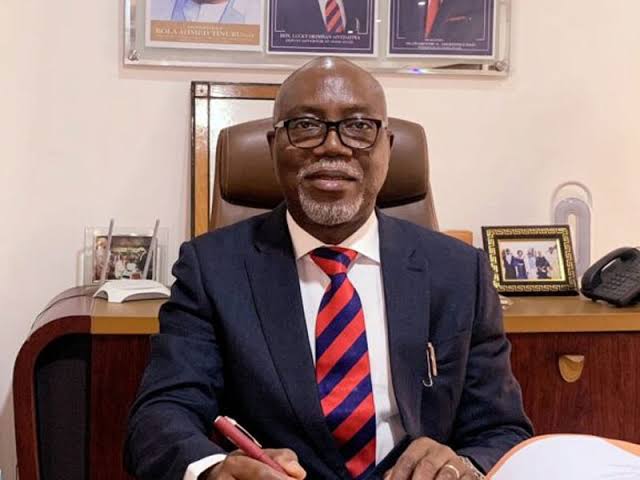
Ondo State Governor, Lucky Aiyedatiwa

Published: June 19, 2024
By: Tope Fayehun – Leadership, Nigeria

Reported cases of ritual killings have surged in Ondo State, a state that was previously not known for such gory acts. For months now, law enforcement agencies have arrested many suspects of ritual killings with gory pictures of human skulls, intestines and dismembered bodies. Most of the suspects are youths, including teenagers.

Last week, a 31-year-old suspect, Yusuf Adenoyin was arrested by the police with eight human skulls and fresh human flesh in the Isua-Akoko area of the state. Adenoyin said he ventured into the business to raise N2 million to pay for his sick mother’s treatment in the hospital.

He told journalists as he was paraded at the Police Command headquarters at Alagbaka, Akure, that he was into the palm oil business and cashew nuts, reselling them before he met the human skull buyer on social media.

Another 30-year-old, Timothy Olaniyi was arrested with fresh human parts in Ondo town by men of the State Security Network Agency, codenamed Amotekun. Olaniyi, who claimed to be a trailer driver with a popular brewery company where he resigned in 2020, admitted that he was caught with a bag containing two severed human hands and two human legs at the Sabo area of the city.

He also confessed that he was promised N30 million after delivering the human parts in Lagos State. Weeks earlier, policemen in the state also arrested a self-acclaimed cleric identified as Tunde Olayiwola with a fresh human head.

A fruit seller, Dolapo Babalola, also narrated how he killed some of his victims, which include his intimate friend, and five persons including his cousin. Most of the residents who spoke with LEADERSHIP on the recent development, however, tasked the security agencies to be alive to their responsibility of securing lives and property.

A retired principal, Mr Akinola Adejobi, expressed fear about the upsurge in killing humans for ritual purposes in the state. According to him, “Human life is sacred and nobody is given the mandate from God to take another man’s life for ritual purposes. The rate at which the youth of today are looking for wealth is very alarming.

Security agencies, most especially the police should be aware of their responsibility to the security of our society. They should do everything in their power to stop the spread of this dastardly act.”

Reacting, the Public Relations Officer (PPRO) of the state police command, Fumilayo Odunlami , disclosed that the command is doing everything possible to ensure that the people of the state are protected.

Source: A Surge In Ritual Killings Worries Ondo Residents

Nigerian Tribune Editorial: “Stop the trade in human parts and related criminal activities, ‘money rituals’!”

Below I present a cry for justice and an urgent appeal voiced by the Editorial Board of the Nigerian Tribune, a leading Nigerian newspaper, to stop the nefarious trade in human parts, related organ harvesting and inhumane criminal activities commonly referred to as ‘money rituals’ in Africa’s most populous country. The authors of the Editorial call for immediate government action to stop these heinous practices and to apprehend and punish the culprits.

Previous posts on the present site related to the widespread occurrence of ‘money rituals’ in Nigeria underscore the importance of this cry for justice and urgent appeal to the highest Nigerian authorities to take immediate action.
(FVDK).

That human skulls merchant

Published: June 19, 2024
By: Editorial – The Nigerian Tribune

IT seems that the criminals who trade in human flesh are intent on continuing their ruinous trade even in the face of social disapproval, and will never mend. That is why they must always be subjected to the wrath of the law. Hardly does a month go by without some story about ritual killing or related activities in the country. Just last week, one Yusuf Adinoyi, a suspected ritualist, was arrested with eight human skulls by security agents at Isua Akoko, in the Akoko South-East LGA of Ondo State. Adenoyin, 37, was arrested at one of the checkpoints between the Isua and Epinmi in a Nissan car en route Akure to Osogbo. He was in a vehicle with four other passengers when the personnel attached to the Police Safer Highway Patrol intercepted them on the road.

The Ondo State Commissioner of Police, Abayomi Oladipo, confirmed the suspect’s arrest in a statement. According to him: “Upon interrogation, Adinoyi, 37, confessed to being the owner of the skulls and explained that he was delivering them to a herbalist named Opeifa in the Oke-Onitea area of Osogbo. He equally mentioned other customers he usually supplies human skulls to include one Almonso, who lives at Oke-Onitea, Osogbo, Alfaa Agba who lives at Oke Onitea, and also Oshoyemi who resides around the Oja Oba area. The suspect further confessed that the human skulls were usually handed over to him by one Imaila living at Oboroke in Okene, and that each head is sold for between N30,000 and N35,000.” The police chief added that the suspect would be transferred to the State Criminal Investigation Department (SCID) unit in Akure with his case file for further investigations.

It is a shame that some people not only violate the dead, other people’s treasured bodies and memories, but also kill people to harvest their organs for sale, treating them like cattle. In most cases, these dead bodies are used in demonic money-making rituals, but the absurdity of the trade and practice is underlined by the fact that to date, no one has come out to tell the Nigerian public that he is a ritualist, as the traders in human flesh are called. The government must deploy every asset at its disposal, including public enlightenment campaigns, against this pernicious trade which casts the country and its people in extremely bad light.  This nonsense must stop. As we have said it many times, no ritualist is on Forbes’ list of billionaires.  The wealthiest people in this world have legitimate businesses; they saw a need, keyed into it, and provided services to meet that need, reaping bountiful rewards from their investment in social research. The idea that dead human flesh could somehow conjure certain spirits that will bring wealth to those subscribed to such dark practices is not only absurd but patently illogical. Are the spirits alleged to be behind such practices supposed to replace government mints, printing money from their mystical spaces and modelling them after the national currency, or do they steal other people’s money from the vault of banks, perhaps even the Central Bank of Nigeria (CBN), then bring such monies to those who have summoned them?  Even if such a practice was real, which is vehemently denied, how does it square with the ancient, timeless wisdom that hard work—legitimate, socially sanctioned labour— is the route to wealth?

It is no coincidence that the apprehended ritualists easily show themselves to be extremely selfish, nihilistic and narcissistic. For instance, the suspect in the current story was reported to have claimed that he sold skulls in order to cater to his mother’s health. But this is a lame excuse if it even qualifies as one. Just how do you divest other people of their body parts in order to make your own mother keep hers in good shape? If every Nigerian whose mother took ill decided on his own course of action, how would the society look? Was engaging in crime the only route to addressing his mother’s health challenge? How about engaging in honest, decent labour? And now that he is in the clutches of the law, how will he ensure his mother’s wellbeing?

Yusuf’s arrest confirms, yet again, the prevalence of ritualistic engagements across the country as the platform for wealth enhancement as if killing people had ever resulted in real riches. The society has a lot of work to do to dissuade people from this unfortunate and ridiculous mindset that could only have resulted from the perversions attributable to poverty in the land. Wealth, we reiterate, ordinarily comes from productive engagements, hardwork and commitment and not the infantile engagement with occult manipulations. Given that this unfortunate engagement with rituals often comes with the sadistic killing of other human beings, there is a crucial need to strengthen the capacity of the government to apprehend those involved for necessary and appropriate punishment. In the present instance, that would include conducting thorough investigations to expose all those associated with Adinoyi in the nefarious business and ensuring that they are all adequately punished in accordance with the laws of the land.

Source: That human skulls merchant

Also read: A Surge In Ritual Killings Worries Ondo Residents

Nigeria: 166 ritual and cult related killings in the South West in 2023

Nigeria has an immense security problem. Boko Haram and other terrorists, armed criminal groups, bandits, kidnappers, communal clashes, political killings and – last but not least – ritual and cult-related murders terrorize the population of this West African country.

When President Bola Tinubu assumed office on May 29 last year he promised to end or reduce the insecurity in Africa’s most populated country (an estimated 225 million people in 2023). One year later we have a quick look at some data. The result is frightening.

On this site I focus on murders for ritual purposes, therefor I will skip the other atrocities here (though mentioned in the article below). In 2023 there were reportedly 166 people murdered in ritual and cult-related killings in the South West. Presumably the author of the article, Jeph Ajobaju, refers here to the South West geopolitical zone.

The Federal Republic of Nigeria is divided into six geopolitical zones commonly called zones.

The six geopolitical zones of Nigeria

The South West geopolitical zone consists of  of Ekiti, Lagos, Ogun, Ondo, Osun, and Oyo States (6 out of Nigeria’s 36 states) with an estimated combined population of about 50 million people (2023).

Based on Ajobaju’s information that in the South West in 2023 166 persons died as a result of ritual and cult related killings, I estimate that in Nigeria at least one person a day dies as a result of ‘money rituals’, murder for ritual purposes. And this is a conservative estimate.
(FVDK)

Insecurity rubbishes Tinubu’s inaugural speech to spew mass atrocities

Bola Tinubu, president of the Federal Republic of Nigeria (May 29, 2023 – present)

Published: June 3, 2024
By: Jeph Ajobaju – The Niche, Nigeria

Bola Tinubu marked one year in office on May 29 as President against the backdrop of major concerns over insecurity he promised to end or reduce during the hustings last year.

Historical data plus new reports of abductions, kidnappings, and attacks show terrorists’ invasions persist despite more money being poured into security architecture.

Abuja in 2020 deployed technology to track and close the bank accounts of peaceful EndSars protesters who did not commit a fraction of the atrocities terrorists have inflicted on citizens, but it fails to also use the same apparatus to track and prosecute kidnappers.

Tinubu promised in his inaugural speech that “security shall be the top priority of our administration because neither prosperity nor justice can prevail amidst insecurity and violence.”

However, data from various tracking institutions shows an upsurge in mass killings by criminals as well as other forms of criminal conduct.

All demographics – old, young rich, and poor – live in fear of non-state actors who perpetrate violence on a large scale.

Fatalities

Daily Post writes that verified media reports and confirmation from security agencies show up to 500 people and counting have been kidnapped in mass abductions in the North so far in 2024.

February 2024

Up to 200 women and children were kidnapped from an Internally Displaced Persons (IDPs) camp in Gamboru Ngala in Borno.

March 2024

287 schoolchildren were snatched by bandits in Chikun in Kaduna.

Some 15 children were taken from a Tsangaya school in Sokoto.

61 people were kidnapped by gunmen in Kajuru in Kaduna.

November 2023

Coordinated attacks by armed groups saw the kidnapping of 150 people from four villages in Zamfara.

December 2023

At least 190 people were killed and over 300 injured between 23 and 25 December in attacks on at least 20 communities in remote parts of Plateau.

North West

Armed Conflict Location & Events Data (ACLED) also found between 2019 and 2023, the North West witnessed 662 kidnapping-related incidents.

South East

The South East recorded 533 insecurity-related incidents in 2023, according to ACLED, with over 224 people killed by gunmen between January and May 2023.

South West

Media reports show 166 people were murdered in ritual and cult-related killings in the South West

Global Rights through its on-site tracking, recorded more than 6,945 mass atrocities across the country in the first 11 months of Tinubu’s tenure.

May 2023-April 2024

Between 29 May 2023 and 23 April 2024, Global Rights found 3,707 killings and 3,238 abductions.

A minimum 4,416 innocent civilians were killed along with 262 security personnel.

Zamfara led the numbers – mainly abductions – at 636 in 2023, followed by Plateau with 627 killings.

Figures compiled by Global Rights

A recent report by Global Rights said in 2023 alone

  • 1,781 people were killed by bandits
  • 637 by ISWAP or Boko Haram
  • 524 died in communal clashes
  • 475 died in herdsmen attacks
  • 118 were murdered through political killings

Figures collated by Nigeria Mourns

  • 2,423 killings between 29 May 2023 and 26 January 2024
  • 1,872 abductions in the same period

‘‘Global Right’s data is what we call the minimum. If you look at the various data from SBM Intelligence, from Data 5, from Nestia, and others, you will see similarities,” explained Global Rights Programme Manager Edosa Oviawe, 

“It just shows that even though we are all doing it independently, we are reporting the same issues. We have backup documents for all of these.

“We are not just putting out numbers, we have the locations, we have the names of victims.”

Oviawe warned the efforts of the government may never be appreciated until it tackles insecurity.

“Doing other things, the economy and the rest are good, but security is paramount.

”If the people are dying and are being killed, every other thing you are doing makes no sense for Nigerians.

“If a man cannot live in safety, if he doesn’t have that assurance that as he steps out of his house, he is not going to become one of the numbers we are counting, then every other thing you are putting together as a government makes no meaning.’’

Souce: Insecurity rubbishes Tinubu’s inaugural speech to spew mass atrocities

Nigeria: Police burst organ harvesting syndicate in Rivers State

The criminal nature of ritualistic killings goes without saying. Ritual killings are a crime and ritual killers are liable to prosecution. People who kill other people for ritual purposes usually do it for specific reasons related to their personal situation: to gain (more) power, prestige or wealth. The ‘engine’ of their criminal behavior is a combination of greed and superstition.

However, there are also criminals who use this combination of greed and superstition of other people as an income-generating model. They specialize in murdering innocent people for the sole purpose of harvesting their organs which then are sold for ritual purposes. A gruesome crime.

This what happened in Rivers state. The police in Rivers State, a state in the Niger Delta region of southern Nigeria, tracked a criminal syndicate that has been specializing in murdering e-hailing cab-drivers and harvesting their organs which were subsequently sold to unscrupulous individuals who wanted these organs and body parts for ritual purposes (‘money rituals’).

Unfortunately, the phenomenon of ‘money rituals’ is widespread in Africa’s most populated country, Nigeria. This is also the reason why the Federal Government recently imposed a ban on ritual killings in Nollywood movies in an attempt to curb the popularity of this phenomenon which is basically a crime based on superstition.

Rivers State, also known as Rivers, is located in the South-South geopolitical zone of Nigeria. The Federal Republic of Nigeria is divided into six geopolitical zones commonly called zones.

The six geopolitical zones of Nigeria

Rivers State is Nigeria’s 8th most populous state with an estimated population of over 7 million (2024). About half the population lives in Port Harcourt, the fast growing state capital and centre of the booming oil industry. Rivers is characterized by its many ethnic groups and its linguistic diversity. With a surface area of 11,077 km2 it ranks 26th (out of 36) on the list of Nigerian states by area.  

Police Burst Organ Harvesting Syndicate In Rivers, Trail Fleeing Members

Organ harvesting suspect

Published: June 2, 2024
By: Itode Akari – Independent, Nigerią

PORT HARCOURT – The Police in Rivers State have arrested a member criminal syndicate, that specialises in murdering e-hailing cab drivers and harvesting their organs for ritual purposes in the state.

The arrested suspect, a 35-year-old graduate of political science from the Ignatius Ajuru University of Education, identified as Anthony Chima, confessed to have recently lured an innocent cab driver into his gang’s ambush, where the driver was waylaid before he was murdered in cold blood by the gang.

A statement signed by the Public Relations Officer for the Rivers State Police Command, SP Grace Iringe-Koko on Sunday, stated that the suspect was arrested following an investigation into the mysterious disappearance of one e-hailing cab driver on January 10, 2024, identified as Oghenevwarhe Barry Akpobome.

According to the police, a member of the syndicate confessed to have posed as a passenger to lure the unsuspecting driver to a remote area in Aminigboko community, Abia/Odual Local Government Area of the state, where other armed gang members laid an ambush and pounced on the driver, bound him both arms and legs, gagging his mouth and eventually killing him for the purpose of harvesting his organs.

The statement reads, “In a shocking turn of events, the Rivers State Police have uncovered a disturbing criminal enterprise that has been targeting Uber drivers in the region. The investigation was sparked by the disappearance of one such driver, Oghenevwarhe Barry Akpobome, leading to the arrest and confession of 35-year-old Anthony Chima, a political science graduate from the Ignatius Ajuru University of Education.

“According to Chima’s testimony, he was recruited into a gang that specialized in luring cab drivers into ambushes, stealing their vehicles, and ultimately murdering them for ritualistic purposes and organ harvesting.

“Chima revealed that he was brought into the fold by a friend, Amfoh Abu, who introduced him to the gang’s armourer, a man known as “Reason,” and the notorious ringleader, “General Effizy,” a prominent figure in the Greenland cult and a seasoned kidnapper.

“The chilling details of Akpobome’s demise emerged as Chima recounted the events of January 10, 2024. On that fateful day, he was summoned to Reason’s residence and instructed to call a driver whose number he had previously collected. Posing as a passenger, Chima then lured the unsuspecting Uber driver to a remote area in Aminigboko, where he and Reason were met by General Effizy and four armed gang members.

“The driver was forcibly removed from the vehicle and taken to Effizy’s shrine, where he was bound, gagged, and ultimately murdered. Chima’s involvement in the gruesome act was confirmed when the police, following his confession, recovered the victim’s skull and a locally fabricated Beretta pistol from Effizy’s residence.”

Iringe-Koko quoted the state Commissioner of Police, CP Olatunji Disu to have advised citizens of the state and drivers to be circumspect while boarding passengers to remote areas in the state.

She noted that while the police continues to trail fleeing members of the syndicate, emphasising that the case serves as a stark reminder of the dangers that lurk in the shadows, and the importance of vigilance and cooperation between law enforcement and the public in maintaining the safety of all citizens.

“This disturbing revelation has sent shockwaves through the community, prompting the Rivers State Police Commissioner, Cp Tunji Disu, to advise both citizens and Uber drivers. He urged them to exercise caution when boarding or transporting passengers, especially to remote or potentially dangerous areas.

“The investigation is ongoing, with the authorities still searching for the fleeing suspects involved in this chilling criminal enterprise. The case serves as a stark reminder of the dangers that lurk in the shadows, and the importance of vigilance and cooperation between law enforcement and the public in maintaining the safety of all citizens. Meanwhile, the suspect would be charged to court immediately.”

Source: Police Burst Organ Harvesting Syndicate In Rivers, Trail Fleeing Members

More:

Police arrest gang known for killing cab drivers, harvesting body parts for rituals

The arrest of one gang member exposed the sinister activities of the gang in the state.

Published: June 4, 2024
By: News Agency of Nigeria – Pulse, Nigeria

And:

Police nab Rivers’ syndicate targeting ride-hailing drivers for ritual purposes

“The driver was forcefully removed from the vehicle and taken to Effizy’s shrine, where he was tied up, gagged and gruesomely murdered.”

Published: June 4, 2024
By: News Agency of Nigeria – Peoples Gazette, Nigeria

And:

Police Uncover Gang Targeting, Killing Car-Hire Drivers In Rivers

The Rivers State Police Command has arrested some members of a criminal gang suspected to be murdering car-hire drivers and stealing their vehicles. 

Published: June 5, 2024
By: Daily Trust, Nigeria

Nigeria: FG ban on smoking, ritual killings scenes in Nollywood movies revisited: Filmmaker supports ban

I thought it interesting and useful to add another post on the federal government’s ban om smoking and ritual killing in Nollywood movies.

Filmmaker and co-founder of Yabatech Film Academy, Abay Esho, publicly supported the ban emphasizing that “Nollywood is a major contributor to the epidemic ‘money ritual’ in present Nigeria.“

Need I say more?
(FVDK)

Filmmaker Supports Ban On Smoking, Ritual Killing Scenes

Abay Esho, Nigerian filmmaker

Published: June 1, 2024
By: Samuel Abulude – Leadership, Nigeria

Filmmaker and co-founder of Yabatech Film Academy, Abay Esho, has offered his opinion in support of the federal government’s recent ban on smoking, ritual killing and glamourisation of crime in Nigerian films.

Esho who believes the media to be an important tool for social engineering of any society, said a society cannot separated from whatever it’s been fed over a long period of time. 

Nollywood, he said ought to drive change by deliberately producing movies that set agenda, change behaviour and its viewers perception and way of thinking. 

The director’s statement is in response to the chief executive officer (CEO) of National Film and Videos Censors Board (NFVCB), Shuaibu Husseini, announcement of federal government’s approval of a ban on glamourisation in Nollywood films, last week, at the National Stakeholders Engagement on Smoke-free Nollywood in Enugu.

The ban, has triggered mixed reactions amongst Nigerian movie stakeholders who were vocal about their stance.

Esho whose views aligns with Husseini’s on ‘money ritual’ factor in Nollywood films, stressed that Nollywood is a major contributor to the epidemic ‘money ritual’ in present Nigeria, but the distrust of Nigerians in Africa owing to “what we portray in our films, especially the ones with money ritual theme.”

He, however, expressed reservations with the NFVCB’s CEO on banning of smoking in movies noting it’s be near impossible to do so. “It will be difficult to place a ban on smoking because if the story has a smoking character, how else do you expect (filmmakers) to portray that?” 

Source: Filmmaker Supports Ban On Smoking, Ritual Killing Scenes

Nigeria: again on the ban on money ritual and other vices in Nollywood movies

On May 25, I posted the news that the Nigerian federal government had announced a ban on money ritual, ritual killing and other vices in Nollywood movies. This morning I read a very interesting editorial comment on this decision in a Nigerian newspaper which I like sharing with you. The editorial provides us with more insight in the background of the federal government’s ban, in particular I cite:

“Nigerian movies have generally tended to present false narratives, (….). They have glamorized voodoo, conveying the impression that it is the only source of wealth, and thus misleading the country’s army of impressionable, often jobless youths who have, by their own admission, not only learnt bad habits from the movies but put them into practice, sometimes landing in the clutches of the law and lamenting their poor choices. “

Moreover, the Tribune Editorial places the ban in a historic perspective and appeals to film makers to take their responsibility in a modernizing society such as Nigeria’s. It concludes:

“(…) movie culture should be dynamic. (…) the content of Nigerian films should be in tandem with the paradigm shift in the society. The idea, however, is not just about issuing a ban, but more about the state of enlightenment and development of those involved in the industry.
Their production naturally would not just portray their creative predilections, but also their level of consciousness, which makes it important to raise the consciousness of movie producers and practitioners, such that they would key into the idea of using their films to portray the limitations of rituals and not seek to glamorize them. Indeed, with the right kind of consciousness, films and movies are some of the best ways to help change society and correct anomalies. (…)”

Well said!
(FVDK)

The ban on money ritual, other vices in movies

Published: May 31, 2024
By: Tribune Editorial Board

WORRIED by the accustomed negative trends in Nigerian movies, the Federal Government recently placed a ban on the promotion of money rituals and vices in Nigerian films.

Disclosing this during a National Stakeholders Engagement on Smoke-Free Nollywood held in Enugu, Enugu State,  an event organised by the National Film and Video Censors Board (NFVCB) and the Corporate Accountability and Public Participation Africa (CAPPA), the Executive Director/CEO  of  the NFVCB, Dr Shaibu Husseini, said that the country was currently confronted with an industry emergency requiring bold and ambitious actions from all parents, guardians and stakeholders.

He said: “I am delighted to announce to you that the  Minister of Arts, Culture and the Creative Economy, Hannatu Musawa, pursuant to Section 65 of the NFVCB Act 2004, has approved  the regulation. The minister has approved the Prohibition of Money Ritual, Ritual Killing, Tobacco, Tobacco Products, Nicotine Product Promotion and Glamorization Display in Movies, Musical Videos and Skits Regulations 2024. We have also forwarded the approved copy to the Federal Ministry of Justice for Gazette.”

According to him, besides the health implications,  glamorizing  smoking in films has a negative influence on  teens and young adults, the largest segment of Nigerian movie viewers. His words: “The film industry occupies a central position in the entertainment and creative sector, and it is imperative that we continue to place the highest premium on the progress of the film industry. The NFVCB supports smoke-free movies and supports smoke-free Nollywood, and we therefore seek your collaboration to develop creative content that discourages smoking and promotes positive health messages. After series of engagements, the NFVCB in collaboration with the CAPPA decided to do a subsidiary regulation to address smoking in movies since this aspect was not expressly spelt out in the extant law. The NFVCB is well prepared to take leadership in this regard and has planned and begun implementing innovative ways to achieve its mandate.”

For decades, while there have admittedly been some positives in terms of the exponential growth of the movie industry and the expansion of the audience and income base, together with growth in terms of the technical aspects of movie making, including the use of special effects, Nigerian movies have generally tended to present false narratives, shirked the social responsibility of advocating societal change,  and assisted the feckless political establishment in confining the vast majority of Nigerians to the morass of poverty, despondency and despair.

They have glamorized voodoo, conveying the impression that it is the only source of wealth, and thus misleading the country’s army of impressionable, often jobless youths who have, by their own admission, not only learnt bad habits from the movies but put them into practice, sometimes landing in the clutches of the law and lamenting their poor choices.

It is a fact that even at this very moment, most Nigerian movies continue to portray Nigerians as a people very badly; that is, as avid subscribers to dark and demonic practices, fraud, prostitution and drug abuse, to mention but a few. They show a society still living in the stone age, which is why the late erudite scholar, Professor Ayo Banjo, once panned them for consistently portraying a bygone age and for being pernicious in their messages. In most cases, the movies portray Nigerians as a people still stuck in superstition, whereas culture is dynamic and any aspect of it that is repugnant should be discarded. Nigerian movies, if they are to assist in the development and  modernisation effort, ought to project positive images and ideas. They ought to enable and give a fillip to science and technology.

Nothing in life is static: movie culture should be dynamic.  There was a time twin babies had to be killed in many communities in this country, but magnifying such today is evidently anachronistic. Sticking to the osu caste system, the suppression of widows and genital mutilation is barbaric: the content of Nigerian films should be in tandem with the paradigm shift in the society. The idea, however, is not just about issuing a ban, but more about the state of enlightenment and development of those involved in the industry. Their production naturally would not just portray their creative predilections, but also their level of consciousness, which makes it important to raise the consciousness of movie producers and practitioners, such that they would key into the idea of using their films to portray the limitations of rituals and not seek to glamorize them. Indeed, with the right kind of consciousness, films and movies are some of the best ways to help change society and correct anomalies. The idea should be to conscientize movie practitioners about the need to observe the limits and negatives of rituals and use their craft to help dissuade society from them. The government should take up this advocacy in earnest.

Source: The ban on money ritual, other vices in movies

Imo State, Nigeria: ritualists killed pregnant woman, dumped corpse in the bush 

A few days ago I posted a message on the daily occurrence of ritualistic murders in Nigeria, with an estimated population of 225 million people Africa’s most populated country. Below I present a recent case from Imo State.

It is not he first time people in Imo State are confronted with these heinous crimes. In January 2023 villagers in Arondizuogu took to the streets following a number of unexplained murders, presumably linked to politics, hence suspected to be carried out for ritual purposes.

Imo State is located in the South-East geopolitical zone of Nigeria, bordering Anambra State in the north, Rivers State to the west and south, and Abia State to the east.  The Federal Republic of Nigeria is divided into six geopolitical zones commonly called zones.

Imo State is Nigeria’s 16th most populous state with an estimated population of over 6 million (2024). With a surface area of 5,530 km2 it is  the third smallest state. The state capital is Owerri. 
(FVDK)

Ritualists killed pregnant woman, dumped corpse in the bush 

Published: May 29, 2024
By: Stories from Everest Ezihe,  Owerri/Imo State

Exhibiting serious act of wickedness, residents around the  Amaraku-Umudim road in Isiala  Mbano local Government Area, Imo State were startled as they woke up on Tuesday with the ugly sight of a decomposing body of a yet-to-be-identified woman found in the bush within the area.

The deceased was allegedly seen to be victim of ritual killing.

An eyewitness (names withheld) told The AUTHORITY that the persistent barking of a dog within the vicinity prompted some residents to enter the bush and made the eye sour discovery.

The commotion that followed the discovery triggered an upsurge of sympathizers  who also noticed  that the deceased was pregnant and and had her breasts and private parts chopped-off.

This prompted the sympathisers to rush to the Amaraku Police Station and reported the incident.

Thee Police Division consequently removes the corpse to nearby government hospital for autopsy and identification.

When contacted, the Imo State Police Command’s Spokesman, ASP Henry Okoye, said he had yet to be briefed on the matter.

Source: Ritualists killed pregnant woman, dumped corpse in the bush 

Nigerian government bans ritual killings in movies 

I have a special reason for including the recent ‘noise’ in Nigerian newspapers and other news media about the Federal Government’s decision to ban smoking, ritual killings (‘money rituals’) and other harmful, indecent and/or criminal habits and practices in movies and music videos – and the subsequent denial of such a measure as well as the rationale of a ban. The at times contradictory articles are very confusing but I leave it to the reader to appreciate what really happened.

The reason for including these articles here is that it clearly shows how ‘normal’ it is to talk about ritual killings in Nigeria. It clearly demonstrates how much ‘money rituals’ are part of daily life in Nigeria. In fact, the occurrence of ritual murders in movies reflect the occurrence of ritualistic murders in daily life. A sad reality.

There was no reason to include these articles on the FG’s ban on ritual killings in movies to prove that these outdated, criminal and repulsive practices and crimes still occur in one of Africa’s most modern countries. As stated before, it is impossible to include here all reports of discovered bodies with organs or other body parts missing, and all reported cases of ‘money rituals’ in this West African country. I estimate that every day at least one ritual murder is committed in Nigeria. After all, Nigeria also is Africa’s most populated country with a population exceeding 225 million people.
(webmaster FVDK)

Nigerian govt bans smoking, ritual killings in movies, music videos, skits – Published May 24, 2024 – Screenshot – To access the YouTube video, please click here

JUST IN:
Tinubu Bans Money Ritual, Smoking Scenes in Nollywood Films, Gives Reason

Published: May 23, 2024
By: Esther Odili – Legit, Nigeria
Legit.ng journalist Esther Odili has over two years of experience covering political parties and movements.

  • The federal government led by Bola Tinubu has announced the ban on money ritual, ritual killing and other vices in Nollywood movies.
  • Shaibu Husseini, the executive director of the National Film and Video Censors Board, confirmed the development at a national stakeholders’ engagement in Enugu on Wednesday.
  • Dr Husseini explained that the move became imperative to urgently address the ugly trend.

President Bola Ahmed Tinubu’s led federal government has approved the prohibition of money rituals and the glamorising of vices in Nigerian films.

Tinubu’s government confirmed the ban on smoking, rituals, and other negative vices in Nollywood films. Photo credit: Asiwaju Bola Ahmed Tinubu Source: Facebook

“To sanitise the film industry”, FG says
As reported by The Punch, Shaibu Husseini, the executive director and CEO of the National Film and Video Censors Board (NFVCB), disclosed this at a National Stakeholders Engagement on Smoke-Free Nollywood held in Enugu on Wednesday, May 22.

Husseini lamented that the present day movie industry is facing an “industry emergency” requiring bold and ambitious actions from all parents, guardians and stakeholders, Vanguard reported. He added that the regulation to ban smoking and other crimes has been approved by Hannatu Musawa, the minister of arts, culture and the creative economy, The Cable reported.

“As you all know, the film industry occupies a central position in the entertainment and creative sector and it is imperative that we continue to place the highest premium on the progress of the film industry,” he said.

“When my predecessor approached the former Minister of Information, Alhaji Lai Muhammed on the need to make a subsidiary legislation to curtail the display of smoking in Nigerian movies, he saw the need to include money rituals.

“Others included in the regulation are ritual killings and glamorising other crimes to further sanitise the film industry.”

Movie producers, directors and actors drawn from different parts of the country, as well as leaders of various guilds and associations in the Nigerian film industry were present at the event.

Kano government bans movies promoting cross-dressing
In a similar development, Legit.ng reported that the Kano state government banned all movies and cinematic productions promoting thuggery and cross-dressing in the state.

This was announced in a press statement issued by the media officer of the state’s censorship board, Abdullah Sani Sulaiman. “It is high time we put a stop to this sort of films that corrupt the morals of the Kano people,” the board stated.

Source: Legit.ng

Source: JUST IN: Tinubu Bans Money Ritual, Smoking Scenes in Nollywood Films, Gives Reason

Read also:

Kanayo O Kanayo Attacks FG Over Plans to Ban Rituals Scenes, Others in Movies: “Arrant Nonsense”

Published: May 24, 2024
By: Chinasa Afigbo – Legit, Nigeria

  • Nigerian actor Kanayo O. Kanayo is enraged over the latest regulations by the government to ban ritual scenes and more in Nollywood movies.
  • The veteran known for portraying such continuous roles dropped a message for the minster and his cohorts. 
  • The new restriction claimed that such movie interpretations had a negative impact on teens and young adults.

Prominent Nigerian actor Kanayo O. Kanayo, aka Nnayi Sacrifice, is displeased over the government’s new laws to scrap rituals and other likely portrayals from films, music videos, and skit content.

The Executive Director/CEO of National Film and Video Censors Board (NFVCB), Shaibu Husseini, stated days ago that the Federal Government has approved the prohibition of money rituals and glamourising of vices in Nigerian films.

Husseini disclosed this while speaking at a National Stakeholders Engagement on Smoke-Free Nollywood in Enugu on Wednesday, May 22. The NFVCB boss said in part:

“When my predecessor approached the former Minister of Information, Alhaji Lai Muhammed, about the need to make a subsidiary legislation to curtail the display of smoking in Nigerian movies, he saw the need to include money rituals. Others included in the regulation are ritual killings and glamourising other crimes to further sanitise the film industry.”

According to Husseini, in addition to the health concerns, glamorising smoking in films has a negative impact on teens and young adults, who make up the majority of Nigeria’s moviegoers. He stated that the board planned to implement extensive enlightenment campaigns in secondary schools, tertiary institutions, local communities, faith organisations, and other institutions.

Kanayo O Kanayo reacts 
Kanayo criticised the policy and classified it as “arrant nonsense”. He questioned Barrister Hannatu Musa Musawa’s justification for imposing such restrictions on filmmakers and mocked his tenure.

“Arrant NONSENSE. This Minister has no work, just like Liar Mohammed.”

See his remark here:

Source: Kanayo O Kanayo Attacks FG Over Plans to Ban Rituals Scenes, Others in Movies: “Arrant Nonsense”

And:

I Didn’t Pronounce Ban on Smoking and Ritual Scenes in Movies – Shaibu Husseini

Published: May 24, 2024
By: Thandiubani – tori.ng

The event was organised by the NFVCB and Corporate Accountability and Public Participation Africa (CAPPA). 

Executive director of the National Film and Video Censors Board (NFVCB) Shaibu Husseini has denied reports that the Federal Government has placed a ban on money rituals and smoking in Nigerian films and skits.

Clarifying the report, Husseini while speaking at a national stakeholders engagement on smoke-free Nollywood in Enugu on Wednesday, debunked the viral report.

The event was organised by the NFVCB and Corporate Accountability and Public Participation Africa (CAPPA).

Movie producers, directors and actors drawn from different parts of the country, as well as leaders of various guilds and associations in the Nigerian film industry were present at the event.

However, in a statement on Thursday released on social media, Husseini said in part:

“I did NOT announce a ban on ‘smoking, or smoking, and ritual scenes in movies’ at the (southeast zone) stakeholders engagement on a healthy screen and the campaign to have a smoke free Nollywood which held in Enugu in collaboration with @CAPPAfrica. No, I did NOT.

“What I mentioned in a speech that I have shared here is the existence of a regulation (NFVCB Regulations 2024) that in line with global best practices prohibits the PROMOTION and GLAMOURISATION of Money Ritual, Ritual Killing, Tobacco, Tobacco product, Nicotine products in movies, musical videos and skits. The regulation aims at discouraging the ‘unnecessary’ depiction, promotion, advertisement, or glamourisation of tobacco or nicotine products in movies, musical videos, and skits.”

Husseini assured that the NFVCB would not implement any policy that will muzzle creativity. He added:

“Any movie, skit, or musical video that displays or depicts tobacco or nicotine products, brands, or use that is necessary to the realization of a narrative shall be given the appropriate classification (rating) and shall not be shown to persons below the age of 18.”

Source: I Didn’t Pronounce Ban on Smoking and Ritual Scenes in Movies – Shaibu Husseini

More links:

Ban On Smoking And Ritual In Nollywood: Kanayo .O. Kanayo and Mike Okori Berate Action
May 23, 2024

NFVCB clarifies ban on ritual, smoking scenes in Nollywood
May 24, 2024

Nigeria Bans Money Rituals And Smoking In Movies
May 24, 2024

Kanayo O. Kanayo Fumes as FG Bans ‘Money Rituals’ in Nollywood
May 24, 2024

‘Nnayi sacrifice’ Kanayo O. Kanayo Rages as FG Bans ‘Money Rituals’ in Nollywood
May 24, 2024

NFVCB Didn’t Announce Ban On Smoking, Rituals — DG, Husseini Shaibu
May 25, 2024

FG denies placing ban on smoking, rituals in films
May 25, 2024

FG clarifies placing ban on smoking, rituals in films
May 25, 2024

NFVCB clarifies ban on ritual, smoking scenes in Nollywood
May 25, 2024

NFVCB: Why FG Banned Rituals, Smoking In Movies
May 25, 2024

Rid Nollywood Of Money Rituals – FG Tells Filmmakers
May 25, 2024

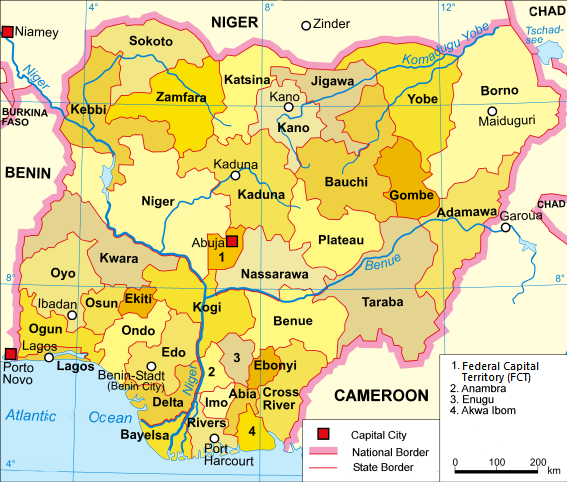
Political map of Nigeria showing the 36 states and the seat of the Federal Government (FG), Abuja