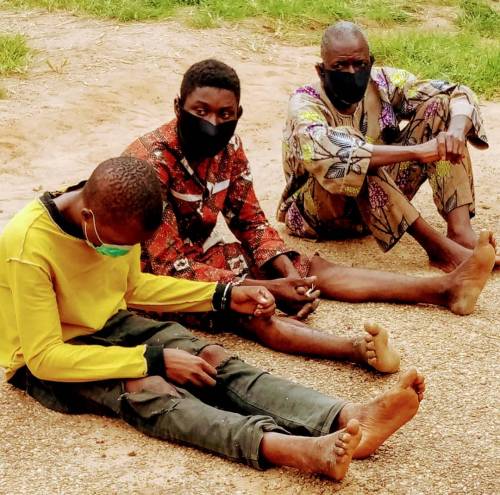
In most African countries, the position of people living with albinism is unfavorable. Rejected by society, mistrusted, discriminated, even living in fear as in many countries attacks on them are frequent. Widespread belief in the supernatural power of their organs or other body parts in combination with an unscrupulous, criminal mind of the perpetrator(s), has resulted in many ritual murders or unexplained disappearances of albino children and adults. Although some countries in Southern and Eastern Africa are notorious for these ugly practices – see my reporting – also in other African countries the position of people living with albinism leaves much to be desired, as the following article on Nigeria demonstrates. (FVDK)
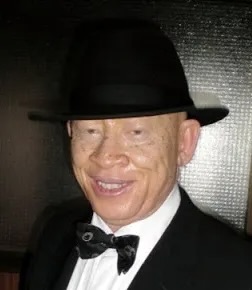
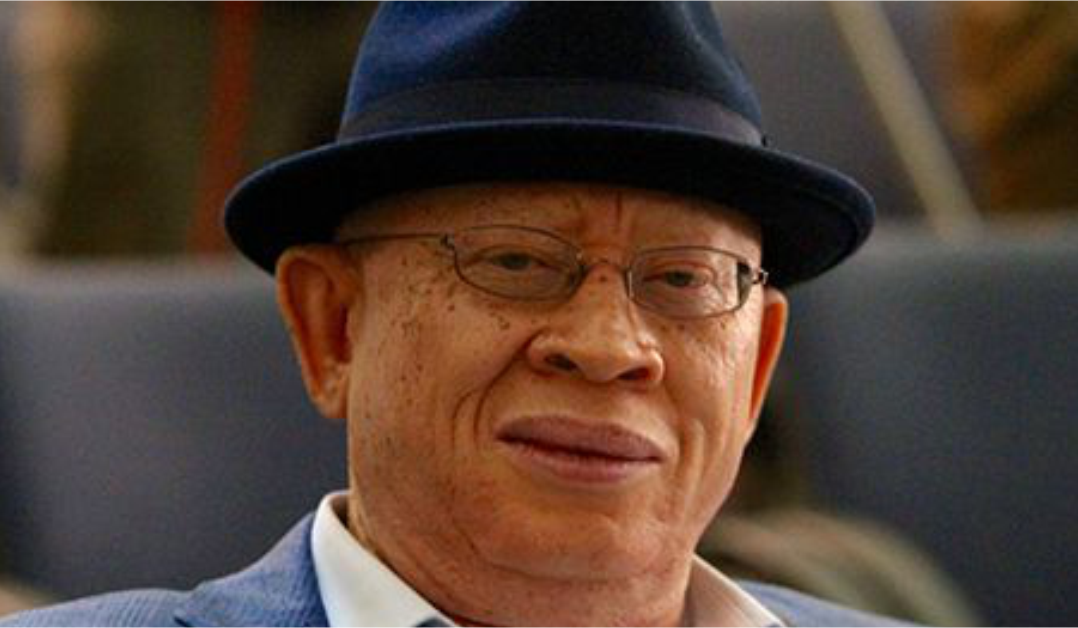
Stop ritual killing of persons living with albinism – Jake Epelle
Published: March 13, 2022 By: NNN
Mr. Jake Epelle, founder of the Albino Foundation, has called on Nigerians and Africans to stop killing people living with albinism for ritual purposes.
Epelle made the appeal when he appeared on the Nigerian News Agency Forum special talk show on Sunday in Abuja.
He said “when the news got out that there were rituals coming out of all the African countries, Tanzania and all that; It is not only true, I have seen it with my own eyes.”
According to him, the country has seen its share of cases of people living with albinism killed for ritual purposes.
He said that in April 2014 he was about to be a victim but was able to escape from the driver who tried to take him to an unknown destination.
“These are issues surrounding albinism that have not been touched on,” he said.
Epelle added that the foundation had also done a lot to ensure the protection of people with disabilities in the country, including finding police hotlines.
He said, “I have gone to the police to ask for hotlines where my members can call or encourage our members to report cases that we need to pursue.
“The Disability Rights Fund once gave us money with which we train people with albinism on how to protect their rights, how to promote their rights, and how to prosecute those who violate their rights.”
He said that the Albino Foundation inaugurated ‘the champion of albinism’ and compiled manuals in different languages to correct some of the myths and superstitions about albinism.
Epelle therefore called on the public to grant people with disabilities compassion and fair treatment so that they can live their lives without fear of being raped.
Stop killing persons with albinism for ritual, Albino Foundation cries out
Founder of the Albino Foundation, Jake Epelle, says he’s a witness and was almost a victim of ritual killings.
Published: March 13, 2022 By: PG People’s Gazette
Jake Epelle, Founder of the Albino Foundation, has appealed to Nigerians and Africans to stop killing people living with albinism for ritual proposes.
Mr Epelle made the appeal when he featured on the News Agency of Nigeria (NAN) Forum special interview programme on Sunday in Abuja.
“When the news broke that there were rituals coming out of all African countries, Tanzania and all that; not only is it true, I have seen it with my eyes,” he said.
He said the country has witnessed its share of cases of persons with albinism being killed for ritual proposes, citing himself as an example.
He narrated how in April 2014, he was almost a victim when a driver tried to take him to an unknown destination.
“These are issues that surround albinism that have not been touched,” he said.
Mr Epelle added that the foundation had also done a lot to protect persons living with disabilities in the country, including seeking hotlines from the police.
He said, “I have gone to police to ask for hotlines where my members can call or encourage our members to report cases that we have to follow up.
“The Disability Rights Fund had once given us money with which we trained persons with albinism on how to protect their rights, how to promote their rights and how to prosecute those who violate their rights.”
He said that the Albino Foundation had inaugurated the ‘Albinism Champion’ and compiled handbooks in different languages to correct some of the myths and superstitions about albinism.
Mr Epelle appealed to the public to accord persons with disability compassion and fair treatment to enable them live their lives without fear of being violated.
The following post refers to a complicated legal verdict. Most people may find the following text incomprehensible. Be that as it may, the reason for including it here is that – summarized – the accused have been found guilty of the crime of murder although the dead body of the victim was never found.
As I often state here, most ritual murder cases which are discovered only represent the tip of the iceberg: many ritual murders are never discovered.
The accused, Nancy Aiwuyor, and two other persons were found guilty by the Supreme Court of Nigeria of – again summarized (FVDK) – conspiracy, child stealing and murder. See the first paragraph of the article below (‘Facts’).
In the last paragraph it becomes clear that the accused stole the child – apparently a baby, see the last but one paragraph – for ritual purposes: The Supreme Court held that the prosecution (a lower court) has proved, beyond reasonable doubt, that the acts of the three accused caused the presumed death of the child they stole for ritual purposes (italics mine, FVDK).
Hence, the Supreme Court affirmed the conviction of the three accused who will face the capital punishment for the crime(s) committed.
The Supreme Court’s decision does not reveal the identity of the victim, a child who has been missing for (over) seven years. The incident took place in 2009. The importance of the Supreme Court’s decision lies in the accepted legal principle that the person who was last seen in company of a missing person can be charged with murder.
Doctrine of Last Seen in a Charge of Murder
Published: January 25, 2022 By: This Day, Nigeria
In the Supreme Court of Nigeria Holden at Abuja On Friday, the 11th day of June, 2021
Before Their Lordships Amina Adamu Augie Uwani Musa Abba Aji Mohammed Lawal Garba Tijjani Abubakar Emmanuel Akomaye Agim Justices, Supreme Court
SC. 996C/2018
Between
Nancy Aiwuyor Appellant
And
The State Respondent
(Lead Judgement delivered by Honourable Mohammed Lawal Garba, JSC)
Facts
The Appellant and two other persons were charged and tried for offences bothering on conspiracy, child stealing and murder, contrary to the provisions of Sections 516, 317 and 319 (1) of the Criminal Code. Five witnesses testified for the prosecution; while the Appellant was the sole witness. The trial court convicted the Appellant and others for the offences charged, and they were sentenced to death for the offence of murder. The Appellant’s appeal to the Court of Appeal, was dismissed. The Appellant further appealed to the Supreme Court.
Issue for Determination
The Supreme Court considered the following sole issue as being central to the appeal and decided the appeal thereon:
“Whether the lower court was right, that the prosecution had proved the offences the Appellant was charged with beyond reasonable doubt by the evidence adduced before the trial court.”
Arguments
Relying on the decision of court in COP v AMUTA LPELR- 41386(SC), counsel for the Appellant submitted that in criminal trials, the burden of proof is beyond reasonable doubt, and this burden rests on the prosecution throughout trial. Counsel contended that the burden is to be discharged by credible and cogent evidence, which is sufficient to eliminate reasonable doubt that it was the accused person who committed the offence he was charged with. Counsel relied on IGBABELE v STATE (2006) 5 NWLR (Pt. 975) 100 for the three ingredients of the offence of murder which the prosecution is required to prove together or conjunctively, in order to satisfy the proof beyond reasonable doubt. It was the position of counsel that the prosecution did not, by the evidence adduced at trial, prove any of the offences against the Appellant, particularly murder, beyond reasonable doubt. He argued that the witnesses called in the case did not give evidence in that regard, and that the Court of Appeal erred in law to have affirmed the conviction of the Appellant in the absence of proof beyond reasonable doubt. Further relying on the case of ORISA v STATE (2018) 11 NWLR (Pt. 1631) 457, Counsel argued that the evidence of the Appellant was cogent, unequivocal, and remained unshaken during cross-examination, but the trial court simply disregarded it in its judgement. Counsel argued that it is the duty of the trial court to resolve any doubt in the circumstantial evidence in favour of the accused person where it is capable of two interpretations; one showing the innocence and the other, the guilt of the accused person.
In response to the submissions above, counsel argued for the Respondent that the prosecution had discharged the burden of proof of the offences the Appellant was charged with, and that the trial and lower court were right to have convicted and affirmed the conviction of the Appellant; respectively. Counsel submitted that the concurrent findings of the two courts are not only borne out of abundance of evidence, but also based on relevant principles of law in Section 135(1) of the Evidence Act. Relying on OSENI v STATE (2012) 208 LRCN 151, he posited that that proof could be in any of the following ways: confessional statement by an accused person, circumstantial evidence or evidence of eyewitness of the crime. Counsel submitted that conspiracy, which is an offence that may not always be proved by direct evidence, and is distinct from the main offence, can be inferred from the facts and circumstances of a case – IKEMSON v STATE (1989) 3 NWLR (Pt. 110) 455. Counsel contended that the evidence of the prosecution witnesses, depicted vividly how the Appellant in company of the 1st & 2nd accused persons in consensus ad idem, stole and eventually murdered the victim for ritual purposes, and that the evidence of DW1 and DW2 corroborated the prosecution evidence to prove the charge of conspiracy as required by law. For the offence of child stealing, counsel argued that citing the evidence of PW1 and statement of the Appellant, established that the Appellant actively participated in the commission of the offence and that no evidence was given in rebuttal by the Appellant. On the offence of murder, counsel relied on EDAMINE v STATE (1996) 3 NWLR (Pt. 438) 530 for the essential ingredients of the offence, and argued that the law is settled that where the victim was last seen with the accused person and has not been found after a period of more than seven years, death would be presumed by virtue of Section 164(1) of the Evidence Act. Learned counsel submitted that the evidence before the trial court, was that the victim was last seen by and with the Appellant who received her from the 2nd accused person, and the victim has not been seen or found since February 24th, 2009, thereby giving rise to the reasonable presumption of death. Counsel submitted further that concurrent findings by the two lower courts, was rooted in the evidence which sufficiently established the ingredients required to prove the offences beyond reasonable doubt against the Appellants.
Court’s Judgement and Rationale
Before deciding the sole issue, the Supreme Court pointed out that the law permits a Respondent who did not file a Cross-appeal or a Respondent’s Notice of Appeal, to formulate issues from the grounds of appeal filed by the Appellant, and in so doing, adopt a favourable slant. Such Respondent does not have to adopt the form or style of the Appellant, in the formulation of the issues for determination -ATANDA v AJAYI (1989)3 NWLR (Pt. 111) 511.
Deciding the sole issue, the Supreme Court held that it is elementary in all superior courts of record in Nigeria, that by the combined provisions of Section 131, 132, 135(1) and 139 of the Evidence Act 2011, the burden of proof in all criminal trials is on the prosecution, to prove the offences which the accused persons are alleged to have committed beyond reasonable doubt. Another settled principle of law is that, the burden of proof imposed on the prosecution in criminal trials can be effectively discharged, and the presumption of innocence in favour of an accused person completely displaced by any of the following ways: confessional statement of the accused person which satisfies the requirements of law, direct eyewitness evidence or circumstantial evidence which meets or satisfies the requirements of the law – IGBABELE v STATE (2006) 5 NWLR (Pt. 975).
The court held that for the evidence to be adduced by the prosecution in the discharge of the burden of proof in any of these ways, by law, all material ingredients or elements which constitute the offence with which he was charged before the court, must be established together or conjunctively. Where a trial court failed or omitted to adequately, properly, and fairly consider a defence disclosed in the evidence before it which is open and available to an accused person before convicting him for the offence he was charged with, an appellate court would readily consider such defences in the event of an appeal on the failure or omission by the trial court – OJO v STATE (1973) 11 SC. An appellate court lacks the judicial competence to consider, deal with, pronounce and decide any issue or point which is outside of and not related to the grounds of an appeal contained on the Notice of Appeal filed before. In this instance, however, the Appellant did not, by his Grounds of Appeal or the issues submitted to the lower court for its determination, raise the issue of omission or failure by the trial court to consider the defence raised by the Appellant during trial, in the judgement appealed against. Not being an issue submitted to it or arising from any of the grounds of appeal before it, the lower court had no obligation or duty in law, to deal with or make pronouncement on the alleged omission or failure by the trial court to consider the defence raised by the Appellant at the trial court – IYAJI v EYIGEBE (1987) 1 NWLR (Pt. 61) 523.
Further, the proof of the offence of conspiracy lies in the inferences to be drawn from subsequent illegal acts or conducts by the individual conspirators. towards meeting or achieving the common intention and purpose. From the series and sequence of the acts and conduct by the accused persons, as narrated in their respective statements, there is no reasonable doubt that they could only come from the personal knowledge and common intention of persons who had agreed to commit an illegal act for a common purpose as envisaged by the provisions of Sections 7 and 8 of the Criminal Code, in order to constitute the offence of conspiracy between them. The evidence adduced by the prosecution through PW3 – the victim’s father, established beyond reasonable doubt that the victim who was a three-year-old at the material time, was taken away from their care, possession, and protection, forcibly and with the clear intention to steal her for an illegal purpose. The evidence leaves no reasonable doubt that the offence of child stealing under Section 371 of the Criminal Code was committed, in furtherance and pursuit of the common intention by the Appellant and her co-conspirators; the first and second accused persons. Consequently, the offences of conspiracy to commit felony and child stealing have been proved by the evidence, adduced by the prosecution, beyond reasonable doubt, as required by the law and the lower court was right to have affirmed her conviction for the said offences.
On the charge of murder, the court held that the law is firmly settled, as seen in loads of judicial authorities, that for the prosecution to secure a conviction for the offence of murder, the following crucial, vital and essential elements must be proved conjunctively, beyond reasonable doubt, that the death of the human has actually and in fact, taken place or occurred, the death was caused by the acts done or attributable to the accused person charged with the offence and the acts was done by the accused person with the intention to cause the death or that at the material time he knew or had reason to know that death was the probable, and not only a likely consequence of the act- OKORO v STATE (1988) 12 SCNJ.
In this case, the child who the Appellant and other accused persons conspired with, and stole was not found up to the time her trial commenced and ended. The lower court believed and relied on the evidence that since the Appellant and the co-accused conspired and stole the missing child who had not been seen or found for a period of seven years thereafter, there was the presumption of her death, and the Appellant had the duty to explain what happened to her because they were last seen with her. As shown by the evidence, the Appellant and the 2nd accused person were the last persons seen with the victim, when she was handed over to them by the 1st accused person on the 24th February, 2009 and they took her away alive, but she had since then, not been traced, seen or heard of or about. The Appellant has the duty to give or offer an acceptable explanation on the whereabouts, the condition or situation that the baby victim has been from the time they took her away from the village until she was traced, found or heard of or about, if ever. The fact that there was no direct evidence of her death or that her dead body was not found, would not affect or detract from the statutory presumption of her death, or its proof by the cogent and compelling circumstantial evidence placed before the trial court – STATE v SUNDAY (2019) 9 NWLR (Pt. 1676) 115. The court held further that the lower court was right that the presumption provided for and envisaged in the provisions of Section 164(1) of the Evidence Act applied in the Appellant’s case such that until rebutted by the Appellant, it was safe to say that the death of the child was proved beyond reasonable doubt in the circumstances of the case.
On the element that the death of the child was attributable to or resulted from the acts of the Appellant, the court held that the prosecution has proved, beyond reasonable doubt, that the acts of the Appellant along with her co-conspirators, caused the statutorily presumed death of the child they stole for ritual purposes. Thus, the second element of the offence of murder was thereby, satisfied. On the last of the elements, their Lordships held that with the brutal removal of nine fingers and the hair of the three year old victim, no reasonable doubt exists in the Appellant’s case that she indeed intended and knew that the death of their unfortunate victim was the inevitable result or consequence of their nefarious acts. The court therefore, affirmed the conviction of the Appellant.
Appeal Dismissed.
Representation Olayiwola Afolabi for the Appellant. Paulyn O. Abhulimen for the Respondent.
Reported by Optimum Publishers Limited, Publishers of the Nigerian Monthly Law Reports (NMLR)(An affiliate of Babalakin & Co.)
As far as I know it is unprecedented in the history of Nigeria: lawmakers have urged the government of president Buhari to declare a state of emergency on ritual killings in the country. Even continent-wise, it is a novelty, to my knowledge. It is symptomatic for the widespread occurrence of ‘money rituals’ in the country, as I have repeatedly stated here.
No need to elaborate now on the details of the various (read: many) cases of ritualistic murders which motivated the House of Representatives of Africa’s most populated country to take this bold step. The news had a nation-wide coverage as is amply demonstrated by the nearly 30 newspaper articles cited (and partly reproduced) below – far from all publications on this historic decision.
Warning: some readers may find (some of) the following articles disturbing because of the graphic description of ritualistic activities. (FVDK)
Declare state of emergency on ritual killings —Reps to FG
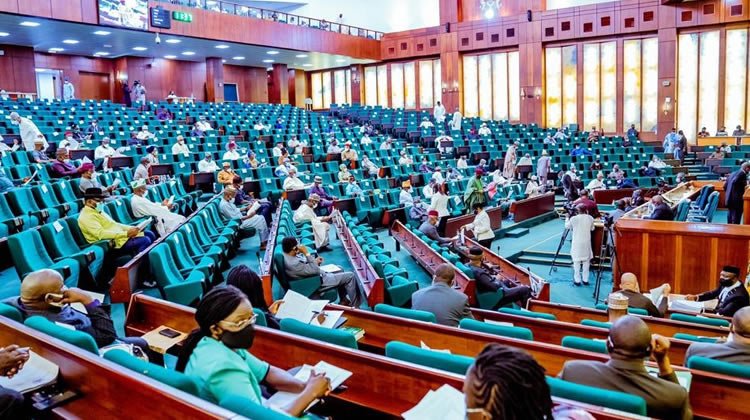
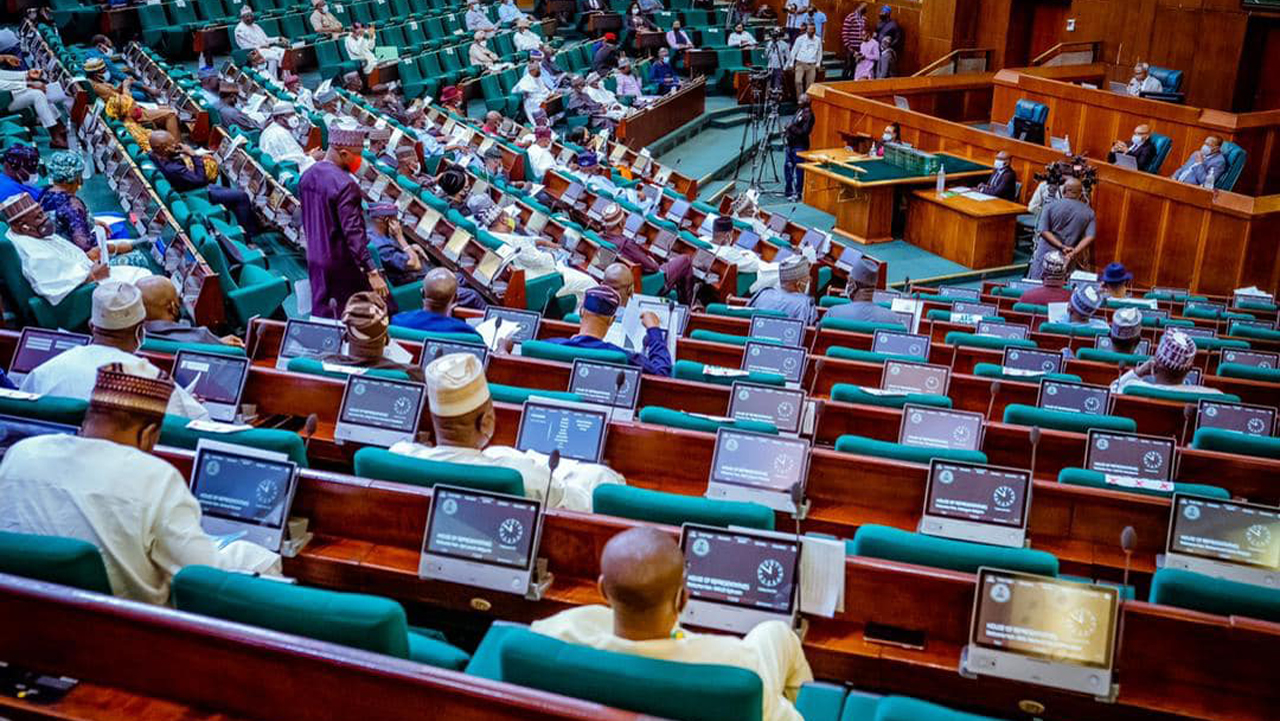
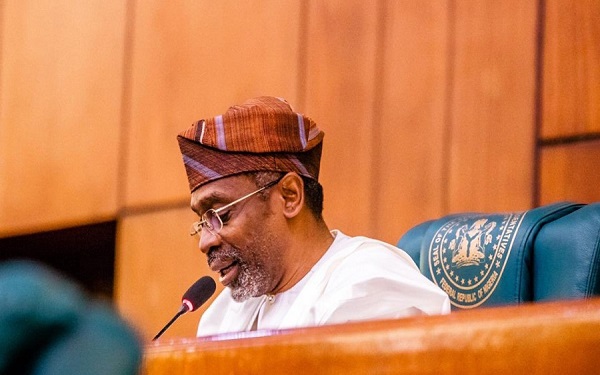
Members of the House of Representatives during plenary
Published: February 9, 2022 By: Segun Adewole – Punch, Nigeria
The House of Representatives on Wednesday said a state of emergency on ritual killings in the country should be declared by the Federal Government.
The lawmakers also called for a campaign against the menace, saying the effort of parents, schools, religious leaders and the media is needed.
This is following a motion sponsored by Deputy Minority Leader of the House, Toby Okechukwu, who lamented that ritual killings have taken a new dimension in recent times.
He said, “There’s an upsurge of reported ritual killings with increasing cases of abductions and missing persons in different parts of the country, which in most cases, the culprits also rape, maim, kill and obtain sensitive body parts of unsuspecting victims for rituals.
“Merchants of such wicked acts often use social media as a ready tool to advertise their evil behaviour. Ritual killing has become a predominant theme in most homemade movies which if not checked, our younger generation may begin to view as an acceptable norm.
“There are several reports where law enforcement agents arrested and paraded suspects of ritual killings with gory pictures of human skulls and dismembered bodies.
“Fake clerics, imams, herbalists and native doctors are often complicit in the heinous practices. Although our communities are getting more religious with the proliferation of churches and mosques, the ugly trend of ritual killing is on the rise as the quest for wealth at all costs pervades our society.
“Youths in other climes are embracing science and technology as a way of maintaining pace with our dynamic world while some of our youths seem stuck in the mistaken belief that sacrificing human blood is the surest route to wealth, safety and protection.
“Such cruel and barbaric acts should no longer be promoted in our society given the demands of today’s world.”
The motion was unanimously adopted by the House which called on the Inspector-General of Police, Usman Alkali Baba to “take urgent steps to increase surveillance and intelligence gathering with a view to apprehend and prosecute all perpetrators of ritual killings in Nigeria”.
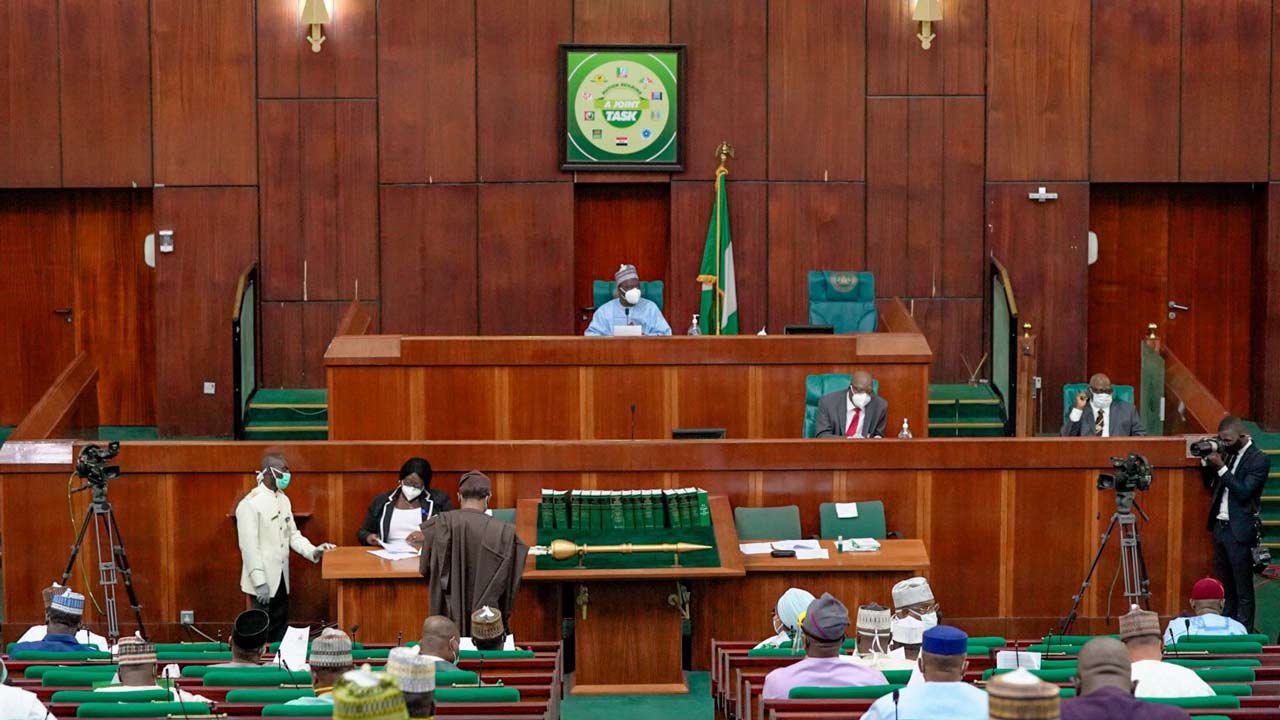
The House of Representatives – Photo Facebook / Speaker Gbaja
Published: February 9, 2022 By: NAN – The Guardian, Nigeria
The House of Representatives has charged the Inspector General of Police (I-G) to take urgent steps towards tacking ritual killings in the country.
This followed the adoption of a motion of urgent public importance by Rep Toby Okechukwu, the Deputy Minority Leader, at the plenary on Wednesday in Abuja.
Presenting the motion, Okechukwu said that incidents of ritual killings had assumed an alarming rate in Nigeria while decrying the upsurge of reported ritual killings with increasing cases of abductions and missing persons in different parts of the country.
He added that in most cases, the culprits also rape, maim, kill and cut out sensitive body parts of unsuspecting victims for rituals.
He said that the Red Cross Society in 2017 reported that it received 10,480 reports of missing persons in Nigeria. “On Jan. 22, three teenage suspects and a 21-year-old reportedly killed one Sofiat Kehinde and severed her head and burnt in a local pot in Abeokuta, Ogun.
”The police command in Ogun on Feb. 7, reported that one of the suspects confessed that he learned the act of ritual killing from a video he watched on Facebook,” he stated.
He said that the death of Sofiat attracted national outrage and condemnation considering the age of the suspected killers.
The lawmaker said that merchants of such wicked acts often use the social media as a tool to advertise their evil acts.
He also mentioned the grievous killing of Iniobong Umoren, a young woman in her 20s; who was lured to a particular location in Uyo, Akwa Ibom for a job interview, as widely reported in the national dailies.
He also cited the gruesome killings and heinous activities of Badoo Boys in Lagos State, which was also reported in the national dailies.
“Ritual killing had become a predominant theme in most homemade movies which if not checked, our younger generation may begin to view it as an acceptable norm,” he said.
The House thereafter declared a national emergency on ritual killings and urged National Orientation Agency (NOA), stakeholders and the media to initiate a campaign towards changing the situation in the country.
The House tasked the Executive Director, National Film and Video Censors Board to rise to the mandate of the agency as the clearinghouse for all movies produced in the country.
Reps Ask FG To Declare National Emergency On Ritual Killings
Screenshot – click on image in original to watch the video
Published: February 9, 2022 By: Terry Ikumi – Channels TV, Nigeria
The House of Representatives has called for the declaration of a national emergency on ritual killings across the country.
This formed part of the resolutions reached by the lawmakers on a motion of urgent public importance entitled ‘Need to Curb the Rising Trend of Ritual Killings in Nigeria’.
Mr Toby Okechukwu, the Minority Leader of the House, moved the motion during Wednesday’s plenary at the lower chamber of the National Assembly in Abuja.
The motion comes amid the incessant killing of innocent Nigerians for ritual purposes, with one of the latest being the murder of Sofiat Okeowo in Ogun State.
Worried about the trend, the lawmakers called on the National Orientation Agency (NOA), as well as parents, heads of schools, religious leaders, and the media to undertake a campaign to change the negative narrative bedevilling the society.
They resolved to call on the Executive Director of the National Film and Video Censors Board to rise to the mandate of the agency, as the clearinghouse for all movies produced in the country.
While moving the motion, Okechukwu called the attention of the House to the recent incidents of ritual killings which he said have assumed an alarming rate.
He condemned the upsurge of reported ritual killings with increasing cases of abductions and missing persons in different parts of the country, saying the culprits in most cases rape, maim, kill and obtain sensitive body parts of unsuspecting victims for rituals.
The Red Cross Society, according to him, reported that it received 10,480 reports of missing persons in Nigeria in 2017, and three teenage suspects and a 20-year-old were accused of killing Sofiat.
The lawmaker told his colleagues that the Ogun State Police Command later reported on Monday that one of the suspects confessed that he learned the act of ritual killing from a video he watched on Facebook.
He also condemned the killing of Iniobong Umoren, a woman in her 20s, after being lured to a location in Uyo, Akwa Ibom State for a job interview.
Okechukwu stressed the need to be mindful of the role of the Nigerian movie industry in moulding the behavioural patterns in the society, as well as the mandate of NFVCB and others.
The lawmakers mandated the House Committee on Information, National Orientation, Ethics, and Values to report back to the House within four weeks.
According to them, the Inspector General of Police should take urgent steps to increase surveillance and intelligence gathering, with a view to apprehend and prosecute all perpetrators of ritual killings in Nigeria.
Similarly, the House Committee on Police Affairs was mandated to report back to the lawmakers within four weeks.
Reps ask FG to declare state of emergency on ritual killings
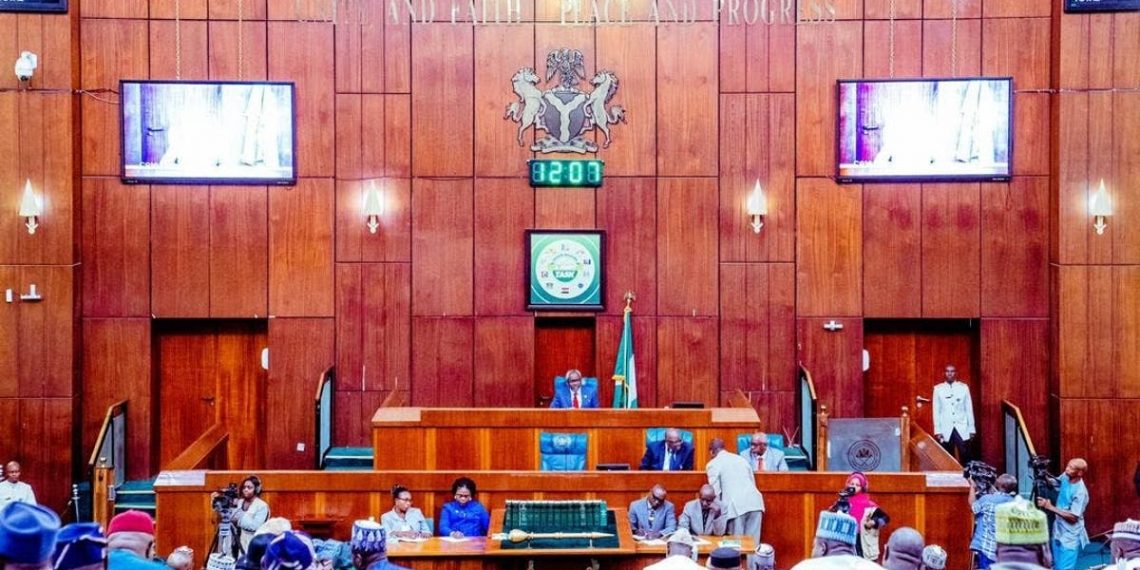
Nigeria’s House of Representatives in session. Photo used for illustrative purposes.
Published: February 9, 2022 By: Vincent Ufuoma – ICIR, International Centre for Investigative Reporting
THE House of Representatives has asked the Federal Government to declare a state of emergency on ritual killings in the country.
This followed a motion moved by the House Deputy Minority Leader Toby Okechukwu during Wednesday’s plenary.
Okechukwu, who noted that ritual killings have assumed an alarming rate in Nigeria in recent times, lamented the increasing cases of abductions and missing persons in different parts of the country.
He said in most cases, the culprits also rape, maim, kill and obtain sensitive body parts of unsuspecting victims for rituals.
The lawmaker also decried the roles of various social groups, especially the entertainment industry, in reinforcing ritual killings among young people.
Okechukwu said, “Ritual killing has become a predominant theme in most home made movies which if not checked, our younger generation may begin to view it as an acceptable norm.
“There are several reports where law enforcement agents arrested and paraded suspects of ritual killings with gory pictures of human skulls and dismembered bodies.
“Fake clerics, imams, herbalists and native doctors are often complicit in the heinous practices.
“Although our communities are getting more religious with the proliferation of churches and mosques, the ugly trend of ritual killing is on the rise as the quest for wealth at all cost pervades our society.”
The lawmaker expressed worry that while youths in other climes were embracing science and technology as a way of maintaining pace with the world, some Nigerian youths were enmeshed in the belief that human sacrifice would bring them wealth, protection and security.
Adopting the motion, the House of Representatives asked the Inspector General of Police (IGP) Usman Baba Alkali to take urgent steps to increase surveillance and intelligence gathering with a view to fishing out, arresting and prosecuting the perpetrators of the ritual killings.
The House called on the National Orientation Agency (NOA), parents, heads of schools, religious leaders and the media to undertake a campaign to change the negative narrative that is bedeviling the society.
Subsequently, the House mandated its Committee on Information, National Orientation, Ethics and Values to ensure compliance of the resolution and report back within weeks.
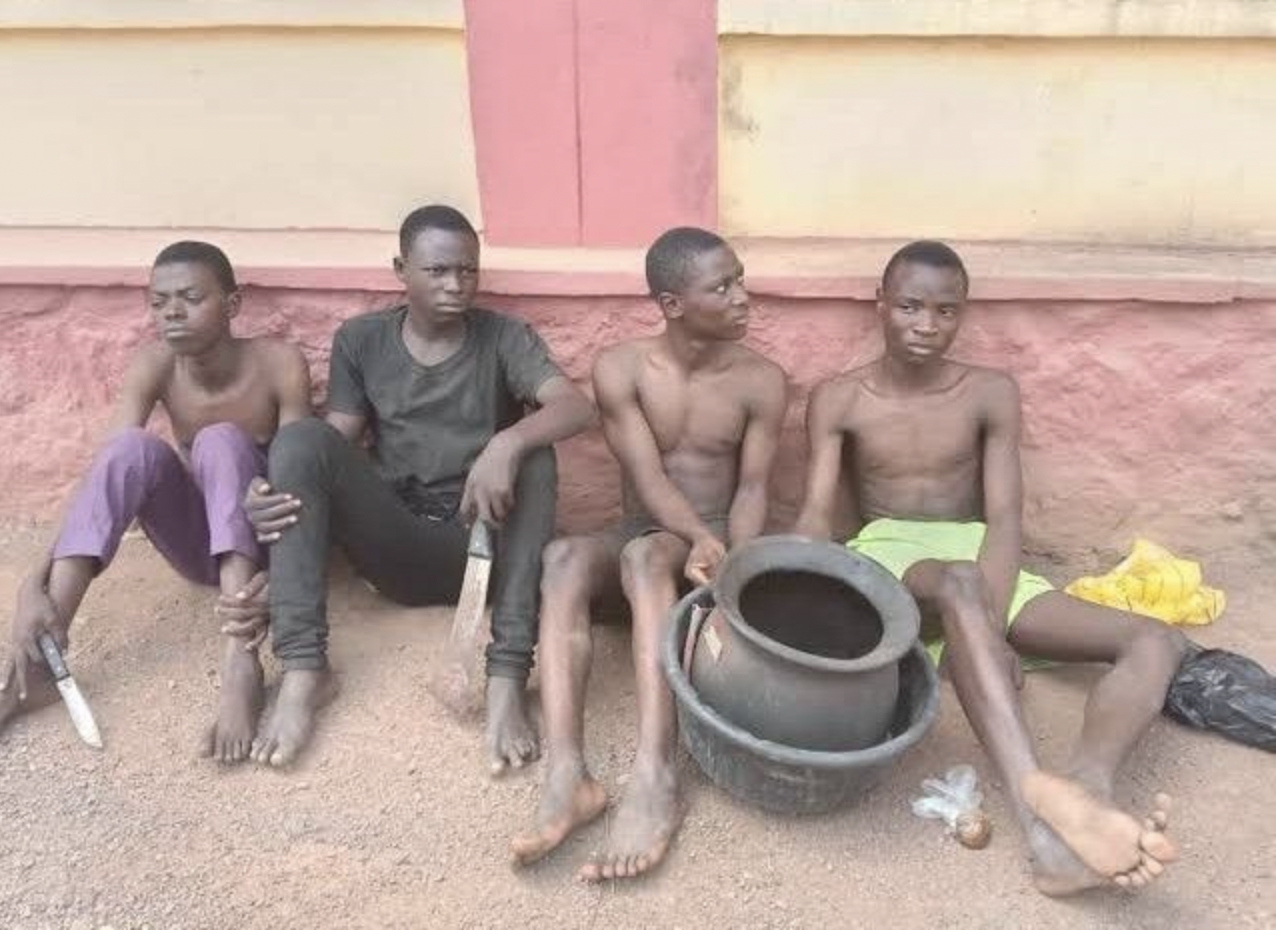
Last month, a 20-year-old lady, Sofiat Kehinde was gruesomely murdered in Abeokuta, Ogun State capital by four teenage boys aged 17, 18, 19 and 20.
Sofiat’s head was severed by the boys and they were burning it in a pot for money ritual before they were apprehended.
The four teenage suspects arrested by the police are Soliu Majekodunmi, Wariz Oladehinde, Abdulgafar Lukman, and Balogun Mustaqeem.
They confessed to have conspired to kill Sofiat and played different roles in her murder.
One of the suspects, Mustaqeem, confessed that he was motivated by a post he saw on Facebook to murder Kehinde for money ritual.
He said, “I saw a post on Facebook that explained how to get rich quickly. I downloaded the video because I had interest in getting wealthy at an early stage. I wanted to get rich and lead a luxurious life.
“The video was what prompted me to tell Soliu about getting rich quickly at our early age. He was interested after I showed him the video on my phone and asked where we would get the materials we needed.”
Jolted by the reports of incessant ritual killings across the country, the House of Representatives, Wednesday, asked the federal government to declare a national emergency on the social vice.
The House also asked the Inspector General of Police, IGP, Usman Baba Alkali to take urgent steps to increase surveillance and intelligence gathering with a view to fishing out, arresting and prosecuting the perpetrators of the killings.
The parliament also called on the National Orientation Agency, parents, heads of schools, religious leaders and the media to undertake a campaign to change the negative narrative that bedeviling the society.
The resolutions of the House came after it considered a motion titled “Need to Curb the Rising Trend of Ritual Killings in Nigeria”, presented at the plenary by the deputy minority leader, Hon. Toby Okechukwu under matters of urgent public importance.
Presenting the motion, Okechukwu noted that the incidents of ritual killings have assumed an alarming rate in Nigeria in recent times.
He said there was an upsurge of reported ritual killings with increasing cases of abductions and missing persons in different parts of the country, which in most cases, the culprits also rape, maim, kill and obtain sensitive body parts of unsuspecting victims for rituals.
He said: “The Red Cross Society in 2017 reported that it received 10,480 reports of missing persons in Nigeria.
“On January 22, 2022, three teenage suspects and a twenty year old reportedly killed one Sofiat Kehinde and had her head severed and burnt in a local pot in Abeokuta, Ogun State.
“Ogun State Police Command on Monday, February 7, 2022 reported that one of the suspects confessed that he learned the act of ritual killing from a video he watched on Facebook.”
The lawmaker recalled that the death of Sofiat has attracted national outrage and condemnation considering the ages of her killers.
“Merchants of such wicked acts often use the social media as a ready tool to advertise their evil behaviours.
“The grievous killing of Iniobong Umoren, a young woman in her 20s; after being lured to a particular location in Uyo, Akwa Ibom State for a job interview, as widely reported in the national dailies.
“The gruesome killings and heinous activities of Badoo Boys in Lagos State, which was also reported in the national dailies.
“Ritual killing has become a predominant theme in most home made movies which if not checked, our younger generation may begin to view it as an acceptable norm.
“Several reports where law enforcement agents arrested and paraded suspects of ritual killings with gory pictures of human skulls and dismembered bodies.
“Fake clerics, imams, herbalists and native doctors are often complicit in the heinous practices.
“Although our communities are getting more religious with the proliferation of churches and mosques, the ugly trend of ritual killing is on the rise as the quest for wealth at all cost pervades our society.”
Okechukwu expressed worry that while youths in other climes are embracing science and technology as a way of maintaining pace with our dynamic world, some of our youths seem stuck in the mistaken belief that sacrificing human blood is the surest route to wealth, safety and protection.
“Such cruel and barbaric acts should no longer be promoted in our society given the demands of today’s world.
“The growing rate of unemployment in the country.
“The moral decadence in our society, a trend that has promoted the get-rich-quick syndrome among our youths.
“The role of the Nigerian movie industry in moulding behavioral patterns in our society vis-a-vis the mandate of the National Film and Video Censors Board as a clearing house for movies produced in the country.
“A lot needs to be done by the Police and other law enforcement agencies to checkmate this ugly trend.
“The roles of parents, schools, religious leaders, and the urgent need to curb the increasing rate of ritual killings and other related vices.
“The House is mindful of the role of media as a tool to change this wrong narrative among our youths”, he said.
Adopting the motion, the House called on the Executive Director, National Film and Video Censors Board to rise to the mandate of the agency as the clearing house for all movies produced in the country.
It therefore mandated its Committee on Information, National Orientation, Ethics and Values ensure compliance of the resolution and report back to the House within weeks.
Lawmakers blame Nigerian movies for surge in ritual killings, declare national emergency
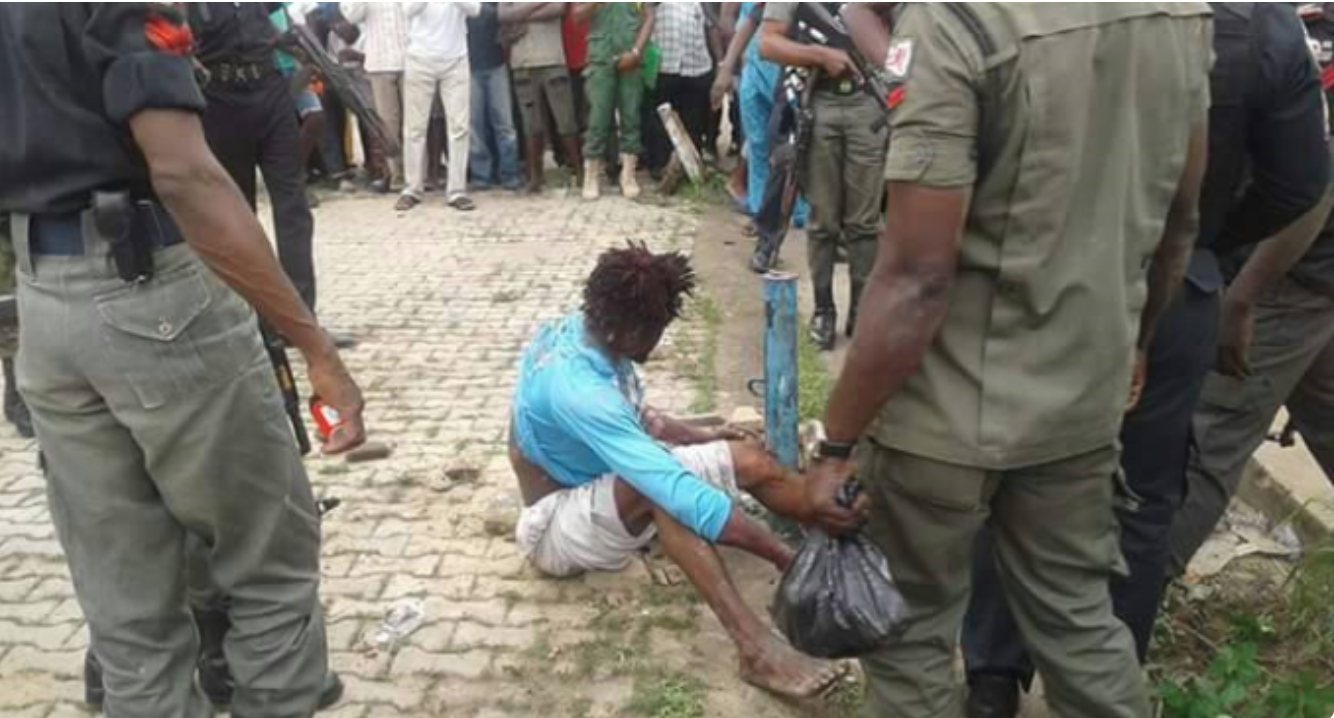
Teens arrested in Abeokuta, Ogun State over murder of a teenager girl
Published: February 9, 2022 By: Business Hallmark News, Nigeria
Nigeria’s House of Representatives on Wednesday declared a national emergency amid rise in cases of ritual killings across the country.
The lawmakers also urged the National Orientation Agency (NOA), stakeholders, and the media to initiate a campaign towards changing the situation in the country.
This followed the adoption of a motion of urgent public importance by Toby Okechukwu, the deputy minority leader, at the plenary in Abuja, NAN reported.
Presenting the motion, Mr Okechukwu said that incidents of ritual killings had assumed an alarming rate in Nigeria while decrying the upsurge of reported ritual killings, and abductions in different parts of the country.
He blamed the increase on Nollywood, the country’s movie industry, arguing that younger generations may see ritual killing as a norm.
“Ritual killing had become a predominant theme in most homemade movies which if not checked, our younger generation may begin to view it as an acceptable norm,” he said.
Mr Okechukwu added that in most cases, the culprits also rape, maim, kill and cut out sensitive body parts of unsuspecting victims for rituals.
Citing the killing of Iniobong Umoren in Akwa Ibom and the recent incident of 21-year-old Sofiat Kehinde who was killed and had her head burnt in a local pot in Abeokuta, Ogun, the lawmaker said the news triggered condemnation considering the age of the suspected killers.
The House thereafter charged the Inspector General of Police to take urgent steps towards tacking ritual killings in the country.
The lawmakers also tasked the Executive Director, National Film and Video Censors Board to rise to the mandate of the agency as the clearing house for all movies produced in the country.
Reps ask Buhari to declare national emergency over ritual killings
Published: February 9, 2022 By: Ochogwu Sunday – Daily Post, Nigeria
The House of Representatives on Wednesday called on the Federal Government to declare a national emergency on ritual killings across the country.
The development followed the adoption of a motion of urgent public importance by Toby Okechukwu, the Deputy Minority Leader, at the plenary on Wednesday in Abuja.
Presenting the motion, Okechukwu said incidents of ritual killings had assumed an alarming rate in Nigeria while decrying the upsurge of reported ritual killings with increasing cases of abductions and missing persons in different parts of the country.
He added that in most cases, the culprits also rape, maim, kill and cut out sensitive body parts of unsuspecting victims for rituals.
He said the Red Cross Society in 2017 said it received 10,480 reports of missing persons in Nigeria.
“On January 22, three teenage suspects and a 21-year-old reportedly killed one Sofiat Kehinde, severed her head and burnt it in a local pot in Abeokuta, Ogun.
”The police command in Ogun on Feb. 7, reported that one of the suspects confessed that he learned the act of ritual killing from a video he watched on Facebook,” he stated.
He said the death of Sofiat attracted national outrage and condemnation considering the age of the suspected killers.
The lawmaker said merchants of such wicked acts often use social media as a tool to advertise their evil acts.
He also mentioned the grievous killing of Iniobong Umoren, a young woman in her 20s, who was lured to a particular location in Uyo, Akwa Ibom for a job interview, as widely reported in the national dailies.
He also cited the gruesome killings and heinous activities of Badoo Boys in Lagos State, which was also reported in the national dailies.
“Ritual killing had become a predominant theme in most homemade movies which if not checked, our younger generation may begin to view it as an acceptable norm,” he said.
The House thereafter declared a national emergency on ritual killings and urged the National Orientation Agency (NOA), stakeholders and the media to initiate a campaign towards changing the situation in the country.
The House tasked the Executive Director, National Film and Video Censors Board to rise to the mandate of the agency as the clearinghouse for all movies produced in the country.
DAILY POST reports that ritual killing has recently become a trend across the country as videos clips of such activities involving adults and even teenagers continue to emerge online.
Declare emergency on ritual killings, Reps tell FG
Published: February 10, 2022 By: Ndubuisi Orji, Abuja – The Sun, Nigeria
House of Representatives, yesterday, called on the Inspector General of Police (IGP), Usman Baba Aikali, to step up intelligence, with a view to arrest and prosecute ritual killers across the country.
The House, which also called on the government to declare a national emergency on ritual killings, urged the National Orientation Agency, parents, heads of schools, religious leaders and the media to undertake a campaign against the menace.
Similarly, the Green Chamber charged the National Film and Video Censors Board to rise to its mandate as the clearing house for all movies produced in the country.
This followed the adoption of a motion by the Deputy Minority Leader, Toby Okechukwu, on the “need to curb the rising trend of ritual killings in the country.”
Okechukwu, while leading debate on the motion, said ritual killings have assumed an alarming rate in recent times. He said there have been an upsurge of reported cases of ritual killings with increasing cases of abductions and missing persons in different parts of the country.
According to him, in most cases, the culprits rape, maim, kill and obtain sensitive body parts of unsuspecting victims for rituals.
“The Red Cross Society in 2017 reported that it received 10,480 reports of missing persons in Nigeria. On January 22, 2022, three teenage suspects and a 20-year-old reportedly killed one Sofiat Kehinde, severed her head and burnt the head in a local pot in Abeokuta, Ogun State.
“Ogun State Police Command on Monday, February 7, reported that one of the suspects confessed he learned the act of ritual killing from a video he watched on Facebook.
“Sofiat’s death has attracted national outrage and condemnation considering the ages of her killers,” he said.
He said it is worrisome that while youths in other climes are embracing science and technology, Nigerian youths “seem stuck in the mistaken belief that sacrificing human blood is the surest route to wealth, safety and protection.”
Okechukwu expressed dismay that ritual killings have “become a predominant theme in most home made movies,” and warned that if it is not checked, the younger generation may begin to see it as an acceptable norm.
He said a lot needs to be done by the police, other law enforcement agencies, as well as parents, religious institutions and schools to check the ugly development.
The House noted that while citizens of other countries are embracing science and technology, Nigerian youths are turning to ritual killings.
The House of Representatives has resolved to declare a national emergency on ritual killings in Nigeria.
It asked the National Orientation Agency (NOA), stakeholders and the media to initiate a campaign towards changing the situation in the country.
It also asked the Inspector-General of Police, Usman Alkali, to take urgent steps towards tackling ritual killings in the country.
This followed a motion by the Deputy Minority Leader of the House of Representatives, Toby Okechukwu (Enugu, PDP), who raised alarm over the surge in ritual related killings across the country.
Mr Okechukwu, in the motion of urgent public importance he moved on Wednesday, blamed Nigerian movies, popularly known as Nollywood, for the rising cases of ritual killings.
According to Mr Okechuckwu, while citizens of other countries are embracing science and technology, Nigerian youths are turning to ritual killings.
“While youths in other climes are embracing science and technology as a way of maintaining pace with our dynamic world, some of our youths seem stuck in the mistaken belief that sacrificing human blood is the surest route to wealth, safety and protection,” he said
Mr Okechukwu added that “ritual killing has become a predominant theme in most homemade movies which if not checked, our younger generation may begin to view it as an acceptable norm.
The killing of Sofia Kehinde
He drew the attention of the House to the gruesome killing of me Sofiat Kehinde in Ogun State by some three teenagers in January for ritual related act sparked conversation on ritual.
Mr Okechukwu also condemned the use of social media “as a ready tool to advertise their evil behaviours.”
He also accused fake clerics, imams, herbalists and native doctors of being involved in promoting the get-rich-quick syndrome.
Following the presentation of the motion, the House resolved to declare a national emergency on ritual killings in Nigeria and called on National Orientation Agency, parents, heads of schools, religious leaders and the media to undertake a campaign to change the negative narrative that is bedevilling the society.
Also, it called on the Executive Director, National Film and Video Censors Board to rise to the mandate of the agency as the clearing house for all movies produced in the country.
It, therefore, mandated the House Committee on Information, National Orientation, Ethics and Values to ensure the agency complies with the directive and report back to the House within four weeks.
Furthermore, the House called on the Inspector-General of Police, Usman Akali, to take urgent steps to increase surveillance and intelligence gathering with a view to apprehending and prosecuting all perpetrators of ritual killings in Nigeria.
It asked the House Committee on Police Affairs to ensure the compliance of the force and report back to the House within four weeks.
The Nigerian lower legislative chamber attributed the increase in ritual killings to home videos depicting the gruesome acts in their productions.
The House of Representatives on Wednesday declared a national emergency following the rise in cases of ritual killings across Nigeria.
It also urged the National Orientation Agency (NOA), stakeholders, and the media to initiate a campaign towards changing the situation in the country.
This followed the adoption of a motion of urgent public importance by Toby Okechukwu, the deputy minority leader, at the plenary in Abuja.
Presenting the motion, Mr Okechukwu said that incidents of ritual killings had assumed an alarming rate in Nigeria while decrying the upsurge of reported ritual killings, and abductions in different parts of the country.
He also attributed the increase in ritual killings to home videos in Nigeria, arguing that younger generations may see ritual killing as a norm.
“Ritual killing had become a predominant theme in most homemade movies which if not checked, our younger generation may begin to view it as an acceptable norm,” he said.
Mr Okechukwu added that in most cases, the culprits also rape, maim, kill and cut out sensitive body parts of unsuspecting victims for rituals.
Citing the killing of Iniobong Umoren in Akwa Ibom and the recent incident of 21-year-old Sofiat Kehinde who was killed and had her head burnt in a local pot in Abeokuta, Ogun, the lawmaker said the news triggered condemnation considering the age of the suspected killers.
The House thereafter charged the Inspector General of Police to take urgent steps towards tacking ritual killings in the country.
The lower chamber also tasked the Executive Director, National Film and Video Censors Board to rise to the mandate of the agency as the clearing house for all movies produced in the country.
After protests in other states: Abia, Adamawa, Bayelsa, Kwara, Osun, Oyo – to name but a few – Ebonyo state residents joined the increasing number of people raising their voices against the heinous practices of ritual murders (‘money rituals’), calling on the government to act. Most Nigerians are fed up with the unscrupulous murders of innocent citizens, men, women, children, for purposes linked to witchcraft and superstition. (FVDK)
Insecurity: Ebonyi residents decry ritual killings across the country
Spokesperson of the Ebonyi State Police Command DSP Loveth Odah, Wednesday condemned the number of missing persons in recent times all over the country.
Published: February 2, 2022 By: NAN – The Eagle Online
Residents in Abakaliki, the Ebonyi State capital have decried the rising cases of missing persons and killings for rituals across states of the federation, urging concerned government agencies to checkmate the trend.
In a vox pop by the News Agency of Nigeria (NAN) they attributed the reason for quest to acquire wealth.
Spokesperson of the Ebonyi State Police Command DSP Loveth Odah, Wednesday condemned the number of missing persons in recent times all over the country.
“Yes, the case of missing persons is on the increase. We condemn the act and urge members of the public to be security conscious,” Odah said.
It would be recalled that five engineers from the Nelan Consultants Limited were on Nov. 3, 2021 reported missing by the Command.
The engineers were deployed to a road project at Effium in Ebonyi in continuation of routine supervisory works.
The victims traveled from Enugu to Effium with the project vehicle, Toyota Hilux with registration number ERR 001 EB.
Another recent case was that of four brothers, who left home on Dec. 26, 2021, in two Daystar 125 model motorcycles but have yet to be seen.
The brothers left to attend a traditional marriage of their cousin at Okpa-Ogegen Village in Oju Local Government Area of Benue, through Effium/Benue route and had yet to return.
Mr Ezekiel Igboji, Human Right Activist, decried the act of abduction and murder for ritual, blaming the current rise on collapse in our moral values.
On what was responsible for the increase, Igboji attributed it to parents and guardians’ failure in their responsibilities to bring up their children and wards uprightly.
“The dwindling value system in the country is another reason.
“Murder for ritual is worrisome to the society. How can someone take another person’s life in the quest for wealth, protection, and power?
“Parents should wake up to their responsibilities in the efforts to tackle the menace. The public should desist from night traveling.
“Nigerians should always assess public transport vehicles before boarding in order not to board the “wrong bus,” he advised.
A teacher Mary Okoronkwo, called for improved security around public and private schools in curtailing the trend and protect the school.
“There is need for increased security in all schools, school children have become victims due to inadequate security around them,” Okoronkwo said.
Ebonyi residents decry rising wave of ritual killings, missing persons
Published: February 2, 2022 By: Agency reporter – The Nation, Nigeria
Residents in Abakaliki, Ebonyi capital have decried the rising cases of missing persons and killings for rituals across states of the federation, urging concerned government agencies to checkmate the trend.
In a vox pop by the News Agency of Nigeria (NAN) on Wednesday, they attributed the reason for the quest to get quick wealth.
DSP Loveth Odah, Spokesperson of the Ebonyi Police Command, condemned the number of missing persons in recent times all over the country.
“Yes, the case of missing persons is on the increase. We condemn the act and urge members of the public to be security conscious,” Odah said.
NAN recalls that five engineers from the Nelan Consultants Limited were on Nov. 3, 2021 reported missing by the Command.
The engineers were deployed to a road project at Effium in Ebonyi in continuation of routine supervisory works.
The victims traveled from Enugu to Effium with the project vehicle, Toyota Hilux with registration number ERR 001 EB.
Another recent case was that of four brothers, who left home on Dec. 26, 2021, in two Daystar 125 model motorcycles but have yet to be seen.
The brothers left to attend a traditional marriage of their cousin at Okpa-Ogegen Village in Oju Local Government Area of Benue, through Effium/Benue route and had yet to return.
Warning: the following graphic details of heinous crimes may upset the reader.
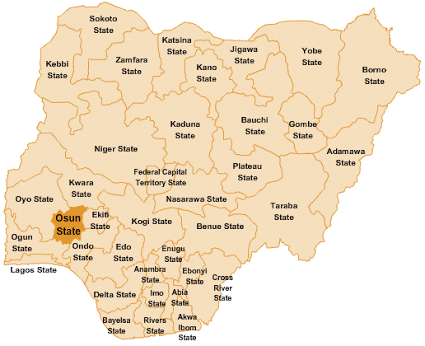
Osun State is with an area of less than 10,000 km2 one of the smallest of the 36 Nigerian states and with an estimated population of 4-5 million people the state has one of the highest population densities in the country, Africa’s most populated country. The history and cultural diversity and richness of the people in Osun State are phenomenal and well-known. It’s also interesting to know that Osun State has a literacy rate of about 80%, one of the highest literacy rates in the country.
Unfortunately, and seemingly in contradiction with the educational level of the people in general, the state is also notoriously known for its ritual murders which are locally called ‘money rituals’. In the past I have posted a large number of reported ritual murder cases, too many to mention here.
Interested readers may use the drop-down menu (under ‘African countries’ on the home page) and then use the search option for ‘Osun State’ if interested in more information on the subject.
A civil society group called Every Life Matters recently stood up raising alarm over the increasing numbers of ritual murders in the state, calling on the authorities to act and end this frightening trend. The founder of the organisation, Mrs. Babalola Atinuke, and her associates are to be commended for their action. Hopefully their action will be successful in curbing the incidence of ritual killings in this part of the country with the long-term goal of ending these practices which have no place in the 21st century.
The article presented below summarizes a number of recent ritual murder cases, only the tip of an iceberg as we know, their gruesome details may shock certain readers. (FVDK)
Civil society group raises alarm over surge in ritual killings
A State of Osun based civil society group, Every Life Matters (ELM), has raised the alarm over increasing rate of ritual killings in the state, calling on the government, security agencies and all other state actors to work together to curb the menace.
The founder of the organisation, Mrs. Babalola Atinuke, while speaking with OSUN DEFENDERon Tuesday, said cases of killing for ritual purposes are dishearteningly on the rise in Osun, a situation she said calls for drastic action from stakeholders.
Atinuke attributed ritual killings to the inordinate desire of youth of nowadays and few older people to get quick and easy money without working.
According to Atinkue, if drastic step is not taken to curb the situation, the state might become unsafe for the good citizens and residents.
She said: “The spate of killing for ritual purposes is gradually assuming an alarming rate in the state of Osun and if not quickly checked, it can make the state unsafe for the good people.
“Children and some people are no longer safe to go out at night and I want to urge the government, security agencies and all other state actors to rise up and work together to clamp down on those perpetrating this act.
“The cases, when read or heard of, are disheartening, weepy, pathetic and calls for a sober reflection. As an organisation, we are trying our best by orientating our people, most especially the youth, on the need to thread carefully on their quest for money.”
Ritual Killings On The Rise In Osun
OSUN DEFENDER takes a look at some cases of alleged ritual killings in the state in the past few months.
On January 5, 2022, a native doctor, Ganiyu Wasiu, living in Igege town, Ola-Oluwa local government, was caught with mutilated human body parts.
The suspect, according to the Osun State Security Network, codenamed Amotekun, was arrested while conveying the mutilated human parts in a ‘Ghana-Must-Go’ bag.
On December 14, 2021, an Islamic cleric, Lukman Salawudeen (36), was arrested by policemen in the state in connection with the murder of a lady, Bolaji Akerele.
The cleric attested to the fact that he prepared ritual soap for his customer, even as he denied kown how his client got the human part he used to prepare the ritual soap.
The State Commissioner of Police, Mr. Olawale Olokode while briefing Newsmen, said: “The police discovered a dead body identified as Bolaji Akerele dumped somewhere in Ile-Ife.
“Upon investigation, it was discovered that her head and palms have been severed from the body. One Sunday Olajide was arrested in connection with the murder
“The arrest of the first suspect on December 6, 2021, led to the arrest of three other suspects in Iwo, Osun state by a police tactical team. They all confessed to having strangulated the woman to death with the motives of using her for money rituals”.
On August 9, 2021, an Ikirun based Ogboni cult member, Ifadare Afolabi, and his friend, Ifaseun Afolabi, a herbalist, were arrested for allegedly conspiring to kill a 35-year-old man, Ayoade Fasesin, and use his body parts for ritual purposes.
Speaking to newsmen when he was paraded by the police, Ifadare said he used his victim’s head and legs for a charm to draw clients to his temple in Ikirun.
He, however, lamented that the charm did not work, as his temple did not see an influx of people as expected.
Also, a lady, Toyin Adewale, was sometimes in June, last year brutally murdered by her boyfriend for ritual purpose after having sex with her.
The boyfriend, Akin, according to his accomplice Kabiru, invited the deceased from Ibadan to Apomu, in the State of Osun, with the sole aim of using her head and heart for money ritual.
Narrating how they killed the lady, Kabiru said the victim was brought from Ibadan by his friend Akin, to his residence at Agunla Junction in Apomu, where he had sexual intercourse with her.
“Akin brought the deceased to my house at Agunla Junction Apomu. The lady is not from our area. She probably came from Ibadan. She was Akin’s girlfriend. Akin is an herbalist and my friend. After sleeping with the lady, I entered the room and he had already strangulated her. I only helped him to hold the lady’s leg.
“Akin told me he wanted to do a money ritual and needed some organs for the ritual. He promised that whatever I needed would be given to me, if I helped him. I didn’t kill the woman, Akin did. I gave him a knife that he used to dismember the body and we packed it inside a box in my room.”
Let me first of all state here that Bayelsa State isn’t an exception in Nigeria when it comes to ritualistic murders. My impression is that these heinous crimes occur in every state of Nigeria. But it is, however, exceptional, that high placed people raise their voices against such practices.
The year 2022 started promising in Bayelsa State when the wife of the Bayelsa State governor, Dr Gloria Diri, led a coalition of civil society organization to campaign against ritual killings and the harvesting (as it is called locally) and trafficking of human organs in some parts of the state. Moreover, she called on state security agencies to step up the protection of innocent children. The campaign started with the slogan “No To Ritual Killings.”
My congratulations to Dr Diri for this initiative and I wish her and her fellow Nigerians success in their endeavors to end ritualistic killings, at least in Bayelsa State! (FVDK)
Diri’s Wife Leads Campaign Against Ritual Killings, Others
Published: January 21, 2022 By: Osa Okhomina – Leadership, Nigeria
Wife of the Bayelsa State governor, Dr Gloria Diri, has led a coalition of civil society and girl-child welfare advocacy groups to campaign against ritual killings and harvest of human organs in some parts of the state.
She called on security agencies to step up the protection of the girl-child in the state. The campaign started as early as 7am with an estimated 12-kilometre road walk to publicly declare “No To Ritual Killings.”
The various groups and stakeholders under the umbrella of the State Gender Response Initiative Team (GRIT) noted that though two cases of attempted ritual killings have so far been detected in the state, the state would no longer condone the mysterious killing of young girls.
Among the groups which participated in the 12 kilometer walk against ritual killings are the coordinator, Committee for Democracy and Environmental Dividends ( CODED ), Mr Keme Opia ,the chairman Collins Cocodia Foundation and special adviser , political to the state governor, High Chief Collins Cocodia, wife of the chairman of the State Traditional Rulers Council, HRM, Mrs Josephine Diette-Spiff, International Federation of Women Lawyers (FIDA), Women Wing of Christian Association of Nigeria, the chairman of the state chapter of the NUJ, Comrade Samuel Numonengi, Gloria Diri Foundation, Do foundation, Child Protection Network, Ethanrose Foundation, National Council of Women Society, Medical Women Association of Nigeria ( MWAN), Do Foundation international, Starrz Safety initiative and others.
The women groups were armed with placards with inscription such as “save the girl child from ritual killings”, “Together we CAN”, “Join GRIT to stop senseless killings”, “Bayelsa is peaceful not for harvesting human parts”, and “ Our girls ,our pride.”
Mrs Diri, who expressed concern over the strange cases recorded and the alleged participation of young boys in aborted cases in the state, said the land of Bayelsa rejects such dastardly act and that by the peace walk, the stakeholders in the state reject such acts.
She also called on the mothers and the men to protect the girl child against such evil acts, “For everyone that enters the state, the gods of the lands and the security agents are watching. Let us watch and protect one another against ritual killing. For those caught in the act, we will ensure that the law takes its course. We are also now against out-of-court settlements and we want the law to punish the perpetrators. Ritual killing is a distraction because if a child goes missing, government will abandon what they are doing and go in search of the missing child.”
Bayelsa First lady leads public campaign against ritual killers, ‘Yahoo-Yahoo’ boys
Published: January 20, 2022 By: Femi Folaranmi, Yenagoa – The Sun, Nigeria
Disturbed by the recent cases of attempted ritual killings in Bayelsa State, the wife of Bayelsa governor, Dr Gloria Diri on Thursday led other groups on a public campaign against ritual killing and activities of Yahoo-yahoo boys in the state.
A Niger Delta University (NDU)student, Deborah Emafidion and a 13-year-old girl (name withheld) were recently rescued from suspected ritualists in the state.
The public campaign put together by the Gender Response Initiative Team (GRIT) and Committee for Democracy and Environmental Dividends (CODED) and other groups armed with placards with inscription such as ‘Save Our Children from Ritualists’ ‘No to Ritual Killings,’ Join GRIT to stop senseless killings’, ‘Bayelsa is peaceful not for harvesting human parts”, commenced with a 12 kilometre walk and distribution of flyers from Ekeki Park, Azikoro road to the Peace Park, opposite the Bayelsa State Government House.
Dr Diri, who incidentally is the initiator of GRIT, expressed concern over the strange cases recorded and the involvement of teenagers in attempted ritual killings in the state.
“The land of Bayelsa rejects such a dastardly act and by this peace walk, the stakeholders in the state reject such acts. The youths and women of Bayelsa reject it. I urge everyone to be their brothers’ keeper. If they try it in other states, Bayelsa will not condone it any longer. For everyone that enters the state, the gods of the lands and the security agents are watching. Let us watch and protect one another against ritual killing. For those caught in the act, we will ensure that the law takes its course. We are also now against out-of-court settlements and we want the law to punish the perpetrators,” she said.
The Chairperson of GRIT, Dise Ogbise, pointed out that with the peace walk against ritual killings; Governor Douye Diri led prosperity Government has once again made history by bringing together key actors in its fight against ritual killings and cultism in the state.
“The state Government has once again reiterated its resolve to end all forms of violence in the state as perpetrators of ritual killing and cultic groups will be prosecuted,” she said.
hairman of the Collins Cocodia Foundation and Special Adviser, Political to Bayelsa Governor, Chief Collins Cocodia, also expressed concern over the cases of ritual killings and called for a concerted effort to nip it in the bud.
Queen of Twon Brass Kingdom and Chairperson, Bayelsa State Traditional Rulers Wives Association, Bayelsa, Queen Josephine Diette-Spiff said the case of Deborah underscored the danger facing girls and women in the state.
While commending GRIT and CODED for putting the campaign together, she called on security agencies to step up operations to be able to track perpetrators of all forms of violence.
Other groups that participated in the solidarity walk include International Federation of Female Lawyers (FIDA), Gloria Diri Foundation, Collins Cocodia Foundation, Do foundation among others.
Professor Ezionye Eboh of the Abia State University, Uturu, almost mentioned it casually, but he did mention it. He included ritual killings in the societal ills that urgently need to be attacked in order to restore societal values and public trust in the rule of law.
Professor Ezionye Eboh is a Professor of management at the Abia State University, Uturu, and was the immediate past Rector of Abia State Polytechnic Aba.
Increasingly, Nigerians speak out against the unabated scourge of ritual murders and related ritualistic activities in the country. Nigerians in virtually all states experience a daily threat emanating from the insecurity which results from the widespread belief in the power of ‘money rituals’. There is no place for such practices in the third millennium. After all, it’s 2021 (webmaster FVDK).
Abia State University professor seeks social reorientation to tackle societal ills including ritual killings
Published: December 21, 2021 By: Gordi Udeajah, Umuahia – The Guardian
Restoration of societal values through social reorientation will help tackle societal ills confronting the country, a Professor of Management at the Abia State University, Uturu, Ezionye Eboh has said.
Prof Ezionye who spoke while delivering the 61st inaugural lecture of the university, which had ‘Management: Everything, Everywhere’ as a theme, said that citizens would reap the gains and benefits of a well-managed country.
To him: “A developing country like Nigeria needs to judiciously manage its available resources, avoid all forms of embezzlement and misappropriation of funds and ensure an enabling environment for business operations”.
He lamented that over the years, greed, bribery, kick-backs among other vices, became the accepted way of the life of many citizens, which denied the country huge opportunities for healthy living and emerging as a major player in the global economy.
He insisted that negative societal values have given rise to all manner of crimes in society, ranging from armed robbery, drug trafficking, 419 activities, ritual killings, kidnapping and unbridled official corruption.
Worried that the greatest casualties are the youths, the don urged stakeholders to devise deliberate and concerted effort at re-ordering social values, saying not to do anything about the eroding social values today is to produce the worst corporate players soon.
While recommending a deliberate concerted effort at re-ordering social values, strengthening institutions and regulatory frameworks, he urged those entrusted with state responsibilities to do their work without fear, favour and partisanship.
Prof Eboh, who was the immediate past Rector of Abia State Polytechnic Aba, stated that to effect better management of the country, there is the need to initiate ‘Introduction to Management’ as a compulsory “General Studies Course (GST) “in all universities in the country to help prepare students for leadership in public and private sectors.
During the past year, many of my posts on this site focused on Nigeria and the alarming scale of ritual murders and related crimes in this country, contributing to a nation-wide security problem though, one knows, Nigeria’s security problem has many faces. See my February 2, 2021 post Security challenges in Nigeria.
On May 26, 2021 a Nigerian reporter, Ayodele Oluwafemi, of The Cable, a Nigerian news outlet, published a frightening analysis of mysterious disappearances and ritual murders during the past seven years. Already the list of missing and/or murdered persons is impressive.
“Although reported cases of ritual killings show that the incident happens in all regions of the country — media reports suggest that the south-west accounts for a large percent of the killings.”
Subsequently the author analyses some of the media reports published in the past few years on ritual killings in the south-west region of the country.
Warning: the graphic description of the ritual murders may upset certain readers (FVDK).
NB: The links included in the following Cable article are the original links and consequently, I am not responsible for their proper functioning (FVDK).
Overview: how south-west is becoming a hotbed of ritual killings in Nigeria
In recent times, reported cases of ritual killings have surged in many parts of the country. Law enforcement agencies have arrested many suspects of ritual killings — with gory pictures of human skulls and dismembered bodies.
Aside from the arrest and parade of suspected ritualists by the police, the Nigerian social media space has become a place where users mobilise members of the public to help find missing friends, colleagues, and family members.
As a result of this trend of missing persons, Enough is Enough (EiE), a civil society organisation, created a website alongside social media platformsto document cases of missing persons.
“Nigerians are reported missing daily. But most often, there are no records of these missing people, it is our mandate to document these records and make it easy to find those who are lost and missing,”an excerpt on the website’s front page says.
In most cases, some of these persons declared missing are found but many remain missing — with the hope of getting found by their families and friends dimming every passing day.
The trend of missing persons and the police’ arrest of suspected ritual killers suggest that many of those declared missing may have been victims of ritual killers.
Although reported cases of ritual killings show that the incident happens in all regions of the country — media reports suggest that the south-west accounts for a large percent of the killings.
TheCable analysed some of the media reports published in the past few years on ritual killings in the south-west region of the country.
On March 24, 2014, the nation was thrown into a moment of confusion when a kidnappers’ den was discovered in Soka community, Ibadan, Oyo state.
The den was discovered by some commercial motorcyclists, popularly known as ”okada”, who were searching for two of their colleagues after they took two passengers to the community without returning.
After the den was busted, human skulls, dried human parts alongside malnourished victims which were reserved for ritual purposes, were discovered.
Personal items like bags, shoes, and identity cards which appeared to be victims’ belongings were also seen at the den.
Since the 2014 shocking discovery at Soka, there have been multiple revelations of suspected ritual killings, especially in the south-west of the country.
The police also rescued a 28-year-old woman found in the uncompleted building.
In 2016, the Ogun police discovered a ritualists’ den located within an abandoned filling station at Iyana-Ilogbo axis of Sango-Ota of Ogun state, following a tip-off from a member of the community.
The police arrested two suspected ritualists in connection with the activities carried out in the den.
On August 30, 2017, two people were killed by a mob in the Mushin area of Lagos state over alleged involvement in kidnappings and ritual killings.
The incident was said to have happened at Challenge bus stop, Mushin, after a vulcaniser sighted a suspected mad man discussing with someone in a tunnel at the bus stop.
On October 7, 2017, the Ogun police arrested six members of a syndicate allegedly involved in killing people for ritual purposes at different locations across the state.
The police said two members of the syndicate were caught with a bag containing fresh and dried human parts.
On August 20, 2018, the Lagos police arrested Taiwo Akinola, a suspected cult member, for allegedly attempting to kill Alice Akinola, his mother, for money rituals.
It was reported that the assailant attacked his mother by hitting a plank on her head at their residence at Raji Ajanaku street, Alaja road, Ayobo axis of Lagos after he had sent his nephew to go and buy a white handkerchief and a pack of cigarette.
It was reported that the suspects cut off the boy’s head for the purpose of selling it for N200,000.
The suspects have been remanded in prison.
On January 18, 2019, the Ekiti police busted a ritualists’ den in Odo, Ado Ekiti, and arrested two suspected ritualists, after a tip-off from members of the community on suspicion of ritual activities in the area.
On June 20, 2019, Dotun Ogunlade, a prophet popularly called ‘Arole Jesu’, was arrested in Igboora area of Oyo state for the alleged murder of Bosede Ogunlade, a 25-year-old housewife for ritual purposes.
The prophet was said to have lured Bosede, who hailed from Ilorin in Kwara state, with the promise of providing solution to her economic and marital problems.
On October 5, 2019, the Ogun police arrested two men, Emmanuel Aro, aged 25, and Anu Olofinju, aged 25, with a human skullalong Ijoun road, Eggua axis of the state.
The two suspects were said to have been sighted at a cemetery, digging the grave of the mother of one Amoo Bankole.
Within one month, three young ladies — Grace Oshiagwu, Barakat Bello, and Azeezat Somuyiwa — were murdered in their residences located in Akinyele LGA in a pattern that suggested ritual killing.
He said he was sent on the mission by a 50-year-old herbalist, whom he claimed was his master.
“Anytime I’m to go for the killing, baba (referring to the herbalist) will give me some charms and also teach me some incantation to be recited so that nobody will see me at the scene of the crime,” he said.
The suspects were arrested after a phone belonging to a missing person was tracked to one of the suspects. Corpses were also discovered in the suspects’ house — a development that made angry youths in the area raze the building.
On January 17, 2021, an elderly man, who according to residents, usually acts like a mentally unstable person, was arrested by the police for alleged kidnapping and ritual activities in Ado-Ekiti, Ekiti state.
The police discovered some items belonging to his victims like cheque books, wigs, and ATM cards in an abandoned uncompleted building adjacent to the Ekiti State Teaching Hospital, where the suspect lived.
On April 12, 2021, a woman — identified as Iya Elekuru — was murdered in a building by suspected ritualists in Ile-Ife, Osun state. Her killers were said to have lured her into the building under the pretence they went to buy food from her.
When her corpse was discovered, the head and hands had been cut off.
RIGHT TO LIFE
Every Nigerian citizen is entitled to the right to life as enshrined in section 33 of the 1999 constitution (as amended). The right to life can only be denied if such a person is sentenced by the court when found guilty of a criminal offence.
Those who engage in ritual killings risk heavy punishment when convicted by the court as states have legal provisions to punish ritual killers and kidnappers.
Despite the legal provisions against ritual killings and other related capital offences, ritual killings still persist.
Women and girls who end up ‘Missing and Murdered’ were the focus of two international webinars organized in the context of 16 days of activism to end gender-based violence. The Lutheran World Federation (LWF),in partnership with the World Council of Churches (WCC), ACT Alliance and the Young Women’s Christian Association (YWCA) tried to find an answer to the question what the churches can do to prevent the rising crime of femicide.
Among those speaking about the problem in Nigeria were Rev. Emmanuel Gabriel, Nigeria’s national coordinator of the LWF’s Symbols of Hope project, and Rev. Dr Kehinde Babarinde, of the Lutheran Church of Christ in Nigeria (LCCN) and adjunct lecturer at West Africa Theological Seminary.
Rev Babarinde asked attention for the issue of ritual killings of women whose body parts are believed to possess mystical powers and hence they are sacrificed by unscrupulous murderers for the well-being of unknown businessmen, politicians, and others. He appealed to the church to speak out against this and other abuses.
Published: December 7, 2021 By: The Lutheran World federation, Geneva, Switzerland,
Webinars hear how faith-based organizations must step up action to change cultures and stop gender-based violence
(LWI) – The dramatic plight of women and girls who end up ‘Missing and Murdered’ was under the spotlight during two webinars organized in the context of the 16 Days of activism to end gender-based violence. The Lutheran World Federation (LWF) partnered with the World Council of Churches (WCC), ACT Alliance and the Young Women’s Christian Association(YWCA) to ask what the churches can do to prevent the rising crime of femicide.
The two-part event focused on different areas of the world, presenting first-hand testimony from panelists working with women and girls who have been trafficked, abused or forced to flee their homes in fear of their lives. Among those speaking about the problem in Indonesia on 25 November was Faye Simanjuntek, a young Lutheran activist who set up her own safe house called Rumah Faye for sexually abused children. Noting that the center cares for trafficked victims as young as six, she spoke of the work to empower survivors through reproductive health education, as well as creative skills training including art and cooking workshops.
Simanjuntek also addressed the underlying cultural problems that allow violence against women and girls to thrive in her country, citing recent comments from a police chief who said wives should be confined to the “well (fetching water), the kitchen and the sheets.” Though Indonesia is a vast and diverse country, she said, women are largely viewed as “second-class participants” in family and public affairs.
Combating patriarchal cultures
Rev. Emmanuel Gabriel, Nigeria’s national coordinator of the LWF’s Symbols of Hope project, spoke about the work to support and reintegrate survivors of trafficking through psycho-social counselling and livelihoods activities. Women are the most vulnerable to exploitation in his country, he noted, often because of gender-based violence in their communities which motivates them to migrate and fall victim to the traffickers. Churches must be part of the solution, he said, raising awareness of the dangers and advocating for a bible-based approach to gender equality.
Another Nigerian panelist, Rev. Dr Kehinde Babarinde, adjunct lecturer at West Africa Theological Seminary, addressed the issue of ritual killings of women whose body parts are believed to possess mystical powers to bring prosperity to others. He said the church must speak out against this and other abuses such as widow inheritance, where women can be forced to marry another family member following the death of their husbands. Many women prefer to commit suicide, he noted, stressing that this must be recognized as a form of femicide too.
Speaking about the widespread violence and killings of women in the Pacific region, Stephanie Dunn of the Fiji Women’s Crisis Center said churches have at times reinforced the problems of a patriarchal culture which create barriers to prevent women from coming forward to denounce the perpetrators of violence. While global statistics show one in every three women has suffered from intimate partner sexual violence, in Fiji and the Pacific, she said, that figure rises to two out of every three women experience gender-based violence.
Building a ‘Gender-competent Church’
South African Catholic theologian Nontando Hadebe, international coordinator of the faith-based gender justice network Side by Side, spoke of the interconnected legacies of patriarchy, colonialism and apartheid in her country. Women, she said, are still “socialized to be submissive” and the church must do more to highlight positive role models of women in the bible.
Frantseska Altezini, a lawyer working with the YWCA in Greece, spoke of the way that the COVID-19 pandemic and the recent economic crisis have brought the underlying problems that women face into the spotlight. She and other participants stressed the need to teach children gender justice in schools, as well as developing curricula for theological institutions in order to “build a gender-competent church.”
A second webinar on 2 December highlighted the scale of this ‘shadow pandemic’ of gender-based violence in Latin America, North America and the Caribbean. Valéria Vilhena, a researcher with Mulheres EIG (Women Evangelicals for Gender Equality) highlighted the work that organization has been doing since 2015 to support survivors and their families. Her country, Brazil, ranks fifth in the world for the highest levels of femicide after El Salvador, Colombia, Guatemala and Russia, she said.
Protecting the most vulnerable
Dr Imani Ama, a research fellow at the University of the West Indies, spoke of the challenges of “indifference and impunity” for perpetrators in Jamaica where the “subordination of women is normative.” Easy access to guns and a “de-sensitization to the value of life” have helped to rank Jamaica “among the murder capitals of the world,” she said. Demilitarization and de-colonialization are necessary, alongside “theologies to dismantle patriarchy,’” she added.
Ebony Rempel, chief executive officer of the YWCA in Banff, Canada, spoke of the increased threats facing indigenous women and girls who are seven times more likely to be victims of femicide. Her organization runs an emergency shelter, as well as longer terms support and affordable housing for survivors of domestic violence. Their crisis helpline has seen a 71% increase in calls during the pandemic, she said, with trans women also running higher risks of femicide.
In conclusion, First Nations Cree artist Amanda Wallin shared her experience of supporting two daughters who were on the Missing Persons’ list in Winnipeg, Manitoba, the province with the highest femicide rate in Canada. She spoke of the pain of witnessing her daughters in abusive relationships, saying there is a need for greater legislative efforts to protect women from violence and femicide, especially among the indigenous communities.
Leo Igwe is a well-known human rights advocate, specialized in campaigning against witchcraft and cruel ritualistic practices. I mentioned him before on this site (see my June 24, 2018 post on Superstition in Mozambique) and also elsewhere, when he spoke out against ritual murders in Africa: in his home country Nigeria in 2004, in Swaziland (nowadays called Eswatini) in 2008, and in African countries in general in 2010 and 2012. Recently, the infatigable human rights campaigner was again in the spotlight when condemning ‘money ritual’ practices in Nigeria, calling the criminal acts ‘useless’ and trying to persuade ritual killers to give up their ‘useless’ practices.
I wish to commend Leo Igwe for his tireless efforts to end these cruel, criminal and senseless practices. The world and Africa in general need more Leo Igwe’s to condemn and end ritualistic murders on the continent (webmaster FVDK).
Nothing like ‘money rituals’, ritual killers are killing in vain – Nigerian human rights advocate Leo Igwe
The leader of the Nigerian human rights group reacts to the recently reported arrest of suspected ritualists in the Boluwaji area of Ibadan, Oyo State.
Published: September 24, 2021 By: SaharaReporters, New York
The Nigerian Humanist Movement has urged Nigerians to stop believing they can get rich or become wealthy through the killing of fellow citizens for money rituals.
NHM, a group that advocates the principles of humanism, urged Nigerians to understand that the notion of ritual money and wealth is completely baseless and invalid.
The rights group was reacting to the recently reported arrest of suspected ritualists in the Boluwaji area of Ibadan, Oyo State.
Reports emerged during the week that members of the Western Nigeria Security Network, codenamed Operation Amotekun had arrested suspected ritualists, who were in possession of the body parts of a 73-year-old man.
The suspects, during interrogations, had told operatives of the security outfit that a Muslim cleric, whom they identified as Alfa Salam Salam, asked them to get some human body parts for rituals.
But in an interview with SaharaReporters on Thursday, NHM, through its National Director, Leo Igwe, said irrational conceptions of how to make money or become wealthy and successful often lead to killing of innocent people in vain.
“I don’t think there is any way the claim ritual money is validated, at least in a way that can be confirmed by a third party.
“For example, if you want to make money using human body parts. Do you want to make it in naira, or dollars or pounds or euros? Actually, if it is true that you really want to make money through rituals, why are Nigerians not making money in these foreign currencies that I mentioned that have more value than naira if we are to go by that. That’s number one.
“Number two. We know very well that the Central Bank or an affiliated bank agency is responsible for printing currencies and they come with specific numbers. In other words, if we have to account for the money these people say they are making through rituals, where are they getting the numbers that tally with what is in circulation?
“Let assume you go and bring it from the vault of First Bank, what happens to that branch where the money disappears from? What happens to the Branch Manager? Are they not going to account for it? If that’s the case, you know how many branch managers of banks would be crying out every day that money has disappeared?
“We have not heard from any of these commercial banks that they are looking for money. Now, even if it disappears, how are we not going to probe the way that it was stolen?”
Igwe further argued there is a possibility of people stealing public money and hanging it around a money ritual that does not exist.
“My point is that let’s put all these superstitions aside and accept that some people actually steal to make money and tie it around money rituals. People can actually make money by conniving with bank officials in a way we don’t know and start flaunting it that they did money rituals. It doesn’t make sense!
“So what am I trying to say? It doesn’t make sense at all. It is important for us to begin to openly challenge this claim. The reason is that our young people are dying. Honestly, I’m in pain. I’m not joking. When I see how young men are killing their fathers, mothers, and relatives in the name of rituals for money, I cry because it is an illusion.
“It is baseless and does not exist anywhere. Instead of providing them with evidence-based ways of making money, they will tell them to go and bring the heads of their family members,” he added.