Nigeria: Kaduna, Kano, Katsina residents seek death sentence for ritualists, cannibals

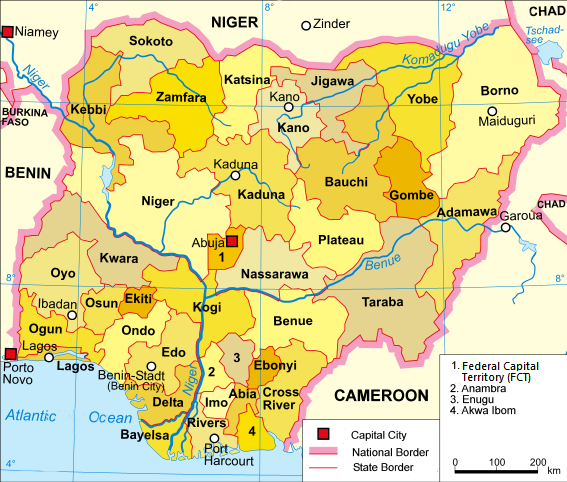
In previous posts I’ve reported on death sentences pronounced in Nigerian states. In Delta State (2024), Niger State (2024), Rivers State (2020), Osun State (2020), Ondo State (2019), to be more specific. Shortly, more states may follow, as the following article implies. The increase in ritualistic murders has led the population in Kaduna, Kano and Katsina states to press their governments to allow for the death penalty for ritualists and those found selling or eating human parts, according to the article cited below.

As mentioned before on this site, Nigeria is a signatory to the Universal Declaration of Human Rights, adopted by the UN in 1948. National and international organizations emphasize that the death penalty breaches human rights including the right to life and the right to live free from torture or cruel, inhuman or degrading treatment or punishment. Both rights are protected under the 1948 Universal Declaration of Human Rights,

The surge in criminal killings for ritualistic purposes, human sacrifices, child trafficking, and various sorts of witchcraft activities in a number of SSA countries have resulted in an increasing number of countries adopting laws allowing for the death penalty for convicted criminals. In Nigeria a number of states have adopted legislation allowing the sentencing to death of convicted ritual murderers which does not always mean that they are actually executed. 

Though I strongly support the prosecution of suspected ritual murderers and the rule of law, I have my doubt about the effectiveness of the capital punishment as a deterrent. The phenomenons of ritualistic murders and witchcraft are too complicated to eradicate by only harsh punishments. I can cite many examples, in various countries – to name one: Liberia.

I witnessed the public execution by hanging of seven convicted ritualistic murderers, in Harper, Maryland County, almost fifty years ago, in 1979.

Did this eradicate ritual murders in Liberia? No.
Did this eradicate the belief in witchcraft in Liberia: No.
Did this eradicate superstition in Liberia? No.

Hanging of the Harper Seven, Liberia, February 16, 1979. Source: F. van der Kraaij Collection Wikimedia.

In my opinion only education will bring the desired result, in combination with the strict rule of law, not allowing any exception, political interference of ‘big shots’: political, religious or traditional leaders, resulting in a shameful impunity. All what is needed is the political will to end these cruel outdated and criminal practices and atrocities. They have no place in the 21st century.
(webmaster FVDK)

Kaduna, Kano, Katsina residents seek death sentence for ritualists, cannibals

Published: March 3, 2025
By: Agency Report – Daily Nigerian

There have been growing concerns about the obnoxious increasing trend of of ritual killings across Nigeria.

The News Agency of Nigeria reports that the heightened situation of ritual killings is driven by the quest for quick wealth, poverty, unemployment, and lack of effective legislation.

There have also been sustained calls for stronger laws against ritual killings to effectively stem the tide of the menace.

There have also been appeals for plausible economic empowerment programmes and public awareness campaigns to deal with the dastardly phenomenon.

Analysts have posited that the government, civil society, and individuals must work together to address the underlying factors and put an end to these heinous crimes.

In Katsina State, the residents of have urged the government to provide a death sentence against ritualists and those found selling or eating human parts.

They made the call in an interview with the News Agency of Nigeria (NAN)in Katsina.

The residents said the call has become imperative in view of the increasing cases of ritual killings, particularly in some parts of the country.

Ayuba Inusa, a resident of Katsina, said that was the only way to prevent the people from joining the ritual and cult groups.

He said: “Since the perpetrators have no mercy, they deserve to be treated with no mercy, to serve as a deterrent to those willing to join the groups.”

Inusa further stressed the need for the traditional and religious leaders to intensify efforts in preaching against the ugly act.

On his part, Kabir Tukur, advised the people against the desire to accumulate worldly materials using such inhumane and ugly methods.

He said,”That is because most of the victims were those who want to accumulate material things easily and anyhow.”

Tukur further urged parents to be monitoring their sons and daughters and discourage them against such bad habits to prevent them from becoming victims of such circumstances.

He also urged girls and women to be wary of friendship in the social media, saying, “because, most of the victims were easily caught up through that platform.”

Another correspondent, Grace Jacob, also urged girls to desist from going to the persons they met through the social media to avoid becoming victims.

She further urged the government to provide stiffer punishments against perpetrators of those barbaric acts.
In Kaduna State, the Police Command said it has recorded zero ritual killing in the state.

The command’s Public Relations Officer, DSP Mansir Hassan, confirmed to the News Agency of Nigeria (NAN) in Kaduna.

He said, “This remarkable achievement is a testament to the state’s unwavering commitment to combating this heinous crime.

He said the command has not received a single complaint of ritual killing in the past three years.

According to him, the ways to curb this incident include stopping hard drugs’ abuse, public enlightenment, and addressing youth motivations.

“The command’s proactive approach to preventing ritual killings has included increased patrols, intelligence gathering, and community engagement,”Hassan said.

He advised that the youths should be engaged with the local communities to raise awareness about the dangers of ritual killings.

Hassan said, “Religious leaders have a role to play in educating the public about the importance of upholding human life and the sanctity of human dignity.”

He said the youths should be engaged on education and job creation programmes, as well as counseling services to address anxiety and other mental health issues.

“We will continue to prioritise the safety and security of citizens,” Hassan said.

In Kano State, some experts have called on community leaders to collaborate in efforts to combat ritual killings, urging action to address the underlying factors driving the crime.

Some of the residents, who spoke to the News Agency of Nigeria (NAN) urged the government at all levels to address the crime.

One of them, Musa Abubakar, a lecturer at the Kano State Polytechnic, attributed the increasing frequency of ritual killings to economic hardship and widespread poverty.

According to Abubakar, these challenges have driven many, especially young people, to seek alternative, albeit criminal, means of wealth acquisition.

He said that the high unemployment rate has led to increased desperation, with some individuals believing that ritual sacrifices may offer a shortcut to financial success.

Abubakar said: “Moral decay is on the rise. If this decay is not addressed, it could lead to an increase in other forms of criminality.

“They include human trafficking, organ harvesting, and cult-related violence, further destabilising the nation.$
A public affairs commentator, Isa Muhammad, stressed the importance of collaboration between the security agencies and community leaders to curb these crimes.

“Community policing initiatives should be expanded to encourage local participation in crime detection and reporting.

” Vigilance groups should also be involved in monitoring suspicious activities,” he said.

Isa further emphasised that traditional and religious leaders must take a strong stance against immoral practices, while educational institutions should enforce ethics that all.the students must adhere to.

Similarly , Abdulrazak Abdullahi, a Lawyer, expressed concern over the growing incidents of ritual killings, highlighting a shift in values where human life was no longer sacred.

“The increasing prevalence of ritual killings suggests a dangerous shift in societal values, with people willing to engage in barbaric acts for personal gains,” Abdullahi said,

He urged the law enforcement agencies to act proactively rather than only responding after crimes have been committed.

Abubakar then called for closer cooperation between the Police, judiciary, intelligence agencies, and community leaders to dismantle criminal syndicates behind these killings.

“The government should strengthen legal frameworks, improve law enforcement, and ensure the swift prosecution of offenders,” he added.

An activist, Amina Ali, also called for the intensification it public awareness campaigns and the enactment of stricter laws to create a safer and more secure society.

She stated that the high unemployment had fueled desperation, with some resorting to ritual sacrifices as a shortcut to wealth.

Ali warned, “If the growing moral decay is not addressed, it could lead to increased criminal activities, including human trafficking, organ harvesting, and cult-related violence, further destabilising the nation.” (NAN)

Source: Kaduna, Kano, Katsina residents seek death sentence for ritualists, cannibals

And:

Ritual Killings: Why I Advocate Death Penalty For Perpetrators –Campaigner

Published: March 3, 2025
By: New Telegraph-Admin – New Telegraph, Nigeria

A campaigner against ritual killing, Mr Sunday Oyinloye, has advocated death penalty for perpetrators of the act. He told the News Agency of Nigeria (NAN) yesterday in Abuja that the increasing cases of ritual killings had become a source of worry.

Oyinloye, who blamed the development on the decay in family values, laziness and desire to get rich at all cost, said death penalty would be a great deterent.

The campaigner said society, schools, families, religious bodies and government were not doing enough to address the vice.

Oyinloye called for more engagements on ritual killings in the country, adding that the seeming nonchalance about the menace over time was part of the reasons for its increased rate.

He said: “As it is now, there is no conversation about ritual killings and we keep having cases on daily basis.

“Relevant stakeholders must rise up against this menace and speak out against this ugly trend where women and young girls are often the victims.”

Source: Ritual Killings: Why I Advocate Death Penalty For Perpetrators –Campaigner

Nigeria: religious leaders bemoan surge in ritual killings among clerics

The following report illustrates well how widespread killing for ritualistic purposes is in Nigeria.

Ritual murders occur in all parts of the country, both in the predominantly christian south of the country and the islamic north, and are committed by educated and uneducated people, and by ‘ordinary’ people as well as high-placed persons, in traditional, political and religious organizations.

Despite this disturbing phenomenon, it is important and useful to emphasize also that the majority of the population abhor the cruel, outdated and criminal practices based on superstition, greed, and tradition, often facilitated or covered by the backing or involvement of ‘higher-ups’, resulting in a revolting impunity of these atrocities.
(webmaster FVDK)

Religious leaders bemoan surge in ritual killings among clerics

•Teenage suspects arrested for the murder of a female teenager in Ogun Photo: File copy

Published: March 1, 2025
By: Imoleayo Oyedeji – Punch, Nigeria

Christian and Islamic leaders have expressed concerns over the increasing cases of suspected ritual killings involving clerics across the country, attributing the disturbing trend to greed, and economic hardship.

Last week, an acclaimed Islamic cleric, Abdulrahman Bello, gruesomely murdered a final-year student of the Kwara State College of Education, Ilorin, Hafsoh Lawal.

According to the Kwara State Police Command, the 29-year-old suspect killed Lawal and dismembered her for alleged ritual purposes at a location in the Olunlade area of Ilorin on Tuesday, February 11, 2025.

On January 23, the Rivers State Police Command arrested two pastors, Prophet Bassey Umoren (60) and Prophet Elijah Anietie (50), after discovering fetish items—including caskets, monkey skulls, carved skeletons, and other ritual materials—inside their churches.

Several cases of ritual killings were also recorded in 2024, including the arrest of an Islamic cleric, Oluwafemi Idris, popularly known as Alfa, by the Ondo State Police Command. He was caught with human parts, including hands, kidneys, and tongues.

Speaking with Saturday PUNCH, some religious leaders attributed the relentless pursuit of wealth, power, and economic desperation as the driving forces behind the gruesome acts.

Archbishop of the Methodist Diocese in Lagos, Most Rev. Isaac Olawuyi, decried the killings, noting that it was fueled by an insatiable hunger for fame and fortune.

He said some pastors saw their ministry as money-making enterprises, hence their desperation to get money at all cost.

Olawuyi said, “We have seen cases where pastors kill their church members and use their body parts either to expand their congregation or gain supernatural power. Some clerics even engage in ritual practices purely for financial gain.

“It is unfortunate, but it happens because some pastors see ministry as a money-making enterprise. They are willing to do anything to grow their church and personal wealth. Today, many people enter clerical work, ministries, and prophecy with no divine calling—only the ambition to enrich themselves.”

Similarly, the Chairman of the Christian Association of Nigeria in Lagos, Bishop Stephen Adegbite, condemned the ritual killings, stating that clerics involved in such practices were driven not by greed and deception.

He described the clerics involved in ritual killings as agent of darkness.

“A true servant of God would never take a human life. The Bible and the Quran are clear: ‘Thou shalt not kill.’ So, anyone engaging in ritual killings—whether Christian or Muslim—is not a minister of God. They are agents of darkness in clerical robes, and we must not mistake them for true men of God.

“If caught, they should face the full weight of the law. The church stands vehemently against such evil, and I am certain Islam forbids it as well. Such practices have no place among believers, let alone religious leaders,” he said.

In his comment, the Chief Imam of the Federal University of Agriculture, Abeokuta, Ogun State, Prof. Idris Ayinde, noted that many of the Muslims involved in ritual killings were young clerics who lack wisdom to complement their religious knowledge.

Ayinde said many young men who study Islamic theology end up tarnishing the image of Islam because they rush into leadership without acquiring wisdom.

“Learning wisdom requires sacrifice and patience—gaining insight from personal experiences of a tutor. This cannot be taught academically. However, many young clerics today refuse to serve under experienced scholars. They lack the humility to learn and grow,” he said.

Ayinde added, “In Islam, we believe whoever is destined to be rich will be rich. Islam encourages hard work, but it is Allah who grants success. Some people’s hard work may correlate directly with their prosperity, while for others, it may not.

However, no one should seek shortcuts to wealth. Islam does not condone any backdoor approach to riches. Any so-called scholar who engages in ritual killings cannot be considered a true Muslim, as Allah strictly forbids such acts.”

Source: Religious leaders bemoan surge in ritual killings among clerics

Abia State, Nigeria: after monarch Eze Philip Ajomuiwe raises the alarm, police probe discovery of over 30 mutilated corpses – ritual killings suspected

Warning: the following article contains graphic details which may upset readers.

The Federal Republic of Nigeria is divided into six geopolitical zones commonly called zones. Abia State is located in the South East geopolitical zone of the Federal Republic of Nigeria. (It is not to be confused with Abia, a town in Enugu State, north of Abia State, also in the South East geopolitical zone.)

The capital of Abia State is Umuahia.

Abia State is an inland state and one of Nigeria’s smallest states. With a surface area of 6,320 km2 it ranks 32nd (out of 36 states). It had an estimated population of nearly 5 million people, the majority of whom are Christians (2024) resulting in a 26th position. The most populous city is Aba, the state’s commercial center.

In 1991, Abia state was created out of Imo State, the two states are considered sister states and were part of the Eastern Region which in the late 1960s attempted to secede (Biafran War). The Igbo people are one of the indigenous peoples of the South-eastern part of Nigeria and make up 95% of the population.

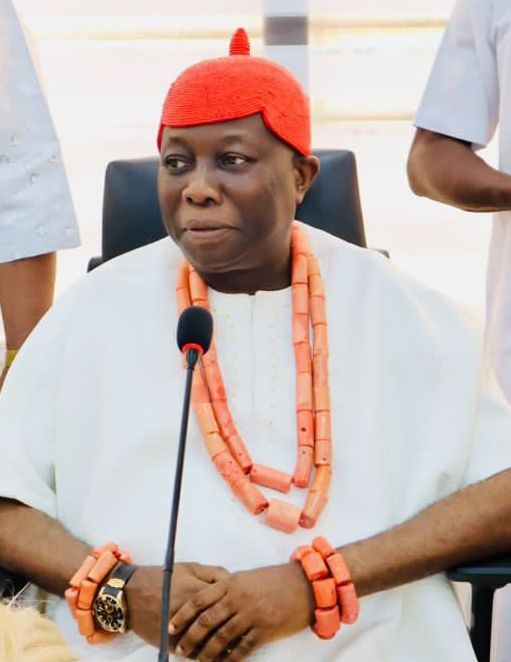
A traditional local ruler, His Royal Highness (HRH) Eze Philip Ajomuiwe, recently raised the alarm, revealing that over 30 bodies had been dumped into the Imo river between 2024 and February 2025. Reportedly the corpses found were mutilated, a sign that the victims had been killed for ritualistic purposes.

The traditional ruler of Oriendu Autonomous Community in Umuahia North Local Government Area of Abia State, His Royal Highness Eze Philip Ajomiwe, has expressed deep concern following the discovery of more than 30 unidentified bodies in the Imo River over the past year. In a recent press briefing at his palace, Eze Ajomiwe disclosed that the victims, predominantly young women, were often found unclothed, with missing body parts, or enclosed in bags. Source: Instagram – peopleofabia_en myowerriblog

Since the authorities have failed to arrest any suspects, the monarch expressed his worries that the situation of fear in the region will last and he was appealing to the state government to take immediate and adequate action.
(webmaster FVDK)

Police probe discovery of 30 mutilated corpses in Abia community

Published: February 7, 2025
By: Steve Oko – Vanguard, Nigeria

The Abia State Police Command said it had launched an investigation into the alleged discovery of 30 bodies of suspected  ritual  killings in Imo River in Oriendu community.

This is coming on the heels of the alarm by the traditional ruler of the community, HRH Eze Philip Ajomuiwe, that over 30 bodies had been dumped into the river between 2024 and February 2025.

Abia State Police Public Relations Officer, Maureen Chilaka, told Vanguard that the Divisional Police Officer in charge of Ohuhu Police Division, had commenced an investigation into the sad development.

She said the community shared a boundary with Imo State, adding that Police were collaborating with vigilantes in the area to unravel those behind the dastardly act.

The PPRO said  that even though there had been no official complaint to the police about the ugly  incident, the Command based on the inquiries by Vanguard, had initiated an investigation into the matter.

She vowed that those behind the heinous crime would not escape the long arm of the law.

Eze Ajomuiwe had while addressing newsmen in his palace at the weekend, revealed that over 30 bodies, mostly young ladies had been dumped into the river by suspected ritualists from Imo State.

He said that the bodies, usually naked and without private parts, were dumped into the river in the middle of the night by the killers as the community wakes to see them in the morning.

He said: “The bodies, like the recent one, are either completely naked and without their private parts or in a bag. There have also been cases of two decomposing bodies seen beside the NNPC pipeline.

“The victims are mostly young girls. The ritualists from Imo usually come at night to dump the bodies of their victims inside the Imo River, and in the morning we wake to see them”.

The monarch expressed worry that no arrest had been made by security agencies since the incident began, adding that his subjects now live in fear.

According to him, efforts by the community’s vigilante group to arrest the suspects had failed too, because the group is not as equipped as the suspects are said to be.

“So, we’re appealing to the state government to empower the vigilante group with the necessary logistics and the wherewithal to enable it to match the suspects,” he said.

He argued that nobody ever embarks on such a mission with empty hands especially when the enemy is fully armed with sophisticated weapons and is ready to fight back.

The monarch said that his complaints about the situation to security agents had been to no avail, noting that the latest was a letter to the Speaker of the State House of Assembly on February 7.

“ We have reported even to the DSS and they came here and held a meeting with us. We need the Government’s intervention to apprehend those behind this atrocity”.

Source: Police probe discovery of 30 dead bodies in Abia community

Nigeria: Yetunde Lawal’s murder – A reflection of societal decadence

The author of the article below, Ogungbile Oludotun, is upset, worried, outraged. The recent murder of Yetunde Lawal for ritual purposes in Kwara State (‘money ritual’) by an Islamic teacher she met on Facebook inspired her to an impressive (but far from exhaustive) list of similar crimes, in other Nigerian states. Some of the ritual murder cases included in the list I have covered in previous posts, e.g. the killing for ritualistic purposes of Favour Daley-Oladele by her boyfriend Owolabi Adeyemi, in Ogun State in 2019. Please consult this site’s search tool by typing the name of the victim, Favour Daley-Oladele.

Olungbile Oludotun argues, as I have repeatedly done here, that the disturbing trend of ritual killings in Nigeria is no longer an occasional horror; it is a sustained crisis. She even goes one step further by accusing the powerful elite: “While young Nigerians kill themselves for money, the people in power remain silent.”

As I have demonstrated recently, there are – fortunately – exceptions, see my posts of February 3 on the Oluwo of Iwo, Oba Abdulrasheed Akanbi, accusing Ekiti and Kwara monarchs of engaging in ritual killings, and of February 16, on the Asagba of Asaba, in Delta State, bansning native doctors for aiding ritual killers.

However, t the grim reality is that ritual killings continue to occur.

When will it stop? What needs to be done to stop these useless murders? Why hasn’t it stopped already?

It’s not only time to reflect on these questions. It’s high time for action!
(webmaster FVDK)

Yetunde Lawal’s murder: A reflection of societal decadence

The late Yetunde Lawal

Published: February 18, 2025
By: Ogungbile Oludotun – Punch, Nigeria

On February 10, 2025, Yetunde Lawal, a 25-year-old final-year student of Kwara State College of Education, left a naming ceremony after receiving a phone call. That call led her to her untimely end. She was allegedly murdered and dismembered by 29-year-old Abdulrahman Bello, an Islamic teacher she met on Facebook.

Yetunde’s case is shocking, but it is not new. It follows an unsettling pattern of young women, and sometimes young men, falling victim to violent crimes across Nigeria. It forces us to confront a terrifying question: Who is next? How many more lives must be lost before the right people take notice?

The disturbing trend of ritual killings is no longer an occasional horror; it is a sustained crisis. Just last year, in September 2024, 17-year-old Damilola, a first-year undergraduate at the Federal University Lokoja (in Kogi State – added by the webmaster FVDK) was murdered by Jeremiah Awe, a young man who allegedly drugged and lured her to his lodge for ritual purposes. To cover his tracks, he faked her kidnapping and demanded a ransom from her parents. Investigations later revealed that Awe had met a native doctor through TikTok, exposing the dangerous role of social media in facilitating such crimes.

During that same period, 21-year-old Mojisola Awesu, a recent graduate of Kwara State College of Health Technology, was lured to a party in Ilorin. The party was a trap. She was brutally murdered after being paid just N15,000 to attend. Meanwhile, in 2023, a young man named Ridwan killed his father in Ogun State for ritual purposes.

These cases are not isolated incidents.

They form a grim reality: our youth are killing each other, their loved ones, and even themselves in a desperate quest for wealth and power. Pathetically, women, especially young girls, have become the primary victims of ritual killings. Their vulnerability, compounded by poverty, gender stereotypes, and weak law enforcement, makes them easy prey.

In 2019, 22-year-old Favour Daley-Oladele was murdered by her boyfriend, Owolabi Adeyemi, in Ogun State for ritual purposes. In 2020, Sofiat Kehinde, just 20 years old, was killed by her boyfriend, Sadiq Owolabi, in Oyo State. The list is endless.

The most terrifying aspect of this crisis is that young people are killing other young people. The generation that should be shaping Nigeria’s future is instead destroying itself. Those who are not engaged in crime are looking for ways to escape the country, either legally or illegally. Unlike in the past, where crime was associated with hardened criminals, today’s perpetrators are students, lovers, and social media acquaintances committing atrocities unapologetically.

Nigeria has become a country where wealth is worshipped, and morality is secondary. Social media is filled with young men flashing luxury cars, designer clothes, and expensive vacations. But behind many of these lavish lifestyles lie irregularities, fraud, blood money, and ritual killings.

With a collapsing economy and little to no job opportunities, desperation has led many young Nigerians to create their survival strategies, Yahoo fraud (internet scams), Yahoo Plus (fraud combined with rituals), kidnapping for ransom, and organ trafficking. The logic is simple: “If hard work does not get me there, I will do whatever it takes.”

Some might ask whether money rituals actually work or if it is all psychological manipulation. Some argue that the idea of ritual wealth is a scam, pushed by native doctors and fraudsters to exploit desperate individuals. Yet, the practice persists, fuelled by Nollywood, spiritual myths, and testimonies from people who claim to have “seen” it work. But whether rituals actually produce money is irrelevant. What is real is the number of innocent people dying in the pursuit of it. Even if it is all a lie, the belief is deadly enough to drive people to murder.

While it is easy to blame the perpetrators, young women must also take responsibility for their safety. They must stop being at the beck and call of men they barely know. It is no longer enough to simply trust; caution is necessary. Meeting strangers alone, especially in isolated places, is a risk no one should take. Flashy social media lifestyles should not be seen as an invitation to blindly trust someone. If a man you barely know is promising you heaven and earth, ask yourself: Why?

Women must also look out for each other. If a friend is about to meet someone she barely knows, question her, accompany her, or insist on a public place. Many of these deaths could have been prevented if only someone had asked the right questions.

While young Nigerians kill themselves for money, the people in power remain silent. The government offers no jobs but is quick to arrest fraudsters. But what alternatives have they provided? The truth is nobody is innocent in this crisis. Nigeria is a society that rewards wealth without questioning its source. We are all complicit.

I will not start telling the government to create job opportunities or fix the economy, even though they should. I won’t talk about enforcing the law, even though it is their duty. These are things that should already be in place. But while we wait for change that may never come, we must act ourselves.

Yetunde Lawal is gone. Another young life wasted. Another brutal headline in an unending cycle of horror. Perhaps now her killer will wander in prison for a long time, maybe even be executed if found guilty. But if we do nothing, her death will be meaningless. And the next victim is already walking towards his/her fate. Who is next?

Ogungbile Oludotun writes via thedreamchaser65@gmail.com

Related News

Source: Yetunde Lawal’s murder: A reflection of societal decadence

Delta monarch, the Asagba of Asaba, bans native doctors for aiding ritual killers – Nigeria

It is a hopeful sign that people on top of the social ladder express themselves and take unequivocally position against killings for ritualistic motives. A few weeks ago I posted a similar action by the Oluwo of Iwo (in Osun State), see my post dated February 3, 2025, The Oluwo of Iwo, Oba Abdulrasheed Akanbi, accuses Ekiti and Kwara monarchs of engaging in ritual killings.

This time the Asagba of Asaba, a monarch in Delta State, also in southern Nigeria, came in the spotlight when banning the activities of ‘Eze-Nwanyi’ (female native doctors/goddesses) and other traditional practitioners due to their alleged involvement in the rising crime rate in Asaba and its environs including providing assistance to internet fraudsters, commonly known as Yahoo Yahoo boys, kidnappers and other criminals.

His remarks were triggered by the murder of a man from neighboring Anambra, a lawmaker. Read the full story below.
(webmaster FVDK)

Delta monarch bans native doctors for aiding ritual killers

The Asagba of Asaba

Published: February 14, 2025
By: Matthew Ochei – Punch, Nigeria

The Asagba of Asaba, His Royal Majesty Obi Prof. Epiphany Azinge (SAN), on Thursday banned the activities of ‘Eze-Nwanyi’ (female native doctors/goddesses) and other traditional practitioners due to their alleged involvement in the rising crime rate in Asaba and its environs.

This decision follows reports linking the murder of an Anambra lawmaker – whose body was discovered on the Niger Bridge – to native doctors and a shrine in Asaba.

Expressing deep concern, the monarch emphasised that crimes committed within Asaba directly impact its residents more than anyone else.

He stressed that the ban on these native doctors was a proactive measure to curb crime.

“Let it be on record that we support the government at all times. However, while supporting the government, there comes a time when we must take proactive steps. Anything that happens in Asaba affects us directly,” he stated.

“It is distressing to hear that Asaba has become the focal point of these criminal activities. As a result, we have decided to take measures to ensure peace and order in our land.”

The monarch declared that the activities of Eze-Nwanyi practitioners, particularly those not originally from Asaba, were now banned.

He described their growing presence as troubling and their activities as “nefarious.”

“The murder of the Anambra lawmaker points to Asaba, where money was cleared, and where the shrine harboring the kingpin was located. These native doctors seem to be aiding not only internet fraudsters (Yahoo Yahoo boys) but also kidnappers and other criminals. Therefore, we are banning them effective immediately.”

Furthermore, the monarch announced that all native doctors operating within Asaba must now register and be regulated.

He stated that they would require clearance from the Otuhas, the governing legislative body of Asaba, before being allowed to operate.

In addition, restrictions have been placed on visits to the shrine of the Asaba deity, Onishe.

Source: Delta monarch bans native doctors for aiding ritual killers

Related:

Asagba Of Asaba Bans Female Native Doctors, Moves To Curb Crime

The traditional ruler also reaffirmed his commitment to supporting government efforts in tackling insecurity.

FILE: The Asagba of Asaba, HRM Obi Prof. Epiphany Azinge SAN

Published: February 13, 2025
By: Vivian Oramadike – ChannelsTV, Nigeria

The Asagba of Asaba, HRM Obi Prof. Epiphany Azinge SAN, has banned the activities of Eze-Nwanyi (female native doctors) and other unregulated traditional practitioners, citing their alleged involvement in kidnappings, ritual killings, and cyber-related fraud.

Announcing the decision at a press conference on Thursday, the monarch expressed deep concern over rising crime in Asaba, particularly after reports linked native doctors and shrines in the area to the murder of Anambra lawmaker Justice Azuka, whose body was discovered on the Niger Bridge.

The Asagba emphasized that many of these practitioners are outsiders with criminal motives.

“From today, the activities of Eze-Nwanyi and other unregulated native doctors are banned,” he declared.

Moving forward, all traditional practitioners in Asaba must register under the Otu-Ihaza, the town’s legislative authority.

He reiterated the urgent need for action, stating, “Anything that happens on this land affects us more than anyone else. It is unacceptable that Asaba has become a hub for these nefarious activities. Consequently, we have decided to take proactive steps to restore peace and order.”

To further address security concerns, the monarch launched Operation Know Your Tenants, mandating landlords to properly document all tenants.

“Criminals see Asaba as a safe haven. This must stop,” he warned. “Every landlord must have proper records of their tenants so we can account for who resides where.”

Additionally, the palace will deploy a special task force to inspect guest records at hotels across Asaba.

“We will be visiting hotels to check their guest lists. The palace is already collaborating with security agencies to expose those using hotels as criminal hideouts,” he asserted.

The Asagba reaffirmed his commitment to supporting government efforts in tackling insecurity but stressed the need for traditional institutions to play an active role in safeguarding their communities.

“We stand with the government, but we must also take responsibility for our land. Asaba must not become a breeding ground for crime,” he concluded.

Source: Asagba Of Asaba Bans Female Native Doctors, Moves To Curb Crime

And:

Delta monarch bans female native doctors, restricts shrines amid crime concerns

Asagba of Asaba in Delta State, HRM Obi Prof. Epiphany Azinge SAN

Published: February 13, 2025
By: Matthew Ochei – Punch, Nigeria

The Asagba of Asaba in Delta State, HRM Obi Prof. Epiphany Azinge SAN, has banned the activities of ‘Eze-Nwanyi’ (female native doctors/goddesses) and other unregulated traditional practitioners.

The decision comes amid concerns that these groups are fueling criminal activities, including kidnappings and ritual-related crimes.

The palace maintained it was a decisive move to curb rising crime in Asaba and its environs.

The announcement follows reports linking native doctors and shrines in Asaba to the murder of an Anambra lawmaker, Justice Azuka, whose body was discovered on the Niger Bridge.

The Asagba, addressing a press conference, expressed grave concern over the situation, stating, “Anything that happens on this land affects us more than anyone else. It is unacceptable that Asaba has become a hub for these nefarious activities. Consequently, we have decided to take proactive steps to restore peace and order.”

Ban on Female Native Doctors, Shrine Restrictions

The monarch emphasised that many of these practitioners are not of Asaba origin and have taken over the land with criminal motives.

“We have banned the activities of Eze-Nwanyi, who are not of Asaba extraction and are unknown to us. Their activities, I dare say, are nefarious.

“With the recent revelations linking an Anambra lawmaker’s murder to Asaba-based native doctors and shrines, it is clear that they are not just supporting ‘Yahoo Yahoo’ fraudsters but are also involved in kidnappings. From today, they are banned,” he declared.

Additionally, all native doctors operating in Asaba must now register and be regulated under the authority of the Otu-Ihaza, the legislative body of Asaba.

Source: Delta monarch bans female native doctors, restricts shrines amid crime concerns

Nigeria – The Oluwo of Iwo, Oba Abdulrasheed Akanbi, accuses Ekiti and Kwara monarchs of engaging in ritual killings [video]

This is not the first time that the Oluwo of Iwo, Oba Abdulrasheed Akanbi, accuses traditional rulers of engaging in ritual killings. See my posts of January 30 2020, Nigeria: ‘Amotekun should fight ritual killings and traditional corruption’, says the Oluwo of Iwoland, Oba Abdulrosheed Adewale Akanbi and of November 2, 2020, The Oluwo of Iwo, Oba Abdulrosheed Akanbi, speaking out against ritual killings: The Oluwo of Iwo (Osun State, Nigeria): ‘Ritual killing deadlier and more devastating than SARS’.

The Oluwo of Iwo, Oba Abdulrasheed Akanbi, has a solid reputation as to speaking out agains ritual killings, human sacrifice, other human rights violations and superstition. Nigerians, other Africans and all who believe in the protection of human rights should say a big ‘Thank you’ to him.

The fact that a person of the level and reputation of the Oluwo of Iwo, the traditional ruler of Iwo, a prominent city located in Osun State, raises his voice against these outdated and cruel practices is another sign of the widespread occurrence of killings for ritualistic purposes in Nigeria, Africa’s most populated country, and an implicit accusation directed to the country’s political leaders and authorities for failing to take adequate action to eradicate these gruesome practices which sometimes are based on outdated traditions.

Sadly, if political, traditional and spiritual leaders set a bad example in this respect, what can we expect from the ‘common people’? (….)
(FVDK)

‘This will be your last’ – Oluwo calls out Ekiti, Kwara kings, politicians, others over ritual killings [VIDEO]

The Oluwo of Iwo, Oba Abdulrasheed Akanbi

Published: January 10, 2025
By: Rachael Ayodele – Daily Post, Nigeria

The Oluwo of Iwo, Oba Abdulrasheed Akanbi, has accused Ekiti and Kwara monarchs of engaging in ritual killings.

Oluwo spoke in a now trending video on social media.

In the video cited by DAILY POST on Friday, Oba Akanbi condemned the rising tide of
bloodshed under the guise of tradition, spiritual renewal and power preservation.

The outspoken monarch called out his Ekiti and Kwara counterparts, as well as royal chiefs, pastors, traditional worshipers and politicians, for perpetrating the gruesome acts.

While calling for justice against them, he said, “All the traditional rulers from Ekiti State to Kwara State must stop using human beings for any forms of rituals or sacrifice.

“Stop killing our children. Stop using human heads. Those you are killing are my children because I’m a father to Yoruba land. We know some of the kings that are sacrificing humans monthly to elongate their lives and reigns.

“If you think we don’t know, the all-knowing God knows, and he is telling us. I’m warning kings, royal chiefs, native doctors, pastors, Alfas, including Ifa priests, politicians and others to stop killing our children.

“This will be your last. After this warning, you will not be fortunate if you dare use anyone again.”

Video:

Oluwo of Iwo @emperortelu1 sends warning to ritualists in South West
Screenshot – to watch the video (Instagram), please click here to access the original article

Source: ‘This will be your last’ – Oluwo calls out Ekiti, Kwara kings, politicians, others over ritual killings [VIDEO]

Nigeria: shocking ritual murder in Ogun: man sells friend for ₦5,000:

On January 25 I posted a similar case showing the criminalization of ritual murder – notably in Africa’s most populated country, Nigeria. I refer to my post ‘Nigeria, Delta State: man who stole baby for ritual narrates how ‘Yahoo boys’ refused to pay him N200k after the deal‘

Yet another case which I present to prevent the idea that aforementioned case in Delta State is extraordinary and an exemption. Far from it. Kidnapping and killing on demand, selling humans organs and other body parts, just for greed, for money, is a rising business in Nigeria and may be in more countries.

The basic drive, apart from greed, lust for money, for wealth, for power and prestige, is superstition. Not only must authorities act swiftly and uphold the rule of law, thereby protecting the human rights of its citizens, but they must also embark an a campaign of prevention by investing in education. Colliding interests, of politicians and other ‘big shots’ in society involved in these barbaric practices, must be dealt with mercilessly.
(webmaster) FVDK)

Shocking Ritual Murder in Ogun: Man Sells Friend for ₦5,000

Published: January 29, 2025
By: Nigerian Bulletin

A man in Ogun State has been arrested for selling his best friend to a ritualist for ₦5,000, leading to the victim’s gruesome murder. The victim’s head was sold for ₦20,000. This shocking incident was exposed through a viral video, highlighting the prevalence of ritual killings in Nigeria.

A shocking incident unfolded in Ogun State, where a man reportedly sold his best friend to a ritualist for ₦5,000. The victim was lured under the pretense of a farm job offer. Upon arrival, the friend was killed, and his head was later sold for ₦20,000. This horrifying act was revealed after a viral video surfaced on X (formerly Twitter), showing the police parading multiple suspects.

The arrested man confessed that he had arranged the deal with a herbalist, who carried out the gruesome murder. The video also featured the ritualist admitting to his role in the crime. The tragic event highlights the growing concern of ritual killings in the country. The victim’s head, after being severed, was reportedly sold for a mere ₦20,000, further underscoring the brutal nature of the act.

This incident has raised alarm in the community, with many calling for greater awareness and stronger enforcement against ritualistic crimes. Authorities have promised to investigate further and hold all parties responsible accountable, as the video continues to circulate, increasing public outrage over the horrific crime.

Screenshot

Source: Shocking Ritual Murder in Ogun: Man Sells Friend for ₦5,000

Nigeria, Delta State: man who stole baby for ritual narrates how ‘Yahoo boys’ refused to pay him N200k after the deal  

I include the following incident because this shows how ritual killing in the 21st c. often works in reality: kidnapping and killing on demand, based on superstition, used in a ritual based on traditional beliefs, but in reality indistinguishable from an ‘ordinary’ crime: murder.

A gruesome story. Readers are warned.
(webmaster FVDK)

Man who stole baby for ritual narrates how ‘Yahoo boys’ refused to pay him N200k after the deal  

Published: January 24, 2025
By: Ezra Ukanwra

Source: Man, 22, who stole baby for ritual narrates how ‘Yahoo boys’ refused to pay him N200k after the deal

Also (same article):
Police React as Man Who Stole Baby for Ritual Laments Non-Payment of N200k Promised by Yahoo Boys

‘Let’s work to end witch hunts in Adamawa State’ – Nigerian human rights activist Leo Igwe

Leo Igwe is a renown Nigerian human rights activist, founder and president of Advocacy for Alleged Witches (AfAW)

African countries face many problems. Most of these problems are the result of external causes. However, the problem attacked below by Leo Igwe, a renown Nigerian human rights activist, founder and leader of Advocacy for Alleged Witches, has a cause which lies within African societies and is within reach of local political and community leaders to solve.

The answer to the challenge which constitutes the definite eradication of superstition – hence the belief in witchcraft and witches – is (among other interventions) education, education and education! AfAW and Leo Igwe also emphasize this approach.

When looking at the budgets for education in African countries we cannot escape a feeling of dispair. Only a few African countries realize the education objectives agreed upon during international conferences, in international organizations or in national development plans.

African governments can rightly point to the failing support or sometimes undermining actions of governments of non-African countries and international corporations, but here is a problem in which they themselves have a hand in solving. What are they waiting for?
(webmaster FVDK)

Published: January 20, 2025
By: Leo Igwe – Sahara reporters

Greetings and salutations from the Advocacy for Alleged Witches and from all advocates against witch hunts in Nigeria and beyond on the occasion of this roundtable discussion on witch hunts and human rights violations in Adamawa state. I thank the National Human Rights Commission for the opportunity to collaborate and synergize against this superstition-based abuse. Witch hunting is a form of gender-based violence and we commend the commission for its commitment to addressing sexual and gender-based violence in Nigeria.  We hope that this event marks the beginning of our partnership. We hope it would be the first of so many to be held and organized in rallying against witchcraft accusations, witch persecution, and killing in the state. We are all delighted that the event is holding after years of planning, and postponement. And that advocates in this state have the opportunity to meet, discuss, interact, and exchange ideas on how to end human rights violations linked to beliefs in witchcraft and ritual attacks. Adamawa is one of the states where witch-hunting is pervasive. And let’s face it, this is not good news at all. Yes, it is not. Witch hunting in Adamawa is a cause for concern and needs to be treated with the urgency it deserves. We must join hands and end these violations now, not later, today, not tomorrow, this year, not next.

There have been growing cases of witchcraft accusations and killings in Adamawa. Incidentally, only a few are reported. Many more are not because they happen in rural areas and remote communities. Witch persecution happens mainly to people who cannot report the violations; those who do not know where and how to report. Victims of witch hunts are usually those who do not know that witch hunters are criminals who should be brought to justice. Many cannot report because they fear retribution, more abuse, and violation. But the situation is changing.

We have a recent case here in Adamawa where a couple suffocated a girl child to death for witchcraft. We understand that the case is in court. Local informants and advocates helped the police to intervene. We are also monitoring two other cases that involved the murder of the accused. Alleged witches are beaten to death, set ablaze, and murdered in cold blood. The people of Adamawa, how many deaths will it take till we know that too many people have been accused of witchcraft and subsequently killed? How many deaths will it take till we know that too many alleged witches have died? Know this the people of Adamawa: the world is watching and waiting for you to rise to the challenge and take all necessary measures to end witch hunts. Will you? 

We are aware that witch hunts would not stop when the police and courts are failing in their duties and when the authorities are doing little or nothing to address this miscarriage of justice. Witchcraft accusations are against the law. Jungle justice and trial by ordeal are against the law. But witch hunts continue despite existing legislations. Accusations are perpetrated with impunity. The police in Adamawa must rise to the occasion and enforce the law. They should make sure that perpetrators are arrested and brought to justice.

In many cases of witch hunts, the police do not intervene. And when they do so, the intervention comes too little too late. Many suspects are not arrested or charged in court. Sometimes, police arrest and detain suspects and later release them after paying a bribe. But the police cannot address this problem alone. Other state agencies need to fulfill their statutory duties.

Effective courts, diligent judges, and magistrates are needed. We need court officials who correctly interpret the law and ensure justice for the accused. Unfortunately, what we have here in Adamawa, and in other parts of Nigeria and the continent, is a case of justice delayed and eventually denied. The accused and their families suffer double victimization. The court processes are slow, too slow for comfort and justice. Court processes take many years to issue judgments. They make accused persons incur additional costs. Many alleged witches and families have been forced to abandon their cases and resign to their fate. We have it on authority regarding an ongoing case here in Adamawa, that the family of the victim is being pressured to leave the case so that perpetrators could go scot-free. 

Look,  the people and government of Adamawa, if the family of the victim in question is forced to abandon the case, there will be consequences. That will not reflect positively on you and your efforts to combat witch hunts. Know this: the world is watching.

You may recall that in 2021, there was an unfortunate development in the state. A chief magistrate misinterpreted the law. He invited a native doctor to help in the trial of an alleged witch in a court. That incident was a judicial scandal, a local and international embarrassment. It was a misapplication of the law and a misconception of national jurisprudence. That incident indicated how Adamawa was out of step in addressing the problem of witch hunts. AfAW raised concerns and petitioned the chief judge. We hope lessons have been learned, and that there will be no repeat of this charade in Adamawa in the future. We understand that witch believers would like to conduct witch trials in courts. But our laws are unambiguous on the issue of witchcraft accusations. Our laws do not recognize witchcraft. The law criminalizes witchcraft accusations and witch-hunting. Our courts are places to prosecute accusers, not the accused. As a state, Nigeria advocates against witchcraft accusations and witch persecution. Nigeria constitutionally protects and defends alleged witches. Let’s work together and uphold the law, not our beliefs.

AfAW exists to end witchcraft accusations, witch persecution, and killing in Nigeria, and, by extension, Africa. We work to change the mindset of the people, combat misinformation and disinformation, and other drivers of this menace. We invite all participants to join us to realize the vision of making witch hunting in Africa history by 2030, which is, 5 years from now. It is possible. It can be done. Thank you.

Source: Let’s Work To End Witch Hunts In Adamawa By Leo Igwe

Ritual Killings in Nigeria: Imperative For Urgent Legislative Reform

The following plea speaks for itself.
(webmaster FVDK)

Ritual Killings: Imperative For Urgent Legislative Reform

Published: January 18, 2025
By: Charles Ude – The Whistler, Nigeria

Charles Ude, Esq, is an Abuja Based Legal practitioner

Ritual killings in Nigeria are a grave concern that transcends mere criminality, reflecting a deep-seated cultural malady that requires immediate legislative action. The recent brutal murder of a young woman in Kogi State serves as a timely reminder of the urgency for a decisive and multifaceted approach to combat this abhorrent practice. As the nation mourns the victims and stands in solidarity with their families, it is imperative to recognize that an effective legal framework, bolstered by education and cultural intervention, is crucial in the fight against ritual killing.

The Socio-Cultural Context

The persistence of ritual killings in Nigeria is intricately linked to widespread beliefs in the supernatural, which infiltrate various socio-economic strata irrespective of educational background. These beliefs often manifest in attempts to harness spiritual powers for personal gain, including financial prosperity or social advancement. Such practices are often cloaked in traditional rituals, rendering them difficult to combat solely through legal measures. Addressing the root causes—misplaced belief systems and ignorance—is as crucial as enforcing legal prohibitions against these crimes.

Recent Cases and Judicial Precedents

While it is vital to acknowledge the role of the judiciary in addressing ritual killings, recent court cases such as Federal Republic of Nigeria v. Igbokwe (2022) and Nwankwo v. State (2023) illustrates both the commitment and the limitations of the current legal framework. These cases have underscored the severity of ritual killings and the necessity for stronger penalties. However, the infrequency of successful prosecution and the perceived leniency of existing sentences highlight the urgent need for reforms. The judiciary must be empowered to impose harsher consequences for such heinous crimes to act as a deterrent.

Notable Case Examples

Adamawa Hotels Ordered To Install CCTV Cameras After Beheading Of Lady
(see below)
Police Reject N1m Bribe, Arrest ‘Serial Killer, Ritualist’ In Ogun
(see below)

Numerous high-profile cases illustrate the alarming implications of ritual killings, offering a grim snapshot of the societal dangers at play. The Sofiat Kehinde case, where four teenagers were arrested for a murder intended for a money-making ritual, starkly demonstrates the youthful exploitation rife in these crimes. Similarly, the Otokoto killings of 1996 sparked national outrage due to the abduction and murder of children for their body parts. The Osun Osogbo and Ibadan cases further reveal a troubling pattern of ritualistic violence, emphasizing the urgent need for preventive measures and robust legislation.

Implications for Law and Order

The impact of ritual killings on Nigeria’s legal and social fabric is profound, posing significant challenges to law enforcement and community safety. To effectively combat this menace, we advocate for the following legislative reforms:

  1. Uniform and Tougher Legislation: It is imperative to enact comprehensive laws that explicitly define ritual killings as grave offenses. Such legislation should be accompanied by stringent penalties that reflect the severity of the crime, serving both as punishment and deterrent.
  2. Education and Awareness: Integrating educational initiatives into community awareness programs is essential. These initiatives should aim to debunk myths surrounding ritualistic practices and promote understanding of the laws against them. Community engagement can play a critical role in changing attitudes and reducing the incidence of such practices over time.

In conclusion, the urgent nature of ritual killings in Nigeria cannot be overstated. The recent tragic events illustrate an inescapable need for decisive legislative reform. Enhancing legal frameworks and fostering community awareness are both critical steps in eradicating this menace. It is time for all stakeholders—government officials, the judiciary, civil society, and communities—to unite in a concerted effort to dismantle the socio-cultural foundations that support ritual killings, ensuring the safety and dignity of all citizens.

Disclaimer:
This article is entirely the opinion of the writer and does not represent the views of The Whistler.

Source: Ritual Killings: Imperative For Urgent Legislative Reform