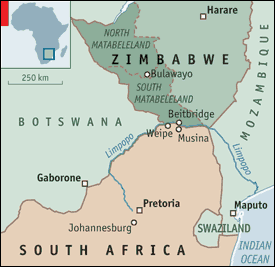
Zimbabwe: one week after the ritual murder of 7-year old Tapiwa Makore

A too familiar story. A relative involved in the ritual killing of a young boy in Zimbabwe. As it appears, the eldest brother of the deceased boy’s father was the one who ordered an accomplice to murder his nephew. As more news emerge about the behavior of the prime suspect after his nephew was missing and his mutilated body was found, the story sounds unbelievable; yet it is the harsh truth. When reading the details of the muti murder of 7-year old Tapiwa Makore it is hard to believe that this indeed happened in real life. This is the 21st century.

As a result, the community which was struck with the news of the heinous crime is left paralyzed with anger and with fear. Parents watch their children every minute of the day and when their kinds go to school they want them to return early, before it gets dark.

Makore Village is in shock.

Warning: the following article contains graphic details of the muthi murder (webmaster FVDK).

The murdered boy’s family a week later

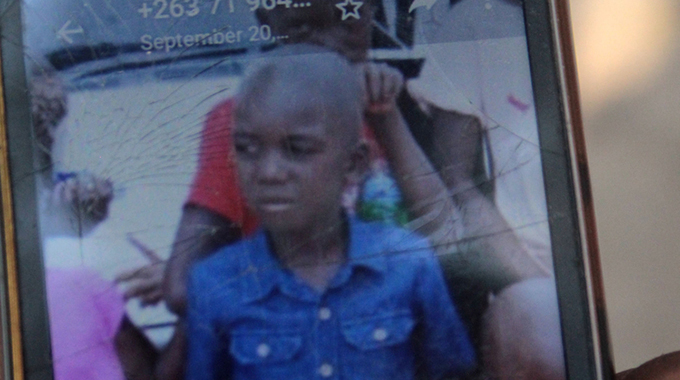
The victim, 7-year old Tapiwa Makore

Published: October 3, 2020
By: Timeye, The Truth & The Future

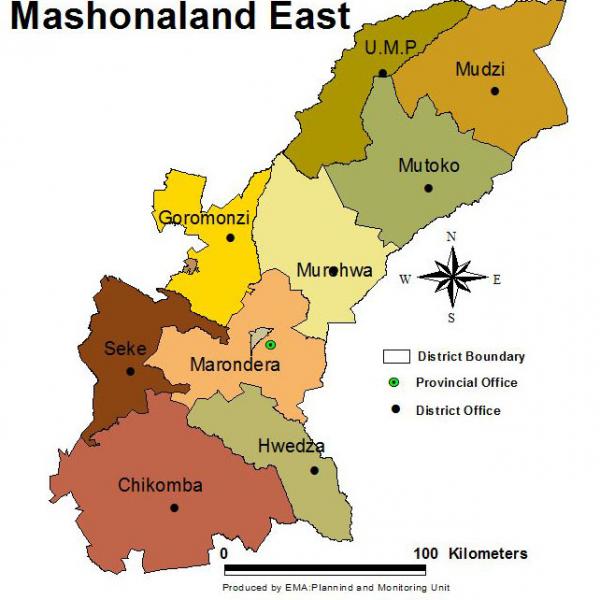
Driving to Makore Village under Chief Mangwende in Murehwa, children no longer talk to strangers no matter any amount of cajoling. The message has sunk, don’t talk to strangers lest you meet Tapiwa’s fate.

The recent ritual murder of Tapiwa Makore, has instilled fear among the young and elderly villagers alike who have since strongly warned their children against entertaining strangers, especially motorists.

In the same week, another human head was also found in the village and the identity is yet to be established.

The Herald struggled to get to the Makore homestead as most people, especially children, coming from school were reluctant to assist with directions.

Luckily a visibly drunk man came to the rescue and offered to lead The Herald team to the homestead.

On arrival at the homestead, most villagers were angry, emotional and debating as to the possible reasons of the murder. This was complete abomination to them. They were aghast at the manner in which the remains of the boy had been discovered after he had gone missing.

A torso believed to be his was found being dragged by a neighbour’s dog. The head and other parts of the body were missing. Arms and legs were later found following a spoor.

That was not all. The dogs had also dragged a human head, which, according to medical practitioners, belongs to a person who should be around 12 years old.

Detectives questions Tafadzwa Shamba over a pair of blood-stained trousers found at his employer’s homestead during investigations

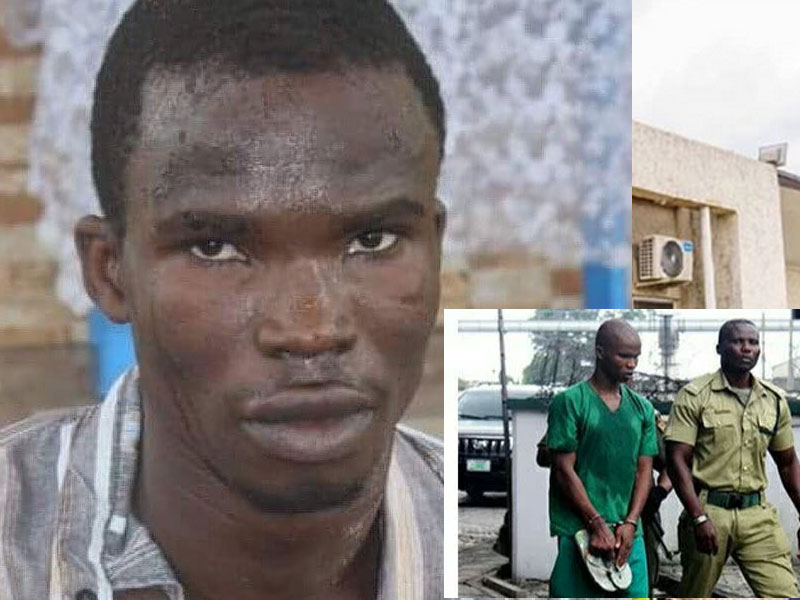
The boy’s uncle Tapiwa Makore (senior) and his employee Tafadzwa Shamba have been arrested in connection with the murder.

What surprised the community was the efforts the uncle had put in the search of the boy once he had been declared missing. He had been leading in the search and was a pillar of strength to his young brother constantly assuring him that they will find the boy alive.

He even had the temerity to chastise his young brother’s wife for being careless in Tapiwa’s disappearance. But alas! After playing a leading role in the search the elder brother to the boy’s father turned out to be one of the chief murder suspect.

Blood-stained clothes were found in one of his rooms. Tapiwa Makore (senior), had earlier commendably assisted at the funeral. At one point, he reportedly got emotional, accusing the boy’s mother Ms Munyori of being irresponsible as mystery on the whereabouts of the boy deepened.

As fate would have it, his luck ran out. Some relatives assigned to clean his house stumbled upon a pair of trousers and a shirt stained with blood. They immediately tipped off detectives who were all over the village investigating the boy’s murder.

Circumstantial evidence pointed to him as the architect of the crime who had instructed Shamba to kill the boy.

In an interview, the boy’s mother broke down narrating how her brother-in-law had harassed her threatening to beat her up at the funeral for failing to account for the boy.

“He once threatened to beat me up, accusing me of being irresponsible and failing to account for my missing son. You can even ask my husband and other relatives who heard him threatening me, but to my surprise he is the one who was picked up by the police for murder,” she said sobbing.

Equally at a loss of words, was the boy’s father Mr Munyaradzi Makore. He said his brother had been a pillar of strength during the search and he remained optimistic that the boy would be found alive.

“It’s difficult to believe that my own brother who had been with me throughout the search and funeral, turned out to be a suspect in the murder case. We were together on Thursday night (September 24) searching for my son. He would strengthen me, with words of hope that the boy could be alive somewhere,” he said.

When asked what could have led to his brother allegedly killing his nephew, Tapiwa’s father was at a loss of words. He too was surprised because there was no bad blood between the two families as they enjoyed cordial relations as evidenced by naming the boy Tapiwa after his elder brother.

On burial arrangements, Mr Makore (junior) said DNA samples had been taken from the boy’s mother and they were initially told to wait between two and three weeks for the results.

“We have paid US$330 and we hope to pay the balance on collection of the results. The results will determine the burial date.

“If the torso is indeed his, then we may proceed to bury the available parts of the body, but it is strange. Burying a headless body?” the boy’s father said shaking his head.

A villager Mr Summer Murwira was the first to discover the torso that was being dragged by his dog at his homestead last Friday morning.

“Early Friday morning, I was brushing my teeth outside the house when a female relative came telling me that Tapiwa was missing. Just after she left, I saw our black puppy dragging a torso, but we could not easily tell whose it was. However, I could tell that it was indeed a mutilated human body. I called other villagers and we resolved to send a message to the Makore family who were searching for their missing child.

“When the relatives came, the trail left by the puppy led us to the spot where the torso had been dropped. We then noticed blood spots and immediately reported the matter to the police,” said Mr Murwira.

But what kind of boy was Tapiwa and how did he relate to his peers in the area? Tafadzwa Shamba narrates how he entered a kitchen hut at Tapiwa Makore’s (senior) homestead to collect food for the boy

The Herald visited Nyamutumbu Primary School where he was a Grade One pupil. Staff at the school described him as a well-behaved, intelligent and highly promising pupil who had a bright future. They just could not understand how his life had been cut short and for what reason as he was an exemplary pupil

“Tapiwa was a promising young boy, dedicated to school work, well-behaved and respectful. It’s sad that he passed on at such a young age. His attendance at school was excellent considering that most children in these rural communities absent themselves for no good reason.

“He was very social and he would interact well others here at school,” said one of his teachers.

Sources at the school said the headmaster had since written to the district education offices seeking authority to end lessons early to allow pupils to walk home before sunset.

“We have some pupils who walk long distances for up to three hours to get home. I understand our headmaster has since written to the district office requesting to be allowed to end lessons at 3pm daily. “This arrangement will ensure all children get home early for security reasons,” said a source.

The Herald also tracked down the alleged murderer’s relatives, the Shamba family. In an interview at Chinyani Village in Murehwa, Mr Gaylord Shamba, younger brother to Tafadzwa’s late father, said the family was engaging the Makore family.

“We engaged the Makore family through our councillor and they welcomed us. They understood the fact that one deviant person cannot spoil the whole clan. We attended the funeral and provided loads of firewood and some maize meal. That is not enough, we intend to continue assisting until burial,” he said.

Mr Shamba said the family was ready to compensate the Makore family.

Source: Murdered Boy’s Family A Week After
Murewa ritual killing: President Mnangagwa decries evil act (Zimbabwe)

The cruel ritualistic killing of 7-year old Tapiwa Makore in Zimbabwe inspired the president of this country, Emmerson Mnangagwa, to raise his voice against the killing of children for ritualistic purposes – because the gruesome murder of the young boy is not the only ritual killing case in his country. The police found evidence on the crime scene that more children had been murdered, possibly by the same suspect, Tafadzwa Shamba, a herdsman in the same village with the Makores.

Mnangagwa’s condemnation of ritual murders triggered the anger of an opposition politician, Paul Nyathi, who accused President Mnangagwa of hypocrisy. He accused Mnangagwa of several politically motivated murders. Moreover, while Mnangagwa was Minister of State for National Security – under then President Robert Mugabe – the 5th Brigade of the Zimbabwe National Army killed thousands of civilians in the Matabeleland region. These massacres, known as the Gukurahundi, lasted from 1983 to 1987, and resulted in an estimated 20,000 to 30,000 deaths. 

Warning: the following articles contain graphic details of a cruel crime (webmaster FVDK).

Murehwa ritual killing: President decries evil act

The late Tapiwa Makore

Published: September 26, 2020
By: The Herald, Zimbabwe  

President Mnangagwa yesterday condemned the killing of children for ritual purposes, saying the Government was concerned with all forms of threats and abuse to children and vowed to end violence against them.

The condemnation comes in the wake of the murder of a seven-year-old Murehwa boy, Tapiwa Makore, last week for ritual purposes, allegedly by a herder.

“I am disturbed by the loss of young children as a result of heinous and evil actions for rituals and witchcraft purposes. These cold-hearted acts of murder have no place in our country.

“The stakeholders in our criminal justice system must speedily and strongly deal with perpetrators so that this evil trend is expunged from our society,” said the President during a virtual Junior Cabinet meeting at State House yesterday.

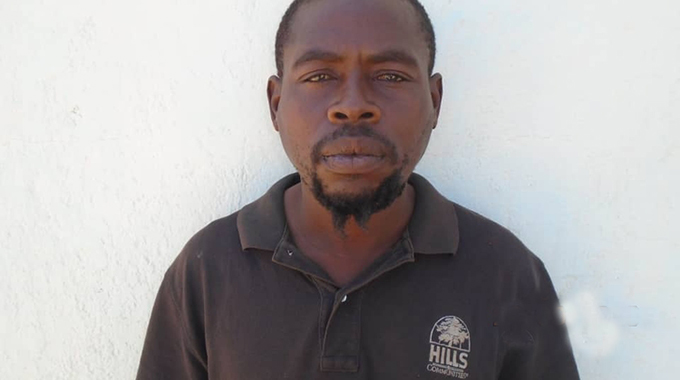
Murder suspect Tafadzwa Shamba

Tapiwa was looking forward to resuming classes on November 9, and rejoining his peers at Nyamutumbu Primary School in Murehwa after a six-month hiatus.

Like millions of other pupils across the country, particularly his Grade One fellows, he was raring to go as the phased reopening of schools, which comes into effect on Monday, puts an end to their daily routine of playing house, horseplay and hopscotch, in-between errands as may be assigned by their parents.

The seven-year-old Tapiwa was his parents’ gift from God as was reflected in his name. With school lessons temporarily shelved owing to Covid-19, the bubbly boy, like the gift he was, often helped out his mother in tending to their vegetable garden.

In the morning of Thursday September 17, as she has always done, Tapiwa’s mother prepared food for him and set him off on the excursion to keep stray livestock away from their vegetable patch.

She and her husband were set to relieve him later in the afternoon.

However, fate had decided otherwise. It was set in the stars that they would never see their beloved son alive again, neither were they to bury him intact.

Unbeknown to them, the Makore family had set in motion a chain of events that would leave the serene community of Makore Village in Chief Mangwende’s domain of Murehwa District, dumbfounded, distressed and in deep mourning as a dark cloud of both grief and fear engulfed them.

Tapiwa’s story reads like a horror movie where death is traded with such abandon that the grisly ceases to be abnormal with the Grim Reaper, in his dark shrouds, hooded robe and scythe daring the living as they dare each other.

Bereft of words, the community fretfully tries to come to terms with what could have befallen their child; for in African societies, a child belongs to all. No one knows what he went through, and how the Grim Reaper tore through his fragile heart to “reap” his soul. All else pointed to ritual murder.

When Tapiwa’s parents got to the garden around 3pm, where they expected to see him as usual, they were confronted by his “last meal”, untouched, and his pair of shoes. Their boy was nowhere to be seen.

The parents’ enquiries on the whereabouts of their cherished son from other children, who were also keeping watch over their gardens revealed that Tapiwa had last been seen swimming in a pond close-by.

A visit to the pond, however, did not yield any result. Suddenly an air of fear filled them as they alerted other villagers of the missing boy, resulting in an immediate search of the area.

Nonetheless, the search, which was immediately conducted into the wee hours of the night and the morrow, yielded nothing; except more pain, anxiety and regret. By then, the Zimbabwe Republic Police (ZRP) had joined in the search.

The following day, Friday September 18, villagers reported that a neighbour had woken up to an enigmatic sight in his yard. He discovered his dog and puppies feasting on human organs. The body had its head, neck, both legs and arms hacked off.

National police spokesperson Assistant Commissioner Paul Nyathi said of the discovery then:

“The body of the boy was later discovered on September18, 2020, being eaten by dogs with the head, arms and legs chopped off for suspected ritual purposes.”

With the police leaving no stone unturned, one of the suspects, Tafadzwa Shamba was nabbed on kidnap and murder charges, while his two alleged accomplices are still at large.

Shamba, a herdsman in the same village with the Makores, and his co-conspirators ostensibly allegedly waylaid the boy from his family’s garden, took him to a mountain and detained him for the entire day.

The herdsman was promised US$1 500 for his part in the kidnap and subsequent gruesome murder.

However, before the envisaged windfall, Shamba’s luck ran out, as the blood-stained clothes he wore on the day he allegedly committed the crime betrayed him.

Naturally, the discovery of Tapiwa’s dismembered body, and one of the suspects’ subsequent arrest would have put closure to the sad story, as some questions could have been answered.

That was not to be. More human body parts were found strewn all over the place including a skull. However, this turned out not to be Tapiwa’s.  This discovery with all the trappings of the macabre, led to more questions than answers.

Could there be a conspiracy to wipe out children from the area for ritual purposes? Has the area’s Grim Reaper made a date with the Makore villagers for a ransom as an appeasement for some ill-informed engagement from the past?

Villagers and the police unearthed more than they could chew. Among the skulls found, was one that looked so old it could not be linked to the victim’s; the other one was still blood-stained, but with the eyes gorged out and missing jawline. The chin and tongue were also missing.

Also discovered were a fire-singed child’s palm, a jaw with seven lower teeth, and other body pieces.

It is not clear how many other children could have met their fate in Tapiwa’s manner, which has left a cold chill running through the villagers’ spines.

Tapiwa’s relatives are convinced that the discovered fresh skull could not be their “son’s”.

Mr Isaac Makore (57), the deceased boy’s granduncle, said the newly discarded skull they chanced on was not his grandnephew’s, but that of a 12-year-old, yet to be identified child’s.

As a result of the uncertainty, Tapiwa is still to find rest, as burial arrangements have been put on hold pending further investigations.

“My grandnephew went missing, and we later discovered his torso with other organs, like the head, hands, and legs missing. We also discovered separate sets of teeth; and two separate skulls, one with lower teeth and the other one with upper teeth but without a tongue.

“Indications are that the other skull belongs to a yet to be identified older child, and not our ‘child’s’, Mr Makore said.

However, the boy’s privates were untouched.

Following Tapiwa’s grisly murder, and the unearthing of more mutilated body parts, villagers are now living in fear of death merchants who could be on the prowl in the area, seeking children’s hearts for ritual purposes.

Tapiwa’s uncle, Mr Simbarashe Makore (38), said it is believed that there could be many children, although not from their area, who could have been killed for ritual purposes, and had their bodies dumped in the proximity of their village.

“We are now living in fear. Our prayer is that the police apprehend the culprits and rid our area of this menace. Who knows, after our children, they may also come for us, their parents. How could someone kill a fellow human being in such cold blood just like that?” he bemoaned.

Ms Easther Makore (52), Tapiwa’s aunt concurred, saying the police should not leave any stone unturned and get to the bottom of the issue as it was mind-boggling that so many human organs could be discovered hard upon her nephew’s demise.

Mr Summer Murwira (78), a nephew to the Makore family, at whose homestead Tapiwa’s dismembered body was found, said it (body) was bloodless when it was discovered.

Another villager weighed in, saying: “I do not think the place the torso was found is where he was murdered, otherwise there would have been blood stains all over. This is a serious matter.

“We now fear for our children. No one even wants to attend to the gardens anymore, or guard them against roaming livestock since the incident occurred.” —  (Additional reporting by Kingstone Mapupu — Kwayedza).

Source: Murehwa ritual killing: President decries evil act

President Mnangagwa’s remarks provoked an outcry from Paul Nyathi, a Zimbabwean opposition politician, which is interesting to note (webmaster FVDK).

“Mr President, All Murders Must Be Condemned And Stopped”

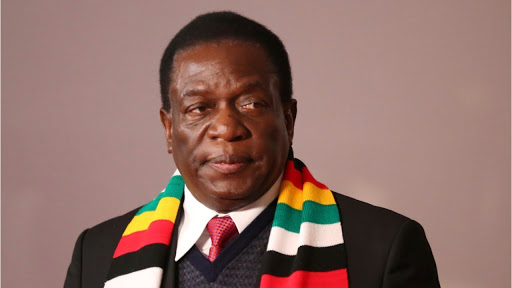
President Emmerson Mnangagwa 

Published: September 26, 2020
By: ZimEye The Truth & The Future – Paul Nyathi

President Mnangagwa who himself is accused of several politically motivated murders and abductions yesterday condemned the killing of children for ritual purposes, saying the Government was concerned with all forms of threats and abuse to children and vowed to end violence against them.

The condemnation comes in the wake of the murder of a seven-year-old Murehwa boy, Tapiwa Makore, last week for ritual purposes, allegedly by a herder.

While it is noble for Mnangagwa to condemn the killings of innocent children the President himself has a history of killing which taints his otherwise noble call. Zimbabweans have through the years called on Mnangagwa to speak to the murders attributed to his authority and call for an end to the wanton killing of citizens for political purposes as he has done on the killing of children for ritual purposes.

“I am disturbed by the loss of young children as a result of heinous and evil actions for rituals and witchcraft purposes. These cold-hearted acts of murder have no place in our country.

“The stakeholders in our criminal justice system must speedily and strongly deal with perpetrators so that this evil trend is expunged from our society,” said Mnangagwa during a virtual Junior Cabinet meeting at State House on Friday.

While Mnangagwa was Minister of State for National Security, the 5th Brigade of the Zimbabwe National Army killed thousands of civilians in the Matabeleland region. These massacres, known as the Gukurahundi, lasted from 1983 to 1987, and resulted in an estimated 20,000 to 30,000 deaths.

More recently military officials – many behind his rise to power – have been accused of benefiting from the rich Marange diamond fields in eastern Zimbabwe, with reports of killings and human rights abuses there.

His ruthlessness, which it could be argued he learnt from his Rhodesian torturers, is said to have been seen again in 2008 when he reportedly masterminded Zanu-PF’s response to former President late Robert Mugabe losing the first round of the presidential election to long-time rival the late Morgan Tsvangirai.

The military and state security organisations unleashed a campaign of violence against opposition supporters, leaving hundreds dead and forcing thousands from their homes. Tsvangirai then pulled out of the second round and Mugabe was re-elected in a one man race.

On August 1 2018, the Zimbabwean army shot at protestors killing at least twelve and injuring many others. The government of Mnangagwa again denied involvement. A commission headed by Mohlante found the army responsible for the killings. The commission made recommendations and all were ignored by Mnangagwa’s military government. None of the recommendations were carried out.

In January 2019, more protestors were killed by the same army in cold blood. Scores of women were raped, some in front family members. A brazen Mnangagwa, would later demand to see graves of those killed and the women raped should come to him that he can believe that such atrocities took place at the hands of the army he directs. Many Zimbabweans were shocked and hurt by such reckless statements from a heartless president.

Source: Mr President, All Murders Must Be Condemned And Stopped

South Africa: muthi suspected for murder of two Orange Farm kids

Allegedly, another case of muti murder in South Africa. Muti or muthi murder is the killing of a person with the intention to use body parts for ritual purposes to enhance one’s power, prestige or wealth. Muti murders occur frequently in Southern Africa, in South Africa, Zimbabwe, Zambia, Mozambique, Malawi, Lesotho and eSwatini (formerly called Swaziland).

All ritualistic killings, including muti murders, are based on superstition. Its occurrence is widespread but nobody knows the exact number of victims of these gruesome and heinous crimes. As can be seen from the picture below, it is not an imaginary phenomenon which exists only in the minds of the people. The mere suspicion of a ritualistic killing draws large crowds, expressing their indignation, their fears and their protests against these medieval practices which cannot be left unpunished (webmaster FVDK).

Muthi suspected for murder of two Orange Farm kids

Residents of Orange farm, south of Johannesburg marching after the discovery of bodies of six-year-old Simphiwe Mncina and eight-year-old Mpho Makondo in Extension 4. 
Image: Veli Nhlapo

Published: September 21, 2020
By: Sowetan Live – Tankiso Makhetha  

The discovery of bodies of two children in Orange Farm, south of Johannesburg, comes just five months after another child was killed in the same area under mysterious circumstances.

The community and families believe they may have been victims of muthi killings.

Mpho Makondo, 8, and Simphiwe Mncina, 6, were found dead on Saturday morning after they went missing on Friday night.

They were smudged with a black substance on their mouths and underneath their feet while a note, which their families did not see before it was taken by police as evidence, was left on Makondo’s body. No body parts were missing.

In April, Mzwandile Zitho was found dead in what his family believed was a ritual killing at a tavern about 2km from where community members discovered Mpho and Simphiwe’s bodies.

Mpho and Simphiwe, who lived three houses from each other, were last seen walking home from a salon about 400 metres from their homes. 

The two children had accompanied Mpho’s aunt, Malehlohonolo Malatji, to the salon. 

Mpho’s father, Moeketsi Malatji yesterday told Sowetan how horrified he was after finding his daughter lying naked, behind a boulder. 

He described the children as best friends who were always together. 

“The last person who saw them was my sister. They had gone to the salon down the road with her, but she told them to go home when it was getting dark at about 6pm,” Malatji said.

 “We started a search party with the community, and went into every household in our neighbourhood and we didn’t find them. We stopped looking for them at about 4am on Saturday.”

Malatji said he received a call from his daughter’s mother at about 6am telling him that they had found the children.

“I could not hold back my tears when I saw my baby’s body lying next to a big rock. She was naked, her arm was broken, she had a grimace on her face, and there was a black substance in her mouth and under (the) feet,” he said.

Their bodies were found a few hundred metres away from each other. 

Simphiwe’s body was dumped in someone’s yard and the note was left on his torso. He was not wearing any top and did not have shoes on.

His aunt, Lindiwe Mojafe, said: “They were innocent children. Why would anyone do this to them? They were never in the habit of playing too far from home. It’s very strange and scary how we found them. It has left us with more questions than answers.” 

A community member who found Simphiwe’s body told Sowetan that he thought it was a muthi killing. 

“I was going to work and I saw a body of a small boy in my yard. I was scared because I thought that people would think that I killed him and left him there. I called the police and other community members to come and see because I didn’t want to be arrested,” the community member said.

Police spokesperson Brig Mathapelo Peters said the motive for the double murder was yet to be established, while a postmortem will be conducted. 

“The investigation into this double murder will be prioritised and escalated to the Provincial Investigating Unit, in line with the SAPS position to prioritise the investigation of crimes committed against women, children and other vulnerable persons,” Peters said. 

Meanwhile, in the Mzwandile Zitho, 5, case earlier in the year, Pontso Mohlanka was arrested and charged for the boy’s murder but charges against her were withdrawn on August 28. 

Mzwandile’s grandmother, Nompumelelo Zitho, yesterday said she did not visit the scene where the killed children were found at the weekend because it gave her flashbacks of what happened to her grandson. 

“I am still trying to come to terms with it. It’s worse now because we won’t find closure. The investigating officer told me that charges were withdrawn because there wasn’t enough evidence,” Zitho said.

Source: Muthi suspected for murder of two Orange Farm kids

Man carrying a child’s severed head arrested outside Ugandan parliament

A bizar incident occurred recently in the Ugandan capital Kampala. Allegedly, a man, carrying the severed head of a five to eight-years-old child, hidden in a gift box, tried to enter the building which houses the nation’s parliament. Not surprisingly, rumors started floating suggesting a case of ritual murder. True or not true? And was maybe a parliamentarian involved? If yes, who? The mere fact of the rumors is an indication, in my opinion, of the phenomenon of ritualistic murders in Uganda – besides, previous posts on this site confirm the occurrence of ritual murders in the East African country. The rumors also show the people’s suspicion and mistrust of rich and famous people in cases of ritualistic activities. Moreover, it is interesting to note and very significant that the incident occurred when Ugandan parliamentarians are discussing a law which intends to punish the crime of human sacrifice with the death penalty!  

I hope that the police will do its work independently and will reveal the truth. If again a ritual murder has been committed, the perpetrators must be arrested and tried. If not, let it be established. Of course, it is crystal clear that a crime has been committed and that a child was the victim. The rule of law must apply, as I have repeatedly underlined in this place. Without the rue of law there is no justice, no progress, no development (webmaster FVDK).

Man carrying a child’s severed head arrested outside Ugandan parliament

Published: September 15, 2020
By: Metro, Uganda – Joe Roberts

A man has been arrested after attempting to enter the Ugandan parliamentary building carrying the severed head of a child in a gift box. The child was aged about five to eight-years-old, but no more details were given by police.

It comes as politicians in the east African country consider a bill that would punish the crime of human sacrifice with the death penalty. Ugandans on social media expressed outrage over the incident, with some pointing out that it had the hallmarks of a ritual killing.

Children are frequently targeted in such killings across Uganda, according to police and some watchdog groups. Officers said they can ‘assure the general public that the investigations are vigorously being undertaken to ensure that the perpetrators are taken to court’.

The gruesome package was apparently intended to be delivered to the office of the parliamentary speaker, Rebecca Kadaga. A spokesman for Ms Kadaga, a member of the governing National Resistance Movement party, who has held the speaker’s post for two terms, declined to comment.

Source: Man carrying a child’s severed head arrested outside Ugandan parliament

Related article:

Ugandan police nab man entering parliament with severed head

Published: September 14, 2020
By: Sports grind Entertainment

KAMPALA, Uganda (AP) — Ugandan police on Monday arrested a man attempting to enter the parliamentary building in the capital carrying the severed head of a child in a wrapped gift box.

Police said in a statement that the victim was a child of about five to eight years, giving no more details.

Police “assure the general public that the investigations are vigorously being undertaken to ensure that the perpetrators are taken to court,” said the statement.

Parliamentary Watch Uganda, a local group that monitors the activities of the legislature, said the gruesome package was intended to be delivered to the office of the parliamentary speaker, Rebecca Kadaga.

A spokesman for Kadaga, a member of the governing National Resistance Movement party who has held the speaker’s post for two terms, declined to comment.

Lawmakers are currently considering a bill that would punish the crime of human sacrifice with the death penalty. Supporters of the bill say such legislation is long overdue.

Ugandans on social media expressed outrage over the incident, with some pointing out that it had the hallmarks of a ritual killing. Children are frequently targeted in such killings across the East African country, according to the police and some watchdog groups.

Source: Ugandan police nab man entering parliament with severed head

Uganda: mother loses two children to ritual murder

‘Ndyakundwa is confused. She wants justice for her children yet people involved are her family members.’

The involvement of relatives in ritualistic killings goes back to the origin of the age-old practice of human sacrifices, nowadays widely condemned. There is no place for it in the 21st century. ‘Thou shalt not kill‘. The law must take its course. (webmaster FVDK)

Mother loses two to ritual murder

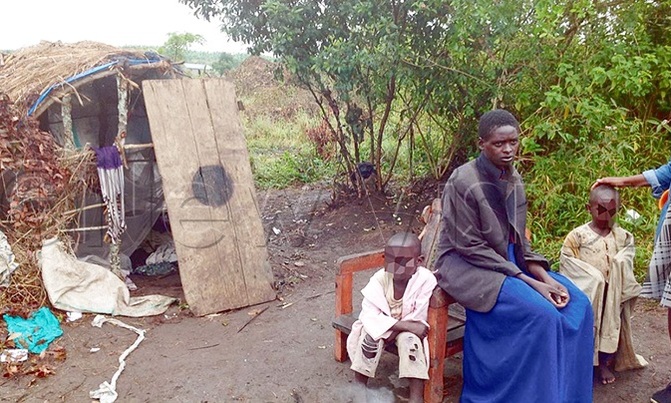
Ndyakundwa at her house in Kibuye, Vuga. She says her children were killed by her relatives

Published: August 3, 2020
By: Glorias Musiime – New Vision, Uganda

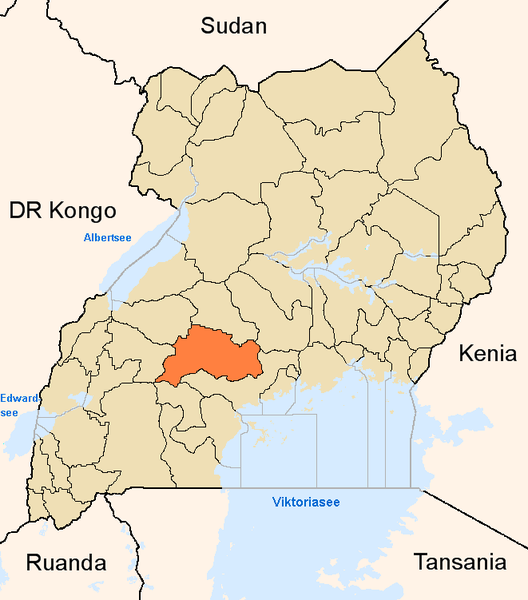
MUBENDE- A woman in Kibuye Vuga, Mubende district, says she lost two children in a period of four months to ritual murder last year.

In her statement to the Police at Kiganda in Mubende, Monica Ndyakundwa said her children were killed by her relatives led by her father.

New Vision found Ndyakundwa grazing cattle for a Good Samaritan, who gave her a place to live in after she lost her home.

“I have nowhere else to go. When residents suspected my father and brother of killing my children, they destroyed our house. My father and brother fled and they were arrested later,” she says.

She now stays in a makeshift grass structure only big enough to accommodate two people. Ndyakundwa says her 75-year old father did not act alone.

“There were other two men who could have connived with him to kill my children,” she says.

Her tribulations started when they were still living in Busobwera, Mubende district in May, last year. One morning, her five-year-old son went missing from a house she was sharing with her father Steven Kagyenda and her brother Geoffrey Tagaywa.

Residents banish family

After three days of searching for the boy, residents called off the search and a village meeting banished the family from the area on suspicion of being involved in the disappearance and possible murder of their child.

Kagyenda, a cattle keeper, relocated to Mabare in Kiganda sub-county, about 30km from Busobwera. Being new in the area, neighbours gave them food until they settled down.

Four months later, Ndyakundwa’s other seven-year-old son also disappeared.

“After a search, the boy’s body was found three days later in a plastic drum near our home,” she narrates.

Residents again suspected Kagyenda, whose story of a similar incident in Busobwera was well known.

Kagyenda and the son fled for fear of being lynched by the angry residents. An angry mob destroyed the house and chased the family, including Ndyakundwa, from the village.

A neighbour says she woke up to dig behind her main house and was shocked to find a dead body of a child in a drum near her compound.

“I suspected it was Kagyenda’s grandchild because he was missing. But when I rushed to tell him, Kagyenda was not moved.

He seemed unbothered. He only asked me if the child was dead or alive. He did not even try to find out,” she says.

She made an alarm which attracted residents. According to the investigating officer, Charles Ngobi, the body was dismembered and legs, tongue and chin were missing.

A report says blood was scooped from the body. Ndyakundwa says the second incident convinced her that her father was involved in the murder of her children.

“That night when my son disappeared, we had received visitors; two men who came from Sembabule. They left early at 4:30am. I suspect those two men connived with my father to murder my child,” she says.

The Police at Kiganda arrested Kagyenda, his son Tagaywa and four others; Kato David, Kellen Kembabazi, Sam Kato and Nyakojo on murder charges. They appeared in court in Mubende.

However, the Police in Kassanda says only Kato and Nyakojo are still being held on murder charges. The other suspects were released for lack of evidence.

The Police fear that Ndyakundwa could be hurt by her family members to kill the evidence.

They say she needed to be protected and that is why they brought her to Kibuye, Vuga.

Source: Mother loses two to ritual murder

Mubende District, Uganda

Kenya: Uasin Gishu police arrest five following rape and murder of children – ritual murder suspected

Another case, maybe not of a ritual murder, but of parents who fear that their child has become victim of a ritual murder. We always have to be careful in labelling a murder as a ritualistic act based on superstition, but it is striking that as soon as a mutilated body has been found local people think of a ritualistic killing. A very telling signal. One of their basic human rights is the right to live without fear. For this reason I have included the case below. (webmaster FVDK).

Uasin Gishu police arrest five following rape and murder of children

Nominated MCA Belinda Tirop (left) with Ms Loice Muthoni, Ms Sharon Sakwa and Ms Caroline Naliaka Nabiswa whose children’s murders remain unsolved. PHOTO | JARED NYATAYA | NATION MEDIA GROUP

Published: July 7, 2020
By: Daily Nation, Kenya – Titus Ominde     

Police in Moi’s Bridge have arrested five people on suspicion of being serial killers and defilers.

Five children have been found murdered in the town in seven months.

The arrests came after protests by Nominated Ward Representative Belinda Tirop and area residents.

Locals say the crimes could be linked to ritual killings.

Uasin Gishu county police chief Johnston Ipara praised the residents of Soy Sub-County for providing information that led to the arrests.

He added that more people would be arrested and prosecuted.

MISSING FOR A MONTH

The county police boss said the five have already appeared in court as police pursue two other people still at large.

“Detectives on the ground are gathering crucial information to link the pair to the ones who have already been arrested,” he said.

Early in the year, a man and his daughter were arraigned for the murder of a 12-year-old girl.

The two were freed when the prosecution said it could not link them to the heinous crime. 

Mr Ipara said those freed by courts are still being investigated.

“We have not given up on the suspects. They could be rearrested,” the county police commander said.

MUTILATED BODY

Two weeks ago, the mutilated body of Grace Njeri, who had been missing for a month, was found in a thicket.

This was the fifth child killing in six months.

 On December 31, Ms Sharon Sakwa’s daughter was killed in a similar fashion.

The girl, Stacy Nabiswa, was a Standard Five pupil.

She disappeared on New Year’s Eve and her body found near the railway line the following day.

Ms Sakwa accused police of doing little to apprehend the perpetrators of the crimes.

Thirteen-year-old Lucy Wanjiru was defiled and killed on January 16.

Her mother, a greengrocer, was at the market when the murder occurred.

FREED FOR LACK OF EVIDENCE

Wanjiru’s stepfather was arrested but released later due to lack of evidence.

The girl was a Standard Six pupil at Moi Township Primary School.

Two weeks ago, local leaders and residents held a demonstration on the Kitale-Eldoret road to protest the killings. They accused security agents of doing little to stop them.

In response to the protests, Mr Ipara urged residents to provide information that would lead to arrests and prosecutions.

Mr Ipara, however, challenged parents to monitor their children.

“Let us be responsible and watchful if we are to eradicate these incidents,” Mr Ipara said.

He advised families to ensure children do not go to the shop or market unaccompanied.

Source: Uasin Gishu police arrest five following rape and murder of children

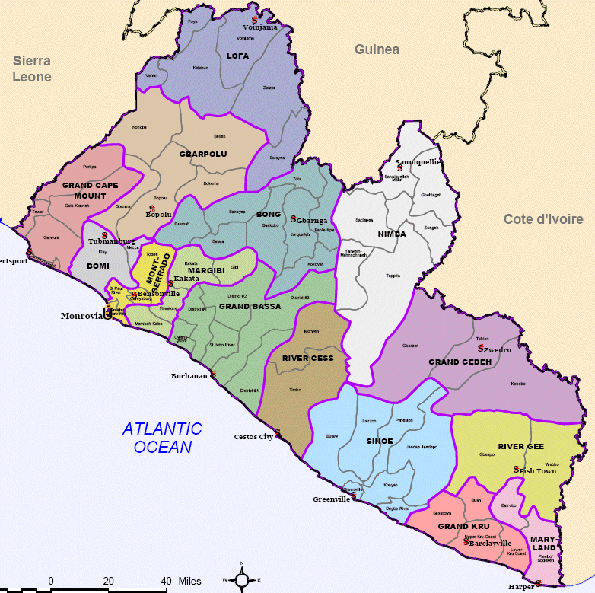
Liberia: adolescent girl tortured, accused of witchcraft

I’ve hesitated to include the article below on this blog – partly because of the gruesome nature of the described act, partly because of the graphic description of the treatment, obviously a form of torture, which family members inflicted upon a girl they accused of witchcraft and being responsible for the death of an uncle.

Eventually I decided to reproduce the article here and to share it with a larger audience. The reason why I choose to do so is because witchcraft lies at the bottom of their repulsive behavior. This site is focusing on superstition and everything which relates to it in a criminal way: ritualistic acts, ritual murders, ‘money rituals’ (Nigeria), muti murders (in Southern Africa), and – indeed – witchcraft. The fact that the ultimate victim, a young and innocent girl, was maltreated and tortured was another reason for drawing attention to this incident. Unfortunately, rape is a daily crime in Liberia and most perpetrators get away with their crimes. In Liberia, impunity seems to be the rule, and not the rule of law.

Therefore, again a warning: the following article contains graphic details of a form of torture (webmaster FVDK).

Liberia: Adolescent Girl Sodomized After Being Thrown Out for Witchcraft

Published: July 3, 2020
By: FrontPage Africa 

MONROVIA – A girl believed in her late teens has been sexually assaulted in her anus after she was thrown out of her family in Omega Tower Community on accusation on her being witchcraft.

According to a source close to the family, the incident occurred on Tuesday, June 30, 2020 night when she was asleep.

The girl (name withheld) was discovered early Wednesday morning lying helpless on the main road that links Montserrado to Margibi, crying for rescue.

Some community members felt pity for her, took her from the street, gave her food and water. They at the same time called the Women and Children Division of the Liberia National Police to take the survivor to hospital for treatment.

Her current condition has left community members blaming her family for neglecting her and throwing her out of the house after alleging that she confessed killing her 25 years old uncle (name withheld) in May of this year after a brief period of illness.           

A family source interviewed by this paper narrated that after the death of the uncle, the survivor and her partners were tortured and beaten badly on grounds that they are responsible for his death. This, according to the source, caused her mother and father to escape with her other siblings leaving her at the mercy of the family.

“During the night when her uncle died,” the eyewitness said, “that child was beaten by his family and a man who claimed to be a big man in the Liberia Drugs Enforcement Agency (LDEA) at which time they broke one of her legs.”

“After all the torture, they still threw her out of the house, they forgot to even take into consideration the danger it poses to her health, not only the aspect of rape.”  

“I do not know why people find pleasure in accusing innocent children of the act of witchcraft when, in fact, there is no way they can prove their accusations,” the eyewitness said in pity.

The eyewitness said after the death of the survivor’s uncle the family members brought a native doctor who said that girl and her partners were responsible for his death.

“After the native doctor was brought here, the family said that the girl confessed that she and her partners killed her uncle because he means them with food,” the eyewitness said.

The eyewitness expressed deep frustration in said aptitude adding that “I do not know who the man that did such a wicked act to a child in such condition.”

According to the eyewitness, the LNP Children Division was able to take the child to the hospital.

“What we are praying for now is not just the treatment of the child but an investigation being done to bring the perpetrator to justice and even the family because they were the ones who exposed her to such danger.”            

In Liberia, rape has become the order of the day with few out of many girls who have suffered such horrible acts from their male counterparts are lucky to get the needed justice.

With many perpetrators understanding that the justice system is very weak, they go ahead to sexually abused girls and walk in the street with impunity.

Source: Liberia: Adolescent Girl Sodomized After Being Thrown Out for Witchcraft

Nigeria: ‘How I killed children, sold their body parts to ritualists’ – suspect confesses

The articles reproduced below show the perversity of ritual murders in Nigeria, usually for purposes of ‘money rituals’. Ritual murderers, who resort to human sacrifices to become rich or famous, are criminals, there is no doubt about it. What happens nowadays in Nigeria, and also in other Sub-Saharan countries where notably albino people are targeted, shows even a different kind of ritual murderers. They kill purely for material gain, to sell human body parts thus obtained. A repulsive practice, which in this case is based on the superstition of the buyer of the body parts. A crucial role is played by the ritualist or traditional doctor, the witch doctor, as is shown by the articles below. They should all be locked up, but – even more important – people should be educated that there is no place for superstition in the 21st century. (webmaster FVDK)

How I killed children, sold their body parts to ritualists – Suspect confesses

Published: July 3, 2020
By: Daily Post Nigeria – Fikayo Owololagba

The Nigeria Immigration Service (NIS), Oyo State Command, has arrested a 29-year-old, suspect over alleged kidnapping and murder.

The suspect was arrested after the police received a tip-off from commercial motorcycle riders around the area.

The command’s Public Relations Officer (PRO), Olufemi Adetunji, disclosed this to newsmen on Friday, at the NIS office, Agodi-Gate, Ibadan, while handing over the suspect to the police command in the state.

The suspect whose identity was not revealed in an interview with NAN confessed that he was not only involved in duping, but also in kidnapping and selling of human parts to ritualists.

He confessed that he enticed children with biscuits on the streets and lured them into their cars.

The suspect, a resident of Beere, Oje area in Ibadan was a member of a gang of nine, comprised of two females and seven males that carry out operations.

He added that he had killed at least two children, and sold their parts to suspected ritualists.

“We have a car which we use for kidnapping. We buy biscuits and other things and keep them in the car, which we used to entice the children.

“Anytime we see little children walking on the road unaccompanied by an adult, we entice them with biscuits and quickly put them in the car and zoom off.

“We later kill the kidnapped children and sell their parts to the ritualists,” he added.

Source: How I killed children, sold their body parts for rirualists – Suspect confesses

Related article:

‘We kill children, sell their body parts’ – suspect confesses as he was arrested by Immigration officer

Published: July 3, 2020
By: Opera News

The Nigerian Immigration services has arrested a 29-year-old suspect, Lekan Raheem, for killing and selling children’s body parts to ritualists. After his arrest, the suspects confessed that his gang had killed some children and sold their body parts for ritual purposes. According to the suspect, the Ritualist require the body parts for ritual purposes.

The suspect made the confession to the Nigerian Immigration services after being interogated. After the confession, he was handed over to the police. According to the confessional statement of the suspect, him and his gang usually lure innocent children with biscuits and kidnapped them.

The suspect confessed that he was not only involved in duping people, but he also kidnapped, kill and selling human parts to ritualists. According to reports, the suspect lives at Oje area of Ibadan. The gang members includes 9 members including 2 females and 7 males.

The suspect went on to say that anytime his gang members see little children walking alone, they lure them with biscuits. The children are quickly dragged into their car and they quickly take them away. The Oyo State Nigerian Immigration services Public Relations Officer, Olufemi Adetunji disclosed that the suspect was arrested following a tip off by some people.

Source: We kill Children, Sell Their Body Parts -Suspect confesses As He Was Arrested By Immigration officer

The business, science behind ritual killings

The murder of Thabelo Mazolo in Zimbabwe inspired Bruce Ndlovu, the author of the article reproduced below, to dwell on the phenomenon of ritualistic murders, muti or muthi murders as they are called in Southern Africa. The staggering details of recent murder cases in Botswana, South Africa and Zimbabwe are shocking. The author is to be commended for his frankness to expose and discuss these heinous crimes which have no place in the 21st century.  

Warning: the following article contains many graphic details as to how these murders are committed (webmaster FVDK). 

Murder economy: The business, science behind ritual killings

The suspected ritual killer, Tawana Ngwenya (right) and his disillusioned father, Buzwani Ngwenya (left).

Published: June 21, 2020
By: Nehanda Radio – Bruce Ndlovu

“You must cut yourself and spill your blood onto a mirror,” the message to Tawana Ngwenya reportedly read. “Gaze into the mirror and say out loud that you are selling your soul for riches. After that you must open the door for my boys to go out.”

The messages, from a South African sangoma, were allegedly part of a chain of instructions to Ngwenya, messages that allegedly led him to take the life of Tawana Mazolo at Matsheumhlophe, Bulawayo.

The messages were witchcraft delivered digitally, as the unknown sangoma, from his lair somewhere in one of South Africa’s nine provinces gave Ngwenya instructions on how to spill blood and in the aftermath, prepare for a life of riches.

The details of the alleged murder are gruesome. Half of Mazolo’s body, from the waist down, was missing while her breasts and palms were cut off. On the surface, the tragic killing of Mazolo already looks like a ritual murder. The grizzly details suggest that this indeed is the case.

After all, every once in a while, the pages of publications in Zimbabwe and neighbouring countries drip with the blood of innocents murdered at the altar of self-enrichment.

There was the case of Edmore Rundogo, whose dismembered remains were found in Maun, about 500km from Botswana’s second city of Francistown.

Rundogo had left his home in Lobengula West (Bulawayo) in search of a better life in Botswana. Instead of the proverbial greener pastures on the other side of the Plumtree border, he had found machete-wielding men who savagely murdered him, ripping his heart out.

The five killers also cut off his hands, feet, privates and took part of his brains. The killers, after being told by the traditional healer that had hired them that they had killed the wrong person, had then tried to burn his body.

South of the Limpopo, there was the case of 10-year-old Masego Kgomo, a schoolgirl who was still alive when Brian Mangwale ripped out her womb.

During the course of his trial for murder, Mangwale would change his story three times, a fact that the courts took as evidence that he had no remorse for his actions. In one of the three accounts he claimed that he and a group of friends had taken the young girl to a traditional healer in Soshanguve, who gave them a concoction to drink before he dragged the crying Masego into a room.

The girl was still crying when the traditional healer returned with her 10 minutes later and started sprinkling something on her body.

Mangwale claimed the medicine man had then returned with a knife and a clay pot and ordered Masego to lie down on a bed.

When she refused, she was forcibly held down while the traditional healer stabbed her in the stomach, put his hand inside her body and removed something that looked like a ball, which he put into the clay pot. He also removed her left breast.

Mangwale told the magistrate he heard the others had wrapped the child’s body in plastic and drank muthi before dumping her body in the veld on the instructions of the traditional healer.

While his testimony kept changing, the courts were convinced that Kgomo had died after meeting the nasty end of Mangwale’s knife. A life in prison sentence was handed to the killer.

Body parts are big business in Africa, but particularly in South Africa where trade in human body parts is lucrative. In the race to get rich in places like the City of Gold, Johannesburg, some believe that the key to getting their hand on all that glitters is taking a shortcut.

Many Zimbabweans, like Mazolo, can trace their gruesome ritual death to powerful sangomas south of the Limpopo. While Ngwenya was the one allegedly wielding the instrument of death when Mazolo took her last painful breath, this is not always the case.

Middle men, like in the case of Mangwale, are usually the ones that handle the dirty work. According to South African scholar Louise Vincent, certain gangs specialise in killing people for the harvesting of body parts only.

“It is believed that certain murder gangs specialise in muthi killings. Unlike human sacrifice where death is the express purpose of the act, in muthi-related killings, death is an anticipated and accepted by-product of the garnering of human organs but it is not the main aim.

Indeed, it is often preferred that the victim remain alive during the process. When body parts, including internal organs, are removed while the victim is still alive it is believed that the power of the resultant medicine will be greatly enhanced. Depending on the wants of potential customers, the instructions that the sangomas give specifics.

“Sangomas seldom do the killing themselves. The order will include not only specifications as to which particular body part or parts are required — testicles for virility purposes, fat from the breasts or abdomen for luck, tongues to smooth the path to a lover’s heart — but the very specific manner in which they are to be collected.

“The use of human body parts for medicinal purposes is based in the belief that it is possible to appropriate the life force of one person through its literal consumption by another. For this reason, a victim is often carefully chosen — not just any person’s penis as a cure for male infertility, for instance, but that of a man with several healthy children.”

Those who grew up in Zimbabwe urban areas will recall how the shadow of ritual murder has never been far off the horizon. Some, no doubt, know of the stories of businessmen who are said to have suddenly turned rich after they lost a spouse or a child. That child, or any other loved one, is assumed to be the blood sacrifice that was necessary for their businesses to turn a sudden corner.

Such perceptions of course, may be nothing but jealous rumour, but they are not helped by actual cases like that of Robert Tazvireva, a bottle store and general dealership owner in Magunje who allegedly instructed Samuel Mushonga in 2017 to murder his own sister so he could enhance his business.

After Mushonga had allegedly fatally stabbed his sister and hacked off her head, he delivered it to Tazvireva who told him to hide it in a nearby bush. Such instances, have helped convince many that businesspeople profit from the spilling of blood.

“‘If the business is not doing well, get a boy or a girl’s head — someone who has a future — and your business will have a future too,” said Dr Gordon Chavunduka time president of the Zimbabwean Traditional Healers Association, once said.

Those who grew up in Bulawayo in the late 90s will remember the myth of men who reportedly drove around the city with a blood sucking frog, looking for unsuspecting victims to profit from.

While such urban legends have never been confirmed, they are an entertaining reminder that people live on the constant lookout for people trying to profit off their ritual sacrifice.

“I recall vividly growing up in one township in Zimbabwe. This was just when public transport in the form of the Toyota Hiace taxi had just been introduced in the country,” says Fanuel Hadzidzi of Gender Links.

“At that tender age, we were scared to death by the stories doing the rounds in the township of the disappearance of children. We were told how kids were being lured by strangers who promised them some sweets.

“The next thing, their bodies would be found in the bushes with some body parts missing. Rumours were that businesspeople were taking the children’s heads for instance to Durban in South Africa and were trading them off for the taxis. Weren’t we all scared!”

With claims of human body parts sold by vendors on the streets of South Africa and other countries, it may be a long time before ritual killings lose their lustre to those trying to make a quick dollar.

Source: Murder economy: The business, science behind ritual killings

The Limpopo River Basin (Botswana, Mozambique, South Africa, Zimbabwe). Source map: The Economist

Nigeria, Rivers State ritual killing: University undergraduate, accomplice to die by hanging

A gruesome murder; a gruesome verdict. 

Warning: the article below contains graphic details which may shock the reader (webmaster FVDK).

Rivers Ritual Killing: University Undergraduate, Accomplice to Die by Hanging

Published: May 14, 2020
By: This Day (Nigeria)

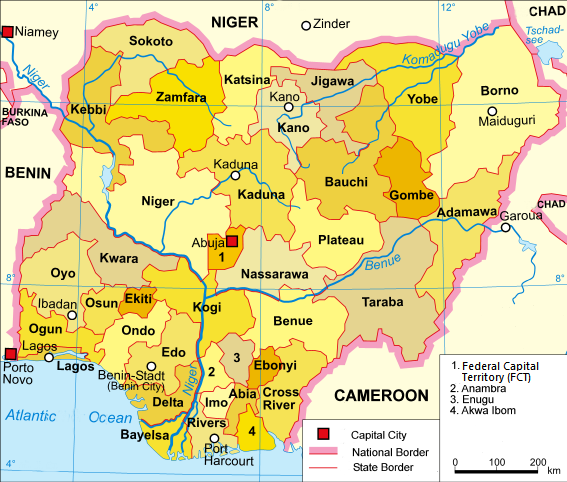
Justice Adolphus Enebeli of the Rivers State High Court sitting in Port Harcourt, has sentenced one Ifeanyi Maxwell Dike to death by hanging for the killing of an eight-year-old Victory Chikamso, a female for ritual purposes in 2017.

Also sentenced to death alongside Dike is one Ugochukwu Nwamairo, his accomplice who reportedly requested for the supply of the human body parts for money ritual.

Also, an ex-police sergeant who allegedly aided Dike’s escape from prison at night after his detention, Johnbosco Okoronze got one year imprisonment, for aiding and abating escape of the murderer.

Dike, a 200-level Physics student of the University of Port Harcourt, (UNIPORT), on August 18, 2017 allegedly strangled his victim who was also his niece and primary two pupil of a private school in Port Harcourt.

Dike perpetrated the act in his (Dike’s) room at Eliozu community, in Obio/Akpor Local Government of the state, where he also removed the vital parts of her body.

Chikamso’s body parts such as, breast, private part, fingers, ear, heart, eyelid, among others, were discovered missing when the remains were found with Dike.

He was on his way to the community central crash bin at midnight to dispose of what was left of the body of the child when he was apprehended by men of the community vigilante and was handed over to the police.

The duo, Dike and Nwamiro were found guilty of the two-count charge of conspiracy and murder levelled against them.

Sentencing them, Justice Enebeli pronounced that Dike should be hanged on his neck until he dies, while Nwamiro should be hanged on his leg until he dies (upside down).

The court explained that it decided to sentence the ex-police sergeant to just one year jail term because he has already served two years in prison from the time he was arrested, adding also that he has been dismissed from police force, since the case began.

He noted that Nwamairo’s conviction and sentence was based on Dike’s evidence-in-chief and voluntary confession/ statement on four different occasions that, the second defendant (Nwamairo), had requested the body parts of a little girl, including the heart for financial independence.

The court ruled that the prosecution proved his case beyond reasonable doubts, insisting that counsel to Dike, Lezina Amegwa “in his written address did not deny the fact that his client committed the murder but said he was not in his right frame of mind when he committed the act, meaning that he was mentally deranged and insane.”

The court verdict caused panic and serious outburst among Nwamairo’s family members who were present when the judgment was delivered.

His wife collapsed and was carried away by other members of the family present while one of the brothers, was noticed shouting on top of his voice, insisting that the brother was innocent of the crime, adding that the judgment was wrong and would be appealed as they cried profusely.

Speaking to journalists shortly, the prosecution counsel, Mr. Chidi Eke, described the judgment as landmark, adding that “it has brought about justice for the state, the family of late Victory Chikamso and the soul of the departed.”

However, counsel to Nwamiro, Mr. John Ndah expressed displeasure over the judgment and assured that it would be appealed.

As for Dike and his lawyer, Amegwa, it is all over with the case.

“We may not appeal the matter because of the circumstances in the judgment,” they concluded.

Source: Rivers Ritual Killing: University Undergraduate, Accomplice to Die by Hanging

It would be recalled that Dike escaped from police custody, using the darkness of the night to run away from the cell of the State criminal investigation Department, the night he was arrested and was re-arrested in Jos, Plateau state, two weeks after.
Source: 
Undergraduate, accomplice to die by hanging in Rivers (The Nation, May 13, 2020)