Kenya: Popular witchdoctor claims Monica Kimani’s murder might have been a ritual killing

The following article is reproduced here to illustrate that we have to be cautious when reading news and related articles on alleged ritual murders. In this respect, too many rumors circulate in too many African countries and – luckily – often they’re not true. Be that as it may, the superstition behind these rumors reveals a real problem: the real fear of ordinary people for these ritualistic killings. Hence, though – fortunately – these crimes occur less frequent than the numerous rumors suggest, the ease with which these rumors spread in African societies are a clear indication that the phenomenon of ritualistic murders has not been wiped out in these societies. Related to the foregoing is the position and role of witchdoctors in African societies, as is shown in the following murder case.
We should have this in mind when reading the article below.
PS The added articles throw a different light on the murder of Monica Kimani.
(webmaster FVDK)

Ritual killing ndio wapate power na pesa?!

Popular witchdoctor claims Monica Kimani’s murder might have been a ritual killing

Published: October 11, 2018
By: Geoffrey Mbuthia
mpasho – Contact: info@mpasho.co.ke

The late Monica Kimani

Monica Kimani’s murder has opened a can of worms into so many lives that every day one wonders what new and crazy thing will we discover? Apart from the huuuuge news that television personality Jacque Maribe and her fiancé are the prime suspects.

The prime suspects, TV celebrity Jacque Maribe and her fiancé, Joseph Irungu alias Jowie

Jacque Maribe and Joe IrunguJacque Maribe and Joseph Irungu
Now a new twist has been thrown into this whole affair with claims that her murder might have been a ritual killing. What?

A quick reminder: Monica’s lifeless body was discovered with her mouth taped shut and her hands and legs tied behind her back. Her throat had been slit open from ear to ear. Early reports indicate that she had been decapitated.

According to SDE, a witchdoctor who cleansed the mystery suspect who was with Joe on the night of the killing. Why would one be cleansed after committing a murder? Priests of old would wash themselves after offering a sacrifice. Cleansing, in this case, may speak of a ritual killing.

Monica Kimani  Was her murder a ritual killing?

The great resource that is Wikipedia, states that it is the act of killing one or more humans, usually as an offering to a deity. Human sacrifice has been practiced in various cultures throughout history. Victims were typically ritually killed in a manner that was supposed to please or appease gods, spirits or the deceased.

SDE goes on to claim that:

NOW, A  MISSING SUSPECT IN THE MURDER OF MONICA IS REPORTED TO HAVE TRAVELLED TO MOMBASA TO SEEK “CLEANSING” BY A WITCH-DOCTOR.

This according to a few detectives who spoke to SDE and have travelled to Mombasa to find the mystery suspect. They say that the suspect was believed to be holding vital evidence taken from Monica’s house, including some cash, the killer weapon, house and car keys, and clothes.

Monica Kimani  The late Monica Kimani

A police affidavit claimed:

PRELIMINARY INVESTIGATIONS HAVE ESTABLISHED THAT IRUNGU WAS SEEN IN THE COMPANY OF ANOTHER PERSON NEAR THE CRIME SCENE.

It added:

THE IDENTITY OF THE PERSON SEEN WITH IRUNGU HAS YET TO BE ESTABLISHED BUT THE INVESTIGATING TEAM IS FOLLOWING LEADS.

The reason they are searching for this other mystery man is that Joe, the main suspect in the murder was in the company of another man whose identity police are searching for.

Joe Irungu  Joe Irungu in court

Surveillance cameras on the roads he used from off Denis Pritt Road, show Joe and the mystery suspect.

Source: Ritual killing ndio wapate power na pesa?! Popular witchdoctor claims Monica Kimani’s murder might have been a ritual killing

Related articles::

Did missing suspect in Monica Kimani’s murder visit witchdoctor for cleansing?

Published: October 12 (?), 2018
By: Cyrus Ombati

The late Monica Kimani (Photo: Courtesy)

The missing suspect in the murder of Monica Nyawira Kimani might have travelled to Mombasa to seek “cleansing” by a witchdoctor, police have said.

Officers said the suspect was believed to be holding vital evidence taken from Monica’s house, including some cash, the killer weapon, house and car keys, and clothes.

Monica’s body was found in her apartment at Lamuria Gardens off Denis Pritt road in Nairobi on September 20.

A team of detectives has been in Mombasa since Sunday amid claims the suspect could have gone to a witch doctor or two for “blessings”.

Sources in the team said they were pursuing good leads on the possible whereabouts of the mystery suspect in Mombasa.

Police said the suspect was believed to have been in the company of another suspect, Joseph Irungu, on the day Monica was killed.

TV journalist Jacque Maribe and her fiancé, Irungu, are set to be charged in court on Monday over the murder.

“Preliminary investigations have established that Irungu was seen in the company of another person near the crime scene,” said the police in an affidavit.

“The identity of the person seen with Irungu has yet to be established but the investigating team is following leads,” they said.

According to police, Irungu was using Maribe’s car when he was seen driving in and out of the compound of Monica’s apartment block.

Images of the car captured by surveillance cameras on the roads he used from off Denis Pritt Road to his residence in Lang’ata show the driver was in the company of another man whose identity police are searching for.

Joseph Irungu alias Jowie, one of the suspects (Photo: Courtesy)

Another team of detectives has been in Juba, South Sudan, since Sunday. Monica stayed and worked in Juba and police want to retrace her movements and activities.

The team is investigating what she carried when she left Juba for Nairobi on September 19.

They also want to know what she did for a living, her earnings and any other activities she could have engaged in.

Money theory

This is part a theory that money might have been a possible motive for Monica’s murder.

Director of Criminal Investigations George Kinoti said he was still waiting for reports from the teams on the ground.

In Juba, Monica was said to have been running her family business, Milly Paul General Trading Limited, which provided cleaning services for corporates and was contracted by a number of Kenyan companies.

Separately, Irungu, who was remanded at the Industrial Area Remand Prison, spent Tuesday night at the facility’s dispensary after complaining of pain from a wound that police said they suspected was self-inflicted.

Police said they suspected that Irungu attempted to commit suicide at Maribe’s house in Royal Park estate, Lang’ata, Nairobi.

Maribe was said to have been in low spirits when police visited her yesterday at Lang’ata Women’s Prison and did not want to talk.

TV celebrity Jacque Maribe, fiancée of Joseph Irungu, is suspected of involvement in the murder of Monica Kimani (Photo: Courtesy)

According to an officer involved in the case, Maribe became a suspect under the law that states that everyone is a party to an offence who actually commits it, does anything to aid any person to commit it or abets any person in committing it.

“Where two or more persons form an intention in common to carry out an unlawful purpose and to assist each other therein and any one of them, in carrying out the common purpose, commits an offence, each of them who knew or ought to have known that the commission of the offence would be a probable consequence of carrying out the common purpose is a party to that offence,” the officer said.

“An accessory after the fact to an offence is one who, knowing that a person has been a party to the offence, receives, comforts or assists that person for the purpose of enabling that person to escape,” said the officer citing the law.

Mr Kinoti was said to have personally interrogated Maribe as part of efforts to crack the case.

Director of Public Prosecutions Noordin Haji said he had independently reviewed the evidence so far on record before deciding to charge Maribe and Irungu.

Source: Did missing suspect in Monica Kimani’s murder visit witchdoctor for cleansing?

Another related article:

Jowie Irungu, Monica Kimani’s killer consulted a witchdoctor after the murder

Published: October 11, 2018, refreshed 09:35
By: Tony Mukere

Details have now emerged that one of the suspected killers of Monica Kimani fled to Mombasa to seek help from a witchdoctor.

Jowie Irungu, one of the suspects

Police investigations have shown that the prime suspect Joseph ‘Jowie’ Irungu was in the company of another man on the night detectives believe he brutally murdered Monica.

His accomplice is also believed to be holding crucial evidence taken from Monica’s house, including some cash, the killer weapon (believed to be a knife), house and car keys, and clothes.

The search for the unidentified man has seen homicide detectives travel to Mombasa after learning he had travelled there to seek cleansing.

The hunt for the suspect has come at a time when the DPP has authorized murder charges against Jowie and his celebrity fiancé Jacque Maribe.

The detectives working on the case are reported to be working under pressure ahead of the start of the murder trial scheduled to start on Monday when the two suspects will record statements.

Although the publicly reported information showed Maribe as an accessory, who aided Jowie after the murder, detectives have explained that they believe she was involved before or during the murder.

“Where two or more persons form an intention in common to carry out an unlawful purpose and to assist each other therein and any one of them, in carrying out the common purpose, commits an offence, each of them who knew or ought to have known that the commission of the offence would be a probable consequence of carrying out the common purpose is a party to that offence.”

“An accessory after the fact to an offence is one who, knowing that a person has been a party to the offence, receives, comforts or assists that person for the purpose of enabling that person to escape,” an officer working on the case was quoted by the Standard.

Click the link in the source mentioned below to play the video (55 seconds)

Source: Jowie Irungu, Monica Kimani’s killer consulted a witchdoctor after the murder

The death of Monica Kimani has puzzled Kenya since she was found brutally murdered in her apartment. Below follow two more articles related to this murder case. Those interested in more details are advised to Google ‘Monica Kimani’s murder’ and they’ll get what they want (at least 50 articles) – FVDK. 

Another related article:

Revealed: The man who assisted Joseph Irungu to kill Monica Kimani before fleeing to Tanzania.

Published: October 19, 2018
By: Kenya Digital News

Current reports say that the identity of the man who accessed the late Monica Kimani’s
apartment with Jowie and assisted him in carrying out the heinous murder before stealing millions of shillings in foreign currencies has been identified.

His name is Jennings Olando and they are very close friends.

Trusted reports say that on the material day when Monica was killed, Jowie and
Olando were having drinks together with other friends at Road House Grill in Kilimani.

Later, the duo excused themselves around 9 pm saying that they were going for a job
elsewhere.

They later resurfaced at the same club around 2 am.

Detectives are looking for Olando who is believed to have fled to Tanzania.

It has also been reported that a day after Monica Kimani was killed, Olando went to Eastleigh where he exchanged over $4,000 to Kenya shillings and then travelled to Mombasa.

After arriving in the beautiful city of Mombasa, he is alleged to have sought the services of a witchdoctor to cleanse him and then fled to Tanzania.

His current location is not known.

Monica was found in a bathtub at her apartment in Lamuria Gardens in Kilimani, with her throat slit.

Her hands and legs were also tied when the body was discovered by her brother who had failed to reach her on phone and decided to visit the house.

The deceased was murdered on the day she arrived in the country from Juba, where she operated their family business, and was scheduled to travel to Dubai to meet her South Sudanese fiancée, with whom they were reportedly planning a wedding.

Another detective briefed on the DNA outcome said it shows that Jowie may have had sexual contact with the deceased before or after the killing.

Earlier reports said police are beginning to get a clearer profile of the killer from the way he operated and have now concluded that he is highly trained and killed Ms Kimani with the precision of a highly trained assassin.

There was no sign of struggle in the apartment and Ms Kimani made no noise when her attacker struck.

Results of DNA analysis on samples collected from the house of slain businesswoman Monica Kimani are out.

The outcome of the tests was submitted to the officers handling the murder case at the Directorate of Criminal Investigations (DCI) on Wednesday.

DNA tests and fingerprint analysis placed Joseph Irungu at the scene of the murder of Monica Kimani.

Joseph Irungu, alias Jowie, has been placed at the heart of the investigation into the murder of the woman whose body was found in a bathtub in her Nairobi apartment with her throat slit.

Reports say that DNA tests on semen found on the murdered woman ,Monicah Kimani, and other samples from under her nails, confirmed with a 99.9 per cent accuracy that they belonged to Irungu.

This has placed him at the scene of crime on the material day and time.

Other samples which include bloodstained fingerprints also matched 99 per cent those collected from Irungu.

A senior officer involved in the probe said, “We are now working on witnesses.”

Other samples with similar findings had been dusted from an adhesive tape that was found covering Monica’s mouth, a rope used to tie her hands, and the bathtub.

The bloodstains were found on a sofa set. The investigators said fingerprints lifted from Monica’s body also matched those of Irungu.

Government Chemist Detectives from the Homicide Unit at the Directorate of Criminal Investigations (DCI) headquarters have been working with officials from the Government Chemist in the analysis of the samples.

Ms Kimani, 28, was murdered in her house on the night of September 19 and 20, and her body— with a throat slit from ear to ear, taped tied mouth and tied legs and hands— left in the bathtub with the water running.

Her assailants threw her two phones in a bathtub full of water before locking the house and leaving with the apartment keys.

Police believe the killer used a knife to cut Monica’s throat but he knife is yet to be found.

Police say that the phones which were recovered and analysed gave crucial information.

In addition, police said that pieces of cloth subjected to forensic tests also provided crucial clues, police said.

The team also dusted a car that Irungu was using on September 19, when Monica was killed.

The office of the Government Chemist was recently moved to the DCI, and this now seems to be working in expediting the quick resolution of crimes.

Images captured by police cameras of the car Irungu used from Denis Pritt Road to his Lang’ata residence showed that the driver was in the company of another man.

Source: Revealed: The man who assisted Joseph Irungu to kill Monica Kimani before fleeing to Tanzania.

And:

Jacque Maribe and her fiancé plead not guilty to Monica Kimani murder

Published: October 15, 2018
By: African Stand Staff

TV celebrity Jacque Maribe and her fiancé Joseph Irungu plead not guilty to Monica Kimani murder

Kenyan TV anchor Jacque Maribe and her fiancé Joseph Irungu alias Jowie have pleaded not guilty to Monica Kimani’s murder.

At the Milimani Law Courts, the duo pleaded not guilty to the murder of Monica Kimani. This preceded last week’s ruling where Justice Lessit ordered mental assessment of Maribe and medical treatment for Irungu.

Irungu’s counsel Mugambi Laichena asked the court to ensure he is furnished with all documents and exhibits that the prosecution will rely on

Katwa Kigen for Maribe also requested for close hearing dates, all prosecution documents, investigation diary and investigation officers’ statements. The defence team also requested for the trial dates to be declared.

Public prosecutor Catherine Mwaniki told the court that her office can only provide the defence team with the details once the Witness Protection Agency gives direction on witness protection.

She was however not averse to setting early trial dates as requested by Mr Kigen.

Justice Lesiit directed that the victim’s family had up to the morning of Tuesday, October 16, to file an affidavit seeking to bar release of the two suspects on bail, which application will be served to the defence team and heard on Wednesday.

Justice Lesiit said that another judge will take up the case as from Wednesday but did not name him or her when lawyer Kigen asked her about it.

Maribe has been detained at the Langata Women Prison while Irungu is held at the Industrial Area Remand Prison, Nairobi.

Katwa Kigen and Cliff Ombeta representing Maribe and Irungu respectively said they were ready for the next stage of the case. They emphasised that their clients are innocent.

Justice Jessie Lesiit on Tuesday directed the prosecution ensure that Ms Maribe undergoes mental assessment within a week, so that she can take a plea.

Last week Justice Lesiit cleared Irungu to seek medical attention for treatment of a bullet wound on his chest. The prosecution is lining up over ten witnesses to solidify the case.

On Thursday Jacque Maribe was declared fit to stand trial.  On the same day, another suspect, Brian Kasaine was released and ordered to report to police once a week. He is expected to be a witness.

Kasaine’s arrest came after it emerged Irungu might have used Kasaine’s  gun in attempted suicide.

Police believe that the attempt took place in Maribe’s house at the Royal Park estate in Langata, hours after the body of Monica was discovered at her Kilimani house. They are trying to link the September 19 murder to Irungu’s gunshot wound. Another man seen at the murder scene is yet to be arrested.

The police believe that the missing man has knowledge of the killer weapon and will help establish the motive of the murder.  The search for the suspect was extended to Mombasa last week.

Monica’s body was found in the bathtub of her apartment at Lamuria Gardens, Kilimani,with her throat slit. Her hands were tied at the back and the water was still running when her body was found.

Source: Jacque Maribe and her fiance plead not guilty to Monica Kimani murder

Liberia’s elections, ritual killings and cannibalism (2011)

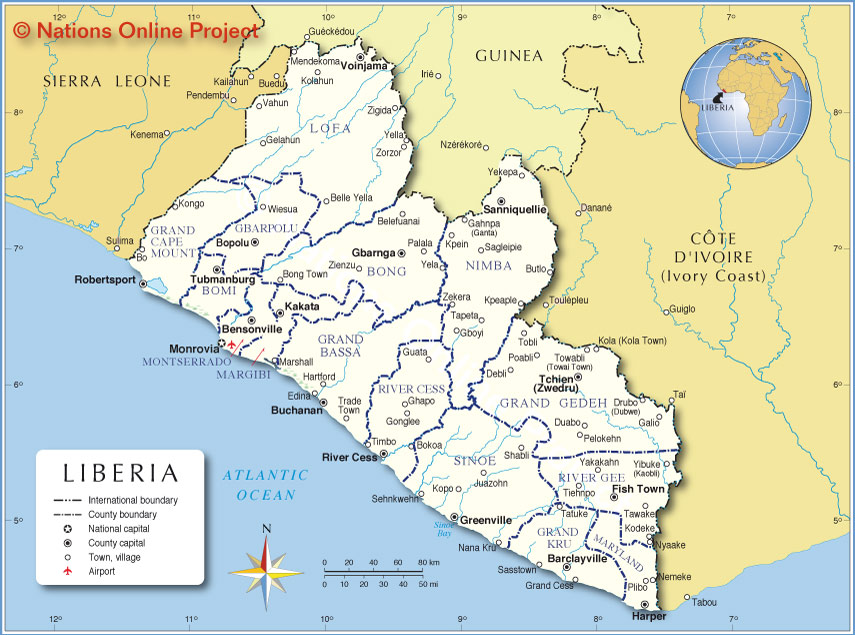
I have written extensively about Liberia’s history of ritual killings, in books, articles, and on my website ‘Liberia: Past and Present of Africa’s Oldest Republic‘, notably in the section ‘Past and Present of Ritual Killings: From Cultural Phenomenon to Political Instrument‘.

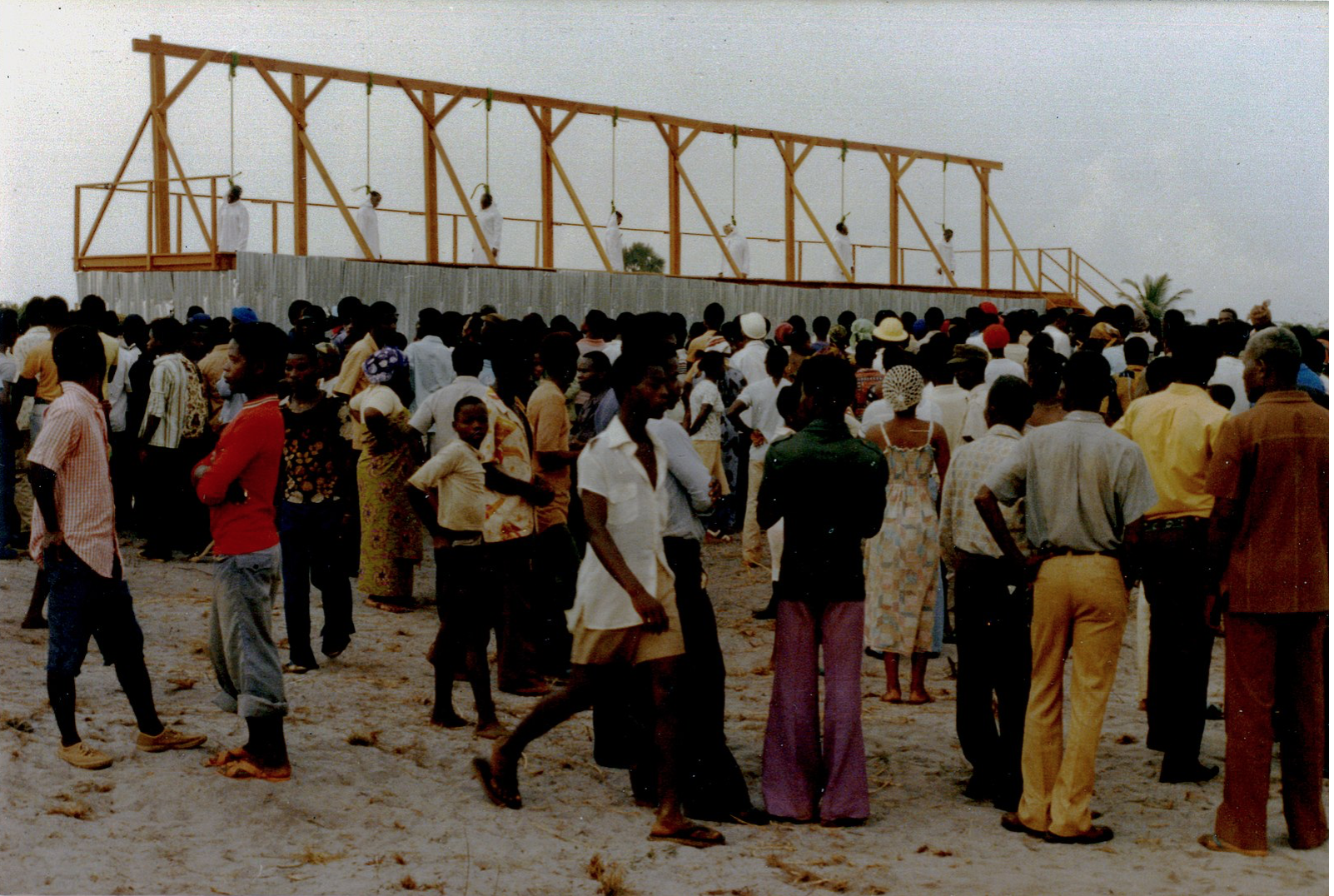
I was confronted with the phenomenon of ritualistic murders in Liberia when living in Monrovia – where I taught at the University of Liberia – and, later, in Harper, capital of Maryland County, in the second half of the 1970s. In Harper I witnessed the public execution of the Harper Seven, in 1979. They were convicted of the ritual murder of a fisherman and popular singer, Moses Tweh, and sentenced to death by hanging. The trial of the Harper Seven turned out to be Liberia’s most notorious ritual killing case.

‘Big shots’ were involved, such as Maryland County’s Superintendent, Daniel Anderson – son of the Chairman of Liberia’s only political party, the True Whig Party – and Allen Yancy, member of the House of Representatives for Maryland County and cousin of former Liberian president William Tubman (1944 – 1971). Reportedly, Allen Yancy had been involved in previous ritual murder cases but he was never convicted, allegedly because of Tubman’s protection.
Ritualistic killings in Liberia have been rampant, and I fear the gruesome practice has far from disappeared – as is demonstrated by the article reproduced below.

The article reproduced below summarizes well Liberia’s recent history of ritualistic murders. What used to be a cultural phenomenon – human sacrifices for the well-being of the clan or tribe – has become a political instrument, used by unscrupulous politicians and businessmen to further their interests.

I will not dwell too long here on these atrocities and outdated but persistent beliefs in supernatural powers. Readers are invited to visit my website for more details.

Last but not least, my publications on ritual murders in Liberia became the prelude to the present website on ritual killings in Africa in general. See the site’s menu, notably the section ‘Why publish this site?‘

Public execution by hanging of the ‘Harper Seven’, including Maryland Superintendent Daniel Anderson and Representative Allen Yancy, at dawn in Harper, Liberia on February 16, 1979. Picture taken by Fred van der Kraaij (copyrights).


Liberia’s elections, ritual killings and cannibalism

Published: August 01, 2011 · 10:52 AM UTC
By: Emily Schmall and Wade Williams

MONROVIA, Liberia — The pregnant woman was found dead in the shallows of Lake Shepherd. The fetus had been removed.

A candidate for Liberia’s Senate and a former county attorney are among those standing trial for the 2009 murder, the latest in a long history of ritual sacrifices performed for political power in Liberia.

In this case in southeastern Maryland County, prosecutors were tipped off by a witch doctor who provided a list of 18 people allegedly connected to the killing, including Fulton Yancy, the former county attorney, and President Ellen Johnson Sirleaf’s Special Envoy and Ambassador-at-Large Dan Morias.

Vials of blood were discovered in Yancy’s home. Nine were charged with murder but were released earlier this month following a Supreme Court ruling.

Liberia will have general elections later this year and the ritual killings tend to flare up during election season, according to Jerome Verdier, former chairman of Liberia’s Truth and Reconciliation Commission (TRC).

”Unfortunately it happens during elections time because people are competing for political power, they don’t know God and they believe that these supernatural powers will come to them once human blood is shed,” Verdier said.

During Liberia’s two-decades-long civil war hundreds were killed for ritual purposes, the TRC discovered during its hearings.

”During our research at the TRC we found out that bloodshedding was very, very common during the conflict. People killed indiscriminately women and children believing that it would give them some power to continue fighting and that they would be protected,” said Verdier.

Liberia’s Maryland County has traditionally been the hub for the country’s ritual murders. The killings have haunted the southeastern county for decades. In recent years, however, ritual killing cases have cropped up across the country.

Verdier said some of those who confessed at the TRC hearing gave graphic accounts of ritual killings they carried out.

“People went as far as eating their opponent’s body — when such person is killed in battle they cook their body to eat, believing that the spirit, the powerful spirit of that person, will come to them and by eating them, the person’s power is completely destroyed, so there can be no reemergence in that person’s family line or their ethnic line.”

‘General Butt Naked’, a notorious warlord in Liberia’s First Civil war (1989 – 1997) testified and confessed before the Truth and Reconciliation Commission that he committed numerous ritualistic murders and ate body parts of his victims.

A former warlord who calls himself General Butt Naked and who fought against former Liberian dictator Charles Taylor, confessed in 2008 to taking part in human sacrifices that included the killing of a child and “plucking out the heart, which was divided into pieces for us to eat.”

In 2005, the leader of Liberia’s transitional government, Gyude Bryant, pledged to hang anyone found guilt of ritual killing.

Dispatched to Maryland County by President Johnson Sirleaf to calm residents’ fears earlier this year, Justice Minister Christiana Tah acknowledged that “there are still lots of unresolved cases of this nature,” according to a report in the daily New Democrat.

In a case from the 1970s known as the Maryland Murders, seven people, including Fulton Yancy’s older brother Allen Yancy, a member of the House of Representatives, were hanged for killing a fisherman (see picture above). The following year Defense Minister Gray D. Allison was convicted of killing a police officer whose body was discovered on the Bong Mines railroad, apparently used in a ritual sacrifice. The government at the time displayed blood drained in gallons believed to be that of the dead man.

Dan Morias, one of those accused of the 2009 killing of a pregnant woman, is planning to run for senator in the upcoming legislative elections in October. He has maintained that the charges against him are politically motivated. He must be cleared of the charges to be eligible to run for office.

Morias is listed in the TRC report for alleged abuses committed while he served as Minister of Internal Affairs for the Charles Taylor regime. When reached by GlobalPost, Morias said he could not comment on the case as it would be “prejudicial,” but insisted that the evidence against him — namely the testimony of a witch doctor — was “weak.”

Earlier this year, President Johnson Sirleaf warned Maryland County citizens against seeking retribution for the killings with a traditional practice called “sassywood” or “trial by ordeal.”

The government insists that trial by ordeal is illegal and Johnson Sirleaf banned the practice in April 2007. Since then traditional leaders have been pleading with the government to allow them to practice the act which they believe is the only way justice can be served in cases like these.

“Sassywood” is the insertion of an accused person’s extremity into hot oil or the placing of a heated metal on a suspect’s body. If the suspect is burned then it is concluded that he or she is guilty but if there is no burn then the suspect is deemed innocent and set free. Those found guilty are killed.

The police are working to stamp out both the ritual killings and the “sassywood” practices, said George Bardue, spokesman for the Liberia National Police: “The police are doing everything possible to make sure that these things do not happen.”

Emily Schmall is a multimedia journalist now based in Monrovia, Liberia, where she serves as country director for New Narratives, a journalism mentorship project for women. Wade Williams is a New Narratives fellow and an editor at FrontPage Africa, Liberia’s most widely circulated newspaper.

Source: Liberia’s elections, ritual killings and cannibalism
GlobalPost

(Cont’d) More on Ondo ‘money ritual’ murder case

MAN WHO KILLED HIS GIRLFRIEND BREAKS DOWN BEFORE BEING REMANDED IN PRISON

Khadijat Adenike Oluboyo (25) was killed in a bid for voodoo money.

Published: July 18, 2018
By Young

This is the moment the suspected Yahoo boy, Adeyemi Alao, who allegedly killed his girlfriend for money ritual – broke down in court before he was remanded in prison. The suspect was arraigned before Akure Magistrates’ Court in Ondo, state capital on Monday.

Adeyemi was accused of killing Khadijat, the daughter  a former deputy governor of Ondo State, Alhaji Lasisi Oluboyo.

Khadijat, a 400-level student of the Department of Educational Management, Adekunle Ajasin University, Akungba Akoko, Ondo State, was said to be Adeyemi’s girlfriend.

Adeyemi and two other accomplices, who were said to be at large, allegedly killed Khadijat in Adeyemi’s room.

After killing the ex-deputy governor’s daughter, Adeyemi allegedly buried the corpse in a shallow grave inside his room in the Aratusin area of Akure before he was arrested seven days later.

The accused was arraigned on  Monday on two counts of conspiracy and murder.

During the court proceedings, the  police prosecutor, Sergeant Mary Adebayo, made an application for the remand of the accused in custody pending legal advice from the Department of Public Prosecutions.

The defence counsel, Taiwo Gbadebo, did not object to the application of the prosecutor.

The magistrate, Mrs Victoria Bob-Manuel, ordered that Adeyemi be remanded in custody pending when the legal advice would come from the DPP.

She adjourned the case till August 23, 2018.

Alao Adeyemi is accused of killing Khadijat, the daughter a former deputy governor of Ondo State, Alhaji Lasisi Oluboyo.

The suspect was arraigned before Akure Magistrates’ Court in Ondo, state capital on Monday.

Adeyemi Alao

Source: Man Who Killed His Girlfriend Breaks Down Before Being Remanded In Prison
Information Nigeria, July 18, 2018

Also read:

Killer of former Ondo deputy governor daughter remand in prison

Published: July 16 or 17, 2018
By Hakeem Gbadamosi, Akure

The late Khadijat Oluboyo (25) and her murderer, her fiancee, Seidu Sakiru Adeyemi (27) who confessed he killed her for ritual purposes.

A Magistrate Court, sitting in Oke Eda, Akure, Ondo State capital, on Monday ordered the remand of Seidu Sakiru Adeyemi, the suspected killer of the daughter of the former deputy governor, Khadijat Oluboyo, in prison.

The 27-year-old suspect was dragged and arraigned before the Magistrate Court, was charged on a two-count charge of conspiracy and murder, an offence contrary to Section 316 of the Criminal Laws of Ondo State of 2006.

In the charge sheet, Adeyemi was alleged to have killed 25-year-old Khadijat, who was his girlfriend and buried her in his room.

The charge read “That you, Seidu Sakiru Adeyemi and others at large on the 27th day of July 2018, at about 7:30 pm at Aratusi street, Oke Aro, Akure, did conspire with others to a felony to wit murder contrary to section 324, Ondo State law of 2006.

“That you did kill one Khadijat Oluboyo, 25, by strangulating her to death and bury her inside your room contrary to Section 316, Ondo State law of 2006”.

The Police Prosecutor, Mary Adebayo, who briefed the court, said the accused killed Khadijat and tried to conceal the killing by burying the body of the victim inside his room.

The police prosecutor told the court that since it was a murder case the court had no jurisdiction and pleaded for his remand in prison

Adebayo prayed the court for an application to remand the accused pending the advice from the Department of Public Prosecution.

Counsel to the suspect, Taiwo Gbadebo, however, did not oppose the application.

In her ruling, Magistrate Victoria Bob Manuel ordered the remand of the suspect in Olokuta till the 23rd August 2018, pending the advice from the Director of Public Prosecution.

She also directed the police to hand over the original copies of his case file to the Ministry of Justice.

Adeyemi was arrested by police in Ondo State over the killing of her girlfriend, Khadijat for ritual purpose.

He was said to have dug a grave in his room where he buried her and covered it with her mattress for six days before he was arrested.

Khadijat, a final year Student of the State-owned Adekunle Ajasin University, Akungba-Akoko, (AAUA)’s decomposing body was found in Adeyemi’s room.

Source: Killer of former Ondo deputy governor daughter remand in prison
Nigerian Tribune, July 16 or 17, 2018

Also read:

The tragic story of Khadijat

Published: July 16 or 17, 2018
Editorial, Nigerian Tribune

The late Khadijat Oluboyo, a final year student of the Adekunle Ajasin University, Akungba-Akoko (AAUA), Ondo State, Nigeria.

THERE is a sense in which the recent murder of Miss Khadijat Adenike Oluboyo, the daughter of the immediate past deputy governor of Ondo State, Alhaji Lasisi Oluboyo, allegedly at the hands of her lover of eight years, represents a sad commentary on the abyss into which national values have sunk in Nigeria. Not only does the narrative of Khadijat’s killing drip with the increasingly loose, lewd and base direction of youth life, it also poignantly shows how futile the attempt to affect their cognition and thought processes through education has been. A university graduate, Khadihat’s lover had, without qualms, told the police how he was recruited into the gang of dupes called yahoo boys, thus confirming the claim of the bereaved father that his daughter was murdered for purposes of money-making rituals.

Khadijat was killed in the bid for voodoo money which social commentators affirm is the latest fad in town among “the big boys.” The big boys are the noveaux riches who have little or no means of livelihood but cultivate extravagant lifestyles through fraud and various wild schemes and scams. Max Weber, the famous 19th century social scientist, once posited that one of the “functions of science was to disenchant the universe,” by which he meant the suspension of myths and superstitions. But in Nigeria, young people are returning to the medieval age and resurrecting myths and superstitions in their quest for the means with which to cope with modern-day challenges.

Their peers in the West, people like Mark Zuckerberg of Facebook, have created immense wealth for themselves using their ingenuity and intellect. They created universal platforms for social communication through digital technology. Sadly, however, Nigerian youths would prefer the bizarre method of gory and gruesome murder to, in their wild imagination, attract wealth through voodoo. Often, people are propelled into action by their knowledge and persuasions and it is tragic that the country’s youths seem to have been persuaded, ensnared and obviously propelled into these bizarre actions by atavism. They must have watched their fathers in politics and the bureaucracy visiting shrines and thought it fit and proper to replicate such means for immediate social prominence. This is certainly a development for which a disoriented society like Nigeria must take the rap.

The youths pick their models from their immediate environment in politics and business and, to be frank, there aren’t many in these sectors to provide any positive inspiration. Many of these youths are more disoriented than the society that has produced them. They want immediate gratification in their quest for sudden wealth. The gap of inequality between the rich and the poor has also increased the desperation among the people. They seek immediate wealth with scant regard for the legitimacy or otherwise of the means for doing so. There is also the influence of peer groups on these youths. Truth be told, the older generation is not quite exemplary in form and content, and is offering no help to the incoming generations.

It is unfortunate and regrettable that these youths are already too immersed in living on the fast lane to have any sense of moral rectitude and retrace their steps. To a great extent, parents and guardians have been negligent in giving them a positive direction during their socialisation processes. For the youths, for whom experts insist that examples are better than precepts, it is little wonder that they have eventually turned up the way they have. The Nigerian society, in particular government at all levels, must urgently contemplate redeeming these disoriented youths for the sake of the country’s future.

The National Orientation Agency (NOA) and other information agencies have a great responsibility to offer a moral compass through the available platforms to influence the thinking of the youths and hopefully their eventual actions. It is dangerous to have the young generation hooked to an obviously redundant belief system in a world gravitating towards science, technology and artificial intelligence. In that world, they will be savages long overdue for extinction. We commiserate with the Oluboyos and wish them the fortitude to bear the irreparable loss. Needless to say, the killer must get his just deserts.

Source: The tragic story of Khadijat
Nigerian Tribune, July 16 or 17, 2018

Ondo State – Nigeria

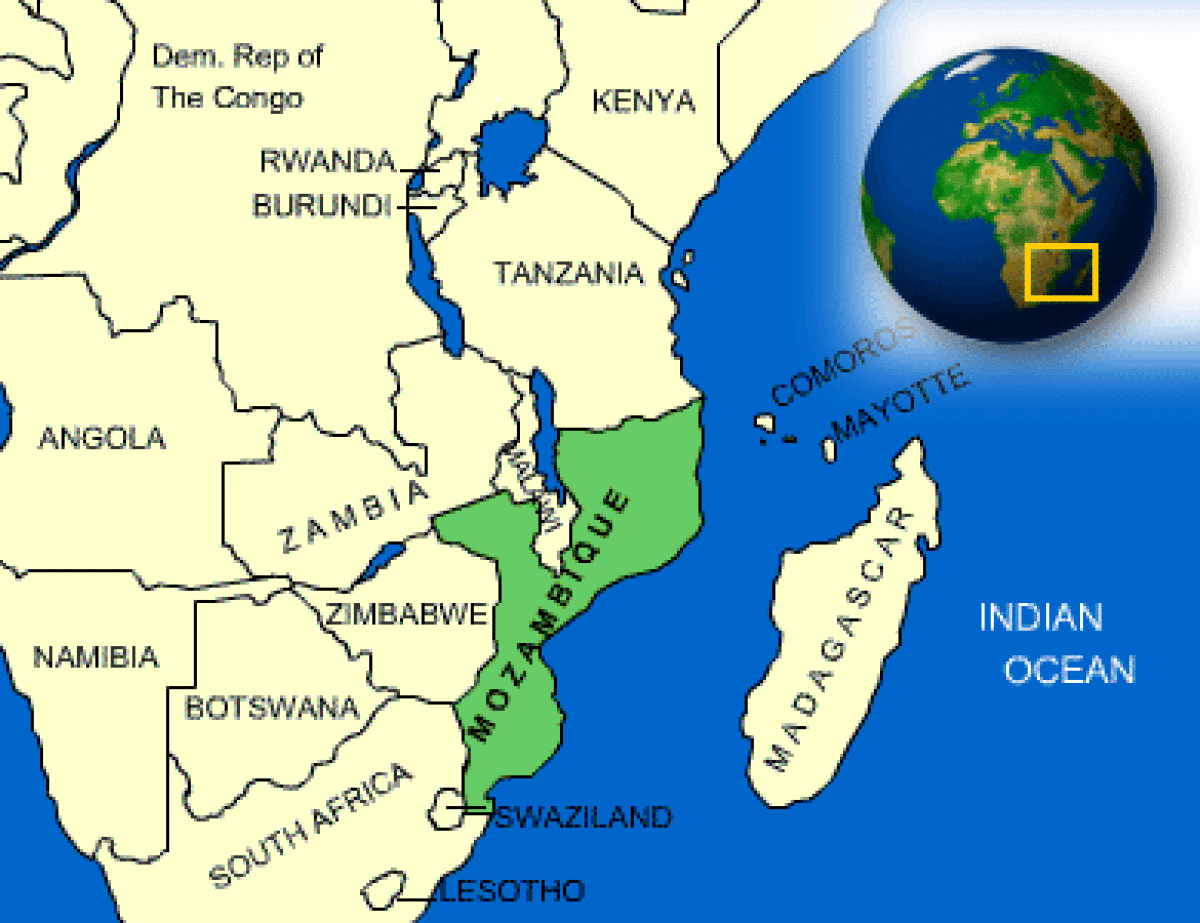
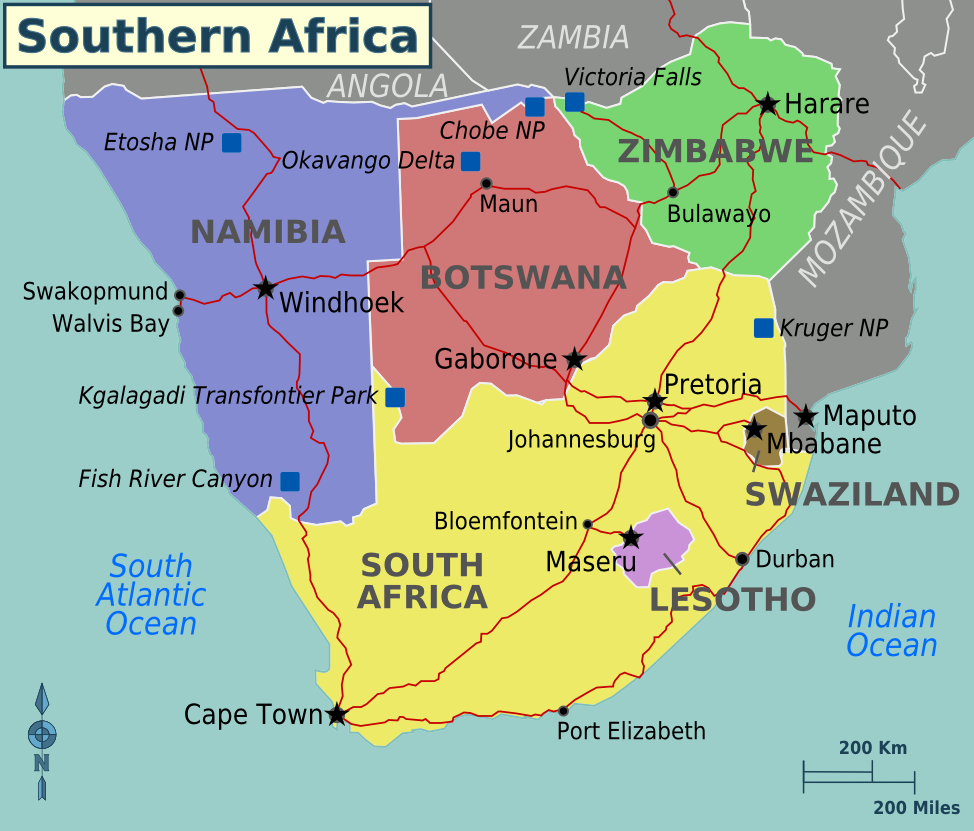
Confronting Superstition in Postcolonial Mozambique

The Nigerian human rights advocate and humanist Leo Igwe wrote a very interesting article on the background of superstition in Mozambique. He explains the belief in superstition and the fact that Mozambicans resort to occult practices:  “It’s all related (if not caused) by the lack of effective state interventions and leadership.” As he argues, “(…) in the absence of modernity, people in Mozambique and elsewhere in the region invoke magic and superstition to help process the existential challenges and uncertainties that they face in their everyday life. (…)“

I have a very high opinion of Leo Igwe. For ten years or more I’ve been reading his thoughts, experiences and views. He’s a well-known human rights activist. I would wish there are many many more Leo Igwe’s! Therefore his opinions matter.

Leo Igwe critically examines the modernity arguments, referring to scholars such as Peter Geschiere, Jean and John Comaroff. But how right are they? One could easily reverse the question. Is state intervention the critical factor? What if it did not exist? To what extent it would have been decisive?

In my opinion the real explanation for the phenomenon of superstition lies in the fact that the people concerned have not been educated in the proper sense.

Education, education and once more education! I cannot emphasize enough the importance of modern education. It’s the only long term solution for the problem of superstition. In the short term, the State should do its work: enforce the respect for the rule of law and hold those who are suspected of human rights violations and ritualistic murders accountable for their heinous crimes!

More on Leo Igwe later.

Webmaster FVDK

Published on February 26, 2018
By Leo Igwe, Conatus News

In Mozambique, murders of albinos, bald men, and other superstition-fueled crimes are common. Where do these ritual killings come from? 

Recently, there have been reported incidents of harmful acts that are connected with traditional beliefs and practices across the region. For instance, some people attacked traders and fishermen for ‘tying the rain’. They alleged that the victims controlled rainfall in the area to benefit their businesses. The practice of rainmaking and unmaking in found in other African societies. Fortunately, the police intervened and warned the perpetrators against making such false accusations.

In another instance, ritualists killed five bald men in the district of Milange because their head supposedly contained gold. It is not clear how and when Mozambicans started associating bald heads with gold or magical wealth. Similar superstitious narratives have led to violence in other African cultures. For example, in Nigeria, those who believe that the hump contains some ‘precious mineral’ attack people with a hunchback.

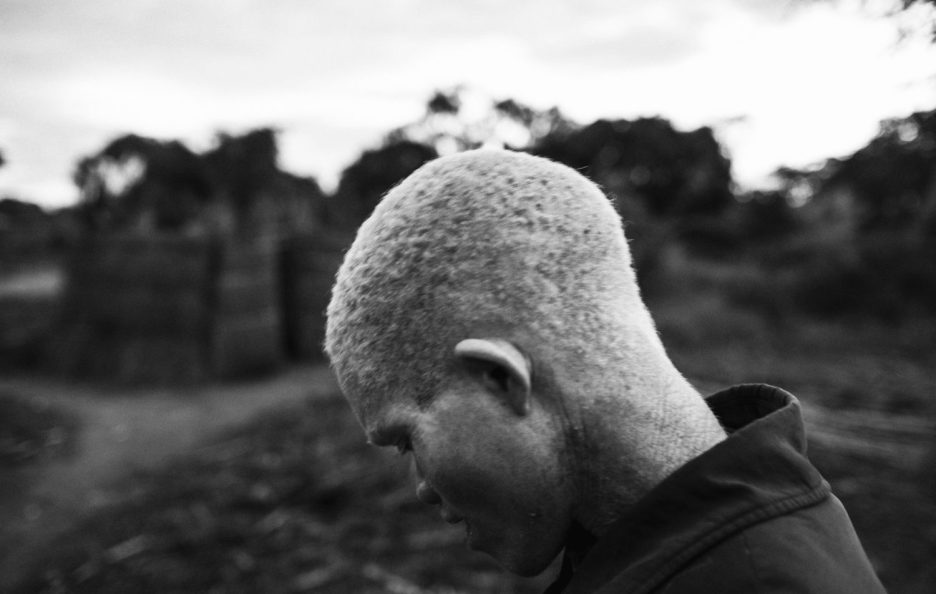
Mozambique, however, has been particularly susceptible to ritual murders in recent years. People living with albinism (PLA) have been hunted down and killed in Mozambique for their body parts. The body parts of PLA are used to prepare magical substances that ostensibly bring wealth and good fortune. In September 2017, ritualists killed and removed the brain of a 17-year-old boy.

People Living with Albinism (PLA)

Mozambicans who suffer ailments or death impute witchcraft, and those who are accused of witchcraft are frequently attacked or killed. In 2011, at least 20 people were murdered for alleged involvement in witchcraft in Mozambique. Some of those arrested for attacking or lynching alleged witches were even schoolteachers. It has thereforebecome pertinent to explore how these manifestations of superstition and magical beliefs are related to the idea of modernity or the postcolonial context. Why has the spread of modernization not resulted in the disappearance of superstitious beliefs and practices in contemporary Mozambique?

A Reaction to modernity?

Some scholars such as Peter Geschiere, Jean and John Comaroff have designated the manifestations of occult beliefs in contemporary Africa as part of the dividends of Africa’s encounter with modernity. They have argued that modern changes have fractured Africa, and disrupted the lives of people within Africa. Ritual beliefs, and superstition-based practices, argue Geschiere and Comaroff, are ways that Africans make sense of these changes.

However, the modernity argument needs to be critically re-examined. First, how is accusing traders and farmers of holding the rain or killing PLA a way of making sense of modern changes? Does modernisation propel people to make witchcraft accusations and lynch alleged witches? How is the crisis wrought by modernisation (whatever that means) connected with magical imputations and ritualistic beliefs? Where is the logic in the argument that modernity is the raison d’etre of the growing visibility of occult beliefs in the region? Are modern phenomena not supposed to be oppositional to magic and superstition?

There is no doubt that modernisation has brought about significant change in African societies. The introduction of state bureaucracy, the school system, science and technology, neoliberal economics and the media has led to social, economic and political adjustments in postcolonial Africa. But occult beliefs and practices predate modernity in Africa. Africans have been using narratives of magic to make sense of their lives and social organisations before the introduction of state bureaucracy and other modern institutions. Modernisation has not led to the total disappearance of magical beliefs. So, is it justified to postulate that the manifestation of superstitions in postcolonial Africa is because of modernity?

In contemporary Africa, people make active use of both the magical and modern. Modernisation has provided Africans with an additional facility and resource in making sense of experiences. Where African people cannot use or access the modern, the magical is deployed. If the modern does not suffice, superstition is relied upon to supplement. People try to explain their misfortune using science and logic or by applying material and naturalistic resources. But where the material and natural are unhelpful and unsatisfactory, where they do not provide the answers and solutions, the supernatural and spiritual is used.

Superstition and magic are waxing strong and manifesting forcefully in places like Mozambique despite the modernisation process because there is some purpose that these ritualistic beliefs and practices are serving which modernity has not addressed.

State Failures

In Mozambique, the state has failed in helping the citizens to meaningfully manage the shortage of rain and other existential uncertainties and anxieties. The required education or awareness is lacking. The state has not provided evidence-based information or response to the problem of limited rainfall especially to people in rural communities. According to a local source, elderly persons in the country languish in poverty: “They do not have access to basic health services, transportation and housing. Most elderly persons do not enjoy psychological and material well-being. They live in deplorable conditions, abandoned by relatives, accused of witchcraft and with little or no income”.

The state of Mozambique has been unable to put in place effective poverty alleviation programs for the citizens. There is no functioning social support system to cater for the poor, and the unemployed. So people try to make sense of their unfortunate situations using whatever they can lay their hands on whether they are material, immaterial or mixed. No incentives are extended to farmers and fishermen who are struggling to earn a living. They bear the brunt of poor harvest without state support or subsidy. Traders and others managing various businesses are left to cope with the harsh economic realities.

Conclusion

Due to the lack of effective state interventions and leadership in these critical areas, Africans resort to occult practices to make sense of their lives and experiences. In the absence of modernity, people in Mozambique and elsewhere in the region invoke magic and superstition to help process the existential challenges and uncertainties that they face in their everyday life.

Source: Conatus News, February 26, 2017

Also: The Moravi Post, February 27, 2018

Mozambique police warn bald men after ritual attack

Superstition, ignorance, lack of education, they’re all part of the explanation for the bizarre ritual killings that shook Mozambique last year. Bald men were targeted!
(webmaster FVDK)

Published on June 7, 2017
Published by BBC

Superstition: some people believe that the heads of bald men contain gold.

Bald men in Mozambique could be targets of ritual attacks, police have warned, after the recent killing of five men for their body parts.

Two suspects have been arrested in the central district of Milange, where the killings occurred.

“The belief is that the head of a bald man contains gold,” said Afonso Dias, a police commander in Mozambique’s central Zambezia province.

Albino people have also been killed in the region for ritual purposes.

Three men have been killed in the past week alone.

The BBC’s Jose Tembe in the capital, Maputo, says police think the notion of a bald head containing gold is a ruse by witchdoctors to get clients to take a person’s head to them.

“Their motive comes from superstition and culture – the local community thinks bald individuals are rich,” Commander Dias is reported as having told a press conference in Maputo.

The suspects are two young Mozambicans aged around 20, the AFP news agency reports.

A regional security spokesman, Miguel Caetano, told AFP that one of the victims had his head cut off and his organs removed.

The organs were to be used in rituals to advance the wealth of clients in Tanzania and Malawi, Mr Caetano said, citing the suspects.

There has been a spate of killings of people with albinism in East Africa in recent years, with their body parts used to make charms and potions by witchdoctors.

Source: BBC, June 7, 2017

Brain harvested from murdered Mozambique albino boy

Published on September 16, 2017
By News24

The 17-year old albino boy was murdered on Wednesday in the Benga area of Tete province, Mozambique (picture not related to case).

Maputo – A 17-year-old albino boy was killed and his brain removed for what is believed to be use in witchcraft in Mozambique, local news reports said.

Albinos in Mozambique are often hunted for their body parts, which are used as charms and magical potions in the belief that they bring wealth and good luck.

“The criminals took the bones out of the arms and legs, the hair and broke the head to remove the brain,” a local official told Mozambican news agency AIM.

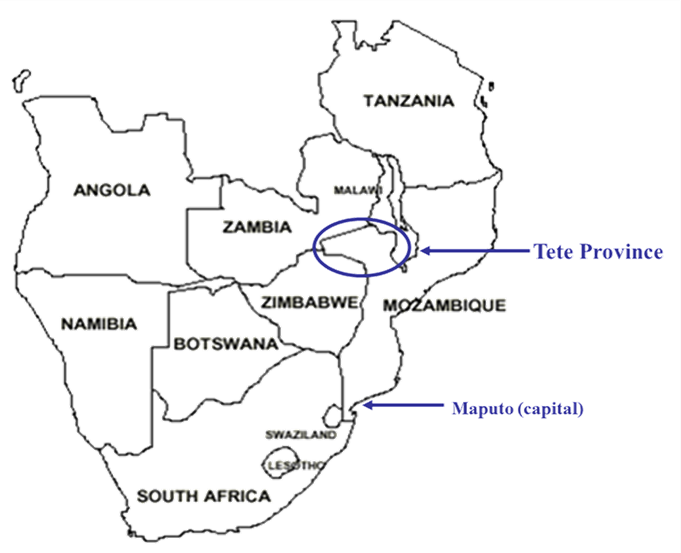
The body was found after the boy was killed on Wednesday in the Benga area of Tete province, AIM said.

Lurdes Ferreira, a police spokesman in the Tete province, said police are investigating the teenager’s kidnap and murder. “We have launched a search and arrest operation for those responsible for the macabre crime,” Ferreira said.

The murder comes four months after a failed attempt by two parents to sell their albino child in Moatize.

Tete, which borders Malawi, is believed to have a large market for albino organ trafficking.

There have been more than 100 attacks against albinos in Mozambique since 2014, according to the UN, with hunters persecuting them for everything from their toes to their faeces.

Source: News24, September 16, 2017

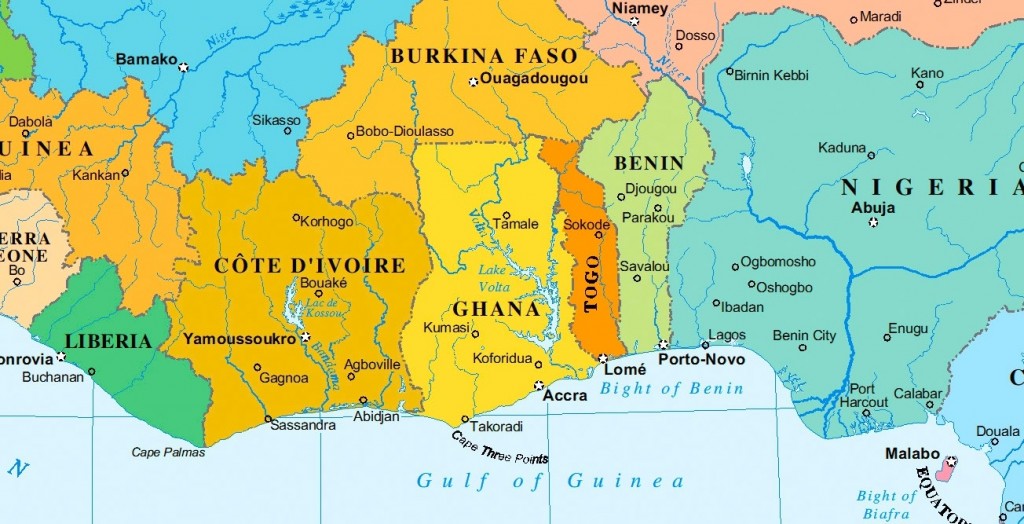
AfriKids: Ghana’s haven for ‘spirit’ children marked for murder

Further to my previous post – on Seth Kwame Boateng’s breathtaking account of a journey to an orphanage in Sirigu, in Ghana’s Upper East Region, in 2011, I find it heart-warming to read about the valuable work which is being realized by the non-governmental organization AfriKids. In Northern Ghana, AfriKids runs a centre in the village of Sirigu and another in nearby Bongo district. Though I am not sure, it looks as if Afrikid’s Sirigu center for disabled children and pregnant women is the same as the Mother of Mercy Babies Home visited by Seth Kwame Boateng in 2011. Joseph Asakibeem is AfriKids project manager in the Upper East Region. He and his team are doing a great job. Read about their work below (‘AfriKids: Ghana’s haven for ‘spirit’ children marked for murder’).

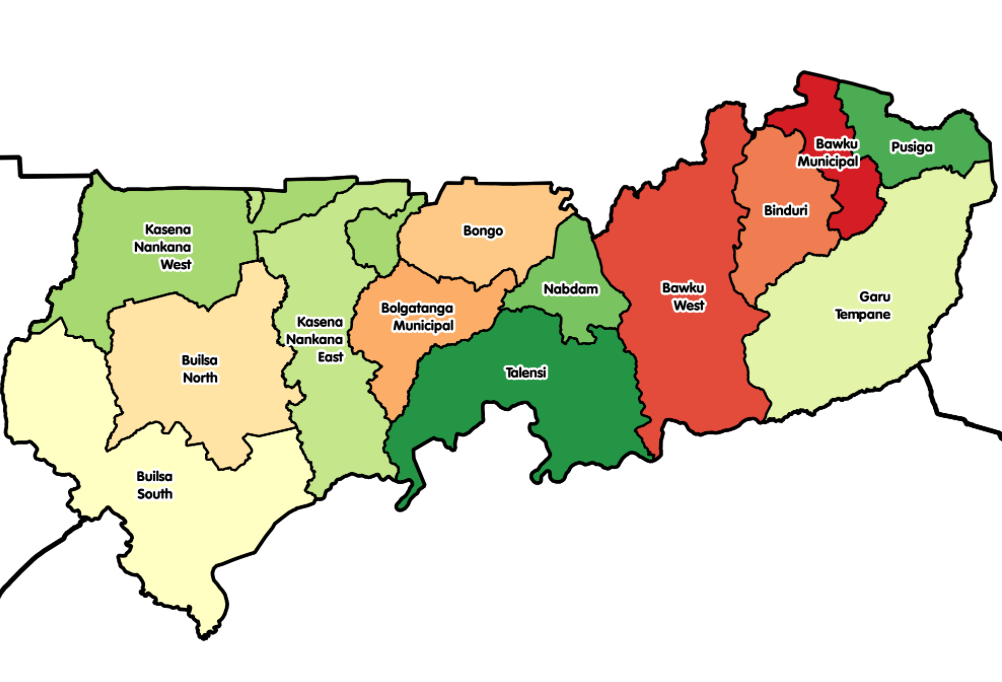
Joseph Asakibeem hails from the Kassena Nankana district (in the Upper East Region) where the superstition in the power of spirit children is most widespread. AfriKids and OrphanAidAfrica have been fighting against infanticide for many years.

In 2013 the two non-governmental organizations were joined by Anas Aremeyaw Anas, an investigative journalist and filmmaker. Anas’ film Spirit Child ‘promised’ to become a U-turn in the fight against infanticide. In the aftermath of his investigation, local leaders in the Kassena Nankana region banned the ritual killing of ‘spirit children‘. However…., a recent follow-up to Anas’ 2013 investigative report – see my post dated June 4, 2018 – shows that the practice of infanticide still exists in the region. (webmaster FVDK)

AfriKids: Ghana’s haven for ‘spirit’ children marked for murder

Published on February 27, 2018, at 11:50 am
By MIldred Europa Taylor

Ghana, Upper East region – This Catholic Sister has dedicated her life to protecting babies and children and plays a precious role in the fight against infanticide in the region — Afrikids

The act of killing babies who were born with disabilities was until recently widely practised in some parts of northern Ghana. These children were labelled as “spirit children” with the belief that they brought bad luck. They were killed to “save the lives of their parents and family”.

These children were basically taken to medicine men who would give them a poisonous potion and lock them in a room. The belief is that if you die from the potion, it means you are indeed a spirit. The children are then buried in an isolated place far away from the village.

This traditional belief was highly practised in some parts of the Kassena-Nankana West District in the Upper East region but thanks to AfriKids, a child rights Non-governmental organization (NGO), the practice has declined even though it is believed to be still ongoing in some parts of northern Ghana. The NGO has so far been able to save a number of children perceived to be “spirit children” in some parts of the Upper East Region.

Joseph Asakibeem is the project manager at AfriKids. The 41-year-old was recently awarded the Bond Humanitarian Award 2018 for his work in saving many disabled children who would have been killed due to the traditional practice.

Growing up in the Kassena Nanakana district where the belief in spirit children was deeply entrenched, Asakibeem told Reuters that he and his team at AfriKids started talking to chiefs, parents, opinion leaders and medicine men about the need to change the perception they have about children born with disabilities.

Asakibeem explained to them that there were medical reasons for these disabilities – poor nutrition and health care during pregnancy, and the inability to get access to medical help during labour resulting in complications.

AfriKids has a centre in the village, Sirigu, and another in nearby Bongo district, where they provide help for disabled children and antenatal care for pregnant women. Mothers, through Afrikids, have also been able to acquire small loans to grow their businesses.

The main challenge for the child rights NGO has been trying to change the mindset of concoction men and other community members about “spirit children”, but interestingly, many of them have now joined the fight against the practice.

For 10 years, no child has been killed for being deformed in Kassena Nankana, but Asakibeem said the act is still being practised in other areas. Babies whose mothers die in childbirth, or who are born after the family has been hit with an unfortunate incident, have the risk of being labelled spirit children.

As AfriKids continues to expand its activities to the whole of northern Ghana, Asakibeem is hopeful that the practice would be effectively abolished in 15 years.

In 2013, Ghanaian investigative journalist Anas Aremeyaw Anas published “Spirit Child”, an undercover investigation film on the ritual killings of deformed children. Two concoction men were charged with attempted murder and another three men charged with conspiracy to commit murder. 

Source: Face2FaceAfrica, February 27, 2018

Ghana – Upper East Region

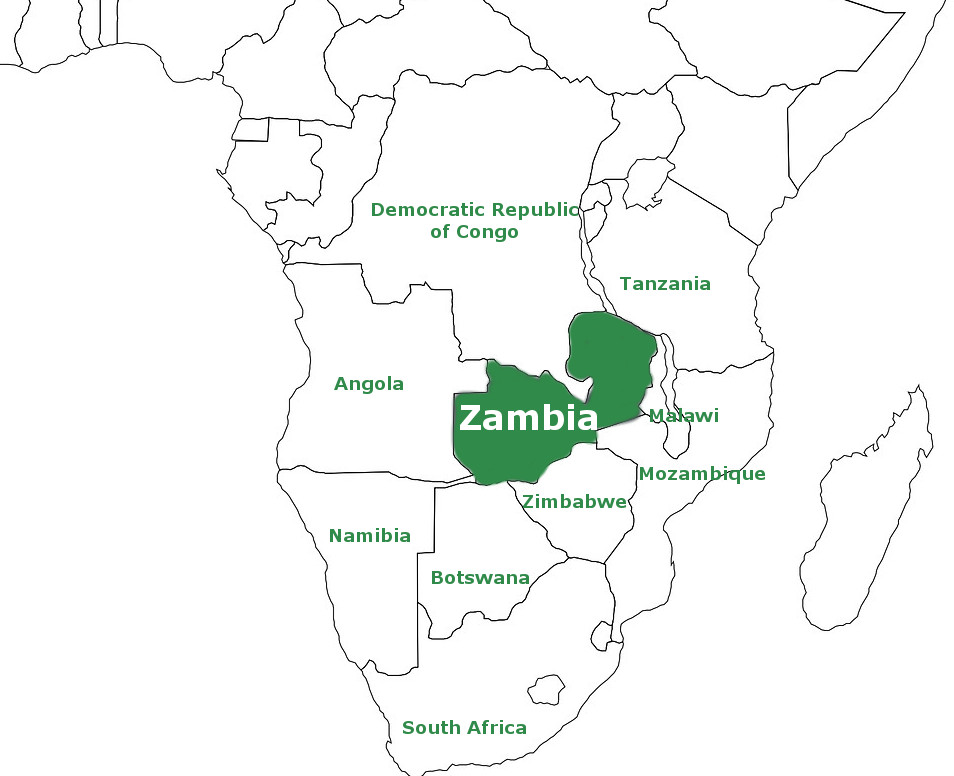
Zambia: Cannibals in Matero? Suspected ritual killer arrested in Lusaka

Unfortunately, Zambia is no exception. Ritual killing of human beings – children, adults – takes place in Zambia too. I’ve been following events in Zambia since quite some time. Many suspected cases of ritual killings as well as real cases have been reported over the years. Without a shadow of a doubt the tip of the iceberg – as in many other countries. Many ritual murders are not discovered, or not reported as such. One of the cases in my archives dates back to 1996. An excerpt: “(…) Early this year, another spate of mob justice hit the country, especially Lusaka and the tourist capital Livingstone, after children started disappearing. Some of the children were later found, horribly mutilated. These murders were believed to be ritual killings. Angry mobs again took their justice, beating to death some suspects who the police say were innocent. This ended only when the police arrested and had several men convicted.(…)”

More in the near future. Read here (below) one of the more recent cases. Matero lies a few miles west of Lusaka, Zambia’s capital.
Readers are warned, the details are gruesome.

Ritual killings, superstition, mob justice, absence of rule of law, ignorance, they’re all interrelated. Let’s hope that the Zambian government continues on the good road taken, as shown by the appearance in Parliament and the frank statements of Home Affairs Minister Stephen Kampyongo.
(webmaster FVDK)

Home Affairs Minister Stephen Kampyongo: “Between October 21, last year, and February 24, this year, seven suspected ritual killings were reported to Police (…)”

CANNIBALS IN MATERO?…POLICE RECOVER COOKED HUMAN HEART, LIVER AFTER ARRESTING A SUSPECTED RITUAL KILLER IN LUSAKA

Published on March 2, 2018
By CHILA NAMAIKO and JANE MWANSA
Times of Zambia

A COOKED human heart and liver have been recovered by police in Lusaka after arresting a suspected mastermind in the spate of suspected ritualistic killings of seven people in Matero, Parliament heard yesterday.

Home Affairs Minister Stephen Kampyongo said some of the cooked body parts were eaten by the suspect, who also shared with his unsuspecting neighbours.
Mr Kampyongo informed the House that the suspect also led the officers to the recovery of ears and several private parts, which had now been submitted to the forensic laboratory for examination. Updating the House in a ministerial statement on recent suspected ritual killings, he said all the victims of the murders were found with their chests ripped open and internal parts missing.
He said the security situation in Matero was generally stable until October, 21, last year, when the first suspected ritual killing was reported.
Between that date and February 24, this year, seven suspected ritual killings were reported to Police, with the victims in all the incidences had been males aged between 25 and 40 years. “By 24th February 2018, the Zambia Police Service investigation unit had with the help of the suspect recovered suspected cooked human heart and liver, “he said.

Mr Kampyongo said police visited and processed the crime scene, and preliminary findings suggested that the people behind the gruesome murders used the same method of killing.
For instance, at every crime scene, a concrete block was found. The officers believe the same block was one of the weapons used.
“The ripping open of the chest, cutting off of the ears and the private parts also appear to have been conducted in a similar manner. The preliminary findings suggest that these murders have been carried out by the same group,” he said.
Mr Kampyongo warned that false beliefs of human body parts helping one to accumulate wealth had no place in Zambia, and the law would catch up with the perpetrators.

To bring the perpetrators of such barbaric crimes, the House heard that police had instituted investigations, which had so far resulted in the arrest of one suspect.
He said the suspect, believed to be the master-mind, was assisting the officers with further investigations and would appear in court soon.
Police had taken a number of measures to enhance security in Matero such as foot patrol and motorised patrols, increased presence in high-density townships, and sensitisation to members of the community on personal security. He assured the public of police protection.

Meanwhile, residents of Kitwe woke up to a rude shock yesterday after a human head was found along the banks of the Kafue River.
When contacted for a comment, Copperbelt Commissioner of Police Charity Katanga said police were waiting for the family of the deceased to come and identify the head. And scores of residents living near the river thronged the scene to have a glimpse of the bizarre finding, which was later picked up by police.

Source: Times of Zambia, March 2, 2018

Ritual killings linked to elections – Swaziland

Unfortunately, also in Swaziland the number of ritual murders increases at election time. I remember a BBC article of June 2, 2003, reporting that King Mswati III had urged Swaziland’s politicians not to engage in ritual killings to boost their chances in the general elections later that year.

Five years later Prime Minister Absalom Themba Dlamini issued a warning to aspiring members of parliament against committing ritual murders to win the vote. When speaking during the Ascension prayer service held at Embangweni Royal Residence on May 4, 2008, the PM said it was very disturbing that, already, there were reported incidents of people disappearing under a cloud of controversy as the elections dates draw closer. He said King Mswati III issued a similar warning.

We’re now in 2018 and apparently nothing has changed. The Swaziland Action Group Against Abuse (SWAGAA) has issued a statement recently, saying it is “(…) deeply alarmed and distressed by recent media reports of abductions and kidnappings resulting in mutilations and killings. Children, both girls and boys, are especially targeted (…). The fact that there are widespread speculations on whether or not these abductions are for ritual purposes linked to the upcoming Parliamentary elections in Eswatini cannot be ignored.”
(webmaster FVDK)

Swaziland Action Group Against Abuse (SWAGAA) is a non-governmental organization which has been working for over 20 years to eradicate Gender-Based Violence (GBV) and Human Trafficking in Swaziland.

‘Ritual murder has long been part of Swazi life.’, as Richard Rooney said.

More in the following article written by Richard Rooney.

Published: Thursday, 31 May 218

BY RICHARD ROONEY Y
SWAZI MEDIA COMMENTARY – INFORMATION AND COMMENTARY ON HUMAN RIGHTS IN SWAZILAND

There are ‘widespread speculations’ across Swaziland that a number of recent abductions resulting in mutilations and killings might be related to the ongoing national election in the kingdom, the Swaziland Action Group Against Abuse (SWAGAA) said.

SWAGAA said, ‘Children, both girls and boys, are especially targeted; however, this does not mean adults cannot be a target in future. For this reason, all people should remain on high alert.’

It said in a statement, ‘The fact that there are widespread speculations on whether or not these abductions are for ritual purposes linked to the upcoming Parliamentary elections in Eswatini [Swaziland] cannot be ignored.

Swaziland has a history of abductions and ritual killings in the run-up to national elections that are held every five years. Voter registration is currently taking place and ends on 17 June 2018. The date for the actual election has yet to be announced.

In June 2017, during a voter-education workshop, Swaziland’s Elections and Boundaries Commission (EBC) called for an end to ritual killings around voting time. It was concerned about reports of people mysteriously disappearing across the kingdom.

At KaLanga in the Lugongolweni constituency EBC educator Cynthia Dlamini said ritual murder reports increased during election time. The Swazi Observer reported at the time, ‘Dlamini said this was one belief driven by lunacy which tarnishes the image of the country in the process. She said the commission condemns such beliefs and called for intensive investigations against those who would be suspected of ritual killings.’

At the last election in 2013, The Swaziland Epilepsy Association warned that cases of the abduction of epileptic people always increased during elections. Mbuso Mahlalela from the association told the Swazi Observer at the time it was common for the vulnerable to be targeted and abducted. He spoke after a report that a 13-year-old epileptic boy might have been abducted for ritual purposes.

Before the election in 2008 a march by civil society groups to draw attention to ritual killings was banned by the government amid fears that it would bring bad publicity to Swaziland and might embarrass King Mswati III, the kingdom’s absolute monarch, who had spoken out against the practice.

The Times of Swaziland reported at the time the march had been motivated by the mystery disappearances and murders of women. Some of these had been found mutilated fuelling speculating that they were related to rituals.

Some Swazi people believe body parts can be used as ‘muti’ which is used to bring good fortune to candidates at the election and help them to win seats in parliament.

In 2008, it was strongly rumoured in Swaziland that the reason why members of the government wanted to ban discussion on the ritual murders was that some of them had themselves used ‘muti’ to get elected.

In March 2018, a campaign called ‘Don’t kill us, we are human beings too’ was launched to raise awareness about people with albinism, a group at particular risk at election time. The Stukie Motsa Foundation is using social media to dispel the false belief that people with albinism cleanse bad luck and bring fortune to people.

There have been concerns in Swaziland for years that people with albinism have been targeted and murdered. Witchdoctors use the body parts to make spells that they claim bring people good luck.  Sport teams have also been known to use spells to bring them good fortune during matches. Witchdoctors’ services are especially sought after by candidates contesting parliamentary and local elections.

In January 2017, the Director of Public Prosecution’s office in Swaziland told witchdoctors in the kingdom to stop murdering people for body parts. The witchdoctors, also known as tinyanga, were advised to go to the Ministry of Health for body parts, such as bones.

During the national elections in Swaziland in 2013, people with albinism lived in fear that their body parts would be harvested by candidates seeking good luck.

Independent Newspapers in South Africa reported at the time, ‘In the past [people with albinism], who lack the skin pigment melanin, as well as epileptics have been specifically targeted, prompting the police to set up registries.

‘In 2010, the killing and mutilation of [people with albinism], including in one instance the decapitation of two children in Nhlangano, prompted panic.’

In August 2013, Independent Newspapers quoted an academic at the University of Swaziland, who did not want to be named, saying, ‘Ritual killings to achieve elected office are a natural outgrowth of a government based not on rationality or democratic principles but on superstitious beliefs.

‘The Swazi king claims power through an annual Incwala festival where a bull is brutally sacrificed and mysterious rituals occur, and this sets the tone. No one knows how office-holders are appointed in Swaziland. It’s all done in secret, without recourse to merit or any rhyme or reason, so this fuels irrational beliefs.

‘Ritual murder has long been part of Swazi life.’

Source: Ritual killings linked to elections, May 31, 2018

Spirit Child: Ritual Killings in Ghana

Years ago, I drafted an article on infanticide in Benin for the present website on ritual killings in Africa. I never published it, because I hesitated. Thought it wasn’t ready yet. I may publish it one of these days.

This morning I ran into the article below on infanticide in Ghana – and Benin, Burkina Faso, Nigeria – and who knows in which other African countries this age-old practice occurs. The article is a follow-up to a 2013 investigative report of the same journalist and filmmaker, Anas Aremeyaw Anas. He fights a honorable battle against these murders, since we’re talking about the murdering of children.

Infanticide is an age-old horrible practice, but we’re living in the 21st c. and it’s absolutely necessary that governments take action in this respect. People are afraid to speak about infanticide, as Anas Aremeyaw Anas writes, since they fear the consequences of revealing a secret: death.

Witchcraft, the fear of witchcraft, superstition and ritual killings are closely related. Education can end this nexus. And economic development: jobs. It’s a fight against poverty and ignorance.

Moreover, people have the right to live without fear. It’s a human right.
(webmaster FVDK)

Spirit Child: Ritual Killings in Ghana

Published: June 3, 2018
Author: Anas Aremeyaw Anas
Published by Aljazeera

WARNING: both original articles (2018; 2013) include a film with graphic images that may be shocking.
Anas Aremeyaw Anas investigates the ritual killings of Ghanaian children deemed to be possessed by evil spirits.

Every year an unknown number of children – most of them disabled in some way – are murdered in northern Ghana because of the belief that they are in some way possessed by evil spirits set on bringing ill fortune to those around them.

The practice is the consequence of ancient traditions and customs and is shaped by poverty and ignorance in remote and often marginalised communities. No one knows the exact number of these ritual deaths across Ghana, Benin, Burkina Faso and parts of Nigeria, but some believe it could be in the thousands.

For years, NGOs and the Ghanaian authorities have tried advocacy and education in an attempt to eradicate the practice but with only marginal success. Well into the 21st century, Ghana’s so-called spirit children are still being killed because they carry the blame for the misfortunes of everyday life.

In 2013, award-winning Ghanaian investigative reporter Anas Aremeyaw Anas set out to track down and expose some of those responsible for the senseless killings – determined to bring them to justice and stop the practice.

Back then, he wrote: “When I first heard about this I could not believe it was happening in my country in the 21st century … The practice originally emerged as a way for poor families to deal with deformed or disabled children that they cannot look after. These families approach village elders known as concoction men and inform them that they suspect their child to be a so-called spirit child.

The concoction man then takes the father of the child to visit a soothsayer who confirms whether or not the child is truly evil, without ever actually laying eyes on them. Once this confirmation has been received, the concoction man brews a poisonous liquid from local roots and herbs and force-feeds it to the child, almost always resulting in death.

Over time, this practice has become a perceived solution to any problems a family might be having at the time of a child’s birth. By blaming the child for sickness in the family, or the father’s inability to find work or provide money to support his dependants, these communities have found an otherworldly explanation for their problems … But infanticide has always been a crime against humanity.”

Now, five years later, Anas, spoke to REWIND about why he doesn’t want to show his identity, the dangers of undercover journalism in Africa, and what has become of the concoction men that killed those children.

“Most African journalists who do investigations have a series of dangers pointing at them. You just have to be yourself and think about how to survive. I came up with the beads that I wear, so people don’t see my face. I’m sure that some of my colleagues, in Nigeria or Malawi have other ways to protect themselves,” Anas told Al Jazeera.

Talking about the threats facing investigative journalists, he said: “Generally, people definitely want to point guns at you or some will try to kidnap you. And most of these things have happened; getting death threats and legal suits is normal, most of my colleagues in the continent suffer that.”

“There is nothing more frustrating than doing a story on someone and then walking on the same streets with that person. It is even more dangerous and that can easily end the life of any journalist.”

“We don’t make stories so that people can just read them and smile in their bedrooms. We make stories that have impact on the society. For me, it is a good story when the bad guy is named, shamed and put in jail … Many people have gone to jail as a result of my work and I’m proud of it.”

Anas also talked about the concoction men that he met during his Spirit Child investigation.

“A legal process was started but they were too old, so at the time that the process could finish, some of them couldn’t even make it to court. But the key thing that happened in that story is that it told the community that whoever you are, when you attempt to do some of these things, you are going behind bars.”

“For the first time, those witch doctors were arrested and put before court. That sends a strong signal to all witch doctors to be careful, that when you are dealing with the life of a child it’s a completely different matter. And we can’t sit down for these children to be killed in the way they are being killed.”

Source: Al Jazeera, June 3, 2018

Related: Spirit Child
By Anas Aremeyaw Anas
Published: January 10, 2013

Every year an unknown number of children – most of them disabled in some way – are murdered in northern Ghana because of the belief that they are in some way possessed by evil spirits set on bringing ill fortune to those around them.

The practice is the consequence of ancient traditions and customs and is shaped by poverty and ignorance in remote and often marginalised communities. But it is still infanticide and no less horrifying than the killing of children anywhere. For years NGOs and the Ghanaian authorities have tried advocacy and education in an attempt to eradicate the practice but with only marginal success. Well into the 21st century, Ghana’s so-called spirit children are still being killed because they carry the blame for the misfortunes of everyday life.

Award-winning Ghanaian investigative reporter Anas Aremeyaw Anas is determined to do something to stop this senseless slaughter. In this shocking and remarkable film for People & Power he sets out to track down and identify some of those responsible and to bring them to justice.

Thousands of children have been killed in Ghana because the communities they are born into believe they are evil spirits. When I first heard about this I could not believe it was happening in my country in the 21st century.

The practice originally emerged as a way for poor families to deal with deformed or disabled children that they cannot look after. These families approach village elders known as concoction men and inform them that they suspect their child to be a so-called spirit child. The concoction man then takes the father of the child to visit a soothsayer who confirms whether or not the child is truly evil, without ever actually laying eyes on them.

Once this confirmation has been received, the concoction man brews a poisonous liquid from local roots and herbs and force-feeds it to the child, almost always resulting in death.

Over time, this practice has become a perceived solution to any problems a family might be having at the time of a child’s birth. By blaming the child for sickness in the family, or the father’s inability to find work or provide money to support his dependents, these communities have found an otherworldly explanation for their problems.

In this highly patriarchal society it enables heads of family to pass the blame for their struggles onto someone else. And by branding the child a spirit from outside the family, they can disassociate themselves and feel justified in murdering their own offspring, while telling those around them that now all will be well – the evil presence is gone.

But infanticide has always been a crime against humanity. I believe there is plenty of evidence of infanticide in the history of all human societies and its continued and widespread practice makes a mockery of the democratic credentials of the countries, including mine, where this crime still takes place. Many forms of civic engagement and advocacy have been used in a bid to eradicate this practice in Ghana and other West African nations. Sadly though, the limited efficacy of such techniques is illustrated by the fact that today children are still being killed in this way.

Ready to spill blood in the name of tradition

And sometimes a strong focus on understanding and education when dealing with traditional practices can distance us from the reality of a situation; it can place us in an ivory tower where we fail to engage with the true manner in which those involved are behaving. Far from acting like a man fulfilling a sad but necessary duty, the concoction man I hired to kill my fictitious child for the purposes of this film was excited; his eyes pinned wide with zeal as he went about preparing for the task at hand.

He laughed and joked about his previous experience, telling me about how he had recently killed a 12-year-old girl by tricking her into drinking his concoction and boasting about how effective his methods are. Without knowing the context, any casual observer would surely consider his disposition nothing short of murderous.

While I understand that he was misguided – ready to spill innocent blood in the name of tradition – I also strongly believe that, no matter what the circumstances, where children are being murdered the state must step in to punish those responsible in the same way that the citizens of any developed democracy would expect it to.

That is not to say that some understanding cannot be afforded to the concoction men and the communities that continue to practice these rituals. Unlike those with the benefit of technology who can see a badly developed fetus and terminate it before birth, the mothers whose babies are killed in northern Ghana have no such options.

They may find themselves giving birth to a child only to discover that it is not normal: it will never be accepted and will always be a burden on those around it. In the absence of technology or a refuge for mother and child to escape to, the concoction man is the only solution. As a result, the parents perceive him as a saviour; the only one who can deliver them from enduring further hardship. And the concoction men in turn thrive on the standing and power this affords them in the community.

When we think of slavery or the burning of alleged witches, these crimes against humanity were only eradicated when key actors in government decided to take a stand. By declaring these practices as unacceptable and threatening those who continue to perpetrate them with prosecution, governments have brought about the abolition of centuries-old traditions in a relatively short space of time.

Permitting evil to triumph over good

From northern Ghana, where the spirit child story is set, through Burkina Faso, Benin and parts of Nigeria, countless babies are killed based on age-old cultural beliefs. But despite this, we were unable to find any evidence of previous arrests for these crimes.

During the three weeks that I worked on this story, I came across 10 men who were willing to kill a baby for spiritual reasons. They were easy to find. Yet when I asked a senior police officer why no arrests have been made, his response was: “It is a very difficult thing to do. It’s unfortunate, we have no idea why this is happening, who is behind this and why they have not been arrested.”

My intention is not to suggest that one investigation or police arrest can stop this trend. But in many ways, the practice’s continued existence is a result of the impunity enjoyed by those involved. The fact that the police have never acted in any way to prevent these children being killed is surely a strong incentive for the concoction men to continue their business as usual. Invariably, this type of laisser-faire attitude is what permits evil to triumph over good.

Democracy has no value if it is only limited to occasional ceremonies for power holders. It is worthless if the voiceless are crushed and the perpetrators of atrocities are allowed to continue living their life without suffering any consequences. It certainly cannot exist where freedom and justice, selectively applied, mean that children are killed with impunity.