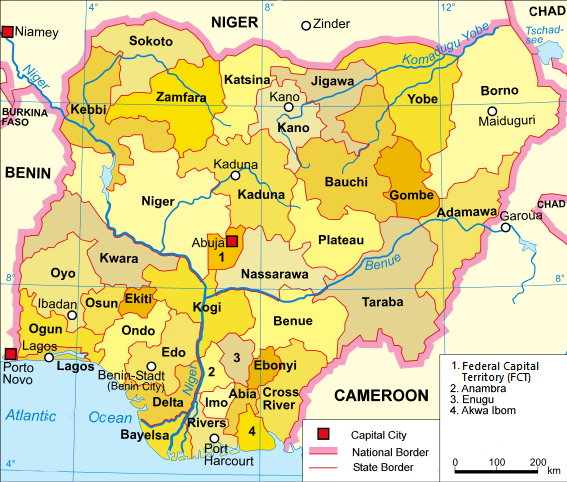
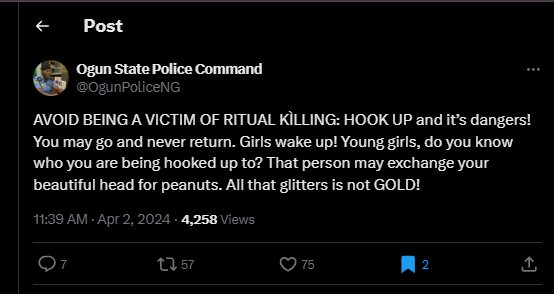
The Emir of Ilorin (Kwara State) and Chairman of the Kwara State Traditional Rulers Council joined religious leaders in condemning the ritual killing of Hafsoh Lawal. By publicly condemning the violent crime, the Emir of Ilorin Alhaji Sulu-Gambari also joined other traditional rulers who recently spoke out against the crime of ritual murder in this West African country.
The religious leaders and traditional rulers who speak out against the crime of ritual murder are to be commended.
Nigeria’s political leaders and legislators, and the police and judicial authorities of Africa’s most populated country should leave no stone unturned to apprehend and prosecute the perpetrators of ritualistic murders while simultaneously campaigning for the eradication of the get-rich-quick mentality which in combination with the belief in tradition and superstition perpetuate the cruel crime of murder for ritualistic motives and gross human rights violations. (webmaster FVDK)
Emir of Ilorin condemns ritual killing of final-year student, says justice must be served
The Emir of Ilorin and Chairman Kwara State Traditional Rulers Council, Mai-Martaba Alhaji (Dr) Ibrahim Sulu-Gambari CFR
The Emir of Ilorin and Chairman Kwara State Traditional Rulers Council, Mai-Martaba Alhaji (Dr) Ibrahim Sulu-Gambari CFR, has expressed sadness over the gruesome killing of Hafsoh Lawal, a final-year student of the Kwara State College of Education, (KWCOE), Ilorin by one Abdulrahman Bello, an acclaimed ‘alfa’.
Alhaji Sulu-Gambari, in a statement issued by his spokesman, Mallam Abdulazeez Arowona, condemned the incident, saying, “It is most unfortunate, alien and regrettable act of wickedness.”
According to him, “It has become pertinent for parents, guardians as well as people in the neighbourhood to remain vigilant to happenings around them, especially ensuring that their children and wards are in the company of people of tested and trusted characters with well-researched family background.
“It is only hardwork that pays; total war should be declared against idleness, laziness and unwarranted loitering around the society by youths in the name of finding means of survival.”
Alhaji Sulu-Gambari also urged clerics in the Ilorin Emirate and beyond to sanitise the system by ensuring that the likes of Abdulrahman Bello are expressly exposed to the law enforcement agencies before wrecking more havoc and damaging the lives of innocent persons.
While commiserating the families of the late Hafsoh Lawal over the unfortunate end to the life of the promising daughter, Alhaji Sulu-Gambari urged the Nigeria Police and the Judiciary to ensure that toral justice is served in this matter while also directing religious leaders, especially Imams in Mosques in Ilorin Emirate and Kwara State at large to ensure that their Friday Khutbah focuses more attention on morality, dignity in labour as well as importance and respect for the souls of fellow human-being irrespective of tribe, religion and status.
The Informant247 reports that an Ilorin-born middle-aged man identified as Abdulrahman Bello has allegedly killed and dismembered the body of Lawal Hafsoh, a final-year student of Kwara State College of Education, Ilorin, for suspected ritual purposes.
According to reports, the deceased, Lawal Hafsoh, had on Monday, 10th of February 2025, declared missing after receiving a call at the naming ceremony.
It was gathered that the lady’s whereabouts were unknown since she received the call.
Meanwhile, on Tuesday, 11th of February 2025, the deceased parents reported the case to the Divisional Police Station at Oja Oba Police Station in Ilorin, the state capital.
However, the police requested her phone number and used it to track her last call, which was traced to an individual living in the Offa garage area of Ilorin,
The suspect, whose family house is in Isalekoto, was tracked and arrested, where he initially denied the knowledge of the lady’s whereabouts. However, when the police searched his house, he confessed that the lady was in his area and had died from an asthma attack after he called her to come over.
Upon further investigation, the police found the lady’s body dismembered and hidden in a bowl, along with the equipment used to dismember her. The suspect is now at the police headquarters in Ilorin.
It was reported that the suspect and the deceased met on Facebook, where they both got connected.
However, an effort to speak to the Kwara State Police Public Relations Officer SP Toun Ejire-Adeyemi proved abortive as she didn’t pick up her call at the time of filing this report.
An Ilorin-born middle-aged man identified as Abdulrahman Bello has allegedly killed and dismembered the body of Lawal Hafsoh, a final-year student of Kwara State College of Education, Ilorin, for suspected ritual purposes.
According to reports, the deceased, Lawal Hafsoh, had on Monday, 10th of February 2025, declared missing after receiving a call at the naming ceremony.
It was gathered that the lady’s whereabouts were unknown since she received the call.
Meanwhile, on Tuesday, 11th of February 2025, the deceased parents reported the case to the Divisional Police Station at Oja Oba Police Station in Ilorin, the state capital.
However, the police requested her phone number and used it to track her last call, which was traced to an individual living in the Offa garage area of Ilorin,
The suspect, whose family house is in Isalekoto, was tracked and arrested, where he initially denied the knowledge of the lady’s whereabouts. However, when the police searched his house, he confessed that the lady was in his area and had died from an asthma attack after he called her to come over.
Upon further investigation, the police found the lady’s body dismembered and hidden in a bowl, along with the equipment used to dismember her. The suspect is now at the police headquarters in Ilorin.
It was reported that the suspect and the deceased met on Facebook, where they both got connected.
However, an effort to speak to the Kwara State Police Public Relations Officer SP Toun Ejire-Adeyemi proved abortive as she didn’t pick up her call at the time of filing this report.
To the already long list of Nigerian States which have allowed the death penalty as ultimate sanction for ritual killers – see my March 6 post – we should add Ogun State. The following article is chrystal clear: people are fed up with the terrorism of unscrupulous ritualists, cultists, kidnappers, armed robbers, etc.
The author of the article presented below, Eli Jah Udofia, writes that “Since the return to democratic rule in Nigeria about 26 years ago, it is on record that no Nigerian governor has signed and ordered the execution of condemned criminals despite being empowered by the nation’s constitution.” He continues, with (quote) “Refusal or unwillingness to sign execution orders have no doubt contributed to the high rise of heinous crimes that most often led to loss of lives because in a situation where the Biblical “an eye for an eye” injunction is not followed to the letter and where justice is not seen to have been served, it emboldens criminals to commit more heinous crimes, “after all nothing go happen”. Unquote
The capital punishment as deterrent or as revenge?
Whatever the answer to this question, I – personally – am not convinced that the execution of condemned ritual murderers will significantly decrease the number of murders for ritual purposes (‘money ritual’) in Nigeria.
What is needed is an educational campaign aimed at eradicating superstition, in combination with the rule of law, respecting international agreements and human rights. (webmaster FVDK)
Background information:
Ogun State is located in the South West geopolitical zone of the Federal Republic of Nigeria (Nigeria is divided into six geopolitical zones commonly called zones). With a surface area of 16,762 km2 Ogun State ranks 24th (out of 36 states) and with a population of about 7 million people in 2024 it occupies the 13th position.
Published: March 11, 2025 By: Eli Jah Udofia – Independent, Nigeria
There is no doubt that killings and acts of killings have become the order of the day in Nigeria. Apart from death in the hands of terrorists, the lives of Nigerians are daily been cut short by ritualists, cultists, kidnappers, armed robbers, etc.
From the North to the South, East to West, it is one killing after the other. It is either husband killing his wife or the wife killing her husband; father killing his daughter or son killing his mother. It so appalling that one begins to wonder when the country became a jungle, where life is so cheap. Even in the jungle, animals do not kill each other for the fun of it except for food and defending territories.
In Nigeria today, killing has become a hobby or a pass time for some people. While ritualists kill and harvest body parts for money making rituals, some kill to take possession of the deceased property. Others, like cultists, carry out revenge killing or kill to show superiority while others kill for ransom.
About two years ago, the media, both traditional and new, was awash with the story of how a boy who resides in Abeokuta, the Ogun State capital, connived with his friends, killed his girl-friend and used the head for money ritual purposes after disposing the body by burning. Sometimes one begins to wonder the benefits of these senseless killings or is it that humans have lost their humanity?
Also in Ogun State, in the middle of last year, three Indians and a Nigerian were kidnapped along the Ijebu- Ode-Ore road but were lucky to be rescued by men of the Nigeria Police. Similarly, not too long ago, the wife of Retd. Assistant Inspector General of Police, Mrs. Folasade Odumosu, was kidnapped on her way to work and the sum of N40m demanded for her release.
Apart from kidnapping, cult related killings are also rampant in places like Abeokuta, the State capital, Sagamu and Ijebu-Ode. Cultists reign of terror saw the killings of rival members and sometimes cut short the lives of innocent people.
The question now is, when did Nigeria and Nigerians descend to this abysmal low in morality? Can this be attributed to exposure to modernity, technology or influence of social Media? What really went wrong in the past few decades that people no longer regards life as sacred?
Though the Nigeria’s legal system is noted for undue and prolong delays in delivering justice, it has also made some landmark judgements especially in cases involving murders and the likes by passing death sentences on those who took other people’s lives.
On the third of February, 2025, an Ogun State High Court sitting in Abeokuta, sentenced he trio of Lekan Adekanbi, Ahmed Odetola, and Waheed Adeniyi to death by hanging for the murder of Kehinde Fatinoye, his wife, Bukola Fatinoye, and their son, Oreoluwa, on January 1, 2023.
The Fatinoyes were attacked at their Ibara GRA residence shortly after returning from a crossover church service. Led by their driver, Adekanbi, the assailants broke into the home around 2 am, murdered the couple and set both their bodies and the house on fire.
Not done, the attackers also tied up their son, Oreoluwa, along with an adopted son, before throwing them into the Ogun River. While Oreoluwa unfortunately lost his life, the adopted son miraculously survived.
After their arrest by the police, Adekanbi, in an interview with journalists, admitted spearheading the attack, citing his employers’ refusal to increase his salary or grant him a loan request.
Many Nigerians observed with dismay that death row inmates remain in prisons for years, living off taxpayers’ money after the death sentence had been passed on them. Concerns have also arisen over the government reluctance to sign execution orders—a trend that has left many death row inmates languishing in correctional facilities indefinitely.
Since the return to democratic rule in Nigeria about 26 years ago, it is on record that no Nigerian governor has signed and ordered the execution of condemned criminals despite being empowered by the nation’s constitution. This act is quite contrary to what obtained during the military era where Military Administrators or Governors approved execution once the death sentence was pronounced by competent Courts.
Refusal or unwillingness to sign execution orders have no doubt contributed to the high rise of heinous crimes that most often led to loss of lives because in a situation where the Biblical “an eye for an eye” injunction is not followed to the letter and where justice is not seen to have been served, it emboldens criminals to commit more heinous crimes, “after all nothing go happen”.
Disturbed by this ugly trend and the need to eradicate incidences of violent crimes like kidnapping, cultism, ritual killings and the likes as well as ensure that victims of these crimes get justice, the State government is considering a drastic action by looking at the death penalty option through signing Death Warrants of those sentenced to death by competent Courts.
The State Attorney General and Commissioner for Justice, Mr. Oluwasina Ogungbade (SAN), gave this indication and expressed concern on the increase in criminal activities in recent times in the State.
According to Mr. Ogungbade, government is ready to take the bull by the horns by implementing the law by signing the Death Warrants.
He observed that despite the proactive measures put in place by security agencies in tackling crimes, there appears to be an upsurge particularly in ritual killings, adding that government has identified the wrong perception that there will be no repercussions when some of these crimes are committed to be the root cause.
“I can tell you that we are looking seriously at this as a means of sending across a message that Ogun State is not a place where you can come and commit such serious crimes and get away with it.
“It is part of the duty of the governor to sign Death Warrants and I am certain that when he took that oath of office, he took it knowing full well the responsibilities that come with it and he is a governor that uphold the rule of law so I can assure that in deserving cases, he will not shirk away from that constitutional duty.”
Ogungbade believes that if somebody has gone through the process of fair trial, made use of all his appeals, then “we will begin to look seriously at implementing those judgements hoping that it will serve as a deterrent to those who still intend on carrying out such crimes. But in doing so, I can assure you that we will be systematic about it, we will not be reckless about it.”
From time immemorial, society has always found a way of dispensing justice and death penalty has always been a way of ensuring that those who commit serious crimes especially the ones that involve human lives pay dearly for them.
It is often said that “drastic situation requires drastic solution” and since criminals have decided not to heed several warnings of Governor Dapo Abiodun, who on many occasions, advised them to turn a new leaf, then it is time for them to begin to face the hangmen’s noose.
In previous posts I’ve reported on death sentences pronounced in Nigerian states. In Delta State (2024), Niger State (2024), Rivers State (2020), Osun State (2020), Ondo State (2019), to be more specific. Shortly, more states may follow, as the following article implies. The increase in ritualistic murders has led the population in Kaduna, Kano and Katsina states to press their governments to allow for the death penalty for ritualists and those found selling or eating human parts, according to the article cited below.
As mentioned before on this site, Nigeria is a signatory to the Universal Declaration of Human Rights, adopted by the UN in 1948. National and international organizations emphasize that the death penalty breaches human rights including the right to life and the right to live free from torture or cruel, inhuman or degrading treatment or punishment. Both rights are protected under the 1948 Universal Declaration of Human Rights,
The surge in criminal killings for ritualistic purposes, human sacrifices, child trafficking, and various sorts of witchcraft activities in a number of SSA countries have resulted in an increasing number of countries adopting laws allowing for the death penalty for convicted criminals. In Nigeria a number of states have adopted legislation allowing the sentencing to death of convicted ritual murderers which does not always mean that they are actually executed.
Though I strongly support the prosecution of suspected ritual murderers and the rule of law, I have my doubt about the effectiveness of the capital punishment as a deterrent. The phenomenons of ritualistic murders and witchcraft are too complicated to eradicate by only harsh punishments. I can cite many examples, in various countries – to name one: Liberia.
I witnessed the public execution by hanging of seven convicted ritualistic murderers, in Harper, Maryland County, almost fifty years ago, in 1979.
Did this eradicate ritual murders in Liberia? No. Did this eradicate the belief in witchcraft in Liberia: No. Did this eradicate superstition in Liberia? No.
Hanging of the Harper Seven, Liberia, February 16, 1979. Source: F. van der Kraaij Collection Wikimedia.
In my opinion only education will bring the desired result, in combination with the strict rule of law, not allowing any exception, political interference of ‘big shots’: political, religious or traditional leaders, resulting in a shameful impunity. All what is needed is the political will to end these cruel outdated and criminal practices and atrocities. They have no place in the 21st century. (webmaster FVDK)
Kaduna, Kano, Katsina residents seek death sentence for ritualists, cannibals
Published: March 3, 2025 By: Agency Report – Daily Nigerian
There have been growing concerns about the obnoxious increasing trend of of ritual killings across Nigeria.
The News Agency of Nigeria reports that the heightened situation of ritual killings is driven by the quest for quick wealth, poverty, unemployment, and lack of effective legislation.
There have also been sustained calls for stronger laws against ritual killings to effectively stem the tide of the menace.
There have also been appeals for plausible economic empowerment programmes and public awareness campaigns to deal with the dastardly phenomenon.
Analysts have posited that the government, civil society, and individuals must work together to address the underlying factors and put an end to these heinous crimes.
In Katsina State, the residents of have urged the government to provide a death sentence against ritualists and those found selling or eating human parts.
They made the call in an interview with the News Agency of Nigeria (NAN)in Katsina.
The residents said the call has become imperative in view of the increasing cases of ritual killings, particularly in some parts of the country.
Ayuba Inusa, a resident of Katsina, said that was the only way to prevent the people from joining the ritual and cult groups.
He said: “Since the perpetrators have no mercy, they deserve to be treated with no mercy, to serve as a deterrent to those willing to join the groups.”
Inusa further stressed the need for the traditional and religious leaders to intensify efforts in preaching against the ugly act.
On his part, Kabir Tukur, advised the people against the desire to accumulate worldly materials using such inhumane and ugly methods.
He said,”That is because most of the victims were those who want to accumulate material things easily and anyhow.”
Tukur further urged parents to be monitoring their sons and daughters and discourage them against such bad habits to prevent them from becoming victims of such circumstances.
He also urged girls and women to be wary of friendship in the social media, saying, “because, most of the victims were easily caught up through that platform.”
Another correspondent, Grace Jacob, also urged girls to desist from going to the persons they met through the social media to avoid becoming victims.
She further urged the government to provide stiffer punishments against perpetrators of those barbaric acts. In Kaduna State, the Police Command said it has recorded zero ritual killing in the state.
The command’s Public Relations Officer, DSP Mansir Hassan, confirmed to the News Agency of Nigeria (NAN) in Kaduna.
He said, “This remarkable achievement is a testament to the state’s unwavering commitment to combating this heinous crime.
He said the command has not received a single complaint of ritual killing in the past three years.
According to him, the ways to curb this incident include stopping hard drugs’ abuse, public enlightenment, and addressing youth motivations.
“The command’s proactive approach to preventing ritual killings has included increased patrols, intelligence gathering, and community engagement,”Hassan said.
He advised that the youths should be engaged with the local communities to raise awareness about the dangers of ritual killings.
Hassan said, “Religious leaders have a role to play in educating the public about the importance of upholding human life and the sanctity of human dignity.”
He said the youths should be engaged on education and job creation programmes, as well as counseling services to address anxiety and other mental health issues.
“We will continue to prioritise the safety and security of citizens,” Hassan said.
In Kano State, some experts have called on community leaders to collaborate in efforts to combat ritual killings, urging action to address the underlying factors driving the crime.
Some of the residents, who spoke to the News Agency of Nigeria (NAN) urged the government at all levels to address the crime.
One of them, Musa Abubakar, a lecturer at the Kano State Polytechnic, attributed the increasing frequency of ritual killings to economic hardship and widespread poverty.
According to Abubakar, these challenges have driven many, especially young people, to seek alternative, albeit criminal, means of wealth acquisition.
He said that the high unemployment rate has led to increased desperation, with some individuals believing that ritual sacrifices may offer a shortcut to financial success.
Abubakar said: “Moral decay is on the rise. If this decay is not addressed, it could lead to an increase in other forms of criminality.
“They include human trafficking, organ harvesting, and cult-related violence, further destabilising the nation.$ A public affairs commentator, Isa Muhammad, stressed the importance of collaboration between the security agencies and community leaders to curb these crimes.
“Community policing initiatives should be expanded to encourage local participation in crime detection and reporting.
” Vigilance groups should also be involved in monitoring suspicious activities,” he said.
Isa further emphasised that traditional and religious leaders must take a strong stance against immoral practices, while educational institutions should enforce ethics that all.the students must adhere to.
Similarly , Abdulrazak Abdullahi, a Lawyer, expressed concern over the growing incidents of ritual killings, highlighting a shift in values where human life was no longer sacred.
“The increasing prevalence of ritual killings suggests a dangerous shift in societal values, with people willing to engage in barbaric acts for personal gains,” Abdullahi said,
He urged the law enforcement agencies to act proactively rather than only responding after crimes have been committed.
Abubakar then called for closer cooperation between the Police, judiciary, intelligence agencies, and community leaders to dismantle criminal syndicates behind these killings.
“The government should strengthen legal frameworks, improve law enforcement, and ensure the swift prosecution of offenders,” he added.
An activist, Amina Ali, also called for the intensification it public awareness campaigns and the enactment of stricter laws to create a safer and more secure society.
She stated that the high unemployment had fueled desperation, with some resorting to ritual sacrifices as a shortcut to wealth.
Ali warned, “If the growing moral decay is not addressed, it could lead to increased criminal activities, including human trafficking, organ harvesting, and cult-related violence, further destabilising the nation.” (NAN)
A campaigner against ritual killing, Mr Sunday Oyinloye, has advocated death penalty for perpetrators of the act. He told the News Agency of Nigeria (NAN) yesterday in Abuja that the increasing cases of ritual killings had become a source of worry.
Oyinloye, who blamed the development on the decay in family values, laziness and desire to get rich at all cost, said death penalty would be a great deterent.
The campaigner said society, schools, families, religious bodies and government were not doing enough to address the vice.
Oyinloye called for more engagements on ritual killings in the country, adding that the seeming nonchalance about the menace over time was part of the reasons for its increased rate.
He said: “As it is now, there is no conversation about ritual killings and we keep having cases on daily basis.
“Relevant stakeholders must rise up against this menace and speak out against this ugly trend where women and young girls are often the victims.”
As announced in my previous post covering this tragic murder – now beyond doubt a ritual murder – dated February 12, Uganda: Wife of school director arrested over suspected ritual sacrifice in pupil’s murder, more news on the last moments of the victim, Joan Faith Apio, a five-year-old pupil at Jozan Nursery and Primary School, whose brutal murder has left Soroti City in shock.
When will it end? Will there ever be a day that ritualistic killings will have ceased to occur?
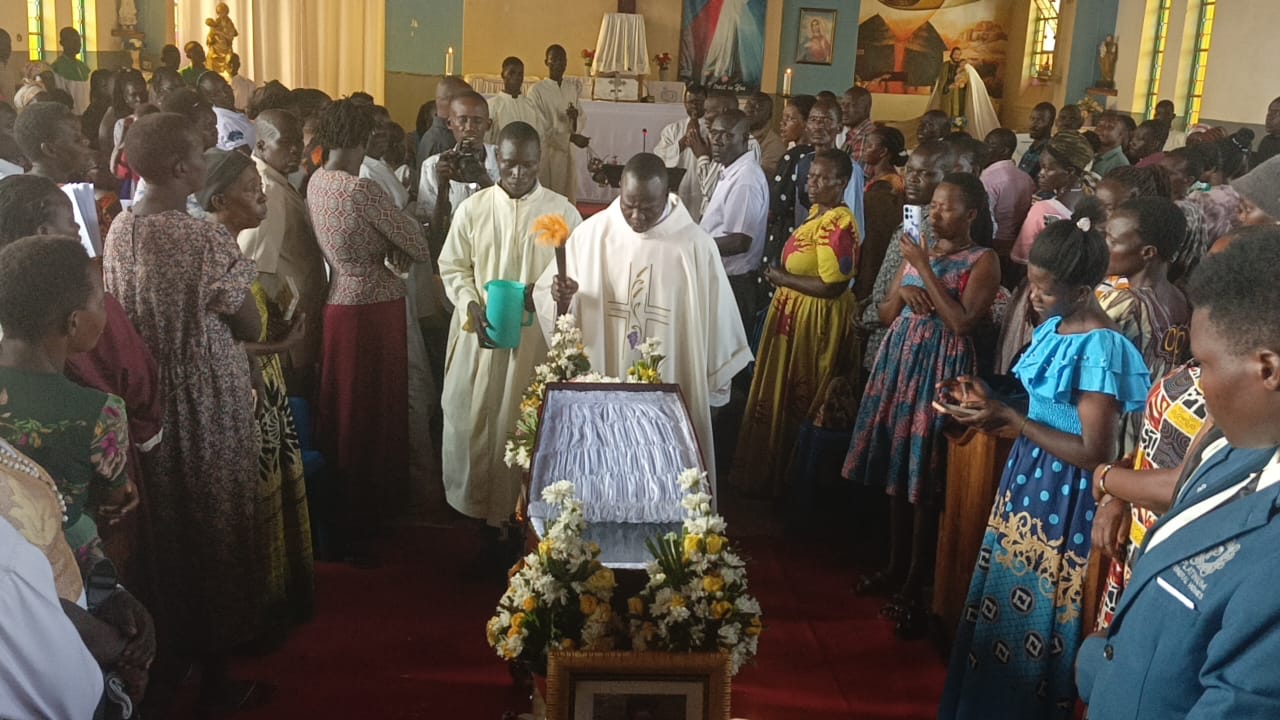
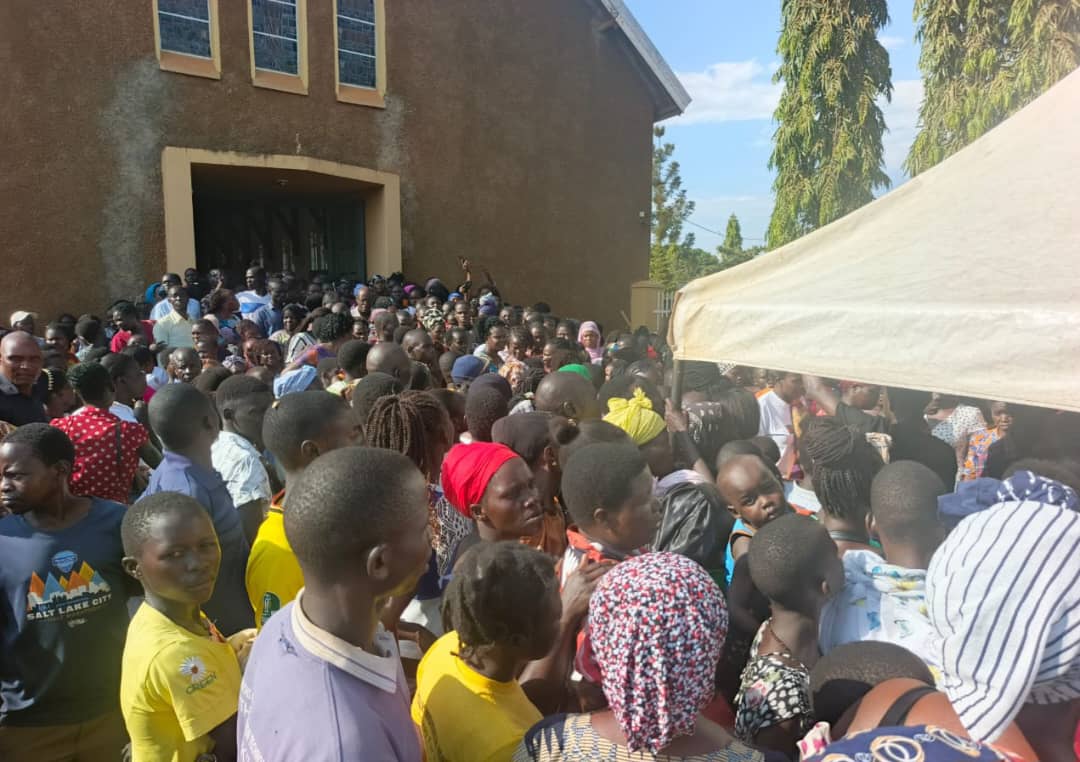
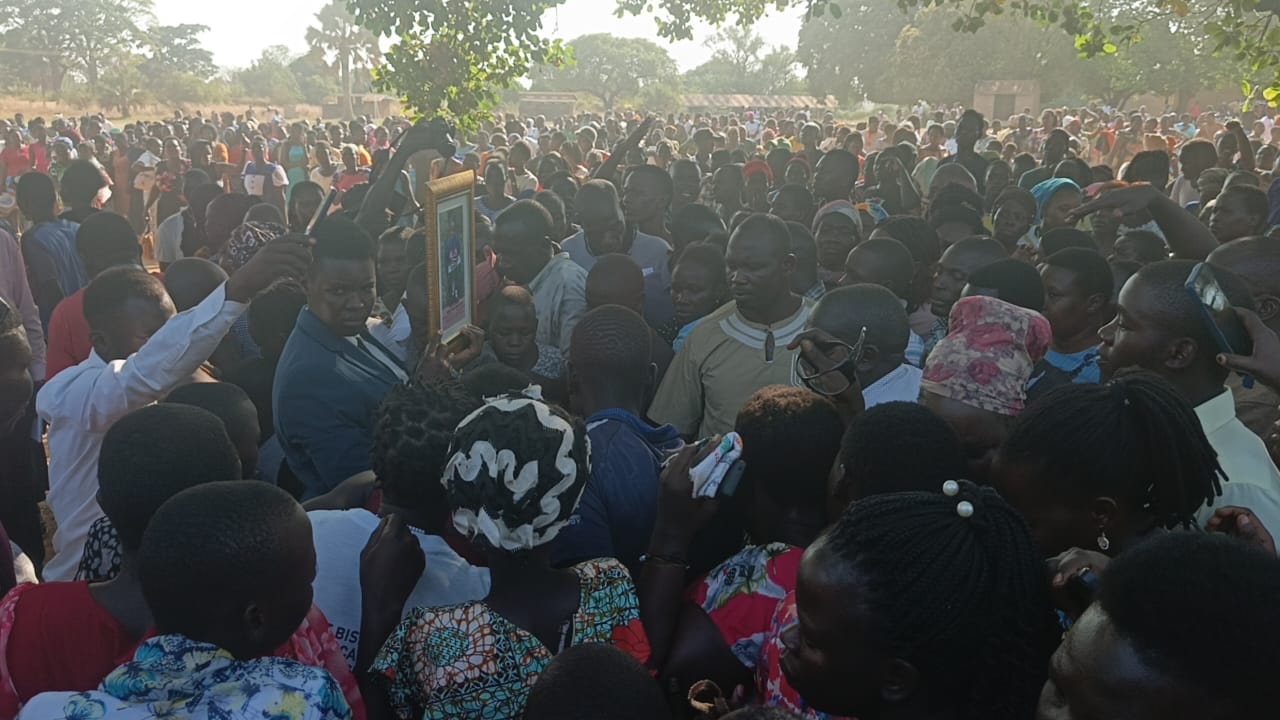
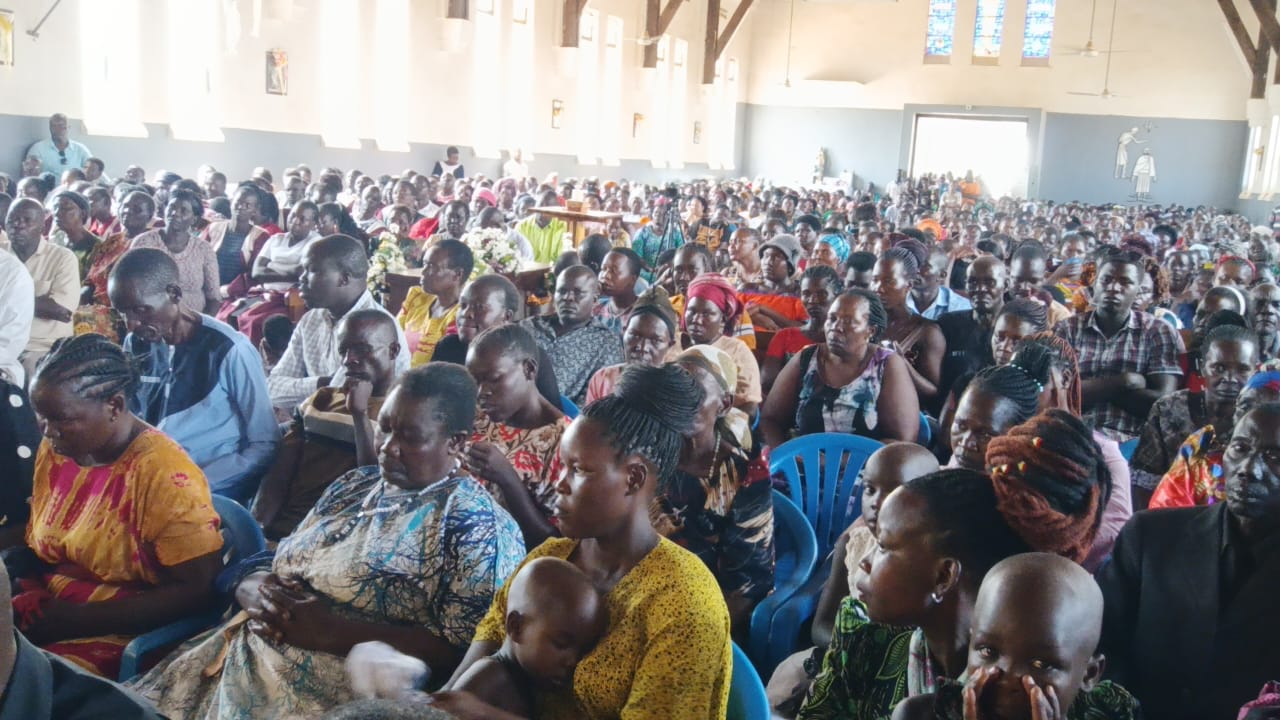
As the article below describes, outside the cathedral, emotions ran high as thousands of mourners stood in sorrow and solidarity, demanding justice. The pictures tell all. (FVDK)
Emotions Run High As Thousands Bury Ritual Murder Victim Apio in Soroti
Joan Apio had only attended the school for two days when she was brutally murdered
Published: February 16, 2025 By: Eddy Enuru – Nile Post, Uganda
On Sunday, February 16, mourners gathered at St. Immaculate Catholic Parish to pay their last respects. Rev. Fr. Michael Omaria offered condolences to Apio’s grieving family, urging them to seek solace in faith.
Tension ran high at the requiem mass for Joan Faith Apio, a five-year-old pupil at Jozan Nursery and Primary School, whose brutal murder has left Soroti City in shock.
Her lifeless body was discovered locked inside a staff pit latrine on February 5, sending waves of grief and fear through the community.
The tragic incident has raised urgent concerns over the safety of children in private schools.
On Sunday, February 16, mourners gathered at St. Immaculate Catholic Parish to pay their last respects. Rev. Fr. Michael Omaria offered condolences to Apio’s grieving family, urging them to seek solace in faith.
He strongly condemned the ritualistic nature of the crime, calling it abhorrent.
Outside the cathedral, emotions ran high as thousands of mourners stood in sorrow and solidarity, demanding justice.
As public pressure mounted, police intensified their investigations, leading to multiple arrests. Soroti Resident City Commissioner Peter Pex Paak addressed mourners, confirming that several suspects had confessed and would soon face trial.
“Joan’s murder was like a movie. It was carefully planned, and several people played a role in killing her,” Paak stated.
According to investigators, the murder was premeditated and involved at least seven individuals.
Apio and her twin sister, Achen, had only recently joined Jozan Nursery and Primary School after their mother, Evelyn Akol, was reportedly manipulated into enrolling them.
On February 3, Akol unknowingly left her daughters in the hands of those who would later be implicated in the crime.
Two days later, Apio was lured into the staff latrine at around noon, where she was murdered.
Authorities believe one accomplice waited inside the latrine while another led the child in. A third suspect allegedly washed away the evidence immediately after the crime.
Apio’s blood was reportedly collected, wrapped in black plastic, and handed to an unidentified individual who fled the scene.
“We are now hunting for the person who received the blood from behind the school fence and escaped with it,” Paak added.
Police confirmed that all primary suspects were in custody and had provided statements detailing their roles. Meanwhile, authorities are actively pursuing the individual who took the blood.
Investigations also suggest that the director of another school in Soroti played a role in persuading Akol to enroll her daughters at Jozan.
East Kyoga Regional Police Commander Damalie Nakyuha confirmed the arrests of five individuals, including Joseph Okedi, the director of Jozan Nursery and Primary School, his wife, Suzan Vivian Okedi, and head teacher David Kadimba.
She assured the public that more arrests were expected as the probe continued.
Joan Faith Apio, born on December 17, 2019, was laid to rest on February 17, 2025, at her family home in Ateuso, Kapelebyong District.
As the city mourns, the demand for justice grows louder, with parents and authorities calling for greater oversight to protect children from similar tragedies.
Yet another case which I present to prevent the idea that aforementioned case in Delta State is extraordinary and an exemption. Far from it. Kidnapping and killing on demand, selling humans organs and other body parts, just for greed, for money, is a rising business in Nigeria and may be in more countries.
The basic drive, apart from greed, lust for money, for wealth, for power and prestige, is superstition. Not only must authorities act swiftly and uphold the rule of law, thereby protecting the human rights of its citizens, but they must also embark an a campaign of prevention by investing in education. Colliding interests, of politicians and other ‘big shots’ in society involved in these barbaric practices, must be dealt with mercilessly. (webmaster) FVDK)
Shocking Ritual Murder in Ogun: Man Sells Friend for ₦5,000
Published: January 29, 2025 By: Nigerian Bulletin
A man in Ogun State has been arrested for selling his best friend to a ritualist for ₦5,000, leading to the victim’s gruesome murder. The victim’s head was sold for ₦20,000. This shocking incident was exposed through a viral video, highlighting the prevalence of ritual killings in Nigeria.
A shocking incident unfolded in Ogun State, where a man reportedly sold his best friend to a ritualist for ₦5,000. The victim was lured under the pretense of a farm job offer. Upon arrival, the friend was killed, and his head was later sold for ₦20,000. This horrifying act was revealed after a viral video surfaced on X (formerly Twitter), showing the police parading multiple suspects.
The arrested man confessed that he had arranged the deal with a herbalist, who carried out the gruesome murder. The video also featured the ritualist admitting to his role in the crime. The tragic event highlights the growing concern of ritual killings in the country. The victim’s head, after being severed, was reportedly sold for a mere ₦20,000, further underscoring the brutal nature of the act.
This incident has raised alarm in the community, with many calling for greater awareness and stronger enforcement against ritualistic crimes. Authorities have promised to investigate further and hold all parties responsible accountable, as the video continues to circulate, increasing public outrage over the horrific crime.
African countries face many problems. Most of these problems are the result of external causes. However, the problem attacked below by Leo Igwe, a renown Nigerian human rights activist, founder and leader of Advocacy for Alleged Witches, has a cause which lies within African societies and is within reach of local political and community leaders to solve.
The answer to the challenge which constitutes the definite eradication of superstition – hence the belief in witchcraft and witches – is (among other interventions) education, education and education! AfAW and Leo Igwe also emphasize this approach.
When looking at the budgets for education in African countries we cannot escape a feeling of dispair. Only a few African countries realize the education objectives agreed upon during international conferences, in international organizations or in national development plans.
African governments can rightly point to the failing support or sometimes undermining actions of governments of non-African countries and international corporations, but here is a problem in which they themselves have a hand in solving. What are they waiting for? (webmaster FVDK)
Published: January 20, 2025 By: Leo Igwe – Sahara reporters
Greetings and salutations from the Advocacy for Alleged Witches and from all advocates against witch hunts in Nigeria and beyond on the occasion of this roundtable discussion on witch hunts and human rights violations in Adamawa state. I thank the National Human Rights Commission for the opportunity to collaborate and synergize against this superstition-based abuse. Witch hunting is a form of gender-based violence and we commend the commission for its commitment to addressing sexual and gender-based violence in Nigeria. We hope that this event marks the beginning of our partnership. We hope it would be the first of so many to be held and organized in rallying against witchcraft accusations, witch persecution, and killing in the state. We are all delighted that the event is holding after years of planning, and postponement. And that advocates in this state have the opportunity to meet, discuss, interact, and exchange ideas on how to end human rights violations linked to beliefs in witchcraft and ritual attacks. Adamawa is one of the states where witch-hunting is pervasive. And let’s face it, this is not good news at all. Yes, it is not. Witch hunting in Adamawa is a cause for concern and needs to be treated with the urgency it deserves. We must join hands and end these violations now, not later, today, not tomorrow, this year, not next.
There have been growing cases of witchcraft accusations and killings in Adamawa. Incidentally, only a few are reported. Many more are not because they happen in rural areas and remote communities. Witch persecution happens mainly to people who cannot report the violations; those who do not know where and how to report. Victims of witch hunts are usually those who do not know that witch hunters are criminals who should be brought to justice. Many cannot report because they fear retribution, more abuse, and violation. But the situation is changing.
We have a recent case here in Adamawa where a couple suffocated a girl child to death for witchcraft. We understand that the case is in court. Local informants and advocates helped the police to intervene. We are also monitoring two other cases that involved the murder of the accused. Alleged witches are beaten to death, set ablaze, and murdered in cold blood. The people of Adamawa, how many deaths will it take till we know that too many people have been accused of witchcraft and subsequently killed? How many deaths will it take till we know that too many alleged witches have died? Know this the people of Adamawa: the world is watching and waiting for you to rise to the challenge and take all necessary measures to end witch hunts. Will you?
We are aware that witch hunts would not stop when the police and courts are failing in their duties and when the authorities are doing little or nothing to address this miscarriage of justice. Witchcraft accusations are against the law. Jungle justice and trial by ordeal are against the law. But witch hunts continue despite existing legislations. Accusations are perpetrated with impunity. The police in Adamawa must rise to the occasion and enforce the law. They should make sure that perpetrators are arrested and brought to justice.
In many cases of witch hunts, the police do not intervene. And when they do so, the intervention comes too little too late. Many suspects are not arrested or charged in court. Sometimes, police arrest and detain suspects and later release them after paying a bribe. But the police cannot address this problem alone. Other state agencies need to fulfill their statutory duties.
Effective courts, diligent judges, and magistrates are needed. We need court officials who correctly interpret the law and ensure justice for the accused. Unfortunately, what we have here in Adamawa, and in other parts of Nigeria and the continent, is a case of justice delayed and eventually denied. The accused and their families suffer double victimization. The court processes are slow, too slow for comfort and justice. Court processes take many years to issue judgments. They make accused persons incur additional costs. Many alleged witches and families have been forced to abandon their cases and resign to their fate. We have it on authority regarding an ongoing case here in Adamawa, that the family of the victim is being pressured to leave the case so that perpetrators could go scot-free.
Look, the people and government of Adamawa, if the family of the victim in question is forced to abandon the case, there will be consequences. That will not reflect positively on you and your efforts to combat witch hunts. Know this: the world is watching.
You may recall that in 2021, there was an unfortunate development in the state. A chief magistrate misinterpreted the law. He invited a native doctor to help in the trial of an alleged witch in a court. That incident was a judicial scandal, a local and international embarrassment. It was a misapplication of the law and a misconception of national jurisprudence. That incident indicated how Adamawa was out of step in addressing the problem of witch hunts. AfAW raised concerns and petitioned the chief judge. We hope lessons have been learned, and that there will be no repeat of this charade in Adamawa in the future. We understand that witch believers would like to conduct witch trials in courts. But our laws are unambiguous on the issue of witchcraft accusations. Our laws do not recognize witchcraft. The law criminalizes witchcraft accusations and witch-hunting. Our courts are places to prosecute accusers, not the accused. As a state, Nigeria advocates against witchcraft accusations and witch persecution. Nigeria constitutionally protects and defends alleged witches. Let’s work together and uphold the law, not our beliefs.
AfAW exists to end witchcraft accusations, witch persecution, and killing in Nigeria, and, by extension, Africa. We work to change the mindset of the people, combat misinformation and disinformation, and other drivers of this menace. We invite all participants to join us to realize the vision of making witch hunting in Africa history by 2030, which is, 5 years from now. It is possible. It can be done. Thank you.
The following plea speaks for itself. (webmaster FVDK)
Ritual Killings: Imperative For Urgent Legislative Reform
Published: January 18, 2025 By: Charles Ude – The Whistler, Nigeria
Charles Ude, Esq, is an Abuja Based Legal practitioner
Ritual killings in Nigeria are a grave concern that transcends mere criminality, reflecting a deep-seated cultural malady that requires immediate legislative action. The recent brutal murder of a young woman in Kogi State serves as a timely reminder of the urgency for a decisive and multifaceted approach to combat this abhorrent practice. As the nation mourns the victims and stands in solidarity with their families, it is imperative to recognize that an effective legal framework, bolstered by education and cultural intervention, is crucial in the fight against ritual killing.
The Socio-Cultural Context
The persistence of ritual killings in Nigeria is intricately linked to widespread beliefs in the supernatural, which infiltrate various socio-economic strata irrespective of educational background. These beliefs often manifest in attempts to harness spiritual powers for personal gain, including financial prosperity or social advancement. Such practices are often cloaked in traditional rituals, rendering them difficult to combat solely through legal measures. Addressing the root causes—misplaced belief systems and ignorance—is as crucial as enforcing legal prohibitions against these crimes.
Recent Cases and Judicial Precedents
While it is vital to acknowledge the role of the judiciary in addressing ritual killings, recent court cases such as Federal Republic of Nigeria v. Igbokwe (2022) and Nwankwo v. State (2023) illustrates both the commitment and the limitations of the current legal framework. These cases have underscored the severity of ritual killings and the necessity for stronger penalties. However, the infrequency of successful prosecution and the perceived leniency of existing sentences highlight the urgent need for reforms. The judiciary must be empowered to impose harsher consequences for such heinous crimes to act as a deterrent.
Numerous high-profile cases illustrate the alarming implications of ritual killings, offering a grim snapshot of the societal dangers at play. The Sofiat Kehinde case, where four teenagers were arrested for a murder intended for a money-making ritual, starkly demonstrates the youthful exploitation rife in these crimes. Similarly, the Otokoto killings of 1996 sparked national outrage due to the abduction and murder of children for their body parts. The Osun Osogbo and Ibadan cases further reveal a troubling pattern of ritualistic violence, emphasizing the urgent need for preventive measures and robust legislation.
Implications for Law and Order
The impact of ritual killings on Nigeria’s legal and social fabric is profound, posing significant challenges to law enforcement and community safety. To effectively combat this menace, we advocate for the following legislative reforms:
Uniform and Tougher Legislation: It is imperative to enact comprehensive laws that explicitly define ritual killings as grave offenses. Such legislation should be accompanied by stringent penalties that reflect the severity of the crime, serving both as punishment and deterrent.
Education and Awareness: Integrating educational initiatives into community awareness programs is essential. These initiatives should aim to debunk myths surrounding ritualistic practices and promote understanding of the laws against them. Community engagement can play a critical role in changing attitudes and reducing the incidence of such practices over time.
In conclusion, the urgent nature of ritual killings in Nigeria cannot be overstated. The recent tragic events illustrate an inescapable need for decisive legislative reform. Enhancing legal frameworks and fostering community awareness are both critical steps in eradicating this menace. It is time for all stakeholders—government officials, the judiciary, civil society, and communities—to unite in a concerted effort to dismantle the socio-cultural foundations that support ritual killings, ensuring the safety and dignity of all citizens.
Disclaimer: This article is entirely the opinion of the writer and does not represent the views of The Whistler.
Early December 2024 there was a tsunami of articles focusing on the nexus prostitution – missing girls – ritual killings. The facts are horrifying. Young women between the age of 20 and 32 are most likely to be the victim of ritualistic killers.
The Public Relations Officer of the Ogun State Command, Omolola Odutola, even mentioned a number of ten young women disappearing daily in the southwestern state, one of Nigeria’s 36 states. She blamed the ‘hookup culture’ of facilitating the disappearances and ‘money rituals’, as murders for ritualistic purposes are being labeled in Nigeria. (webmaster FVDK)
Ogun State Police link missing girls, ritual killings to hook-ups
Published: December 4, 2024 By: Vanguard, Nigeria
The Nigeria Police Force has linked many cases of missing young women to ritual practices, with a growing connection to the rising hook-up culture in the country.
The Public Relations Officer of the Ogun State Command, Omolola Odutola, revealed this, yesterday, when she was featured on Channels Television’s Morning Brief.
During the discussion on “Hookup Culture: Impact on Youth Values and Relationships,” Odutola revealed that young women aged 20 to 32 were the most affected.
She added that many young people, especially males, believe that ritual killings was a way to become wealthy.
“This particular menace is very serious and I will like a lot of young people to understand the danger in the hookup culture. Today, we have lots of reports of missing persons. By the time we start an investigation, not less than 10 young girls and ladies go missing daily.
“In-depth investigations also reveal that those cases are not by accidents. Most of them are connected to hookup channels and apps. They fall victim to strangers who causally invite them to unknown places, and eventually fall victim to being used for ritual purposes.
“Most cases of missing girls and ritual killings occurring in Ogun State of recent, I will like to say that it is not new. But as much as possible, the Ogun State Commissioner of Police has been able to tame these ugly incidents.
“It stems from the ugly perspective of young persons who believe that ritual killing could enrich them. We have some of these unscrupulous elements who deceive young people to get human skulls or human body parts, which they use for some kind of concoction to get them rich.”
“That is why we are having advocacy and sensitization, to enlighten young persons to make them understand that engaging in ritual killings does not in any way make them rich,” she said.
She stated that the police command was collaborating closely with the state Women Affairs Commission to tackle and curb the menace.
She stated, “The Ogun State government, particularly the Women Affairs Commission works in tandem with the police command by providing counselling sessions.
“Apart from that, whenever we have cases such as this if per adventure the girls escape the rituals, we also have a proper way of helping them go through the distress of mental health and anxiety they might have felt during the incident.
“The hookup culture is prevalent among young girls between the ages of 20 to about 32 years. The reason they get involved in this menace is because they feel they don’t get enough from their parents, and then the get-rich syndrome.”
Hookup culture refers to casual sexual relationships, like one-night stands, that often don’t involve emotional attachment or long-term commitment. While this trend has existed since the 1920s, it has become more common and accepted in recent years.
Some argue that hookup culture is a step forward for women’s freedom and empowerment, but others believe it harms the development of healthy and meaningful relationships.
Police Link Missing Girls Cases, Ritual Killings To Hookups
Published: December 4, 2024 By: Samuel – Tori, Nigeria
The Public Relations Officer of the Ogun State Command, Omolola Odutola, revealed this on Wednesday when she was featured on Channels Television’s Morning Brief.
The Nigerian Police Force has linked many cases of missing young women to ritual practices, with a growing connection to the rising hookup culture in the country.
The Public Relations Officer of the Ogun State Command, Omolola Odutola, revealed this on Wednesday when she was featured on Channels Television’s Morning Brief.
During the discussion on “Hookup Culture: Impact on Youth Values and Relationships,” Odutola revealed that young women aged 20 to 32 are the most affected.
She added that many young people, especially males, believe that ritual killings are a way to become wealthy. “This particular menace is very serious and I would like a lot of young people to understand the danger in the hookup culture. Today, we have lots of reports of missing persons. By the time we start an investigation, not less than 10 young girls and ladies go missing daily.
“In-depth investigations also reveal that those cases are not by accidents. Most of them are connected to hookup channels and apps. They fall victim to strangers who causally invite them to unknown places, and eventually fall victim to being used for ritual purposes,” she said.
“Most cases of missing girls and ritual killings occurring in Ogun State of recent, I would like to say that it is not new. But as much as possible, the Ogun State Commissioner of Police has been able to tame these ugly incidents.”
The police boss added, “It stems from the ugly perspective of young persons who believe that ritual killing could enrich them. We have some of these unscrupulous elements who deceive young people to get human skulls or human body parts, which they use for some kind of concoction to get them rich.
“That is why we are having advocacy and sensitization, to enlighten young persons to make them understand that engaging in ritual killings does not in any way make them rich,” she said.
She stated that the police command is collaborating closely with the State Women Affairs Commission to tackle and curb the menace.
She stated, “The Ogun State government, particularly the Women Affairs Commission works in tandem with the police command by providing counselling sessions.
“Apart from that, whenever we have cases such as this if per adventure the girls escape the rituals, we also have a proper way of helping them go through the distress of mental health and anxiety they might have felt during the incident.
“The hookup culture is prevalent among young girls between the ages of 20 to about 32 years. The reason they get involved in this menace is because they feel they don’t get enough from their parents, and then the get-rich syndrome.”
Hookup culture refers to casual sexual relationships, like one-night stands, that often don’t involve emotional attachment or long-term commitment. While this trend has existed since the 1920s, it has become more common and accepted in recent years.
Some argue that hookup culture is a step forward for women’s freedom and empowerment, but others believe it harms the development of healthy and meaningful relationships.
This culture also reflects a double standard, with women often judged more harshly than men for engaging in casual encounters. For instance, women who hook up frequently or go too far in a single encounter may face derogatory labels like “hoe,” while men in similar situations are often praised.
Ogun police blame ‘hookup’ for high rate of missing girls
Published: December 4, 2024 By: The Citizen, Nigeria
The Public Relations Officer for the Ogun State Police Command, Omolola Odutola, has blamed the high rate of missing girls and ritual killings involving females in the state on “hookups”.
The Ogun PPRO made this statement on Channels Television’s Morning Brief on Wednesday, where she was invited as a special guest to speak on the topic ‘Hookup Culture: Impact on Youth Values and Relationships’.
Hookup is a slang used to describe brief, casual sexual relations between individuals. Odutola described the hookup culture as a menace prevalent among young girls and attributed this to the surge in cases of missing girls and female victims of ritual killings in the state.
“Today, we have lots of reports of missing persons. By the time we start an investigation, not less than 10 young girls and ladies go missing daily.
“In-depth investigations also reveal that those cases are not by accidents. Most of them are connected to hookup channels and apps. They fall victim to strangers who causally invite them to unknown places, and eventually fall victim to being used for ritual purposes,” said Odutola.
The PPRO noted that Ogun State has an ugly history with the cases of missing girls and ritual killings.
In October, the Ogun Police Command declared Testimony John, an 18-year-old girl, missing. The 18-year-old was sent on an errand to Saabo Market in Sagamu and did not return home.
A month before then, in September, the police launched a manhunt for the killers of Habibat Akinsanya, a 17-year-old secondary school student who was abducted and murdered in the state.
Police Uncover 1 Reason for High Cases of Missing Girls, Ritual Killings In Nigeria, Details Emerge
Police link h0okup activities to missing girls and ritual activities Photo credit: @PoliceNG/Pius Utomi Ekpei Source: UGC
Published: December 5, 2024 By: Ezra Ukanwa – Legit, Nigeria
Police reveal the dark side of hookup culture Odutola emphasized that the hookup culture, characterized by casual sexual encounters without commitment, has fueled a surge in cases involving young girls who fall prey to ritual killings, Channels Television reported.
“Today, we have lots of reports of missing persons. By the time we start an investigation, not less than 10 young girls and ladies go missing daily. “Most of these cases are linked to hookup channels and apps,” she explained. The police noted that many young men are motivated by the belief that ritual killings can lead to wealth, The Punch reported. “Most cases of missing girls and ritual killings in Ogun State have their roots in this misguided idea. “We have some unscrupulous elements who deceive people into providing human body parts for rituals,” she stated.
To combat this, according to her, the Ogun State Police Command, in collaboration with the Women Affairs Commission, has been actively raising awareness and providing counselling to victims and their families.
UNIPORT student found dead in boyfriend’s apartment
In another development, Legit.ng reported that a 300-level Biological Chemistry student of the University of Port Harcourt (UNIPORT), Otuene Justina Nkang, has been found dead in her boyfriend’s apartment in the River State capital. Nkang has been declared missing four days after leaving her place of work, where she was doing her industrial training at a private hospital in Port Harcourt.
Hookups to blame for most cases of missing girls, ritual killings in Nigeria – Police
Published: December 4, 2024 By: Nurudeen Shotayo – The Pulse, Nigeria
The hookup culture encourages casual sexual encounters in some cases between two strangers who could engage in one-night stands without necessarily involving any emotional bonding or long-term commitment.
The Nigeria Police have attributed the increasing cases of missing young ladies and girls being used for ritual purposes in the country to the prevalent hookup culture pervading society.
This is according to Omolola Odutola, the Public Relations Officer, Ogun State Police Command, who spoke on Channels Television‘s Morning Brief on Wednesday, December 4, 2024.
Odutola, who contributed to the topic, ‘Hookup Culture: Impact on Youth Values and Relationships,’ observed that young girls and ladies within the age range of 20 and 32 fall victim to the menace.
The hookup culture encourages casual sexual encounters in some cases between two strangers who could engage in one-night stands without necessarily involving any emotional bonding or long-term commitment.
This is hardly a new concept given that non-romantic sexual encounters, especially prostitution have been around since almost the beginning of time.
“This particular menace is very serious and I would like a lot of young people to understand the danger in the hookup culture.
“Today, we have lots of reports of missing persons. By the time we start an investigation, not less than 10 young girls and ladies go missing daily.
“In-depth investigations also reveal that those cases are not by accidents. Most of them are connected to hookup channels and apps. They fall victim to strangers who casually invite them to unknown places, and eventually fall victim to being used for ritual purposes,” she said.
Odutola says young people believe in ritual wealth
The police spokesperson added that most young Nigerians, especially males believe that ritual killings can make them rich.
“Most cases of missing girls and ritual killings occurring in Ogun state of recent, I would like to say that it is not new. But as much as possible, the Ogun state commissioner of police has been able to tame these ugly incidents.
“It stems from the ugly perspective of young persons who believe that ritual killing could enrich them. We have some of these unscrupulous elements who deceive young people to get human skulls or human body parts, which they use for some kind of concoction to get them rich.
“That is why we are having advocacy and sensitization, to enlighten young persons to make them understand that engaging in ritual killings does not in any way make them rich,” she said.
Police link missing girls cases, ritual killings to hookups
Published: December 4, 2024 By: Adetutu Sobowale – Punch, Nigeria
The Nigerian Police Force has linked many cases of missing young women to ritual practices, with a growing connection to the rising hookup culture in the country.
The Public Relations Officer of the Ogun State Command, Omolola Odutola, revealed this on Wednesday when she was featured on Channels Television’s Morning Brief.
During the discussion on “Hookup Culture: Impact on Youth Values and Relationships,” Odutola revealed that young women aged 20 to 32 are the most affected.
She added that many young people, especially males, believe that ritual killings are a way to become wealthy.
“This particular menace is very serious and I would like a lot of young people to understand the danger in the hookup culture. Today, we have lots of reports of missing persons. By the time we start an investigation, not less than 10 young girls and ladies go missing daily.
“In-depth investigations also reveal that those cases are not by accidents. Most of them are connected to hookup channels and apps. They fall victim to strangers who causally invite them to unknown places, and eventually fall victim to being used for ritual purposes,” she said.
“Most cases of missing girls and ritual killings occurring in Ogun State of recent, I would like to say that it is not new. But as much as possible, the Ogun State Commissioner of Police has been able to tame these ugly incidents.”
The police boss added, “It stems from the ugly perspective of young persons who believe that ritual killing could enrich them. We have some of these unscrupulous elements who deceive young people to get human skulls or human body parts, which they use for some kind of concoction to get them rich.
“That is why we are having advocacy and sensitization, to enlighten young persons to make them understand that engaging in ritual killings does not in any way make them rich,” she said.
She stated that the police command is collaborating closely with the State Women Affairs Commission to tackle and curb the menace.
She stated, “The Ogun State government, particularly the Women Affairs Commission works in tandem with the police command by providing counselling sessions.
“Apart from that, whenever we have cases such as this if per adventure the girls escape the rituals, we also have a proper way of helping them go through the distress of mental health and anxiety they might have felt during the incident.
“The hookup culture is prevalent among young girls between the ages of 20 to about 32 years. The reason they get involved in this menace is because they feel they don’t get enough from their parents, and then the get-rich syndrome.”
Hookup culture refers to casual sexual relationships, like one-night stands, that often don’t involve emotional attachment or long-term commitment. While this trend has existed since the 1920s, it has become more common and accepted in recent years.
Some argue that hookup culture is a step forward for women’s freedom and empowerment, but others believe it harms the development of healthy and meaningful relationships.
This culture also reflects a double standard, with women often judged more harshly than men for engaging in casual encounters. For instance, women who hook up frequently or go too far in a single encounter may face derogatory labels like “hoe,” while men in similar situations are often praised.
Police raise the alarm over rising missing persons cases in Ogun
Published: January 8, 2025 By: Punch, Nigeria
The Ogun State Police Command has raised concerns over an increase in reports of missing persons in the state.
The command’s spokesperson, Omolola Odutola disclosed this in a statement in Abeokuta, the state capital, on Tuesday.
She explained that the command had noticed an unprecedented rise in the number of missing persons across all age groups.
Odutola noted that only a small fraction of the individuals had been found, with many regrettably not returning home.
The police spokesperson urged residents to remain vigilant and more security-conscious while prioritising their safety.
She added that, as a proactive and community-oriented force, the command was committed to raising public awareness about this concerning trend.
“We encourage everyone to prioritise their safety by maintaining a heightened sense of security to avoid becoming a victim.
“The Commissioner of Police, Lanre Ogunlowo, has outlined essential measures and guidelines to keep residents informed about the most pressing issues.
“Based on insights from individuals who were rescued, the Commissioner advises parents not to allow their children to use commercial transportation services with strangers.
“Additionally, he encourages restless youth to activate the digital communication and sharing features on their mobile devices, especially when travelling or in moments of distress,” Odutola said.
Odutola further emphasised that the public could contact the police control room at 09164859299 and the Police Public Relations Department at 09159578888 for assistance.
Most Missing Girls Cases, Ritual Killings In Nigeria Connected With Hookups — Police
The Hookup culture encourages and accepts casual sexual encounters, such as one-night stands, without necessarily involving emotional bonding or long-term commitment.
Published: December 4, 2024 By: Channels Television
The Nigerian Police Force has identified most cases of missing young ladies and girls being used for ritual purposes in Nigeria connected to the prevalent hookup culture sweeping across the country.
The Public Relations Officer, Ogun State Command, Omolola Odutola who was a special guest on Channels Television’s Morning Brief on Wednesday, to discuss the topic ‘Hookup Culture: Impact on Youth Values and Relationships’, said young girls and ladies within the age range of 20 and 32 fall victim of the menace.
The Hookup culture encourages and accepts casual sexual encounters, such as one-night stands, without necessarily involving emotional bonding or long-term commitment.
The idea of casual, non-romantic sexual encounters has been around since the 1920s.
Some social critics argue that hooking up is a feminist achievement, while others worry that it is a step backwards for healthy, intimate relationships.
The hookup culture can also be gendered, with women being judged by a different standard than men. For example, women who hook up with too many people or go too far in the first hook-up are often judged by terms like “hoe”.
“This particular menace is very serious and I would like a lot of young people to understand the danger in the hookup culture.
“Today, we have lots of reports of missing persons. By the time we start an investigation, not less than 10 young girls and ladies go missing daily.
“In-depth investigations also reveal that those cases are not by accidents. Most of them are connected to hookup channels and apps. They fall victim to strangers who casually invite them to unknown places, and eventually fall victim to being used for ritual purposes,” she said.
She added that most young persons, especially males believe that ritual killings can make them get rich.
‘Most cases of missing girls and ritual killings occurring in Ogun state of recent, I would like to say that it is not new. But as much as possible, the Ogun state commissioner of police has been able to tame these ugly incidents.
“It stems from the ugly perspective of young persons who believe that ritual killing could enrich them. We have some of these unscrupulous elements who deceive young people to get human skulls or human body parts, which they use for some kind of concoction to get them rich.
“That is why we are having advocacy and sensitization, to enlighten young persons to make them understand that engaging in ritual killings does not in any way make them rich,” she said.
According to her, the police command is working closely with the Women Affairs Commission of the state to stem the menace in the tide.
“The Ogun State government, particularly the Women Affairs Commission works in tandem with the police command by providing counselling sessions.
“Apart from that, whenever we have cases such as this if per adventure the girls escape the rituals, we also have a proper way of helping them go through the distress of mental health and anxiety they might have felt during the incident.
“The hookup culture is prevalent among young girls between the ages of 20 to about 32 years. The reason they get involved in this menace is because they feel they don’t get enough from their parents, and then the get-rich syndrome,” she said.
A Development expert, Dorothy Njemanze who also joined the conversation from Abuja, urged the Nigerian Police to provide full security and encourage the reporting culture to deal with the crime.
Development expert Dorothy Njemanze
“A lot of the predatory trends that we see have existed in the society all along. But instead of tackling them headlong, we make excuses and try to guilt-trip people. If you stay in your house, harm can happen to you. You go out, harm can happen to you. A lot of healthy marriages in Nigeria happen through hookups. We are expected to meet people irrespective of how it happened, especially when we are adults.
“But my concern is that the predation system extends to children. A lot of children are being lured through the predation system. Every state needs to have a mandatory reporting system so that when suspicious movements are seen, such activities can be reported. And then for law enforcement, when people report things to you, and you are lax and expect people to write petitions and ply certain routes before you can take action, then there is a problem.
“The proactiveness of law enforcement agencies is what we bank on.
“Bad people plan very well, to gain the trust of who they want to harm to minimise chances of their victims raising alarm for them to be caught.
“I heard the policewoman talking about people going to parties. And I also read about a lady killed by her pastor in the church. So it could be anybody.
“Whatever the dimension that bad people choose to operate, the law enforcement should be able to ready to swoop in and ensure that there is minimal to no damage done, and then the mandatory reporting culture of the society is one thing that can help to minimise these things.
“As long as we can’t control what adults do among each other, we can minimize such occurrences because the hookup culture affects both men and women, but more among the women. There is more pressure on men to have resources that can make them look like big men. But make sure as much as possible whenever you are going out, somebody knows where you are going,” she said.
Screenshot – to access the video please open the link included in the Source (below)
Ogun police blame hookup for high rate of missing girls
Published: December 4, 2024 By: Olayide Soaga – The Guardian, Nigeria
Omolola Odutola, the Public Relations Officer for the Ogun State Police Command, has blamed the high rate of missing girls and ritual killings involving females in the state on “hookups”.
The Ogun PPRO made this statement on Channels Television’s Morning Brief on Wednesday, where she was invited as a special guest to speak on the topic ‘Hookup Culture: Impact on Youth Values and Relationships’.
Hookup is a slang used to describe brief, casual sexual relations between individuals. Odutola described the hookup culture as a menace prevalent among young girls and attributed this to the surge in cases of missing girls and female victims of ritual killings in the state.
“Today, we have lots of reports of missing persons. By the time we start an investigation, not less than 10 young girls and ladies go missing daily.
“In-depth investigations also reveal that those cases are not by accidents. Most of them are connected to hookup channels and apps. They fall victim to strangers who causally invite them to unknown places, and eventually fall victim to being used for ritual purposes,” said Odutola.
The PPRO noted that Ogun State has an ugly history with the cases of missing girls and ritual killings.
In October, the Ogun Police Command declared Testimony John, an 18-year-old girl, missing. The 18-year-old was sent on an errand to Saabo Market in Sagamu and did not return home.
A month before then, in September, the police launched a manhunt for the killers of Habibat Akinsanya, a 17-year-old secondary school student who was abducted and murdered in the state.
Published: December 4, 2024 By: Titilope Adamo – The Osun Defender, Nigeria Titilope Adako is a talented and intrepid journalist, dedicated to shedding light on the untold stories of Osun State and Nigeria. Through incisive reporting, she tackles a broad spectrum of topics, from politics and social justice to culture and entertainment, with a commitment to accuracy, empathy, and inspiring positive change.
The Nigerian Police Force has attributed a significant number of cases involving missing young women to ritual practices closely tied to the rising hookup culture in Nigeria.
Omolola Odutola, the Public Relations Officer for the Ogun State Command, discussed this issue on Wednesday during an appearance on Channels Television’s Morning Brief programme.
Highlighting the impact of hookup culture on youth values, she noted that women aged 20 to 32 are the most vulnerable.
“This particular menace is very serious and I would like a lot of young people to understand the danger in the hookup culture. Today, we have lots of reports of missing persons. By the time we start an investigation, not less than 10 young girls and ladies go missing daily.
She further explained, “It stems from the ugly perspective of young persons who believe that ritual killing could enrich them. We have some of these unscrupulous elements who deceive young people to get human skulls or human body parts, which they use for some kind of concoction to get them rich.
“That is why we are having advocacy and sensitization, to enlighten young persons to make them understand that engaging in ritual killings does not in any way make them rich,” she said.
She also stated that the police command is collaborating closely with the State Women Affairs Commission to tackle and curb the menace.
She added, “The Ogun State government, particularly the Women Affairs Commission works in tandem with the police command by providing counselling sessions.
“Apart from that, whenever we have cases such as this if per adventure the girls escape the rituals, we also have a proper way of helping them go through the distress of mental health and anxiety they might have felt during the incident.
“The hookup culture is prevalent among young girls between the ages of 20 to about 32 years. The reason they get involved in this menace is because they feel they don’t get enough from their parents, and then the get-rich syndrome.”
Hookup culture, which refers to casual sexual relationships like one-night stands, has been debated for its effects on youth.
While some argue it empowers individuals, others criticize its impact on relationships and societal values.
This culture often highlights double standards, with women judged more harshly than men for casual encounters, facing derogatory labels such as “hoe,” while men are often praised.
THE Nigerian Police Force has linked many cases of missing young women and girls to the rising hookup culture in Nigeria, which is believed to be contributing to their exploitation for ritual purposes.
The Public Relations Officer of the Ogun State Command, Omolola Odutola, highlighted during an interview today that young women aged 20 to 32 are particularly vulnerable to this issue.
The hookup culture promotes casual sexual encounters, such as one-night stands, without emotional attachment or long-term commitment.
The idea of casual, non-romantic sexual encounters has been around since the 1920s.
While some social critics view hooking up as a feminist achievement, others express concern that it undermines healthy intimate relationships.
The culture can also be gender-biased, with women facing harsher judgments than men, often labeled derogatorily if they engage with multiple partners or go too far on a first encounter.
Odutola emphasized the seriousness of this issue, stating, “I want young people to understand the dangers of the hookup culture. We receive numerous reports of missing persons, with at least 10 young women disappearing each day. Investigations indicate that these cases are often not accidental; many are linked to hookup platforms and apps, where victims are lured by strangers to unknown locations and subsequently exploited for ritual purposes.”
She noted that many young individuals, particularly males, believe that ritual killings can lead to wealth.
“The recent cases of missing girls and ritual killings in Ogun State are not new, but the Ogun State Commissioner of Police has been working to address these disturbing incidents. The belief that ritual killings can bring wealth is prevalent among some young people, who are often deceived into providing human remains for various rituals.”
To combat this issue, advocacy and awareness campaigns are being conducted to educate young people about the dangers of ritual killings.
The Ogun State Police Command is collaborating with the Women Affairs Commission to tackle the problem effectively.
“The Ogun State government, particularly the Women Affairs Commission, is working alongside the police to provide counseling sessions. In cases where girls escape from rituals, we have established support systems to help them cope with the mental health challenges and anxiety they may experience,” she explained.
Odutola pointed out that the hookup culture is particularly common among young women aged 20 to 32, who may feel financially unsupported by their families and are drawn to the allure of quick wealth.
Development expert Dorothy Njemanze, who joined the discussion from Abuja, urged the Nigerian Police to enhance security measures and promote a culture of reporting suspicious activities to address these crimes.
Njemanze said, “Many predatory behaviors have long existed in society, yet we often make excuses instead of confronting them. Harm can occur whether one stays at home or goes out. While hookups can lead to healthy relationships, my concern is that children are being lured into dangerous situations. Every state should implement a mandatory reporting system for suspicious activities.”
She emphasized the need for law enforcement to act proactively.
“Criminals often plan meticulously to gain their victims’ trust, minimizing the chances of being caught. The police should be prepared to intervene swiftly to prevent harm.
“Regardless of the circumstances, whether at parties or other venues, it is crucial to ensure that someone knows your whereabouts when going out,” she added, highlighting the importance of awareness and caution in navigating the hookup culture, which disproportionately affects women.
Most cases of missing persons, related to hookup – Police
Published: December 4, 2024 By: Nkiruka Gloria – Gistreel, Nigeria
The Nigerian Police Force (NPF), has disclosed that most cases of people who have been reported to be missing, is linked to ‘hookup‘.
This was disclosed by the Public Relations Officer of the Ogun State Command, Omolola Odutola, while speaking on Channels Television’s Morning Brief, on Wednesday.
She noted that the rising hookup culture in the country, has a growing connection to the many cases of missing young women to ritual practices.
She added that this stems from the ugly perspective of young persons who believe that ritual killing could enrich them.
Odutola stated that young women aged 20 to 32 are the most affected.
She said, “This particular menace is very serious and I would like a lot of young people to understand the danger in the hookup culture. Today, we have lots of reports of missing persons. By the time we start an investigation, not less than 10 young girls and ladies go missing daily.
“In-depth investigations also reveal that those cases are not by accidents. Most of them are connected to hookup channels and apps. They fall victim to strangers who causally invite them to unknown places, and eventually fall victim to being used for ritual purposes.
“Most cases of missing girls and ritual killings occurring in Ogun State of recent, I would like to say that it is not new. But as much as possible, the Ogun State Commissioner of Police has been able to tame these ugly incidents.”
Nigeria Police Link Missing Girls Cases, Ritual Killings to Hookups
Published: December 4, 2024 by: Naijapals Base – Gist Mania, Nigeria
The Nigerian Police Force has raised concerns about the alarming trend of missing young women and girls, many of whom have reportedly fallen victim to money ritual killings. According to SP Omolola Odutola, the spokesperson of the Ogun State Police Command, a significant number of these cases are linked to the growing “hookup culture” in the country.
Odutola shared these insights during a live appearance on Channels Television’s Morning Brief program on Wednesday, December 4, 2024, where the discussion focused on the topic: “Hookup Culture: Impact on Youth Values and Relationships.”
She highlighted that young women aged 20 to 32 are particularly vulnerable, often lured into dangerous situations under the guise of casual relationships or financial arrangements.
She added that many young people, especially males, believe that ritual k!llings are a way to become wealthy.
“This particular menace is very serious and I would like a lot of young people to understand the danger in the hookup culture. Today, we have lots of reports of missing persons. By the time we start an investigation, not less than 10 young girls and ladies go missing daily,” the PPRO stated.
“In-depth investigations also reveal that those cases are not by accidents. Most of them are connected to hookup channels and apps. They fall victim to strangers who causally invite them to unknown places, and eventually fall victim to being used for ritual purposes
“Most cases of missing girls and ritual killings occurring in Ogun State of recent, I would like to say that it is not new. But as much as possible, the Ogun State Commissioner of Police has been able to tame these ugly incidents.
“It stems from the ugly perspective of young persons who believe that ritual killing could enrich them. We have some of these unscrupulous elements who deceive young people to get human skulls or human body parts, which they use for some kind of concoction to get them rich
“That is why we are having advocacy and sensitization, to enlighten young persons to make them understand that engaging in ritual killings does not in any way make them rich,” she said.
She stated that the police command is collaborating closely with the State Women Affairs Commission to tackle and curb the menace.
“The Ogun State government, particularly the Women Affairs Commission works in tandem with the police command by providing counselling session.
Published: December 5, 2024 By: Abimbola Abatta – Foundation for Investigative Journalism, Nigeria
How did she know the killer? Girls, stop doing hookup, but you won’t listen.
FIJ has observed a trend where Nigerians engage in victim blaming whenever women are reported missing. It is worse when they wind up dead and their deaths are linked to ritual killings or intimate partner violence.
Victim blaming essentially implies that a victim deserved the violent crime committed against them, and it comes in various forms.
Sometimes veiled as words of caution, victim blaming springs out in comments such as, “What was she looking for?” “What was she wearing?” “How did she know the killer?” “Stop doing hook up; women no dey hear” “No justice for anybody o,” “Stop dating Yahoo boys,” “Girls will never learn,” “She will think twice in her next life.”
FIJ came across similar comments on X, captured more screenshots and uploaded them to this folder.
One of the comments
What makes this more alarming is how the Nigeria Police Force (NPF) reinforces the culture of victim blaming through careless statements. In 2019, when a suspected serial killer was on a killing spree, having killed the 10th victim, the Rivers State Police Command told young women to shun prostitution.
Chuks Enwonwu, the Deputy Commissioner of Police in charge of administration at the time, said, “In as much as societal values are disintegrating, we must go back to try to educate them (women) and discourage them from going into prostitution because that is how they fall victim to these crimes.”
A similar sentiment from law enforcement played out on Wednesday when Omolola Odutola, the police public relations officer in Ogun State, linked missing women and ritual killings to the hookup culture. This culture encourages casual sex encounters, often paid, without emotional commitment.
According to a publication by the Canadian Resource Centre for Victims of Crime, victim blaming occurs when the victim of a crime or an accident is held responsible, whether in whole or in part, for the crimes that have been committed against them.
This blame can be in the form of negative social responses from legal, medical and mental health professionals, as well as from the media, immediate family members and other acquaintances. Some types of crimes victims get blamed for are intimate partner violence, sexual assault, homicide and sex trade.
Odutola was featured on Channels Television’s Morning Brief when she said the hookup culture gives men, who believe ritual killings could enrich them, the platform to lure women to their deaths.
“Most girls who find themselves in hookup acts get missing and slaughtered for ritual purposes,” she said.
Although she noted that the police had been sensitising young persons to make them understand that ritual killings do not in any way make them rich, she stressed the need for women to beware of the hookup culture.
That was not the first time Ogun Police would be warning women about their lifestyle rather than condemning their attackers.
While detailing the arrest of three ritual killers in a post on February 29, the security agency stated, “The Command is using this avenue to advise our young ladies at this umpteenth time to desist from untoward movements. They are advised to use social media and attendant technology positively. It is through the social media platform that all these victims were surreptitiously lured to their untimely death.”
The warning for ladies. Source: Ogun State Police Command’s X page.
Also, in April, the Ogun police wrote on X: “Avoid being a victim of ritual killing: hook up, and its dangers. You may go and never return. Girls, wake up! Young girls, do you know who you are being hooked up to? That person may exchange your beautiful head for peanuts. All that glitters is not gold!”
Meanwhile, Dorothy Njemanze, a communication strategist and development expert who was featured on the television programme along with the Ogun police spokesperson, opined that law enforcement agencies and the government have key roles to play in tackling the underlying issues.
“Instead of tackling them (the issue) head-on, we guilt trip people. Bad people plan very well. They gain the trust of people, but regardless of the dimension that bad people choose to operate, the law enforcement should sweep in and ensure that the impact is reduced,” she said.
Njemanze differed from the police PRO’s argument that the hookup culture was to blame for the prevalent cases of missing women and ritual killings.
She explained that, as someone working in a survivor centre, she encountered cases of children who had been lured through predatory systems. Njemanze pointed out that such cases cannot be classified as hookups.
“The biggest currency that is exploited is trust. The government needs to step in into the get-rich-quick syndrome and empower people who are under the pressure of wanting to break the jinx of poverty,” Njemanze added.
Roseline Adewuyi, a gender and social advocate, told FIJ that the culture of blaming victims is a deep social issue that calls for genuine concern.
“We have had cases of women in Nigeria who are killed for ritual purposes or who have been sexually assaulted and the society goes on to subtly or expressly blame these victims,” Adewuyi stated.
She also said that factors such as existing cultural norms, social conditioning and lack of concrete understanding of the root causes of heinous crimes influence victim-blamers.
For her, the complex root cause of violence against women cannot be understood without first challenging social conditioning and reshaping the ingrained beliefs about gender and victims. Rather than make comments that imply that victims are partly culpable, the responsibility for crimes should be placed squarely on the shoulders of the perpetrators.
“It is when the responsibility of the crime has been rightly placed that we can find out the root cause and motivation of that violence. Commenting about the movements or actions of women in this context distracts the society from the real causes of the problem of gender-based violence,” Adewuyi explained.
To address the victim-blaming biases, Adewuyi said, focus must be on critical stakeholders like the police, who are the first responders in cases of violence against women. She also said that there should be sensitisation programmes on gender issues against the reinforcement of stereotypes, and the police must prioritise the safety of everyone, no matter their gender.
“NGOs, media organisations, communities, schools and others must also be targeted to replace the culture of victim blaming and silence with the culture of respect, consent and gender equality,” the social advocate told FIJ.
Abimbola Abatta is a reporter with FIJ, writing reports in partnership with Report for the World which matches local newsrooms with talented emerging journalists to report on under-covered issues around the globe.
Hook-ups reason for missing girls, ritual killings – Police
Published: December 4, 2024 By: Matthew Atungwu – Daily Post, Nigeria
The Nigeria Police said many cases of missing young women to ritual practices are caused by the surge of hook-up culture in the country.
The Public Relations Officer of the Ogun State Command, Omolola Odutola, made this revelation on Wednesday when she was featured on Channels Television’s Morning Brief.
According to her, young women aged 20 to 32 were the most affected.
She added that many young people, especially males, believe that ritual killings were a way to become wealthy.
“This particular menace is very serious and I will like a lot of young people to understand the danger in the hookup culture. Today, we have lots of reports of missing persons. By the time we start an investigation, not less than 10 young girls and ladies go missing daily.
“In-depth investigations also reveal that those cases are not by accidents. Most of them are connected to hookup channels and apps. They fall victim to strangers who causally invite them to unknown places and eventually fall victim to being used for ritual purposes.
“Most cases of missing girls and ritual killings occurring in Ogun State of recent, I will like to say that it is not new. But as much as possible, the Ogun State Commissioner of Police has been able to tame these ugly incidents,” she said.
She further said that the Ogun State Police Command was collaborating closely with the state Women Affairs Commission to tackle and curb the menace.
DAILY POST reports that hookup culture refers to casual sexual relationships, like one-night stands, that often don’t involve emotional attachment or long-term commitment.
Actress Kate Henshaw reacts to police blaming ritual killings on hookup culture
Published: December 7, 2024 By: Jessica Gistlover – Nigeria
Nigerian actress Kate Henshaw has reacted to police reports blaming hookup culture for ritual killings after facing backlash on social media for her statement about Yahoo boys using girls for rituals.
On December 4, 2024, Omolola Odutola, the PRO of the Ogun state command, highlighted the dangers of the hookup culture on Channels Television’s Morning Brief.
Nigerian actress Kate Henshaw has responded to police reports attributing ritual killings to hookup culture, following significant criticism on social media in November 2024 regarding her comments about Yahoo boys exploiting women for rituals.
During an appearance on Channels Television’s Morning Brief on December 4, 2024, Omolola Odutola, the Public Relations Officer of the Ogun State Command, emphasized the risks associated with hookup culture.
She said, “Today, we have numerous reports of missing persons. By the time we start an investigation, not less than 10 young girls and ladies go missing daily. These cases are not accidental. Most are tied to hookup arrangements where young women are invited by strangers to unknown places, ultimately leading to their harm or use in ritual killings.”
This report garnered significant media attention and elicited various reactions on social media. A user on X recalled the time when Kate Henshaw faced accusations of promoting femicide for expressing a similar viewpoint.
The post read, “There was a time not too long ago @HenshawKate made a statement as regards this and some people came for her. Alas!!! She has been vindicated.”In response to the post, Kate Henshaw wrote, “Let the role model females who spouted I was promoting femicide show naa.. Alas, their mouths are shut!!”
It is worth noting that on October 31, 2024, Henshaw commented on a viral video featuring a young girl who expressed her intention to date a Yahoo boy, a known fraudster. At that time, Henshaw warned that the young girl was at risk of being exploited for rituals due to her choice.
She wrote, “Na so dem go take pieces you for ritual…Yeye mindset.”
Henshaw’s remarks were met with backlash from many social media users, who accused her of insensitivity and of endorsing femicide.
An X user asked her, “This is so wrong to say. How is murder justifiable?”
The actress responded, “That’s the value she placed on herself with her words and actions. That’s how she reduced herself to be used by all and sundry. That’s the green light she has put on but that’s OK with you.”
Warning: the following post contains graphic details which may upset readers
Ogun State has a notorious reputation with respect to ritualistic killings (‘money rituals’). On many occasions in the past I have paid attention to the scourge of ritual related violence in this southwestern state of Nigeria.
Nigeria consist of 36 states. Ogun State has a surface area of only 16,762 km2 ranking 24th. The state borders Oyo State in the north, Osun State and Ondo State in the east and Lagos State in the south. It shares its western border with the neighboring republic of Benin. With an estimated population of 6.5 million people (2024), predominantly Yoruba, Ogun State is one of the most populated states in the southwestern part of Nigeria ranking 13thnationwide. Its capital Abeokuta is the state’s most populous city (about one million).
Early January, at the start of 2025, Ogun State Police Command has paraded 18 suspected criminals for various crimes ranging from murder, kidnapping, human trafficking, and ritual killings among other crimes at different locations in the state. (….) The Commissioner of Police, Mr Lanre Ogunlowo noted that last month (December 2024) the command also arrested 45-year-old twins, Yemitan Taiwo and Yemitan Kehinde for allegedly killing and dismembering a female around the Lafenwa area of Abeokuta for ritual purposes. (See the last article below).
The police spokesman also used the occasion to warn against the dangers of the growing “hookup culture,” especially for young women who engage in casual relationships with unfamiliar men for financial gain. I will return to this specific topic with a special posting in the near future.
The case of the twin brothers implicated in the murder of a sex worker for ritualistic purposes is presented below in full details. (webmaster FVDK).
Ogun State Police Command has paraded 18 suspected criminals for various offences ranging from murder, kidnapping, human trafficking, and ritual killings among other crimes at different locations in the state.
The Commissioner of Police, Mr Lanre Ogunlowo while parading the suspects at the Police headquarters, Eleweran, Abeokuta attributed the success recorded to the provision of an Armed Personnel Carrier, and drone by Inspector General of Police, Mr Kayode Egbetokun.
Mr Ogunlowo pointed out that among those paraded included 31-year-old Tolani Jeremiah, 20-year-old Akande Suru and 24-year-old Edwin Jatto who allegedly hacked the WhatsApp account belonging to the Deputy Commissioner of Police, Bode Ojajuni of State CID, Eleweran and defrauded the victim’s family and friends of the sum of one million one hundred and fifteen thousand nairas under the false pretence that the victim needed urgent financial assistance.
He noted that the command also arrested 45-year-old twins, Yemitan Taiwo and Yemitan Kehinde for allegedly killing and dismembering a female around the Lafenwa area of Abeokuta for ritual purposes.
The Police Commissioner solicited cooperation and support in the collective effort to keep Ogun State safe and peaceful.
Mr Ogunlowo appealed to the residents of the state to provide the police with timely information to aid their efforts in preventing and addressing criminal activities.
Ogun State Police arrest twin brother of ritualist for murder & mutilation of female victim
Published: January 1, 2025 By: Mister Jay Wonder – Gistmania, Nigeria
The Ogun State Police Command has arrested Kehinde Yemitan, the twin brother of Taiwo Yemitan, who was previously apprehended in connection with the ritualistic murder of a female victim, Darasimi. Kehinde was arrested on Monday, December 30, 2024, after a tip-off led authorities to his hiding place in the Ilogbo community.
Taiwo Yemitan, along with an accomplice, Kazeem, was arrested on Sunday, December 22, 2024, for the gruesome killing of Darasimi, a female night worker. The trio allegedly lured the victim to Taiwo’s residence, located behind Atinsola petrol station in the Sanni area of Abeokuta, where they killed her for ritual purposes. The police had previously discovered a fresh human head and dismembered body parts believed to belong to Darasimi.
According to Ogun State Police spokesperson, SP Omolola Odutola, Kehinde was tracked down following a report from a volunteer informant. The informant provided valuable information that led to Kehinde’s location in the Ilogbo community. The police, in collaboration with the So Safe Corps, promptly launched a manhunt and apprehended him.
During questioning, Kehinde admitted to conspiring with his twin brother Taiwo and Kazeem to carry out the heinous crime. Local community members also confirmed his involvement in other criminal activities. Kehinde has been transferred to the State Criminal Investigation Department for further investigation.
The police have once again issued a public warning regarding the dangers of the growing “hookup culture,” especially for young women who engage in casual relationships with unfamiliar men for financial gain. SP Odutola stressed that women should seek sustainable means of income and be cautious of falling into similar dangerous situations.
In light of this tragic event, the Ogun State Police Command has intensified efforts to raise awareness about the risks young women face in such engagements. Authorities are urging caution, especially as the investigation into Kehinde’s role in the crime continues.
Further updates will be provided as the case progresses. The police have appealed to young women to view this incident as a cautionary tale and remain vigilant to avoid falling victim to similar ritual killings.
Twin brothers kill, dismember sex worker in Ogun State
Published: January 1, 2025 By: James Ogunnaike, Abeokuta – Vanguard, Nigeria
Operatives of Ogun State Police command, on Tuesday, said it arrested one Kehinde Yemitan, a murder and ritualist suspect at his hiding in Ilogbo Ota community of Ogun State.
The suspect’s twin brother, Taiwo had earlier been arrested on December 22 alongside one Kazeem for the alleged murder and dismembering of one Darasimi.
The victim is a commercial sex worker, who was lured to the suspects’ Abeokuta residence and killed.
The spokesperson of the state police command, Omolola Odutola, disclosed this in a statement on Tuesday.
Odutola said, “Having been fingered as one of the accomplices to the tragic crime, the police surveillance team in collaboration with the So Safe Corps were said to have been on the look out for Kehinde until intelligence gave out his hideout on Monday.
“On December 30, 2024, at about 5 p.m., the Divisional Police Officer of Sango Otta received a tip from a volunteer informant indicating that Kehinde Yemitan, the twin brother of Taiwo Yemitan, was hiding in the Ilogbo community.
“The Police launched a manhunt for Kehinde in connection with murder and the mutilation of one Darasimi, surname unknown, on the 22nd of December, 2024 when his twin brother, Taiwo, and Kazeem were arrested at about 1 p.m., by the Divisional Police Officer of Lafenwa after the duo lured their victim Darasimi, a night sex worker in Abeokuta to their house for ritual purposes.
“Following this information, a surveillance team, in collaboration with the So Safe Corps, promptly mobilized to the community and apprehended the suspect.
“Several community members also confirmed his involvement in criminal activities.”
Yemitian was said to have been been transferred to the State Criminal Investigation Department for discreet investigation.
Meanwhile, Odutola has urged young women to desist from engaging in casual friendship or relationship for pecuniary gains otherwise called “hookup’, given the perennial danger inherent in such unholy relationship.
The police spokesperson urged parents to also join the police in raising awareness about the danger of getting involved in vices such as prostitution that could readily cut people’s life short.
She said, “A further appeal goes to the teeming young females to see this unfortunate incident as a big lesson and be cautious not to fall victim to another ritual killing.”
Published: January 1, 2025 By: TSJ Reporter 2 – Street Journal, Nigeria
Officers of the Ogun State Police Command have arrested two brothers whose names are Taiwo and Kehinde Yemitan alongside a man identified as Kazeem for murdering and dismembering the remains of a sex worker identified as Darasimi in Ilogbo, Ado-Odo/Ota local government area (LGA) Ogun State.
This was revealed via a statement by the state’s police spokesperson Superintendent (SP) Omolola Odutola on Tuesday, December 31.
She noted that Darasimi was lured to the residence of Kehinde in Abeokuta, where she was killed and her body parts were dismembered.
The statement read, “Having been fingered as one of the accomplices to the tragic crime, the police surveillance team, in collaboration with the So Safe Corps, was on the lookout for Kehinde until intelligence revealed his hideout on Monday.
“On December 30, 2024, at about 5 p.m., the Divisional Police Officer of Sango Otta received a tip from a volunteer informant indicating that Kehinde Yemitan, the twin brother of Taiwo Yemitan, was hiding in the Ilogbo community.
“The Police launched a manhunt for Kehinde in connection with the murder and mutilation of one Darasimi, surname unknown, on the 22nd of December, 2024, when his twin brother, Taiwo, and Kazeem were arrested at about 1 p.m. by the Divisional Police Officer of Lafenwa after the duo lured their victim Darasimi, a night sex worker in Abeokuta, to their house for ritual purposes.
“Following this information, a surveillance team, in collaboration with the So Safe Corps, promptly mobilised the community and apprehended the suspect.”
Odutola mentioned that the suspect confessed to collaborating with others to commit the crime in Abeokuta, noting that several local residents had also verified his involvement in criminal activities.
She then stated that the suspects have been moved to the State Criminal Investigation Department (SCID) in Eleweran, Ogun State for further questioning.
The police spokesperson then urged young women to exercise caution and avoid participating in ‘hookups’ or other reckless behaviors to prevent falling victim to ritual killings and other crimes.
She also called on parents and guardians to collaborate with the police in raising awareness about the risks of prostitution.
“A further appeal goes to the teeming young females to see this unfortunate incident as a big lesson and be cautious not to fall victim to another ritual killing,” the statement concluded.
Police nab twins, 1 other over murder of sex worker in Ogun State
Published: January 1, 2025 By: Remi Adebayo – Leadership, Nigeria
Two brothers, Taiwo and Kehinde Yemitan as well as one Kazeem have been apprehended by the operatives of the Ogun State Police Command over their involvement in the killing and dismembering a sex worker identified as Darasimi in Ogun State.
Kehinde was arrested in his hiding at the Ilogbo area of Ota in the Ado-Odo/Ota local government area of the state after the arrest of his accomplice, Taiwo.
The commercial sex worker, Darasimi, was reported to have been lured to the suspects’ Abeokuta home, where she was killed and dismembered.
Spokesperson of the Ogun State Police Command, SP Omolola Odutola, who disclosed this in a statement on Tuesday said the victim, Darasimi was lured to the residence of the suspects in Abeokuta where she was murdered and her remains dismembered.
According to the state’s police image maker, “Having been fingered as one of the accomplices to the tragic crime, the police surveillance team, in collaboration with the So Safe Corps, was on the lookout for Kehinde until intelligence revealed his hideout on Monday.
“On December 30, 2024, at about 5 p.m., the Divisional Police Officer of Sango Otta received a tip from a volunteer informant indicating that Kehinde Yemitan, the twin brother of Taiwo Yemitan, was hiding in the Ilogbo community.
“The Police launched a manhunt for Kehinde in connection with the murder and mutilation of one Darasimi, surname unknown, on the 22nd of December, 2024, when his twin brother, Taiwo, and Kazeem were arrested at about 1 p.m. by the Divisional Police Officer of Lafenwa after the duo lured their victim Darasimi, a night sex worker in Abeokuta, to their house for ritual purposes.
“Following this information, a surveillance team, in collaboration with the So Safe Corps, promptly mobilised the community and apprehended the suspect.”
Odutola, in the statement said the suspect admitted to conspiring with others to carry out the crime in Abeokuta, adding that several community members also confirmed his involvement in criminal activities.
According to the Odutola, the suspects have been transferred to the State Criminal Investigation Department, Eleweran, for further investigation.
The PPRO warned young women to be more cautious and desist from engaging in “hookups” and other indecent ways of life to avoid becoming victims of ritual killings and other crimes.
She further appealed to parents and guardians to join hands with the police in sensitising the public about the dangers of prostitution.
“A further appeal goes to the teeming young females to see this unfortunate incident as a big lesson and be cautious not to fall victim to another ritual killing,” she said.
Ogun sex worker killed, dismembered by twin brothers
Published: January 1, 2025 By: Anthony Ufo – The Guardian
The Ogun State Police Command has arrested two brothers, Taiwo and Kehinde Yemitan, for allegedly killing and dismembering a sex worker, Darasimi, in Ogun State.
One of the suspects, Kehinde, was arrested while hiding in the Ilogbo area of Ota in the Ado-Odo/Ota Local Government Area of Ogun State. Before then, his accomplice, Taiwo, had already been arrested by the police.
The commercial sex worker, Darasimi, was reported to have been lured to the suspects’ Abeokuta home, where she was killed and dismembered.
SP Omolola Odutola, the Ogun State Police spokesperson, made this known to the public in a statement on Tuesday.
Odutola said, “Having been fingered as one of the accomplices to the tragic crime, the police surveillance team, in collaboration with the So Safe Corps, was on the lookout for Kehinde until intelligence revealed his hideout on Monday.
“On December 30, 2024, at about 5 p.m., the Divisional Police Officer of Sango Otta received a tip from a volunteer informant indicating that Kehinde Yemitan, the twin brother of Taiwo Yemitan, was hiding in the Ilogbo community.
“The Police launched a manhunt for Kehinde in connection with the murder and mutilation of one Darasimi, surname unknown, on the 22nd of December, 2024, when his twin brother, Taiwo, and Kazeem were arrested at about 1 p.m. by the Divisional Police Officer of Lafenwa after the duo lured their victim Darasimi, a night sex worker in Abeokuta, to their house for ritual purposes.
“Following this information, a surveillance team, in collaboration with the So Safe Corps, promptly mobilized the community and apprehended the suspect.
“He admitted to conspiring with others to carry out the crime in Abeokuta.
“Several community members also confirmed his involvement in criminal activities.”
The suspects, according to the spokesperson, have been transferred to the State Criminal Investigation Department, Eleweran, for further investigation of the case.
Odutola also advised young women to be more careful and desist from engaging in “hookups” and other indecent ways of life to avoid becoming victims of ritual killings and other crimes. She also appealed to parents and guardians to join hands with the police in sensitising the public about the dangers of prostitution.
“A further appeal goes to the teeming young females to see this unfortunate incident as a big lesson and be cautious not to fall victim to another ritual killing,” she said.
First announcement by the Ogun State police (late December 2024) confirming the arrest of Taiwo Yemitan for the unlawful possession of human body parts, including a severed head, following the brutal murder of a woman:
Ogun State police nab suspected ritualist,Taiwo Yemitan, for murder & human body parts possession
The Ogun State Police Command has arrested a 45-year-old man, Taiwo Yemitan, for the unlawful possession of human body parts, including a severed head, following the brutal murder of a woman identified as Darasimi.
Yemitan was apprehended at approximately 1:40 AM on Sunday in the Lafenwa area of Abeokuta after a tip-off from local security groups, including the Agbekoya and Vigilante operatives. The suspect is accused of luring Darasimi to his residence with the intent to kill her.
Police spokesperson, Omolola Odutola, confirmed the arrest and provided further details in a statement. According to Odutola, Yemitan admitted to murdering Darasimi and implicated two accomplices, identified as Kehinde Yemitan and one Kazeem, who remain at large. The motive for the killing was to sell the victim’s body parts, including her head.
Odutola further stated that the dismembered body had been taken to the State General Hospital, Ijaye, Abeokuta, where it is undergoing a post-mortem examination. Yemitan is set to be transferred to the State Criminal Investigation Department (SCID) in Eleweran, Abeokuta, for further investigation. Efforts are also underway to apprehend his accomplices and locate the victim’s relatives.
This tragic incident follows a similar case earlier this year, where a suspect, Azeez Adebayo, confessed to the murders of three women whom he and his accomplices lured through an online dating site.
The police spokesperson urged young women to exercise caution when using online platforms and be aware of the dangers associated with meeting strangers on social media. Odutola advised women to prioritize their safety and use social media’s positive aspects to enhance their well-being.
Leo Igwe is a famous Nigerian, human rights activist, an indefatigable fighter against superstition, witchcraft and ritualistic murders. In 2020 he started Advocacy for Alleged Witches. On numerous occasions I have praised him on this site for his valuable work fighting superstition, witchcraft and ritualistic violence and helping and supporting the victims of witchcraft and superstition.
The year 2025 is only a few days old, yet Leo Igwe is again at the forefront of the fight against ritualistic attacks and murders, ‘money rituals’, notably in his home country with the following chilling account of an attempt to kidnap a young lady, a university student, who narrowly escaped a violent death.
I have repeatedly stated on this site that Nigeria may be the African country with the highest incidence of ritualistic crimes. Africa’s largest country needs more people like Leo Igwe to help eradicate superstition, witchcraft and violent ritualistic behavior.
There is no place for these outdated practices which violate the human rights of the Nigerian people and make a mockery of the rule of law in Nigeria. (webmaster FVDK)
Ritualists on Rampage in Delta State capital Asaba
Published: January 4, 2025 By: Leo Igwe – New Times, Nigeria