One of the craziest stories I read yesterday (see yesterday’s posting) follows below. It contains a wise lesson but also a chilling story. Whereas at fist sight it reports on ‘ordinary’ criminal activities, the reader soon discovers that more is going on: ritualistic activities, ‘money business’, ‘money rituals’ – and that’s the reason why the article has been included here.
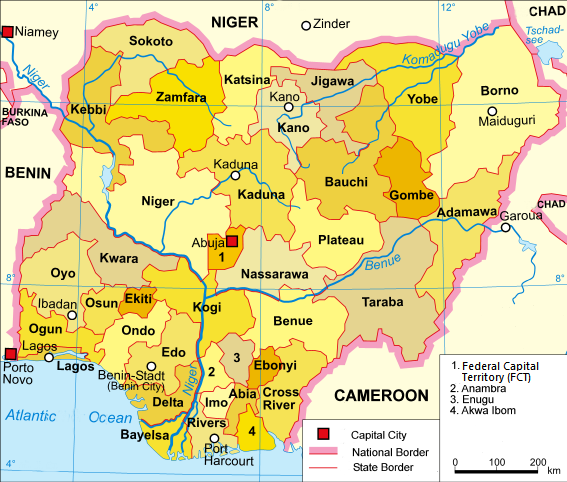
The incidents took place in various parts of the country, not related to a particular region, social class, or ethnic group. The first mentioned murder occurred recently in Lagos (June 2021), but other reported ‘money rituals’ happened in Benue State, Ogun State, Ondo State, Osun State, and – again – Lagos State (2012, 2018, 2019, 2020, 2021). Some of these murder cases have been reported on extensively earlier on this site.
Warning: Some readers may find the following story disturbing (FVDK).
MORE AND MORE NIGERIANS ARE FALLING VICTIM TO HARBINGERS OF DEATH DISGUISING AS LOVERS, KUNLE AKINRINADE REPORTS FOLLOWING THE CASE OF A COMPANY’S CHIEF EXECUTIVE FOUND DEAD LAST SUNDAY IN A LAGOS SERVICE APARTMENT HE ALLEGEDLY LODGED IN WITH A SIDE CHIC.
Published: June 26, 2021 By: The Nation, Nigeria- Kunle Akinrinade
Incidents of individuals’ death in the process of romance with the opposite sex increased by one early in the week with the demise of billionaire businessman and chief executive officer of Super TV, Michael Usifo Ataga, allegedly after an outing with a side chic.
Ataga, a resident of highbrow Banana Island in Lagos, was said to have been reported missing on Sunday by concerned friends and family members as his whereabouts became unknown.
Everyone, including his wife and children who were resident in Abuja, was said to have become worried when the checks made at Ataga’s office in Victoria Island, Lagos showed that he was nowhere in sight while he could also not be found at his Banana Island residence.
It turned out later that his lifeless body was found in a three-bedroom service apartment in Lekki Phase 1, Lagos with multiple wounds inflicted on his body and several withdrawals made from his bank account supposedly by a mystery woman he had checked into the apartment with.
Investigation conducted by security agents would later reveal that Ataga’s death occurred about two weeks after he met the woman in question and they checked into the said apartment at Lekki Phase 1.
A combined team of the police and DSS operatives from Abuja were said to have unveiled the identity of the owner of the apartment in which Ataga was found dead and it was discovered that she had received payments from the side chic’s bank account into which Ataga himself had previously made a transfer.
Happily, the side chic in question has since been tracked down by security operatives and arrested alongside the owner of the Lekki Phase 1 apartment.
One death too many
Ataga’s case is one in the long list of Nigerians who in recent times have fallen victim to murderous fraudsters disguising as lovers. For instance, when Akin Alupaida invited his girlfriend from her base in Ibadan, Oyo State to his base in Apomu, Isokan Local Government Area, Osun State on June 8, the unnamed lady had no reason to suspect that she was about to be murdered by the man that had professed love to her.
However, the said lady was butchered into pieces by her supposed lover after a romp at an apartment belonging to the latter’s friend. The police said that Akin’s accomplice and owner of the apartment, Kabiru Oyeduntan, barged into the room and assisted his friend in strangling the 20-year-old lady to death and dismembering her for ritual purposes.
Parading Oyeduntan at the Osun Police Command headquarters on June 11, the Commissioner of Police, Wale Olokode, explained that the suspect was arrested based on a tip-off from members of the public. Olokode said the head, wrist, and other parts of the lady’s body were found by detectives inside a box in one of the suspect’s rooms.
In his confession, Oyeduntan said the lady in question was killed for the purpose of using her for money rituals by his identified as Akin (O’clumsy) Alupaida.
He said: “It was my friend that brought the lady to my place from Ibadan. But he already told me that he wanted to do a money ritual. He sought my assistance and promised to give me N50,000. I agreed.”
“While he was having sex with her, I came in and assisted him to hold her two legs, and he strangled her to death.
“Akin was the one who dismembered the lady’s body. He removed the heart, private parts and took them away.”
Eighteen months after she mysteriously disappeared amid preparations for her wedding in December 2019, the remains of Josephine Cynthia Onche, an operative of the Nigerian Security and Civil Defence Corps (NSCDC), were found in a shallow grave in the Obi Local Government Area, Benue State, where her body was dumped after she was killed for rituals by the same man she had announced in a wedding invite as her husband to-be.
The arrest of Josephine’s would-be husband, Christopher, led to the exhumation of her body from a shallow grave in a local government close to Otukpo.
It was said that a commercial motorcyclist who knew about the incident reported to Josephine’s family.
Christopher had allegedly brought in a native doctor from Ogun State to carry out money rituals with Josephine’s body parts.
“The commercial motorcycle rider led security operatives to arrest Christopher, an Igbo man, and he led the police to Ogun State where they arrested a native doctor who allegedly performed a ritual with the woman’s body in Obi Local Government Area of Benue State before returning to Ogun State,” a source reportedly said.
Like Osun and Benue incidents, the murder of the first daughter of former Deputy Governor of Ondo State, Khadijat Olubiyo, made headlines in 2018.
Khadijat, a final year student of Adekunle Ajasin University in Akungba Akoko (AAUA) was allegedly strangled to death by her boyfriend, Seidu Adeyemi, who was said to have buried her remains in a shallow grave in his room in Okearo area of Akure, the state capital, covered it with the rug and slept on the grave for five days.
In 2019, one Abosede Adeyemi Iyanda was gruesomely murdered by her former boyfriend, Segun Olaniyi, who dismembered her and used her body parts for money-making rituals.
As the story goes, Olaniyi, 42, was Abosede’s ex-lover, who promised to help her with some money but instead hatched a plan to use her for money rituals.
Olaniyi called one Akanbi Babalola and Ayo Adeleye on the phone to come and do the slaughtering of the woman who was formerly his girlfriend but now married to another man when she visited him in his offshore office.
While in his office, Olaniyi told Adeleye to go and buy food for the woman, who they said felt very tired after walking a long distance to get there. Segun then put in the food a drug that would make her feel weak and sleepy.
Olaniyi later told her to go to the stream beside his office and wash her hair while she was completely naked. He asked Adeleye and Akanbi to lead her there.
But while Abosede was washing her hair, Adeleye pushed her head into the river, brought out a pocket knife and killed her. Both of them then pulled her body out from the river and dismembered it, separating the flesh from the bones as instructed by Olaniyi.
They later cut the flesh into pieces and sold them to some herbalists, alfas and a pastor who needed them for money rituals. Some of them also allegedly roasted the meat and ate it, washing it down with hot drinks.
Police said that Olaniyi was tracked and arrested, and his arrest led to the recovery of Abosede’s body parts from different Ogun villages where he buried or sold her mutilated remains.
Other suspects arrested in connection with Abosede’s murder include Adeifa Sogbeyinde (37), Rasaq Rasaq Arabs (27), Sunday Akinyemi (41), Adewole Olwafemi aka Pastor (38), Mustapha Ajibola aka Alfa (31), Mustapha Iliya (30), Shilola Amodu aka Alfa (38), Jamiu Abass (25), Smooth Kazeem aka Alfa (37) and Adesola Oduyemi (56).
Confessing, Olaniyi said: “She called me on the phone saying that she was coming to see me. I asked her the reason for her visit and she said she wanted financial assistance to boost her business.
“I called Akanbi, who is my helping hand, and told him to come around because someone would be visiting us. Already, we had work at hand, so Akanbi suggested that we use her for the work.
“We killed her beside my house. I took the head, two hands and part of the meat. I sold the head to Africa for N40,000. I sold one of the hands to an orthodox doctor named Murideen for N15,000 and the other hand to Tonight for N15,000. I sold the flesh to one Alfa named Sunday Akinyemi (N10,000), Rasaq (N5,000) and Mustafa (N5,000).
“It was Ajibola that introduced Mustapha Iliya to me. I used part of the flesh to do powdered medicine which if taken with a hot drink would draw customers.
“At times, we kill the husbands of some of our customers to turn them into widows so that they would join us in bringing victims to be slaughtered.”
His confession led the IRT detectives to Abeokuta and different Ogun villages like Ifo, Itori, Papalanto and Adigbe, where eleven suspects were arrested and eight of them confessed to the kidnapping, killing and selling of the body parts of the victim.
Among the items recovered by IRT operatives were decomposed human breasts, burnt human flesh mixed with liquid substance in a bottle and calabash, one complete human foot, pieces of dry human skull, a Laura SUV with registration number KTU801FP, one Bajaj Boxer motorcycle with Registration number JGB019VC, one unregistered Toyota Corolla and one Toyota Matrix with Registration number AKD703FU.
Other recent cases
It will be recalled that in June 2020, a 39-year-old man, Chris Ndukwe, committed suicide in Lagos after killing his 25-year-old girlfriend, Olamide Alli.
Police said that Ndukwe and Alli were found dead at the former’s residence at Road 5, House 16A, Victory Point Estate, Ilasan, Lagos, after a tip-off to officers of Ilasan Police Station.
A statement issued by the then police spokesman, Bala Elkana, said: “The woman was found lying in a pool of blood, with deep cuts on her head, while the man’s mouth was foaming with whitish substance.
“It was alleged that the man stabbed the woman to death with a kitchen knife and thereafter drank some poisonous substances suspected to be insecticides.
“Two blood-stained kitchen knives, two empty bottles of the poisonous substances, three empty cans of Red Bull energy drink and a plier were recovered from the scene.”
Elkana added that family members of the deceased lovers revealed that they were not married but had a relationship for over seven years, adding that they had two boys, aged seven and three.
He said: “Their relationship is described as complicated, as the couples were on and off over the years. While the man lives at Victory Point Estate Ibadan, the woman lives at Ogba (Lagos).
“The woman was said to have visited the man alongside her 22-year-old sister a night before the incident, on his invitation.
He said that Alli’s sister was the first to have noticed that they were both dead and raised the alarm.
Elkana added: “In her (Alli’s sister) statement, she was woken up by a loud music from the room where the corpses were found, as herself and the kids slept in a different room.”
On July 21, 2012, a postgraduate student of Nasarawa State University, Cynthia Osokogu, then 25 years old, was lured from Abuja to Lagos by Okwumo Nwabufo, who she had met and befriended on Facebook.
Nwabufo had paid for the deceased’s flight ticket from Abuja and lodged her in Room C1 at Cosmilla Hotel, Lake View Estate, Festac Town, Lagos, where he later connived with one Olisaeloka Ezike, and murdered the young lady.
The duo drugged Cynthia by putting Rohypnol in her drink after which they tied her hands and legs and also gagged her mouth with a handkerchief and part of her hair weave on.
Cynthia’s killers thereafter stole her two Blackberry mobile phones, jewellery, sex toy vibrator, passport and a pair of shoes.
In December 2019, a 23-year old man, Adeeko Owolabi, reportedly connived with a 42-year-old self-acclaimed pastor of a white garment church, Segun Philip, to murder his girlfriend and final year Sociology student at the Lagos State University, Favour Daley-Oladele.
According to the spokesman of Ogun State Police Command, Owolabi, who was arrested in Ikoyi-Ile area of Osun State, confessed that he used his girlfriend to prepare a ritual meal for himself and his own mother who he claimed had been broke.
According to Oyeyemi, “the deceased was reported to have left home to an unknown destination since the 8th of December, 2019 and had not been seen since then; hence, she was reported missing by her parents at Mowe Police Station.
“Upon the report, the DPO Mowe Division, SP Marvis Jayeola, detailed his crack detectives to unravel the mystery behind the sudden disappearance of the 22-year-old woman.
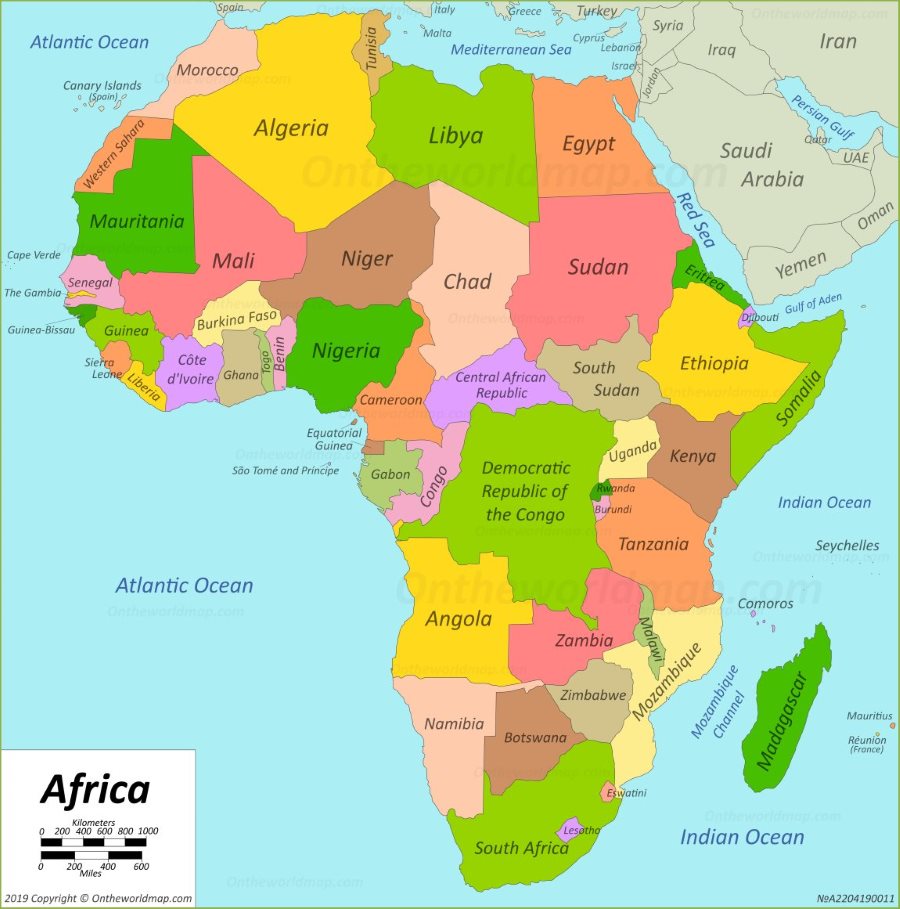
Due to circumstances I haven’t posted any article on this site for nearly four weeks. The reason for this silence on my part was certainly not the lack of ritual murder cases reported in this period. In the past four weeks African newspapers reported on ritual murder cases and related ritualistic acts in a number of SSA countries, notably in the Gambia, Ghana, Kenya, Liberia, Nigeria, Sierra Leone, South Africa, Uganda, Zimbabwe (in chronological order), with Nigeria leading this ugly list and Zimbabwe ranking second.
Having said this, two observations merit specific mentioning. First, as the list shows, the countries mentioned are all English-speaking countries (a heritage of their colonial past). This creates a distortion in the observation or analysis with a bias creating the impression that in non-anglophone countries ritual murders would not occur. Far from that! It is just a consequence of the fact that the collection of articles and reports on these heinous acts based on superstition is too narrow based. I have also reported this problem in a distinct section of this site (see under ‘Methodology’).
Secondly, and as I have also repeatedly stated on this site, we must fear that reported ritual killing cases are just the tip of the iceberg. Many cases of disappeared children, men and women remain unresolved, the bodies of the victims have successfully been hidden by the murderers. The effort of perpetrators to wipe out all traces of their crimes reveals an important aspect of nowadays ritualistic murders. The murderers know very well that their act is illegal, and constitutes one of the worst crimes one can imagine: to take the life of an innocent person for personal gains. Ritualistic acts may have been based originally – in the past – on traditional beliefs serving the interests of a community, in the course of the 20th century these practices have become criminal activities fed by a desire to become rich, famous or another selfish goal.
Last week, the author of the article ‘Enough with muti killings‘ referred to above, Eric Naki, who is the Political Editor of The Citizen, a South African online newspaper, wrote a feature article reflecting his personal concern over the ritual killing of women and children for muti purposes in the Limpopo area of the country. His article, published with the shocking heading ‘Muti murders: ‘Genitals only work if cut from live victims’, was presented as ‘Shocking details of ‘muti’ murders‘ on May 21.
Naki’s feature article did not lead to any action of the authorities. For this reason he wrote a follow-up to his article, ‘Enough with muti killings‘.
Because of its message and Naki’s cry to stop the carnage based on superstition I consider it extremely important to promote a distribution as wide as possible of his article. All forces should be joined to help ending muti killings.
I cannot present the entire article here because only subscribers have access to it, but I am including a reference to it, hoping that it may encourage readers to take the necessary steps to gain acces to the article.
Let the muti murders stop! (webmaster FVDK)
Enough with muti killings
Simdlangentsha Magistrate’s Offices which was torched by community members after Lungisani Ntuli’s body was found on 10 July 2014 in Pongola. Community members set the church alight after the four-year-old’s mutilated body was found there. Ntuli went missing and his mutilated body was discovered in a room in the church. Picture: Gallo Images
Published: May 27, 2021 By: The Citizen, South Africa – Eric Naki
The ritual killing of women and children in Limpopo needs a joint effort by police, citizens, government, traditional leaders and neighbouring SADC nations.
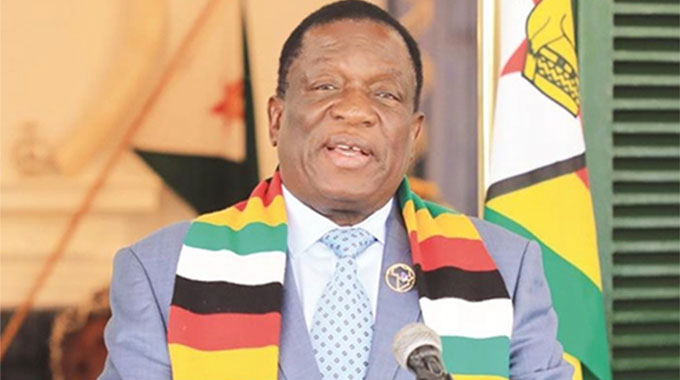
President Mnangagwa was speaking on the occasion of of the National Cultural Commemoration Day. He was accompanied by ZANU PF government officials and facing traditional leaders. Mnangagwa said the values of respect and honor must forever be cherished, but ritual killings and kidnappings have no place in Zimbabwe.
Zimbabweans are being confronted with a surge in ritual murders of both children and adults. People who believe ‘muti’ will bring them luck, power, prestige or good health, have been ruthlessly disregarding the sanctity of life for their own interests.
It is seldom that presidents, other high ranking government officials or cultural end traditional leaders are speaking out against these gruesome and age-old practices which have no place in a modern society where respect of human life and the rule of law must be the cornerstones of everyday life (webmaster FVDK).
Stop ritual killings: President Mnangagwa
President Mnangagwa
Published: May 22, 2021 By: The Herald, Zimbabwe – Fungi Kwaramba in Gokwe
ZIMBABWEANS led by traditional leaders, as the custodians of the country’s culture, should shun ritual killings and live-in peace, unity and harmony enjoying the rich cultural diversity that the nation offers, President Mnangagwa said.
This comes as the nation has in recent months been witnessing a spike in gruesome murders of children with the murderers wantonly disregarding the sanctity of life. Apart from that cases of kidnapping of children are also on the rise.
However, such practices, the President said, have no place in Zimbabwe, a unitary state that values human life, tolerance, peace and unity which are all cornerstones of national development.
In his address on the occasion of the National Cultural Commemoration Day, that is marked globally on May 21, the President said the values of respect and honour must forever be cherished.
“The values of respect and honour must be promoted while our chiefs and traditional leaders must continue to dissuade our people to shun these so-called ritual practices. The killing of our children is not acceptable,” the President said.
He added that the convergence of people from all walks of life at Chief Njelele homestead is part of the African tradition of approaching life communally and must forever be observed as it defines, not only Zimbabweans but Africans at large.
“I want to express my profound gratitude to Mambo, Chief Njelele for allowing the nation to gather here at his homestead and to share this important day with the great people of this area.
“This tradition of communities visiting one another and celebrating important events is in keeping with our African culture and tradition. As a people, let us never lose our communal approach as we continue to build peace and cohesion among our communities and within the nation,” he said.
This year National Cultural Day commemorations were held at the homestead of Chief Njelele, under the theme “Resilience in safeguarding creativity and diversity,” an apt theme that speaks to the needs to preserve the country’s rich heritage.
The President who was accompanied by Defence Minister Oppah Muchinguri-Kashiri, who is also the ruling party Zanu PF national chairperson, Youth, Sport, Art and Recreation Minister Kirsty Coventry, Environment, Tourism and Hospitality Industry Minister Mangaliso Ndlovu, State Security Minister Owen Ncube, Government and Public Works Minister July Moyo and other senior Government officials, toured colourful exhibitions, where traditional cuisine, medicine, and instruments were on display as Zimbabweans in their diversity showcased their creativity.
The day also saw traditional artistes entertaining the gathering that thronged Chief Njelele homestead to celebrate Zimbabwe’s culture.
“I want to commend stakeholders for the magnificent cultural exhibitions and displays we toured earlier. These demonstrate the universally recognised fact that as African people, we have rich arts, customs and practices. As we have seen today, these are expressed through crafts, clothing, cuisines, music, dance, folklore (ngano), religion and languages,” he said.
But such a history can only be preserved if it is passed from one generation to another because a people without a culture is like a tree without roots, the President added.
“In line with my Governments quest to build strong cultural identity, values and ethics, I challenge families, communities and institutions to diligently nurture a society that recognises our rich cultural heritage while embracing our diversity. These must be passed on from generation to generation.
“As one philosopher once said, ‘a people without the knowledge of their past history. Origin and culture are like a tree without roots.’ While another said, ‘to know your future, you must know your past’.”
The President also saluted First Lady Amai Auxillia Mnangagwa for the role she is playing in coming up with the National Dress Fabric and reviving the Nhanga/Gota/Ixhiba.
“These programmes sustain our social cultural systems, a people premised on the African philosophy of Ubuntu/Hunhu which says, ‘I am, because you are’.
“I exhort families and communities to continue implementing these cultural practices towards protecting the youth from immoral vices and alien values,” he said.
In line with history and cultural preservation, Zimbabwe is in the process of honouring its heroes and heroines who sacrificed life and limb to defend the country’s traditional values.
“This year’s cultural commemoration entails that we also reflect on our liberation war heritage. The rich heritage interests. Research must consistently enrich studies in heritage, arts and culture with the view of informing the course for a more prosperous future. We can only ignore our history at the detriment of future generations.
“Meanwhile, I commend the youth for their determination, towards developing, publishing and broadcasting our rich liberation war heritage. This will go a long way in enriching the discussions around the country’s liberation heritage from our own.”
The President, who is also the Commander-in Chief of the Defence Forces, commended players in the arts sector for the broadcasting of the story of the iconic national heroine Mbuya Nehanda and the publication of the zography on Comrade Herbert W Chitepo, among other literal and artistic works.
“It is in this vein that on Africa Day, May 25, we will also honour and remember Mbuya Nehanda, who is one of the great authors of our revolution for national independence. I urge the youth, academia and professionals to be actively involved in the ongoing memorialisation of our heritage.
“Projects such as the establishment of the African Liberation War Museum, upgrading of our liberation battle sites, detention and restriction camps must interest our young people.
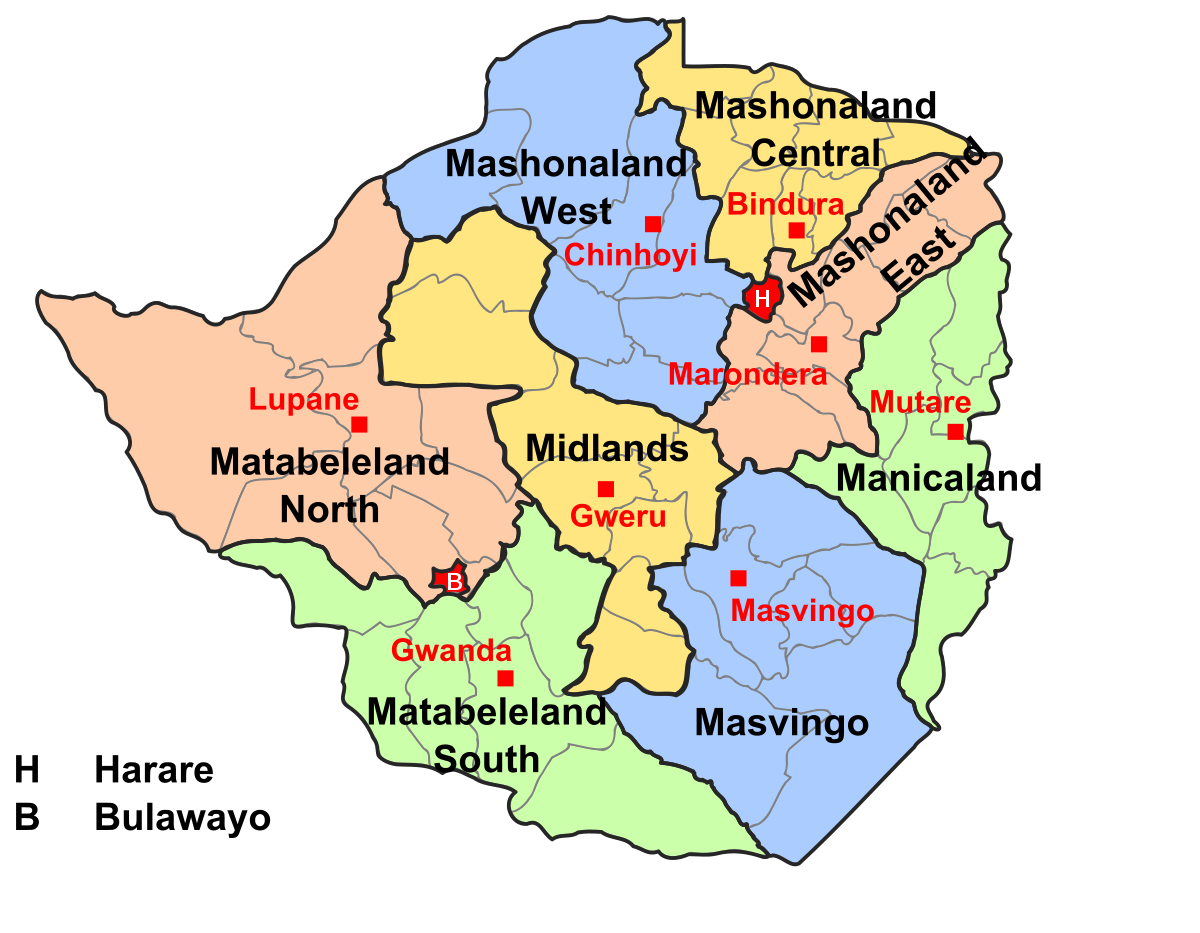
“These sites include Kamungoma in Masvingo Province, Pupu in Matabeleland North Province and Sikombela here in Gokwe District, among others.”
Meanwhile, the President promised the arts sector, which has not been spared by the crippling effects of the Covid-19 pandemic, that Government recognises the role that culture and heritage can play as a catalyst for sustainable socio-economic development, national, regional and continental integration.
“To this end, the creation of an enabling regulatory and policy framework for the development and growth of the cultural and creative sector is on-going. Cabinet has since approved the enactment of the Arts and Culture Bill which seeks to promote arts and culture as a vehicle for empowerment and employment.”
The recent surge in ritual murders and suspected cases has led to an increased awareness that something must be done to stop these crimes. The Zimbabwe National Practitioners Association (ZINPA) recently met to discuss the situation. Read below what was discussed. The two ritual murder cases referred to are not the only ones which have been reported in recent months. See my previous postings (webmaster FVDK).
Traditional Healers Hold Meeting On Ritual Killings
Traditional healer
Published: May 19, 2021 By: Pindula, Zimbabwe
Traditional healers, prophets and community leaders in Manicaland province held an emergency meeting in the wake of ritual killings that have been reported in the province in recent months.
The tractor was found by members of the police sub-aqua unit two days before his body was discovered in Nyangani Dam.
The ritual killings have brought traditional leaders under the spotlight, amid accusations that they are the ones who prescribe human body parts to be used as charms.
A spokesperson for the Zimbabwe National Practitioners Association (ZINPA) Petronela Yeukai Chiusaru said recently they held a meeting which was attended by the police, chiefs, headmen, and traditional healers including prophets.
ZINPA Vice President Dr Hatizivi Nyamandwe urged the public to consult registered healers. He said: It was agreed that a database of all registered practitioners in that area is to be produced to the police as well as chiefs. Healers are not allowed to practice witch-hunting in the area.
Traditional healers in Zimbabwe recently convened an emergency meeting with prophets and community leaders in Manicaland province in the wake of ritual killings that have been reported in the province in recent months.
In April this year two Grade 1 pupils from Nyanga were murdered on their way home from Mbaza primary school, and their bodies were found the following day dumped in a disused toilet at an abandoned homestead.
They had deep cuts on their necks. A week later a tractor driver from Allied Timbers was also murdered and his body was found floating in Nyangani River with eyes missing.
The ritual killings have brought traditional leaders under the spotlight, amid accusations that they are the ones who prescribe human body parts to be used as charms.
Spokesperson for the Zimbabwe National Practitioners Association (ZINPA) Petronela Yeukai Chiusaru said recently they held a meeting which was attended by the police, chiefs, headmen, and traditional healers including prophets.
“ZINPA Vice President Dr Hatizivi Nyamandwe urged the public to consult registered healers. It was agreed that a database of all registered practitioners in that area is to be produced to the police as well as chiefs. Healers are not allowed to practice witch-hunting in the area,” Chiusaru said.
Warning: the following article contains graphic details, the reader may find the article shocking.
The following article from Eric Naki, the Political Eitor of The Citizen, a South African online news magazine, contains several frank observations which are worth specifically mentioning here.
First, Naki, citing an expert on ritual murders, Dr Alunamutwe Rannditsheni, from Limpopo province, tells us that ritual murders are a worldwide phenomenon, occurring not only in Africa or Sub-Saharan Africa. I am very happy with this expert-observation even though it results in mixed feelings because of its sad contents. I have also mentioned it in my introduction to this website on ritual killing, witchcraft and superstition in African countries (‘Why publish this site‘).
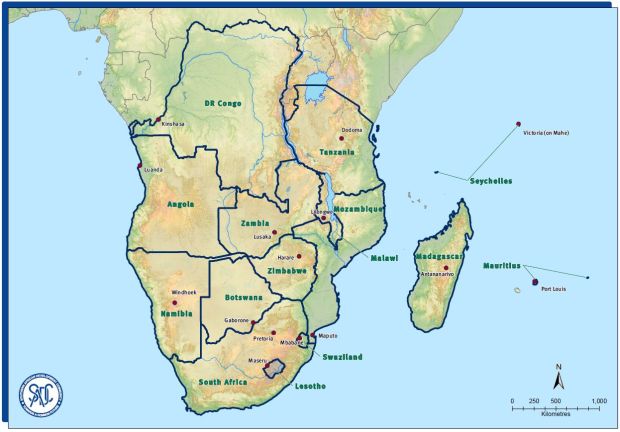
Secondly, reportedly, kidnappings, human trafficking, and ritual murders, often referred to as ‘muti murders’, are well-known crimes in nearly all 16 member-states of the Southern Africa Development Community (SADC). This is shocking. The combined population living in the 16 SADC-countries totals about 300 million people.
Lastly, the well-informed author confirms the ghastly details of the way muti murders are committed. Organs or other body parts are extracted live from the poor and helpless victims, not seldom children. The reality is sometimes too hard to describe and too revolting to imagine.
Ritual murders, human trafficking, kidnappings, and associated fear and torture are a plague in many African countries and must stop immediately. To the governments which have a sacred obligation to protect their citizens I would say: ‘If you’re not part of the solution, you’re part of the problem.’ (webmaster FVDK).
Muti murders: ‘Genitals only work if cut from live victims’
Published: May 20, 2021 By: The Citizen, South Africa – Eric Naki
Victims were lured with promises of jobs, but when they arrived at the destination, they would be abducted and taken away to have their body parts cut off.
An expert on ritual murders, Dr Alunamutwe Rannditsheni, from Limpopo, said ritual killings were a worldwide phenomenon and not only an African problem.
Almost all of the SADC countries experienced ritual killing-related kidnappings and human trafficking.
A 2008 investigation by the Human Rights League in Mozambique found such murders were rife in the country. It found people were trafficked between countries with the purpose to remove parts to be trafficked separately.
The league, which interviewed survivors, eye-witnesses, families of victims and civil society in Mozambique and South Africa, found body parts were forcibly removed from children and adults, causing death or severe disability.
“Throughout the report, informants share personal experiences, which confirm that body parts are taken across the border between South Africa and Mozambique.”
A custom’s official in Sofala province, Mozambique, said: “They say the treatments with genital organs only work if they are taken from a person alive.”
In some instances in Mozambique, victims were beheaded before the parts were removed.
“The murderer cut her throat like she was a goat. He cut her head just like that and removed her genital organs, leaving all the rest,” the report quoted a police officer at Cabo Delgado Province, Mozambique as saying.
In another case, a female stall holder at Ressano Garcia on the border with South Africa was fingered for ritual murders.
“The police searched and found that she was carrying genital organs of adult men … I don’t know how many exactly, it was several. But they were from adult men, I saw them myself,” an officer said.
Cases of muti killings were also reported in Zimbabwe, Botswana, Mozambique, Swaziland, Lesotho, Malawi and Tanzania. People living with albinism were the main targets in Tanzania.
Community leader and businessman Phumudzo Mukhwati alleged the ritual murder gangs had spread to provinces such as KwaZulu-Natal, Mpumalanga, North West and Gauteng.
Victims were lured with promises of jobs, but when they arrived at the destination, they would be abducted and taken away to have their body parts cut off in Limpopo or a neighbouring country.
The Southern African Development Community (SADC) comprises 16 Member States: Angola, Botswana, Comoros, Democratic Republic of Congo, Eswatini, Lesotho, Madagascar, Malawi, Mauritius, Mozambique, Namibia, Seychelles, South Africa, Tanzania, Zambia and Zimbabwe.
Previous posts related to the murder of Mordecious Nyemah, who was the victim of a ritual murder on March 25, have been published on April 3, 5 and 22.
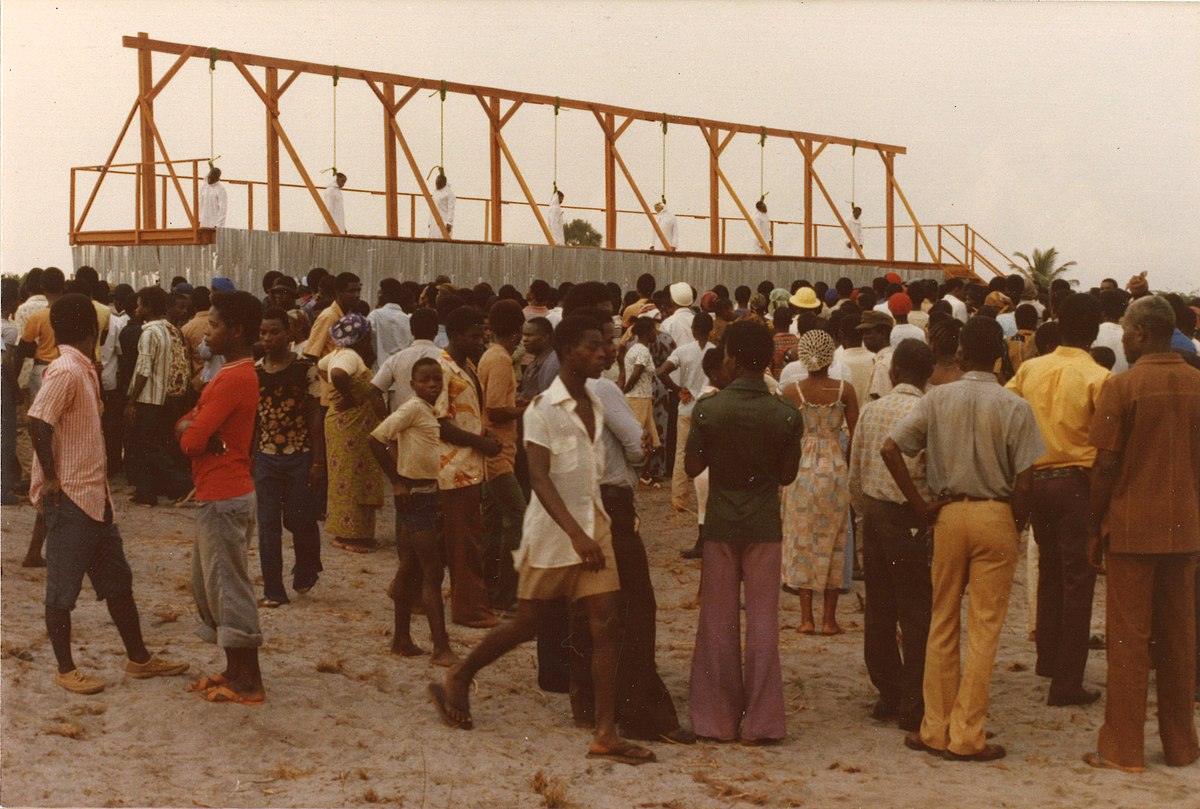
Last Saturday, May 15, Maryland County’s Superintendent, George A. Prowd, spoke memorable words at the funeral of the late Mordecious Nyemah. Prowd mentioned Maryland’s bad reputation as ‘Gboyo-business’ is concerned and more specifically he referred to one of his predecessors who was publicly hanged after being found guilty of a ritualistic murder. Superintendent James Anderson was one of seven convicts who were publicly executed at dawn in February 1979, a memorable event which made history as ‘The Hanging of the Harper Seven’. (NB Superintendent Prowd inadvertently called his condemned predecessor Allen Yancy. Yancy was one of the hanged Harper Seven, but was a member of the House of Representatives when he committed his atrocious crime.)
Superintendent Prowd lauded the police for acting swiftly and arresting the suspects of the killing of Mordecious Nyemah. He cautioned the people to remain law-abiding. It may be useful to recall that public protests over the ritualistic murders in the county led to rioting which even caused the government of President Weah to impose a curfew. (webmster FVDK).
Liberia’s most notorious ritual murder case culminated in ‘The Hanging of the Harper Seven’. Readers who are interested in more information, please click here Photo: FRED VAN DER KRAAIJ
Murdered Mordecious Nyemah finally interred
Published: May 18, 2021 By: The New Dawn, Liberia – By Patrick N. Mensah, Maryland County–Editing by Jonathan Browne
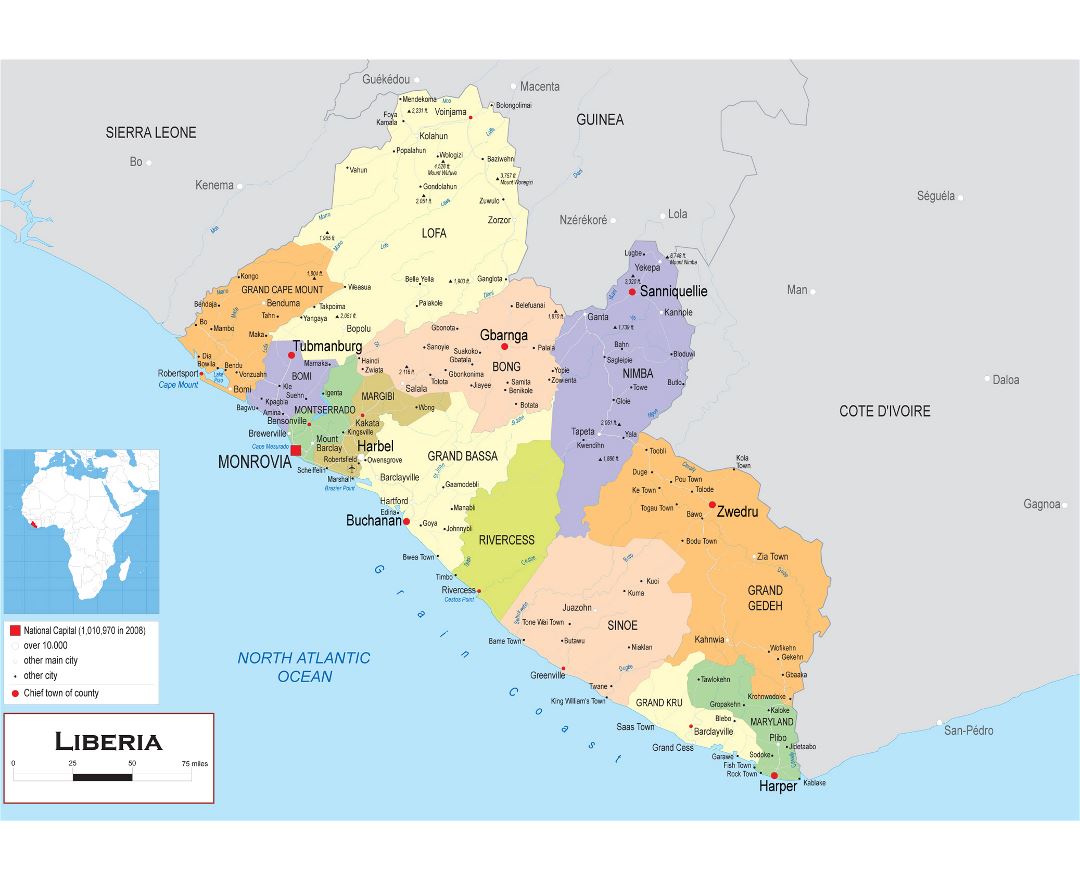
The remains of the late commercial motorcyclist Mordecious Nyemah, who was gruesomely murdered on 25th March 2021 in Maryland County have been laid to rest, two months after the killing that sparked violent protests in the county by angry citizens.The deceased was reportedly murdered by suspects Moses Mlarmah and others near Bassiken town between Gand Kru and Maryland. His remains were finally interred on Saturday, May 15, 2021.
The home-going ceremony for the late motorcyclist, also a student, was held at the Maranatha Heritage Assembly of God Church in Pleebo, Maryland County Electoral district#2. Sympathizers included county authorities, representatives of the business community, students and women groups, national security, religious community, Civil Society Organizations, traditional chiefs and elders, among others.
Maryland County Superintendent George A. Prowd applauded citizens for attending the burial of the late Mordecious Nyemah, whose murder he described as worrisome. He assured family of the deceased that justice will be accorded them for the murder of their son.
Superintendent Prowd said the Government of Liberia is committed to protecting lives of citizens and foreign residents, while condemning ritualistic killings across the country. According to him, there have been several death cases since he took office as superintendent, but the case of the late Mordecious Nyemah has drawn attention of both citizens and national government. Superintendent Prowd recalled that in the late 70’s, similar situation occurred in the county that involved former superintendent Allen Yancy and other high profile officials, who were tried, adjudged guilty and hanged.
“When you reflect your minds back to Maryland Gboyo history, you will get to know that most of those people, who were involved into ritualistic killings by then, were mostly government officials. I remember, there was a superintendent in Maryland who was caught for ritualistic killing and was hanged and because of this, many citizens look at us as suspects of these current ritualistic acts that are happening in this county”, Superintendent Prowd lamented. He expressed excitement that suspects have been arrested and placed behind bars, awaiting court trial in connection to the murder of the late Mordecial.
“We are too happy and thankful to God that one of the suspects, Moses, who was the first to be arrested, without medicine, without threats or torture, he’s started calling names of people who are involved into the death of Mordecial”, Prowd added. He continued that in as much the suspects are behind bars, there’s a strong case, and burial of the late Modecious doesn’t in anyway end the case.
The superintendent cautioned citizens to remain law-abiding and assist government in the ongoing hearing rather than staging protests that would disrupt the county and shut down economic activities. He county authorities, including the Maryland Legislative Caucus have received series of letters from parents and other concerned groups over the release of alleged rioters that are in prison in Zwedru, Grand Gedeh County.
Prowd disclosed that those letters were sent to national government, and prayed that as soon as the case is being looked into and suspects are found guilty, it would be easy for President Weah to extended executive clemency. He urged parents of those suspects to remain peaceful as government is working out modality to transport at least three members of the bereaved family to Zwedru for the trial.
On April 5, 2021, police arrested and sent to the Zwedru Correction Palace scores of suspects, including Morris Senneh, President of the Pleebo Motorcyclists union, Thomas Kumah, president of Maryland County youth, Mamadou Diallo, Edward Toe, Sieh Gray, Edwin Lawal, Salu Ali, Lawrence Jarbee, and Wilfred Kuoh.
Also being held for the murder and subsequent rioting are Eugene Koppeh, George Nimely, John Davis, Patrick Wilson, Augustine Navy, Micheal Doblah, Sawo Bedel, Robert Wesseh, Fred Johnny, Peter Bestman, Moses Toe, Mashel Doloson, Thomas Kuma, Joseph Bannie, George Segbeh, Mark Freeman, Michael Tugbeh, Winston Smith, Christopher Dweh Prince Kouh, George Weah, John Collies, Chris Porka and Sham Beyslow.
They are accused of involving in multiple crimes during mass protests in demand of justice that led to the damage of government’s properties, including arson attacks on the home of Speaker Bhofal Chambers in Pleebo Sodoken district, Maryland County. The violence led President George Weah to impose a dusk to dawn curfew in the entire county, which subsequently calm the tension.
Ritual murder, human sacrifice, and even cannibalism are no unknown phenomenons in Sierra Leone, as can also be understood from the article below. In this West African country, the disappearance of people inevitably leads to rumors and speculation of ritualistic activities, creating fear and causing parents to keep their children nearby, at home, and not to send them to school.
In the situation described below there are no firm indications of criminal activities but the people are alert. They know the history of their region. Forewarned is forearmed. (webmaster FVDK)
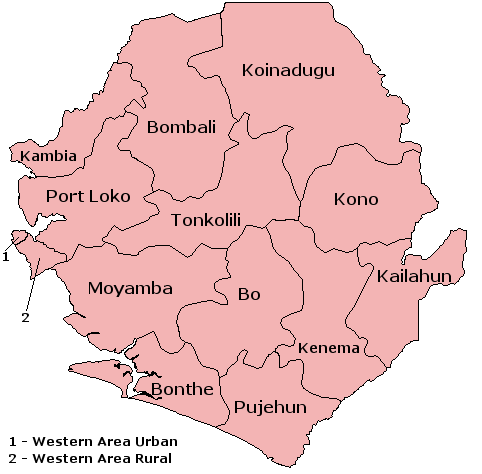
Ritual murder fear grips Kenema
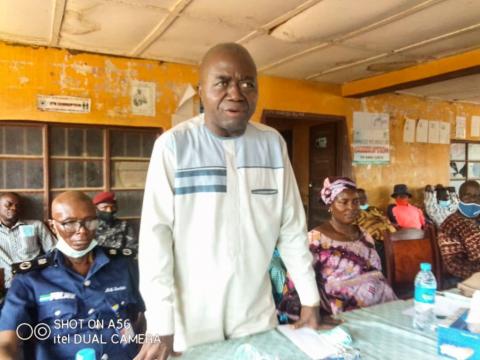
Resident Minister East, Andrew Ansu Fatorma addressing the people of Niawa Chiefdom in Kenema District
Published: May 11, 2021 By: Politico SL, Published by FreeMedia Group – Prince J. Musa
Two months ago I posted on this site a cry from Nigeria, ‘Let the carnage of ritual killings stop‘. Unrelenting, the editors of the Leadership, a leading Nigerian newspaper, again draw attention to the alarming rate of ritual murders and related crimes in the country. I have repeatedly done the same on this place.
This site is entirely devoted to the crime of ritual murders, based on superstition and belief in witchcraft, fed by an insatiable greed for power, wealth or a good health, and facilitated by a weak enforcement of the rule of law, impunity, and in the worst cases, the connivance of people in high places who are put in this position by the people they are supposed to protect. Ritual murders are a flagrant and intolerable violation of the human rights of the victims, whereas a sovereign state is obliged, often by its constitution, to protect its citizens.
It is sheer impossible to report and react here on all ritual murders and other money-ritual related crimes which are surfacing and are being reported and published in various newspapers. It goes without saying that an unknown number of ritual murders are never discovered.
In the past six months I have collected numerous articles on ritual murders in at least 15 Nigerian states: Adamawa, Anambra, Bauchi, Delta, Edo, Enugu, Imo, Kaduna, Kwara, Lagos, Ogun, Ondo, Osun, Oyo, Rivers (which I have not yet been published on this site), although I have reported frequently on money-ritual related crimes in these states (from 2018 onwards). Moreover, I reported various cases of ritual murders and related crimes in other states: Abia, Akwa Ibom, Bayelsa, Benue, Ebonyi, Ekiti, Kebbi, Kogi, Nasawara, Niger, Taraba. Hence, altogether, 26 out of Nigeria’s 36 states. When consulting the general folder ‘Nigeria’ the reader will find other articles, of a more general nature, on the scourge of ritual killing in Nigeria, the Yahoo boys, mob justice, and other atrocities.
The seemingly recent rise of ritual killings in Nigeria has been mentioned here earlier. I only wish to refer to a 2014 article which I published in December last year. In it it was alleged that ritual killings were everywhere in Nigeria. Older reports of ritual murders as far back as 2001 can be found here.
It must be emphasized, however, that nowadays an increasing number of Nigerian raise their voices against these outdated and revolting practices which are ritualistic murders (see the folder ‘Nigeria voices’), among whom the editors of the Leadership newspaper, who are to be commended for the article below (webmaster FVDK).
The Scourge Of Ritual Killings In Nigeria
Published: May 10, 2021 By: Leadership, Nigeria – Monday Column
Iniobong Umoren was a young woman in her early 20’s who lived in Uyo the Akwa Ibom State capital. She shared, on Twitter, her need for a job, and one Twitter user named Uduak Akpan asked her for a private chat concerning her application. According to police reports, Mr Akpan asked Ms Umoren to meet her at a particular location in Uyo.
When the unsuspecting lady got there, the sinister man raped her, killed her, and buried her in a shallow grave. Unfortunately for the serial rapist and murderer, the lady gave her friend the phone number of the person who invited her for an interview. This number led to the apprehension of the culprit after the lady was declared missing for days.
There were reports that Ms Umoren’s gruesome murder was not just a case of rape and murder but that it also involved ritual killing. Mr Akpan’s entire family is said to be involved in the barbaric business of ritual killings.
Two weeks ago, a report indicated that in Kwara State, a next-door neighbour allegedly murdered a groom-to-be for ritual purposes. According to the account in Vanguard, the deceased, who was said to be a devout Christian, did not know that his neighbour with whom he used to eat together was a serial killer and ritualist who has twice served jail terms. This wolf-in-sheep-clothing neighbour allegedly killed his victim, removed some sensitive body parts, poured acid on his remains for speedy decay to prevent it from fouling the area.
Last February in Port Harcourt, a suspected ritual killer was arrested while attempting to sacrifice a nine-year-old girl in the Ibaa community in Emuoha Local Government Area of Rivers State. According to a report in Punch newspapers, the girl’s parents had raised the alarm over her sudden disappearance after she went to dispose of refuse in a nearby bush. It happened that the suspect had taken the minor to an abandoned compound, tied her with white cloths, applied white clay on her body with a coffin already stationed for the ritual purpose. He was in the process of performing the ritual when he ran out of luck.
In 2019, Port Harcourt made international headlines in ritual killings with the case of Gracious David-West, Nigeria’s most celebrated ritual killer in recent times. From July to September 2019, David-West killed at least 15 women, mainly in the Rivers State capital city. After his arrest, he confessed to at least 15 murders.
Official statistics indicate that there has been an increase in the number of missing persons all over the country in recent times. Some are found, while others are not. There is speculation that majority of those who disappear perpetually without a trace are often victims of ritual killings.
Incidents of ritual killings have assumed an alarming rate in Nigeria. There seems to be little or no effort by concerned government agencies to checkmate the trend. We expect that such cruel and barbaric act would no longer exist in our society given our level of exposure, enlightenment, and civilisation . Ironically, as our communities seem to be getting more religious given the proliferation of churches and mosques in all nooks and crannies of the country, it seems these heinous acts are increasing as the quest for filthy lucre pervades our society.
It is disheartening to point out that as developed societies invest in science and technology to keep abreast with a dynamic world, ours are still stuck in the mistaken belief that sacrificing human blood is the surest route to wealth, safety, and protection.
No doubt, ritual killings are performed to obtain human body parts for rituals, potions, and charms. Ritualists search for ‘human parts’ at the request of herbalists, who require these to make sacrifices or prepare various magical potions to give power and wealth to an individual. Some people engage in ritual killings to obtain charms that would make them invincible and protect them from business failure, illness, accidents, and spiritual attacks. Whether they succeed or not is open to debate. However, it is not easy to prove a link between such sacrifices and financial success or any type of success empirically.
Amongst a large group of Nigerians, including the well-educated and people from different faiths and social backgrounds, there is a strong belief in the supernatural and the effectiveness of rituals. This belief has a direct correlation to the prevalence of ritual killings. It is a well-known fact that some elite in society indulge in ritual killings. Some people apprehended for ritual killings, and witch doctors who perform the sacrifices accused politicians, government officials and wealthy businessmen as their sponsors. They are said to use human beings for rituals to sustain their affluence and remain in positions of power.
Therefore, it is not surprising that there are usually increased cases of mysterious disappearances and ritual killings during elections. Some desperate, fetish and superstitious politicians always consult herbalists and native doctors during elections to help them overcome their opponents. These spiritualists usually demand human heads and other body parts to perform hedonistic rituals.
Given the rate of increase of ritual killings, no one is immune from becoming a victim. But some people are at greater risk. People with mental illnesses and virgins are unique targets as the ritualists allegedly believe that their eccentrics and purity make for a more viable sacrifice. Also, people living with albinism have equally become victims of ritual killings, fuelled by the belief that their ‘body-parts’ could allegedly make one wealthy or prolong one’s life.
Sometimes, it is difficult to understand the mind of the ritual killer. How can someone take another person’s life in the quest for wealth, protection, and power? More worrisome is that sometimes it is not just an issue of a depraved mind but also a depraved group of minds.
Sometime in 2017, Lagos State, the country’s commercial hub, was gripped by Badoo ritual killings. According to news reports, over 50 people were killed by a Badoo Boys group, who moved about with an air of invincibility until the Nigerian Police routed them.
The Vanguard newspaper reported about the activities of the group thus: “Before the raid and subsequent arrest of over 200 suspected members of the cult group by the Police with the support of the Oodua Peoples’ Congress, OPC local vigilante and the Neighbourhood Watch Corps, Badoo Boys had been unleashing an orgy of killings, during which they crush the skulls of their victims. Their modus operandi included storming victims’ residences while they are asleep”.
People suspected that they usually hypnotize their victims, as none of them had ever been conscious of their presence. After that, they would smash the heads of their victims with a grinding stone and use a handkerchief to clean the blood and brain before leaving the scene.
During interrogation, one of the suspects confirmed that “they sold each handkerchief stained with blood for N500,000. He further revealed that they were mere errand boys for rich politicians within and outside Lagos state. But in their case, the blood and semen-stained handkerchief were used to prepare the spiritual defence for some wealthy Nigerians.”
What are the root causes of ritual killings? How can society tackle this menace? What role should the government and relevant agencies play in ameliorating the negative impact of these dastardly acts?
Poverty and economic hardship in the land are reasons for ritual killings. However, these are not justifiable reasons to commit ritual murder. Impunity encourages ritualists to commit murders because they believe they will not be apprehended or punished.
Another reason for ritual murders is the collapse in our moral values, ignorance and superstition, and lack of an adequate punishment system. We should also consider poverty and unemployment as a significant risk factor. If Nigerians have equal opportunities to earn income legitimately, there will be a reduction in horrific crimes such as banditry, human killings for ritual, and terrorism.
Besides, the inordinate quest and pursuit of quick wealth are said to be driving some people to resort to the use of human parts for rituals. And some usual suspects include fake clerics and herbalists who carry out the ritual practices for their clients.
Some analysts have recommended that government should investigate suspected pastors and imams and checkmate their activities because what they do under cover of being religious leaders sometimes leaves much to be desired.
o curb the increase in ritual killings, the government should thoroughly explore the intelligence-gathering approach and prosecute arrested culprits. Timely arrest and prosecution of arrested suspects would serve as a deterrent to anybody contemplating perpetrating ritual killing. Record of successful prosecution of ritualist is not in the public domain. When there are not consequences for deviant behavior , it is incentivized.
For the public, commuters should always write down the identification markings of public conveyance vehicles they enter and make phone calls to loved ones to pass on the information. In the case of Iniobong Umoren mentioned earlier, the fact that she confided in her friend about the phone number of the person that invited her for an interview was instrumental in apprehending the culprit.
Most ritual murderers always wish to be unidentified. They want to kill people but do not wish to be apprehended. Once information about them has been exposed to someone else, it becomes difficult for them to remain anonymous and perpetrate evil.
Commuters should also assess public transport vehicles before boarding in order not to board vehicles occupied by hoodlums. I advise ladies to carry whistles on them to raise the alarm if there is an attempt to abduct them.
In addition to these, people should avoid staying in isolated areas where criminals can quickly attack without being noticed, and everybody should be conscious of their immediate environment.
The spate of ritual killings has become so problematic that our political leaders should declare a national emergency on the crises. I call for stiffer jail sentences to deter potential perpetrators from engaging in ritual killings. Citizens should have trust and confidence to motivate them towards providing credible intelligence for security operators.
We should also make good use of whistleblowers. These are invisible law-abiding citizens whose primary function is to disseminate information that provides details towards the arrest of suspected ritual murderers. They should be anonymous, and the law-enforcement institution should not reveal them as their link persons.
The fight against ritual killings and other menaces in our society is for all. We should not rest until we create a culture where we always uphold the sanctity of life at all cost and the safety of everyone is guaranteed irrespective of social status, religion, or ethnic background. This task calls for authentic leadership. We must swim or sink together . Our only option is to swim to survive the social disaster we are becoming as a nation because of the collapse of morality, ethics, and law.
NB: This article was also published, under the same title, in ‘Premium Times’, signed by Dakuku Peterside. It is not clear which article is the original one. I apologize to the original author in case I haven’t attributed the article to the right author. (webmaster FVDK) Source: The Scourge of Ritual Killings In Nigeria, By Dakuku Peterside
Recently, Ghana was shocked by the Kasoa ritual murder case. It’s not common knowledge that ritual murders are no exception in Ghanaian society. Also belief in witchcraft is widespread in this West African country which nevertheless has a very positive reputation as one of Africa’s most advanced countries, rapidly developing.
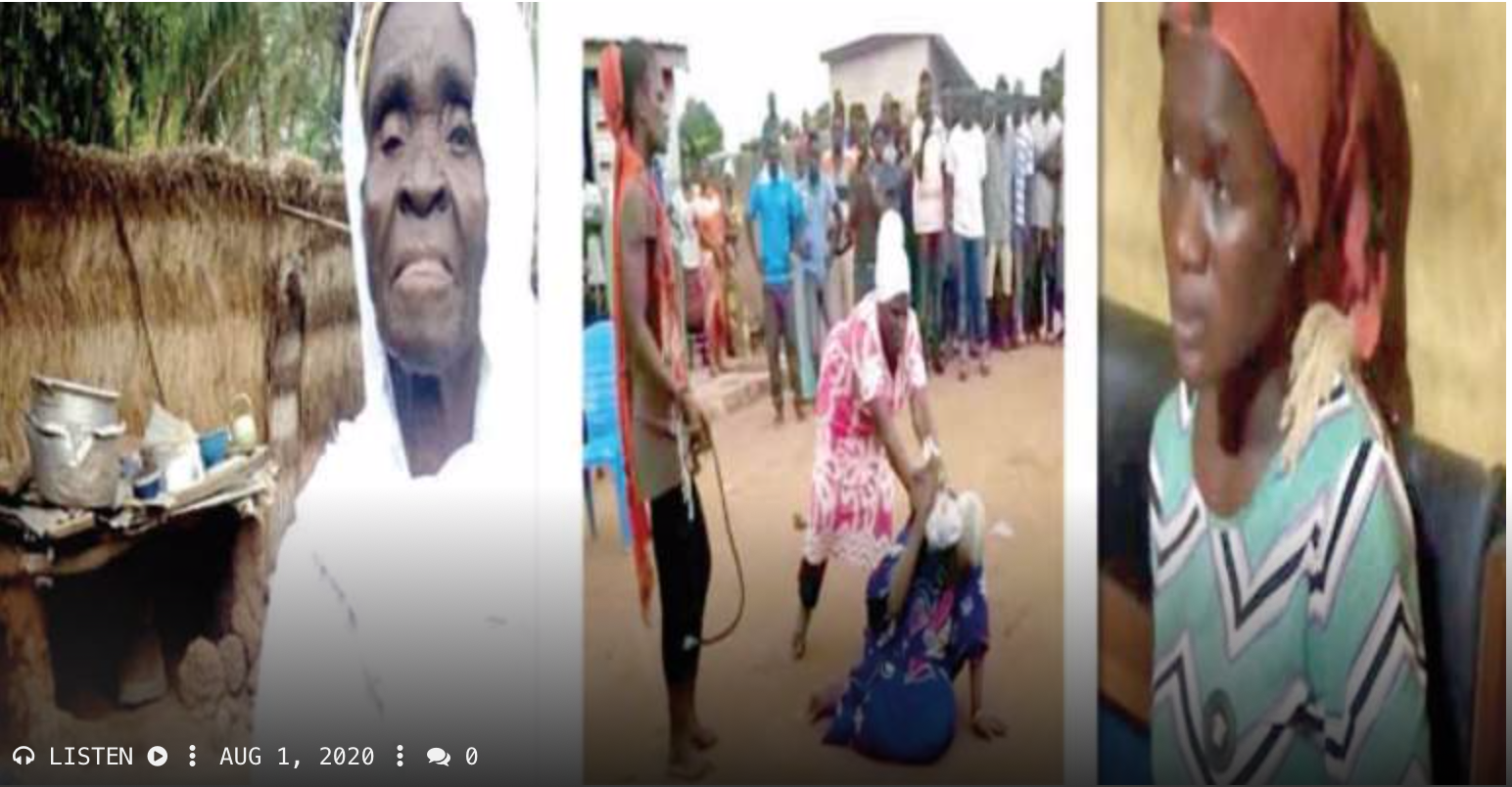
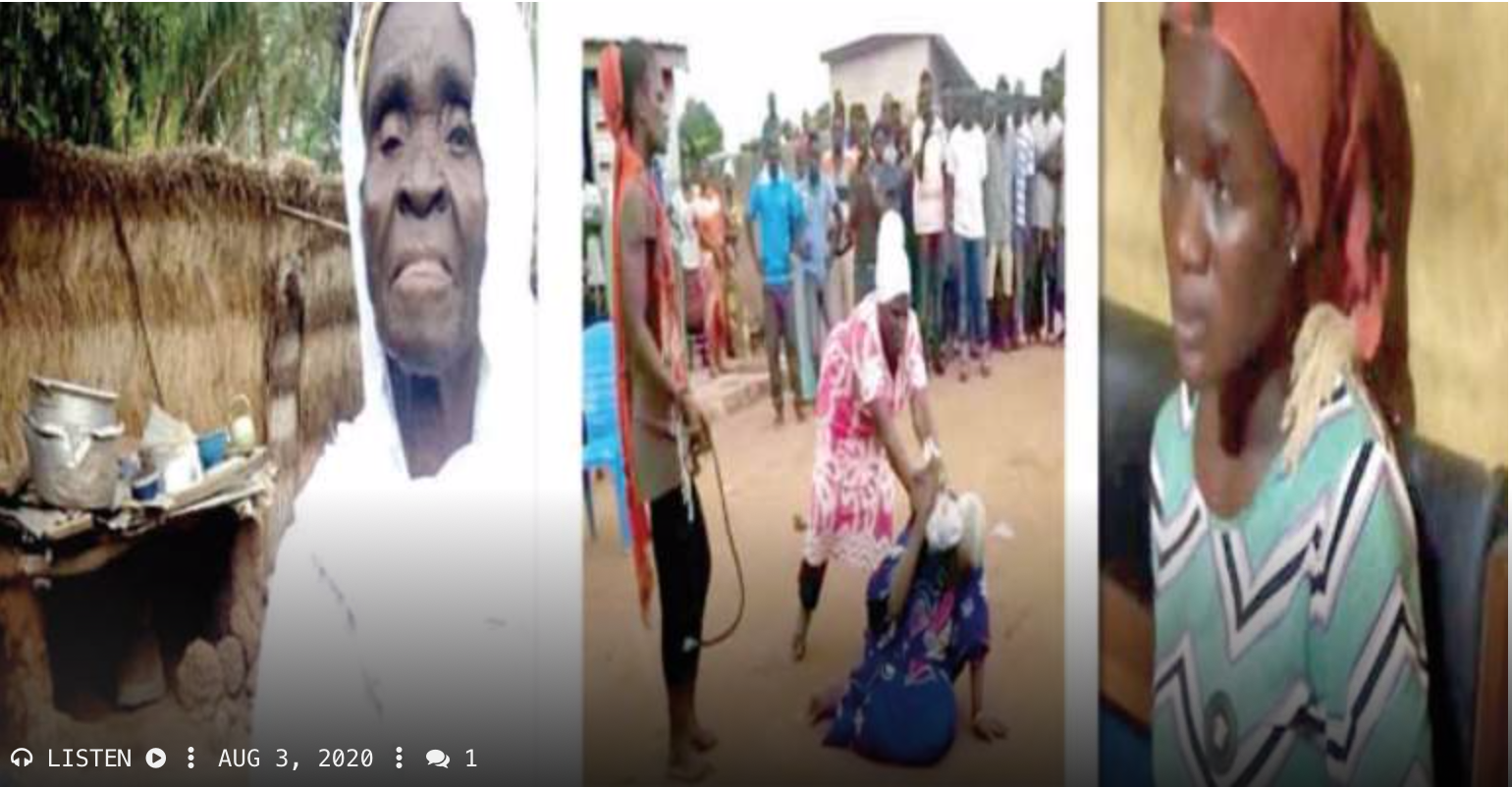
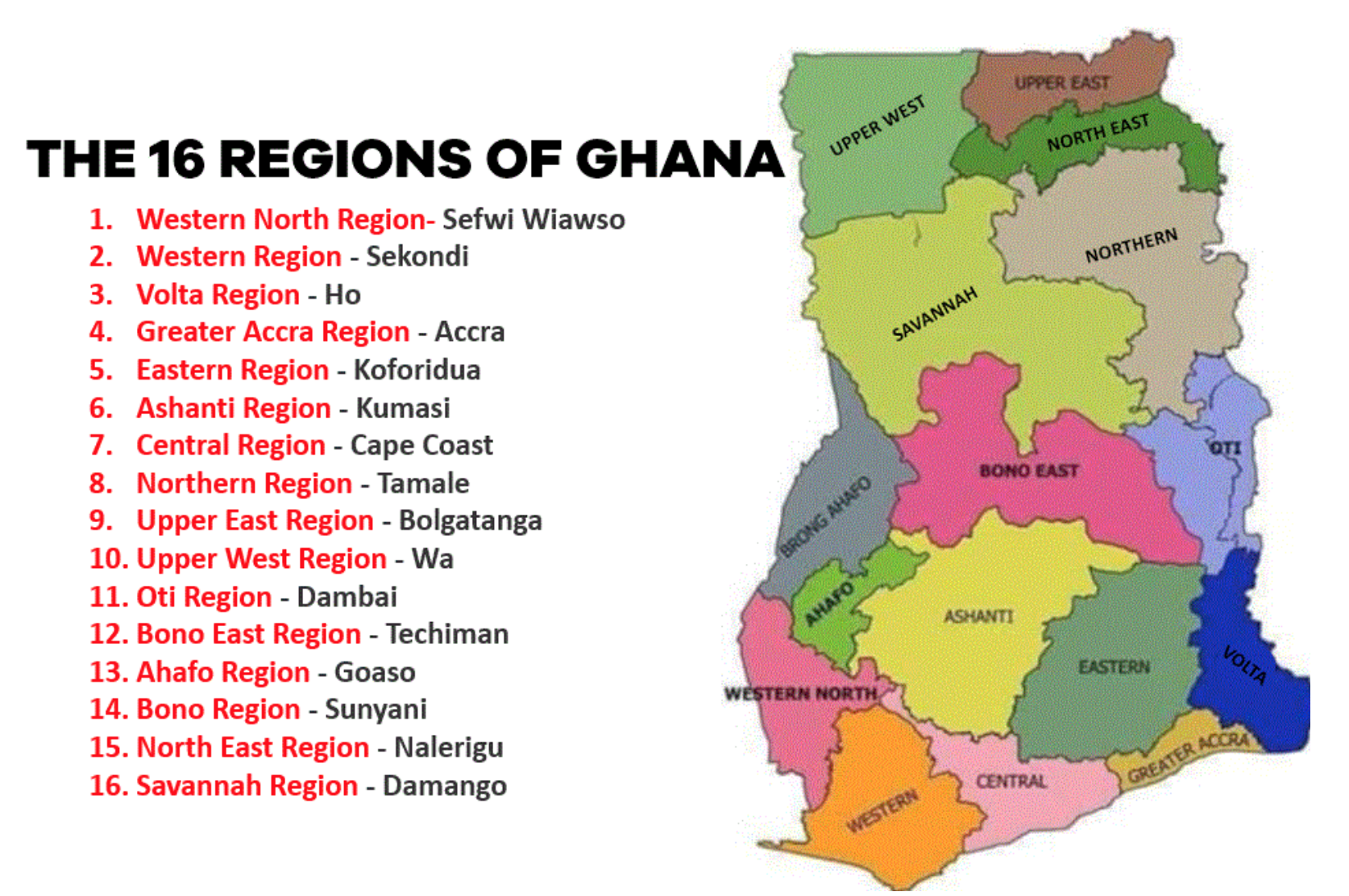
The lynching of Akua Denteh, a 90-year old woman in the Savannah region, in central Ghana, who was accused of being a witch caused national-wide outrage. It happened at Kafaba near Salaga in the East Gonja Municipality of the Savannah region, on July 23, 2020. After a local priestess, Sherina Mohammed alias Alhajia Filina (40), had accused the nonagenarian of witchcraft, a mob attacked the old, frail woman. Two women slapped, kicked and caned her with a whip, the horror was filmed by by-standers who did not intervene to stop the insane and atrocious cruelty which led to the death of this mother of nine children. The horror-movie was widespread on social media, but I find the video too gruesome and repulsive to show here.
And now, in 2020, the cruel and inhumane treatment of people – mostly women and children but also men are occasionally targeted – accused of witchcraft has resulted in yet another innocent victim of superstition. Will it end here?
The police acted swiftly and apprehended the priestess as well as the culprits who tortured and murdered Akua Denteh. However, the recent Kasoa murder case shows that superstition has far from vanished from Ghanaian society. The war against superstition, belief in witchcraft and ritualistic killings is far from over. (webmaster FVDK)
Lynching of 90-year-old Ghanaian woman suspected of witchcraft scars national conscience
Published: July 28, 2020 By: Face2Face – Nii Ntreh | Associate Editor
A 90-year-old Ghanaian woman in the north of the country was lynched to death last week by a mob who had been convinced that frail and diminutive Akua Denteh was a witch.
According to local sources, Denteh was accused by a popular traditional priestess in the Savannah region of the country, who traced the misery and misfortune of a few people as well as the community to the nonagenarian. This followed a long-held suspicion by some youth in the community.
The ensuing mob justice after the priestess’ confirmation was as swift as it was merciless.
A viral video of the lynching shows a small crowd that had circled the helpless old woman as she sat in the dirt. In the middle of the circle, those who were perhaps more incensed with Denteh’s alleged witchery – two visibly irate women in particular – beat her up, one of them, with a whip.
The video is only forty-five seconds long and does not include footage of what has been reported as the commitment of more people to beat Denteh up. But since the video came to light and drew the response of the police, many of the onlookers as well as those seen assaulting the old woman, have reportedly fled into hiding.
Ghana‘s president, Nana Akufo-Addo, has called the incident a “tragic act” that has “disfigured” the country’s image. A former head of state Jerry Rawlings has also called for a quick resolution to a “cruel and barbaric lynching”.
Social media platforms too, Facebook and Twitter specifically, have been awash with statements from individuals and organizations condemning Denteh’s murder. But perhaps, the sentiments of civil society, however well-intentioned, are at best, anodynic and polite.
A 2015 Global Attitudes Survey by the Pew Research Center found that about 90% of Ghanaians described themselves as religious, belonging to the Christianity, Islam, variants of the Eastern religions or traditional African faiths. But the belief in witchcraft, not argued by the Pew survey, is very rife regardless of one’s faith.
The pervasiveness of belief in witchcraft in Ghana can be seen through the popularity of the biggest movies produced by the country’s hugely-successful Kumawood (Kumasi Hollywood) industry. Since the 1980s too, Ghana has witnessed the astronomic proliferation of evangelical churches that market themselves as “solution centers” to spiritual problems.
Some of these churches are referred to as prayer camps where people are supposed to be delivered of demonic possessions. Apart from churches, some animistic believers in northern Ghana, not far from where Denteh was murdered, have witch camps, where older women are held on accusations of witchcraft, sometimes until their death.
The most famous of these camps, the Gambaga witch camp, has been studied by social scientists across the world.
However, much in the fashion of the Comtean sociological perspective, many educated Ghanaians seem to think that belief in witchcraft and hardcore spirituality is in the nature of the uneducated poor.
With what is already known about Ghanaian society, the lynching of Denteh seems like the ugly manifestation of serious neglected underlying tensions.
The police have mounted a search for one Tanko and his accomplices who allegedly masterminded the lynching of a 90-year-old woman at Kafaba near Salaga in the Savannah Region on the accusation that she was a witch.
The incident happened on Thursday, July 23, 2020 in the East Gonja Municipality.
The old woman whose body has since been deposited at the Tamale Teaching Hospital (TTH) mortuary has been identified as Akua Denteh.
The Savannah Regional Police Commander, Deputy Commissioner of Police (DCOP), Mr Enoch Adutwum Bediako told Graphic Online that some more police officers have been detailed to the area to effect the arrest of the suspects who subjected the victim to severe beatings which led to her death.
What happened?
DCOP Bediako told Graphic Online that at about 4pm on Thursday, July 23, 2020, Mahama Salami aged 60 years of Mempeasem, a suburb of Salaga reported to the police that he had received information at 11 am from his sister, Mahama Memuna that his mother, Akua Denteh aged 90 had been accused of being a witch.
This was because a certain fetish priest in the area had said so.
DCOP Bediako said based on that the old woman was subjected to severe beatings by Tanko and his accomplices until she became unconscious and died.
He said when the matter was reported to the Salaga Police they proceeded to the scene at Kafaba, which is about 21 kilometres from Salaga and saw the lifeless body of the victim.
He said an inspection conducted on the body of the victim revealed a cut on the forehead and bruises on the right arm.
After processing the scene as part of investigations, the body was sent to the TTH mortuary for preservation.
DCOP Bediako said the police are on the heels of those who perpetrated the act for the law to deal with them.
The issue of witchcraft allegations, especially against old women are widespread in the northern part of Ghana.
Kafaba ‘Witch’ Killer Grabbed After Trying To Escape To Yeji
KILLED! Akua Denteh, The 90-year-old woman being assaulted by the suspects, GRABBED! Latifah Bumaye
Published: August 1, 2020 By: Modern Ghana –
A key suspect in the lynching of Akua Denteh, a 90-year-old woman, over allegation of witchcraft at Kafaba in the Gonja East Municipality of the Savannah Region, has been grabbed by the police after she tried to escape from the area.
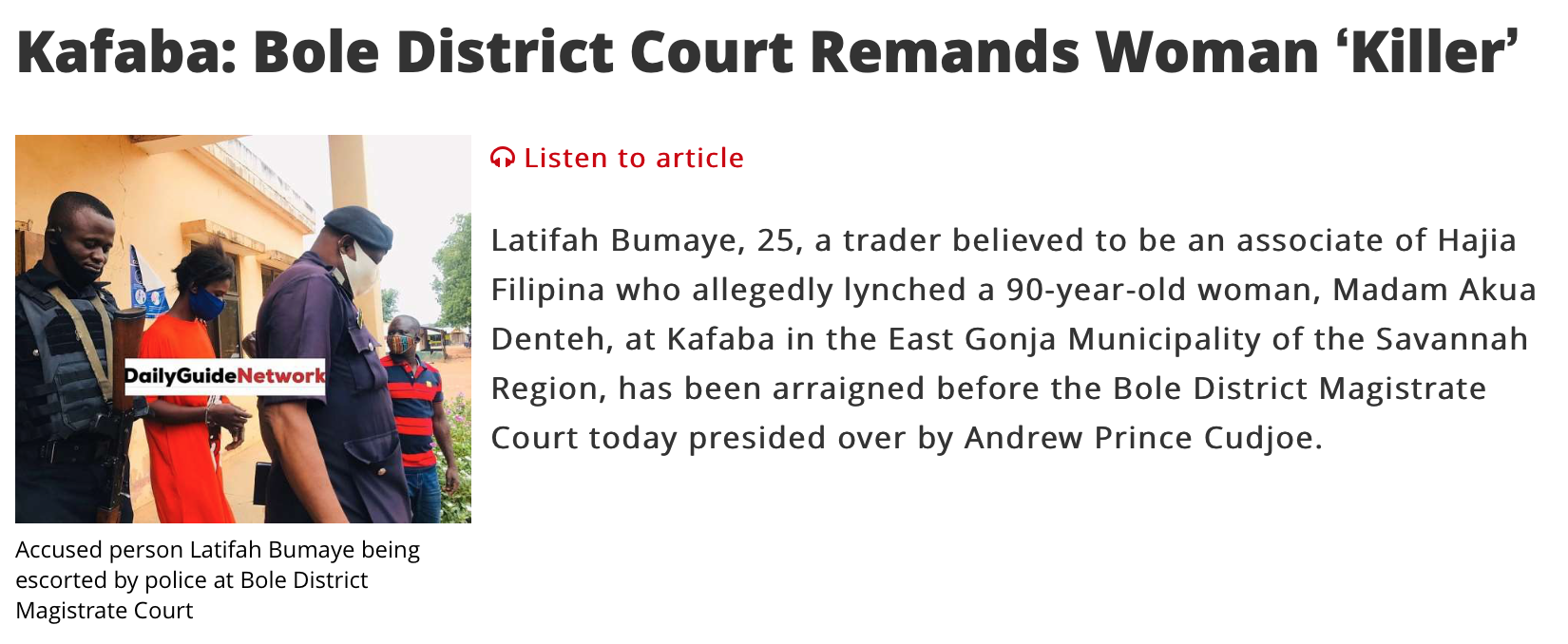
Latifah Bumaye, believed to be an associate of the ringleader, Hajia Filipina, was picked up at Kejewu Bator, a fishing community under the Abrumase Police within the Salaga Division at East Gonja, while going to Yeji.
According to police sources, they heard about the hideout of the suspect and dispatched detectives to Kejewu Bator where she was picked up and escorted back to the Salaga Divisional Command.
DAILY GUIDE understands that she is being processed to be sent to the Regional Police Command in Damongo for further action.
The suspect is believed to be one of the two ladies seen in the viral video lynching the 90-year-old woman because they claimed she was a witch.
She is believed to be the woman in the video menacingly whipping the old lady with a long whip which she brandished. Meanwhile, the chief suspect, Filipina, is yet to be apprehended.
More Suspects
Five people, who are believed to have participated in the lynching which has since sparked national outrage, have been remanded in police custody by a district court at Bole.
They pleaded not guilty and the court, presided over by Andrew Prince Cudjoe, remanded them until August 20.
The suspects – Haruna Aness, 34; Issaka Tanko, 35; Shaibu Murtala, 29; Sulemana Ali, 35; and Issaka Sachebu, 32, have been charged with conspiracy and murder.
The Chief of Kafaba, Seidu Yahaya, under whose jurisdiction the incident occurred, has also been granted police inquiry bail.
The police placed a GH¢2,000 reward for anybody that would help in the arrest of the suspects; and yesterday, a benevolent individual placed a GH¢5,000 reward for anybody who could assist the police to arrest Filipina.
Kafaba: Bole District Court Remands Woman ‘Killer’
Published: August 3, 2020 By: Modern Ghana
The accused person was provisionally charged with murder.
The case prosecutor, chief inspector Abdulai B. Awuni, pleaded with the court to remand the accused person for further investigation.
The judge granted the request of the police prosecutor and demanded the accused be remanded into police custody to reappear in court on August 20, 2020.
The charge was read and explained to the accused person but her plea was not taken.
More Suspects
Five people, who are believed to have participated in the lynching which has since sparked national outrage, have been remanded in police custody by a district court at Bole.
They pleaded not guilty and the court, presided over by Andrew Prince Cudjoe, remanded them until August 20.
The suspects – Haruna Aness, 34; Issaka Tanko, 35; Shaibu Murtala, 29; Sulemana Ali, 35; and Issaka Sachebu, 32, have been charged with conspiracy and murder.
The Chief of Kafaba, Seidu Yahaya, under whose jurisdiction the incident occurred, has also been granted police inquiry bail.
The police placed a GH¢2,000 reward for anybody that would help in the arrest of the suspects; and yesterday, a benevolent individual placed a GH¢5,000 reward for anybody who could assist the police to arrest Filipina.
Madam Akua Denteh was lynched at Kafaba in the East Gonja Municipality in the Savannah Region.
The woman was openly beaten to death by Hajia Filipina,the soothsayer with support from a mob in the community.
The main suspect, Hajia Filipina, as at the time of filing this report was still on the run.
Kafaba Killing: Woman ‘Killer’ To Face Court Today
Published: August 3, 2020 By: Modern Ghana
One of the key suspects in the lynching of 90-year-old Akua Denteh at Kafaba will be arraigned today, August 3.
Latifah Bumaye was arrested last week at Kejewu Bator, a fishing community along the Volta lake.
She was seen in a viral video continuously hitting the deceased with an object.
The deceased, Akua Denteh a fortnight ago was tortured after she was accused of being a witch.
The Savannah Regional Police earlier arrested five persons who are also linked to the incident.
They have been charged with conspiracy to commit murder and have been remanded in police custody to reappear before the court on August 20.
Speaking to Citi News, Savannah Regional Police Commander, DCOP Enoch Adutwum Bediako said investigations are still ongoing.
“She was arrested on Monday at Kejewu, a small community along the Volta lake. All she keeps saying is that she doesn’t know what was happening to her. Our investigations are still ongoing but we will put her before court today to seek remand as investigations continue. She has not been able to tell us where the priestess (another suspect) is.”
Five suspects charged with conspiracy to commit murder
Earlier, five suspects arrested by the Police in connection with the lynching of Akua Denteh have been formally charged with conspiracy to commit murder.
They are however currently on remand in police custody after making their first appearance in court on Thursday, July 30.
Kafaba chief granted bail
Meanwhile, the Kafaba chief, Zackaria Yahaya who was earlier arrested has been granted bail.
According to the police, the five other suspects in their statements indicated that the chief did not play any role in the development as he even asked them to send the priestess away when they went to introduce her to him before the lynching incident.
“The youth did not agree with the chief and went on to do what they did and this unfortunate thing happened… All the five said the chief didn’t agree with what they were doing and therefore he was not part of what they were doing. Based on that, we have to grant the chief bail pending further investigations…He spent the night there because we got the suspects the following day,” DCOP Bediako said.
Kafaba Lynching: I Was Possessed – Woman ‘Killer’ Reveals In Court
Published: August 3, 2020 By: Modern Ghana
A key suspect in the lynching of Akua Denteh, a 90-year-old woman at Kafaba in the East Gonja Municipality of the Savannah Region, over allegation of witchcraft, has spoken for the first time since her arrest last Friday.
Latifa Bumaye, 33, claimed she was ‘possessed’ and did not realize she was participating in the lynching of Akua Denteh.
She claimed she went to wash her clothes at the river bank with her sister when the spirit entered her, adding “I saw the incident on television and I wondered if I was really the one who tortured her like that.”
Besides, she claimed that the woman who had passed on is her grandmother, a position rejected by the family of Akua Denteh.
Latifah believed to be an associate of the ringleader, Hajia Filipina, was picked up at Kejewu Bator, a fishing community under Abrumase Police Station within the Salaga Division in the East Gonja, whilst going to Yeji on Friday.
She is believed to be the woman in the video menacingly whipping the old lady with a long whip. Meanwhile, the chief suspect, Hajia Filipina, is yet to be apprehended.
According to sources, Latifa is expected to be sent to the Regional Police Command in Damongo to be processed for court on Monday.
More Suspects
Five people, who are believed to have participated in the lynching which has since sparked national outrage, have been remanded in police custody by a district court at Bole.
They pleaded not guilty and the court, presided over by Andrew Prince Cudjoe, remanded them until August 20.
The suspects – Haruna Aness, 34; Issaka Tanko, 35; Shaibu Murtala, 29; Sulemana Ali, 35; and Issaka Sachebu, 32, – have been charged with conspiracy and murder.
The Chief of Kafaba, Seidu Yahaya, under whose jurisdiction the incident occurred, had also been granted police inquiry bail.
The police placed a GH¢2,000 reward for anybody that would help in the arrest of the suspects and also a benevolent individual placed a GH¢5,000 reward for anybody who could assist the police to arrest Filipina.
According to police sources, they heard about the hideout of the suspect and dispatched detectives to Kejewu Bator where she was picked up and escorted back to the Salaga Divisional Command.
DAILY GUIDE understands that she is being processed to be sent to the Regional Police Command in Damongo for further action.
Police arrest priestess in Kafaba lynching of 90-year-old
Published: August 4, 2020 By: Ghana News Agency (GNA)
Accra, Aug. 4, GNA – The Ghana Police Tuesday said they have arrested the fetish priestess who allegedly accused Madam Akua Denteh of Kafaba, in the Savannah Region, of witchcraft, resulting in the lynching of the 90-year-old.
Superintendent Sheilla Kessie Abayie-Buckman, Director, Police Public Affairs Directorate, said Sherina Mohammed alias Alhajia Filina, 40, was arrested on Monday, August 3, 2020, at her hide-out at Yeji.
Superintendent Abayie-Buckman on the Ghana Police Facebook platform said, the suspect was, consequently, in Police custody assisting with investigations.
Hajia Filina is said to be among some other persons identified as Sanjo, Teacher Aliu, Bumaye, Ashley and Manafo, who allegedly beat the nonagenarian on Thursday, July 23, resulting in her unconsciousness and death later.
They have already arrested five more persons who allegedly admitted to having invited the priestess to Kafaba where the incident occurred.
They are Haruna Aness – 34, Issifa Tanko- 35, Shaibu Muntala – 29, Sulemana Ali -35 and Issifa Zakyibo -32.
Their action has attracted nationwide condemnation and calls for swift justice and punishment of the perpetrators.
The police in the Savannah Region initially arrested the chief of Kafaba, Zackaria Yahaya, for his alleged role in the incident.
They have been arrested to face prosecution.
President Nana Addo Dankwa Akufo-Addo, who described the action as “barbaric” also called for action and justice to be served.
A few days after the incident, the Inspector General of Police (IGP), Mr James Oppong-Boanuh, dispatched homicide experts to the Savannah Region to hunt for the murderers.
The IGP also placed a GH¢ 2,000.00 bounty on their heads, adding that any person with credible information should either contact the Savannah Police or call 0275000156.
Sanjo was said to have hosted Hajia Filina, the priestess who declared the victim, a witch.
High priestess involved in murder of 90-year-old woman to appear in court on August 5
The priestess (soothsayer), Sherina Mohammed alias Alhajia, aged 40, was arrested at her hideout at Yeji in the Bono East region by police in Salaga.
Published: August 5, 2020 (Last Updated on August 9, 2020) By: MyGH.Online
The Savannah Regional police command says the Priestess (Soothsayer), in the Kafaba murder case, will appear in court on Wednesday, August 5, 2020.
This was after Sherina Mohammed alias Alhajia, aged 40, was arrested at her hideout at Yeji in the Bono East region by police in Salaga.
Her arrest brings the number of suspects in police custody to seven with the exception of the Kafaba chief, Zackaria Yahaya who is currently on bail.
JoyNews’ Isaac Nonya who has been following the incident reports that the police had earlier sent the suspect to Salaga to be interrogated before being brought to Damongo.
According to sources, the alleged priestess had also admitted being the one in the video which went viral.
On July 23, 90-year-old, Akua Denteh was seen being slapped, kicked and caned after the traditional priestess accused her of being a witch.
The severe beating the woman was subjected to by her accuser and two other women resulted in her death.
After the video went viral, there was massive outrage with many demanding the immediate arrest and prosecution of all the perpetrators.
From the President, Nana Akufo-Addo, to various civil society groups, the security services have been urged to fish out the culprits who went into hiding after the act.
On Monday, the first key suspect in the lynching was arrested and remanded by the Bole Magistrate Court.
Latifa Bumaye, 25, was smoked out of her hideout at Kejewu Botor a suburb of the East Gonja Municipality, following continuous surveillance by the Homicide Unit of the Ghana Police Service.
Kafaba killing: Son Shares Unfulfilled Wish Of Murdered 90-Year-Old Woman
Published: August 1, 2020 By: Modern Ghana
The last son of the 90 year-old woman who was beaten to death at Kafaba has shared her last unfulfilled wish saying “My mother’s last wish was to see my children before she will pass away.”
Mr Mahama Saaka, who is 36-years-old and teacher at Salaga T.I Ahmadiyya Senior High School, who recounted this, said he was yet to have a child and unfortunately his mother had to die this way without seeing his children.
He recounted this when the Ghana News Agency (GNA) visited the family of the murdered old woman at Salaga in the East Gonja Municipality of the Savannah Region to gauge their mood after the sad incident.
Madam Akua Mariama Denteh, 90 years-old, was on Thursday, July 23, beaten to death at Kafaba by some residents and a spiritualist, who accused her of witchcraft and behind certain strange happenings in the area including; limiting the progress of the town.
Madam Denteh had nine children, and three died leaving two males and four females, a number of them as teachers and 21 grandchildren.
The spiritualist was brought to the town by some youth of the area to fish out alleged witches in the area, working against the progress of the town.
The spiritualist mentioned Madam Denteh as a witch, which she denied but her denial was not accepted and was subjected to beatings.
The incident was captured on video, and had since gone viral on social media.
The deceased has since been buried.
So far, the Police arrested Yenufunu Yahaya Seidu (V), a Chief at Kafaba, who had been granted police enquiry bail, and six others in connection with the incident.
The incident has attracted condemnation from civil society organisations, politicians, gender and human rights activists across the country.
GNA gathered that, when Madam Denteh was beaten and succumbed to the torture, the spiritualist identified 17 other women in the area as being witches and some of them were also subjected to beatings whilst others, who were connected to powerful people in the area, were spared from beatings.
Mr Saaka said “It had been my greatest desire to fulfil my mother’s wish but I’m shattered now, I don’t know what to do.”
He told the GNA that “Since the incident happened and I took my Mum to the morgue, I have not been myself, I’m sick internally, I can’t even cry. She wanted to see my children before she will pass. That is the promise she gave to me, but the unfortunate incident has crushed everything.”
He said “I don’t believe that my own community; they will do this thing. I’m very, very surprised because I grew up there. We are very sad. We don’t know what to do.”
He called for justice to be served “So that my Mum will be used as an example to protect all other elderly women.”
Mr Mahama Sallam, 60 year-old third child and surviving first son of the deceased, said what happened was unacceptable, attributing it to ignorance saying “We leave everything in the hands of God.”
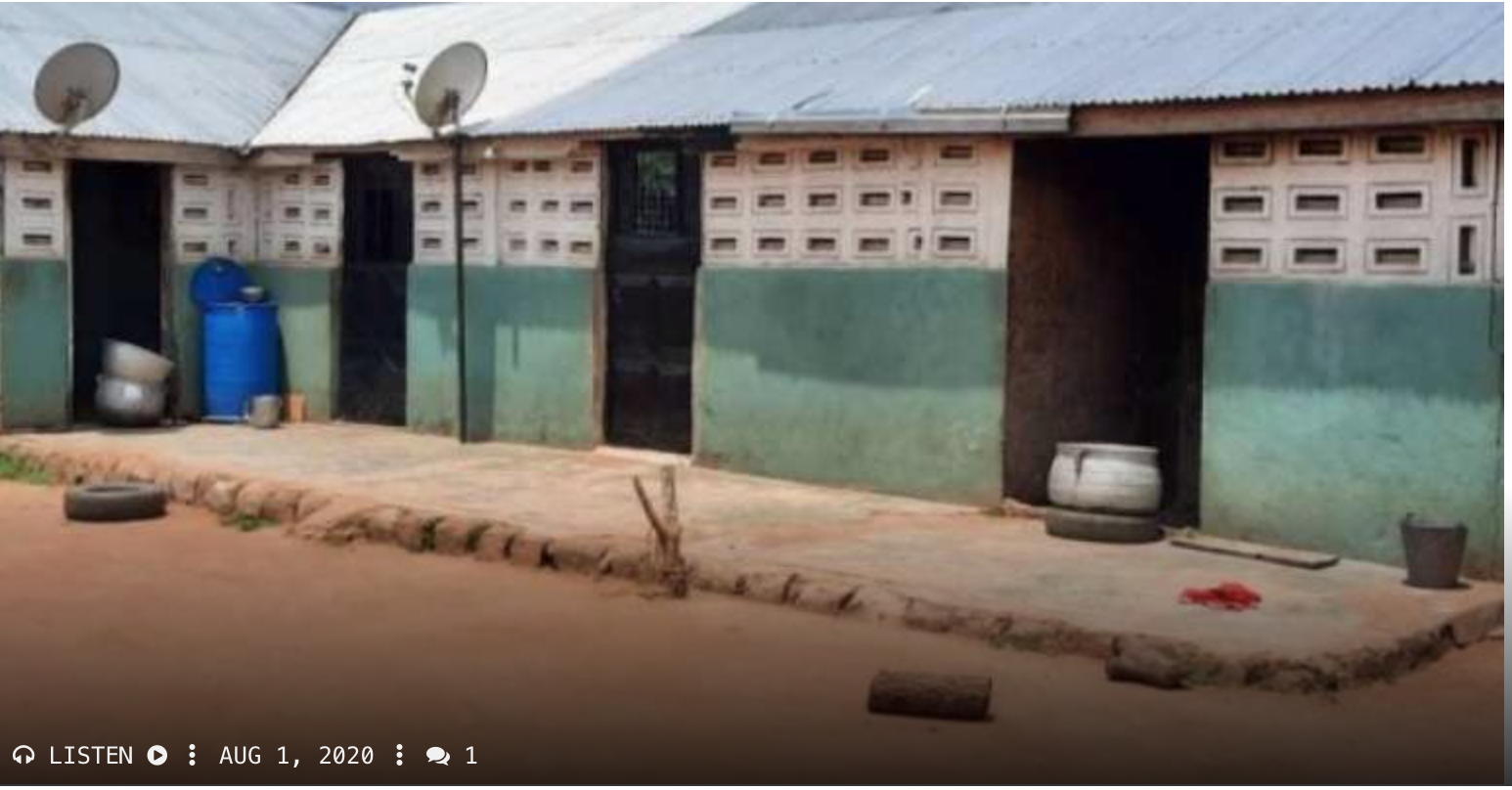
GNA also visited the spot, where the old woman was beaten at Kafaba, and it was a compound of a house, whose owner had since fled the town.
The road from Salaga to Kafaba is in a deplorable state and it takes about an hour and a half to reach Kafaba from Salaga using a four-wheeled vehicle.
There is no Police Post at Kafaba, which presupposes that unless a good Samaritan in the town intervenes, any unlawful act could be meted out to any citizen in the area.
Yenufunu Yahaya Seidu (V), a Chief at Kafaba, who was arrested and granted bail in connection with the incident, told the GNA at Kafaba that some youth of the area informed him of their decision to invite the spiritualist to fish out witches in the area to ensure the progress of the town.
He said lawless acts in the area could be prevented, if there was a Police Station in the area and appealed for one in the area to ensure law and order.
And hail to the journalist who first reported on the lynching of 90-year old Akua Denteh:
Kafaba Killing Reportage Has Boosted My Popularity – TV3 Journalist
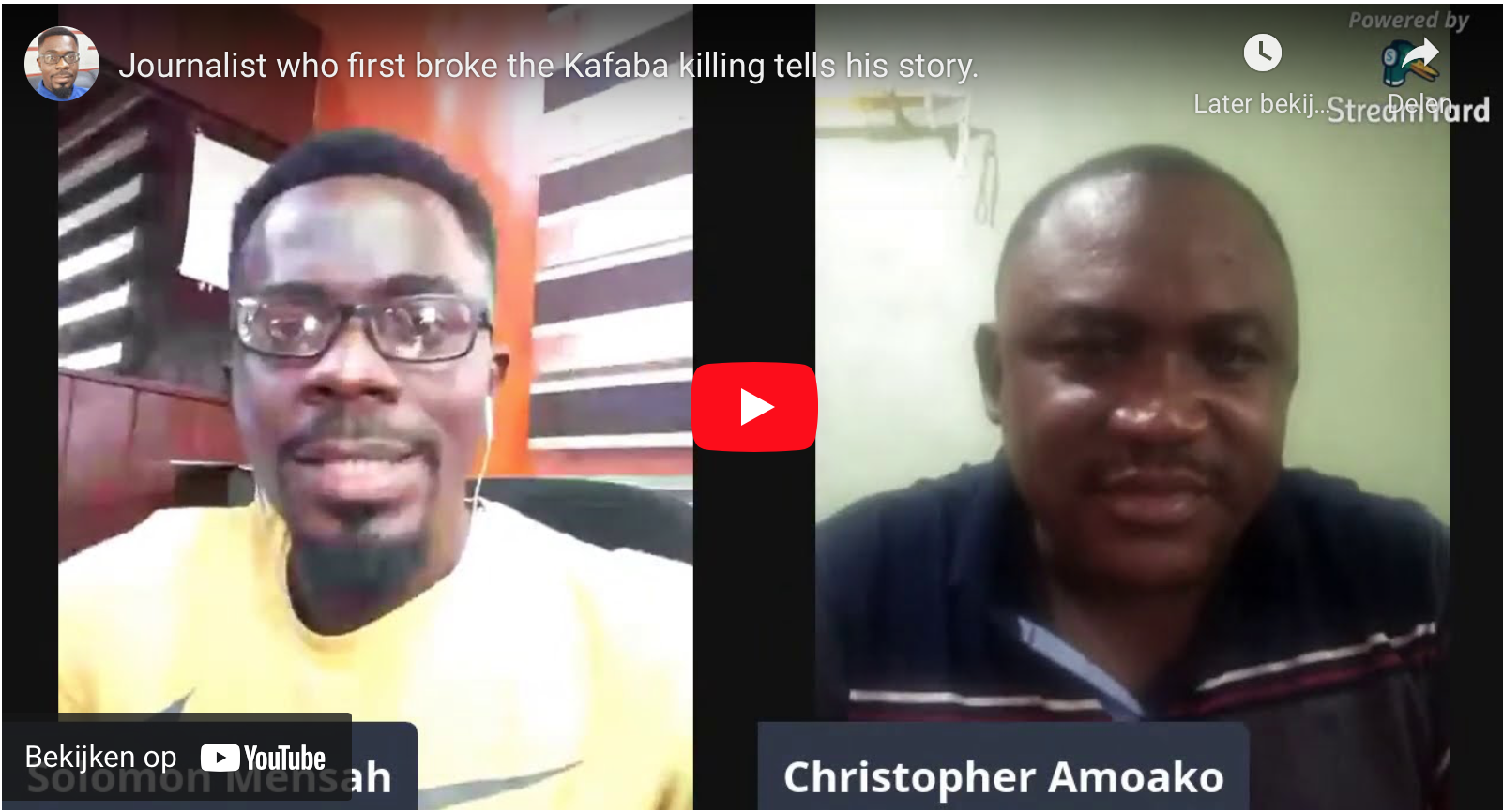
Christopher Mensah Amoako was the first journalist who reported on the gruesome lynching of the 90-year old Akua Denteh.
Published: August 3, 2020 By: Modern Ghana
TV3’s Savannah Regional correspondent Christopher Mensah Amoako has opened up on how he became the only journalist in the country to have first reported on the gruesome Kafaba killing, indicating the reportage has soared his popularity in the region.
Speaking on ‘Talk To Solomon’ (a YouTube based talk show) hosted by journalist and writer Solomon Mensah, Mr. Amoako said: “On that fateful Thursday, July 23, 2020, I was on my way to East Gonja [in the Savannah Region] when I had a video sent to me via WhatsApp. When I downloaded it, I heard them speak both Gonja and Twi so I realised the tape could not be an imported one from any other African country.”
Christopher Amoako said, he did further checks to ascertain the authenticity of the video and after rigorous background checks confirmed it was not fake.
“I quickly called the one who sent me the video not to share with anyone. Then, after about two hours, I also had a call from the son of the deceased telling me about the incident,” he noted.
The Savannah Regional correspondent for the Media General group revealed that he first “harboured fear in breaking the news. But now, that fear has long gone. Today, everywhere I pass, I get people pointing fingers at me that, ‘that’s the journalist who first broke the news to the nation’”.
Christopher Amoako said he together with the people of the Savannah Region and the nation as a whole look forward to a swift justice served by the law courts on the murder.
A 90-year old woman Akua Denteh was lynched on July 23 by a section of the Kafaba community after a soothsayer pronounced her a witch.
The Savannah Regional Police Command has since apprehended some suspects including 32-year old Latifa Bumaye believed to have played a key role in the lynching.
Find below Christopher’s full interview:
To watch and listen the interview, click here and scroll down the page. Picture is a screenshot.