When wealth demands blood: The horror of ritual killings in Nigeria

Warning: the following post and related articles contain graphic details which may upset readers.

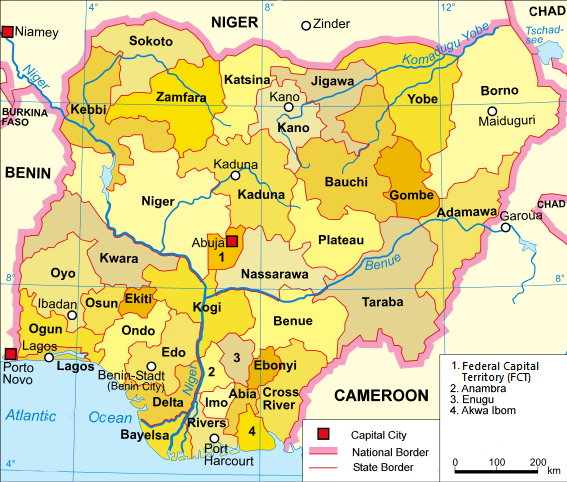
On previous occasions I have stated here that the numbers of abductions and murders for ritual motives are running sky-high in Nigeria, not to speak of missing persons leaving no trace. Having a brief look at the contents of this site since I started it in 2018, one is tempted to say that this West African country is well covered but by far I do not report all recorded cases of ritualistic murders in Africa’s most populated country (over 225 million inhabitants in 2024).

On March 4, the Daily Champion, a Nigerian online newspaper, reported that a group of community women under the name, ” concerned mothers” have raised alarm over the increase in ritual killings in Imo State. Two days later, another online newspaper, the Daily Post, published an alarming article, Kogi, Nasarawa, Niger residents decry rising cases of ritual killings. The following day, a fashion’s designer’s head was cut off in a suspected ritual killing in Edo State. On Monday, March 10, Lagos State police arrested a fourth suspect after the discovery of the mutilated body of a Lagos State University graduate student – who had been missing since January 16, 2025 – in a shallow grace. The same day, Delta State police announced it intensified the hunt for killers of two women who were found dead on farms. They were allegedly killed for ritual purposes, as locals claimed that some of their vital organs were missing. In the same week, women took to the streets in Anambra State protesting against gender-based violence and ritual killings.

The list is too long to continue. Each day new ritual killing cases are unearthed, sometimes literally.

Given this background, the article below is not surprising and the reader will not be surprised that I fully support the author’s view: that greed is a basic ingredient and motive for ritualistic violence.

However, after having read the article I remain with two – related – unanswered questions.

Why is it that superstition is so widespread in Nigeria? Ritual murders and the harvesting of organs, other body parts, in short, ‘money rituals’, are carried out – by ‘ordinary criminals’ as well as by ‘ordinary citizens’ – because it is believed that ritual murders can make people rich or famous. Why is it that the belief in ‘juju’, the power of the supernatural, is so persistent?
(webmaster FVDK)

it is believed that ritual killings can make people rich

When wealth demands blood: The horror of ritual killings in Nigeria

Published: March 13, 2025
By: Kelly Odaro – The Nigerian Observer

Amidst Nigeria’s economic quagmire, a more sinister affliction festers — ritual killings. This grotesque practice, once whispered in hushed tones and relegated to the annals of folklore, has metamorphosed into an alarming commonplace reality.   

    The nation wakes up to a grim litany of media headlines detailing the heinous acts of individuals who, in their insatiable pursuit of material prosperity, desecrate human life with blood ritual. The moral fabric of our society is unravelling at an alarming pace, frayed by an unsettling obsession with overnight wealth.

    The recent gruesome murder in the Evbuotubu community of Benin City, where a young man’s head was severed, has once again spotlighted the disturbing prevalence of ritual killings in the region. This heinous act is not an isolated incident but part of a growing pattern of bloodshed fuelled by a dangerous obsession with instant wealth and power.

Ritual killings, often driven by superstitious beliefs and occult practices, have persisted in many parts of Nigeria despite modernisation and law enforcement efforts. In Benin City, several cases have been reported over the years, each more chilling than the last. Many of the unsuspecting victims are young men and women, often lured, kidnapped, and gruesomely murdered in rituals meant to bring fortune to perpetrators.

    In past years, there have been numerous reports of mutilated bodies discovered in forests, abandoned buildings, or shallow graves, their organs harvested for money-making rituals. In 

2020, a similar case rocked the Otuo community in Owan East Local Government Area of Edo State where three young men and a woman were set ablaze by a mob for allegedly beheading a secondary school student in a suspected ritual killing (Punch, 25 February, 2020). In 2018, four brothers allegedly unalived their grandmother for money rituals in Ohovbe quarters, Ikpoba Hill in Benin City, according to Vanguard News (January 9, 2018). 

    Likewise, in 2019, police uncovered a shrine where human skulls and body parts were found, indicating that ritual killings were being carried out on a large scale. More so, over twenty mummified bodies were discovered in a building in Benin City (The Guardian, August 8, 2022), and a myriad of similar incidents occurred across Nigeria.

   Despite widespread condemnation, these horrific acts continue, largely because of deep-rooted societal attitudes that glorify sudden wealth without questioning its source. Many individuals with dubious riches are still celebrated, given chieftaincy titles, and honoured in religious circles simply because of their financial influence. This cultural acceptance creates an environment where desperate individuals, especially young men, resort to extreme measures to attain wealth and social status.

Addressing this crisis requires more than just police crackdowns. There must be a fundamental shift in societal values —one that prioritises ethical wealth over ill-gotten riches. Religious institutions, traditional rulers, and community leaders must take a firm stand against the glorification of questionable affluence.    

    The Evbuotubu incident is a grim reminder that Nigeria is still battling the scourge of ritual killings. Until society collectively condemns and rejects wealth acquired through bloodshed, such horrors will persist, leaving a trail of innocent victims in their wake.

    Once upon a time, wealth in Nigerian society was synonymous with industry, resilience, and ingenuity. The elders of old (traders, craftsmen, farmers, and entrepreneurs) prided themselves on the sweat of their brows. A man’s affluence was a direct reflection of his diligence and years of toil. 

    Today, however, a corrosive paradigm has taken root, one that glorifies instant affluence, irrespective of the means through which it is obtained. The insidious doctrine of “making it by any means necessary” has replaced the time-honoured principle of hard work.

    This paradigm shift is not accidental. It is the consequence of a deeply flawed value system where wealth, no matter how dubiously acquired, commands reverence. The very individuals who should be ostracised for their morally reprehensible conduct are, instead, venerated. This toxic culture emboldens desperate youth to explore even the most abhorrent means to attain affluence.

The most disheartening aspect of this trend is the complicity (both tacit and overt) of society’s supposed moral gatekeepers. Religious leaders, who should be the custodians of righteousness, have too often become enablers of corruption. In the grandiose edifices of faith, where the gospel of prosperity is preached with fervour, those with questionable sources of wealth are celebrated.    

    They are given front-row seats, called upon for prayers, and sometimes elevated to positions of religious leadership, all because their ill-gotten wealth fuels the construction of mega worship centres.

    Traditional rulers, the custodians of Nigeria’s cultural ethos, are equally culpable. The hallowed institution of chieftaincy, once reserved for men of impeccable character, has been commercialised. Titles that once symbolised honour are now available to the highest bidder. The affluent, irrespective of their moral standing, are conferred with chieftaincy titles in elaborate ceremonies attended by society’s crème de la crème. 

    In many instances, these so-called ‘chiefs’ are known for their nefarious dealings, yet they are paraded as paragons of success.

    The elite, politicians, and corporate magnates are not innocent either. Many continue to patronise, endorse, and associate with individuals whose wealth bears the stench of blood money. By doing so, they lend credibility to criminality and normalise the abnormal. When men who are rumoured to have amassed their fortunes through dark means are invited to state functions, given government contracts, or honoured in grand events, the message to the struggling youth is clear — wealth, regardless of its origin, is the ultimate measure of success.

The media, which should serve as society’s watchdog, is often a double-edged sword. While some journalists and media houses expose the nefarious activities of ritual killers, others glorify the very individuals whose sources of wealth are dubious. The extravagant lifestyles of these questionable figures are routinely splashed across the pages of newspapers, magazines, television, and online platforms, painting them as role models rather than cautionary tales.

    Reality television, social media influencers, and music videos further exacerbate the problem by promoting a culture of ostentation. Young people, bombarded with images of expensive cars, lavish mansions, and extravagant vacations, begin to equate self-worth with material possessions. Those who lack the patience for legitimate wealth creation resort to criminality, with some taking the ultimate plunge into the dark world of ritual killings.

    At the core of ritual killings is the utter dehumanization of victims. The perpetrators, in their frenzied pursuit of wealth, strip their victims of all humanity, reducing them to mere commodities for sacrifice. The gruesome nature of these killings — dismembered bodies, missing vital organs, and ritualistic symbols points to an eerie level of barbarism that should have no place in civilised society.

    Many victims are unsuspecting individuals. Children are lured with sweets or money, young women deceived by fake lovers, and travellers waylaid by ritual syndicates. The lack of stringent security measures, poor law enforcement, and a failing judicial system embolden these criminals, who often evade justice or buy their way out of prosecution.

    One of the greatest tragedies of Nigeria’s legal system is its failure to serve as a deterrent to ritual killers. Reports of arrests are frequent, but convictions are rare. The wheels of justice turn at a sluggish pace, and in many cases, perpetrators with financial clout secure their freedom.

Corruption within the police force further compounds the problem. Cases of ritual killings are sometimes swept under the carpet in exchange for bribes, leaving families of victims without closure. Even when cases proceed to court, the judiciary’s lethargy allows them to drag on indefinitely, creating a loophole for criminals to manoeuvre their way back into society.

    If Nigeria is to rid itself of the scourge of ritual killings, a fundamental societal reorientation is imperative. The following measures must be taken:

Schools must incorporate value-based education that emphasises the dignity of labour and the dangers of illicit wealth.

   The youth must be taught that wealth, when pursued through righteous means, is more fulfilling and sustainable; religious leaders must take an uncompromising stance against those who amass wealth through dubious means. Places of worship should cease to be sanctuaries for financial criminals.

    Besides, traditional rulers should uphold the sanctity of their institutions by ensuring that only men and women of impeccable character are honoured – chieftaincy titles must not be ‘commoditised.’

More so, the media as watchdog of the society must prioritise investigative journalism that exposes ritual killers rather than glorify ostentatious lifestyles. Content creators should promote positive role models rather than individuals with questionable affluence.       

    Again, the police and judiciary must be restructured to ensure that ritual killers are swiftly apprehended, tried, and convicted. 

There must be no sacred cows; the law must take its course without favouritism.

    Moreover, citizens must become more vigilant and report suspicious activities. Neighbourhood watch groups should be empowered to work with security agencies in identifying and apprehending suspected ritualists.

   Ritual killings in Nigeria are symptomatic of a deeper societal malaise — a value system that places wealth above humanity. The tragedy is not merely in the blood spilt but in the indifference with which society treats this growing menace. If the nation does not recalibrate its moral compass, the ritualistic shedding of human blood will continue unchecked, and our collective humanity will be the ultimate casualty.

Ritual killers are on the prowl, preying on unsuspecting victims across the country. These criminals lurk in both rural and urban areas, taking advantage of isolated locations, late hours, and unsuspecting individuals.

    Parents and guardians must take proactive measures to safeguard their children and wards from falling victim to these nefarious acts. Educating young people about the dangers of accepting rides from strangers, wandering off alone, or engaging with unknown individuals is crucial. Additionally, people must exercise caution in their daily movements, ensuring they avoid desolate areas, especially at night.

    Men and women alike must remain vigilant and prioritise personal safety. Walking alone on lonely paths or deserted streets, particularly in poorly lit areas, increases the risk of being targeted. Instead, people should move in groups whenever possible and be mindful of their surroundings. Until then, everyone must stay alert because in a society where ritual killers operate with impunity, personal vigilance is the first line of defence.

    Let those who have ears listen and let those in positions of influence act. Posterity will not forgive a society that sacrifices its own on the altar of unbridled greed.

Odaro, a columnist, lectures in the Department of Mass Communication, Auchi Polytechnic, Auchi.

Source: When wealth demands blood: The horror of ritual killings in Nigeria

Kwara State, Nigeria: The Emir of Ilorin condemns ritual killing of final-year student, says justice must be served

Recently, I published two posts on the ritual murder of Hafsoh Lawal, a final-year student of the Kwara State College of Education, (KWCOE), Ilorin, reportedly by one Abdulrahman Bello. Please see my posts of February 18, Nigeria: Yetunde Lawal’s murder – A reflection of societal decadence, and of March 3, Nigeria: religious leaders bemoan surge in ritual killings among clerics.

The Emir of Ilorin (Kwara State) and Chairman of the Kwara State Traditional Rulers Council joined religious leaders in condemning the ritual killing of Hafsoh Lawal. By publicly condemning the violent crime, the Emir of Ilorin Alhaji Sulu-Gambari also joined other traditional rulers who recently spoke out against the crime of ritual murder in this West African country.

Last month monarch Eze Philip Ajomuiwe raised the alarm in Abia State, revealing that over 30 bodies had been dumped into the Imo river between 2024 and February 2025. Reportedly the corpses found were mutilated, a sign that the victims had been killed for ritualistic purposes. Earlier in the same month, a monarch in Delta State, the Asagba of Asaba, banned native doctors for aiding ritual killers. Moreover, early February the Oluwo of Iwo, Oba Abdulrasheed Akanbi, in Ogun State, accused Ekiti and Kwara monarchs of engaging in ritual killings.

The religious leaders and traditional rulers who speak out against the crime of ritual murder are to be commended.

Nigeria’s political leaders and legislators, and the police and judicial authorities of Africa’s most populated country should leave no stone unturned to apprehend and prosecute the perpetrators of ritualistic murders while simultaneously campaigning for the eradication of the get-rich-quick mentality which in combination with the belief in tradition and superstition perpetuate the cruel crime of murder for ritualistic motives and gross human rights violations.
(webmaster FVDK)

Emir of Ilorin condemns ritual killing of final-year student, says justice must be served

The Emir of Ilorin and Chairman Kwara State Traditional Rulers Council, Mai-Martaba Alhaji (Dr) Ibrahim Sulu-Gambari CFR

Published: February 16, 2025
By: Abdulrahaman Taye Damilola – The Informant, Nigeria

The Emir of Ilorin and Chairman Kwara State Traditional Rulers Council, Mai-Martaba Alhaji (Dr) Ibrahim Sulu-Gambari CFR, has expressed sadness over the gruesome killing of Hafsoh Lawal, a final-year student of the Kwara State College of Education, (KWCOE), Ilorin by one Abdulrahman Bello, an acclaimed ‘alfa’.

Alhaji Sulu-Gambari, in a statement issued by his spokesman, Mallam Abdulazeez Arowona, condemned the incident, saying, “It is most unfortunate, alien and regrettable act of wickedness.”

According to him, “It has become pertinent for parents, guardians as well as people in the neighbourhood to remain vigilant to happenings around them, especially ensuring that their children and wards are in the company of people of tested and trusted characters with well-researched family background.

“It is only hardwork that pays; total war should be declared against idleness, laziness and unwarranted loitering around the society by youths in the name of finding means of survival.”

Alhaji Sulu-Gambari also urged clerics in the Ilorin Emirate and beyond to sanitise the system by ensuring that the likes of Abdulrahman Bello are expressly exposed to the law enforcement agencies before wrecking more havoc and damaging the lives of innocent persons.

While commiserating the families of the late Hafsoh Lawal over the unfortunate end to the life of the promising daughter, Alhaji Sulu-Gambari urged the Nigeria Police and the Judiciary to ensure that toral justice is served in this matter while also directing religious leaders, especially Imams in Mosques in Ilorin Emirate and Kwara State at large to ensure that their Friday Khutbah focuses more attention on morality, dignity in labour as well as importance and respect for the souls of fellow human-being irrespective of tribe, religion and status.

The Informant247 reports that an Ilorin-born middle-aged man identified as Abdulrahman Bello has allegedly killed and dismembered the body of Lawal Hafsoh, a final-year student of Kwara State College of Education, Ilorin, for suspected ritual purposes.

According to reports, the deceased, Lawal Hafsoh, had on Monday, 10th of February 2025, declared missing after receiving a call at the naming ceremony.

It was gathered that the lady’s whereabouts were unknown since she received the call.

Meanwhile, on Tuesday, 11th of February 2025, the deceased parents reported the case to the Divisional Police Station at Oja Oba Police Station in Ilorin, the state capital.

However, the police requested her phone number and used it to track her last call, which was traced to an individual living in the Offa garage area of Ilorin,

The suspect, whose family house is in Isalekoto, was tracked and arrested, where he initially denied the knowledge of the lady’s whereabouts. However, when the police searched his house, he confessed that the lady was in his area and had died from an asthma attack after he called her to come over.

Upon further investigation, the police found the lady’s body dismembered and hidden in a bowl, along with the equipment used to dismember her. The suspect is now at the police headquarters in Ilorin.

It was reported that the suspect and the deceased met on Facebook, where they both got connected.

However, an effort to speak to the Kwara State Police Public Relations Officer SP Toun Ejire-Adeyemi proved abortive as she didn’t pick up her call at the time of filing this report.

Source: Emir of Ilorin condemns ritual killing of final-year student, says justice must be served

Related:

Police arrest suspected ritualist for killing final-year student in Ilorin, Kwara State

Police arrest suspected ritualist for killing final-year student in Ilorin

Published: February 15, 2025
By: Abdulrahaman Taye Damilola – The Informant, Nigeria

An Ilorin-born middle-aged man identified as Abdulrahman Bello has allegedly killed and dismembered the body of Lawal Hafsoh, a final-year student of Kwara State College of Education, Ilorin, for suspected ritual purposes.

According to reports, the deceased, Lawal Hafsoh, had on Monday, 10th of February 2025, declared missing after receiving a call at the naming ceremony.

It was gathered that the lady’s whereabouts were unknown since she received the call.

Meanwhile, on Tuesday, 11th of February 2025, the deceased parents reported the case to the Divisional Police Station at Oja Oba Police Station in Ilorin, the state capital.

However, the police requested her phone number and used it to track her last call, which was traced to an individual living in the Offa garage area of Ilorin,

The suspect, whose family house is in Isalekoto, was tracked and arrested, where he initially denied the knowledge of the lady’s whereabouts. However, when the police searched his house, he confessed that the lady was in his area and had died from an asthma attack after he called her to come over.

Upon further investigation, the police found the lady’s body dismembered and hidden in a bowl, along with the equipment used to dismember her. The suspect is now at the police headquarters in Ilorin.

It was reported that the suspect and the deceased met on Facebook, where they both got connected.

However, an effort to speak to the Kwara State Police Public Relations Officer SP Toun Ejire-Adeyemi proved abortive as she didn’t pick up her call at the time of filing this report.

Source: Police arrest suspected ritualist for killing final-year student in Ilorin

Nigeria: Ogun State and the death penalty

To the already long list of Nigerian States which have allowed the death penalty as ultimate sanction for ritual killers – see my March 6 post – we should add Ogun State. The following article is chrystal clear: people are fed up with the terrorism of unscrupulous ritualists, cultists, kidnap­pers, armed robbers, etc.

The author of the article presented below, Eli Jah Udofia, writes that “Since the return to democratic rule in Nigeria about 26 years ago, it is on record that no Nigerian gov­ernor has signed and ordered the execution of condemned criminals despite being empowered by the na­tion’s constitution.” He continues, with (quote) “Refusal or unwillingness to sign execution orders have no doubt con­tributed to the high rise of heinous crimes that most often led to loss of lives because in a situation where the Biblical “an eye for an eye” in­junction is not followed to the letter and where justice is not seen to have been served, it emboldens criminals to commit more heinous crimes, “af­ter all nothing go happen”. Unquote

The capital punishment as deterrent or as revenge?

Whatever the answer to this question, I – personally – am not convinced that the execution of condemned ritual murderers will significantly decrease the number of murders for ritual purposes (‘money ritual’) in Nigeria.

What is needed is an educational campaign aimed at eradicating superstition, in combination with the rule of law, respecting international agreements and human rights.
(webmaster FVDK)

Background information:

Ogun State is located in the South West geopolitical zone of the Federal Republic of Nigeria (Nigeria is divided into six geopolitical zones commonly called zones). With a surface area of 16,762 km2 Ogun State ranks 24th (out of 36 states) and with a population of about 7 million people in 2024 it occupies the 13th position.

The majority of the population belongs to the Yoruba ethnic group, their language being the lingua franca of the state. The dominant religions in Ogun State are majority Islam and minority Christianity although a certain amount of traditional religion is still practiced.

The capital of Ogun State is Abeokuta


Ogun State and the death penalty option

Governor Abiodun

Published: March 11, 2025
By: Eli Jah Udofia – Independent, Nigeria

There is no doubt that killings and acts of killings have become the or­der of the day in Nigeria. Apart from death in the hands of terrorists, the lives of Nigerians are daily been cut short by ritualists, cultists, kidnap­pers, armed robbers, etc.

From the North to the South, East to West, it is one killing after the oth­er. It is either husband killing his wife or the wife killing her husband; father killing his daughter or son killing his mother. It so appalling that one begins to wonder when the country became a jungle, where life is so cheap. Even in the jungle, ani­mals do not kill each other for the fun of it except for food and defending territories.

In Nigeria today, killing has be­come a hobby or a pass time for some people. While ritualists kill and har­vest body parts for money making rituals, some kill to take possession of the deceased property. Others, like cultists, carry out revenge killing or kill to show superiority while others kill for ransom.

About two years ago, the media, both traditional and new, was awash with the story of how a boy who re­sides in Abeokuta, the Ogun State capital, connived with his friends, killed his girl-friend and used the head for money ritual purposes af­ter disposing the body by burning. Sometimes one begins to wonder the benefits of these senseless killings or is it that humans have lost their humanity?

Also in Ogun State, in the middle of last year, three Indians and a Nige­rian were kidnapped along the Ijebu- Ode-Ore road but were lucky to be rescued by men of the Nigeria Police. Similarly, not too long ago, the wife of Retd. Assistant Inspector General of Police, Mrs. Folasade Odumosu, was kidnapped on her way to work and the sum of N40m demanded for her release.

Apart from kidnapping, cult relat­ed killings are also rampant in plac­es like Abeokuta, the State capital, Sagamu and Ijebu-Ode. Cultists reign of terror saw the killings of rival members and sometimes cut short the lives of innocent people.

The question now is, when did Ni­geria and Nigerians descend to this abysmal low in morality? Can this be attributed to exposure to moder­nity, technology or influence of social Media? What really went wrong in the past few decades that people no longer regards life as sacred?

Though the Nigeria’s legal system is noted for undue and prolong delays in delivering justice, it has also made some landmark judgements especial­ly in cases involving murders and the likes by passing death sentences on those who took other people’s lives.

On the third of February, 2025, an Ogun State High Court sitting in Abeokuta, sentenced he trio of Lekan Adekanbi, Ahmed Odetola, and Wa­heed Adeniyi to death by hanging for the murder of Kehinde Fatinoye, his wife, Bukola Fatinoye, and their son, Oreoluwa, on January 1, 2023.

The Fatinoyes were attacked at their Ibara GRA residence shortly after returning from a crossover church service. Led by their driver, Adekanbi, the assailants broke into the home around 2 am, murdered the couple and set both their bodies and the house on fire.

Not done, the attackers also tied up their son, Oreoluwa, along with an adopted son, before throwing them into the Ogun River. While Ore­oluwa unfortunately lost his life, the adopted son miraculously survived.

After their arrest by the police, Adekanbi, in an interview with jour­nalists, admitted spearheading the attack, citing his employers’ refusal to increase his salary or grant him a loan request.

Many Nigerians observed with dismay that death row inmates re­main in prisons for years, living off taxpayers’ money after the death sentence had been passed on them. Concerns have also arisen over the government reluctance to sign exe­cution orders—a trend that has left many death row inmates languish­ing in correctional facilities indefi­nitely.

Since the return to democratic rule in Nigeria about 26 years ago, it is on record that no Nigerian gov­ernor has signed and ordered the execution of condemned criminals despite being empowered by the na­tion’s constitution. This act is quite contrary to what obtained during the military era where Military Admin­istrators or Governors approved ex­ecution once the death sentence was pronounced by competent Courts.

Refusal or unwillingness to sign execution orders have no doubt con­tributed to the high rise of heinous crimes that most often led to loss of lives because in a situation where the Biblical “an eye for an eye” in­junction is not followed to the letter and where justice is not seen to have been served, it emboldens criminals to commit more heinous crimes, “af­ter all nothing go happen”.

Disturbed by this ugly trend and the need to eradicate incidences of violent crimes like kidnapping, cult­ism, ritual killings and the likes as well as ensure that victims of these crimes get justice, the State govern­ment is considering a drastic action by looking at the death penalty op­tion through signing Death Warrants of those sentenced to death by com­petent Courts.

The State Attorney General and Commissioner for Justice, Mr. Olu­wasina Ogungbade (SAN), gave this indication and expressed concern on the increase in criminal activities in recent times in the State.

According to Mr. Ogungbade, gov­ernment is ready to take the bull by the horns by implementing the law by signing the Death Warrants.

He observed that despite the pro­active measures put in place by se­curity agencies in tackling crimes, there appears to be an upsurge par­ticularly in ritual killings, adding that government has identified the wrong perception that there will be no repercussions when some of these crimes are committed to be the root cause.

“I can tell you that we are looking seriously at this as a means of send­ing across a message that Ogun State is not a place where you can come and commit such serious crimes and get away with it.

“It is part of the duty of the gover­nor to sign Death Warrants and I am certain that when he took that oath of office, he took it knowing full well the responsibilities that come with it and he is a governor that uphold the rule of law so I can assure that in deserving cases, he will not shirk away from that constitutional duty.”

Ogungbade believes that if some­body has gone through the process of fair trial, made use of all his appeals, then “we will begin to look seriously at implementing those judgements hoping that it will serve as a deter­rent to those who still intend on car­rying out such crimes. But in doing so, I can assure you that we will be systematic about it, we will not be reckless about it.”

From time immemorial, society has always found a way of dispens­ing justice and death penalty has always been a way of ensuring that those who commit serious crimes es­pecially the ones that involve human lives pay dearly for them.

It is often said that “drastic situ­ation requires drastic solution” and since criminals have decided not to heed several warnings of Governor Dapo Abiodun, who on many occa­sions, advised them to turn a new leaf, then it is time for them to begin to face the hangmen’s noose.

*Udofia writes from Laderin, Abeokuta

Source: Ogun And The Death Penalty Option

Nigeria: Kaduna, Kano, Katsina residents seek death sentence for ritualists, cannibals

In previous posts I’ve reported on death sentences pronounced in Nigerian states. In Delta State (2024), Niger State (2024), Rivers State (2020), Osun State (2020), Ondo State (2019), to be more specific. Shortly, more states may follow, as the following article implies. The increase in ritualistic murders has led the population in Kaduna, Kano and Katsina states to press their governments to allow for the death penalty for ritualists and those found selling or eating human parts, according to the article cited below.

As mentioned before on this site, Nigeria is a signatory to the Universal Declaration of Human Rights, adopted by the UN in 1948. National and international organizations emphasize that the death penalty breaches human rights including the right to life and the right to live free from torture or cruel, inhuman or degrading treatment or punishment. Both rights are protected under the 1948 Universal Declaration of Human Rights,

The surge in criminal killings for ritualistic purposes, human sacrifices, child trafficking, and various sorts of witchcraft activities in a number of SSA countries have resulted in an increasing number of countries adopting laws allowing for the death penalty for convicted criminals. In Nigeria a number of states have adopted legislation allowing the sentencing to death of convicted ritual murderers which does not always mean that they are actually executed. 

Though I strongly support the prosecution of suspected ritual murderers and the rule of law, I have my doubt about the effectiveness of the capital punishment as a deterrent. The phenomenons of ritualistic murders and witchcraft are too complicated to eradicate by only harsh punishments. I can cite many examples, in various countries – to name one: Liberia.

I witnessed the public execution by hanging of seven convicted ritualistic murderers, in Harper, Maryland County, almost fifty years ago, in 1979.

Did this eradicate ritual murders in Liberia? No.
Did this eradicate the belief in witchcraft in Liberia: No.
Did this eradicate superstition in Liberia? No.

Hanging of the Harper Seven, Liberia, February 16, 1979. Source: F. van der Kraaij Collection Wikimedia.

In my opinion only education will bring the desired result, in combination with the strict rule of law, not allowing any exception, political interference of ‘big shots’: political, religious or traditional leaders, resulting in a shameful impunity. All what is needed is the political will to end these cruel outdated and criminal practices and atrocities. They have no place in the 21st century.
(webmaster FVDK)

Kaduna, Kano, Katsina residents seek death sentence for ritualists, cannibals

Published: March 3, 2025
By: Agency Report – Daily Nigerian

There have been growing concerns about the obnoxious increasing trend of of ritual killings across Nigeria.

The News Agency of Nigeria reports that the heightened situation of ritual killings is driven by the quest for quick wealth, poverty, unemployment, and lack of effective legislation.

There have also been sustained calls for stronger laws against ritual killings to effectively stem the tide of the menace.

There have also been appeals for plausible economic empowerment programmes and public awareness campaigns to deal with the dastardly phenomenon.

Analysts have posited that the government, civil society, and individuals must work together to address the underlying factors and put an end to these heinous crimes.

In Katsina State, the residents of have urged the government to provide a death sentence against ritualists and those found selling or eating human parts.

They made the call in an interview with the News Agency of Nigeria (NAN)in Katsina.

The residents said the call has become imperative in view of the increasing cases of ritual killings, particularly in some parts of the country.

Ayuba Inusa, a resident of Katsina, said that was the only way to prevent the people from joining the ritual and cult groups.

He said: “Since the perpetrators have no mercy, they deserve to be treated with no mercy, to serve as a deterrent to those willing to join the groups.”

Inusa further stressed the need for the traditional and religious leaders to intensify efforts in preaching against the ugly act.

On his part, Kabir Tukur, advised the people against the desire to accumulate worldly materials using such inhumane and ugly methods.

He said,”That is because most of the victims were those who want to accumulate material things easily and anyhow.”

Tukur further urged parents to be monitoring their sons and daughters and discourage them against such bad habits to prevent them from becoming victims of such circumstances.

He also urged girls and women to be wary of friendship in the social media, saying, “because, most of the victims were easily caught up through that platform.”

Another correspondent, Grace Jacob, also urged girls to desist from going to the persons they met through the social media to avoid becoming victims.

She further urged the government to provide stiffer punishments against perpetrators of those barbaric acts.
In Kaduna State, the Police Command said it has recorded zero ritual killing in the state.

The command’s Public Relations Officer, DSP Mansir Hassan, confirmed to the News Agency of Nigeria (NAN) in Kaduna.

He said, “This remarkable achievement is a testament to the state’s unwavering commitment to combating this heinous crime.

He said the command has not received a single complaint of ritual killing in the past three years.

According to him, the ways to curb this incident include stopping hard drugs’ abuse, public enlightenment, and addressing youth motivations.

“The command’s proactive approach to preventing ritual killings has included increased patrols, intelligence gathering, and community engagement,”Hassan said.

He advised that the youths should be engaged with the local communities to raise awareness about the dangers of ritual killings.

Hassan said, “Religious leaders have a role to play in educating the public about the importance of upholding human life and the sanctity of human dignity.”

He said the youths should be engaged on education and job creation programmes, as well as counseling services to address anxiety and other mental health issues.

“We will continue to prioritise the safety and security of citizens,” Hassan said.

In Kano State, some experts have called on community leaders to collaborate in efforts to combat ritual killings, urging action to address the underlying factors driving the crime.

Some of the residents, who spoke to the News Agency of Nigeria (NAN) urged the government at all levels to address the crime.

One of them, Musa Abubakar, a lecturer at the Kano State Polytechnic, attributed the increasing frequency of ritual killings to economic hardship and widespread poverty.

According to Abubakar, these challenges have driven many, especially young people, to seek alternative, albeit criminal, means of wealth acquisition.

He said that the high unemployment rate has led to increased desperation, with some individuals believing that ritual sacrifices may offer a shortcut to financial success.

Abubakar said: “Moral decay is on the rise. If this decay is not addressed, it could lead to an increase in other forms of criminality.

“They include human trafficking, organ harvesting, and cult-related violence, further destabilising the nation.$
A public affairs commentator, Isa Muhammad, stressed the importance of collaboration between the security agencies and community leaders to curb these crimes.

“Community policing initiatives should be expanded to encourage local participation in crime detection and reporting.

” Vigilance groups should also be involved in monitoring suspicious activities,” he said.

Isa further emphasised that traditional and religious leaders must take a strong stance against immoral practices, while educational institutions should enforce ethics that all.the students must adhere to.

Similarly , Abdulrazak Abdullahi, a Lawyer, expressed concern over the growing incidents of ritual killings, highlighting a shift in values where human life was no longer sacred.

“The increasing prevalence of ritual killings suggests a dangerous shift in societal values, with people willing to engage in barbaric acts for personal gains,” Abdullahi said,

He urged the law enforcement agencies to act proactively rather than only responding after crimes have been committed.

Abubakar then called for closer cooperation between the Police, judiciary, intelligence agencies, and community leaders to dismantle criminal syndicates behind these killings.

“The government should strengthen legal frameworks, improve law enforcement, and ensure the swift prosecution of offenders,” he added.

An activist, Amina Ali, also called for the intensification it public awareness campaigns and the enactment of stricter laws to create a safer and more secure society.

She stated that the high unemployment had fueled desperation, with some resorting to ritual sacrifices as a shortcut to wealth.

Ali warned, “If the growing moral decay is not addressed, it could lead to increased criminal activities, including human trafficking, organ harvesting, and cult-related violence, further destabilising the nation.” (NAN)

Source: Kaduna, Kano, Katsina residents seek death sentence for ritualists, cannibals

And:

Ritual Killings: Why I Advocate Death Penalty For Perpetrators –Campaigner

Published: March 3, 2025
By: New Telegraph-Admin – New Telegraph, Nigeria

A campaigner against ritual killing, Mr Sunday Oyinloye, has advocated death penalty for perpetrators of the act. He told the News Agency of Nigeria (NAN) yesterday in Abuja that the increasing cases of ritual killings had become a source of worry.

Oyinloye, who blamed the development on the decay in family values, laziness and desire to get rich at all cost, said death penalty would be a great deterent.

The campaigner said society, schools, families, religious bodies and government were not doing enough to address the vice.

Oyinloye called for more engagements on ritual killings in the country, adding that the seeming nonchalance about the menace over time was part of the reasons for its increased rate.

He said: “As it is now, there is no conversation about ritual killings and we keep having cases on daily basis.

“Relevant stakeholders must rise up against this menace and speak out against this ugly trend where women and young girls are often the victims.”

Source: Ritual Killings: Why I Advocate Death Penalty For Perpetrators –Campaigner

Nigeria: religious leaders bemoan surge in ritual killings among clerics

The following report illustrates well how widespread killing for ritualistic purposes is in Nigeria.

Ritual murders occur in all parts of the country, both in the predominantly christian south of the country and the islamic north, and are committed by educated and uneducated people, and by ‘ordinary’ people as well as high-placed persons, in traditional, political and religious organizations.

Despite this disturbing phenomenon, it is important and useful to emphasize also that the majority of the population abhor the cruel, outdated and criminal practices based on superstition, greed, and tradition, often facilitated or covered by the backing or involvement of ‘higher-ups’, resulting in a revolting impunity of these atrocities.
(webmaster FVDK)

Religious leaders bemoan surge in ritual killings among clerics

•Teenage suspects arrested for the murder of a female teenager in Ogun Photo: File copy

Published: March 1, 2025
By: Imoleayo Oyedeji – Punch, Nigeria

Christian and Islamic leaders have expressed concerns over the increasing cases of suspected ritual killings involving clerics across the country, attributing the disturbing trend to greed, and economic hardship.

Last week, an acclaimed Islamic cleric, Abdulrahman Bello, gruesomely murdered a final-year student of the Kwara State College of Education, Ilorin, Hafsoh Lawal.

According to the Kwara State Police Command, the 29-year-old suspect killed Lawal and dismembered her for alleged ritual purposes at a location in the Olunlade area of Ilorin on Tuesday, February 11, 2025.

On January 23, the Rivers State Police Command arrested two pastors, Prophet Bassey Umoren (60) and Prophet Elijah Anietie (50), after discovering fetish items—including caskets, monkey skulls, carved skeletons, and other ritual materials—inside their churches.

Several cases of ritual killings were also recorded in 2024, including the arrest of an Islamic cleric, Oluwafemi Idris, popularly known as Alfa, by the Ondo State Police Command. He was caught with human parts, including hands, kidneys, and tongues.

Speaking with Saturday PUNCH, some religious leaders attributed the relentless pursuit of wealth, power, and economic desperation as the driving forces behind the gruesome acts.

Archbishop of the Methodist Diocese in Lagos, Most Rev. Isaac Olawuyi, decried the killings, noting that it was fueled by an insatiable hunger for fame and fortune.

He said some pastors saw their ministry as money-making enterprises, hence their desperation to get money at all cost.

Olawuyi said, “We have seen cases where pastors kill their church members and use their body parts either to expand their congregation or gain supernatural power. Some clerics even engage in ritual practices purely for financial gain.

“It is unfortunate, but it happens because some pastors see ministry as a money-making enterprise. They are willing to do anything to grow their church and personal wealth. Today, many people enter clerical work, ministries, and prophecy with no divine calling—only the ambition to enrich themselves.”

Similarly, the Chairman of the Christian Association of Nigeria in Lagos, Bishop Stephen Adegbite, condemned the ritual killings, stating that clerics involved in such practices were driven not by greed and deception.

He described the clerics involved in ritual killings as agent of darkness.

“A true servant of God would never take a human life. The Bible and the Quran are clear: ‘Thou shalt not kill.’ So, anyone engaging in ritual killings—whether Christian or Muslim—is not a minister of God. They are agents of darkness in clerical robes, and we must not mistake them for true men of God.

“If caught, they should face the full weight of the law. The church stands vehemently against such evil, and I am certain Islam forbids it as well. Such practices have no place among believers, let alone religious leaders,” he said.

In his comment, the Chief Imam of the Federal University of Agriculture, Abeokuta, Ogun State, Prof. Idris Ayinde, noted that many of the Muslims involved in ritual killings were young clerics who lack wisdom to complement their religious knowledge.

Ayinde said many young men who study Islamic theology end up tarnishing the image of Islam because they rush into leadership without acquiring wisdom.

“Learning wisdom requires sacrifice and patience—gaining insight from personal experiences of a tutor. This cannot be taught academically. However, many young clerics today refuse to serve under experienced scholars. They lack the humility to learn and grow,” he said.

Ayinde added, “In Islam, we believe whoever is destined to be rich will be rich. Islam encourages hard work, but it is Allah who grants success. Some people’s hard work may correlate directly with their prosperity, while for others, it may not.

However, no one should seek shortcuts to wealth. Islam does not condone any backdoor approach to riches. Any so-called scholar who engages in ritual killings cannot be considered a true Muslim, as Allah strictly forbids such acts.”

Source: Religious leaders bemoan surge in ritual killings among clerics

Nigeria: Yetunde Lawal’s murder – A reflection of societal decadence

The author of the article below, Ogungbile Oludotun, is upset, worried, outraged. The recent murder of Yetunde Lawal for ritual purposes in Kwara State (‘money ritual’) by an Islamic teacher she met on Facebook inspired her to an impressive (but far from exhaustive) list of similar crimes, in other Nigerian states. Some of the ritual murder cases included in the list I have covered in previous posts, e.g. the killing for ritualistic purposes of Favour Daley-Oladele by her boyfriend Owolabi Adeyemi, in Ogun State in 2019. Please consult this site’s search tool by typing the name of the victim, Favour Daley-Oladele.

Olungbile Oludotun argues, as I have repeatedly done here, that the disturbing trend of ritual killings in Nigeria is no longer an occasional horror; it is a sustained crisis. She even goes one step further by accusing the powerful elite: “While young Nigerians kill themselves for money, the people in power remain silent.”

As I have demonstrated recently, there are – fortunately – exceptions, see my posts of February 3 on the Oluwo of Iwo, Oba Abdulrasheed Akanbi, accusing Ekiti and Kwara monarchs of engaging in ritual killings, and of February 16, on the Asagba of Asaba, in Delta State, bansning native doctors for aiding ritual killers.

However, t the grim reality is that ritual killings continue to occur.

When will it stop? What needs to be done to stop these useless murders? Why hasn’t it stopped already?

It’s not only time to reflect on these questions. It’s high time for action!
(webmaster FVDK)

Yetunde Lawal’s murder: A reflection of societal decadence

The late Yetunde Lawal

Published: February 18, 2025
By: Ogungbile Oludotun – Punch, Nigeria

On February 10, 2025, Yetunde Lawal, a 25-year-old final-year student of Kwara State College of Education, left a naming ceremony after receiving a phone call. That call led her to her untimely end. She was allegedly murdered and dismembered by 29-year-old Abdulrahman Bello, an Islamic teacher she met on Facebook.

Yetunde’s case is shocking, but it is not new. It follows an unsettling pattern of young women, and sometimes young men, falling victim to violent crimes across Nigeria. It forces us to confront a terrifying question: Who is next? How many more lives must be lost before the right people take notice?

The disturbing trend of ritual killings is no longer an occasional horror; it is a sustained crisis. Just last year, in September 2024, 17-year-old Damilola, a first-year undergraduate at the Federal University Lokoja (in Kogi State – added by the webmaster FVDK) was murdered by Jeremiah Awe, a young man who allegedly drugged and lured her to his lodge for ritual purposes. To cover his tracks, he faked her kidnapping and demanded a ransom from her parents. Investigations later revealed that Awe had met a native doctor through TikTok, exposing the dangerous role of social media in facilitating such crimes.

During that same period, 21-year-old Mojisola Awesu, a recent graduate of Kwara State College of Health Technology, was lured to a party in Ilorin. The party was a trap. She was brutally murdered after being paid just N15,000 to attend. Meanwhile, in 2023, a young man named Ridwan killed his father in Ogun State for ritual purposes.

These cases are not isolated incidents.

They form a grim reality: our youth are killing each other, their loved ones, and even themselves in a desperate quest for wealth and power. Pathetically, women, especially young girls, have become the primary victims of ritual killings. Their vulnerability, compounded by poverty, gender stereotypes, and weak law enforcement, makes them easy prey.

In 2019, 22-year-old Favour Daley-Oladele was murdered by her boyfriend, Owolabi Adeyemi, in Ogun State for ritual purposes. In 2020, Sofiat Kehinde, just 20 years old, was killed by her boyfriend, Sadiq Owolabi, in Oyo State. The list is endless.

The most terrifying aspect of this crisis is that young people are killing other young people. The generation that should be shaping Nigeria’s future is instead destroying itself. Those who are not engaged in crime are looking for ways to escape the country, either legally or illegally. Unlike in the past, where crime was associated with hardened criminals, today’s perpetrators are students, lovers, and social media acquaintances committing atrocities unapologetically.

Nigeria has become a country where wealth is worshipped, and morality is secondary. Social media is filled with young men flashing luxury cars, designer clothes, and expensive vacations. But behind many of these lavish lifestyles lie irregularities, fraud, blood money, and ritual killings.

With a collapsing economy and little to no job opportunities, desperation has led many young Nigerians to create their survival strategies, Yahoo fraud (internet scams), Yahoo Plus (fraud combined with rituals), kidnapping for ransom, and organ trafficking. The logic is simple: “If hard work does not get me there, I will do whatever it takes.”

Some might ask whether money rituals actually work or if it is all psychological manipulation. Some argue that the idea of ritual wealth is a scam, pushed by native doctors and fraudsters to exploit desperate individuals. Yet, the practice persists, fuelled by Nollywood, spiritual myths, and testimonies from people who claim to have “seen” it work. But whether rituals actually produce money is irrelevant. What is real is the number of innocent people dying in the pursuit of it. Even if it is all a lie, the belief is deadly enough to drive people to murder.

While it is easy to blame the perpetrators, young women must also take responsibility for their safety. They must stop being at the beck and call of men they barely know. It is no longer enough to simply trust; caution is necessary. Meeting strangers alone, especially in isolated places, is a risk no one should take. Flashy social media lifestyles should not be seen as an invitation to blindly trust someone. If a man you barely know is promising you heaven and earth, ask yourself: Why?

Women must also look out for each other. If a friend is about to meet someone she barely knows, question her, accompany her, or insist on a public place. Many of these deaths could have been prevented if only someone had asked the right questions.

While young Nigerians kill themselves for money, the people in power remain silent. The government offers no jobs but is quick to arrest fraudsters. But what alternatives have they provided? The truth is nobody is innocent in this crisis. Nigeria is a society that rewards wealth without questioning its source. We are all complicit.

I will not start telling the government to create job opportunities or fix the economy, even though they should. I won’t talk about enforcing the law, even though it is their duty. These are things that should already be in place. But while we wait for change that may never come, we must act ourselves.

Yetunde Lawal is gone. Another young life wasted. Another brutal headline in an unending cycle of horror. Perhaps now her killer will wander in prison for a long time, maybe even be executed if found guilty. But if we do nothing, her death will be meaningless. And the next victim is already walking towards his/her fate. Who is next?

Ogungbile Oludotun writes via thedreamchaser65@gmail.com

Related News

Source: Yetunde Lawal’s murder: A reflection of societal decadence

Delta monarch, the Asagba of Asaba, bans native doctors for aiding ritual killers – Nigeria

It is a hopeful sign that people on top of the social ladder express themselves and take unequivocally position against killings for ritualistic motives. A few weeks ago I posted a similar action by the Oluwo of Iwo (in Osun State), see my post dated February 3, 2025, The Oluwo of Iwo, Oba Abdulrasheed Akanbi, accuses Ekiti and Kwara monarchs of engaging in ritual killings.

This time the Asagba of Asaba, a monarch in Delta State, also in southern Nigeria, came in the spotlight when banning the activities of ‘Eze-Nwanyi’ (female native doctors/goddesses) and other traditional practitioners due to their alleged involvement in the rising crime rate in Asaba and its environs including providing assistance to internet fraudsters, commonly known as Yahoo Yahoo boys, kidnappers and other criminals.

His remarks were triggered by the murder of a man from neighboring Anambra, a lawmaker. Read the full story below.
(webmaster FVDK)

Delta monarch bans native doctors for aiding ritual killers

The Asagba of Asaba

Published: February 14, 2025
By: Matthew Ochei – Punch, Nigeria

The Asagba of Asaba, His Royal Majesty Obi Prof. Epiphany Azinge (SAN), on Thursday banned the activities of ‘Eze-Nwanyi’ (female native doctors/goddesses) and other traditional practitioners due to their alleged involvement in the rising crime rate in Asaba and its environs.

This decision follows reports linking the murder of an Anambra lawmaker – whose body was discovered on the Niger Bridge – to native doctors and a shrine in Asaba.

Expressing deep concern, the monarch emphasised that crimes committed within Asaba directly impact its residents more than anyone else.

He stressed that the ban on these native doctors was a proactive measure to curb crime.

“Let it be on record that we support the government at all times. However, while supporting the government, there comes a time when we must take proactive steps. Anything that happens in Asaba affects us directly,” he stated.

“It is distressing to hear that Asaba has become the focal point of these criminal activities. As a result, we have decided to take measures to ensure peace and order in our land.”

The monarch declared that the activities of Eze-Nwanyi practitioners, particularly those not originally from Asaba, were now banned.

He described their growing presence as troubling and their activities as “nefarious.”

“The murder of the Anambra lawmaker points to Asaba, where money was cleared, and where the shrine harboring the kingpin was located. These native doctors seem to be aiding not only internet fraudsters (Yahoo Yahoo boys) but also kidnappers and other criminals. Therefore, we are banning them effective immediately.”

Furthermore, the monarch announced that all native doctors operating within Asaba must now register and be regulated.

He stated that they would require clearance from the Otuhas, the governing legislative body of Asaba, before being allowed to operate.

In addition, restrictions have been placed on visits to the shrine of the Asaba deity, Onishe.

Source: Delta monarch bans native doctors for aiding ritual killers

Related:

Asagba Of Asaba Bans Female Native Doctors, Moves To Curb Crime

The traditional ruler also reaffirmed his commitment to supporting government efforts in tackling insecurity.

FILE: The Asagba of Asaba, HRM Obi Prof. Epiphany Azinge SAN

Published: February 13, 2025
By: Vivian Oramadike – ChannelsTV, Nigeria

The Asagba of Asaba, HRM Obi Prof. Epiphany Azinge SAN, has banned the activities of Eze-Nwanyi (female native doctors) and other unregulated traditional practitioners, citing their alleged involvement in kidnappings, ritual killings, and cyber-related fraud.

Announcing the decision at a press conference on Thursday, the monarch expressed deep concern over rising crime in Asaba, particularly after reports linked native doctors and shrines in the area to the murder of Anambra lawmaker Justice Azuka, whose body was discovered on the Niger Bridge.

The Asagba emphasized that many of these practitioners are outsiders with criminal motives.

“From today, the activities of Eze-Nwanyi and other unregulated native doctors are banned,” he declared.

Moving forward, all traditional practitioners in Asaba must register under the Otu-Ihaza, the town’s legislative authority.

He reiterated the urgent need for action, stating, “Anything that happens on this land affects us more than anyone else. It is unacceptable that Asaba has become a hub for these nefarious activities. Consequently, we have decided to take proactive steps to restore peace and order.”

To further address security concerns, the monarch launched Operation Know Your Tenants, mandating landlords to properly document all tenants.

“Criminals see Asaba as a safe haven. This must stop,” he warned. “Every landlord must have proper records of their tenants so we can account for who resides where.”

Additionally, the palace will deploy a special task force to inspect guest records at hotels across Asaba.

“We will be visiting hotels to check their guest lists. The palace is already collaborating with security agencies to expose those using hotels as criminal hideouts,” he asserted.

The Asagba reaffirmed his commitment to supporting government efforts in tackling insecurity but stressed the need for traditional institutions to play an active role in safeguarding their communities.

“We stand with the government, but we must also take responsibility for our land. Asaba must not become a breeding ground for crime,” he concluded.

Source: Asagba Of Asaba Bans Female Native Doctors, Moves To Curb Crime

And:

Delta monarch bans female native doctors, restricts shrines amid crime concerns

Asagba of Asaba in Delta State, HRM Obi Prof. Epiphany Azinge SAN

Published: February 13, 2025
By: Matthew Ochei – Punch, Nigeria

The Asagba of Asaba in Delta State, HRM Obi Prof. Epiphany Azinge SAN, has banned the activities of ‘Eze-Nwanyi’ (female native doctors/goddesses) and other unregulated traditional practitioners.

The decision comes amid concerns that these groups are fueling criminal activities, including kidnappings and ritual-related crimes.

The palace maintained it was a decisive move to curb rising crime in Asaba and its environs.

The announcement follows reports linking native doctors and shrines in Asaba to the murder of an Anambra lawmaker, Justice Azuka, whose body was discovered on the Niger Bridge.

The Asagba, addressing a press conference, expressed grave concern over the situation, stating, “Anything that happens on this land affects us more than anyone else. It is unacceptable that Asaba has become a hub for these nefarious activities. Consequently, we have decided to take proactive steps to restore peace and order.”

Ban on Female Native Doctors, Shrine Restrictions

The monarch emphasised that many of these practitioners are not of Asaba origin and have taken over the land with criminal motives.

“We have banned the activities of Eze-Nwanyi, who are not of Asaba extraction and are unknown to us. Their activities, I dare say, are nefarious.

“With the recent revelations linking an Anambra lawmaker’s murder to Asaba-based native doctors and shrines, it is clear that they are not just supporting ‘Yahoo Yahoo’ fraudsters but are also involved in kidnappings. From today, they are banned,” he declared.

Additionally, all native doctors operating in Asaba must now register and be regulated under the authority of the Otu-Ihaza, the legislative body of Asaba.

Source: Delta monarch bans female native doctors, restricts shrines amid crime concerns

Nigeria – The Oluwo of Iwo, Oba Abdulrasheed Akanbi, accuses Ekiti and Kwara monarchs of engaging in ritual killings [video]

This is not the first time that the Oluwo of Iwo, Oba Abdulrasheed Akanbi, accuses traditional rulers of engaging in ritual killings. See my posts of January 30 2020, Nigeria: ‘Amotekun should fight ritual killings and traditional corruption’, says the Oluwo of Iwoland, Oba Abdulrosheed Adewale Akanbi and of November 2, 2020, The Oluwo of Iwo, Oba Abdulrosheed Akanbi, speaking out against ritual killings: The Oluwo of Iwo (Osun State, Nigeria): ‘Ritual killing deadlier and more devastating than SARS’.

The Oluwo of Iwo, Oba Abdulrasheed Akanbi, has a solid reputation as to speaking out agains ritual killings, human sacrifice, other human rights violations and superstition. Nigerians, other Africans and all who believe in the protection of human rights should say a big ‘Thank you’ to him.

The fact that a person of the level and reputation of the Oluwo of Iwo, the traditional ruler of Iwo, a prominent city located in Osun State, raises his voice against these outdated and cruel practices is another sign of the widespread occurrence of killings for ritualistic purposes in Nigeria, Africa’s most populated country, and an implicit accusation directed to the country’s political leaders and authorities for failing to take adequate action to eradicate these gruesome practices which sometimes are based on outdated traditions.

Sadly, if political, traditional and spiritual leaders set a bad example in this respect, what can we expect from the ‘common people’? (….)
(FVDK)

‘This will be your last’ – Oluwo calls out Ekiti, Kwara kings, politicians, others over ritual killings [VIDEO]

The Oluwo of Iwo, Oba Abdulrasheed Akanbi

Published: January 10, 2025
By: Rachael Ayodele – Daily Post, Nigeria

The Oluwo of Iwo, Oba Abdulrasheed Akanbi, has accused Ekiti and Kwara monarchs of engaging in ritual killings.

Oluwo spoke in a now trending video on social media.

In the video cited by DAILY POST on Friday, Oba Akanbi condemned the rising tide of
bloodshed under the guise of tradition, spiritual renewal and power preservation.

The outspoken monarch called out his Ekiti and Kwara counterparts, as well as royal chiefs, pastors, traditional worshipers and politicians, for perpetrating the gruesome acts.

While calling for justice against them, he said, “All the traditional rulers from Ekiti State to Kwara State must stop using human beings for any forms of rituals or sacrifice.

“Stop killing our children. Stop using human heads. Those you are killing are my children because I’m a father to Yoruba land. We know some of the kings that are sacrificing humans monthly to elongate their lives and reigns.

“If you think we don’t know, the all-knowing God knows, and he is telling us. I’m warning kings, royal chiefs, native doctors, pastors, Alfas, including Ifa priests, politicians and others to stop killing our children.

“This will be your last. After this warning, you will not be fortunate if you dare use anyone again.”

Video:

Oluwo of Iwo @emperortelu1 sends warning to ritualists in South West
Screenshot – to watch the video (Instagram), please click here to access the original article

Source: ‘This will be your last’ – Oluwo calls out Ekiti, Kwara kings, politicians, others over ritual killings [VIDEO]

‘Let’s work to end witch hunts in Adamawa State’ – Nigerian human rights activist Leo Igwe

Leo Igwe is a renown Nigerian human rights activist, founder and president of Advocacy for Alleged Witches (AfAW)

African countries face many problems. Most of these problems are the result of external causes. However, the problem attacked below by Leo Igwe, a renown Nigerian human rights activist, founder and leader of Advocacy for Alleged Witches, has a cause which lies within African societies and is within reach of local political and community leaders to solve.

The answer to the challenge which constitutes the definite eradication of superstition – hence the belief in witchcraft and witches – is (among other interventions) education, education and education! AfAW and Leo Igwe also emphasize this approach.

When looking at the budgets for education in African countries we cannot escape a feeling of dispair. Only a few African countries realize the education objectives agreed upon during international conferences, in international organizations or in national development plans.

African governments can rightly point to the failing support or sometimes undermining actions of governments of non-African countries and international corporations, but here is a problem in which they themselves have a hand in solving. What are they waiting for?
(webmaster FVDK)

Published: January 20, 2025
By: Leo Igwe – Sahara reporters

Greetings and salutations from the Advocacy for Alleged Witches and from all advocates against witch hunts in Nigeria and beyond on the occasion of this roundtable discussion on witch hunts and human rights violations in Adamawa state. I thank the National Human Rights Commission for the opportunity to collaborate and synergize against this superstition-based abuse. Witch hunting is a form of gender-based violence and we commend the commission for its commitment to addressing sexual and gender-based violence in Nigeria.  We hope that this event marks the beginning of our partnership. We hope it would be the first of so many to be held and organized in rallying against witchcraft accusations, witch persecution, and killing in the state. We are all delighted that the event is holding after years of planning, and postponement. And that advocates in this state have the opportunity to meet, discuss, interact, and exchange ideas on how to end human rights violations linked to beliefs in witchcraft and ritual attacks. Adamawa is one of the states where witch-hunting is pervasive. And let’s face it, this is not good news at all. Yes, it is not. Witch hunting in Adamawa is a cause for concern and needs to be treated with the urgency it deserves. We must join hands and end these violations now, not later, today, not tomorrow, this year, not next.

There have been growing cases of witchcraft accusations and killings in Adamawa. Incidentally, only a few are reported. Many more are not because they happen in rural areas and remote communities. Witch persecution happens mainly to people who cannot report the violations; those who do not know where and how to report. Victims of witch hunts are usually those who do not know that witch hunters are criminals who should be brought to justice. Many cannot report because they fear retribution, more abuse, and violation. But the situation is changing.

We have a recent case here in Adamawa where a couple suffocated a girl child to death for witchcraft. We understand that the case is in court. Local informants and advocates helped the police to intervene. We are also monitoring two other cases that involved the murder of the accused. Alleged witches are beaten to death, set ablaze, and murdered in cold blood. The people of Adamawa, how many deaths will it take till we know that too many people have been accused of witchcraft and subsequently killed? How many deaths will it take till we know that too many alleged witches have died? Know this the people of Adamawa: the world is watching and waiting for you to rise to the challenge and take all necessary measures to end witch hunts. Will you? 

We are aware that witch hunts would not stop when the police and courts are failing in their duties and when the authorities are doing little or nothing to address this miscarriage of justice. Witchcraft accusations are against the law. Jungle justice and trial by ordeal are against the law. But witch hunts continue despite existing legislations. Accusations are perpetrated with impunity. The police in Adamawa must rise to the occasion and enforce the law. They should make sure that perpetrators are arrested and brought to justice.

In many cases of witch hunts, the police do not intervene. And when they do so, the intervention comes too little too late. Many suspects are not arrested or charged in court. Sometimes, police arrest and detain suspects and later release them after paying a bribe. But the police cannot address this problem alone. Other state agencies need to fulfill their statutory duties.

Effective courts, diligent judges, and magistrates are needed. We need court officials who correctly interpret the law and ensure justice for the accused. Unfortunately, what we have here in Adamawa, and in other parts of Nigeria and the continent, is a case of justice delayed and eventually denied. The accused and their families suffer double victimization. The court processes are slow, too slow for comfort and justice. Court processes take many years to issue judgments. They make accused persons incur additional costs. Many alleged witches and families have been forced to abandon their cases and resign to their fate. We have it on authority regarding an ongoing case here in Adamawa, that the family of the victim is being pressured to leave the case so that perpetrators could go scot-free. 

Look,  the people and government of Adamawa, if the family of the victim in question is forced to abandon the case, there will be consequences. That will not reflect positively on you and your efforts to combat witch hunts. Know this: the world is watching.

You may recall that in 2021, there was an unfortunate development in the state. A chief magistrate misinterpreted the law. He invited a native doctor to help in the trial of an alleged witch in a court. That incident was a judicial scandal, a local and international embarrassment. It was a misapplication of the law and a misconception of national jurisprudence. That incident indicated how Adamawa was out of step in addressing the problem of witch hunts. AfAW raised concerns and petitioned the chief judge. We hope lessons have been learned, and that there will be no repeat of this charade in Adamawa in the future. We understand that witch believers would like to conduct witch trials in courts. But our laws are unambiguous on the issue of witchcraft accusations. Our laws do not recognize witchcraft. The law criminalizes witchcraft accusations and witch-hunting. Our courts are places to prosecute accusers, not the accused. As a state, Nigeria advocates against witchcraft accusations and witch persecution. Nigeria constitutionally protects and defends alleged witches. Let’s work together and uphold the law, not our beliefs.

AfAW exists to end witchcraft accusations, witch persecution, and killing in Nigeria, and, by extension, Africa. We work to change the mindset of the people, combat misinformation and disinformation, and other drivers of this menace. We invite all participants to join us to realize the vision of making witch hunting in Africa history by 2030, which is, 5 years from now. It is possible. It can be done. Thank you.

Source: Let’s Work To End Witch Hunts In Adamawa By Leo Igwe

Ritual Killings in Nigeria: Imperative For Urgent Legislative Reform

The following plea speaks for itself.
(webmaster FVDK)

Ritual Killings: Imperative For Urgent Legislative Reform

Published: January 18, 2025
By: Charles Ude – The Whistler, Nigeria

Charles Ude, Esq, is an Abuja Based Legal practitioner

Ritual killings in Nigeria are a grave concern that transcends mere criminality, reflecting a deep-seated cultural malady that requires immediate legislative action. The recent brutal murder of a young woman in Kogi State serves as a timely reminder of the urgency for a decisive and multifaceted approach to combat this abhorrent practice. As the nation mourns the victims and stands in solidarity with their families, it is imperative to recognize that an effective legal framework, bolstered by education and cultural intervention, is crucial in the fight against ritual killing.

The Socio-Cultural Context

The persistence of ritual killings in Nigeria is intricately linked to widespread beliefs in the supernatural, which infiltrate various socio-economic strata irrespective of educational background. These beliefs often manifest in attempts to harness spiritual powers for personal gain, including financial prosperity or social advancement. Such practices are often cloaked in traditional rituals, rendering them difficult to combat solely through legal measures. Addressing the root causes—misplaced belief systems and ignorance—is as crucial as enforcing legal prohibitions against these crimes.

Recent Cases and Judicial Precedents

While it is vital to acknowledge the role of the judiciary in addressing ritual killings, recent court cases such as Federal Republic of Nigeria v. Igbokwe (2022) and Nwankwo v. State (2023) illustrates both the commitment and the limitations of the current legal framework. These cases have underscored the severity of ritual killings and the necessity for stronger penalties. However, the infrequency of successful prosecution and the perceived leniency of existing sentences highlight the urgent need for reforms. The judiciary must be empowered to impose harsher consequences for such heinous crimes to act as a deterrent.

Notable Case Examples

Adamawa Hotels Ordered To Install CCTV Cameras After Beheading Of Lady
(see below)
Police Reject N1m Bribe, Arrest ‘Serial Killer, Ritualist’ In Ogun
(see below)

Numerous high-profile cases illustrate the alarming implications of ritual killings, offering a grim snapshot of the societal dangers at play. The Sofiat Kehinde case, where four teenagers were arrested for a murder intended for a money-making ritual, starkly demonstrates the youthful exploitation rife in these crimes. Similarly, the Otokoto killings of 1996 sparked national outrage due to the abduction and murder of children for their body parts. The Osun Osogbo and Ibadan cases further reveal a troubling pattern of ritualistic violence, emphasizing the urgent need for preventive measures and robust legislation.

Implications for Law and Order

The impact of ritual killings on Nigeria’s legal and social fabric is profound, posing significant challenges to law enforcement and community safety. To effectively combat this menace, we advocate for the following legislative reforms:

  1. Uniform and Tougher Legislation: It is imperative to enact comprehensive laws that explicitly define ritual killings as grave offenses. Such legislation should be accompanied by stringent penalties that reflect the severity of the crime, serving both as punishment and deterrent.
  2. Education and Awareness: Integrating educational initiatives into community awareness programs is essential. These initiatives should aim to debunk myths surrounding ritualistic practices and promote understanding of the laws against them. Community engagement can play a critical role in changing attitudes and reducing the incidence of such practices over time.

In conclusion, the urgent nature of ritual killings in Nigeria cannot be overstated. The recent tragic events illustrate an inescapable need for decisive legislative reform. Enhancing legal frameworks and fostering community awareness are both critical steps in eradicating this menace. It is time for all stakeholders—government officials, the judiciary, civil society, and communities—to unite in a concerted effort to dismantle the socio-cultural foundations that support ritual killings, ensuring the safety and dignity of all citizens.

Disclaimer:
This article is entirely the opinion of the writer and does not represent the views of The Whistler.

Source: Ritual Killings: Imperative For Urgent Legislative Reform