Nigeria: again on the ban on money ritual and other vices in Nollywood movies

On May 25, I posted the news that the Nigerian federal government had announced a ban on money ritual, ritual killing and other vices in Nollywood movies. This morning I read a very interesting editorial comment on this decision in a Nigerian newspaper which I like sharing with you. The editorial provides us with more insight in the background of the federal government’s ban, in particular I cite:

“Nigerian movies have generally tended to present false narratives, (….). They have glamorized voodoo, conveying the impression that it is the only source of wealth, and thus misleading the country’s army of impressionable, often jobless youths who have, by their own admission, not only learnt bad habits from the movies but put them into practice, sometimes landing in the clutches of the law and lamenting their poor choices. “

Moreover, the Tribune Editorial places the ban in a historic perspective and appeals to film makers to take their responsibility in a modernizing society such as Nigeria’s. It concludes:

“(…) movie culture should be dynamic. (…) the content of Nigerian films should be in tandem with the paradigm shift in the society. The idea, however, is not just about issuing a ban, but more about the state of enlightenment and development of those involved in the industry.
Their production naturally would not just portray their creative predilections, but also their level of consciousness, which makes it important to raise the consciousness of movie producers and practitioners, such that they would key into the idea of using their films to portray the limitations of rituals and not seek to glamorize them. Indeed, with the right kind of consciousness, films and movies are some of the best ways to help change society and correct anomalies. (…)”

Well said!
(FVDK)

The ban on money ritual, other vices in movies

Published: May 31, 2024
By: Tribune Editorial Board

WORRIED by the accustomed negative trends in Nigerian movies, the Federal Government recently placed a ban on the promotion of money rituals and vices in Nigerian films.

Disclosing this during a National Stakeholders Engagement on Smoke-Free Nollywood held in Enugu, Enugu State,  an event organised by the National Film and Video Censors Board (NFVCB) and the Corporate Accountability and Public Participation Africa (CAPPA), the Executive Director/CEO  of  the NFVCB, Dr Shaibu Husseini, said that the country was currently confronted with an industry emergency requiring bold and ambitious actions from all parents, guardians and stakeholders.

He said: “I am delighted to announce to you that the  Minister of Arts, Culture and the Creative Economy, Hannatu Musawa, pursuant to Section 65 of the NFVCB Act 2004, has approved  the regulation. The minister has approved the Prohibition of Money Ritual, Ritual Killing, Tobacco, Tobacco Products, Nicotine Product Promotion and Glamorization Display in Movies, Musical Videos and Skits Regulations 2024. We have also forwarded the approved copy to the Federal Ministry of Justice for Gazette.”

According to him, besides the health implications,  glamorizing  smoking in films has a negative influence on  teens and young adults, the largest segment of Nigerian movie viewers. His words: “The film industry occupies a central position in the entertainment and creative sector, and it is imperative that we continue to place the highest premium on the progress of the film industry. The NFVCB supports smoke-free movies and supports smoke-free Nollywood, and we therefore seek your collaboration to develop creative content that discourages smoking and promotes positive health messages. After series of engagements, the NFVCB in collaboration with the CAPPA decided to do a subsidiary regulation to address smoking in movies since this aspect was not expressly spelt out in the extant law. The NFVCB is well prepared to take leadership in this regard and has planned and begun implementing innovative ways to achieve its mandate.”

For decades, while there have admittedly been some positives in terms of the exponential growth of the movie industry and the expansion of the audience and income base, together with growth in terms of the technical aspects of movie making, including the use of special effects, Nigerian movies have generally tended to present false narratives, shirked the social responsibility of advocating societal change,  and assisted the feckless political establishment in confining the vast majority of Nigerians to the morass of poverty, despondency and despair.

They have glamorized voodoo, conveying the impression that it is the only source of wealth, and thus misleading the country’s army of impressionable, often jobless youths who have, by their own admission, not only learnt bad habits from the movies but put them into practice, sometimes landing in the clutches of the law and lamenting their poor choices.

It is a fact that even at this very moment, most Nigerian movies continue to portray Nigerians as a people very badly; that is, as avid subscribers to dark and demonic practices, fraud, prostitution and drug abuse, to mention but a few. They show a society still living in the stone age, which is why the late erudite scholar, Professor Ayo Banjo, once panned them for consistently portraying a bygone age and for being pernicious in their messages. In most cases, the movies portray Nigerians as a people still stuck in superstition, whereas culture is dynamic and any aspect of it that is repugnant should be discarded. Nigerian movies, if they are to assist in the development and  modernisation effort, ought to project positive images and ideas. They ought to enable and give a fillip to science and technology.

Nothing in life is static: movie culture should be dynamic.  There was a time twin babies had to be killed in many communities in this country, but magnifying such today is evidently anachronistic. Sticking to the osu caste system, the suppression of widows and genital mutilation is barbaric: the content of Nigerian films should be in tandem with the paradigm shift in the society. The idea, however, is not just about issuing a ban, but more about the state of enlightenment and development of those involved in the industry. Their production naturally would not just portray their creative predilections, but also their level of consciousness, which makes it important to raise the consciousness of movie producers and practitioners, such that they would key into the idea of using their films to portray the limitations of rituals and not seek to glamorize them. Indeed, with the right kind of consciousness, films and movies are some of the best ways to help change society and correct anomalies. The idea should be to conscientize movie practitioners about the need to observe the limits and negatives of rituals and use their craft to help dissuade society from them. The government should take up this advocacy in earnest.

Source: The ban on money ritual, other vices in movies

The plight of people with albinism in Zambia – a cry for protection and assistance

Zambia’s Eastern Province is notoriously known for its ritualistic murders. Allegedly, the country’s Eastern Province records the highest number of ritualistic murder cases.

I’ve posted earlier on the plight of people with albinism in Zambia and the attacks on and murder of innocent people in this remote province of Zambia. In 2019, within a short period of time, two murder cases were reported. In March the following year, another gruesome murder was committed in the Eastern Province. In Chipata, the mutilated body of the albino victim was discovered with tongue, eyes and arms missing. The Executive Director of the National Albinism Initiative Network of Zambia, Ruth Zulu, deplored the stigmatization, discrimination and murder of people and published a plea for a legal framework to address this nationwide problem. In vain. The murders continued as the article below painfully demonstrates.

Katerina Mildnerova, a Czech social and cultural anthropologist, and Antonio Costa, an independent photojournalist originally from Mozambique, are to be commended for their initiative.
Read more about their cry for help and protection of people living with albinism in Zambia below.
(FVDK)

The plight of people with albinism in Zambia – a cry for protection and assistance

Published: May 10, 2024
By: Znesnáze – Olomouc / Organizer: Nadační fond pomoci

In the middle of the night, there was a pounding on the door. “Open up, Zambian police!” I see four masked men. They broke into the house where I was sleeping with my children. They pointed guns at me and threatened me, “If you scream, we’ll kill you.” Two of them dragged me behind the house and held a gun to my head. Then I heard a terrible scream. “Mommy, mommy, they chopped my sister’s arm!” My son sobbed with tears. At that moment, those two men threw me to the ground and started to run away. I came into the room and saw my daughter in a pool of blood…” 

The brutal attack on little Jemimah took place in June 2021 in the Northern Province of Zambia. The two-year-old girl lost her right arm, which was chopped off by unknown attackers with a machete. This case has not yet been investigated by the Zambian police and none of the attackers have been persecuted and sentenced. Jamimah lives with other children with albinism in an orphanage in the capital Lusaka. In the same year two other nine-year-old boys were ritually attacked and mutilated. One lost his right arm, the other his fingers. 

These stories are just some of the many we encountered during our research in 2023. 

Since 2015, Zambia has faced an increasing number of abductions, mutilations and ritual killings of people with albinism, in most cases defenceless children. Their body parts are used for making magical objects that are supposed to provide their owners with wealth, power or prestige. While these murders are most often committed by family members of the victims while still in Zambia, body parts are smuggled through organised crime networks into neighbouring countries – Malawi, Tanzania and Mozambique. The largest number of ritual killings of albinos occur in the Eastern Province, the poorest region of Zambia. The victims of the attacks, if they manage to escape, continue to live in permanent fear for their lives, as the perpetrators are not prosecuted in the vast majority of cases. After an attack, children are placed in state orphanages, where they receive temporary protection, they are removed from their natural family environment and have to cut off contact with their parents and siblings. 

In addition to the threat to their safety, people with albinism face enormous health risks due to the lack of medication and protective equipment. Skin and eye cancer is the most common cause of their premature deaths. Albinos in Zambia live to an average age of only 40 years, 22 years less than the national average.

Most affected families live at or below the extreme poverty line. They cannot afford to provide education for their children because safety and health care must understandably take priority. Families lack the means to afford school supplies, school uniforms or even just the dioptric glasses necessary for reading and writing at school. Yet education is the ticket to a better future, without the daily fear for one’s survival. In Zambia, there is a belief that a child with albinism is the result of infidelity and the source of a family curse, which unfortunately often leads to the mother and child being abandoned by the father and the wider family. A single mother‘s status is inevitably linked to a life of poverty and it is very difficult for her to break this vicious cycle.

FUNDRAISING

Fundraising is ongoing via the crowdfunding platform Znesnaze21 from May to September 2024. It is aimed at purchasing direct material assistance for the most vulnerable families living below the extreme poverty line in the Eastern Province of Zambia (single mothers, children, victims of ritual attacks). The purchase and transportation of the material aid will be arranged by the organizer of the fundraiser in collaboration with the Butterfly Foundation of Zambia – a non-profit organization that has assisted the most adversely affected families with albinism in the Eastern Province of Zambia since 2017.

Our assistance targets three main areas: 

Security. Ensuring the protection of homes – security locks on doors, window bars and fencing 

Health. Prevention of skin cancer – sunscreen factor 50+, sunglasses, hats

Education. Basic school supplies – notebooks, stationery, uniforms and dioptric glasses

ABOUT THE BORN DIFFERENT PROJECT

Born Different is a project by the Czech anthropologist Katerina Mildnerova and the Mozambican photojournalist Antonio Cossa under the auspices of Palacky University in Olomouc. It is based on the creative linking of art and science, cultural anthropology and photography and draws on a series of team fieldworks in Zambia and Benin (2023-2024). It includes a travelling photographic exhibition, lectures and forthcoming popular science book.

Our primary aim is to raise public awareness about injustice, discrimination and human rights violations against people with albinism in Africa, particularly in Zambia. We want to stimulate a discussion about protecting the lives and rights of people with albinism in order to stop the violence and ritual killings that happen every day and which do not receive adequate attention. We are also endeavouring to help to improve their extremely difficult living conditions through public charitable fundraising efforts.

For more information, visit our website at www.borndifferent.upol.cz

(available from 17. 5. 2024)

ABOUT THE ORGANIZER

Katerina Mildnerova is Czech social and cultural anthropologist specializing in sub-Saharan Africa. She holds a PhD in ethnology from the University of West Bohemia in Pilsen. Since 2015 she has been working as a researcher and assistant professor at the Department of Sociology, Andragogy and Cultural Anthropology at Palacky University Olomouc. Since 2019 she is the president of the Czech Association of African Studies. She has conducted dozens of field researches in Zambia, Benin and Namibia and has lectured at several universities in Africa and Europe. She specializes in religious anthropology and medical anthropology. She is the author of dozens of academic articles and book chapters and five monographs of her own. She is co-author of the documentary film Black Czechs (2022) and founder of non-governmental organization Association for Support of Namibian Czechs. She is currently working on the project Born different with Antonio Cossa.

ANTONIO COSSA

An independent photojournalist originally from Mozambique, based in Prague. He has worked as a documentary photographer since 2004, collaborating with institutions such as the British Council and UNICEF. He has had a rich professional career focusing on war, refugee crisis and social issues. His work specializes in war conflicts in the Middle East and Africa, the refugee crisis on the Greek-Turkish border, documenting the situation of the Rohingya in Bangladesh and the pro-democracy protests in Hong Kong. Since the beginning of the war in Ukraine, he has been officially accredited by the Ukrainian Ministry of Defence as a war photojournalist. In recent years he has also photographed climate refugees in Mozambique after Cyclone Idai. His latest project focuses on albino survivors of ritual attacks in Zambia. He is also a portrait photographer and has photographed many of the world’s most famous people, including Nelson Mandela, the Dalai Lama, Vaclav Havel, 

His portfolio includes dozens of exhibitions around the world, lectures and workshops for students and the general public. Antonio Cossa is also a founder of the non-governmental organization Frontline Care whose main objective is to support victims of climate change and war refugees.

Source: ASSISTANCE TO PEOPLE WITH ALBINISM IN ZAMBIA!

Witch-trials in Angola: mass ritual killing as 50 are poisoned to death

It’s a tradition based on superstition and probably as old as humankind: to blame misfortune, an accident, bad harvest or a disease on a weaker person in society who then has to prove not being guilty of the accusation by drinking a poison. When surviving the ordeal the accused proves to be innocent. However, death confirms his or her assumed guilt.

It’s likely that this ugly practice exists all over the African continent. On previous occasions I have posted articles on ‘trial by ordeal’ in Liberia. This West African country is located 3,600 kilometers (or 2,236 miles) from Angola – as the crow flies – but the practice of trial by ordeal, locally called ‘sasswood (or sassywood) trial or ordeal’, is notorious in Africa’s oldest republic despite being banned by the government. See my posts of July and August 2020:
Liberia: Picnicess citizens say herbalist Tamba Bundo is doing well by exposing wizards, witches and ritualistic killers (August 30, 2020)
Liberia: woman dies after reportedly taking ‘sassywood’ to clear her innocence from witchcraft allegations (August 29, 2020)
Liberia: adolescent girl tortured, accused of witchcraft (July 5, 2020)

The ‘crazy’ practice – proving one is not guilty of an accusation is the opposite of the accepted rule of law when authorities have to prove a person is guilty of an alleged crime – makes victims on an unknown but unacceptable scale, not only in Liberia, but also in other African countries (as well as elsewhere on Planet Earth). In 2009 seven people, who were accused of witchcraft in Liberia – in River Gee County – died of whom two died after drinking the sasswood poison.

In Angola the reported deadly ‘trial by ordeall’ in Angola caused the death of more than 50 innocent people accused of being sorcerers.
These practices must be stopped!
(FVDK)

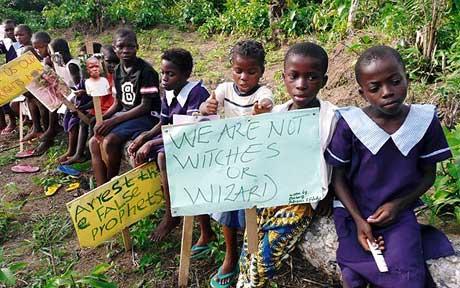
Children accused of being witches. Source: Child-witches of Nigeria seek refuge
(illustration not related to the story below)

The witch-trials of Angola: Mass ritual killing as 50 are poisoned to death after being forced to drink mysterious herbal potion to prove they were not sorcerers

  • Around 50 people died after being made to drink a herbal poison 
  • They were forced to prove they weren’t sorcerers
  • Politicians accused traditional healers of making the deadly herbal drink 

Published: March 14, 2024
By: Perkin Amalaraj – Daily Mail, UK

About 50 people have died in Angola after being forced to drink an herbal potion to prove they were not sorcerers, police and local officials said on Thursday.

The deaths occurred between January and February near the central town of Camacupa, according to Luzia Filemone, a local councillor.

Speaking to the national radio broadcaster, she accused traditional healers of administering the deadly concoction.

‘More than 50 victims were forced to drink this mysterious liquid which, according to traditional healers, proves whether or not a person practices witchcraft,’ said Filemone.

Belief in witchcraft is still common in some rural communities, despite a strong opposition from the church in the predominantly Catholic former Portuguese colony.

About 50 people have died in Angola after being forced to drink an herbal potion to prove they were not sorcerers (File image)

About 50 people have died in Angola after being forced to drink an herbal potion to prove they were not sorcerers (File image)

Angola does not have laws against witchcraft, leaving communities to deal with the issue as they see fit

Angola does not have laws against witchcraft, leaving communities to deal with the issue as they see fit

The deaths were confirmed by police that said 50 people were killed.

‘It’s a widespread practice to make people drink the supposed poison because of the belief in witchcraft,’ provincial police spokesman Antonio Hossi told the broadcaster, warning cases were on the rise.

Angola does not have laws against witchcraft, leaving communities to deal with the issue as they see fit.

Allegations of sorcery are often settled by traditional healers, or ‘marabouts’, by having the accused ingest a toxic herbal drink called ‘Mbulungo’. Death is thought to prove guilt.

Source: The witch-trials of Angola: mass ritual killing as 50 are poisoned to death after being forced to drink mysterious herbal potion to prove they were not sorcerers

Burkina Faso: Three-year old child murdered in Ouagadougou – Mob justice leads to death of two suspected ritual murderers

Reports on ritual murders in Burkina Faso are scarce but this does not imply that this West African country is spared these gruesome crimes. In the past I’ve posted a few articles on the grim fate of persons with albinism in this country and on the belief in witchcraft and superstition in this landlocked country in the Sahel zone of the African continent.

On April 1 a gruesome crime took place in the capital Ouagadougou, in the neighborhood of Rayongo. A three-year old boy, David Ouédraogo, was unscrupulously murdered; it all looked like a ritual murder. The angry crowd attacked and killed two suspects, allegedly foreigners, a third suspect had more luck and was handed over to the police.

The mother of David, Sarata Ouédraogo, a woman in her thirties, is devastated and beyond consolation. She shares her ordeal with a reporter of Omega Medias – clicking the following link will give access to her sad story.
(FVDK)

Screenshot – Sarata Ouédraogo, mother of David, tells her story – to listen to her click here (in French)

Meurtre d’un enfant de 3 ans à Rayongo : Sur la piste d’un crime rituel

Three-year old child murdered in Rayongo-Ouagadougou – mob justice leads to death of two of three suspected ritual murderers

Published: April 4, 2024
By: Charles Dah – Omega Medias, Burkina Faso

Les habitants de rayongo, quartier de la ville de Ouagadougou ont été frappés de stupeur ce lundi 1er avril 2024. La cause, un enfant de 3 ans a été violemment tué. Ses bourreaux seraient trois hommes de nationalité étrangère dont le comportement suspect a attiré l’attention des habitants du quartier. Courroucés, ces derniers finiront par lyncher à mort deux des trois suspects, le troisième quant à lui a été remis aux forces de l’ordre. L’émotion était toujours vive à notre passage, trois jours après le drame et la mère demeure inconsolable.

72 heures après la survenue de l’indicible fait macabre, nous voici sur les lieux du drame. Assis sous un dattier, un groupuscule d’hommes devise à deux pas du domicile familial des Ouedraogo. Touchée par la perte d’un des leurs, un enfant de 3 ans, la famille reçoit les condoléances des habitants du quartier et de ceux venus d’ailleurs. Sur place, l’émotion est vive.

Un peu plus loin, à l’intérieur de la cour, des femmes sont installées. Sur leurs visages se lisent stupeur et désarroi. Par moments, des sanglots montent du groupe, des pleurs dûs à la douleur de la perte brutale et violente du petit David, égorgé par ses bourreaux.

Après échange avec la famille, l’on nous conduit sur la scène du crime située à deux cents mètres du domicile des Ouédraogo.

Sur place, une odeur fétide flotte dans l’air. A l’intérieur de la maison où l’enfant a été tué, du sang, depuis coagulé, recueilli dans des calebasses et des Canaris.
C’est un décor macabre qui a tout d’un crime rituel digne des films d’horreur les plus glaçants. Tout porte à croire que ce sang contenu dans les calebasses est celui de la victime, l’enfant de 3 ans.

Encore effondrée, Sarata Ouédraogo, mère du petit David, la trentaine révolue, yeux rouges, est assise au milieu d’un groupe de dames sur une natte. Visiblement affaiblie par la triste nouvelle, elle s’appuie contre un mur de la maison pour se tenir debout afin de nous expliquer son calvaire. C’est une mère abattue, que nous avons rencontrée ce mercredi 3 avril.
Elle n’arrive toujours pas à croire comment des personnes qui vivaient dans la même cour qu’elle aient pu commettre un acte aussi ignoble, égorger son enfant.
<< Est-ce qu’ils peuvent me faire ça ? On est dans la même maison, c’est moi-même qui prépare et puis vous mangez. Tout ce qu’ils veulent, ils viennent me demander et je leur donne. Jusqu’à ce qu’ils m’appellent maman.>> nous relate la jeune mère entre deux sanglots.

Dame Ouédraogo a été séparée de son fils à jamais. De terribles adieux que la famille Ouédraogo et les habitants du quartier Rayongo digèrent difficilement.

Les faits remontent au lundi 1er avril. En partance au marché la mère de David le laisse à la maison sous la surveillance de la grande sœur de ce dernier. A son retour du marché, plus de David. Malgré de rapides recherches dans le voisinage, pas de nouvelles. Sarata Ouedraogo va questionner un de ses voisins de nationalité étrangère pour savoir s’il a aperçu l’enfant, l’homme lui répond que l’enfant était avec lui il y a à peine 3 minutes. Une réponse qui va semer un doute profond.

Comble de la malice, ledit voisin va même rejoindre un groupe d’habitants, pour poursuivre les recherches, avec probablement pour objectif de donner du temps à ses acolytes pour se débarrasser du corps de l’enfant.
Mais, l’instinct maternel de dame Ouedraogo fini par prendre le dessus. Elle lance au voisin<< Mon enfant est ici (dans la maison du voisin, NDLR). Mon enfant n’est pas ailleurs. Mon enfant est ici. (…) Moi-même je sens que l’enfant est ici.(…) Ce que je sais seulement, c’est que mon enfant est toujours dans cette maison >>. Sarata Ouedraogo nous explique avoir insisté et persisté. Puis elle décide de faire le pied de grue devant la porte de ceux qu’elle soupçonne être à l’origine de la disparition du petit David.

Pendant ce temps, la mobilisation des habitants pour retrouver l’enfant prend de l’ampleur.
Il faudra attendre vers 22h, pour enfin savoir ce qui s’est passé et cela grâce à la contribution d’un homme de tenue arrivé sur place.

<< Quand ils (les habitants du quartier, NDLR) sont partis maintenant, il (le voisin présumé coupable, NDLR) voulait fuir. Le gars (l’homme de tenue, Ndlr) est tourné derrière (à l’arrière de la maison, Ndlr). Il voit quelque chose qui est attaché déposé. Il a voulu soulever, c’est lourd. Djahh c’est mon enfant qui est dedans.>> Ajoute Sarata qui s’effondre en larmes avant de poursuivre <<C’est déjà gâté. Ils ont déjà tué l’enfant.>>.

Les présumés auteurs du crime rituel seront lynchés sur le champ par une foule en colère seul l’un des trois sera remis aux forces de l’ordre arrivées plus tard sur les lieux.

<< C’est une grande tristesse pour nous les membres de la famille. Même si tu es étranger à l’enfant, être témoin de ce drame et tu n’es attristé, tu auras menti.(…) Moi quand j’étais arrivé sur les lieux du drame, j’étais dépassé, car tu mets au monde un enfant et l’élève jusqu’à cet âge et quelqu’un l’egorge comme un poulet, vraiment c’est une perte, une énorme perte>> lâche Sambo Ouedraogo, oncle de la victime.

Le corps sans vie du petit David, ceux de deux des présumés auteurs du meurtre et leur complice rescapé ont été amenés par les forces de l’ordre après les constatations d’usage.

La mère du petit David, en état de choc reste inconsolable. A Rayongo, les habitants sont eux, toujours plongés dans la stupeur.

Ibrahim Niaoné & Abdoul Aziz Zoulabou

Source: Meurtre d’un enfant de 3 ans à Rayongo : Sur la piste d’un crime rituel

The plight of persons with albinism in Africa

Albinism is an inherited condition leading to a very light skin, hair and eyes. The question: ‘What is albinism?’ is treated in detail elsewhere on the present site (click here to access the information).

There’s a persistent superstition that organs and other body parts of a person with albinism contain magical or supernatural powers. Hence persons with albinism are often targeted by criminals who attack and/or murder them. In their social environment people with albinism are often discriminated, insulted or otherwise maltreated.

On multiple occasions I have drawn attention here on the plight of persons with albinism in countries in west, central, eastern and southern Africa including Mali, Nigeria, Burundi, the DRC, Tanzania, Mozambique, Eswatini (former Swaziland), Zambia, Malawi, the Republic of South Africa), Namibia and Madagascar. You may access the relevant posts and articles by using the dropdown menu under ‘African countries’ and/or the search button.

Moreover, those interested inn previous posts may click the following three links with access to reports on violence against persons with albinism in nearly 30 African countries:
Africa’s shameful acts of racism: the plight of persons with albinism (PLWA) in Africa
Devastating 2019 report on attacks of persons with albinism in 28 African countries
Shocking report on rural infanticide, violence against children accused of witchcraft, and ritual attacks against children with albinism in 19 SSA countries

The article presented below focuses on the situation of persons with albinisme in Angola and elaborates further on the plight of people living with albinism in various SSA countries.
(FVDK).

The plight of persons with albinism in Sub-Saharan Africa

Edna Cedrick holds her surviving albino son after his twin brother who had albinism was snatched from her arms in a violent struggle in 2016. Cedrick says she is haunted daily by images of the decapitated head of her 9 year old son. At least 18 Albino people have been killed in Malawi in a “steep upsurge in killings” since November 2014, and five others have been abducted and remain missing, according to Amnesty International. Tsvangirayi Mukwazhi / AP Photo

Published: April 1, 2024
By: Atlas News

What You Need to Know:

81 families with Albinism in Angola’s Bié Province have received assistance totalling nearly $12,000 dollars (10 million kwanzas) in the first phase of a social protection program aimed at providing support to Angola’s most vulnerable. 

This current program operates under the ‘Kwenda Program’ – a government program focused on creating policies to support the country’s poorest and most vulnerable residents. 

The program has received 320 million USD from the World Bank as well as 100 million USD from Angola’s National Treasury.

Alongside the financial support, sunscreen and other sun protection materials have been distributed to albinos across the country. Lack of sun protection poses a major health risk for albinos in Africa, with up to 90% dying before the age of 40. 

There are an estimated 6,818 people living with albinism in Angola who often face social exclusion, which contributes to their continued impoverishment as a large part of the stigma around albinism has to do with the fact that witchcraft is heavily prevalent in Southern Africa. 

The Details:

Across Southern Africa, particularly Malawi, South Africa, Tanzania, and Burundi, people with albinism are thought to hold supernatural powers. As a result, the killing of albinos in order to use their body parts in various rituals is somewhat common. 

The belief in many rural communities across Southern Africa is that the use of the body part of an albino in a witchcraft ritual may bring wealth, power or protection to the individual the ritual is intended for.

Albinism refers to the inability of the body’s skin cells to produce melanin, melanin is responsible for the colouration of eyes, hair and skin. Thus, those with albinism appear extremely pale. 

In Tanzania, albinos are referred to as ‘zeru zeru’ which translates to ‘ghosts.’ 

Additionally, there is a large trade in the body parts of albinos, with the Office of the UN High Commissioner for Human Rights claiming an entire albino corpse can be sold for upwards of $75,000, while albino arms or legs can be sold for up to $2,000. 

So, What Now?:

Angola’s social program signals a positive step towards the protection of albinos in the country. However, Angola is still an extremely impoverished country with 32% of the population living under the national poverty line, In rural areas that number jumps to 54%. 

Thus, although this program will bring relief for many affected albino families, a wider effort to combat impoverishment and raise living standards is needed across the country. 

Source: 81 Angolan Albino Families Receive Assistance From Social Protection Program

Anambra State, Nigeria: widow initially banished over alleged witchcraft gets new apartment

This post is about harmful widowhood practices and belief in witchcraft. It’s not about a ritual murder.

It all happened in Umunankwo, a village in the Ogbaru Local Government Area of Anambra State, in south-east Nigeria. The story goes back to April last year, when three brothers chased and banished their widowed sister, a 53-year old mother of two children, from the community accusing her of being a witch. The incident was filmed and went viral. Subsequently, the three men were arrested. For briefness sake I may refer to the second and third articles below.

The incident drew once more attention to existing harmful widowhood practices and the plight of women in Anambra State in general.

Moreover, also in Anambra State the belief in the power of supernatural forces exist, though it is unknown at which scale. Related superstitious practices may go hand-in-hand with ritualistic killings (‘money rituals’) and trafficking in human organs which unfortunately also occur in this state in South-East Nigeria. See my February 19, 2023 post ‘Anambra State Police Officers in alleged ritual killing, organ harvesting ring arrested‘. 

Anambra State is located in the South East geopolitical zone of the Federal Republic of Nigeria. The Federal Republic of Nigeria is divided into six geopolitical zones commonly called zones. 

Nigeria’s six geopolitical zones

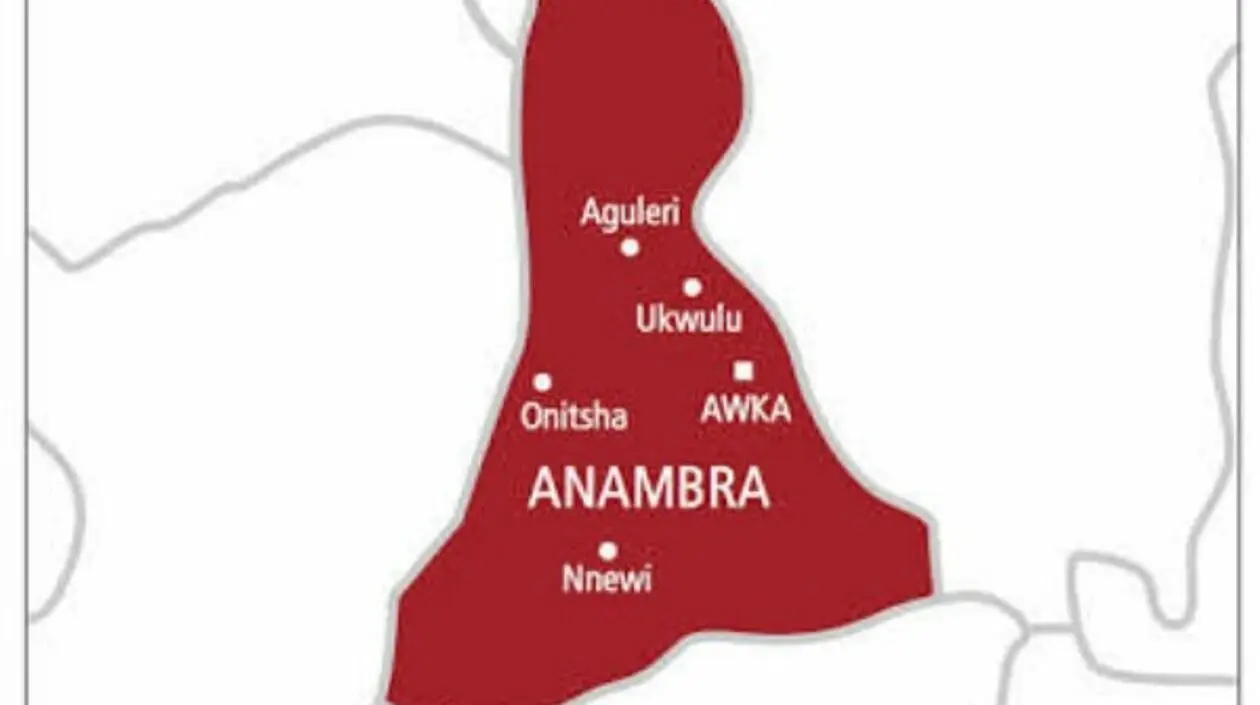
Anambra State is an inland state and one of Nigeria’s smallest states with a surface area of only 4,844 km2 (only Lagos State is smaller). Anambra ranks number 14 by population with an estimated population of 8 – 10 million people (2024), most of them christians though traditional beliefs continue to exist. The majority of the population belong to the Igbo ethnic group (in the 1960s, Anambra State was part of the failed secessionist Republic of Biafra). The region nowadays known as Anambra State has a a rich cultural history.

I already mentioned a prime reason to post this item, the existence of harmful widowhood practices, another major reason is the wish to draw attention to local initiatives and organizations to end these outdated and cruel practices which in fact represent human rights violations.

In this context I wish to mention the commendable work of the organization Advocacy for Alleged Witches, an interventionist group leading campaigns to end witch persecution in Africa. The organization’s Director is the well-known Leo Igbe, more than once mentioned on the present site. His work cannot be overrated and I wish to congratulate him once more with his work and achievements.

Last but not least I wish to congratulate Genevieve Osakwe, the Magistrate of the Children, Sexual and Gender-Based Violence Court, in Awka, the state capital, and the Commissioner for Women and Social Welfare in the state, Ify Obinabo, for their swift actions.

Thanks to them the perpetrators of the crime are being prosecuted and the victim, Nneka Uzor, can now start a new life in a new apartment.
(webmaster FVDK)

Anambra State, Nigeria: widow initially banished over alleged witchcraft gets new apartment

The widow, Nneka Uzor, a 54-year-old mother of two, was banished by her three brothers from Umunankwo Community in Ogbaru Local Government Area of the south-east state on 30 April 2023.

Map of Anambra State

Published: February 25, 2024
By: Chinagorom Ugwu – Premium Times Nigeria

A widow in Anambra State, who recently returned to her community after she was banished for allegedly being a witch, has gotten a new apartment.

The woman, Nneka Uzor, a 54-year-old mother of two, was banished by her three brothers from Umunankwo Community in Ogbaru Local Government Area of the south-east state on 30 April 2023.

PREMIUM TIMES, last year, reported (see below – webmaster FVDK) how the widow was spotted in a video clip being led out of the Umunankwo by the community members who hurled abuses at her while two masquerades flogged her.

The three brothers —- Lazarus Uzor, Anozie Uzor and Valentine Okwuosa —- were later arrested and arraigned before the Children, Sexual and Gender-Based Violence Court in Awka.

The arrest and arraignment of the suspects were facilitated by the Commissioner for Women and Social Welfare in the state, Ify Obinabo, who promised to ensure that the woman was reunited with the community.

This newspaper also reported that Mrs Uzor, the banished widow, returned to the community in January and reconciled with the villagers, following the commissioner’s intervention and the traditional ruler of the community, Fidelis Nsofor.

New apartment

Mrs Uzor has now gotten a self-contained apartment through the assistance of Advocacy for Alleged Witches, an interventionist group leading campaigns to end witch persecution in Africa.

The Director of the group, Leo Igwe, told PREMIUM TIMES on Saturday that the group decided to help Mrs Uzor after they learnt that the widow had been staying with a relative after her return to the community.

“We found out that while she returned to the community, she had no money, no apartment; her business had collapsed. Nothing. She was almost displaced,” Mr Igwe said, recalling that the widow also made the request when the group reached out to her.

“So, we raised some money and we sent it to her to rent an apartment,” he said.

The group director commended PREMIUM TIMES, saying it was the paper’s report that made them aware of the widow’s travail.

Joy overflow

Mrs Uzor expressed joy while she shared a video clip of the new apartment with the group director.

“You people have met me in my point of need,” she said in the three-minute video clip, almost shedding tears of joy.

“This is wonderful,” the widow exclaimed as she showed the inner part of the apartment.

“So, at last, I can boast of saying this is my own.”

She asked God to bless members of the group who secured the apartment for her.

Source: Widow initially banished over alleged witchcraft gets new apartment

Related:

Widow banished over alleged witchcraft returns to community

The woman, a 54-year-old mother of two, was banished by her three brothers from Umunankwo Community in Ogbaru Local Government Area of Anambra State.

Published: January 23, 2024
By: Chinagorom Ugwu – Premium Times Nigeria

A widow in Anambra State, who was banished for allegedly being a witch, has been reunited with her community.

The woman, Nneka Uzor, a 54-year-old mother of two, was banished by her three brothers from Umunankwo Community in Ogbaru Local Government Area of the south-east state on 30 April 2023.

PREMIUM TIMES, last year, reported how the widow was spotted in a video clip being led out of the Umunankwo by the community members who hurled abuses at her while two masquerades flogged her.

In the clip, the people, who were heard accusing Mrs Uzor of poisoning the community’s food and refusing to go for appeasement, led the woman to a road junction where they pronounced her banished from the community.

At the time they pronounced her banished, the widow had collapsed in the middle of a road, apparently due to fatigue.

The three brothers – Lazarus Uzor, Anozie Uzor and Valentine Okwuosa – were later arrested and arraigned before the Children, Sexual and Gender-Based Violence Court in Awka.

The arrest and arraignment of the suspects were facilitated by the Commissioner for Women and Social Welfare in the state, Ify Obinabo, who promised to ensure that the woman was reunited with the community.

Reunion

Mrs Uzor, the banished widow, has been reconciled to the villagers and brought back to the community, according to a statement on Monday by Chidinma Ikeanyionwu, a media aide to the commissioner.

Ms Ikeanyionwu said the reconciliation took place at the palace of the traditional ruler of Umunankwo, Fidelis Nsofor.

She said the commissioner, heads of men and women groups in the community, community leaders and the suspects, among others, attended the event.

The statement indicated that following the traditional ruler’s directive, community members gathered at the junction, where they had earlier banished the widow, to bring her back.

Masquerades also accompanied her back to the community.

Source: Widow banished over alleged witchcraft returns to community

This is how it started:

Brothers label their widowed sister witch, banish her from community

The victim is a mother of two .

Published: May 22, 2023
By; Chinagorom Ugwu – Premium Times Nigeria

Three people have banished their widowed sister from their community for allegedly being a witch.

The incident happened on 30 April in Umunankwo, a community in Ogbaru Local Government Area of Anambra State, south-east Nigeria.

Chidinma Ikeanyionwu, a media aide to the Commissioner for Women and Social Welfare in the state, Ify Obinabo, disclosed this in a statement on Monday.

The widow, Nneka Uzor is a 53-year-old mother of two. She is also a caterer.

Ms Ikeanyionwu gave the names of the suspects as Lazarus Uzor, Anozie Uzor and Valentine Okwuosa.

She said the suspects’ arrest was facilitated by the commissioner, Mrs Obinabo, after a video clip showing the widow being abused and banished from the community went viral on social media.

Viral video

In the clip, seen by PREMIUM TIMES earlier this month, the widow was spotted being led out of the community by members of the community and two masquerades.

As she walked, the community members hurled abuses on her, while the two masquerades flogged her.

“On this day, Nneka (Uzor) committed an atrocity. She poisoned the food of the community, and she refused to go for appeasement. On that purpose, masquerades have arisen to say a final goodbye to Nneka to the boundary of no return,” a voice was in the background of the video was heard saying.

“Nneka, you shall not come back again (to the community). You have been ostracised. Today, marks her last day (in the community). The masquerade has ostracised her,” the voice added.

Apparently exhausted and weak, the widow collapsed in the middle of a road and the people abandoned her there.

Arraignment

Ms Ikeanyionwu said the suspects were later arrested and arraigned before the Children, Sexual and Gender-Based Violence Court, in Awka.

The statement was silent on the details of the charges against the suspects.

When the charges were read and interpreted to the defendants, they pleaded not guilty of the charges, she said.

Ruling on bail application by the suspects, the Magistrate, Genevieve Osakwe, held that the matter was a bailable offence.

Ms Osakwe, consequently, granted them bail in the sum of N700, 000, but demanded that the suspects should provide the traditional ruler of the Umunankwo Community, the parish priest of the community’s Catholic Church or the president-general of the community as sureties.

In her reaction, the commissioner, Mrs Obinabo, expressed satisfaction with the decision of the court, Ms Ikeanyionwu said.

The commissioner assured that she would get justice for the widow and other widows in the state who are going through such ill-treatment.

She warned residents of the state to desist from any form of harmful traditional practices against widows, pointing out that Anambra State Government has zero tolerance for such “inhumane acts.”

Banished widow speaks

Mrs Uzor told the commissioner that she began living in her parents’ house in the community nine years ago after she lost her husband.

The widow regretted that her brothers and other family members had been abusing her since she began living with them in their parents’ house.

On the issue of being banished from the community, she narrated that someone had died in the community and that on the day of the person’s burial, she was invited like others, which made her pass a night there.

She said she was surprised that her brothers and other family members woke her up the next morning at about 5:30 a.m. with the masquerades and subsequently chased her out of the community.

Nkiru Uzor, a sister to the widow, alleged that it was one of the suspects, Lazarus, the immediate past president-general of the community, that instigated the banishment while Nnamdi, another suspect, coordinated the act and also filmed the incident.

Source: Brothers label their widowed sister witch, banish her from community

READ ALSO: Anambra women protest against harmful widowhood practices

‘Ghost’ sparks stampede at a school in Chitungwiza, Zimbabwe

The following article (posted below) is not about a ritual killing. It is, however, linked to a basic ingredient of a ritualistic act: the belief in the supernatural.

One may argue that there’s nothing against believing in the (power of the) supernatural, in the sense that supernatural stands for (something) caused by forces that cannot be explained by science. However, it is more than a philosophical question what the difference is between religion and superstition.

Be that as it may, generally speaking, ghosts and evil spirits are considered being supernatural.

This is what the following story is about. It happened in Chitungwiza, a village in Zimbabwe. Reportedly, a ghost was spotted in a school in said village after which the children panicked and ran away causing a stampede in which one child perished.

To conclude this introduction, it’s interesting to note that the article mentions that: ‘Cases of suspected satanism in Zimbabwe’s schools are common (….)’
(FVDK)

‘Ghost’ Sparks Stampede At A School In Chitungwiza

Published: February 13, 2024
By: Pindula News, Zimbabwe

A Grade Four learner at Mberi Primary School in Zengeza, Chitungwiza was injured as the children were fleeing from what they thought was a “ghost”.

The object, which learners claim was in the form of a woman, was allegedly spotted seated on the table.

Learners from Grade 4 Yellow ran away in terror and one of the learners ended up being taken to a clinic after she was injured in the stampede.

According to H-Metro, parents and guardians gathered to collect their children, with one parent being arrested when police intervened. Said one parent:

There should be something frightening our children at school.
(….)
They were disturbed after a shadow-like image, in the form of a woman, was spotted seated on the table forcing both the teacher and children to flee from the classroom.

Nothing was seen after other teachers and students gathered to see where the shadowy figure was spotted.
(….)
We strongly suspect that one of the staff members dabbles in Satanism.

Officials from the Ministry of Primary and Secondary Education were informed and district education officials, led by one only identified as Kureva, visited the school. Said Kureva:

We came to collect information about the case and we are yet to compile a report and submit it to the authorities.

I am not in a position to comment, it is best to check with the Ministry later after we submit our report.

Cases of suspected Satanism in Zimbabwe’s schools are common and authorities have seemingly failed to find a lasting solution to prevent the disruption of lessons by such occurrences.

Source: “Ghost” Sparks Stampede At A School In Chitungwiza

Zimbabwe: ritual killings rise

Shocking news from Zimbabwe, as reported by a national news site: ritual murders in the country are on the rise – allegedly.

Whereas the occurrence of ritualistic murders, locally often referred to as ‘muti murders’, is not in doubt – as demonstrated by the numerous cases reported on the present site, you may consult the dropdown menu ‘African countries’ to access all posts on Zimbabwe – it is nevertheless shocking to hear that there is an apparent recent surge in the number of these cruel crimes. As you may know, the organs or body parts ‘needed’ for ‘muti‘ have to be harvested from a living person.

One would think that the Tapiwa Makore murder case and the sentencing to death of his convicted murderers, his uncle and an accomplice, would deter potential perpetrators of muti related murders. According to recent newspaper reports, this is not the case.

A psychotherapist consulted (see the article below) points to mental illness as a significant factor behind these gruesome murders. I’ve often asked myself the same question: What makes someone a ritualistic murderer? Certainly, more research needs to be done as to why people ‘cross a border’ and decide to kill another human being – in a cruel way – as a means to ‘get rich quick’, to have success in business or to gain a certain (often political) position. Is it superstition? Is it a criminal mind? Selfishness? Greed? Or are ritualistic murderers mentally disturbed persons who should be treated for their ‘illness’ in stead of punished – death by hanging or a long prison sentence?

Asking the question means answering it.

Who knows the answer?
(webmaster FVDK)

Zimbabwe: Ritual Killings Rise

Is the capital punishment a deterrent for potential ritualistic killers?

Published: February 3, 2024
By: ZimEye, Zimbabwe

A disturbing trend is sweeping across the nation, as reports of suspected ritual murders are on the rise, leaving communities in shock and children as primary targets of these heinous acts.

The superstitious belief that killing individuals in a specific manner, particularly involving torture and processing certain body parts, can create and maintain wealth is contributing to an alarming increase in brutal killings, leaving many with unanswered questions.

The resurgence of ritual killings has prompted concerns and calls for action from various quarters.

Traditional healer Sekuru Banda, dismissing the superstitions, condemns those who propagate such beliefs, emphasizing the need for hard work instead of seeking easy money through horrific means. Banda urges a change in mindsets, highlighting the dangers of people being led astray in pursuit of illusory wealth.

To gain further insights, a news crew sought the perspective of psychotherapist Dr. Mertha Nyamande, who points to mental illness as a significant factor behind gruesome murders.

Dr. Nyamande explains that many offenders, especially those involved in removing body parts, may suffer from mental ailments or psychopathy, challenging the notion that these acts are rooted in ritualistic beliefs. From a legal standpoint, Mr. Moffat Makuvatsine sheds light on how the law addresses ritual killings.

While there is no specific provision for such crimes, they can be treated as murder committed under aggravating circumstances, potentially carrying the death penalty or life imprisonment.

The legal expert emphasizes that any murder proved to have ulterior motives may result in severe penalties. Recent cases, including the tragic death of Tapiwa Makore, have brought the issue of ritual killings to the forefront.

Tapiwa’s killers, his uncle Tapiwa Senior and Tafadzwa Shamba, were sentenced to death for their involvement in the gruesome crime.

However, the scourge continues, with a recent incident in Guruve involving the brutal murder of a three-year-old, whose body was decapitated and burnt, with missing body parts.

The perpetrators of this heinous act remain at large, underscoring the urgency for a concerted effort from law enforcement and communities to address and eradicate the deeply troubling surge in ritual killings.

As the nation grapples with this distressing epidemic, there is a pressing need for comprehensive strategies that include education, mental health awareness, and stringent legal measures to curb the prevalence of such horrific crimes.

Source: Ritual Killings Rise

Nigeria, Oyo State: Yahoo Boy stabs parents as black magic soap fails to yield fortune

The following is not about a ritual murder or a violent ritualistic act. It gives us an insight into the world of a Yahoo boy and the at times associated belief in the supernatural, the superstition, which also lies at the base of many if not all ritualistic murders. Yahoo boys engage in cybercrime and are notoriously known because of the “419 scam” (named after the Nigerian law’s article making it a punishable crime) or “Nigerian prince scam”.

I’ve reported before on the reported involvement of Yahoo boys in ritualistic crimes. See my posting dated January 9 (2024) including a 2022 statement by the Governor of Plateau State accusing Yahoo Boys being behind the increased ritual killings in this state in central Nigeria.

The reason for including this news article here is to throw some more light on the phenomenon of ‘Yahoo boys’, often mentioned on this site, as well to the pay attention to the general belief in magic by some people. Whether the Yahoo boy in question suffers from a mental illness, as suggested in the article, which may explain his aggressive behavior, is not certain but according to the boy’s father he is a normal person.

It all happened in Ibadan, Oyo State capital.

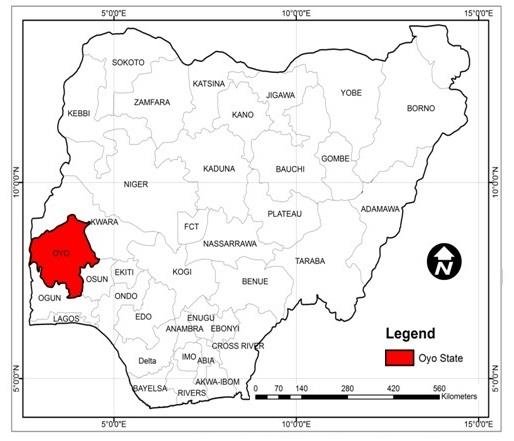
Oyo State is located in located in the South West geopolitical zone of the Federal Republic of Nigeria. 
The Federal Republic of Nigeria is divided into six geopolitical zones commonly called zones. 

Nigeria’s six geopolitical zones

Ibadan is Oyo State’s capital and its most populous city, and Nigeria’s third (after Lagos and Kano). It’s population is estimated at close to 4 million people whereas in its metropolitan area an estimated 6 million people live, mainly Yoruba but also Igbo, Hausa, Edo and Ibibio from other part of Nigeria.

Oyo State is an inland state and Nigeria’s sixth most populous state (after Kano, Lagos, Katsina, Kaduna and Bauchi states) with an estimated 9 to 10 million people (2024) and ranks 14 by surface area with 28,454 km2.
(webmaster FVDK).

Oyo State: Yahoo Boy stabs parents as black magic soap fails to yield fortune

Published: January 27, 2024
By: Kalu Idika – NB News Band, Nigeria

Mr Daniel Bamidele, a 20-year-old man suspected to be a Yahoo Boy, has been arrested in Oyo State.

The he was nabbed after stabbing his parents on Thursday, January 25.

The Nation reported that Daniel’s mother, Titilayo, reportedly ran out of their home in Apabielesin area of Ibadan, Oyo State with serious injury, calling for help as her son sneaked into their home and attacked her and his father with a machete.

This attracted bystanders who hurriedly rushed into the house, held Daniel down and dispossessed him of the machete he had used to attack his parents.

Speaking after he had been held down and freed his father from his grip, Daniel explained that he had been earning a living from cybercrime otherwise called yahoo business for some time.

He said his parents were aware that he already built a three-bedroom bungalow from the proceeds of the cybercrime.

Daniel said he had promised that he would get a store for his mother and stock it with goods so she could become a big trader once he recorded a breakthrough.

He added that his mother and elder brother colluded to fleece him of the sum of N2.5 million despite the promise he made to get her a store and stock it with goods.

Daniel said, “I purposely lured my mother from a church programme she was attending, and as soon as we arrived home, I attacked her with a knife and was already inflicting cuts on her body when my father tried to save her from me.

“I attacked my father too because if I had not stabbed both of them, they would have succeeded in killing me.”

Speaking further on his reasons for attacking his mother and father with a knife, Daniel accused his mother of giving him a fake name which rendered useless the magic black soap he had secured from the priest of a white garment church.

He also noted that he made his elder brother his next of kin in his bank documentation but the same elder brother had been trying to play smart with his money.

He said, “I am a 200-level student of LAUTECH (Ladoke Akintola University of Technology) and I have built a three-bedroom bungalow from the money I made from doing yahoo business.

“I am angry with my parents, particularly my mother, for giving me a fake name instead of her real name.

“There is a particular black magic soap that I have been using lately. The soap was given to me by the priest of a white garment church named Mathew.

“I was the one who bought a generator for Pastor Mathew’s church around Ona Grammar School in Ogbomosho.

“The soap was meant to bring me good fortune, but there was the need for me to call my mother’s name into it before it could work.

“My mother told me that her name is Titilayo. But when I called the name into the soap, it did not work. Hence, I got angry and decided to stab her.”

Daniel’s mother, Titilayo, however said she did not collect any money from him.

She said, “I was called on the phone to come pick up my son from school at LAUTECH when he started exhibiting mental illness.

“When we got home, his father brought a native medicine home and gave him to use. He slept off after taking the medicine.

“However, when he woke up, he demanded the whereabouts of his phone and I told him I did not take his phone. He landed several blows on me.

“He is a liar; I did not collect any money from him.”

But Bamidele’s father accused his wife of being in the know of everything pertaining to how his son ventured into yahoo business and how he built a house from the money he made from the fraudulent activity.

“My wife was the one that indulged him (Daniel). She knew when her son started building a house, yet she did not tell me,” he said.

Source: Yahoo Boy stabs parents as black magic soap fails to yield fortune

More:

Ibadan: ‘Yahoo Boy’ Stabs Parents Over Failed Black Magic Soap

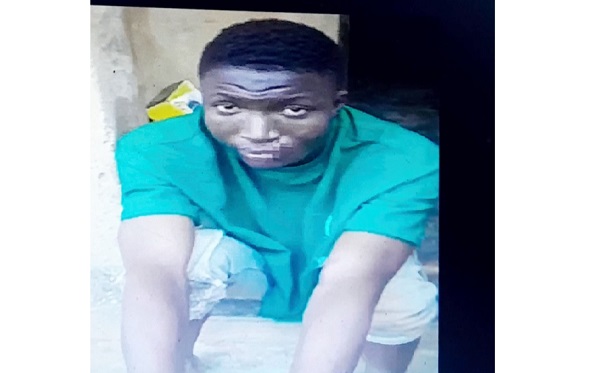
The internet fraudster, Yahoo boy, Daniel Bamidele who allegedly stabbed his parents

Published: January 27, 2024
By: Leadership News, Nigeria

A 20-year-old internet fraudster, identified as Daniel Bamidele, has attacked and stabbed his parents over his mother’s refusal to reveal her real name, necessary for activating a black ritual soap that was supposed to bring him riches.

The incident occurred in the Bamideles’ Apabielesin home in Ibadan, Oyo State capital, when Daniel, enraged by his mother’s actions, assaulted both his parents with a machete. His mother, Titilayo, managed to escape and raise an alarm, leading to the intervention of bystanders who subdued Daniel and disarmed him.

According to Daniel, his parents were aware of his involvement in cybercrime, from which he claimed to have built a three-bedroom bungalow.

He accused his mother and elder brother of cheating him out of N2.5 million, frustration over his mother providing a false name, which rendered his ritual soap, which he said was given to him by a white garment church priest, ineffective. The soap, he added, was intended to bring good fortune but required his mother’s real name for activation.

“I purposely lured my mother from a church programme she was attending, and as soon as we arrived home, I attacked her with a knife and was already inflicting cuts on her body when my father tried to save her from me,” he said in a report by the Nation.

“I attacked my father too because if I had not stabbed both of them, they would have succeeded in killing me.”

Source: Ibadan: ‘Yahoo Boy’ Stabs Parents Over Failed Black Magic Soap

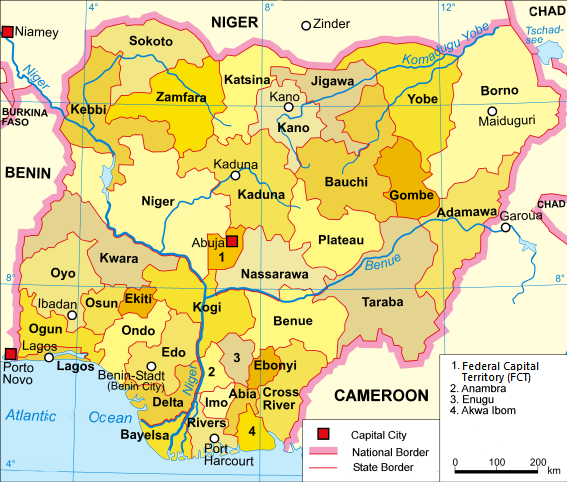
Map showing Nigeria’s 36 states – Oyo State os located in the southwest.

Ghana, Central Region: man arrested for killing his 3-week-old baby for rituals

A gruesome murder for ritualistic purposes took place in Ghana’s Central Region on January 22.

A 3-week-old baby was the innocent victim of superstition, greed and a criminal mind. The baby’s father and two accomplices have been arrested in connection with the alleged ritual murder case, a swift action for which the Ghanaian police is to be commended.

One of the three accused persons is the 21-year-old father of the baby victim. How on earth is it possible that the belief in witchcraft or the power which ritualistic murder is supposed to create can make a person the murderer of his or her own child? How can you believe that sacrificing a newborn baby for ‘money ritual’ can create ‘juju’ ultimately resulting in (more) wealth, power or another desired goal for the perpetrator(s)?

More research is needed to reveal the reasons behind ritualistic murders and related criminal acts. The belief in the power of ritualistic murders is widespread in Ghana, but not exclusively in this West African country, as the evidence presented on this site clearly demonstrates.

Warning: one or more of the following articles contain(s) graphic details which may upset readers.
(webmaster FVDK)

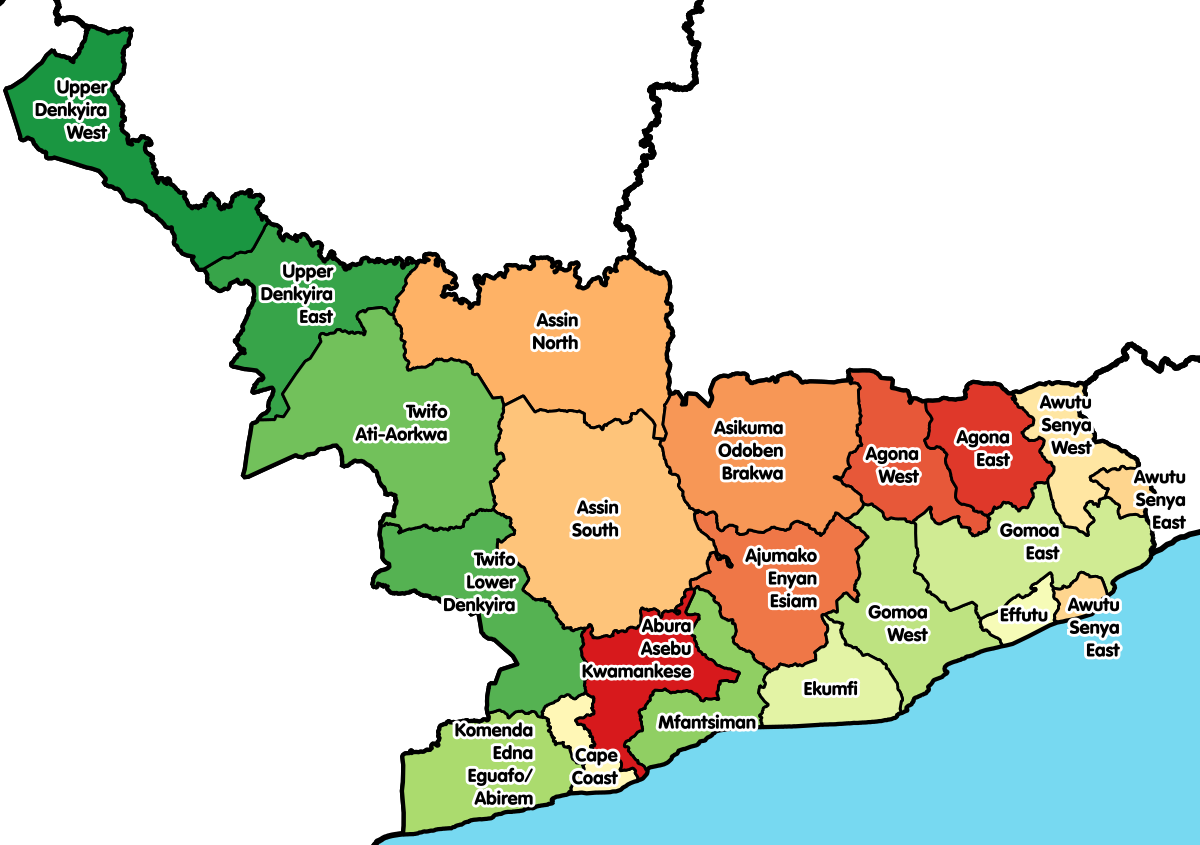
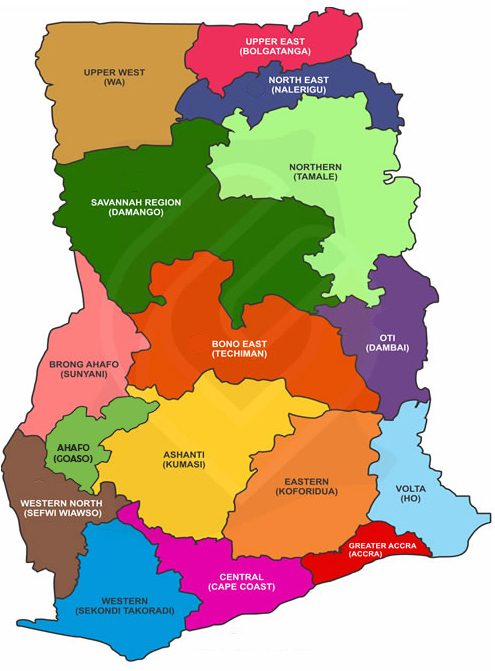
District sof the Central Region including Gomoa East District where the alleged ritual sacrifice took place.
Gomoa East District is one of the twenty-two districts of the Central Region.

Man arrested for killing his 3-week-old baby for rituals

Published: January 23, 2024
By: Kofi Adjei – Myjoyonline, Ghana

A 21-year-old father only identified as Bright is in the grips of the Awutu Bereku District Police Command over the murder of his three-week old baby.

Bright according to reports has killed the baby for suspected money rituals at Fetteh Kakraba in the Gomoa East District of the Central Region.

The unfortunate incident occurred on Monday night when he came to visit the baby and mother.

In an interview with Adom News, Bright’s friend narrated that the child’s mother left the sleeping baby inside to run an errand. 

Bright then asked his friend to go and bring the baby from the room which he did, allegedly without knowing he had ulterior motives.

“I met Bright on the school park with the baby and a few minutes later, the mother called that he was missing,” he narrated.

A resident disclosed a search party was launched for the baby immediately after the news about the baby’s disappearance broke out.

Bright’s friend was apprehended after the group had a tip-off that he was the one who took the baby out of the room.

The accomplice led the search party to the school park but Bright had already killed the baby when they got there.

Bright and his friend have been arrested and are assisting with investigations.

Source: Man arrested for killing his 3-week-old baby for rituals

And:

Awutu Bereku: 21year old father apprehended by Police for killing newborn baby for rituals

Click here to listen to the audio

Published: January 23, 2024
By: Eric Nana Yaw Kwafo – Modern Ghana

Source: Awutu Bereku: 21year old father apprehended by Police for killing newborn baby for rituals

More:

Ritual Killing: 21-Year-Old Man Arrested For Killing His 3-Week-Old Baby In Gomoa East

The killing took place at Fetteh Kakraba in the Gomoa East District. Source: Getty Images

Published: January 23, 2024
By: Delali Adogla-Bessa – Yen, Ghana

  • A man has been arrested for the murder of a three-week-old baby at Fetteh Kakraba in the Gomoa East District
  • The suspect is the baby’s father, who is believed to have killed his son for rituals on January 22
  • The suspect’s friend was apprehended, and he revealed the role he had played in the baby’s disappearance.

The Awutu Bereku District Police Command has arrested a 21-year-old father over the murder of his three-week-old baby.

The suspect, identified only as Bright, is believed to have killed his son for rituals on January 22.

The killing took place at Fetteh Kakraba in the Gomoa East District of the Central Region.

Bright’s friend told Adom news that the child’s mother left the baby to run an errand.

Bright then asked his friend to go and bring the baby from the room without revealing his alleged motives.

The community was alerted, and a search party tried to find the missing baby.

Bright’s friend was apprehended, and he revealed the role he had played in the baby’s disappearance.

By the time they had found Bright, he had allegedly already killed the baby. Bright and his friend have been arrested and are assisting with investigations.

Source:
Ritual Killing: 21-Year-Old Man Arrested For Killing His 3-Week-Old Baby In Gomoa East

More:

Father who allegedly beheaded 3-month-old baby, two accomplices remanded

Published: January 25, 2024
By: Seth Kofi Adjei – Adom Online, Ghana

A father who allegedly murdered his 3-months-old baby, his lover and a 17-year-old friend have been remanded by the Awutu Bereku District Court in the Central region.

The suspect, Bright Larvie, was arrested for allegedly beheading his own child for money rituals. 

Investigations led to the arrest of his lover, Linda Asare and their 17-year-old acquaintance, Kingsley Yeboah.

The Awutu Bereku District Police Command arranged the suspects before court presided over by Justice Naomi Kuntor. 

The court, considering the gravity of the charges and the ongoing investigation, decided to remand the suspects into police custody.

The 17-year-old was sent to a special facility due to his age.

They are set to reappear before the court on February 5, 2024.

Residents in Fetteh Kakraba are still grappling with the shock and horror of such a tragic event.

Source: Father who allegedly beheaded 3-month-old baby, two accomplices remanded

Ghana – Regional map – Administrative Division