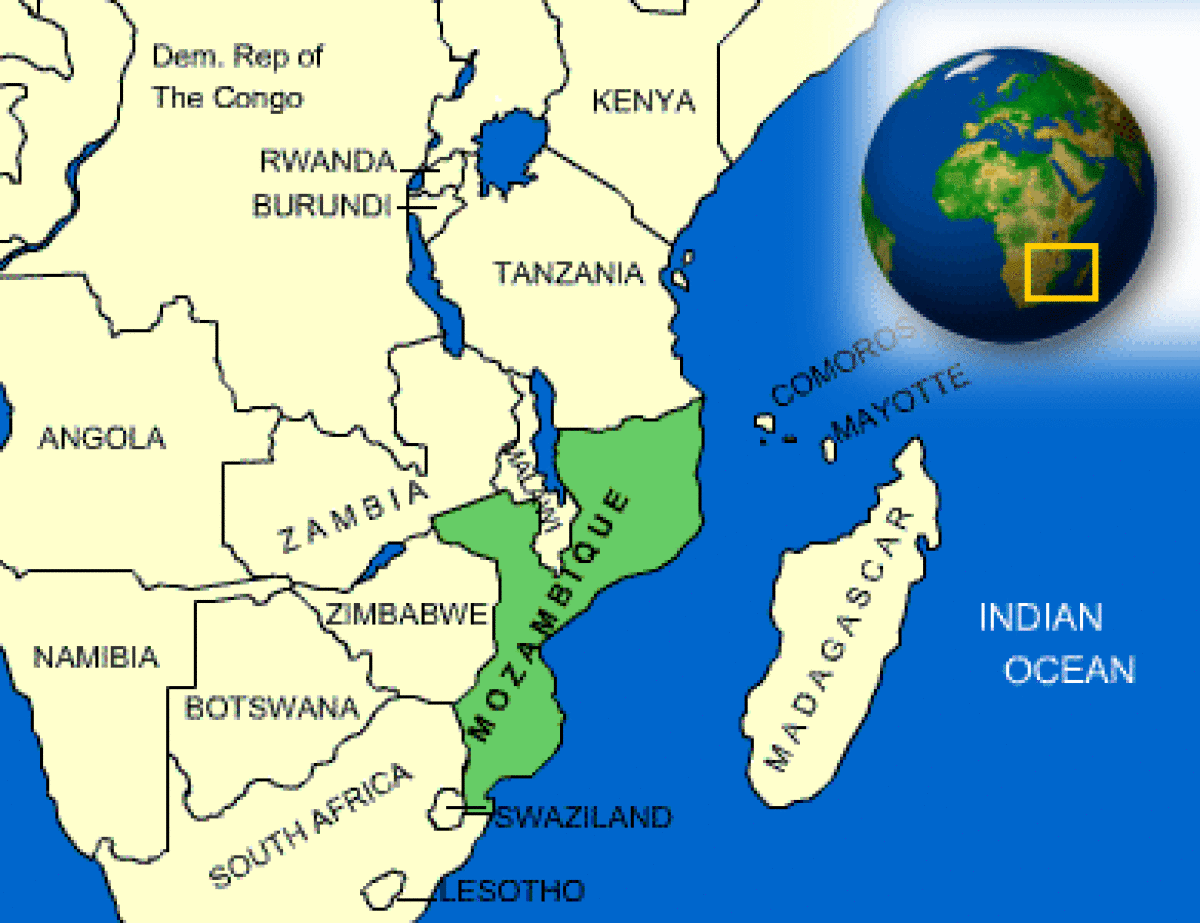
Though it’s not a recently reported crime which follows below, it’s worth drawing attention to the criminal superstition which motivates unscrupulous perpetrators to attack bald people. The practice of murdering bald people for ritualistic purposes is not a great exception in Mozambique and neighboring countries. See my June 24, 2018 posting, Mozambique police warn bald men after ritual attack. Another interesting part of the crime reported below is the involvement of a man from Mali, in West Africa, about 6,000 km away from Mozambique. Apparently, superstition knows no borders. (webmaster FVDK)
Bald man decapitated in ritual attack
Published: January 17, 2022 By: Myjoyonline.com – source: BBC
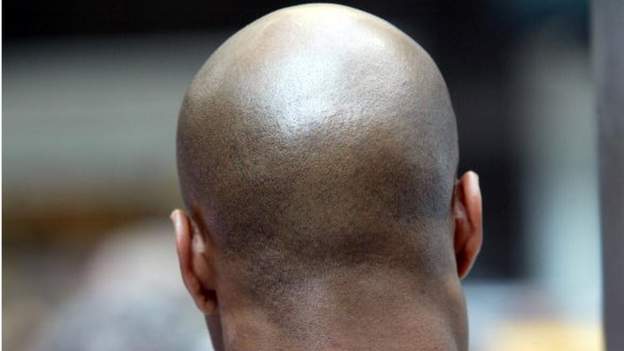
Police in Mozambique say the head of a bald man has been removed by criminals who wanted to sell it to a client from Mali.
When their customer disappeared, they left it in the central town of Muandiwa.
Some Mozambicans believe bald men’s heads contain gold.
The first reports of bald men being killed for their heads in the country were back in 2017.
The trade in body parts is relatively common in Mozambique, Malawi and Tanzania where they are believed to bring fortune and luck in love.
The body parts of people with albinism are especially prized.
The article presented below, written by the famous Nigerian human rights activist and humanist Dr. Leo Igwe, is a must-read. His manifesto is highly recommended to all readers. It is more than a reflection, it is more than a plea, it is more than a cry – for change or for understanding. As Dr. Igwe writes: “Africans must begin to think freely in order to ‘emancipate themselves from mental slavery’ and generate ideas that can ignite the flame of an African enlightenment.” And Dr. Igwe is not alone, he is not the only one who firmly believes this approach is the only way for Africa and Africans to move forward – as can be concluded from the list of African endorsers and other endorsers from around the world, presented at the end of his article.
Enough words written to recommend a piece that you shouldn’t miss! Enjoy the reading, and … spread the word!
PS Unfortunately, a few links in the original article are broken and/or not working properly (webmaster FVDK).
A Manifesto for a Skeptical Africa
What are the prospects for a more secular Africa, more skeptical Africa, more scientific Africa, i.e., a more humanistic Africa?
For too long, African societies have been identified as superstitious, consisting of people who cannot question, reason or think critically. Dogma and blind faith in superstition, divinity and tradition are said to be the mainstay of popular thought and culture. African science is often equated with witchcraft and the occult; African philosophy with magical thinking, myth-making and mysticism, African religion with stone-age spiritual abracadabra, African medicine with folk therapies often involving pseudoscientific concoctions inspired by magical thinking. Science, critical thinking and technological intelligence are portrayed as Western — as opposed to universal — values, and as alien to Africa and to the African mindset. An African who thinks critically or seeks evidence and demands proofs for extraordinary claims is accused of taking a “white” or Western approach. An African questioning local superstitions and traditions is portrayed as having abandoned or betrayed the essence of African identity. Skepticism and rationalism are regarded as Western, un-African, philosophies. Although there is a risk of overgeneralizing, there are clear indicators that the continent is still socially, politically and culturally trapped by undue credulity.
Many irrational beliefs exist and hold sway across the region. These are beliefs informed by fear and ignorance, misrepresentations of nature and how nature works. These misconceptions are often instrumental in causing many absurd incidents, harmful traditional practices and atrocious acts. For instance, not too long ago, the police in Nigeria arrested a ‘robber’ goat which they said was a thief who suddenly turned to a goat. A Nigerian woman was reported to have given birth to a horse. In Zambia, a local school closed temporarily due to fears of witchcraft. In Uganda, there are claims of demonic attacks in schools across the country. Persecution and murder of alleged witches continue in many parts of the continent. Many Africans still believe that their suffering and misfortune are caused by witchcraft and magic. In Malawi, belief in witchcraft is widespread. Ritual killing and sacrifice of albinos and other persons with disabilities take place in many communities, and are motivated by paranormal belief. Across Africa people still believe in the potency and efficacy of juju and magic charms. Faith-based abuses are perpetrated with impunity. Jihadists, witch-hunters and other militants are killing, maiming and destroying lives and property. Other-worldly visions and dogmatic attitudes about the supernatural continue to corrupt and hamper attempts by Africans to improve their lives. Even with the continent’s ubiquitous religiosity, many African states are to be found at the bottom of the Human Development Index and on the top of the poverty, mortality and morbidity indices.
Recently Africa was polled as the most devout region in the world, and this includes deep devotion to the continent’s various harmful superstitions. Devoutness and underdevelopment, poverty, misery and superstition co-exist and co-relate. It should be said that the dominant religious faiths in the region are faiths alien to the continent. That means African Christians are more devout than Europeans whose missionaries brought Christianity to Africa. African Muslims are more devout than Muslims in the Middle East, whose jihadists and clerics introduced Islam to the region.
Meanwhile, whatever good these foreign belief systems may have brought to or done in Africa can only be unfavorably compared to the damage and darkness they have caused and are still causing in the region. Some paranormal or supernatural claims of the two main religions of Christianity and Islam are part of the factors holding Africans hostage. Most Africans cannot think freely or express their doubts openly because these religions have placed a huge price on freethinking and critical inquiry. Because these belief systems rely on paranormal claims themselves, Africans feel they cannot speak out against superstition as a whole, or they will be ostracized or even killed by religious zealots. Belief in demonic possession, faith healing, and the “restorative” power of holy water can have deadly consequences for believers and whole communities. Africans must reject superstitious indoctrination and dogmatization in public institutions. Africans need to adopt this cultural motto: Dare to think. Dare to doubt. Dare to question everything in spite of what the superstitious around you teach and preach.
Africans must begin to think freely in order to ‘emancipate themselves from mental slavery’ and generate ideas that can ignite the flame of an African enlightenment.
The two dominant religions have fantastic rewards for those who cannot think, the intellectually conforming, unquestioning and obedient, even those who kill or are killed furthering their dogmas. They need to be told that the skeptical goods — the liberating promises of skeptical rationality — are by far more befitting and more beneficent to Africans than imaginary rewards either in the here and now or in the hereafter. Today the African continent has become the new battleground for the forces of a dark age. And we have to dislodge and defeat these forces if Africa is to emerge, grow, develop and flourish. To some people, the African predicament appears hopeless. The continent seems to be condemned, doomed and damned. Africa appears to be in a fix, showing no signs of change, transformation and progress. An African enlightenment sounds like a pipe dream.
But I do not think this is the case — an African Age of Reason can be on the horizon! The fact is that there are many Africans who reason well and think critically. There are Africans who are skeptics and rationalists1. But active African skeptics are too few and far apart to form the critical mass the continent needs to experience a Skeptical Spring. Nonetheless, the momentum is building slowly and steadily. And one can say that an African skeptical awakening is in sight. As it is said: the darkest part of the night precedes the dawn. So there is no need to despair for humanity in Africa. There is every reason to be optimistic and hopeful. After all, Europe went through a very dark period in its history, in fact, a darker and more horrible phase than that which Africa is currently undergoing. Still the European continent survived to experience Enlightenment and modern civilization. Who ever thought that the Arab Spring would happen in our lifetime? So, African enlightenment can happen sooner than we expected. But it will not happen as a miracle. African enlightenment will not fall like manna from heaven. It requires — and will continue to require — hard work, efforts, sacrifice, courage and struggle by Africans and other friends who are committed to the values of enlightenment. In Europe, skeptics spoke out against harmful superstition, and unfounded dogma and caused the dawn of a new awakening. African skeptics need to speak out against the forces of dogma, irrationalism and superstition ravaging the continent. Skeptics need to organize and mobilize — online and offline — to further the cause of reason, science and critical thinking. They need to speak out in the media and to politicians about the harm resulting from undue credulity and challenge and confront the charlatans directly to put up or shut up. Skeptics can no longer afford to keep quiet or remain indifferent in the face of a looming dark age. They need to campaign for a reform of the educational system and encourage the teaching of critical thinking in schools.
Many charlatans operate out there in their communities. They ‘mine’ popular fears and anxieties, exploiting desperate, misinformed folks. We need to expose them and free our people from their bondage. African skeptics cannot remain passive and inactive and expect skeptical rationality to thrive and flourish or expect the forces of dogma and superstition to simply disappear. The situation requires active engagement by committed skeptics. That was how the much-talked-about skeptical tradition in the Western world was established and is sustained.
That is how we are going to build and leave a skeptical legacy for Africa.
This is a call to duty to all African skeptics in Africa and in the diaspora. History has thrust on us this critical responsibility which we must fulfill. Let us therefore marshal our will to doubt, to advance skepticism in the interest of Africa. Let us marshall other intellectual resources and cause this new dawn — this skeptical awakening to happen early in this 21st century.
African skeptics arise.
1 Skeptical and rationalist groups are gaining ground in Africa. Here are a few worth supporting:
African Endorsers George Thindwa, Executive Director, Association for Secular Humanism, Malawi Mandla Ntshakala, Activist, Swaziland Jacques Rousseau, Lecturer, University of Cape Town, South Africa Ebou Sohna, Gambia Secular Assembly, Gambia Graham Knight, Humanist Association of Ghana, Accra Ghana Olajide Akeredolu MD, Lagos, Nigeria Jes Petersen, Director, Springboard Humanism, Botswana Wilfred Makayi, Humanist Activist, Zambia James Ibor, Attorney, Basic Rights Counsel, Calabar, Nigeria Robert Bwambale, Founder & Executive Director, Kasese United Humanist Association, Uganda Kato Mukasa, HALEA, Kampala, Uganda
Other Endorsers from Around The World
James Randi, Founder, James Randi Educational Foundation, USA Michael Shermer, Executive Director, Skeptics Society, USA Steven Pinker, Professor of Psychology, Harvard University, USA D.J. Grothe, President, James Randi Educational Foundation, USA Paul Kurtz, Founder, Institute for Science and Human Values, USA Toni Van Pelt, Policy Director, Institute for Science and Human Values Hemant Mehta, Blogger, Friendly Atheist Susan Sackett, Writer and Vice President of the International Humanist and Ethical Union, USA Sonja Eggerickx President, International Humanist and Ethical Union (IHEU), Belgium Josh Kutchinsky, founder and co-moderator Hummay, International Humanists Support egroup Ophelia Benson, Author and Blogger, USA Guy P. Harrison, Writer, USA Ike Francis, Human Rights Activist, USA Lorann Sims-Nsimba, Africa Awake Freethought Alliance, USA Matt Cherry, International Representative, International Humanist and Ethical Union (IHEU) Bob Churchill – International Humanist and Ethical Union (IHEU), UK Norm Allen, International Outreach Director, Institute for Science and Human Values, USA Dr Bill Cooke, Director of International Programs for the Center for Inquiry, USA Canberra Skeptics Inc, Australia Australian Skeptics (Victorian Branch) John Perkins, The Secular Party of Australia
Law enforcement officers as well as the High Court Judge are to be commended for the bringing to justice of a father who brutally killed his own son believing that would bring him wealth. Greed and superstition were the ingredients for a repulsive act. Hopefully the 52-year prison sentence for the convicted murderer will act as a deterrent for others who might be tempted to engage in this practice of child sacrifice for personal gains.
Warning: the following article contains graphic details of a cruel crime which may upset some readers (webmaster FVDK).
Father jailed 52 years for son’s ritual sacrifice, witch doctor set free
The accused persons arrive at court. COURTESY PHOTO/URN
Published: November 1, 2023 By: Michael Wandati – DISPATCH, Uganda’s News Monthly
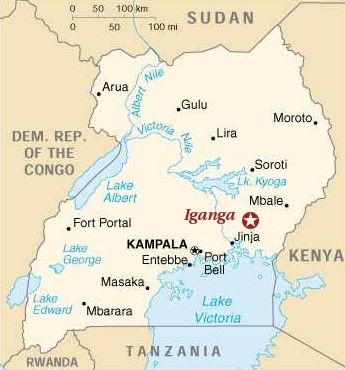
Iganga, Uganda | In a significant legal ruling, High Court Judge, Justice David Batema, has handed down a verdict resulting in a 52-year prison sentence for Hassan Kafudde, a father convicted of the murder of his son in a ritual sacrifice. The case also involved lengthy sentences for one accomplice, while the witch doctor implicated in the case, who had spent six years in remand, was released.
The proceedings unfolded within the High Court of Uganda Circuit located in Iganga. The prosecution’s case contended that Kafudde sacrificed his son in a ritual murder with the belief that it would bring him wealth.
According to the prosecution’s account, on the 6th of June 2017, the convicted individuals, situated in Musita village within the Mayuge District, gruesomely beheaded and mutilated a child known as MJ in a ritualistic act.
Earlier in the legal proceedings, one of the accused, Issa Muyita, entered a guilty plea, reached a plea bargain agreement, and offered to testify as a prosecution witness. Consequently, he received a 25-year prison sentence. The trial continued against Kafudde and Kabaale Mubaraka, both of whom pleaded not guilty.
During the trial, Muyita confessed that he had accompanied Kafudde from Musita trading center to a sugarcane plantation, where Kafudde presented his son MJ. The child was tragically murdered in the sugarcane plantation near a stream. Kafudde collected the child’s blood in a polythene bag and transported the severed body parts in a bag. Additionally, he dug a shallow grave to bury the decapitated remains of the sacrificed child.
As a result, Kafudde was found guilty of the ritual murder of the child MJ and convicted as charged. It was subsequently established in court that Mubaraka did not actively participate in the commission of the offense.
However, the court determined that Mubaraka, identified as a witch doctor with shrines in Musita village, had been informed of the criminal act by Hassan Kafudde. Mubaraka subsequently went into hiding after the incident and was subsequently found guilty of being an accessory to the murder, as per section 394 of the Penal Code Act.
At the conclusion of the trial, Justice Batema, presiding over the High Court of Uganda Circuit in Iganga, convicted and sentenced the accomplices, Muyita, Kafudde, and Mubaraka, on the charge of trafficking in persons, in violation of section 4(a) and 5(c) of the Prevention of Trafficking in Persons Act. Hassan Kafudde was sentenced to 52 years in prison, while Mubaraka received a 3-year prison term.
In his judgment, Justice Batema strongly denounced the heinous practice of ritual child sacrifice, the dismemberment of children, and the illegal trade in body parts, emphasizing the gravity of such offenses.
Justice Batema justified the lengthy custodial sentence for Kafudde by pointing to his lack of remorse throughout the court proceedings and his failure to demonstrate regret for the crime. Accordingly, Kafudde was sentenced to spend 52 years in Kirinya prisons, which includes the six years spent in pretrial detention.
The judge found Kabaale Mubaraka guilty of being an accessory to the crime but observed hesitancy on his part to report the incident to the police. Consequently, Mubaraka was sentenced to three years in prison, but given his prior six-year remand period, he was ordered to be immediately released.
Jacqueline Okui, the spokesperson for the Directorate of Public Prosecutions (DPP), commended the court for its landmark judgment, asserting that it will serve as a deterrent to individuals involved in such criminal acts.
Okui further challenged parents to take a proactive role in safeguarding their children’s well-being, emphasizing that engaging in child rights abuses such as ritual murders, whether directly or indirectly, would result in significant custodial sentences.
The investigation of this case was led by Aliwali Kizito, Chief State Attorney, with the prosecution being conducted by Racheal Bikhole, Assistant Director of Public Prosecutions and Head of the Prevention of Trafficking in Persons Division, along with Nyanzi Gladys, Assistant Director of Public Prosecutions, Biira Peace, Chief State Attorney, and Arap Malinga, a Senior State Attorney within the Office of the Director of Public Prosecutions.
Not much is known about the occurrence of ritualistic murders and related activities in Gabon. The 2013 article cited below strongly suggests that the belief in the supernatural powers derived from ritualistic murders exists and may even be widespread in this Central African country. According to the president of Gabon’s Association for the Prevention of Ritual Crimes, Jean-Elvis Bang Ondo, there were more than 20 ritual murders in the country in the first quarter of 2013, a staggering number,
The article also refers to a 2009 ritual murder implicating a senator. It wasn’t the first time a high-profile politician was involved in a ritual murder case (also see my earlier posting on the case) and I’m afraid it won’t be the last time. After all, though President Ali Bongo is no longer president of Gabon (he was deposed earlier this year, on August 30) and the country has a new leader, Transitional President Brice Clotaire Oligui Nguema, this does not mean that ritual killing has stopped. Recently new reports emerged with details of ritual murders. Gabon’s new leaders face many challenges including the fight against superstition and ritualistic violence. (webmaster FVDK)
Anger rises in Gabon after rash of ritual killings
Screenshot – not related to the article below
Published: March 26, 2013 By: Jean Rovys Dabany – Reuters
LIBREVILLE (Reuters) – A rising number of mutilated bodies washing up on Gabon’s beaches this year has sown fear in the normally sleepy capital Libreville of a resurgence in ritual killings.
The body parts of humans and animals are prized by some in central Africa for their supposed supernatural powers, including among some politicians bent on gaining influence.
“We have seen 20 killings since the start of the year,” said Jean-Elvis Ebang Ondo, the president of Gabon’s Association for the Prevention of Ritual Crimes, in Libreville.
He said most of the victims were young girls whose lips, tongues, genitals and other organs had been removed.
The killings have stirred rising anger against President Ali Bongo’s government for doing too little to halt the murders.
“We want to shout out our fury and tell the authorities that this needs to stop,” said Jessy Biyambou, a member of the Cry of Women advocacy group, which is organizing an April 6 rally in support of victims’ families.
Roland Akoumba, whose 8-year-old daughter was found dead in mid-March, told Reuters he was losing hope for justice.
“When the police removed the body from the water, they saw that the tongue, the lips, and the genitals were cut off,” he said. “I filed a complaint but I know it will go nowhere.”
Officials from the notoriously closed-door government of the former French colony have declined to comment publicly on the killings.
Bongo was elected president in 2009 in polls that triggered days of rioting and opposition complaints of fraud. He succeeded his father Omar Bongo, who held a tight grip on power in the oil producing state from 1967 until his death 42 years later.
“The phenomenon of ritual crimes is real. But no one here is willing to turn anyone else in for fear they too will be in danger,” said a member of parliament, who asked that his name not be used for fear of reprisals.
In the most high-profile ritual murder court case in Gabon to date, a convicted killer accused a Gabonese senator of ordering the 2009 murder of a 12-year-old girl for her organs.
The senator’s immunity was lifted after the accusation was made late last year, but he has not been indicted. The senator has denied any involvement.
Gabon is not the only African country with a black market trade in human organs.
Tomb raiders dug up more than 100 graves in Benin’s capital in November. Cameroonian authorities in September arrested five people for trafficking after they were stopped at a checkpoint with a severed human head.
He said most of the victims were young girls whose lips, tongues, genitals and other organs had been removed.
The killings have stirred rising anger against President Ali Bongo’s government for doing too little to halt the murders.
“We want to shout out our fury and tell the authorities that this needs to stop,” said Jessy Biyambou, a member of the Cry of Women advocacy group, which is organizing an April 6 rally in support of victims’ families.
Roland Akoumba, whose 8-year-old daughter was found dead in mid-March, told Reuters he was losing hope for justice.
“When the police removed the body from the water, they saw that the tongue, the lips, and the genitals were cut off,” he said. “I filed a complaint but I know it will go nowhere.”
Officials from the notoriously closed-door government of the former French colony have declined to comment publicly on the killings.
Bongo was elected president in 2009 in polls that triggered days of rioting and opposition complaints of fraud. He succeeded his father Omar Bongo, who held a tight grip on power in the oil producing state from 1967 until his death 42 years later.
“The phenomenon of ritual crimes is real. But no one here is willing to turn anyone else in for fear they too will be in danger,” said a member of parliament, who asked that his name not be used for fear of reprisals.
In the most high-profile ritual murder court case in Gabon to date, a convicted killer accused a Gabonese senator of ordering the 2009 murder of a 12-year-old girl for her organs.
The senator’s immunity was lifted after the accusation was made late last year, but he has not been indicted. The senator has denied any involvement.
Gabon is not the only African country with a black market trade in human organs.
Tomb raiders dug up more than 100 graves in Benin’s capital in November. Cameroonian authorities in September arrested five people for trafficking after they were stopped at a checkpoint with a severed human head.
There’s not much to add without risking repeating myself. Let me just briefly mention what I consider the triple motive of the perpetrator(s): first, to intimidate the bystander, the perceived enemy; secondly, to make clear that he, the actor, is the strongest, the conquerer, and thirdly, without doubt, there is a religious or superstitious drive, a belief in the supernatural powers of eating the heart of the enemy. Notably the latter motive makes it a ritualistic act, and murder, a despicable crime.
The 2009 report of Liberia’s Truth and Reconciliation Commission (TRC) includes many examples of ritualistic acts committed during the back-to-back civil wars (1989-2003). For reasons only known to herself, President Sirleaf (2006-2018) never implemented the TRC recommendations including the prosecution of the rebel leaders responsible for war crimes and human rights violations, possibly because she was also recommended for a sanction because of her (admitted) support of the NPLF, the rebel organization which started the civil war in 1989. Also President Weah (2018 – present) decided not to start procedures establishing a war crimes court, backtracking on previous statements when still in opposition.
The result is impunity for the perpetrators. Injustice. An insult to the survivors and victims.
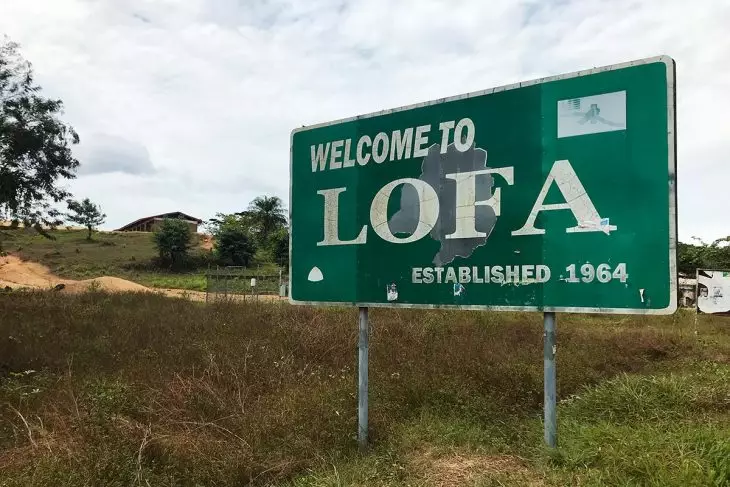
Liberians will go to the polls on October 10 to elect a president, vice president and 88 lawmakers. The incumbent president, George Weah, has shown his position when it comes to justice for the victims and survivors. His main challengers are a former Vice President under President Sirleaf, Joseph Boakai, from Lofa County, whose running mate is a political protégé of warlord-turned-senator Prince Johnson – yes, the rebel commander who in 1990 gave his men orders to torture and kill then President Samuel Doe – and Alexander Cummings, who has promised to establish a war crimes tribunal when elected into the highest office.
We’ll closely watch events in Liberia during the coming month(s). (FVDK)
Chopped up with an axe and a heart eaten out: some crimes never die
Published: September 13, 2023 By: Alain Werner – Civitas Maxima
Exactly 30 years ago, in the summer of 1993, a group of rebel soldiers sowed unheard-of terror in the town of Foya, in the small West African country of Liberia, then ravaged by civil war.
Here, 450 kilometers north of the capital Monrovia, a pious man respected by his community had the courage to denounce the rebel group that occupied the premises, ULIMO (United Liberation Movement of Democracy for Liberia). He did so to a humanitarian group, and told them that ULIMO was responsible for the looting of a hospital financed by humanitarian aid.
Once the foreigners had left, the pious man was taken to what was then used as an airstrip and his thorax was cut out by the rebels, his heart extracted and eaten in front of the population. “Try ULIMO, your heart” – which could be translated as “Defy ULIMO, we’ll take your heart” – was one of the slogans used to terrorize the population, a slogan that some civilians who survived that inferno still remember.
The most bloodthirsty of the ULIMO commanders, who opened the pious man’s chest with an axe and spread his killing spree to Foya, was known by the war nickname of “Ugly Boy”, despite his handsome features. The local population, who spoke a different dialect than the ULIMO soldiers, had nicknamed this commander differently among themselves, so as to be able to alert each other to his arrival without being understood by the rebels. They called him “Saah Chuey”, or “the man with the axe” in the Kissi language, as this commander was famous for chopping up civilians with his axe.
“Ugly Boy” was never tried for his ignominious deeds. Indeed, legend has it that he died by popular vindication, having been recognized in Guinea by refugees who had fled Liberia. However, if he were still alive today, “Ugly Boy” would still not have been tried in Liberia.
Indeed, in August we will be celebrating 20 years since the end of the wars in this country, and yet no one has been tried by a court in the country; the government and the United Nations having done nothing for the forgotten victims of Liberia. Despite the fact that a national Truth and Reconciliation Commission recommended in 2009 that the main players in the war should be brought to justice, and that at least 250,000 people lost their lives during these bloody conflicts between 1989 and 2003.
However, on Thursday June 1, 2023, the Federal Criminal Court of Appeal in Switzerland convicted a man, Alieu Kosiah, of participating in the axe murder of the Pious Man. Jurisdiction was given in our country because Mr. Kosiah had been resident in Lausanne since the late 1990s. The conviction came exactly 30 years after the events, and was handed down in Bellinzona, seat of the Federal Criminal Court, some 7,000 kilometers from the scene of the crimes, Foya.
Alieu Kosiah had already been convicted in June 2021 by the Criminal Court for multiple acts of war crimes, including having eaten a piece of the pious man’s heart in the company of “Ugly Boy”. At the time, however, he was found not guilty of the axe-murder, the first judges considering that he had not played an active role in this crime.
The appeal judges decided otherwise and sentenced Alieu Kosiah for complicity in the murder of the pious man, an act qualified as a war crime and a crime against humanity. During the reading of the verdict, the President of the Court, Olivier Thormann, explained that, according to the Court, Alieu Kosiah had handed the pious man over to “Ugly Boy” to be taken to the Foya airstrip, knowing full well what would happen next.
This appeal judgment marks Swiss legal history, as it is the very first conviction in our country for crimes against humanity. It now opens the way for prosecutions in Switzerland for such crimes, even if committed before 2011 and the entry into force of the new provisions of the penal code.
As a lawyer and Director of Civitas Maxima, since 2014 I have represented several Liberian victims in this case alongside Me Romain Wavre, including a friend of the pious man who was present at the scene and witnessed his ordeal, having himself been a victim of ULIMO crimes.
Our clients and other victims have shown exceptional resilience, dignity and courage. Most of them came to Switzerland three times to testify throughout the proceedings, and overcame the obstacles posed by the Ebola epidemic in 2014-2015 and the Covid-19 pandemic in 2020-2021 to finally obtain justice.
War crimes and crimes against humanity are unique in that they “never die”. Indeed, because they concern the international community as a whole, these offences are not extinguished by a statute of limitations after a certain number of years, as is the case for most ordinary crimes. Prosecutions for war crimes and crimes against humanity are thus theoretically possible as long as the person accused of committing them is alive and evidence exists, theoretically even if the victims are all dead. Just as the forgotten victims of Liberia obtained justice in Switzerland in 2023 for crimes committed so far away in 1993, victims of international crimes committed during current or recent armed conflicts must never lose hope. Even if we must do everything to ensure that they obtain justice before 2053 for the crimes they have suffered.
The article first appeared in French on Heidi News on the 16th of July, 2023.
Although not the main focus of this website I find it useful and necessary to draw attention to this phenomenon which is based on superstition, violates human rights and creates many innocent victims – not only elderly women and men but also children, just like ritual murders.
I wish to commend Charlotte Müller and Sertan Sanderson of DW (Deutsche Welle) – see below – for an excellent article on this topic. It’s an impressive account of what happens to people accused of witchcraft and victims sof superstition. (FVDK)
World Day Against Witch Hunts: People With Dementia Are Not Witches
Witch camps in Ghana
Published: August 4, 2023 By: The Ghana Report
August 10 has been designated World Day against Witch Hunts. The Advocacy for Alleged Witches welcomes this development and urges countries to mark this important day, and try to highlight past and contemporary sufferings and abuses of alleged witches in different parts of the globe.
Witchcraft belief is a silent killer of persons. Witchcraft accusation is a form of death sentence in many places. People suspected of witchcraft, especially women and children, are banished, persecuted, and murdered in over 40 countries across the globe. Unfortunately, this tragic incident has not been given the attention it deserves.
Considered a thing of the past in Western countries, this vicious phenomenon has been minimized. Witch persecution is not treated with urgency. It is not considered a global priority. Meanwhile, witch hunting rages across Africa, Asia, and Oceania.
The misconceptions that characterized witch hunting in early modern Europe have not disappeared. Witchcraft imaginaries and other superstitions still grip the minds of people with force and ferocity. Reinforced by traditional, Christian, Islamic, and Hindu religious dogmas, occult fears and anxieties are widespread.
Many people make sense of death, illness, and other misfortunes using the narratives of witchcraft and malevolent magic. Witch hunters operate with impunity in many countries, including nations with criminal provisions against witchcraft accusations and jungle justice.
Some of the people who are often accused and targeted as witches are elderly persons, especially those with dementia.
To help draw attention to this problem, the Advocacy for Alleged Witches has chosen to focus on dementia for this year’s World Day against Witch Hunts. People with dementia experience memory loss, poor judgment, and confusion.
Their thinking and problem-solving abilities are impaired. Unfortunately, these health issues are misunderstood and misinterpreted. Hence, some people treat those with dementia with fear, not respect. They spiritualize these health conditions, and associate them with witchcraft and demons.
There have been instances where people with dementia left their homes or care centers, and were unable to return or recall their home addresses. People claimed that they were returning from witchcraft meetings; that they crash landed on their way to their occult gatherings while flying over churches or electric poles.
Imagine that! People forge absurd and incomprehensible narratives to justify the abuse of people with dementia. Sometimes, people claim that those suffering dementia turn into cats, birds, or dogs. As a result of these misconceptions, people maltreat persons with dementia without mercy; they attack, beat, and lynch them. Family members abandon them and make them suffer painful and miserable deaths. AfAW urges the public to stop these abuses, and treat people with dementia with care and compassion.
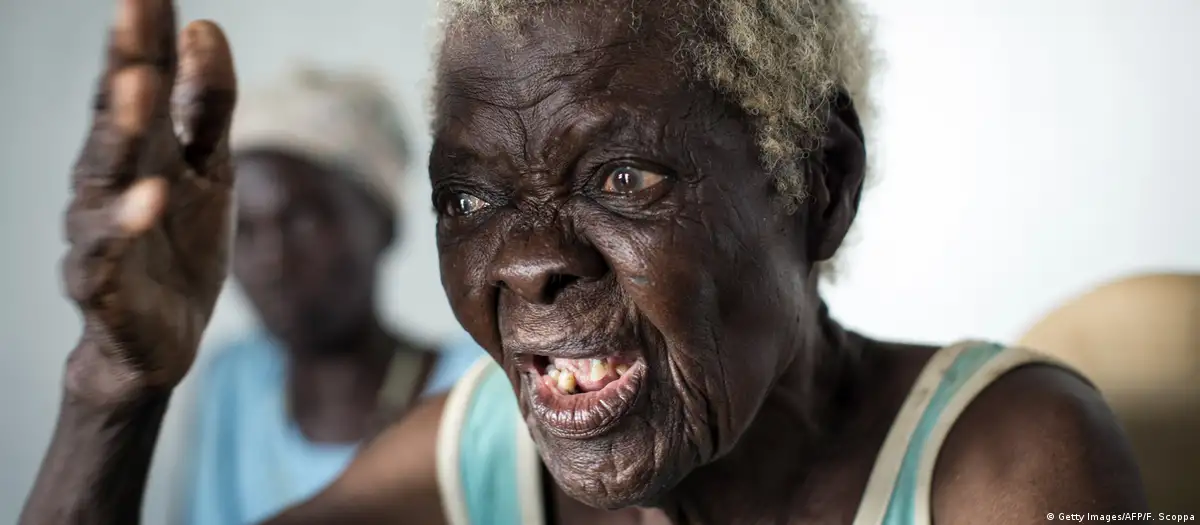
Accusations of witchcraft typically affect the most vulnerable — such as this refugee living in the DRC Image: Getty Images/AFP/F. Scoppa
Published: August 10, 2023 By: Charlotte Müller | Sertan Sanderson – DW
Witch hunts are far from being a thing of the past — even in the 21st century. In many countries, this is still a sad reality for many women today. That is why August 10 has been declared a World Day against Witch Hunts.
Akua Denteh was beaten to death in Ghana’s East Gonja District last month — after being accused of being a witch. The murder of the 90-year-old has once more highlighted the deep-seated prejudices against women accused of practicing witchcraft in Ghana, many of whom are elderly.
An arrest was made in early August, but the issue continues to draw attention after authorities were accused of dragging their heels in the case. Human rights and gender activists now demand to see change in culture in a country where supernatural beliefs play a big role.
But the case of Akua Denteh is far from an isolated instance in Ghana, or indeed the world at large. In many countries of the world, women are still accused of practicing witchcraft each year. They are persecuted and even killed in organized witch hunts — especially in Africa but also in Southeast Asia and Latin America.
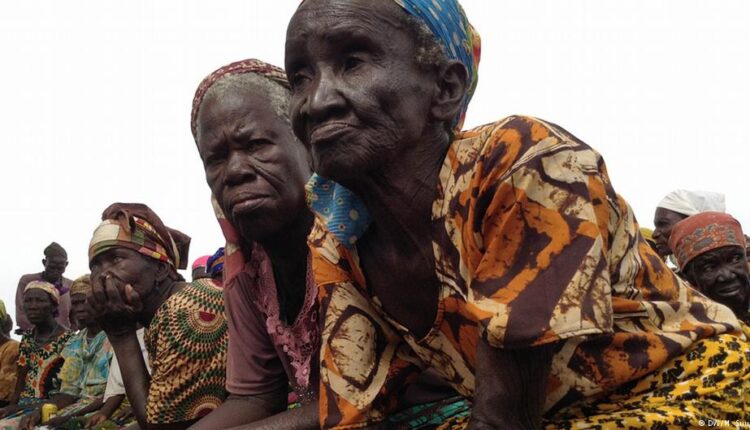
Many women in Ghana are pushed to live in so-called witch camps because they are rejected by society Image: picture-alliance/Pacific Press/L. Wateridge
Witch hunts: a contemporary issue
Those accused of witchcraft have now found a perhaps unlikely charity ally in their fight for justice: the Catholic missionary society missio, which is part of the global Pontifical Mission Societies under the jurisdiction of the Pope, has declared August 10 as World Day against Witch Hunts, saying that in at least 36 nations around the world, people continue to be persecuted as witches.
While the Catholic Church encouraged witch hunts in Europe from the 15th to the 18th century, it is now trying to shed light into this dark practice. Part of this might be a sense of historical obligation — but the real driving force is the number of victims that witch hunts still cost today.
Historian Wolfgang Behringer, who works as a professor specializing in the early modern age at Saarland University, firmly believes in putting the numbers in perspective. He told DW that during these three centuries, between 50,000 and 60,000 people are assumed to have been killed for so-called crimes of witchcraft — a tally that is close to being twice the population of some major German cities at the time.
But he says that in the 20th century alone, more people accused of witchcraft were brutally murdered than during the three centuries when witch hunts were practiced in Europe: “Between 1960 and 2000, about 40,000 people alleged of practicing witchcraft were murdered in Tanzania alone. While there are no laws against witchcraft as such in Tanzanian law, village tribunals often decide that certain individuals should be killed,” Behringer told DW.
The historian insists that due to the collective decision-making behind these tribunals, such murders are far from being arbitrary and isolated cases: “I’ve therefore concluded that witch hunts are not a historic problem but a burning issue that still exists in the present.”
A picture of so-called witch doctors in Sierra Leone taken roughly around the year 1900 Image: Getty Images/Hulton Archive
A pan-African problem?
In Tanzania, the victims of these witch hunts are often people with albinism; some people believe that the body parts of these individuals can be used to extract potions against all sorts of ailments. Similar practices are known to take place in Zambia and elsewhere on the continent.
Meanwhile in Ghana, where nonagenarian Akua Denteh was bludgeoned to death last month, certain communities blamed the birth of children with disabilities on practices of witchcraft.
Screenshot – to watch the video please consult the source
In the Democratic Republic of the Congo, it is usually the younger generations who are associated witchcraft. So-called “children of witchcraft” are usually rejected by their families and left to fend for themselves. However, their so-called crimes often have little to do with sorcery at all:
“We have learned of numerous cases of children suffering rape and then no longer being accepted by their families. Or they are born as illegitimate children out of wedlock, and are forced to live with a parent who no longer accepts them,” says Thérèse Mema Mapenzi, who works as a mission project partner in the eastern DRC city of Bukayu.
‘Children of witchcraft’ in the DRC
Mapenzi’s facility was initially intended to be a women’s shelter to harbor women who suffered rape at the hands of the militia in the eastern parts of the country, where rape is used as a weapon of war as part of the civil conflict there. But over the years, more and more children started seeking her help after they were rejected as “children of witchcraft.”
With assistance from the Catholic missionary society missio, Mapenzi is now also supporting these underage individuals in coping with their many traumas while trying to find orphanages and schools for them.
“When these children come here, they have often been beaten to a pulp, have been branded as witches or have suffered other injuries. It is painful to just even look at them. We are always shocked to see these children devoid of any protection. How can this be?” Mapenzi wonders.
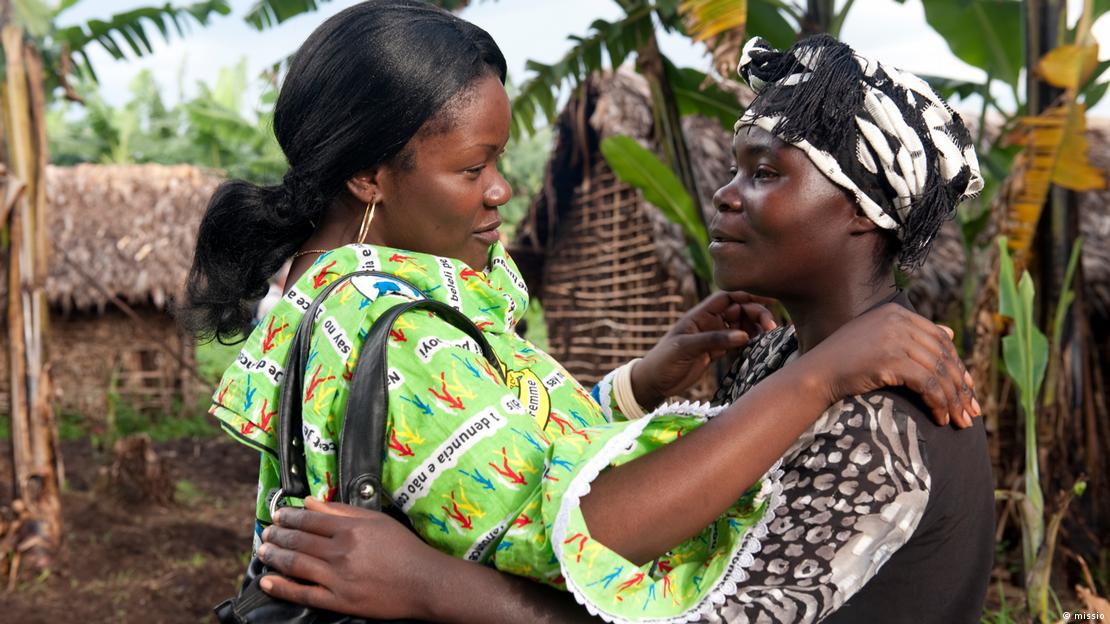
Thérèse Mema Mapenzi is trying to help women and girls accused of being “children of witchcraft” Image: missio
Seeking dialogue to end witch hunts
But there is a whole social infrastructure fueling this hatred against these young people in the DRC: Many charismatic churches blame diseases such as HIV/AIDS or female infertility on witchcraft, with illegitimate children serving as scapegoats for problems that cannot be easily solved in one of the poorest countries on earth. Other reasons cited include sudden deaths, crop failures, greed, jealousy and more.
Thérèse Mema Mapenzi says that trying to help those on the receiving end of this ire is a difficult task, especially in the absence of legal protection: “In Congolese law, witchcraft is not recognized as a violation of the law because there is no evidence you can produce. Unfortunately, the people have therefore developed their own legal practices to seek retribution and punish those whom call them witches.”
In addition to helping those escaping persecution, Mapenzi also seeks dialogue with communities to stop prejudice against those accused of witchcraft and sorcery. She wants to bring estranged families torn apart by witch hunts back together. Acting as a mediator, she talks to people, and from time to time succeeds in reuniting relatives with women and children who had been ostracized and shamed. Mapenzi says that such efforts — when they succeed — take an average of two to three years from beginning to finish.
But even with a residual risk of the victims being suspected of witchcraft again, she says her endeavors are worth the risk. She says that the fact that August 10 has been recognized as the World Day against Witch Hunts sends a signal that her work is important — and needed.
Hunting the hunters — a dangerous undertaking
For Thérèse Mema Mapenzi, the World Day against Witch Hunts marks another milestone in her uphill battle in the DRC. Jörg Nowak, spokesman for missio, agrees and hopes that there will now be growing awareness about this issue around the globe.
As part of his work, Nowak has visited several missio project partners fighting to help bring an end to witch hunts in recent years. But he wasn’t aware about the magnitude of the problem himself until 2017.
The first case he dealt with was the killing of women accused of being witches in Papua New Guinea in the 2010s — which eventually resulted in his publishing a paper on the crisis situation in the country and becoming missio’s dedicated expert on witch hunts.
But much of Nowak’s extensive research in Papua New Guinea remains largely under wraps for the time being, at least in the country itself: the evidence he accrued against some of the perpetrators there could risk the lives of missio partners working for him.
Not much has changed for centuries, apart from the localities involved when it comes to the occult belief in witchcraft, says Nowak while stressing: “There is no such thing as witchcraft. But there are accusations and stigmatization designed to demonize people; indeed designed to discredit them in order for others to gain selfish advantages.”
Maxwell Suuk and Isaac Kaledzi contributed to this article.
Screenshot – to watch the seven images please consult the source
In Nigeria, the number of ritual killings, ritual murders, ‘money rituals’, cannot be counted. Occasionally I report on these widespread crimes in Africa’s most populated country, but it would be a daily job to (try to) cover all of them – though I doubt if this would ever be possible, also in light of the fact that presumably not all ritualistic murders are discovered.
Often, so-called Yahoo-boys are involved in these ritual practices which are nothing less than ordinary violent crimes committed by ruthless, greedy people who butcher innocent people – men, women, children – whose organs are being sold to superstitious people.
It is to be expected that in a country of over 200 million people many crimes are committed including crimes for ritualistic purposes. In Nigeria, the crime of ritual murder is so persistent and widespread that one wonders if there are other reasons than superstition, greed, and the country’s vast population which explain this ugly crime.
In Nigeria there’s a general lack of security which goes hand in hand with the lack of rule of law. Bandits, Boko Haram rebels, terrorists, ritualists, political activists, the Nigerian government is confronted with multiple agressors. Nigeria’s recently installed president, Bola Ahmed Tinubu, faces many challenges of which the eradication of ritual murders in the country is just one.
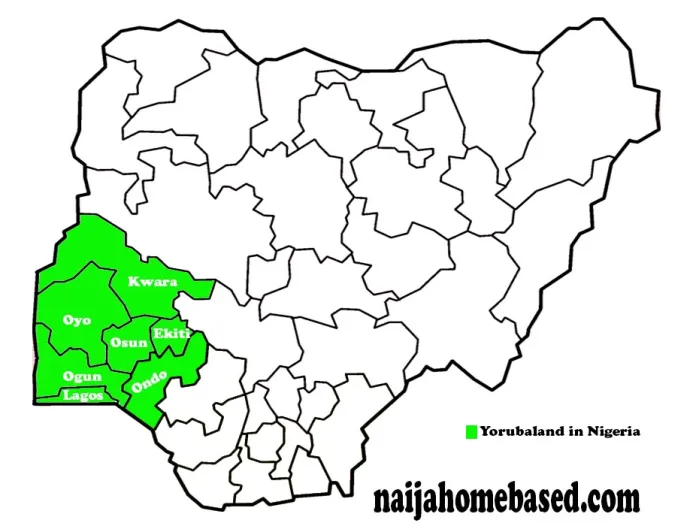
The focus on Yorubaland in the article presented below is by no means meant to suggest that the problem of ritualistic killings elsewhere in Nigeria is less serious.
PS The reproduction of articles here and elsewhere on this site does not imply that the webmaster agrees with the contents of the articles published. (FVDK)
Unprecedented spate of ritual killings in Yorubaland and the absence of elders
Published: August 12, 2023 By: Dr. Tayo Douglas – The Nation, Nigeria
One of the epigrams often cited in Yorubaland whenever the household or the whole community is thrown into orgy and disarray is namely this;
“Agbà kó sí ní ìlú, ìlú bàjé, baãlé ilé kú tán ilé di ahoro.” Loosely taken, it means; “the absence or death of the elders turns the household into an empty shell.”
In recent times, never has Yoruba land witnessed the flurry and plague of mindless and imbecilic killing of human beings for ritual purposes. It is now a daily occurrence and it appears there won’t be an end to it. The question which all right-thinking men and women of Yorubaland should be asking themselves is; where are their morals and where have they got it wrong?
It seems these elders are yet to come to terms with the fact that they now have big problems on their hands. At the moment, it would appear that politics and how to get rich quickly through any means are now the major preoccupation of an average Yoruba man. Nobody cares any longer about morals or the good names of each family. Orientation or good upbringing in each household or family setup is already lost to vulgar and questionable lifestyles among the Yoruba youths.
If a fool would reason at all, he would be quick to point out to you that the fallout is a result of poverty or hardship in the country. A fool has reasoned indeed! The Yoruba saying of old is very much replete here and that is, “ohun tí otí bá nínú òmùtí ni òmùtí fi se ìwà wù,” That is, let no criminal plead that he committed the crime because he is drunk. After all, lawyers always tell us that an act is considered blameworthy because an accused mind is equally guilty (actus reus reum nisi mens sit rea). In essence, a murderer has gone to kill a human being for ritual purposes of getting rich quickly and not because there is hunger, poverty, and hardship in the country.
In the days of old, our parents always drummed it to our ears to remember the children of whom we were – (Rántí omo eni ti ìwo n’se), I doubt if these youths on killing spree today have houses again let alone keeping the names of the owners.
Before it is too late, a time is coming (and that is if it hasn’t come already) when whatever is left remaining of Yorubaland ethos and dignity would soon be thrown to the dogs and the winds if care is not taken. These boys’ excesses, I mean the ritualists, yahoo boys, and whatever other evil names they are called, have to be curtailed at all costs. That time is now. Instead of the Afenifere warlords turning themselves to Peter Obi or any other politicians, campaign managers, and spin doctors, they should come back home and address the real problem that is turning their lands into graveyards and other abominable monuments.
It’s quite unfortunate that these so-called elders have left leprosy untreated but keep running after ringworm. Overnight, Tinubu became their major headache. His election as president of the country was then and up till now an “abomination” that must be prevented. It is better in the sight of these Yoruba elders if ‘yahoo plus’ and other ritualists continue their nefarious activities in Yorubaland but Tinubu must not be president. “Over” their “dead bodies” are their slogans. SMH.
Never in the history of the Yoruba race have we ever witnessed the unprecedented carnage, a gory obscenity and orgy of ritual seppuku, and disembowelment of human beings for money purposes. It is highly unfortunate.
• Dr. Douglas, Ph.D. is a lawyer and social commentator, sent this piece from Lagos.
Another gruesome murder for ritual purposes, based on superstition and ruthlessness. An innocent small girl lost her life for a ‘money ritual’. This time it happened in Ghana.
It’s a sad story.
Warning: The articles may upset readers for their graphic contents (FVDK)
Wassa Nkyirifi: Man kills 7-year-old niece for money rituals
Wassa Nkyirifi: Man kills 7-year-old niece for money rituals. The suspect in white shirt at the scene where the body was exhumed on Friday morning
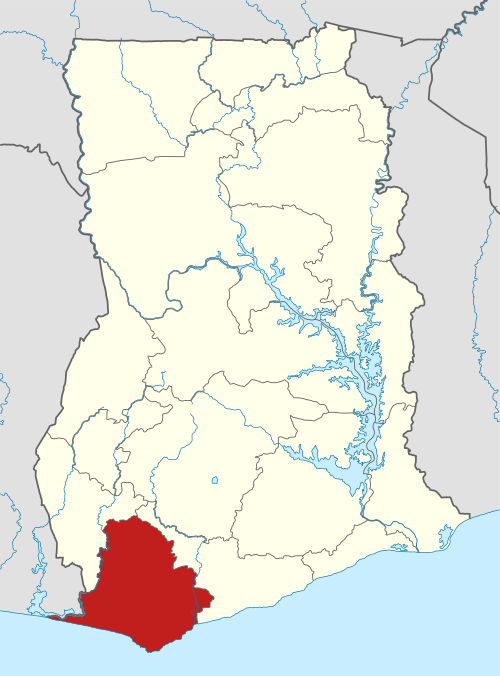
Residents of Wassa Nkyirifi, a farming community in the Western Region woke up on Friday morning to the horror of a suspected murder of a seven-year-old girl by her uncle for money ritual purpose.
After allegedly killing and burying the body in a nearby bush, the suspect, identified only as Augustine, a 37-year-old farmer reported to the police that his niece had gone missing.
The 7-year-old victim has been identified as Sandy Manu.
The suspect then went further to make public announcements on radio asking for help to locate his niece.
The police in the Wassa Amenfi East Municipal area however, suspected foul play because of Augustine’s responses to the questions and why he was desperately concerned about the missing young girl.
Augustine’s body language, his responses and his eventual exhibition that he was terrified according to a police source, prompted an intense interrogation by the police during which he burst into tears.
According to the police source, he then confessed that he had killed the niece for money ritual so he could evade poverty.
He is said to have told the police that, he complained about poverty to one elderly man in the Wassa Nkyirifi community and the elderly man told him to use one of his many nieces for money rituals.
Upon meditation, he went to see a spiritualist the next day to help him go through the process of money rituals.
The suspect said the spiritualist then told him to bring human head – that is the head of one of his nieces.
From there, he went in for Sandy and killed her.
After killing and beheading her, he buried the headless body and concealed the head for the process.
He then led the police to the nearby bush where the headless body was buried and the body was exhumed.
The head was also retrieved from another location.
The body has since been deposited at the morgue and the suspect is currently in police custody.
A video from the scene where the body was exhumed has been shared on social media by some of the community members.
Man allegedly kills 7-year-old niece for money rituals
Published: August 5 2023 By: Myjoyonline, Ghana
Residents of Wassa Nkyirifi, a farming community in the Western Region, woke up on Friday morning to the horror of a suspected murder of a seven-year-old girl by her uncle.
After allegedly killing and burying the body in a nearby bush, the suspect, identified only as Augustine, a 37-year-old farmer reported to the police that his niece had gone missing.
The suspect then went further to make public announcements on the radio asking for help to locate his niece.
The police in the Wassa Amenfi East Municipal area, however, suspected foul play because of Augustine’s responses to their questions and how he was desperately concerned about the missing young girl.
Augustine’s body language, his responses and his eventual exhibition that he was terrified according to a police source, prompted an intense interrogation during which he burst into tears.
According to the police source, he then confessed that he had killed the niece for money ritual so he could evade poverty.
The seven-year-old victim has been identified as Sandy Manu.
The suspect is said to have told the police that, he complained about poverty to one elderly man in the Wassa Nkyirifi community. The elderly man advised him to use one of his many nieces for money rituals.
Upon meditation, he allegedly went to see a spiritualist the next day to help him go through the process of money rituals.
The suspect said the spiritualist then told him to bring a human head. From there, he went in for Sandy and murdered her.
After killing and beheading her, he reportedly buried the headless body and concealed the head in the process.
The suspect then led the police to the nearby bush where the headless body was buried and the body was exhumed.
The head was also retrieved from another location. The body has since been deposited at the morgue and the suspect is currently in police custody.
Meanwhile, a video from the scene where the body was exhumed has been shared on social media by some of the community members.
It is not the first time that election campaigns are accompanied by a rising number of ritual murders – or ‘muti murders’, as they are called in Southern Africa. Already in a previous posting, on June 19, 2018 I drew attention to the link between elections and ritual killings in this country.
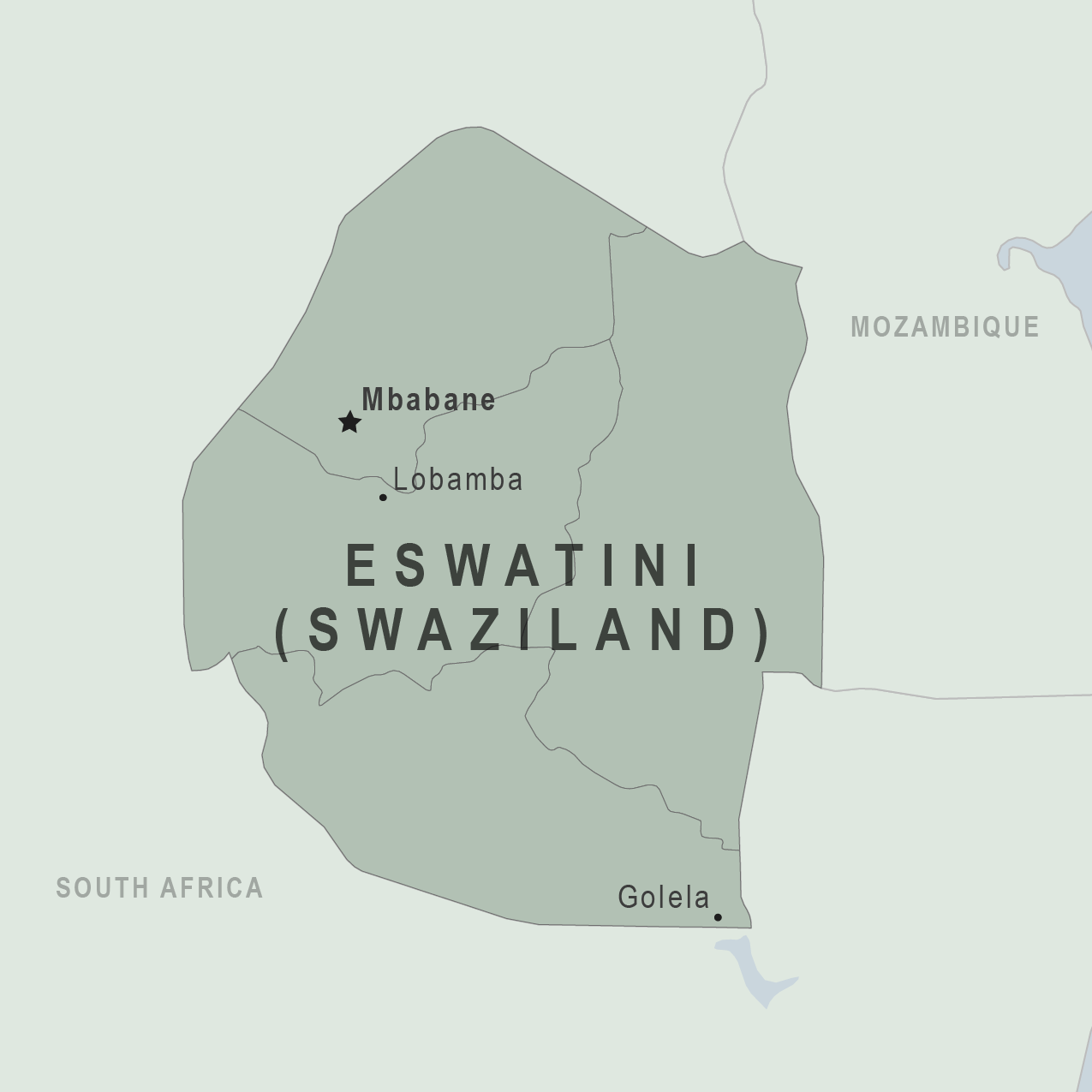
Swaziland (eSwatini) has a long history of ritual murders. In the recent past, in 2003, King Mswati III urged Swaziland’s politicians not to engage in ritual killings to boost their chances in the general elections later that year. Five years later then Prime Minister Absalom Themba Dlamini warned aspiring members of parliament against committing ritual murders to win the vote. In my 2018 posting I revealed that nothing had changed for the better. For briefness sake I further refer to my 2018 posting.
When will it end? What’s the use of repeated warnings? Isn’t it a crazy situation, we’re in the third millennium, and superstition is still rife in a country where democratic elections are being organized.
However, the democratic nature of elections in eSwatini / Swaziland is not what one would expect. Past elections in the kingdom where king Mswati III rules as an absolute monarch, have been characterized by a lack of transparency whereas according to Wikipedia the full results of both the 2018 and 2013 elections have never been published. (FVDK)
Swaziland: King Mswati III frowns at rising number of ritual murders
Published: July 16, 2023 By: NKOSINGIPHILE MYENI , Swaziland Observer
His Majesty King Mswati III is disheartened by the rising number of cruel deaths occurring around the country.
Most of the deaths were those that seemed to be ritually associated as were described as the worst kind of evil.
This was shared yesterday through the King’s representative, Minister of Housing and Urban Development Prince Simelane, in one of the biggest prayer services in the country.
The national prayer for the national elections brought together church leaders from the three church mother bodies, being the Council of Swaziland Churches, Conference of Churches and the League of Churches.
There were also other Cabinet ministers, church members of different denominations as well as members of the public.
Rendering his speech, the prince shared a story in the Bible in Genesis 6 verse 6 whereby God showed His regret by creating a person and further said that He was grieving in his heart by the evil that people do.
The King said in just a short space of time spine-chilling deaths have been reported whereby he further depicted the cruelty with which the victims died.
He first referred to an incident which occurred early in the month at Nkoneni in the Shiselweni region whereby the body of a 26-year-old woman was found with multiple stab wounds, her eyes gouged out and her throat slit.
“Let me just point out to two or three of these in the country. Such cruelty Maswati! If you wonder why God is regretful about a person, again just recently, a boy went out from his home to buy goats but he was stabbed and killed.
“His throat was cut while he was alive and could feel it. They placed a tyre on him, doused him with petrol and set him alight,” he said while narrating that it was not only the events that were seen on television that showed cruelty.
He added, “The God of love saw the evil in people on earth. He saw that their hearts and thoughts were evil and regretted why he created them.
Tense This may seem like a past tense but God forever regrets why he created a person, why? because of their sins.”
The King went further and referred to another incident. He said in Malkerns just this week, another man was found dead with stab wounds as well as a slit throat.
He did not spare femicide whereby he said such cases were widely reported in the media. According to the United Nations (UN) Women, femicide is a hate crime which is broadly defined as the intentional killing of women or girls because they are female.
“In our nation we read in the newspapers that men kill women with cruelty. They kill their wives, girlfriends and have also started killing their own children. “Therefore, we are here to pray for elections so that they go smoothly,” he said.
Referring to other countries during elections, the King said violence was also rife whereby he said it was common to hear that political parties fight one another to the extent that people are shot and assassinated while others have their houses burnt.
‘Justice delayed is justice denied’ but: the High Court in Polokwane will continue the trial of four businessmen and a woman who are suspected of killing Ronnie Makgatho for ritual purposes in 2006.
An amazing aspect of this murder case is that there is no dead body. The body of the victim, Ronnie Makgatho, was never found. Therefor it is to be seen if this trial wil end in a guilty verdict. How can you find someone guilty of murder when there’s no dead body?
Two of the five accused share the family name of the victim, Ronnie Makgatho. It is not uncommon that relatives are involved in ritualistic murders.
The first article presented below is silent on the background of the murder and also lacks many details. However, it seems obvious that this is a case of ‘muti’ murder, a ritualistic murder, based on superstition and motivated by greed.
The second article, published by Polokwane Weekly and shared on Facebook, contains more information. Warning: Some readers may find this story disturbing because of its explicit graphic content (webmaster FVDK).
Limpopo courts to hear several cases this week
High Court in Polokwane, Limpopo – Image: Twitter@SECTION27news
Several high-profile criminal cases will be heard in the High Court in Polokwane and other courts in Limpopo, starting from Monday.
(….)
(….)
Ritual killing
Another trial of four businessmen and a woman arrested for allegedly killing Ronnie Makgatho in 2006 will continue in the High Court in Polokwane.
The accused, Marcus Makgatho, Joshua Hlako, Hlako Mohafe, Khumbelo Mabirimisa and co-accused Amanda Makgatho allegedly killed Makgatho for ritual purposes.
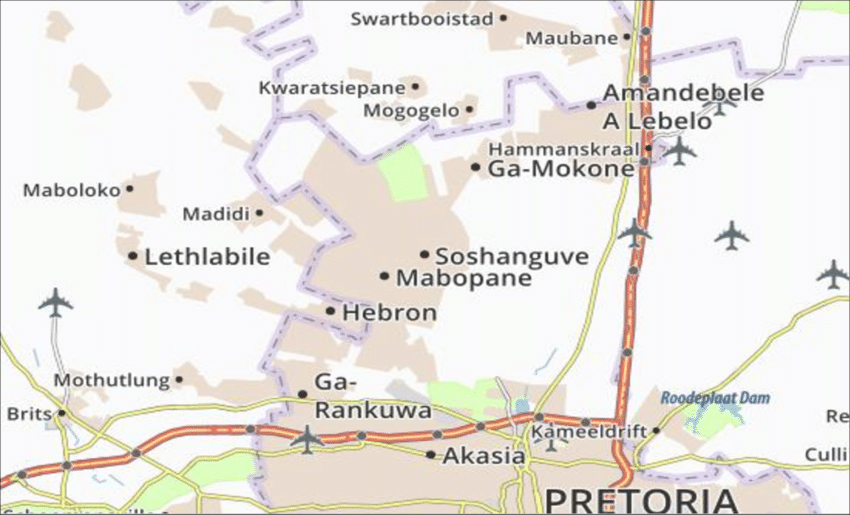
Makgatho was reported missing in Soshanguve, north of Pretoria.
More background information pertaining to this case:
EXCLUSIVE | HOW RONNY MAKGATHO WAS MURDERED
WARNING: NOT FOR SENSITIVE READERS
Published: May 12, 2022 By: Polokwane Weekly / Facebook
SESHEGO: A state witness in the murder case of Ronny Makgatho has detailed a chilling confession of the victim was killed.
The witness was testifying at the Seshego Magistrate’s Court during a bail application of the murder accused on Wednesday.
According to the witness, Marcus Makgatho traveled to Soshanguve Extension 4 where the victim was staying.
The witness says that Amanda Makgato alongside their accomplices forced the victim into the car and drove from Soshanguve to Seshego, where he was locked up in a shack.
The state witness said that Hlako and Makgato were both holding Ronnie Makgato’s hands and legs before he was brutally murdered for alleged business related rituals.
The witness has also told the court that the accused number 4 Khumbelo Mabirimisa was also present with an unknown woman.
He also told the court that the accused indicated that it was time to start with the job, before beginning with the murder process.
The witness said that Hlako said the victim should die a slow death when they were cutting him with a knife, so that they can get a lot of his blood. The witness also said that there were a bucket that was used to collect his blood.
The state witness also told the court that Ronnie Makgato’s body parts were cut by the accused.
The head was taken to Hlako’s Tarven, hands were taken to Makgato’s lodge. Other body parts were also taken to Hlako’s farm.
The court also heard that after taking the body parts of the victim to the accused’s businesses, the remaining part was buried at the same house.
The murder accused were all denied bail on Wednesday.
Screenshot – excerpt from original article. Read the full article here
and:
‘Muthi’ killing, shallow grave, relative bust
It has emerged that Ronald Makgato, who went missing in 2006, was killed for muthi-related purpose.
Published: April 19, 2022 By: Daily Sun
THE Makgato family was left shocked when a family member and his friend were arrested on Wednesday, 13 April.
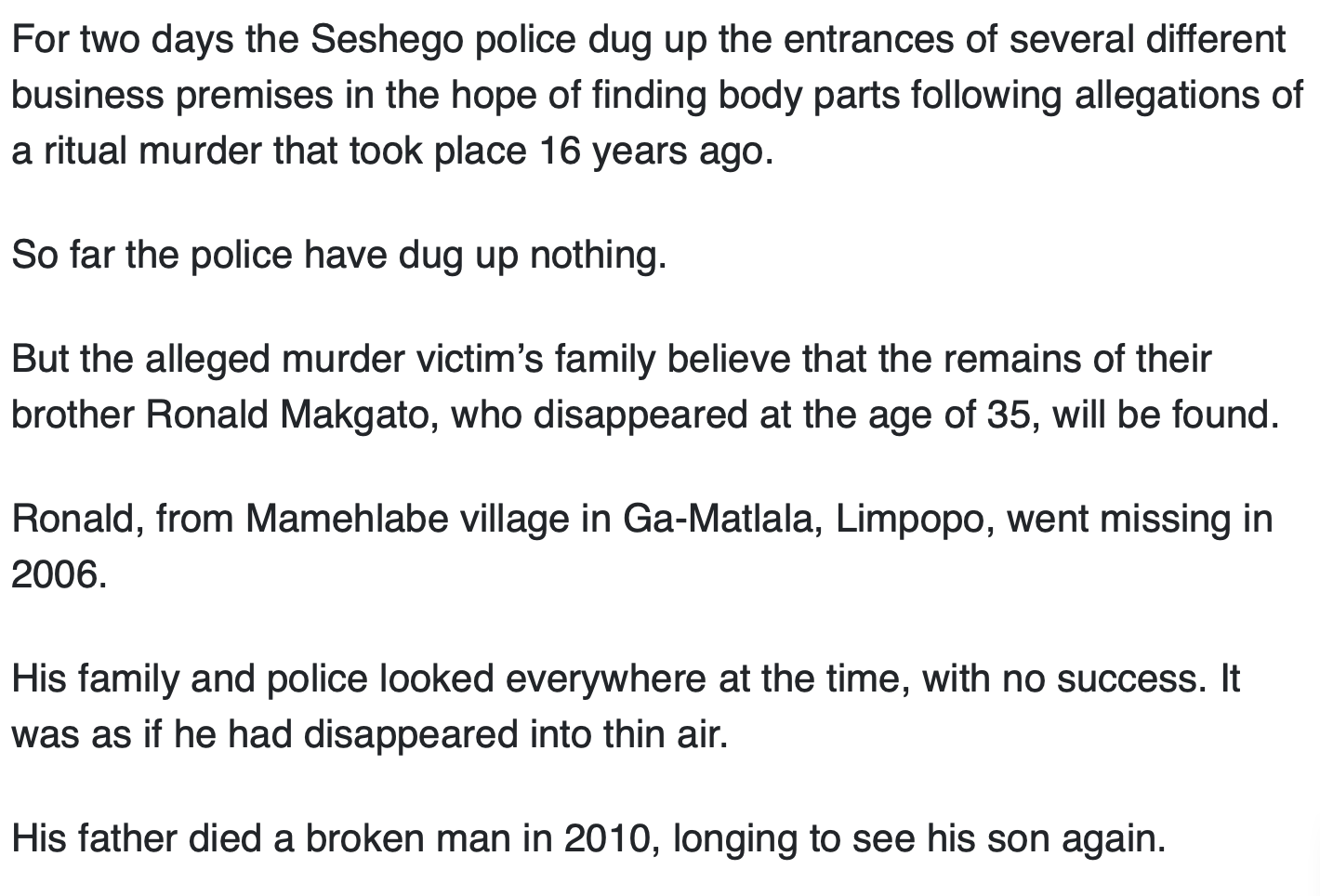
They were bust by Seshego cops in Limpopo for the kidnapping and murder of Ronald Makgato, who went missing 16 years ago.
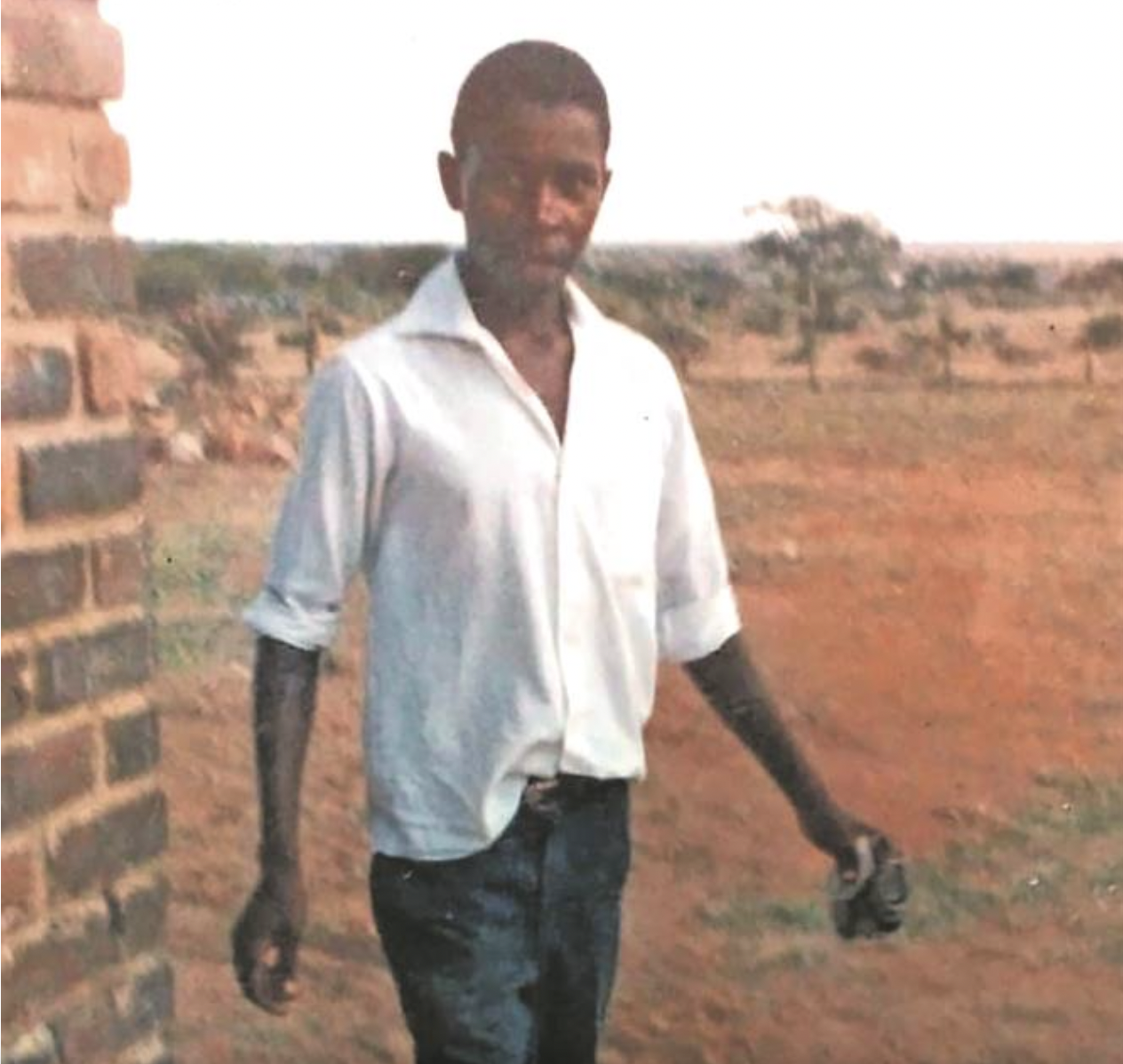
Ronald (27) from Mamehlabe Village, Ga-Matlala disappeared in 2006 while staying in Soshanguve, Tshwane.
A witness tipped off his family and the police in 2020.
It’s believed that one of Ronald’s relatives and his friend allegedly killed the victim for muthi purposes, and they apparently buried his body in a shallow grave.
Ronald’s sister, Granny Makgato-Leboho, said it has been hard for the family not knowing their brother’s whereabouts. “When the police arrested my relative and his friend, we knew we were close to getting the truth about what happened to my brother.”
She said the witness told them that Ronald was given a drug before he was taken to Zone 4 in Seshego, where he was murdered.
“We were told he was dismembered and his body parts were taken for muthi purposes. It’s so painful that my own relative saw it fit to kill his own for his evil intentions.”
Limpopo police spokesman Lieutenant-Colonel Mamphaswa Seabi confirmed that two suspects, both aged 64, were bust and charged with kidnapping, conspiracy to commit murder and murder.
“They briefly appeared in the Seshego Magistrates Court last Thursday, and their matter was postponed to 28 April for formal bail application while the police investigations continues. The body of Ronald has not yet been recovered,” Seabi said.