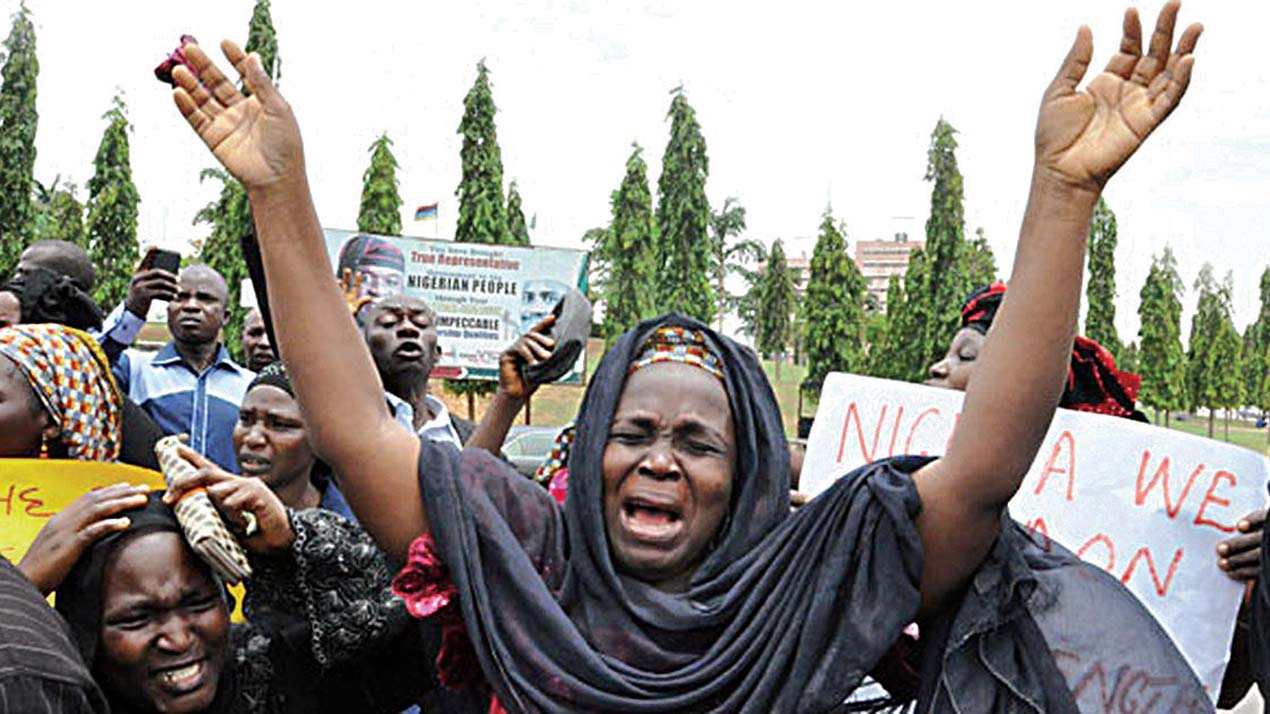
Warning: the following article contains graphic details, the reader may find the article shocking.
The following article from Eric Naki, the Political Eitor of The Citizen, a South African online news magazine, contains several frank observations which are worth specifically mentioning here.
First, Naki, citing an expert on ritual murders, Dr Alunamutwe Rannditsheni, from Limpopo province, tells us that ritual murders are a worldwide phenomenon, occurring not only in Africa or Sub-Saharan Africa. I am very happy with this expert-observation even though it results in mixed feelings because of its sad contents. I have also mentioned it in my introduction to this website on ritual killing, witchcraft and superstition in African countries (‘Why publish this site‘).
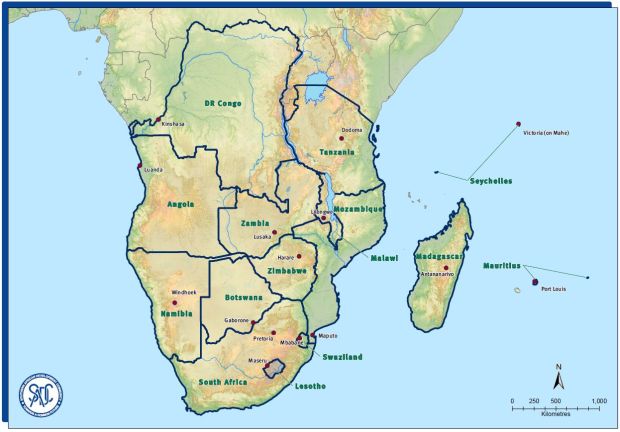
Secondly, reportedly, kidnappings, human trafficking, and ritual murders, often referred to as ‘muti murders’, are well-known crimes in nearly all 16 member-states of the Southern Africa Development Community (SADC). This is shocking. The combined population living in the 16 SADC-countries totals about 300 million people.
Lastly, the well-informed author confirms the ghastly details of the way muti murders are committed. Organs or other body parts are extracted live from the poor and helpless victims, not seldom children. The reality is sometimes too hard to describe and too revolting to imagine.
Ritual murders, human trafficking, kidnappings, and associated fear and torture are a plague in many African countries and must stop immediately. To the governments which have a sacred obligation to protect their citizens I would say: ‘If you’re not part of the solution, you’re part of the problem.’ (webmaster FVDK).
Muti murders: ‘Genitals only work if cut from live victims’
Published: May 20, 2021 By: The Citizen, South Africa – Eric Naki
Victims were lured with promises of jobs, but when they arrived at the destination, they would be abducted and taken away to have their body parts cut off.
An expert on ritual murders, Dr Alunamutwe Rannditsheni, from Limpopo, said ritual killings were a worldwide phenomenon and not only an African problem.
Almost all of the SADC countries experienced ritual killing-related kidnappings and human trafficking.
A 2008 investigation by the Human Rights League in Mozambique found such murders were rife in the country. It found people were trafficked between countries with the purpose to remove parts to be trafficked separately.
The league, which interviewed survivors, eye-witnesses, families of victims and civil society in Mozambique and South Africa, found body parts were forcibly removed from children and adults, causing death or severe disability.
“Throughout the report, informants share personal experiences, which confirm that body parts are taken across the border between South Africa and Mozambique.”
A custom’s official in Sofala province, Mozambique, said: “They say the treatments with genital organs only work if they are taken from a person alive.”
In some instances in Mozambique, victims were beheaded before the parts were removed.
“The murderer cut her throat like she was a goat. He cut her head just like that and removed her genital organs, leaving all the rest,” the report quoted a police officer at Cabo Delgado Province, Mozambique as saying.
In another case, a female stall holder at Ressano Garcia on the border with South Africa was fingered for ritual murders.
“The police searched and found that she was carrying genital organs of adult men … I don’t know how many exactly, it was several. But they were from adult men, I saw them myself,” an officer said.
Cases of muti killings were also reported in Zimbabwe, Botswana, Mozambique, Swaziland, Lesotho, Malawi and Tanzania. People living with albinism were the main targets in Tanzania.
Community leader and businessman Phumudzo Mukhwati alleged the ritual murder gangs had spread to provinces such as KwaZulu-Natal, Mpumalanga, North West and Gauteng.
Victims were lured with promises of jobs, but when they arrived at the destination, they would be abducted and taken away to have their body parts cut off in Limpopo or a neighbouring country.
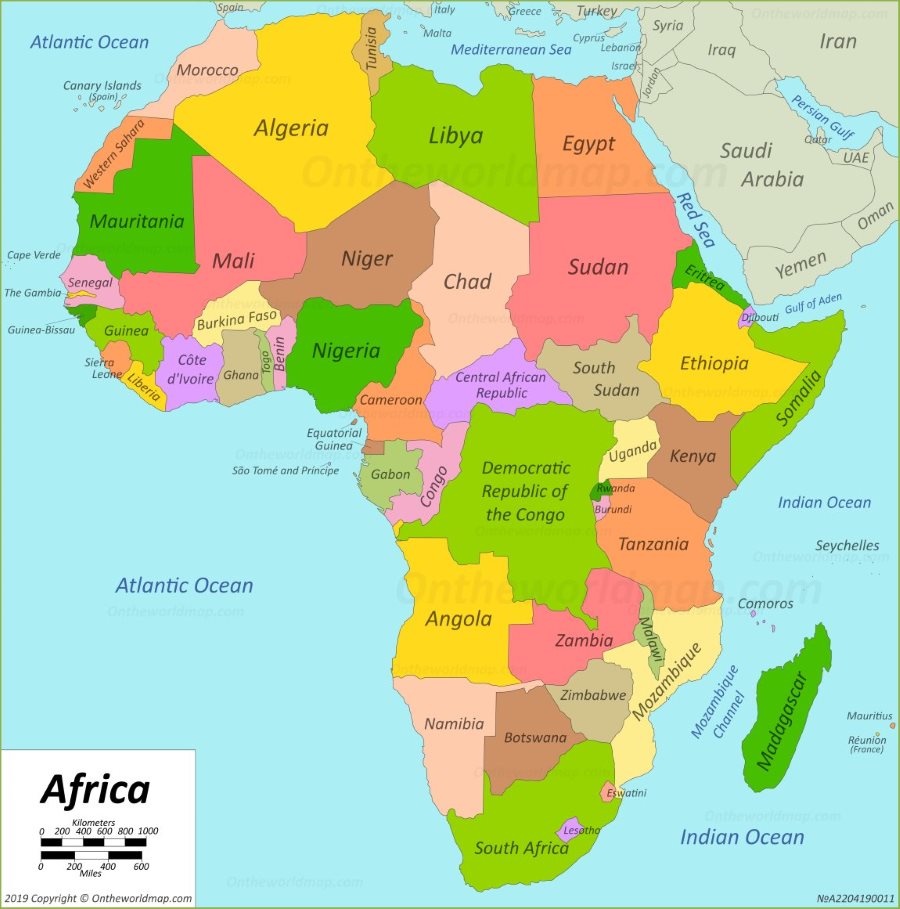
The Southern African Development Community (SADC) comprises 16 Member States: Angola, Botswana, Comoros, Democratic Republic of Congo, Eswatini, Lesotho, Madagascar, Malawi, Mauritius, Mozambique, Namibia, Seychelles, South Africa, Tanzania, Zambia and Zimbabwe.
Two months ago I posted on this site a cry from Nigeria, ‘Let the carnage of ritual killings stop‘. Unrelenting, the editors of the Leadership, a leading Nigerian newspaper, again draw attention to the alarming rate of ritual murders and related crimes in the country. I have repeatedly done the same on this place.
This site is entirely devoted to the crime of ritual murders, based on superstition and belief in witchcraft, fed by an insatiable greed for power, wealth or a good health, and facilitated by a weak enforcement of the rule of law, impunity, and in the worst cases, the connivance of people in high places who are put in this position by the people they are supposed to protect. Ritual murders are a flagrant and intolerable violation of the human rights of the victims, whereas a sovereign state is obliged, often by its constitution, to protect its citizens.
It is sheer impossible to report and react here on all ritual murders and other money-ritual related crimes which are surfacing and are being reported and published in various newspapers. It goes without saying that an unknown number of ritual murders are never discovered.
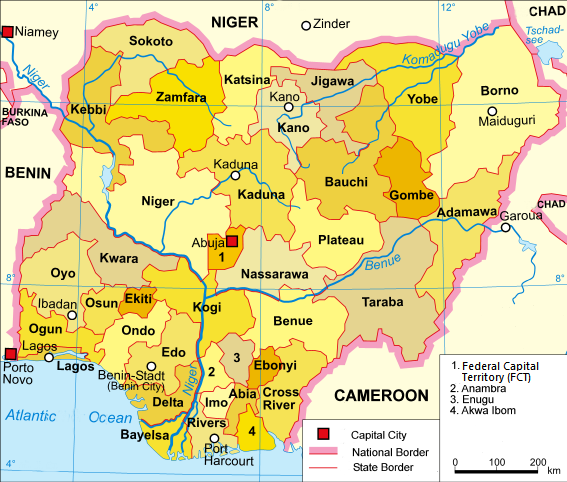
In the past six months I have collected numerous articles on ritual murders in at least 15 Nigerian states: Adamawa, Anambra, Bauchi, Delta, Edo, Enugu, Imo, Kaduna, Kwara, Lagos, Ogun, Ondo, Osun, Oyo, Rivers (which I have not yet been published on this site), although I have reported frequently on money-ritual related crimes in these states (from 2018 onwards). Moreover, I reported various cases of ritual murders and related crimes in other states: Abia, Akwa Ibom, Bayelsa, Benue, Ebonyi, Ekiti, Kebbi, Kogi, Nasawara, Niger, Taraba. Hence, altogether, 26 out of Nigeria’s 36 states. When consulting the general folder ‘Nigeria’ the reader will find other articles, of a more general nature, on the scourge of ritual killing in Nigeria, the Yahoo boys, mob justice, and other atrocities.
The seemingly recent rise of ritual killings in Nigeria has been mentioned here earlier. I only wish to refer to a 2014 article which I published in December last year. In it it was alleged that ritual killings were everywhere in Nigeria. Older reports of ritual murders as far back as 2001 can be found here.
It must be emphasized, however, that nowadays an increasing number of Nigerian raise their voices against these outdated and revolting practices which are ritualistic murders (see the folder ‘Nigeria voices’), among whom the editors of the Leadership newspaper, who are to be commended for the article below (webmaster FVDK).
The Scourge Of Ritual Killings In Nigeria
Published: May 10, 2021 By: Leadership, Nigeria – Monday Column
Iniobong Umoren was a young woman in her early 20’s who lived in Uyo the Akwa Ibom State capital. She shared, on Twitter, her need for a job, and one Twitter user named Uduak Akpan asked her for a private chat concerning her application. According to police reports, Mr Akpan asked Ms Umoren to meet her at a particular location in Uyo.
When the unsuspecting lady got there, the sinister man raped her, killed her, and buried her in a shallow grave. Unfortunately for the serial rapist and murderer, the lady gave her friend the phone number of the person who invited her for an interview. This number led to the apprehension of the culprit after the lady was declared missing for days.
There were reports that Ms Umoren’s gruesome murder was not just a case of rape and murder but that it also involved ritual killing. Mr Akpan’s entire family is said to be involved in the barbaric business of ritual killings.
Two weeks ago, a report indicated that in Kwara State, a next-door neighbour allegedly murdered a groom-to-be for ritual purposes. According to the account in Vanguard, the deceased, who was said to be a devout Christian, did not know that his neighbour with whom he used to eat together was a serial killer and ritualist who has twice served jail terms. This wolf-in-sheep-clothing neighbour allegedly killed his victim, removed some sensitive body parts, poured acid on his remains for speedy decay to prevent it from fouling the area.
Last February in Port Harcourt, a suspected ritual killer was arrested while attempting to sacrifice a nine-year-old girl in the Ibaa community in Emuoha Local Government Area of Rivers State. According to a report in Punch newspapers, the girl’s parents had raised the alarm over her sudden disappearance after she went to dispose of refuse in a nearby bush. It happened that the suspect had taken the minor to an abandoned compound, tied her with white cloths, applied white clay on her body with a coffin already stationed for the ritual purpose. He was in the process of performing the ritual when he ran out of luck.
In 2019, Port Harcourt made international headlines in ritual killings with the case of Gracious David-West, Nigeria’s most celebrated ritual killer in recent times. From July to September 2019, David-West killed at least 15 women, mainly in the Rivers State capital city. After his arrest, he confessed to at least 15 murders.
Official statistics indicate that there has been an increase in the number of missing persons all over the country in recent times. Some are found, while others are not. There is speculation that majority of those who disappear perpetually without a trace are often victims of ritual killings.
Incidents of ritual killings have assumed an alarming rate in Nigeria. There seems to be little or no effort by concerned government agencies to checkmate the trend. We expect that such cruel and barbaric act would no longer exist in our society given our level of exposure, enlightenment, and civilisation . Ironically, as our communities seem to be getting more religious given the proliferation of churches and mosques in all nooks and crannies of the country, it seems these heinous acts are increasing as the quest for filthy lucre pervades our society.
It is disheartening to point out that as developed societies invest in science and technology to keep abreast with a dynamic world, ours are still stuck in the mistaken belief that sacrificing human blood is the surest route to wealth, safety, and protection.
No doubt, ritual killings are performed to obtain human body parts for rituals, potions, and charms. Ritualists search for ‘human parts’ at the request of herbalists, who require these to make sacrifices or prepare various magical potions to give power and wealth to an individual. Some people engage in ritual killings to obtain charms that would make them invincible and protect them from business failure, illness, accidents, and spiritual attacks. Whether they succeed or not is open to debate. However, it is not easy to prove a link between such sacrifices and financial success or any type of success empirically.
Amongst a large group of Nigerians, including the well-educated and people from different faiths and social backgrounds, there is a strong belief in the supernatural and the effectiveness of rituals. This belief has a direct correlation to the prevalence of ritual killings. It is a well-known fact that some elite in society indulge in ritual killings. Some people apprehended for ritual killings, and witch doctors who perform the sacrifices accused politicians, government officials and wealthy businessmen as their sponsors. They are said to use human beings for rituals to sustain their affluence and remain in positions of power.
Therefore, it is not surprising that there are usually increased cases of mysterious disappearances and ritual killings during elections. Some desperate, fetish and superstitious politicians always consult herbalists and native doctors during elections to help them overcome their opponents. These spiritualists usually demand human heads and other body parts to perform hedonistic rituals.
Given the rate of increase of ritual killings, no one is immune from becoming a victim. But some people are at greater risk. People with mental illnesses and virgins are unique targets as the ritualists allegedly believe that their eccentrics and purity make for a more viable sacrifice. Also, people living with albinism have equally become victims of ritual killings, fuelled by the belief that their ‘body-parts’ could allegedly make one wealthy or prolong one’s life.
Sometimes, it is difficult to understand the mind of the ritual killer. How can someone take another person’s life in the quest for wealth, protection, and power? More worrisome is that sometimes it is not just an issue of a depraved mind but also a depraved group of minds.
Sometime in 2017, Lagos State, the country’s commercial hub, was gripped by Badoo ritual killings. According to news reports, over 50 people were killed by a Badoo Boys group, who moved about with an air of invincibility until the Nigerian Police routed them.
The Vanguard newspaper reported about the activities of the group thus: “Before the raid and subsequent arrest of over 200 suspected members of the cult group by the Police with the support of the Oodua Peoples’ Congress, OPC local vigilante and the Neighbourhood Watch Corps, Badoo Boys had been unleashing an orgy of killings, during which they crush the skulls of their victims. Their modus operandi included storming victims’ residences while they are asleep”.
People suspected that they usually hypnotize their victims, as none of them had ever been conscious of their presence. After that, they would smash the heads of their victims with a grinding stone and use a handkerchief to clean the blood and brain before leaving the scene.
During interrogation, one of the suspects confirmed that “they sold each handkerchief stained with blood for N500,000. He further revealed that they were mere errand boys for rich politicians within and outside Lagos state. But in their case, the blood and semen-stained handkerchief were used to prepare the spiritual defence for some wealthy Nigerians.”
What are the root causes of ritual killings? How can society tackle this menace? What role should the government and relevant agencies play in ameliorating the negative impact of these dastardly acts?
Poverty and economic hardship in the land are reasons for ritual killings. However, these are not justifiable reasons to commit ritual murder. Impunity encourages ritualists to commit murders because they believe they will not be apprehended or punished.
Another reason for ritual murders is the collapse in our moral values, ignorance and superstition, and lack of an adequate punishment system. We should also consider poverty and unemployment as a significant risk factor. If Nigerians have equal opportunities to earn income legitimately, there will be a reduction in horrific crimes such as banditry, human killings for ritual, and terrorism.
Besides, the inordinate quest and pursuit of quick wealth are said to be driving some people to resort to the use of human parts for rituals. And some usual suspects include fake clerics and herbalists who carry out the ritual practices for their clients.
Some analysts have recommended that government should investigate suspected pastors and imams and checkmate their activities because what they do under cover of being religious leaders sometimes leaves much to be desired.
o curb the increase in ritual killings, the government should thoroughly explore the intelligence-gathering approach and prosecute arrested culprits. Timely arrest and prosecution of arrested suspects would serve as a deterrent to anybody contemplating perpetrating ritual killing. Record of successful prosecution of ritualist is not in the public domain. When there are not consequences for deviant behavior , it is incentivized.
For the public, commuters should always write down the identification markings of public conveyance vehicles they enter and make phone calls to loved ones to pass on the information. In the case of Iniobong Umoren mentioned earlier, the fact that she confided in her friend about the phone number of the person that invited her for an interview was instrumental in apprehending the culprit.
Most ritual murderers always wish to be unidentified. They want to kill people but do not wish to be apprehended. Once information about them has been exposed to someone else, it becomes difficult for them to remain anonymous and perpetrate evil.
Commuters should also assess public transport vehicles before boarding in order not to board vehicles occupied by hoodlums. I advise ladies to carry whistles on them to raise the alarm if there is an attempt to abduct them.
In addition to these, people should avoid staying in isolated areas where criminals can quickly attack without being noticed, and everybody should be conscious of their immediate environment.
The spate of ritual killings has become so problematic that our political leaders should declare a national emergency on the crises. I call for stiffer jail sentences to deter potential perpetrators from engaging in ritual killings. Citizens should have trust and confidence to motivate them towards providing credible intelligence for security operators.
We should also make good use of whistleblowers. These are invisible law-abiding citizens whose primary function is to disseminate information that provides details towards the arrest of suspected ritual murderers. They should be anonymous, and the law-enforcement institution should not reveal them as their link persons.
The fight against ritual killings and other menaces in our society is for all. We should not rest until we create a culture where we always uphold the sanctity of life at all cost and the safety of everyone is guaranteed irrespective of social status, religion, or ethnic background. This task calls for authentic leadership. We must swim or sink together . Our only option is to swim to survive the social disaster we are becoming as a nation because of the collapse of morality, ethics, and law.
NB: This article was also published, under the same title, in ‘Premium Times’, signed by Dakuku Peterside. It is not clear which article is the original one. I apologize to the original author in case I haven’t attributed the article to the right author. (webmaster FVDK) Source: The Scourge of Ritual Killings In Nigeria, By Dakuku Peterside
Recently, Ghana was shocked by the Kasoa ritual murder case. It’s not common knowledge that ritual murders are no exception in Ghanaian society. Also belief in witchcraft is widespread in this West African country which nevertheless has a very positive reputation as one of Africa’s most advanced countries, rapidly developing.
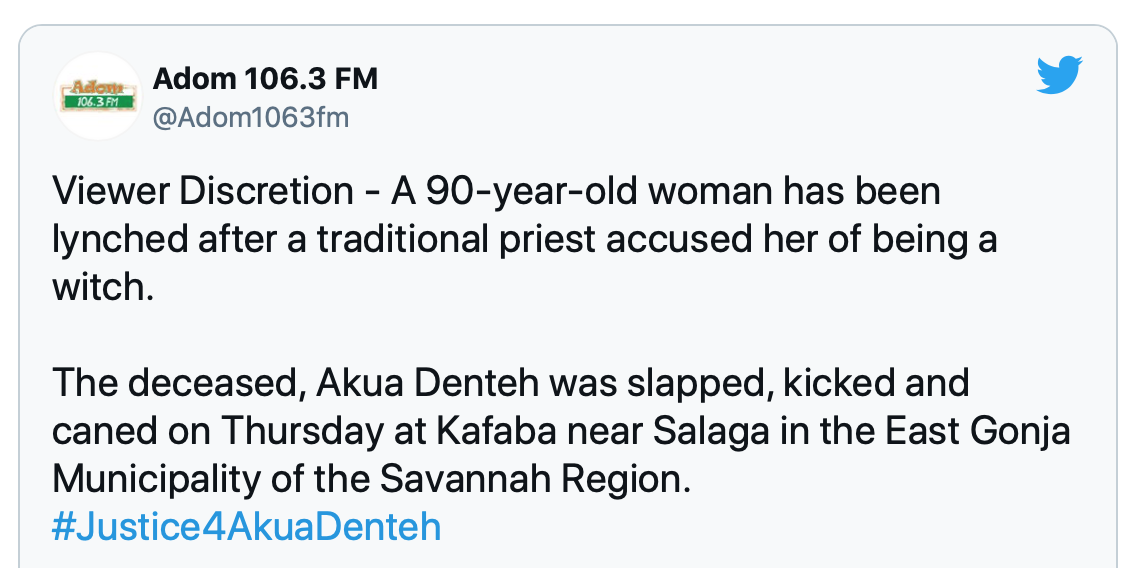
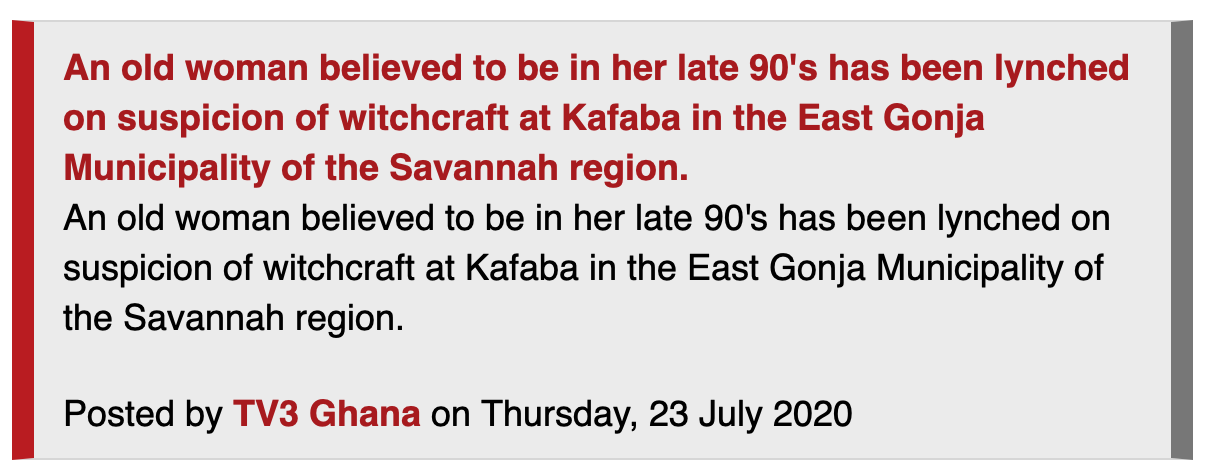
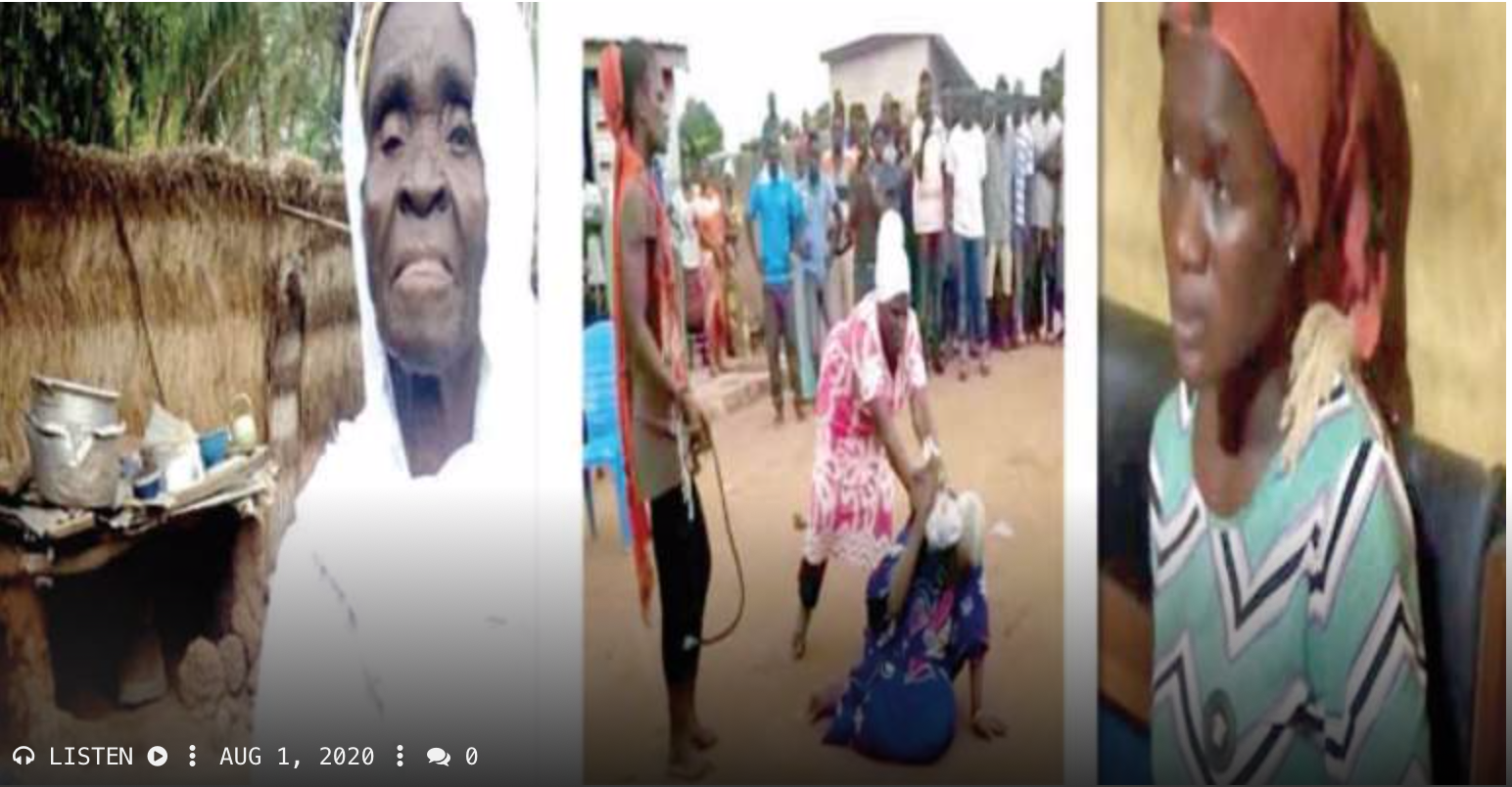
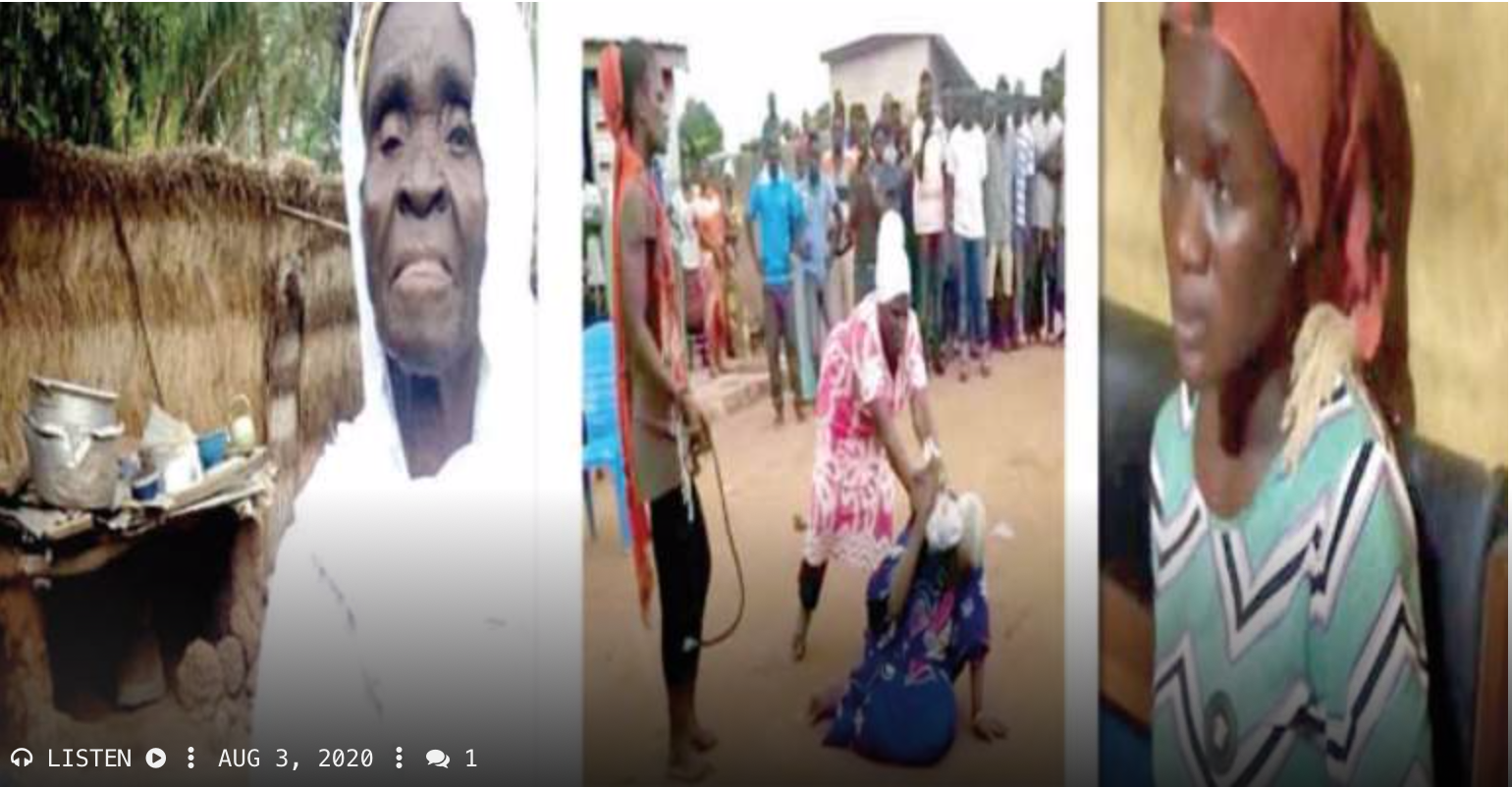
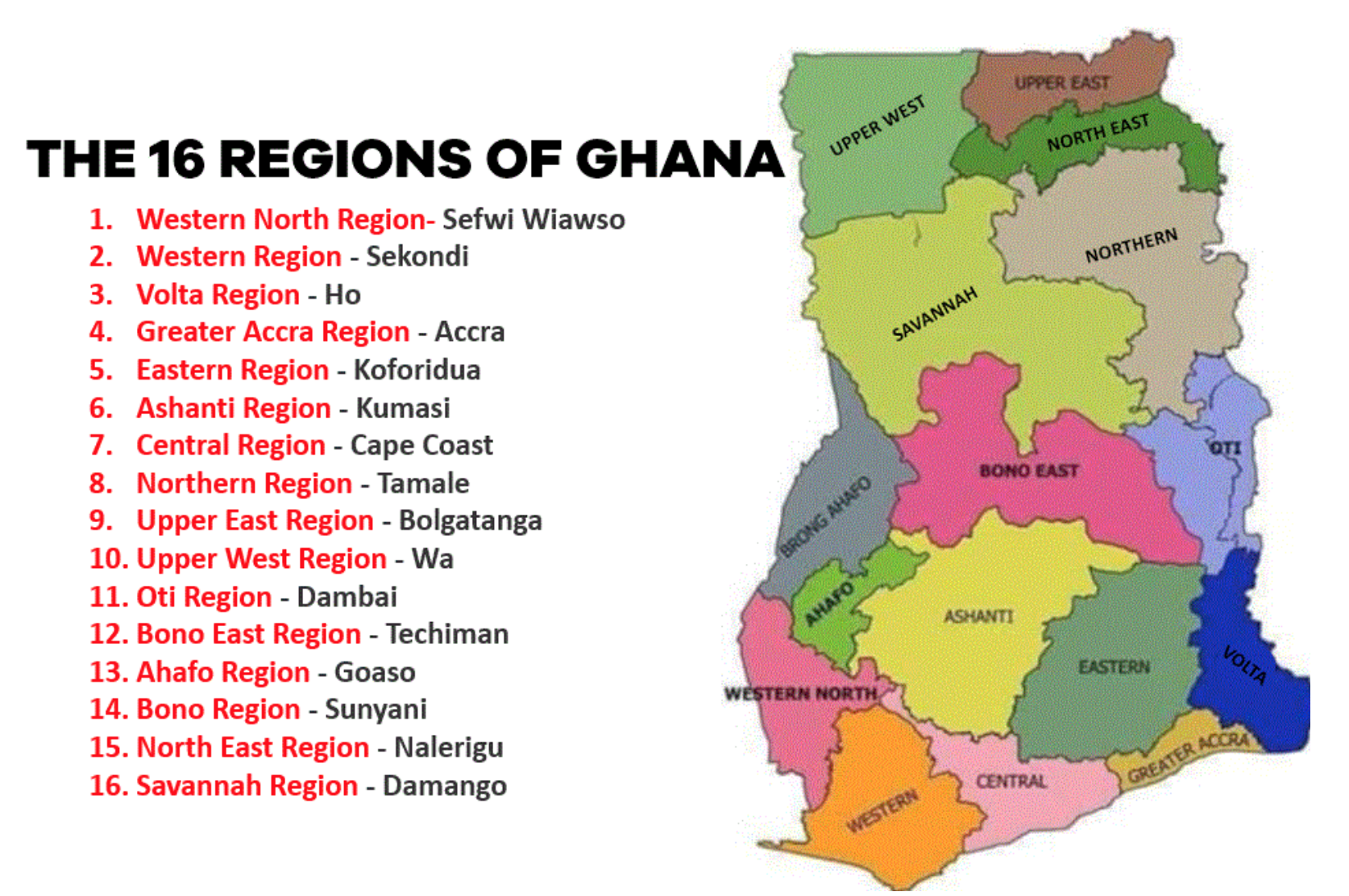
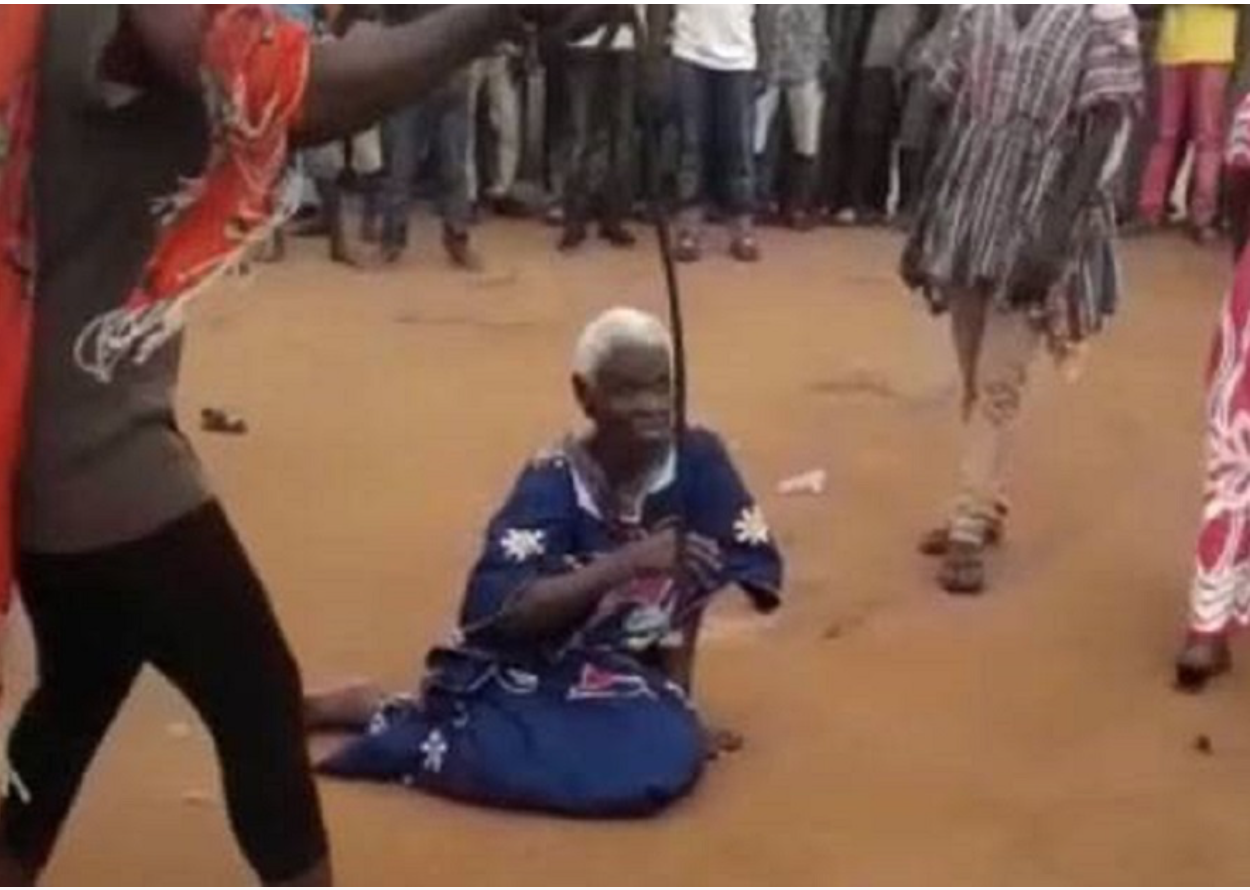
The lynching of Akua Denteh, a 90-year old woman in the Savannah region, in central Ghana, who was accused of being a witch caused national-wide outrage. It happened at Kafaba near Salaga in the East Gonja Municipality of the Savannah region, on July 23, 2020. After a local priestess, Sherina Mohammed alias Alhajia Filina (40), had accused the nonagenarian of witchcraft, a mob attacked the old, frail woman. Two women slapped, kicked and caned her with a whip, the horror was filmed by by-standers who did not intervene to stop the insane and atrocious cruelty which led to the death of this mother of nine children. The horror-movie was widespread on social media, but I find the video too gruesome and repulsive to show here.
And now, in 2020, the cruel and inhumane treatment of people – mostly women and children but also men are occasionally targeted – accused of witchcraft has resulted in yet another innocent victim of superstition. Will it end here?
The police acted swiftly and apprehended the priestess as well as the culprits who tortured and murdered Akua Denteh. However, the recent Kasoa murder case shows that superstition has far from vanished from Ghanaian society. The war against superstition, belief in witchcraft and ritualistic killings is far from over. (webmaster FVDK)
Lynching of 90-year-old Ghanaian woman suspected of witchcraft scars national conscience
Published: July 28, 2020 By: Face2Face – Nii Ntreh | Associate Editor
A 90-year-old Ghanaian woman in the north of the country was lynched to death last week by a mob who had been convinced that frail and diminutive Akua Denteh was a witch.
According to local sources, Denteh was accused by a popular traditional priestess in the Savannah region of the country, who traced the misery and misfortune of a few people as well as the community to the nonagenarian. This followed a long-held suspicion by some youth in the community.
The ensuing mob justice after the priestess’ confirmation was as swift as it was merciless.
A viral video of the lynching shows a small crowd that had circled the helpless old woman as she sat in the dirt. In the middle of the circle, those who were perhaps more incensed with Denteh’s alleged witchery – two visibly irate women in particular – beat her up, one of them, with a whip.
The video is only forty-five seconds long and does not include footage of what has been reported as the commitment of more people to beat Denteh up. But since the video came to light and drew the response of the police, many of the onlookers as well as those seen assaulting the old woman, have reportedly fled into hiding.
Ghana‘s president, Nana Akufo-Addo, has called the incident a “tragic act” that has “disfigured” the country’s image. A former head of state Jerry Rawlings has also called for a quick resolution to a “cruel and barbaric lynching”.
Social media platforms too, Facebook and Twitter specifically, have been awash with statements from individuals and organizations condemning Denteh’s murder. But perhaps, the sentiments of civil society, however well-intentioned, are at best, anodynic and polite.
A 2015 Global Attitudes Survey by the Pew Research Center found that about 90% of Ghanaians described themselves as religious, belonging to the Christianity, Islam, variants of the Eastern religions or traditional African faiths. But the belief in witchcraft, not argued by the Pew survey, is very rife regardless of one’s faith.
The pervasiveness of belief in witchcraft in Ghana can be seen through the popularity of the biggest movies produced by the country’s hugely-successful Kumawood (Kumasi Hollywood) industry. Since the 1980s too, Ghana has witnessed the astronomic proliferation of evangelical churches that market themselves as “solution centers” to spiritual problems.
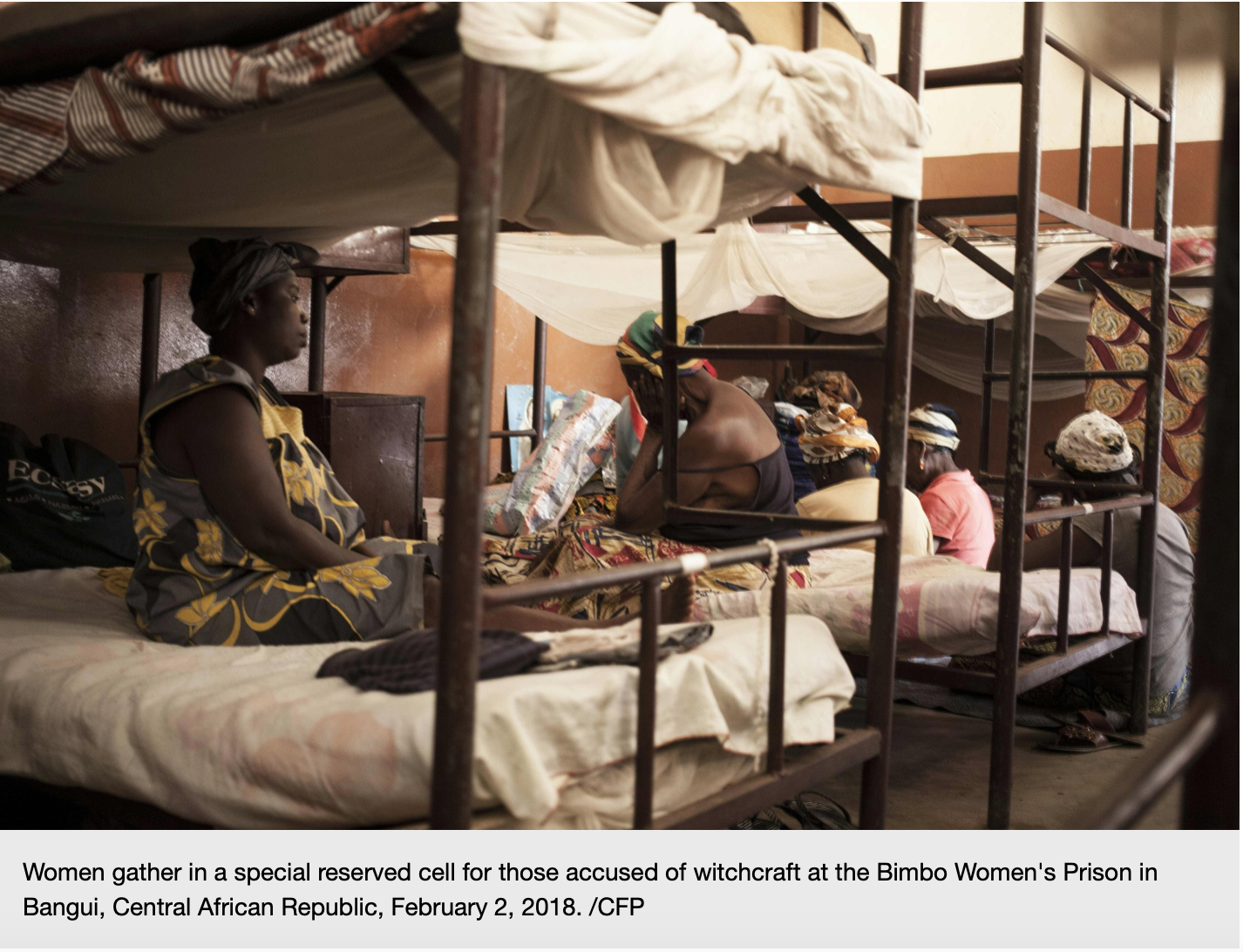
Some of these churches are referred to as prayer camps where people are supposed to be delivered of demonic possessions. Apart from churches, some animistic believers in northern Ghana, not far from where Denteh was murdered, have witch camps, where older women are held on accusations of witchcraft, sometimes until their death.
The most famous of these camps, the Gambaga witch camp, has been studied by social scientists across the world.
However, much in the fashion of the Comtean sociological perspective, many educated Ghanaians seem to think that belief in witchcraft and hardcore spirituality is in the nature of the uneducated poor.
With what is already known about Ghanaian society, the lynching of Denteh seems like the ugly manifestation of serious neglected underlying tensions.
The police have mounted a search for one Tanko and his accomplices who allegedly masterminded the lynching of a 90-year-old woman at Kafaba near Salaga in the Savannah Region on the accusation that she was a witch.
The incident happened on Thursday, July 23, 2020 in the East Gonja Municipality.
The old woman whose body has since been deposited at the Tamale Teaching Hospital (TTH) mortuary has been identified as Akua Denteh.
The Savannah Regional Police Commander, Deputy Commissioner of Police (DCOP), Mr Enoch Adutwum Bediako told Graphic Online that some more police officers have been detailed to the area to effect the arrest of the suspects who subjected the victim to severe beatings which led to her death.
What happened?
DCOP Bediako told Graphic Online that at about 4pm on Thursday, July 23, 2020, Mahama Salami aged 60 years of Mempeasem, a suburb of Salaga reported to the police that he had received information at 11 am from his sister, Mahama Memuna that his mother, Akua Denteh aged 90 had been accused of being a witch.
This was because a certain fetish priest in the area had said so.
DCOP Bediako said based on that the old woman was subjected to severe beatings by Tanko and his accomplices until she became unconscious and died.
He said when the matter was reported to the Salaga Police they proceeded to the scene at Kafaba, which is about 21 kilometres from Salaga and saw the lifeless body of the victim.
He said an inspection conducted on the body of the victim revealed a cut on the forehead and bruises on the right arm.
After processing the scene as part of investigations, the body was sent to the TTH mortuary for preservation.
DCOP Bediako said the police are on the heels of those who perpetrated the act for the law to deal with them.
The issue of witchcraft allegations, especially against old women are widespread in the northern part of Ghana.
Kafaba ‘Witch’ Killer Grabbed After Trying To Escape To Yeji
KILLED! Akua Denteh, The 90-year-old woman being assaulted by the suspects, GRABBED! Latifah Bumaye
Published: August 1, 2020 By: Modern Ghana –
A key suspect in the lynching of Akua Denteh, a 90-year-old woman, over allegation of witchcraft at Kafaba in the Gonja East Municipality of the Savannah Region, has been grabbed by the police after she tried to escape from the area.
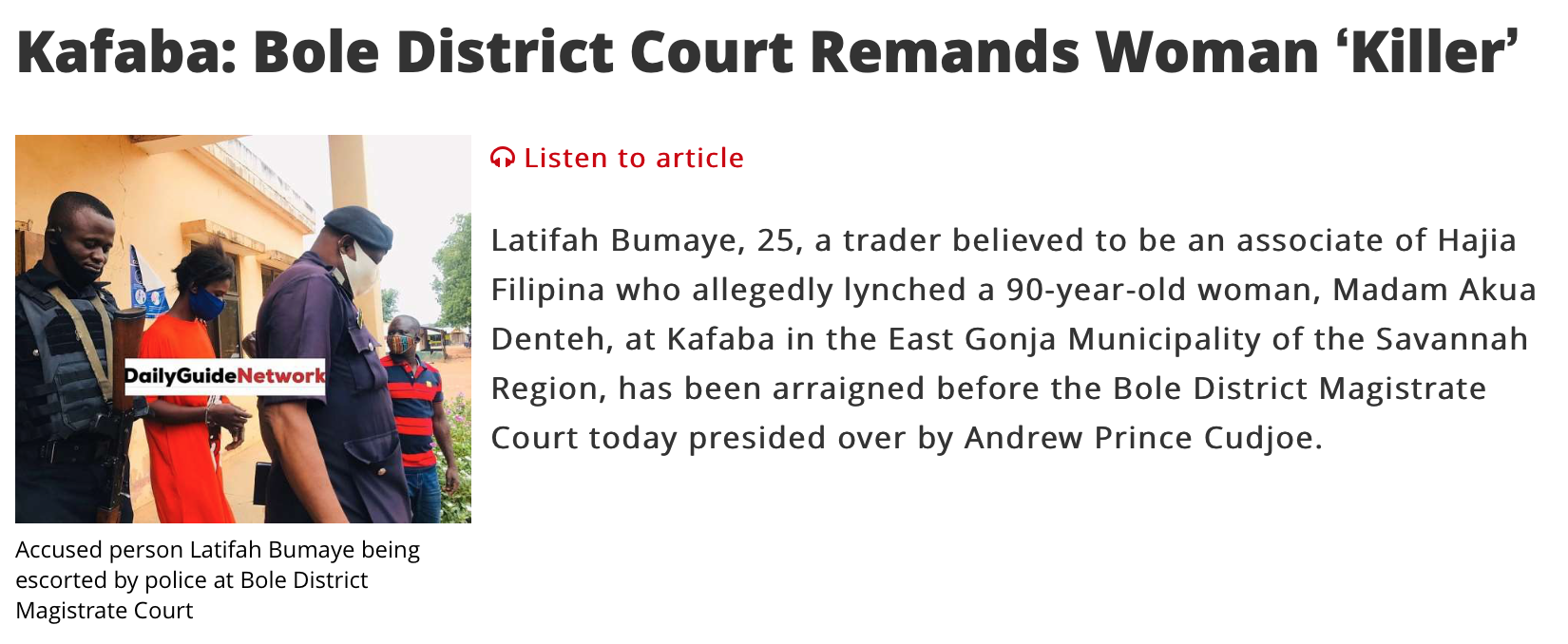
Latifah Bumaye, believed to be an associate of the ringleader, Hajia Filipina, was picked up at Kejewu Bator, a fishing community under the Abrumase Police within the Salaga Division at East Gonja, while going to Yeji.
According to police sources, they heard about the hideout of the suspect and dispatched detectives to Kejewu Bator where she was picked up and escorted back to the Salaga Divisional Command.
DAILY GUIDE understands that she is being processed to be sent to the Regional Police Command in Damongo for further action.
The suspect is believed to be one of the two ladies seen in the viral video lynching the 90-year-old woman because they claimed she was a witch.
She is believed to be the woman in the video menacingly whipping the old lady with a long whip which she brandished. Meanwhile, the chief suspect, Filipina, is yet to be apprehended.
More Suspects
Five people, who are believed to have participated in the lynching which has since sparked national outrage, have been remanded in police custody by a district court at Bole.
They pleaded not guilty and the court, presided over by Andrew Prince Cudjoe, remanded them until August 20.
The suspects – Haruna Aness, 34; Issaka Tanko, 35; Shaibu Murtala, 29; Sulemana Ali, 35; and Issaka Sachebu, 32, have been charged with conspiracy and murder.
The Chief of Kafaba, Seidu Yahaya, under whose jurisdiction the incident occurred, has also been granted police inquiry bail.
The police placed a GH¢2,000 reward for anybody that would help in the arrest of the suspects; and yesterday, a benevolent individual placed a GH¢5,000 reward for anybody who could assist the police to arrest Filipina.
Kafaba: Bole District Court Remands Woman ‘Killer’
Published: August 3, 2020 By: Modern Ghana
The accused person was provisionally charged with murder.
The case prosecutor, chief inspector Abdulai B. Awuni, pleaded with the court to remand the accused person for further investigation.
The judge granted the request of the police prosecutor and demanded the accused be remanded into police custody to reappear in court on August 20, 2020.
The charge was read and explained to the accused person but her plea was not taken.
More Suspects
Five people, who are believed to have participated in the lynching which has since sparked national outrage, have been remanded in police custody by a district court at Bole.
They pleaded not guilty and the court, presided over by Andrew Prince Cudjoe, remanded them until August 20.
The suspects – Haruna Aness, 34; Issaka Tanko, 35; Shaibu Murtala, 29; Sulemana Ali, 35; and Issaka Sachebu, 32, have been charged with conspiracy and murder.
The Chief of Kafaba, Seidu Yahaya, under whose jurisdiction the incident occurred, has also been granted police inquiry bail.
The police placed a GH¢2,000 reward for anybody that would help in the arrest of the suspects; and yesterday, a benevolent individual placed a GH¢5,000 reward for anybody who could assist the police to arrest Filipina.
Madam Akua Denteh was lynched at Kafaba in the East Gonja Municipality in the Savannah Region.
The woman was openly beaten to death by Hajia Filipina,the soothsayer with support from a mob in the community.
The main suspect, Hajia Filipina, as at the time of filing this report was still on the run.
Kafaba Killing: Woman ‘Killer’ To Face Court Today
Published: August 3, 2020 By: Modern Ghana
One of the key suspects in the lynching of 90-year-old Akua Denteh at Kafaba will be arraigned today, August 3.
Latifah Bumaye was arrested last week at Kejewu Bator, a fishing community along the Volta lake.
She was seen in a viral video continuously hitting the deceased with an object.
The deceased, Akua Denteh a fortnight ago was tortured after she was accused of being a witch.
The Savannah Regional Police earlier arrested five persons who are also linked to the incident.
They have been charged with conspiracy to commit murder and have been remanded in police custody to reappear before the court on August 20.
Speaking to Citi News, Savannah Regional Police Commander, DCOP Enoch Adutwum Bediako said investigations are still ongoing.
“She was arrested on Monday at Kejewu, a small community along the Volta lake. All she keeps saying is that she doesn’t know what was happening to her. Our investigations are still ongoing but we will put her before court today to seek remand as investigations continue. She has not been able to tell us where the priestess (another suspect) is.”
Five suspects charged with conspiracy to commit murder
Earlier, five suspects arrested by the Police in connection with the lynching of Akua Denteh have been formally charged with conspiracy to commit murder.
They are however currently on remand in police custody after making their first appearance in court on Thursday, July 30.
Kafaba chief granted bail
Meanwhile, the Kafaba chief, Zackaria Yahaya who was earlier arrested has been granted bail.
According to the police, the five other suspects in their statements indicated that the chief did not play any role in the development as he even asked them to send the priestess away when they went to introduce her to him before the lynching incident.
“The youth did not agree with the chief and went on to do what they did and this unfortunate thing happened… All the five said the chief didn’t agree with what they were doing and therefore he was not part of what they were doing. Based on that, we have to grant the chief bail pending further investigations…He spent the night there because we got the suspects the following day,” DCOP Bediako said.
Kafaba Lynching: I Was Possessed – Woman ‘Killer’ Reveals In Court
Published: August 3, 2020 By: Modern Ghana
A key suspect in the lynching of Akua Denteh, a 90-year-old woman at Kafaba in the East Gonja Municipality of the Savannah Region, over allegation of witchcraft, has spoken for the first time since her arrest last Friday.
Latifa Bumaye, 33, claimed she was ‘possessed’ and did not realize she was participating in the lynching of Akua Denteh.
She claimed she went to wash her clothes at the river bank with her sister when the spirit entered her, adding “I saw the incident on television and I wondered if I was really the one who tortured her like that.”
Besides, she claimed that the woman who had passed on is her grandmother, a position rejected by the family of Akua Denteh.
Latifah believed to be an associate of the ringleader, Hajia Filipina, was picked up at Kejewu Bator, a fishing community under Abrumase Police Station within the Salaga Division in the East Gonja, whilst going to Yeji on Friday.
She is believed to be the woman in the video menacingly whipping the old lady with a long whip. Meanwhile, the chief suspect, Hajia Filipina, is yet to be apprehended.
According to sources, Latifa is expected to be sent to the Regional Police Command in Damongo to be processed for court on Monday.
More Suspects
Five people, who are believed to have participated in the lynching which has since sparked national outrage, have been remanded in police custody by a district court at Bole.
They pleaded not guilty and the court, presided over by Andrew Prince Cudjoe, remanded them until August 20.
The suspects – Haruna Aness, 34; Issaka Tanko, 35; Shaibu Murtala, 29; Sulemana Ali, 35; and Issaka Sachebu, 32, – have been charged with conspiracy and murder.
The Chief of Kafaba, Seidu Yahaya, under whose jurisdiction the incident occurred, had also been granted police inquiry bail.
The police placed a GH¢2,000 reward for anybody that would help in the arrest of the suspects and also a benevolent individual placed a GH¢5,000 reward for anybody who could assist the police to arrest Filipina.
According to police sources, they heard about the hideout of the suspect and dispatched detectives to Kejewu Bator where she was picked up and escorted back to the Salaga Divisional Command.
DAILY GUIDE understands that she is being processed to be sent to the Regional Police Command in Damongo for further action.
Police arrest priestess in Kafaba lynching of 90-year-old
Published: August 4, 2020 By: Ghana News Agency (GNA)
Accra, Aug. 4, GNA – The Ghana Police Tuesday said they have arrested the fetish priestess who allegedly accused Madam Akua Denteh of Kafaba, in the Savannah Region, of witchcraft, resulting in the lynching of the 90-year-old.
Superintendent Sheilla Kessie Abayie-Buckman, Director, Police Public Affairs Directorate, said Sherina Mohammed alias Alhajia Filina, 40, was arrested on Monday, August 3, 2020, at her hide-out at Yeji.
Superintendent Abayie-Buckman on the Ghana Police Facebook platform said, the suspect was, consequently, in Police custody assisting with investigations.
Hajia Filina is said to be among some other persons identified as Sanjo, Teacher Aliu, Bumaye, Ashley and Manafo, who allegedly beat the nonagenarian on Thursday, July 23, resulting in her unconsciousness and death later.
They have already arrested five more persons who allegedly admitted to having invited the priestess to Kafaba where the incident occurred.
They are Haruna Aness – 34, Issifa Tanko- 35, Shaibu Muntala – 29, Sulemana Ali -35 and Issifa Zakyibo -32.
Their action has attracted nationwide condemnation and calls for swift justice and punishment of the perpetrators.
The police in the Savannah Region initially arrested the chief of Kafaba, Zackaria Yahaya, for his alleged role in the incident.
They have been arrested to face prosecution.
President Nana Addo Dankwa Akufo-Addo, who described the action as “barbaric” also called for action and justice to be served.
A few days after the incident, the Inspector General of Police (IGP), Mr James Oppong-Boanuh, dispatched homicide experts to the Savannah Region to hunt for the murderers.
The IGP also placed a GH¢ 2,000.00 bounty on their heads, adding that any person with credible information should either contact the Savannah Police or call 0275000156.
Sanjo was said to have hosted Hajia Filina, the priestess who declared the victim, a witch.
High priestess involved in murder of 90-year-old woman to appear in court on August 5
The priestess (soothsayer), Sherina Mohammed alias Alhajia, aged 40, was arrested at her hideout at Yeji in the Bono East region by police in Salaga.
Published: August 5, 2020 (Last Updated on August 9, 2020) By: MyGH.Online
The Savannah Regional police command says the Priestess (Soothsayer), in the Kafaba murder case, will appear in court on Wednesday, August 5, 2020.
This was after Sherina Mohammed alias Alhajia, aged 40, was arrested at her hideout at Yeji in the Bono East region by police in Salaga.
Her arrest brings the number of suspects in police custody to seven with the exception of the Kafaba chief, Zackaria Yahaya who is currently on bail.
JoyNews’ Isaac Nonya who has been following the incident reports that the police had earlier sent the suspect to Salaga to be interrogated before being brought to Damongo.
According to sources, the alleged priestess had also admitted being the one in the video which went viral.
On July 23, 90-year-old, Akua Denteh was seen being slapped, kicked and caned after the traditional priestess accused her of being a witch.
The severe beating the woman was subjected to by her accuser and two other women resulted in her death.
After the video went viral, there was massive outrage with many demanding the immediate arrest and prosecution of all the perpetrators.
From the President, Nana Akufo-Addo, to various civil society groups, the security services have been urged to fish out the culprits who went into hiding after the act.
On Monday, the first key suspect in the lynching was arrested and remanded by the Bole Magistrate Court.
Latifa Bumaye, 25, was smoked out of her hideout at Kejewu Botor a suburb of the East Gonja Municipality, following continuous surveillance by the Homicide Unit of the Ghana Police Service.
Kafaba killing: Son Shares Unfulfilled Wish Of Murdered 90-Year-Old Woman
Published: August 1, 2020 By: Modern Ghana
The last son of the 90 year-old woman who was beaten to death at Kafaba has shared her last unfulfilled wish saying “My mother’s last wish was to see my children before she will pass away.”
Mr Mahama Saaka, who is 36-years-old and teacher at Salaga T.I Ahmadiyya Senior High School, who recounted this, said he was yet to have a child and unfortunately his mother had to die this way without seeing his children.
He recounted this when the Ghana News Agency (GNA) visited the family of the murdered old woman at Salaga in the East Gonja Municipality of the Savannah Region to gauge their mood after the sad incident.
Madam Akua Mariama Denteh, 90 years-old, was on Thursday, July 23, beaten to death at Kafaba by some residents and a spiritualist, who accused her of witchcraft and behind certain strange happenings in the area including; limiting the progress of the town.
Madam Denteh had nine children, and three died leaving two males and four females, a number of them as teachers and 21 grandchildren.
The spiritualist was brought to the town by some youth of the area to fish out alleged witches in the area, working against the progress of the town.
The spiritualist mentioned Madam Denteh as a witch, which she denied but her denial was not accepted and was subjected to beatings.
The incident was captured on video, and had since gone viral on social media.
The deceased has since been buried.
So far, the Police arrested Yenufunu Yahaya Seidu (V), a Chief at Kafaba, who had been granted police enquiry bail, and six others in connection with the incident.
The incident has attracted condemnation from civil society organisations, politicians, gender and human rights activists across the country.
GNA gathered that, when Madam Denteh was beaten and succumbed to the torture, the spiritualist identified 17 other women in the area as being witches and some of them were also subjected to beatings whilst others, who were connected to powerful people in the area, were spared from beatings.
Mr Saaka said “It had been my greatest desire to fulfil my mother’s wish but I’m shattered now, I don’t know what to do.”
He told the GNA that “Since the incident happened and I took my Mum to the morgue, I have not been myself, I’m sick internally, I can’t even cry. She wanted to see my children before she will pass. That is the promise she gave to me, but the unfortunate incident has crushed everything.”
He said “I don’t believe that my own community; they will do this thing. I’m very, very surprised because I grew up there. We are very sad. We don’t know what to do.”
He called for justice to be served “So that my Mum will be used as an example to protect all other elderly women.”
Mr Mahama Sallam, 60 year-old third child and surviving first son of the deceased, said what happened was unacceptable, attributing it to ignorance saying “We leave everything in the hands of God.”
GNA also visited the spot, where the old woman was beaten at Kafaba, and it was a compound of a house, whose owner had since fled the town.
The road from Salaga to Kafaba is in a deplorable state and it takes about an hour and a half to reach Kafaba from Salaga using a four-wheeled vehicle.
There is no Police Post at Kafaba, which presupposes that unless a good Samaritan in the town intervenes, any unlawful act could be meted out to any citizen in the area.
Yenufunu Yahaya Seidu (V), a Chief at Kafaba, who was arrested and granted bail in connection with the incident, told the GNA at Kafaba that some youth of the area informed him of their decision to invite the spiritualist to fish out witches in the area to ensure the progress of the town.
He said lawless acts in the area could be prevented, if there was a Police Station in the area and appealed for one in the area to ensure law and order.
And hail to the journalist who first reported on the lynching of 90-year old Akua Denteh:
Kafaba Killing Reportage Has Boosted My Popularity – TV3 Journalist
Christopher Mensah Amoako was the first journalist who reported on the gruesome lynching of the 90-year old Akua Denteh.
Published: August 3, 2020 By: Modern Ghana
TV3’s Savannah Regional correspondent Christopher Mensah Amoako has opened up on how he became the only journalist in the country to have first reported on the gruesome Kafaba killing, indicating the reportage has soared his popularity in the region.
Speaking on ‘Talk To Solomon’ (a YouTube based talk show) hosted by journalist and writer Solomon Mensah, Mr. Amoako said: “On that fateful Thursday, July 23, 2020, I was on my way to East Gonja [in the Savannah Region] when I had a video sent to me via WhatsApp. When I downloaded it, I heard them speak both Gonja and Twi so I realised the tape could not be an imported one from any other African country.”
Christopher Amoako said, he did further checks to ascertain the authenticity of the video and after rigorous background checks confirmed it was not fake.
“I quickly called the one who sent me the video not to share with anyone. Then, after about two hours, I also had a call from the son of the deceased telling me about the incident,” he noted.
The Savannah Regional correspondent for the Media General group revealed that he first “harboured fear in breaking the news. But now, that fear has long gone. Today, everywhere I pass, I get people pointing fingers at me that, ‘that’s the journalist who first broke the news to the nation’”.
Christopher Amoako said he together with the people of the Savannah Region and the nation as a whole look forward to a swift justice served by the law courts on the murder.
A 90-year old woman Akua Denteh was lynched on July 23 by a section of the Kafaba community after a soothsayer pronounced her a witch.
The Savannah Regional Police Command has since apprehended some suspects including 32-year old Latifa Bumaye believed to have played a key role in the lynching.
Find below Christopher’s full interview:
To watch and listen the interview, click here and scroll down the page. Picture is a screenshot.
It seems appropriate to start this introduction to the following article with a warning because of its graphic contents. Sorcery accusation-related violence (SARV) is sometimes too gruesome to tell or to read. I’ve read a lot of articles on ritual murders in recent years and ‘ve seen many pictures, yet my stomach was turning when I read the following report on sorcery accusation-related violence. It describes horrible acts of mobs or sometimes individuals which take place not only in Africa or Sub-Saharan Africa, but in countries and regions all over the world. Common characteristics are that people are ill-informed, not or poorly educated, and have limited opportunities and no perspectives for improvement of one’s lives, in combination with a weak rule of law and often a lack of political will, as one well-informed interviewee rightly stated (see below).
The article mentions a few countries in Africa, notably Central African Republic, Ghana, Nigeria, South Africa, Tanzania, but it does no require much imagination to add other African countries. The belief in witchcraft is widespread on the continent. This is not to say that everybody in Africa believes in witchcraft but the number of superstitious people and people who believe in witchcraft (juju, muti, money rituals) cannot be counted, that’s for sure.
It hurts me deeply to read about sorcery accusation-related violence. The majority of the victims are women and children, notably girls, but sometimes also boys and men are accused of witchcraft and sorcery. On March 20 this year, I posted an article on a gruesome incident which happened in Liberia where a school expelled a K-1 pupil for alleged witchcraft. In July 2020, a 90-year old woman accused of sorcery was lynched by a mob in Ghana. The gruesome torture and killing caused a nationwide outcry. More details in tomorrow’s posting. (webmaster FVDK)
In July 2020, a 90-year-old woman was lynched after a traditional priest accused her of being a witch. The deceased, Akua Denteh was slapped, kicked and caned at Kafaba near Salaga in the East Gonja Municipality of the Savannah Region, Ghana. The picture is a screenshot from the video showing two women assaulting the old lady, a horrific and repulsive scene which is too disgusting to show or to watch (FVDK).
‘Sorcery’ still a motive for torture, killing in 21st century
Published: April 28, 2021 By: CGTN – Sim Sim Wissgott
Two women were attacked and tortured in Papua New Guinea’s capital Port Moresby on Sunday, accused of witchcraft. They were interrogated and burned with hot irons to get them to admit to killing a woman who had died earlier in the week, local media reports said.
One managed to escape and alert the police. But this was not an isolated incident in the Pacific island nation.
Local media reported in February that six women had been accused of sorcery. Police managed to free two women in July after they were held and tortured for four days, accused of killing a villager a week earlier by removing his heart.
Attacks like these are so widespread that Papua New Guinea (PNG) actually has a term and acronym for them: sorcery accusation-related violence, or SARV.
While authorities and politicians regularly condemn these as “barbaric acts” and “uncivilized” behavior, SARV continues.
This type of violence is not limited to PNG either. Accusations of sorcery remain a very real threat in many communities around the world and claim dozens – if not hundreds – of lives every year.
Other sorcery-related killings in recent months have included a 70-year-old man in eastern Jharkhand state who reportedly practiced exorcism and sold herbal medicines; a family of five, accused of black magic after several people in their village fell ill and died; and a middle-aged man who was beheaded “on suspicion of sorcery” in neighboring Odisha state in December.
Another elderly man in Odisha was killed last month after villagers accused him of witchcraft.
“The deceased used to throw ash and some powder in front of the houses of villagers which raised doubts that he was practicing some witchcraft. In a fit of rage, some youths of the village killed him with stone and hammer and fled the spot after dumping his body in the bushes near the canal,” a police officer told local media.
Reports have emerged in recent months from South Africa, Nigeria, and Nepal of people being beaten, tortured or killed on suspicion of witchcraft. Countries like Tanzania and Ghana have also been fighting SARV for years.
There are no definite figures on how many people fall victim to SARV every year around the world. In many cases, the crimes go unreported as victims fear retribution.
The problem is significant enough that the Office of the United Nations High Commissioner for Human Rights held an experts’ conference in 2017 to discuss ways “to end harmful practices related to witchcraft.”
There were 372 anti-sorcery attacks reported between 2013 and 2016 in PNG, according to UK charity Oxfam. In India’s Assam state, a dozen are killed every year, according to local media.
Mob mentality
Although men can be targeted, victims of witchcraft-related violence tend overwhelmingly to be women and girls.
As a result, the issue is often paired with women’s rights and gender equality. Victims are generally among the most vulnerable members of the community. Mob mentality, lack of education and poor policing are also contributing factors.
“Sorcery-related violence stems from poor education, lack of awareness, limited opportunities coupled with deteriorating capacity for law and order and a lack of political will,” PNG’s Oro Province Governor Gari Juffa told The Guardian last year.
There have been reports of people accused of being witches after a member of their community fainted, suffered an epileptic fit, or died without warning.
A woman and her daughter were accused of sorcery in PNG earlier this month and were tortured by relatives after the woman’s husband died of COVID-19 .
Attacks are often brutal, with victims hacked to death, maimed, gang-raped, slashed with knives, burned with hot irons or hit with rocks, leaving them horribly scarred – physically and mentally – for life.
Relatives can also be targeted by association: in the case of the family of five killed in Jharkhand state in February, a middle-aged couple was suspected of witchcraft, but their son, daughter-in-law and five-year-old grandson were also murdered.
Children of alleged witches are especially seen as a threat, human rights campaigners say.
The perpetrators rarely act alone but attack their victims in groups: in the latest case on Sunday in PNG, the two women were attacked and tortured by up to 20 men.
Police often say the attackers’ identities are known to them but communities and survivors may be reluctant to come forward and cooperate with law enforcement, meaning many perpetrators get away with their crime.
Taking action
Some progress has been seen. The Assam Witch Hunting (Prohibition, Prevention and Protection) Act was passed in India in 2015, making it a crime to accuse anyone of sorcery.
The Catholic Church’s Pontifical Mission Societies declared last year August 10 as World Day against Witch Hunts.
PNG repealed its 1971 Sorcery Act in 2013, which sanctioned sorcery-related violence. At the same time, it drafted a Sorcery National Action Plan to raise awareness about the issue and find ways to combat it.
The country even has a hotline now for anyone who may be the target of sorcery accusations.
The latest cases however have prompted concerns that sorcery-related violence may be once again spreading. While such cases are usually found in the more remote regions of PNG, last weekend’s attack occurred in the capital.
While action plans and strategies have been drafted, funding and effective implementation are still wanting, local officials say.
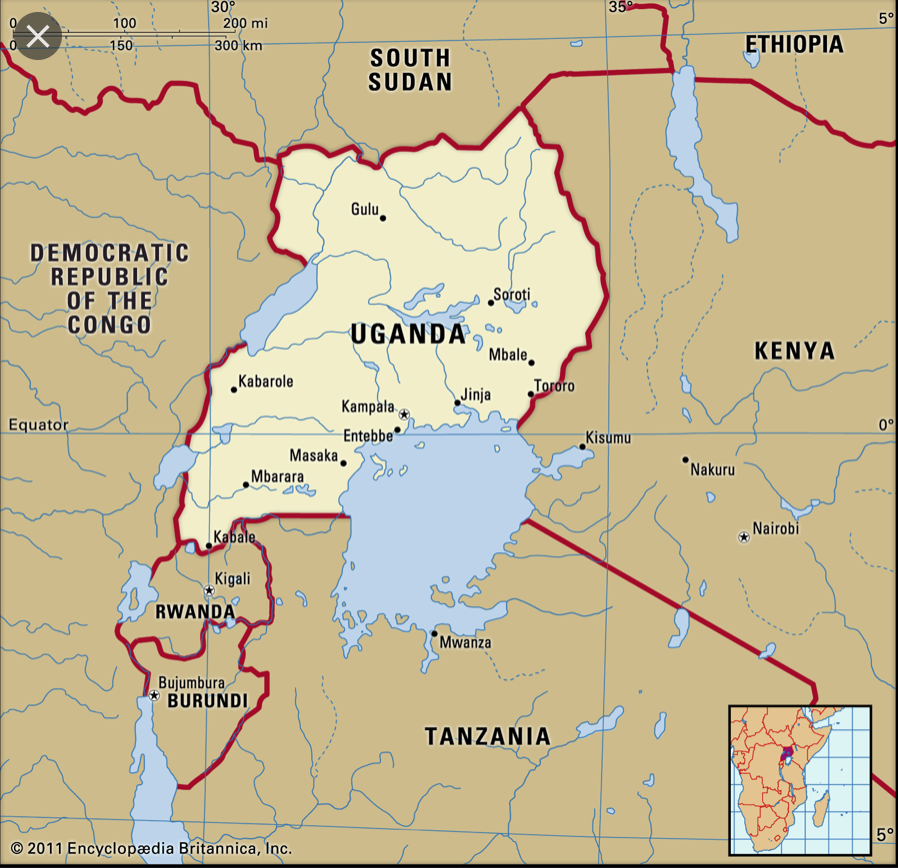
The death penalty as a deterrent – or as a revenge. Will this legal sanction provide a solution to the curse of ritual murders and the end of superstition in Uganda?
Having said this, the following article contains a chilling mention of the state of affairs in Uganda with respect to the occurrence of ritual murders (‘human sacrifice is a widespread phenomenon‘). (webmaster FVDK)
Human sacrifice culprits face death penalty
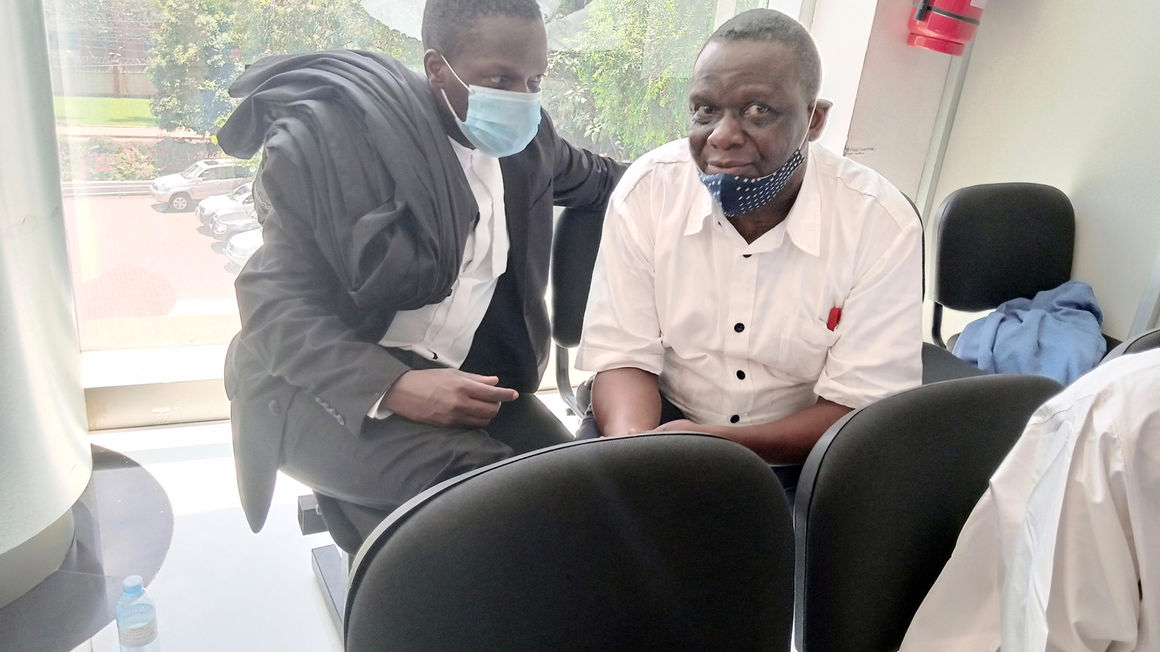
Businessman Godfrey Kato Kajubi (right) appears at the Supreme Court early last year during hearing of his appeal against his conviction for murdering 12-year-old Joseph Kasirye in 2012. Persons found guilty of committing acts of mutilating and or causing death of another person for purposes of performing a ritual, and those found in possession of human body parts, will suffer death upon conviction. PHOTO /JULIET KIGONGO.
Whoever will be found guilty of sacrificing a person for ritual purposes faces a maximum punishment of death following the passing of a law on human sacrifice.
The Human Sacrifice Bill (2020), once assented to by the President, will also see those who finance acts of human sacrifice facing death. Clause 1 of the Bill defines human sacrifice as killing, mutilation, removal of organs or body parts of a person for sale or for purpose of witchcraft, rituals or any harmful human practices.
While presenting the Private Member’s Bill yesterday, which was overwhelmingly supported, Ayivu MP Benard Atiku argued that the current law does not provide for the offence of human sacrifice and that the human sacrifice related cases are prosecuted as murder or related offences under the Penal Code Act.
Human sacrifice is a widespread phenomenon involving people who seek quick means of amassing wealth or power. A renowned case is that of 2008 involving Joseph Kasirye, a boy (then aged 12 years) whose torso was found in a swamp, headless and with no genitals.
Businessman Kato Kajubi was found guilty of murder and was handed life imprisonment on conviction. A section of MPs welcomed the passing of the Bill.
“In fact, it is long overdue. Human sacrifice is not only inhumane but it is evil,” Mbale Woman MP Connie Galiwango said. Ms Betty Aol Ocan, the Leader of the Opposition in Parliament (LoP) and Gulu Woman MP, said she did not understand why people were sacrificing children.
“You go to a witchdoctor expecting to give you riches, yet that witchdoctor stays in a grass-thatched hut?” Ms Ocan wondered. Kasese Municipality MP Robert Centenary commended the passing of the Bill after reasoning that adults are victims too.
Previously, the perpetrators of human sacrifice have targeted people with specific features, including albinos, those without body piercings, big umbilical cords, a gap in their front teeth, among other features.
Authorities, including police and religious leaders, have repeatedly highlighted that there is no connection between human sacrifice and riches. Meanwhile, Mr Emmanuel Jor Ongiertho, the Jonam County MP, had earlier recommended a harsher punishment for human sacrifice culprits.
“I suggest that the people involved in the practice should be tried by the military and if found guilty, be put on firing squad because we really want to deter people from this practice.”
Speaker of Parliament Rebecca Kadaga stated that Parliament had now provided an opportunity for justice to all the victims of human sacrifice.
“On a number of occasions, when children delegations come to visit me at Parliament, they ask me: ‘where is justice for Kasirye’. I think today (yesterday), we can answer that question and say that Parliament has now provided an avenue for justice for Kasirye and other victims like him,” Ms Kadaga said. Children often the most victims of human sacrifice.
More on the Bill ● Clause 5 says whoever encourages or advises any person to use human body parts in any ritual or their use in any treatment or other forms of healing would be liable to life imprisonment. ● Under Clause 6, whoever is found in possession of human body parts and instruments of human sacrifice is liable to life imprisonment. ● Clause 9 provides for psychosocial support to survivors of human sacrifice. ● Clause 10 provides for compensation, rehabilitation or restitution to be made by court in certain cases.
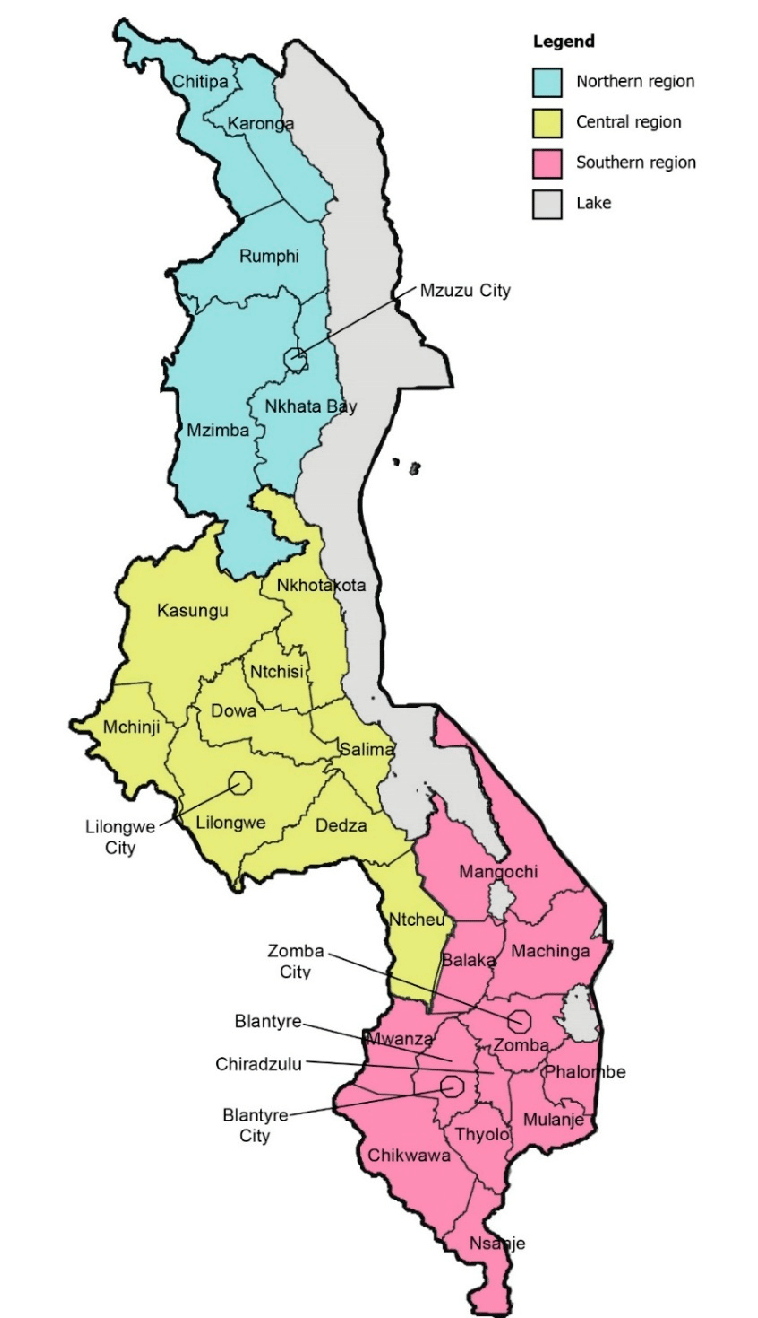
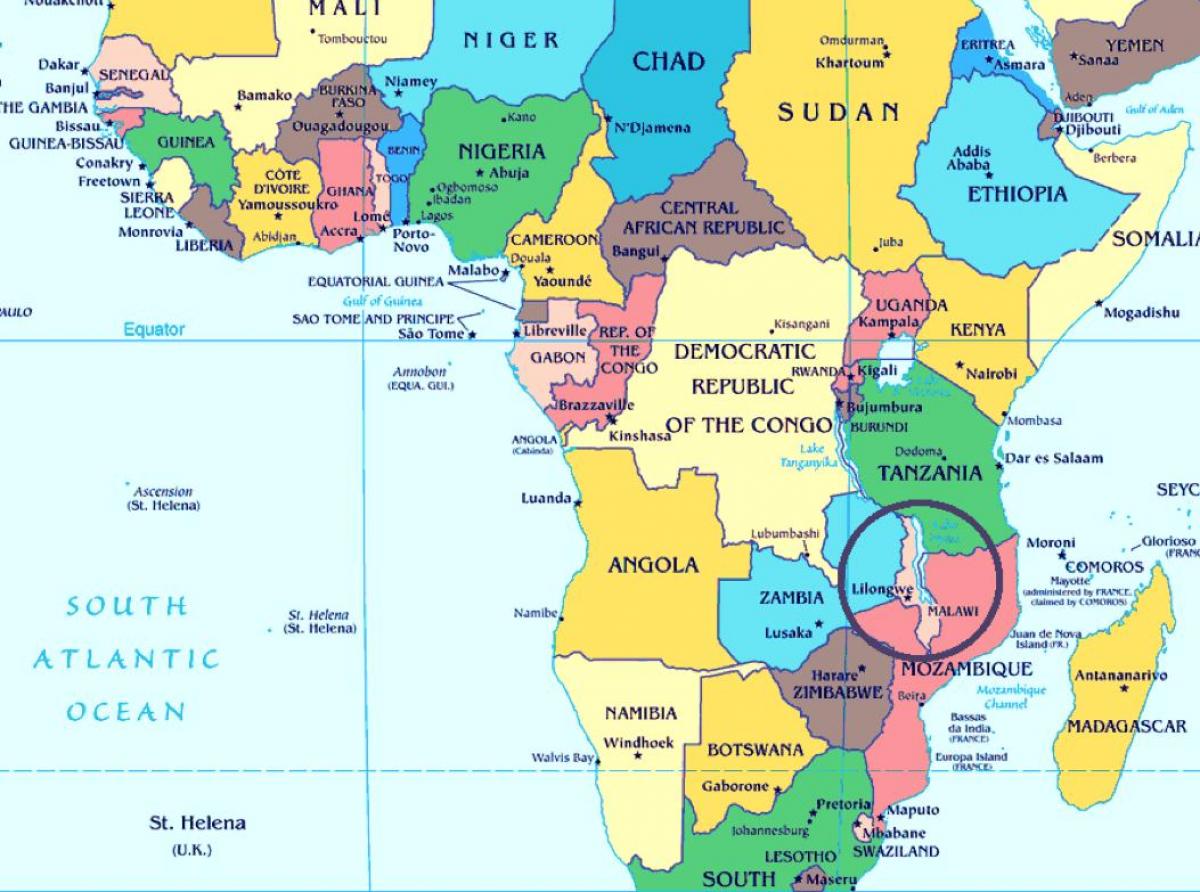
It is unprecedented what recently happened in northern Malawi, in the Chitipa district, which is the country’s most northern district, near the Malawian-Zambian border. The police have asked witchdoctors and traditional herbalists to help in the protection of people with albinism (PWA).
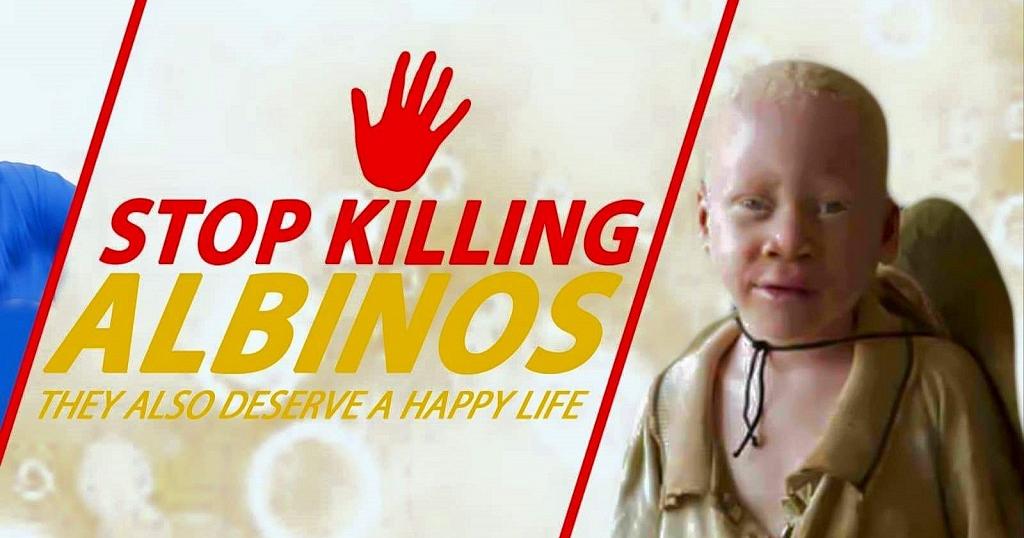
Malawi has a relatively large number of people with albinism, an estimated 10,000. Attacks on them are frequent, people with albinism fear for their lives every second of the day. Reportedly, more than 200 attacks, kidnappings, mutilations and murders of persons with albinism have occurred since 2014. However, it must be feared that the real number is higher since not all incidents have been reported.
Witchdoctors are allowed to practice in Malawi though – of course – officially the Malawian law does not recognize witchcraft. Superstition, however, is widespread in the country, hence also the use of the services of witchdoctors, an unknown number of them being somehow associated – to say the least – to the attacks on persons with albinism.
The cry for assistance from the Malawian police directed to witchdoctors and traditional herbalists is therefore remarkable. Is it comparable to asking mafia leaders help fighting murderers, kidnappers and other bandits? I don’t know whether this comparison is justified or whether it holds. In any case, the police asking witchdoctors to help against attacks on persons with albinism is a sign of incapacity, read: disqualification. If the police is unable to uphold the rule of law, Malawians have a serious problem and it is high time to have a serious debate on the organization and funding of the police force.
Recently, Amnesty International concluded that the trial of suspects of ritual murders is slow in Malawi. The question seems warranted: Is there a lack of political will? After all, it is common knowledge that in the past political forces and people have been implicated in the attacks on persons with albinism for ritual purposes. I have reported on these links on more than one occasion (e.g. see a recent posting dated April 30, 2021, and my postings of February 26, May 12, and August 28, 2019). If this lack of political will is indeed the case, turning to witchdoctors for help is close to hypocrisy and useless, ineffective, and the problem will not be solved, the human rights of persons with albinism will continue to be under threat. (webmaster FVDFK)
Malawi: Police Ask ‘Witch-Doctors’ for Help Against Attacks On ‘Albinos’
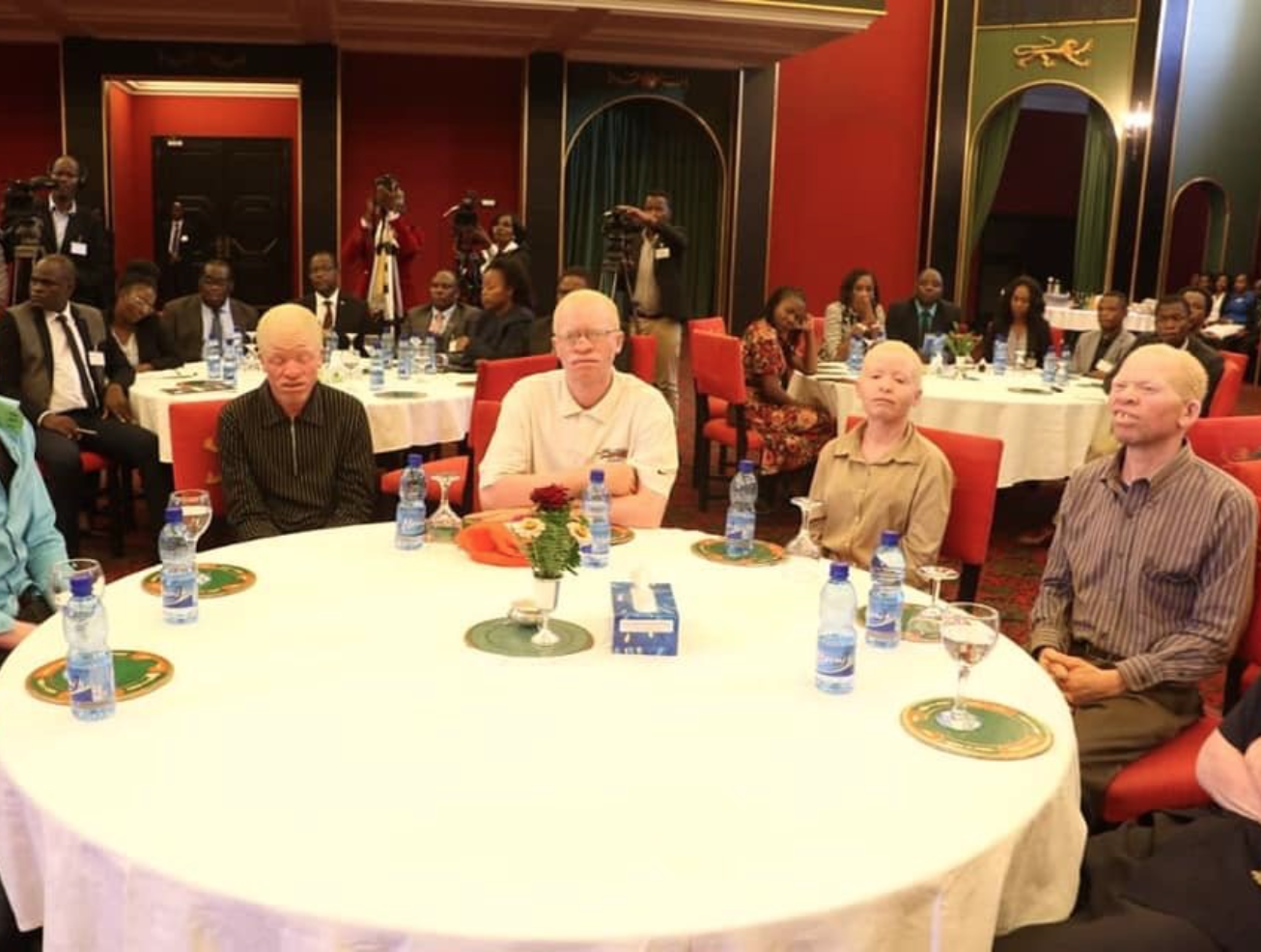
Persons with albinism attending a meeting at State House
Published: May 4, 2021 By: Nyasa Times – Gladys Chingaipe
“This would help to provide more protection to people with albinism.”
In an unprecedented manner, police in the northern tip of Malawi have gone on their bended knees and asked traditional herbalists and witchdoctors to help them in the fight against the incessant attacks on people with albinism.
Chitipa Police Station Officer, Dan Sowden in a desperate attempt to end the ongoing ritual killings and egregious human rights violations of the worst kind instigated specifically against people with albinism in the district and the country as a whole has asked traditional healers to work hand in hand with the police.
Snowden made the call last week during a meeting with herbalists and witchdoctors at Chitipa Boma where he expressed a growing concern and explained that there is a general outcry that herbalists and witchdoctors are suspected to be involved in attacks on people with albinism, hence the need to include them in efforts to end the vice.
He said: “We have established that it could be that those who are involved in the vice are not perhaps the real herbalists or genuine witchdoctors but may be some unscrupulous people with evil motives just posing and impersonating as herbalists and witchdoctors.”
“We know for a fact that both herbalists and witchdoctors exists to help people in a traditional way to solve traditional related problems and not to harm anyone and for that reason, we have therefore resolved that the herbalists and witchdoctors should be ambassadors and in the forefront to provide protection to people with albinism by reporting anyone who approaches them on issues to do with people with albinism.”
The police officer in-charge who is responsible for all security in the district called upon herbalists (and witchdoctors) in the district to be more organised and get licenses so that people could easily identify and report anyone falsely pretending to be a traditional healer.
President for Northern Region Traditional Healers, Edward Kayange said: “As herbalists, we are ready to work with the police in order to completely eradicate violence and discrimination against people with albinism.
“We will make sure that all traditional healers have certificates from one body to avoid confusion amongst ourselves. We will form committees which will be working hand in hand with the police and chiefs to report anyone involved in the malpractice,” he pointed out.
Chairperson for Chitipa District Association of People with Albinism, Mabvuto Lwinga said it was a step in the right direction for herbalists and witchdoctors alike to be working with the police.
“This is a good development. I am very optimistic that this would help to provide more protection to people with albinism,” said Lwinga.
The law in Malawi, however, does not recognise witchcraft although traditional healers and witchdoctors are allowed to practice their trade
‘Extra gear’
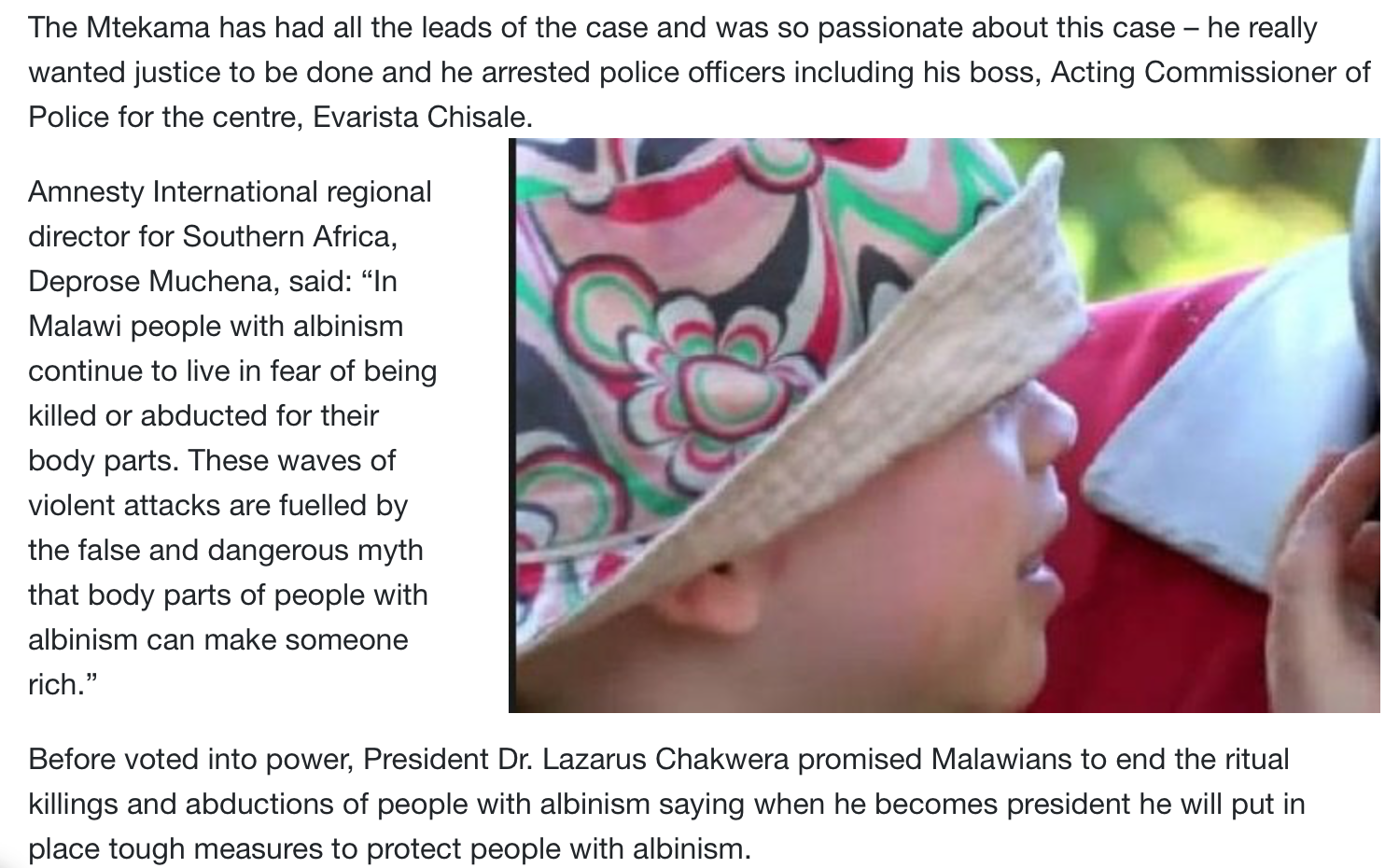
People with albinism are born with lighter than normal skin, hair and eye colour, making them sensitive to the sun and bright light and in some communities, especially among the African people they are attacked or even killed for their body parts which is erroneously believed to posses magical powers.
Since 2014 more than 200 cases of killings, attacks and other human rights violations against persons with albinism have been reported in the Southern African landlocked nation.
According to United Nations (UN) human rights experts despite various moves to support people with albinism, the continued attacks demonstrate that the Government needs to redouble its efforts to end the ongoing atrocities.
UN’s Independent Expert on the enjoyment of human rights by persons with albinism, Ikponwosa Ero said: “We call on the Government of Malawi to urgently address the root causes of these attacks and to strengthen nationwide campaigns to raise awareness, conduct robust investigations and prosecutions in all cases, increase protection for victims, and finance and implement all necessary measures.”
Ero is on record having said that some witchcraft practices result in “serious human violations” such as torture, murder, discrimination and exclusion, including banishment from communities.
Maria Jose Torres, UN Resident Coordinator in Malawi says that the UN remains concerned about continued attacks against persons with albinism.
“We call on the government of Malawi to engage an extra gear in the fight against attacks on persons with albinism. We need to do more to ensure that this comes to a complete end.
Habiba Osman, Executive Secretary for Malawi Human Rights Commission (MHRC) said in an interview with Nyasa Times that the ongoing attacks on persons with albinism is a chilling reminder that Malawi as a country needs to do more to protect people with albinism because they are not safe.
“These attacks on persons with albinism is largely fuelled by a culture of impunity. The government must tighten the noose on anyone suspected to have committed this heinous crime. Persons with albinism like anyone else are protected by the law,” said Osman.
Before being elected president, Malawi leader, Dr. Lazarus Chakwera rode on a wave that if elected, he would make sure that attacks on people with albinism will be put to an end.
“When I become president, anyone found killing, abducting or discriminating against any person with albinism will be dealt severely and face the long arm of the law.”
A recent Amnesty International (AI) report observes that the rate at which cases are concluded in Malawi is slow compared to other crime investigations.
There are approximately about 10,000 persons with albinism in Malawi.
Unfortunately, the below article contains a too familiar story. Attacks on persons with albinism, mutilation, murder, involvement of high-placed politicians, cover up practices. The President of the Associations of Persons with Albinism in Malawi (APAM), Ian Simbota, again turned his attention to the country’s rulers and requested the government of President Lazarus Chakwera to speed up all abduction and murder cases which targeted people with albinism (PWA) for ritualistic purposes, often involving high-profile politicians.
It is shocking to read the following article. I won’t repeat here what follows. Once more, however, I want to draw attention to these heinous crimes which threaten people with albinisme on a daily basis. Ritual murders must end. Politicians and other culprits who are involved must be apprehended, put on trial and sentenced. Simultaneously, a national awareness campaign must start, emphasizing the sanctity of life, the need to protect innocent people, the promotion of human rights notably to right to live and the right to live without fear. The government must take its responsibility and act accordingly – or resign. (webmaster FVDK).
APAM asks Tonse Alliance Govt. to speed upon ‘albino’ cases
Published: April 29, 2021 By: Nyasa Times – Tiwonge Kumwenda
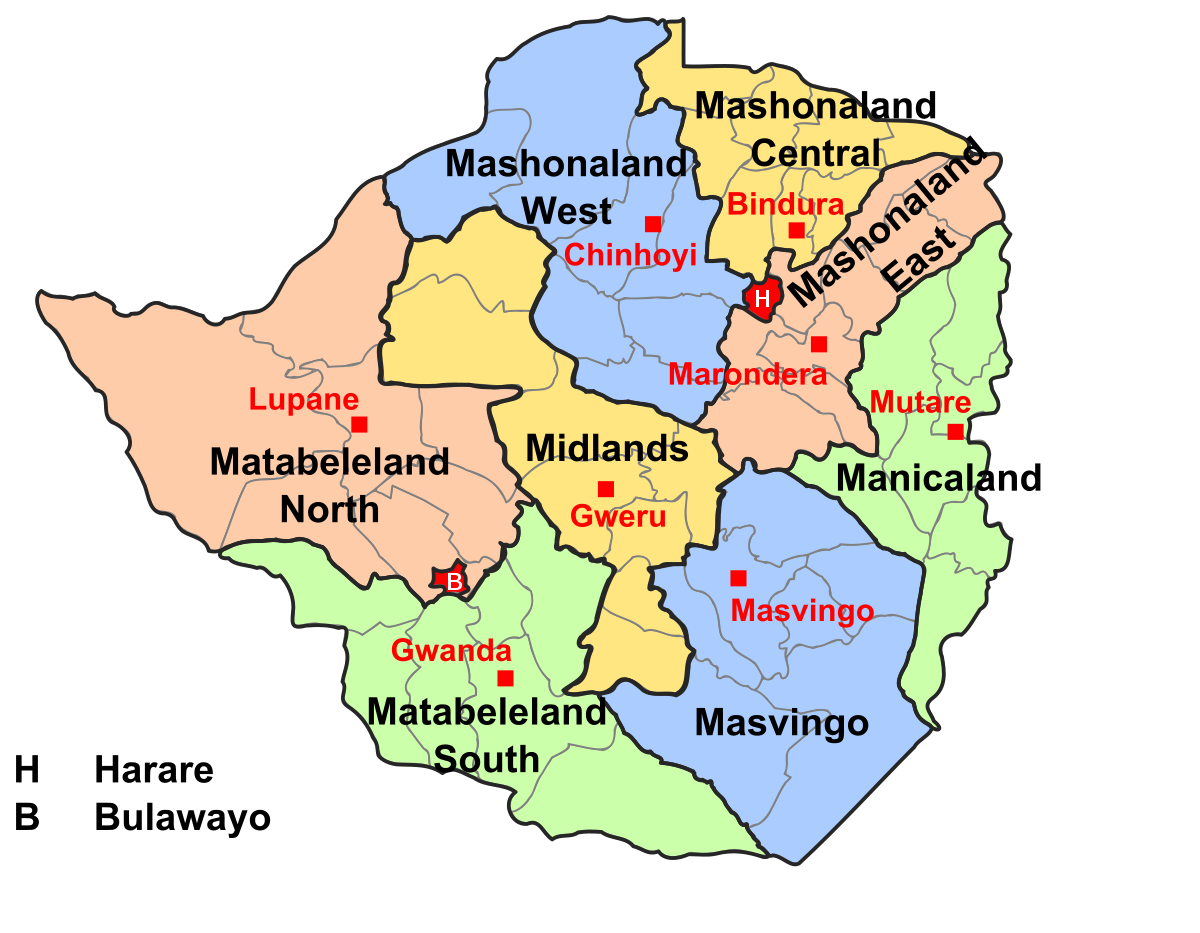
A recent surge in ritual murders of children has shocked Zimbabwe. Within a short period, three children were murdered for ritualistic purposes: Tapiwa Makore (7) of Murehwa and the two Benza cousins Delan (7) and Melissa (7) of central Mutasa. I have extensively covered the murder of Tapiwa. The following days I will provide more details about the murder of Delan and Melissa.
The child sacrifices have led to many reactions. One of these comments follows here. It contains a plea for tougher measures for the culprits, even the capital punishment. There is much to say about (and against) the death penalty but let us know focus here on the editorial comments. To be cont’d. (webmaster FVDK)
EDITORIAL COMMENT : Combined effort needed to thwart ritual murders
Published: April 27, 2021 By: The Herald, Zimbabwe
The murder of three children for what appears to be ritual purposes in just seven months is a worrying dark cloud over Zimbabwe and requires action at both community level and among a number of sections of society.
These are not the first such killings, perhaps just the best publicised for some time since the victims were all seven-years-old and the police moved swiftly and effectively to track down the suspects, with other family members among those arrested and remanded.
There is a superstitious belief among a minority that killing a child or another young person in a particular way, which can be equated to torture before the murder, and then processing certain body parts in a set-down manner will create, increase and maintain wealth.
This is nonsense, and with the competent homicide investigations now in progress it must be becoming obvious that initiating such a killing is totally unlikely to bring anything, but a very long jail sentence for the killers.
Although the death penalty is still on the books for aggravated murder by an adult man, and aggravating circumstances do not come more aggravating than pre-meditated murder of a child for financial gain, the fact remains that Zimbabwe does not implement death penalties any more, and instead life imprisonment is substituted.
There are already many positive developments that can help to end this practice of ritual killings. It is now clear that communities are willing to take action, rather than quiver in fear and keep quiet.
People are not afraid to stand up and be counted and are willing to pass on whatever information they have to the police.
In fact one of the major problems now in such investigations is that some are passing on confusing fifth-hand hearsay, which still needs to be properly investigated, rather than hard fact of what they saw. But homicide detectives are trained to separate the chaff from the hard fact, and better that too many try and help than too few.
A second problem is more serious, and has already been mentioned by legislators, including recently Senator Michael Nyambuwa who visited the Mutasa families.
We need investigations to be pursued to bring the person who gave the ritual advice and who might well have promised to process any body parts.
Even if they did not initiate the killings, and accept some sort of lie when organs are presented, they are still involved in a murder and can be tried as an accomplice.
N’angas still have a lot of respect and are feared by some, so it can be difficult to get a name, let alone evidence.
Obviously the actual killers believe in the powers of the n’anga they are using; even in the days when the killers were hanged they refused to give the name and walked silently to the gallows.
Here communities need to encourage people to come forward. There will be a lot of vague and wrong information, but police can then run down the leads. The point is that a person ready to apply their traditional learning to criminal purposes cannot be totally unknown in an area.
The Zimbabwe National Traditional Healers Association can also become more involved, first by teaching very clearly that such killings do not create wealth, only misery, and then encouraging people to come forward.
In fact traditional healers in a particular area might well have a better idea of which one of their number has turned to the dark side than the average lay person, and should be encouraged to pass on this information.
Traditional leaders, who have already made their abhorrence of such crimes very clear, can also go further in prevention, as well as doing what they do now by calling on their communities to assist after a crime.
The ideal is to have a murder trial with both the killers and the n’anga who offered advice all in the dock, with sufficiently good evidence that all can be convicted and then go to jail together.
Detectives chosen for such investigations might need to be carefully selected; there is still a significant number of superstitious people, and even some Christian churches who worry about the creativity of evil, although this is a heretical belief in mainstream Christianity.
Such severely aggravating murders also stress the need for Zimbabwe to upgrade its sentencing laws for murder, now that we have effectively abandoned the death penalty as an active punishment.
The reforms need to give judges setting sentences more discretion, and as we have argued before we need a system of parole.
In his latest clemency order, the President, with Cabinet consent and what must have been detailed advice, in effect set 15 years behind bars as the absolute minimum for a life sentence. This is not unreasonable and is the effective minimum period of incarceration in many jurisdictions for an “ordinary” murder.
However, countries that have formally abolished the death penalty and substituted life imprisonment usually allow the sentencing judge to make a recommendation over the minimum term in each case.
In most cases this is whatever the standard is in that country before parole can be considered, frequently 15 years.
But where there are aggravating circumstances the judge can set a longer minimum term before release can even be considered and, in exceptionally aggravating circumstances, can even call for a “whole life” sentence, or “life imprisonment without any possibility of parole”, as some American states word it.
Because the killer is not executed this can always be adjusted later if perceptions change or new evidence emerges, but meanwhile the deterrent is in place.
A parole system also means that a released lifer is monitored for the rest of their lives, forbidden to do certain jobs, enter certain businesses and possess anything on a list of prohibited items, such as anything that could be used as a weapon.
And parents clearly need to be protective. This is always difficult, of deciding where do you draw the lines. But one general rule is safety in numbers and having older children helping to shepherd younger children.
We have all seen gaggles of schoolchildren who live near each other moving as a group and automatically having some older teenagers in that group.
Admittedly a lot of this breaks down, as in the latest two cases, when relatives are suspected to be involved, people who are normally trusted.
But every bit helps and at least there are witnesses if a child is whisked away by an uncle or aunt.
That is precisely how the police made their initial arrests in the latest two child killings, by following up reports from people who saw something that in retrospect needed to be told.
When the dead body of a man believed to be in his fifties was found with his head missing, everyone thought of a ritual crime. Although nobody knows exact how many ritual murders are being committed and the official number of victims of ritualistic acts being (relatively speaking) low, dead bodies with missing body parts immediately lead to the conclusion that a ritual murder has been committed.
Let’s hope the police investigations into the crime are fruitful and the exact circumstances of the man’s death are soon known. If indeed a heinous crime was committed, the perpetrator(s) must be apprehended soon and brought to justice. The rule of law must apply and superstition must be banned from society as quick as possible. Living without fear for his / her life is a human right (webmaster FVDK).
Palm wine tapper’s lifeless body found without the head
Palm wine tapper’s lifeless body found without the head
Published: April 21, 2021 By: Pulse, Ghana – Andreas Kamasah
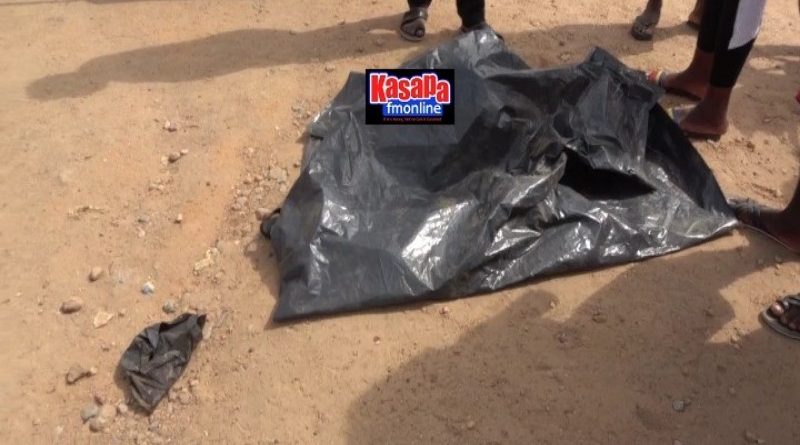
The lifeless body of a palm wine tapper believed to be in his 50’s has reportedly been discovered but his head could not be found.
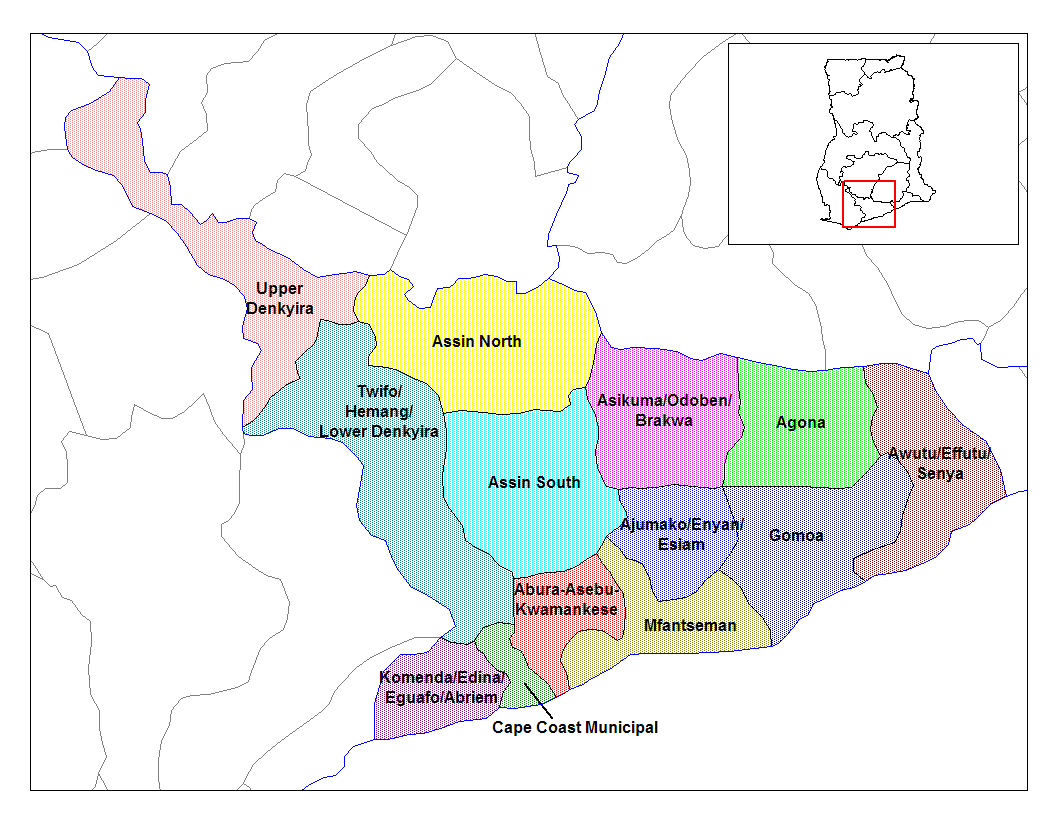
The deceased identified as Agya Manu is believed to have been killed on a farm at Dunkwa Asoboa in the Upper Denkyira East District of the Central Region, according to a report by Starrfm.com.gh.
Kasapa FM’s Yaw Boagyan reported that he was alleged to have been killed and dumped in the bush with his head severed for alleged money rituals.
Agya Manu left home on Sunday 18 April around 5:30 am for his farm to tap some palm wine before returning to join the family for the Sunday service, but unusual of him, as at 4:PM in the evening he had still not returned.
His worried children were sent to trace his footsteps but they only returned with the bottle he had left home with at the exact end he was to fetch the palm wine.
Residents and family of the deceased became even more alarmed and organised a search for him but that did not yield any result.
Then, on Tuesday 20th April, a lady named Maame Otu found the body which was suspected to be that of Agya Manu lying at the entrance to her farm.
She hurried home to break the sad news to the community, members of which converged on the scene and confirmed through physical examination that the corpse was indeed that of Agya Manu.
Police in Dunkwa have taken custody of the body and samples of his blood have been taken to Dunkwa On-Offin government hospital for examination while an investigation is expected to commence into the incident.
Was the killing of an Okada rider a ritual murder in light of the missing body parts or was it an ‘ordinary murder’ by Buduburam criminals who by removing the body parts wanted creating a cover-up for their crime? A legitimate question, but the neighborhood has no doubts. It was a murder for ritual purposes.
The body was found at Blue Rose Estate, a suburb of Buduburam, in the Gomoa East District of Ghana’s Central Region.
The murder took place only a few days after the lifeless body of a man, estimated to be in his 50s, had been discovered – whereas his head cold not be found – and some weeks after the ritual murder of Ishmael Mensah Abdallah, a 10-year old boy, both in the Central Region. Apparently, so-called ‘money rituals’ are on the increase in Ghana. In this indeed a growing trend and, if yes, what is the explanation for this phenomenon based on superstition and greed?
We will closely watch future events in Ghana and come back to you when more facts emerge (webmaster FVDK).
Buduburam: Okada rider found dead with manhood, ears and eyes missing
Buduburam: Okada rider found dead with manhood, ears and eyes missing
Published: April 25, 2021 By: Pulse, Ghana – Emmanuel Ayamga
A commercial motorbike rider, locally known as Okada, has been found dead with some of his body parts missing. The lifeless body of the unidentified man was found at Blue Rose Estate, a suburb of Buduburam in the Gomoa East District of the Central Region.
According to a report by Adomonline, the deceased, who is in his 20s, was found without his penis, ears and eyes.
Other parts were also missing from the body of the motorbike rider, in what is widely suspected to be a murder for ritual purposes.
Reports suggest the killers hired the rider but murdered him midway through the journey and also bolted with his motorbike.
The body of the deceased has since been deposited at the St Gregory Hospital mortuary, with the Police also commencing investigations.
Meanwhile, the Chief of Buduburam, Nana Kojo Essel II, has bemoaned the high rate of crime in the community.
He appealed to the government to demolish the Buduburam “Gab”, which has become a hideout for criminals.
This comes just weeks after 10-year-old Ishmael Mensah Abdallah was gruesomely murdered at Kasoa in the Central region for money rituals.
Central Region: Okada Rider Murdered; Manhood, Ears and Eyes missing
Published: April 26, 2021 By: Africa At Random – Mustafa Sana
A commercial motorbike rider, locally known as Okada, has been found dead with some of his body parts missing. The lifeless body of the unidentified man was found at Blue Rose Estate, a suburb of Buduburam in the Gomoa East District of the Central Region.
According to a report by Adomonline, the deceased, who is in his 20s, was found without his penis, ears and eyes.
Other parts were also missing from the body of the Okada rider, in what is widely suspected to be a murder for ritual purposes.
Reports suggest the killers hired the rider but murdered him midway through the journey and also bolted with his motorbike.
The body of the deceased has since been deposited at the St Gregory Hospital mortuary, with the Police also commencing investigations.
Meanwhile, the Chief of Buduburam, Nana Kojo Essel II, has bemoaned the high rate of crime in the community.
He appealed to the government to demolish the Buduburam “Gab”, which has become a hideout for criminals.
This comes just weeks after 10-year-old Ishmael Mensah Abdallah was gruesomely murdered at Kasoa in the Central region for money rituals.
The heinous crime was committed by two teenagers, identified as Felix Nyarko and Nicholas Kiki, who have since been apprehended by the Police.
The suspects, aged 16 and 18, later confessed to taking their young neighbour’s life on the instruction of a spiritualist, whom they had discovered on television.